Before the West was Won: Pre-Columbian Morality

In the decades leading up to and following 500th anniversary of the discovery of the New World in 1992 the vast preponderance of both academic writers and popular commentators take an overwhelmingly negative view of Christopher Columbus. In fact, these voices are so critical that currently the, “dominant picture holds him responsible for everything that went wrong in the New World.”1 This new revisionist trend goes against the previous centuries of orthodox thought, research, and opinion.2

Much of this recent tide of thinking arises from the philosophy of doing “history from the bottom up.” According to leading advocate Staughton Lynd, revisionists approach history with the assumption that, “the United States was founded on crimes against humanity directed at Native Americans.”3 Such a premise, however, means that the Discoverer of America, Christopher Columbus, must also have participated and begun those “crimes against humanity.”

In the most famous work of “bottom up” history, A People’s History of the United States, author Howard Zinn unilaterally claims that the indigenous people held a higher moral standard than the European nations at the time. He declares that Columbus did not stumble into an “empty wilderness,” but rather a remarkably “more egalitarian” society where the relationship between men and women were “more beautifully worked out than perhaps any place in the world.”4 By all “bottom up” accounts, the New World was a paradise destroyed by Christopher Columbus and those that followed.

But what did the New World actually look like when Columbus landed on its shores in 1492? Contemporary accounts from both European and Indigenous sources reveal that the pre-Columbian world was a place where slavery, trafficking, sexual exploitation, oppression, and even genocide was commonplace prior to any European contact. As will be seen, the discovery eventually put a stop to many of these heinous acts—ultimately elevating morality instead of lowering it.

This dissidence between what revisionists claim and the clear historical truth continues to direct America’s national conversations today. In the early 21st century, one of the pivotal conversations in America concerns American’s relation to slavery. The New York Times has launched the “1619 Project” which claims to observe the, “the 400th anniversary of the beginning of American slavery.”5 However, slavery in the America’s began well before 1619—to ignore this fact is to overlook all the enslaved people who lived in America before Columbus came. It is to dishonestly let an agenda’s narrative rewrite history.

Ironically, the man now blamed for America’s slavery was the first to shed light upon the institutions of oppression among the native Americans. In fact, the pre-existent native slave trade was so prolific that, “wherever European conquistadors set foot in American tropics, they found evidence of indigenous warfare, war captives, and captive slaves.”6 The journals, letters, and reports documents first-hand how the various tribes were already practicing slavery prior to the arrival of the Europeans.

Take briefly for instance, the Carib tribes who had widespread institutions of perpetual slavery, captive mutilation, and even villages dedicated to the sexual exploitation of captured Taino women forced to produced children which their masters then ate. Facts stand in stark contrast to the “more egalitarian” fabrication of Zinn. Such horrors do not show a “more beautifully worked out” society in the slightest—in fact, it does quite the opposite.

This context of the ignoble savage (to turn a popular phrase) places Columbus as one offering an actual advancement in civilization when compared to the atrocities discovered by the explorers. Charles Sumner, the renowned abolitionist Senator from the mid-1800’s, explained that the context of comparative cultures allows the historian to ascertain whether or not interactions and exchanges were beneficial or detrimental to the overall cultivation of morality. Even practices which all today condemn might have at an earlier time represented a significant advancement. He uses slavery, the very institution he spent his life fighting, as an example:

The merchandise in slaves will be found to have contributed to the abolition of two hateful customs;…eating of captives, and their sacrifice to idols. Thus, in the march of civilization, even the barbarism of slavery is an important stage of Human Progress. It is a point in the ascending scale from cannibalism.7

Such a point is self-evident. In the age of conquest victorious groups had limited options concerning the fate of defeated opponents. In the ancient world, and more recently in less developed areas, the only conclusions for those on the losing side of a conflict were slaughter, sacrifice, cannibalism, or some other similarly unfortunate end. Once civilization reached a point of sufficient stability nations could support allowing captured warriors and civilians live as slaves or tributaries. Instead of killing those who did not die in the conflict, they were used to pursue economic advancement through either forced labor or trade with other nations. Thus, Sumner rightly notes that even atrocities such as slavery at least marks a step up from the greater depravity of murdering, sacrificing, or eating the captives.

Such a progression finds itself distinctly expressed in Columbian exchange of morality in the years following the discovery of the New World. Setting aside the actions of the Spanish rebels, later corrupt magistrates, and false ministers who disguised themselves as apostles of Christ, the clear record is that the original evangelistic centered plan for colonization presented by Columbus, commissioned by the Sovereigns, and confirmed by the Pope planted the seeds of a more progressive moral society. [To learn more about the evangelistic vision of Columbus read this article.]

When examined in the wider context, Columbus acted more to advance the virtues of liberty and equality than not. Situated next to the robust system of slavery and oppression existing in America prior to the arrival of the Europeans, Columbus’s efforts against the cannibalistic slave-driven tribes at the behest of the more peacefully inclined tribes (who also owned slaves) led to the liberation of many women, children, and men. Although it is a fact often overlooked, this allows the historian to frame the effects of Columbus’s voyages and subsequent colonization in the proper context. Of course, none of this is to suggest that Columbus was perfect—by no means. It does, however, show that he first planted the seeds of freedom on American shores which would eventually germinate into the nation which brought more liberty, stability, and prosperity than any other country in the history of the world.
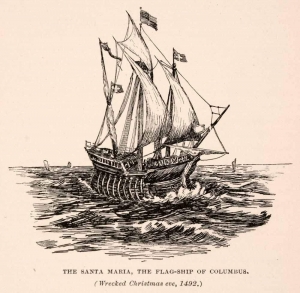
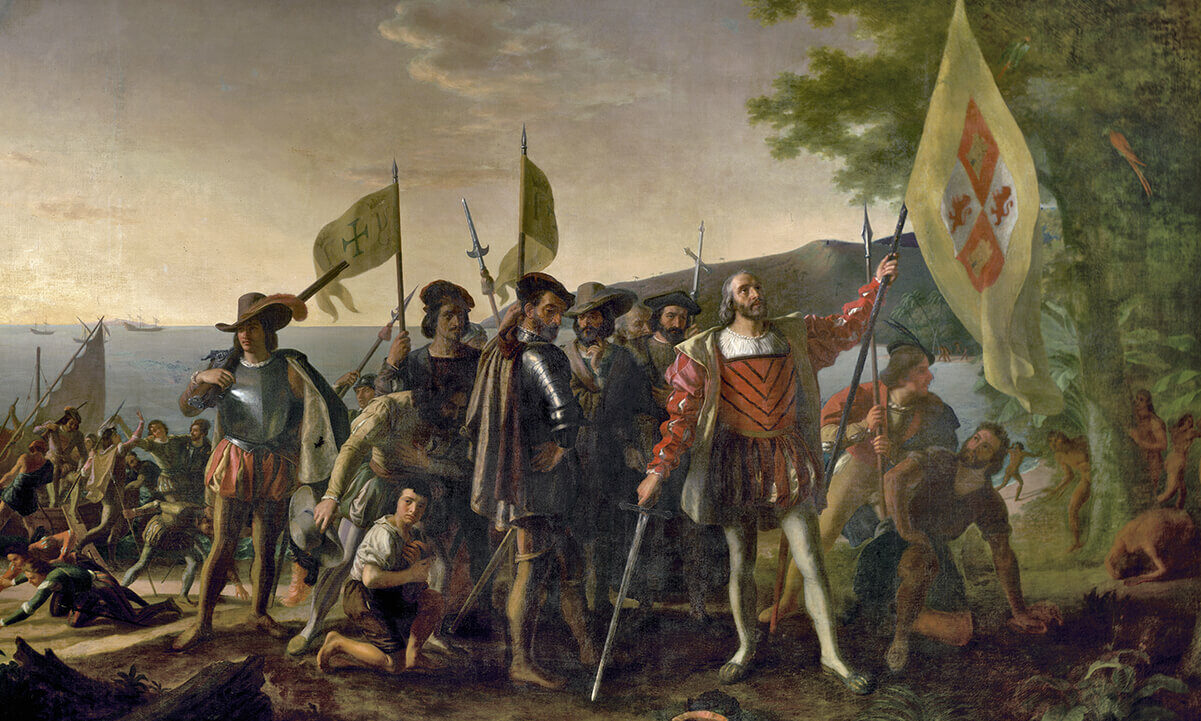
The arrival of Christopher Columbus and his three diminutive ships laden with tremendous potential was an anthropologist’s dream. In 1492 Columbus encountered and documented for the first time the Taino people within the larger Arawak language group. Without Columbus and his efforts we would have no records of these cultures at all. While this tribe is largely considered to be the most civil out of all the native tribal groups encountered by the early Spanish explorers it does not hide the fact that they too participated in conquest, colonization, and slavery.

Columbus himself had strong relations with their chief, Guacanagari, throughout their lives. His admiration for the Taino went so far as to cause Columbus to exclaim that, “a better race there cannot be, and both the people and the lands are in such quantity that I know not how to write it.”8 Such commendations might suggest that the Taino were without blemish but Columbus was soon to see examples of how that was not the case. Even Columbus could not fail to note how, “the natives make war on each other, although these are very simple-minded and handsomely-formed people.”9

The Taino, just like nearly any other people group or culture, did not themselves enter into an “empty wilderness.” The islands they occupied were conquered from the earlier Siboney culture group. Respected naval historian Samuel Eliot Morison (noted for his leadership of the 1939 Harvard Columbian Expedition which sailed the routes of Columbus’s voyages based off the information provided in his journals) explains that:

Colonization, we must remember, is merely one form of conquest…which the ancestors of our Indians had practiced in the New World for several millennia before the first conquistador appeared from Castile. Even the Taino people of the Antilles, whom Columbus reported to be gentle, peaceable, and defenseless, had conquered the Bahamas and most of Cuba from the more primitive Siboney during the fifteenth century.10

Shockingly, the Taino conquest of the Siboney tribe was so total and complete that in all of the recorded observations of Columbus he only ever encountered one Siboney survivor.11 This amounts to nothing less than a relentless Taino invasion. Such a statistical annihilation of a people group equals and even outstrips some of the highest estimates of the destruction of the Taino population due to exposure to the European diseases their immune systems were so unequipped for.12

Expanding to a wider view of the pre-Columbian world, cycles of conquest, subjugation, and decimation were not uncommon and, “one could legitimately argue that for many Amerindian people the expansion of the Huari, Aztec, and Inka empires was equally cataclysmic,” when compared to that following the appearance of the Europeans.13 The idea that Columbus and the Europeans brought the idea of war to a previously untouched and unblemished culture is historically bankrupt and unfounded on anything except ideological agenda.
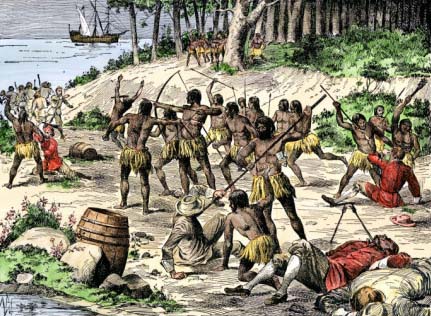
One example from the history of Ferdinand Columbus offers a pointed perspective into this newly discovered culture. He documents the tragedy of the first large confrontation between a hostile force and the coalition forces led by Columbus consisting of the Spaniards and allied tribes marshaled by Guacanagari. In an earlier attack upon the Spanish outpost and the allied Indian village one of his wives was murdered and another one captured to be thereafter enslaved to the victorious chieftain. “And that was why he now appealed to the Admiral to restore his wife to him and help him get revenge for his injuries.”14 The battle is a major success for the coalition forces, and the Spanish’s technological superiority bolstered by the Taino’s numerical assistance routed the enemy army. Not only were Columbus and Guacanagari successful in reclaiming his enslaved wife, but they also captured the offending chief and all of, “his wives and children.”15

This episode provides an exemplary source text for evidencing several major aspects prevalent in the native cultures encountered by Columbus. First and most obvious (although often overlooked by popular “bottom up” historians such as Zinn), is the existence of war between the various tribes which clearly existed prior to European discovery. As discussed earlier, even the presence of Guacanagari and his relatively peaceful Taino subjects upon the islands explored by Columbus would not have been possible but for the previous conquest and near complete extinction of the earlier occupying inhabitants.

Second, it shows that both indigenous sides practiced polygamy. Early missionary Fray Ramon Pane, “a modest and loyal Jeronymite who was doing his best to serve God instead of mammon,”16 remarked how polygamy was the standard practice amongst the vast majority of natives. It was only the introduction of Christianity which caused many to abandon the practice. The conversion of leading chieftain named Mahuviativire illustrates this perfectly. The missionary reported that the chieftain, “for three years now has continued to be a good Christian, keeping only one wife, although the Indians are accustomed to have two or three wives, and the principal men up to ten, fifteen, and twenty.”17 If men are commonly permitted to marry twenty women, one ought to question what exactly Howard Zinn considers a “beautifully worked out” society.

Lastly, it offers a glimpse into the widespread enslavement of the members of other tribes—principally women and children—through raids and conquest. In fact, when Columbus first landed on October 12th, 1492, he learned from the Taino themselves that they were often attacked, carried away, and enslaved by other tribes who preyed upon their weakness. The Admiral notes in his journal that he:

Saw some with marks of wounds on their bodies, and I made signs to ask what it was, and they gave me to understand that people from other adjacent islands came with the intention of seizing them, and that they defended themselves. I believed, and still believe, that they come here from the mainland to take them prisoners.18

Although Columbus’s initial interpretation is wrong as to who the perpetrators were, the Taino’s description of defending themselves against the savage attacks from an outside group of aggressive natives provided Columbus with his first introduction to the ways of the Carib people.

Placed next to the relative timidity and gentleness of the Taino, the Carib tribes appear quite warlike and barbaric. These indigenous peoples (from whose name we derive both the words “Caribbean” and “cannibal”) terrorized the Taino through constant raids and attacks. It was of the Carib tribes that, the Taino warned Columbus about during the first voyage, speaking of a civilization of, “extremely ferocious…eaters of human flesh” who “visit all the Indian islands, and rob and plunder whatever they can.”19 The Caribs were so effective that in 1494,  after the second voyage, it was published in Europe that many of:

The Islands explored on the voyage last year are exposed to Carib invasions. One or two Caribs can often rout a whole company of Indians [i.e. Taino]. The Indians are so much in awe of the Caribs that they tremble before them even if they are securely tied.20

This author, Nicolo Syllacio, continues to relate the observations of crew member Peter Margarita concerning the Carib culture, explaining how:

These islands are inhabited by Canabilli, a wild, unconquered race which feeds on human flesh. I would be right to call them anthropohagi [man-eaters]. They wage unceasing wars against gentle and timid Indians to supply flesh; this is their booty and is what they hunt. They ravage, despoil, and terrorize the Indians ruthlessly, devouring the unwarlike, but abstaining from their own people.21

Such descriptions might be easily considered as European inventions in order to justify conquest and thereby discounted if not for the fact that the testimony from the Taino Indians confirms Syllacio’s account and many other eyewitnesses provide corroborating reports. Additionally, the Caribs themselves confessed that they were indeed cannibalistic.22

Another crew-member and childhood acquaintance of Columbus, Michele de Cuneo, similarly records the barbarity of Carib culture discovered in the New World. He explains that the Caribs would spend up to a decade plundering any particular island until they completely depopulated it through slavery and cannibalism. He writes that:

The Caribs whenever they catch these Indians eat them as we would eat kids and they say that a boy’s flesh tastes better than that of a woman. Of this human flesh they are very greedy, so that to eat of that flesh they stay out of their country for six, eight and even ten years before they repatriate; and they stay so long, whenever they go, that they depopulate the islands.23
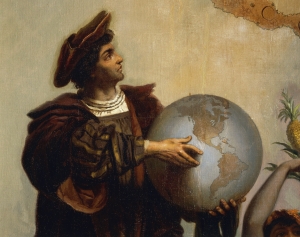
The complete and deliberate depopulation of entire islands and communities by a dominate and oppressive culture very well can be defined as genocide through cannibalism—certainly much more than anything which Christopher Columbus ever did.

Additionally, this was far from an isolated incident recorded second hand. Cuneo, along with many others, were eye-witnesses to the tragic aftermath of Carib raids and what often happened to those the attackers chose to keep alive. Upon landing at a village of Carib slaves, Cuneo recalled that the now liberated group included:

Twelve very beautiful and very fat women from 15 to 16 years old, together with two boys of the same age. These had the genital organ cut to the belly; and this we thought had been done in order to prevent them from meddling with their wives or maybe to fatten them up and later eat them. These boys and girls had been taken by the above mentioned Caribs.24

The truth is clearly different than the egalitarian society promoted by “bottom up” historians. A society which conquers, captures, cannibalizes, and enslaves neighboring tribes, subjecting captured inhabitants to physical mutilation and sexual servitude is certainly not a place, “where the relations among men, women, children, and nature were more beautifully worked out than perhaps any place in the world.” 25 None of the European nations, for all their faults, engaged in anything similar to what was happening in the New World.
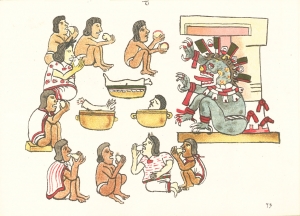
Other witnesses corroborate what Cuneo saw, explaining how the Caribs:

In their wars upon the inhabitants of the neighboring islands, these people capture as many of the women as they can, especially those who are young and handsome, and keep them as body servants and concubines.26

One of the medical experts further described how the captive men and boys were neutered in order to prepare them for consumption later, saying:

When the Caribbees take any boys as prisoners of war, they remove their organs, fatten the boys until they grow to manhood and then, when they wish to make a great feast, they kill and eat them, for they say the flesh of boys and women is not good to eat.27

This treatment is similar to the castration of cattle designated for market across the world today. Castrating calves at a young age serves, “to prevent reproduction and simplify management, but, most importantly, cattle are castrated to improve marbling and tenderness of the finished beef.”28 Similar motivations seemingly led the Caribs to mutilate their male captives.

The medical expert on the early voyages, Dr. Diego Chanca, while originally unsure about the veracity of reports concerning Carib cannibalism from the Taino, confirmed them once he arrived in the Indies. Dr. Chanca recalls an incident when one of the shore party:

Brought away with him four or five bones of human arms and legs. When we saw those bones we immediately suspected that we were then among the Caribbee islands, whose inhabitants eat human flesh, because the admiral, guided by the information respecting their situation he had received from the Indians of the islands he had discovered during his former voyage, had directed the course of our ships with a view to find them.29

The discovery of bones which have been cannibalized marks the first example of physical evidence of cannibalism. Another crew-member on a journey to a local chieftain remarked that, “the royal residence which stood on a flat-topped hill where there was a large plaza whose stockade was decorated with 300 heads of the men he had killed in battle.”30 Such archeological evidence confirms the Taino testimony and Carib confessions written down by the earliest of explorers. Recently too, bones and cannibalized remains have been discovered which independently confirms the overwhelming uniformity of both European and indigenous sources.31

As noted above, when the Europeans landed on Carib islands they discovered entire villages of enslaved women and mutilated men. Whenever Columbus and his crew landed and began exploring the village the slaves began fleeing to the Europeans seeking refuge from their captors and transport back to their homes. In a second village even more gruesome scenes were witnessed. By the time they left over twenty women and three men were liberated by Columbus and his men.32 Dr. Chanca described that the Caribs enslaved so many women that, “in fifty houses we entered no man was found, but all were women.”33

After the Europeans explained to the enslaved Taino that they themselves were not cannibals, “they felt delighted.”34 The liberated women began to explain to the doctor that:

The Carribbee men use them with such cruelty as would scarcely be believed; and that they eat the children which they bear to them, only bringing up those which they have by their native wives.35

This system of enslavement, sexual subjugation, and then the cannibalism of the offspring is nearly unprecedented in world history. Being now led by the freed Taino Indians, the explored found in the villages ample proof of their stories:

For of the human bones we found in their houses everything that could be gnawed had already been gnawed, so that nothing else remained of them but what was too hard to be eaten. In one of the houses we found the neck of a man undergoing the process of cooking in a pot, preparatory for eating it.36

In total, the evidence reveals that the Carib tribes consisted of a culture dependent upon slave labor and human servitude derived from extended campaigns of conquest. One of the crew members on the second voyage even remarked how, “The women do all the work. Men only mind fishing and eating.”37 Anthropologist Fernando Santos-Granero rightly summarizes that the Caribs subsisted through the “large-scale raiding” of Taino tribes where:

Female and children captives were turned into concubines and slaves, whereas adult males were killed and partly eaten in cannibalistic rituals that brought together members of different villages and sometimes the population of entire islands.38

The world Columbus discovered is widely different than the view recently presented. In the vast majority of modern biographies and evaluations of Columbus and the entire age of exploration overlooks the context into which their actions were situated. They look at the failures of Columbus to stop slavery altogether and miss the fact that he was engaged in the widespread liberation of enslaved women. They see how he went to war against some of the natives without considering how he was asked to by his ally Guacanagari to avenge one wife who had been murdered and retrieve another who had been stolen. In short, they judge Columbus as if he landed upon the shores of America today and not five hundred years ago. To judge a historical figure or action divorced from the age and context presents an incomplete fact pattern leading to an improper and historically deficient conclusion.

At this juncture an objection might be raised that the European sources are unreliable due to their biases against the natives and the benefit which would arise from painting at least certain segments of the native population as barbaric beyond belief. However, to discount the European sources merely because they are European upon the pretense that they might have something of prejudice or bias in them is intrinsically anti-historical in its nature and execution. Every source or document represents a historical action imbued with native prejudices and perspectives, but the existence of such in the sources in no way disproves the reliability of them.

Like any inquiry, historical and modern, the truth is established through the preponderance of the evidence in one way or the other. Noted scholars have explained that, “Denying the possibility of learning about the history of Amerindian societies using European sources would be tantamount to denying the possibility of knowing the history of any people through any kind of source.”39 Through the collection of corroborating testimony, documentation, and sources a picture of the historical past can be reliably constructed, and for it to be an honest representation the first-generation European writings as they recorded what they themselves witnessed in their travels must be included.

However, if the contextual scope is expanded to include not just the island cultures encountered by Columbus but also to the other nearby tribes in the Mesoamerican regions such as Central and South America, it reveals that reports of cannibalism, slavery, and related actions are not the imaginations of a few biased Europeans but the actuality of a larger cultural trend existent in indigenous American societies.

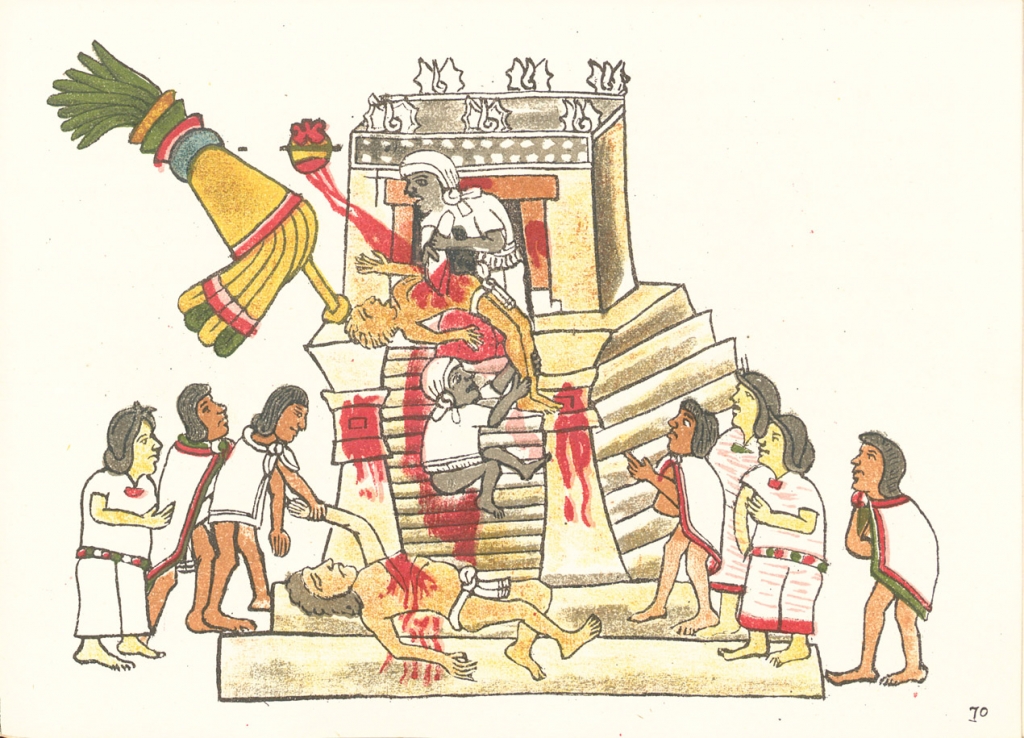
The most famous examples of similar atrocities are those of the Aztecs, of which Zinn only acknowledges to remark, “the cruelty of the Aztecs, however, did not erase a certain innocence.”40 With some explorers seeing skull walls with nearly 100,000 pieces and the largest recorded instance of mass sacrifice including up to 80,000 victims at the dedication of the temple at Tenochtitlan in 1487, it appears an odd expression of “certain innocence.”41 Most victims were slaves captured in raids and wars or even their own children in some instances. Of course, the Aztecs were not alone in such practices although they were probably the most liberal. Indeed, in the indigenous societies, “Some type of death sacrifice normally accompanied all important rituals.”42 The method of sacrifice varied considerably, including:

The standard method of gashing open the chest with a stone knife and ripping out the heart, decapitation (especially for female victims), shooting with atlatl darts or arrows, the “gladiatorial sacrifice,” burning nearly to death—the coup de grace delivered by heart extraction, drowning, hurling from a height, smashing against a hard surface, strangulation, shutting up and starving to death.43

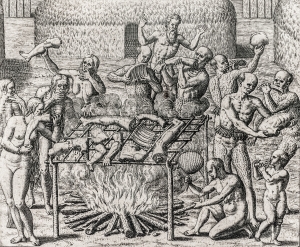
After the slaves were murdered often their hearts were extracted if that had not already been done. The skulls were then removed, prepared, and placed within the ever-growing skull racks or other similar repositories. Lastly the carcasses of the now decapitated and heartless victims were taken and consumed in a ritualistic feast.
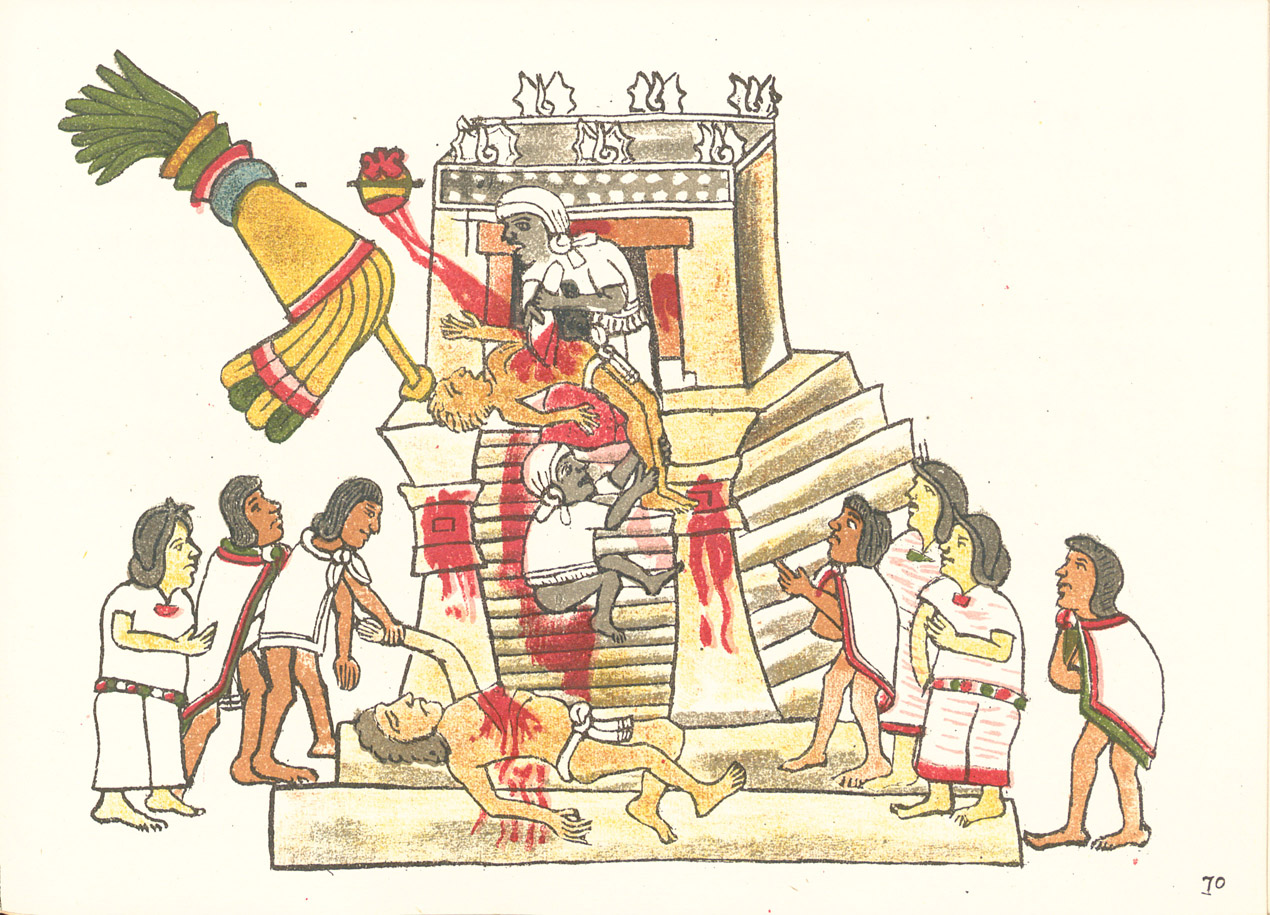
The Huastec civilization serve as another example of the general trend within the central Mexican cultures which engaged in widespread subordination of weaker tribes and the sacrifice of those conquered peoples. The excavated pottery from the area depict the common heart extraction style of sacrifice similar to the example shown on the early codices from other regions such as Codex Magliabechiano.44 The Huastec also sacrificed their slaves through a process known as flaying which included the skinning and preservation of the victims faces and sometimes bodies, afterwards cannibalizing the remains.45 Similarily, slave sacrifices to the Mexican god Xipe consisted of the typical heart extraction offering and then the flaying of the entire human body to be worn by anyone, “wishing to show special devotion to the god.”46

The New World was one filled with the old ways of colonization, conquest, and slavery. Before any European arrived upon the shores of Cuba or Puerto Rico entire civilizations were being destroyed by invading armies. Women were enslaved and abused to produced children to satisfy the hunger of their cannibalistic masters. Young boys were captured and castrated before being fattened and served during special feasts. From the Taino to the Caribs to the Aztecs, the Europeans witnessed a world where slavery was widespread and those unfortunate enough to be captured were viciously abused. Slavery in the pre-Columbian world was so prevalent that somewhere between twenty to forty percent of all Indians were enslaved people.47
Overall, the world which Christopher Columbus discovered is radically different from the human egalitarian society presented by the modern revisionist writings on the subject. Academics like Zinn and Lynd begin from the assumption that America was founded upon crimes committed against the Indians by the European explorers and colonists and ignore any data which suggests the opposite. In their intellectual expedition to do “history from the bottom up” they are never able to tell the history of those truly at the bottom. They stop short of the women enslaved and abused by the Caribs and liberated by Columbus. In their desire to prove the American founding evil they ignore the wider context surrounding the voyages. The facts do not validate their philosophy. The evidence simply does not fit with the “highly egalitarian ideologies and practices,” promoted by Zinn.48 In order to give a voice to their own activism they silence the voice of the women enslaved by the Caribs or the thousands sacrificed upon Aztec alters.

After being elected as President of the United States of America, Theodore Roosevelt was elected to be the president of the American Historical Association. In his 1912 inaugural address he explained how many times historians abandon objectivity in their quest to appear neutral. President Roosevelt argues that:

The greatest historian should also be a great moralist. It is no proof of impartiality to treat wickedness and goodness as on the same level.49

So much of the Columbus question in modern America revolves around whether or not he can be considered a good person or even a hero. The failure to situate him with his proper context has already been addressed, but now after reviewing much of the available evidence what can be said about Columbus’s effect upon the moral development of the New World? How did the Columbian exchange affect the morality of the New World, and was it an improvement? Did it, as Sumner suggested, provide an ascending point upon the chain of human progress or not?

The answer to this is an unqualified yes. The sum total effect of Columbus’s discovery of America ultimately brought about a vast improvement in the cultural morality existent in the Caribbean and Central American regions. Such a conclusion, of course, is not to justify the terrible savageness of some of the Spaniards and other colonists which followed Columbus later. Much rather it is simply to acknowledge the fact that no matter what else happened, never again was the Western hemisphere to see the sacrifice of 80,000 victims in a single day or the existence of baby mills for the purpose of infant cannibalism. Even in 1860 the overall percentage of slaves in the United States was less than it was in many of the ingenious societies.

The overarching story of American discovery and colonization is one of progress and advancement. Of mankind piercing the mist of the Ocean Sea to plant the seeds of individual rights, liberty, and freedom on a faraway shore so that they could finally germinate and grow, providing its fruit to the world both Old and New. However, when historians isolate the actions of Columbus from the wider cultural context, that story of human progress and the ever-developing refinement of civilization is lost amidst the fog of fable.

The fabrication of Zinn—that the indigenous peoples were a more morally advanced society with greater equality and beneficence between the genders and classes—is helpful for certain ideological agendas but not for serious historical inquiries. The truth demonstrated above show just how less developed the native cultures were in areas of social rights and cultural ethics as compared to the explorers and discoverers coming from Europe. Obviously, such facts do not and cannot serve as a kind of justification for the documented failures and shortcoming of those coming from the Old World. If an expedition of modern men journeyed back to anywhere in the world in 1492. The modern sensibilities of right and wrong would be mortified, having gone through several centuries of refinement since the days of Columbus and Guacanagari. Both the illiberality of the Spanish religious code and the rampant slavery of the Taino and Caribs would shock the moderns. All have sinned and fallen short of the whatever standards the modern historian or moralist might try to retroactively apply to the past. Columbus himself recognized the need to be judged in context by those who understood the times, writing:

I ought to be judged as a captain, who for so many years has borne arms, never quitting them for an instant. I ought to be judged by cavaliers who have themselves won the meed of victory; by knights of the sword and not of title deed.50

Thus, in a study of Columbus and the past we must become a “knight of the sword” and not merely of a “title deed.”


1 Carol Delany, Columbus and the Quest for Jerusalem (New York: Free Press, 2011), xii.

2 Focusing primarily on English and American reception and interpretation of Christopher Columbus, the orthodox view of a more heroic and honorable Columbus begins with William Robertson, The Discovery and Settlement of America (New York: J. & J. Harper, 1828; 1st ed. London, 1777); Jeremy Belknap, A Discourse Intended to Commemorate the Discovery of America by Christopher Columbus (Boston: Belknap and Hall, 1792); William Grimshaw, History of the United States (Philadelphia: John Grigg, 1826); Charles Goodrich, A History of the United States of America (Hartford: D. F. Robinson & Co., 1829); the most complete synthesis of the first wave orthodox understanding of Columbus being found in Washington Irving, The Life and Voyages of Christopher Columbus (London: John Murray, 1828). The typical orthodox trend largely continued with the second wave of scholarship in the mid to late 19th century with examples including S. G. Goodrich, A Pictorial History of the United States (Philadelphia: E. H. Butler, 1843); Thomas D’Arcy McGee, Catholic History of North America (Boston: Patrick Donahoe, 1855); Joel Dorman Steele, A Brief History of the United States for Schools (New York: A. S. Barnes & Company, 1871); and Horace A. Scudder, A History of the United States of America (Philadelphia: J. H. Butler, 1884). There are few early examples of the debunking and revisionist tendencies but on a whole,  these were seen as novelties and had negligible influence on the overall dialogue, see W. L. Alden, Christopher Columbus (New York: Henry Holt and Company, 1881); and Aaron Goodrich, A History of the Character and Achievements of the So-Called Christopher Columbus (New York: D. Appleton and Company, 1874). More progressive interpretations of Columbus starting appearing more seriously with works including William Giles Nash, America: The True History of Its Discovery (London: Grant Richards Ltd., 1924); Emerson Fite, History of the United States (New York: Henry Holt and Company, 1929); and Wilbur Fisk Gordy, History of the United States (New York: Charles Scribner’s Sons, 1929). However, such examples still failed to turn the tide of both popular perception and academic tendency towards orthodoxy, the overwhelmingly standard and influential biography from Morison examples this, see Samuel Eliot Morison, Admiral of the Ocean Sea: A Life of Christopher Columbus (Boston: Little, Brown and Company, 1942). The revisionist and progressive movements began to dominate the discussion during the 1960’s as a spirit of activism spread throughout the academy with works such as, Edward Stone, “Columbus and Genocide” in American Heritage 16 (October 1965); Bernard A. Weisberger, The Impact of Our Past: A History of the United States (New York: American Heritage Publishing Co., 1972); and Howard Zinn, A People’s History of the United States (New York: Harper & Row, 1980).

3 Staughton Lynd, Doing History from the Bottom Up: On E. P. Thompson, Howard Zinn, and Rebuilding the Labor Movement from Below (Chicago: Haymarket Books, 2014), xii.

4 Howard Zinn, A People’s History of the United States (New York: Harper Collins, 2015), 21.

5 “The 1619 Project,” The New York Times (accessed September 13, 2019), https://www.nytimes.com/interactive/2019/08/14/magazine/1619-america-slavery.html.

6 Fernando Santos-Granero, Vital Enemies: Slavery, Predation, and the Amerindian Political Economy of Life (Austin: University of Texas Press, 2009), 1.

7 Charles Sumner, White Slavery in the Barbary States (Boston: William D. Ticknor and Company, 1847), 11.

8 Christopher Columbus, The Journal of Christopher Columbus, translated by Clements Markham (London: Hakluyt Society, 1893), 131.

9 Ibid., 42.

10 Samuel Eliot Morison, “The Earliest Colonial Policy Toward America: That of Columbus,” Bulletin of the Pan American Union 76, no. 10 (October, 1942), 543.

11 Samuel Eliot Morrison, Admiral of the Ocean Sea (Boston: Little, Brown and Company, 1942), 464.

12 For a brief statistical overview of the decline in indigenous populations see, Alan Taylor, American Colonies: The Settling of North America (New York: Penguin Publishing, 2001), 38.

13 Santos-Granero, Vital Enemies, 6-7.

14 Ferdinand Columbus, The Life of the Admiral Christopher Columbus, translated by Benjamin Keen (New Brunswick: Rutgers University Press, 1992), 148-149.

15 Ibid., 149.

16 Morrison, Admiral of the Ocean Sea, 484.

17 Fray Ramon Pane quoted in, Ferdinand Columbus, The Life of the Admiral, 168.

18 Columbus, The Journal, 38.

19 Christopher Columbus, “Letter sent by Columbus to Chancellor of the Exchequer, respecting the Islands found in the Indies,” in Select Letters of Christopher Columbus (London: Hakluyt Society, 1870), 14.

20 Nicolo Syllacio, “Syllacio’s Letter to Duke of Milan, 13 December 1494,” in Journals and Other Documents on the Life and Voyages of Christopher Columbus, edited by Samuel Eliot Morrison (New York: The Heritage Press, 1963), 237.

21 Ibid., 233-234.

22 Ibid., 235.

23 Michele de Cuneo, “Michele de Cuneo’s Letter on the Second Voyage, 28 October 1495,” Journals and Other Documents on the Life and Voyages of Christopher Columbus, edited by Samuel Morrison (New York: Heritage Press, 1963), 219.

24 Ibid., 211-212.

25 Zinn, A People’s, 21.

26 Diego Chanca, “Letter of Dr. Diego Alvarez Chanca,” Smithsonian Miscellaneous Collections (Washington: Smithsonian Institution, 1907), Vol. 48, 442.

27 Ibid.

28 Boone Carter, Castrating Beef Calves: Age and Method (Las Cruces: New Mexico State University, 2011), 1.

29 Chanca, “Letter of Dr. Diego Alvarez Chanca,” 436.

30 Diego Mendez, “The Will of Diego Mendez,” in The Journal and Other Documents on the Life and Voyages of Christopher Columbus, edited by Samuel Eliot Morison (New York: The Heritage Press, 1963), 389.

31 Sabrina Valle, “Cannibalism Confirmed Among Ancient Mexican Group,” National Geographic, October 1, 2011, https://www.nationalgeographic.com/news/2011/11/110930-cannibalism-cannibals-mexico-xiximes-human-bones-science/ (accessed October 6, 2019).

32 Chanca, “Letter of Dr. Diego Alvarez Chanca,” 442.

33 Ibid.

34 Ibid., 440.

35 Ibid.

36 Ibid.

37 Cuneo, “Michele de Cuneo’s Letter,” 220.

38 Santos-Granero, Vital Enemies, 20.

39 Ibid., 12.

40 Zinn, A People’s History, 11.

41 Herbert Burhenn, “Understanding Azte Cannibalism,” Archiv Für Religionspsychologie / Archive for the Psychology of Religion 26 (2004), 1.

42 Henry B. Nicholson, “Religion in Pre-Hispanic Central Mexico,” Handbook of Middle American Indians: Archaeology of Northern Mesoamerica (Austin: University of Texas Press, 1971), Vol. 10, 432.

43 Ibid., 432-433.

44 The Book of the Life of the Ancient Mexicans, Translated by Zelia Nuttall (Berkeley: University of California, 1903), 70.

45 Guy Stresser-Pean, “Ancient Sources on the Huasteca,” Handbook of Middle American Indians: Archaeology of Northern Mesoamerica (Austin: University of Texas Press, 1971), Vol. 11, 598.

46 H. R. Harvey, “Ethnohistory of Guerrero,” Handbook of Middle American Indians: Archaeology of Northern Mesoamerica (Austin: University of Texas Press, 1971), Vol. 11, 613.

47 Santos-Granero, Vital Enemies, 226-227.

48 Ibid., 4.

49 Theodore Roosevelt, History as Literature and Other Essays (New York: Charles Scribner’s Sons, 1913), 19.

50 Christopher Columbus, “Letter of the Admiral to the (quondam) nurse of the Prince John, 1500,” Select Letters of Christopher Columbus (London: Hakluyt Society, 1870), 170.
Columbus and the Context of Colonization

To the right is a picture of a recently desecrated statue of Christopher Columbus. With red paint simulating the appearance of blood streaming down his head and shoulders, big white letters mark the ground in front of the memorial with the command: “Kill The Colonizer.” Obviously, the vandals who did this acted more as activists than historians, but every activist operates upon a set of historical premises attempting to justify their actions. But are they accurate? Was Columbus simply a murdering colonizer? Did American colonization even start with Columbus? If not, then who first colonized the New World? What does colonization mean and what effects did it have?

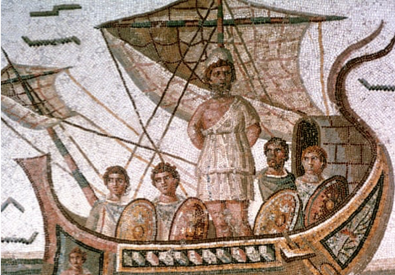
For starters, colonization was a common practice long before Columbus. Far from being the first colonizer, Columbus and his views upon the purpose and procedure of colonization came after centuries of historical development. To view the actions of Columbus as a colonial governor outside of the context and culture of his day is to commit the most obvious of academic malpractices. The history of colonization can be reliably traced back to the ancient Greeks, Macedonians, Romans, and other Mediterranean cultures. Over the centuries they sent many thousands abroad to establish cities and economic centers in faraway lands. Quite often these endeavors were caused by a desire for land, trading, or military outposts. Wherever these colonists went they brought with them the Greco-Roman culture and institutions such as democracy, slavery, and the arts. In fact, the enslavement of those foreign populations was so prevalent that at its height 30% of the people living in classical era Athens were slaves while nearly 40% of total population in the Roman empire were enslaved.1

This tradition of conquest, colonization and enslavement continued in the Islamic world as the power of Rome splintered and crumbled in both the East and West. The Barbary Coast of North Africa under Muslim rule became a Mecca for the slave trade as African tribes sold captured combatants to the Islamic traders, who then exported them around the Mediterranean. In fact, the African slave trade conducted by Islamic traders first exposed Europe to the idea through the Muslim invasions in the Iberian peninsula.2 Something else which must be acknowledged is that slavery has always been a universal institution. Nearly every single people, race, and culture has been both slave and master. In fact, globally there were more white slaves than black slaves all the way up to the seventeenth century.3
With the Islamic conquest of the Byzantine empire and the Holy Land nearly all European trade to the Orient had been effectively halted and the need to discover new routes became all the more pressing. Such influences led the Portuguese mariners to sail down the coast of Africa in attempts to navigate around Africa to India; with the 1431 colonization in the closer Azores and the final discovery of the farther islands of Flores and Corvo by 1452, in addition to the widespread trade and traffic along the African coast the systems of colonization were modernized.

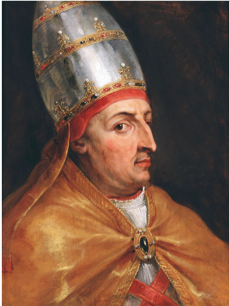
With this increasing push for exploration tensions grew between neighboring Portugal and Spain concerning who could sail, trade, and explore where. This led to the gradual codification of the ideas and doctrines behind exploration and colonization. Such international issues between two nations led by Catholic rulers meant that the Pope was the natural third-party agent for arbitration. With things heating up, Pope Nicholas V stepped in to cool tensions and issued the papal bull Romanus Pontifex in 1455.

Pope Nicholas V

The Pope, while establishing the areas of exploration the Portuguese had a right to possess due to their investment and action, also takes the occasion to outline the corresponding responsibilities of the exploring powers. The ultimate concern pursuant to the theological doctrine established is the conversion of unreached native populations. Nicholas V writes that the following dictates arise after:

“Contemplating with a father’s mind all the several climes of the world and the characteristics of all the nations dwelling in them and seeking and desiring the salvation of all.” 4

Such contemplation causes him to establish a system of incentives in order to encourage the various Catholic states to, “restrain the savage excesses of the Saracens [Muslims] and of other infidels, enemies of the Christian name,” and expand the bounds of European influence to people, “situated in the remotest parts unknown to us.”5

(Today the idea of Christians holding such militaristic views about defending the faith seem antiquated and sometimes repulsive, but often it is forgotten that such perspective was born out of the several centuries Islamic domination and expansion. After the fall of Rome and the reduction of the Byzantine Empire, the successor states in Europe were weak, disorganized, and ill-equipped to deal with both the infighting and the appearance of a new, warlike, and powerful religion coming out of Arabia. As the Muslim caliphates swept across North Africa and through the Levant, they also decimated many of the oldest Christian churches and communities. After thoroughly dominating and establishing Islamic hegemony in the conquered regions, they even began raiding Europe itself and eventually overtook the southern part of the Iberian peninsula. It was the reconquest of this Kingdom of Granada which consumed the Spanish Sovereigns’ attention in the years leading up to Columbus’s voyage and Columbus himself even took part in the fighting. Therefore it should come as no surprise or shock that the Church held this view at the time considering that the most recent centuries had consisted of them being continually pushed back by a constant jihad.)

Applauding Prince Henry “the Navigator” and the efforts of the Portuguese, “to cause the most glorious name of the said Creator to be published, extolled, and revered throughout the whole world, even in the most remote and undiscovered places,” the Pope commanded that all colonization efforts cause, “churches and other pious places to be there founded and built, in which divine service is celebrated.”6 With the effect that:

“Very many inhabitants or dwellers in divers islands situated in the said sea, coming to the knowledge of the true God, have received holy baptism, to the praise and glory of God, the salvation of the souls of many, the propagation also of the orthodox faith, and the increase of divine worship.”7

However, with no real separation existing between church and state (as clearly evidenced by the Pope conducting international treaties on trade and territory) it was often considered that one of the best methods of evangelism consisted in the state conquering hostile peoples to allow the church to then do the work of conversion more easily. This had been the most widespread method of conversion in the Islamic and Christian world for the past several centuries. The papal bull explains how:

“Thence also many Guineamen and other negroes, taken by force, and some by barter of unprohibited articles, or by other lawful contract of purchase, have been sent to the said kingdoms. A large number of these have been concerted to the Catholic faith, and it is hoped, by the help of divine mercy, that if such progress be continued with them, either those peoples will be converted to the faith or at least the souls of many of them will be gained for Christ.”8

Prince Henry

Thus—carrying on a tradition going back to the Greeks and Romans and continued by the Islamic kingdoms—the political Catholic church considered enslavement of hostile people a productive and permissible method of inducing conversion. Later in the bull it infers that only, “all Saracens and pagans whatsoever, and other enemies of Christ wheresoever placed,” were open for the Christian powers (Portugal in this case), “to reduce their persons to perpetual slavery.”9

However, it is important to note that enslavement is presented only as a secondary and more regulated method, not to be principally employed. Additionally—and this is significant considering Columbus’s stated motivations for discovery—Pope Nicholas V thought exploration and a trade route was necessary because reports told of a large Christian kingdom (or at least one heavily inclined to receive the faith) which would assist the European nations in retaking Jerusalem in a new crusade. The bull states that:

“by his effort and industry that sea might become navigable as far as to the Indians who are said to worship the name of Christ, and that thus he might be able to enter into relation with them, and to incite them to aid the Christians against the Saracens and other such enemies of the faith.”10

This papal bull provided the codified reasoning which most clearly encapsulates the world in which Columbus developed his understanding of colonization. Even here his faith eventually directed the policies he would later institute in the Indies. The context of colonization considered that the ends of salvation or cultural conversion justified the means of legal warfare and slavery was by no means invented by Columbus but inherited from a long tradition in the Portuguese, Muslim, and ancient systems. Thus it is not surprising to find such policies pertaining to slavery, but, as we shall see, the seeds of freedom and equality found in Columbus’s plan is a rare moment of surprising progressiveness in the scheme of historical development.

The duel influences of Portuguese examples and papist doctrine had a distinct effect upon the first wave of Spanish colonization in the New World as directed by Columbus. Famed naval historian Samuel Eliot Morison, who used Columbus’s journals to trace the course of his voyages in the Harvard Columbia Expeditions, explains that such plans were focused more on establishing a series of trading posts than conquest:

He [Columbus] was inspired rather by the trading empire which the Portuguese had been establishing along the West African coast for half a century. Of that he had first-hand knowledge. In Africa the Portuguese sought not to colonize, but to trade; and experience proved that the West African trade could best be conducted between a staple town in Portugal (at first Lagos, later Lisbon), and garrisoned trading stations—“factories” as they were called in English.”11

To Columbus, the original goal was not enslavement or subordination—in fact Columbus considered the peaceful Taino tribes as citizens of Spain with equal rights to himself and his crew (much to the chagrin of the avaricious Spaniards).12 In fact, after announcing his discovery Columbus set about planning a second voyage to the New World with an intent to establish the type of trading post colonies described above. Based off of his words and deeds, Columbus’s scheme for colonization distills into four key aspects:

  1. The establishment of a new trading empire in the Far East;
  2. Exclusion of all but Catholic Christians from its benefits;
  3. Conversion of the natives to Christianity; and
  4. The enslavement of hostile or recalcitrant natives, as a method of punishment and a source of profit.13

Slavery, as it continuously was to Columbus, the last option and only to those who were defeated in war. This idea corresponds to the 1455 Romanus Pontifex Bull. Going back to Columbus’s official proposed plan of colonization and government in the New World, slavery never even appeared. Making his case to King Ferdinand and Queen Isabella, Columbus spent most of his time regulating the system of legal gold-hunting. He worried that the Spanish will be driven too much by a, “greed for gold,” which will lead to a deficit in food and supplies.14 To solve this Columbus stipulates that the Spanish must obtain a license to search for gold in addition to building permanent residences, giving half of the gold to the government, and only being able to collect during a part of the year.15 While he disincentivized gold-hunting, Columbus, ever the explorer, instead incentivized, “the discovery of new lands.”16

However, before expressing the various and detailed economic regulations for gold and discovery, Columbus makes clear that his primary intentions are religious, demanding that:

There be a church and abbots or friars to administer the sacraments, perform divine worship, and to convert the Indians.17

For Columbus, gold was secondary to God. In fact, just like Pope Nicholas V, Columbus desired that the proceeds from the discover go to funding the re-conquest of Jerusalem in a new crusade.18 The Catholic Sovereigns Ferdinand and Isabella quickly confirmed the request. They agreed with Columbus that conversion was the first object of colonization. After establishing that the Taino fall under the protected status afford those “very ripe to be converted to our Holy Catholic Faith, since they have neither dogma nor doctrine,” they command that:

“The said Admiral, Viceroy and Governor that by all ways and means he strive and endeavor to win over the inhabitants of the said Islands and Mainland to be converted to our Holy Catholic Faith; and to aid him in his work Their Highnesses are sending thither the learned father Fray Buil,i together with other Religiosos whom the said Admiral is to take with him, and these through the effort and exertion of the Indians who have come to Spain, [the Admiral] is to see that they be carefully taught the principles of Our Holy Faith, for they must already know and understand much of our language; and he shall provide for their instruction as best he can.”19

Such commands directly contradict the typical propaganda which characterizes Columbus as some uncontrollable slave trader. In the Catholic doctrines of colonization slavery was predicated on the assumption that the enslaved was not Christian. Thus, it follows that if Columbus or the Sovereigns primarily sought slaves they would have been hesitant to encourage conversion—especially since they thought the natives would easily convert to the faith. The Sovereigns continue even further, however, by instructing Columbus to specifically protect the civil and political rights of the peaceful allied tribes, commanding that he:

“Force and compel all those who sail therein as well as all others who are to go out from here later on, that they treat the said Indians very well and lovingly and abstain from doing them any injury, arranging that both people hold much conversation and intimacy, each serving the others to the best of their ability. Moreover, the said Admiral shall graciously present them with things from the merchandise of Their Highnesses which he is carrying for barter, and honor them much, and if some person or persons should maltreat the said Indians in any manner whatsoever, the said Admiral, as Viceroy and Governor of Their Highnesses, shall punish them severely by virtue of the authority vested in him by Their Majesties for this purpose.”20

Thus, Columbus is dispatched with orders to treat the Taino “very well and lovingly” and to “honor them much.” Additionally, should any colonist attempt to take advantage of them, he has express authority to punish the offending Spaniard “severely.” Later we will see that this is exactly what Columbus attempts to do and as reward for his faithful execution of the Sovereigns’ orders he is deposed, imprisoned by rebels, and shipped back to Spain in chains—simply because he would not allow the Spanish colonists to take unfettered advantage of the Indians.

If this was not enough, Pope Alexander VI decided it necessary to mediate between Portugal (who was attempting to claim the newly discovered lands) and Spain (who obviously rejected that claim). Before calming the international tensions in his 1493 bull Inter Caetera, Alexander VI confirmed the intentions of Columbus and the instructions of the Monarchs concerning the importance of evangelization before all else. Building off of the same principles found in Romanus Pontifex, the Pope acknowledged how Columbus and the Monarchs sought to:

“Seek out and discover certain lands and islands remote and unknown and not hitherto discovered by others, to the end that you might bring to the worship of our Redeemer and profession of the Catholic faith their residents and inhabitants.”21

Then, after applauding Columbus for his long-suffering devotion to exploration and his clear skill in navigation, the Pope explains that based off of all the current reports and experiences:

“Therein dwell very many peoples living in peace, and, as reported, going unclothed, and not eating flesh. Moreover, as your aforesaid envoys are of opinion, these very peoples living in the said islands and countries believe in one God, the Creator in heaven, and seem sufficiently disposed to embrace the Catholic faith and be trained in good morals. And it is hoped that, were they instructed, the name of the Savior, our Lord Jesus Christ, would easily be introduced into the said countries and islands.”22

Up to this point, the only natives which Columbus had encountered were the relatively peaceful and amiable Taino who immediately allied themselves with Columbus. The explorers had not met the warlike Caribs who were truly barbaric and savagely attacked and cannibalized the Taino they captured through conquest. Thus it is telling that while no openly hostile or especially onerous tribes had been encountered slavery hardly appeared even in passing throughout any of the three main colonization documents (those being Columbus’s memorial, the Sovereigns’ response, and the Inter Caetera bull). Alexander VI does provide that if such “barbarous nations,” be found to exist, they ought to be, “be overthrown and brought to the faith.”23 But again, that is a tertiary and conditional injunction, the first and foremost aim is:

“That inasmuch as with eager zeal for the true faith you design to equip and dispatch this expedition, you purpose also, as is your duty, to lead the peoples dwelling in those islands to embrace the Christian profession; nor at any time let dangers or hardships deter you therefrom, with the stout hope and trust in your hearts that Almighty God will further your undertakings.”24

Based upon the official colonial plans and doctrinal statements no intention to enslave the natives initially existed on the part of the Pope, the Monarchs, or the Admiral. As no hostile or infidel power had been encountered at this point no one could have been legally enslaved based off of the previously stated policies.

The weight of such declarations ought to be plainly obvious. Christopher Columbus a man with “genuine and sincere,” belief in Christianity,25 and the expectation had been clearly set that conversion came before anything else—even the eventual profits were supposed to go back into spreading Christianity. From our position in the 21st century it seems naïve that Columbus could have believed such a plan would succeed. The tragedy of his failed attempts to stop the malevolent Spanish rebels should lead the careful student of history to wonder what it could have been but for the bad actors who traveled with Columbus. In fact, while being shipped back to Spain after rebellious colonists and renegade magistrates disposed him, he laments that:

“a great number of men have been to the Indies, who did not deserve baptism in the eyes of God or men.…wretches without faith, and who are unworthy of unbelief.”26

This complaint calls back to the instructions of Ferdinand and Isabella, and the Inter Caetera from 1493 only seven years prior. Throughout the letter Columbus decries the impious actions of the Spaniards done in contradiction the governing policies established by both crown and church.
Such was the officially stated policy concerning the treatment of the native populations from the Catholic Governor, the Catholic Sovereigns, and the Catholic Popes. In all, the overarching theme is that while barbarous and infidel powers could be enslaved through just war, the initial and primary duty was the conversion and salvation of all peaceful peoples.

What, however, is nearly universally overlooked in every discussion of American colonization—especially by the overzealous yet tremendously underinformed activists who vandalized that statue pictured earlier—is that Columbus was not the first colonizer in the New World. When he landed in the Caribbean in 1492, he encountered cultures which had been conquering, colonizing, and enslaving each other for hundreds of years prior to his arrival. In fact, Columbus’s plan for colonization was actually more humane and civilized than the barbaric and stunning method employed by the Taino upon the Siboney, and likewise the Caribs upon the Taino. Morison explains that:

Colonization, we must remember, is merely one form of conquest, and conquest is one of the oldest and most respectable of Euro-Asiatic folk-ways, which the ancestors of our Indians had practiced in the New World for several millennia before the first conquistador appeared from Castile.27

History must be approached with the understanding that “all have sinned and fallen short of the Glory of God” (Romans 3:23). Sin is the universal condition of man and knows no exceptions save one. It should, therefore come as no surprise that the native Americans were less than perfect. What might, however, be shocking is the extent in which they practiced and even institutionalized reprehensible behavior such slavery, cannibalism, human trafficking, polygamy, sodomy, genocide, and even baby mills for the production of babies to be eaten. One would think that the activists would be protesting such actions even more intensely than those of the comparatively much more humane Columbus.

From just a brief summary of the governing policy instituted by Columbus in the New World it becomes manifestly apparent that his actions did not arise from his imagination but from the doctrines of the most influential Catholic leaders in both church and state. The methods employed by Columbus are unique to the beneficial Catholic influence upon long-standing colonization ideology. His implementation of the principles found in Romanus Pontifex, expanded upon in Inter Caetera, and ordered by Ferdinand and Isabella reflect his belief in Catholicism. Columbus himself declared at the end of his life that all of his endeavors had arisen from his devotion to God, explaining:

“No one should be afraid to take on any enterprise in the name of our Savior, if it is right and if the purpose is purely for his holy service.”28

He was driven by a desire to do the will of God and effect the conversion of the natives—not their enslavement. Far from being a focus, slavery is repeatedly overlooked or ignored in preference to the leading concerns of religion or the economy. By placing Columbus’s policies in the proper context, a better and wider understanding emerges of the first years of colonization.

So maybe those vandalizing activists should reconsider their actions and look at the full picture instead of just the sections which they believe justify their juvenile decisions. They are unwittingly fulfilling the very words which the first great biography of Columbus, Washington Irving, noted all the way back in 1828—effectively bringing metaphor into reality:

There is a certain meddlesome spirit, which, in the garb of learned research, goes prying about the traces of history, casting down its monuments, and marring and mutilating its fairest trophies. Care should be taken to vindicate great names from such pernicious erudition. It defeats one of the most salutary purposes of history, that of furnishing examples of what human genius and laudable enterprise may accomplish.29

The words of Irving ring especially true today as many statues and memorials to Columbus—among a host of other American heroes such as George Washington and Thomas Jefferson—are being discarded, desecrated, or destroyed.

With that in mind, lets now turn our attention away from the Old World Columbus was leaving and to the New World he was discovering. What were natives actually like and how did it compare to the Europeans? [To continue learning about Columbus read Before the West was Won here.]


Endnotes

i Fray Buil played a large role in the downfall of Columbus and his colonial plan as he never attempted to convert a single Indian and instead spent all his efforts in stirring up the Spaniards against both the natives and Columbus.

1 Fernando Santos-Granero, Vital Enemies: Slavery, Predation, and the Amerindian Political Economy of Life (Austin: University of Texas Press, 2009), 226-227.

2 Philip Morgan, “Origins of American Slavery,” Organization of American History Magazine of History, Vol. 19, No. 4 (July 2005), 51-52.

3 Philip Morgan, “Origins of American Slavery,” Organization of American Historians Magazine of History, Vol. 19 No. 4 (July 2005), 52.

4 Nicholas V, “The Bull Romanus Pontifex. January 8, 1455,” European Treaties Bearing on the History of the United States and its Dependencies to 1648, edited by Frances Gardiner Davenport (Washington DC: Carnegie Institution of Washington, 1917), 20-21.

5 Nicholas V, “The Bull Romanus Pontifex. January 8, 1455,” European Treaties Bearing on the History of the United States and its Dependencies to 1648, edited by Frances Gardiner Davenport (Washington DC: Carnegie Institution of Washington, 1917), 21.

6 Nicholas V, “The Bull Romanus Pontifex. January 8, 1455,” European Treaties Bearing on the History of the United States and its Dependencies to 1648, edited by Frances Gardiner Davenport (Washington DC: Carnegie Institution of Washington, 1917), 20-21.

7 Nicholas V, “The Bull Romanus Pontifex. January 8, 1455,” European Treaties Bearing on the History of the United States and its Dependencies to 1648, edited by Frances Gardiner Davenport (Washington DC: Carnegie Institution of Washington, 1917), 20-21.

8 Nicholas V, “The Bull Romanus Pontifex. January 8, 1455,” European Treaties Bearing on the History of the United States and its Dependencies to 1648, edited by Frances Gardiner Davenport (Washington DC: Carnegie Institution of Washington, 1917), 22.

9 Nicholas V, “The Bull Romanus Pontifex. January 8, 1455,” European Treaties Bearing on the History of the United States and its Dependencies to 1648, edited by Frances Gardiner Davenport (Washington DC: Carnegie Institution of Washington, 1917), 23.

10 Nicholas V, “The Bull Romanus Pontifex. January 8, 1455,” European Treaties Bearing on the History of the United States and its Dependencies to 1648, edited by Frances Gardiner Davenport (Washington DC: Carnegie Institution of Washington, 1917), 21-22.

11 Samuel Eliot Morison, “The Earliest Colonial Policy Toward America: That of Columbus,” Bulletin of the Pan American Union 76, no. 10 (October, 1942), 544.

12 Christopher Columbus, The Journal of Christopher Columbus: During His First Voyage, 1492-93, edited by Clements R. Markham (London: Hakluyt Society, 1893), 156.

13 Samuel Eliot Morison, “The Earliest Colonial Policy Toward America: That of Columbus,” Bulletin of the Pan American Union 76, no. 10 (October, 1942), 546.

14 Christopher Columbus, “Memorial to the Sovereigns on Colonial Policy, April 1493,” Journals and Other Documents on the Life and Voyages of Christopher Columbus, Edited by Samuel Eliot Morrison (New York: The Heritage Press, 1963), 201.

15 Christopher Columbus, “Memorial to the Sovereigns on Colonial Policy, April 1493,” Journals and Other Documents on the Life and Voyages of Christopher Columbus, Edited by Samuel Eliot Morrison (New York: The Heritage Press, 1963), 201.

16 Christopher Columbus, “Memorial to the Sovereigns on Colonial Policy, April 1493,” Journals and Other Documents on the Life and Voyages of Christopher Columbus, Edited by Samuel Eliot Morrison (New York: The Heritage Press, 1963), 201.

17 Christopher Columbus, “Memorial to the Sovereigns on Colonial Policy, April 1493,” Journals and Other Documents on the Life and Voyages of Christopher Columbus, Edited by Samuel Eliot Morrison (New York: The Heritage Press, 1963), 201.

18 Christopher Columbus, The Journal of Christopher Columbus: During His First Voyage, 1492-93, edited by Clements R. Markham (London: Hakluyt Society, 1893), 139.

19 “Instruction of the Sovereigns to Columbus for His Second Voyage to the Indies, 29 May 1493,” Journals and Other Documents on the Life and Voyages of Christopher Columbus, Edited by Samuel Eliot Morrison (New York: The Heritage Press, 1963), 203-204.

20 “Instruction of the Sovereigns to Columbus for His Second Voyage to the Indies, 29 May 1493,” Journals and Other Documents on the Life and Voyages of Christopher Columbus, Edited by Samuel Eliot Morrison (New York: The Heritage Press, 1963), 203-204.

21 Alexander VI, “The Bull Inter Caetera. May 3, 1493,” European Treaties Bearing on the History of the United States and its Dependencies to 1648, edited by Frances Gardiner Davenport (Washington DC: Carnegie Institution of Washington, 1917), 61.

22 Alexander VI, “The Bull Inter Caetera. May 3, 1493,” European Treaties Bearing on the History of the United States and its Dependencies to 1648, edited by Frances Gardiner Davenport (Washington DC: Carnegie Institution of Washington, 1917), 62.

23 Alexander VI, “The Bull Inter Caetera. May 3, 1493,” European Treaties Bearing on the History of the United States and its Dependencies to 1648, edited by Frances Gardiner Davenport (Washington DC: Carnegie Institution of Washington, 1917), 61.

24 Alexander VI, “The Bull Inter Caetera. May 3, 1493,” European Treaties Bearing on the History of the United States and its Dependencies to 1648, edited by Frances Gardiner Davenport (Washington DC: Carnegie Institution of Washington, 1917), 61-62.

25 Samuel Eliot Morison. Admiral of the Ocean Sea: A Life of Christopher Columbus (Boston: Little, Brown and Company, 1942), 47.

26 Christopher Columbus, “Letter of the Admiral to the (quondam) nurse of the Prince John, written near the end of the year 1500,” Select Letters of Christopher Columbus (London: Hakluyt Society, 1870) 165.

27 Samuel Eliot Morison, “The Earliest Colonial Policy Toward America: That of Columbus,” Bulletin of the Pan American Union 76, no. 10 (October, 1942), 543.

28 Columbus, “Letter from the Admiral to the King and Queen,” 182-183.

29 Washington Irving, A History of the Life and Voyages of Christopher Columbus (London: John Murray, 1828), 1: 64-65.

“Give Me Liberty, or Give Me Death”

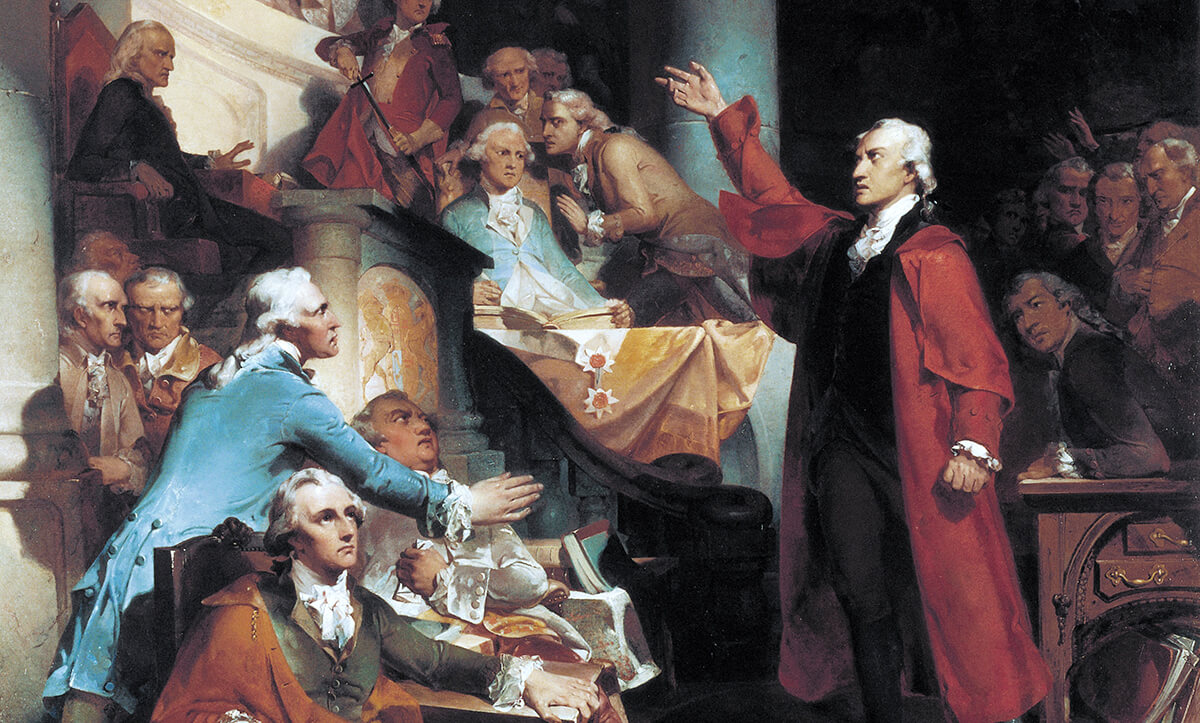
On March 23, 1775, Patrick Henry delivered one of the most famous speeches in American history. While some of his words are still familiar today, many Americans are unaware of the turbulent times preceding his celebrated address.

In the 1760s, Parliament passed numerous laws directly violating the rights of the colonists, including the Sugar Act (1764), the Stamp Act (1765), and many others. Patrick Henry, a member of the Virginia House of Burgesses, was one of many who objected. When the Stamp Act was repealed in 1766, the joy was so widespread that a Boston minister preached a notable sermon celebrating the event!

But the repeal of the Stamp Act was only a temporary reprieve. In 1767 came the hated Townshend Revenue Acts, which led to additional boycotts and protests. When the British sent troops to America to enforce these acts, it led to the shooting down of five Americans in what became known as the Boston Massacre. The Townshend Acts were finally repealed, but in 1774 they were replaced by even worse laws known as the Intolerable Acts.

The British became more hard-fisted, and following the Boston Tea Party, they closed almost all commercial shipments, effectively ended self-government in Massachusetts, and required the people to house British troops in private homes. It was against the backdrop of this turmoil that Patrick Henry rose to speak.

Some had argued that the American Colonies were too weak to do anything against the British (one of the world’s greatest powers at that time), but in his March 23, 1775 speech, Henry replied:

Three millions of people armed in the holy cause of liberty and in such a country as that which we possess are invincible by any force which our enemy can send against us. Besides, sir, we shall not fight our battles alone. There is a just God Who presides over the destines of nations, and Who will raise up friends to fight our battles for us. The battle, sir, is not to the strong alone; it is to the vigilant, the active, the brave. . . .Gentlemen may cry, peace, peace — but there is no peace. The war is actually begun! The next gale that sweeps from the north will bring to our ears the clash of resounding arms! Our brethren are already in the field! . . . . Is life so dear, or peace so sweet as to be purchased at the price of chains and slavery? Forbid it, Almighty God! I know not what course others may take; but as for me, give me liberty, or give me death!

Significantly, Henry’s speech was heavily punctuated with quotations from numerous Bible verses. (See the commentary surrounding Matthew 12 in the Founders’ Bible for more about this, also showing how Bible verses appeared throughout numerous famous speeches by our Founding Fathers.) Not long after his speech came the Battles of Lexington and Concord, beginning the American War for Independence. So March 23rd marks the anniversary of one of the most famous speeches heralding American independence! (You can even purchase a parchment reprint of this famous speech from WallBuilders.)

Columbus and Sex Slavery

I have now reached that point, that there is no man so vile but thinks it his right to insult me. The day will come when the world will reckon it a virtue to him who has not given his consent to their abuse.1

Columbus wrote these words off the coast of Spain, bound in chains. An official officer sent by the King and Queen to investigate allegations of misconduct shipped Columbus and his brothers back to Spain in 1500 after usurping power and allying himself with the armed rebels. Columbus penned the above letter as a vindication of his conduct to Ferdinand and Isabela, and in a sense, his claim proved to be prophetic. As soon as the Sovereigns discovered the imprisonment of Columbus, they ordered him released and to appear before them in order to address the accusations. After hearing Columbus’s defense, they cleared him of all charges. The allegations were not credible and proved to be false upon investigation. Columbus was restored.
Today, the legacy of Columbus finds itself in a similar situation. Columbus Day yearly becomes a battlefield where supposed experts once again drudge up these same old allegations and tout them as some new revelation. One of the most common, and therefore ridiculous, claims is that Columbus trafficked the native women in sex slavery.

Sources ranging from Wikipedia2 to the equally laughable Snopes3 make this accusation. The Huffington Post likewise claims Columbus “supervised the selling of native girls into sexual slavery,” and that he “makes a modern villain like Saddam Hussein look like a pale codfish.”4

They base such a claim on a quote from the same exact letter referenced above. The detractors read a single sentence out of context, and then push their misreading as fact. They quote Columbus as condoning and participating in sex slavery because in his letter he writes:

For one woman they give a hundred castellanos, as for a farm; and this sort of trading is very common, and there are already a great number of merchants who go in search of girls; there are at this moment from nine or ten on sale; they fetch a good price, let their age be what it will.5

This, they say, proves Columbus a villain. However, if we just continue reading the paragraph, Columbus is not at all saying this is a good thing. In fact, he lists these actions in the middle of a long explanation of all the atrocities which a rebelling faction committed. He goes on to lament:

I declare solemnly that a great number of men have been to the Indies, who did not deserve baptism in the eyes of God or men, and who are now returning thither.”6

From even just the slightest bit of context, we discover that the truth is actually exactly opposite of the accusations. What is even more remarkable, is that the same crowd who makes these historical distortions, also overlook the sexual exploitation committed by some of the indigenous people.

During Columbus’ voyages, he came across several islands ruled by a people know as the Caribs (where we get the word Caribbean). He found villages comprised of mostly women who had been enslaved and taken away from their homes. One of the leading crewmen describes that:

These captive women told us that the Carribbee men use them with such cruelty as would scarcely be believed; and that they eat the children which they bear to them, only bringing up those which they have by their native wives.7

This is beastly and truly horrific. Want to talk about sexual exploitation and abuse? There it is. We often think that the New World which Columbus discovered was populated only by kind and peaceful natives. This, however, couldn’t be further from the truth. As you dive into the real, eye-witness accounts of the pre-Columbian world, you discover what Columbus and the later explorers encountered—a land filled with cannibalism, slavery, polygamy, sex trafficking, and even genocide against other tribes.

We will be the first to tell you no one is perfect. The Bible is clear, “all have sinned, and come short of the glory of God” (Romans 3:23). And that certainly includes Columbus, who was far from perfect. But, in the remarkable drama of discovering the New World, Columbus was certainly not the villain he’s portrayed as today.


Endnotes

1 Christopher Columbus, “Letter of the Admiral to the (quondam) nurse of the Prince John, written near the end of the year 1500,” Select Letters of Christopher Columbus (London: Hakluyt Society, 1870), 153-154.
2 “History of Sexual Slavery in the United States,” Wikipedia, accessed October 8, 2018.
3 “Did Christopher Columbus Seize, Sell, and Export Sex Slaves?” Snopes, accessed October 8, 2018.
4 Eric Kasum, “Columbus Day? True Legacy: Cruelty and Slavery,” Huffington Post, October 10, 2010.
5 Columbus, “Letter of the Admiral to the (quondam) nurse of the Prince John,” Select Letters (1870), 165.
6 Columbus, “Letter of the Admiral to the (quondam) nurse of the Prince John,” Select Letters (1870), 165.
7 “Letter of Dr. Diego Alvarez Chanca,” Smithsonian Miscellaneous Collections (Washington: Smithsonian Institution, 1907), 48:440.

Discovering Columbus

Columbus on Trial

For over 500 year Christopher Columbus enjoyed a seat in the pantheon of American history. Being the discoverer of the New World came with well earned advantages. During the early days of our nation books, poems, and statues were made celebrating the man and his mission. Cities were named in his honor, even the seat of the American Government was christened the District of Columbia. There were some that even thought of making it the United States of Columbia.  The Admiral of the Ocean Sea (Columbus’s official title) was so important to the American ethos, that one of the first vessels in the Navy was the USS Columbus.

For years, the first thing children learned in school about America was the old rhyme ” In fourteen hundred ninety-two;
Columbus sailed the ocean blue.” In many respects, the story of the United States begins with Christopher Columbus. With so much legacy spanning over several centuries, it comes as a shock to discover that the Discoverer has suddenly become public enemy number one. Every Columbus Day more and more communities destroy their monuments and re-baptize the day as Indigenous People’s Day.  Each year, anti-Columbus elements bring out more and wilder accusations in attempts to re-write the history books.

In order to present the facts, the history, and the truth, we have spent years gathering resources and combing through the records to uncover what really happened when the Old World encountered the New. This page will serve as the port of departure for people who want to explore past and find the truth about Columbus.

Is he a man we should remember? Was he a hero? What can we learn from his experiences? The answers to these questions and many more like them are available below. Go through the modern lies and the historical facts surrounding Columbus, and clink on the pictures below to read the in depth articles!

Columbus’s primarily sought gold in order to provide for the needs of the Church, both for evangelism and to fund a crusade to retake Jerusalem from Muslim invaders. Learn how Columbus put God over gold: https://wallbuilders.com/resource/columbus-god-over-gold/

Columbus fought against both the native practice of sexual exploitation and the trafficking which Spanish rebels started. In fact, he actually liberated several villages of women who had been forced into sexual servitude. To learn more read here: https://wallbuilders.com/resource/columbus-and-sex-slavery/

Although Columbus was sent back in chains, it was for false allegations from which he was entirely exonerated. After the trial all of his rights and privileges were restored with the exception of his governorship.

In addition to being largely self-taught, Columbus was one of the best navigators the world has ever seen. For nearly 400 years scientists and seamen both acknowledged this fact. Read here to learn more about how Columbus wasn’t an idiot: https://wallbuilders.com/resource/columbus-wasnt-an-idiot/

Records show that the only time Columbus warred against the natives was in defense or when called upon by his native allies. The leading cause of death among the Indians was not war, but diseases. Watch PragerU’s video for more information: https://www.youtube.com/watch?v=HxYVbC283uM

The cultures which Columbus encountered were barbaric, with tribes conquering, enslaving, and cannibalizing each other to the point of complete extermination. For an in depth explanation read here: https://wallbuilders.com/resource/before-the-west-was-won-pre-columbian-morality/; for a brief overview to share read this: https://wallbuilders.com/resource/no-noble-savage-the-world-columbus-found/

No Noble Savage: The World Columbus Found

All arguments making Christopher Columbus a villain comparable with Adolf Hitler1 or Saddam Hussain 2 start with the premise that the world he discovered was populated by peaceful inhabitants who lived in a golden age. It was only with the introduction of the white man, critics claim, that this paradise was destroyed by the tyrannical oppression perpetuated by the European Christians.

The current romanticized presentation of the native cultures is the underlying assumption which permits the narrative that Columbus was a villain. Academics push this to justify tearing down statues of the explorer and removing his name from the calendar.  Proponents of the alternative to Columbus Day—which they call Indigenous People’s Day—are also proponents of alternative history.

Howard Zinn, in his massively influential yet famously inaccurate work A People’s History of the United States, propagated this myth of the noble savage:

So, Columbus and his successors were not coming into an empty wilderness, but into a world which in some places was as densely populated as Europe itself, where the culture was complex, where human relations were more egalitarian than in Europe, and where the relations among men, women, children, and nature were more beautifully worked out than perhaps any place in the world.3

According to Zinn (and most if not all of the modern outcry against Columbus can be traced to his book), the indigenous people were far more advanced in their social morality than the Europeans. This, of course, leads to the conclusion that the white man was (and still is) a racist tyrant oppressing whomever he might. This leads to the conclusion that America was (and still is) one of the worst nations in all of history.

“A Certain Innocence” – Codex Magliabecchiano

What Zinn and his followers fail to account for are the facts. The world Columbus discovered was full of slavery, murder, genocide, sodomy, sexual exploitation, and general barbarity. Zinn only mentions the famous atrocities of the Aztec culture in passing to say that, “the cruelty of the Aztecs, however, did not erase a certain innocence.”4 Let’s take a look at the “certain innocence” prevalent in the cultures encountered by Columbus and the other pre-Columbian natives.

Although the first tribe (led by the chieftain Guacanagari) was extremely friendly to Columbus—so much so that the Columbus even declared that, “a better race there cannot be, and both the people and the lands are in such quantity that I know not how to write it”5—they were not the pacifistic society often portrayed. This first tribe was part of the Taino community which occupied many of the islands in the West Indies. They held those islands, however, because they themselves had conquered, driven out, and replaced the earlier Siboney culture. The Taino domination was so complete that Columbus only ever encountered one such Siboney native.6

The Taino’s warrior culture was noticeably lacking when compared to the truly savage culture of the Carib (or Canib) tribes. These indigenous peoples (from whose name we derive both the words “Caribbean” and “cannibal”) were feared by the Taino because of the constant raids and attacks. During his first voyage, the Taino told Columbus about “extremely ferocious…eaters of human flesh” who “visit all the Indian islands, and rob and plunder whatever they can.”7

Columbus and his shipmates had extensive encounters with the Caribs during the subsequent voyages. The things they saw corresponded exactly with the description giving by their Taino friends, and many other atrocities which they had failed to mention.

For instance, the Caribs would spend up to a decade plundering any particular island until they completely depopulated it through slavery and cannibalism.8 Specifically, on these campaigns they would cannibalize the men and enslave the women and young boys. One of Columbus’s crew member left us with a description of what the Caribs would do to their captives, saying that he found:

twelve very beautiful and very fat women from 15 to 16 years old, together with two boys of the same age. These had the genital organ cut to the belly; and this we thought had been done in order to prevent them from meddling with their wives or maybe to fatten them up and later eat them. These boys and girls had been taken by the above mentioned Caribs;9

The testimony by the Taino of cannibalism was confirmed by the amount of human bones and even cooking limbs found in the villages.10  Another shipmate on the voyage, the lead doctor, also related in depth the terrible acts of the Caribs. He explained:

In their wars upon the inhabitants of the neighboring islands, these people capture as many of the women as they can, especially those who are young and handsome, and keep them as body servants and concubines; and so great a number do they carry off, that in fifty houses we entered no man was found, but all were women. Of that large number of captive females more than twenty handsome women came away voluntarily with us.

When the Caribbees take any boys as prisoners of war, they remove their organs, fatten the boys until they grow to manhood and then, when they wish to make a great feast, they kill and eat them, for they say the flesh of boys and women is not good to eat. Three boys thus mutilated came fleeing to us when we visited the houses.11

Cannibalism – Codex Magliabechiano

The same doctor describes another instance where they came to a Carib slave camp and:

As soon as these women learned that we abhor such kind of people because of their evil practice of eating human flesh, they felt delighted…. These captive women told us that the Carribbee men use them with such cruelty as would scarcely be believed; and that they eat the children which they bear to them, only bringing up those which they have by their native wives. Such of their male enemies as they can take away alive, they bring here to their homes to make a feast of them, and those who are killed in battle they eat up after the fighting is over. They claim that the flesh of man is so good to eat that nothing like it can be compared to it in the world; and this is pretty evident, for of the human bones we found in their houses everything that could be gnawed had already been gnawed, so that nothing else remained of them but what was too hard to be eaten. In one of the houses we found the neck of a man undergoing the process of cooking in a pot, preparatory for eating it.

This authentic eyewitness picture of the indigenous people is radically different that the one presented by Zinn. If this is what he means by “certain innocence” what does guilt looks like? Remember, these are the people of whom he proclaimed that their “relations among men, women, children, and nature were more beautifully worked out than perhaps any place in the world.” It may comes as a shock to Zinn, but no one ought to consider slavery, sexual exploitation, and infant cannibalism as “beautifully worked out.”

This is the New World which Columbus discovered. It wasn’t filled with friendly, peaceful, tribes, but people numerous and warlike. It is against this backdrop that we must evaluate the actions of Columbus and not the fabricated history created by fake historians like Howard Zinn and his followers.


Endnotes

1 Russel Means, quoted by Dinesh D’Souza in “The Crimes of Christopher Columbus,” First Things, November 1995.
2 Eric Kasum, “Columbus Day? True Legacy: Cruelty and Slavery,” Huffington Post, October 10, 2010.
3 Howard Zinn, A People’s History of the United States (New York: Harper Collins, 2015), 21.
4 Howard Zinn, A People’s History of the United States (New York: Harper Collins, 2015), 11.
5 Christopher Columbus, The Journal of Christopher Columbus, trans. Clements Markham (London: Hakluyt Society, 1893), 131.
6 Samuel Morrison, Admiral of the Ocean Sea (New York: MJF Books, 1970), 464.
7 Christopher Columbus, “Letter sent by Columbus to Chancellor of the Exchequer, respecting the Islands found in the Indies,” Select Letters of Christopher Columbus, trans. R. H. Major (London: Hakluyt Society, 1870), 14.
8 “Michele de Cuneo’s Letter on the Second Voyage, 28 October 1495,” Journals and Other Documents on the Life and Voyages of Christopher Columbus, trans. Samuel Morrison (New York: Heritage Press, 1963), 219.
9 “Michele de Cuneo’s Letter on the Second Voyage, 28 October 1495,” Journals and Other Documents, trans. Morrison (1963), 211-212.
10 “Letter of Dr. Diego Alvarez Chanca,” Smithsonian Miscellaneous Collections (Washington: Smithsonian Institution, 1907), 48:438, 440.
11 “Letter of Dr. Diego Alvarez Chanca,” Smithsonian Miscellaneous Collections (Washington: Smithsonian Institution, 1907), 48:442.

Civil War Baptism Competition

William Cogswell

The author of this letter, John Munroe, enlisted as a private in the 2nd Massachusetts Infantry at the age of 19 on May 22, 1861, and served until mustered out on July 1, 1864. During the war he acted as the musician for K Company. 1 Aside from this, not much is known of Private Munroe.

The letter’s most notable character, Colonel William Cogswell, however, was perhaps one of the most famous members of the 2nd Massachusetts. Col. Cogswell served with exemplary distinction during the Civil War, finally being brevetted a Brigadier General. Afterwards, he was three times of the mayor of Salem, five times a member of the Massachusetts House of Representatives, then he was elected to the Senate of Massachusetts in the mid 1880’s. In 1886, Cogswell became a Republican representative in the Federal Congress—a position to which he was reelected to until his death in 1895.2

In one of the many addresses given during the memorial to his life, the speaker attested to his strong character saying:

When heroes were needed, Mr. Cogswell could easily be found. When the tender sympathies of a woman were needed, his heart was loaded with that sweet necessity of life.

His close companions, those whom he loved, knew him to be great in God’s holiest, sweetest, and tenderest gifts, as well as great in the heart that accomplishes the grand achievements of life.

He had a soul fitted to reprove the wicked. He had an arm potential against the oppressor. He had a heart dauntless in the face of danger, ever quick to respond when duty called him to action. The tear of a suffering child, the sigh of an unfortunate woman, and the pitiful look of the debased, all found sympathy in his great soul.3

The anecdote related by Private Munroe in the letter most likely happened towards the end of 1864 after the capture of Atlanta on September 2. General Sherman had appointed Cogswell to be the post-commandant during the period immediately after the completion of the siege.4

Below are the pictures and transcript of the letter.


A “Col” who would not be outdone

At the time the 2nd Regt Mass Inf was in in camp at or near Atlanta, a Michigan Regt was brigaded with it for a while. It being a crack “regt,” a great rivalry fell out between it and the Mass 2nd, also a crack Regiment under Col. Cogswell, and the latter had the better of the competition.

One day a wave of religion struck the Michigan crowd. We had been stationed at this place some little time and the Chaplains had begun to get in their work. When Soldiers are marching or fighting they don’t seem to give religion much thought, but when in Camp for a month and the muddy current of life settles a little it is very different.

At this particular time a regular revival broke out in the Michigan Regt. The Col himself was given that way, and you could find about as many Hymn books, as decks of cards about his Hd. Qs.* and as he rather led this return to a better and brighter life many of his boys naturally fell in and followed. Cogswell’s regiment, on the other hand, was decidedly a perverse and stiffnecked generation. If there was any religion in that regiment it was a secret and none ever knew it. One day while the Michigan revival was at its heighth [sic] an Officer was talking with Cogswell about it.

“Do you know, Colonel,” he said to Cogswell, “I understand that eleven of those Michigan fellows are going to be baptized to-morrow?” “The deuce they are!” said Cogswell, & all of scorn and incredulity. He thought he saw a scheme to outdo his brave Second Mass. He determined to thwart it. That evening on dress parade he addressed his regiment. He told them of the Michigan regiment and how eleven of them were going to be baptized in the river next morning.

“Now boys,” said Cogswell, and his voice trembled, “the Second Massachusetts can’t stand this. We’ve outfought, outmarched and outdrilled these Michigan men, and can repeat all of these solemnities any day in the week. They know it, too, and so ever they try to make a mean, sneaking detour, as it were, and give us the go-by in religious matters, thinking to catch us asleep and not at home, now Boys, if I were to call for volunteers to charge a battery of siege guns, or to just march calmly out to die there would be but one response. And that would be the Sutler.  Every man but the Sutler would step forward on the instant. To save the honor of the regiment then, when it is so insidiously beset by those people from Michigan, I now call on you for an unusual sacrifice.”

“And boys,” continued Cogswell, in tones of deepest feeling, “I don’t want you at this crisis in the career of a noble regiment to whose undying fame we all have contributed our blood, to weaken or hang back. Eleven of our rival are to be baptized tomorrow morning, and I now call for 25 of my brave fellows to volunteer to also be baptized. We’ll see their 11 and go ____ 14 better.” The line hesitated a moment, and at last a soldier asked for further & fuller light. “Are you going to be ‘mersed [sic for immersed] too, Colonel?” he inquired. “I will never,” said Cogswell, “shriek from a peril to which I invite my men.

“Should the Col of the Michigan regiment attempt any trick of personal baptism, I too, will go. Should he baptize any of his Officers, officers of equal rack in the 2nd Mass will be there to uphold the honor of their Regiment.”

“As the story comes to me now, it would seem as a first play these people meditate only the baptism of eleven privates, and to it rests with you my men, to say, whether at this juncture their plot shall succeed, or whether with 25 brave volunteers for this special duty we will retain our proud prestige as the crack regiment of this Brigade; and the unmeasured Superior of this particular outfit from Michigan.”

The 25 Volunteers stepped forward, and Cogswell issued an order to the Chaplain to baptize them at the same time and place with their hated rivals.

Truly Yours,

John Munroe


Endnotes

1 Alonzo H. Quint, The Record of the Second Massachusetts Infantry, 1861-65 (Boston: James P. Walker, 1867), 425, 469.
2 “Address of Mr. Moody,” Memorial Addresses on the Life and Character of William Cogswell (Washington: Government Printing Office, 1897), 19.
3 “Address of Mr. Henderson,” Memorial Addresses (1897), 38.
4 “Biography: William Cogswell,” American Battlefield Trust, accessed December 13, 2023, https://www.civilwar.org/learn/biographies/william-cogswell.

Darwin and Race

When Charles Darwin released his famous book, On the Origin of Species, in 1859, a jolt shook the scientific world with seemingly innumerable consequences. One such result was the notable increase of radical propositions justifying racism veiled in the language of science.

Darwin hints at his own racist views within the sub-title of his monolithic book which reads in full:

On The Origin of Species by Means of Natural Selection, or the Preservation of Favoured Races in the Struggle for Life1

Interestingly, modern editions, like the one published by the American Museum of Natural History, dispense with the majority of Darwin’s title, preferring instead to cut everything beyond “On the Origin of Species.”2

Readers of Darwin will note, however, that the scientist was an ardent abolitionist. In his younger days he followed closely the efforts of Wilberforce and the anti-slavery forces, writing in 1833:

I have watched how steadily the general feeling, as shown at elections, has been rising against Slavery. What a proud thing for England if she is the first European nation which utterly abolishes it! I was told before leaving England that after living in slave countries all my opinions would be altered; the only alteration I am aware of is forming a much higher estimate of the negro character. It is impossible to see a negro and not feel kindly towards him; such cheerful, open, honest expressions and such fine muscular bodies.3

With such being the case, the question becomes, “how much higher did Darwin’s estimate become?” It is good that he did not consider slavery to be justified, but did he consider the enslaved to be equal to himself? The answer is a clear “no.”

In his book The Descent of Man, which explores the theory of natural selection and its implications upon humanity, Darwin offers an explanation for the “great break in the organic chain,” which some pointed to as evidence contradicting his theories, saying that, “these breaks depend merely on the number of related forms which have become extinct.” He then proceeds to give an illustration making his meaning clear:

At some future period, not very distant from as measured by centuries, the civilized races of man will almost certainly exterminate, and replace, the savage races throughout the world….The break will then be rendered wider, for it will intervene between man in a more civilized state, as we may hope, than the Caucasian, and some apes as low as a baboon, instead of as at present between the negro or Australian and the gorilla.4

Darwin has presented a scale displaying his perceptions of the graduated development of species. He hoped that, by means of the “preservation of favored races,” the biological gap between species will be more like the distance between the white man and baboon, instead of the closely related (as he views it) black man and gorilla. When discussing the way that the different “races” or “sub-species” of man have developed, he posits that:

Some of these, for instance the Negro and European, are so distinct that, if specimens had been brought to a naturalist without any further information, they would undoubtedly have been considered by him as good and true species.5

In accordance with this view of the natural supremacy of white people over black, he did not refrain from employing derogatory vocabulary when writing to his peers. In a discussion concerning the manner of certain ants which seemingly enslaved some of their fellow ants, he remarks:

I have now seen a defeated marauding party, and I have seen a migration from one nest to another of the slave-makers, carrying their slaves (who are HOUSE, and not field n—-rs) in their mouths!6

And he even would refer to his own editorial labors he spent on his books with the same baneful analogy:

But on my life no n—-r with lash over him could have worked harder at clearness than I have done.7

Galton

So we see that even though Darwin was personally against the institution of slavery, he still fully considered his own “race” to be widely superior to blacks, and employed the vernacular of the plantation when speaking in the safety of his letters. He viewed the world through racist eyes and his theory reflects that truth.

No one best exemplifies the inherent racism found in Darwin’s Preservation of the Favored Races than his cousin and fellow scientist, Francis Galton. Galton was a man who applied himself widely to the various scientific fields, but most of all to theories of racial development which he termed “eugenics.” Much of his work is based off that of Darwin, and the two conversed through letters until the latter passed. In Galton’s major work, Inquiries into Human Faculty and its Development, he advocated for the gradual extermination of the “lower races” through deliberate breeding of the higher “stock.” He concludes that:

The question then arises as to the way in which man can assist in the order of events. I reply, by furthering the course of evolution. He may use his intelligence to discover and expedite the changes that are necessary to adapt circumstance to race and race to circumstance, and his kindly sympathy will urge him to effect them mercifully.8

Galton himself attempted to “further the course of evolution” through a variety of means and methods. Most outrageously, he proposed colonizing Africa with the Chinese in hopes that the latter would breed-out the former, extinguishing the inhabitants of that continent entirely. He writes:

My proposal is to make the encouragement of the Chinese settlements at one or more suitable places on the East Coast of Africa a part of our national policy, in the belief that the Chinese immigrants would not only maintain their position, but that they would multiply and their descendants supplant the inferior Negro race. I should expect the large part of the African seaboard, now sparsely occupied by lazy, palavering savages…might in a few years be tenanted by industrious, order loving Chinese…9

In the same year, Darwin wrote to Galton praising another one of his incredible plans for genetically improving the world through selective breeding of humans in tones of intellectual agreement (if some doubt of its practicability):

Though I see so much difficulty, the object seems a grand one; and you have pointed out the sole feasible, yet I fear utopian, plan of procedure in improving the human race.10

With so much having been done by Darwin, which was then expounded upon by Galton, it should come as no surprise that the Southern apologists and white supremacists in America readily took to the writings of the two cousins as certain vindication of their position. One such piece of writing, out of the many which exist, is the 1905 essay by Benjamin K. Hays entitled, Natural Selection and the Race Problem.11 After breaking down the way Darwin’s theory applies to humanity, Hays turns his attention to the American situation:

And the black man—what of him?

As he was known to the ancient Egyptians, to the Greek and to the  Roman, even so is he found in his African home today. At the dawn of history he was fully developed, and during the past three thousand years he has not made one step of progress. Independently, he has shown no power to advance. The superiority of the American negro to his African brother, who is a savage and cannibal, is due to slavery, and could have been acquired in no other way. Men who ascribe debased characteristics of the negro to slavery show a short-sightedness that is pitiable. The present attainment of the American negro has been solely the result of his close personal contact with the white man.

Nor should it be forgotten that most of the leaders in the negro race are men with Anglo-Saxon blood in their veins who partake more of their Caucasian than of their Ethiopian lineage. Some of these are splendid men, who are making heroic efforts to elevate the negro race. Others of mixed blood are vicious and turbulent. These are the men who create trouble.

Left to itself, a negro population lapses into barbarism….The negro has been domesticated, but the question is, will he ever become an integral part of Anglo-American civilization….The black man has never been a competitor, but has always been subservient to the white race. And just so long as he remains subservient his position is secure, and just so soon as he becomes a competitor his fate is sealed.12

Hays very simply applies the Darwinian theory to his perception of America, drawing the same conclusions which Galton and Darwin himself reached. In the latter half of the essay, Hays turns his attention to how the racial tension in American could be resolved. He concludes only two options exist for African-Americans; submission or destruction. Hays synthesizes the natural extension of Darwin’s beliefs saying:

The weak has ever been dominated by the strong, and where the strong cannot control it will destroy. As long as a weaker race will render service, it will be protected by the stronger.

But whenever and wherever the weaker becomes a competitor of the stronger, the Struggle for Existence will be brief, and the relentless hand of Natural Selection will place the weaker in the list of those that are numbered with the past13

Clearly, the work of Darwin and his successors lead toward racist and destructive conclusions which have been used since their inception to justify oppression. Southern slaveholders and their later apologists used Darwinism as a balm for their consciences, vindicating their actions with the words of the “Father of Evolution.”


Endnotes

1 Charles Darwin, On the Origin of Species by Means of Natural Selection, or the Preservation of Favoured Races in the Struggle for Life (London: John Murray, 1859).
2 Charles Darwin, On the Origin of Species: A digital edition of the 1859 London Origin of Species, ed. Adam M. Goldstein (New York: American Museum of Natural History, 2011).
3 Charles Darwin to Miss C. Darwin, May 22, 1833, The Life and Letters of Charles Darwin, ed. Francis Darwin (London: John Murray, 1888), I:246.
4 Charles Darwin, The Descent of Man and Selection in Relation to Sex (London: John Murray, 1871), I:201.
5 Darwin, The Descent of Man (1871), II:388.
6 Charles Darwin to J.D. Hooker, July 13, 1858, Life and Letters, ed. Darwin (1888), II:129.
7 Charles Darwin to J.D. Hooker, May 11, 1859, Life and Letters, ed. Darwin (1888), II:156.
8 Francis Galton, Inquiries into Human Faculty and its Development (London: MacMillan and Co., 1883) , 334-335.
9 “Africa for the Chinese,” The Times, June 5, 1873.
10 Charles Darwin to Francis Galton, January 4, 1873, “Correspondence between Charles Darwin and Francis Galton,” Galton.org.
11 Benjamin K. Hays, Natural Selection and the Race Problem (Charlotte: Charlotte Medical Journal, 1905).
12 Hays, Natural Selection (1905), 8-10.
13 Hays, Natural Selection (1905), 20-21.

Sewing Machine from the Lodz Ghetto

Entrance to Lodz

In Poland, the Nazi persecution of the Jews was concentrated at two main centers throughout the Second World War—Warsaw and Lodz. Both of those cities were transformed into large Jewish Ghettos which served as slave labor camps with the express intention of working the Jews to either death or until sent to one of the extermination camps. Although the Warsaw Ghetto was the larger of the two, Ghetto Lodz ran for a longer time, existing from February 1940 until it was liquidated in August 1944.1

In Lodz the persecution of the Jews began six month prior to the formation of the ghetto, on November 8, 1939, when the German army occupied the city.2 From that point the Nazi government enacted systematic laws for the isolation and repression of the Jews so as to reduce their ability to resist deportation and the eventual extermination.3 Another part of the germanization of Lodz involved renaming the city Litzmannstadt, after the German general who had captured the city during the First World War.4

General Litzmann

With the order for segregating the Jewish community, 160,320 people were forced by the Germans into a space barely over four square miles. The following year that number was augmented by another 19,722 Jews from other German territories and 17,826 Jews from smaller ghettos in 1941. In addition to these numbers 5,007 Austrian Gypsies were also shipped to Ghetto Lodz, bringing the total number of slaves to nearly 200,000.5

One of the factors contributing to the longevity of the ghetto was the fact that the Jews, under the administration of Chaim Mordechaj Rumkowski, produced an enormous amount of goods for Germany.6 The primary industry of Lodz before the war was textiles, and as Litzmannstadt this continued to be true.7 During Arthur Greiser’s (the governor of the majority of occupied Poland) trial after the war he related that the “the Lodz Ghetto was one of the largest industrial centers in the Reich.”8 The rapid growth of its labor institutions revealed the truth of that statement:

The Lodz Ghetto excelled in the organization of its labor and its achievements in production. The production system in the ghetto, set in motion immediately after the ghetto was established, quickly expanded… The first sewing workshop went into operation in May 1940, and by September 1940 there were seventeen resorts including seven sewing factories… in 1942-1943, 95 percent of the adult population in the ghetto was working.9

In order to fuel the rapid expansion of slave industry, Germany ordered Jewish possessions helpful to those ends to be shipped to Lodz from across the Reich. An example of this kind of edict from March 21, 1942, included a provision stating, “Sewing machines and manual machines are to be sent to Lodz (for the occupations by inhabitants of ghettos.)”10
The machine pictured is one of those sewing machines used by the Jewish slaves in the Lodz Ghetto. It is a black Clemens-Muller brand treadle head which appears to have been originally branded as a Singer sewing machine. Engraved on the maintenance panel is the Star of David with the word getto within. Surrounding the star is the phrase Tekstil Abteilung Litzmannstadt. Altogether the inscription reads “Textile Division—Ghetto Litzmannstadt.” The Clemens-Muller base is 37 centimeter long and 18.5 centimeters wide. This sewing machine was most likely one of the 7,000 operational by the end of 1942 within the ghetto.11

By August of 1944 the Russian army was steady approaching Poland and, with the success of the D-day invasion, defeat was fast approaching the Germans. This led to the final series of deportations from the Lodz Ghetto resulting in the murder of 67,000 Jews at Auschwitz. This, however, was only the last round of mass exterminations, with another 77,867 having been executed at the Chelmno death camp in the years prior—this includes the 15,681 children under 10 and elderly over 65 who were abducted on September 4, 1942. These numbers, added to the 45,327 people who died due to the inhuman conditions of the ghetto, means that out of the circa 200,000 Jews that were kept there, at least 190,194 of them died—a mortality rate of ~95%.12

Below are pictures of the machine in the collection followed by several photos of the textile industry from the Lodz Ghetto.


Endnotes

1 The Holocaust Encyclopedia, “Lodz” (Read here).
2 Centrum Dialogu, “The History of the Litzmannstadt Ghetto” (Read here).
3 The Holocaust Research Project “The Lodz Ghetto.”
4 Litzmannstadt Ghetto, “Introduction” (Read here).
5 The Holocaust Research Project “The Lodz Ghetto.”
6 Centrum Dialogu, “The History of Litzmannstadt Ghetto – The Ghetto Establishment” (Read here).
7 Litzmannstadt Ghetto, “Introduction” (Read here).
8 Isaiah Trunk, Lodz Ghetto: A History (Bloomington: Indiana University Press, 2006), p. xli. (Read here).
9 Ibid.
10 Edith Kurzweil, Nazi Laws and Jewish Lives: Letters from Vienna (New York: Routledge, 2004) (Read here).
11 Trunk, Lodz Ghetto, p. 150. (Read here).
12 Numbers from The Holocaust Research Project “The Lodz Ghetto.”

Daniel Webster – Vidal v. Girard’s Executors

In the last year of his life Daniel Webster (1782-1852) stood before the New York Historical Society and declared:

That if we, and our posterity, shall be true to the Christian religion, if we shall respect his commandments, if we, and they, shall maintain just, moral sentiments, and such conscientious convictions of duty as shall control the heart and life, we may have the highest hopes of the future fortunes of this country.1

Daniel Webster

Such a stance was, however, not a rarity for Daniel Webster who regularly defended the Christianity throughout his life. One example was in 1844, when Webster rose for the final summation in the case of Vidal v. Girard’s Executors and “delivered one of the most beautiful and powerful arguments in defense of the Christian religion ever uttered.”2

The case concerned the legality of the will of Stephan Girard. In his will Girard had set aside a trust of two million dollars3 for the formation of a college for the education of “as many poor white male orphans, between the ages of six and ten years, as the said income shall be adequate to maintain.”4 The executors of his will, and specifically of the construction and maintenance of the college, were declared the Mayor, Aldermen, and Citizens of Pennsylvania.5 After proceeding through many of the details concerning the organization of the school, Girard lists several “conditions on which my bequest for said college is made and to be enjoyed.”6 The second of these restrictions dictated stipulations regarding the teachers to be employed:

I enjoin and require, that, no ecclesiastic, missionary, or minister of any sect whatsoever, shall ever gold or exercise any station or duty whatever in the said college, nor shall any person ever be admitted for any purpose or as visitor, within the premises appropriated for the purposes of said college.7

After making such a striking demand, Girard attempted to explain and justify this action writing:

In making this restriction, I do not mean to cast any reflection upon any sect or person whatsoever; but as there is such a multitude of sects, and such a diversity of opinion amongst them, I devise to keep the tender minds of the orphans, who are to derive advantage from this bequest, free from the excitements which clashing doctrines and sectarian controversy are so apt to produce.8

The familial heirs of Girard, however, contested the viability the bequest by saying that these sections of the will rendered it void. The plaintiff’s case was argued by Daniel Webster and another preeminent advocate of the day, Walter Jones. The attorneys submitted two main objections to the will. The Court summarized these two objections, writing that:

The principle questions, to which the arguments at the bar have been mainly addressed, are; First, whether the corporation of the city of Philadelphia is capable of taking the bequest of the real and personal estate for the erection and support of a college upon the trusts and for the uses designated in the will: Secondly, whether these uses are charitable uses valid in their nature and capable of being carried into effect consistently with the laws of Pennsylvania.9

The second of these issues addressed whether or not the will was valid according to the laws of Pennsylvania. Webster submitted two reasons why it would be unacceptable. He first argued that the beneficiaries of the bequest (i.e. the “poor white male orphans”) were a category:

So loose a description, that no one can bring himself within the terms of the bequest, so as to say that it was made in his favor. No individual can acquire any right, or interest; nobody, therefore, can come forward as a party, in a court of law, to claim participation in the gift.10

The second objection Webster offers (which takes up the vast majority of his speech) is that the will is invalid due to the breach of the common law by being averse to Christian education. He declares that:

In the view of a court of equity this devise is no charity at all. It is no charity, because the plan of education proposed by Mr. Girard is derogatory to the Christian religion; tends to weakens men’s reverence for that religion, and their conviction of its authority and importance; and therefore, in its general character, tends to mischievous, and not to useful ends.11

Webster argues at length that due to the will banning the presence of any ecclesiastic from ever entering the college compound, Mr. Girard attacks Christianity to such an extent that it will substantially harm the community; thus creating a breach of both the common law of America and the general interests of Philadelphia.12 To show this he questions the Court asking:

Did the man ever live that had a respect for the Christian religion, and yet had no regard for any of its ministers? Did that system of instruction ever exist, which denounced the whole body of Christian teachers, and yet called itself a system of Christianity?13

Pressing further against anti-religious intention he found apparent in Girard’s will, Webster denounces its claim to charity by explaining that any charity which excludes Christ fails to even meet the definition of charity.

No, sir! No, sir! If charity denies its birth and parentage—if it turns infidel to the great doctrines of the Christian religion—if it turns unbeliever—it is no longer charity! There is no longer charity, either in a Christian sense, or in the sense of jurisprudence; for it separates itself from the fountain of its own creation.14

Stephan Girard

Webster, understanding that the will did not explicitly exclude all Christian teaching, next argues that any attempt to declare the will allows for lay-teaching of religion would be completely antithetical to the spirit and intention of the will—thus rendering the trust equally void. Webster submits that if Girard’s desire was to prevent all conflict concerning the Christian faith from arising and splitting apart the contingent of young scholars, then any religious education would lead to differences of opinion, especially if the students were taught by lay ministers. He inquires:

Now, are not laymen equally sectarian in their views as clergymen? And would it not be just as easy to prevent sectarian doctrines from being preached by a clergyman as being taught by a layman? It is idle, therefore, to speak of lay preaching. … Everyone knows that laymen are as violent controversialists as clergymen, and the less informed the more violent.15

Next Webster takes on the premise of Girard’s exclusion itself. He derides the reasoning of Girard, declaring:

But this objection to the multitude and differences of sects is but the old story—the old infidel argument. It is notorious that there are certain great religious truths which are admitted and believed by all Christians. All believe in the existence of a God. All believe in the immortality of the soul. All believe in the responsibility, in another world, for our conduct in this. All believe in the divine authority of the New Testament. … And cannot all these great truths be taught to children without their minds being perplexed with clashing doctrines and sectarian controversies? Most certainly they can.16

To give an example of how all the various sects and denominations can work, Webster refers the Court to the example the Founding Father’s established in the first Continental Congress. There, setting aside all differences in religious opinions, they came together to pray and ask God’s help in the War for Independence, Webster reminded the Court that many of the delegates doubted the propriety of praying together due to their differences but Samuel admonished them:

It did not become men, professing to be Christian men, who had come together for solemn deliberation in the hour of their extremity, to say that there was so wide a difference in their religious belief, that they could not, as one man, bow the knee in prayer to the Almighty, whose advice and assistance they hoped to obtain.17

Justice Joseph Story

Building upon that image of the Founders on their knees in prayer, Webster closes his case by clearly defining the two positions on the issue of Girard’s will. On the one side, there are “those who really value Christianity,” and who “plainly see its foundation, and its main pillars… [who] wish its general principles, and all its truths, to be spread over the whole earth.”18 On the other side, however, are those who do not value Christianity, and thus, “cavil about sects and schisms, and ring monotonous changes upon the shallow and so often refuted objections.”19 With that dichotomy, Webster charged the Court to likewise defend the Christian faith and preserve American society.

Although a unanimous decision for Girard’s executors, the Court, in its written opinion, agreed with all of Webster’s arguments concerning the breach of common law arising from flagrant attacks upon Christianity. Justice Joseph Story, author of the opinion, confirms Webster’s understanding of the law’s relationship to the Christian religion:

It is said, and truly, that the Christian religion is a part of the common law of Pennsylvania.20

We are compelled to admit that although Christianity be a part of the common law of the state, yet it is so in this qualified sense, that its divine origin and truth are admitted, and therefore it is not to be maliciously and openly reviled and blasphemed against, to the annoyance of believers or the injury of the public.21

Such a case is not to be presumed to exist in a Christian country. … There must be plain, positive, and express provisions, demonstrating not only that Christianity is not to be taught; but that it is to be impugned or repudiated.22

In the areas pertaining to Christianity and the common law Webster and the Court concurred. The difference did not come from a disagreement concerning the interpretation of the law, but rather the interpretation of the will. Webster held that where the letter of the will may not have openly assailed Christianity, the spirit of the will clearly did. The Court, however, rejected this interpretation, insisting instead that the exclusion of Christian pastors from the school on the grounds of sectarian conflict did not necessitate exclusion of Christian education in general. Story explains:

But the objection itself assumes the proposition that Christianity is not to be taught, because ecclesiastics are not to be instructors or officers. But this is by no means a necessary or legitimate inference from the premises. Why may not laymen instruct in the general principles of Christianity as well as ecclesiastics. There is no restriction as to the religious opinions of the instructors and officers. … Why may not the Bible, and especially the New Testament, without note or comment, be read and taught as a divine revelation in the college — its general precepts expounded, its evidences explained, and its glorious principles of morality inculcated? What is there to prevent a work, not sectarian, upon the general evidences of Christianity, from being read and taught in the college by lay-teachers? Certainly there is nothing in the will, that proscribes such studies.23

So the Court dismissed Webster’s argument that the will was hostile to Christianity, thus deciding the trust to be valid. Even though the Court differed from Webster’s reading of the will, this case provides an interesting view into the mindset of this early Supreme Court regarding the freedom of religion in American schools. Both Webster and Story advocated clearly for the important role of the Bible in education.


Endnotes

1 Daniel Webster, An Address Delivered before the New York Historical Society (New York: New York Historical Society, 1852), 47.
2 Fanny Lee Jones, “Walter Jones and His Times,” Records of the Columbia Historical Society Vol. V (Washington: Columbia Historical Society, 1902), 144.
3 The Will of the late Stephan Girard (Philadelphia: Thomas Silver, 1848), 16.
4 The Will (1848), 21.
5 The Will (1848), et al.
6 The Will (1848), 22.
7 The Will (1848), 22-23.
8 The Will (1848), 23.
9 Vidal et al. v. Girard’s Executors, 43 US 127, 186 (1844).
10 Daniel Webster, In Defense of the Christian Ministry, and in Favor of the Religious Instruction of the Young (Washington: Gales and Seaton, 1844), 10.
11 Webster, In Defense of the Christian Ministry (1844), 10.
12 Webster, In Defense of the Christian Ministry (1844), 11.
13 Webster, In Defense of the Christian Ministry (1844), 13.
14 Webster, In Defense of the Christian Ministry (1844), 16.
15 Webster, In Defense of the Christian Ministry (1844), 21.
16 Webster, In Defense of the Christian Ministry (1844), 35.
17 Webster, In Defense of the Christian Ministry (1844), 36.
18 Webster, In Defense of the Christian Ministry (1844), 37.
19 Webster, In Defense of the Christian Ministry (1844), 37.
20 Vidal et al. v. Girard’s Executors, 43 US 127, 198 (1844).
21 Vidal et al. v. Girard’s Executors, 43 US 127, 198 (1844).
22 Vidal et al. v. Girard’s Executors, 43 US 127, 198 (1844).
23 Vidal et al. v. Girard’s Executors, 43 US 127, 200 (1844).