Daniel Webster

Qualifications for Public Office

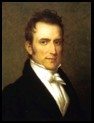
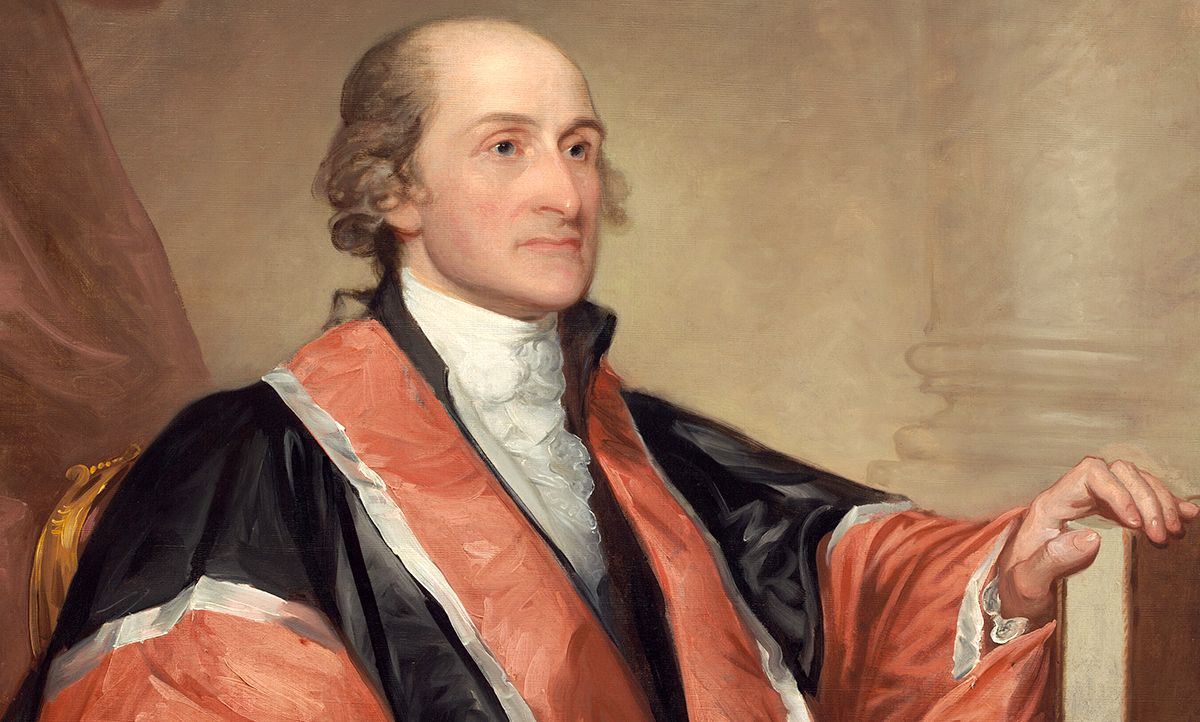
Daniel Webster, known as the “Defender of the Constitution,” was a famous orator and statesman who argued cases before the US Supreme Court, served as a US Congressman, a US Senator, and US Secretary of State. In testimony before the Massachusetts Constitutional Convention (transcribed below), Mr. Webster persuasively reasons for the peoples’ right to establish qualifications for their elected officials and acknowledges the importance of Massachusetts’ “respect and attachment to Christianity” through the retention of a constitutional provision requiring a profession of belief in the Christian religion as a qualification for holding public office.


Historical Introduction

In consequence of the separation of what is now the State of Maine from Massachusetts in the year 1820, it became necessary to make some change in the constitution of the Commonwealth. The opportunity was thought a favorable one for a general revision of that instrument, which had undergone no amendment since its adoption in 1780. Delegates were accordingly chosen by the people to meet in convention for this purpose. . . .Mr. Webster was among the delegates chosen by the town of Boston, and took an active and distinguished part in the business of the convention, both in committee-room and in debate.  As soon as the body was organized. . . [t]he subject of the official oaths and subscriptions required by the [current] constitution was referred to a committee . . . of which Mr. Webster was chairman. A report was made by this committee recommending that . . . a simple oath of allegiance to the Commonwealth, together with the oath of office, should be taken by all persons chosen or appointed to office. . . . and that a profession of belief in the Christian religion no longer be required as a qualification for office.

Daniel Webster’s remarks regarding the committee’s report provides compelling reasoning which should be considered by every American voter today. Webster’s comments emphasize the importance of Christian leaders and Christian principles in civil government. In the report, delivered on December 4th, 1820, Webster explained:

The Speech

It is obvious that the principal alteration proposed by the first resolution is the omission of the declaration of belief in the Christian religion as a qualification for office in the cases of the governor, lieutenant-governor, councillors, and members of the legislature. I shall content myself on this occasion with stating, shortly and generally, the sentiments of the select committee, as I understand them, on the subject of this resolution.

Two questions naturally present themselves. In the first place, Have the people a right, if in their judgment the security of their government and its due administration demand it, to require a declaration of belief in the Christian religion as a qualification or condition of office? On this question, a majority of the committee held a decided opinion. They thought the people had such a right. By the fundamental principle of popular and elective governments, all office is in the free gift of the people. They may grant or they may withhold it at pleasure; and if it be for them, and them only, to decide whether they will grant office, it is for them to decide, also, on what terms and what conditions they will grant it. Nothing is more unfounded than the notion that any man has a right to an office. This must depend on the choice of others, and consequently upon the opinions of others, in relation to his fitness and qualification for office. No man can be said to have a right to that which others may withhold from him at pleasure.

There are certain rights, no doubt, which the whole people, or the government as representing the whole people, owe to each individual in return for that obedience and personal service, and those proportionate contributions to the public burdens which each individual owes to the government. These rights are stated with sufficient accuracy, in the tenth article of the Bill of Rights, in this constitution. ” Each individual in society has a right to be protected by it in the enjoyment of his life, liberty, and property, according to the standing laws.” Here is no right of office enumerated; no right of governing others, or of bearing rule in the State. All bestowment of office remaining in the discretion of the people, they have of course a right to regulate it by any rules which they may deem expedient. Hence the people, by their constitution, prescribe certain qualifications for office respecting age, property, residence, and taxation. But if office, merely as such, were a right which each individual under the social compact was entitled to claim, all these qualifications would be excluded. Acknowledged rights are not subject, and ought not to be subject to any such limitation. The right of being protected in life, liberty, and estate is due to all and cannot be justly denied to any, whatever be their age, property, or residence in the State.

These qualifications, then, can only be made requisite as conditions for office on the ground that office is not what any man can demand as matter of right but rests in the confidence and good-will of those who are to bestow it. In short, it seems to me too plain to be questioned that the right of office is a matter of discretion and option, and can never be claimed by any man on the ground of obligation. It would seem to follow, then, that those who confer office may annex any such conditions to it as they think proper. If they prefer one man to another, they may act on that preference. If they regard certain personal qualifications, they may act accordingly, and ground of complaint is given to nobody. Between two candidates otherwise equally qualified, the people at an election may decide in favor of one because he is a Christian and against the other because he is not. They may repeat this preference at the next election on the same ground and may continue it from year to year.

Now, if the people may, without injustice, act upon this preference, and from a sole regard to this qualification, and refuse in any instance to depart from it, they have an equally clear right to prescribe this qualification beforehand as a rule for their future government. If they may do it, they may agree to do it. If they deem it necessary, they may so say beforehand. If the public will may require this qualification at every election as it occurs, the public will may declare itself beforehand and make such qualification a standing requisite. That cannot be an unjust rule, the compliance with which, in every case, would be right. This qualification has nothing to do with any man’s conscience. If he dislike the condition, he may decline the office in like manner as if he dislike the salary, the rank, or any thing else which the law attaches to it.

But however clear the right may be (and I can hardly suppose any gentleman will dispute it), the expediency of retaining the declaration is a more difficult question. It is said not to be necessary, because in this Commonwealth ninety-nine out of every hundred of the inhabitants profess to believe in the Christian religion. It is sufficiently certain, therefore, that persons of this description, and none others, will ordinarily be chosen to places of public trust. There is as much security, it is said, on this subject, as the necessity of the case requires. And as there is a sort of opprobrium incident to this qualification – a marking out, for observation and censorious remark, of a single individual, or a very few individuals, who may not be able to make the declaration – it is an act if not of injustice, yet of unkindness and of unnecessary rigor, to call on such individuals to make the declaration and to exclude them from office if they refuse to do so.

There is also another class of objections which have been stated. It has been said that there are many very devout and serious persons, persons who esteem the Christian religion to be above all price, to whom, nevertheless, the terms of this declaration seem somewhat too strong and intense. They seem, to these persons, to require the declaration of that faith which is deemed essential to personal salvation; and therefore not at all fit to be adopted as a declaration of belief in Christianity in a more popular and general sense. It certainly appears to me that this is a mistaken interpretation of the terms; that they imply only a general assent to the truth of the Christian revelation and, at most, to the supernatural occurrences which establish its authenticity. There may, however, and there appears to be, conscience in this objection; and all conscience ought to be respected. I was not aware, before I attended the discussions in the committee, of the extent to which this objection prevailed.

There is one other consideration to which I will allude, although it was not urged in committee. It is this. This qualification is made applicable only to the executive and the members of the legislature. It would not be easy, perhaps, to say why it should not be extended to the judiciary if it were thought necessary for any office. There can be no office in which the sense of religious responsibility is more necessary than in that of a judge; especially of those judges who pass, in the last resort, on the lives, liberty, and property of every man. There may be among legislators strong passions and bad passions. There may be party heats and personal bitterness. But legislation is in its nature general: laws usually affect the whole society; and if mischievous or unjust, the whole society is alarmed and seeks their repeal. The judiciary power, on the other hand, acts directly on individuals. The injured may suffer without sympathy or the hope of redress. The last hope of the innocent, under accusation and in distress, is in the integrity of his judges. If this fail, all fails; and there is no remedy on this side the bar of Heaven. Of all places, therefore, there is none which so imperatively demands that he who occupies it should be under the fear of God, and above all other fear, as the situation of a judge. For these reasons, perhaps, it might be thought that the constitution has not gone far enough if the provisions already in it were deemed necessary to the public security.

I believe I have stated the substance of the reasons which appeared to have weight with the committee. For my own part, finding this declaration in the constitution and hearing of no practical evil resulting from it, I should have been willing to retain it unless considerable objection had been expressed to it. If others were satisfied with it, I should be. I do not consider it, however, essential to retain it as there is another part of the constitution which recognizes, in the fullest manner, the benefits which civil society derives from those Christian institutions which cherish piety, morality, and religion. I am clearly of opinion that we should not strike out of the constitution all recognition of the Christian religion. I am desirous, in so solemn a transaction as the establishment of a constitution, that we should keep in it an expression of our respect and attachment to Christianity – not, indeed, to any of its peculiar forms but to its general principles.

(Source: Daniel Webster, The Writings and Speeches of Daniel Webster, (Boston: Little, Brown, & Company, 1903), III:3-7.)

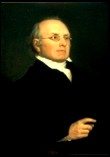
John Witherspoon

Should Christians – Or Ministers – Run For Office?

Today’s critics assert that Christians should not be involved with politics or government, and especially that ministers should not be involved. Such opposition is not new. In fact, two centuries ago, Founding Father John Witherspoon delivered a sagacious rebuttal to these same objections.

John Witherspoon (1723-1794) was a distinguished Founding Father – the president of Princeton University, a signer of the Declaration of Independence, and a ratifier of the U.S. Constitution. He served on over 100 committees in Congress and was head of the Board of War (essentially, he was the congressional “boss” for Commander-in-Chief George Washington). But John Witherspoon was also a minister of the Gospel, he was the Rev. Dr. John Witherspoon! In fact, Dr. Witherspoon was the Billy Graham of his day, one of the most famous American ministers of that era, with volumes of published Gospel sermons.

A provision in the 1777 Georgia constitution reflected the belief that ministers should not be involved in politics. Supporters of this provision asserted the ministry of the Gospel was so important that ministers should not be distracted from their duty. (For example, the 1777 New York Constitution explained, “Whereas ministers of the Gospel are, by their profession, dedicated to the service of God and the care of souls and ought not to be diverted from the great duties of their function; therefore, no minister of the gospel . . . shall be eligible to . . . any civil office within this State.”) Following this same logic, the Georgia constitution declared, “No clergyman of any denomination shall be allowed a seat in the legislature.”

When Dr. Witherspoon learned of this prohibition, he penned the following tongue-in-cheek piece exposing the absurdity of that position. Interestingly, when Georgia wrote its third Constitution in 1798, a strong declaration of the rights of religious persons was inserted – a vast change from its first Constitution.


Following is Dr. Witherspoon’s writing on why ministers should be able to serve in State legislatures:

Sir,

In your paper of Saturday last, you have given us the new Constitution of Georgia, in which I find the following resolution, “No clergyman of any denomination shall be a member of the General Assembly.” I would be very well satisfied that some of the gentlemen who have made that an essential article of this constitution, or who have inserted and approve it in other constitutions, would be pleased to explain a little the principles, as well as to ascertain the meaning of it.

Perhaps we understand pretty generally, what is meant by a clergyman, viz. a person regularly called and set apart to the ministry of the gospel, and authorized to preach and administer the sacraments of the Christian religion. Now suffer me to ask this question: Before any man among us was ordained a minister, was he not a citizen of the United States, and if being in Georgia, a citizen of the state of Georgia? Had he not then a right to be elected a member of the assembly, if qualified in point of property? How then has he lost, or why is he deprived of this right? Is it by offence or disqualification? Is it a sin against the public to become a minister? Does it merit that the person, who is guilty of it should be immediately deprived of one of his most important rights as a citizen? Is not this inflicting a penalty which always supposes an offence? Is a minister then disqualified for the office of a senator or representative? Does this calling and profession render him stupid or ignorant? I am inclined to form a very high opinion of the natural understanding of the freemen and freeholders of the state of Georgia, as well as of their improvement and culture by education, and yet I am not able to conceive, but that some of those equally qualified, may enter into the clerical order: and then it must not be unfitness, but some other reason that produces the exclusion. Perhaps it may be thought that they are excluded from civil authority, that they may be more fully and constantly employed in their spiritual functions. If this had been the ground of it, how much more properly would it have appeared, as an order of an ecclesiastical body with respect to their own members. In that case I should not only have forgiven but approved and justified it; but in the way in which it now stands, it is evidently a punishment by loss of privilege, inflicted on those, who go into the office of the ministry; for which, perhaps, the gentlemen of Georgia may have good reasons, though I have not been able to discover them.

But besides the uncertainty of the principle on which this resolution is founded, there seems to me much uncertainty as to the meaning of it. How are we to determine who is or is not a clergyman? Is he only a clergyman who has received ordination from those who have derived the right by an uninterrupted succession from the apostles? Or is he also a clergyman, who is set apart by the imposition of hands of a body of other clergymen, by joint authority? Or is he also a clergyman who is set a part by the church members of his own society, without any imposition of hands at all? Or is he also a clergyman who has exhorted in a Methodist society, or spoken in a Quaker meeting, or any other religious assembly met for public worship? There are still greater difficulties behind: Is the clerical character indelible? There are some who have been ordained who occasionally perform some clerical functions, but have no pastoral charge at all. There are some who finding public speaking injurious to health, or from other reasons easily conceived, have resigned their pastoral charge, and wholly discontinued all acts and exercises of that kind; and there are some, particularly in New England, who having exercised the clerical office some time, and finding it less suitable to their talents than they apprehended, have voluntarily relinquished it, and taken to some other profession, as law, physic, or merchandize[sic]–Do these all continue clergymen, or do they cease to be clergymen, and by that cessation return to, or recover the honorable privileges of laymen?

I cannot help thinking that these difficulties are very considerable, and may occasion much litigation, if the article of the constitution stands in the loose, ambiguous form in which it now appears; and therefore I would recommend the following alterations, which I think will make every thing definite and unexceptionable.

“No clergyman, of any denomination, shall be capable of being elected a member of the Senate or House of Representatives, because {here insert the grounds of offensive disqualification, which I have not been able to discover} Provided always, and it is the true intent and meaning of this part of the constitution, that if at any time he shall be completely deprived of the clerical character by those by whom he was invested with it, as by deposition for cursing and swearing, drunkenness or uncleanness, he shall then be fully restored to all the privileges of a free citizen; his offence shall no more be remembered against him; but he may be chosen either to the Senate or House of Representatives, and shall be treated with all the respect due to his brethren, the other members of Assembly.”

(Source: John Witherspoon, The Works of John Witherspoon, (Edinburgh: J. Ogle, Parliament-Square, 1815), Vol. IX, pp 220-223.)


Letters Between the Danbury Baptists and Thomas Jefferson

(For the FBI forensic research on Thomas Jefferson’s letter click here. For an analysis of the context of this exchange between the Danbury Baptists and Jefferson, see Daniel Dreisbach’s “‘Sowing Useful Truths and Principles’: The Danbury Baptists, Thomas Jefferson, and the ‘Wall of Separation'” in the Journal of Church and State, Vol. 39, Summer 1997; or see David Barton’s article “The Separation of Church and State“)

Letter from the Danbury Baptists:

The address of the Danbury Baptist Association in the State of Connecticut, assembled October 7, 1801.
To Thomas Jefferson, Esq., President of the United States of America

Sir,
Among the many millions in America and Europe who rejoice in your election to office, we embrace the first opportunity which we have enjoyed in our collective capacity, since your inauguration , to express our great satisfaction in your appointment to the Chief Magistracy in the Unite States. And though the mode of expression may be less courtly and pompous than what many others clothe their addresses with, we beg you, sir, to believe, that none is more sincere.

Our sentiments are uniformly on the side of religious liberty: that Religion is at all times and places a matter between God and individuals, that no man ought to suffer in name, person, or effects on account of his religious opinions, [and] that the legitimate power of civil government extends no further than to punish the man who works ill to his neighbor. But sir, our constitution of government is not specific. Our ancient charter, together with the laws made coincident therewith, were adapted as the basis of our government at the time of our revolution. And such has been our laws and usages, and such still are, [so] that Religion is considered as the first object of Legislation, and therefore what religious privileges we enjoy (as a minor part of the State) we enjoy as favors granted, and not as inalienable rights. And these favors we receive at the expense of such degrading acknowledgments, as are inconsistent with the rights of freemen. It is not to be wondered at therefore, if those who seek after power and gain, under the pretense of government and Religion, should reproach their fellow men, [or] should reproach their Chief Magistrate, as an enemy of religion, law, and good order, because he will not, dares not, assume the prerogative of Jehovah and make laws to govern the Kingdom of Christ.

Sir, we are sensible that the President of the United States is not the National Legislator and also sensible that the national government cannot destroy the laws of each State, but our hopes are strong that the sentiment of our beloved President, which have had such genial effect already, like the radiant beams of the sun, will shine and prevail through all these States–and all the world–until hierarchy and tyranny be destroyed from the earth. Sir, when we reflect on your past services, and see a glow of philanthropy and goodwill shining forth in a course of more than thirty years, we have reason to believe that America’s God has raised you up to fill the Chair of State out of that goodwill which he bears to the millions which you preside over. May God strengthen you for the arduous task which providence and the voice of the people have called you–to sustain and support you and your Administration against all the predetermined opposition of those who wish to rise to wealth and importance on the poverty and subjection of the people.

And may the Lord preserve you safe from every evil and bring you at last to his Heavenly Kingdom through Jesus Christ our Glorious Mediator.

Signed in behalf of the Association,

Neh,h Dodge }
Eph’m Robbins } The Committee
Stephen S. Nelson }

*A cite for this letter could read:

Letter of Oct. 7, 1801 from Danbury (CT) Baptist Assoc. to Thomas Jefferson, Thomas Jefferson Papers, Manuscript Division, Library of Congress, Wash. D.C.


President Jefferson’s Reply:

Messrs. Nehemiah Dodge, Ephraim Robbins, and Stephen S. Nelson
A Committee of the Danbury Baptist Association, in the State of Connecticut.

Washington, January 1, 1802

Gentlemen,–The affectionate sentiment of esteem and approbation which you are so good as to express towards me, on behalf of the Danbury Baptist Association, give me the highest satisfaction. My duties dictate a faithful and zealous pursuit of the interests of my constituents, and in proportion as they are persuaded of my fidelity to those duties, the discharge of them becomes more and more pleasing.

Believing with you that religion is a matter which lies solely between man and his God, that he owes account to none other for his faith or his worship, that the legislative powers of government reach actions only, and not opinions, I contemplate with sovereign reverence that act of the whole American people which declared that their legislature would “make no law respecting an establishment of religion, or prohibiting the free exercise thereof,” thus building a wall of separation between Church and State. Adhering to this expression of the supreme will of the nation in behalf of the rights of conscience, I shall see with sincere satisfaction the progress of those sentiments which tend to restore to man all his natural rights, convinced he has no natural right in opposition to his social duties.

I reciprocate your kind prayers for the protection and blessing of the common Father and Creator of man, and tender you for yourselves and your religious association, assurances of my high respect and esteem.

Th Jefferson
Jan. 1. 1802

* A cite for this letter could read: Thomas Jefferson, The Writings of Thomas Jefferson, ed. Albert E. Bergh (Washington, DC: The Thomas Jefferson Memorial Association of the United States, 1904), XVI:281-282.

Importance of Morality and Religion in Government

John Adams
Signer of the Declaration of Independence and Second President of the United States

[I]t is religion and morality alone which can establish the principles upon which freedom can securely stand. The only foundation of a free constitution is pure virtue.1

[W]e have no government armed with power capable of contending with human passions unbridled by morality and religion. . . . Our constitution was made only for a moral and religious people. It is wholly inadequate to the government of any other.2

The moment the idea is admitted into society, that property is not as sacred as the laws of God, and that there is not a force of law and public justice to protect it, anarchy and tyranny commence. If “Thou shalt not covet,” and “Thou shalt not steal,” were not commandments of Heaven, they must be made inviolable precepts in every society, before it can be civilized or made free.3

John Quincy Adams
Sixth President of the United States

The law given from Sinai was a civil and municipal as well as a moral and religious code; it contained many statutes . . . of universal application-laws essential to the existence of men in society, and most of which have been enacted by every nation which ever professed any code of laws.4

There are three points of doctrine the belief of which forms the foundation of all morality. The first is the existence of God; the second is the immortality of the human soul; and the third is a future state of rewards and punishments. Suppose it possible for a man to disbelieve either of these three articles of faith and that man will have no conscience, he will have no other law than that of the tiger or the shark. The laws of man may bind him in chains or may put him to death, but they never can make him wise, virtuous, or happy.5

Samuel Adams
Signer of the Declaration of Independence

[N]either the wisest constitution nor the wisest laws will secure the liberty and happiness of a people whose manners are universally corrupt.6

Fisher Ames
Framer of the First Amendment

Our liberty depends on our education, our laws, and habits . . . it is founded on morals and religion, whose authority reigns in the heart, and on the influence all these produce on public opinion before that opinion governs rulers.7

Charles Carroll of Carrollton
Signer of the Declaration of Independence

Without morals a republic cannot subsist any length of time; they therefore who are decrying the Christian religion, whose morality is so sublime & pure, [and] which denounces against the wicked eternal misery, and [which] insured to the good eternal happiness, are undermining the solid foundation of morals, the best security for the duration of free governments.8

Oliver Ellsworth
Chief-Justice of the Supreme Court

[T]he primary objects of government are the peace, order, and prosperity of society. . . . To the promotion of these objects, particularly in a republican government, good morals are essential. Institutions for the promotion of good morals are therefore objects of legislative provision and support: and among these . . . religious institutions are eminently useful and important. . . . [T]he legislature, charged with the great interests of the community, may, and ought to countenance, aid and protect religious institutions—institutions wisely calculated to direct men to the performance of all the duties arising from their connection with each other, and to prevent or repress those evils which flow from unrestrained passion.9

Benjamin Franklin
Signer of the Constitution and Declaration of Independence

[O]nly a virtuous people are capable of freedom. As nations become corrupt and vicious, they have more need of masters.10

I have lived, Sir, a long time, and the longer I live, the more convincing proofs I see of this truth, that God governs in the affairs of men. And if a sparrow cannot fall to the ground without His notice, is it probable that an empire can rise without his aid? We have been assured, Sir, in the Sacred Writings, that “except the Lord build the House, they labor in vain that build it.” I firmly believe this; and I also believe that without His concurring aid we shall succeed in this political building no better, than the Builders of Babel: We shall be divided by our partial local interests; our projects will be confounded, and we ourselves shall become a reproach and bye word down to future ages. And what is worse, mankind may hereafter from this unfortunate instance, despair of establishing governments by human wisdom and leave it to chance, war and conquest. I therefore beg leave to move that henceforth prayers imploring the assistance of Heaven, and its blessings on our deliberations be held in this Assembly every morning before we proceed to business, and that one or more of the clergy of this city be requested to officiate in that service.11

* For more details on this quote, click here.

Thomas Jefferson
Signer of the Declaration of Independence and Third President of the United States

Give up money, give up fame, give up science, give the earth itself and all it contains rather than do an immoral act. And never suppose that in any possible situation, or under any circumstances, it is best for you to do a dishonorable thing, however slightly so it may appear to you. Whenever you are to do a thing, though it can never be known but to yourself, ask yourself how you would act were all the world looking at you, and act accordingly. Encourage all your virtuous dispositions, and exercise them whenever an opportunity arises, being assured that they will gain strength by exercise, as a limb of the body does, and that exercise will make them habitual. From the practice of the purest virtue, you may be assured you will derive the most sublime comforts in every moment of life, and in the moment of death.12

The doctrines of Jesus are simple, and tend all to the happiness of mankind.13

I concur with the author in considering the moral precepts of Jesus as more pure, correct, and sublime than those of ancient philosophers.14

Richard Henry Lee
Signer of the Declaration of Independence

It is certainly true that a popular government cannot flourish without virtue in the people.15

James McHenry
Signer of the Constitution

[P]ublic utility pleads most forcibly for the general distribution of the Holy Scriptures. The doctrine they preach, the obligations they impose, the punishment they threaten, the rewards they promise, the stamp and image of divinity they bear, which produces a conviction of their truths, can alone secure to society, order and peace, and to our courts of justice and constitutions of government, purity, stability and usefulness. In vain, without the Bible, we increase penal laws and draw entrenchments around our institutions. Bibles are strong entrenchments. Where they abound, men cannot pursue wicked courses, and at the same time enjoy quiet conscience.16

Jedediah Morse
Patriot and “Father of American Geography”

To the kindly influence of Christianity we owe that degree of civil freedom, and political and social happiness which mankind now enjoys. . . . Whenever the pillars of Christianity shall be overthrown, our present republican forms of government, and all blessings which flow from them, must fall with them.17

William Penn
Founder of Pennsylvania

[I]t is impossible that any people of government should ever prosper, where men render not unto God, that which is God’s, as well as to Caesar, that which is Caesar’s.18

Pennsylvania Supreme Court

No free government now exists in the world, unless where Christianity is acknowledged, and is the religion of the country.19

Benjamin Rush
Signer of the Declaration of Independence

The only foundation for a useful education in a republic is to be laid in religion. Without this there can be no virtue, and without virtue there can be no liberty, and liberty is the object and life of all republican governments.20

We profess to be republicans, and yet we neglect the only means of establishing and perpetuating our republican forms of government, that is, the universal education of our youth in the principles of Christianity by the means of the Bible. For this Divine Book, above all others, favors that equality among mankind, that respect for just laws, and those sober and frugal virtues, which constitute the soul of republicanism.21

By renouncing the Bible, philosophers swing from their moorings upon all moral subjects. . . . It is the only correct map of the human heart that ever has been published. . . . All systems of religion, morals, and government not founded upon it [the Bible] must perish, and how consoling the thought, it will not only survive the wreck of these systems but the world itself. “The Gates of Hell shall not prevail against it.” [Matthew 1:18]22

Remember that national crimes require national punishments, and without declaring what punishment awaits this evil, you may venture to assure them that it cannot pass with impunity, unless God shall cease to be just or merciful.23

Joseph Story
Supreme Court Justice

Indeed, the right of a society or government to [participate] in matters of religion will hardly be contested by any persons who believe that piety, religion, and morality are intimately connected with the well being of the state and indispensable to the administrations of civil justice. The promulgation of the great doctrines of religion—the being, and attributes, and providence of one Almighty God; the responsibility to Him for all our actions, founded upon moral accountability; a future state of rewards and punishments; the cultivation of all the personal, social, and benevolent virtues—these never can be a matter of indifference in any well-ordered community. It is, indeed, difficult to conceive how any civilized society can well exist without them.24

George Washington
“Father of Our Country”

While just government protects all in their religious rights, true religion affords to government its surest support.25

Of all the dispositions and habits which lead to political prosperity, religion and morality are indispensable supports. In vain would that man claim the tribute of patriotism who should labor to subvert these great pillars of human happiness, these firmest props of the duties of man and citizens. The mere politician, equally with the pious man, ought to respect and to cherish them. A volume could not trace all their connexions with private and public felicity. Let it simply be asked, Where is the security for property, for reputation, for life, if the sense of religious obligation desert the oaths, which are the instruments of investigation in Courts of Justice?
And let us with caution indulge the supposition that morality can be maintained without religion. Whatever may be conceded to the influence of refined education on minds of peculiar structure, reason and experience both forbid us to expect that national morality can prevail in exclusion of religious principle. It is substantially true, that virtue or morality is a necessary spring of popular government. The rule, indeed, extends with more or less force to every species of free government. Who, that is a sincere friend to it, can look with indifference upon attempts to shake the foundation of the fabric?26

[T]he [federal] government . . . can never be in danger of degenerating into a monarchy, and oligarchy, an aristocracy, or any other despotic or oppressive form so long as there shall remain any virtue in the body of the people.27

* For the full text of Geo. Washington’s Farewell Address, click here.

Daniel Webster
Early American Jurist and Senator

[I]f we and our posterity reject religious instruction and authority, violate the rules of eternal justice, trifle with the injunctions of morality, and recklessly destroy the political constitution which holds us together, no man can tell how sudden a catastrophe may overwhelm us that shall bury all our glory in profound obscurity.28

Noah Webster
Founding Educator

The most perfect maxims and examples for regulating your social conduct and domestic economy, as well as the best rules of morality and religion, are to be found in the Bible. . . . The moral principles and precepts found in the scriptures ought to form the basis of all our civil constitutions and laws. These principles and precepts have truth, immutable truth, for their foundation. . . . All the evils which men suffer from vice, crime, ambition, injustice, oppression, slavery and war, proceed from their despising or neglecting the precepts contained in the Bible. . . . For instruction then in social, religious and civil duties resort to the scriptures for the best precepts.29

James Wilson
Signer of the Constitution

Far from being rivals or enemies, religion and law are twin sisters, friends, and mutual assistants. Indeed, these two sciences run into each other. The divine law, as discovered by reason and the moral sense, forms an essential part of both.30

Robert Winthrop
Former Speaker of the US House of Representatives

Men, in a word, must necessarily be controlled either by a power within them or by a power without them; either by the Word of God or by the strong arm of man; either by the Bible or by the bayonet.31


Endnotes

1 John Adams, The Works of John Adams, Second President of the United States, ed. Charles Francis Adams (Boston: Little, Brown, 1854), IX:401, to Zabdiel Adams on June 21, 1776.
2 John Adams, October 11, 1798, Works of Adams, ed. Adams (1854), IX:229.
3 John Adams, Works of Adams, ed. Adams (1851), VI:9.
4 John Quincy Adams, Letters of John Quincy Adams, to His Son, on the Bible and Its Teachings (Auburn: James M. Alden, 1850), 61.
5 John Quincy Adams, Letters of John Quincy (1850), 22-23.
6 Samuel Adams, The Public Advertiser, 1749, William V. Wells, The Life and Public Service of Samuel Adams (Boston: Little, Brown, & Co., 1865), I:22.
7 Fisher Ames, An Oration on the Sublime Virtues of General George Washington (Boston: Young & Minns, 1800), 23.
8 Charles Carroll to James McHenry, November 4, 1800, Bernard C. Steiner, The Life and Correspondence of James McHenry (Cleveland: The Burrows Brothers, 1907), p. 475.
9 Connecticut Courant (June 7, 1802), 3, Oliver Ellsworth, to the General Assembly of the State of Connecticut
10 Benjamin Franklin, The Writings of Benjamin Franklin, ed. Jared Sparks (Boston: Tappan, Whittemore and Mason, 1840), X:297, April 17, 1787.
11 James Madison, The Records of the Federal Convention of 1787, ed. Max Farrand (New Haven: Yale University Press, 1911), I:450-452, June 28, 1787.
12 Thomas Jefferson to his nephew Peter Carr, August 19, 1785, The Writings of Thomas Jefferson, ed. Albert Bergh (Washington, DC: Thomas Jefferson Memorial Assoc., 1903), V:82-83.
13 Thomas Jefferson, Writings of Jefferson, ed. Bergh (1904), XV:383.
14 Thomas Jefferson to Edward Dowse, April 19, 1803, Writings of Jefferson, ed. Bergh (1904), X:376-377.
15 Richard Henry Lee to Colonel Mortin Pickett, March 5, 1786, The Letters of Richard Henry Lee, ed. James Curtis Ballagh (New York: The MacMillan Company, 1914), II:411.
16 Bernard C. Steiner, One Hundred and Ten Years of Bible Society Work in Maryland, 1810-1920 (Maryland Bible Society, 1921), 14.
17 Jedidiah Morse, A Sermon, Exhibiting the Present Dangers and Consequent Duties of the Citizens of the United States of America (Hartford: Hudson and Goodwin, 1799), 9.
18 Fundamental Constitutions of Pennsylvania, 1682. Written by William Penn, founder of the colony of Pennsylvania.
19 Pennsylvania Supreme Court, 1824, Updegraph v. Commonwealth, 11 Serg. & R. 393, 406 (Sup.Ct. Penn. 1824).
20 Benjamin Rush, Essays, Literary, Moral and Philosophical (Philadelphia: Thomas and William Bradford, 1806), 8.
21 Benjamin Rush, Essays (1806), 93-94.
22 Benjamin Rush to John Adams, January 23, 1807, Letters of Benjamin Rush, ed. L. H. Butterfield (Princeton, NJ: Princeton University Press, 1951), 936.
23 Benjamin Rush, An Address to the Inhabitants of the British Settlements in America Upon Slave-Keeping (Boston: John Boyles, 1773), 30.
24 Joseph Story, A Familiar Exposition of the Constitution of the United States (New York: Harper & Brothers, 1847), 260, §442.
25 George Washington, address to the Synod of the Dutch Reformed Church in North America, October 9, 1789, The Writings of George Washington, ed. John C. Fitzpatrick (Washington, D.C.: U.S. Government Printing Office, 1932), XXX:432n.
26 George Washington, Address of George Washington, President of the United States . . . Preparatory to His Declination (Baltimore: George and Henry S. Keatinge, 1796), 22-23.
27 George Washington to Marquis De Lafayette, February 7, 1788, Writings of Washington, ed. Fitzpatrick (1939), XXIX:410.
28 Daniel Webster, “The Dignity and Importance of History,” February 23, 1852, The Writings and Speeches of Daniel Webster (Boston: Little, Brown, & Company, 1903), XIII:492.
29 Noah Webster, History of the United States, “Advice to the Young” (New Haven: Durrie & Peck, 1832), 338-340.
30 James Wilson, The Works of the Honourable James Wilson (Philadelphia: Bronson and Chauncey, 1804), I:106.
31 Robert Winthrop, “Either by the Bible or the Bayonet,” Addresses and Speeches on Various Occasions (Boston: Little, Brown & Co., 1852), 172.

Washington Reading Prayers in His Camp

The title of this picture is “Washington Reading Prayers in His Camp.” Even though the picture below may not be of a specific instance, there is documentation (located below the picture) to show that George Washington encouraged prayer amongst the troops and friendly Indian tribes.


 washington-reading-prayers-in-his-camp-1

William Fairfax, Washington’s paternal adviser, had recently counseled him by letter, to have public prayers in his camp;1 especially when there were Indian families there; this was accordingly done at the encampment in the Great Meadows and it certainly was not one of the least striking pictures presented in this wild campaign—the youthful commander, presiding with calm seriousness of a motley assemblage of half-equipped soldiery leather-clad hunters and woodsmen, and painted savages with their wives and children, and uniting them all in solemn devotion by his own example and demeanor.2

The first decisive indication of his principles on this subject, with which we are acquainted, appeared during the encampment at the Great Meadows, in the year 1754. While occupying Fort Necessity, it was his practice to have the troops assembled for public worship. This we learn from the following note, by the publisher of his writings. “While Washington was encamped at the Great Meadows, Mr. Fairfax wrote to him; ‘I will not doubt your having public prayers in the camp, especially when the Indian families are your guests, that they, seeing your plain manner of worship, may have their curiosity excited to be informed why we do not use the ceremonies of the French, which being well explained to their understandings, will more and more dispose them to receive our baptism, and unite in strict bonds of cordial friendship.’”
“It may be added, that it was Washington’s custom to have prayers in the camp while he was at Fort Necessity.”3


Endnotes

1 William Fairfax to George Washington, July 10, 1754, National Archives.
2 Washington Irving, Life of George Washington (New York: G. P. Putnam & Co., 1856), I:116.
3 E. C. M’Guire, The Religious Opinions and Character of Washington (New York: Harper & Brothers, 1836), 136, quoting: Jared Sparks, The Writings of George Washington (Boston: Russell, Odiorne, & Metcalf, 1834), 2:54.

The Death of General Braddock

Edward Braddock, the commander of the British forces who was killed in the Battle of Monongahela was hastily buried as the British retreated before the French and Indian army. George Washington, having been General Braddock’s Aid-De-Camp, filled in for the wounded chaplain and read the funeral prayers over General Braddock’s body.


the-death-of-general-braddock-1

The litter on which he lay was set down, and his remaining officers gathered sadly around it. As a last token of gratitude to his young volunteer aid, for his noble devotion and heroism, he gave him a splendid charger and his own body servant. A brief farewell—a faint gasp—a weak struggle—and Braddock lay a corpse in the forest. A grave was hastily dug in the center of the road, to conceal it from the Indians, into which, with his sword lain across his breast, he was lowered. Young Washington read the funeral service by torchlight over him, the deep tones of his voice interrupted only by the solemn ‘amen’ of the surrounding officers—the open grave, and beside it the pale face of the sleeper, combined to form a scene at once picturesque and most solemn. A mark was left to designate the spot, and the army again defiled though the wilderness.1

For additional information about the Battle of Monongahela, check out The Bulletproof George Washington


Endnotes

1 Hon. J. T. Headley, The Illustrated Life of Washington (New York: G. & F. Bill, 1859), 60. See also, Washington Irving, Life of George Washington (New York: G. P. Putnam & Co., 1856), I:201.

The Constitution of the United States of America


The Constitution of the United States of America
PREAMBLE

We the people of the United States, in order to form a more perfect Union, establish justice, insure domestic tranquility, provide for the common defence, promote the general welfare, and secure the blessings of liberty to ourselves and our posterity, do ordain and establish this Constitution for the United States of America.

ARTICLE I

Section 1. All legislative powers herein granted shall be vested in a Congress of the United States which shall consist of a Senate and House of Representatives.

Section 2. The House of Representatives shall be composed of members chosen every second year by the people of the several States, and the electors in each State shall have the qualifications requisite for electors of the most numerous branch of the State legislature.

No person shall be a Representative who shall not have attained to the age of twenty-five years and been seven years a citizen of the United States, and who shall not, when elected, be an inhabitant of that State in which he shall be chosen.

Representatives and direct taxes shall be apportioned among the several States which may be included within this Union, according to their respective numbers, which shall be determined by adding to the whole number of free persons, including those bound to service for a term of years, and excluding Indians not taxed, three fifths of all other persons. [The preceding portion in italics is amended by the Fourteenth Amendment, Section 2.] The actual enumeration shall be made within three years after the first meeting of the Congress of the United States, and within every subsequent term of ten years, in such manner as they shall by law direct. The number of Representatives shall not exceed one for every thirty thousand but each State shall have at least one Representative; and until such enumeration shall be made, the State of New Hampshire shall be entitled to choose three, Massachusetts eight, Rhode Island and Providence Plantations one, Connecticut five, New York six; New Jersey four, Pennsylvania eight, Delaware one, Maryland six, Virginia ten, North Carolina five, South Carolina five, and Georgia three.

When vacancies happen in the representation from any State, the executive authority thereof shall issue writs of election to fill such vacancies.

The House of Representatives shall choose their Speaker and other officers; and shall have the sole power of impeachment.

Section 3. The Senate of the United States shall be composed of two Senators from each State, chosen by the legislature thereof, for six years; and each Senator shall have one vote.

Immediately after they shall be assembled in consequence of the first election, they shall be divided as equally as may be into three classes. The seats of the Senators of the first class shall be vacated at the expiration of the second year, of the second class at the expiration of the fourth year, and of the third class at the expiration of the sixth year, so that one-third may be chosen every second year; and if vacancies happen by resignation, or otherwise, during the recess of the legislature of any State, the Executive thereof may make temporary appointments until the next meeting of the legislature, which shall then fill such vacancies.

No person shall be a Senator who shall not have attained to the age of thirty years and been nine years a citizen of the United States, and who shall not, when elected, be an inhabitant of that State for which he shall be chosen.

The Vice-President of the United States shall be President of the Senate but shall have no vote unless they be equally divided.

The Senate shall choose their other officers, and also a President pro tempore, in the absence of the Vice-President, or when he shall exercise the office of President of the United States.

The Senate shall have the sole power to try all impeachments. When sitting for that purpose, they shall be on oath or affirmation. When the President of the United States is tried, the Chief Justice shall preside: and no person shall be convicted without the concurrence of two thirds of the members present.

Judgment in cases of impeachment shall not extend further than to removal from office and disqualification to hold and enjoy any office of honor, trust, or profit under the United States: but the party convicted shall nevertheless be liable and subject to indictment, trial, judgment and punishment according to Law.

Section 4. The times, places, and manner of holding elections for Senators and Representatives shall be prescribed in each State by the legislature thereof; but the Congress may at any time by law make or alter such regulations except as to the places of choosing Senators.

The Congress shall assemble at least once in every year, and such meeting shall be on the first Monday in December, unless they shall by law appoint a different day.

Section 5. Each House shall be the judge of the elections, returns, and qualifications of its own members, and a majority of each shall constitute a quorum to do business; but a smaller number may adjourn from day to day and may be authorized to compel the attendance of absent members, in such manner, and under such penalties as each House may provide.

Each House may determine the rules of its proceedings, punish its members for disorderly behavior, and, with the concurrence of two thirds, expel a member.

Each House shall keep a journal of its proceedings and from time to time publish the same, excepting such parts as may in their judgment require secrecy; and the yeas and nays of the members of either House on any question shall, at the desire of one fifth of those present, be entered on the Journal.

Neither House, during the session of Congress, shall, without the consent of the other, adjourn for more than three days nor to any other place than that in which the two Houses shall be sitting.

Section 6. The Senators and Representatives shall receive a compensation for their services, to be ascertained by law, and paid out of the Treasury of the United States. They shall in all cases except treason, felony, and breach of the peace, be privileged from arrest during their attendance at the session of their respective Houses and in going to and returning from the same; and for any speech or debate in either House they shall not be questioned in any other place.

No Senator or Representative shall, during the time for which he was elected, be appointed to any civil office under the authority of the United States which shall have been created or the emoluments whereof shall have been increased during such time; and no person holding any office under the United States shall be a member of either House during his continuance in office.

Section 7. All bills for raising revenue shall originate in the House of Representatives; but the Senate may propose or concur with amendments as on other bills.

Every bill which shall have passed the House of Representatives and the Senate shall, before it becomes a law, be presented to the President of the United States; if he approve, he shall sign it, but if not he shall return it, with his objections, to that House in which it shall have originated, who shall enter the objections at large on their journal and proceed to reconsider it. If, after such reconsideration, two thirds of that House shall agree to pass the bill, it shall be sent, together with the objections, to the other House, by which it shall likewise be reconsidered, and if approved by two thirds of that House, it shall become a law. But in all such cases, the votes of both Houses shall be determined by yeas and nays and the names of the persons voting for and against the bill shall be entered on the journal of each House respectively. If any bill shall not be returned by the President within ten days (Sundays excepted) after it shall have been presented to him, the same shall be a law in like manner as if he had signed it unless the Congress, by their adjournment, prevent its return, in which case it shall not be a law.

Every order, resolution, or vote to which the concurrence of the Senate and House of Representatives may be necessary (except on a question of adjournment) shall be presented to the President of the United States; and before the same shall take effect shall be approved by him, or, being disapproved by him, shall be repassed by two thirds of the Senate and House of Representatives according to the rules and limitations prescribed in the case of a bill.

Section 8. The Congress shall have power to lay and collect taxes, duties, imposts, and excises to pay the debts and provide for the common defense and general welfare of the United States; but all duties, imposts, and excises shall be uniform throughout the United States;

To borrow money on the credit of the United States;

To regulate commerce with foreign nations and among the several States and with the Indian tribes;

To establish an uniform rule of naturalization and uniform laws on the subject of bankruptcies throughout the United States;

To coin money, regulate the value thereof and of foreign coin, and fix the standard of weights and measures;

To provide for the punishment of counterfeiting the securities and current coin of the United States;

To establish post offices and post roads;

To promote the progress of science and useful arts by securing for limited times to authors and inventors the exclusive rights to their respective writings and discoveries;

To constitute tribunals inferior to the Supreme Court;

To define and punish piracies and felonies committed on the high seas and offences against the law of nations;

To declare war, grant letters of marque and reprisal, and make rules concerning captures on land and water;

To raise & support armies, but no appropriation of money to that use shall be for a longer term than two years;

To provide and maintain a Navy;

To make rules for the government and regulation of the land and naval forces;

To provide for calling forth the militia to execute the laws of the Union, suppress insurrections, and repel invasions;

To provide for organizing, arming, and disciplining the militia and for governing such part of them as may be employed in the service of the United States, reserving to the States respectively the appointment of the officers and the authority of training the militia according to the discipline prescribed by Congress;

To exercise exclusive legislation in all cases whatsoever over such district (not exceeding ten miles square) as may, by cession of particular States and the acceptance of Congress, become the seat of the government of the United States, and to exercise like authority over all places purchased by the consent of the legislature of the State in which the same shall be for the erection of forts, magazines, arsenals, dockyards, and other needful buildings; – and

To make all laws which shall be necessary and proper for carrying into execution the foregoing powers and all other powers vested by this Constitution in the government of the United States or in any department or officer thereof.

Section 9. The migration or importation of such persons as any of the States now existing shall think proper to admit shall not be prohibited by the Congress prior to the year one thousand eight hundred and eight, but a tax or duty may be imposed on such importation not exceeding ten dollars for each person.

The privilege of the writ of Habeas Corpus shall not be suspended unless when in cases of rebellion or invasion the public safety may require it.

No bill of attainder or ex post facto law shall be passed.

No capitation or other direct tax shall be laid unless in proportion to the census or enumeration herein before directed to be taken.

No tax or duty shall be laid on articles exported from any State.

No preference shall be given by any regulation of commerce or revenue to the ports of one State over those of another: nor shall vessels bound to or from one State be obliged to enter, clear, or pay duties in another.

No money shall be drawn from the Treasury but in consequence of appropriations made by law; and a regular statement and account of the receipts and expenditures of all public money shall be published from time to time.

No title of nobility shall be granted by the United States: and no person holding any office of profit or trust under them shall, without the consent of the Congress, accept of any present, emolument, office, or title of any kind whatever from any king, prince, or foreign State.

Section 10. No State shall enter into any treaty, alliance, or confederation; grant letters of marque and reprisal; coin money, emit bills of credit; make any thing but gold and silver coin a tender in payment of debts; pass any bill of attainder, ex post facto law, or law impairing the obligation of contracts, or grant any title of nobility.

No State shall, without the consent of the Congress, lay any imposts of duties on imports or exports except what may be absolutely necessary for executing its inspection laws: and the net produce of all duties and imposts laid by any State on imports or exports shall be for the use of the Treasury of the United States; and all such laws shall be subject to the revision and control of the Congress.

No State shall, without the consent of Congress, lay any duty of tonnage, keep troops, or ships of war in time of peace, enter into any agreement or compact with another State or with a foreign power, or engage in war, unless actually invaded, or in such imminent danger as will not admit of delay.

ARTICLE II

Section 1. The executive power shall be vested in a President of the United States of America. He shall hold his office during the term of four years and, together with the Vice-President chosen for the same term, be elected as follows:

Each State shall appoint, in such manner as the legislature thereof may direct, a number of electors equal to the whole number of Senators and Representatives to which the State may be entitled in the Congress: but no Senator or Representative or person holding an office of trust or profit under the United States shall be appointed an elector.

The electors shall meet in their respective States and vote by ballot for two persons of whom one at least shall not be an inhabitant of the same State with themselves. And they shall make a list of all the persons voted for and of the number of votes for each; which list they shall sign and certify and transmit sealed to the seat of the government of the United States, directed to the President of the Senate. The President of the Senate shall, in the presence of the Senate and House of Representatives, open all the certificates and the votes shall then be counted. The person having the greatest number of votes shall be the President if such number be a majority of the whole number of electors appointed; and if there be more than one who have such majority and have an equal number of votes, then the House of Representatives shall immediately choose by ballot one of them for President; and if no person have a majority, then from the five highest on the list the said House shall in like manner choose the President. But in choosing the President, the votes shall be taken by States, the representation from each State having one vote; a quorum for this purpose shall consist of a member or members from two-thirds of the States, and a majority of all the States shall be necessary to a choice. In every case, after the choice of the President, the person having the greatest number of votes of the electors shall be the Vice-President. But if there should remain two or more who have equal votes, the Senate shall choose from them by ballot the Vice-President. [The preceding section has been superseded by the Twelfth Amendment.]

The Congress may determine the time of choosing the electors and the day on which they shall give their votes; which day shall be the same throughout the United States.

No person except a natural born citizen, or a citizen of the United States at the time of the adoption of this Constitution, shall be eligible to the office of President; neither shall any person be eligible to that office who shall not have attained to the age of thirty-five years and been fourteen years a resident within the United States.

In case of the removal of the President from office, or of his death, resignation, or inability to discharge the powers and duties of the said office, the same shall devolve on the Vice-President, and the Congress may by law provide for the case of removal, death, resignation, or inability, both of the President and Vice-President, declaring what officer shall then act as President, and such officer shall act accordingly until the disability be removed or a President shall be elected.

The President shall, at stated times, receive for his services a compensation which shall neither be increased nor diminished during the period for which he shall have been elected, and he shall not receive within that period any other emolument from the United States or any of them.

Before he enter on the execution of his office, he shall take the following oath or affirmation: – “I do solemnly swear (or affirm) that I will faithfully execute the office of President of the United States and will, to the best of my ability, preserve, protect, and defend the Constitution of the United States.”

Section 2. The President shall be Commander in Chief of the Army and Navy of the United States, and of the militia of the several States when called into the actual service of the United States; he may require the opinion, in writing, of the principal officer in each of the executive departments upon any subject relating to the duties of their respective offices, and he shall have power to grant reprieves and pardons for offenses against the United States, except in cases of impeachment.

He shall have power, by and with the advice and consent of the Senate, to make treaties, provided two thirds of the Senators present concur; and he shall nominate, and by and with the advice and consent of the Senate, shall appoint Ambassadors, other public Ministers and Consuls, Judges of the Supreme Court, and all other Officers of the United States, whose appointments are not herein otherwise provided for and which shall be established by law: but the Congress may by law vest the appointment of such inferior officers as they think proper in the President alone, in the Courts of law, or in the heads of departments.

The President shall have power to fill up all vacancies that may happen during the recess of the Senate by granting commissions which shall expire at the end of their next session.

Section 3. He shall from time to time give to the Congress information of the state of the Union and recommend to their consideration such measures as he shall judge necessary and expedient; he may, on extraordinary occasions, convene both Houses, or either of them, and in case of disagreement between them with respect to the time of adjournment, he may adjourn them to such time as he shall think proper; he shall receive Ambassadors and other public Ministers; he shall take care that the laws be faithfully executed, and shall commission all the officers of the United States.

Section 4. The President, Vice-President, and all civil officers of the United States shall be removed from office on impeachment for and conviction of treason, bribery, or other high crimes and misdemeanors.

ARTICLE III

Section 1. The judicial power of the United States shall be vested in one Supreme Court and in such inferior Courts as the Congress may from time to time ordain and establish. The Judges, both of the Supreme and inferior Courts, shall hold their offices during good behavior and shall, at stated times, receive for their services a compensation which shall not be diminished during their continuance in office.

Section 2. The judicial power shall extend to all cases in law and equity arising under this Constitution, the laws of the United States, and treaties made, or which shall be made, under their authority: – to all cases affecting Ambassadors, other public Ministers and Consuls; – to all cases of admiralty and maritime jurisdiction; – to controversies to which the United States shall be a party; – to controversies between two or more States; – between a State and citizens of another State; – between citizens of different States, – between citizens of the same State claiming lands under grants of different States, and between a State, or the citizens thereof, and foreign States, citizens, or subjects.

In all cases affecting Ambassadors, other public Ministers and Consuls, and those in which a State shall be party, the Supreme Court shall have original jurisdiction. In all the other cases before mentioned, the Supreme Court shall have appellate jurisdiction both as to law and fact with such exceptions and under such regulations as the Congress shall make.

The trial of all crimes, except in cases of impeachment, shall be by jury; and such trial shall be held in the State where the said crimes shall have been committed; but when not committed within any State, the trial shall be at such place or places as the Congress may by law have directed.

Section 3. Treason against the United States shall consist only in levying war against them or in adhering to their enemies, giving them aid and comfort. No person shall be convicted of treason unless on the testimony of two witnesses to the same overt act or on confession in open court.

The Congress shall have power to declare the punishment of treason, but no attainder of treason shall work corruption of blood or forfeiture except during the life of the person attainted.

ARTICLE IV

Section 1. Full faith and credit shall be given in each State to the public acts, records, and judicial proceedings of every other State. And the Congress may by general laws prescribe the manner in which such acts, records, and proceedings shall be proved, and the effect thereof.

Section 2. The citizens of each State shall be entitled to all privileges and immunities of citizens in the several States.

A person charged in any State with treason, felony, or other crime, who shall flee from justice and be found in another State, shall on demand of the executive authority of the State from which he fled, be delivered up to be removed to the State having jurisdiction of the crime.

No person held to service or labor in one State under the laws thereof, escaping into another, shall, in consequence of any law or regulation therein, be discharged from such service or labor, but shall be delivered up on claim of the party to whom such service or labor may be due.

Section 3. New States may be admitted by the Congress into this Union; but no new State shall be formed or erected within the jurisdiction of any other State; nor any State be formed by the junction of two or more States or parts of States without the consent of the legislatures of the States concerned as well as of the Congress.

The Congress shall have power to dispose of and make all needful rules and regulations respecting the territory or other property belonging to the United States; and nothing in this Constitution shall be so construed as to prejudice any claims of the United States or of any particular State.

Section 4. The United States shall guarantee to every State in this Union a republican form of government and shall protect each of them against invasion; and on application of the legislature, or of the Executive (when the legislature cannot be convened), against domestic violence.

ARTICLE V

The Congress, whenever two thirds of both Houses shall deem it necessary, shall propose amendments to this Constitution or, on the application of the legislatures of two thirds of the several States, shall call a convention for proposing amendments which, in either case, shall be valid to all intents and purposes as part of this Constitution when ratified by the legislatures of three fourths of the several States or by conventions in three fourths thereof as the one or the other mode of ratification may be proposed by the Congress; provided that no amendment which may be made prior to the year one thousand eight hundred and eight shall in any manner affect the first and fourth clauses in the ninth section of the first article; and that no State, without its consent, shall be deprived of its equal suffrage in the Senate.

ARTICLE VI

All debts contracted and engagements entered into before the adoption of this Constitution shall be as valid against the United States under this Constitution as under the Confederation.

This Constitution and the laws of the United States which shall be made in pursuance thereof; and all treaties made or which shall be made, under the authority of the United States shall be the supreme law of the land; and the judges in every State shall be bound thereby, any thing in the Constitution or laws of any State to the contrary notwithstanding.

The Senators and Representatives before mentioned, and the members of the several State legislatures, and all executive and judicial officers both of the United States and of the several States, shall be bound by oath or affirmation to support this Constitution; but no religious test shall ever be required as a qualification to any office or public trust under the United States.

ARTICLE VII

The ratification of the conventions of nine States shall be sufficient for the establishment of this Constitution between the States so ratifying the same.

DONE in convention by the unanimous consent of the States present the seventeenth day of September in the Year of our Lord one thousand seven hundred and eighty seven, and of the independence of the United States of America the twelfth.

Signers of the Constitution

DELAWARE : George Read, Gunning Bedford, Jr., John Dickinson, Richard Bassett, Jacob Broom

MARYLAND : James McHenry, Daniel of St. Thomas Jenifer, Daniel Carroll

VIRGINIA : John Blair, James Madison, Jr., George Washington

NORTH CAROLINA : William Blount, Richard Dobbs Spaight, Hugh Williamson

SOUTH CAROLINA : John Rutledge, Charles Cotesworth Pinckney, Charles Pinckney, Pierce Butler

GEORGIA : William Few, Abraham Baldwin

NEW HAMPSHIRE : John Langdon, Nicholas Gilman

MASSACHUSETTS : Nathaniel Gorham, Rufus King

CONNECTICUT : William Samuel Johnson, Roger Sherman

NEW YORK : Alexander Hamilton

NEW JERSEY : William Livingston, David Brearley, William Paterson, Jonathan Dayton

PENNSYLVANIA : Benjamin Franklin, Thomas Mifflin, Robert Morris, George Clymer, Thomas Fitzsimons, Jared Ingersoll, James Wilson, Gouverneur Morris

The Declaration of Independence

the-declaration-of-independence-1When in the course of human events, it becomes necessary for one people to dissolve the political bands which have connected them with another, and to assume among the powers of the earth the separate and equal station to which the laws of nature and of nature’s God entitles them, a decent respect to the opinions of mankind requires that they should declare the causes which impel them to the separation.

We hold these truths to be self-evident, that all men are created equal, that they are endowed by their Creator with certain unalienable rights, that among these are life, liberty and the pursuit of happiness. That to secure these rights, governments are instituted among men, deriving their just powers from the consent of the governed. That whenever any form of government becomes destructive of these ends, it is the right of the people to alter or to abolish it and to institute new government, laying its foundation on such principles and organizing its powers in such form as to them shall seem most likely to effect their safety and happiness. Prudence, indeed, will dictate that governments long established should not be changed for light and transient causes; and accordingly, all experience hath shown that mankind are more disposed to suffer while evils are sufferable than to right themselves by abolishing the forms to which they are accustomed. But when a long train of abuses and usurpations, pursuing invariably the same object, evinces a design to reduce them under absolute despotism, it is their right, it is their duty, to throw off such government and to provide new guards for their future security. Such has been the patient sufferance of these Colonies; and such is now the necessity which constrains them to alter their former systems of governments. The history of the present King of Great Britain is a history of repeated injuries and usurpations, all having in direct object the establishment of an absolute tyranny over these States. To prove this, let facts be submitted to a candid world.

He has refused his assent to laws, the most wholesome and necessary for the public good.

He has forbidden his Governors to pass laws of immediate and pressing importance, unless suspended in their operation till his assent should be obtained; and when so suspended, he has utterly neglected to attend to them.

He has refused to pass other laws for the accommodation of large districts of people unless those people would relinquish the right of representation in the legislature, a right inestimable to them and formidable to tyrants only.

He has called together legislative bodies at places unusual, uncomfortable, and distant from the depository of their public records, for the sole purpose of fatiguing them into compliance with his measures.

He has dissolved representative Houses repeatedly for opposing with manly firmness his invasion on the rights of the people.

He has refused for a long time, after such dissolutions, to cause others to be elected; whereby the legislative powers, incapable of annihilation, have returned to the people at large for their exercise; the State remaining in the meantime exposed to all the dangers of invasion from without and convulsions within.

He has endeavored to prevent the population of these States; for that purpose obstructing the laws for naturalization of foreigners; refusing to pass others to encourage their migrations hither, and raising the conditions of new appropriations of lands.

He has obstructed the administration of justice by refusing his assent to laws for establishing judiciary powers.

He has made judges dependent on his will alone for the tenure of their offices and the amount and payment of their salaries.

He has erected a multitude of new offices and sent hither swarms of officers to harass our people and eat out their substance.

He has kept among us, in times of peace, standing armies without the consent of our legislature.

He has affected to render the military independent of and superior to the civil power.

He has combined with others to subject us to a jurisdiction foreign to our constitution and unacknowledged by our laws; giving his assent to their acts of pretended legislation:

For quartering large bodies of armed troops among us:

For protecting them, by a mock trial, from punishment for any murders which they should commit on the inhabitants of these States:

For cutting off our trade with all parts of the world:

For imposing taxes on us without our consent:

For depriving us in many cases of the benefits of trial by jury:

For transporting us beyond seas to be tried for pretended offenses:

For abolishing the free system of English laws in a neighboring province, establishing therein an arbitrary government, and enlarging its boundaries so as to ren-der it at once an example and fit instrument for introducing the same absolute rule into these Colonies:

For taking away our charters, abolishing our most valuable laws, and altering fundamentally the forms of our governments:

For suspending our own legislatures, and declaring themselves invested with power to legislate for us in all cases whatsoever.

He has abdicated government here, by declaring us out of his protection and waging war against us.

He has plundered our seas, ravaged our coasts, burnt our towns, and destroyed the lives of our people.

He is at this time transporting large armies of foreign mercenaries to compleat the works of death, desolation and tyranny, already begun with circumstances of cruelty and perfidy scarcely paralleled in the most barbarous ages, and totally unworthy the head of a civilized nation.

He has constrained our fellow citizens taken captive on the high Seas to bear Arms against their country, to become the executioners of their friends and brethren, or to fall themselves by their hands.

He has excited domestic insurrections amongst us, and has endeavoured to bring on the inhabitants of our frontiers, the merciless Indian savages, whose known rule of warfare, is an undistinguished destruction of all ages, sexes and conditions.

In every stage of these oppressions we have petitioned for redress in the most humble terms: Our repeated petitions have been answered only by repeated injury. A Prince whose character is thus marked by every act which may define a tyrant, is unfit to be the ruler of a free people.

Nor have we been wanting in attentions to our Brittish brethren. We have warned them from time to time of attempts by their legislature to extend an unwarrantable jurisdiction over us. We have reminded them of the circumstances of our emigration and settlement here. We have appealed to their native justice and magnanimity and we have conjured them by the ties of our common kindred to disavow these usurpations which would inevitably interrupt our connections and correspondence. They, too, have been deaf to the voice of justice and of consanguinity. We must, therefore, acquiesce in the necessity which denounces our separation and hold them, as we hold the rest of mankind, enemies in war, in peace friends.

We, therefore, the Representatives of the United States of America, in general Congress assembled, appealing to the Supreme Judge of the world for the rectitude of our intentions, do, in the name and by the authority of the good people of these Colonies, solemnly publish and declare that these United Colonies are, and of right ought to be, free and independent States; that they are absolved from all allegiance to the British Crown and that all political connection between them and the State of Great Britain is and ought to be totally dissolved; and that as free and independent States, they have full power to levy war, conclude peace, contract alliance, establish commerce, and do all other acts and things which independent States may of right do. And for the support of this Declaration, with a firm reliance on the protection of Divine Providence, we mutually pledge to each other our lives, our fortunes, and our sacred honor.

Signers of the Declaration of Independence

NEW HAMPSHIRE: Josiah Bartlett, William Whipple, Matthew Thornton

MASSACHUSETTS: John Hancock, John Adams, Samuel Adams, Robert Treat Paine

RHODE ISLAND: Elbridge Gerry, Stephen Hopkins, William Ellery

CONNECTICUT: Roger Sherman, Samuel Huntington, William Williams, Oliver Wolcott

NEW YORK: William Floyd, Philip Livingston, Francis Lewis, Lewis Morris

NEW JERSEY: Richard Stockton, John Witherspoon, Francis Hopkinson, John Hart, Abraham Clark

PENNSYLVANIA: Robert Morris, Benjamin Rush, Benjamin Franklin, John Morton, George Clymer, James Smith, George Taylor, James Wilson, George Ross

DELAWARE: Ceasar Rodney, George Read, Thomas McKean

MARYLAND: Samuel Chase, Thomas Stone, William Paca, Charles Carroll of Carrollton

VIRGINIA: George Wythe, Richard Henry Lee, Thomas Jefferson, Benjamin Harrison, Thomas Nelson, Jr., Francis Lightfoot Lee, Carter Braxton

NORTH CAROLINA: William Hooper, Joseph Hewes, John Penn

SOUTH CAROLINA: Edward Rutledge, Thomas Heyward, Jr., Thomas Lynch, Jr., Authur Middleton

GEORGIA: Button Gwinnett, Lyman Hall, George Walton

Battle of Trenton

Below is a picture depicting George Washington in the Battle of Trenton. George Washington’s horse was wounded during the battle.1 The Battle of Trenton marked a significant victory for the American Army. They carried that momentum into another victory a few days later at the Battle of Princeton. Below is an account of God’s Divine protection of Washington.

battle-of-trenton-1

Historical Account

The heroism of Washington on the field of Princeton is matter of history. We have often enjoyed a touching reminiscence of that ever-memorable event from the late Colonel Fitzgerald. Who was aid to the chief, and who never related the story of his general’s danger and almost miraculous preservation, without adding to his tale the homage of a tear

The aid-de-camp had been ordered to bring up the troops from the rear of the column, when the band under General Mercer became engaged. Upon returning to the spot where he had left the commander-in-chief, he was no longer there. And, upon looking around, the aid discovered him endeavoring to rally the line which had been thrown into disorder by a rapid on-set of the foe.

Washington, after several ineffectual efforts to restore the fortunes of the fight, is seen to rein up his horse, with his head to the enemy, and in that position to become immovable. It was a last appeal to his soldiers, and seemed to say, Will you give up your general to the foe? Such an appeal was not made in vain. The discomfitted Americans rally on the instant, and form into line. The enemy halt, and dress their line.

The American chief is between the adverse posts, as though he had been placed there, a target for both. The arms of both lines are levelled. Can escape from death be possible? Fitzgerald, horror-struck at the danger of his beloved commander, dropped the reins upon his horse’s neck, and drew his hat over his face, that he might not see him die. A roar of musketry succeeds, and then a shout. It is the shout of victory.

The aid-de-camp ventures to raise his eyes, and 0, glorious sight! The enemy are broken and flying, while dimly amidst the glimpses of the smoke is seen the chief. “Alive, unharmed, and without a wound,” waving his hat, and cheering his comrades to the pursuit.

Colonel Fitzgerald, celebrated as one of the finest horsemen in the American army, now dashed his rowels in his charger’s flanks, and, heedless of the dead and dying in his way, flew to the side of his chief, exclaiming, “Thank God! your excellency is safe!” The favorite aid, a gallant and warm-hearted son of Erin, a man of thews and sinews, and “albeit unused to the melting mood,” now gave loose rein to his feelings, and wept like a child, for joy.

Washington, ever calm amid scenes of the greatest excitement, affectionately grasped the hand of his aid and friend, and then ordered—”Away, my dear colonel, and bring up the troops—the day is our own!”2


Endnotes

1 Bulletin of Information for Cavalry Officers (Washington: October 1920), 510.
2 George Washington Parke Custis, Recollections and Private Memoirs of Washington, by His Adopted Son (New York: Derby & Jackson, 1860), 190-192.

The Founding Fathers on Jesus, Christianity and the Bible

For decades accusations against the Founding Fathers have abounded. One of the common criticisms is that the Founding Fathers were a collective group of atheists, agnostics, and or deists who wanted a strict separation of church and state, resulting in a secular government and public square. Some go as far as foolishly writing that these allegations are so evident that no actual evidence or proof is needed to substantiate their claims. While these charges are blatantly false, it can likewise be acknowledged that not every Founding Father or early American leader would fit in the category of born-again Christian (although most of them would). However, the overwhelming majority of Founding Fathers and early leaders wrote openly, and often about the influence of Christianity, the Bible and Jesus on their lives. While the following examples do not give the complete story of the faith journey of the individuals included in this list, these quotes and excerpts do give a glimpse into the thinking of these men. We encourage you to follow the footnotes and dig deeper into the writings of the Founding Fathers!

John Adams

SIGNER OF THE DECLARATION OF INDEPENDENCE; JUDGE; DIPLOMAT; ONE OF TWO SIGNERS OF THE BILL OF RIGHTS; SECOND PRESIDENT OF THE UNITED STATES

The general principles on which the fathers achieved independence were the general principles of Christianity. I will avow that I then believed, and now believe, that those general principles of Christianity are as eternal and immutable as the existence and attributes of God.1

Without religion, this world would be something not fit to be mentioned in polite company: I mean hell.2

The Christian religion is, above all the religions that ever prevailed or existed in ancient or modern times, the religion of wisdom, virtue, equity and humanity.3

Suppose a nation in some distant region should take the Bible for their only law book and every member should regulate his conduct by the precepts there exhibited. . . . What a Eutopia – what a Paradise would this region be!4

I have examined all religions, and the result is that the Bible is the best book in the world.5

John Quincy Adams

SIXTH PRESIDENT OF THE UNITED STATES; DIPLOMAT; SECRETARY OF STATE; U. S. SENATOR; U. S. REPRESENTATIVE; “OLD MAN ELOQUENT”; “HELL-HOUND OF ABOLITION”

My hopes of a future life are all founded upon the Gospel of Christ and I cannot cavil or quibble away [evade or object to]. . . . the whole tenor of His conduct by which He sometimes positively asserted and at others countenances [permits] His disciples in asserting that He was God.6

The hope of a Christian is inseparable from his faith. Whoever believes in the Divine inspiration of the Holy Scriptures must hope that the religion of Jesus shall prevail throughout the earth. Never since the foundation of the world have the prospects of mankind been more encouraging to that hope than they appear to be at the present time. And may the associated distribution of the Bible proceed and prosper till the Lord shall have made “bare His holy arm in the eyes of all the nations, and all the ends of the earth shall see the salvation of our God” [Isaiah 52:10].7

In the chain of human events, the birthday of the nation is indissolubly linked with the birthday of the Savior. The Declaration of Independence laid the cornerstone of human government upon the first precepts of Christianity.8

Samuel Adams

SIGNER OF THE DECLARATION OF INDEPENDENCE; “FATHER OF THE AMERICAN REVOLUTION”; RATIFIER OF THE U. S. CONSTITUTION; GOVERNOR OF MASSACHUSETTS

I . . . [rely] upon the merits of Jesus Christ for a pardon of all my sins.9

The name of the Lord (says the Scripture) is a strong tower; thither the righteous flee and are safe [Proverbs 18:10]. Let us secure His favor and He will lead us through the journey of this life and at length receive us to a better.10

I conceive we cannot better express ourselves than by humbly supplicating the Supreme Ruler of the world . . . that the confusions that are and have been among the nations may be overruled by the promoting and speedily bringing in the holy and happy period when the kingdoms of our Lord and Savior Jesus Christ may be everywhere established, and the people willingly bow to the scepter of Him who is the Prince of Peace.11

He also called on the State of Massachusetts to pray that . . .

  • the peaceful and glorious reign of our Divine Redeemer may be known and enjoyed throughout the whole family of mankind.12
  • we may with one heart and voice humbly implore His gracious and free pardon through Jesus Christ, supplicating His Divine aid . . . [and] above all to cause the religion of Jesus Christ, in its true spirit, to spread far and wide till the whole earth shall be filled with His glory.13
  • with true contrition of heart to confess their sins to God and implore forgiveness through the merits and mediation of Jesus Christ our Savior.14

Josiah Bartlett

MILITARY OFFICER; SIGNER OF THE DECLARATION OF INDEPENDENCE; JUDGE; GOVERNOR OF NEW HAMPSHIRE

Called on the people of New Hampshire . . .
to confess before God their aggravated transgressions and to implore His pardon and forgiveness through the merits and mediation of Jesus Christ . . . [t]hat the knowledge of the Gospel of Jesus Christ may be made known to all nations, pure and undefiled religion universally prevail, and the earth be fill with the glory of the Lord.15

Gunning Bedford

MILITARY OFFICER; MEMBER OF THE CONTINENTAL CONGRESS;
SIGNER OF THE CONSTITUTION; FEDERAL JUDGE

To the triune God – the Father, the Son, and the Holy Ghost – be ascribed all honor and dominion, forevermore – Amen.16

Elias Boudinot

PRESIDENT OF CONGRESS; SIGNED THE PEACE TREATY TO END THE AMERICAN REVOLUTION; FIRST ATTORNEY ADMITTED TO THE U. S. SUPREME COURT BAR; FRAMER OF THE BILL OF RIGHTS; DIRECTOR OF THE U. S. MINT

Let us enter on this important business under the idea that we are Christians on whom the eyes of the world are now turned… [L]et us earnestly call and beseech Him, for Christ’s sake, to preside in our councils. . . . We can only depend on the all powerful influence of the Spirit of God, Whose Divine aid and assistance it becomes us as a Christian people most devoutly to implore. Therefore I move that some minister of the Gospel be requested to attend this Congress every morning . . . in order to open the meeting with prayer.17

A letter to his daughter:

You have been instructed from your childhood in the knowledge of your lost state by nature – the absolute necessity of a change of heart and an entire renovation of soul to the image of Jesus Christ – of salvation through His meritorious righteousness only – and the indispensable necessity of personal holiness without which no man shall see the Lord [Hebrews 12:14]. You are well acquainted that the most perfect and consummate doctrinal knowledge is of no avail without it operates on and sincerely affects the heart, changes the practice, and totally influences the will – and that without the almighty power of the Spirit of God enlightening your mind, subduing your will, and continually drawing you to Himself, you can do nothing. . . . And may the God of your parents (for many generations past) seal instruction to your soul and lead you to Himself through the blood of His too greatly despised Son, Who notwithstanding, is still reclaiming the world to God through that blood, not imputing to them their sins. To Him be glory forever!18

For nearly half a century have I anxiously and critically studied that invaluable treasure [the Bible]; and I still scarcely ever take it up that I do not find something new – that I do not receive some valuable addition to my stock of knowledge or perceive some instructive fact never observed before. In short, were you to ask me to recommend the most valuable book in the world, I should fix on the Bible as the most instructive both to the wise and ignorant. Were you to ask me for one affording the most rational and pleasing entertainment to the inquiring mind, I should repeat, it is the Bible; and should you renew the inquiry for the best philosophy or the most interesting history, I should still urge you to look into your Bible. I would make it, in short, the Alpha and Omega of knowledge.19

Jacob Broom

LEGISLATOR; SIGNER OF THE CONSTITUTION

A letter to his son, James, attending Princeton University:

I flatter myself you will be what I wish, but don’t be so much flatterer as to relax of your application – don’t forget to be a Christian. I have said much to you on this head, and I hope an indelible impression is made.20

Charles Carroll

SIGNER OF THE DECLARATION OF INDEPENDENCE; SELECTED AS DELEGATE TO THE CONSTITUTIONAL CONVENTION; FRAMER OF THE BILL OF RIGHTS; U. S. SENATOR

On the mercy of my Redeemer I rely for salvation and on His merits, not on the works I have done in obedience to His precepts.21

Grateful to Almighty God for the blessings which, through Jesus Christ Our Lord, He had conferred on my beloved country in her emancipation and on myself in permitting me, under circumstances of mercy, to live to the age of 89 years, and to survive the fiftieth year of independence, adopted by Congress on the 4th of July 1776, which I originally subscribed on the 2d day of August of the same year and of which I am now the last surviving signer.22

I, Charles Carroll. . . . give and bequeath my soul to God who gave it, my body to the earth, hoping that through and by the merits, sufferings, and mediation of my only Savior and Jesus Christ, I may be admitted into the Kingdom prepared by God for those who love, fear and truly serve Him.23

Congress, 1854

The great, vital, and conservative element in our system is the belief of our people in the pure doctrines and the divine truths of the Gospel of Jesus Christ.24

Congress, U. S. House Judiciary Committee, 1854

Had the people, during the Revolution, had a suspicion of any attempt to war against Christianity, that Revolution would have been strangled in its cradle… In this age, there can be no substitute for Christianity… That was the religion of the founders of the republic and they expected it to remain the religion of their descendants.25

John Dickinson

SIGNER OF THE CONSTITUTION; GOVERNOR OF PENNSYLVANIA; GOVERNOR OF DELAWARE;
GENERAL IN THE AMERICAN REVOLUTION

Rendering thanks to my Creator for my existence and station among His works, for my birth in a country enlightened by the Gospel and enjoying freedom, and for all His other kindnesses, to Him I resign myself, humbly confiding in His goodness and in His mercy through Jesus Christ for the events of eternity.26

[Governments] could not give the rights essential to happiness… We claim them from a higher source: from the King of kings, and Lord of all the earth.27

Gabriel Duvall

SOLDIER; JUDGE; SELECTED AS DELEGATE TO THE CONSTITUTIONAL CONVENTION;
COMPTROLLER OF THE U. S. TREASURY; U. S. SUPREME COURT JUSTICE

I resign my soul into the hands of the Almighty Who gave it, in humble hopes of His mercy through our Savior Jesus Christ.28

Benjamin Franklin

SIGNER OF THE DECLARATION; DIPLOMAT; PRINTER; SCIENTIST; SIGNER OF THE CONSTITUTION; GOVERNOR OF PENNSYLVANIA

As to Jesus of Nazareth, my opinion of whom you particularly desire, I think the system of morals and His religion as He left them to us, the best the world ever saw or is likely to see.29

The body of Benjamin Franklin, printer, like the cover of an old book, its contents torn out and stripped of its lettering and guilding, lies here, food for worms. Yet the work itself shall not be lost; for it will, as he believed, appear once more in a new and more beatiful edition, corrected and amended by the Author.30 (FRANKLIN’S EULOGY THAT HE WROTE FOR HIMSELF)

Elbridge Gerry

SIGNER OF THE DECLARATION OF INDEPENDENCE; MEMBER OF THE CONSTITUTIONAL CONVENTION; FRAMER OF THE BILL OF RIGHTS, GOVERNOR OF MASSACHUSETTS, VICE PRESIDENT OF THE UNITED STATES

He called on the State of Massachusetts to pray that . . .

  • with one heart and voice we may prostrate ourselves at the throne of heavenly grace and present to our Great Benefactor sincere and unfeigned thanks for His infinite goodness and mercy towards us from our birth to the present moment for having above all things illuminated us by the Gospel of Jesus Christ, presenting to our view the happy prospect of a blessed immortality.31
  • And for our unparalleled ingratitude to that Adorable Being Who has seated us in a land irradiated by the cheering beams of the Gospel of Jesus Christ . . . let us fall prostrate before offended Deity, confess sincerely and penitently our manifold sins and our unworthiness of the least of His Divine favors, fervently implore His pardon through the merits of our mediator.32
  • And deeply impressed with a scene of our unparalleled ingratitude, let us contemplate the blessings which have flowed from the unlimited grave and favor of offended Deity, that we are still permitted to enjoy the first of Heaven’s blessings: the Gospel of Jesus Christ.33

Alexander Hamilton

REVOLUTIONARY GENERAL; SIGNER OF THE CONSTITUTION;
AUTHOR OF THE FEDERALIST PAPERS; SECRETARY OF THE TREASURY

Following his duel with Aaron Burr, in those final twenty four hours while life still remained in him, Hamilton called for two ministers, the Rev. J. M. Mason and the Rev. Benjamin Moore, to pray with him and administer Communion to him. Each of those two ministers reported what transpired. The Rev. Mason recounted:

[General Hamilton said] “I went to the field determined not to take his life.” He repeated his disavowal of all intention to hurt Mr. Burr; the anguish of his mind in recollecting what had passed; and his humble hope of forgiveness from his God. I recurred to the topic of the Divine compassion; the freedom of pardon in the Redeemer Jesus to perishing sinners. “That grace, my dear General, which brings salvation, is rich, rich” – “Yes,” interrupted he, “it is rich grace.” “And on that grace,” continued I, “a sinner has the highest encouragement to repose his confidence, because it is tendered to him upon the surest foundation; the Scrip¬ture testifying that we have redemption through the blood of Jesus, the forgiveness of sins according to the richness of His grace.” Here the General, letting go my hand, which he had held from the moment I sat down at his bed side, clasped his hands together, and, looking up towards Heaven, said, with emphasis, “I have a tender reliance on the mercy of the Al¬mighty, through the merits of the Lord Jesus Christ.”34

The Rev. Benjamin Moore reported:

[I]mmediately after he was brought from [the field] . . . a mes¬sage was sent informing me of the sad event, accompanied by a request from General Hamilton that I would come to him for the purpose of administering the Holy Communion. I went. . . . I proceeded to converse with him on the subject of his receiving the Communion; and told him that with respect to the qualifications of those who wished to become partakers of that holy ordinance, my inquires could not be made in lan¬guage more expressive than that which was used by our [own] Church. – [I asked], “Do you sincerely repent of your sins past? Have you a lively faith in God’s mercy through Christ, with a thankful remembrance of the death of Christ? And are you disposed to live in love and charity with all men?” He lifted up his hands and said, “With the utmost sincerity of heart I can answer those questions in the affirmative – I have no ill will against Col. Burr. I met him with a fixed resolution to do him no harm – I forgive all that happened.” . . . The Communion was then administered, which he received with great devotion, and his heart afterwards appeared to be perfectly at rest. I saw him again this morning, when, with his last faltering words, he expressed a strong confidence in the mercy of God through the intercession of the Redeemer. I remained with him until 2 o’clock this afternoon, when death closed the awful scene – he expired without a struggle, and almost without a groan. By reflecting on this melancholy event, let the humble believer be encouraged ever to hold fast that precious faith which is the only source of true consolation in the last extremity of nature. [And l]et the infidel be persuaded to abandon his opposition to that Gospel which the strong, inquisitive, and comprehensive mind of a Hamilton embraced.35

One other consequence of Hamilton’s untimely death was that it permanently halted the formation of a religious society Hamilton had proposed. Hamilton suggested that it be named the Christian Constitutional Society, and listed two goals for its formation: first, the support of the Christian religion; and second, the support of the Constitution of the United States. This organization was to have numerous clubs throughout each state which would meet regularly and work to elect to office those who reflected the goals of the Christian Constitutional Society.36

John Hancock

SIGNER OF THE DECLARATION OF INDEPENDENCE; PRESIDENT OF CONGRESS;
REVOLUTIONARY GENERAL; GOVERNOR OF MASSACHUSETTS

Sensible of the importance of Christian piety and virtue to the order and happiness of a state, I cannot but earnestly commend to you every measure for their support and encouragement.37

He called on the entire state to pray “that universal happiness may be established in the world [and] that all may bow to the scepter of our Lord Jesus Christ, and the whole earth be filled with His glory.”38

He also called on the State of Massachusetts to pray . . .

  • that all nations may bow to the scepter of our Lord and Savior Jesus Christ and that the whole earth may be filled with his glory.39
  • that the spiritual kingdom of our Lord and Savior Jesus Christ may be continually increasing until the whole earth shall be filled with His glory.40
  • to confess their sins and to implore forgiveness of God through the merits of the Savior of the World.41
  • to cause the benign religion of our Lord and Savior Jesus Christ to be known, understood, and practiced among all the inhabitants of the earth.42
  • to confess their sins before God and implore His forgiveness through the merits and mediation of Jesus Christ, our Lord and Savior.43
  • that He would finally overrule all events to the advancement of the Redeemer’s kingdom and the establishment of universal peace and good will among men.44
  • that the kingdom of our Lord and Savior Jesus Christ may be established in peace and righteousness among all the nations of the earth.45
  • that with true contrition of heart we may confess our sins, resolve to forsake them, and implore the Divine forgiveness, through the merits and mediation of Jesus Christ, our Savior. . . . And finally to overrule all the commotions in the world to the spreading the true religion of our Lord Jesus Christ in its purity and power among all the people of the earth.46

John Hart

JUDGE; LEGISLATOR; SIGNER OF THE DECLARATION

[T]hanks be given unto Almighty God therefore, and knowing that it is appointed for all men once to die and after that the judgment [Hebrews 9:27] . . . principally, I give and recommend my soul into the hands of Almighty God who gave it and my body to the earth to be buried in a decent and Christian like manner . . . to receive the same again at the general resurrection by the mighty power of God.47

Patrick Henry

REVOLUTIONARY GENERAL; LEGISLATOR; “THE VOICE OF LIBERTY”;
RATIFIER OF THE U. S. CONSTITUTION; GOVERNOR OF VIRGINIA

Being a Christian… is a character which I prize far above all this world has or can boast.48

The Bible… is a book worth more than all the other books that were ever printed.49

Righteousness alone can exalt [America] as a nation…Whoever thou art, remember this; and in thy sphere practice virtue thyself, and encourage it in others.50

The great pillars of all government and of social life [are] virtue, morality, and religion. This is the armor, my friend, and this alone, that renders us invincible.51

This is all the inheritance I can give to my dear family. The religion of Christ can give them one which will make them rich indeed.52

Samuel Huntington

SIGNER OF THE DECLARATION OF INDEPENDENCE; PRESIDENT OF CONGRESS;
JUDGE; GOVERNOR OF CONNECTICUT

It becomes a people publicly to acknowledge the over-ruling hand of Divine Providence and their dependence upon the Supreme Being as their Creator and Merciful Preserver . . . and with becoming humility and sincere repentance to supplicate the pardon that we may obtain forgiveness through the merits and mediation of our Lord and Savior Jesus Christ.53

James Iredell

RATIFIER OF THE U. S. CONSTITUTION; ATTORNEY GENERAL OF NORTH CAROLINA;
U. S. SUPREME COURT JUSTICE APPOINTED BY PRESIDENT GEORGE WASHINGTON

For my part, I am free and ready enough to declare that I think the Christian religion is a Divine institution; and I pray to God that I may never forget the precepts of His religion or suffer the appearance of an inconsistency in my principles and practice.54

John Jay

PRESIDENT OF CONGRESS; DIPLOMAT; AUTHOR OF THE FEDERALIST PAPERS;
ORIGINAL CHIEF JUSTICE OF THE U. S. SUPREME COURT; GOVERNOR OF NEW YORK

Condescend, merciful Father! to grant as far as proper these imperfect petitions, to accept these inadequate thanksgivings, and to pardon whatever of sin hath mingled in them for the sake of Jesus Christ, our blessed Lord and Savior; unto Whom, with Thee, and the blessed Spirit, ever one God, be rendered all honor and glory, now and forever.55

Unto Him who is the author and giver of all good, I render sincere and humble thanks for His manifold and unmerited blessings, and especially for our redemption and salvation by His beloved Son. . . . Blessed be His holy name.56

Mercy and grace and favor did come by Jesus Christ, and also that truth which verified the promises and predictions concerning Him and which exposed and corrected the various errors which had been imbibed respecting the Supreme Being, His attributes, laws, and dispensations.57

By conveying the Bible to people . . . we certainly do them a most interesting act of kindness. We thereby enable them to learn that man was originally created and placed in a state of happiness, but, becoming disobedient, was subjected to the degradation and evils which he and his posterity have since experienced. The Bible will also inform them that our gracious Creator has provided for us a Redeemer in whom all the nations of the earth should be blessed – that this Redeemer has made atonement “for the sins of the whole world,” and thereby reconciling the Divine justice with the Divine mercy, has opened a way for our redemption and salvation; and that these inestimable benefits are of the free gift and grace of God, not of our deserving, nor in our power to deserve. The Bible will also [encourage] them with many explicit and consoling assurances of the Divine mercy to our fallen race, and with repeated invitations to accept the offers of pardon and reconciliation. . . . They, therefore, who enlist in His service, have the highest encouragement to fulfill the du¬ties assigned to their respective stations; for most certain it is, that those of His followers who [participate in] His conquests will also participate in the tran¬scendent glories and blessings of His Triumph.58

I recommend a general and public return of praise and thanksgiving to Him from whose goodness these blessings descend. The most effectual means of securing the continuance of our civil and religious liberties is always to remember with reverence and gratitude the source from which they flow.59

The Bible is the best of all books, for it is the word of God and teaches us the way to be happy in this world and in the next. Continue therefore to read it and to regulate your life by its precepts.60

[T]he evidence of the truth of Christianity requires only to be carefully examined to produce conviction in candid minds… they who undertake that task will derive advantages.61

Providence has given to our people the choice of their rulers, and it is the duty as well as the privilege and interest of our Christian nation, to select and prefer Christians for their rulers.62

Thomas Jefferson

SIGNER OF THE DECLARATION OF INDEPENDENCE; DIPLOMAT; GOVERNOR OF VIRGINIA; SECRETARY OF STATE;
THIRD PRESIDENT OF THE UNITED STATES

The doctrines of Jesus are simple, and tend all to the happiness of man.63

The practice of morality being necessary for the well being of society, He [God] has taken care to impress its precepts so indelibly on our hearts that they shall not be effaced by the subtleties of our brain. We all agree in the obligation of the moral principles of Jesus and nowhere will they be found delivered in greater purity than in His discourses.64

I am a Christian in the only sense in which He wished anyone to be: sincerely attached to His doctrines in preference to all others.65

I am a real Christian – that is to say, a disciple of the doctrines of Jesus Christ.66

William Samuel Johnson

JUDGE; MEMBER OF THE CONTINENTAL CONGRESS; SIGNER OF THE CONSTITUTION;
FRAMER OF THE BILL OF RIGHTS; PRESIDENT OF COLUMBIA COLLEGE; U. S. SENATOR

[I] . . . am endeavoring . . . to attend to my own duty only as a Christian. . . . let us take care that our Christianity, though put to the test . . . be not shaken, and that our love for things really good wax not cold.67

In an address to graduates:

You this day. . . . have, by the favor of Providence and the at¬tention of friends, received a public education, the purpose whereof hath been to qualify you the better to serve your Creator and your country. You have this day invited this au¬dience to witness the progress you have made. . . . Thus you assume the character of scholars, of men, and of citizens. . . . Go, then, . . . and exercise them with diligence, fidelity, and zeal. . . . Your first great duties, you are sensible, are those you owe to Heaven, to your Creator and Redeemer. Let these be ever present to your minds, and exemplified in your lives and conduct. Imprint deep upon your minds the principles of piety towards God, and a reverence and fear of His holy name. The fear of God is the beginning of wisdom and its [practice] is everlasting [happiness] . . . . Reflect deeply and often upon [your] relations [with God]. Remember that it is in God you live and move and have your being, – that, in the language of David, He is about your bed and about your path and spieth out all your ways – that there is not a thought in your hearts, nor a word upon your tongues, but lo! He knoweth them altogether, and that He will one day call you to a strict account for all your conduct in this mortal life. Remember, too, that you are the redeemed of the Lord, that you are bought with a price, even the inestimable price of the precious blood of the Son of God. Adore Jehovah, therefore, as your God and your Judge. Love, fear, and serve Him as your Creator, Redeemer, and Sanctifier. Acquaint yourselves with Him in His word and holy ordinances. . . . [G]o forth into the world firmly resolved neither to be allured by its vanities nor contaminated by its vices, but to run with patience and perseverance, with firmness and [cheerfulness], the glorious career of religion, honor, and virtue. . . . Finally, . . . in the elegant and expressive language are honest, whatsoever things are just, whatsoever things are pure, whatsoever things are lovely, whatsoever things are of good report, if there be any virtue, and if there be any praise, think on these things” – and do them, and the God of peace shall be with you, to whose most gracious protection I now commend you, humbly imploring Almighty Goodness that He will be your guardian and your guide, your protector and the rock of your defense, your Savior and your God.68

James Kent

JUDGE; LAW PROFESSOR; “FATHER OF AMERICAN JURISPRUDENCE”

My children, I wish to talk to you. During my early and middle life I was, perhaps, rather skeptical with regard to some of the truths of Christianity. Not that I did not have the utmost respect for religion and always read my Bible, but the doctrine of the atonement was one I never could understand, and I felt inclined to consider as impossible to be received in the way Divines taught it. I believe I was rather inclined to Unitarianism; but of late years my views have altered. I believe in the doctrines of the prayer books as I understand them, and hope to be saved through the merits of Jesus Christ. . . . My object in telling you this is that if anything happens to me, you might know, and perhaps it would console you to remember, that on this point my mind is clear: I rest my hopes of salvation on the Lord Jesus Christ.69

Francis Scott Key

U. S. ATTORNEY FOR THE DISTRICT OF COLUMBIA; AUTHOR OF THE “STAR SPANGLED BANNER”

[M]ay I always hear that you are following the guidance of that blessed Spirit that will lead you into all truth, leaning on that Almighty arm that has been extended to deliver you, trusting only in the only Savior, and going on in your way to Him rejoicing.70

James Madison

SIGNER OF THE CONSTITUTION; AUTHOR OF THE FEDERALIST PAPERS; FRAMER OF THE
BILL OF RIGHTS; SECRETARY OF STATE; FOURTH PRESIDENT OF THE UNITED STATES

A watchful eye must be kept on ourselves lest, while we are building ideal monuments of renown and bliss here, we neglect to have our names enrolled in the Annals of Heaven.71

I have sometimes thought there could not be a stronger testimony in favor of religion or against temporal enjoyments, even the most rational and manly, than for men who occupy the most honorable and gainful departments and [who] are rising in reputation and wealth, publicly to declare their unsatisfactoriness by becoming fervent advocates in the cause of Christ; and I wish you may give in your evidence in this way.72

James Manning

MEMBER OF THE CONTINENTAL CONGRESS; PRESIDENT OF BROWN UNIVERSITY

I rejoice that the religion of Jesus prevails in your parts; I can tell you the same agreeable news from this quarter. Yesterday I returned from Piscataway in East Jersey, where was held a Baptist annual meeting (I think the largest I ever saw) but much more remarkable still for the Divine influences which God was pleased to grant. Fifteen were baptized; a number during the three days professed to experience a change of heart. Christians were remarkably quickened; multitudes appeared.73

Henry Marchant

MEMBER OF THE CONTINENTAL CONGRESS; ATTORNEY GENERAL OF RHODE ISLAND; RATIFIER OF THE U. S. CONSTITUTION; FEDERAL JUDGE APPOINTED BY PRESIDENT GEORGE WASHINGTON

And may God grant that His grace may really affect your heart with suitable impressions of His goodness. Remember that God made you, that God keeps you alive and preserves you from all harm, and gives you all the powers and the capacity whereby you are able to read of Him and of Jesus Christ, your Savior and Redeemer, and to do every other needful business of life. And while you look around you and see the great privileges and advantages you have above what other children have (of learning to read and write, of being taught the meaning of the great truths of the Bible), you must remember not to be proud on that account but to bless God and be thankful and endeavor in your turn to assist others with the knowledge you may gain.74(to his daughter)

George Mason

DELEGATE AT THE CONSTITUTIONAL CONVENTION; “FATHER OF THE BILL OF RIGHTS”

I give and bequeath my soul to Almighty God that gave it me, hoping that through the meritorious death and passion of our Savior and Redeemer Jesus Christ to receive absolution and remission for all my sins.75

My soul I resign into the hands of my Almighty Creator, Whose tender mercies are all over His works. . humbly hoping from His unbounded mercy and benevolence, through the merits of my blessed Savior, a remission of my sins.76

James McHenry

REVOLUTIONARY OFFICER; SIGNER OF THE CONSTITUTION; RATIFIER OF THE U. S. CONSTITUTION;
SECRETARY OF WAR UNDER PRESIDENTS GEORGE WASHINGTON AND JOHN ADAMS

[P]ublic utility pleads most forcibly for the general distribution of the Holy Scriptures. Without the Bible, in vain do we increase penal laws and draw entrenchments around our institutions.77

Bibles are strong protections. Where they abound, men cannot pursue wicked courses and at the same time enjoy quiet conscience.78

Thomas McKean

SIGNER OF THE DECLARATION OF INDEPENDENCE; PRESIDENT OF CONGRESS; RATIFIER OF THE U. S. CONSTITUTION; CHIEF JUSTICE OF THE SUPREME COURT OF PENNSYLVANIA; GOVERNOR OF PENNSYLVANIA; GOVERNOR OF DELAWARE

In the case Respublica v. John Roberts,79 John Roberts was sentenced to death after a jury found him guilty of treason. Chief Justice McKean then told him:

You will probably have but a short time to live. Before you launch into eternity, it be¬hooves you to improve the time that may be allowed you in this world: it behooves you most seriously to reflect upon your past conduct; to repent of your evil deeds; to be incessant in prayers to the great and merciful God to forgive your manifold transgressions and sins; to teach you to rely upon the merit and passion of a dear Redeemer, and thereby to avoid those regions of sorrow – those doleful shades where peace and rest can never dwell, where even hope cannot enter. It behooves you to seek the [fellowship], advice, and prayers of pious and good men; to be [persistent] at the Throne of Grace, and to learn the way that leadeth to happiness. May you, reflecting upon these things, and pursuing the will of the great Father of light and life, be received into [the] company and society of angels and archangels and the spirits of just men made perfect; and may you be qualified to enter into the joys of Heaven – joys unspeakable and full of glory!80

Gouverneur Morris

REVOLUTIONARY OFFICER; MEMBER OF THE CONTINENTAL CONGRESS;
SIGNER OF THE CONSTITUTION; “PENMAN OF THE CONSTITUTION”; DIPLOMAT; U. S. SENATOR

There must be religion. When that ligament is torn, society is disjointed and its members perish… [T]he most important of all lessons is the denunciation of ruin to every state that rejects the precepts of religion.81

Your good morals in the army give me sincere pleasure as it hath long been my fixed opinion that virtue and religion are the great sources of human happiness. More especially is it necessary in your profession firmly to rely upon the God of Battles for His guardianship and protection in the dreadful hour of trial. But of all these things you will and I hope in the merciful Lord.82

Jedidiah Morse

HISTORIAN OF THE AMERICAN REVOLUTION; EDUCATOR; “FATHER OF AMERICAN GEOGRAPHY”;
APPOINTED BY SECRETARY OF STATE TO DOCUMENT CONDITION OF INDIAN AFFAIRS

To the kindly influence of Christianity we owe that degree of civil freedom and political and social happiness which mankind now enjoys. All efforts made to destroy the foundations of our Holy Religion ultimately tend to the subversion also of our political freedom and happiness. In proportion as the genuine effects of Christianity are diminished in any nation… in the same proportion will the people of that nation recede from the blessings of genuine freedom… Whenever the pillars of Christianity shall be overthrown, our present republican forms of government – and all the blessings which flow from them – must fall with them.83

John Morton

LEGISLATOR; JUDGE; SIGNER OF THE DECLARATION

With an awful reverence to the Great Almighty God, Creator of all mankind, being sick and weak in body but of sound mind and memory, thanks be given to Almighty God for the same.84

James Otis

LEADER OF THE SONS OF LIBERTY; ATTORNEY & JURIST; MENTOR OF JOHN HANCOCK AND SAMUEL ADAMS

Has [government] any solid foundation? Any chief cornerstone?… I think it has an everlasting foundation in the unchangeable will of God… The sum of my argument is that civil government is of God.85

Robert Treat Paine

MILITARY CHAPLAIN; SIGNER OF THE DECLARATION OF INDEPENDENCE; ATTORNEY GENERAL OF MASSACHUSETTS; JUDGE

I desire to bless and praise the name of God most high for appointing me my birth in a land of Gospel Light where the glorious tidings of a Savior and of pardon and salvation through Him have been continually sounding in mine ears.86

I am constrained to express my adoration of the Supreme Being, the Author of my existence, in full belief of His Providential goodness and His forgiving mercy revealed to the world through Jesus Christ, through whom I hope for never ending happiness in a future state.87

I believe the Bible to be the written word of God and to contain in it the whole rule of faith and manners.88

William Paterson

ATTORNEY GENERAL OF NEW JERSEY; SIGNER OF THE CONSTITUTION; U. S. SENATOR; GOVERNOR OF NEW JERSEY; U.S. SUPREME COURT JUSTICE

When the righteous rule, the people rejoice; when the wicked rule, the people groan. [invoking Proverbs 29:2 to instruct a grand jury].89

Timothy Pickering

REVOLUTIONARY GENERAL; JUDGE; RATIFIER OF THE U. S. CONSTITUTION; POSTMASTER GENERAL UNDER PRESIDENT GEORGE WASHINGTON; SECRETARY OF WAR UNDER PRESIDENTS GEORGE WASHINGTON AND JOHN ADAMS; SECRETARY OF STATE UNDER PRESIDENT JOHN ADAMS

Pardon, we beseech Thee, all our offences of omission and commission; and grant that in all our thoughts, words, and actions, we may conform to Thy known will manifested in our consciences and in the revelations of Jesus Christ, our Savior.90

[W]e do not grieve as those who have no… resurrection to a life immortal. Here the believers in Christianity manifest their superior advantages, for life and immortality were brought to light by the gospel of Jesus Christ [II Timothy 1:10]. Prior to that revelation even the wisest and best of mankind were involved in doubt and they hoped, rather than believed, that the soul was immortal.91

Charles Cotesworth Pinckney

REVOLUTIONARY GENERAL; LEGISLATOR; SIGNER OF THE CONSTITUTION; DIPLOMAT

To the eternal and only true God be all honor and glory, now and forever. Amen!92

John Randolph of Roanoke

CONGRESSMAN UNDER PRESIDENTS JOHN ADAMS, THOMAS JEFFERSON, JAMES MADISON, JAMES MONROE,
JOHN QUINCY ADAMS, ANDREW JACKSON; U. S. SENATOR; DIPLOMAT

I have thrown myself, reeking with sin, on the mercy of God, through Jesus Christ His blessed Son and our (yes, my friend, our) precious Redeemer; and I have assurances as strong as that I now owe nothing to your rank that the debt is paid and now I love God – and with reason. I once hated him – and with reason, too, for I knew not Christ. The only cause why I should love God is His goodness and mercy to me through Christ.93

I am at last reconciled to my God and have assurance of His pardon through faith in Christ, against which the very gates of hell cannot prevail. Fear hath been driven out by perfect love.94

[I] have looked to the Lord Jesus Christ, and hope I have obtained pardon.95

[I] still cling to the cross of my Redeemer, and with God’s aid firmly resolve to lead a life less unworthy of one who calls himself the humble follower of Jesus Christ.96

Benjamin Rush

SIGNER OF THE DECLARATION OF INDEPENDENCE; SURGEON GENERAL OF THE CONTINENTAL ARMY; RATIFIER OF THE U. S. CONSTITUTION; “FATHER OF AMERICAN MEDICINE”; TREASURER OF THE U. S. MINT; “FATHER OF PUBLIC SCHOOLS UNDER THE CONSTITUTION”

The Gospel of Jesus Christ prescribes the wisest rules for just conduct in every situation of life. Happy they who are enabled to obey them in all situations! . . . My only hope of salvation is in the infinite tran¬scendent love of God manifested to the world by the death of His Son upon the Cross. Noth¬ing but His blood will wash away my sins [Acts 22:16]. I rely exclusively upon it. Come, Lord Jesus! Come quickly! [Revelation 22:20]97

I do not believe that the Constitution was the offspring of inspiration, but I am as satisfied that it is as much the work of a Divine Providence as any of the miracles recorded in the Old and New Testament.98

By renouncing the Bible, philosophers swing from their moorings upon all moral subjects… It is the only correct map of the human heart that ever has been published.99

[T]he greatest discoveries in science have been made by Christian philosophers and . . . there is the most knowledge in those countries where there is the most Christianity.100

[T]he only means of establishing and perpetuating our republican forms of government is the universal education of our youth in the principles of Christianity by means of the Bible.101

The great enemy of the salvation of man, in my opinion, never invented a more effective means of limiting Christianity from the world than by persuading mankind that it was improper to read the Bible at schools.102

[C]hristianity is the only true and perfect religion; and… in proportion as mankind adopt its principles and obey its precepts, they will be wise and happy.103

The Bible contains more knowledge necessary to man in his present state than any other book in the world.104

The Bible, when not read in schools, is seldom read in any subsequent period of life… [T]he Bible… should be read in our schools in preference to all other books because it contains the greatest portion of that kind of knowledge which is calculated to produce private and public happiness.105

Roger Sherman

SIGNER OF THE DECLARATION; SIGNER OF THE CONSTITUTION; “MASTER BUILDER OF THE CONSTITUTION”; JUDGE; FRAMER OF THE BILL OF RIGHTS; U. S. SENATOR

I believe that there is one only living and true God, existing in three persons, the Father, the Son, and the Holy Ghost, the same in substance, equal in power and glory. That the Scriptures of the Old and New Testaments are a revelation from God, and a complete rule to direct us how we may glorify and enjoy Him. . . . That He made man at first perfectly holy; that the first man sinned, and as he was the public head of his posterity, they all became sinners in consequence of his first transgression, are wholly indisposed to that which is good and inclined to evil, and on account of sin are liable to all the miseries of this life, to death, and to the pains of hell forever. I believe that God . . . did send His own Son to become man, die in the room and stead of sinners, and thus to lay a foundation for the offer of pardon and salvation to all mankind, so as all may be saved who are willing to accept the Gospel offer. . . . I believe a visible church to be a congregation of those who make a credible profession of their faith in Christ, and obedience to Him, joined by the bond of the covenant. . . . I believe that the sacraments of the New Testament are baptism and the Lord’s Supper. . . . I believe that the souls of believers are at their death made perfectly holy, and immediately taken to glory: that at the end of this world there will be a resurrection of the dead, and a final judgment of all mankind, when the righteous shall be publicly acquitted by Christ the Judge and admitted to everlasting life and glory, and the wicked be sentenced to everlasting punishment.106

God commands all men everywhere to repent. He also commands them to believe on the Lord Jesus Christ, and has assured us that all who do repent and believe shall be saved… [G]od… has absolutely promised to bestow them on all these who are willing to accept them on the terms of the Gospel – that is, in a way of free grace through the atonement. “Ask and ye shall receive [John 16:24]. Whosoever will, let him come and take of the waters of life freely [Revelation 22:17]. Him that cometh unto me I will in no wise cast out” [John 6:37].107

[I]t is the duty of all to acknowledge that the Divine Law which requires us to love God with all our heart and our neighbor as ourselves, on pain of eternal damnation, is Holy, just, and good. . . . The revealed law of God is the rule of our duty.108

True Christians are assured that no temptation (or trial) shall happen to them but what they shall be enabled to bear; and that the grace of Christ shall be sufficient for them.109

“The volume which he consulted more than any other was the Bible. It was his custom, at the commencement of every session of Congress, to purchase a copy of the Scriptures, to peruse it daily, and to present it to one of his children on his return.”110

Richard Stockton

JUDGE; SIGNER OF THE DECLARATION OF INDEPENDENCE

[A]s my children will have frequent occasion of perusing this instrument, and may probably be particularly impressed with the last words of their father, I think it proper here not only to subscribe to the entire belief of the great and leading doctrines of the Christian religion, such as the being of God; the universal defection and depravity of human nature; the Divinity of the person and the completeness of the redemption purchased by the blessed Savior; the necessity of the operations of the Divine Spirit; of Divine faith accompanied with an habitual virtuous life; and the universality of the Divine Providence: but also, in the bowels of a father’s affection, to exhort and charge [my children] that the fear of God is the beginning of wisdom, that the way of life held up in the Christian system is calculated for the most complete happiness that can be enjoyed in this mortal state, [and] that all occasions of vice and immorality is injurious either immediately or consequentially – even in this life.111

Thomas Stone

SIGNER OF THE DECLARATION OF INDEPENDENCE; SELECTED AS A DELEGATE TO THE CONSTITUTIONAL CONVENTION

Shun all giddy, loose, and wicked company; they will corrupt and lead you into vice and bring you to ruin. Seek the company of sober, virtuous and good people… which will lead [you] to solid happiness.112

Joseph Story

U. S. CONGRESSMAN; “FATHER OF AMERICAN JURISPRUDENCE”; U. S. SUPREME COURT JUSTICE APPOINTED BY PRESIDENT JAMES MADISON

One of the beautiful boasts of our municipal jurisprudence is that Christianity is a part of the Common Law. There never has been a period in which the Common Law did not recognize Christianity as lying at its foundations.113

I verily believe that Christianity is necessary to support a civil society and shall ever attend to its institutions and acknowledge its precepts as the pure and natural sources of private and social happiness.114

Caleb Strong

DELEGATE AT THE CONSTITUTIONAL CONVENTION TO FRAME THE U. S. CONSTITUTION; RATIFIER OF THE CONSTITUTION; U. S. SENATOR; GOVERNOR OF MASSACHUSETTS

He called on the State of Massachusetts to pray that . . .
all nations may know and be obedient to that grace and truth which came by Jesus Christ.115

Zephaniah Swift

U. S. CONGRESSMAN; DIPLOMAT; JUDGE; AUTHOR OF AMERICA’S FIRST LEGAL TEXT (1795)

Jesus Christ has in the clearest manner inculcated those duties which are productive of the highest moral felicity and consistent with all the innocent enjoyments, to which we are impelled by the dictates of nature. Religion, when fairly considered in its genuine simplicity and uncorrupted state, is the source of endless rapture and delight.116

Charles Thomson

SECRETARY OF THE CONTINENTAL CONGRESS; DESIGNER OF THE GREAT SEAL OF THE UNITED STATES; ALONG WITH JOHN HANCOCK, THOMSON WAS ONE OF ONLY TWO FOUNDERS TO SIGN THE INITIAL DRAFT OF THE DECLARATION OF INDEPENDENCE APPROVED BY CONGRESS

I am a Christian. I believe only in the Scriptures, and in Jesus Christ my Savior.117

Jonathan Trumbull

JUDGE; LEGISLATOR; GOVERNOR OF CONNECTICUT; CONFIDANT OF GEORGE WASHINGTON AND CALLED “BROTHER JONATHAN” BY HIM

The examples of holy men teach us that we should seek Him with fasting and prayer, with penitent confession of our sins, and hope in His mercy through Jesus Christ the Great Redeemer.118

Principally and first of all, I bequeath my soul to God the Creator and giver thereof, and my body to the earth to be buried in a decent Christian burial, in firm belief that I shall receive the same again at the general resurrection through the power of Almighty God, and hope of eternal life and happiness through the merits of my dear Redeemer Jesus Christ.119

He called on the State of Connecticut to pray that . . .

God would graciously pour out His Spirit upon us and make the blessed Gospel in His hand effectual to a thorough reformation and general revival of the holy and peaceful religion of Jesus Christ.120

George Washington

JUDGE; MEMBER OF THE CONTINENTAL CONGRESS; COMMANDER-IN-CHIEF OF THE CONTINENTAL ARMY; PRESIDENT OF THE CONSTITUTIONAL CONVENTION; FIRST PRESIDENT OF THE UNITED STATES; “FATHER OF HIS COUNTRY”

You do well to wish to learn our arts and ways of life, and above all, the religion of Jesus Christ. These will make you a greater and happier people than you are.121

While we are zealously performing the duties of good citizens and soldiers, we certainly ought not to be inattentive to the higher duties of religion. To the distinguished character of Patriot, it should be our highest glory to add the more distinguished character of Christian.122

The blessing and protection of Heaven are at all times necessary but especially so in times of public distress and danger. The General hopes and trusts that every officer and man will endeavor to live and act as becomes a Christian soldier, defending the dearest rights and liberties of his country.123

I now make it my earnest prayer that God would… most graciously be pleased to dispose us all to do justice, to love mercy, and to demean ourselves with that charity, humility, and pacific temper of the mind which were the characteristics of the Divine Author of our blessed religion.124

Daniel Webster

U. S. SENATOR; SECRETARY OF STATE; “DEFENDER OF THE CONSTITUTION”

[T]he Christian religion – its general principles – must ever be regarded among us as the foundation of civil society.125

Whatever makes men good Christians, makes them good citizens.126

[T]o the free and universal reading of the Bible… men [are] much indebted for right views of civil liberty.127

The Bible is a book… which teaches man his own individual responsibility, his own dignity, and his equality with his fellow man.128

Noah Webster

REVOLUTIONARY SOLDIER; JUDGE; LEGISLATOR; EDUCATOR; “SCHOOLMASTER TO AMERICA”

[T]he religion which has introduced civil liberty is the religion of Christ and His apostles… This is genuine Christianity and to this we owe our free constitutions of government.129

The moral principles and precepts found in the Scriptures ought to form the basis of all our civil constitutions and laws.130

All the… evils which men suffer from vice, crime, ambition, injustice, oppression, slavery and war, proceed from their despising or neglecting the precepts contained in the Bible.131

[O]ur citizens should early understand that the genuine source of correct republican principles is the Bible, particularly the New Testament, or the Christian religion.132

[T]he Christian religion is the most important and one of the first things in which all children under a free government ought to be instructed. No truth is more evident than that the Christian religion must be the basis of any government intended to secure the rights and privileges of a free people.133

The Bible is the chief moral cause of all that is good and the best corrector of all that is evil in human society – the best book for regulating the temporal concerns of men.134

[T]he Christian religion… is the basis, or rather the source, of all genuine freedom in government… I am persuaded that no civil government of a republican form can exist and be durable in which the principles of Christianity have not a controlling influence.135

John Witherspoon

SIGNER OF THE DECLARATION OF INDEPENDENCE; RATIFIER OF THE U. S. CONSTITUTION; PRESIDENT OF PRINCETON

[C]hrist Jesus – the promise of old made unto the fathers, the hope of Israel [Acts 28:20], the light of the world [John 8:12], and the end of the law for righteousness to every one that believeth [Romans 10:4] – is the only Savior of sinners, in opposition to all false religions and every uninstituted rite; as He Himself says (John 14:6): “I am the way, and the truth, and the life: no man cometh unto the Father but by Me.”136

[N]o man, whatever be his character or whatever be his hope, shall enter into rest unless he be reconciled to God though Jesus Christ.137

[T]here is no salvation in any other than in Jesus Christ of Nazareth.138

I shall now conclude my discourse by preaching this Savior to all who hear me, and entreating you in the most earnest manner to believe in Jesus Christ; for “there is no salvation in any other” [Acts 4:12].139

It is very evident that both the prophets in the Old Testament and the apostles in the New are at great pains to give us a view of the glory and dignity of the person of Christ. With what magnificent titles is He adorned! What glorious attributes are ascribed to him!… All these conspire to teach us that He is truly and properly God – God over all, blessed forever!140

[I]f you are not rec¬onciled to God through Jesus Christ – if you are not clothed with the spotless robe of His righteousness – you must forever perish.141

[H]e is the best friend to American liberty who is the most sincere and active in promoting true and undefiled religion, and who sets himself with the greatest firmness to bear down profanity and immorality of every kind. Whoever is an avowed enemy of God, I scruple not to call him an enemy to his country.142

Oliver Wolcott

SIGNER OF THE DECLARATION OF INDEPENDENCE; MILITARY GENERAL; GOVERNOR OF CONNECTICUT

Through various scenes of life, God has sustained me. May He ever be my unfailing friend; may His love cherish my soul; may my heart with gratitude acknowledge His goodness; and may my desires be to Him and to the remembrance of His name….May we then turn our eyes to the bright objects above, and may God give us strength to travel the upward road. May the Divine Redeemer conduct us to that seat of bliss which He himself has prepared for His friends; at the approach of which every sorrow shall vanish from the human heart and endless scenes of glory open upon the enraptured eye. There our love to God and each other will grow stronger, and our pleasures never be dampened by the fear of future separation. How indifferent will it then be to us whether we obtained felicity by travailing the thorny or the agreeable paths of life – whether we arrived at our rest by passing through the envied and unfragrant road of greatness or sustained hardship and unmerited reproach in our journey. God’s Providence and support through the perilous perplexing labyrinths of human life will then forever excite our astonishment and love. May a happiness be granted to those I most tenderly love, which shall continue and increase through an endless existence. Your cares and burdens must be many and great, but put your trust in that God Who has hitherto supported you and me; He will not fail to take care of those who put their trust in Him….It is most evident that this land is under the protection of the Almighty, and that we shall be saved not by our wisdom nor by our might, but by the Lord of Host Who is wonderful in counsel and Almighty in all His operations.143


Endnotes

1 John Adams to Thomas Jefferson, June 28, 1813, The Writings of Thomas Jefferson (Washington D. C.: The Thomas Jefferson Memorial Association, 1904), XIII:292-294.

2 John Adams to Thomas Jefferson, April 19, 1817, The Works of John Adams, ed. Charles Francis Adams (Boston: Little, Brown and Company, 1856), X:254.

3 John Adams diary entry for July 26, 1796, Works, III:421.

4 John Adams diary entry for February 22, 1756, Works, II:6-7.

5 John Adams to Thomas Jefferson, December 25, 1813, Works, X:85.

6 John Quincy Adams to John Adams, January 3, 1817, The Selected Writings of John and John Quincy Adams, eds. Adrienne Koch & William Peden (New York: Alfred A. Knopf, 1946), 292.

7 Life of John Quincy Adams, ed. W. H. Seward (Auburn, NY: Derby, Miller & Company, 1849), 248.

8 John Quincy Adams, An Oration Delivered Before the Inhabitants of the Town of Newburyport at Their Request on the Sixty-First Anniversary of the Declaration of Independence, July 4, 1837 (Newburyport: Charles Whipple, 1837), 5-6.

9 From the Last Will & Testament of Samuel Adams, attested December 29, 1790; Samuel Adams, Life & Public Services of Samuel Adams, ed. William V. Wells (Boston: Little, Brown & Co, 1865), II:379.

10 Samuel Adams to Elizabeth Adams, December 26, 1776, Letters of Delegates to Congress: August 16, 1776-December 31, 1776, ed. Paul H. Smith (Washington DC: Library of Congress, 1979), 5:669-670.

11 From a Fast Day Proclamation issued by Governor Samuel Adams, Massachusetts, March 20, 1797, in our possession; Samuel Adams, The Writings of Samuel Adams, ed. Harry Alonzo Cushing (New York: G. P. Putnam’s Sons, 1908), IV:407.

12 Samuel Adams, A Proclamation For a Day of Public Fasting, Humiliation and Prayer, Governor of Massachusetts, from an original broadside in our possession; Samuel Adams, Writings, IV:385.

13 Samuel Adams, Proclamation for a Day of Fasting and Prayer, March 10, 1793.

14 Samuel Adams, Proclamation for a Day of Fasting and Prayer, March 15, 1796.

15 Josiah Bartlett, Proclamation for a Day of Fasting and Prayer, March 17, 1792.

16 Gunning Bedford, Funeral Oration Upon the Death of General George Washington (Wilmington: James Wilson, 1800), 18.

17 Elias Boudinot’s Speech First Provincial Congress of New Jersey, The Life, Public Services, Addresses, and Letters of Elias Boudinot, ed. J. J. Boudinot (Boston: Houghton, Mifflin & Co., 1896), I:19, 21.

18 Elias Boudinot to his daughter Susan, October 30, 1782, The Age of Revelation, or the Age of Reason Shewn to be An Age of Infidelity (Philadelphia: Asbury Dickins, 1801), xii-xiv; Elias Boudinot, The Life Public Services, Addresses, and Letters of Elias Boudinot (Boston and New York: Houghton, Mifflin, and Company, 1896), I:260-262.

19 Boudinot to his daughter Susan, October 30, 1782, Age of Revelation (1801), xv.

20 Jacob Broom to his son, James, on February 24, 1794, written from Wilmington, Delaware, from an original letter in our possession.

21 From an autograph letter in our possession written by Charles Carroll to Charles W. Wharton, Esq., September 27, 1825.

22 Lewis A. Leonard, Life of Charles Carroll of Carrollton (New York: Moffit, Yard & Co, 1918), 256-257.

23 Kate Mason Rowland, Life of Charles Carroll of Carrollton (New York: G.P. Putnam’s Sons, 1890), II:373-374, will of Charles Carroll, Dec. 1, 1718 (later replaced by a subsequent will not containing this phrase, although he reexpressed this sentiment on several subsequent occasions, including repeatedly in the latter years of his life).

24 Journal of the House of the Representatives of the United States of America (Washington, DC: Cornelius Wendell, 1855), 34th Cong., 1st Sess.:354, January 23, 1856; B. F. Morris, The Christian Life and Character of the Civil Institutions of the United States (Philadelphia: George W. Childs, 1864), 328.

25 Reports of Committees of the House of Representatives Made During the First Session of the Thirty-Third Congress (Washington: A. O. P. Nicholson, 1854), 6-9.

26 From the Last Will & Testament of John Dickinson, attested March 25, 1808.

27 John Dickinson, The Political Writings of John Dickinson (Wilmington: Bonsal and Niles, 1801), I:111-112.

28 From his last will and testament, attested on September 21, 1840.

29 Benjamin Franklin to Ezra Stiles, March 9, 1790, Works of Benjamin Franklin, ed. John Bigelow (New York: G.P. Putnam’s Sons, 1904), 185.

30 Benjamin Franklin, Works of the Late Doctor Benjamin Franklin (Dublin: P. Wogan, P. Byrne, J. More, and W. Janes, 1793), 149.

31 Elbridge Gerry, Proclamation for a Day of Thanksgiving and Praise, October 24, 1810, from a proclamation in our possession.

32 Elbridge Gerry, Proclamation for a Day of Fasting and Prayer, March 13, 1811, from a proclamation in our possession; Shaw #23317.

33 Elbridge Gerry, Proclamation for a Day of Fasting and Prayer, March 6, 1812, from a proclamation in our possession; Shaw #26003.

34 John M. Mason, A Collection of the Facts and Documents Relative to the Death of Major General Alexander Hamilton (New York: Hopkins and Seymour, 1804), 53.

35 Mason, Collection of the Facts and Documents, 48-50.

36 Alexander Hamilton to James A. Bayard, April, 1802, The Works of Alexander Hamilton, ed. John C. Hamilton (New York: John F. Trow, 1851), VI:542.

37 Independent Chronicle (Boston), November 2, 1780, last page; Abram English Brown, John Hancock, His Book (Boston: Lee and Shepard, 1898), 269.

38 John Hancock, A Proclamation For a Day of Public Thanksgiving 1791, Governor of Massachusetts, from an original broadside in our possession.

39 John Hancock, Proclamation for a Day of Public Thanksgiving, October 28, 1784, from a proclamation in our possession; Evans #18593.

40 John Hancock, Proclamation for a Day of Public Thanksgiving, October 29, 1788, from a proclamation in our possession; Evans #21237.

41 John Hancock, Proclamation For a Day of Fasting and Prayer, March 16, 1789, from a proclamation in our possession; Evans #21946.

42 John Hancock, Proclamation for a Day of Thanksgiving and Praise, September 16, 1790, from an original broadside in our possession.

43 John Hancock, Proclamation for a Day of Fasting and Prayer, February 11, 1791, from a proclamation in our possession; Evans #23549.

44 John Hancock, Proclamation for a Day of Fasting, Prayer and Humiliation, February 24, 1792, from a proclamation in our possession; Evans #24519.

45 John Hancock, Proclamation for a Day of Public Thanksgiving, October 25, 1792, from an original broadside in our possession.

46 John Hancock, Proclamation for Day of Public Fasting, Humiliation and Prayer, March 4, 1793, from a broadside in our possession.

47 From his last will and testament, attested April 16, 1779.

48 A. G. Arnold, The Life of Patrick Henry of Virginia (Auburn and Buffalo: Miller, Orton and Mulligan, 1854), 250.

49 William Wirt, Sketches of the Life and Character of Patrick Henry (Philadelphia: James Webster, 1818), 402; George Morgan, Patrick Henry (Philadelphia & London: J. B. Lippincott Company, 1929), 403.

50 Patrick Henry addendum to his resolutions against the Stamp Act, May 29, 1765, Patrick Henry: Life, Correspondence and Speeches, ed. William Wirt Henry (New York: Charles Scribner’s Sons, 1891), II:632.

51 Henry to Archibald Blair, January 8, 1799, Life, Correspondence and Speeches, II:592.

52 Will of Patrick Henry, attested November 20, 1798.

53 Samuel Huntington, A Proclamation for a Day of Fasting, Prayer and Humiliation, March 9, 1791, from a proclamation in our possession; Evans #23284.

54 James Iredell, The Papers of James Iredell, ed. Don Higginbotham (Raleigh: North Carolina Division of Archives and History, 1976), I:11, from his 1768 essay on religion.

55 William Jay, The Life of John Jay (New York: J & J Harper, 1833), I:518, Appendix V, from a prayer found among John Jay’s papers and in his handwriting.

56 Jay, Life of John Jay, I:519-520, from John Jay’s Last Will & Testament.

57 Jay, Life of John Jay, II:386, John Jay to John Murray, April 15, 1818.

58 John Jay, “Address at the Annual Meeting of the American Bible Society,” May 13, 1824, The Correspondence and Public Papers of John Jay, 1794-1826, ed. Henry P. Johnston (New York: Burt Franklin, 1890), IV:494, 498.

59 Jay, Life of John Jay, I:457-458, to the Committee of the Corporation of the City of New York, June 29, 1826.

60 John Jay to Peter Augustus Jay, April 8, 1784, John Jay: The Winning of the Peace. Unpublished Papers 1780-1784, ed. Richard B. Morris (New York: Harper & Row Publishers, 1980), II:709.

61 Jay, Life of John Jay, II:266, John Jay to the Rev. Uzal Ogden, February 14, 1796.

62 Jay, Life of John Jay, II:376, John Jay to John Murray Jr., October 12, 1816.

63 Thomas Jefferson to Dr. Benjamin Waterhouse, June 26, 1822, The Writings of Thomas Jefferson, ed. Albert Bergh (Washington, D. C.: Thomas Jefferson Memorial Assoc., 1904), XV:383.

64 Jefferson to James Fishback, September 27, 1809, Writings, XII:315.

65 Thomas Jefferson to Benjamin Rush, April 21, 1803, Memoir, Correspondence, and Miscellanies from the Papers of Thomas Jefferson, ed. Thomas Jefferson Randolph (Boston: Grey & Bowen, 1830), III:506.

66 Jefferson to Charles Thomson, January 9, 1816, Writings, XIV:385.

67 Edwards Beardsley, Life and Times of William Samuel Johnson (Boston: Houghton, Mifflin and Company, 1886),184.

68 Beardsley, Life and Times of William Samuel Johnson, 141-145.

69 William Kent, Memoirs and Letters of James Kent (Boston: Little, Brown, and Company, 1898), 276-277.

70 Hugh A. Garland, The Life of John Randolph of Roanoke (New York: D. Appleton & Company, 1853), II:104, Francis Scott Key to John Randolph.

71 James Madison to William Bradford, November 9, 1772, Letters and Other Writings of James Madison (New York: R. Worthington, 1884), I:5-6.

72 James Madison to William Bradford, September 25, 1773, The Papers of James Madison, ed. William T. Hutchinson (Illinois: University of Chicago Press, 1962), I:96.

73 James Manning to Robert Carter, June 7, 1786, Letters of Delegates to Congress, ed. Paul H. Smith (Washington DC: Library of Congress, 1995), 23:337.

74 Henry Marchant to Sarah Marchant on September 9, 1777, Letters of Delegates to Congress, 7:645-646.

75 Kate Mason Rowland, Life of George Mason (New York: G. P. Putnam’s Sons, 1892), I:373, Will of Colonel George Mason, June 29, 1715 (this will was later replaced by the will below.)

76 Will of George Mason, attested March 20, 1773.

77 Bernard C. Steiner, One Hundred and Ten Years of Bible Society Work in Maryland, 1810-1920 (Maryland Bible Society, 1921), 14.

78 Steiner, Bible Society Work in Maryland, 14.

79 A. J. Dallas, Reports of Cases Ruled and Adjudged in the Courts of Pennsylvania (Philadelphia: P. Byrne, 1806), 39, Respublica v. John Roberts, Pa. Sup. Ct. 1778.

80 William B. Reed, Life and Correspondence of Joseph Reed (Philadelphia: Lindsay and Blakiston, 1847), II:36-37.

81 “An Inaugural Discourse Delivered Before the New York Historical Society by the Honorable Gouverneur Morris, (President,) 4th September, 1816,” Collections of the New York Historical Society for the Year 1821 (New York: E. Bliss and E. White, 1821), 32, 34.

82 Gouverneur Morris to General Anthony Wayne on May 21, 1778, Letters of Delegates to Congress, 9:729-730.

83 Jedidiah Morse, A Sermon, Exhibiting the Present Dangers and Consequent Duties of the Citizens of the United States of America, Delivered at Charlestown, April 25, 1799, The Day of the National Fast (MA: Printed by Samuel Etheridge, 1799), 9.

84 From his last will and testament, attested January 28, 1777.

85 James Otis, The Rights of the British Colonies Asserted and Proved (London: J. Williams and J. Almon, 1766), 11, 98.

86 Robert Treat Paine’s Confession of Faith, 1749, The Papers of Robert Treat Paine, eds. Stephen T. Riley & Edward W. Hanson (Boston: Massachusetts Historical Society, 1992), I:48.

87 From the Last Will & Testament of Robert Treat Paine, attested May 11, 1814.

88 Robert Treat Paine’s Confession of Faith, 1749, Papers of Robert Treat Paine, I:49.

89 United States Oracle (Portsmouth, NH), May 24, 1800.

90 Charles W. Upham, The Life of Timothy Pickering (Boston: Little, Brown, and Company, 1873),  IV:390, from his prayer of November 30, 1828.

91 Thomas Pickering to his son John Pickering, May 12, 1796, Mary Orne Pickering, Life of John Pickering (Boston: 1887), 79.

92 From his last will and testament, attested October 8, 1807.

93 John Randolph to John Brockenbrough, August 25, 1818, Collected Letters of John Randolph of Roanoke to Dr. John Brockenbrough, ed. Kenneth Shorey (New Brunswick: Transaction Books, 1988), 17.

94 John Randolph to Francis Scott Key, September 7, 1818, Hugh A. Garland, The Life of John Randolph of Roanoke (New York: D. Appleton & Company, 1853), II:99.

95 Garland, Life of John Randolph, II:374.

96 John Randolph to Francis Scott Key, May 3, 1819, Garland, Life of John Randolph, II:106.

97 Benjamin Rush, The Autobiography of Benjamin Rush, ed. George W. Corner (Princeton: Princeton University Press, 1948), 165-166.

98 Benjamin Rush to Elias Boudinot, July 9, 1788, Letters of Benjamin Rush, ed. L. H. Butterfield (Princeton, New Jersey: American Philosophical Society, 1951), I:475.

99 Rush to John Adams, January 23, 1807, Letters of Benjamin Rush, II:936.

100 Benjamin Rush, “Thoughts upon Female Education,” Essays, Literary, Moral and Philosophical (Philadelphia: Thomas and William Bradford, 1806), 84.

101 Benjamin Rush, “A Defence of the Use of the Bible as a School Book,” Essays, Literary, Moral & Philosophical (Philadelphia: Thomas & Samuel F. Bradford, 1798), 112.

102 Rush to Jeremy Belknap, July 13, 1789, Letters of Benjamin Rush, I:521.

103 Rush, “A Defence of the Use of the Bible as a School Book,” Essays (1798), 93; Rush to Jeremy Belknap, March 2, 1791, Letters of Benjamin Rush, I:578.

104 Rush, “A Defence of the Use of the Bible as a School Book,” Essays (1798), 93; Rush to Jeremy Belknap, March 2, 1791, Letters of Benjamin Rush, I:578.

105 Benjamin Rush, “A Defence of the Use of the Bible as a School Book,” Essays (1798), 94, 100.

106 Lewis Henry Boutell, The Life of Roger Sherman (Chicago: A. C. McClurg and Company, 1896), 271-273.

107 Roger Sherman to Samuel Hopkins, June 28, 1790, Correspondence Between Roger Sherman and Samuel Hopkins (Worcester, MA: Charles Hamilton, 1889),9.

108 Roger Sherman to Samuel Hopkins, June 28, 1790, Correspondence, 10.

109 Roger Sherman to Samuel Hopkins, October, 1790, Correspondence, 26.

110 The Globe (Washington DC: August 15, 1837), 1.

111 Will of Richard Stockton, dated May 20, 1780.

112 Thomas Stone to his son, October 1787, John Sanderson, Biography of the Signers to the Declaration of Independence (Philadelphia: R. W. Pomeroy, 1824), IX:333.

113 Joseph Story, Life and Letters of Joseph Story, ed. William W. Story (Boston: Charles C. Little and James Brown, 1851), II:8.

114 Story, March 24, 1801, Life and Letters, I:92.

115 Caleb Strong, Governor of Massachusetts, Proclamation for a Day of Fasting, Prayer and Humiliation, February 13, 1813, from a proclamation in our possession; Shaw #29090.

116 Zephaniah Swift, The Correspondent (Windham: John Byrne, 1793), 135.

117 The Autobiography of Benjamin Rush; His “Travels Through Life” together with his Commonplace Book for 1789-1813, ed. George W. Carter (New Jersey: Princeton University Press, 1948), 294, October 2, 1810.

118 Jonathan Trumbull, Proclamation for a Day of Fasting and Prayer, March 9, 1774, from a proclamation in our possession; Evans #13210.

119 Last will and testament of Jonathan Trumbull, Sr., attested on January 29, 1785.

120 Jonathan Trumbull, Governor of Connecticut, A Proclamation for a Day of Public Thanksgiving, October 12, 1770, from a proclamation in our possession.

121 George Washington speech to the Delaware Indian Chiefs, May 12, 1779, The Writings of Washington, ed. John C. Fitzpatrick (Washington: Government Printing Office, 1932), XV:55.

122 Washington, General Orders, May 2, 1778, Writings, XI:342-343.

123 Washington, General Order, July 9, 1776, Writings, 5:245.

124 George Washington, The Last Official Address of His Excellency George Washington to the Legislature of the United States (Hartford: Hudson and Goodwin, 1783), 12; The New Annual Register or General Repository of History, Politics, and Literature, for the Year 1783 (London: G. Robinson, 1784), 150.

125 Daniel Webster, Mr. Webster’s Speech in Defence of the Christian Ministry and in Favor of the Religious Instruction of the Young. Delivered in the Supreme Court of the United States, February 10, 1844, in the Case of Stephen Girard’s Will (Washington: Printed by Gales and Seaton, 1844), 41.

126 Daniel Webster, A Discourse Delivered at Plymouth, December 22, 1820 The Works of Daniel Webster (Boston: Little, Brown and Company, 1853), I:44.

127 Daniel Webster, Address Delivered at Bunker Hill, June 17, 1843, on the Completion of the Monument (Boston: T. R. Marvin, 1843), 31; W. P. Strickland, History of the American Bible Society from its Organization to the Present Time (New York: Harper and Brothers, 1849).

128 Webster, Address Delivered at Bunker Hill, 31; Strickland, History of the American Bible Society.

129 Noah Webster, History of the United States (New Haven: Durrie and Peck, 1832), 300, ¶ 578.

130 Webster, History of the United States, 339, “Advice to the Young,” ¶ 53.

131 Webster, History of the United States, 339, “Advice to the Young,” ¶ 53.

132 Webster, History of the United States, 6.

133 Noah Webster, “Reply to a Letter of David McClure on the Subject of the Proper Course of Study in the Girard College, Philadelphia. New Haven, October 25, 1836,” A Collection of Papers on Political, Literary, and Moral Subjects (New York: Webster and Clark, 1843), 291.

134 Noah Webster, The Holy Bible . . . With Amendments of the Language (New Haven: Durrie & Peck, 1833), v.

135 K. Alan Snyder, Defining Noah Webster: Mind and Morals in the Early Republic (New York: University Press of America, 1990), 253, Noah Webster to James Madison, October 16, 1829.

136 John Witherspoon, “The Absolute Necessity of Salvation Through Christ,” January 2, 1758, The Works of John Witherspoon (Edinburgh: J. Ogle, 1815), V:255.

137 Witherspoon, “The Absolute Necessity of Salvation Through Christ,” January 2, 1758, Works, V:245.

138 Witherspoon, “The Absolute Necessity of Salvation Through Christ,” January 2, 1758, Works, V:248.

139 Witherspoon, “The Absolute Necessity of Salvation Through Christ,” January 2, 1758, Works, V:276.

140 John Witherspoon, “The Absolute Necessity of Salvation Through Christ,” January 2, 1758, Works, V:267.

141 Witherspoon, “The Absolute Necessity of Salvation Through Christ,” January 2, 1758, Works, V:278.

142 John Witherspoon, The Works of the Reverend John Witherspoon (Philadelphia: William W. Woodward, 1802), III:42.

143 Oliver Wolcott to Laura Wolcott, April 10, 1776, Letters of Delegates to Congress, 3:502-503.