America’s 250th Anniversary Resources for the Whole Family

This year we have a unique and extraordinary opportunity to explore our American story. And there are a wealth of educational resources available to your family. Immerse yourself in all things patriotic and historical with the following offerings from like-minded organizations and even initiatives from our federal government. Through these materials and opportunities, you will come to better appreciate the many blessings we enjoy!

Events
As part of the Freedom 250 Network, WallBuilders is excited to share some of these once-in-a-lifetime opportunities for your family. Be sure to see the list of all the Freedom 250 events here.

America Prays— White House
The White House invites you to pray for our country. Come May 17th for a day of worship on the National Mall (in person or via stream). And join thousands of your neighbors in praying 10 minutes a week through July 4. Usher in our next 250 years as One Nation Under God.

Freedom Truck Mobile Museums— PragerU / Hillsdale College
Six mobile museums, known as “Freedom Trucks,” are crisscrossing the country bringing the story of American independence to a city near you. Enjoy interactive and inspiring content for visitors of all ages, and artifacts from our very own American Journey Experience. See official dates and locations here.

Freedom Plane National Tour— National Archives
Since the entire nation can’t all visit Washington DC this year, the National Archives is coming to you, allowing a unique glimpse at rare documents fundamental to America’s founding. See the website for tour dates and locations.

Educational Media

The Story of America video series — Hillsdale College
This captivating series explores elements of America’s founding from the “shot heard around the world” to the last signature on the Declaration of Independence. Narrators include J.D. Vance, Pete Hegseth, Michael Knowles, Brian Kilmeade, and many more.

The Founders Museum — White House
Hear the Founders’ stories in their own words. Watch the Signers of Declaration, America’s Founding Fathers, Ladies of the Revolution, and Events that Paved the Way for Independence come to life.

The Unsung Heroes of the Revolution — PragerU
In another of PragerU’s popular 5-minute video series, Eric Metaxas shares the lives and legacies of individuals who were key in securing America’s freedom. While you’re at it, check out their other educational series including US History, Colonial America, or their free course on America’s Founding Fathers.

For Kids

Inspire your youngsters with creative activities especially released for this commemoration. Now is a great time to find patriotic coloring books, a giant coloring tablecloth for your kitchen table, games, and puzzles. Collect the commorative Semiquincentennial coins offered by the US Mint.

Star Spangled Adventures — Real Life Network
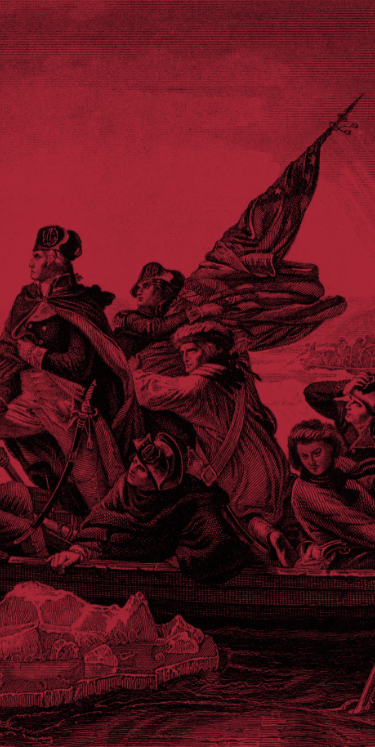
When screen time is absolutely necessary for the littles, these short adventures are the way to go. Introduce your young patriots to heroes such as John and Abigail Adams , or follow Washington as he crossed the Delaware River. Witness adventures from Columbus’ search for the new world to the Wright Brothers mastering flight.

America 250 Unit Study – Master Books
This six-week course will help your kids understand and appreciate the freedoms we celebrate. The curriculum focuses on the Biblical responsibilities of citizens, and includes history, civics, literature, geography, Scripture memory, and activities like timelines, crafts, and recipes. Your student will understand that true freedom found in the Gospel. It’s written for middle and high school students but includes project options for youngsters as well. Start now to finish by July 4th!

Travel
Washington DC Guide App — Lost Tours
Taking your family to Washington DC this year? Bring along a helpful historian in your pocket. Enjoy commentary from knowledgeable historians such as David Barton and William Federer as they tell the stories of sites as you visit. More American landmarks and cities coming soon!

The Heritage Guide to Historical Sites — The Heritage Foundation
Use this interactive map to help plan your next family vacation around some of America’s most treasured historical sites including battlefields, presidents’ homes, monuments, and museums. Each site is rated for historical accuracy, ideological bias, and family content. This is the travel tool we’ve all been waiting for!

From 250th Commemorative Passports to highlighting battlefields of the American Revolution, Federal agencies like the Department of Transportation and the National Park Service have joined in the spirit of the celebration by offering some wonderful educational ideas for your family. Don’t forget to check their websites when you plan your family vacation.
Declaration Hub

Introduction

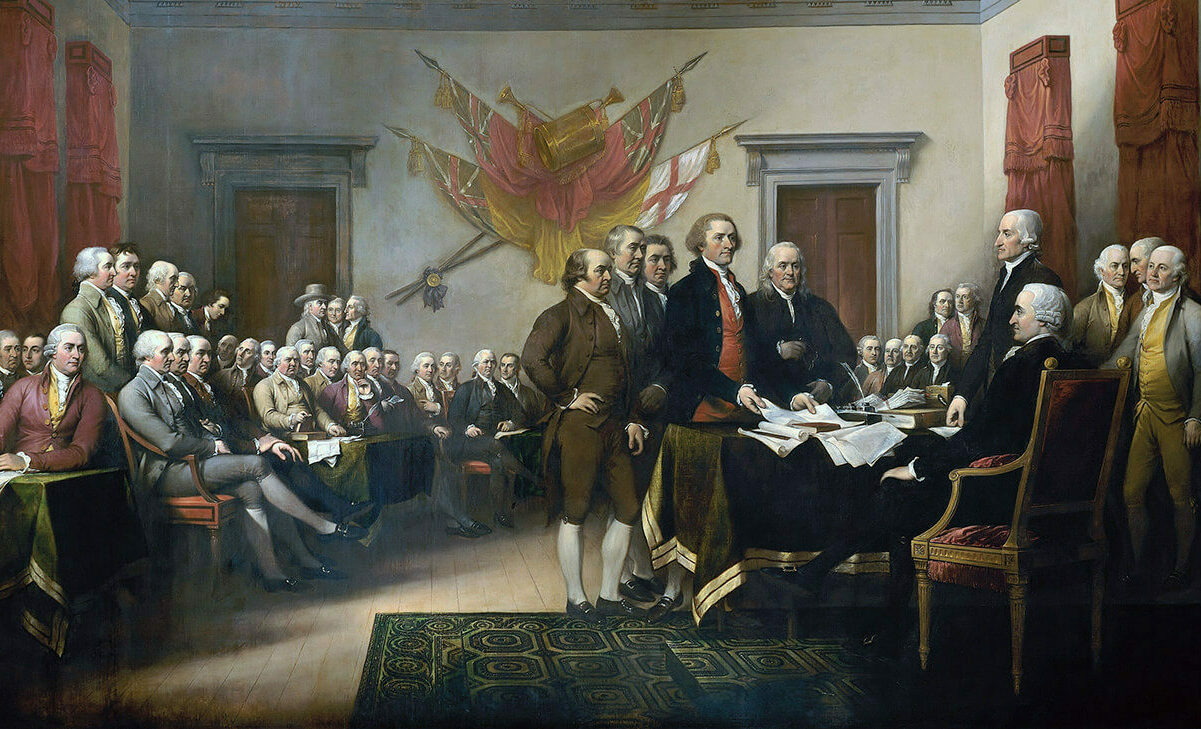
The Declaration of Independence, adopted by the Continental Congress on July 4, 1776, serves as America’s birth certificate and one of the most important documents in human history. It announced the separation of the thirteen American colonies from Great Britain and stated the key principles on which the new nation would be founded.

As Thomas Jefferson wrote in its famous preamble:

When in the course of human events, it becomes necessary for one people to dissolve the political bands which have connected them with another. We hold these truths to be self-evident, that all men are created equal, that they are endowed by their Creator with certain unalienable Rights, that among these are Life, Liberty, and the pursuit of Happiness.

These words justified the colonies’ break from tyranny and expressed a vision of government that is delegated its just powers by the consent of the governed. This was a groundbreaking idea based on the recognition of God-given rights.

The fifty-six signers of the Declaration pledged their lives, fortunes, and sacred honor to this cause.

Some History

Growing tensions between the American colonies and Britain led to the push for independence. Oppressive taxes, the Intolerable Acts, and limits on colonial freedoms fueled anger. In January 1776, Thomas Paine’s pamphlet Common Sense inspired many colonists to support breaking away from Britain.1

On June 7, 1776, Richard Henry Lee of Virginia proposed a resolution in the Continental Congress, stating that “these United Colonies are, and of right ought to be, free and independent States.”2 Congress then chose a Committee of Five—Thomas Jefferson (the primary author), John Adams, Benjamin Franklin, Roger Sherman, and Robert Livingston—to write a formal declaration.3

After intense debate and revisions (including the removal of a passage condemning the slave trade to secure unity4), Congress adopted the document. John Dunlap printed broadsides that night, spreading the news across the colonies.5

John Adams, writing to his wife Abigail on July 3, 1776, foresaw the day’s enduring legacy:

The Second Day of July 1776 will be the most memorable epoch in the History of America. I am apt to believe that it will be celebrated by succeeding Generations, as the great anniversary Festival… It ought to be solemnized with Pomp and Parade, with Shews, Games, Sports, Guns, Bells, Bonfires, and Illuminations from one End of this Continent to the other from this Time forward forever more.6

Although Adams anticipated celebrations on July 2 (the day the independence vote was held), history has adopted July 4 as Independence Day—the day the world was informed why America chose freedom.

The signers knew the risks: by declaring independence, they committed an act of treason against the British Crown, punishable by death. Yet, as Adams reflected, “posterity will triumph in that day’s transaction.”7

This hub explores the Declaration’s text, its courageous signers (including original documents and letters from several), and valuable resources for further study.

Timeline

  • June 7, 1776       Richard Henry Lee proposes independence.
  • June 11, 1776     Committee of Five appointed to draft the Declaration.
  • June 28, 1776    Draft presented to Congress.
  • July 2, 1776        Congress votes for independence (12 colonies in favor; New York abstains initially).
  • July 4, 1776        Declaration adopted and approved.
  • August 2, 1776  Most delegates sign the engrossed parchment copy.

The Text of the Declaration

The Declaration of Independence is remarkably concise—containing fewer than 1,400 words—yet it powerfully combines a philosophical defense of liberty with a detailed indictment of King George III’s abuses. The document is structured in four main parts:

  • The Preamble: States the necessity of explaining separation and introduces the famous self-evident truths.
  • A Statement of Rights and Principles: Outlines the purpose of government and the people’s right to alter or abolish it when it becomes destructive.
  • The List of Grievances: Presents 27 specific charges against the King.
  • The Resolution of Independence: Formally declares the colonies free and independent states.

These primary sources allow you to read the Declaration exactly as the Founders wrote, edited, and presented it to the world.

Primary Sources

Signers of the Declaration

The fifty-six men who signed the Declaration of Independence were not mythical figures—they were husbands, fathers, merchants, lawyers, farmers, and ministers who knowingly risked everything for the cause of liberty. By affixing their names to the document, they committed an act of treason against the British Crown, fully aware that failure could mean ruin or death. Yet they declared, in the document’s closing words, that “for the support of this Declaration, with a firm reliance on the protection of divine Providence, we mutually pledge to each other our Lives, our Fortunes and our sacred Honor.”

Many of these signers paid a heavy personal price: homes destroyed, families displaced, fortunes lost, and some imprisoned or hunted by British forces.8 Their courage and sacrifice laid the foundation for the nation we enjoy today.

WallBuilders is privileged to preserve and present original letters, documents, and artifacts from several of these brave patriots, offering a rare glimpse into their faith, character, and commitment. Below are highlighted resources featuring some of the signers and their stories.

Additional Helpful Resources

Explore the Declaration of Independence further through these trusted primary sources and educational tools. These resources provide everything from original manuscripts and images to classroom-ready materials, helping readers of all ages deepen their understanding of America’s founding document and the courageous men who signed it.

Additional Resources


Endnotes

1 Thomas Paine, Common Sense: Addressed to the Inhabitants of America (Philadelphia: 1776).
2 Richard Henry Lee’s handwritten resolution from the National Archives: https://www.archives.gov/milestone-documents/lee-resolution. See also, June 7, 1776, Journals of the American Congress: From 1774 to 1788 (Washington: Way and Gideon, 1823), 1:368.
3 June 11, 1776, Journals of the American Congress (1823), I:369.
4 “Thomas Jefferson, June 1776, Rough Draft of the Declaration of Independence,” Library of Congress, https://www.loc.gov/resource/mtjx.mtjbib000156/?st=gallery.
5 “Dunlap Broadside [Declaration of Independence],” July 4, 1776, National Archives, https://catalog.archives.gov/id/301682.
6 John Adams to Abigail Adams, July 3, 1776, Massachusetts Historical Society, https://www.masshist.org/digitaladams/archive/doc?id=L17760703jasecond.
7 John Adams to Abigail Adams, July 3, 1776, Massachusetts Historical Society, https://www.masshist.org/digitaladams/archive/doc?id=L17760703jasecond.
8 “FAQ: Difficulties and Sacrifices of the Declaration Signers,” WallBuilders, https://wallbuilders.com/resource/faq-difficulties-and-sacrifices-of-the-declaration-signers/.

Constitution Hub

Constitution Day

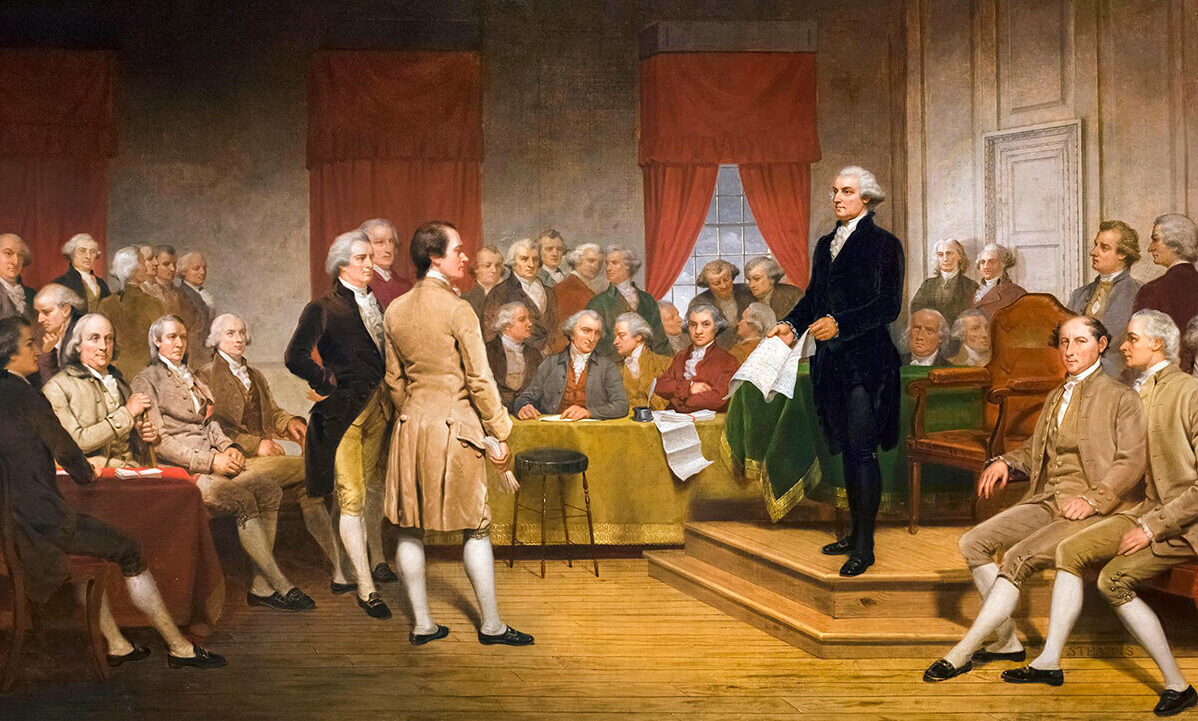
September 17th might not be as recognized as July 4th but it is equally as important. On that day in 1787, thirty-nine men signed the final draft of newly framed Constitution and sent it to the states for it to be ratified. It took nearly an entire year of heated debate in the pages of newspapers and on the floor of the individual ratification conventions, but ultimately, on June 21, 1788, the Constitution was accepted as the governing document and the supreme law of the land. With the unanimous election of George Washington and his inauguration as president on April 30, 1789, America began a new chapter in her history and the history of the world.

To honor this day, Congress voted in 1952 to formally designate September 17th as Constitution Day, and in 2004 an amendment further instructed that:

“The civil and educational authorities of States, counties, cities, and towns are urged to make plans for the proper observance of Constitution Day and Citizenship Day and for the complete instruction of citizens in their responsibilities and opportunities as citizens of the United States” (emphasis added).1

Furthermore, the law stipulates that any educational institution which receives Federal funds must, “hold an educational program on the United States Constitution on September 17.”2

Some History

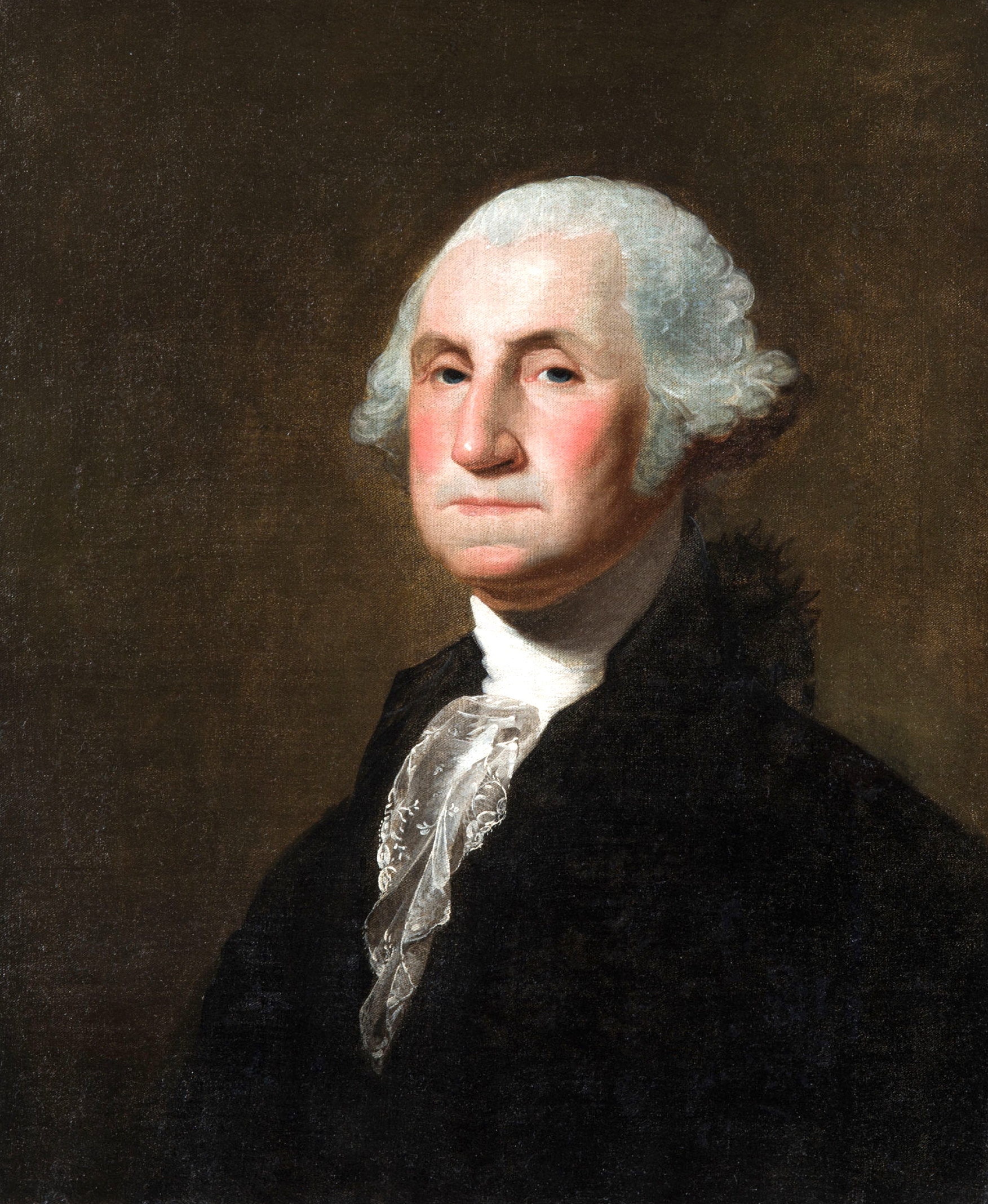
This law, however, is hardly a new idea. From the beginning of America’s history, the Founding Fathers realized that the citizens must study the Constitution and its principles. For instance, George Washington explained that it was necessary to ensure, “the education of our youth in the science of government,” reflecting that:

“In a republic what species of knowledge can be equally important and what duty more pressing on its legislature than to patronize a plan for communicating it to those who are to be the future guardians of the liberties of the country?”3

Furthermore, Samuel Adams wrote to John Adams laying out the absolute need for a nation educated in their rights and responsibilities:

“Let the divines and philosophers, statesmen and patriots, unite their endeavors to renovate the age, by impression the minds of men with the importance of educating their little boys and girls; of inculcating in the minds of youth the fear and love of the Deity and universal philanthropy, and, in subordination to these great principles, the love of their country; instructing them in the art of self-government, without which they never can act a wise part in the government of societies, great or small.”4

James Madison, a key delegate to the Convention in addition to authoring part of the Federalist Papers, likewise remarked that:

“It is universally admitted that a well-instructed people alone can be permanently a free people.”5

Even in the generation following the Founding Fathers, leaders continued to rise up and staunchly defend the Constitution. Daniel Webster became perhaps the most well-known of this second generation of Americans and a respected constitutional scholar himself. In a 4th of July speech he reminded the listeners that,

“The American Constitution is the purchase of American valor.…The Constitution is the great memorial of the deeds of our ancestors.”6

Going on, Webster famously admonished the people to continually stand watch that the rights protected in the Constitution were never infringed upon or lost:

“We live under the only government that ever existed which was framed by the unrestrained and deliberate consultations of the people. Miracles do not cluster. That which has happened but once in six thousand years cannot be expected to happen often. Such a government, once gone, might leave a void, to be filled, for ages, with revolution and tumult, riot and despotism.”7

Constitutional Ignorance

However, a brief survey of American students and citizens today reveal a stunning lack of constitutional literacy.

  • 59% of Americans can’t name the Right of Petition
  • 41% don’t know of the Right to Assemble8
  • 27% believe students should get punished by teachers or administrators for posting political opinions they don’t agree with on social media
  • 46% of Americans think institutions should disinvite speakers who might offend listeners
  • 12% of Americans think the Constitution specifically ensures the right to own a pet9

But perhaps the most shocking and revealing statistic is that some 57% of American have never read the Constitution!10

If Americans don’t know what the Constitution says then how can they defend it? Thomas Jefferson warned that, “If a nation expects to be ignorant and free, in a state of civilization, it expects what never was and never will be.”11

In past generations even visitors from Europe recognized that the American political system relied upon a well-educated, civics-oriented population. In Alexis de Tocqueville’s famous 1835 account of his travels in the early republic, Democracy in America, he spoke about how, when asking any American about politics:

You will see the cloud that envelops his intellect suddenly dissipate: his language becomes clear, clean, and precise, like his thought. He will teach you what his rights are and what means he will use to exercise them; he will know according to what usages the political world conducts itself. You will perceive that the rules of administration are known to him and that he has made himself familiar with the mechanisms of the laws.…In the United States, the sum of men’s education is directed toward politics.12

How things have changed! Now over half the nation has never read the Constitution. If Tocqueville were to ask the same question today there is no doubt his answer would be dramatically different.

As a closing thought, George Washington explained to his nephew and soon to Justice on the Supreme Court Bushrod Washington:

“The power under the Constitution will always be with the people.”13

But if the people are unaware of their power then the door remains open to despots and tyrants who would usurp that power for themselves.

Helpful Resources

To help people learn more about the Constitution we have collected numerous resources from early legal commentaries to recent school curriculum. While September 17th is Constitution Day, knowing the Constitution and method of limited government it outlines is an everyday responsibility. Our prayer is that these resources will help you learn about the amazing system our Founding Fathers gave to us!

Early Sources:

Additional WallBuilders Resources:

Recommended Secondary Sources:

Curriculum and Teacher Resources:


Endnotes

1 See, Pub. L. 105–225, Aug. 12, 1998, 112 Stat. 1255; Pub. L. 108–447, div. J, title I, §111(c)(1), Dec. 8, 2004, 118 Stat. 3344, https://www.govinfo.gov/content/pkg/PLAW-108publ447/pdf/PLAW-108publ447.pdf.

2 See, Pub. L. 108–447, div. J, title I, §111, Dec. 8, 2004, 118 Stat. 3344, https://www.govinfo.gov/content/pkg/PLAW-108publ447/pdf/PLAW-108publ447.pdf.

3 George Washington, “Eighth Annal Message of George Washington,” December 7, 1796, The Avalon Project, https://avalon.law.yale.edu/18th_century/washs08.asp.

4 John Adams, The Works of John Adams, ed. Charles Francis Adams (Boston: Charles C. Little and James Brown, 1851), 6:414.

5 James Madison, “Second Annual Message,” December 5, 1810, The Avalon Project, https://www.presidency.ucsb.edu/node/204434.

6 Daniel Webster, Newly Discovered Fourth of July Oration (Boston: A. Williams & Co., 1882), 10.

7 Daniel Webster, Newly Discovered Fourth of July Oration (Boston: A. Williams & Co., 1882), 14.

8 “Where America Stands,” 2024, Freedom Forum Institute, https://www.freedomforum.org/wp-content/uploads/2024/11/Freedom-Forum-Where-America-Stands-Report-2024-4.pdf.

9 “We the people? 12% of Americans believe the Constitution guarantees ‘the right to own a pet’,” September 16, 2015, The Washington Times, https://www.washingtontimes.com/news/2015/sep/16/12-americans-says-bill-rights-includes-right-own-p/.

10 Thomas Jipping, “More Americans Need to Actually Read the Constitution,” November 1, 2019, Heritage Foundation, https://www.heritage.org/the-constitution/commentary/more-americans-need-actually-read-the-constitution.

11Thomas Jefferson to Charles Yancey, January 6, 1816, Founders Archive, https://founders.archives.gov/documents/Jefferson/03-09-02-0209.

12 Alexis de Tocqueville, Democracy in America (Chicago: University of Chicago Press, 2000), 1.2.9 or 291-292.

13 George Washington to Bushrod Washington, November 9, 1787, Founders Archive, https://founders.archives.gov/documents/Washington/04-05-02-0388.

Resources & Fun Activities For Staying In

WallBuilders does not necessarily endorse these websites and resources. We are sharing some educational and fun sites that have been shared with us that we thought might be beneficial. At the time we’re posting this list of resources (April 2020), all of these contain at least some free resources.

Activities/Games

Virtual Tours

Helpful Resources

All Ages Educational

Art

Computers

Faith Based

Foreign Language

Geography

Grammar/Spelling/Writing

History

Math

Music

Reading

Science

Various Subjects

Toddlers

Elementary Age Educational

Geography

Math

  • K-8 online math program that looks at how a student is solving problems to adjust accordingly and build a unique learning path for them. https://www.dreambox.com/at-home
  • K-5 curriculum that builds deep understanding and a love of learning math for all students. https://www.zearn.org/

Misc

Spelling

Reading

Science

Middle School Educational

Grammar

Math

Reading

  • Engaging reading game for grades 2-8 that combines strategy, engagement, and imaginative reading passages to create a fun, curriculum-aligned literacy game. https://www.squigglepark.com/dreamscape/
  • A safe research site for elementary-level readers. They are offering — free 24/7 access [USERNAME: read (case sensitive) PASSWORD: read (case sensitive)]. https://www.facts4me.com/

Science

  • Next Generation Science video game focused on middle school where students directly engage in science phenomena as they solve problems. https://www.tytoonline.com/
  • Science simulations, scientist profiles, and other digital resources for middle school science and high school biology. https://sepuplhs.org/

High School Educational

College Prep

Math

Science

Beyond High School

Signers of the Declaration Resource Page

So many today know very little about the fifty-six men who signed the Declaration of Independence. They pledged their “lives, fortunes, and sacred honor” to preserve the important freedoms enshrined in that document. Their legacy, in the form of the Declaration, has lasted throughout the centuries as America has grown and prospered and that legacy deserves to be remembered! Below we’ve collected some resources so that you can become better acquainted with these brave men.

Biographical Websites

US History.org, Signers of the Declaration of Independence: http://www.ushistory.org/DECLARATION/signers/index.html

National Park Service, Signers of the Declaration Biographical Sketches: https://www.nps.gov/parkhistory/online_books/declaration/bioa.htm

Descendants of the Signers of the Declaration of Independence: https://www.dsdi1776.com/signer/

Biographical Books

John Sanderson, Biography of the Signers: https://catalog.hathitrust.org/Record/007911419

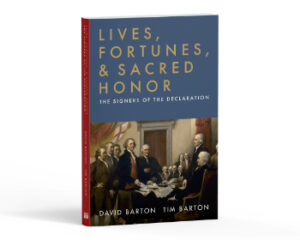
Lives of the Signershttps://shop.wallbuilders.com/index.php/lives-of-the-signers-of-the-declaration.html

Wives of the Signershttps://shop.wallbuilders.com/index.php/wives-of-the-signers-book.html

WallBuilders’ Articles

America’s Birthday Over the Centuries: https://wallbuilders.com/resource/happy-fourth-of-july/

Happy Independence Day!: https://wallbuilders.com/resource/happy-independence-day/

4th of July: https://wallbuilders.com/resource/4th-july-article

Dr. Benjamin Rush: https://wallbuilders.com/resource/dr-benjamin-rush

James Wilson: https://wallbuilders.com/resource/james-wilson

Secretary of the Continental Congress Charles Thomson: https://wallbuilders.com/resource/secretary-of-the-continental-congress-charles-thomson/

FAQ: Difficulties and Sacrifices of the Declaration Signers: https://wallbuilders.com/resource/faq-difficulties-and-sacrifices-of-the-declaration-signers

Their Lives, Fortunes and Sacred Honor: Richard Stockton: https://wallbuilders.com/resource/lives-fortunes-sacred-honor-richard-stockton

Who Was Charles Carroll?: https://wallbuilders.com/resource/who-was-charles-carroll

John Hart – Quiet Farmer. Selfless Patriot: https://wallbuilders.com/resource/the-cost-of-signing-the-declaration-of-independence/

Courageous Women During the American Revolution: https://wallbuilders.com/resource/women-heroes

Sacrifices of Wives of the Declaration Signers: https://wallbuilders.com/resource/sacrifices-of-wives-of-the-declaration-signers/

Other Articles & Websites

National Archives, The Signers’ Gallery: https://www.archives.gov/founding-docs/signers-gallery

National Archives, Signers of the Declaration of Independence: https://www.archives.gov/founding-docs/signers-factsheet

Library of Congress, Thomas Jefferson, June 1776, Rough Draft of the Declaration of Independence: https://www.loc.gov/resource/mtj1.001_0545_0548/?st=gallery

Architect of the Capitol, Declaration of Independence Painting: https://www.aoc.gov/explore-capitol-campus/art/declaration-independence

Architect of the Capitol, Key to the Declaration of Independence Painting: https://www.aoc.gov/sites/default/files/painting_key_declaration-of-independence_aoc.png

BARTON: Telling the Truth about Moses

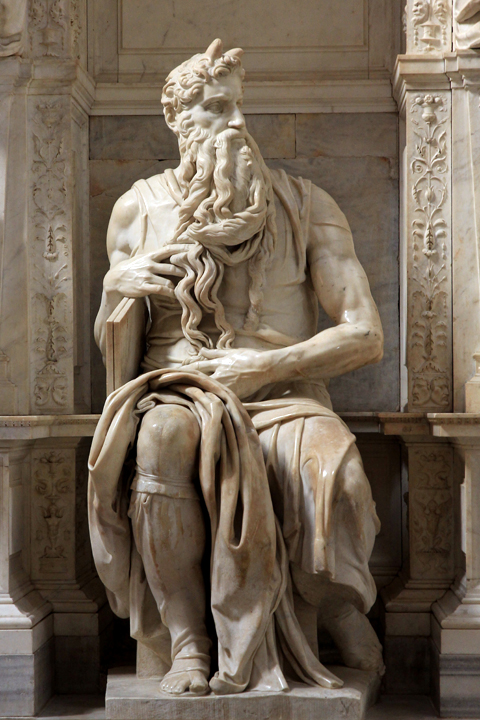
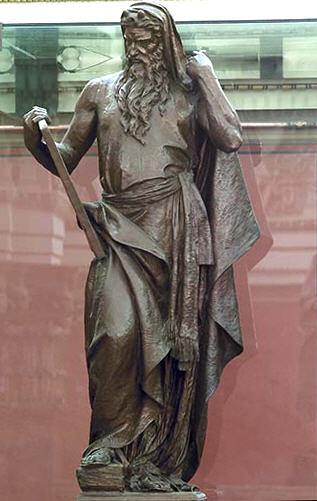
Moses by Michaelangelo: CC A 3.0: Jörg Bittner UnnaThe Texas State Board of Education (SBOE) made revisions in the state’s Social Studies standards which governs the content in textbooks, and thus classroom content. The Texas Freedom Network (TFN), a frequent critic of the State Board, on the warpath, launched a public and social media campaign to demand changes in the standards.
Of the 54,000 words that comprise the Texas Social Studies standard, this organization objected to a 27-word statement in high-school history requiring students to: “identify the individuals whose principles of laws and government institutions informed the American founding documents, including those of Moses, William Blackstone, John Locke, and Charles de Montesquieu.” Their main issue was the mention of Moses.

They therefore launched their “Tell the Truth” campaign, berating the “Texas State Board of Education Members’ claim that Moses influenced America’s Founding documents.”1 According to TFN, the SBOE “exaggerated, if not invented, Biblical influences on American Founding.”2 TFN is therefore asking the public to “Tell the State Board of Education to #Teach the Truth.”3

Others on Moses

Telling the truth is an excellent recommendation. We hope that the SBOE will indeed tell the truth about Moses—that it will tell students that:

  • Noted political scientists from the University of Houston documented that the most-cited source in the political writings of America’s Founding Era (1760-1805) was the Bible, and that among the most frequently quoted passages were those from Moses.4
  • Founding Fathers John Adams, Thomas Jefferson, and Benjamin Franklin, appointed by Congress to design a Great Seal for the United States, placed Moses as the central figure in that design.5
  • The inscription emblazoned around the famous Liberty Bell is by Moses, from Leviticus 25:10.
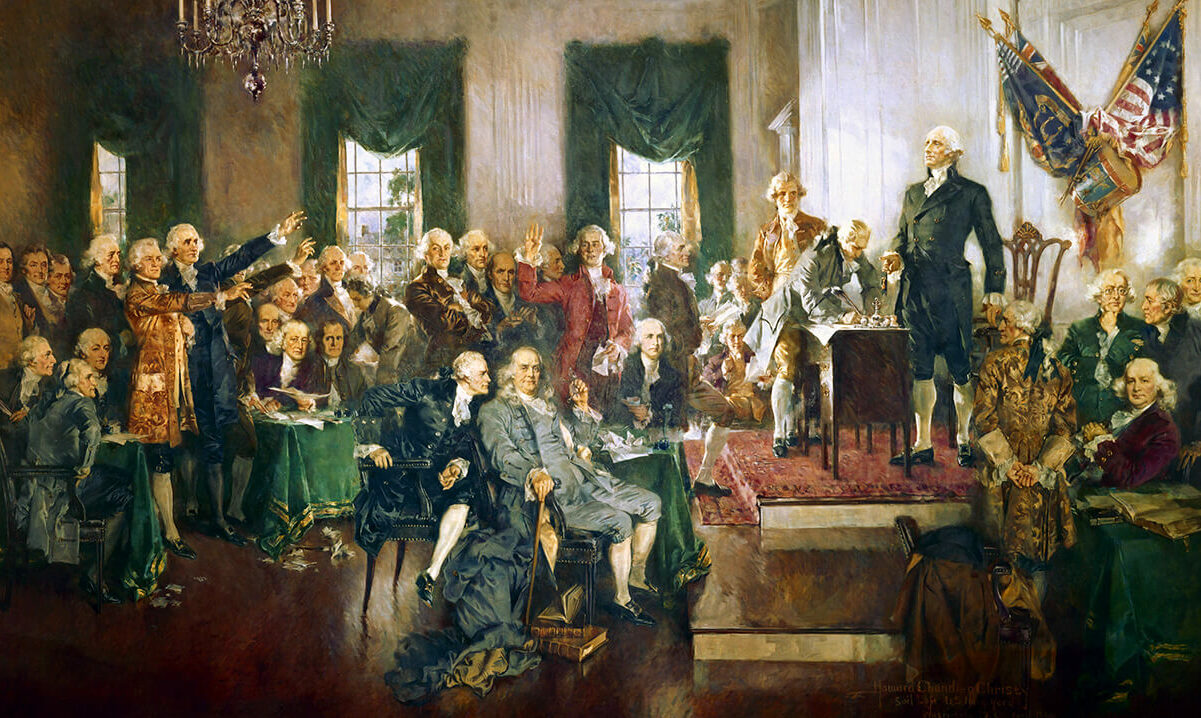
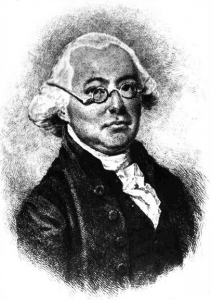
  • Numerous Founding Fathers specifically invoked Moses and his writings, such as signers of the Declaration Thomas Jefferson,6 John Adams, 7 John Witherspoon,8 and Caesar Rodney,9 Arthur Middleton;10 signers of the Constitution Benjamin Franklin11 and James Wilson;12 and other notables, including Thomas Paine,13 Joseph Story, 14 Elias Boudinot,15 and many more.
  • When George Washington died, two-thirds of the eulogies delivered about him likened him to Moses.16

However, Moses was an authority in America long before the Founding Fathers. Almost every one of the dozens of early legal codes in colonial America repeatedly invoked Moses and his writings as the basis of its laws; and countless state and federal courts over the next three centuries openly invoked his writings in their rulings.17

Moses in Government Buildings

Main Reading Room, Thomas Jefferson Building, Library of Congress.

Even today, Moses continues to be officially recognized as a significant influence on American government:

  • In the Chamber of the US House of Representatives, Moses is honored as the most important lawgiver in history.
  • Inside the Supreme Court Chamber, Moses is featured three times, and is also honored at several additional locations throughout the building.
  • In the National Archives, directly in front of the display of the Declaration of Independence and the Constitution is a depiction of the Ten Commandments given by the lawgiver Moses.

The direct influence of Moses and his writings across four centuries of American history is so well-documented that Time magazine concluded “from the Pilgrims to the Founding Fathers, the Civil War to the Civil Rights movement, Americans have turned to Moses.”18

Sadly, the Texas Freedom Network has once again confirmed not only its historical ignorance but also its anti-religious intolerance—they become apoplectic over mentions of Judeo-Christian influences, even when history affirms the reality of that influence. They clamored for the SBOE to “Tell the Truth,” but ironically want to keep students from knowing the truth mentioned above. Their attempt at blatant censorship of American history is disturbing.

The Texas Freedom Network is entitled to its opinion, but they are not entitled to rewrite historical facts simply because it does not comport with their anti-religious bigotry. The State Board of Education should continue to “Tell the Truth” by keeping Moses in the Texas Social Studies standards.


Endnotes

1 See a video posted on: the Texas Freedom Network Facebook page in May 2018: https://www.facebook.com/TexasFreedomNetwork/videos/10155547650203034/ & the Texas Freedom Network Twitter feed on May 14, 2018: https://twitter.com/tfn/status/996037333442072576.

2 See a video posted on: the Texas Freedom Network Facebook page in May 2018: https://www.facebook.com/TexasFreedomNetwork/videos/10155547650203034/ & the Texas Freedom Network Twitter feed on May 14, 2018: https://twitter.com/tfn/status/996037333442072576.

3 See a video posted on: the Texas Freedom Network Facebook page in May 2018: https://www.facebook.com/TexasFreedomNetwork/videos/10155547650203034/ & the Texas Freedom Network Twitter feed on May 14, 2018: https://twitter.com/tfn/status/996037333442072576.

4 Donald S. Lutz, The Origins of American Constitutionalism (Baton Rouge: Louisiana University Press, 1988), 140-142.

5 August 20, 1776, Journals of the Continental Congress (Washington, D. C.: Government Printing Office, 1906), V:690.

6 John Adams to Abigail Adams, August 14, 1776, Letters of John Adams, Addressed to His Wife, ed. Charles Francis Adams (Boston: Charles C. Little and James Brown, 1841), I:152, .

7 John Adams to Abigail Adams, May 17, 1776, Letters of John Adams, ed. Adams (1841), I:109.

8 John Witherspoon, “Seasonable Advice to Young Persons,” February 21, 1762, The Works of the Rev. John Witherspoon (Philadelphia: William W. Woodward, 1802), II:485.

9 Caesar Rodney to Thomas Rodney, September 11, 1776, Letters of Delegates to Congress, 1774-1789, ed. Paul H. Smith (Washington, D. C.: Library of Congress, 1979), 5:133-134.

10 Arthur Middleton to Aedanus Burke, November 1781, Letters of Delegates, ed. Smith (1979), 18:221.

11 John Adams to Abigail Adams, August 14, 1776, Letters of John Adams, ed. Adams (1841), I:152.

12 The Works of the Honorable James Wilson (Philadelphia: Lorenzo Press, 1804), II:10, 80, 288, 477.

13 Thomas Paine, Common Sense; Addressed to the Inhabitants of America (Philadelphia: W. and T. Bradford, 1776), 47.

14  Joseph Story, Commentaries on the Constitution of the United States (Boston: Hilliard, Gray, and Company, 1833), I:57-58.

15 Elias Boudinot to Samuel Mather, September 30, 1783, Letters of Delegates, ed. Smith (1979), 20:565-566.

16 Bruce Feiler, “How Moses Shaped America,” Oct. 12, 2009, Time, https://content.time.com/time/subscriber/article/0,33009,1927303-1,00.html.

17 See, for example, “Affidavit in Support of the Ten Commandments,” WallBuilders, https://wallbuilders.com/affidavit-support-ten-commandments/.

18 Bruce Feiler, “How Moses Shaped America,” Oct. 12, 2009, Time, https://content.time.com/time/subscriber/article/0,33009,1927303-1,00.html.

* This article concerns a historical issue and may not have updated information.

James Wilson

Quiz


1. What was James Wilson’s country of birth?

2. True or False: James Wilson signed the Constitution but not the Declaration of Independence.

3. True or False: At the Constitutional Convention, Wilson was one of the relatively inactive members.

4. Who appointed Wilson to the Supreme Court?

5. True or False: During the War for Independence, Wilson was sent to negotiate with the Indians.

6. What teaching position did Wilson hold concurrent to his time in the Supreme Court?


A Lost Founder

One Founding Father we should definitely remember was James Wilson, born on September 14, 1742. Take the above quiz and see what you know about him!

In the modern rewriting of our American history, some of our nation’s Founding Fathers have been wrongly misportrayed as people not worthy of study, but most have simply been ignored. As a consequence, many worthy heroes are now forgotten. Fortunately, the Scriptures encourage us to study the past: “For whatever things were written before were written for our learning” (Romans 15:4).

James Wilson can teach us much that is relevant today, including about the important role that religion plays in civil law:

Far from being rivals or enemies, religion and law are twin sisters, friends, and mutual assistants. Indeed these two sciences run into each other. The Divine law, as discovered by reason and the moral sense, forms an essential part of both.1

Take some time to learn about James Wilson, and then share what you learn with others. Wilson is one of the heroes who helped make America a great nation!


How did you do? Check your answers!

1. Wilson was born in Scotland in 1742, he immigrated to America in 1766.2

2. False. James Wilson signed both the Declaration of Independence3 and the Constitution.4

3. False. James Wilson was the second most-active delegate at the Constitutional Convention, speaking 168 times on the floor of the Convention.5

4. George Washington. James Wilson was one of the original Supreme Court justices, serving from 1789 to 1798.6

5. True.7

6. Professor of Law at the University of Pennsylvania. Wilson organized the first systematic legal training in America, teaching classes to law students while simultaneously sitting as a Justice on the US Supreme Court.8 Prior to Wilson’s law classes, law students were largely individually trained and apprenticed in the law.


Endnotes

1 James Wilson, The Works of the Honourable James Wilson, ed. Bird Wilson (Philadelphia: Lorenzo Press, 1804), III:106.
2 “James Wilson,” B. J. Lossing, Biographical Sketches of the Signers of the Declaration of American Independence (New York: George F. Cooledge, 1848), 126.
3 “Signers of the Declaration: Biographical Sketches,” National Park Service, accessed December 15, 2023.
4 “Signers of the Constitution: Biographical Sketches,” National Park Service, accessed December 15, 2023.
5 See, for example, Mark David Hall, “Justice, Law, and the Creation of the American Republic: The Forgotten Legacy of James Wilson,” June 1, 2009, The Heritage Foundation; “Forgotten Founders: Gouverneur Morris,” June 8, 2020, National Constitution Center.
6 “Wilson, James,” Biographical Directory of the United States Congress, accessed December 15, 2023.
7 “James Wilson,” Lossing, Biographical Sketches of the Signers (1848), 128.
8 “A Biography of James Wilson,” University of Groningen, accessed December 15, 2023.

Dr. Benjamin Rush


Take the Benjamin Rush Quiz!

  1. Which two former Presidents did Benjamin Rush help reconcile?
  2. What was the name of the society that Benjamin Rush helped form to start Sunday Schools?
  3. What other Founding Father helped Benjamin Rush found America’s first anti-slavery society?
  4. How many colleges and universities did Benjamin Rush help establish?
  5. What was the name of the colonial law requiring children to know how to read, and establishing public schools for that purpose?


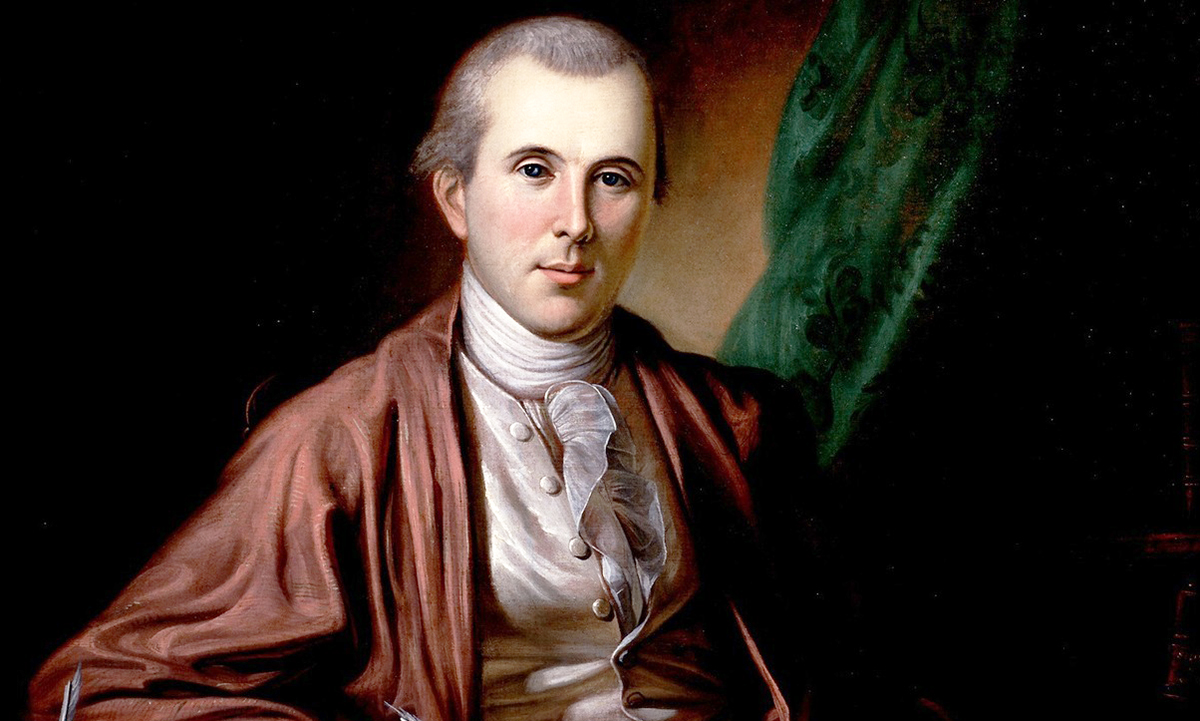
Dr. Benjamin Rush, a signer of the Declaration of Independence, was considered by John Adams to be one of America’s three most notable Founding Fathers, ranking alongside George Washington and Benjamin Franklin. 1 But his contributions to America were not purely political, even though those were very significant. 2

Rush is also known as the “Father of American Medicine.” 3 He was a founding member of America’s first Bible Society 4 and is credited with helping begin the American Sunday School movement. 5  He helped organize America’s first Anti-Slavery society 6 and was a leader in the national abolition movement. 7 He held multiple university professorships, 8 and is properly titled “The Father of Public Schools Under the Constitution,” being an advocate for free public schools for all youth. 9

As families across the nation send millions of children back to school 10 each year, it is a good time to review the intent behind America’s original educational system: for students to receive a sound academic education based on God’s Word. 11

In fact, in 1791, Dr. Rush wrote a lengthy piece providing a dozen or so reasons why America would continue teaching the Bible in our public schools.


How Did You Do?

  1. Which two former Presidents did Benjamin Rush help reconcile?
    John Adams and Thomas Jefferson (To see the story behind the reconciliation, read this article.)
  2. What was the name of the society that Benjamin Rush helped form to start Sunday Schools?
    First Day Schools
  3. What other Founding Father helped Benjamin Rush found America’s first anti-slavery society?
    Benjamin Franklin (To see what the Founding Fathers thought of slavery, see here.)
  4. How many colleges and universities did Benjamin Rush help establish?
    Five (The College of Philadelphia, the University of the State of Pennsylvania, the Young Ladies’ Academy of Philadelphia, Dickinson College, and Franklin College)
  5. What was the name of the colonial law requiring children to know how to read, and establishing public schools for that purpose?
    The Old Deluder Satan Act (For additional information, check out Four Centuries of American Education.)

Endnotes

1 John Adams to Richard Rush, May 5, 1813, National Archives. See also, John Sanderson, Biography of the Signers to the Declaration of Independence (Philadelphia: R. W. Pomeroy, 1823), IV:285; John Adams to Richard Rush, May 5, 1813, L. H. Butterfield, “The Reputation of Benjamin Rush,” Pennsylvania History, January 1950, XVII:1:9.
2 For example, Dr. Rush pushed for the ratification of the U.S. Constitution, as well as adoption of the 1790 Pennsylvania State Constitution. He was appointed Treasurer of the U.S. Mint by President John Adams, a position which he held under Presidents Thomas Jefferson and James Madison.
3 Thomas D. Mitchell, The Character of Rush (Philadelphia: Published by the Class, John H. Gihon, Printer, 1848), 4.
4 The First Report of the Bible Society Established at Philadelphia; Read before the Society at their Annual Meeting, May 1, 1809 (Philadelphia: Printed by Order of the Society; Fry and Kammerer, Printers, 1809); “Rush, Benjamin,” Dictionary of American Biography.
5 Edwin Wilber Rice, The Sunday-School Movement and the American Sunday-School Union (Philadelphia: American Sunday School Union, 1917 ), 44-45.
6 Constitution of the Pennsylvania Society for Promoting the Abolition of Slavery, and the Relief of Free Negroes, Unlawfully Held in Bondage. Begun in the Year 1774, and Enlarged on the 23rd of April, 1787. (Philadelphia: Francis Bailey, 1788), 8; “Rush, Benjamin,” Dictionary of American Biography; Thomas Clarkson, Abolition of the African Slave-Trade, by the British Parliament (Augusta: P.A. Brinsmade, 1830), 1:66-69.
7 Centennial Anniversary of the Pennsylvania Society, for Promoting the Abolition of Slavery, the Relief of Free Negroes Unlawfully Held in Bondage, and for Improving the Condition of the African Race (Philadelphia: Grant, Faires, & Rodgers, 1875), 15.
8Benjamin Rush,” University of Pennsylvania, accessed October 26, 2023.
9 David Ramsay, An Eulogium upon Benjamin Rush, M. D. (Philadelphia: Bradford and Inskeep, 1813), 107; Benjamin Rush, “Of the Mode of Education Proper in a Republic,” Essays, Literary, Moral and Philosophical (Philadelphia: Thomas and Samuel F. Bradford, 1798), 6-20.
10Public and private elementary and secondary teachers, enrollment, and pupil/teacher ratios: Selected years, fall 1955 through fall 2021,” National Center for Education Statistics, accessed October 26, 2023.
11 Alexis de Tocqueville, The Republic of the United States of America and Its Political Institutions, Reviewed and Examined, trans., Henry Reeves (Garden City, NY: A. S. Barnes & Co., 1851), 41; Edward Kendall, Travels through the Northern Parts of the United States, in the Years 1807 and 1808 (New York: I. Riley, 1809), I:270-271.

How much do you know about the Constitution?

Here are some questions relating to the United States Constitution so you can test your knowledge!

  1. Of the 39 signers of the Constitution, how many had previously signed the Declaration of Independence?
  2. The Constitution was signed in 1787, but was not binding until it was ratified. When did that happen?
  3. Which state was the first to ratify the new constitution?
  4. Which state was the last to ratify the Constitution?
  5. How many articles does the Constitution contain?
  6. Which article is the longest, and why?
  7. The Constitution Convention met in Philadelphia for the purpose of creating a document that would establish a new government for the States. True or False?

On September 17th 1787, in a warm room in Philadelphia, 39 men signed the document that formed our nation: the United States Constitution. With each passing year, America continues her record of having the longest on-going constitutional republic in history. Discover more resources, including lesson plans and activities, on our Constitution Hub!


How’d you do?

  1. Six: Benjamin Franklin, Roger Sherman, Robert Morris, George Clymer, George Read, and James Wilson1
  2. It was ratified on June 21, 1788, when New Hampshire became the 9th state to ratify the Constitution, as specified in Article 7 of the Constitution. The new government under the Constitution came into effect on March 4, 1789.2
  3. Delaware, on December 7, 17873
  4. Rhode island, on May 29, 17904
  5. Seven5
  6. Article I is the longest. It organizes and governs the legislative branch, which was the branch closest to the people and the most important of the three branches. It was therefore given the most, and the most powerful responsibilities.6
  7. False. The purpose was to address and solve the weaknesses that had become apparent under the Articles of Confederation, the document under which the country had been governed during the American Revolution.7

Endnotes

1 “Signers of the Declaration Biographical Sketches,” National Park Service, accessed December 15, 2023.
2 “About the Constitution: FAQs,” National Constitution Center, accessed December 15, 2023.
3 “Observing Constitution Day: Background,” National Archives, accessed December 15, 2023.
4 “Observing Constitution Day: Background,” National Archives, accessed December 15, 2023.
5 “The Constitution of the United States: A Transcript,” National Archives, accessed December 15, 2023.
6 “The Constitution of the United States: A Transcript,” National Archives, accessed December 15, 2023.
7 “Constitution of the United States: Primary Documents in American History,” Library of Congress, accessed December 15, 2023.

Test Your Knowledge: John Quincy Adams

How much do you know about John Quincy Adams?
Take the following quiz to find out!

(Answers at the bottom.)

1. How old was John Quincy Adams when he accompanied his father John Adams (who had been appointed as ambassador) to France, where he became his secretary?

2. Who told John Quincy Adams “[I] would much rather you should have found your grave in the ocean you have crossed, or that any untimely death crop you in your infant years, than see you an immoral, profligate, or graceless child…”?

3. True or False: John Quincy Adams was 18 years old when he received a congressional appointment as secretary to Francis Dana, the American ambassador to Russia.

4. True or False: John Quincy Adams was one of three individuals who served in the U.S. House of Representatives after being President of the United States.

5. True or False: The House of Representatives passed a gag rule to keep John Quincy Adams from introducing petitions calling for the abolition of slavery.

6. What famous Supreme Court case did Adams argue on behalf of a group of captured Africans who had revolted and regained their freedom while on board a ship transporting them into slavery?


Evacuation Day

test-your-knowledge-john-quincy-adams-1March 17 is annually celebrated in Boston as “Evacuation Day,” commemorating the departure of the British from the city after an eleven month occupation at the start of the American Revolution.1 April 19, 1775 through March 17, 1776 was the Siege of Boston. This time encompasses some of the early events of the American Revolution, including the Battles of Lexington and Concord,2 the Battle of Bunker Hill,3 and George Washington taking command of the American army.4

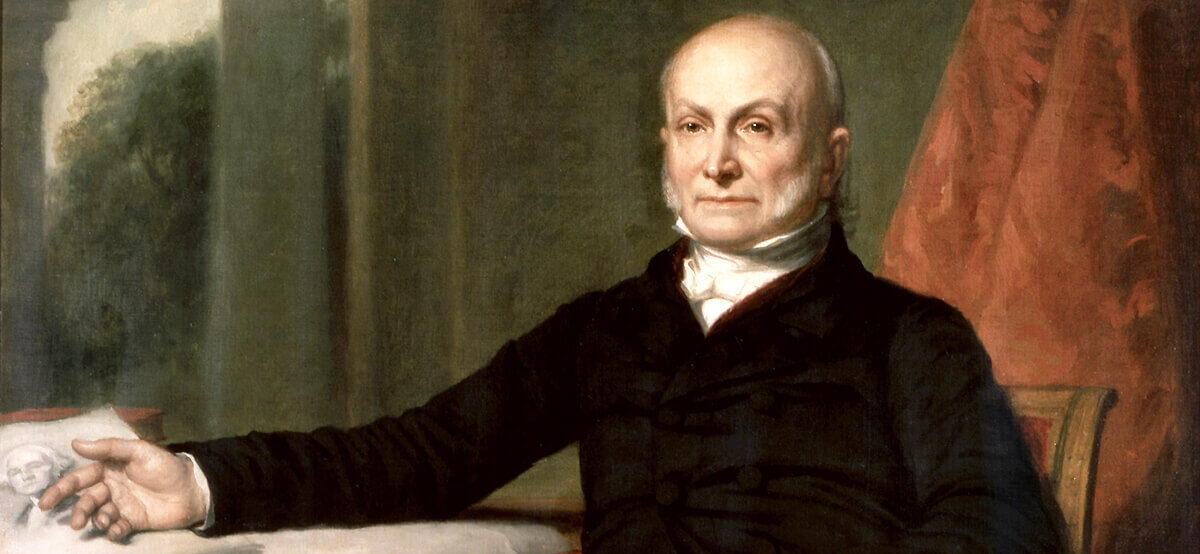
John Quincy Adams, whose family lived near Boston, personally watched the Battle of Bunker Hill at the age of 8.5 Just a few months before, he had performed military drills with the local militia and Minutemen — an event that John Quincy remembered in detail over 50 years later!6

John Quincy Adams spent 68 years of his life in public service for America. Today, on Evacuation Day, his is truly a life worth honoring.


How did you do?

1. He was 10 years old. John Adams went to France in February, 1778 (in his diary, he even talks about a battle his vessel had in early March during the ocean crossing7). John Quincy Adams, born on July 11, 1767, would have been several months shy of his 11th birthday when he accompanied his father.

2. Abigail Adams. See the complete letter from Abigail to John Quincy.8

3. False. John Quincy Adams was 14 years old when he was appointed as Francis Dana’s secretary and translator.9

4. False. Nineteen Presidents have served in the House of Representatives,10 but John Quincy Adams is the only one who was elected to Congress after being president.11

5. True. The “gag rule” was passed by each Congress from 1836-1844, and John Quincy Adams was the leader in the effort that eventually repealed this rule.12

6. United States v. The Amistad, decided in 1841. John Quincy Adams was 73 years old at the time.13 This event is depicted in the famous Hollywood movie Amistad.


Endnotes

1 “The Siege of Boston,” Massachusetts Historical Society, accessed December 8, 2023.
2 “Lexington and Concord,” ushistory.org, accessed December 8, 2023.
3 Bernard Bailyn, “The Battle of Bunker Hill,” Massachusetts Historical Society, accessed December 8, 2023.
4 “Washington takes command of Continental Army in 1775,” April 15, 2016, US Army.
5 “Letter (draft) from John Quincy Adams to Joseph Sturge, March 1846,” Massachusetts Historical Society.
6 John Quincy Adams, entry for August 20, 1827, Memoirs of John Quincy Adams, ed. Charles Francis Adams (Philadelphia: J. B. Lippincott & Co., 1875), VII:325.
7 John Adams, entry for March 14, 1778, The Works of John Adams, ed. Charles Francis Adams (Boston: Charles C. Little and James Brown, 1851), III:108.
8 Abigail Adams to John Quincy Adams, June 1778, Letters of Mrs. Adams, ed. Charles Francis Adams (Boston: Charles C. Little and James Brown, 1840), I:122-125.
9 Office of the Historian, “Biographies of the Secretaries of State: John Quincy Adams (1767–1848),” Department of State, accessed December 8, 2023.
10 “House Members Who Served as President,” United States House of Representatives, accessed December 8, 2023.
11 “The Election of John Quincy Adams of Massachusetts,” United States House of Representatives, accessed December 8, 2023.
12 “The House “Gag Rule”,” United States House of Representatives, accessed December 8, 2023.
13 “The Amistad Case,” National Archives, accessed December 8, 2023.