Proclamation – Thanksgiving – 1779, Virginia

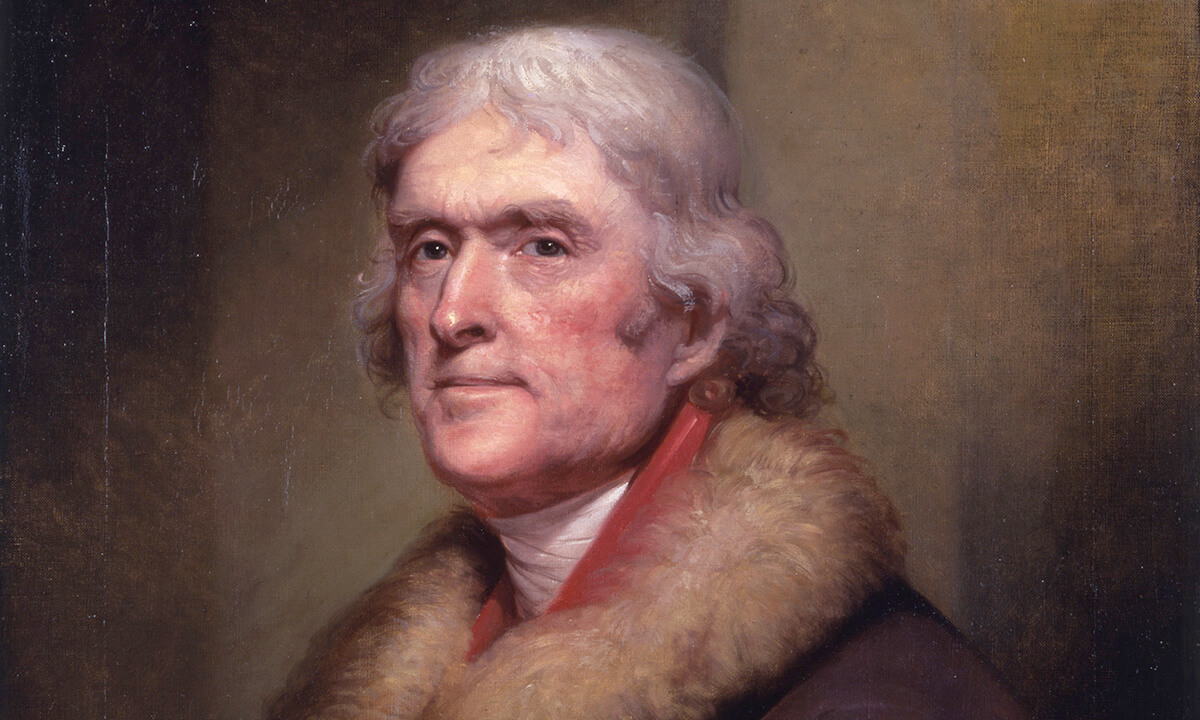
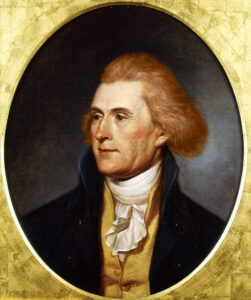
Thomas Jefferson (1743-1826) was involved in many professions throughout his life. He was a lawyer, a member of the Virginia House of Burgesses (1769-1775), served in the Continental Congress (1775-1776) where he drafted the Declaration of Independence, was governor of Virginia (1779-1781), and the U.S. minister to France (1785-1789). Jefferson also served as the first Secretary of State under George Washington, was Vice President under John Adams, and was the nation’s third President. During his time as governor of Virginia, Jefferson issued the following proclamation on November 11, 1779 calling for a statewide day of thanksgiving and prayer on December 9, 1779.

The text of this proclamation can be found in The Papers of Thomas Jefferson, ed. Julia P. Boyd (Princeton: Princeton University Press, 1951), 3:177-179.


Whereas the Honourable the General Congress, impressed with a grateful sense of the goodness of Almighty God, in blessing the greater part of this extensive continent with plentiful harvests, crowning our arms with repeated successes, conducting us hitherto safely through the perils with which we have been encompassed and manifesting in multiplied instances his divine care of these infant states, hath thought proper by their act of the 20th day of October last, to recommend to the several states that Thursday the 9th of December next be appointed a day of publick and solemn thanksgiving and prayer, which act is in these words, to wit.

“Whereas it becomes us humbly to approach the throne of Almighty God, with gratitude and praise, for the wonders which His goodness has wrought in conducting our forefathers to this western world; for His protection to them and to their posterity, amidst difficulties and dangers; for raising us their children from deep distress, to be numbered among the nations of the earth; and for arming the hands of just and mighty Princes in our deliverance; and especially for that He hath been pleased to grant us the enjoyment of health and so to order the revolving seasons, that the earth hath produced her increase in abundance, blessing the labours of the husbandman, and spreading plenty through the land; that He hath prospered our arms and those of our ally, been a shield to our troops in the hour of danger, pointed their swords to victory, and led them in triumph over the bulwarks of the foe; that He hath gone with those who went out into the wilderness against the savage tribes; that He hath stayed the hand of the spoiler, and turned back his meditated destruction; that He hath prospered our commerce, and given success to those who sought the enemy on the face of the deep; and above all, that he Hath diffused the glorious light of the Gospel, whereby, through the merits of our gracious Redeemer, we may become the heirs of His eternal glory. Therefore,

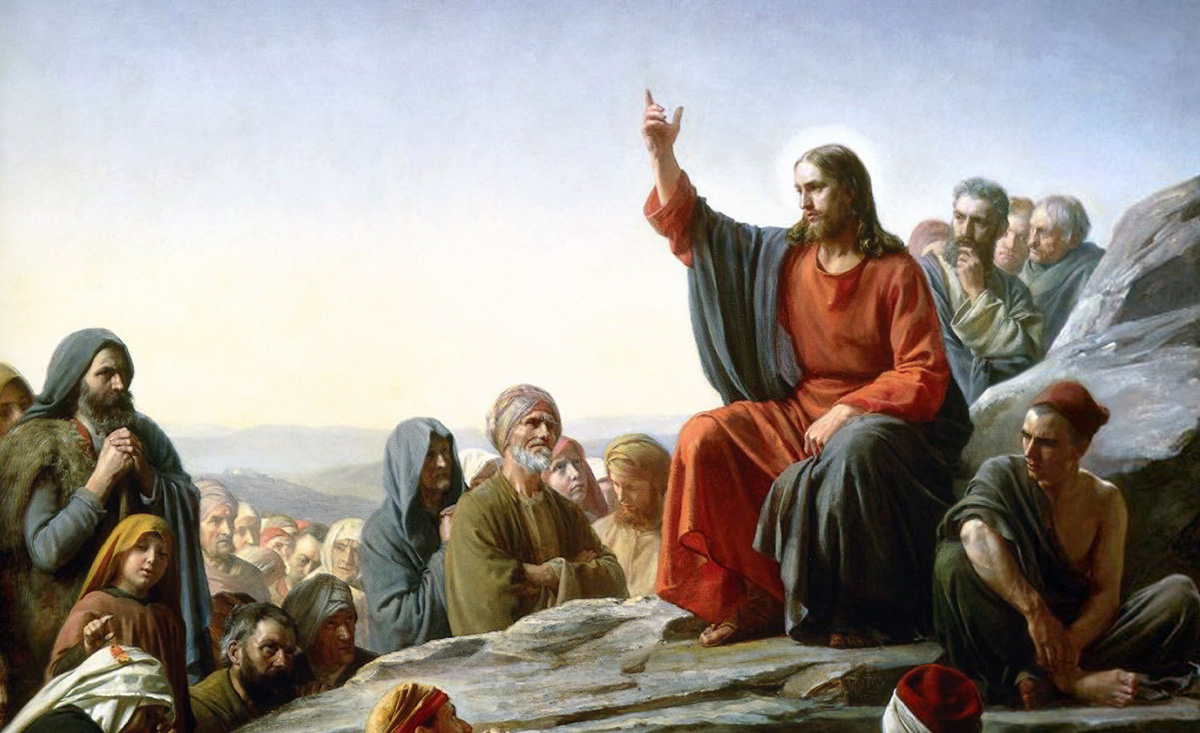
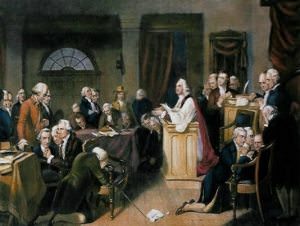
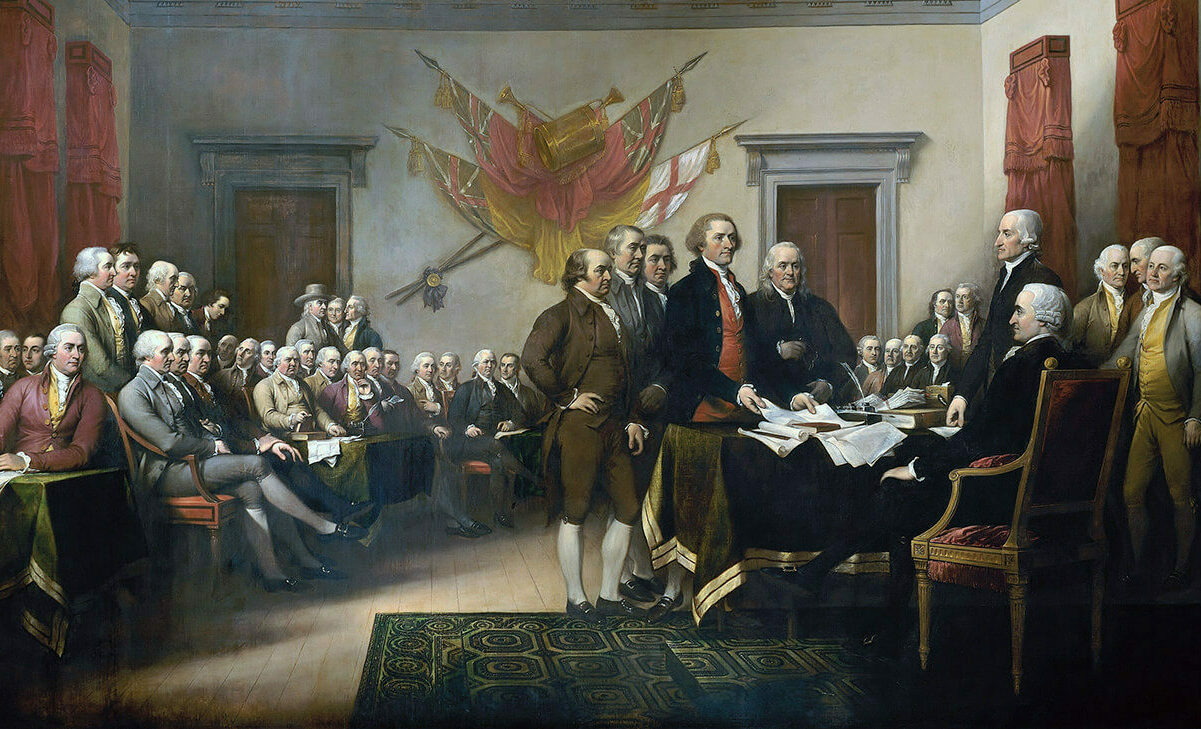
George Washington, Patrick Henry, and members of the First Continental Congress join with Rev. Jacob Duché in prayer.

Resolved, that it be recommended to the several states to appoint THURSDAY the 9th of December next, to be a day of publick and solemn THANKSGIVING to Almighty God, for his mercies, and of PRAYER, for the continuance of His favour and protection to these United States; to beseech Him that he would be graciously pleased to influence our publick Councils, and bless them with wisdom from on high, with unanimity, firmness and success; that He would go forth with our hosts and crown our arms with victory; that He would grant to His church, the plentiful effusions of divine grace, and pour out His Holy Spirit on all Ministers of the Gospel; that He would bless and prosper the means of education, and spread the light of Christian knowledge through the remotest corners of the earth; that He would smile upon the labours of His people, and cause the earth to bring forth her fruits in abundance, that we may with gratitude and gladness enjoy them; that He would take into His holy protection, our illustrious ally, give him victory over his enemies, and render him finally great, as the father of his people, and the protector of the rights of mankind; that He would graciously be pleased to turn the hearts of our enemies, and to dispence the blessings of peace to contending nations.

That he would in mercy look down upon us, pardon all our sins, and receive us into his favour; and finally, that he would establish the independence of these United States upon the basis of religion and virtue, and support and protect them in the enjoyment of peace, liberty and safety.”

I do therefore by authority from the General Assembly issue this my proclamation, hereby appointing Thursday the 9th day of December next, a day of publick and solemn thanksgiving and prayer to Almighty God, earnestly recommending to all the good people of this commonwealth, to set apart the said day for those purposes, and to the several Ministers of religion to meet their respective societies thereon, to assist them in their prayers, edify them with their discourses, and generally to perform the sacred duties of their function, proper for the occasion.

Given under my hand and the seal of the commonwealth, at Williamsburg, this 11th day of November, in the year of our Lord, 1779, and in the fourth of the commonwealth.

THOMAS JEFFERSON

Sermon – Thanksgiving – 1795


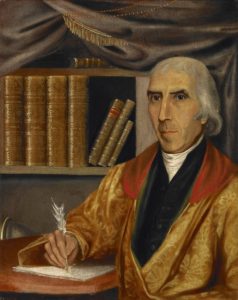
Jedidiah Morse (1761-1826) Biography:

Born in New Haven, Connecticut, Morse graduated from Yale in 1783. He began the study of theology, and in 1786 when he was ordained as a minister, he moved to Midway, Georgia, spending a year there. He then returned to New Haven, filling the pulpit in various churches. In 1789, he took the pastorate of a church in Charlestown, Massachusetts, where he served until 1820. Throughout his life, Morse worked tirelessly to fight Unitarianism in the church and to help keep Christian doctrine orthodox. To this end, he helped organize Andover Theological Seminary as well as the Park Street Church of Boston, and was an editor for the Panopolist (later renamed The Missionary Herald), which was created to defend orthodoxy in New England. In 1795, he was awarded a Doctor of Divinity by the University of Edinburgh. Over the course of his pastoral career, twenty-five of his sermons were printed and received wide distribution.

Morse also held a lifelong interest in education. In fact, shortly after his graduation in 1783, he started a school for young ladies. As an avid student of geography, he published America’s very first geography textbook, becoming known as the “Father of American Geography,” and he also published an historical work on the American Revolution. He was part of the Massachusetts Historical Society and a member in numerous other literary and scientific societies.

Morse also had a keen interest in the condition of Native Americans, and in 1820, US Secretary of War John C. Calhoun appointed him to investigate Native tribes in an effort to help improve their circumstances (his findings were published in 1822). His son was Samuel F. B. Morse, who invented the telegraph and developed the Morse Code.


The present Situation of other Nations of

the World, contrasted with our own.

A

SERMON,

Delivered

At CHARLESTOWN,

In The

COMMONWEALTH of MASSACHUSETTS,

February 19, 1795:

Being the Day Recommended by

GEORGE WASHINGTON,

President of the United States of America,

For PUBLIC THANKSGIVING

And

PRAYER.

BY JEDIDIAH MORSE, D.D.

MINISTER OF THE CONGREGATION IN CHARLESTOWN.

To

The Congregation in Charlestown,

At whose Request is made publick,

The Following Discourse.

(Enlarged and illustrated with NOTES.)

Is Respectfully Addressed

By Their Affectionate

Pastor.

Charlestown, February 26, 1795.

DEUTERONOMY IV. 6, 8, 9.

Ver. 8. What Nation is there so great, that hath Statutes and Judgments so righteous as all this Law which I set before you this day.

Ver. 6. Keep therefore and do them, for this is your Wisdom and your Understanding in the sight of the Nations, which shall hear all these Statues, and say, Surely this great Nation is a wise and understanding People.

Ver. 9. Only take heed to thyself, and keep thy Soul diligently, lest thou forget the things which thine eyes have seen, and lest they depart from thy heart all the days of thy life; but teach them to thy sons, and thy sons’ sons.

My Brethren,

There cannot be a more pleasing sight here on earth, than a Christian assembly, impressed with a lively sense of the Divine goodness and bounty, and expressing in their countenances their heart felt joy, voluntarily convened, as we are this day, at the voice of our Chief Magistrate, to unite with our fellow-citizens, in rendering praise to Almighty God, for his manifold mercies. The pleasure excited, on such an occasion, is heightened by the consideration, that millions of people are, at the same time, uniting in this delightful service. How much greater still, would be this pleasure, if there were good reasons to hope, that all these millions were of the number of the true worshippers of God, and felt towards him true gratitude, or “Christian thankfulness,” for his mercies? Then our country would this day resemble the heavenly world; and there would be an addition, small, yet acceptable, to the incense of praise which is daily offered by the celestial choir to their heavenly Father. – May this gracious Being, by his good Spirit, sanctify and prepare our hearts, and the hearts of all his people assembled this day, for this pleasing employment, that so we may celebrate a rational and acceptable Thanksgiving to our God.

With a view to lead your minds to a survey of the various distinguishing blessings of divine Providence towards us as a nation, and to excite correspondent sentiments of gratitude, I have chosen, as the foundation of the present discourse, a part of the address of Moses to the children of Israel, which we have just recited.

The book of Deuteronomy contains a repetition of the principal events which happened to the children of Israel, and of the laws which God had given them, during their memorable forty years journey from Egypt to Canaan. The generation who heard these laws originally delivered, and were eye-witnesses of these wonderful things, having been cut off for their rebellion, it pleased God that Moses, for their instruction and warning, should recite them to the new generation before his death. This interesting rehearsal was made on the plains of Moab, by this eminent servant of God, “in the fortieth year, and the eleventh month,” [i] of their pilgrimage. It was the business of the last month of his life, when he was an hundred and twenty years old; and is a standing proof of the truth of what his historian relates of him, that “his nature force was not abated.” [ii]

To have beheld and heard this venerable leader, and Father of his people, rehearing to them the various wonders which God had wrought in their behalf – teaching them with the dignity and affection of a parent, that statues and judgments which God had given them by him – calling upon them to review the situation of other nations, in contrast with their own; and thus impressing them with a deep sense of the great and distinguishing blessings which they enjoyed, and of their consequent obligations to obedience – exhibiting before them the advantages that would accrue from a faithful regard to these excellent statutes and judgments, in point of national honor, dignity and happiness – warning them, with solemnity and earnestness, of the fatal consequences of disobedience, vain glory and ingratitude – and, finally, after pathetically exhorting them to obey and praise God for his wondrous goodness, closing the interesting scene with his paternal blessing. To have witnessed such a scene, must have been no less affecting them improving.

A scene, in several respects resembling this, we, my brethren, are invited, this day, to contemplate—One at least equally calculated to affect, to improve and animate our hearts. A nation, far greater than that which Moses addressed, is assembled this day before the Lord, by the recommendation of their venerable[iii] political Leader and Father—who, in respect to his talents as a general in war, and a chief Magistrate in civil affairs—his success in exercising these talents—his prudence, sagacity, and paternal care, vigilance and solicitude for the safety, peace and happiness of the people, and his possessing their entire confidence and esteem, may with singular propriety be compared to Moses.

This incomparable Chief—this Moses of our nation, in his admired Proclamation, invites his numerous and happy fellow-citizens, to learn, from “a review of the calamities which afflict so many other nations,” how to appreciate their own happy condition.”  He rehearses to us the remarkable interpositions of Providence, in rescuing us from various dangers which threatened us, and enumerates the singular blessings “which peculiarly mark our situation with indications of the divine beneficence towards us.”

Behold the good man, deeply penetrated himself with the duty, “in such a state of things, of acknowledging, with devout reverence, and affectionate gratitude, our many and great obligations to Almighty God, and of imploring of him the continuance and confirmation of these blessings”—Behold him, in virtue of the authority annexed to his high office, “recommending” to the people at large, unitedly, on this day, to “render their sincere and hearty thanks to the great Ruler of Nations, for the manifold and signal mercies which distinguish our lot as a nation,” and pointing our attention singularly to these “signal mercies.”—Behold him, as the Father of his people, dispensing, in the most delicate and impressive manner, his wise and salutary instructions and admonitions—teaching us that “God is the kind Author of all our blessings”—that to him alone we must look for their continuance—that to him, we should feel under the most solemn obligations for these blessings, the immense value of which we should rightly estimate.—Warning us to guard against “arrogance in prosperity”—and against “hazarding the advantages we enjoy by delusive pursuits”—exhorting us, by a grateful, upright and suitable behavior, “as citizens and as men,” to secure to ourselves “the continuance of his favours”—and by these means to render this country, more and more a safe and propitious asylum for the unfortunate of other countries”—recommending, implicitly, what is the great basis of a Republican government—of equal rights, and of publick and social happiness—a careful attention to publick and domestick education, in order that “true and useful learning may be extended,” and “habits of sobriety, order, morality and piety diffused and established.”—Behold him, finally, closing the important summary, by calling on us to unite in the benevolent petition, that God would graciously “impart all the blessings we possess, or ask for ourselves, to the whole family of mankind!”—What an august scene, my brethren, is here presented for our contemplation!—How well calculated to excite supreme and fervent love and gratitude to the Father of Mercies—and lively emotions of sincere, subordinate affection and respect, for Him at whose call we are here assembled, and who has been honoured as the instrument of so much good to mankind!—In great truth may we adopt and apply the language of Moses and David—“Happy are ye,” oh ye citizens of united America—“Who is like unto thee, oh, people saved by the Lord, who is the shield of your help, and the sword of your excellency.”[iv]—“He hath not dealt so with any nation—Praise ye the Lord.”[v]

Indeed , when I think on the grandeur and importance of the subjects to which our attention is solemnly invited this day, I feel deeply impressed with a sense of my own insufficiency to do them justice, and am ready to shrink from the task.  In humble dependence, however, on that Almighty Father, whose goodness we celebrate, and who, through the blessed Redeemer of men, is ever most ready to “give his Holy Spirit to them that ask him”—I shall attempt to give, in conformity to the spirit and meaning of the text, and in compliance with the Proclamation—

A SUMMARY VIEW OF THE PRESENT SITUATION OF OTHER NATIONS OF THE WORLD, IN CONTRAST WITH OUR OWN.

In the prosecution of this plan it will naturally fall in my way to take notice of the special blessings enumerated in the Proclamation.—The discourse will be closed with some practical inferences and observations.—The plan proposed, you must be sensible, can be executed only in a concise and comprehensive manner, in a single discourse.

In comparing our situation, in a national view, with that of others, it is hard for us to divest our minds of partialities and prejudices—and to place ourselves in their circumstances—which ought as far as possible to be done, in order to avoid the charge of partiality and unfairness.  In many cases, which occur in a minute comparison between nations, it is difficult to determine on which side the balance of advantage lies.  There are, however, certain prominent features in the existing state of the nations of the earth, and in their political, religious, moral, literary and social character, which strongly mark their difference, and from a comparison of which, we may, without arrogance, or presumption, decide to whose lot most probably falls the greatest share of happiness.  These only will be the subjects of comparison.

To proceed  with some degree of method, we will, in the first place, take a summary review of the existing state of several other nations, and briefly of the World in general:–and, secondly, attempt a description of our own.  The result, we anticipate, will be such as to “afford us much matter of consolation, satisfaction,” and gratitude to God, and for the exercise of tender sympathy and benevolence towards the afflicted and oppressed of other nations of the world.

We begin with the Republick of France.  This mighty nation has burst the chains of civil and ecclesiastical tyranny.  They have arisen from the darkness of slavery to the light of freedom.  With boldness and energy which astonishes and interests the world, they have espoused the cause of Liberty, which is the birth-right of mankind.  With wonderful speed and success, they have vanquished, on every side, the numerous hosts of enemies, which rose up against them.—Lately, a dangerous combination of sanguinary men[vi] has been checked, if not wholly suppressed, which has happily paved the way for the adoption of moderate and rational measures; from the prevalence of which, there is a pleasing hope, (we pray it may not prove delusive) that there will be a speedy termination of the spirit of Vandalism[vii]of internal rebellions[viii]–of pernicious and destructive jealousies—of barbarous and shocking executions of the innocent.[ix]

Notwithstanding these favourable and pleasing circumstances, and the prospect of an advantageous peace with some of the combined powers, the existing state of things, in this great Republick, is very unpleasant.  Their enemies, though defeated, are not conquered; they still exist, and are formidable.  Jealousies and party-spirit, though much abated, yet disturb the harmony of the nation, and require to be watched with a vigilant eye.  Their government is unsettled, and revolutionary.  When the external pressure, which now binds them together, shall be taken off by a general peace, and the numerous armies of the republick[x]  shall return into its bosom, if we may judge from our own revolution, the nation will divide into parties, from local interests and prejudices; and it will probably take years to form and establish a government which shall unite all interests, and met the views of all parties; though, I firmly believe, that they will finally overcome all intervening obstacles, and obtain such a government.  The Christian Religion, and its sacred institutions, are spurned at, and rejected.[xi]  Scarcity6 threatens them.  Their manufactures are in ruins.[xii]  An enormously expensive war is loading the nation with a debt, which, added to their former one,[xiii] must, hereafter, in all probability, injuriously affect, in various ways, the liberties, the morals, and happiness of the people.  Besides, the mischief which a state of war ever operates in regard to religion, learning, and arts,[xiv] morals and domestick happiness is incalculably great.  How calamitous then must be the present condition of the French nation in these respects?—I forbear any details on these points.  A recurrence to our own situation, at the height of our revolution was, allowing for the difference of numbers, and the difference of religious and political state between the two nations, will give us a faint idea of the present state of our allies.  While we felicitate ourselves in a freedom from the various calamities which afflict this magnanimous nations, we cannot but feel deeply interested in their happiness, and wish for their success, in all virtuous measures, to advance a cause dear to mankind, and in defence of which we formerly experienced their generous aid.[xv]

Here let us pause a moment, to pay a just tribute of gratitude and sympathy to that generous, but unfortunate Patriot, whose disinterested zeal and services[xvi] in the cause of Liberty, both in America and France, have embalmed his memory in the heart of every grateful American.—Yes, La Fayette, could our ardent prayers have rescued thee from thy prison and thy chains, and have wafted thee to this country of freedom and happiness, long since wouldst thou have been welcomed to her friendly bosom.  We devoutly implore the God of compassion to mitigate and to shorten the period of thy sufferings; and to “cause thee yet to see good days, according to the days in which thou hast seen evil!”  May you live to enjoy, in your own country, the fair harvest of that liberty, the seeds of which were planted, and for a season cherished, by your own hand!

We turn next our attention to Great-Britain.  The following picture of the present state of this Kingdom is drawn to our hand.  “If ever a period called for the exertions of a people in their own defence, the present is the one.  The crisis is awful and unprecedented.  Our situation is new, and to new measures must we have recourse. Antiquity leaves us without like or rule, whereby to guide our conduct.  To ourselves, and on ourselves only, must we look, and depend.  At this alarming, eventful moment, when a political system, bold and fascinating in principle, destructive of all existing governments, is adopted and supported by thirty millions of people, established by will and force, in the most fertile regions of the earth, and is daily gaining, throughout Europe, myriads of votaries, what measures are left for us to follow?  How are we to act?  And what are we to do?—Plans are adopted without prudence, and executed without resolution and success.  The millions slain in the fields of Belgium—the populous cities of Great-Britain and Ireland, thinned of their inhabitants—the loom still and neglected—the industrious youth of the provinces dragged from the plough, and shipped off by hundreds, to oppose, in a strange and hostile country, the enthusiastic movements of an armed nation—their bleeding wounds—their agonizing cries, argue forcibly against the measures of the present administration.

“The fall of  kingdom, like that of the mountain-flood, comes when we least expect it.  Britons! Beware—behold the dangers which surround you, and tremble for the consequences.  Involved in a ruinous war—your armies flying before a victorious enemy—unassisted and betrayed by those who call themselves your allies—the publick money prodigally lavished on Sardinian mercenaries in British pay—the satellites of Prussia, supported by your revenues, in the prosecution of  war[xvii] whose object is the destruction of millions—the slavery of a Nation—The blood of Kosciusko, cries against us.  Add to this, a ruined commerce at home—our manufactures annihilated—Gazettes swelled with bankruptcies—a total loss of credit—a want of confidence in every department of State; and, finally, an unprincipled ministry, who drive the nation down the strong tide of power, the floating wreck of their own avarice and ambition.  Such, Britons! Is the picture of your present state.”  He adds,

“Our state to-day, is more desperate than it was yesterday. The arrival of each mail announces the loss of battles—the capture of towns.  Behold Holland a prey to the victorious enemy!  Her military stores, her bank—her navy, are the prize of conquest.  Maestricht has capitulated—Nimeguen receives their troops—Where is our army?  What corner is to receive them?—Even now the enemy dispute with us the empire of the seas.  Should the navy of Holland be thrown into the hostile scale, what would be the consequence?—I walk over deceitful embers—The subject will not bear discussion.”[xviii]

The colouring of this melancholy picture is high; but do not accounts from this quarter, confirm the truth of a great part of the facts here stated?—We may add, as further indicative of the distress of this nation—their persecutions for political opinions, to which Muir, Palmer, Margarot, and others, have fallen victims—the pernicious and distressing effects of the Test Act, which has driven thousands of valuable citizens from the kingdom—and their oppressive taxes, which are rendered necessary, in consequence of an enormous and increasing debt, and an unpopular, destructive, and iniquitous war; and doubly discouraging, because there is no hope of their decrease or termination.[xix]  Far be it from us to exult in thus depicting the misfortunes and distress of this nation, hostile as their government has been to our interests and happiness.  While we are thankful to God, for our own prosperous and happy state, we sincerely deplore the miseries in which they are involved—and deprecate the greater ones, which apparently threaten them.  While as Republicans we finally assert and maintain our rights; as Christians let us forgive the wrongs we have unjustly suffered.

From Great-Britain, let us turn our attention to Spain.  View her armies flying before a victorious enemy, and leaving their thousands slain and wounded, with immense spoils behind them.  In addition to the horrors and calamities of a fierce, bloody and unsuccessful war, which I leave to your own imaginations to paint, contemplate the political—the religious—the moral, and the literary state of this kingdom.  And when you are informed that the government is despotick—the monarch absolute, and the religion papal, you will easily infer what is their situation in respect to politicks and religion, literature and morals.

From Spain, proceed to the Seventeen Provinces, called the Netherlands.[xx]  What language can describe the scenes of carnage, ruin and distress which have been exhibited for several years past, in this fertile and populous part of the world?  These unfortunate Provinces have been the seat of the present war; in the course of which, some of them have repeatedly changed masters.  Their plains have been enriched with millions of human corpses, unhappy victims in the cause either of liberty or despotism, who have perished by the sword, pestilence, fatigue, terror and famine.  And what I their present situation?  Some of them are annexed to the French Republick, and are represented in the National Convention. Their state, however, which must be considered as revolutionary, is far from being tranquil or secure.  The next campaign may recover them, voluntarily or involuntarily, to their former condition, and they may again become a circle of the German Empire.  Holland, which includes the greater part of the other Provinces, lies at the mercy of a victorious army, lodged in the heart of their country, and dictating their own terms of peace or submission.

Would you behold a country in still deeper distress?—turn your eyes to Poland.  For more than twenty years past, this ill-fated nation has been the sport of her unprincipled neighbours, the Empress of Russia, the Emperor of Germany, and the King of Prussia.  In 1772, these formidable powers entered into a most wicked alliance to divide and dismember the kingdom of Poland. This they easily effected, in direct isolation of the most solemn treaties, and in a manner tyrannical and cruel beyond all former precedent.  The time will not admit of entering into any details on this most affecting subject.  I cannot help observing, however, that the other European powers, beheld these iniquitous transactions, by which a great kingdom, of FOURTEEN MILLIONS of souls, was violently and surreptitiously deprived of a great part of its territory, and a third part of its inhabitants, with an inhuman indifference and unconcern.

The baneful effects of these proceedings were severely felt, till the memorable and happy Revolution in 1791.[xxi] By this revolution, effected without blood shed or even tumult among the people, and in its principles highly favourable to their rights and liberties, Poland had a fair prospect of enjoying some repose after her calamities, and of becoming powerful, prosperous and independent.  But, alas! short were her triumphs, and delusive her prospects.  Her ambitious, rapacious and but too powerful neigbours, envious at her tranquility, and jealous of her increasing strength, under a free and equal government, and of the spread of the principles of freedom, have, in the same inhuman manner as before[xxii] (in 1772) combined against her, and have replunged her still deeper in the abyss of misery.  Noble, vigorous, and worthy of their good cause, have been the struggles of this great nation, under the auspices of kings,[xxiii] and the immediate are command of a brave and admired General,[xxiv] against the most brutal tyranny:  But the arm of despotism, after a dubious contest, has proved too mighty for them, and reduced them, we have too much reason to fear, to unconditional submission.  What carnage, what horrors have marked the routes of the victorious liberticides, the slaves of the tyraness of Russia?[xxv]  The miseries of the Polish nation, judging from the latest accounts from that quarter, are, at this time, great and deplorable beyond description.  Unfortunate, afflicted brethren in the bonds of freedom, we weep with you!—Thy wounds, Kosciusko, are thy glory—Thy blood will accelerate the growth of “the tree of Liberty”—Thy fate interests the feelings of the friends of liberty through Europe and America—Thy rich reward is their esteem and admiration.  May it comfort thee in thy prison!—

We rejoice that a righteous God reigns, who will one day avenge the cause of the innocent and oppressed, and will so over-rule the dark dispensations of his Providence, as to bring great glory to his own name, and happiness to the whole family of mankind.

The little Republick of Geneva,[xxvi] next claims our attention.  Only four years ago, this people were as happy and as flourishing in their government, commerce, manufactures, religion and morals, as any people on earth.—Now, through a pernicious, disorganizing foreign influence—an influence which has since threatened us with the same calamities, they are reduced to the most humiliating and afflicting state of anarchy and distress.  “Geneva,” says the intelligent historian of this Revolution, “is lost, without resource, in respect to religion, to morals, to the sciences—to the fine arts, to trade, to liberty, and above all, to internal peace.  Its convulsions have no other term than those of France, to the fate of which, it has had the criminal imprudence irremissibly to attach itself, and the various shocks of which, it must more or less, inevitably suffer.”[xxvii]

The nations we have mentioned, with their dependent colonies in the West-Indies, whose wretchedness equals that of any country we have described—embrace that portion of mankind, which, so far as we know, are, at the present time, involved in the most afflicting and deplorable misery.  All the other nations of Europe, are more or less affected by the present convulsed state of things in this quarter of the world.

The unwieldy Germanick Empire, without power to execute its will[xxviii]–without finances—involved in a destructive and unpopular war—is divided against itself, and is probably tottering into ruin.

The enslaved subjects of the two most insidious, unfeeling, and (shall I say amiss, if I add) monstrous tyrants perhaps, on earth, I mean the Empress of Russia, and the King of Prussia—the slaves of these cruel despots, who are employed in butchering their fellow-men by thousands, cannot, generally speaking, be otherwise than wretched.  Till the period arrives, and I believe it to be fast approaching, when a sufficient degree of knowledge of their rights, shall be disseminated among the lower orders of people, as to enable them to effect a revolution, and to break the chains which bind them, it must, I think, be considered rather as their felicity, than their misfortune, that they are ignorant and insensible of the evils which it is their lot to endure.

The neutral nations of Europe, which are few in number, and even when combined, of small weight in the political scale, subjected, as they are, to constant irritations and alarms from their more powerful neighbours, must be in a state of painful solicitude, lest they should be drawn into the whirlpool, which disturbs the peace, and threatens the overthrow of so many of the powers around them.

From Europe we pass into Asia.  Of this immense quarter of the Globe, containing, it is conjectured, more than half mankind[xxix]–our knowledge is very imperfect.  Judging, however, from the best accounts that have come to our knowledge, their state, in a political, religious, moral and social view, is far from being either enviable or eligible.  This vast country is divided between the despotick Empires of China, Russia, the Great Mogul, Persia, and Turkey; except what is inhabited by the wild and wandering Arabs and Tartars, who are said to be the only people in Asia “that enjoy any share of liberty,” if what they possess may be honoured with the name. In regard to religion, the greater part of the inhabitants are Pagans and Idolaters; the rest are Mahometans, Jews, and a few Christians.  From the nature of their government and religion, we are left to infer their political, moral and social state.  “The system of morals, in this country,” says a celebrated historian, speaking of Asia in general, “is no less extraordinary than that of nature.  When we fix our eyes on this vast continent, where nature hath exerted her utmost efforts for the happiness of man, we cannot but regret that man hath done all in his power to oppose her.  The rage of conquest, and what is a no less destructive evil, the greediness of traders, have in their turns, ravaged and oppressed the finest country on the face of the globe.”[xxx]

Of the various nations in Asia, the Chinese are generally believed to be the best governed, the most civilized and the happiest.—Their panegyrists have said, extravagantly enough, that “the history of this well-governed Empire, is the history of mankind; and the rest of the world resembles the chaos of matter, before it was wrought into form.”[xxxi]  And what is the state of this happiest of people?—China, beyond doubt, is the most populous spot on the globe—of course, judging from the experience of all ages, the people must be the most corrupt in their morals; and for the same reasons that our populous towns are more depraved in this respect, than the country.—What opinion should we form of the character, laws and manners of that people, among whom we should see, “not unfrequently, one province rushing upon another, and putting all the inhabitants to death, without mercy, and with impunity?”  Whose laws neither “restrain nor punish the exposure or the murder of new-born infants?”—Whose “Sovereign is the cudgel?”—Among whom “the innocent man is often, by infamous magistrates, condemned, whipped and thrown into prison; and the guilty pardoned upon the payment of a pecuniary fine; or punished, if the offended person happen to be the most powerful?”[xxxii]—And where “one half the inhabitants are employed in cheating and over-reaching the other?”[xxxiii]—And such, it is affirmed, by respectable historians, are the character, laws and manners of the Chinese, who are the wisest and most civilized people in Asia.

In India,  though we find much to admire in their code of laws, we find much also to deplore—many indications of barbarism and wretchedness—Some of their laws are infamous, inhuman, cruel and glaringly unequal and unjust.[xxxiv]  The condition of the lower classes of people is wretched and horrible in every respect—The Pouliats, or the fifth cast, the refuse of all the rest, are employed in the meanest offices of society, and live upon the flesh of animals that die natural deaths—They are forbid to enter the temples—the publick markets, and even the streets where the Bramins reside—They can neither possess nor lease lands—and may be put to death with impunity, if they chance to touch any one that does not belong to their tribe.

Degraded and contemptible as these Pouliats are, it is said “they have expelled from among themselves the Pouliches, still more degraded.  These last are forbidden the use of fire—they are not permitted to build huts, but are reduced to the necessity of living in a kind of nest, which they make for themselves in the forests, and upon the trees.  When pressed with hunger, they howl like wild beasts, to excite the compassion of the passengers.  The most charitable among the Indians, then deposit some rice or other food at the foot of a tree, and retire with all possible haste, to give the famished wretch an opportunity of taking it without meeting his benefactor, who would think himself polluted by coming near him.”[xxxv]—This is the dark side of the picture of the present condition of this numerous people—but contrasted with the darkest shades in our own, the difference is great and striking, and is calculated to excite the warmest effusions of gratitude to Him “who hath made us to differ.”

The time would fail me to give even a cursory view of the state of the other nations of Asia.—To relieve your patience, which I fear is already fatigued, I shall traverse with rapidity, the other parts of the globe.

Of Africa, inhabited, according to common computation, by 150 millions of people, we know still less than of Asia, and but little more of South America; and least of all of the wild inhabitants of those extensive regions which lie West and North of the United States and Canada.  From the little we do know of them, however, it will not be presuming too much to give it as our opinion, that the most enlightened, the best governed, and he happiest among the numerous nations in these quarters of the globe, fall far below these United States—I will not say in their morals—for in this point, a comparison with some other nations, I fear, would be against us—but in their constitutions of government—in their laws—in science—in their knowledge of useful arts—in a word, in their religious, civil and social privileges.

After taking this general view of the nations of the earth, (in doing which I have taken up more time than I intended, though far less than it required, to do it full justice)—we are prepared to revisit our own country—and to survey the blessings which distinguish it from the rest of the world.—These have been so often enumerated on occasions like the present, that little that is new, will be expected, and brevity, of course, will be acceptable.

  1. Our lot is distinguished from that of many other nations, by the blessings of Peace.  We have seen how great a portion of the world is afflicted with the awful calamities of War.  In consequence of our intimate connexion with some of the belligerent powers, by means of the iniquitous commercial depredations of one, and a fascinating and dangerous influence of another, the peace of our neutral nation has been imminently endangered.  By means of the latter, the poisonous seeds of a party, disorganizing spirit were sown thick among us—and being nourished by the former, sprung up and increased, for a short time, with alarming rapidity; and threatened us with all the calamities, first of a foreign, then of an intestine war.—The fruits of these seeds have been more or less visible in all parts of our country, but none have been so matured and conspicuous as the Western insurrection.—The wise, decisive and seasonable measures adopted by the Supreme Executive, and the other officers of government, and advocated and supported by the great body of enlightened citizens, to check and counteract this dangerous foreign influence in all its shapes—have, under the smiles of Province, procured our exemption hitherto from foreign war—and by means of a late happily concluded foreign negociation,[xxxvi]–and the increasing harmony and union between this country and the French nation, in consequence of the recent happy change in the measures of their government—we have the most pleasing “prospect of a continuance of this exemption.”

A blessing no less distinguishing than our exemption from foreign war, is the  preservation of our internal tranquility, when “wantonly threatened” by a daring insurrection.  The alacrity with which our fellow-citizens, when called, flew to the standard of their Chief, on the trying emergency, when the important question was to be decided, Whether we should be governed by a mob, or by our legal representatives?—the ease and celerity with which a most respectable and formidable army was collected—the zeal and patriotism which animated them—the complete success with which their exertions were crowned—and the general applause they received from their grateful fellow-citizens—all these circumstances serve to confirm our internal tranquility, as they operate to discourage ambitious and unprincipled demagogues from making the like attempts to interrupt our peace in future—and to increase the confidence of the people in the stability, energy and promptness of our Federal Government.

When we turn our eyes to the little Republick of Geneva, and behold her deep distress—and trace the causes which led to it—we cannot but feel the most undissembled gratitude to God, our kind Preserver, in that we have so happily escaped the very same snares, which have involved her in ruin.

In speaking of our domestic peace, we ought not to pass unnoticed, the state of our frontiers.  For several years past we have been engaged in an unhappy contest with the Indian nations.  Since we have been able satisfactorily to trace the origin of this expensive war—and know that the unfortunate tries who have been engaged in it, have been deceived, urged on, and assisted by a foreign nation, whose measures have been peculiarly hostile to our prosperity and peace; and no less so, we believe, to the happiness and true interests of the Indians themselves—the necessity and justice of the vigorous measures of our government in prosecuting it, can hardly be doubted by any one.  The signal success, therefore, of our frontier army[xxxvii] the last year, must be considered a favour of Divine Providence.  In consequence of this success, and the pacific treaties and measures entered into and pursuing by our government, and the change of plans in the British government, the aspect of affairs in our western borders, though still unsettled, wear a more favourable and pacific aspect.

  1. Our lot as a nation is distinguished from that of the other nations of the world, by “the possession of constitutions of government which unite—and by their union establish liberty with order.”  The principles of our Federal and State constitutions are the same; and have for their object the protection and safety of the lives, the liberties and fortunes of the citizens.—The state governments are protected against an undue interference of the Federal Government—each is left to make and to execute its own local laws—while the Federal Government corrects and harmonizes the jarring interests of the state governments, and cements their union.  Our constitutions of government indeed are the fruit of the experience of all former ages, and the trial of them has proved their singular excellency.  In no nation on earth do the citizens enjoy protection and safety in their rights, at the expense of so small a portion of their natural liberty—Each individual is secured in the possession of his own rights, but in no instance suffered to encroach upon the rights of others.
  2. The wise and salutary laws, which flow from, and correspond with, our free constitutions of government—the freedom and the frequency of our elections—the patronage and encouragement given to publick and school education, and to all useful mechanic arts and improvements-the perfect enjoyment of religious as well as civil liberty—the means afforded, and the measures contemplated to extinguish our national debt[xxxviii]–and in general “the unexampled prosperity of all classes of our citizens;”—these are signal blessings, which, if they do not distinguish our lot from every other nation, they do from most of them—and certainly “mark our situation with peculiar indications of the divine beneficence towards us.”

“When,” therefore, “we review the calamities which afflict so many other nations”—when we survey and consider the state of the whole World, so far as our knowledge extends—does not “the present condition of the United States” indeed afford much matter of consolation and satisfaction?”—“In such a state of things, is it not, in an especial manner, our duty as a people, with devout reverence and affectionate gratitude, to acknowledge our many and great obligations to Almighty God?”  “What nation is there so great, that hath statutes and judgments so righteous as all this law which I set before you this day?”—“How great is the sum” of our mercies?—What shall we render to the Lord for all his benefits?”

If our situation, my brethren, be such as we have represented—if the Governour of the Universe has thus distinguished us with his favours—then, surely, we ought to be the best people in the world.  “To whom much is given, of them much is required.”  Our gratitude should bear a proportion to our blessings—Our love to God, and our obedience to his perfect laws, it will be reasonably expected, should as much surpass the love and obedience of others, in point of fervor, constancy, and purity, as our advantages and mercies exceed theirs—And thus to estimate and improve our mercies is the only way to secure their continuance.—Our national and individual sins, under our advantages, will be attended with peculiar aggravations—Let this consideration operate as a powerful dissuasive from sins of every kind—and excite us to an upright conduct, as men, as citizens, and as Christians.

In our present situation, loaded and distinguished as we are, by various blessings—we have need to beware that our hearts be not lifted up with pride and self-conceit, as though we were the peculiar favourites of heaven, and the most deserving of all the nations of the earth.  From such arrogance in our prosperity, may the Lord preserve us!—It is the nature of prosperity to fill the mind with vain glory, self-importance, and self-complacency—to make men feel independent of their fellow-men, and even of their God.—To keep our minds properly balanced and humble, when things go well with us as a nation, or as individuals, we should constantly bear in mind, that it is not we ourselves, but the Lord our God, that maketh us rich, and causeth us to be prosperous and happy.—Besides, prosperity in this world does not always mark the best nations or the best men.  Moses declares to the Israelites, that it was not for their righteousness, or the uprightness of their heart, that Canaan was given to them, but because of the wickedness of the nations who inhabited it, and to fulfill a promise to their fathers—“Understand therefore, said he, that the Lord thy God giveth thee not this good land to possess it for thy righteousness, for thou art a stiff-necked people.”[xxxix]—Let the consideration that this same language, can with truth be addressed to us, serve to humble us in the midst of our joy—and to qualify our rejoicing with a due proportion of trembling for our unworthiness.

Blest with a free and efficient government, a flourishing commerce, good credit, a fine and but partially settled country, and at peace with all the world—the United States offer, if not the only, probably the best asylum for the oppressed and persecuted by civil and ecclesiastical tyranny—Hither thousands of useful artisans and others, have already taken refuge from the calamities which afflicted their own country—By a strict adherence to the government, laws, and religious institutions of our country—may we evince to the world around us, their superior excellency, and cause them to say of us—“Surely this great nation is a wise and understanding people.”  Thus may we “render this country more and more a safe and propitious asylum for the unfortunate of other countries.”

Let us take heed, and keep our souls diligently, lest we forget the great things which God hath done for us, and the impression of our obligations to him for them, be effaced from our hearts.  Let us cherish their memory by teaching them to our children—that they may know and learn to estimate the immense value of the blessings which are, we hope, to be their future inheritance.

If the great body of the citizens throughout these American States, are well informed in respect to their rights and liberties, it will be difficult, if not impossible for ambitious, designing men, to wrest them from them.  If ever Americans are enslaved, the sad revolution will be preceded by a prevalence of ignorance among the middling and poorer classes of men.  As, then, we value the blessings of a free and equal government for ourselves, and our posterity—let us use our influence separately, and jointly, “to extend true and useful knowledge,” among very class of people—and “to diffuse and establish,” in our own families respectively, and among the youth in general, “habits of sobriety, order, morality and piety.”—We cannot leave a better legacy to our country than a family of well educated children.

As God hath made of one blood all nations to dwell on the face of the earth—they are all brethren of the same great family.  It is the part of a good man to possess the feelings of a brother towards the whole human race—and to be concerned for their happiness.—It becomes us, therefore, not to confine our benevolent regards to the narrow circle of our particular friends, to our town, our state, or even to our country; but to feel a glow of affectionate good will for all men of every nation, religion and character, on earth; and to unite in one sincere and fervent petition to the Great Ruler of Nations, “THAT HE WOULD IMPART ALL THE BLESSINGS WE POSSESS, OR ASK FOR OURSELVES, TO THE WHOLE FAMILY OF MANKIND.”

To conclude—What people, in any age or country, ever had greater reasons for gratitude and joy, either from the real enjoyment, or the prospect, of great and good things, than the inhabitants of the United American States, at the present moment?—We have a healthful, extensive, and fruitful country, equal to the support of the largest Empire that ever existed on earth—We have Constitutions of Government confessedly as good, as any ever formed by man, and as well administered—and with as fair prospects of permanency—The civil blessings which flow from good government, we feel in all their variety, and to a degree probably beyond any other nation—We have a Religion, and a free enjoyment of it—against which the gates of hell shall never prevail—whose institutions and precepts are wisely calculated to promote peace on earth and good-will among men—which unfolds to us the wonderful plan of Redemption by Jesus Christ, and brings life and immortality to light—With such a COUNTRY—such a GOVERNMENT—and such a RELIGION—if we are but wise to improve the advantages they furnish, and God vouchsafes to us his blessing—what that is great and ennobling to human nature, may we not expect?—“The wide, the unbounded prospect lies before us”—“Here let” us “hold”—and while the impression is warm on our hearts, let us with one consent, offer up a cloud of grateful incense, through Christ, to the Father of Mercies—unbounded in his love, and infinite in goodness—to whom be glory forever,

A M E N.

[i] Deut. i. 3.

[ii] Deut. xxxiv. 7.

[iii] President Washington entered his 64th year, Feb. 22, 1795—being born Feb. 11, (O. S.) 1732.

[iv] Deut. xxxiii. 29.

[v] Psalm cxlvii. 20.

[vi] The Jacobins are here alluded to.  That they deserve to be called sanguinary  men, will appear from the following extracts:–“A deputation from the section of the Champs Elysees, presented an Address, on the 23d of November, felicitating the Convention on the decree against the remnant of the Dictator’s (Robespierre’s) faction, sitting at the Jacobins, and against those individuals, who, like the old privileged Orders, retained only the name of their predecessors, without one of their virtues—and exhorting the Representatives of the people to crush those venomous reptiles, who were swollen into notice only by the innocent blood with which they had gorged themselves.”

To this address, Glauzel, the President, replied, “The National Convention has declared unextinguishable war against all the factions, all the intriguers, all the advocates of terror, all the depredators of the publick fortune, and all the enemies of the people, whatever mask they may assume.  The reign of virtue and justice is arrived:  it is on these bases that the national representation will found the Republick, which is to render the French happy.  While Capet existed, the Jacobins saved the publick weal by their energy; their hall was then the residence of virtue; they hastened the destruction of the tyrant.  But in overturning the throne, the Convention had sworn to annihilate tyranny.  Since the 27th of July, the society of the Jacobins had attempted to rival the national representation; it had become the resort of the factious—of the agitators—it was therefore the duty of the representatives of a free people, true to their oath, to shut up a place polluted by guilt.”  The Herald, Vol. I. No. 73.

In answer to a similar address, from the Popular Society of Chartres, congratulating the Convention on the decree for shutting up the Jacobin Club—the President said—“The majesty of the people, like a wave which drowns vile reptiles, has dispersed its enemies.  The Convention knows how to repress all those who take the names of lions, leopards, and tigers.  They will have only men.”  Centinel, Vol. XXII. No. 45.

[vii] See Gregoire’s celebrated Report on the destruction wrought by Vandalism, and on the means of repressing it—made August 31, 1794, in the Convention of France.  The Vandals (whence the expressive term Vandalism) were one of those barbarous nations, inhabiting the inhospitable regions of the North, who, like a torrent, overwhelmed the Roman empire, making havock of books, elegant temples, statues, pictures, and all the rich and superb monuments of learning and the arts.  It appears from the report referred to above, that the same destructive, barbarous scene was acted over again in France, during the tyranny of Robespierre.  “Do not think it exaggeration,” says Gregoire, “when you are told, that the names only of the articles purloined, destroyed, or wasted, would form many volumes.”—To such lengths did they proceed in their havock of literature and the arts, as to propose that “all who cherish the arts should be destroyed”—that “all rare animals should be killed, that the citizens might not spend their time at the museum, in viewing natural history”—that “the national library should be burnt”—that the words, “men of science” and “aristocrats,” should be considered “as synonymous.”  Dumas said “it was necessary to guillotine all men of genius and wit.”—And this cry was attempted to be raised in the sections, “guard against that man, for he has made a book.”

[viii] A decree of amnesty passed the National Convention, Dec. 2, 1794, declaring that “All persons in the precinct of the armies of the West, and of the Northern coast, now under the denomination of Rebels of la Vende and Chouans, who shall lay down their arms, within the next month from the publication of this decree, shall not afterwards be prosecuted, on account of their revolt.”

                  Gen. Duterre announced, as effects of the above decree, “that the system of justice and humanity, adopted in La Vendee, promised a speedy end to the war in that quarter, and that the rebels were daily surrendering, saying, Since you have pulled down the scaffolds, we abjure fighting against our brothers.

                  “La Vendee,” says Dubois Crance, “now produces 500,000 oxen and mules less than before the Revolution; and a million acres of land, formerly cultivated, now lies waste.”  Such have been the destructive effects of their rebellion.

[ix] The following extracts are here introduced in justification of the phrase—barbarous and shocking executions of the innocent—and to shew the great impropriety and absurdity of approving and justifying, in universal and undistinguishing terms, the conduct of part of the French nation—conduct, at the recital of which (to use their own emphatical language) “Nature shudders—reason is confounded—and liberty covers herself with the mantle of mourning.”

In the “Bill of accusation, drawn up against fourteen members of the revolutionary committee of Nantes, confined at Paris, and exhibited to them by the Publick Accuser, Lebois, Oct. 19”—it is declared, that

“Whatever is most barbarous in cruelty—whatever is most persidious in guilt—whatever is most dreadful in extortion—and whatever is most shocking in depravity, compose the accusation of the members and commissioners of the revolutionary committee of Nantes.

“In the most remote records of the world, in all the pages of history, even of the barbarous ages, scarcely would be found, any traits which come near to the horrors committed by the accused.  Nero was less sanguinary, Phalaris less barbarous, and Syphanes less cruel!”

To verify his charge, he states, among other things—that “On the 15th Frimaire, 132 new victims were devoted to death.  Order was given to shoot them; and it was Goulain, Grandmaison and Mainguet, who signed this order, which still exists in its original form.

“On the night between the 24th and 25th Frimaire, 129 prisoners, taken at hazard, and torn from the prisons, bound, pinioned, dragged to the harbor, embarked in a boat, and plunged into the river.  Goulain held the fatal list, Foly bound he unhappy victims, and Grandmaison threw them headlong into the Loire.  The project was decreed in the Committee, and the orders given by the members.  Mainguet allows that he signed them;–Grandmaison acknowledges that he caused the victims to be thrown into the river; and Goulain presided at this dreadful execution, which confounded at once the guilty and the innocent, which destroyed all the sacred rights of nature, violated those of liberty, and darkened the fairest days of her reign with a cloud of blood.

“Never will the hand of time efface the impression of the enormities committed by these atrocious men.  The Loire will always flow with blood-stained waters, and the foreign mariner will not arrive without trembling on the coasts covered with the carcases of victims sacrificed by barbarity, and which the indignant waves will have disgorged on those shores.

“Drunk with blood and wine, these cannibals scarcely knew their victims, and their eyes refused to read the traces of their crimes.

“In order to accomplish these crimes, it was necessary to associate with themselves persons of the most depraved principles: They form a revolutionary company:  They choose accomplices of the most atrocious character; and Goulain was not ashamed to ask—If villains still more depraved were to be found?”  The Herald, Vol. I. No. 77.

Extracts from the Trial of Carrier.

“Petit, substitute of the Publick Accuser, read a list of 42 persons drowned in Bourg Neuf, of whom one was an old man of 79 years, twelve women, twelve girls, and fifteen children, five of whom were at the breast, and others from five to six years old—by Carrier’s orders.

“Mergault declared, that two volunteers, who lodged at his house at Nantes, used to go out with their arms, and every day shoot  a hundred of the insurgent prisoners, who were confined in a large enclosure.  The volunteers told him, that it was by Carrier’s orders.

“The Chief Judge asked Carrier, if he recollected the child of 13 years old, whom he condemned, and who said to the executioner, “You will hurt me very much.”—The guillotine cut his head in the middle.  Or if he recollected the death of the publick Executioner at Nantes, who died with horror, after having executed (without trial) the five sisters by the name of Metairie, the eldest 28, the youngest 17 years old—together with their maid, of 22.”  Centinel.

We are happy to add, that justice has triumphed over these monsters—that the reign of terror has ceased in a great measure—that a spirit of humanity and moderation is prevailing, and “the national character” of the French, “is re-appearing.”

[x] Reported to amount to 1,200,000 men.

[xi] The rejection of the Christian Religion in France is less to be wondered at, when we consider, in how unamiable and disgusting a point of view it has been there exhibited, under the hierarchy of Rome.  When peace and a free government shall be established, and the people have liberty and leisure to examine for themselves, we anticipate, by means of the effusions of the Holy Spirit, a glorious revival and prevalence of pure, unadulterated Christianity.—May the happy time speedily come!

[xii] The following facts, illustrative of this assertion, were lately stated to the Convention by Dubois Crance.—“Silk stuffs, to the value of two hundred millions of livres, were formerly manufactured at Lyons from the raw material of the value of twelve millions.  This manufacture of silk was totally ruined by the severe decrees against Lyons, under the Jacobin administration.  Great part of the wealthy merchants and manufacturers, were proscribed or guillotined, and their property seized.  The number of victims sacrificed in that city alone, was upwards 4500.  The silk weavers were driven from their occupations, and compelled to collect their sustenance from the ruins of the houses of the rich, a great part of which were destroyed, by order of the Club government.  Ten thousand of the workmen in the fine cloth manufactures of Sedan, are nearly destitute of employment.”  It is with satisfaction we add—that since the fall of the Jacobin faction, three thousand merchants, manufacturers and artisans, have returned to France, through Switzerland, and resumed their labours.”—Should moderation continue to prevail, others, no doubt, will follow, and the state of manufactures will assume a more pleasing aspect.  The Herald, Vol. I. No. 68.

[xiii] The state of the nation, in respect to their finances, may be judged of by the following:–The expenditure, according to Mr. Neclaer, exceeded the revenue, in 1789, 56,239,000 livres, equal to L.2,343,291 sterling.

[xiv] See Note on Vandalism, p. 11.

[xv] The following are the Author’s sentiments respecting the French Revolution, expressed in a sermon delivered on the day of Publick Thanksgiving, Nov. 20, 1794, and here inserted by desire.

“Liberty is the birth-right of all mankind; but few of them, comparatively, enjoy it.  It has been wrested from them by the various artifices of wicked and designing men, and kept concealed from their view.  They have been held in various kinds and degrees of slavery, and knew not that they had a right to be free.  But the scales of ignorance are fast dropping from their eyes.  Whole nations have risen, determined to maintain their rights.  Where that genuine liberty, which is the right of every man, has been their object, and the measures pursued to attain it have been commendable, and such as heaven approves, as lovers of mankind, we cannot but rejoice most sincerely, in their success.  This is the bound which I conceive ought to limit our joy and gratitude to Heaven, on account of those nations who are contending for their rights.  Their cause is unquestionably good; their errors and irregularities, however, proceeding almost necessarily from the magnitude and the difficulties of their undertaking, are not to be justified, nor yet too severely censured.  All circumstances taken into view, they ought, perhaps, in a great measure, to be excused.  But for their cruelties, and especially for their impieties, we can find no adequate excuse.  It would discredit the best of causes, with every good man, to blend such cruelties and impieties with it, and to make them accessory to, and auxiliaries in, its promotion.  While then we offer up our thanks to God, this day, for the progress of real liberty, in opposition to tyranny and oppression, in whatever quarter of the world this progress has been made, let us carefully separate between the precious and the vile, and not rejoice for that which ought to fill our hearts with sorrow and mourning.”

[xvi] The Marquis La Fayette, at the age of 19, espoused, with ardour, the cause of America; and at a very early period of the war, determined to embark for the United States.  Before he could effect his departure, intelligence arrived, that the American rebels, reduced to 2000 men, were flying through the Jerseys, before a British force of 30,000 regulars.  This news so effectually  extinguished the little credit which America had in Europe, in the beginning of the year 1777, that the Commissioners of Congress at Paris, though they had previously encouraged this project of Fayette, could not procure a vessel to forward his intentions.  Under these circumstances, they thought it but honest to dissuade him from the present prosecution of his perilous enterprise.  It was in vain they acted so candid a part.  The flame which America had kindled in his breast, could not be extinguished by her misfortunes.  “Hitherto,” said he, “I have only cherished your cause—now I am going to serve it.  The lower it I in the opinion of the people, the greater will be the effect of my departure; and since you cannot procure a vessel, I shall purchase and fit out one to carry your dispatches to Congress, and myself to America.”  He accordingly embarked, and arrived at Charleston, early in the year 1777.  Congress soon conferred on him the rank of Major-General.  He accepted the appointment, not however without exacting two conditions, which displayed a noble and generous spirit—the one, that he should serve at his own expense—the other, that he should begin his services as a volunteer.  See Amer. Geog. 2d edit. P. 136.

[xvii] Against Poland.

[xviii] The Herald, Vol. 1. No. 71.

This sketch of the present state of Great-Britain, was written and published in England, as late as Nov. 14, 1794, by a writer under the signature of Junius Redivivus.  He appears to be no friend to the “political system” of the French—and advocates vigorous measures to oppose the progress of what, in his view, disorganizing principles.  We conclude from these and other circumstances, that he was a friend to his country, and would not knowingly exaggerate its calamitous state.

[xix] I take leave here to introduce a comparative view of the National Debts of Great-Britain and the United States, which, with the observations annexed, will shew the present-eligible situation of the latter compared with that of the former, and with that of Europe at large.

DEBT OF GREAT-BRITAIN.

Dols.                 Cts.

Principal of the English Debt, in 1785,                                       239,154,880, sterl. or                1062,910,577.          80

Interest and charges for management,                                              9,275,769,           or                  41,225,640.          —

Chalmers Estimate of the Comparative Strength

of Great Britain, p. 159

Since 1785, the National Debt of Great-Britain is said to have increased to upwards of THREE HUNDRED MILLIONS sterling—the interest of which, together with the civil list, secret service money, &c. &c. require a yearly revenue of upwards of seventeen MILLIONS.  See Rev. Mr. Channing’s Thanksgiving Sermon, of Nov. 27, 1794, p. 17.

DEBT OF THE UNITED STATES.

Dols.                 Cts.

Principal of Domestick Debt at the close of 1794, consisting of unfunded—

Six per cent.—three per cent, and deferred stock,                                                                              64,825.538.          70

Total interest, payable annually by the contract existing at the close of the year 1794,               2,405,272.          60

Total Foreign Debt, due to the French Government, and at Amsterdam and

Antwerp, about                                                                                                                                         14,708,000.           —

Interest on foreign loans, as due 31st Dec. 1794,                                                                            678,102.                   80

Total Debt, principal and interest,              72,616,914.           10

Secretary Hamilton’s Report, of Jan. 7, 1795.

If we reckon the Debt of Great-Britain as it stood in 1785, the difference between that, and ours, is upwards of One thousand and thirty-one millions of dollars.  The actual difference, at the present time, is probably a third more.  There is this further striking difference, theirs is rapidly increasing—ours is decreasing.


In the United States, the average proportion of his earnings which each citizen pays for the support of the civil, military, and naval establishments, and for the discharge of the interest of the publick debts of his country, is about one dollar and a quarter, equal to two days labour, nearly:  that is, five millions of dollars to four millions of people.  In Great-Britain, France, Holland, Spain, Portugal, Germany, &c, the taxes for these objects, on an average, amount to about six dollars and a quarter to each person.  Hence it appears, that in the United States, we enjoy the blessings of free government and mild laws; of personal liberty and protection of property, for one fifth part of the sum, for each individual, which is paid in Europe for the purchase of publick benefits of the same nature, and too generally without attaining their objects; for less than one fifth indeed, as in European countries, in general, ten days’ labour do not amount to six dollars and a quarter.  In this estimate, proper allowances are made for publick debts.

From the best data that can be collected, the taxes in the United States, for county, town, and parish purposes, for the support of schools, the poor, roads, &c. appear to be considerably less than in those countries; and perhaps the objects of them, except in roads, is attained in a more perfect degree.  Great precision is not to be expected in these calculations; but we have sufficient documents to prove that we are not far from the truth.  The proportion in the United States is well ascertained; and with equal accuracy in France, by Mr. Necker; and in England, Holland, Spain, and other nations in Europe, by him, Zimmermann, and other writers on the subject.

This statement, at the same time that it evinces the eligible and prosperous situation of the United States, shews how large a proportion of their earnings, the people in general can apply to their private purposes.      See American Universal Geography, p. 250.

[xx] The Netherlands are divided into two parts—distinguished by Northern and Southern divisions.  The Northern contains the Seven United Provinces, usually known by the name of Holland,–2,758,632 inhabitants in 1785.  The Southern contains the Austrian and French Netherlands,–1,500,000 inhabitants.

[xxi] Perfected May 3d.

[xxii] The Leyden Gazette of March 4th, 1794, states—that “Baron Ingelstrom, Minister Plenipotentiary, and Commander in Chief of the armies of the Empress of Russia, has transmitted a Note to the permanent Council of Poland, requiring them to collect all the acts and decrees of the Revolutionary Diet of 1791, from all the provinces of Poland, and to put them under seal in the custody of the permanent Council.”  He closes this most extraordinary requisition, intended to blot out the annals of their happy Revolution, by saying, “He has no doubt the wisdom of his motives will command a ready reception of this order, and an approbation proportioned to the importance of the object.”

                  The same Gazette further states, that the Empress is endeavouring to rivet her chains, and to put it forevr out of the power of wretched Poland to throw off the yoke, by gradually reducing the Polish army, and by melting down the cannon which the Revolutionary Diet had procured.   The Herald, Vol. 1. No. 4.

On the 16th of April following, Baron Ingelstrom sent another Note to the King and permanent Council, “requiring that the arsenal of Warsaw should be delivered up to him—the Polish military be disarmed, and that 20 persons, mostly of consideration, should be arrested, and if found guilty, punished with death.”

The effect of this singular Note was a violent and bloody insurrection at Warsaw—which opened the dreadful scene of war, since exhibited, and which, after destroying several hundred thousand people, and entailing poverty and wretchedness on as many more, is likely to have a most melancholy termination.

The following is an extract from a Treaty of cession, signed (by constraint) in the name of Poland, in favour of Russia, at Grodno, July 13, 1793—Translated from the Leyden Gazette.

The second article determines “the limits which shall hereafter forever separate the empire of Russia and the kingdom of Poland.”  The boundary line described cuts off a large part of Poland, bordering on Russia, inhabited by three millions and a half of people.  “This line above determined,” says the treaty, “to serve forever as a boundary between the empire of Russia and the kingdom of Poland—his Majesty, the King, &c. cede in a manner of the most formal, the most solemn and the most obligatory, to her Majesty, the Empress of all the Russias, her heirs and successors, all that which ought in consequence to appertain to the Empire of Russia, and especially all the countries and districts, which the aforesaid line separates from the actual territory of Poland, with all the property, sovereignty and independence; with all the cities, fortresses, boroughs, villages, hamlets, rivers and waters, with all the vassals, subjects and inhabitants; releasing them from their homage and oath of fidelity, which they have taken to his Majesty and the crown of Poland; with all the rights, as well political and civil, as spiritual, and in general, with all that belongs to the sovereignty of those countries; and his said Majesty, the king and the republic of Poland, promises in a manner the most positive and solemn, never to form, either directly or indirectly, or under any pretext whatever, any pretension to the countries and provinces ceded by the present treaty.”  The Herald, Vol. 1. No. 17.

[xxiii] Stanislaus Augustus, the present King of Poland, is a most amiable, humane man—and has endeared his name to all lovers of liberty by his exertions for the freedom and happiness of his subjects. His speeches to the Diet, a few days after the forementioned treaty was signed, exhibit forcibly the feelings of a distressed, generous, paternal heart—“My own fate,” said he, “interests me the least; I have more than once offered to sacrifice myself for my country; but it is your fate that agitates my thoughts, and what is more important the fall of the nation—It is the duty of a Father who loves his children, to lay the plain truth before them, without any disguise—of this duty I have acquitted myself.”—In a second speech delivered on the same day, he says-“I have heard, with heart-felt grief, the vows of a virtuous citizen, who, before the last sitting, promised himself tears of compassion from his posterity, who will see upon his tomb, the name of him, who chose rather to die, than cease to call by the name of compatriots, those whom a foreign force has appropriated to itself. [Alluding to the three millions and a half of Poles consigned over to Russia, by treaty.]  I dare hope in my turn, that when I shall appear before the great Judge, to whom I appeal for the purity of my motives, those who shall live after me, will say,–“He was unfortunate, but he was not culpable.”  See these affecting speeches at large, in the Herald, Vol. 1. No. 16.

[xxiv] Kosciusko.  This General was in America during our Revolution, and is well known to many of our officers.  Here, as the pupil of Washington, “he was confirmed in the principles of liberty, endured its toils, and learned to” fight “ in its defense.”  He was placed by his countrymen, at the head of their armies, and he often led them to victory.  At length, overpowered by numbers, and covered with wounds, he was taken prisoner, with a part of his army, and, under a strong guard of 3000 men, conducted to Petersburgh, where our latest accounts leave him.

[xxv] Accounts under the London head of Jan. 3d, 1795, state—that the Russian army under Gen. Suwarow, in the course of 52 days from the 17th of Sept. fought six battles, in which were slain 28,500 Poles.—How dreadful must the carnage appear, when we take into the account the exploits of Fersen, and the rest of the Russian Generals—and of the Prussian army?     Mercury, No. 16, Vol. V.

In the engagement on the 4th of Nov. (1794) at Praga, on the banks of the Vistula, 20,000 Poles perished by the sword, the fire and the water.  In the suburb of Praga, 12,000 inhabitants of both sexes, and all ages, were the victims of the first fury of the Russians, who massacred all that they met, without distinction of age, sex or quality.    Centinel, Vol.XXII. No. 49.

Another account of the capture of Warsaw, by way of Vienna, states—that “the besieged consisted of 40,000 men, amongst whom were 7000 Prussians; and the massacres committed by the Cossacks upon men, women and children, are too horrible for description.

[xxvi] Its inhabitants are estimated at 30,000.

[xxvii] See a brief Account of the Origin and Progress of the Revolution in Geneva—written in letters, by a Genevese gentleman.  This well written afflicting narration, is well worth perusal.

[xxviii] See the Emperor’s edict, issued Oct. 28, 1794, to the Directors of the Circles of the Empire, containing an exhortation, &c. &c.—The third article of this exhortation is thus expressed—

“His Imperial Majesty expects that no state will shew, from individual interest, or from any other false principles, any backwardness against contributing to the general defence of the Empire.  His Majesty would never have manifested any suspicions respecting this point, if unfortunately experience had not shewn him, that from the time the increase of the army had been determined to be triple the number of the former establishment, that the measure has not yet been accomplished to the present day.”

[xxix] The common estimate of human inhabitants on the globe, has been 950 millions—500 millions of which are apportioned to Asia.  This estimate, I conceive, to be in a great measure conjectural, and very erroneous.  There is a mistake of more than 100 millions in America.

[xxx] Abbe Raynal’s History of the Indies, Vol. 1. P. 50.

[xxxi] Ibid. Vol. 1. P. 131.

[xxxii] Ibid. Vol. 1. P. 186.

[xxxiii] Encyc. Art. China.

[xxxiv] According to the Indian Code—“A husband in distress, may deliver up his wife, if she consent; and a father may fell his son, if he have several”—That is—A mother of a family may be reduced to the condition of a prostitute,–and a son to that of a slave—“If a man kill an animal, such as a horse, a goat or a camel, one hand, and one foot shall be cut off from him”—Thus man is, by the laws, put upon a par with the brute creation.

The Indian Code says, “That a woman should by no means be mistress of her own actions; for if she have her own free will, she will always behave amiss”—“A woman shall never go out of the house without the consent of her husband”—“It is proper for a woman, (except under certain circumstances) after her husband’s death, to burn herself in the fire with his corpse—Every woman who thus burns herself, shall remain in paradise with her husband, an infinite number of years by destiny.”

“If a man strike a Bramin” or Priest “with his hand, or his foot, he shall have his hand or foot cut off.”—“If a Sooder or man of the fourth cast, be convicted of reading the Beids or sacred books, he shall have boiling oil poured into his mouth, if he should listen to the reading of the Beids of the Shafter, then oil, heated as before, shall be poured into his ears, and the orifice of his ears shall be stopped with melted wax”—“If a Sooder shall sit upon the carpet of a Bramin—the magistrate, having thrust a hot iron into his buttock, and branded him shall banish him the kingdom; or else he shall cut off his buttock—Whatever crime a Bramin shall commit, he shall not be put to death”—and his property is sacred and unalienable.  Raynal’s Hist. of the Indies.  Vol. 1. P. 66-71.

[xxxv] Raynal—Vol. I. p. 80-83.

[xxxvi] With Great-Britain.

[xxxvii] Under General Wayne.

[xxxviii] See the report of the Secretary of the Treasury, of Jan. 1795, containing “a plan for the further support of Publick Credit”—And the speech of Mr. Smith (S. C.) “on the subject of the Reduction of the Publick Debt”—December 1794—Published in a pamphlet.

[xxxix] Deut. ix. 5, 6.

Proclamation – Fasting – 1870

William Claflin (1818-1905) was governor of Massachusetts from 1869-1872. Here is his proclamation for a statewide day of fasting and prayer for April 7, 1870. Notice the mention he makes of “The request of a few that this custom [of issuing proclamations] be discontinued…”


Commonwealth of Massachusetts

By His Excellency

William Claflin,

Governor:

A Proclamation

For a day of Fasting and Prayer.

The season has returned which our pious ancestors deemed suitable to a public acknowledgment of dependence upon the goodness of God.

The request of a few, that this custom be discontinued, manifestly does not express the feeling of any considerable number of the people of the Commonwealth.

And it is certainly desirable that among us there be no diminution of the religious sentiment which originated the usage.

If the observance of the day has degenerated from its original idea, we should use it as described by the prophet in Holy Writ, proclaiming “an acceptable fast to  the Lord.”

It is not to “bow the head as a bulrush,” but to “loose the bands of wickedness, to undo the heavy burdens, and to let the oppressed go free.”

“Is it not to deal thy bread to the hungry, and that thou bring the poor that are cast out to thy house, and that thou hide not thyself from thine own flesh?”

It is therefore recommended that Thursday, the Seventh day of April Next, be devoted to Fasting and Prayer, and to the exercise of those benevolent purposes which denote sincere humility of heart toward God and the recognition of our obligations to our fellow-men.

As we engage in public, worship, let us pray Him who rules the destinies of Nations, that He may preserve us from the dreaded pestilence, that He may give us freedom from wars and tumults, that He may bestow plentiful harvests, and secure to each a just recompense for his labors; and that we may be blessed with good order and good government, which are so essential to the prosperity of the States and Nations. Let us remember in our prayers the bereaved and sorrowing and ask for them the consolations which are granted to those who look with faith to the great source of all comfort. And let us ask of God the strength and wisdom necessary to develop in us those principles of piety, charity, and good will, which are man’s distinguishing attributes; and to add to His other blessings the full forgiveness of sin through our Lord Jesus Christ.

Given at the Council Chamber, in Boston, this third day of March, in the year of our Lord One thousand eight hundred and seventy, and of the Independence of the United states of America the ninety-fourth.

William Claflin

By His Excellency the Governor,

By and With the Advice and consent of the Council.

Oliver Warner, Secretary.

God Save the Commonwealth of Massachusetts.

Sermon – Election – 1815, Vermont


Henry Davis (1771-1852) graduated from Yale in 1796. He served as President of Middlebury College (1810-1817) and President of Hamilton College (1817-1833). This election sermon was delivered by Dr. Davis at Montpelier, VT on October 12, 1815.
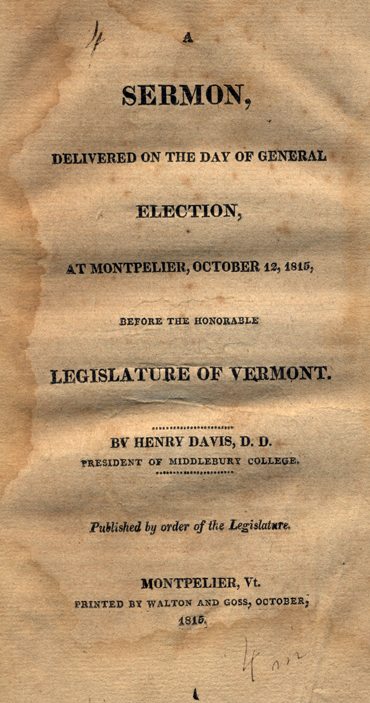

sermon-election-1815-vermont

A

SERMON,

DELIVERED ON THE DAY OF GENERAL

ELECTION,

AT MONTPELIER, OCTOBER 12, 1815,

BEFORE THE HONORABLE

LEGISLATURE OF VERMONT.

BY HENRY DAVIS, D. D.
PRESIDENT OF MIDDLEBURY COLLEGE.

Published by order of the Legislature.

AN

ELECTION SERMON.

ROMANS, xiii. 4.

For he beareth not the sword in vain; for he is the minister of God, a revenger to execute wrath upon him that doeth evil.

At the period, when this epistle was written, Rome was sunk in gross idolatry, and her rulers were implacable enemies of the cross of Christ. The disciples of Jesus were despised and persecuted; and in many instances put to death by the most cruel and ignominious tortures.

The descendants of Abraham boasted themselves of their distinction. Because God had favoured them with peculiar privileges; had dictated to them a system of polity, both civil and religious; had anciently proclaimed himself their king; and in later times governed them by rulers of his own appointment. They arrogated to themselves exemption from the ordinances of men, and deemed it impious and degrading to submit to their authority. Many of them, after embracing Christianity, entertained still the same views and dispositions. And of the Gentiles, also, who had renounced their idols and devoted themselves to God, there were not a few, who vainly contended, that the spiritual wisdom, with which HE had endued them, was a sufficient directory for their conduct; and that they were under no obligation to render obedience to a government, which was imposed upon them by unbelieving rulers. By these means, their dangers and sufferings were increased, and the Gospel of Christ was evil spoken of.

In this chapter of his epistle, the Apostle shews them, in a manner clear and forcible, that their principles were erroneous, and their conduct reprehensible. He begins his address, by teaching them the foundation of civil government;–that it is the ordinance of God. Not indeed that it is, as to its form, of divine appointment; but that it is sanctioned by God as essential to man, both as to the security of his happiness, and to the performance of his duties; and that its obligations are sacred and universal. Let every soul be subject unto the higher powers; for there is no power but of God: the powers that be are ordained of God. Whosoever therefore resisteth the power, resisteth the ordinance of God.

It is no matter then, what the genius or denomination of the government, or by what means established;–what the religion of the ruler, or the religion of the subject. The obligation to obedience is ever the same; for it is founded in the will of God, and the constitution of man; and is indispensable to the being of society.

But what, it will be asked, is the measure of this obedience? Or is it to be regarded as absolute and unconditional? Does the Apostle enjoin upon his Roman brethren the doctrine of non resistance, and, by this means, legalize tyranny? Does he establish a principle so abhorrent from reason and our feelings, that men are born to be slaves? That the will of the magistrate is his only law? That subjects have no method of redress under the most grinding oppression? And that to resist the encroachments of rulers is, in all circumstances, to resist the ordinance of God?

Doctrines and principles like these, are inconsistent with every enlightened sentiment of humanity, and directly repugnant both to the precepts and spirit of the Gospel. They deliver over the multitude to the caprice and ambition of a few, and bind them in chains.

That the Roman government was, at this period, immensely corrupt, and its subjects groaning under oppression, will not be questioned. But with this matter the Apostle had no concern. It was totally incompatible with the sacred objects of his mission. An interference, in the political concerns of the state, would have awakened against the disciples of Christ a most deadly jealousy and resentment. It would have provoked a spirit of universal extermination, and brought down upon them, in a manner still more dreadful, the vengeance of the civil arm.

The founder of Christianity had expressly taught his followers that his kingdom is not of this world. The great purpose of his manifestation in the flesh was, by the sacrifice of himself, to take away the sins of the world; to reveal to man his true character and condition; to increase and to enforce his motives to duty; and to make him wise unto salvation.

While the primary and ostensible object of the Apostle, in addressing the Roman brethren in the context, was to make them acquainted with their relation to civil government, and the universal obligation of obedience to it, he indirectly, yet obviously and forcibly, teaches the magistrate the nature and extent of his authority.

Having first declared that all power emanates from God; that civil government is ordained by God; and that every soul is bound to render obedience to it; he adds, For rulers are not a terror to good works, but to the evil. Wilt thou then not be afraid of the power? Do that which is good, and thou shalt have praise of the same. For he is the minister of God to thee for good. But if thou do that which is evil, be afraid; for he beareth not the sword in vain. For he is the minister of God, a revenger to execute wrath upon him that doeth evil.

These considerations, it will be remembered, are urged by the Apostle on his brethren, as an additional argument for submission to the authority of the Roman magistrate. He does not attempt to shew them the character of the government under which they lived; but he teaches them plainly what ought to be its character. His meaning cannot be misapprehended. The government intended by him can be no other than a righteous government. A government which seeks the praise of God more than the praise of men; which aims steadily and inflexibly to protect and to encourage the obedient, and to chastise and to humble transgressors; which guards with equal care and solicitude the lives and privileges of all its subjects, and renders to everyone according to his character. No authority but such has God, who formed man for society, ordained to be exercised over him; and none but such can meet his approbation. If this be not the fact, the magistrate would be a terror to those who do well, and a praise to those who do evil.

The happiness of the people then is the sole object of civil government; the sole object for which anyone is invested with power, and for which he can exercise it; and the sole point, in which should centre, all his deliberations and all his exertions.

Such being the foundation of all civil institutions, of all legislative, judicial and executive authority, the conclusion is irresistible; that every nation has an unquestionable, a perfect right, to be governed by laws of its own making, and by rulers of its own choice; and that these laws and rulers it may change, as its circumstances may dictate.

And should those, who are appointed the guardians of its rights and the avengers of its injuries, trample upon the constitution; break over the boundaries of their authority, and wantonly sport with its privileges, they bear the sword in vain; they exonerate the subject from his obligation of allegiance to them, and arm him with an undoubted right to resist their aggressions. But whether resistance in a given case be expedient, circumstances must determine. If rights, essential to his security and happiness, are endangered, neither property, nor life, will be regarded in defence of them.

Every other foundation of civil government is a solecism of the grossest character, and will be embraced by none but tyrants and their slaves.

Standing on this elevated ground, invested with the sword of authority, as a minister of God for good to the people, and holding in his hand their destinies, highly interesting and responsible is the condition of the magistrate; and to trample upon the privileges of the citizens, or to sacrifice their happiness from motives of revenge, of avarice, or of ambition, is a sin of deep malignity, and cannot fail to provoke the vengeance of HIM, by whom kings reign, and princes decree justice.

In obedience to the voice of the supreme legislative authority of this commonwealth, I appear before them on this interesting occasion. God forbid that I should be unmindful of my duty, or profane the sacred office with which he hath honored me. To the character of a partisan, I disclaim all pretensions. As a member of the community, I feel, and I trust I ever shall feel, a deep interest in its welfare. But in the political questions, by which the public mind is agitated, and in which many great and good men, whom I have the honor to number among my friends, are at variance in opinion. I have no active concern. I stand in this consecrated place, as a minister of Christ, as bound by the covenant of God to deal plainly with my fellow sinners, whenever called to speak to them in HIS name, however elevated their condition.

For addressing this assembly on the duties of rulers, I need make no apology. For men of this character I am called to address. Would to God that what is to be delivered may be followed with his blessing; that it may prove useful to us all; but especially to those who are immediately concerned;–that it may excite them to fidelity in the important trust committed to them;–and that it may be found, when we shall all stand at the tribunal of God, that they have not born the sword in vain.

The language of the text is highly expressive and emphatical. The sword is introduced as an emblem of authority; and it implies that those who are invested with this authority are to exercise it with energy. But as ministers of God, as his vicegerents among men, they are not to lord it over his heritage.

Like the government of that GREAT and GOOD BEING in whose name they act, all their measures should be characterized by justice and tempered with mercy.

The necessity of civil government arises from our depravity. Had not man lost the uprightness, in which God created him, no civil restraints would have been necessary. Injustice and violence, wars and fightings, which proceed from his lusts and passions, would never have been heard of. The earth would never have been cursed with thorns and briars; and creation would still have smiled with the innocence and loveliness of paradise. But God, whose judgments are a mighty deep, and whose ways are past finding out, hath suffered man to fall from this elevated standing. The image of his Maker, which he once bore on his soul, hath departed from him. Sin hath entered the world, and confusion, and injustice, and violence are its consequences. To shield mankind, as far as possible, from these evils is the great end of all civil associations. And Christians who are called to bear the sword, are under sacred obligations, as ministers of God,

I. To make his word the guide of their conduct. The will of God is the only unerring rule of righteousness; and nowhere, excepting in his word, is HIS will clearly and satisfactorily revealed to us. Revelation is a transcript of the perfections and purposes of that ALMIGHTY and GLORIOUS BEING, who is the creator, the upholder, and the governor of all things.

In the word of God, and here only, are we taught the true origin, the real condition, the real character, and the high destiny of man. It is here, and nowhere else, that we are taught, with certainty, the nature of those capacities which God hath given him; that he is a being of other hopes than those of the present life; that he has interests, hereafter to be realized, whose value no calculation can reach; and that his residence on earth is the only season allotted him, for securing those interests. We here learn, that rulers, however exalted their talents and their rank, have the same infirmities, the same propensities and the same interests, as other men; that as moral beings their elevation entitles them to no prerogative; and that they are equally bound to do justly, to love mercy, and to walk humbly with God. Do unto others as you would they should do unto you, is a command of universal authority, and not less obligatory on the magistrate, than on the citizen. Saith the voice of inspiration, He that ruleth over men should be just, ruling in the fear of God.

When the righteous are in authority the people rejoice; but when the wicked bear rule, the people mourn.

Were the precepts of the Gospel universally regarded by rulers, and its spirit imbibed by them, vastly different would be the condition of mankind. It is granted, that among pagan nations, there have been men of exalted views and sentiments; men, who have postponed to their country’s good all private considerations; who have undauntedly faced danger and death, and cheerfully sacrificed their all to its honor and security. And it is not to be disputed, that in countries also, where Christianity has diffused its blessings, many have been found of a similar character; notwithstanding they denied its authority, and rejected its instructions.

But how many Alexanders, Caesars, and Caligulas, has the world witnessed, to one Titus, or Marcus Aurelius? And how many Neroes and Frederics of Prussia, to one Alfred, or to one Washington.

Infidelity is overreaching, overbearing and hard hearted. Its own aggrandizement is its only object. It wantonly sports with the dearest interests of society; and is prodigal of the blood of man, as of no value, when set in competition with its unhallowed desires.

Banish from the mind those solemn truths, with which revelation presents us, and all enquiries, respecting the future, are perplexed with doubt and uncertainty. Every tie of conscience, which should bind man to his duty, is sundered. Earth becomes the limit of his desires, and self promotion the centre of his exertions. And unless restrained by the fear of God, in proportion as his opportunities for subserving his own interest are increased, in the same proportion, is his danger also, of being given up to the control of such motives. Is the correctness of these remarks doubted? Let them be tried by the records of ages. How happens it, if this ignorance, or forgetfulness, of God and our duty, and this devotion to our own interest be not the cause, that the history of nations is little else than a history of revolutions of rimes and of cruelties?

How happens it, that the multitude have been the slaves of a few; that in obedience to the authors of these changes and sufferings, they have yielded up as a sacrifice, their peace, their fortunes, and their lives? And, indeed, for what other reason is it, that almost every family in Europe is now setting in sackcloth, and that her hills and her plains are one field of blood?

But let conscience, enlightened by revelation, perform its office; let rulers keep in view the commanding truths of the Gospel; let them remember that they are ministers of God; that they are accountable to HIM;–that they are entrusted with power, not to harass, to oppress, and to enslave; but to promote the peace, the virtue, and the happiness of their people; let them bear in mind the judgment to come, and the retributions of eternity; and they will have before them motives to duty that are always binding, always operative. Truth and righteousness become the pole-star of their actions; and the fascinations of power, the emoluments of office, the pomp of triumphs and of victories, and the splendors of crowns, and of diadems, vanish into nothing. It must be acknowledged, that God hath not, in his works, left himself without witness; that the honest enquirer, be his condition what it will, may, from this source, learn much of his duty and interest. But shall be for this reason reject the instructions of revelation? Would not the mariner justly be thought a mad man, who should throw into the deep his compass and chart, and be guided only by the signs and stars of heaven?

II. It is the duty of rulers to establish such laws and regulations, as are adapted to the genius and circumstances of the people.

To give strength, and peace, and security, to the community will be primary objects with every benevolent and enlightened legislator.

But these objects cannot be accomplished, without a knowledge of mankind, in general, and of the characters, relations, and necessities, of the governed, in particular. A fundamental truth in legislation is, that man, find him where you will, is a depraved being; and governed by motives, which often lead him to sacrifice the rights and happiness of others to his own interest. In consequence of rejecting this truth, or of not acting under the conviction of it, men of high distinction in intellect and attainments, have, when writing on the subject of laws and government, fallen far short of the expectations, which their talents had excited. Not regarding man as he really is, but assuming it, as a first principle, that he is rather what he ought to be, their systems, plausible enough in theory, have proved defective in experiment; and have soon sunk, with the authors of them, into neglect and oblivion. In every government, not cursed with tyranny, where men are left to think, and to act, for themselves, wise rulers, in all their measures, will be influenced by a reference to public opinion; and this opinion, it will be remembered, is, usually regulated by public interest.

The physical strength resides in the people; and whenever they are sensible of their power, and have opportunity to exert it, it is in vain to attempt to enforce laws upon them, however wise and salutary, which, in the view of the majority, are incompatible with their interests. I would by no means insinuate that this remark is universally true. I acknowledge that there are some honorable exceptions. I should rejoice were there more. But, as a general remark, it is fully attested by experience, and will not be questioned.

Many writers, far from being contemptible in understanding and in their acquirements, and who had spent much of their time in discussing the science of government, seemed to have imagined, that the views, the desires and the pursuits, of men, and the motives that actuate them, are, in all places, like the laws of the physical world, uniform and invariable; that a constitution adapted to the genius and circumstances of one nation, might, with equal propriety, be applied to any other; that the philosophers of Europe may form laws and regulations, for the aborigines of Asia, or of America, with the same confidence of success, as when attempting to account for the variety of their complexions, or of the climate and productions of their countries.

No principle is, in theory, more deceptive, and few have proved, in experiment, more mischievous. Although man, in every condition of society, is a being of corrupt propensities, and must be governed by restraints, yet, it is not to be forgotten, that every nation have their peculiarities; their own habits of feeling, of thinking and of acting; their own passions, their own interests, their own arts and employments; and the man, who attempts to legislate for any people, without a reference to this fact, will legislate in vain.

With a conviction of these truths, the prevention of crimes, by the establishment of salutary laws, will, in the view of every humane and intelligent government, be a primary object. But as men, abandoned of principle, will be found in every community, whom no threats will intimidate, and who cannot, by any vigilance and foresight, be effectually prevented from preying upon the innocent and defenceless; from disturbing the tranquility of the public, and endangering its security; it will ever be found necessary to restrain them by punishment. Examples must be made of transgressors, and be held up, as a terror, to those who would do evil.

With reference to this subject, the philanthropist looks, with emotions of regret, on the generations that are past. While he sees the arts and sciences improving, and the condition of man, in almost every other respect, gradually meliorating, it is with surprise, he perceives, in the methods of inflicting punishment, little improvement attempted, and little or no melioration, taking place.

The consequences of punishment, as they affect the future conduct of the offender, seem scarcely to have been regarded. Nothing appears, in general, to have been thought of, but the infliction of suffering, as an example to others; and the penalties inflicted have obviously been, in most instances, of such a character, as tend directly to make the subject of them more the servant of iniquity.

To expose the criminal in the stocks, or in the pillory, to the ridicule, the contempt, and the insults of the populace; or to punish him publicly at the post, and to send him away writhing and bleeding, from the stroke of the lash, can have little other effect, than to provoke a spirit of revenge; to destroy whatever sense of shame, or regard for character, might have been remaining; and to harden him for acts of deeper guilt. But to stigmatise him, by branding, or cropping, and to send him forth into the world, like Cain from the presence of God, with a mark set upon him, declaring to all men, that he is an outcast from society, a villain, and never to be trusted, is placing him, at once, beyond the reach of all honest employment; consequently beyond the power of reformation; and compelling him to continue in the commerce of iniquity, and to remain a curse to society.

More correct and exalted views of this subject were reserved for our times; and the improvement which it has already received is, by no means, the most inconsiderable of the improvements, in which we have so much occasion to rejoice.

The method, which has been recently adopted, by some governments, of punishing criminals by confinement and labor, is a happy alleviation of the criminal code, and promises much good. Indeed, much good has been already produced by it. Considered merely as an example, as a terror to those who do evil, it has, I apprehend, a more powerful influence, than the expedients that have been usually resorted to. To the man hardened in the career of wickedness, hardly anything is more dreadful than solitude; where there is no human being to commune with, but himself, and where his vices and his crimes, in spite of every effort to prevent it, will pass in review before him. But in regard to the reformation of the offender, and to the good of society, there is no ground for comparison, as to the consequences. Corporal punishment has little other tendency than to confirm the criminal in transgression; while confinement for a season, at least, frees the community, from his crimes and example, and furnishes some reason for hope of his being restored to it, at length, a sound and useful member. Without deliberate and serious reflection upon his life, there are no hopes of his amendment; nor is a conviction of his folly and guilt likely to prove effectual, without long habituation to industry, and to a course of regular conduct. Long established habits must be supplanted, and new ones formed, before a reformation can be regarded, as complete and permanent. Confinement and labor afford, in the best possible manner, both these means of amendment.

This method is farther recommended, by the fact, that the criminal may here be furnished, with moral and religious instruction, with which it is evidently the duty of the government to furnish him; that his motives to industry may be increased, by granting him some portion of the avails of it; and that for his good conduct, he is presented with the encouragement of going again into the world, with a useful trade, and with an amended character. Were this expedient of punishment and reform universally adopted, and faithfully executed, there would, in my opinion, be strong grounds to hope, that one prolific source of evils of a very dangerous tendency, which now infest society, would, ere long, well-nigh cease to exist. I say faithfully executed;–for there is much reason to apprehend, that it may not prove effectual, by rendering the confinement of shorter duration, than is necessary to produce a permanent change of habits.

But let not rulers forget, in their zeal for reformation, that the dungeon and the gibbet are not to be abandoned; that villains will exist, in every community, of so hardened and daring a character, that no other means will intimidate them; and that deeds of such extreme malignity will be perpetrated, as render forbearance foolishness and mercy a crime.

III. It is the duty of those, who are entrusted with the care of the state, to diffuse useful knowledge among their subjects.

“In arbitrary governments,” saith a writer, “The more ignorance, the more peace—but intelligence is the life of liberty.” We have reason to thank God, that we live in an age in which the truth of this assertion will not be controverted.

The encouragement of those arts and improvements, which are calculated to increase the means of subsistence, and to give vigor, and independence, and respectability, to the body politic, should embrace the attention of every government. But the instruction of the mass of people, in what is essential to their comfort, and to their characters also, as industrious, peaceable, and useful citizens, cannot, I conceive, be neglected, but with high criminality.

It is in vain for rulers to urge, as an excuse, that it is the duty of parents to educate their children. Parents, who are ignorant, it must be remembered, are too apt to be satisfied that their children should remain so. Not knowing by experience the blessings of education, they are, in general, willing, that they should grow up in the same want of information, in which they have grown up, and inherit the same vices and wretchedness, which they themselves have been heirs too. Little can ordinarily be expected, from the exertions of individuals, whatever be their patriotism and liberality.

Unless those, therefore, who are the constituted guardians of the public interests, shall extend a fostering hand to this subject, we have much reason to fear that a people, who are once ignorant, will, generation after generation, continue to be ignorant. What must be the consequences, experience tells us; indolence and vice, and poverty, and crimes, of the most destructive tendency. Those who know not their duty, and their interest, know not, of course, how to estimate them; and without a due estimation of them, it is not to be expected that they will pursue them. Men of this character are always exposed to the intrigues of every aspiring demagogue, and may easily be rendered the instruments of turmoil and violence. And history distinctly informs, that this class of the community, under the direction of ambitious and unprincipled leaders, have acted no inconsiderable part in the revolutions which have agitated and distressed the world.

Let no man deny, then, that it is the duty of government to assume the superintendence of a subject of such vital importance to the public; that it should require of those, who are able to do it, to educate their children; and should provide for the education of those, whose parents are not able, at the expense of the State.

IV. It is the duty of rulers to guard and to improve the morals of the people.

In governments strictly absolute, where the will of the despot is law, and physical power the only arbiter of every question, this subject will be regarded as of little value. It may, indeed, be presumed, that the corruption of morals is, sometimes, the principal basis on which such a government rests. But not so in countries that are blessed with freedom. Good morals are the life-spring of its being. They are the pillars, on which the constitution rests. Remove them, and it falls to ruin. Corrupt the citizens of any state, not bound in chains of tyranny, and confusion and anarchy ensue; and they soon become fit for nothing, but the minions of a despot, or the slaves of arbitrary power.

Every vice is, in its nature, degrading and dangerous. But the vices, which are most degrading, and most fatal to the public welfare, and which most imperiously demand the restraints of government, are drunkenness, profane swearing, and Sabbath-breaking. For to one, or to another of these, almost every other corrupt practice, or crime may be traced, as its origin.

Intoxication stupefies the intellect; blunts the moral perceptions; breaks down, or weakens the barriers between right and wrong; degrades and brutalizes the whole man; and renders him, ordinarily, a judgment to himself. It destroys the peace, the comfort, and the character of his family. It begets wrangling and hunger, and nakedness. Upon his wife, once the object of his tender affections, to whom he is bound, by the vow of his God, to furnish support, and to administer consolation, it brings disgrace, and shame, and despair. It leaves his children, the fruit of his own loins, to grow up, without discipline, without instruction and without example, to walk in his steps, and to be partakers of his end.

On the community also, its influence is not less to be dreaded. It disturbs the peace of neighbors. It produces among them quarrels, and lawsuits, and violence. Like the pestilence that walketh in darkness, it spreads around its contagion, and corrupts, by a gradual and almost imperceptible progress, numbers, who viewed themselves as proof against its influence; ‘till, at last, they yield themselves to its dominion, and become a curse to society. What are the vices and crimes, for which they are then not prepared, I dare not attempt to say.

Profane swearing, of all the vices that disgrace the human character, is the most silly, the most contemptible, and the most inexcusable. For there can be no possible temptation to it. Were it silly, and contemptible, and without excuse merely, we might bear with it. But it possesses other traits of character, and such as cannot be contemplated without deep alarm. To treat with habitual levity and irreverence the name of that infinitely GREAT and GOOD BEING, in whom we live, move and have our existence, and who is constantly shedding around us such a profusion of blessings, is sinful in the extreme, is searing to the conscience, and dangerous to the dearest interests of the community. God is infinitely amiable, and infinitely lovely; and that they love him with all their soul, with all their mind, and with all their strength, is his first command to all his intelligent creatures. It was disobedience to this command which filled heaven with disorder, and made this once peaceful and happy world a region of suffering, and the shadow of death. Thou shalt not take the name of the Lord thy God in vain;–and what art thou, presumptuous worm of the dust, that thou shouldst contemn his authority, insult him with mockery and challenge the vengeance of the Majesty of Heaven? Were thy imprecations answered, what would be the doom of thyself and of thy fellows?

But he swears for the want of reflection, says his apologist. No harm is intended by him; and notwithstanding this blemish in his character, he still has many virtues.—That the man habitually profane has virtues, if the Gospel be our guide, I seriously doubt. That he may still have amiable qualities, and be, in many respects, a good citizen, I shall not deny.

But what is this want of reflection? When habits are once formed, we may commit any crime for want of reflection. The high-way robber assassinates the traveler, for want of reflection. The man, who makes gold, or honor, his God, may murder his neighbor, his friend, for want of reflection. And let me add, that, for want of reflection, the wretch, who is a slave to his passions, may plunge the fatal knife into the heart of his parent, of his child, or of the wife of his bosom.

Want of reflection is, in most instances, the incipient step, in every species of transgression. And the man who can deliberately, or thoughtlessly blaspheme his God, and invoke his curses upon himself or his fellow men, has not, it is to be feared, taken barely the first, the second, nor the third step, towards perjury.

Destroy the sanctity of the juror’s oath, and where are we? What security remains for our property, our reputation, or our lives? You free men from the restraints of conscience; you let them loose upon each other to harass and to destroy; and you render the earth which we inhabit a theatre of violence.

Ye ministers of God, who bear the sword! See then that those over which you have authority, venerate the name of that GREAT and TERRIBLE BEING, from whom your authority is derived. Slumber not on your seats; regard not, with indifference, a sin which cries to heaven for vengeance, and threatens to undermine the very being of the community. And let no man, who is habitually profane, boast of his love of country. For in the words of Rush, 1 “A profane and swearing patriot is not a less absurdity, than a profane and swearing Christian.”

The Sabbath, were there no world but this, is the most salutary, the most important, of all institutions. It is the grand palladium of everything valuable among men. Without it, good morals never have existed, and never will exist. To the utility of the Christian Sabbath, even infidels, have, and almost with one voice, been constrained to bear testimony. It is an institution highly propitious, both to man and to beast. Wherever it is sacredly regarded, more labor will be performed, and more real good produced, by the same number, possessing equal strength and opportunities, than where it is devoted wholly to secular pursuits. For arguments, in support of the importance of this subject, let us appeal to universal experience; and the instructions which it gives never will deceive us.

Where do you find, in the records of ages, a society or nation, who have not known, or have not venerated, the Sabbath, that have long remained peaceful, happy, or independent?

It is granted, that princes, professing themselves Christians, have been tyrants. That the religion of Jesus, in itself, gentle, benignant, and merciful, has, frequently, in the hands of aspiring men, been made a patron of ignorance and an engine of oppression. But no instance can be named, where the Sabbath has been regarded agreeably to the design of its author, in which it has not alleviated his sufferings, and exalted the condition of man.

Go into any village or society, where this day is kept by all, from the master to the servant, holy unto the Lord—Mark the indications of providence, of industry, of thrift and of plenty, that are everywhere visible. Let the observance of the Sabbath be banished from among them. Let but the present generation have passed away;–and then visit them again, and mark the contrast.

The church of God, once neat and entire, now sinking to ruin, its doors fallen from their hinges, its walls defiled and broken, and, instead of resounding with the praises of Jehovah, echoing with the lowing of the beast, or with the voice of the swallow, presents a striking miniature of the change which has taken place.

The tavern, formerly the quiet and peaceful retreat of the traveler, has become a scene of noise, of riot, and of wrangling.

Listen to the curses and the impious oaths of children, as you walk the streets. See neighbors quarrelling, and harassing each other with lawsuits; their fences broken down, their fields overrun with weeds and briars; their habitations decaying; their foundations tumbling from beneath them; their windows filled with tattered garments and everything around them, like the language and persons of their wretched occupants, exhibiting the marks of idleness, of indigence, and of degeneracy. Shall not the magistrate then, who is placed as a guardian over the members of the State see to it that they Remember the Sabbath day and keep it holy. But since the Sabbath will not be venerated, unless religion in general be encouraged and supported,

It is the duty of rulers,

V. To give encouragement and protection to all the interests of religion.

Divest the Sabbath of its sacred character; let it be viewed merely as a civil institution, and its salutary influence would be no longer felt. Banish the fear of God, and it would be regarded if regarded at all, only as a day of amusement and dissipation.

No man can view, with greater abhorrence than I do, the idea of an alliance between church and state. To make religion an engine of civil power; to enlist it in the cause of worldly policy and ambition, is a gross profanation of its character, and tends directly and powerfully to render it, instead of being the richest blessing, a source of oppressive evils to mankind. But that religion and civil government have no concern with each other, is a doctrine to which I can never subscribe. I can as readily admit that there is no connexion between honesty, temperance and veracity, and civil government.

The truth is, there is a vital connection between them; for neither, without the other, can have an existence that is worth a name.

What would be the religion of any people, if they had no civil government; or what their civil government, if they had no religion?

Let God and his providence be erased from the mind; let men cease to remember that his eye is constantly upon them; that he will one day judge the world in righteousness; that, on that occasion, their most secret thoughts, as well as their actions, will be brought to light, and everyone receive a just recompense of reward; and where would be the ground of confidence, between man and man? What security would be left for honor and veracity? What would become of the obligation of promises and oaths, on which, everything stable in life is depending?

Will it be argued, that our regard for the pubic good, that our innate sense of right and wrong, would be sufficient to constrain us to truth, to justice, and to benevolence? What is the public good? What are right and wrong, in the view of him, who hopes, or fears, noting beyond death? Whose creed is, Let us eat and drink for tomorrow we die?

Release mankind from the obligations of religion, and every ruler necessarily becomes a despot, and every citizen a slave. For nothing, in such circumstances, will awe men to obedience, but the iron arm of arbitrary power.

The importance of religious restraints, to the existence of civil government, has been felt by rulers in every age. To give veneration to their characters, and stability to their institutions, they have impiously, and not unfrequently, claimed kindred with their gods, and arrogated the honors of divinity. And never, until our own times, has the attempt been made to establish and support a government, without the belief and acknowledgement of a superintending power. What the consequences were, we have all witnessed.

Will it be asserted, that religion is a concern merely between man and his God, and that the authority of the state has no right to interfere in this concern? But is it not a concern also, between every man and his neighbor; between every husband and his wife; between every parent and his child; between every master and his servant; and between every magistrate and the citizen? What are the relations of men, in which it does not enjoin duties to be performed, and which, if its authority be regarded, it does not affect, control and regulate? Of all the subjects presented to the human mind, it is the most interesting, the most sublime, and the most awful. It is the only consideration, which sets before us motives that are always operative. Which, even in the darkness of midnight, and the secrecy of solitude, have their influence.

Establish the principle, that religion is a matter of no concern with civil government; exempt the former from the authority of the latter, and you establish a principle, which may prove fatal to the best regulated community on earth. You place within the reach of every fanatic, and of every man void of the fear of God, a dagger, with which he may stab society to its vitals.

Men, when under the influence of zeal without knowledge, may embrace any opinions, however absurd, or adopt any practices, however irrational, or however dangerous to the general good. Scarce a doctrine can be named, be its absurdity what it may, that fanatics have not embraced. For conscience sake, they have declared all civil restraints a gross imposition, a wanton violation of their inborn rights, and have forcibly resisted the authority of the state. For conscience sake, they have scattered around them fire brands, arrows and death! And verily thought they were doing God service. With a view to their salvation, the world has beheld, astonishing as it may seem, a combination of men, for the avowed purpose of murder, that they might be condemned and executed by the civil authority; absurdly believing, that if the time of their death were known to them with certainty, they should be constrained to repent. If the government of the state has no concern with religion, how are such extravagances to be checked? Conscience, whose dictates are urged in justification of their opinions and conduct, is, in the view of such men, the voice of God speaking within them. And will you, say they, insult its authority? Will you disregard the injunctions of this heavenly monitor?

Let it never be forgotten, that the public good is paramount to every other consideration. That no private opinions, no private interests, are to be admitted in opposition to it. Civil rulers are invested with supreme authority, for the express purpose of determining and accomplishing what is necessary to promote the peace and prosperity of the community. And shall it be aid, that these nursing fathers of the state have no control of a subject, which, in the hands of fanatics, or of men void of principle, may prove fatal even to the being of society? That it is not their duty to provide for the protection and for the support of religion, which involves in it the highest interests of man, in this life, and everything worth hoping for, in the next?

I wish to be distinctly understood on this subject. I advocate no religious establishment, by the authority of the State; the preference of no denomination of Christians;–the exclusive promotion of no society of men, be their doctrines, or their modes of worship, what they may. Let the rights of conscience, properly so called, be scrupulously, and sacredly regarded. Let every man be left to worship God, if his worship contravene not the rights of others, in the manner which his judgment shall dictate; and let no man be constrained to worship him. The public welfare demands no such partialities;–no such sacrifices;–no such constraint. Religion, as a matter of practice, has its seat in the affections; it is an exercise of the heart. Its offering, to be acceptable unto God, must be a pure, a voluntary offering—No extraneous force can excite in the soul emotions of piety, or elicit from it, the expressions of gratitude. But let the magistrate take care, that religion be respected;–that laws be enacted for the encouragement and aid of its instructors;–that every man be required, as he hath ability, to do something for the support of an object, with which his own, and the best interests of all are intimately connected;–and that the Sabbath be not profaned, by amusement, by pleasure, or by business. As minister of God for good to the people, it is his indispensible duty to do this. And the government which neglects this duty cannot fail to provoke his displeasure; and will sooner or later experience it, in the licentiousness, the factions, and the violence, which will ensue.

Will anyone, in his senses, pretend, that to be obliged to contribute to the encouragement of religion because he feels no veneration for it, or embraces not its doctrines, or to abstain from secular pursuits on the day of the Lord, is an infringement of the rights of conscience? Will anyone say, that there is anything immoral in such submission?

The man, who is, in opinion, opposed to the constitution, may, with equal propriety, refuse obedience to the authority of the state. Or the miscreant, who loves his money better than his country, or his soul—may, on pretence of religious scruples, claim exemption from the taxes, that are essential to its maintenance. Conscience hs as much concern with the latter cases, as with the former. It has, indeed, no concern with either of them.

Every member of the community, whether he worship God or not; whether he embrace the obligations of religion or not; would have a recompense, for what might reasonably be required of him, for its support. Yes, if it be of any consequence to him, that his children be virtuous and happy; that they be free from examples of profanity, of idleness, and of debauchery; that society e not harassed with broils, with riots, and with violence, and that his character, his property, and his life, be secure, he would, indeed, have an ample recompense.

VI. But of no avail will be the wisest system of policy, unless the magistrate, whose duty it is, shall vigorously, and impartially execute the laws.

The laws of the state must be vigorously executed.

Certainty of punishment, where the fear of God is wanting, is the only effectual barrier against crime. Hope of impunity strengthens temptation, and furnishes additional incentives to transgression. Let the violation of established laws be connived at, or looked upon with indifference, and there is an end to all mild and wholesome discipline. This remark is equally true of every government, from the father of the family, to the prince on the throne.

Let the regulations of the domestic circle be disregarded; let the commands of the parent cease to be enforced; and disrespect, and idleness and disorder will inevitably follow.

A constitution combining the knowledge and wisdom of ages, if this vital principle of policy were overlooked in its administration, would soon be treated with neglect and contempt.

Let those, therefore, who bear the sword, be careful that the laws be enforced—when violated, that the offender be brought to justice; that their penalties be inflicted. For if suffered to be transgressed with impunity they cease to have authority, and their threatenings are in vain.

The laws must also be impartially administered.

Government is instituted for common defence and security. Every citizen has the same claim to its care and protection. That individuals, or sects of men, whose conduct, or whose opinions, political or religious, are hostile to the principles of the constitution, and subversive of the liberties of the state, are unworthy of confidence, and are to be viewed with jealousy; is not to be denied. But so long as all render a willing submission to the laws, and advocate no measures, and embrace no sentiments, which can be deemed unconstitutional, the lives, the persons, the property, and the happiness of all, are to be regarded as sacred, and as equally sacred. In such circumstances, the exercise of favoritism, in the administration of the laws; the promotion of some, and the depression of others, from motives of prejudice, of malice, of revenge, or of personal aggrandizement, is a direct violation of the principles of distributive justice, and of the ends of civil government; and it argues a shameful destitution of that magnanimity, and expanded liberality of sentiment, which ought ever to characterize the guardians of the public weal. A practice like this, let it exist under whatever form of government it may, is tyranny. In a government, which is really, as well as professedly, republican, in its constitution and measures, it cannot fail to produce alarming consequences.

I can think of hardly a greater judgment that can be sent on any people, than the curse of weak, of timid, of partial, or of temporizing magistrates. If those, who are called to the high and responsible station of guarding, and enforcing the laws, will not execute them, with energy, with fidelity, and with impartiality, there can be no security for anything. The value of property, of every comfort, of every privilege, even of life itself, is depreciated.

Such a violation of the first principles of a righteous government, is most devoutly to be deprecated. It alienates the affections of the people from their rulers, and from the constitution; it begets jealousies, and intrigues and factions;–it emboldens the monster ice, and throws open the floodgates of licentiousness;–it shakes from their very foundations the pillars of the state;–it leads directly to all the horrors of anarchy;–and, in a word, it is the beaten road to the subversion of liberty, and to the reign of despotism.

Suffer me to remark….and I can call God to witness my sincerity….that in advancing these sentiments, I have no exclusive reference to any man, to any party of men, or to any government, in our own country. I advance them because I deem them to be truths, and momentous truths. They are, indeed, eternal truths; and the ruins of nations verify them.

Cast your eyes over the map of the world. Why have so many states and kingdoms been erased from its surface? Why prowls the savage Arab over the ruins of the proud metropolis of Assyria and of Chaldea? Why does the stupid Ottoman, or riots the effeminate Italian, on the consecrated soil, where once flourished the empire of Greece and of Rome? Famed for their arts and their arms, mighty nations trembled at their power, and submitted to their dominion. “They stood on an eminence and glory covered them.”

Though dead they still speak! Though ages since, blotted from the list of nations, their catastrophe remains a solemn and eternal memento of the truth, that, where civil officers are timid, partial, ambitious, or temporizing, in the administration of the laws, personal bravery, high attainments in science, and the ablest systems of government, cannot save a people from corruption, from licentiousness, from faction, nor from final ruin.

VII. It is the duty of rulers to exhibit to those whom they are called to govern, an example worthy their imitation.

The propensity to imitation is one of the strongest propensities of our nature. It is implanted by the God who made us deep in the human breast. It affects, in no small degree, our thoughts, our speech, and our actions. Hence the truth of the remark that “We are governed more by example than by precept.”

I readily subscribe to the doctrine of the natural, deep rooted, and malignant depravity of the heart. I must subscribe to it; for it is taught me by the exercises of my own breast, by the history of all men, and by the word of God, in a manner, which I cannot question.

But is it not to the power of example also, that vice is greatly indebted for its contagious and wide spreading influence? Even the groveling and polluted wretch, who wanders the streets taking the name of God in vain, reeling with intoxication, or imprecating damnation on himself and others, notwithstanding he may do no good, is by no means to be regarded as a blank in society. The transition, from beholding crime to the actual commission of it, is easy and natural. Vice, by becoming familiar, loses its odiousness; and practices, that were contemplated with detestation and alarm, are, by being often seen, looked upon with indifference, and adopted, not unfrequently, without remorse.

Example, by slow and imperceptible advances, transforms the temperate man into a sot, the civilized man into a savage, and makes even the dastard brave. But when aided by the respect, which is naturally entertained for a parent, for an instructor, for a ruler, or for brilliant and commanding talents, it exerts an influence that knows no calculation.—On this principle it is to be accounted for, more than any other, that families, schools, and nations, so often contract the manners and habits of their guardians;–that virtues and vices so often seem hereditary;–that the conduct of an individual of distinguished intellect and attainments, if conspicuous by his excellencies, or his crimes, is so often salutary, or pestiferous, to the community;–that the stream of corruption, at first slow and silent, in its progress, at length widens, and deepens, and swells into a torrent, bearing away the character, the hopes, and the happiness of thousands.

Of all the conditions of men, that of rulers is the most responsible, the most dignified, and the most commanding. Girded with power, as ministers of God; constituted the framers of the law; the arbiters, under its authority, of the conflicting claims of their fellow citizens; and presiding over their fortunes, their liberties and their lives, they are naturally regarded with profound emotions of deference and veneration. The elevation to which they are exalted renders all their conduct visible, and gives a force to their example, which will not be resisted. Their virtues, and their vices, diffuse their influence through the community, and stamp its character in the view of surrounding nations. That people, whom God visits with the judgment of wicked rulers, cannot long remain virtuous and happy. Regulations for the restraint or prevention of immorality, enacted by vicious magistrates is nothing better than a mockery of the solemn business of legislation. And in vain do the laws lift their voice against crimes, while those who should execute them are themselves transgressors. A government, without virtue, necessarily corrupts the people, and a people without virtue, the government. Till at length, each corrupted, and corrupting, they rush together, down the current of licentiousness, into the tempestuous ocean of misrule and anarchy.

MAY IT PLEASE YOUR EXCELLENCY…

TO be elevated to the first office, in the gift of an independent people, is a distinction, to which few can attain. It is, however, a distinction, which, by the man, who duly considers its cares, its dangers and its responsibility, will not be coveted. It is not Sir, we trust, from the views of ambition, that you have been again induced to listen to the suffrage of your fellow citizens. We have the pleasure of believing, that purer motives actuate you;–a conviction of the truth that your talents are not your own, and a readiness to employ them in the station, to which God may call you, however arduous its cares, or perplexing its difficulties. It is a truth, which ought never to be forgotten, that the higher our elevation, the greater usually are our dangers; and that the more aggravated will be our guilt, if unfaithful to our trust. But to the man, who fears God and strives to perform his duty, the most exalted condition is not without its encouragement; for if at last accepted of him, the greater will be his reward.

To instruct your Excellency, in the duties of your office, is an undertaking, in which, I have not the presumption to engage.

The best interests of a people, who have so frequently called you to rule over them cannot but be dear to you. On your exertions, in no small degree, are those interests depending.

Rising above the narrow, the embarrassing views of party prejudices and local attachments, and surveying with an expanded benevolence, a numerous and increasing community, it will, it should be expected, be the constant, the only aim of your Excellency, to promote the chief good of every class of your constituents; to give wisdom and moderation to the councils of State, and dignity and independence to the character of the commonwealth.

Elevation above our fellow men is not without its dangers. It is not in the glare of the sunshine of prosperity, that the graces, which God requires, are most apt to be cultivated. You, Sir, are not insensible to the temptations that surround you. The praise of men vanisheth with their breath; and comfortless will be the recollection of having filled the chair of State, and of having possessed, with distinction, the confidence of thousands, should you find yourself, in the end, without the approbation of God. While faithful to your country, be faithful to your God; nor neglect to seek first the approbation of Him whose favor is life, and whose loving kindness is better than life.

May your Excellency be richly endued with the wisdom which is from above. May the God of mercy grant you, in abundance, grace, peace and consolation. And when your days shall have been numbered, and your labors finished, may you hear the welcome, the transporting plaudit, Well done thou good and faithful servant; thou hast been faithful over a few things, I will make thee ruler over many things; enter thou into the joy of thy Lord.

GENTLEMEN OF THE COUNCIL, AND GENTLEMEN OF THE HOUSE OF REPRESENTATIVES.

THE interests of your charge are of no ordinary value. It is not for yourselves, for your constituents, or for the present generation only, that you legislate, but for posterity. The influence of your deliberations will descend to future time, and numbers, yet unborn, may be blessed or cursed by them.

With you, Gentlemen, it rests, in no small degree, to determine, whether we shall enjoy the privilege of wise and salutary laws, and of an upright, steady and vigorous execution of them; whether we shall be blessed with good morals, with godliness and honesty, and generations to come be virtuous, independent and happy;–or whether our land shall be filled with vice, with intrigues, and with factions, and our children rise up and curse our memory.

Rich indeed is the inheritance left us by our fathers, which was purchased by their labors and sufferings, and preserved by their toil, their valor, and their prayers. Aggravated will be the guilt of not transmitting to posterity such a legacy unimpaired.

You are not, Gentlemen, ignorant, and it is presumed not unmindful, of the high importance of the concerns that are committed you; nor of the candor, wisdom and integrity, that are essential to a faithful and able management of them.

The period, at which you are entrusted, with the interests of the commonwealth, is portentous and eventful. The circumstances in which you are assembled are in many respects auspicious. Our improvements, in agriculture, in manufactures, in literature, and the sciences are rapidly advancing. The war in which we have been involved has, under the good providence of God, been brought to an happy issue; and to HIS name be our offering of undissembled gratitude. The soldier, released from his toils and dangers, again participates of domestic comforts. Our sea coast is no longer threatened by hostile fleets, nor our frontier settlements by invading armies.

Is not the present period, however, to the American who loves the dearest interests of his country, a period of deep solicitude? While, as a nation, we have been increasing in wealth and independence, is it to be denied, that we have rapidly increased also in vice and dissipation? Where are now to be found that hardihood of integrity, that veneration for the laws, that reverence for the magistrate, and that stern and unyielding opposition to licentiousness, which so strongly characterized our virtuous ancestors?

See the laws of God and of man, daringly violated; and the holy Sabbath openly profaned. See the minister of justice slumbering over his oath, and vice rioting with impunity; profane swearing and intemperance blighting, like the mildew, our national character, and threatening our fairest hopes.

The vengeance of God will not always slumber; and unless the friends of virtue and their country will gird themselves, rise in their might, and present a barrier to these dangers, let no man be disappointed, should our nation, ere long, be spoiled of its liberties, and our children become slaves.

It is to every good man a subject of sincere rejoicing, that the public are awaking to a sense of their danger. Something has already been done to stay the progress of these evils, and to ward off the judgments of God. By your exertions, Gentlemen, in co-operation with those of your constituents, much might be done; and our privileges and our posterity, might, it is to be hoped, yet be saved from ruin.

Will you ask me, in what manner your efforts should be employed in this concern? I will tell you Gentlemen; by enacting such laws, for the prevention, and discouragement, of vice, if such be not already enacted, as circumstances require; by appointing officers of justice, who are not afraid to do their duty; and dare not leave it undone; by leading, and aiding, in forming associations, for the reformation of morals, and showing, by your counsels and exertions, that you feel a deep and solemn interest in the subject; by proving to your neighbors, that you venerate the day of the Lord; and by exhibiting to them an example of temperance and moderation by abstaining from the use of ardent spirits in all cases, excepting when necessity demands them. The use to you may be immaterial, but the example to them may be of infinite moment.

Possessing, as is evident you do, the confidence of your fellow citizens, the effect of your exertions is not to be doubted. And tell me, Gentlemen, dare you, as Christians, or as patriots, withhold your hands from this work of reformation?

But there is an evil, to which we are exposed, and which, if possible, is still more alarming. That there are within our country, men, who owe to it their birth and education, who would cheerfully sacrifice, at the shrine of their ambition, its liberties and laws, is a truth, which, though painful to contemplate, we are constrained to acknowledge. For such men, have ever existed, in every country.

But is it possible, that the citizens of these United States are, almost without exception, hostile to their government, and enemies to the soil, which was purchased by the dangers and sufferings; which was consecrated by the blood; and in whose bosom are entombed the ashes of their fathers? If this assertion be true, degenerate indeed is our character; if it be not true, we are our own gross calumniators.

But the assertion is not, cannot, be true; and the conduct of those who make it gives the lie to it. For while the adherents of the two great political parties among us are stigmatized by each other with the epithet, enemies to their country, do they not as neighbors, treat each other with confidence, and as if, on all subjects, politics only excepted, they believed each other honest? Is it possible that a man should be just, in his domestic and his social intercourse, that in his private relations, he should conduct, in the fear of God, and yet be, in his relation to the community, totally void of principle?

And to what, is the imputation of this solecism in the human character to be attributed? The answer is at hand; to party spirit, that fiend of social order; which, emerging from the abyss of darkness, has embroiled, and weakened, and prostrated the firmest governments on earth.

Examine the records of the Legislative councils of our country, for the last twenty years. Whence happens it, let me ask you, when assembled for the solemn and commanding purpose of deliberating upon its interests, and of enacting laws and adopting measures, for the public good, that we find them, day after day, week after week, and month after month, giving precisely the same number of suffrages for the affirmative and negative of almost every question; whether of a political nature or not; whether of moment or not? Whence happens it, that when an individual among them has the independence to dissent from his party, he is immediately proscribed as a traitor to their cause, and as an enemy to his country? Whence happens it, that, with every political revolution in the Legislature, well nigh every office in their gift from the supreme judicatory down to that of the most subordinate minister of justice, must change its occupant? Is it because all the talents, all the integrity, all the patriotism in the nation belong to one party exclusively? This no man dare pretend. Is it not because both are under the influence of party prejudice; a prejudice which views every objet, in relation to itself, through a disordered medium; which literally, and perhaps honestly, puts evil for good, and good for evil; darkness for light, and light for darkness; which discovers, in its opponents, no merits, but magnifies all their failings; and sees, in its friends, no imperfection, but every excellency. If, Gentlemen, those among us, of your standing and influence, will not stop and hesitate; will not, by their wisdom, their moderation, and their forbearance, endeavor to check and to stay this torrent of persecution, where, O my BELOVED COUNTRY, where will it bear you! I criminate, exclusively, neither party. But I must say, that I believe them both guilty. Perhaps they are equally guilty. I cannot contemplate this subject, but with unutterable apprehensions.

The voice of our fathers cries to us from the dead, “In vain we toiled, in vain we fought, we bled in vain, if you our sons” have not the magnanimity to immolate your prejudices, on the altar of your country’s good. Every republic, which has existed, stands a monument before us, with lessons inscribed in blood. God himself declares that A kingdom, or nation, divided against itself cannot stand.

And remember, Gentlemen, that HE also declares, though hand join in hand, the wicked shall not go unpunished. And may we all remember, that we must one day stand at his tribunal.

AMEN.


Endnotes

1 Hon. Jacob Rush, Judge of the court of Common Pleas, in the state of Pennsylvania. See his charges to the grand jury. This little book should be read by every citizen.

* Originally published: Dec. 25, 2016

Proclamation – Lord’s Day – 1782

John Dickinson (1732-1808) was a lawyer, statesman, and soldier during the War for Independence. He wrote, among many other pieces, the Letters from a Farmer in Pennsylvania which were highly praised both in the colonies and abroad. Although he was a delegate to Continental Congress, he absented himself from the vote to adopt on the grounds of wishing to have more secure footing before igniting war with Briton. This, however, did do keep Dickinson from fully supporting the measure upon its adoption and throwing all his energies toward securing the liberty of America.

He was held in an extremely high regard by the other notable men of the time, with Dr. Benjamin Rush remarking that, “Few men wrote, spoke and acted more for their country from the year 1764 to the establishment of the federal government than Mr. Dickinson.”

The following is a prayer proclamation John Dickinson issued while he was the president of Pennsylvania in 1782.


By the President and Supreme Executive Council of the Commonwealth of Pennsylvania,

A Proclamation.

As the best and greatest of Beings commanded mankind into existence with a capacity for happiness, bestowing upon them understanding and many “good gifts”; so when they, by an abuse of the blessings thus intrusted, had involved themselves in guilt and misery, his compassion was extended towards them, and in “his tender mercies,” not only “seed time and harvest, and cold and heat, and summer and winter, and day and night,” were continued unto them, but “the eternal purposes’ were revealed, and the heavenly treasuries opened, to restore the human race to the transcendent privilege from which by transgression they were fallen: And in this “marvelous work,” the laws of righteousness have been with such infinite wisdom adjusted, and united to the obligation of nature, that while they jointly tended to promote the felicity of men in a future state, they evidently cooperate to advance their welfare in the present, and to offend against the sanctions of revelation, of the dictates of reason and conscience, is suredly to betray the joys of this life, as well as those of another.

Wherefore, as we are entirely persuaded that just impressions of the deity are the great supports of morality, And As the experience of ages demonstrates, that regularity of manners is essential to the tranquility and prosperity of societies, And the assistance of the Almighty, on which we rely, to establish the inestimable blessings our afflicted country is contending for, cannot be expected without an observance of his holy laws, We esteem it our principal and indispensable duty to endeavor, as much as we can, that a sense of these interesting truths may prevail in the hearts and appear in the lives of the inhabitants of this state; And Therefore have thought proper to issue this Proclamation, sincerely desiring that they seriously meditating on the many signal and unmerited benefits of public and private import conferred upon them, the affecting invitations and munificent promises of divine goodness, and the “terrors set in array” against disobedient, may be urged to exert themselves in avoiding, discountenancing, and suppressing all vice, profaneness and immorality, and feeling a due gratitude, love,and veneration for their most gracious, all-wise , and omnipotent Benefactor, Sovereign, and Judge, and correspondent temper of resignation to the dispensations of his Supreme Government, may become a people “trusting in him, in whom they live and move and doing good.”

And to the intent that these desirable ends may be forwarded, all persons are herby fervently exhorted, to observe the Lord’s Day, commonly called Sunday, and thereon constantly to attend the worship of God, as a service pleasing to him who is, “a hearer of prayer,” and condescends to “inhabit the praises of his people,” and profitable to themselves; a neglect of which duty has, in multitude of instances, been the beginning of a deviation into the ways of presumption, that at length have led into the deepest distresses and severest sorrows:

And As the education of youth is of so much moment to themselves and to the commonwealth, which cannot flourish unless that important point be diligently regarded, the sentiments, dispositions, and habits begin then generally formed that pervade the rest of their lives, all parents, guardians, masters, and tutors are herby strenuously called upon, to discharge the high trust committed to them, and for which they must account, by a faithful attention; that those under their care may be nurtured in piety, filial reverence, submission to superiors in age or station, modesty, sincerity, benevolence, temperance, industry, consistency of behavior, and frugality regulated by an humble reliance on Providence, and a kind respect for others; that their inexperienced minds may be by wholesome instructions fully convinced, that whatever employment they are designed for, virtue will be a chief promoter of success, and irregularity of conduct the greatest obstacle to it; that the intellectual faculties are aided by moral improvements, but weakened by illicit courses; and in brief, that Religion is the fiend of their peace,health and happiness; and that to displease their Maker, or trespass against their neighbor, is inevitably to inure themselves.

And we expect and hereby require, that all well disposed persons, and especially those in places of authority, will by their conversation and demeanor encourage and promote piety and virtue, and to their utmost contribute to the rendering these qualities truly laudable and honorable, and the contrary practices justly shameful and contemptible; that thus the influence of good men, and the dignity of the laws, may be combined in repressing the follies and insolencies of scorners and profligates, in directing the weak and thoughtless, and in preserving them from the pernicious contagion of evil examples; And for further promoting such reformation, it is hereby enjoined, that all magistrates, and others whom it may concern, be very vigilant and exact in discovering, prosecuting, and punishing all persons who shall be guilty of profanation of the Lord’s Day, commonly called Sunday, blasphemy, profane swearing or cursing, drunkenness, lewdness, or other dissolute or immoral practices; that they suppress all gaming houses, and other disorderly houses, that they put in execution the act of General Assembly, entitled, “An Act for the suppression of Vice and Immorality,” and all other laws now in force for the punishing and suppressing any vice, profaneness or immorality: And for the more effectual proceeding herein, all Judges and Justice, having cognizance in the premises, are directed to give strict charges at their respective Courts and Sessions, for the due prosecution and punishment of all who shall presume to offend in any of the kinds aforesaid; and also of all such as, contrary to their duty, shall be remiss or negligent in putting the laws in execution: And that they do at their respective Courts and Sessions cause this Proclamation to be publicly read, immediately before the charge is given: And every Minister of the Gospel is requested strongly to inculcate in the respective congregations where they officiate, a love of piety and virtue, and an abhorrence of vice, profaneness, and immorality.

Given in council, under the hand of the President, and the Seal of the State, at Philadelphia, this twentieth day of November, in the year of our Lord one thousand seven hundred and eighty two.

Attest. T. Matlack, Secretary.

John Dickinson.

God Save the Commonwealth.

Proclamation – Humiliation, Fasting and Prayer – 1799

John Adams (1735-1826) Adams was an attorney, diplomat, and statesman; he graduated from Harvard (1755); leader in the opposition to the Stamp Act (1765); delegate to the Continental Congress (1774-77) where he signed the Declaration of Independence (1776); appointed Chief Justice of Superior Court of Massachusetts (1775); delegate to the Massachusetts constitutional convention (1779-80) and wrote most of the first draft of the Massachusetts Constitution; foreign ambassador to Holland (1782); signed the peace treaty which ended the American Revolution (1783); foreign ambassador to Great Britain (1785-88); served two terms as Vice-President under President George Washington (1789-97); second President of the United States (1797-1801); he and his one time political nemesis- turned-close-friend Thomas Jefferson both died on July 4, 1826, the fiftieth anniversary of the Declaration of Independence; Adams was titled by fellow signer of the Declaration Richard Stockton as the “Atlas of American Independence.”

This is the text of a national day of humiliation, fasting, and prayer proclamation issued by President John Adams. This proclamation was issued on March 6, 1799 declaring April 25, 1799 the day of fasting for the nation. See a sermon preached by Rev. Manneseh Cutler on the 1799 fast day here.


By the President of the United States of America.

A Proclamation.

As no truth is more clearly taught in the Volume of Inspiration, nor any more fully demonstrated by the experience of all ages, than that a deep sense and a due acknowledgment of the governing providence of a Supreme Being and of the accountableness of men to Him as the searcher of hearts and righteous distributor of rewards and punishments are conducive equally to the happiness and rectitude of individuals and to the well-being of communities; as it is also most reasonable in itself that men who are made capable of social acts and relations, who owe their improvements to the social state, and who derive their enjoyments from it, should, as a society, make their acknowledgments of dependence and obligation to Him who hath endowed them with these capacities and elevated them in the scale of existence by these distinctions; as it is likewise a plain dictate of duty and a strong sentiment of nature that in circumstances of great urgency and seasons of imminent danger earnest and particular supplications should be made to Him who is able to defend or to destroy; as, moreover, the most precious interests of the people of the United States are still held in jeopardy by the hostile designs and insidious acts of a foreign nation, as well as by the dissemination among them of those principles, subversive of the foundations of all religious, moral, and social obligations, that have produced incalculable mischief and misery in other countries; and as, in fine, the observance of special seasons for public religious solemnities is happily calculated to avert the evils which we ought to deprecate and to excite to the performance of the duties which we ought to discharge by calling and fixing the attention of the people at large to the momentous truths already recited, by affording opportunity to teach and inculcate them by animating devotion and giving to it the character of a national act:

For these reasons I have thought proper to recommend, and I do hereby recommend accordingly, that Thursday, the Twenty-fifth day of April next, be observed throughout the United States of America as a day of solemn humiliation, fasting, and prayer; that the citizens on that day abstain as far as may be from their secular occupations, devote the time to the sacred duties of religion in public and in private; that they call to mind our numerous offenses against the Most High God, confess them before Him with the sincerest penitence, implore His pardoning mercy, through the Great Mediator and Redeemer, for our past transgressions, and that through the grace of His Holy Spirit we may be disposed and enabled to yield a more suitable obedience to His righteous requisitions in time to come; that He would interpose to arrest the progress of that impiety and licentiousness in principle and practice so offensive to Himself and so ruinous to mankind; that He would make us deeply sensible that “righteousness exalteth a nation, but sin is a reproach to any people;” that He would turn us from our transgressions and turn His displeasure from us; that He would withhold us from unreasonable discontent, from disunion, faction, sedition, and insurrection; that He would preserve our country from the desolating sword; that He would save our cities and towns from a repetition of those awful pestilential visitations under which they have lately suffered so severely, and that the health of our inhabitants generally may be precious in His sight; that He would favor us with fruitful seasons and so bless the labors of the husbandman as that there may be food in abundance for man and beast; that He would prosper our commerce, manufactures, and fisheries, and give success to the people in all their lawful industry and enterprise; that He would smile on our colleges, academies, schools, and seminaries of learning, and make them nurseries of sound science, morals, and religion; that He would bless all magistrates, from the highest to the lowest, give them the true spirit of their station, make them a terror to evil doers and a praise to them that do well; that He would preside over the councils of the nation at this critical period, enlighten them to a just discernment of the public interest, and save them from mistake, division, and discord; that He would make succeed our preparations for defense and bless our armaments by land and by sea; that He would put an end to the effusion of human blood and the accumulation of human misery among the contending nations of the earth by disposing them to justice, to equity, to benevolence, and to peace; and that he would extend the blessings of knowledge, of true liberty. and of pure and undefiled religion throughout the world.

And I do, also, recommend that with these acts of humiliation, penitence, and prayer, fervent thanksgiving to the Author of all good be united for the countless favors which He is still continuing to the people of the United States, and which render their condition as a nation eminently happy when compared with the lot of others.

Given, under my hand and the seal of the United States of America, at the city of Philadelphia, this sixth day of March, in the year of our Lord one thousand seven hundred and ninety nine, and of the Independence of the said States the twenty-third.

By the President, John Adams.

Timothy Pickering, Secretary of State.

* Originally Posted: September 9, 2017

Oration – July 4th – 1810, Massachusetts

AN

O R A T I O N

DELIVERED AT NEWBURYPORT,

ON THE

FOURTH DAY OF JULY
1810.

By SAMUEL L. KNAPP.

“Justum et tenacem propositi virum
Non ivium ardor prava jubentium
Non vultus instantis tyranny
Mente quatit solida.”

NEWBURYPORT: FROM THE PRESS OF EPHRAIM W. ALLEN.

THE Selectmen of Newburyport, in behalf of their fellow-citizens, present their thanks to SAMUEL L. KNAPP, Esq. for the excellent Oration delivered by him this day, in commemoration of American Independence, and request a Copy for the press.

STEPHEN HOLLAND, Chairman
Newburyport, July 4, 1810.

GENTLEMEN,
FROM a respectful regard to your request; and in compliance to custom, I submit the copy to your disposal.

STEPHEN HOLLAND, Esq. Chairman
Of the Selectmen of Newburyport.
SAMUEL L. KNAPP

AN ORATION.

ON this day we should come forward with open hearts and independent minds to discuss principles of government; to expatiate with sincerity and justice upon national affairs; scrupulously to examine the conduct of Rulers and to see that no strange fire is offered by unhallowed hands on the altar of our liberties; to animate and enlighten each other in republican feelings and duties, to cherish in our breasts the love of distinction and to awaken our minds to a virtuous desire of national greatness.

While on this day we indulge a noble pride in contemplating our exertions for Independence, and feed our imaginations with rapturous views of future years, let us moderate our joy by calling to mind the fate of all republican institutions. Where once the super-human Spartan, the courtly Athenian, and the lordly Roman were found, is now seen the idle Turk and the effeminate Italian. The laws of Lycurgus and Solon, the Senatus-Consultum are changed for the imperial mandates of a tyrant to his slaves. We delight to dwell on the youth and manhood of republican States, as we do on the youth and beauty of Alcibiades, or the iron muscle and godlike mein of Hercules; but pass in silence the loathsomeness and decrepitude of their old age, when they exhibited all that is mean in suffering and base in action. History faithfully records their steps to wretchedness and extinction; but we turn from the melancholy downfall of Republics unwilling too closely to inspect their sullied brightness and diminished glory.

Switzerland is the only exception among the republics of all ages to national suicide. She alone is worthy the tears of time and the lamentations of the world. The echo of her hills repeated the dying accents of liberty on the eastern continent.

Knowledge and virtue are the soul of a Republic. Without them no free government can exist. If men are intelligent, moral and religious he laws are permanent and the people happy; but unenlightened man has no stability of character. In possession of power he is a merciless despot, in the power of others he is a tame and pliant slave. In a free government and under mild laws he is a violent opposer of just restraint and wholesome obedience. With obscure views, strong passions and vicious propensities he is the enemy of his own happiness and author of his own misery. From a deep knowledge of human nature the wise men of ancient Republics seized the moments of peace and reason to fix some mound against popular frenzy; to save the people from their own infatuation and folly. The appealed to the understandings of the people in their calmest moments, and to the best feelings of their hearts, and made them seal the checks to themselves by all the influences of superstition and religion. But in vain did the wise and virtuous attempt to save them; for in the first paroxysm the labors of wisdom were torn away and became as bands of straw on the hands of a maniac. The infuriated multitude drove their sages into banishment, or compelled them to drink the poisonous cup. Honorable services were no safeguard from their fury; and an illustrious name only excited envy and hatred.

Other things were expected of our Republic; for we did not, like them, begin in a state of barbarian ignorance and wait the lapse of ages for knowledge and experience; but in the moments succeeding the struggle for our Independence, when we were quiet from weakness, and peaceful because exhausted by contending, the talent of our country was collected to deliberate upon a constitution of government. Every fountain of knowledge was open; all the maxims of philosophy at hand; and “all the spoils of time” were before them to be examined, selected, modified and combined.

The constitution from their hands was theoretically beautiful and grand. The principles were simple; built on the everlasting foundations of justice. Barriers were raised against the encroachments of wealth and power, and the weak and defenseless were protected in their rights. The widest field for political distinction was open to all. We received this Constitution. Would to Heaven we had been wise enough for its full and continual operation. We were not sufficiently virtuous for this system of government; for while we were feeling its most beneficial effects, disappointed demagogues were scattering ambiguous voices, which were caught by the insolent and vicious. The serpent was seen lurking in this paradise the morning after its creation. This party at first, were hardly noticed. They shrunk from the splendid blaze of talents in our national Councils, from the immaculate purity and renowned virtue of our first magistrate; but in secret they were gaining strength and rancor. The disaffected part of the community joined them to vent their malice, and the weak man, who was ambitious; they ensnared the dreams of honor. From the confines of darkness these opposers of the Administration of Washington, came forth to censure every action and attack every measure, regardless of decency or justice. Every act of the Administration, however mild and salutary, was by this faction called oppressive and tyrannical. The cry of danger was so loud and so frequently reiterated that the timid were alarmed, and the weak became suspicious. At length, after twelve years uniform and vindictive opposition from this party, to the genuine principles of republicanism, Mr. Jefferson its head came into office. Washington for eight years, had led us by a direct road and rapid marches to a high eminence among nations; but at this period he was no longer numbered with the living. His immediate successor, Mr. Adams, during his term of office, with few deviations, wisely followed his steps. At the name of this man my bosom labors with mingled emotions of reverence, pity, and contempt. He had never apostatized from the principles of his great prototype, we should on his anniversary have been wreathing garlands of flowers for this venerable head; for he was an early and able advocate for the Independence of his country. If he had died before his vanity and wounded pride had overcome his reason, we should on this day have been strewing his grave with cassia and defending the laurels of his tomb from the pestilential breath of his present friends.

Mr. Jefferson’s Administration deserves from every one the strictest scrutiny and freest remark; for in his Administration the world witnessed the most novel spectacle it had ever seen; a people by the bare suggestion of a chief magistrate cut off from a pursuit in which they were ardently and successfully engaged, and on which their dearest interests depended. Themistocles is immortal on the page of history for prevailing on the Athenians in a time of difficulty to quit their city and trust themselves to the sea. Mr. Jefferson by a simple dictum has done more to an immense country, than this great man did to single city, by incessant labor, matchless eloquence and profound art. But here all resemblance vanishes. The act of one saved and established the liberties of Greece, the act of the other impoverished and degraded his country. Mr. Jefferson, fed by the philosophers of France, with visionary plans for the improvement of human nature, unfortunately for us was clothed with power to put some of these schemes in experiment. He continued the same speculative zealot, although the school in which he was taught, with all their fanciful theories and wild calculations to give unalloyed happiness to the world, perpetuity to life, and to elevate men to gods, lad long since been swept from the earth and the remembrance of their existence almost forgotten. The seed sown in this country by France, during her revolution, has produced a plentiful and poisonous harvest. At the thoughts of France our old wounds bleed afresh, and no hand is able to staunch those recently made. From France for many years we have suffered violence, outrage and robbery with a cringing spirit and dastardly dread. When she has treated us with the most contempt; we have courted her with the most servility; and have kissed the foot of Bonaparte, when it has been lifted to crush our heads in the dust. Our citizens have expired in the dungeons of France, and our property has gone to replenish her exhausted treasury. It is true our government have remonstrated; but so feebly, that the mighty master of our destinies has told us he had not leisure to listen to our complaints.

The historian of a future age will be unable to account for this moral and political phenomenon that a nation, which had so nobly contended for Independence, so lately evinced such fortitude and patriotism, should in so few years become totally insensible to the prostration of her honor, and regardless of the lives and liberties of her citizens. Instead of asserting our rights and defending our property, we have been gazing in stupid wonder at the gigantic strides of the destroyer, and at times have so far forgotten our fate, that we have found pleasure in describing his power, ambition and success. We have seen the dews of death fall on the nations around him with scarcely an emotion to pity. Great God! How long shall this desolater of nations wear his crown stained with tears the dripping with gore? How long shall he bid fierce defiance to eternal justice, and yet prosper, as never man prospered? If Americans possessed the proud spirit, for which they were once distinguished, the storms which have shaken Europe, would have rolled at a harmless distance. Had our government risen in the majesty of her strength, the star which has shed its baleful influence on Europe, would not have darted a malignant ray on us. What are the armies of France to America! An immense ocean rolls between us, “and the thousand ships of England” ride on its waves. Had we preserved our little navy, and made proper additions to it yearly, we should have been able at this period to protect our commerce from French depredations; nor should we now be burning with shame and indignation, that our property and rights have been adjudged by a paltry Danish Court. Is it not enough to fire freemen with madness that such a petty power should treat us so villainously? And what is worst of all, that we should so tamely submit to it! Our rulers have seen this insult and degradation with perfect indifference. They will not enter into our feelings or alleviate our distress. But their office is not perpetual. Other times are coming, and the government will pass to other men. Already some of these political “glow worms ‘gin to pale their ineffectual fires.” Though the darkness is still great, the morning may be near; and when the day again shines upon us, the people will be convinced of what has often been told them; that by commerce only this country can grow populous, opulent and distinguished. Deprive us of our commerce and we shall be stationary or retrograde. Commerce is the sacred Palladium of our rights; and as long as it is extensive and prosperous, this country will increase in numbers and power.

Some politicians have exclaimed against a nation of merchants, as they are pleased to stile commercial countries, and asserted that no true patriotism could exist among men, who were in pursuit of riches. But we know these opinions to be incorrect. To prove that true national dignity and glory have been attained by commerce, we have only to glance at the history of commercial nations. The people of Tyre, while their trade flourished, were the most enlightened and invincible of any nation on earth. The arts and sciences were found among them in greater perfection, than among other nations. In accumulating property, they did not forget the necessity of defense. Though not very numerous they presented a warlike and formidable front, to the great nations around them. Carthage whose character we have through the suspected medium of Roman historians, their constant enemies, was a small country, wealthy by commerce and consequently powerful. At the mention of Carthage the Roman warrior’s cheek was blanched with fear, and the name of Hannibal carried terror within the walls of Rome. In the days of the Medici, who were princes and merchants, learning revived, and liberty took deep root and flourished. Commerce showered her Gold on literature and the arts and learning in return consecrated the genius of Commerce by binding his brow with the richest offerings of the Florentine muse. Holland has ever found her weight in the scale of nations exactly in proportion to the prosperity of her trade. Look back to the days of the DeWitts, and compare them with the reign of Louis.

If anyone doubts the beneficial effects of commerce on the civil and political liberties of a people, point him to Great-Britain, and he will find that her strength and influence has increased with her revenue. Examine her history for a century past and you will find she has increased in spirit and knowledge, as she has grown in wealth. The independence and wisdom of her House of Commons have risen in the same ratio of her exports. Is there any man among us, my fellow-citizens, who thinks it inexpedient for us to continue a commercial people? If there lives such a man, ask him to view our navigable rivers, our mountain-oaks and all our resources for building and equipping ships. Bid him think of the enkindled spirit of enterprise in our countrymen, who meet danger with delight, and smile at fear. Shall this vigor waste? Shall the manly sinew relax? Shall this restless and adventurous spirit, which pants for something to contend with and conquer, turn into indolence and vice for wan of action?

Shall these men who would gladly “brave the battle and the breeze,” be condemned to cultivate the bleak mountains or barren heaths of our country? Forbid it genius of New-England; and never let it be said that our nerve and fortitude are changed to feebleness and timidity. New-England must find her safety, her happiness and her fame in commerce, and must at all events have it. The convulsions of the world have stopped some of the usual channels of trade, but the same convulsions will open other channels and give room for industry and enterprise. We must not expect an interrupted course of prosperity in trade, and that the world will see us defenseless without taking advantage of such a state. Everything intimately connected with commerce deserves our highest attention. This impression will lead me to venture a few remarks on the maxim in the mouths of our political opponents,–“that great cities are a great evil.” Perhaps this may be said of cities in countries altogether agricultural, where the hard earnings of the peasant are dissipated by his master in luxurious idleness in the city. Commercial cities are mostly filled with industrious inhabitants, who instead of preying on the vitals of the country; lavish their wealth on it, which, like the overflowing of Helicon, produces all around perennial flowers and eternal verdure. In cities the asperities of character are smoothed and softened, and the manners receive a polish from the business and intercourse of life. In cities the reputation of men for virtues or talents is weighed in the balance and marked with proper notice and regard. Associations are formed for alleviating the miseries of humanity; for collecting stores of information from all parts of the world, and for extending the empire of the human mind.

As patriots we cannot but feel an interest in all the changes of the world. So intimately are nations connected at the present day that circumstances effecting one nation are almost always felt by others. But as lovers of freedom, we must rejoice at the recent events in Spanish America. A country formed by the God of nature on the most extensive scale, with mountains whose lofty summits seem to prop the starry Heavens; with rivers in magnitude like seas, enjoying the most salubrious air and the richest soil; with a population as large as the United States. This people have declared themselves independent. They have long been oppressed by the miserable policy of the mother country. Without commerce, without civil liberty, confined and restrained in their own domestic affairs, they have never reached any dignity of character; avaricious viceroys have plundered them with impunity, and kept them ignorant and dependent. The power of Bonaparte, which has made Spain “the skin of an immolated victim,” has un-riveted their chains. They seized a fortunate moment, and declared themselves independent. We hail them as a new born nation; and offer our prayers for their success. From justice and policy our government ought to be the first to acknowledge their independence. We hope they may experience the mild reign of national liberty, without passing through confusion and anarchy, and learn from the fate of other nations not to indulge in eccentric experiments in forming a government. This revolution will open an extensive trade; and if rightly improved, repay us in some measure what we have lost in Europe. Whatever path our government may pursue in this affair, or in any other; in whatever hands our destinies may be placed, may we honestly avow our sentiments, and fearlessly execute our just determinations, keep close to those politics which have been adopted by the wise and good, and consecrated by the immortal Washington. Politics, which are a combination of intelligence, social affection and religious belief; a love of government founded on efficient principles and administered with firmness and impartiality; a sacred regard to equal rights, and a just hatred of oppression from the many or the few; a union of ability and virtue, against loose principles and violent passions. This is federalism and its professors have magnanimously strove against the torrent, and maintained dignity and influence when the power had passed from their hands. The federal Legislature of our Commonwealth, last year, risked their political existence in the cause of their country. They saw the gulf was open and the plague was raging; and like Curtius, they boldly leaped in as a sacrifice for the general good. The federalists are now a minority, but a powerful minority, which are yet to save us. The party is now winnowed of its wretched chaff. The little souls, who longed for the rattles of office, have deserted our standard. Some of them are flattered and promoted; but we do not envy them the fruits of their apostacy. It was a pitiful ambition, and most pitifully are they rewarded. What honor is there in office, when honorable men are proscribed? Who is desirous of a seat in that Council, where witlings lead in the deliberations.

The hour is mournful and the prospect gloomy; but do not grow impatient. We have much to thank Heaven for, and much to rejoice in. Most of our civil rights yet remain. The Temple of Justice has been shaken by the warring winds of faction; but it stands as yet unprofaned and its sacred fires are burning. The spirit, which gained our Independence, rightly directed, will preserve it. The generation to come will grow wise by our misfortunes, and shun the evils we have borne. This strong delusion is but for a season; the return of reason is certain. To the rising race will soon be committed the guidance of the Country. Life is but a short and feverish dream; and those who are now “clothed in a little brief authority,” will soon be gone.

Much we owe you, venerable fathers, who fought our battles and secured our independence, when the veins of hope were chilled and dismay and despair hovered around you. Much we owe you honored Matrons, mothers of the fair and the brave, you partook of their dangers, cherished the flame of liberty, and shall share in their renown.

Every day is thinning the ranks of the heroes and statesmen, who have been conspicuous in our infant republic. The illustrious Green just tasted of liberty and died. Washington lived to raise us to the zenith of prosperity; but was opportunely called to Heaven. Death alone could shield his cheek from blushing at his country’s disgrace. Hamilton the pride of eloquence, and boast of genius, molders in an untimely grave. He was mild as the spirit of love, and immoveable as the rock of adamant. Had he lived in America would have had a Palinurus for every storm, who could have safely led the way in a starless night and through tempestuous seas. Within a few months Lincoln full of honors and years has descended to the tomb. Such was his purity in private life and his fame in war that his friends loved him with ardor, and his political enemies revered him for his virtues. My fathers, co-adjutors of these great men, in the cause of American freedom, “may your last days be your best days, or ever the silver cord of life is loosed;” see your children’s children rise up to call you blessed, and your country flourishing in republican virtues and increasing in wealth, fame and power.

END

Sermon – House of Representatives – 1864

Byron Sunderland was born in Shoreham on November 22, 1819. He served 45 years as Pastor of the First Presbyterian Church in Washington D.C. Sunderland spoke privately about Christian philosophy with Lincoln. He served as Chaplain of the U.S. Senate, and presided over the wedding of President Grover Cleveland at the White House. Notably, he preached in favor of abolition, at a time, and in a place, where it was dangerous to do so.


SERMON
ON THEPUBLIC WORSHIP OF GOD,
DELIVERED IN THEHALL OF THE HOUSE OF REPRESENTATIVES,
SUNDAY, JANUARY 31ST, 1864AND REPEATED, BY REQUEST, IN UNION HALL, NO. 481 NINTH STREET,
MONDAY, FEBRUARY 8TH, 1864,BY: REV. B. SUNDERLAND, D.D.
Pastor of First Presbyterian Church, and Chaplain U.S. Senate for Thirty-Eighth Congress.

PUBLISHED BY REQUEST.

WASHINGTON, D.C.
CHRONICLE PRINT.
1864.

Washington,  D.C. Feb. 4, 1864.
REV’D BYRON SUNDERLAND, D.D.,
Chaplain U. S. Senate:
DEAR SIR:  Realizing the great value of the truths enunciated in the sermon delivered by you in the House of Representatives of the United States last Sabbath morning, “on the duty of maintaining the public worship of God,” knowing its most gratifying reception by the immense audience convened on that occasion, and feeling that others will be profited by hearing it, we invite you to repeat it at Hall No. 481 Ninth street, at a time agreeable to yourself, and also that you furnish a copy for publication.
With sentiments of high regard, we remain
Yours, very truly,
HENRY A. BREWSTER, New York.                                               WILLIAM BEBB, Ohio.
JUDSON S. BROWN, Massachusetts.                                             HANNIBAL HAMLIN, Maine.
LEONARD S. FARWELL, Wisconsin                                              SCHUYLER COLFAX, Indiana.
THADEUS STEVENS, Pennsylvania.                                             SOLOMON FOOT, Vermont.
AUGUSTIN CHESTER, Illinois                                                        D. CLARKE, New Hampshire.
JAMES M. EDMUNDS, Michigan.                                                  J. A. BROWN, Rhode Island.
B. B. FRENCH, Washington, D. C.                                                  W. C. DODGE, Minnesota.
A. F. WILLIAMS, Connecticut.                                                        J. CONNESS, California.
A. M. SCOTT, Iowa.                                                                           A. CARTER WILDER, Kansas.
N. B. SMITHERS, Delaware.                                                            R. G. GREENE, Virginia.
J. D. MERRILL, Missouri.                                                 HANISON REED, Florida.
J. W. NESMITH, Oregon.                                                                   J. D. DOTY, Utah.
J. F. SHARETTS, Maryland.                                                             J. CLAY SMITH, Kentucky.

WASHINGTON, D. C., Feb. 5, 1864.

TO MESSRS. BREWSTER, BEBB, BROWN, HAMLIN, FARWELL, and others:

GENTLEMEN:  Your note of the 4th inst. Is received, inviting me to repeat the discourse “on the duty of maintaining the public worship of God,” delivered in the House of Representatives January 31, 1864.  I cheerfully comply with the request, and designate Monday evening, the 8th inst., as the time.It is with thanksgiving to God that I find such sentiments endorsed by you, as the representatives of the great Christian community throughout the United States.  With trembling I think of the stern and fearful time in which we live, and of the stupendous contest for the supremacy of the law and of the perpetuity of the Union in which the nation is engaged.

I feel sure we all desire the triumph of our Government over the rebellion, because we believe it will be a victory for righteousness in the earth.

We must have Jehovah for our Captain by conforming to his requirements, and especially maintaining the public ordinances of his worship.
With sincere regards,
B. SUNDERLAND.
SERMON.
ISAIAH 66:23
“And it shall come to pass that from one new moon to another, and from one Sabbath to another, shall all flesh come to worship before me, says the Lord.”
This is a marvelous prediction.  What a day for the world, when the worship of God from month to month, and from week to week, shall be universal!

The worship of God implies the highest acts of which a rational creature is capable.  It demands all the powers of body and soul.  To conceive and feel all that it implies, and to give suitable outward expression to its thoughts and emotions, by the posture of the body, by the voice, by the various faculties of manifestation, presupposes a character of the noblest culture.

The worship of God may be solitary, as of the individual alone – domestic, as in the family – social, as in the small companies of friends – or public, as in the great and open congregation.

In any case however, to be real it must be spiritual, whatever may be the outward act by which it is expressed – “God is a spirit, and they that worship him must worship him in spirit and in truth.”

And what does this mean but that homage which is due to God as the Father of spirits, and the Supreme King?  In acts of worship, we render to God an acknowledgment of his right to rule over us – of the supreme authority of his law, and the righteousness of his kingdom and dominion, in opposition to all other pretended authority whatsoever.  For such an act, the whole being of the man is requisite – body, soul, mind, reason, sense, memory, hope, imagination, and the loftiest thoughts of human faith.  And as to spirituality, what is it but the life of justice and truth and virtue?  Can anything be more spiritual than these?  If I pay my honest debt, I hold the essence of that deed is as purely spiritual as the act of the loftiest adoration – both are proper upon occasion, and both befit the highest development of our nature.

Each form of worship of God has its appropriate characteristics, and requires in its observance the outward expression suited to its nature.  As I intend, in this discourse to speak chiefly of public worship, I will remark, in passing, that the general usage of the evangelical world has assigned three grand parts to the service of God in the great congregation: prayer – reading and expounding the Holy Scriptures – and praise in singing, with instruments of music; the first two generally conducted by the minister – the last by a choir, or the whole assembly.  Each of these parts is held to be of paramount importance, both from their intrinsic fitness and from the long experience of the affections of human nature.  Wherever an assembly meets for the public worship of God on the Sabbath, ample provision should be made, if practicable, for the full performance of each of these parts, so that nothing may be wanting to the great object.

In a congregation like this, meeting in a place like this, we have all the material or physical requisites, if properly employed, to make the public worship of God what it ought to be, so far as it depends upon such conditions.  If there is a failure, in any degree or in any sense, to make the service all it should be, we must attribute it to ourselves.  The Hall itself is sufficient – the attendants here are diligent, courteous and faithful – ministers are provided – the Sabbath day comes round – the word of God lies open before us – the people assemble – and the service begins.  That there may be given to public worship its greatest impressiveness, I take leave to mention that some general order should be observed, by all in the congregation, through the different parts of the service.  For example, in the reading of the Scriptures and preaching, let all sit with fixed attention upon what is uttered by the minister – not listless, or perhaps asleep – not distracted by idle curiosities – not whispering, or moving about or leaving the assembly, unless by imperative necessity.  Custom has stamped all these things as exceedingly vulgar and low-bred, besides being irreverent and insulting to God.

In time of singing, let all stand up, and devoutly join in the hymn of praise by the voice, or in silent meditation.  In time of prayer, let all kneel or bow the head forward, attesting by their attitude their sense of the solemnity of the act – and let there be no unnecessary noise or confusion, as is often the case in the time of daily prayer in these chambers – talking, rattling of papers, sitting in the seat, perhaps reading or writing, and in many ways showing that indifference to the act of prayer to God, which is positively shameful.  And while on this point, I wish every member of Congress were here today, that I might ask it of these kind gentlemen, such of them as have fallen into this habit – for I rejoice to say that many should be exempted – nay, I would not insinuate that to be a member of Congress is to be prima facie an unchristian man – every man innocent till proved guilty, is the maxim of law to which they, with us, are entitled; and indeed I know some among them to be as noble Christian gentlemen as are to be found in the land – and far, far be it from me to inveigh against men whose lives illustrate the clear virtues and sublime sympathies of our divine religion; who rejoice when it flourishes, and lament when it declines, and who would go to every length of rational sacrifice to promote its extension in the earth – no, not such do I intend – but such rather as profess no such adherence to its cause, and certainly exhibit none to be spoken of – but that I might ask it of them to reform in this particular.

I allude to this subject, not in a spirit of bitterness or personal complaint at all; for I have this to say, that in all my personal intercourse with members of Congress, and with the officers and employees of the Capitol, I have never received anything but kindness and respect, and I should be sorry to have aggrieved any of them, by alluding to these things now – but I do feel a solicitude for the honor of God, and that men should pay that homage to Him which is due to the Father of us all.  It is true that many times members are absent from the daily prayers = for which I have heard various reasons alleged – some detained by necessary business – some by providential dispensations – some from want of inclination toward this duty – and some from a positive dislike of the sentiments these gentlemen from this public Sabbath service, many, it is true, worshipping in the churches of the city, but the majority, I fear elsewhere, leaving the assembly here to be largely made up, from week to week, of strangers from all parts of the land, and of the great sojourning public who have no other stated place of worship.

It naturally follows from these very circumstances, that there is no certain reliance to be placed upon any one or any number of persons, for that most important and yet most difficult part of public worship, the praise of God in the singing of sacred hymns.  All that can be expected is the voluntary service of those who may be disposed to aid in the singing for the time being, upon a mere voluntary impulse.  Congress manifesting so great an indifference to the whole matter, not only by the absence of the greater portion of the members, but also by the decided opposition of the majority to making any provision for such services, it must continue to be a matter of regret that the ordinary resort in such cases to voluntary contributions is not practicable, and consequently if divine service is held here on the Sabbath, it must be subject to the inconvenience, the deficiency and the depression, which I have here pointed out.

It is true, a man may say, what right have you to lecture me on this or any other subject?  I reply, by the right of free speech, which God has given me – and when I have given my lecture, in respectful terms, there my responsibility ends, and his begins.  If Congress may not choose to receive what they regard as a chaplain’s lecture, that is their business, not mine.  This rule applies universally.  If you read a lecture to me, I cannot deny you the right – but my own judgment must decide whether it is of any value, and whether or not I will heed it; and I act in this, under a responsibility for which I am accountable, and one day must account to the Judge of all.  So I am the more earnest to develop the whole matter before us, as far as it lies in my power.

Now I undertake to say that there is an erroneous and most vicious public sentiment abroad, not only here among the public functionaries of the Government, but everywhere throughout the country, upon the whole question of the public worship of God.  Does it ever occur to men, that God has required these public ordinances of religion to be observed unto Him, and has foretold the advent of a day when all flesh shall come and worship before Him?  Does it ever occur to men to feel that one is just as much bound by these requirements as another?  Does it ever occur to them to think, that one man, as a member of the religious community, has just as much to think, that one man, as a member of the religious community, has just as much interest at stake in the maintenance of these ordinances of Heaven as another?  And yet this is really so.

I have truly no more interest in the matter than you have; and you have truly no more interest in the matter than that officer of the Government, high or low, who appropriates the Sabbath day of God to pleasure excursions, and forsakes the public worship of the Almighty, that he may pay court to some foreign minister, or find means for his own private and personal recreation.  I say I have no more interest in the matter than we all have in common – for if these ordinances of God are wantonly ignored and willfully neglected – if the great light that shines in them shall finally be extinguished, and the darkness and degradation of vice, precursor of destruction, shall succeed to it – and if finally, the whole structure of society, undermined and s=disintegrated, shall tumble into ruin, I shall have no more to lose than my neighbor, in the common catastrophe!  What I lose, he will lose – we shall all be alike despoiled.

Now the whole community may be divided in respect to this matter of public worship, into three classes: 1st, those who attend upon it with some just sense of its true nature and importance; 2d, those who go to the sacred assembly from grossly inadequate, if not wholly improper motives; 3d, those who stay away altogether.  Of the first class I have nothing to say, but that it is comparatively small – alas!  To small, I fear, for the leavening of the whole lump.  Of the second class I have this to say, that I wonder at them.  I am thankful to my Maker that whatever may have been, or may now be my faults, I never had the disposition or desire to attend public worship for the simple sake of seeing or being seen – of making a display – of ogling the assembly – and in short for any and every purpose, but the single one which is alone pertinent and proper, the devout and reverent waiting upon the Majesty of earth and heaven.  I never had any sympathy with that spirit which can sport and trifle in the place and time of prayer, – I never could comprehend that levity which mocks at the most sacred things, and turns the very sanctuary of Jehovah into a theatre of laughter and of jeers.  Of the third class I testify, in the name of religion, that they are moral delinquents by habit and inclination, and in their example before the nation and the world, they support the grand foundation principle of a practical atheism, and to this extent they are corrupters of society and the enemies of mankind.  I take my stand on the decrees of God’s word, and boldly declare that any man, who habitually neglects the worship of God, is a traitor not only to the high government and law of God, but also to the security and welfare of human society itself.

Said the devout Witherspoon, one of the signers of the Declaration, and one of the noblest spirits of the Revolution, a Christian and a clergyman of those brave and heroic times – “He is the truest friend to American liberty who is the most sincere and active in promoting true and undefiled religion, and who sets himself with the greatest firmness to bear down profanity and immorality of every kind.  Whoever is an avowed enemy to God, I scruple not to call him an enemy to his country.  It is your duty in this important and critical season to exert yourselves, everyone in his proper sphere, to stem the tide of prevailing vice, to promote the knowledge of God, the observance of his name and worship, and obedience to his laws.  Your duty to God, to your country, to your families, and to yourselves, is the same.  True religion is nothing else but an inward temper and an outward conduct suited to your state and circumstances, in the Providence, at any time.  And as peace with God and conformity to Him add to the sweetness of creature comforts, while we possess them, so in times of difficulty and trial it is the man of piety and inward principle that we may expect to find the uncorrupted patriot, the useful citizen, and the invincible soldier.”

In affixing his name to the Declaration of Independence, this man rose in that illustrious assembly, and gave utterance to these words: “Mr. President, that noble instrument on your table, which insures immortality to its author, should be subscribed this very morning, by every pen in the House.  He who will not respond to its accents, and strain every nerve to carry into effect its provisions, is unworthy the name of freeman.  Although these grey hairs may descend into the sepulcher, I would infinitely rather they should descend thither by the hand of the executioner than desert at this crisis the sacred cause of my country.”  The words ran through the body like electric fire.  Every man arose and affixed his name to that immortal document.  He spoke then the best and highest word of the nation.  He was the mouthpiece of a people standing on the religion of the Bible.

Every nation under heaven has had its religion, and will have to the end of time.  Our own nation has never recognized, in form or principle, any system but that of Christianity, the highest outward expression of which is known in the public service of divine worship maintained among us, especially on the Sabbath day.  And of all places in the land, none should be more important, none more command the sympathy and awaken the interest of the whole people, than the public worship of God in the Capital of the nation.

The historical facts connected with this subject are fraught with the deepest importance, and are entitled to the most serious consideration.  To go no further back than the adoption of the Federal Constitution, and confining ourselves also simply in this statement to the proceedings had in relation to the chaplains of Congress, we call to mind first, the fact that the Constitution of 1789 forbids Congress to make “law respecting an establishment of religion, or prohibiting the free exercise thereof” – and further says, “no religious test shall ever be required as a qualification for any office or public trust in the United States.”  This secures two things – the freedom of religion, and the equality of religious sects.  But it does not dispense with the divine obligations of the public worship of God.  So our fathers believed, and so they acted.  The first Congress under the Constitution elected two chaplains, and this practice is continued to the present day.  The law of 1789, and of 1816, regulating this subject, and fixing an annual salary which has never exceeded $750, was passed in pursuance of the conviction not only of the constitutionality, but of the eminent propriety and religious obligation of the service to which the chaplains of Congress were appointed.

And while speaking of salary for the chaplain service in this country, permit me to notice the contrast presented by the State establishment of the Church of England.  The statistics were furnished me by a friend who has thoroughly examined this whole subject.  From tables prepared by him, it appears that the tithing system of Great Britain for the support of the Church, opens an abyss absolutely appalling.  One single fact illustrates the truth of this assertion.  The amount of annual salary paid to some twenty four individuals in the highest orders of the clergy, aggregates nearly $1,000,000 – the highest single salary reaching over $78,000, and the lowest exceeding $20,000!  What then must be the cost of the entire ecclesiastical establishment?

Now, in comparison with this, what is done by our Government for the support of Christianity?  Until the present war, which has of course increased the expense of the chaplaincy, still however, leaving it as a system very defective, the little that was attempted by the Government of the United States can be reported in few words.  I find from a small volume published in 1856, entitled “Government Chaplains,” by Dr. L. D. Johnson, and containing much interesting and curious information, that there were at that date thirty chaplains in the Army, twenty-four in the Navy, and two in Congress, besides a number of post-chaplains and teachers among the Indians.  The whole expense annually to the Government of supporting this body of men did not exceed a quarter of a million of dollars.  I venture to assert that no nation ever existed on earth that maintained the popular religion at so cheap a rate.  Think of it again.

To say nothing of the army or navy, Congress has two chaplains, and gives them each $750 per annum for their services in daily attendance.  I do not for one ask an increase.  I am not pleading for money so much as for the moral effect of the observance, in Congress, of the public ordinances of Divine worship.  But there is no provision of law regulating or even requiring the public Sabbath service in which we are now engaged, and there never has been from the beginning, so far as I am instructed.  It seems to stand alone upon custom.  It has been the unvarying usage for the chaplains of Congress to hold one public service in the Capitol on the Sabbath.  It is evident that Washington, Franklin, Madison, Ellsworth, Sherman and their illustrious compeers, approved of the custom, and that ever since that day, the greatest, the best, and the purest men in the nation have given it countenance and support.  Yet there have been times when questions of the propriety of such services have arisen – times when a portion of the people have petitioned Congress for the abolition of the whole system of the chaplaincy, and consequently of the public religious services which chaplains perform – and times when the system of Government chaplains, and of the Christian ministry itself has met, in the Houses of Congress and out of them, a storm of ridicule, contempt and denunciation.

On the 5th of September, 1774 the American Congress was in session.  There was a doubt in the minds of many about the propriety of opening the daily deliberations with prayer, the reason assigned being the great diversity of opinion and religious belief.  Then rose the venerable puritan, Samuel Adams, with his long white locks hanging over his shoulders, and spoke as follows:  “It does not become men professing to be Christians, convened for solemn deliberation in the hour of their extremity, to say there is so wide a difference in their religious belief that they cannot as one man bow the knee in prayer to the Almighty, whose aid they hope to obtain.  Independent as I am, and an enemy to all Prelacy as I am known to be, I move that the Rev. Dr. Duche, of the Episcopal church, be invited to address the Throne of grace in prayer.”  Dr. Duche complied, and offered prayer, first in the form of his church, and then in extemporaneous supplication, until all hearts were moved, and the whole assembly were bathed in tears.  In the Convention which formed the present Constitution, another scene occurred, no less remarkable and impressive, when the venerable Franklin proposed, in words of profound solemnity never to be forgotten, the introduction of prayer to the Father of Light for that wisdom which was then wanting to harmonize the conflicting elements, and establish the conditions of the nation’s welfare.

Many are the thrilling facts in our country’s history which demonstrate the necessity of public religious services, conducted by the Christian ministry, to the well-being of the Government and the highest prosperity of the whole people.  And now I remark, by the way, that a volume has recently been issued, entitled “The Christian Life and Character of the Civil Institutions of the United States,” by the Rev. B. F. Morris, which is the only book of the kind in existence, and which I find to be a perfect treasury of the Christianity of the nation, as embodied in its public monuments, and attested by its public men – a book which ought to become the Manual of the people, and find a place in every library, and be in the possession of every man, woman and child in the nation, and the close companion of all, whether in public or private life.  I trust that book will be thoroughly studied by the present generation of Americans, for it has all the interest of a romance, with all the solidity of science, and all the sanctity of religion.  Go to that book, if you would see what the great and good men of the nation, from the beginning until now, have thought of the propriety and absolute necessity of the services of the Christian ministry, and of the observance of the public worship of God in our national affairs, and in the high places of the country.

I am mainly indebted to it for the impulse which originated this very discourse – for I saw it in manuscript, and have copiously drawn from it, as from a fountain deep and rare, for all the great words I have quoted, or am about to quote from our illustrious ancestors.  Need I say that its loyalty is one of its grandest features; that the very heart of a deep, genuine, glorious devotion to God and the Country and the Constitution, throbs through every page of it.  It could not be otherwise, for it is the sum of the great Christian monuments of the fathers who under God built up our nation – laid its foundation, and reared its mighty structure.  Oh had the degenerate sons of now dishonored sires in the rebellious States heeded these great lessons, instead of those of their false and lying prophets of a more recent time, how great a ruin they might have averted from their heads!

By the expressed conviction and resolute conduct of the great men of the first age of the Republic, the objections of the ignorant, the profane, the unbelieving, against the Christian religion and its devoted ministers were in a measure silenced.  But when at length, in after years, the institution of the Sabbath seemed to be peculiarly and openly endangered by the public example of the Government in the universal running of the mails, the Christian mind of the nation became alarmed, and the Christian ministry lifted up a decided protest, and made their voice heard in the halls of Congress upon that question.  This awakened a powerful opposition from the lax and dissolute men of every description, and kindled again into open conflagration the smoldering embers of the popular prejudice against the ministers and services of religion.  The debates in Congress of that period attest a severe conflict, in which at last however, the friends and advocates of immorality were virtually discomfited, and the cause of Christianity obtained a substantial triumph.  Thus the question of religion, especially as connected with the appointment of chaplains to Congress, and the public worship of God in the Capitol, was left undisturbed for a considerable period.  Meantime, however, a series of causes were operating to bring on the conflict in a fiercer form of political partisanship and bitter animadversion.

It must be confessed that the scramble for the office of chaplain to Congress, by many applicants, and by some perhaps not the best qualified for its responsibilities and duties, had been a growing evil, and was becoming an open scandal to the country.  Besides this, measures had been proposed in Congress affecting the question of slavery, and the repeal of a compact of long standing, which moved the whole nation to its very foundation.  It was an occasion when large portions of the Christian ministry felt justified in bearing an open testimony on the question at issue.  Earnest and stirring memorials, signed by large bodies of the clergy, were sent to Congress, and this aroused the indignation of Senators and Representatives of the dominant political party, against whose public policy the petitions of the memorialists were directed.  Sad is the chapter of the proceedings and debates in regard to the Christian ministry generally, and especially in regard to the election of chaplains, and their services in the 33d Congress.  The very election of a chaplain was characterized as “a farce.”  Votes were given for a female to be the chaplain of the House.  One speaker alludes to the election, as the election of “an humble chaplain.”  Another speaker said, “The candidates are multiplying, and those whose names are now before us are getting uneasy.

I am anxious to have the matter settled, so that the rejected applicants may apply for some other office if they do not get this!”  An article appeared in one of the daily papers of the city to this effect:  “We are altogether opposed to having chaplains to Congress.  We hope the last of them have been elected.  It is pretty well understood that those paid for prayers are to be made brief – cut off short, in order to avoid boring Congress.  Short as they are, they are bores.”  In the Senate, the opposition to the action of a portion of the Christian clergy, and especially to the ministers of New England, took a wider scope.  Senators held them up as deserving the grave censure of that body – as not knowing what they were talking about – as bringing our holy religion into disrepute – as agitators, transforming the lamb to the tiger and the lion.

Meanwhile, memorials came up from the profane and infidel in various quarters of the land for the total abolishment of the office of chaplain.  The reasons set forth for this were that the continuance of the office was in violation of the Constitution – that it imposed unjust taxation – that it was a virtual establishment of the union of church and state – and that it was subversive of the genius and spirit of American institutions.  All these points were fully answered in the reports of the Committees of the two Houses of Congress upon that whole subject, during that ever memorable period.  The Christian sentiment and deliberate sense of the people and of their representatives again prevailed, and the office of the chaplain and the public worship of God in this Capitol of the nation survived together!  But there are objections still, no doubt, lurking in the popular mind and heart, if not openly expressed, against the whole system of the Chaplaincy, and especially against the public worship of God in this high place, which I propose now to consider.

1.  It is unconstitutional.  The voice and practice of the fathers refute this charge.  The Constitution does not forbid the creation of the office of chaplain, with a salary by law of Congress; nor does it forbid the appropriation of money to support a decent observance of the public worship of God in this Capitol.  Congress appropriates thousands of dollars in other ways, not half so much calculated, in my opinion, to promote the public welfare and virtue of the people; and they have a right, under the Constitution, if they so choose, not only to employ a chaplain or chaplains to conduct daily prayers, and the services of public worship here on the Sabbath, but also to devote money from the public treasury to provide a choir, to purchase an organ, and to do all other acts and things necessary to the fullest perfection of divine service.  It will not do for any man to undertake to convince me that all this is unconstitutional.

It is a scandal on the Constitution – a reproach to the memory of our fathers – an insult to religion, and impiety toward God.  The catholic evangelical church of Christ of this day, in all denominations, will not tolerate such a sentiment – such a satire on the great organic law of a free and Christian people.  The Constitution is not at war with the law of God in this particular; and if it were conclusively shown to be, I should go for the higher law of God, and go for conforming the Constitution to that higher law.  We have had enough of sneering at this higher law of God in the land for the last fifteen years.  This is one of the iniquities that has brought at last the thunders of His judgment upon us.

2.  But this would be forming and establishing a union of church and state.  Not by any means.  I am as much opposed to such a union as any man, and would contend as strongly against it.  When our fathers, by the Constitution, deprived Congress of the power to establish religion by law, they did not intend to make us an infidel nation, nor our Government an impious and God-forsaken iniquity.  They meant not to divorce religion wholly from the existence and life of the Republic, but only to prevent the union of any Church establishment with the State, in such a way as to bind the conscience and burden the coffers of the people with either the creed or the taxes of any ecclesiastical institution.  Nobody finds fault with the employment of Government physicians and surgeons, and yet there is just as much reason on this ground for the complaint of a union of Therapeutics with the State.

What is meant by a State church is such as exists in England, where immense sums are appropriated, and large prerogatives exclusively granted to a single church establishment, at the expense of all others, and this in perpetuity.  No such policy has existed under our Constitution, and I trust it never may.  But it is a very different thing for Congress to provide for the public recognition and worship of God in their own halls, leaving all men free to act upon their conscience as to their attendance upon the same, responsible alone to God, for the manner in which these obligations are discharged.

3.  It is no place for religious services.  Ah, and whose opinion is this?  Jesus Christ instructs us, that the day has gone by, when the worship of God shall be confined to any one locality exclusive of another – when men shall worship the Father neither alone at Jerusalem nor in the mountains of Samaria, but everywhere, where men shall worship Him in the spirit.  The temple, the synagogue, the academy, the market-place, the forum, the theatre, the aeropagus, as well as the Christian sanctuary, have all been used for this high purpose.  Nay, the deserts and caves, and fastnesses of the mountains, the vast solitudes of nature, the wide forest, the open sea, under the broad sky in the light of day, in the shadow of midnight, the camp, the caravansary, the hospital, the asylum, the cottage, the seminary, the halls of justice, and the very jails and penitentiaries have been made the temples of the public worship of the Almighty.  And now will it do to say that here in the high conclave of the nation, there is no place for the pure, spiritual, public worship of the one only living and true God?

It is the thought of the infidel – it is the word of the profane!  I am well aware of the opinion of multitudes in this land in regard to the whole subject of Christianity, its ordinances, its laws, its requirements, it ministry, and especially in regard to those who represent it as chaplains, whether here or in the army or the navy.  I know they look with contempt upon the whole arrangement.  They treat the whole matter as though it were but the cant of superstition, or the bigotry of ignorance.  They look upon chaplains as beggars, and upon God as a myth, and upon his worship as a mummery.  They think it superbly magnanimous even to tolerate all this.  They think and feel and act as if Christianity had no right to be here in the world, and its ministers ought to be apologizing to every man they meet, for the fault of pursuing their profession.  But those who have such ideas are not the wise and virtuous of the land.  They are the impious and corrupt, the very dregs and refuse of human society.  They want no restraint on their lusts and passions.

They would hear no reproof of their vices.  They desire full scope for their briberies, their dishonesties, their peculations, their foul and pestilent iniquities.  Such men would no doubt be glad to see God himself dethroned, his law abolished, his government destroyed, and every vestige of his authority swept away, in order that they might run unimpeded and unquestioned into every excess of riot.  Why, I hear it on every hand, day by day, whispered in our dwellings, at the street corners, and everywhere, that there is an amount of corruption going on among us, through men connected with the Government, in all its branches, political, pecuniary, personal, official, and in every way, enough to sink the nation by the weight of its own enormities.  I hear it said on every side, that the same is true socially with the population of the city, in their resorts of amusement and in their dens of infamy.  Now if this be so, would it not be the most natural thing in the world for such a multitude to desire the public monuments of religion to be everywhere destroyed, that they may have full license to run their course of unscrupulous and lawless conduct, without molestation and without restraint.

And now I undertake to say to all such that I ask no leave of them to be following my profession as a minister of Christ.  I shall never beg of any such the privilege of staying in the world to preach the Gospel, and to join in the public worship of Almighty God.  I shall never go creeping and crawling before any man, in my clerical capacity.  If I am not treated as I ought to be, I have the instructions of my Great Master how to proceed.  I will shake the dust off my feet for a witness against them, and leaving them to settle the account with God in the day of final reckoning, I will go elsewhere, as Providence may guide my way.  It is not for any minister of Christ to be whining and puling among his fellow men, as though he were but half a man himself.  Someone remarked to me the other day that a member of Congress had said “he thought it a great privilege that we were allowed the use of this chamber for public worship at all” – and I say if that is the sense of the American Congress, I for one will leave them, the moment it is ascertained, to do their own preaching and praying, and to follow out their own devices in their own way.

I will not waste my breath upon any class of men who, in this age and country, feel like that.  The man who repudiates the Christian religion, and shows his contempt for all it enjoins, and for all who represent and serve it, does not reflect that it is the parent of all the highest social, intellectual, civil and moral good in the land – that it has fostered into greatness all the resources, industries, prosperities, honors and dignities of the nation – that it has adorned our civilization with its rarest ornaments – that it has given to woman her true place in the scale of life – that it has multiplied all the charities and magnanimities of human nature – and he may well be told, in the sententious language of Dr. Franklin, who on one occasion wrote, with a quiet satire only equaled by the truth of the sentence he penned, “For among us it is not necessary , as among the Hottentots, that a youth to be raised into the company of men, should prove his manhood by beating his mother!”  I think so, too.  Take Christianity from this land today – suspend the public worship of God everywhere – eliminate every radix and vestige of the Christian element from among the people, and what would you have left but a mass of fools and knaves, and a general scoundrelism swallowing itself up on all sides!  Therefore I say, stand your ground, to all men who would be true to God, the gospel, and their country.

I do not come here to ask any favor for myself, and I again assert that every man, high or low, black or white, has an equal interest and a common obligation for the maintenance of the public worship of God in this Capitol.  As a single member of the religious community, I do feel an intense interest in the support of the public recognition of God in this high place of the nation; and though I might never preach here again, it would be my prayer that some messenger of the great truth of Revelation might always stand here to uphold the mighty doctrine, and to flash its light and proclaim its summons over all the nation.

4.  But the office of chaplain is liable to abuse, both in the manner of seeking it and in the character of its incumbents.  I know it is alleged, and with some foundation of truth, I fear, that unworthy men have disgraced the profession, not only here but in the army and navy.  But the true remedy is purgation, not the destruction of the office.  Would you abolish Congress, because some members of Congress disgrace their station?  I deplore as deeply as any man the delinquencies of men assuming the sacred office, only to make it the means of pandering to their own selfishness or corruption.  I denounce it here, and I denounce it everywhere.  But let us not tear down the house over our heads because some thief or robber has stolen into it, to rifle it of its contents.

5.  But the services of chaplains are a bore to Congress.  Ah! Then so much the worse for  Congress.  I am glad no record shows, so far as I have seen, that any member of Congress said such a thing as that.  It was said by some scribbler for a newspaper.  It comes with an ill grace from a class of individuals who get their living by filling the issues of the daily press with garbage.  Do not take me to be criticizing that mighty power in the land without discrimination.  When I consider the gigantic influence of this wonder of modern civilization, I am struck with awe at the constancy, the rapidity, and the ubiquity of its operations.  It has more than realized all the fabled actors of antiquity.  The hundred-handed Briareus, the hundred-eyed Argus, the thousand gifts of Apollo, the strength of Hercules, the wisdom of Minerva, the laughter of Momus are all its own – yea, and it has also the secrets of the fatal box of Pandora – and the prolific growth and foliage of all times and climes, and latitudes and seasons, until its leaves fall daily thicker than the leaves of all the forests – to bless or blight the nations.  It is a mighty power for good or evil.  Many great and good men are endeavoring to direct its energies – to them let us give all praise – but in the hands of the evil and the venal, who can calculate the mischief it has power to work!

6.  But ministers are too apt to meddle with politics.  If they would only preach the gospel, and let politics alone, they might be tolerated.  Now I admit that there is a danger here, and that some fall into it – that is to say, ministers may fail in their great mission of preaching the gospel to the world, either by suppressing its great cardinal elements, and foisting in their place some truth, or error, as the case may be, which does not belong to the place they would assign to it; or they may so preach the gospel, in their style of handling it, as to render nugatory its legitimate influence and effect.  All this is to be carefully avoided.  But whoever undertakes to say that the gospel is not in itself essentially a system that takes hold upon the question of right and wrong everywhere in the nature, relations, society, intercourse and business of men, knows nothing of its principles or of its design.  I know there has been an attempt to divorce the gospel from politics, and politics from the gospel; and I hold it to be one of the most stupendous practical errors, follies, heresies, and crimes of the age.  The gospel is the most radical force of a moral and spiritual kind ever introduced into this world.

It is God’s plough-share, driven afield by the great cattle of his Providence, through the wilderness of human wrong and outrage for the last two thousand years; and wherever it comes, it is destined to tear up the prescription of ages of iniquity, the great systems of false religion and false philosophy, the infidelity, the tyranny, the oppression, the vice and rooted corruptions of mankind, and hurl them headlong from its mighty furrows.  If it encounters a vulgar and vitiated system of politics, it will no more spare that than anything else that tends to the destruction and ruin of mankind.  The gospel was designed to attack all false opinions and sentiments, all immoral customs and practices, all despotic and cruel principles, and every enemy of the virtue, the true culture, the Christian progress, and the spiritual elevation of mankind; and woe be to that professed minister of Christ who fails through any fear or favor of man, to declare the whole counsel of God, who abates one jot from the Revelation of divine wisdom.  It is the duty of the minister to proclaim Christ and him crucified, the only and all-sufficient Savior of the world, and all the cognate and kindred doctrines of grace; but around this central doctrine of the cross, this article of justification by faith, every human interest and relationship come thronging; and he must apply this truth, rightly dividing the word – a workman that needs not to be ashamed.

The truth is, and we may all know it, a pure Christianity is the only sufficient and proper conservator of the duties, the obligations, and immunities of mankind – the only lasting and adequate security of republican constitutional liberty.  This is the testimony of all the wisdom and greatness of the ages that are past:

“Government has an everlasting foundation in the unchangeable will of God,” said Otis.  “May we ever be a people favored of God,” said Warren.  “If it was ever granted to mortals to trace the designs of Providence, we may cry out, not unto us, but unto thy name be the praise,” said Samuel Adams.  “There is one thing more I wish I could give them, and that is the Christian religion,” said Patrick Henry.  “Let us play the men for God and the cities of our God,” said John Hancock.  “Science, liberty, and religion are the choicest blessings of humanity,” said John Adams.  “Righteousness exalts a nation,” testified Robert Treat Paine.  “The hand of Heaven seems to have directed every occurrence,” said Elbridge Gerry.  “I believe in the divine mission of our Savior,” said Thornton.  “I believe in the Christian religion,” said Hopkins.  “Let us be hopeful and trusting, for the Lord reigns,” said William Ellery.  “A life-long devotion to his country and his God.” Is the eulogy of Roger Sherman.  “

A professing Christian of eminent virtue,” was the substance of the testimony of the biographers of Huntingdon, of Williams, of Wolcott, of Livingston and Stockton.  Of Witherspoon, the historian says, “If the pulpit of America had given only this one man to the Revolution, it would deserve to be held in everlasting remembrance.”  “The worship of God is a duty,” said Benjamin Franklin. “I tremble for my country, when I reflect that God is just,” said Jefferson.  “The duty we owe to God can be directed only by reason and conviction, not by force and violence,” said George Mason.  “Religion is the solid basis of good morals,” said Governor Morris.  Of Pinckney it is certified, “He had practical faith in the divinity of the Bible, and its essential need to republican government” – of Benjamin Rush, that “he was one of the greatest and best of Christians.”  Fisher Ames, John Hart, James Smith, and Robert Morris were all believers in the gospel of Christ; and some of them were as eminent in His church as in the councils of the nation.  Hamilton, that great genius of the Revolution, says, “The law of nature, dictated by God himself, is of course superior to any other.  No human laws are of any validity, if contrary to this.”  “Grateful to Almighty God for the blessings which, through Jesus Christ, our Lord, he has bestowed upon my beloved country,” said the venerable Charles Carroll of Carrollton.

Thompson, Wythe, Wilson, Chase, the two Lees, were all pre-eminent Christians.  Every one of their illustrious associates and successors might be quoted as witnesses of the same great faith.  John Jay, Boudinot, Madison, Monroe, Ellsworth, Drayton, Greene, Knox, Wm. Livingston, Trumbull, Washington and Lafayette, Marshall, the Randolph’s, the Adams, Jackson, Clay, and Webster – all these have left an imperishable record of their conviction that it is as true now as in the remotest antiquity, that, using the language of Plutarch, “a city might as well be built in the air, without any earth to stand upon, as a commonwealth or a kingdom be constituted or preserved without religion!”  Need I say then, how deeply the American people, but especially the rulers, lawgivers, judges, and military and civil functionaries of our country, ought to feel the necessity and obligation of cleaving to this public recognition of Almighty God, and the great foundation principles of the Christian faith, in such a day as this?  Now the earthquake of popular excitement is heaving in every quarter.  Now the hurricane of popular opinion is sweeping fiercely and wildly across the naked heart of the nation.  Now grim-visaged war rolls his dun clouds, reddened with the blood of our bravest and best, over all the sky.  Now we are in the most momentous year of these great travail pangs – a year in which it is to be determined whether the nation, with the sword in one hand, and reeling under the weight of staggering blows from a giant rebellion, uplifted by the awful energies of the universal convulsion, can with the other steadily hold her great and sovereign birthright, and by the deliberate and unrestricted suffrage of a free people, advance to the high seat of Government a citizen for their President!  Oh when I look at these things, I say God help us.  Let the nation cling to the Christian religion.

It would be easy to show, as has been done over and over again, how the public worship of God tends directly to work those effects in the opinions, habits and spirit of the people which contribute to the public security and prosperity; and how, on the other hand, the neglect of these great ordinance s conspires to the demoralization of communities, until they are ground to powder beneath the upper and nether millstones of God’s providence.  But I shall not enter into this argument now.  It is sufficient to assert that no people can retain the principles of religion apart from its public monuments, ordinances, and commemorations.  God has foretold therefore, that his worship shall be universal; and that in the high places of every nation there shall be the celebration of his praise.  And therefore let me ask you whether it is a matter of individual and national concern for the people of the United States to maintain or not the public worship of Almighty God in these chambers of their Capitol?  Shall the great hope of man and the great light of salvation here be permitted to go out from the highest public altar of the country – the temple of law and justice – the edifice consecrated to the noblest earthly work of man?  No, no, sai I- a thousand times, no!  I would not have this capitol polluted and disgraced by any company of brawling politicians, demagogues and conspirators, who under the sacred forms of legislative office, in the proud parade of senatorial robes – bearing the insignia of representatives of a mighty people, use such a place as this to hatch their infernal plots, and to perfect the finesse or the chicanery of their corrupt and mischievous designs.

Nay, rather I would have every man who enters these halls feel at once the grand old air of an upright and majestic manhood – feel that he stands in a temple – not like that at Jerusalem, which smoked with the holocausts of a thousand victims but a place where God’s homage is paramount, and man’s dignity the next in value to the Infinite; both uniting to give these halls a sanctity more than the veneration of the Amphictyon Council – more than the Hebrew Sanhedrin – more than the Court of Aeropagus, or the Delphic Oracles – more than the Roman Senate- more than the Saxon Witenagemot – more than the House of Deputies of France – more than the Parliament of England.  And so long as the starry banner, the previous ensign of the Republic floats over the capitol, in token of the convention of the nation’s lawgivers, and so long as the statue of Liberty, now exalted over us by the wonderful skill and cunning handiwork of man, shall look down upon this grand panorama and proscenium of the metropolis, so long, even to the last running sand of expiring time, would I have this public structure devoted to the public worship of God – its pillars the emblems of his truth, its adornments the symbols of his favor, its chambers, halls and corridors filled with the rolling songs of praise, and echoing to the swell of voices uplifted in the wonder, the gratitude, the awe, and the adoration of His worship.

Yea, and when that glorious hour shall strike the full accomplishment of his great prediction, and from moon to moon, and from Sabbath to Sabbath, all nations shall come before the Jehovah of the whole earth, and there shall be one matchless and continuous anthem of worship, reverberating from hill to hill, and from land to land, and from shore to shore, as the sun performs his circuit in the heavens, and all the ministers of God, becoming the mouth of the millions of earth’s people, shall utter their successive testimony to the truth of the great salvation, and from all the renowned cities of the globe shall break, and echo, and respond, in the soul-thrilling accents of apocalyptic tongues, the last great announcement of the emancipated world, the kingdoms of the earth have become the kingdoms of our God, and when the great heart of human nature no longer driven by the sins and sorrows of the time, but redressed and full of living joy, shall beat with the mighty fervor of unutterable enthusiasm, and when from every summit of nature, and every tower of man, shall peal forth the solemn knoll of God’s great bells of time, calling mankind to worship – Oh, then would I have the capitol of my country stand high and strong, with all the heart of the nation gathered about it, God’s favor shining upon it, millions of prayers centered in it, and the voice of its worship going up to the Supreme Ruler of the Universe in a volume the clearest, the grandest, and the most earnest of all the voices that shall salute the ear of Heaven from the manifold languages of the whole earth!  This is an emulation worthy to be fostered, and may the Lord Jehovah hasten it in his time! Amen.
END.

Oration – July 5th – 1824, Quincy

George Washington Adams was the oldest son of John Quincy Adams. He graduated from Harvard, studied law, and was a member of the Massachusetts House of Representatives. He died in 1829.


AN

ORATION

DELIVERED AT QUINCY,

ON THE

FIFTH OF JULY, 1824.

BY

GEORGE WASHINGTON ADAMS

ORATION.

The causes of great events, those events themselves, and their extensive consequences, are subjects worthy the attention of enlightened and intelligent minds. We have assembled, fellow citizens, to celebrate the anniversary of a day justly memorable in the records of our country’s history: a day glorious to this nation as the festival of its nativity; glorious to humanity, for the expression of principles, proportionate to its exalted privileges. It is the intention of our celebration to signify our adherence to those sublime principles, “which are not of an age but for all time,” and it is delightful to reflect upon the countless multitude of free Americans who with this purpose have watched this morning’s dawn. While we are endeavouring to pay the meed of gratitude to the memory of the past; while we are here to record our sense of our unexampled blessings, the voice of praise ascends around us in every variation of the passing wind: the time is hallowed: the Spirit of Gladness smiles on the land and her altars are adorned with thousand offerings: Genius is strewing roses over our happy clime, and Poetry is breathing forth her heaven born inspiration; throughout our wide extended territory, the day is welcomed with one burst of pleasure. Whence is this general joy? It arises from our independent freedom, which has made known to us the value of our institutions, planted by the energies, and secured to us by the virtuous efforts of our ancestors. Let their energy be to us an example, and their efforts motives for unfailing gratitude to Him who prospered them.The Declaration of Independence, was an advance in the progress of mind; a point in human history, to which the important occurrences of preceding ages led, and from which consequences of high import have proceeded.

The Christian Revelation, that mild and beautiful religion, which has taught man his duties and his hopes, is the true source of human happiness. With its establishment commenced the course of improvement, which succeeding ages and wonderful events have carried onward to our own age and time. The contemplation of the steps by which it has advanced affords much matter of instructive thought, and many reasons for just admiration. America has done and is doing her share in the great work and from the hour of the discovery up to the present moment has shown a proud example to the world.

Past history justifies the reflection that undertakings of magnitude are accomplished only through toil, and suffering, and perilous endurance. This vast continent, unknown for centuries, was discovered, from the fortunate conjecture of an enlightened mind; yet the history of its discoverer is a history of injuries; injuries during his life and neglect after his death. Born in a republic, Christopher Columbus was brought up upon the bosom of the wave and fitted for the mighty object of his life. Having conceived that object he imparted it first to the people of his native land. Censured by his own countrymen as a visionary projector; rejected by nation after nation to whom he had applied; Columbus persevered in his design, with assiduity and firmness truly admirable. At length the Spanish sovereigns risked the experiment: furnished the daring navigator with a miserable squadron, and assisted him with slight encouragement: ill appointed and badly manned, he sailed to find a world! Tried by the dangers of the ocean; distrusted by his men; conflicting twice with mutiny and rage, the promise was wrung from him that in three days if land were not discovered he would return to Spain. His life; his all was on the cast, but his own fortitude supported him. On the evening after he gave the promise, a distant light pierced the dark waste of waters; Columbus saw and marked the glimmering signal: it was a moment of intense interest: to his aspiring mind, another world was found! His triumph was complete; that little beam revived the fainting spirits of his crew, and relumed [illuminate again] the rays of Hope,

“That star on life’s tremulous ocean.”

But this is not the time, my fellow citizens, nor this the place to detail the romantic incidents in the fortunes of Columbus, however rich the theme. His discovery has been mentioned only to notice its effects. It occasioned a rapid improvement in the condition of civilized man, and we may trust that the bright beam Columbus saw, betokened to the untutored Indian, the rising of the star of Bethlehem.

The Discovery of America by Columbus in 1492, succeeded by that of a shorter passage to the East Indies in 1497 by Vasco de Gama, exposed to European avarice the sources of unlooked for wealth. From their full fountains, the Indies poured the precious metals into Europe like a flood. With them went luxury and its concomitant vices, but with them went also the means of knowledge and they aroused an ardent desire for its acquisition. Europe was astonished at these immense discoveries: Venice, the Ocean Power, saw with alarm and terror her sister nations winning all her wealth: Spain measured with enthusiasm, the vast possessions she had acquired: the avarice of England’s seventh Henry stimulated him to obtain for her some portion of this valuable territory: a succession of skilful navigators pursued the track of the great Genoese, and all conspired to increase the thirst for knowledge; mankind began to think: the Reformation followed, and this third astonishing event, rousing men’s passions as its march went on, caused a continued emigration from the old world to the new, for other purposes than those of wealth and plunder, till the poor pilgrim, crossed the deep waters to find a home where he might worship God as his own conscience taught, and where he might be free from persecuting power.

The Reformation emanating from Germany passed into England, and owing to the fortunate conjuncture of the times was there established; but it was not in the intention of her “hard ruled king” to part with his supremacy, and hence arose wide differences of opinion. Tyrant power wielded the sword and used it bloodily designing, not to silence but to extirpate religious opposition, and the sanguinary measures thence adopted, hardened the non-conformists in their faith. Persecution was opposed by bigotry; suffering was paralleled by obstinacy; till the temper of the age grew cruel, unrelenting, merciless: men’s minds were soured and all parties assuming the rigorous rule of uniformity, while they believed their own opinions right, held every departure from them, heresy and sin. In this state of things, our forefathers, tired of a fruitless struggle with the dominant power, and harassed by domestic sorrows, sought an asylum here. Heaven seems to strengthen the human faculties proportionally to the obstacles to be encountered: obstacles multiplied before our fathers, and were surmounted; Plymouth was settled and in the rock the tree of Liberty was rooted. Bound by their religious covenant, the Pilgrims bound themselves by a political constitution. By a charter to the Plymouth Council, under a royal grant, based on discovery and implied conquest, they came hither, but their best title was afterwards acquired by purchase from the natives of the soil, and subsequent efficient labour on the land. Hardly had they completed the outline of their town, before the indiscretion of their countrymen surrounded them with dangers. The Puritans in England held a reformation of the manners of the age, essential to the reformation of religion, and the sharp cruelty exercised upon them, induced them to assert this point with more than stoic rigour: this drove their opponents to the opposite extreme; they increased their luxury because it was attacked, deriding Puritan severity to cut off the growth of Puritan belief. With these opinions, some of the established church came over to New England in the first year after the Plymouth settlement commenced, and fixed themselves at Weymouth: others followed them, and chose Mount Wollaston for their plantation: their leading officers soon left them, and they, unlike their Plymouth neighbours, and unrestrained by conscientious virtue, gave themselves up to wild licentiousness. The natives, wronged by them, concerted deep laid plans for their destruction, but they, urged onward by an evil schemer, plunged deeper into reckless dissipation: gathered the flowers of spring to wreath their garlands, and like the victims of the Roman altars, knew not the fate that was impending over them: strange! That a few adventurers; on an unsettled coast; surrounded by tribes whom they had irritated; straitened for bare subsistence; and while a fearful storm was gathering, could listen to the siren voice of pleasure and drain the cup of idle wantonness: yes; on yon merry mountain the shout of revelry was heard, until the Plymouth Government, alarmed at its pernicious influence, suppressed the settlement.

History, my fellow citizens, must be impartial: if the fate of this unthinking crew awakens painful feeling, there is an honest pride in the remembrance that you are not their sons. Very different was the character of the successful founders of New England. Their energy soon settled Plymouth, and their example founded other colonies, which, under favourable charters, nourished a free and hardy population, growing and gradually spreading through this Western world. The Pilgrims of Plymouth and the primitive settlers of New England came over to enjoy unmolested, the exercise of a simple and unadulterated form of worship. To obtain this religious freedom, they left a land over which Nature has profusely scattered her most attractive graces: a land which has been beautifully called

“A precious stone set in the silver sea,”

Where were the tombs of their fathers and the homes of their kindred; where their earliest affections had grown, and their dearest recollections lingered: but it was no longer the home of Liberty; Astraea had deserted it, and left green Albion a barren waste girt with a ripple wall of regal tyranny. What was the beauty of the earth to them, deprived of liberty of conscience? For this they could forego this “Pleasant land of their nativity;” for this they could restrain those feelings which might not be entirely destroyed; estrange themselves from home, and friends and kindred to become acquainted with the rude savage of the wilderness. They brought with them the rigid principles for which they had contended, and the stern spirit which they had imbibed. Religion was the platform of their political state, and they respected its ordinances, and its ministers. These exerted a favourable influence upon the public morals, watching them with scrutinizing jealousy: the people possessed an operative suffrage in their church government, and were familiar with polemic controversy: they sifted doctrines and decided for themselves contested points: but in the innumerable differences of human opinion, it was not probable that uniformity could long exist among them. Uniformity was the rule which the opposing sects required in England before they emigrated, and their uncompromising disposition made it essential here. They had moreover, assumed mistaken definitions of religious liberty: zeal was the leading feature of the character: zeal which had induced such honourable sacrifices, impelled them to become intolerant and too uncharitable to those from whom they differed in speculative belief. This intolerance was owing to their early habits, to the partial knowledge which that age possessed, and to their danger as a community if different systems should gain ground. If there are dark shades in the portrait, they serve but to contrast its glowing colours and to enhance its general expression. It is man’s nature to mingle imperfection with his best efforts, and his past errors present an awful warning for the future.Accustomed to judge for themselves in matters of theology, they began to feel it as their right to judge in those of government. Acknowledging themselves to be English subjects, they drew nice distinctions in defining that subjection in order that it might not prejudice their privileges. With no nobility to check the growth of equal systems; no hierarchy to hold out a lure to clerical ambition, or to sustain royal pretensions to supremacy in religion; no courts supported by the forfeitures decreed by their own judges; they grew up in the enjoyment of republican rights. They constituted a republic under the jurisdiction of a magistrate, too distant to govern them effectively, and too profoundly ignorant of their importance, to straiten round them the cords of sovereignty. Their governor chosen by themselves was annually removable under the earlier plan of administration, and though afterwards lost, this right of choosing their own rulers had been exercised and was remembered. Their immediate executive was elective and thus responsible to them: indeed, the wise and virtuous men who took the lead in their affairs, encouraged the republican immunities of the people and supported the established charter rule of annual elections from their own conviction of its value; sensible

“That nobler is a limited command
“Given by the love of all your native land,
“Than a successive title, long and dark,
“Drawn from the mouldy rolls of Noah’s ark.”

To annual elections they soon added representation, and improved on the practice of the Mother Country, by equalizing the rule. This right of being represented was not granted by the first charters, but it was adopted shortly after their arrival, and in various periods of our history its value has been ascertained. Actual experience proved the necessity of distinguishing property and they fortunately held it unburthened with the incidents of feudal extortion and by admitted titles.

These rights were the elements of their high character; but there was another cause which added to their firmness and increased their privileges. From the earliest settlement, they cultivated good learning and useful science. The controversies of theology could not be maintained without sufficient learning to oppose the arguments of learned orders of the church, laboring for its preservation. Controversy had been for years familiar as the daily food of life. The reformation had in the different sides which States and Monarchs were compelled to take, opened the wide gates of speculative doubt, and proved to mankind that they could think for themselves. This point once gained, there was no limit to the interest which attended the investigation of religious questions; hence this interest extended throughout Europe, and spread itself over the whole surface of society. The study of theology became the surest path to influence and hour, and learning was sought for as a weapon of controversy. Inexpressibly anxious about their eternal welfare, our fathers taught their children to “search the scriptures,” and thus laid the corner stone of learning’s proudest temple, a reading and reflecting community. They established schools and colleges for public education. While New England was a sterile wilderness, the halls of Harvard rose to educate a line of excellent men, qualified to instruct their countrymen in wisdom: to seek her in her dearest treasuries: to dispense to mankind the inestimable benefits of knowledge and virtue.

“These are brighter, richer gems
“Than the stars of diadems.”

The collective character of a people is composed of the same mixture of differing qualities, which are discernible in individuals: it comprises the same liberality, generosity, honesty of intention, and the same stormy passions which when roused, shake the whole happiness of private life. Our forefathers were a patient and persevering people: their devotion was simple but earnest; their theories were circumscribed but conscientious; their morality was rigorous but practical. They were from necessity frugal; from their position circumspect; from their situation vigorous and hardy. Obliged alike to brave the savage and the European foe; acquainted equally with the implements of husbandry and with the weapons of war, they guarded the State till she had cleared the dangers of her infancy. Such was the early character of the people of New England. It shows a race of men fit to be free. History presents no parallel to such a people: mid all her records of blood stained laurels and successful wrong; mid all her tales of daring enterprise and reckless valour; of learned lawgivers and grasping conquerors, she shows no other state, originating in devotion and in liberty of thought; no other nation whose foundation was the pure worship of the living God.

In this character we may trace the progress of mind. Freedom opened the blossom of republican polity which was in aftertimes to ripen into admirable fruit. The early systems of elections, of representation and of property were improvements on the old modes; the former by limiting official power, increasing responsibility and equalizing popular participation in government; the latter by securing to industry, the profits it affords.

This character, which intercourse and habit, in the next generation had extended and confirmed, was not in good accordance with regal prerogative or Parliamentary supremacy. It became necessary, therefore, that the Mother Country should counteract and check it, by a plan of colonial policy.

The affairs of England claimed the whole attention of her cabinet, and these plantations were permitted to grow unmolested, until the overturn of ancient prejudices had changed the form of English government, and placed Cromwell at the helm. He first perceived the true importance of the colonies, and bent his mind upon them. The leader of the Puritans; he looked with favour on New England while ruling other colonies with rigour; but to sustain the war with Holland, he procured from Parliament the passage of the act of navigation, which formed the ground work of their future policy. After the restoration, the people lost many of their most peculiar privileges. The gloomy machinations of the last Stuarts, extended to America, and were mainly directed against the bold and independent spirit of New England. No longer empowered to elect their own executive, the colonists were holden at the mercy of the throne; a mercy, burthened with such hard conditions as completely changed its office. Violent and arbitrary maxims of government, carried into execution by rulers, strangers to the soil and its inhabitants, affecting the right of property, destroying the right of suffrage, subverting customs which had grown up with the people, were the “tender mercies,” which the “nursing mother” administered to her distressed offspring. The same eclipse which had overshadowed the Sun of British Liberty, portended total darkness to the world, but under the merciful decree of Providence it passed away, and left the orb more radiant than before. The British revolution saved mankind from projects deeply designed for their entire subjection, and forms another step in the advance of mind. During the reigns of the last Charles and James, the value of the American plantations began to be appreciated. The Mother Country framed a system of colonial policy, which depressed their energies and fettered their power. The Parliament during the Commonwealth had passed the act of navigation, and subsequently added to it acts of trade, by which the profits of the colonial commerce were made returnable through the British market. This commercial monopoly was vigorously enforced by one party and artfully evaded by the other, till at length the power of the crown extorted a partial obedience. The secret springs of the machine were avarice and fear. Profound and learned writers directed the attention of the British rulers, to the colonies. The propositions fundamental to their policy were, that plantations possessing unrestricted trade are prejudicial to the commerce of the Mother Country; and that on this principle, New England most of all obstructed English trade. It was therefore determined to check the growth and stop the progress of these provinces by means of the act of navigation, strengthened and supported by a succession of laws for regulating, or more properly, crippling the trade of the plantations by a continued chain of restrictions laid on their commerce. These restrictions were made to act equally upon the importation and the exportation of the Colonists, compelling them to purchase at a dearer rate than was primarily requisite, and to sell at a higher rate than was otherwise necessary, to prevent their underselling the English trader. The people of New England were experienced navigators, and the fisheries an unfailing school for seamen. The coast afforded large facilities for ship building, and the Colonies would assuredly improve them, whence would arise in case of insubordination, an American navy. The commercial monopoly was the instrument made use of to prevent all this danger to the “fast anchored isle.” Was it to be imagined that a people such as we have shown, habitually jealous of their liberties, would tamely and quietly submit to such restrictions? Was it to be supposed that a hardy and enterprising race of men, skilful in calculation and shrewdly sensitive to honest profit, would willingly consent to let the price of their labour, the gains of their industry slip from their hands? It would have been wholly foreign to the character of this people to have submitted without murmuring to this unfavourable scheme. They did not willingly submit: they lost the first charter for their opposition; they lost that right of choosing their own executive, which had so long protected them in freedom: they were subjected to a tyrannical governor, brought up and nourished in the Stuart projects: all this they bore, before they would submit to this restrictive plan, and when at last, they were compelled to avow obedience, it was conveyed to an act of their own legislature, which imposed the burthen. From the Restoration in 1660, this plan of curbing the Colonies was enforced by England and evaded in America, till in the course of time it became the fountain of our revolution. When the provinces had consented to it, their obedience was as literal as might have been expected, and notwithstanding its rigorous operation, they prospered, for their commodities and produce were immensely profitable to the monopolist, and thence in great demand; and this may prove the interested wisdom of the framers of this scheme; for if the sun “shorn of his beams” yet shone so brightly, his concentrated power might be dangerous. The Colonies increased and prospered, their regulation notwithstanding, but their prosperity ran counter to the fundamental proposition of English doctrines, and in consequence it became necessary to weave a net about America, which should completely foil her struggles and be sufficiently elastic to increase with her increasing strength. To effect this scheme, some genius, invented the plan for raising a revenue from America by Parliamentary taxation without representation: a revenue superadded to the restrictive, exclusive, oppressive system of commercial monopoly: an union of which the offspring was “uncompensated slavery.” My fellow citizens it was this scheme of “exquisite policy” originating either in ministerial embarrassments abroad or in high reaching ambition at home, which brought about our glorious revolution. The people saw that the point most settled in the British constitution, that taxation must not exist without representation, was annihilated by the British policy. It was this violation on the British part which caused the revolution, and was followed by the revolutionary war.

The revolution commenced with the resistance made to an order from the superior court of this province for writs of assistance to carry into execution the acts of trade. These writs of assistance indicated the first speck in the horizon, round which the clouds collected, to burst in thunder over Britain and to purify the political atmosphere of the world. The revolution, that total change in the feelings of the Colonies towards the Mother Country, was completed by the Declaration of Independence, which was ratified by a successful conflict. The Colonies together with the parent kingdom were coming out victoriously from the war with France, which had greatly added to their military glory and to the national burthens. The provinces in America had borne an active and an honourable share in the labours and successes of the war; thereby becoming more closely bound to the parent state than ever; but their success alarmed the British ministry by awakening their fears, that the checks on the free spirit of the Americans had been diminished by the destruction of the French power. They resumed their monopoly and added to it the scheme for revenue at the very moment they lessened the means of meeting their demands. Bill after bill was fulminated by Parliament with the double motive of extorting revenue to meet the pecuniary difficulties of the kingdom, and of breaking the spirit of the Americans. It is a tale of wrongs too melancholy for this hour. After long suffering, patient forbearance, and glorious resistance, America determined to be free. Passions were roused to their extremes, and British pride pledged to the contest: the ministry alarmed and angered, drew the sword upon their countrymen, resolved to strain every nerve for ultimate success.

In this situation, when the British government had decided to exert the power of the empire, and war hung lowering darkly over America; the Declaration of Independence was issued and received with acclamation throughout the Colonies.—The arm of Tyranny was palsied by the blow, it cleft his Lion helm in twain, and struck the feeble faulchion [one-handed, single-edged sword] from his hand. The Colonies had shaken off the chains by which they had been manacled, and owned no longer an imperious master; they told the world that they were free; and in the reasons they assigned for this assertion of their freedom are to be found the soundest principles of public justice, the boldest theories of human rights. These are the reasons why this sublime instrument marks an advancement of the human mind; these are the claims, which have won for this day the annual tribute of a nation’s joy; these are the sacred ties, which hold together these increasing states in the strict bonds of union and of harmony.

The effects of this Declaration were at the time when it was issued, most favourable. Other powers lent their assistance to an independent nation, contending for its existence, which they could not have done to subject colonies, conflicting with a master whom they acknowledged: at home the public resources were concentrated: an object to be gained and defined. Through fields of hard fought battle, through patient toil and painful suffering, the object has been gained: America is free: the valour of her sons, the wisdom of her statesmen, nerved by the glorious cause for which they fought, have made and kept her free.

The effects of this Declaration are now everywhere visible. Look through the country and behold our accumulated blessings: see Nature robed in beauty; fertile in rich luxuriance: see health and plenty everywhere around you: see a dense and settled population stretching from the cold regions of the North to the exuberant valleys of the South; from the prolific intervals of the East to the flourishing prairies of the West: see your shores washed by two oceans and the soil your own: Are not these motives for rejoicing? The welcome of this day throughout the land gives our reply.

But beside the general national reasons for rejoicing in the benefits resulting from this proud day, there are others, fellow citizens, which affect us peculiarly. We cannot forget that the great name, which leads the illustrious catalogue upon that venerated instrument, went forth from here. I would speak with diffidence of Mr. Hancock. Common praise would not express his virtues. His character was compounded of mingled gravity and splendor. Accustomed to the luxuries of life, Fortune clothed him with her mantle of elegant refinement and poured her gifts upon him in a golden shower. With every prospect of pre-eminence under the ancient aristocratic system, commanding influence and sure of honours, it was no common strain of patriotism that could put by the glittering bait which courted him. Dignified, graceful, affable, and eloquent, he seemed to win involuntary favour, while to these outward excellences, he added the sterner virtues which the time required. Liberal, charitable, generous, his fortune was his country’s and his wealth made for the poor. Generosity was the flower of his life, and whether actively exercised in freely bestowing or negatively in giving up emoluments it bloomed in equal brilliancy. His splendid qualities were perhaps displayed too publicly ; there might be something too shining in his mode of life; but this splendor was the growth of early habit and the overflowing of a liberal nature. It is difficult to lay aside the customs which have grown with us from childhood; self denial is a hard and trying thing; but Mr. Hancock was willing to put everything at stake: fortune, honours, safety, life itself were to him worthless in comparison with Republican Liberty. His soul was comprehensive and his spirit bold as the character which records his signature: and if persevering aid to the right cause in sickness, sorrow, sacrifice are honourable; then is Mr. Hancock’s life entitled to our highest panegyric.

While he was thus conspicuous in the front rank of the advocates of liberty and law, beside him stood a Roman patriot. Samuel Adams was certainly an extraordinary character: a man whom few resemble. We should be inclined to think him rather of the school of the younger Brutus, or bred in the faith of Cato, than an inhabitant of a modern colony; rather taught by the Scottish Covenanters than by the courtly statesmen in the reign of the third George; cotemporary rather with Standish and Carver than with Bernard and Hutchinson. There was “a daily beauty I in his life” which calls for our warmest approbation. His public course exhibited a firmness and decision which were indeed remarkable: he was no half way man; reform with him required total, final, essential, alteration. Poor as he was, it was idle to attempt to bribe such a man: to the allurements of Fortune he was blind as her own fabled divinity; but to the real charms of Liberty he paid his homage with clear unclouded vision. In private he was conciliating and benevolent; in public strenuous and severe. He could contemplate the gathering clouds with satisfaction; could see a glory in the fearful struggle; could moralize upon the day of battle: there was, it may be, something too rugged in his policy, but it was the obstinacy of masculine virtue. He was one of those men who effect great ends, and that he did contribute much to the event, which distinguishes this day, is clearly unquestionable. Differing widely in character from Mr. Hancock he was equally useful to the cause of American freedom: their names were inscribed together on the same record of proscription and glow with equal grandeur on the same scroll of fame.

There was a third citizen of this soil: alas! too quickly taken. Educated to benefit his species; gifted with the fascinating, the appalling powers of oratory; compared by those who heard his magic speech to the splendid orator of Rome:–God in his own wise designs did not permit him to see the light of that bright hour, which gave our Declaration of Independence, but “his mind’s eye” beheld it as Moses from the top of Pisgah saw the land which he might not inhabit. His life was spent in arduous professional labour, and he bore an honourable share in that decree which proved the triumph of eternal justice even in the very midst of massacre. This severe labour, added to the toils he bore to aid his country, cost Mr. Quincy life: let his memory live ever here; bloom ever in the spot which bears his name: it is not too much to say of him in the language of the poet,

“O’er him whose doom your virtues grieve,
“Aerial forms shall sit at eve
“And bend the pensive head:
“And fallen to save his injur’d land
“Immortal Honour’s awful hand
“Shall point his lonely bed.”

In attempting to award a feeble measure of justice to the memory of these eminent men, it is not designed to assign to them exclusive praise. The results of our Revolution produced a company of patriots unsurpassed in earthly annals; men wise and bold in counsel and the field. The majority of that vigorous race have gone to brighter climes; a few, alas, how few! Remain to greet this morning; blessed by the wishes of their country: blessed by the sight of national prosperity beyond their fondest hopes:–the rest we trust are joined again with Washington, above the reach of time.

The last, the best effect of this immortal instrument, has been upon the nations of the earth. The lessons which it diffuses have not been lost, have not died away unheard. Crushed, trampled on, oppressed, Liberty rises by her own resistless energy, to renew the struggle for the dearest rights of man. The herald of those rights has spoken to the world. France has heard the sound, but Despotism has benumbed her faculties and Cruelty has stained her proud escutcheon. Spain has heard the sound and tried to loose the chains of ancient days, but Superstition holds her down as with a spell of sorcery. Greece has heard the sound and sprung in armour from her slothful couch, to ring the loud larum [alarm] peal of war, and blood, and battle: yes, my fellow citizens, the subtle fluid is at work; the waters are rising, and they will pour the great tide of liberty throughout the globe: it already rolls in the Archipelago, it mingles in the billows of the mighty Amazon.

Sermon – Eulogy on John Quincy Adams

John Quincy Adams’ Death
Joshua Bates (1776-1854) Biography:

Born the same year that Congress penned the Declaration of Independence, Bates grew up helping with the family farm and serving as a clerk in the family store. Self-taught, he was able to enter Harvard in 1797 as a sophomore, and after three years he graduated with honors. He then took a teaching position at Philips Andover Academy, which is how he earned his living while studying theology. Ordained in 1803, he became pastor of the Congregational Church in Dedham, Massachusetts, until 1818, when he became President of Middlebury College, a position he held until 1839. After retiring from Middlebury, Bates served as the chaplain of the United States House of Representatives from 1839-1840. Former President John Quincy Adams was a member of the House during the time he was chaplain, and when Adams died eight years later in 1848 (following seventy years of public service in America’s behalf), Bates delivered the following sermon eulogizing Adams.


A DISCOURSE

ON

THE CHARACTER, PUBLIC SERVICES, AND DEATH,

OF

JOHN QUINCY ADAMS.


BY JOSHUA BATES.


WORCHESTER:

PRINTED BY SAMUEL CHISM.

218 Main Street.


DISCOURSE.

Know ye not that there is a prince and a great man fallen this day in Israel.

2 Sam. Iii. 38.

            “Know ye not that there is a great man fallen?”  This inquiry, or rather announcement, made in Judea, three thousand years ago, might, with great propriety, have been made in our country, when recently John Quincy Adams, under the sudden stroke of disease, sunk down in his seat in the Congress, and soon after died, still within the walls of the Capitol of the United States.[i]  Indeed, the announcement was made, in language scarcely less forcible and impressive, not only at Washington, but, through the whole land; was made and sent abroad with lightning speed, with telegraphic dispatch.  And everywhere, as the tidings spread, the involved sentiment seems to have met a ready response, and been echoed back, in soft and solemn tones, – “A great man is fallen.”

            Nor should we, my hearers, though far removed from the exciting scene of his death, and dwelling in a retired village, suffer the announcement of the solemn fact to pass by us, or the recollection of it to escape from our minds, without some special notice of the event itself, and some practical application of the instructions which it brings along with it.  I repeat the language of the text to-day,[ii] therefore, not for the purpose of comparing the event, to which I apply it, with that to which it was originally applied by David, the king and sweet Psalmist of Israel; nor for the purpose of tracing analogies and running a parallel between the great man of old, whose death David announced to the children of Israel, and him, whose death, at Washington, has been recently announced to us.  I adopt the language of the text, merely as a suitable and striking introduction to a discourse, on the character, public services, and death of this great man of Massachusetts, of New England, of the United States of America, of the world; who has thus fallen, full of years and crowned with honors.  Accordingly, I shall endeavor to delineate a few of the most prominent features of his character, and speak of some of the most striking occurrences and actions of his life, which conspired to constitute him “a great man.”  And I intend to intersperse the whole with such reflections and practical remarks, as seem adapted to the condition and claims of our country; and as are calculated to remind us of our obligations, and prompt us to the faithful discharge of duty, as members of civil society and citizens of a great republic.

            With this view I must detain you a little while, with the definition of terms; and occupy a few moments in showing what are the elements of greatness in human character – what constitutes a great man.

            Clearly all that is sometimes called great, is not truly great.  Greatness in man, evidently does not depend on position in society, on place and power, on office and rank, on pedigree and primogeniture; on the ten thousand nominal and factitious distinctions which have been arbitrarily made in society.  For the most elevated rank and the most honorable titles are often assumed by men of the lowest minds and vilest character; and not unfrequently the highest civil offices are conferred on the weak and the wicked.  In hereditary governments, the chances are, at least equal, that his will be the fact; whenever an heir-apparent ascends the throne; because he ascends, of course, without regard to character or qualifications.  And even in elective states, want of judgment in the electors, deception practiced by selfish aspirants, and the blinding influence of party spirit, too often produce the same results.  Thus the high places in civil society are sometimes filled by men of little minds, and destitute of all moral and religious principles.  And the ultimate consequence is, that the wicked walk on every side, when the vilest men are thus exalted.  Then vice and iniquity every where abound, drawing down upon the country the judgments of Heaven.

            Nor will the possession and development of some one high quality alone, make a great man.  A man may be a great mathematician or a great poet, a great general or a great politician, and yet be destitute of that, which is absolutely necessary to constitute a great man.  Yes, even the best moral qualities may be seen in connection with much intellectual deficiency; such weakness of judgment, wildness of imagination, or instability of purpose in a man, as to forbid the application of the epithet great to him as a man; however, charity may wink at his errors, smile at his foibles, pity his misfortune, and yet praise him for his good intentions.

            But we may remark positively, that great intellectual faculties and high moral powers, fully developed, properly directed, and actively employed, are all requisite to make a truly great man.  Or, to express the same thing in different language, we may say, a great man must possess, at once, symmetry and elevation of character.  His original powers of mind and susceptibilities of heart must be of a high order, cultivated with care, drawn out and kept in such just proportion and steady equilibrium, as to produce a finished character – firm and elevated, beautiful and sublime.  Or better still, perhaps, we may say: a great man must show his greatness, by standing on high ground, where his light may shine and he may be seen; and by there exhibiting those excellencies which are involved in a faithful and diligent discharge of the duties, growing out of all the relations of life and immortality.

            He must, therefore, be a man of firmness of purpose and decision of character; of self-possession, self-culture, and self-control; and all these qualities he must possess in such measure, as not only to secure his own happiness, but to be able, most effectually, to promote the happiness of others – of all others, who are dependent on him and connected with him.  He must be prepared to discharge faithfully and successfully all the duties which his social and civil relations impose upon him; prepared for the service of his country and generation; prepared, especially, for the service of his God and the enjoyment of his favor forever.

            Hence, though there may be degrees of greatness in character, and, of course, different classes of great men, yet the number of those who are truly eminent, and are entitled to the high distinction denoted by the epithet, is, in every age and country, comparatively small.  For, as we have said, no one can be truly great, without possessing great original powers of mind; nor unless these great powers are fully developed, carefully cultivated, properly directed, and faithfully employed.

            These cultivated and well-directed powers, I repeat, may exist in different degrees and various proportions, in different men; but in whatever degree or proportion they are possessed by any one, and in whatever relation or office he may be placed, if truly a great man, he will be found always prepared to meet the calls of duty with promptitude and decision, and to pursue the path of duty with untiring assiduity and never-yielding perseverance.

            Especially, let it be remembered, the religious element is indispensable to constitute greatness of character in man.  All other powers and qualities, however exalted and apportioned, will fail to produce true greatness, without the combining and controlling influence of this high quality.  To render them subservient to the purpose for which they were bestowed, or even to secure their salutary tendency, they must be sanctified by religious sentiment, and exercised and employed under the direction of religious principle.

            This element of greatness in character, has, indeed, been generally overlooked or forgotten.  Hence, talents of the most brilliant order have been wasted; genius permitted to run wild, and scatter abroad the seeds of death; and knowledge, though extensive and powerful, suffered to lie dormant, or become merely the power of producing mischief and misery in the world.  Hence the great general (so-called) has sometimes become a cruel murderer, destroying without mercy and almost without thought, the innocent and defenseless.  Hence the great poet (so-called) has sometimes become a trifler, a madman, a corrupter of youth, diffusing everywhere a mortal pestilence – error, ice, and wretchedness.  Hence, too, the great statesman and politician (so-called) has sometimes become a selfish demagogue, a fraudulent diplomatist, a cunning aspirant for power, and a cruel oppressor when in power.  Thus greatness (so-called – falsely so-called) sinks into littleness, into meanness even when separated from goodness.  Yes; all talents, however brilliant; all knowledge, however extensive; all developments of mental power, however mighty; all acquisitions of science and learning, however comprehensive; all natural sympathy and even moral sensibility, however exquisite; unsanctified by religious truth and uncontrolled by religious principle, will forever fail to  produce true greatness of character, or render any one truly a great man.  They need one essential ingredient to form the compound.  They want the combining and conservative element, the purifying and controlling power; that, which alone can give consistency, permanency and excellence; unity, beauty and sublimity, to human character; or render a man of great powers and acquisitions, truly a great man.

            Yet, as few as men of greatness of character are – here and there one in an age, like light-houses scattered along the sea coast, to guide the bewildered mariner – our country has produced her full proportion; and John Quincy Adams was decidedly one of the number.  Yes; he possessed all the elements of greatness, and most of them developed in a high degree, harmoniously combined, well balanced, and steadily employed, under the direction of enlightened conscience and fixed religious principle.

His native powers of mind seem to have been of a high order.  It may, perhaps, be thought by some, that his great attainments in literature and science, depended more upon his superior advantages for improvement, than on native vigor of intellect. It must indeed, be admitted, that his advantages were uncommonly great, and eminently calculated to develop his original powers of mind, and urge them forward to maturity.  Born at a most interesting period in the history of the country,[iii]  just as she was entering into her mighty struggle for independence, of parents deeply involved in the counsels and measures which led to that struggle and carried it through with success; rocked in the cradle of liberty and science, and nursed in the arms of piety and patriotism, his first impressions and earliest developments were unquestionably favorable to energy of character, enterprise of spirit, and that greatness to which he ultimately rose.  Especially was the influence of his excellent mother manifest in giving direction to his high pursuits and forming his elevated character, both intellectual and moral.  Under her superintendence his literary career, as well as his moral.  Under her superintendence his literary career, as well as his moral and religious training, was commenced.[iv]  And, even when withdrawn from her personal influence, by his residence with his father and others in Europe, he failed not to receive her high counsels through the medium of those excellent letters which are already before the public.

At the age of eleven years, he began to study foreign languages, both ancient and modern, in a foreign country; and, before he had reached the age of twenty, he had completed a course of liberal education, having pursued his studies at two universities,[v]  besides receiving the best tuition at home and abroad; and, at the same time, enjoying the advantages of travel and extended observation, in daily communion with some of the greatest minds and ripest scholars of the age.

But, while all this is admitted, it must be seen in the result, that the mind which could appreciate these advantages, meet their high claims on his energy and diligence, improve them all without distraction or weariness, and grow to maturity under their pressure and multiplied appliances, must have been a great mind; must have possessed happy tendencies and strong capabilities.  I am not, however, anxious to settle this metaphysical question, and balance the weight of evidence between the claims of original talents and a judicious, energetic, and persevering improvement of facilities and favorable opportunities.  It is enough for our purpose, that we are able to affirm and prove, that he possessed great powers of intellect, fully developed and completely disciplined; a mind of enlarged capacity, and well furnished with the richest stores of learning.

His opportunities for observation and the various circumstances of his early life, were surely favorable for the acquisition of knowledge.  But still, his perceptive faculties must have been acute, and his powers of attention and abstraction must have been great, or these opportunities and favoring circumstances would have availed him little; certainly would not have made him the ripe and universal scholar that he was.  Similar advantages have been enjoyed and abused by thousands.  Thousands, like him; have traveled in foreign lands, conversed with great minds and learned men, and received instruction in the best schools, who, nevertheless, wanted the capacity or energy of mind requisite for scholarship; for high attainments in literature and science; – not unfrequently have they come out  from the university “graduated dunces,” or returned from abroad, “traveled fools.”  He had the opportunities for improvement, it is true; and he improved them; because he possessed the capacity to receive and retain, and the energy to pursue and acquire knowledge.

We may, at least, affirm without the fear of contradiction, that his memory was extraordinary, perhaps unequalled.  I discover, however, nothing in his course of education peculiarly calculated to form such a memory; nothing but what is common to the discipline of a liberal education, with a steady exercise of the faculty, and a practical application of the knowledge acquired.  I know not, that he adopted any rules of arbitrary association, in order to strengthen his powers of retention and recollection; that he took any special pains to commit to memory, for the purpose of exercise and discipline; or that he reviewed what he read more frequently than other sound and finished scholars.  I see nothing, indeed, connected with his mental habits, peculiarly favorable to the improvement and enlargement of this intellectual faculty, except his early and continued practice of committing to writing, every day, the most important occurrences of the day, with his own views and reflections.  But this practice can scarcely be said to be peculiar to him.  Others have done the same thing; and some, perhaps; with equal care and particularity.  And yet his memory was certainly extraordinary; perhaps unparalleled, both as to its extend, retention, and readiness.  He seems to have taken notice of whatever occurred within the sphere of his observation; to have read whatever came to his hand, worthy of being read; and to have retained, and kept in a state of readiness for use, whatever of knowledge he had acquired, both by reading and observation.

It has been said, that readiness and retentiveness of memory are qualities inconsistent with each other, and not to be found in the same person; because they depend on antagonistic habits of association – the one belonging to the philosophic mind, and the other to the practical man of business.  But in him we have an example of their perfect consistency and complete union.  His memory was both philosophical and particular; both a retentive and a ready memory.  What he had once learned, as we said, he seems to have retained always; and what he thus knew, he had always at command, and ready for immediate and appropriate use.

The consequence of his great powers of memory, happily directed by the course of his education, and faithfully applied by his great industry and persevering energy of research, was, as already intimated, the acquisition of extensive and various knowledge – knowledge laid by in store, and yet held ready for use, whenever occasion called.

He was more or less acquainted with many of the modern languages of Europe; and several of them he could speak and write with readiness and accuracy.[vi]  In the classical languages of Greece and Rome, and especially the latter, he read much, and he was thoroughly acquainted with the literature which they embodied.  He was, too, a man of science; wonderfully catching the spirit of the times, and keeping along with the rapid progress, both of the abstract and the natural sciences.  But his knowledge of history, natural law, political economy, and the science of legislation and civil government, constituted his chief attainments, and furnished the mighty resources and high qualifications which he possessed for complicated action in public life, and the various services of his country to which he was called.[vii]

His unrivalled power in debate, depended more on his inexhaustible fund of knowledge and ready memory, than on any distinguished qualities of eloquence or peculiar graces of oratory.  He always overthrew his antagonists on the political arena, because he was always clad in panoply complete – armed cap-a-pe, with sword in hand, sharpened and burnished, and ready for action.  When pursued with objections, inquiries, and rash statements, as he sometimes was in Congress, and even with a spirit of bitterness and reproach, his resources of mind never failed him; his answers were always ready, his replies conclusive, his retorts keen; confounding his assailants with an array of facts which no man could gainsay, and a conclusiveness of argument which no man could resist.

It has been said, that no man ever attacked him wantonly, in a deliberative assembly, with impunity; that whoever presumed thus to assail him, might be sure of defeat – yes, if the combat was continued, of political death.  An illustration of the truth of this remark occurred in Congress, a few years ago, when he was suddenly attacked by a combination of talents and a conspiracy of interests and prejudices, with a view to his expulsion from the House of Representatives.  How expertly did he resist the attack on the right hand and on the left, in front and in rear; and how completely did he put the combined forces of his assailants to flight, and scatter them to the four winds of heaven!  During the first session of the twenty-sixth Congress, I remember, that a similar, though not so violent attack, was made upon him, with a similar result; and I remember, when the remark was subsequently made to one of the members of the House:  “Why, Mr. Adams seems to know more than any of you,” the prompt reply was: “Yes; more than all of us together.”

Another trait of intellectual character in Mr. Adams, which ought not to be passed without notice, is imagination.  This faculty, however, was certainly not so prominent in him, as was that of memory.  The two faculties, indeed, are never displayed, in very eminent degree, by the same person; because they depend on principles and habits of association differing from each other, and counteracting each other’s operation.  Memory depends on arbitrary connections, gross resemblances, and scientific classifications; but imagination on slight analogies, shadowy visions, ethereal views, and transcendental flights of fancy.  A rich, poetical imagination, therefore, is seldom found in connection with a giant memory.

His imagination, however was by no means deficient.  Some of his poetical effusions have been very favorably received by the literary public.  But if he was not eminent as a poet, he had sufficient power of imagination for the purposes of vivid conception, graphic description, forcible illustration; enough to constitute him a sound and dignified orator; enough to secure to him the title of “the old an eloquent,” as well as “the eloquent young man.”  His eloquence; however, did not depend on voice, or attitude, or playful gesture, but on

“Thoughts that breathe

And words that burn,”

on clearness of views, extent of knowledge, closeness of reasoning and soundness of judgment, expressed in appropriate and forcible language, and addressed to the understanding and the heart.

I well remember, with what dignity and commanding eloquence he rose, on the 5th of December, 1839, in that tumultuous assemblage of the Representatives of the people of the United States, who had been four days in the great hall of the Capitol, without a chairman and without order, trying, but trying in vain, to organize a House.  He rose, after having waited in silence till a crises seemed to be at hand – he rose – I seem to see him now – he rose, and, with his piercing eye, his slowly waving hand, and shrill voice, already enfeebled by age, he soon calmed the troubled elements, “and stilled the tumult of the people.”  The result is known.  But what the result of that party-strife would have been, without his influence, no one can tell.  It might have issued in a continued disorganized convention, or a complete dissolution of the government.

Mr. Adams, we may add, was a man of great decision of character, firmness of purpose, unflinching moral courage.  So prominent was this quality of his mind, that he was sometimes thought to be too unyielding, and even obstinate.  But time has generally shown, that what bitter enemies and timid friends called willfulness and self-sufficiency, was conscientious firmness – a determined adherence to what he viewed as right – that it was conscience and not self-will that held him to his purpose.  Witness his long contest and arduous struggle in Congress for the constitutional right of petition – a contest in which he sometimes stood almost alone; but one in which he never yielded, nor relaxed his efforts, till he carried his point, and convinced both friends and foes, that he was right, and that he had been conscientious in contending for the right.

It was this high quality of firmness and independence, of conscientious adherence to the decisions of his own judgment, which caused him, as I verily believe, so often to break off his connection with those who had claimed him as a partisan.  He was too conscientious and independent to be held in the trammels of party.  Of course, he has been claimed, at different times, as a member of the several political parties, which have existed in the country, but he was never completely identified with any.  Bred in the school of Federalism, he embraced and generally maintained its doctrines, during the administration of Washington and his father.  But, when an occasion occurred, where he thought the policy of the party wrong, he acted promptly on the other side of the question.  Believing, as he declared, that the rights of our oppressed seamen demanded stringent measures to bring the British government to regard the humane law of nations on the subject of impressments, he left the ranks of the opposition, and fell, of course, into the measures and the ranks of those who supported the administration.  He might have been wrong in his judgment; at the time I thought him wrong; and I am not yet convinced, that the unnatural war which followed the stringent measures of the Embargo of 1807, might not have been avoided, and thus much blood and treasure saved.  But he thought otherwise – honestly thought, as I now believe; and accordingly made the strong declaration, for which he has been often and severely censured: “Mr. President,” said he, addressing the presiding officer of the Senate of the United States – “Mr. President, I would not deliberate, I would act.”  I well remember the indignation which burst upon his head, from his former friends and his father’s friends.  Yes; I remember, when a grey-headed man pointedly reproached him in a public hall, where he could not, with propriety, vindicate his conduct; and I remember the meekness and firmness with which he bore the reproach.  The rebuke was certainly untimely; and the indignation, if, as is generally believed, he acted according to his judgment and conscience, was unjust.  Indeed, the language which preceded his vote for the Embargo, upon this supposition, was not rash; it was sublime; it was nobly said: “I would not deliberate, I would act.”

By this course he was brought, as I said, to sympathize and act with what was then called the Republican party; and with them he continued under Madison’s and Monroe’s administrations, till that old division of parties sunk into obscurity, and he was brought into the presidential chair.  But here he found many of his opinions so much at variance with the interests and prejudices of some with whom he was called to act, especially with regard to internal improvements, the regulation of a tariff, the proper treatment of the Indians, and the still more embarrassing subject of slavery, that the course of measures, which he felt himself compelled to recommend, deprived him of a second election to the presidential chair – an election which he might have secured, if he had been willing to sacrifice his judgment and his conscience, or resort to the power of perverted patronage and political proscription.

Finally, by this independent course he became the champion, and, for a time, the favorite of a new party, through whose influence he commenced his long and laborious career in the House of Representatives.  But to meet their wishes and sustain their proposed measures, he could proceed no farther than he felt himself at liberty to go, according to his views of the provisions of the Constitution, and the implied contract with the States of Virginia and Maryland, in the cession of the District of Columbia to the jurisdiction of the United States.  Here again some thought him self-sufficient on the one hand, or too scrupulous on the other.  But, whether right or wrong in judgment, he was honest and firm in purpose.  Thus has he been called to act, in the measures which he approved, with all parties; but he belonged exclusively to none.  Thus did he beautifully illustrate the character of decision, firmness, and moral courage, which constitutes a great man, acting as an independent republican.

One other general characteristic of his mind, or rather of his heart, I am constrained to mention: his susceptibility of emotion, his strong passions, his ardent feelings, his acute sensibility.  But strong as his passions were – and they were confessedly strong and easily excited, – they were always under the control of his will, and subject to the guidance of his reason.  In his highest sallies of indignant eloquence and withering sarcasm; in his most vehement retorts upon his antagonists in debate, he never said what he did not believe to be true; and seldom what he could not prove to be both true and just.  Under the most powerful provocations and the strongest excitement, his understanding remained undisturbed, his conceptions clear, his inexhaustible treasures of knowledge at command; and he never failed of vindicating the positions he had taken against the assailing powers of talent, and eloquence, and prejudice; and to the complete satisfaction of all enlightened, impartial observers.

“Always?” – “Never?” did I say?  Perhaps this language is too strong and sweeping.  He was a man; and it is human to err.  He may have made mistakes; he may have indulged unjust suspicions, and thrown out unkind insinuations.  Unquestionably he sometimes did.  But was he not always ready to explain, where he had been misapprehended?  To make reparation, where he had injured? To forgive, where forgiveness was asked? To be reconciled, where alienation had unhappily and inadvertently taken place?  Would time permit, I could state cases and relate anecdotes, which would furnish a favorable answer to these inquiries, and satisfy every candid mind.

He was, indeed, as we have said, a man of strong feelings and acute sensibility; and the wonder is, that his self-government was so nearly perfect as it was; that amidst all the storms of debate, through which, in high party times, he was called to pass, and under all the violent personal attacks of deliberately-formed conspiracy against him, he was able to control his feelings, so as to command the resources of his mighty mind and inexhaustible memory; so as to throw back upon his assailants the scorching and withering eloquence of truth, and reason, and indignant rebuke.

Yes, he was a man of feeling – of tender as well as strong feeling.  Often have I seen that feeling exhibited in his changing countenance, and even falling tears, under the preaching of the gospel of Christ, in view of the melting scenes of Calvary, and under the pressing influence of the doctrines which cluster around the cross.  Is it improper to say, (for I speak what I do know,) that he has been seen, as he sat in the Clerk’s seat, on the Sabbath, in one of the halls of Congress, with his eye turned to the preacher in the Speaker’s desk, melting into tears, while the doctrine of justification by faith and salvation by grace was exhibited and vindicated against Infidel objections; was presented, as a practical subject; “a doctrine according to godliness,” and applied to the heart and conscience?  This statement I make, not as showing his religious creed, for I know not what he believed on the subject; not even as proof of his being a Christian, (that proof belongs to another place.)  Besides, transient emotion is not the best evidence of religious principle.  But I mention the fact, merely as furnishing evidence of his sensibility – his susceptibility of tender emotion, in view of melting scenes of compassion; where justice is vindicated, while mercy is exercised; where love is exhibited, while integrity and truth are preserved; where grace is displayed, while righteousness is secured, and a holy moral government maintained; where, in a word, justice and mercy meet together, and righteousness and peace embrace each other.

Would time permit, I might here speak of his character for prudence, self-respect, industry, improvement of time, punctuality in business, early rising, exercise and general regimen; with his simplicity of  manners, of dress, of equipage, of everything, indeed, becoming a true republican in a well constituted republic.  For all these things were intimately connected with the development and efficient application of his intellectual powers, and his salutary influence in society.

I might too, speak of his private virtues, domestic relations, and moral character generally.  But my personal acquaintance with him was not sufficiently intimate to justify the attempt to do justice to these topics.  Besides, it seems uncalled for, and altogether unnecessary.  For here public sentiment, I believe, universally concurs with private friendship, in pronouncing his unqualified eulogy.  Here the tongue of slander is silent, and even the breath of calumny suppressed.

I might, moreover, speak more at large than I have incidentally done of his public services.  But they were performed in public view, and were subjected to public inspection.  They are recollected by some of my hearers; others have been told of them by their fathers; and they will soon become matters of history, and will unquestionably occupy some of the most brilliant and instructive pages of the history of liberty and our country.  Let it suffice, therefore, at this time, simply to say, – No man ever served his country longer,[viii] more faithfully, with higher motives and a purer patriotism; and history will, by and by, show with better and happier ultimate results.  Though party spirit has for a time counteracted some of his wise measures, and retarded the progress of improvement, it will not always retain its power; though it may, for the present, throw some obscurity over his political career, history will dissipate the darkness which surrounds it, and show it in all its brightness; will, especially, show, that the administration of the government, during his presidential term, was a model administration; among the most prudent and economical; free from the abuse of patronage, and the use of questionable power; consistent with the true spirit of the Constitution, and promotive of the cause of liberty and equal justice; – that, next to Washington, he has left the strongest impress of true republicanism on our institutions and the age.  History, I say, will do him justice.  Already, indeed, public opinion is returning to his rejected counsels, and preparing the way for the voice of history to be favorably heard.

But I forbear, and hasten to say a word on his crowning excellency; that which gave direction to his great talents, security to his high morals, utility to his arduous labors, and greatness to his whole character – I mean his religious principles.

Mr. Adams was a Christian; and a Christian, as has been beautifully said, “is the highest style of man.”  What were his particular views on many controverted points in theology, I am not informed. He did not intrude them on the public.  Indeed, I suppose though he was a close student of the Bible, he was not a technical theologian.  Some of his practical sentiments come out incidentally in his published writings, but not in technical language.  For example, in his second letter to his son, on the reading of the Bible, he says: “There are three points of doctrine, the belief of which form the foundation of all morality.  The first is the existence of God; the second is the immortality of the soul; and the third is a future state of rewards and punishments.  Suppose it possible,” he continues, “for a man to disbelieve either of these articles of faith, and that man will have no conscience; he will have no other law than that of the tiger or the shark.  The laws of man may bind him in chains or put him to death, but they can never make him wise, virtuous, or happy.”

In the autumn of 1840, Mr. Adams delivered two lectures in New York, on the subject of Faith, which, at the time, made a strong impression on the public mind, and are said to have done much in arresting the progress of Infidelity.  I find a synopsis of one of them in the New York Observer of November 28th, of that year, in the following words:

“1.  In the existence of one Omnipresent God, the Creator of all things.

2.  In the immortality of the soul, and man’s accountability to God for his conduct.

3.  In the divine mission of the Lord Jesus Christ.”

But I will not detain you with farther quotations.  He was a practical Christian; not a theorist; certainly not a sectarian.  He called himself a Bible Christian.  This blessed book he read much; and, in a course of letters to his son, written while he was in Russia, he recommends it as a Divine Revelation, to be read and studied daily, and to be made the rule of faith and practice.  To enforce on his son this earnest recommendation, he says: “I have myself, for many years, made it a practice to read through the Bible once every year.”  After speaking of the necessity of prayer “to Almighty God, for the aid of his Holy Spirit,” he adds: “My custom is to read four or five chapters every morning, immediately after rising from my bed.”  In this daily exercise, as he stated to a friend, he used the text of the original or versions in four other languages; always, however, making use of our common English translation as one of the copies.

He was, indeed, a Bible Christian; and his letters to his son show, with what confidence and strong faith he searched the Scriptures, and submitted to their authority.

He was, too, as I said, a practical Christian.  He early joined the church in his native village – a Congregational Church – formed in the days of our pilgrim fathers.[ix]  Here he continued to worship and attend on the ordinances of the gospel, whenever he visited that village.  At Washington, he always attended the stated service held in the Capitol in the morning, during the sessions of Congress.  In the afternoon, as there were no services in the Capitol, he attended at some church in the city.  He was, indeed, an example of punctuality and constancy, in attendance on the public worship and ordinances of God.  I am told, that he never failed, when in health, of attending on the religious services of Congress, during the winter of 1839 and 1840.  And had all the members of Congress been as constant, and punctual, and devout, as he was, I am confident, that a religious influence would have been diffused over the troubled elements of that stormy session.

Yes, he was a Bible Christian, I repeat; and a practical Christian.  And this fact gave the crowning excellence to his character, and rendered him truly “a great man.”

“Know ye not,” my hearers, that “a great man is fallen?”  The repetition of this inquiry brings us to the consideration of the closing scene of his life.  Let us contemplate it for a few moments, as it must have appeared to those who stood around him when he fell.  Truly it must have been a scene, not of excitement and solemnity merely, but of awful sublimity merely, and moral grandeur.  A great man fallen, at the close of a protracted period of public service, full of years, crowned with honors, still at his post of duty, with armor on, watching for his country’s good; surrounded by his compeers; having just given his last vote, and uttered his last emphatic No in the cause of liberty; – fallen and stinking submissively into the arms of death, and even announcing his departure from earth, in language of composure and peace of mind, is indeed a scene of great moral sublimity and beauty; may I not add, in view of his Christian character and Christian hopes, and the glory and immortality which awaited him, a scene of solemn joy?

I have often stood by the bed of dying Christians – Christians, dying in peace and hope; and sometimes in the triumph of faith, and even, like Stephen, in the ecstacies of anticipated life and immortality in the presence of their God and Redeemer.  And I have always viewed such scenes, not with sorrow, but with chastened joy.  Indeed, it is a blessed privilege to see a Christian die.  “For precious in the sight of the Lord is the death of his saints:”

                                                The chamber, where the good man meets his fate,

                                                Is privileged beyond the common walks

                                                Of virtuous life – quite on the verge of heaven.

But when a great man dies, and dies in the midst of circumstances and coincidences which fill the mind with high thoughts and rich associations; which read lessons of wisdom, while they bring consolation to the living, the beauty of death swells into the sublime of immortality; the very soul of the pious spectator is lifted up, and he is ready to exclaim with Elisha, as he gazed on the ascending chariot of Elijah: “My father, my father; the chariot of Israel, and the horsemen thereof!”

Who that has faith – who that has hope, would not wish to die such a death?  “Let me die the death of the righteous, and let my last end be like his!”


END. 


[i] The death of Mr. Adams was, indeed, sudden; and the circumstances attending it peculiarly impressive.  He had through life enjoyed almost uninterrupted health.  And by his attention to diet and regimen, early rising, regularity of exercise, careful appropriation of time, and complete system in the regulation of his business and various pursuits, he had been able to accomplish more labor than most men could endure; and to accomplish it with apparent ease and satisfaction.  A little more than a year before his death, he had a slight stroke of the palsy, which he viewed as the premonitory stroke of death, designed to bring his earthly labors to a close; and, we are told, he made a corresponding entry in his daily record of himself.  Still, as his energies of mind remained unimpaired, and as his bodily strength and activity soon returned, he was induced to resume his public duties, and take his seat in Congress.  And though he never recovered his full strength, he continued to discharge his public duties with his wonted faithfulness and punctuality; till, on Monday the 21st of February, 1848, as he sat in his seat in Congress, the same disease returned; and on Wednesday the 23d, closed his eventful life, at the ripe age of more than four-score years.

[ii] Delivered at Dudley, Mass., April 6th, 1848, being the day of the Annual Fast in this Commonwealth.

[iii] July 11, 1767.

[iv] It was stated by an intimate friend, that he continued, through life, to repeat, in connection with his evening devotions, a simple prayer, taught him by his mother.

[v] Leyden and Cambridge.

[vi] The French and German especially.

[vii] A collection of his miscellaneous publications, which, I hope, will soon be made, would furnish abundant proof of the accuracy of this general statement.

[viii] John Quincy Adams, the subject of this discourse, was born (as stated before) July 11th, 1767, in the village of Quincy, formerly a part of the town of Braintree.  His ancestors were among the first settlers of that part of Massachusetts.  He was the eldest son of John Adams – subsequently the second President of the United States, and Abigail (Smith) Adams, the daughter of a Congregational minister of Weymouth.

In the year 1778 – being then a lad of eleven years – he went to France with his father; and with him and at school pursued his studies as before; till, at the age of fourteen, in 1781, he proceeded to Russia, as private Secretary to Francis Dana, Minister to the Court of St. Petersburg.  Thence he returned to his father, in Holland, in 1783; and with him, as Minister to the Court of St. James, he went to England, where he acted as Private Secretary to his father, (at the same steadily pursuing his classical studies) till his return to America, where he finished his classical education; and was graduated at Harvard College in 1787.

His professional studies were pursued at Newburyport, in the office of Theophilus Parsons, subsequently Chief Justice of the Supreme Court of Massachusetts.

Mr. Adams commenced the practice of the law, at Boston, in 1790.  But he was soon called, by President Washington, in 1794, at the early age of twenty-seven, to assume the character of a public Minister at a foreign Court; and thus he commenced that career of public service which he pursued with little interruption to the end of life.

He continued in Europe, Resident Minister, at different Courts, till he was recalled by his father, at the close of his presidential term; and returned to America in 1801.

Almost immediately on his return, he was elected a member of the Senate of Massachusetts, and, in 1803, he was appointed a Senator of the United States.  This office he held till his resignation in 1808.  During a part of his Senatorial term, he had held the office of Professor of Rhetoric and Oratory in Harvard College.  To the duties of this office he devoted his undivided energies till 1809, when he was again called into public service, and appointed Minister Plenipotentiary at the Court of Russia.  Subsequently he was called to act as one of the Commissioners in negotiating the peace of Ghent in 1815.  Hence, by appointment, he proceeded to England; and became the Resident Minister of the United States, at the Court of St. James.

In 1817, he was called home to act as Secretary of State.  This office he held for eight years, during both the terms of Mr. Munroe’s Presidency.  In 1825, he became President of the United States.  On the expiration of his presidential term, he retired to private life; till in 1831 he consented to enter Congress again, as a member of the House of Representatives.  And in this capacity, he continued to serve his country, with undiminished zeal and fidelity, till Feb. 7th, 1848; when, as stated before, he died, at the age of 80 years and 7 months.

[ix] A.D., 1639.