November 21st marks the anniversary of the signing of the MayflowerCompact. To understand the significance of this date, you need to know the history of the Pilgrims who wrote and signed the MayflowerCompact.
The Pilgrims were mainly English Dissenters who attended churches that did not belong to the Church of England. One objection they held was to any monarch being head of the church. This viewpoint was contradictory to an English law stating that if “any of Her Majesty’s [Queen Elizabeth I] subjects deny the Queen’s ecclesiastical supremacy…they shall be committed to prison without bail.” Years of enduring government persecution led the Pilgrims to “[shake] off this yoke of anti-Christian bondage” and move to Holland, where they found religious toleration. After 12 years in Holland they decided to move to America where they could freely worship God, raise Godly children, and share the Christian Gospel with others.
They arranged for two ships to carry them to America: the Speedwell and theMayflower. But the Speedwell developed leaks in two separate departure attempts and was sidelined. The Mayflower alone set sail for America in September 1620 with 102 “Pilgrims and strangers” (1 Peter 2:11, from which the Pilgrims took their name). It took 66 days for the Pilgrims on the Mayflower to reach America.
(Their trip across the Atlantic was treacherous, with constant storms. In fact, at one point the main beam of the ship broke. Not having the tools necessary to make the repairs, the ship’s crew used the large jackscrew of the Pilgrims’ printing press to raise the beam into place where it could be secured – thus saving the ship and the lives of those on board.)
The Pilgrims were sailing for the northern parts of the Virginia Colony, but fierce winds blew them hundreds of miles north. They finally put ashore at Cape Cod, but in an area not under the authority of the Virginia Colony, they had no official governance. So before leaving the Mayflower, the Pilgrims drew up their own governmental compact, which declared:
Having undertaken for the glory of God and advancement of the Christian faith, and the honor of our king and country, a voyage to plant the first colony in the northern parts of Virginia, do by these presents [that is, by this legal document and charter] solemnly and mutually, in the presence of God and one of another, covenant and combine ourselves together into a civil body politic…
This document — signed on November 21, 1620 (November 11 by the old calendar) — became known as the MayflowerCompact. It became the first purely American document of self-government that (to borrow words later employed by Abraham Lincoln) was “of the people, by the people, and for the people.” (America’s other governing documents had been written in England by English officials in order to govern the Americans.) Additionally, the Pilgrim’s document placed American self-government firmly on a Christian foundation. The MayflowerCompact is definitely worth being honored.
Christopher Columbus. The name invokes images of either a brave and triumphant explorer discovering the New World, or a tyrannical and genocidal leader who was directly responsible for the death of millions. But which image is the truth?1
For nearly 500 years Christopher Columbus was almost universally regarded as a heroic man who, though flawed, exhibited great courage and virtue in his efforts to cross the Atlantic Ocean, where no man had done so before. Although he was hoping to find a way to sail to India, he nevertheless opened the doors to an entirely new continent which was practically unknown to the wider world.
Columbus was unequivocal in declaring his trust in God, and that it was God Who had guided him across the ocean for a certain purpose, writing:
Who doubts that this illumination was from the Holy Spirit? I attest that he [the Spirit], with marvelous rays of light consoled me through the holy sacred Scriptures…encouraging me to proceed, and, continually, without ceasing for a moment, they inflame me with a sense of great urgency. Our Lord wished to perform the clearest miracle.2
This Columbus sounds nothing like the false portrayal of him by the radical Left academics who attempt to tarnish the truth of the American story anyway that they can. The revisionists understand that if they can alter the past, they can change the present. This has always been the approach of radicals. As noted literary figure Washington Irving explained in his 1828 biography on Columbus:
There is a certain meddlesome spirit, which, in the garb of learned research, goes prying about the traces of history, casting down its monuments, and marring and mutilating its fairest trophies. Care should be taken to vindicate great names from such pernicious erudition. It defeats one of the most salutary purposes of history, that of furnishing examples of what human genius and laudable enterprise may accomplish.3
If you’d like to learn more about Christopher Columbus and the historical truth of who he really was and what he actually did, check out our book The American Story: The Beginnings4! Beginning with Columbus’ daring voyage and the world he found, The American Story tells the forgotten history of our nation and the ways God’s providence has guided America throughout the years.
Learn the truth about our nation’s history and celebrate Columbus Day!
1 “Discovering Columbus,” https://wallbuilders.com/discovering-columbus/. 2 Christopher Columbus, trans. Kay Brigham, “Letter from the Admiral to the King and Queen,” Christopher Columbus’s Book of Prophecies (Fort Lauderdale: CLIE Publishers, 1992), 179. 3 Washington Irving, A History of the Life and Voyages of Christopher Columbus (London: John Murray, 1828), 1: 64-65. 4The American Story: The Beginnings.
By the time it’s all said and done, very few years have been as momentous as 2020. Between pandemics, riots, elections, it might be easy to forget the path that has led America to this position. But, 2020 was also the 400th anniversary of the Pilgrims landing upon our shores.
These religious dissidents hardly seem the heroes of an epic stretching across centuries, thousands of miles, and millions of people. However, it is no exaggeration to say that their courageous voyage fundamentally altered the direction of the world. The diminutive beginnings at Plymouth Rock represent the proverbial mustard seed that would eventually grow into a mighty tree of liberty.
The Pilgrim story is one of faith through hardship, and endurance through persecution. They were the first to risk their “lives, fortunes, and sacred honor” for the establishment of freedom on American shores.1 Due to their religious beliefs differing from the state-mandated doctrines set by the King, they were persecuted and oppressed. William Bradford, the future governor of Plymouth, explained how, “some were taken and clapped up in prison, others had their houses beset and watched night and day, and hardly escaped their hands.”2
Persecution
William Brewster
After years of harassment, this congregation of pious dissenters was eventually chased out of England by King James in 1607. They fleed to the city of Leiden, Holland for twelve years. Even though they no longer lived in England they still felt called to minister to their countrymen. So Pilgrim leader William Brewster began clandestinely printing religious books which would then be smuggled back into England. Needless to say, their contraband writing and “illegal” speech infuriated the King and officials in the Church of England. Although in a different country, they still were not free from the King of England’s reach. He sent out agents to uncover who was responsible for these “dangerous” opinions.3
Upon discovering the press of William Brewster in Leiden, James pressured the authorities to crack down on the Pilgrim enclave. Seeing the precariousness of their situation, the Pilgrims sent a delegation to England. They proposed a compromise in which they would travel to America in exchange for their religious freedom. Miraculously they secured an agreement. Now, they would have a place to practice their beliefs without interference from the King. In return, they had to give fifty-percent of their earning to the crown.4
Travel to America
With this plan the Pilgrims had to chart a new course through dangerous waters. Some decided to stay behind and others could not come. Then one of their boats was unable to make the trip—possibly due to sabotage—so even more were kept from the pilgrimage. By the time the Mayflower carried its collection of Pilgrims and Strangers (the name given to the other colonists who weren’t a part of the dissenters) only 104 souls embarked from the shores of the Old World.5 As Alexis de Tocqueville described so well in his monumental work, Democracy in America, the Pilgrims sought, “a land so barbarous and so abandoned by the world that they might yet be permitted to live there in their manner and pray to God in freedom.”6
Over the next year, from the voyage to the First Thanksgiving, the Pilgrims suffered from innumerable hardships. They steadily lost many of the men, women, and children. When they eventually celebrated the first successful harvest with their Native allies the following year, hardly 50 Pilgrims had survived.7 The fact that any of them survived is remarkable, but when placed within context it becomes undeniably miraculous.
Native Americans
Prior to the discovery of the New World by Christopher Columbus the Native Americans largely lived in a state of nearly continual and bloody conflict. Tribe against tribe, nation against nation, the Indians waged war over resources, land, and honor. Cannibalism, slavery, and human sacrifice were unfortunately common.8 Agricultural learning was still in its early stages of development. Their technology was centuries behind Europe when the two civilizations met. Indeed, the natives lacked items such as gunpowder, ocean-fairing vessels, or even wheeled transportation. There was no such thing as the peaceful and tranquil “noble savage.” The Native Americans were very much people—undeniably flawed, and in every way in as much need of the redeeming sacrifice of Christ as everyone else.
Pilgrims Vision
Signing the Mayflower Compact
It was on this land that the hardy Pilgrims—outcasts from their homeland and fugitives from tyrants—set their hopes. Their vision was twofold. On the one hand they hoped to carve out a home for themselves and their children where they could worship God in their own way instead of having their religious beliefs dictated to them by the King. On the other hand, the Pilgrims sincerely wished to bring the hope of Christianity to the native people.9 The Mayflower Compact explained that all that they had sacrificed, all they had suffered, and all they had risked was for “the glory of God, and advancement of the Christian faith.”10
Pilgrims Actions
These goals caused the Pilgrims to make many developments and advancements in the fields of government, education, religious freedom, human rights, and political liberty. When it came to relations with the surrounding Native American tribes, the Pilgrim’s Christian foundation enabled them to forge the longest lasting peace treaty in early American history and successfully begin evangelism efforts.11 Taking the Bible as the guide book to every major facet of life—a map to creation authored by the Creator—the Pilgrims instituted the free market, the institutional independence of the church from the dictates of the government, stronger protections for private property, and public education.12 In 1641 they also passed possibly the first anti-slavery law on the continent making “man-stealing” a capital offence.13
In fact, when a slave ship came to them in 1646, the Pilgrims prosecuted the slavers and liberated the slaves.14 Although far from perfect—for all have fallen short and sinned (see Romans 3:23)—those early beginnings of anti-slavery sentiment eventually led to the New England area being the first places in the modern world to abolish slavery, with Massachusetts specifically ending the institution in 1783—a full 50 years before England, which was the first independent nation to abolish slavery.15
Jamestown
However, the Pilgrims were not the only people to colonize the New World. As Tocqueville noted, America contains, “two principal offshoots that, up to the present, have grown without being entirely confused—one in the South, the other in the North.”16 In 1607 a group of merchants and traders had occupied land given to them in the New World by the King of England founding the colony of Jamestown, Virginia. Having different motivations, desires, and hopes, the colonists of Jamestown acted dramatically differently from the later Pilgrims.
Instead of coming for religious freedom, the Jamestown colonists largely came as agents of the King for the purpose of economic profit and trade. Thus, slavery was introduced early into Jamestown and protected by their legal codes. Their relations with the native tribes was markedly more contentious, tragic, and warlike. The lack of a Biblical structure and spiritual motivations created a vastly different environment.
Pilgrims vs Jamestown: The Fruits
These two seeds sprouted two rival trees which both sought to dominate the fertile land that eventually became the United States. From Jamestown the crooked and perverse Tree of Slavery began to creep across the young country. Plymouth, however, a different sort of plant took root. Based upon their dedication to the Bible, the Tree of Liberty first budded in the fields plowed by the Pilgrims. As the Scriptures say, “a tree is known by its fruit,” (Matthew 12:33), and the product of Jamestown and Plymouth differ drastically from one another.
This map from 1888 perfectly illustrates this duality in the American identity—a tale of two cities. The map was created only a generation after the Civil War, which itself was but the cataclysmic struggle between the heirs of the differing philosophies of Jamestown and Plymouth. Designed to teach their children about the history behind the war, it traces the heritage for the South back to Jamestown and the North to Plymouth. Going further, the map highlights the fundamental difference between purpose of founding each colony. While Jamestown was established for mammon [worldly riches], Plymouth was planted upon the Bible.
Slavery
Jamestown and Mammon
From these two very different places, two trees sprouted and stretched across the country. From Jamestown grew the Tree of Slavery, whose poisoned branches produce pain, suffering, and evil. The fruit of slavery include: avarice, lust, ignorance, superstition, sedition, secession, treason, and rebellion. All who eat from this tree unrepentant are warned that their ultimate destination will surely be Hell.
The other seed, the one planted in Plymouth, leads to a much different kind of banquet. The Tree of Liberty produces: free schools, intelligence, knowledge, obedience to law, free speech, equal rights, contentment, love of country, industry, philanthropy, sobriety, benevolence, morality, happiness, justice, patience, virtue, charity, truth, faith, honor, hope, peace, joy, and light. Eventually take those who partake of this tree will at least have the taste of immortality, for such things all sprout from the fountainhead of Christ.
The Problem
Plymouth and the Bible
Today Americans find themselves upon a ship beset and besieged on all sides by turbulent storms and crashing waves. The ones who built this boat, the Founding Fathers, made it sturdy and with great wisdom, but it is up to us to decide where we will put ashore—and into which city will we disembark. Will it be Jamestown or Plymouth? Which tree will we take the fruit from?
There are many today who mistake the Tree of Slavery for one of security. There are serpents which crawl around deceiving many with high sounding nonsense. “Surely you will not die!” (Genesis 3:4). But death will be the least of our concerns if we chose that path. The sad and tragic histories of Germany, Russia, Venezuela, and more bear ample witness to what happens when nations eat of the fruit of slavery and oppression. We must not be similarly deceived.
The Solution
We must once again set a course towards the Tree of Liberty. It is undoubtedly the more difficult of the two paths. The voyage to this New Plymouth may be dangerous, we may be beset by innumerable hardships, and there is no guarantee that we all will make it through that first perilous winter—but freedom is irreplaceable. It is only in a state of liberty that humanity can make good the assertion that “all men are created equal and endowed by their Creator with certain inalienable rights.”17
On the 400th Anniversary of our Pilgrim forefathers planting this small seed of freedom in a world of tyranny and oppression, let us “combine and covenant ourselves together”18 once again in order to turn their tree into an orchard so that all may partake in this feast of liberty. If we work diligently, the harvest will allow us to finally join together in a new day of genuine and heartfelt Thanksgiving just like those pious heroes did some four centuries ago.
Endnotes
1 “A Declaration by the Representatives of the United States of America,” 1776, The Constitutions of the Several States of America; The Declaration of Independence (Philadelphia: J. Stockdale, 1782), 5, here.
2 William Bradford, The History of Plymouth Plantation (Boston: Little, Brown and Company, 1856), 10.
3 Ashbel Steele, Chief of the Pilgrims: Or The Life and Time of William Brewster (Philadelphia: J. B. Lippincott and Co., 1857), 171-180, here.
4 William Bradford, The History of Plymouth Plantation (Boston: Little, Brown and Company, 1856), 46.
5 “List of Mayflower Passengers,” Society of Mayflower Descendants in the State of New York: Fourth Record Book (October 1912): 167-178, here.
6 Alexis de Tocqueville, trans. Harvey Mansfield, Democracy in America (Chicago: University of Chicago Press, 2000), 32.
7 Walter Wheeler, An Illustrated Guide to Historic Plymouth Massachusetts (Boston: The Union News Company, 1921), 57-58, here.
8 See, for example, Jonathan Richie, “Before the West was Won: Pre-Columbian Morality,” WallBuilders (October 12, 2019): here; Fernando Santos-Granero, Vital Enemies: Slavery, Predation, and the Amerindian Political Economy of Life (Austin: University of Texas Press, 2009), 226-227.
9 Joseph Banvard, Plymouth and the Pilgrims (Boston: Gould and Lincoln, 1851), 25.
10 Henry Dexter, editor, Mourt’s Relation; or Journal of the Pilgrims at Plymouth (Boston: John Kimball Wiggin, 1865), 6.
11 David Bushnell, “The Treatment of the Indians in Plymouth Colony,” The New England Quarterly 26, no. 2 (1953): 193-194, 207, here.
12 Cf., David Barton and Tim Barton, The American Story: The Beginnings (Aledo: WallBuilders Press, 2020), 79-80.
13 “The Body of Liberties of the Massachusetts Colony in New England,” 1641, Documents of the Constitution of England and America, from Magna Charta to the Federal Constitution of 1789, ed. Francis Bowen, (Cambridge: John Bartlett, 1854), 72.
The Body of Liberties also said: “There shall never be any bond-slavery, villeinage, or captivity amongst us, unless it be lawful captives taken in just wars, and such strangers as willingly sell themselves, or are sold to us. And these shall have all the liberties and Christian usages which the law of God established in Israel concerning such persons” (here). In most of world history, as in the time of ancient Israel, there were usually just two options for an enemy conquered in war: kill or enslave them.
The Bible gave explicit limitations to slave owners, such as if slaves escape, the owner is not to pursue them (Deuteronomy 23:15-16), or if the owner injures them, they are to be set free (Exodus 21:26-27), and other such requirements to which the Massachusetts code alludes. So while this Massachusetts code did permit some degree of slavery, it was much narrower than what was practiced in the world at that time or became common in the South. It was permitted only for “lawful captives taken in just wars” and “such strangers as willingly sell themselves, or are sold to us.” And since this same code banned “man-stealing,” no one could purchase slaves kidnapped from another country, as was typical with the African slave trade. “Villeinage” refers to the feudal practices of Europe by which land tenants became the slaves of the owner, which was banned by Massachusetts.”
14 Nathaniel Shurtleff, Records of the Governor and Company of the Massachusetts Bay in New England (Boston: William Whites, 1853), 2.168, 176.
15 For more see, Jonathan Richie, “America’s Exceptional History of Anti-Slavery,” WallBuilders (April 6, 2020): here.
16 Alexis de Tocqueville, trans. Harvey Mansfield, Democracy in America (Chicago: University of Chicago Press, 2000), 30.
17 “A Declaration by the Representatives of the United States of America,” 1776, The Constitutions of the Several States of America; The Declaration of Independence (Philadelphia: J. Stockdale, 1782), 1, here.
18 Henry Dexter, editor, Mourt’s Relation; or Journal of the Pilgrims at Plymouth (Boston: John Kimball Wiggin, 1865), 5-7.
Recently America has witnessed a horrific tragedy in the killing of George Floyd by a police officer. To date, the officer has been fired, arrested, and charged with murder. Currently he is awaiting trial, at which point he will be prosecuted in front of a jury of his peers. This is the American judicial system punishing someone who has broken the law and violated the most central of the principles outlined in the Declaration—the right to life.
Peaceful protesters have marched around the country to demand justice. However, in the midst of justified outrage some people have themselves begun committing unjustifiable acts, assaulting and murdering police officers, burning down buildings, mercilessly beating people, and destroying their fellow citizens’ property. Out of town activists and professional agitators have poured into metropolitan centers and led rioters to destroy businesses, housing units, and even churches.
In defense of these heinous acts, some people have begun pointing to the Boston Tea Party as an example of how violent riots are part of American tradition. This historical perspective, however, is only possible if you don’t know the first thing about the Boston Tea Party, who was involved, and why it happened.
As a brief background, the British Parliament had been passing laws taxing American colonists for years without allowing for any recourse through representation in Parliament. (Although the Colonists had elected representatives in local government, they had no elected leaders to represent them in England.) This principle of arbitrary power exerted by the government was clearly illustrated by a tax on imported tea despite colonial resistance.
In 1773, England passed the Tea Act which effectively forced the colonists to import and pay for specifically English tea. One early historian explained that the British Prime Minister declared that, “it was of no use for anyone to offer objections, for the king would have it so.”[1] At major American ports commissioners were appointed to receive and pay for the tea, meaning that even if no individuals directly purchased tea, all the colonists would be taxed for it.
Naturally, the Americans were indignant and the colonists acted to prevent the tea from being received at the ports. In many cases, the British appointed leaders overseeing the importation stepped down or the tea-laden ships were forced to turn back to England. Benjamin Franklin explained that none of Great Britain’s actions were “sufficient to overcome all the patriotism of an American.”[2]
In Boston, however, the Royal Governor, Thomas Hutchinson, forced the ships to stay in the harbor and the commissioners (two of whom were Hutchinson’s sons) refused to step down.[3] When three ships carrying the tea arrived, Abigail Adams explained the tense and dangerous situation that met the patriots:
“The tea (that baneful weed) is arrived. Great, and I hope, effectual opposition has been made to the landing of it.…the proceedings of our Citizens have been united, spirited and firm. The flame is kindled and like lightning it catches from soul to soul. Great will be the devastation if not timely quenched or allayed by some more lenient measures.”[4]
On both sides of the Atlantic all eyes turned to Boston to see what the patriots would do. In Philadelphia, who had been successful in getting their British appointed commissioners to resign, it was stated, “all that we fear is that you will shrink at Boston. May God give you virtue enough to save the liberties of your country!”[5]
With time running out and all other options exhausted, nearly 7,000 Bostonians gathered at the Old South Meeting House and learned from ship’s owner, Joseph Rotch, that his request to sail back to England had been rejected and that if the tea was not unloaded that night it was subject to confiscation by the English navy (who undoubtedly would land the tea and tax the colonists).[6]
The colonists acknowledged that Rotch “was a good man who had done all in his power to gratify the people; and changed them [the people] to do no hurt to his person or his property.”[7] The patriots had formulated a plan to disguise themselves, board the ships and dump the tea in the harbor. At this point Samuel Adams called forth the men, wearing native American dress, and they proceeded to the ships and dumped the tea into the Boston Harbor.
Upon hearing the news of the “Tea Party”, John Adams exclaimed:
“This is the most magnificent movement of all. There is a dignity, a majesty, a sublimity, in this last effort of the patriots, that I greatly admire.”[8]
However, with this background in mind, the Boston Tea Party was not a riot by any stretch of the imagination for two important reasons.
First, it was 100% peaceful with no looting, rioting, injury, or destruction of person or private property.
It is no historical accident that it was called a party and not a riot. Throughout all of the actions taken by the patriots during that night, no personal property was destroyed. The tea itself, which was owned by the government-run East India Company and being forced upon the colonists by government edict, was the only item targeted.
In a letter written to Benjamin Franklin immediately after the Tea Party, it was explained that the Sons of Liberty arrived and demanded:
“the Tea, which was given up to them without the least resistance, they soon emptied all the chests into the harbor, to the amount of about three hundred and forty. This was done without injury to any other property, or to any man’s person…When they had done their business, they silently departed, and the town has been remarkably quiet ever since.”[9]
In fact, when it was discovered that one opportunist had filled his pocket with some tea, he “was stripped of his booty and his clothes together, and sent home naked,” with the writer sarcastically noting that it was “a remarkable instance of order and justice, among savages.”[10]
The morning after the Tea Party, John Adams reported that:
“The town of Boston, was never more still and calm of a Saturday night than it was last night. All things were conducted with great order, decency, and perfect submission to government” (emphasis in original).[11]
The early historian Richard Frothingham documents that:
“Notwithstanding the whoop, mentioned to have been given when the party went on board, they proved themselves quiet, orderly, and systematic workers; the parties in the ships doing faithfully the part assigned to them. In about three hours, they broke open three hundred and forty-two chests of tea, and cast their contents into the water. There was no interference with them; no person was harmed; no other property was permitted to be injured; and no tea was allowed to be purloined.…The inquirer will seek in vain in this deed for the tiger-like growl of an infuriated mob.”[12]
The ship owner himself, Joseph Rotch, explained to Governor Hutchinson that before the Tea Party the Boston assembly had given him no reason to fear the fury of the mob or the threat of a riot, noting that “his concern was not for his ship, which he did not believe was in danger, but he could not tell what would be the fate of the tea on board.”[13]
Gov. Hutchinson
In fact, everything was so peaceful and orderly that even crown-appointed Governor Hutchinson was forced to confess that, “the whole was done with very little tumult.”[14]
This is not to say that the situation couldn’t have quickly or easily turned violent. John Adams notes that there were bad actors who wished, “that as many dead Carcasses were floating in the Harbor as there are Chests of Tea.”[15] But to do so would have been wrong and injured innocent people like the ship owner Rotch who was just as much a victim of English tyranny as they were. Additionally, in the weeks leading up to the Boston Tea Party, patriot leaders had even stopped mobs from rioting.[16]
Indeed, it was documented that, “neither revenge, nor a spirit of hostility to rights of property or persons, formed a part of the program of the popular [patriot] leaders.”[17] And so stalwart were the patriots in their commitment to peaceful resistance that they “had been as true to the idea of order as they had been faithful to the cause of liberty.”[18]
Secondly, the colonists had only two options remaining them in that situation, pay the unjust tax or throw the tea into the harbor.
The Bostonians, along with all the other American colonists, had no representation in the English Parliament who were passing laws like the 1773 Tea Act. This meant that the colonists had no real legal way to seek the redress of their grievances. Therefore, the famous motto became “no taxation without representation.”
John Adams recognized that the patriots would not have been right if the problem could have been addressed in a different way. The morning after the Boston Tea Party, he wrote in his diary:
“The question is whether the destruction of this tea was necessary? I apprehend it was absolutely and indispensably so. They could not send it back, the Governor, Admiral and Collector and Comptroller would not suffer it. It was in their power [i.e. the Governor’s] to have saved it—but in no other. It [the ship] could not get by the castle, the Men of War [the British warships] &c. Then there was no other alternative but to destroy it or let it be landed. To let it be landed, would be giving up the principle of taxation by Parliamentary authority, against which the Continent have struggled for 10 years, it was losing all our labor for 10 years and subjecting ourselves and our posterity forever to Egyptian taskmasters—to burthens, indignities, to ignominy, reproach and contempt, to desolation and oppression, to poverty and servitude.”[19]
However, even with all of that at stake, the patriot leaders were careful to never let their justified anger lead them to commit unjustified acts of violence against innocent people.
Adams was not alone in his evaluation, and fellow patriot Thomas Cushing explained that the British policy concerning the forced importation of tea was, “the source of their distress, a distress that borders upon despair and they know not where to fly for relief”[20] After months of working to find a different effectual means of resolution the Bostonians had nowhere else to go.
Indeed, one of the Tea Party participants outlined their situation and how the English government had rejected all other methods of handling it:
“The Governor, Collector, and Consignees, most certainly had it in their power to have saved this destruction, and returned it undiminished to the owner, in England, as the people were extremely desirous of this, did everything in their power to accomplish it, and waited so long for this purpose, as to run no small risk of being frustrated in their grand design of preventing it’s being landed.”[21]
It was only, “after it had been observed to them, that, everything else in their power having been done, it now remained to proceed in the only way left,” and the tea was destroyed. [22] But, as mentioned early, the colonists saw that, “the owner of the ship having behaved like a man of honor, no injury ought to be offered to his person or property”[23]
The situation in American today is entirely different. Respect and decency are not being shown to innocent people or business owners. The current riots are like a destructive tornado set on destroying everything in its path.
Peaceful protests are protected by the Bill of Rights, but violent riots which destroy, loot, and victimize are antithetical to the American idea. The comparison of the violent riots to the Boston Tea Party is wildly unfounded and demonstrates that Americans should study their history before they try to weaponize it.
Endnotes
[1] John Fiske, The American Revolution (Boston: Houghton Mifflin Company, 1919, originally published 1891), 81.
[2] Benjamin Franklin, The Works of Benjamin Franklin (Philadelphia: William Duane, 1809), 6:310, to Thomas Cushing on June 4, 1773, in which Franklin said, “They have no idea that any people can act from any other principle but that of interest; and they believe that three pence on a pound of tea, of which one does not perhaps drink ten pounds in a year, is sufficient to overcome all the patriotism of an American.”
[3] Richard Frothingham, Life and Times of Joseph Warren (Boston: Little, Brown, & Company, 1865), 238, here.
[4] Abigail Adams, “To Mercy Otis Warren, 5 December 1773,” Founders Archive (accessed June 1, 2020), here.
[5] Richard Frothingham, Life and Times of Joseph Warren (Boston: Little, Brown, & Company, 1865), 267, here.
[6] See, Richard Frothingham, The Rise of the Republic of the United States (Boston: Little, Brown, and Company, 1872), 306-308; Richard Frothingham, Life and Times of Joseph Warren (Boston: Little, Brown, & Company, 1865), 275; and George Bancroft, History of the United States (Boston: Little, Brown and Company, 1854), 6:482-487.
[7] Richard Frothingham, Life and Times of Joseph Warren (Boston: Little, Brown, & Company, 1865), 279, here.
[8] John Adams, “1773. Decr. 17th. From the Diary of John Adams,” Founders Archive (accessed June 1, 2020), here.
[9] Samuel Cooper, “To Benjamin Franklin, 17 December 1773,” Founders Archive (accessed June 1, 2020), here.
[10] Samuel Cooper, “To Benjamin Franklin, 17 December 1773,” Founders Archive (accessed June 1, 2020), here.
[11] John Adams, “To James Warren, 17 December 1773,” Founders Archive (accessed June 1, 2020), here.
[12] Richard Frothingham, Life and Times of Joseph Warren (Boston: Little, Brown, & Company, 1865), 281, here.
[13] Thomas Hutchinson, The History of the Province of Massachusetts Bay From 1749 to 1744 (London: John Murray, 1828), 435, here.
[14] Edward Howland, Annals of North America (Hartford: The J.B. Burr Publishing Company, 1877), 298, here.
[15] John Adams, “1773. Decr. 17th. From the Diary of John Adams,” Founders Archive (accessed June 1, 2020), here.
[16] See, for example, Richard Frothingham, Life and Times of Joseph Warren (Boston: Little, Brown, & Company, 1865), 251, here.
[17] Richard Frothingham, Life and Times of Joseph Warren (Boston: Little, Brown, & Company, 1865), 258, here.
[18] Richard Frothingham, Life and Times of Joseph Warren (Boston: Little, Brown, & Company, 1865), 273, here.
[19] John Adams, “1773. Decr. 17th. From the Diary of John Adams,” Founders Archive (accessed June 1, 2020), here.
[20] Thomas Cushing, “To Benjamin Franklin, 10 December 1773,” Founders Archive (accessed June 1, 2020), here.
[21] Samuel Cooper, “To Benjamin Franklin, 17 December 1773,” Founders Archive (accessed June 1, 2020), here.
[22] Thomas Hutchinson, The History of the Province of Massachusetts Bay From 1749 to 1744 (London: John Murray, 1828), 436, here.
[23] Thomas Hutchinson, The History of the Province of Massachusetts Bay From 1749 to 1744 (London: John Murray, 1828), 436, here.
Democratic Senator Tim Kaine announced on the floor of the Senate that:
“The United States didn’t inherit slavery from anybody. We created it.”1
For even the most basic student of world history such a statement ought to immediately be recognized as incomprehensively ridiculous. Historically, every single people, nation, culture, and race has at various times been both the slave and the master. Indeed, “all have sinned and fallen short” (Romans 3:23). Sen. Kaine, just like the famously inaccurate 1619 Project, must ignore documented history and create his own fantasy world to arrive at such a conclusion.
For example, in ancient Greece—which existed thousands of years before America—nearly 30% of their population were slaves. The Roman Empire reached a staggering 40%.2 In fact, one of the most significant and widely known aspects of the Bible centers around the Israelites being delivered out of slavery in Egypt through the famous Exodus. We could walk through every nation in human history and find a tragic past riddled with slavery.
Arab Slavers
Prior to the creation of the Trans-Atlantic Slave Trade by the Spanish from Africa to South America in the early 1500s, Africa already participated in a robust trans-Saharan and Indian Ocean slave trade. Black tribes would raid, capture, and enslave other black tribes for profit, selling them across the continent and beyond. Many of these slaves were sold into the Islamic Middle East, and “medieval Arabs came to associate the most degrading forms of labor with black slaves.”3 Most likely it was this racial bias which was translated to the Iberian Peninsula (i.e., Spain and Portugal) when the Muslims conquered parts of that area in the 8th century. When the Spanish became the first European nation to significantly colonize the New World, they seemingly brought this bias with them which was thereby disseminated through the Americas, North, Central, and South. In this sense, America very literally inherited racial slavery—from the Arab Middle East through Spain.
Christian Slaves
What is perhaps even more astounding is that a larger number of white Europeans were captured and sold into African slavery than the number of Africans sold into the land that would become the United States. Just over 300,000 black slaves landed in the North American colonies which became America4 but 1,250,000 white Europeans were captured and shipped to slave markets in Northern Africa.5 This Barbary Coast Trade lasted longer than American slavery and was only stopped through the naval efforts of the British and Americans. Furthermore, it was not until the late 17th century that black slaves in the New World outnumbered white slaves in the Old.6
Additionally, for hundreds of years before Christopher Columbus ever conceived of the idea to sail westward, the Native Americans practiced mass slavery amid other practices including human sacrifice and cannibalism. This pre-Columbian native slave trade was so prolific that “wherever European conquistadors set foot in American tropics, they found evidence of indigenous warfare, war captives, and captive slaves.”7 Indeed, indigenous cultures saw slavery rates so prevalent that up to 20-40% of all Indians were enslaved by other Indians.8
Trans-Atlantic Slave Trade
Even today, nearly 160 years after America became one of the first nations to abolish slavery, there are still 94 nations that do not have laws criminalizing slavery.9 This has led to the enslavement of over 40 million people in the world right now. In a stroke of tragic irony, Africa has the highest rate of slavery today, closely followed by Asia,10 while North America has the lowest.11 Currently, Africa holds some 9,240,000 people in chains and slavery today,12 which is nearly identical to the total number of slaves disembarked in the entire New World (North, Central, and South America) throughout the almost four centuries of the Trans-Atlantic slave trade.13
So, clearly Sen. Tim Kaine must either be completely ignorant about the history of slavery or maliciously intentional in his presentation of “facts.” America in no way created slavery—in fact, if we were to say anyone “created” slavery in America we must conclude that the indigenous people did so. By contrast, the United States, despite its well-known shortcomings, ought to receive credit for having done more than nearly any other nation in the history of the world to fight slavery both in the past and today.
(Our book, The American Story: The Beginnings, has extensive information on the history of slavery not only in the United States but also the world.)
Endnotes
1 Tobias Hoonhout, “Dem Sen. Kaine Claims United States ‘Created’ Slavery and ‘Didn’t Inherit Slavery from Anybody,’” National Review, June 16, 2020. 2 Fernando Santos-Granero, Vital Enemies: Slavery, Predation, and the Amerindian Political Economy of Life (Austin: University of Texas Press, 2009), 226-227. 3 Philip Morgan, “Origins of American Slavery,” Organization of American History Magazine of History (July 2005), 19:4:53. 4 “Summary Statistics,” Slave Voyages, accessed June 16, 2020. Summary Statistics with the Principle Place of Slave Landing being restricted to Rhode Island, Maine, New Hampshire, Massachusetts, Connecticut, New York, New Jersey, Pennsylvania, Maryland, Virginia, North Carolina, South Carolina, Georgia, Florida, the Gulf Coast, and “Other North America.” 5Past & Present (Aug., 2001), No. 172, 118, Robert C. Davis, “Counting European Slaves on the Barbary Coast”; Robert C. Davis, Christian Slaves, Muslim Masters: White Slavery in the Mediterranean, the Barbary Coast, and Italy, 1500-1800 (NY: Palgrave MacMillan, 2004), 23-24. 6 Morgan, “Origins of American Slavery,” American History Magazine (July 2005), 19:4:53. 7 Santos-Granero, Vital Enemiese (2009), 1. 8 Santos-Granero, Vital Enemies (2009), 226-227. 9 Sonia Elks, “Slavery is Not a Crime for Almost Half the Countries in the World,” Reuters (February 12, 2020), accessed June 16, 2020. 10 “Prevalence Across the Regions,” Global Slavery Index (2018), accessed June 16, 2020, here. 11 “Regional Highlights: Americas,” Global Slavery Index (2018), accessed June 17, 2020, here. 12 “Region Highlights: Africa,” Global Slavery Index (2018), accessed June 16, 2020, here. 13 “Summary Statistics,” Slave Voyages, accessed June 16, 2020.
* This article concerns a historical issue and may not have updated information.
In 1760 America became the first nation to publish a work of prose by a slave of African descent.1 In fourteen pages, the slave and author Briton Hammon recounts nearly thirteen years of trial, hardship, and adventure—ending in a way that would surprise most people today. Only two copies of his original work remain in existence today, meaning Hammon’s remarkable story of hardship and God’s deliverance is largely unknown. Nevertheless, he deserves credit for beginning a literary tradition which would grow to include people like Frederick Douglass, Solomon Northup, and many others.
Hammon starts his narrative in 1747 when his master, General John Winslow (the great-grandson of the Mayflower Pilgrim Edward Winslow), granted him leave to sail by himself to Jamaica for Christmas.2 After a successful cruise to the Caribbean, the vessel accidentally ran onto a reef off the coast of Florida during its return voyage. For two days the ship and crew were stranded, unable to move and with little hope of rescue.
Before they were able to make it to shore, twenty Indian canoes approached them under the guise of an English flag. They attacked and killed all on board except for Hammon who, “jumped overboard, choosing rather to be drowned, than to be killed by those barbarous and inhuman Savages.”3 The marauders soon captured him, however, and Hammon describes how they:
Beat me most terribly with a cutlass [sword], after that they tied me down… telling me, while coming from the sloop [the ship] to the shore, that they intended to roast me alive.4
Upon reaching the Indian camp, Hammon was relieved that, “the Providence of God ordered it other ways, for He appeared for my help,” preserving his life till the chance for escape presented itself.5 Soon a Spanish ship, whose captain was a personal friend of Hammon’s, miraculously found him and helped him escape to Havana. The Indians nevertheless persisted, tracking him down and suing the Spanish Governor for his return. Instead of simply giving the shipwrecked slave back to his captors, the Governor purchased Hammon from the Indians for $10.6
Prison in Cuba
Havana in 1760
One year into his Havanan servitude while walking down the street, an impressment gang (groups of men who would physically coerce men to fight in the Spanish navy) suddenly captured Hammon. They imprisoned him for nearly five years because he refused to serve in the fleet—all unbeknownst to the governor. Through years of appealing to random visitors, Hammon finally got word to the governor who freed him from prison only to be in servitude once again.
After two failed attempts to escape from the Havana, Hammon successfully worked himself on board a British man-of-war vessel about to depart for England. The governor was not one to let him go without a fight though and demanded the captain turn him over immediately. This British captain, however, was a man of courage and, “a true Englishman, [who] refused… to deliver up any Englishmen under English Colors.”7
Having now been liberated from Spanish slavery, Briton arrived in England in 1759 and signed up for the British navy. He fought in several naval battles against the French before being wounded. After an honorable discharge from the service, he continued to hire himself out on numerous merchant voyages eventually signing up for a voyage to Guinea.8 However, before shipping out to Africa, Hammon heard of a boat set to sail to Boston. Instantly, he abandoned plans for Africa and instead joined the crew heading back to the colonies.
Reunion
To his great astonishment and apparent joy, Hammon heard that his old master, Gen. John Winslow was on the same exact vessel. He explains that:
The truth was joyfully verified by a happy sight of his person, which so overcame me, that I could not speak to him for some time—my good master was exceeding glad to see me, telling me that I was like one arose from the dead, for he thought I had been dead a great many years, having heard nothing of me for almost thirteen years.9
Hammon recognized that his life to that point had been nothing short of miraculous. He echoed the Psalmist, exclaiming:
How great things the Lord hath done for me; I would call upon all men, and say, O magnify the Lord with me, and let us exalt His name together! O that men would praise the Lord for His goodness, and for His wonderful works to the children of men!10
Perhaps the most striking aspect of Briton’s narrative is the apparent fondness he had for his master. In order to begin understand this, some context must be given. As mentioned, General John Winslow (1703-1774) was the great-grandson of the Governor Edward Winslow who came on the Mayflower in 1620. Over three generations the piety of the Winslow family was merged with a martial spirit and led John into the military. He participated in operations from Cuba to Nova Scotia as a part of the British army.11 As a Major General and a descendant of an early governor, he commanded respect even during a period of increasing unrest building up to the War for American Independence.
General John Winslow
It is no small factor in Hammon’s story that his master is none other than the noted general. However, on Christmas day 1747 when Briton departed, his master had yet to climb the ranks. Most of Winslow’s military advancement occured over the thirteen years while Briton was gone. Thus, upon his miraculous reunification with the now General Winslow, he remarks that, “I asked them what General Winslow? For I never knew my good master, by that title before; but after enquiring more particularly I found it must be Master.”12
That a slave would seek out his master or return to him after being away for many years almost recalls the Biblical story of Onesimus and Philemon. Interestingly, prior to the reunion Briton lamented that while he was extremely sick and poor it was, “unhappy for me I knew nothing of my good Master’s being in London at this my very difficult time.” He believed that had General Winslow known of his condition his master would have undoubtedly come to his assistance.13
Home
The fact that Hammon referred to General Winslow in consistently affectionate terms strikes the modern reader as remarkable, especially considering the fact that at the end of his journey Briton had not arrived at what we would consider a happy ending—his return to slavery. Combined with the decision to return to Boston instead of pursuing his career in the merchant marine, we are left to question why a slave would intentionally seek out his old master.
As mentioned above, Hammon’s slave narrative seems strangely different from the stories of Douglass, Northup and the rest. Instead of fleeing from slavery, Hammon voluntarily returns to his master in America—choosing to board a ship to Boston rather than one to Africa. Why would Hammon choose America, the land of his slavery, over Africa, the land of his heritage? Why would he choose slavery abroad, over freedom at his ancestral home?
The answer to this is the realization that Hammon, far from identifying his home as Africa, was a colonial American in thought and deed. Through his life in the colonies, an emerging nationalism has taken root and supplanted any previous attachments.
Briton’s narrative is not one of slavery to manumission, but rather one of coming home. In fact, after having suffered at the hands of un-Christian Indians and barbarous Spaniards, Briton saw the reunification with Winslow as a kind of freedom and a return to his true home. He explains:
“And now, that in the Providence of that GOD, who delivered his servant David out of the paw of the lion and out of the paw of the bear, I am freed from a long and dreadful captivity, among worse savages than they; And am returned to my own Native Land” (emphasis added).14
The fact that he considered New England his native land explains why he chose to abandon his plans to sail for Africa. For Briton Hammon, Massachusetts was his homeland and where he desired to return. In this sense, his story actually does relate closely to the later slave narratives—they all were seeking a home. Hammon saw himself as an Englishman, and was seen by others (such as the helpful ship captain) as an Englishman. A new identity had sprouted within him. He now claimed a new homeland.
Abolition Efforts in New England
In the years following Hammon’s return, his proclaimed homeland changed dramatically. As the colonists felt the increasingly heavy hand of English rule, more and more Massachusetts men began to realize the hypocrisy inherent in slavery. Leaders like John and Samuel Adams who were coming of age during that time rejected the institution entirely. By the time of the War for Independence Massachusetts was leading the world in progress towards emancipation. It earned the honor of being the only state to have totally abolished slavery by the time the first census was completed in 1790—achieving legal emancipation four decades before England followed suit.15
In fact, Massachusetts’ push towards liberty signaled a major shift in the northern states concerning slavery. By 1804, all of the New England states, as well as New York and New Jersey, had passed laws for either the immediate or gradual abolition of slavery. This directly translated into a rapid increase of manumissions. From 1790 to 1810 the number of free blacks in America increased from 59,466 to 108,395, displaying a growth rate of 82%. The next decade saw that number expand another 72% to 186,446.16
The 1810 census documented that the total population of those states—Massachusetts (Maine included), New Hampshire, Rhode Island, Connecticut, Vermont, Pennsylvania, New York, and New Jersey—stood at 3,486,675.17 This was approximately 48% of the total population, slave and free, of the United States at that time. Although not entirely free of slavery due to the gradual emancipation laws in states such as New York and New Jersey, the total percentage of the population awaiting emancipation was less than 1% in those states.
In fact, by 1804 nearly half of America had succeeded in passing laws for the abolition of slavery. Only six years later they had been 99% effective in accomplishing that goal. Nowhere else in the world was close to the abolition sucess of those northern states.
So, what happened to Briton Hammon upon returning home? Unfortunately, the historical record is extremely sparse. It seems likely that General Winslow assisted in the production of Hammon’s Narrative. The publishers, John Green and Joseph Russell, worked for the English government as the, “appointed printers to the English commissioners.”18 It is suggested that Winslow, with his extensive government connections, might have recommended the book to them or offered it to them first, instead of going to other prominent Bostonian or New England printers.
While there are many questions remaining to be answered about the remarkable life of Briton Hammon, his place as one of the first printed black authors in America (and likely the world) deserves to be remembered. From slave to soldier, imprisonment to independence—Briton’s life is a valuable part of the American story and a testiment to God’s mercy. We ought to heed his words, “Magnify the Lord…and let us exalt his Name together!”21
Endnotes
1 Frances S. Foster, “Briton Hammon’s ‘Narrative’: Some Insights Into Beginnings,” CLA Journal 21, No. 2 (1977): 179; “Briton Hammon,” Dictionary of American Negro Biography, eds. Rayford Logan and Michael Winston (New York: Norton, 1982), xxx. The first work published by a black author was one year earlier in 1759, Our Nig: Sketches from the Life of a Free Black, published anonymously by Harriet E. Wilson (Boston: George C. Rand & Avery, 1859).
2 Briton Hammon, A Narrative of the Uncommon Sufferings and Surprizing Deliverance of Briton Hammon, A Negro Man, Servant to General Winslow, Of Marshfield in New England (Boston: Green & Russell, 1760), 3.
3 Briton Hammon, A Narrative of the Uncommon Sufferings and Surprizing Deliverance of Briton Hammon, A Negro Man, Servant to General Winslow, Of Marshfield in New England (Boston: Green & Russell, 1760), 6.
4 Briton Hammon, A Narrative of the Uncommon Sufferings and Surprizing Deliverance of Briton Hammon, A Negro Man, Servant to General Winslow, Of Marshfield in New England (Boston: Green & Russell, 1760), 6-7.
5 Briton Hammon, A Narrative of the Uncommon Sufferings and Surprizing Deliverance of Briton Hammon, A Negro Man, Servant to General Winslow, Of Marshfield in New England (Boston: Green & Russell, 1760), 7.
6 Briton Hammon, A Narrative of the Uncommon Sufferings and Surprizing Deliverance of Briton Hammon, A Negro Man, Servant to General Winslow, Of Marshfield in New England (Boston: Green & Russell, 1760), 7.
7 Briton Hammon, A Narrative of the Uncommon Sufferings and Surprizing Deliverance of Briton Hammon, A Negro Man, Servant to General Winslow, Of Marshfield in New England (Boston: Green & Russell, 1760), 11.
8 Briton Hammon, A Narrative of the Uncommon Sufferings and Surprizing Deliverance of Briton Hammon, A Negro Man, Servant to General Winslow, Of Marshfield in New England (Boston: Green & Russell, 1760), 12.
9 Briton Hammon, A Narrative of the Uncommon Sufferings and Surprizing Deliverance of Briton Hammon, A Negro Man, Servant to General Winslow, Of Marshfield in New England (Boston: Green & Russell, 1760), 13.
10 Briton Hammon, A Narrative of the Uncommon Sufferings and Surprizing Deliverance of Briton Hammon, A Negro Man, Servant to General Winslow, Of Marshfield in New England (Boston: Green & Russell, 1760), 14, paraphrasing Psalm 126:3, 34:3, and 107:31.
11 Maria Bryant, Genealogy of Edward Winslow of the Mayflower and His Descendants, From 1620 to 1865 (New Bedford: E. Anthony & Sons, 1915), 37.
12 Briton Hammon, A Narrative of the Uncommon Sufferings and Surprizing Deliverance of Briton Hammon, A Negro Man, Servant to General Winslow, Of Marshfield in New England (Boston: Green & Russell, 1760), 13.
13 Briton Hammon, A Narrative of the Uncommon Sufferings and Surprizing Deliverance of Briton Hammon, A Negro Man, Servant to General Winslow, Of Marshfield in New England (Boston: Green & Russell, 1760), 12.
14 Briton Hammon, A Narrative of the Uncommon Sufferings and Surprizing Deliverance of Briton Hammon, A Negro Man, Servant to General Winslow, Of Marshfield in New England (Boston: Green & Russell, 1760), 14.
15The American Almanac and Repository of Useful Knowledge for the Year 1858 (Boston: Crosby, Nicholas, and Company, 1858), 214.
16 Joseph Kennedy, Preliminary Reports on the Eighth Census, 1860 (Washington DC: Government Printing Office, 1862), 7.
17Aggregate Amount of Each Description of Persons Within the United States of America, and the Territories Thereof (Washington: 1811), 1.
18 Isaiah Thomas, The History of Printing in America (Worchester: Isaiah Thomas, Jr., 1810), 245.
19 Robert Desrochers, “‘Surprizing Deliverance’?: Slavery and Freedom, Language, and Identity in the Narrative of Briton Hammon, ‘A Negro Man,’” Genius in Bondage: Literature of the Early Black Atlantic, edited by Carretta Vincent and Gould Philip (Lexington: University Press of Kentucky, 2001), 168.
20 Robert Desrochers, “‘Surprizing Deliverance’?: Slavery and Freedom, Language, and Identity in the Narrative of Briton Hammon, ‘A Negro Man,’” Genius in Bondage: Literature of the Early Black Atlantic, edited by Carretta Vincent and Gould Philip (Lexington: University Press of Kentucky, 2001), 168.
21 Briton Hammon, A Narrative of the Uncommon Sufferings and Surprizing Deliverance of Briton Hammon, A Negro Man, Servant to General Winslow, Of Marshfield in New England (Boston: Green & Russell, 1760), 14.
Recently the idea of American Exceptionalism has been ridiculed in academic and political circles with entire books dedicated to the purpose of tearing down any thought of an ethical America.[i] Much of this recent shift centers around America’s record on slavery. For instance, organizations such as the New York Times have started initiatives declaring that the “true founding” was not until the introduction of slavery 1619[ii] and that the “founding ideals were false” due to the existence of slavery.[iii]
The shift to a negative perspective of America largely stems from the revisionist school of history beginning in the 1960’s and culminating with Howard Zinn’s monumental 1980 People’s History of the United States. This book popularized the historiographical approach of doing “history from the bottom up,” which means telling the story of America through the interpretive lens of oppression. A fellow activist historian of Zinn’s, Staughton Lynd explains the fundamental premises underlying this approach in his Doing History from the Bottom Up. In their interpretive model, “was founded on crimes against humanity directed at…enslaved African Americans,” and therefore must be evil.[iv]
Such anti-American revisionism forgets that America’s record of anti-slavery actually is exceptional compared to the rest of the world. Rarely do revisionists remember that over half of the American states had passed laws abolishing slavery by 1804, nearly thirty years before William Wilberforce effected the similar results in England. This wide-scale abolitionism was planted by the Biblical beliefs of several early colonies, was watered by the advocacy and action of the patriots during the American Revolution, and finally brought forth fruit through the establishment of a Constitutional Republic designed to advance liberty and defend the ideals of the Declaration.
A careful review of the colonial anti-slavery context, the development of abolitionist thought during the War for Independence, and the staunch leadership of the pro-freedom Founding Fathers reveals how America led the way in abolishing slavery. Instead of the modern academic narrative which attempts to debunk American exceptionalism, history shows that America was exceptional in their struggle for emancipation.
As mentioned earlier, by 1804 all of the New England states as well as Vermont, New York, and New Jersey had either completely abolished slavery or enacted positive laws for the gradual abolition of it. This is four years before the Federal Congress ends the slave trade, and almost three decades before England votes to follow suit and abolishes slavery. The American wave of emancipation constituted the largest group of people who had voluntarily freed their slaves up to that point in modern history.
The 1810 census documents that the total population of those states—Massachusetts (Maine included), New Hampshire, Rhode Island, Connecticut, Vermont, Pennsylvania, New York, and New Jersey—stood at 3,486,675.[v] This was approximately 48% of the total population, slave and free, of the United States at that time. Although not entirely free of slavery due to the gradual emancipation laws in states such as New York and New Jersey, the total percentage of the population waiting for emancipation was only 0.9% in states originally a colony. So, by 1804 half of America had succeeded in passing laws for the abolition of slavery, and only six years later they had been 99% effective in accomplishing that goal. Nobody else in the world was anywhere close to what those Northern States had succeeded in doing—in this America was exceptional.
Massachusetts itself has the honor of being the only state to have totally abolished slavery by the time the first census was completed in 1790, and Vermont was not far behind with only seventeen slaves left to be liberated by their laws.[vi] Massachusetts also receives distinction for passing potentially the earliest anti-slavery law in the American colonies within the 1641 enactment of the Massachusetts Body of Liberties. The tenth capital crime in that legal code stated that, “if any man stealeth a man or mankind, he shall surely be put to death. Ex. xxi.16.”[vii] Taken from the Bible as evidenced by the scriptural citation, manstealing was interpreted by the New England colonists to include what they considered improper enslavement—later it was to expand to all vestiges of slavery.
Blackstone describes manstealing as, “the forcible abduction or stealing away of a man, woman, or child, from their own country, and sending them into another.”[viii] Going further to say, “this is unquestionably a very heinous crime, as it robs the king of his subjects, banishes a man from his country, and may in its consequences be productive of the most cruel and disagreeable hardships.”[ix]
This law was not simply an empty letter either, and when the first instance of manstealing occurred in 1646 the General Court of Massachusetts was vigorous in its prosecution. The record explains that:
The General Court, conceiving themselves bound by the first opportunity to bear witness against the heinous and crying sin of man stealing, as also to proscribe such timely redress for what is past, and such a law for the future as may sufficiently deter all others belonging to us to have to do in such vile and most odious courses, justly abhorred of all good and just men, do order that the negro interpreter, with others unlawfully taken, be, by the first opportunity, (at the charge of the country for present,) sent to his native country of Ginny, and a letter with him of the indignation of the Court thereabouts, and justice hereof, desiring of honored Governor would please put this order in execution.[x]
Interestingly, the Court chose to go farther than the law necessarily required, deciding to send back the slaves at the cost of the community. After making arrangements for the liberated slaves, the General Court then, “appointed a committee to examine witnesses and draw up the case about Captain Smith and Mr. Kezar killing stealing, and wronging of the negroes, etc.”[xi] This response to the arrival of a slave ship is markedly different than when the first one arrived on the shores of Jamestown, and it indicates an entirely different culture which from an extremely early period looked down upon the slave trade.
Religion Fueled Anti-Slavery
Their reliance upon the Bible to begin to understand their relationship to slavery led New Englanders down a dramatically different path than both the Southern colonies and the world. Instead of viewing enslavement as a natural product of race, they understood it arose out of either personal misfortunes (such as debt) or bad choices (such as crime). The New England slaves therefore attained levels of rights unheard of practically anywhere else.
The Puritans’ idea of a “Bible commonwealth” relied upon the Mosaic laws for much of their own statutes concerning servitude. Therefore, slaves had an increased level of social status with rights including the right to own property, testify in court against white men, wives could not be compelled to testify against their husbands, had legal standing to sue which included suing their masters for freedom.[xii] Additionally, enslaved people had the equal procedural rights within the courtroom which, together with the right to sue, led many slaves to advocate for freedom through the New England government.[xiii]
The wider context of slavery both domestically and globally makes North America’s record even more exceptional. First it must be noted that slavery has existed within every culture historically documented. In fact, the story of American slavery begins long before Christopher Columbus ever dreamed of sailing across the ocean sea. The native tribes he discovered all had slaves and on a whole it is estimated that 20 to 40 percent of native populations were slaves, making the native Americans on par with the slave empires of Greece and Rome.[xiv] This native American tradition of slavery continued uninterrupted by colonization, and by 1860, 12.5% of the population in the Indian Nations were black slaves, equaling one slave for every eight Indians.[xv]
Expanding the scope of inquiry even wider, throughout the nearly 400 years of the trans-Atlantic slave trade 12,521,337 Africans were taken to be slaves around the world. Only a small minority of that number ever embarked to the areas that would become the United States—305,326 to be exact, totaling 2.4%.[xvi] For comparison, Spain and her territories received 1,061,524 slaves during that same period representing nearly 8.5%, and France only barely received more with 11% (1,381,404). Next was Great Britain with 3,259,441 slaves taken from Africa, meaning that over one quarter (26%) of all slaves sourced from the African continent were intended for English lands. That, however, pales in comparison to Portugal and Brazil, where 5,848,266 enslaved humans were shipped—nearly 47% of the total number. Even the Netherland had more stake in the trans-Atlantic slave trade than America did, themselves accounting for 554,336 and 4.4%.[xvii]
What is more, slavery both globally and in America was never simply white on black. Just as every people group has owned slaves, every people group has correspondingly been enslaved. Prior to the 1700s there were more white slaves globally than there were black slaves.[xviii] In fact, early records from Massachusetts reveal that in December of 1738 several white men were sentenced to slavery for a variety of crimes. One had been an indentured servant who physically assaulted the man he was working for, and then “did conspire also against the life of his said whole common wealth,” and two others for theft alongside breaking and entering.[xix] The next year the Massachusetts court similarly sentenced another white criminal to slavery for attempted rape.[xx]
In addition to white slavery in America, Americans themselves were sold into slavery in the Barbary Coast of North Africa after being captured by Muslim slave traders. Charles Sumner, the famous abolitionist and founder or the Republican party, documented that fourteen men from Boston and Philadelphia would fetch $34,792 in the African slave market of 1785.[xxi] Beyond just the American sailors, the Muslim Barbary Pirates conducted extensive slave raids along the European coast, meaning that:
“Between 1530 and 1780 there were almost certainly a million and quite possibly as many as a million and a quarter white, European Christians enslaved by the Muslims of the Barbary Coast.”[xxii]
Just as there were white slaves both in America and the world, there also were black slave masters. Carter Woodson, often considered the “Father of Black History,” conducted a close study of the 1830 census data in order to investigate rates of free blacks who themselves owned slaves. His research revealed that, out of those free blacks who were eligible to own slaves (head of households living in states which would later join the Confederacy), 16% of them owned black slaves.[xxiii] Certain states, however, stand out in their relatively high frequency. South Carolina for instance saw 43% of eligible free black people own slaves, 40% in Louisiana, 26% in Mississippi, 25% in Alabama, and 20% in Georgia.[xxiv] Such statistical data simply shows just how varied the institution of slavery was throughout both history and the American story—far from the monolithic image presented by revisionists.
With so much of the world having been embroiled with slavery and the slave trade for hundreds of years, it makes the actions of America not only unique but remarkable. By the time the 18th century began, many of the northern colonies began passing laws which established duties on importing slaves. The intent was for such acts cut away the slaver’s profit margin and therefore making it economically undesirable to import slaves into those regions. In 1700 elements of the Massachusetts citizenry petitioned the legislature for restrictive duty on slaves “to discourage the bringing of them” of forty shillings.[xxv] The next year the colony sought to set a limit to the period of slavery that a person could serve, and in 1705 they were successful in obtaining a four-pound import duty.[xxvi] Rhode Island had passed a slightly smaller duty two years earlier of a still substantial three-pounds.[xxvii]
Other colonies such as New York and Pennsylvania attempt to pass even more restrictive bills regulating the slave trade into relative non-existence but many of their efforts were vetoed by the authority of the Crown.[xxviii] The Royal veto of anti-slavery measures, often because of the economic benefit which England derived from the global trade, became a common response to colonial attempts at restricting slavery.
Nearly seventy years later such practices nearly made it into the Declaration of Independence after appearing in Thomas Jefferson’s draft and being approved by Benjamin Franklin and John Adams. The grievance against the slave trade was the longest out of all of them, occupying the better part of a page in addition to having the most words underlined or capitalized outside of the title. The grievance in the draft reported to Congress read as follows:
He has waged cruel war against human nature itself, violating its most sacred rights of life and liberty in the persons of distant people, who never offended him, captivating and carrying them into slavery in another hemisphere, or to incur miserable death in their transportation tither. This piratical warfare, the opprobrium of infidel powers, is the warfare of the Christian king of Great Britain. Determined to keep open a market where Men should be bought and sold, he has prostituted his negative for suppressing every legislative attempt to prohibit or to restrain this execrable commerce.[xxix]
“Am I not a man and a brother.”
Many other Founding Fathers agreed with Jefferson—in fact, the majority of Founding Fathers agreed with him. Only two states voted against the grievance thus keeping it out of the final Declaration of Independence.
(It should also be noted that although many today claim that when the Declaration states that “all men are created equal” the Founding Fathers really meant to say “all white men are created equal,” Jefferson himself explicitly identifies slaves as men and thereby included in the American promise.)
With over a century of anti-slavery activity, it should come as no surprise to see a dramatic increase in manumissions and widespread emancipation during and immediately following the War for Independence. From 1790 to 1810 the number of free blacks in America increased from 59,466 to 108,395, displaying a growth rate of 82%. The next decade saw that number expand another 72% to 186,446.[xxx] While the number continued to grow albeit at a lower rate of growth in the years leading up to the Civil War, those first two decades of the American Republic saw the strongest rate of voluntary emancipation ever recorded up to that time. It is this period which Arthur Zilversmit calls the First Emancipation.[xxxi]
John Adams, an attorney prior to becoming a politician, recalled the environment of emancipation during those years saying:
“I was concerned in several Causes, in which Negroes sued for their Freedom before the Revolution.…I never knew a Jury, by a Verdict to determine a Negro to be a slave—They always found them free.”[xxxii]
During the Revolution itself many slaves who fought for freedom from England also achieved freedom from slavery, being manumitted on account of their service. William Whipple, signer of the Declaration and General under Washington, freed his slave, Prince Whipple during campaign after realizing the incongruity of his own actions.[xxxiii] Another veteran of the Revolutionary War, a slave named Prime, was actually re-enslaved after the war but, with the help of anti-slavery advocates, he successfully petitioned for his emancipation, winning his freedom not only on the battlefield but in the courtroom as well.
Upon examining this period, renown historian Benjamin Quarles remarked that the War for Independence and the environment leading up to it empowered the black population with the tools and personal agency to reach for their freedom as Americans. He writes that the slaves, “gave a personal interpretation to the theory of natural rights and the slogans of liberty and independence,” and many white leaders who were awakening to the injustice helped them in that greater revolution.[xxxiv]
This brief examination of the overarching facts and context concerning America’s early history with slavery shows that the story is infinitely more nuanced than the revisionist narratives propagated by Zinn, Lynd, and the New York Times. The real history, however, reveals that America’s record for anti-slavery is exceptional when placed in the context of the world at that time. Instead of presenting a view of history as if it Jamestown won the ideological battle for America, historians today must realize that the tree of slavery was choked out by the tree of liberty. That the ideas of Plymouth overcame those of Jamestown.
The story of the northern colonies, when properly told, shows that America was among the first places in the world to lead a successful fight against slavery in both word and deed. Furthermore, the anti-slavery Founding Fathers paved the path which many of the global abolitionist followed in the decades to come. America ought not to be remembered as a land of oppression but rather one of liberation. The New World has been the frontier of freedom from the beginning, being the first to struggle for emancipation and find large-scale success. Those small American Republics, carved out of the wilderness, showed a level of civilization unheard of at that early period, passing anti-slavery and abolition laws before virtually anywhere else in the world. America was indeed exceptional—a seedbed of liberty for themselves and the rest of the world.
[i] Andrew Bacevich, The Limits of Power: The End of American Exceptionalism (New York: Holt Paperbacks, 2009); Godfrey Hodgson, The Myth of American Exceptionalism (New Haven: Yale University Press, 2010).
[iv] Staughton Lynd, Doing History from the Bottom Up: On E. P. Thompson, Howard Zinn, and Rebuilding the Labor Movement from Below (Chicago: Haymarket Books, 2014), xii.
[v]Aggregate Amount of Each Description of Persons Within the United States of America, and the Territories Thereof (Washington: 1811), 1.
[vi]The American Almanac and Repository of Useful Knowledge for the Year 1858 (Boston: Crosby, Nicholas, and Company, 1858), 214.
[vii] Francis Bowen, editor, Documents of the Constitution of England and America, from Magna Charta to the Federal Constitution of 1789, (Cambridge: John Bartlett, 1854), 72.
[viii] William Blackstone, Commentaries on the Laws of England (London: A. Strahan and W. Woodfall, 1795), 4.218-219.
[xiv] Fernando Santos-Granero, Vital Enemies: Slavery, Predation, and the Amerindian Political Economy of Life (Austin: University of Texas Press, 2009), 226-227.
[xv] Joseph Kennedy, Preliminary Reports on the Eighth Census, 1860 (Washington DC: Government Printing Office, 1862), 11.
[xxi] Charles Sumner, White Slaves in the Barbary States (Boston: William D. Ticknor and Company, 1847), 32.
[xxii] Robert Davis, “Counting European on the Barbary Coast,” Past &Present, No. 172 (August 2001), 118.
[xxiii] Thomas J. Pressly, “‘The Known World’ of Free Black Slaveholders: A Research Note on the Scholarship of Carter G. Woodson,” The Journal of African American History 91, no. 1 (2006): 85.
[xxxii]Collections of the Massachusetts Historical Society (Boston: Massachusetts Historical Society, 1877), 401-402.
[xxxiii] William Nell, Colored Patriots of the American Revolution (Boston: Robert Wallcut, 1855), 198.
[xxxiv] Benjamin Quarles, “The Revolutionary War as a Black Declaration of Independence,” Slavery and Freedom in the Age of the American Revolution, edited by Ira Berlin (Charlottesville: The University Press of Virginia, 1983), 285.
*Originally published: April 6, 2020
* This article concerns a historical issue and may not have updated information.
This document from the WallBuilders collection is a recipe for Thieves Vinegar from the late 1700s. Thieves was used in a number ways as a remedy to fight against several diseases which affected early America.
Transcript:
Thieves Vinegar
Take rue, wormwood, tansey [sic., tansy], sage, hoorhound [sic., horehound], rosemary and flowers of lavender—of each one handful—put these herbs into a quart of strong white wine vinegar.
Let it stand either by the fire or in a sand heat 4 days, then boil it in a covered jar emerged to the neck in water. Cone must be taken not to let the steam evaporate when cold. Strain it and add 1 ounce of camphor. Bottle it and cork it close.
To keep off infection wash the loins, feet and hands, and sniff it.
Religious Freedom Day is celebrated in America each year on January 16, the date of the 1786 passage of Thomas Jefferson’s Virginia Statute of Religious Freedom.
Thomas Jefferson was one of America’s strongest voices in support of public religious expressions and religious freedom, but today has been transformed by the media and ill-informed or ill-intentioned academics into someone who was hostile to public religious expressions. But the truth is just the opposite.
Jefferson’s documented record is that he openly promoted the use of the Bible in schools, religious meetings in public buildings, and the study of the Bible for all Americans. As he told a noted political leader, “I have always said, and always will say, that the studious perusal of the Sacred Volume will make better citizens, better fathers, and better husbands.”
(For an accurate view of Jefferson’s beliefs on faith and so many other areas, obtain the best-selling book The Jefferson Lies.)
Jefferson believed that one of the important aspects of religious freedom is to protect the right of religious conscience from government interference. Yet today, too many government officials and bureaucracies routinely attack this right, especially when it conflicts with their pro-homosexual, pro-abortion, pro-secular views about issues ranging from wedding bakers and florists to nurses who refuse to participate in abortions. But Jefferson pointedly declared, “It is inconsistent with the spirit of our laws and Constitution to force tender consciences.”
Many other Founding Fathers also acknowledged the importance of the right of conscience:
The consciences of men are not the objects of human legislation. . . . For what business, in the name of common sense, has the magistrate. . . . with our religion? William Livingston (Signer of the Constitution)
Government is instituted to protect property of every sort. . . . Conscience is the most sacred of all property. James Madison (Signer of the Constitution, 4th President of the United States)
Let’s remember that the foundation of all of our religious liberties is the right of religious conscience — a right long protected in America’s governing documents.
One of the tired old myths promoted by the anti-Columbians (as they might well be called) is that the lust for gold drove Columbus leading him to commit innumerable atrocities. Critics shout that all wickedness was done in Columbus’s “vain pursuit of his obsession for gold.”1 This accusation gets thrown in with all the others, painting Columbus as a heinous villain instead of the noble navigator (as he was largely known for centuries). For example, it is common to hear anti-Columbians boast how:
Recent years have brought us Columbus the Bumbling Idiot who bumped into America by accident, Columbus the Gold-Obsessed Slave Driver, and Columbus the Mass Murderer.2
Unlike many of the other accusations, Columbus’s relationship with gold has always been under the spotlight. One of Columbus’ crew members was even led to think that all Columbus cared for was gold. That man remarked on the second voyage:
After we had rested for several days in our settlement it seemed to the Lord Admiral that it was time to put into execution his desire to search for gold, which was the main reason he had started on so great a voyage full of so many dangers as we shall see more completely in the end.3
Often people point to this quote as definitive proof that the primary goal of Columbus was gold and wealth—Columbus only cared about getting rich and he enslaved, raped, pillaged, and destroyed anything that got in his way.
The Truth
However, this statement from Columbus’ ship mate, and the myths of the anti-Columbus critics, directly contradicts everything Columbus wrote about his motivations.
Based off the overwhelming primary source documentation Columbus was not an explorer driven by greed—much rather he was a discoverer who sought to restore a shattered world. The discovery of gold was important to him but not at all in the way critics represent it today.
First off, we must note that Columbus immediately instituted a policy of mutual free market exchange when it came to trading with the native tribes for gold. It is recorded that Columbus sought to:
Prevent the others from imposing upon the Indians. As the Indians are so simple, and the Spaniards so avaricious and grasping, it does not suffice that the Indians should give them all they want in exchange for a bead or a bit of glass, but the Spaniards would take everything without any return at all. The Admiral always prohibits this, although, with the exception of gold, the things given by the Indians are of little value. But the Admiral, seeing the simplicity of the Indians, and that they give a piece of gold in exchange for six beads, gave the order that nothing should be received from them unless something had been given in exchange.4
The Motivation
But ultimately, the most important question to ask is, “Why did Columbus search for gold?” What was his ultimate motivation? If it wasn’t for personal wealth, then what was it for? Thankfully, Columbus’ own journal answers this question by explaining that after the first voyage Columbus:
Trusted in God that, when he returned from Spain, according to his intention, he would find a ton of gold collected by barter by those he was to leave behind, and that they would have found the mine, and spices in such quantities that the Sovereigns would, in three years, be able to undertake and fit out an expedition to go and conquer the Holy Sepulcher. “Thus,” he says, “I protest to [ask] your Highnesses that all the profits of this my enterprise may be sent in the conquest of Jerusalem.”5
Note that Columbus writes to the King and Queen explicitly calling upon them to devote all of the profits to liberate Jerusalem from the grip of the Muslim conquerors. It may be shocking to someone who only knew that “in fourteen hundred ninety-two, Columbus sailed the ocean blue,” but Columbus actually considered himself someone called by God to help restore the lands conquered by Islamic Jihad in the previous centuries (see Dr. Warner’s video explaining the historical context). In another letter he writes to Ferdinand and Isabella explaining, “the argument I have for the restitution of the Holy Temple to the Holy Church.”6
In the same letter to the King and Queen, Columbus explains that going back to St. Augustine, many within the Church predicted that the world would end 7,000 years after creation. Based on the work of Augustine, Pierre d’Ailly, and others, Columbus concluded:
there are but 155 years left for the fulfillment of the seven thousand, at which time I said above, by the authorities cited, that the world will come to an end.7
Conclusion
Columbus seriously thought that he would have a pivotal role in preparing the world for receiving the returning Messiah at His triumphant return in Jerusalem. In one of the least discussed but most important documents for understanding Columbus—the Book of Prophecies—Columbus actually collects all the supposed evidence and prophecies for the discovery of the New World and his spiritual and religious motivations for sailing across the ocean. Therein he presents his argument again for using the discovery to push back the Islamic invasion of the Holy Land while they still had time. He writes:
Who doubts that this illumination was from the Holy Spirit? I attest that he [the Spirit], with marvelous rays of light consoled me through the holy sacred Scriptures, a strong and clear testimony, with forty-four books of the Old Testament, and four Gospels with twenty-three Epistles of those blessed Apostles, encouraging me to proceed, and, continually, without ceasing for a moment, they inflame me with a sense of great urgency. Our Lord wished to perform the clearest miracle in this [matter] of the voyage to the Indies, to console me and others in this other [matter] of the Holy Temple.8
Clearly, Columbus’s main motivation in seeking the New World was religiously motivated and not driven by personal greed for riches. Much rather, he advocated that all proceeds be directed by the King and Queen to the interests—at the time—of the Church. In fact, Columbus closes his letter to Ferdinand and Isabella by focusing on the fact that the discovery of the “Indies” meant that Christianity was being spread across the world:
And I say that the sign which convinces me that our Lord is hastening the end of the world is the preaching of the Gospel recently in so many lands.9
So, contrary to the anti-Columbus academics of today, Columbus cared more about God than gold.
Endnotes
1 Edward Stone, “Columbus and Genocide,” American Heritage (October 1975, Volume 26, Issue 6), at: https://www.americanheritage.com/content/columbus-and-genocide 2 Jason Gotts, “Beyond Columbus the Hero, the Slave Driver, or the Bumbling Idiot,” Big Think (October 6, 2011), at: https://bigthink.com/think-tank/beyond-columbus-the-hero-the-slave-driver-or-the-bumbling-idiot 3 Michele de Cuneo, “Michele de Cuneo’s Letter on the Second Voyage, 28 October 1495,” Journals and Other Documents on the Life and Voyages of Christopher Columbus, trans. Samuel Morrison (New York: Heritage Press, 1963), 214. 4 Clements Markham, “December 22, 1492,” Journal of Christopher Columbus (London: Hakluyt Society, 1893), p. 127-128. 5 Clements Markham, “December 26, 1492,” Journal of Christopher Columbus (London: Hakluyt Society, 1893), p. 139. 6 Christopher Columbus, “Letter from the Admiral to the King and Queen,” Christopher Columbus’s Book of Prophecies, trans. Kay Brigham (Fort Lauderdale: CLIE Publishers, 1992), 179. 7 Columbus, “Letter from the Admiral to the King and Queen,” Book of Prophecies, trans. Brigham (1992), 181. 8 Columbus, “Letter from the Admiral to the King and Queen,” Book of Prophecies, trans. Brigham (1992), 179. 9 Columbus, “Letter from the Admiral to the King and Queen,” Book of Prophecies, trans. Brigham (1992), 183.
New Release
Discover the stories and sacrifices behind the 56 signers’ famous pledge.
American liberty is being eroded, and our Biblical foundation is under constant attack. Here at WallBuilders, we provide education, training, and resources to equip people to know and defend the truth to protect our freedom.
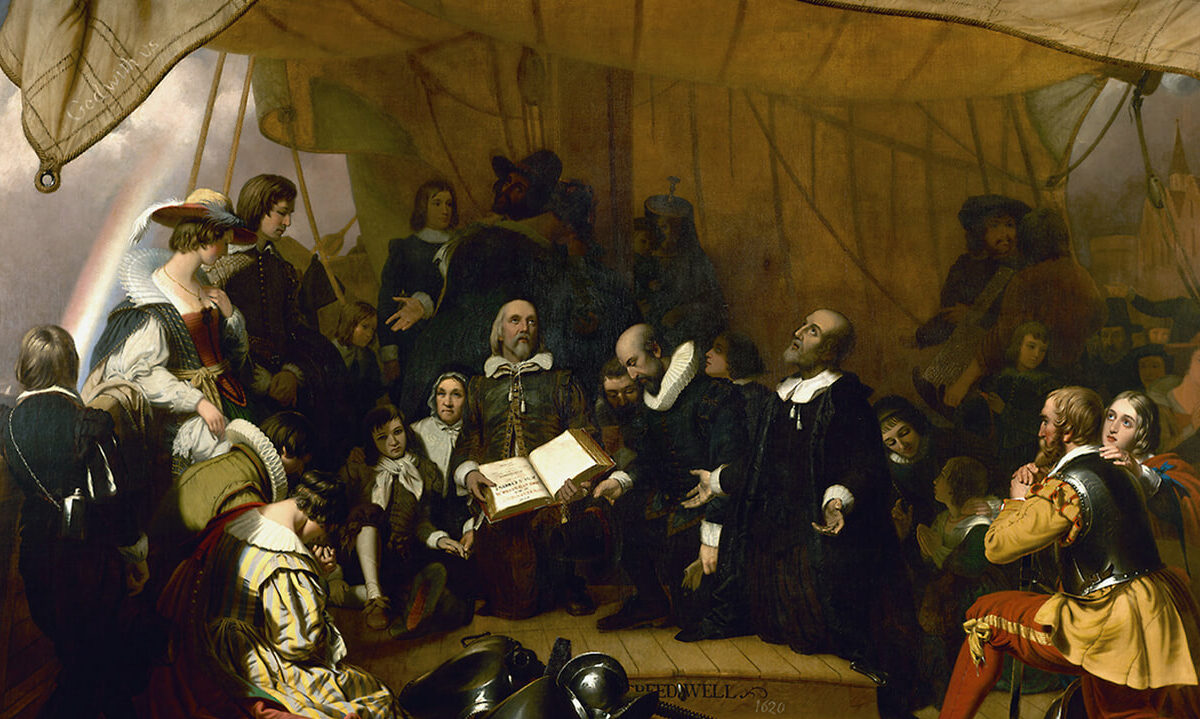
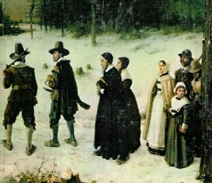 The Pilgrims were mainly English Dissenters who attended churches that did not belong to the Church of England. One objection they held was to any monarch being head of the church. This viewpoint was contradictory to an English law stating that if “any of Her Majesty’s [Queen Elizabeth I] subjects deny the Queen’s ecclesiastical supremacy…they shall be committed to prison without bail.” Years of enduring government persecution led the Pilgrims to “[shake] off this yoke of anti-Christian bondage” and move to Holland, where they found religious toleration. After 12 years in Holland they decided to move to America where they could freely worship God, raise Godly children, and share the Christian Gospel with others.
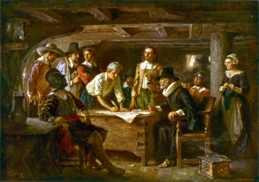 (Their trip across the Atlantic was treacherous, with constant storms. In fact, at one point the main beam of the ship broke. Not having the tools necessary to make the repairs, the ship’s crew used the large jackscrew of the Pilgrims’ printing press to raise the beam into place where it could be secured – thus saving the ship and the lives of those on board.)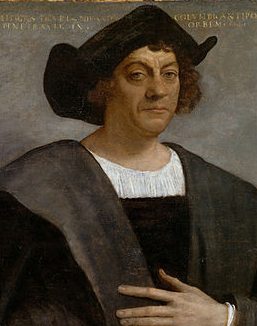
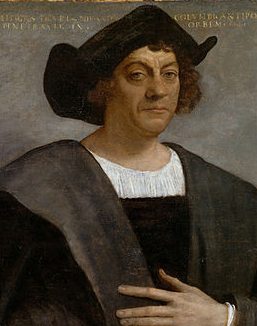 Christopher Columbus. The name invokes images of either a brave and triumphant explorer discovering the New World, or a tyrannical and genocidal leader who was directly responsible for the death of millions. But which image is the truth?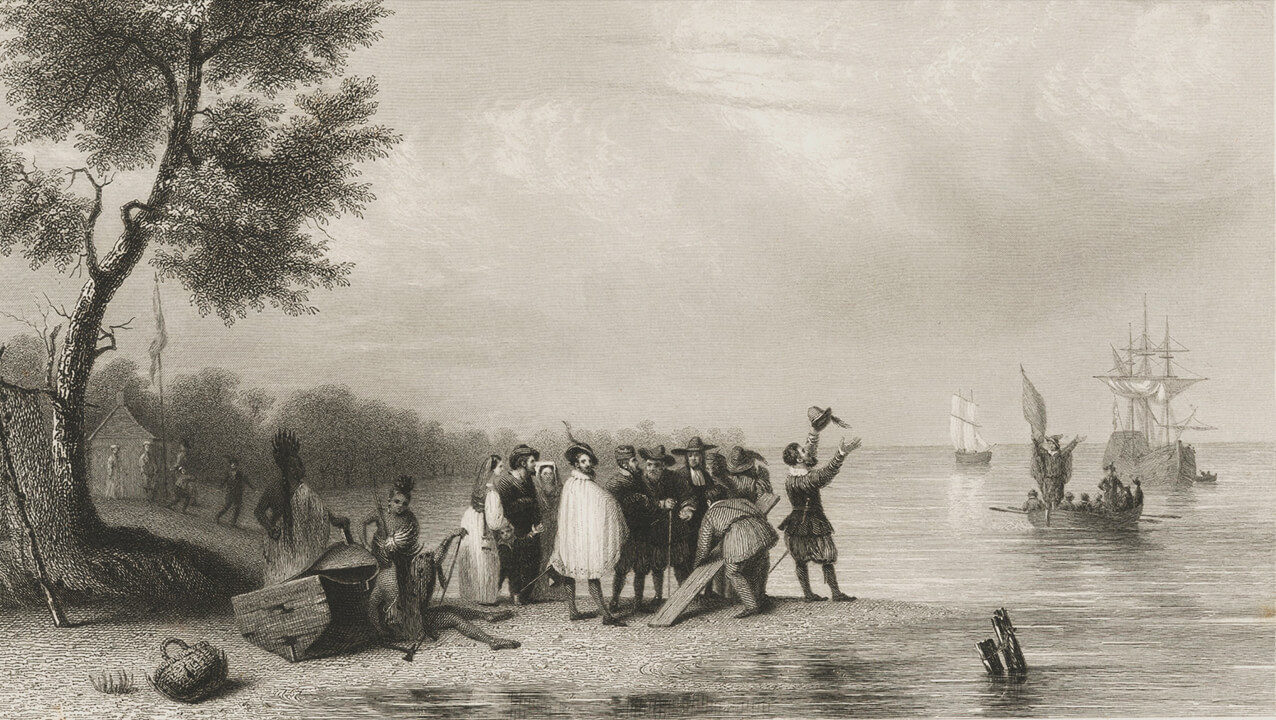
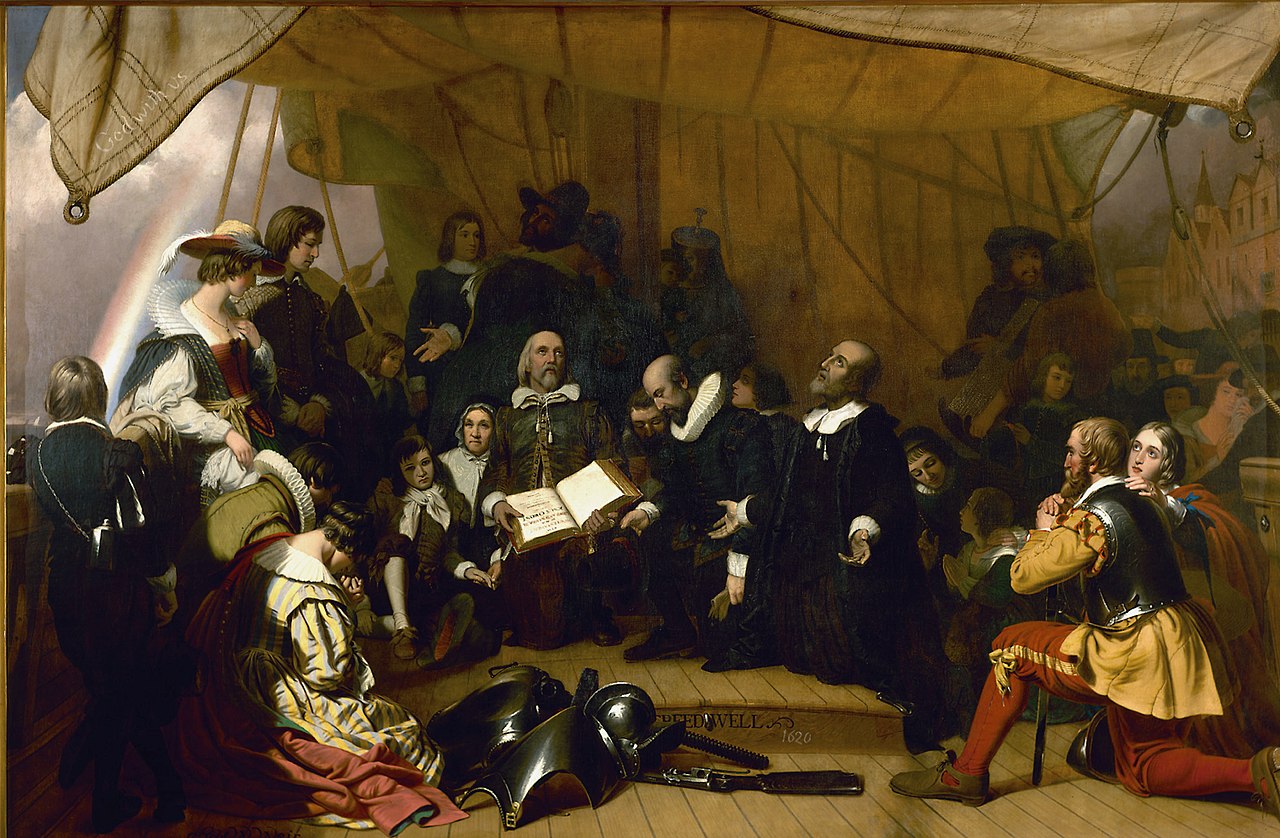
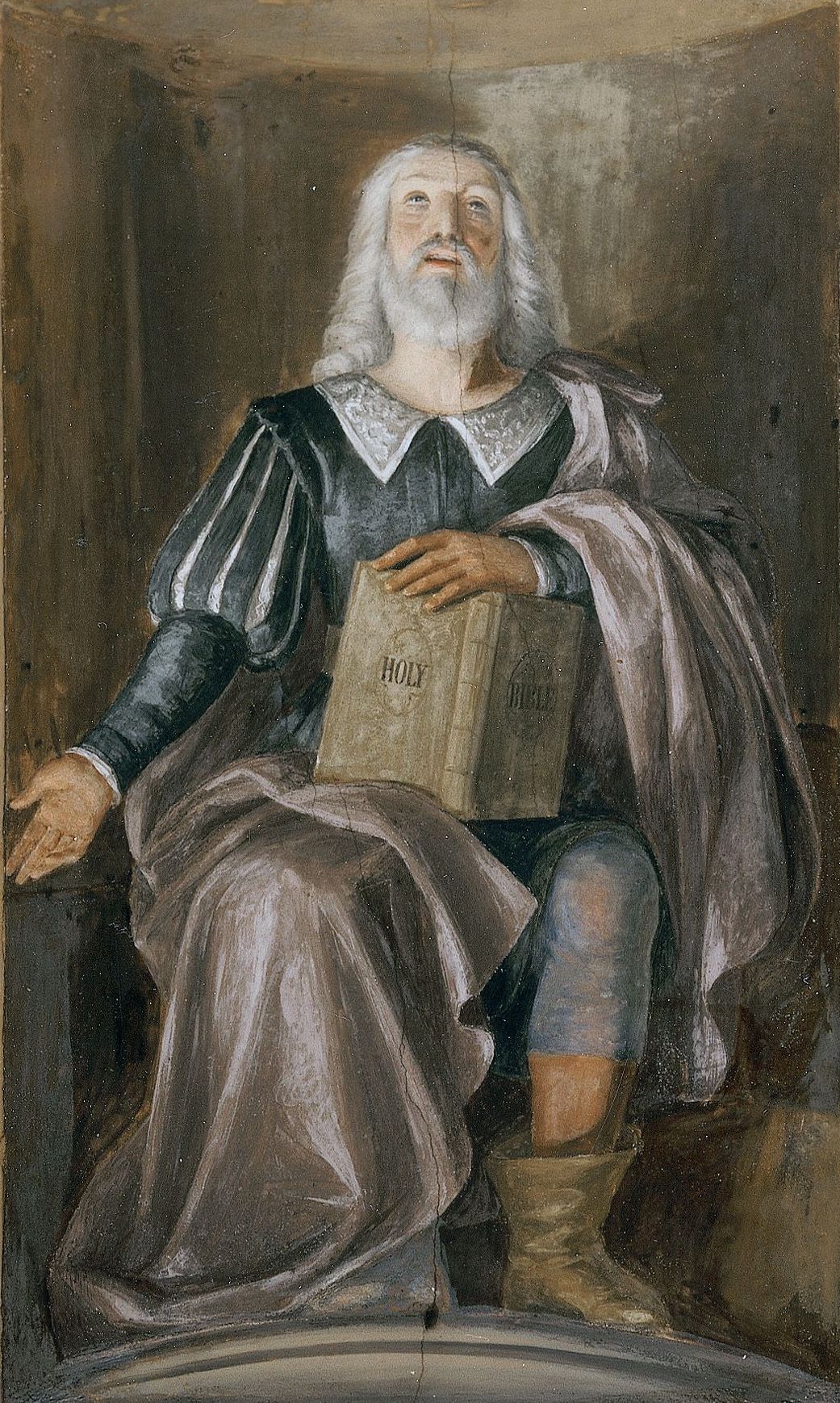
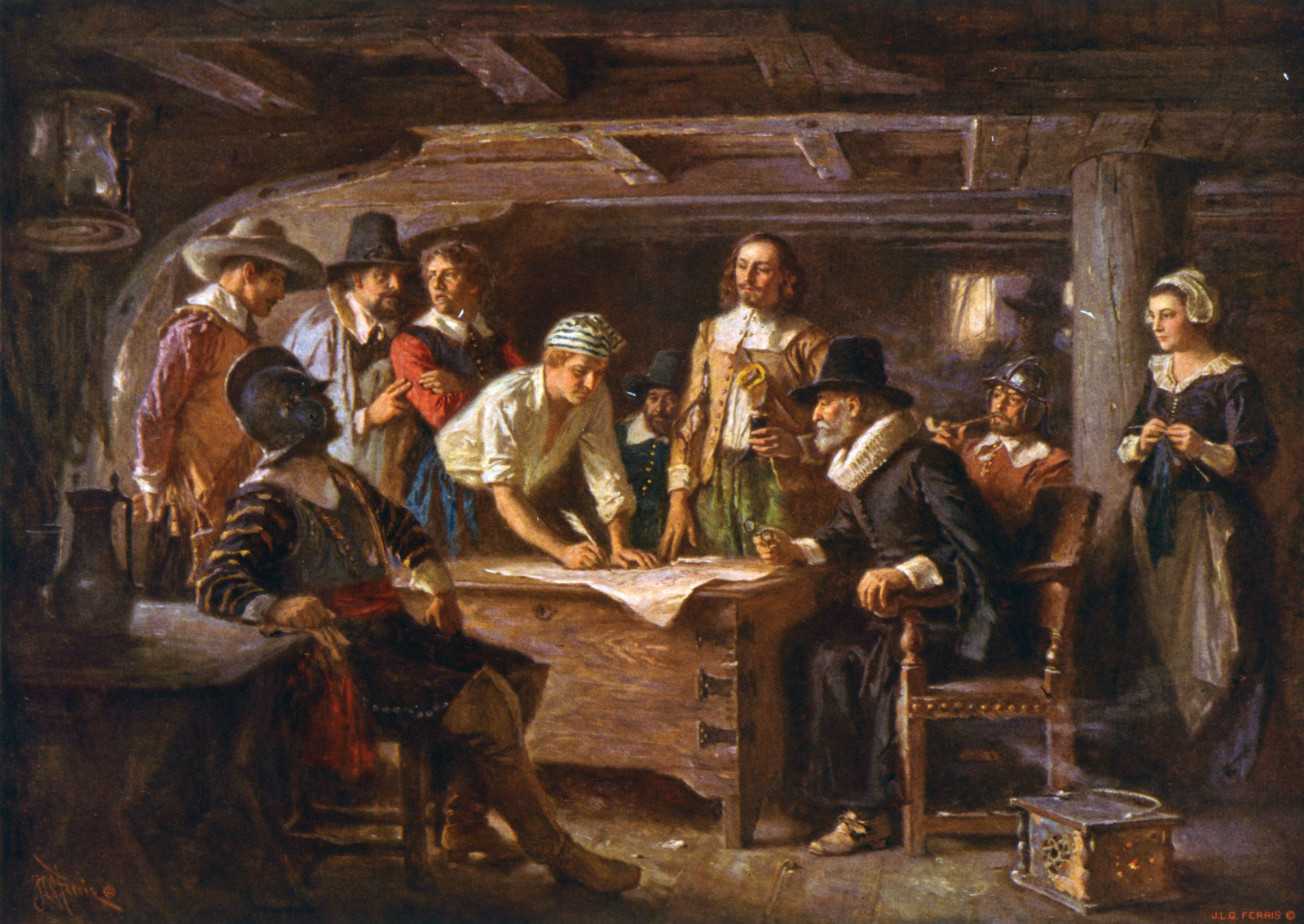
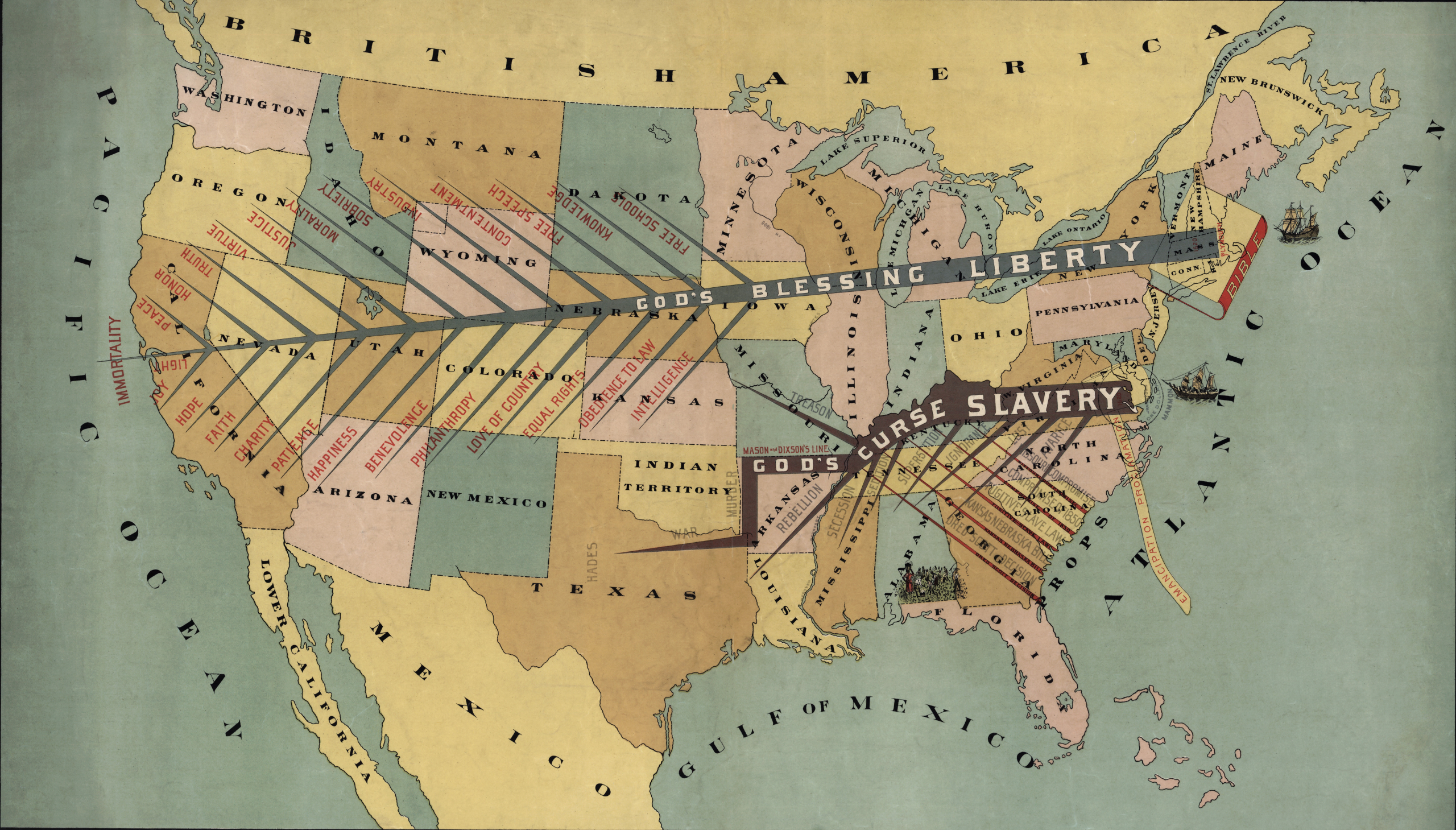 This map from 1888 perfectly illustrates this duality in the American identity—a tale of two cities. The map was created only a generation after the Civil War, which itself was but the cataclysmic struggle between the heirs of the differing philosophies of Jamestown and Plymouth. Designed to teach their children about the history behind the war, it traces the heritage for the South back to Jamestown and the North to Plymouth. Going further, the map highlights the fundamental difference between purpose of founding each colony. While Jamestown was established for mammon [worldly riches], Plymouth was planted upon the Bible.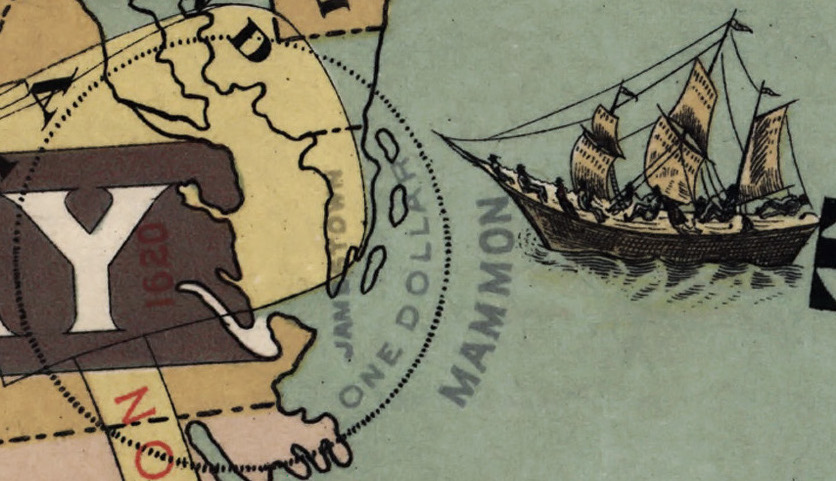
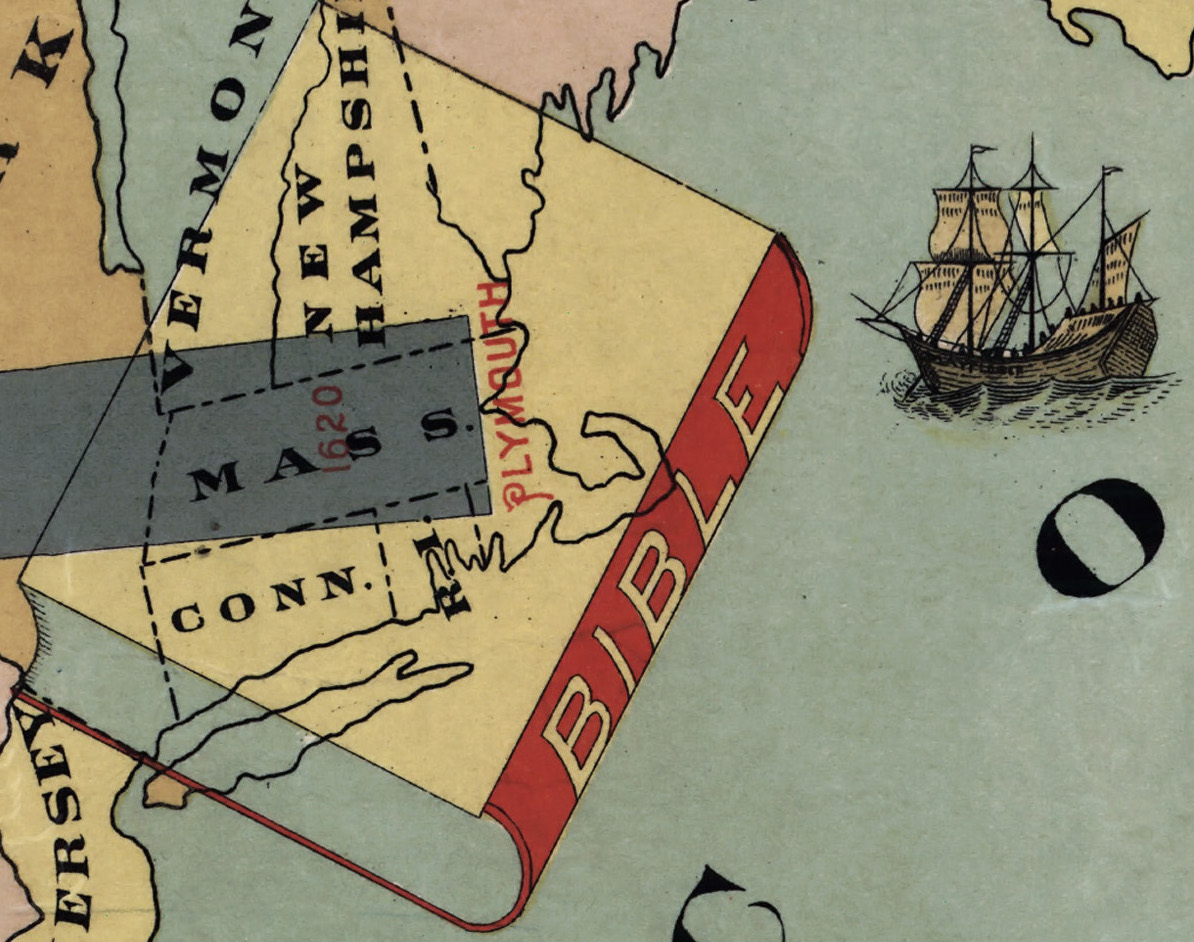
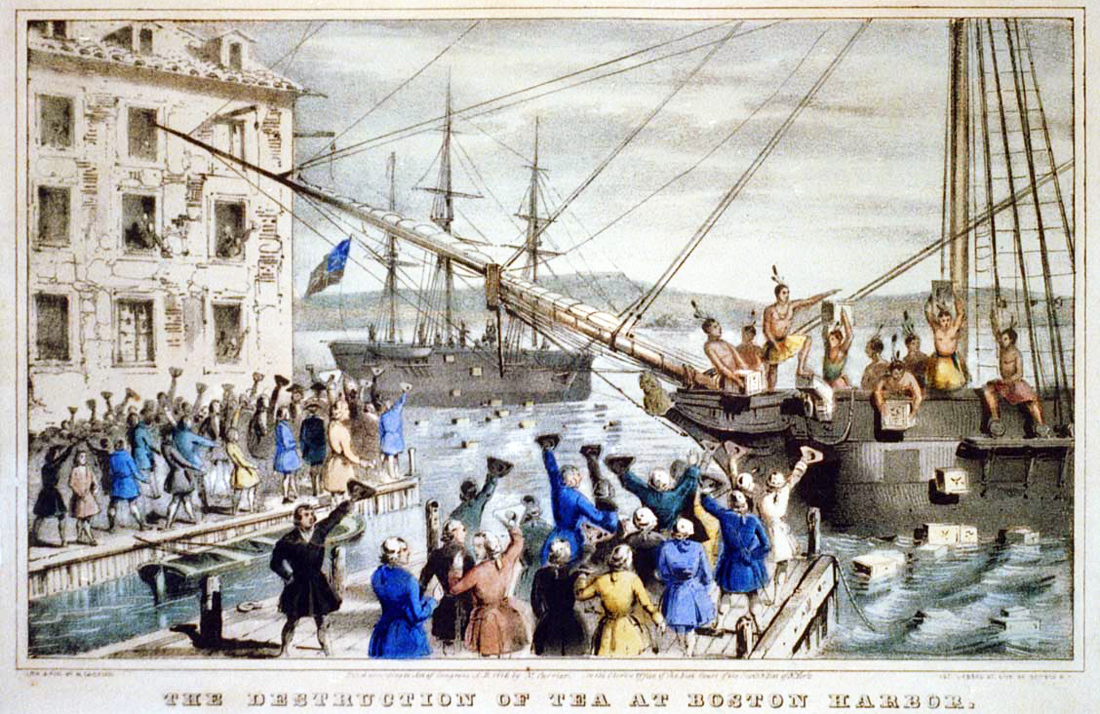
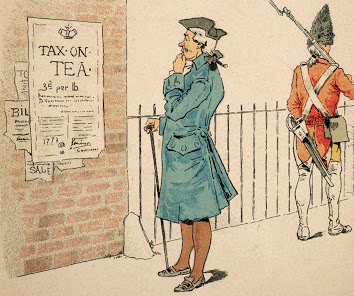 As a brief background, the British Parliament had been passing laws taxing American colonists for years without allowing for any recourse through representation in Parliament. (Although the Colonists had elected representatives in local government, they had no elected leaders to represent them in England.) This principle of arbitrary power exerted by the government was clearly illustrated by a tax on imported tea despite colonial resistance.
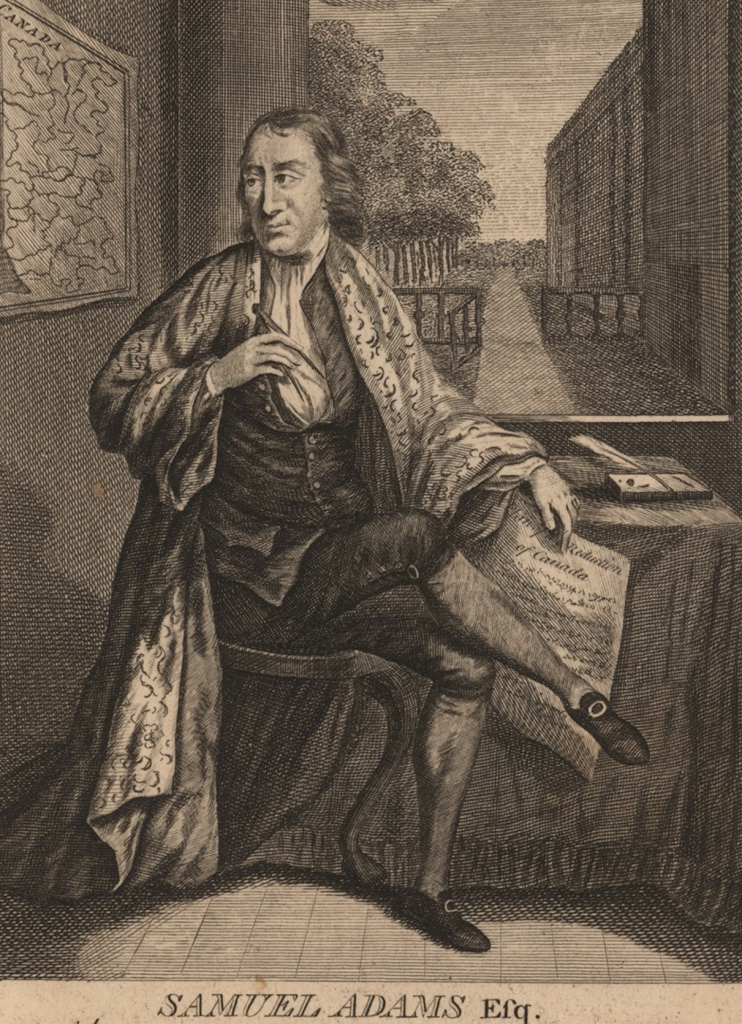 With time running out and all other options exhausted, nearly 7,000 Bostonians gathered at the Old South Meeting House and learned from ship’s owner, Joseph Rotch, that his request to sail back to England had been rejected and that if the tea was not unloaded that night it was subject to confiscation by the English navy (who undoubtedly would land the tea and tax the colonists).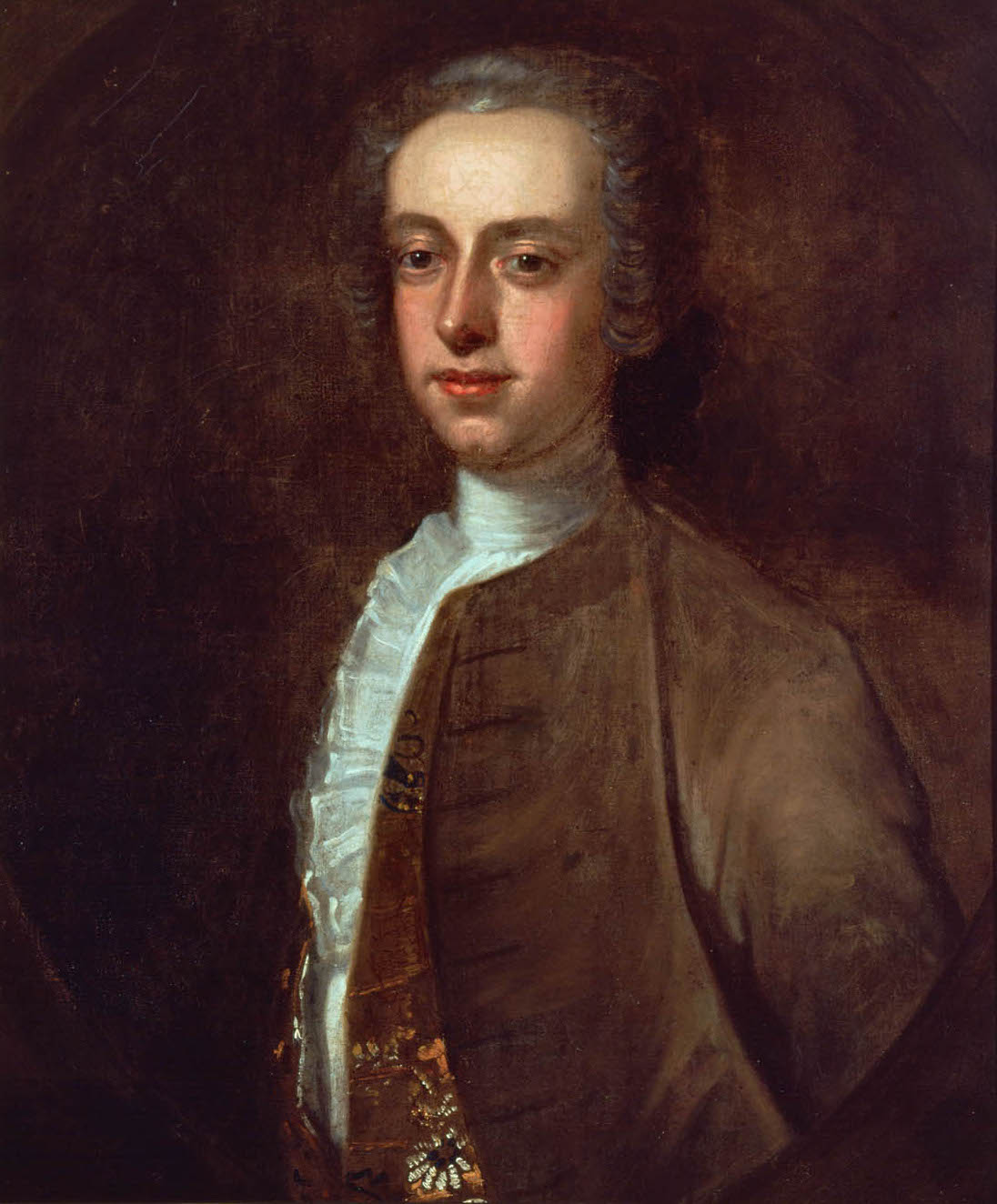
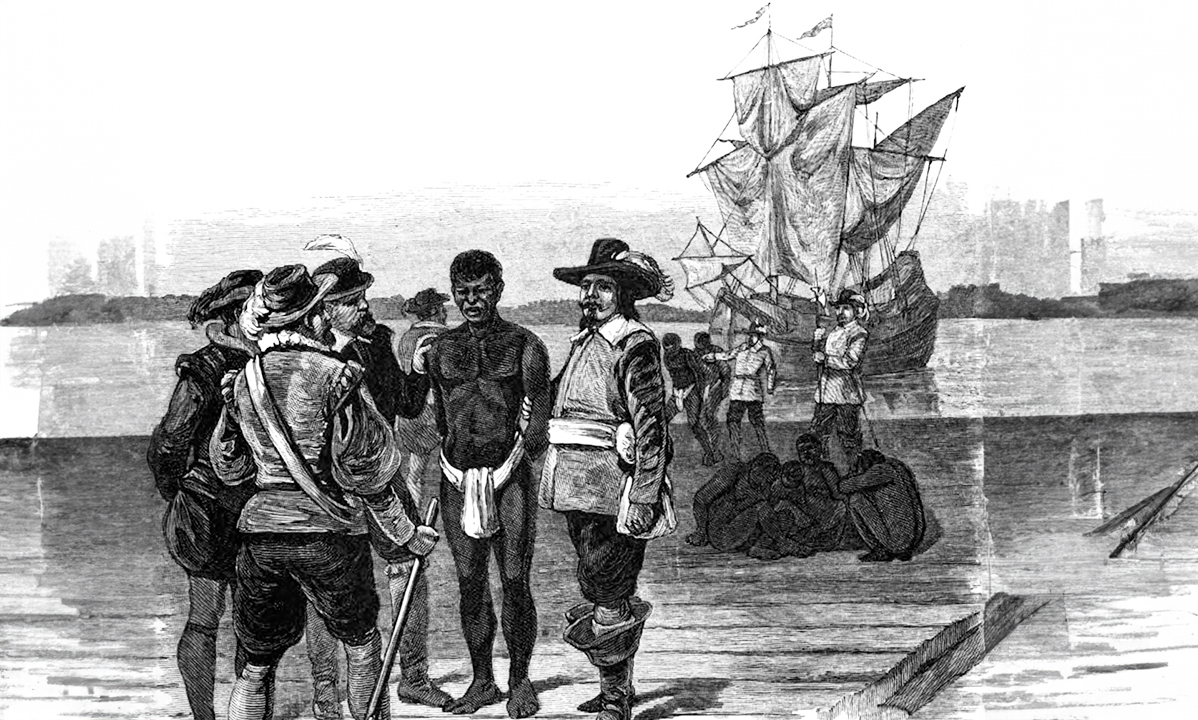
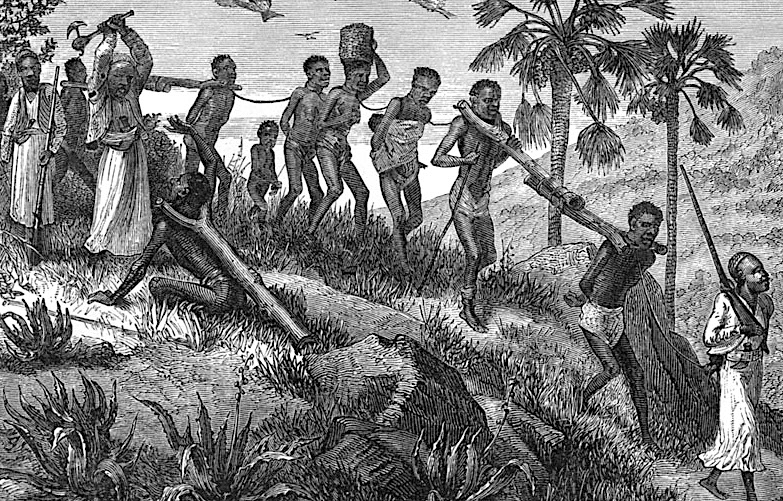
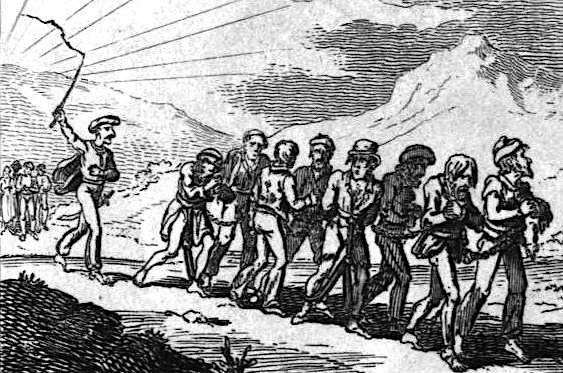
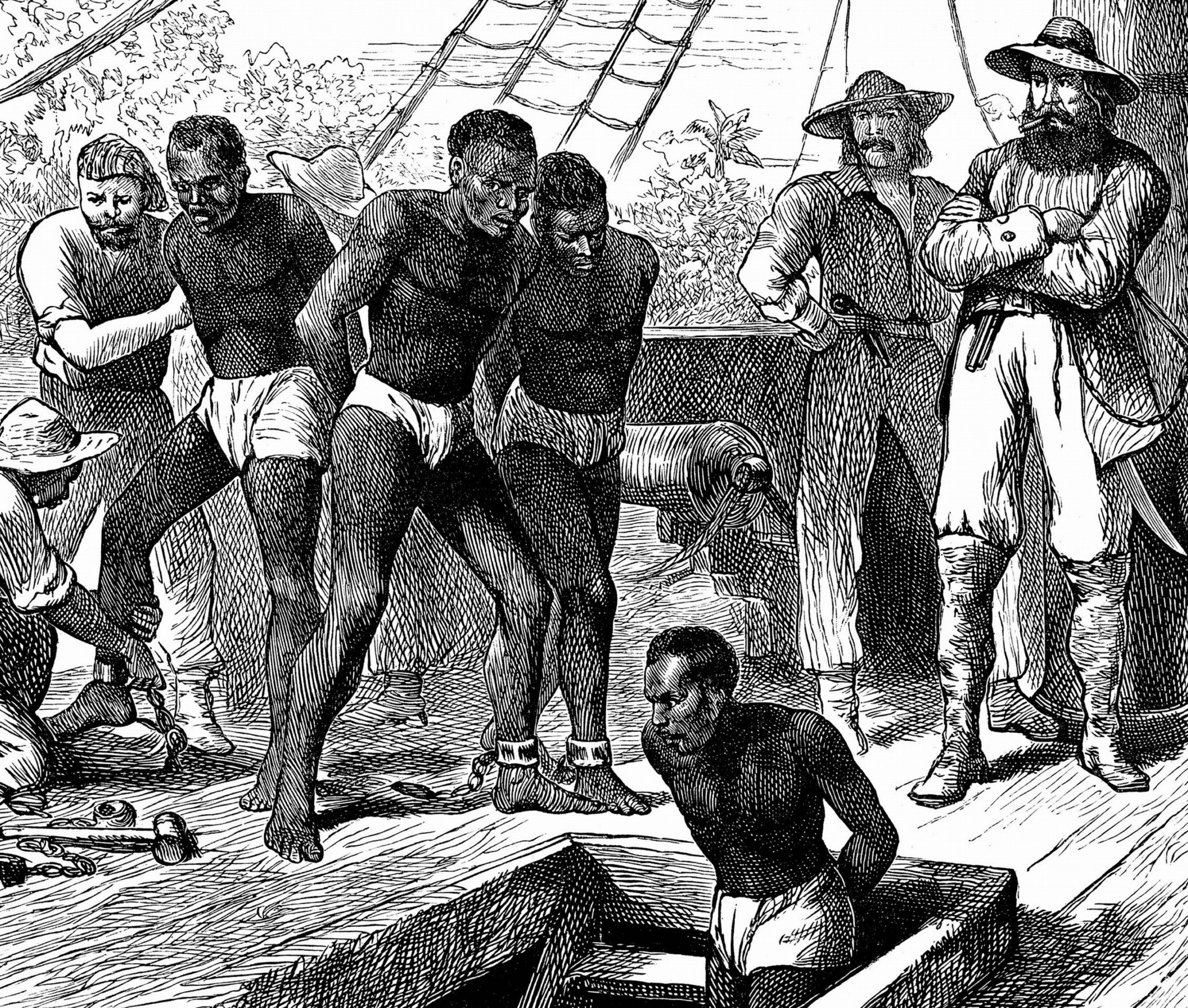
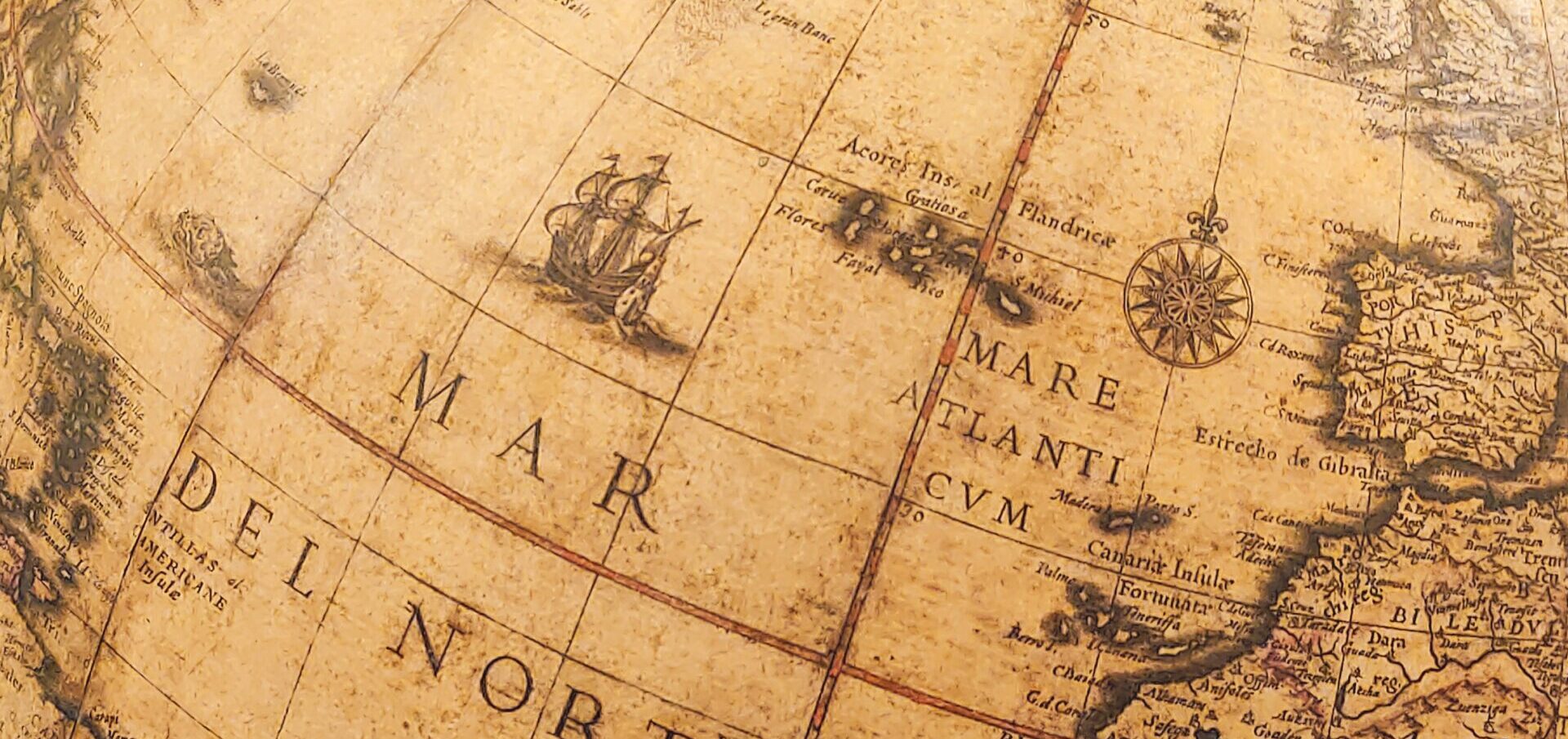
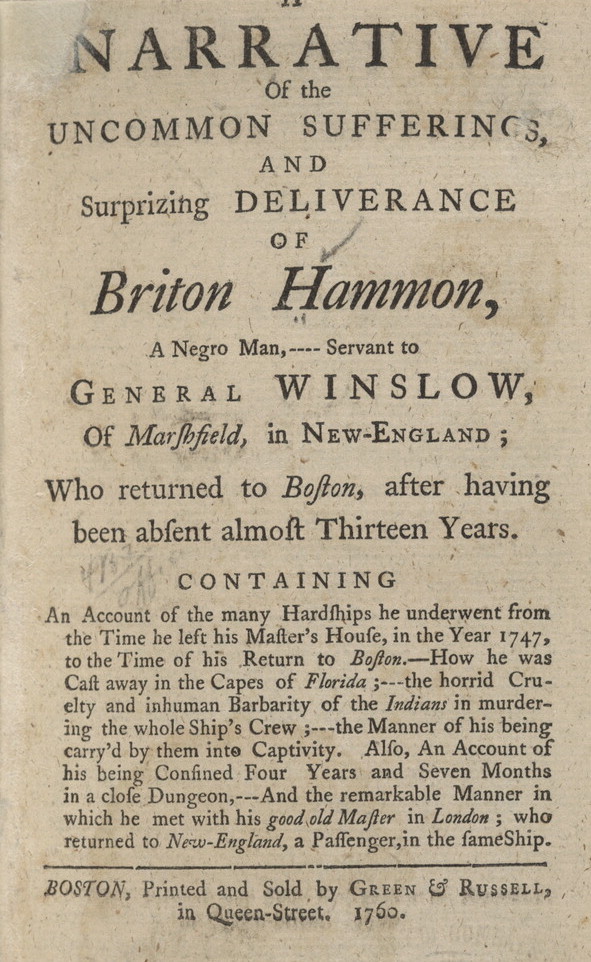 In 1760 America became the first nation to publish a work of prose by a slave of African descent.
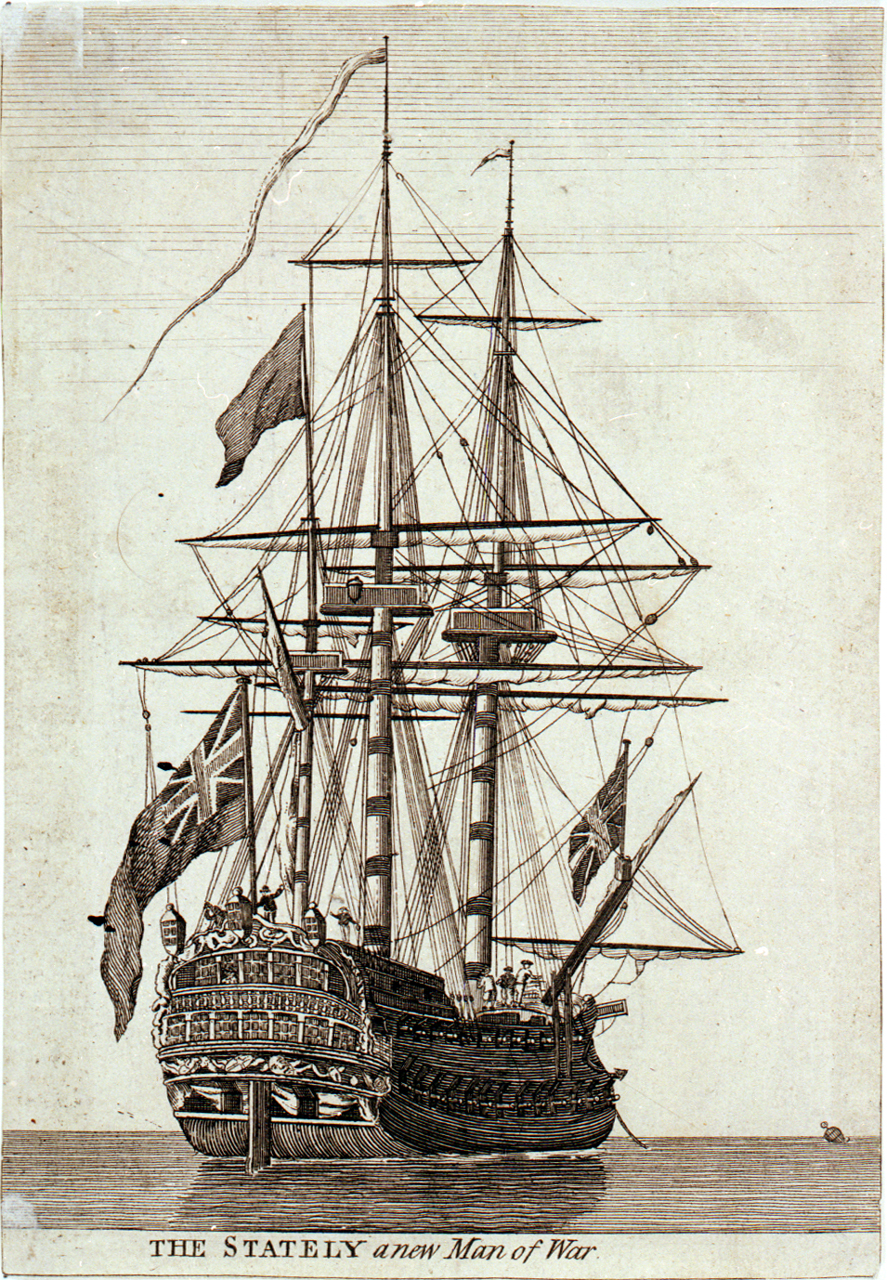
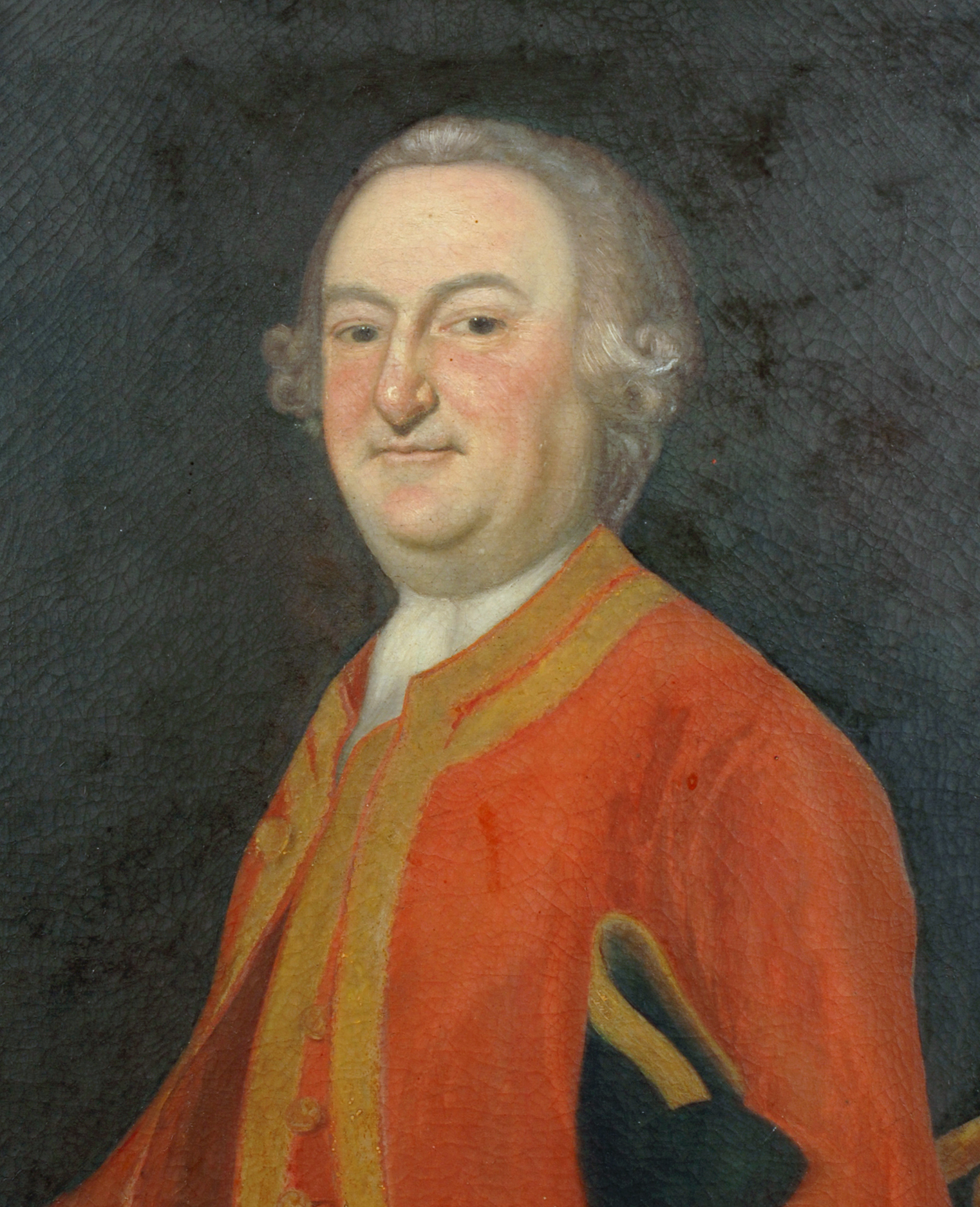
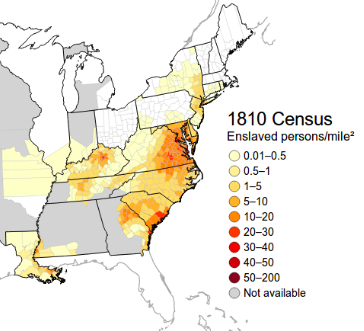 The 1810 census documented that the total population of those states—Massachusetts (Maine included), New Hampshire, Rhode Island, Connecticut, Vermont, Pennsylvania, New York, and New Jersey—stood at 3,486,675.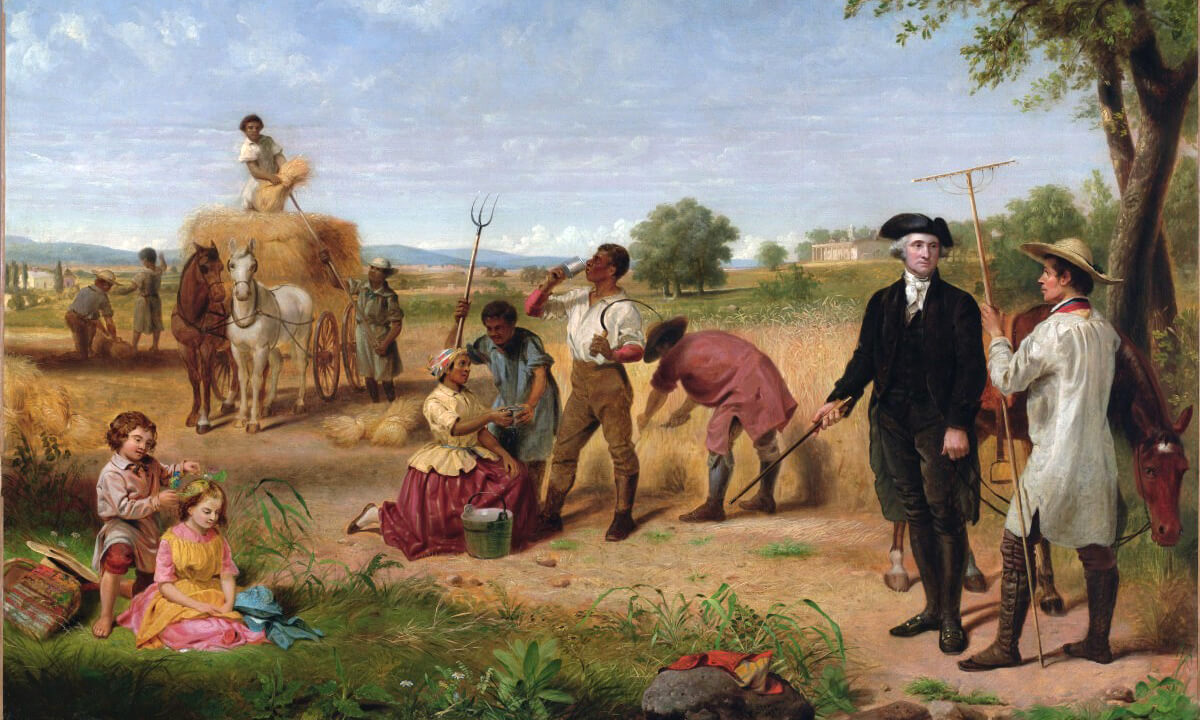
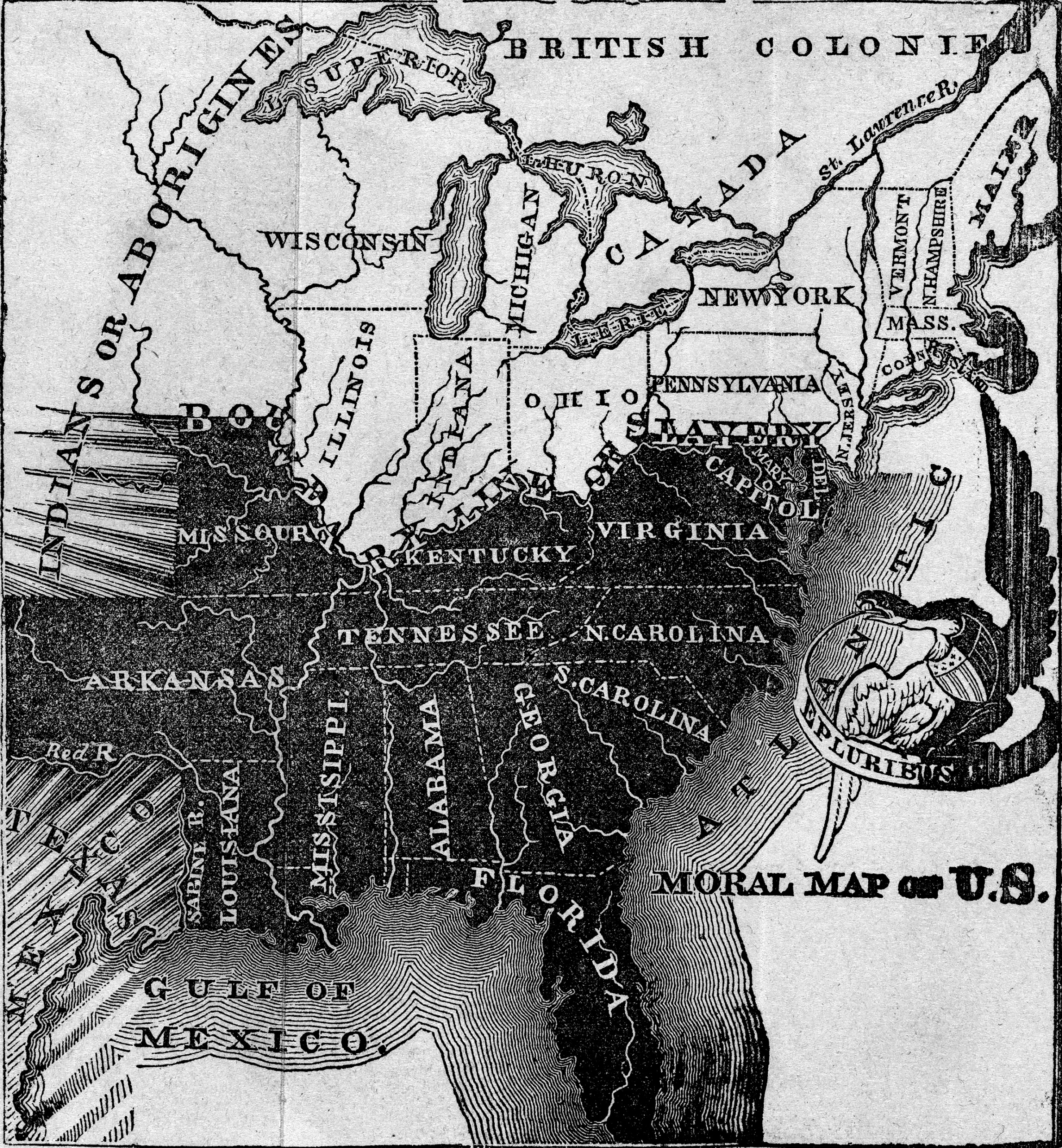
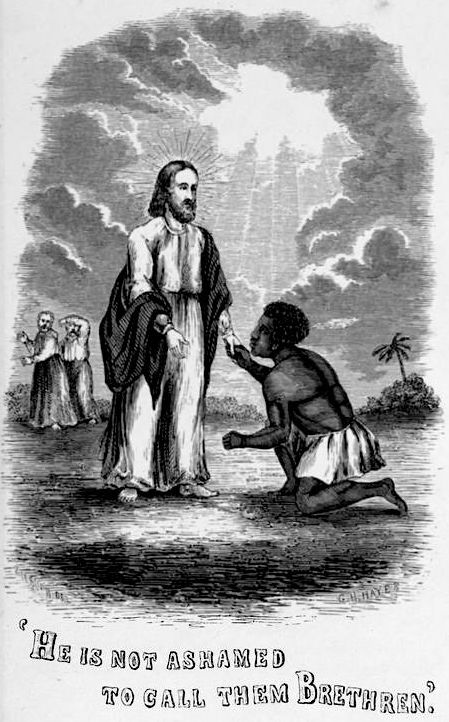
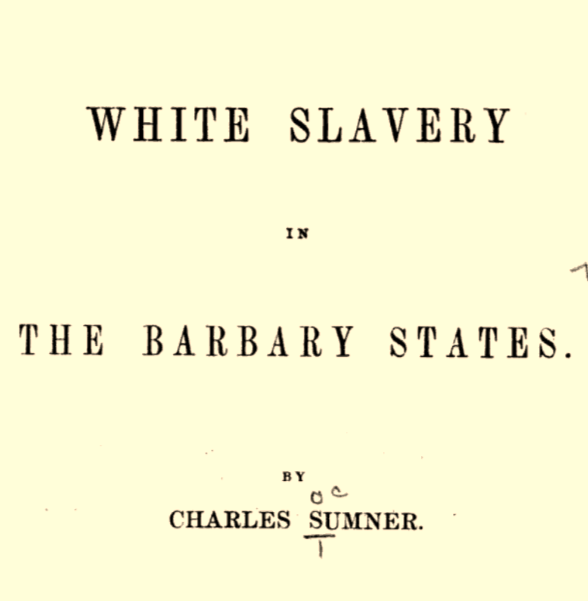 What is more, slavery both globally and in America was never simply white on black. Just as every people group has owned slaves, every people group has correspondingly been enslaved. Prior to the 1700s there were more white slaves globally than there were black slaves.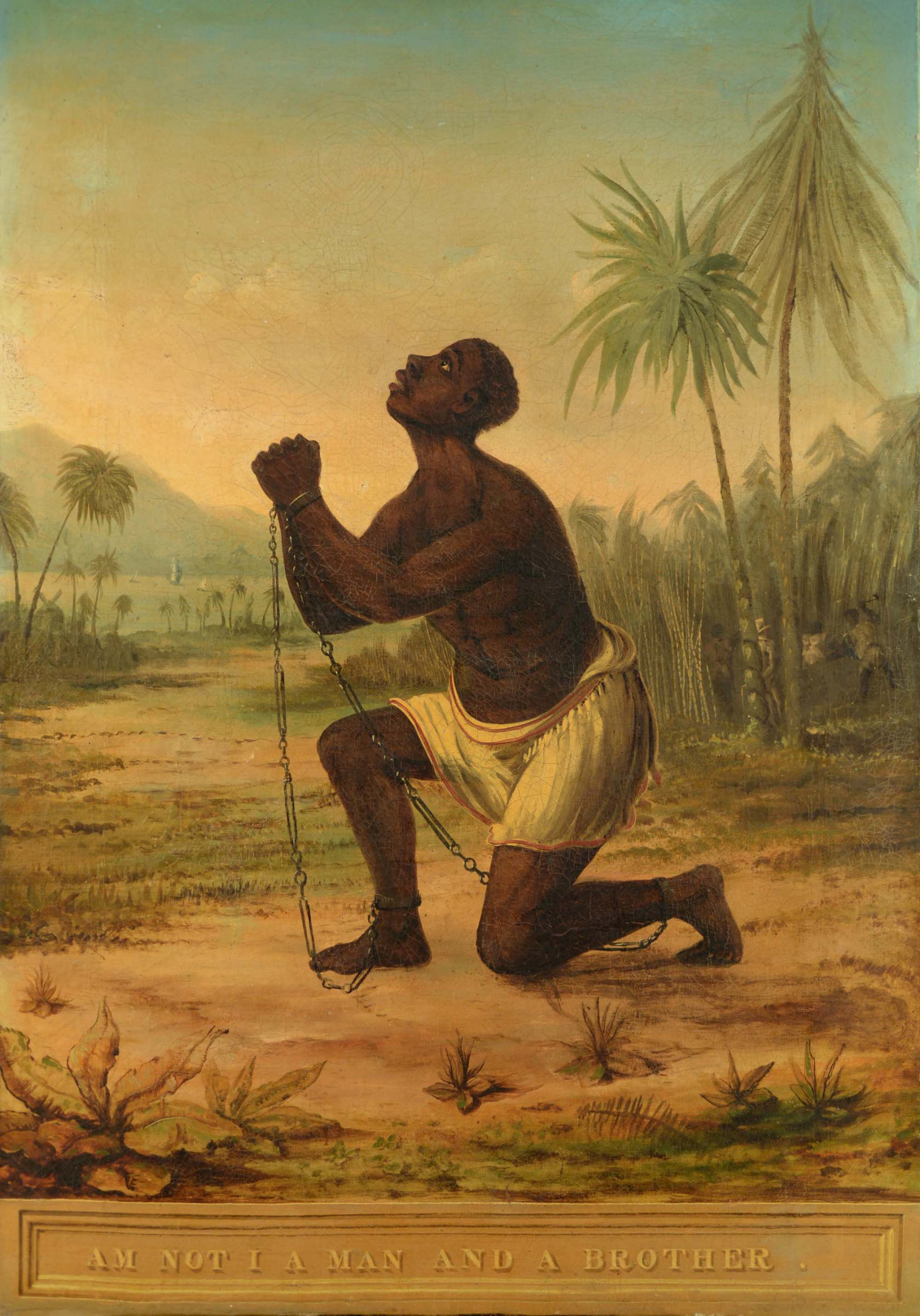
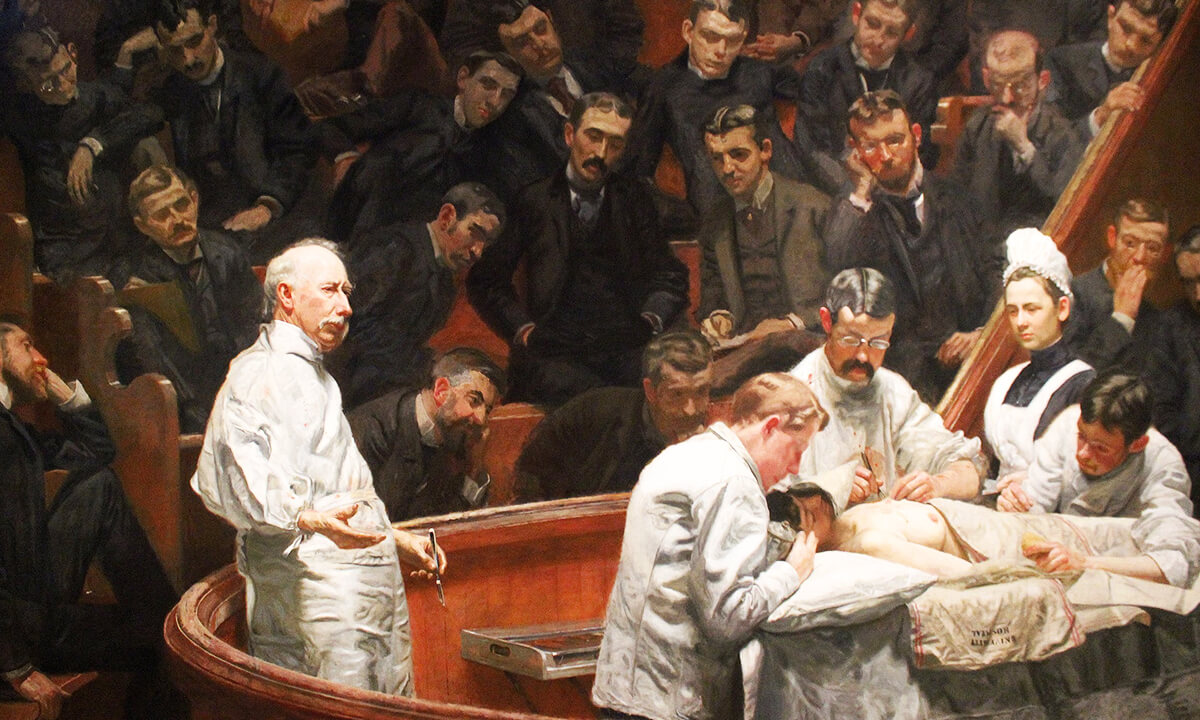
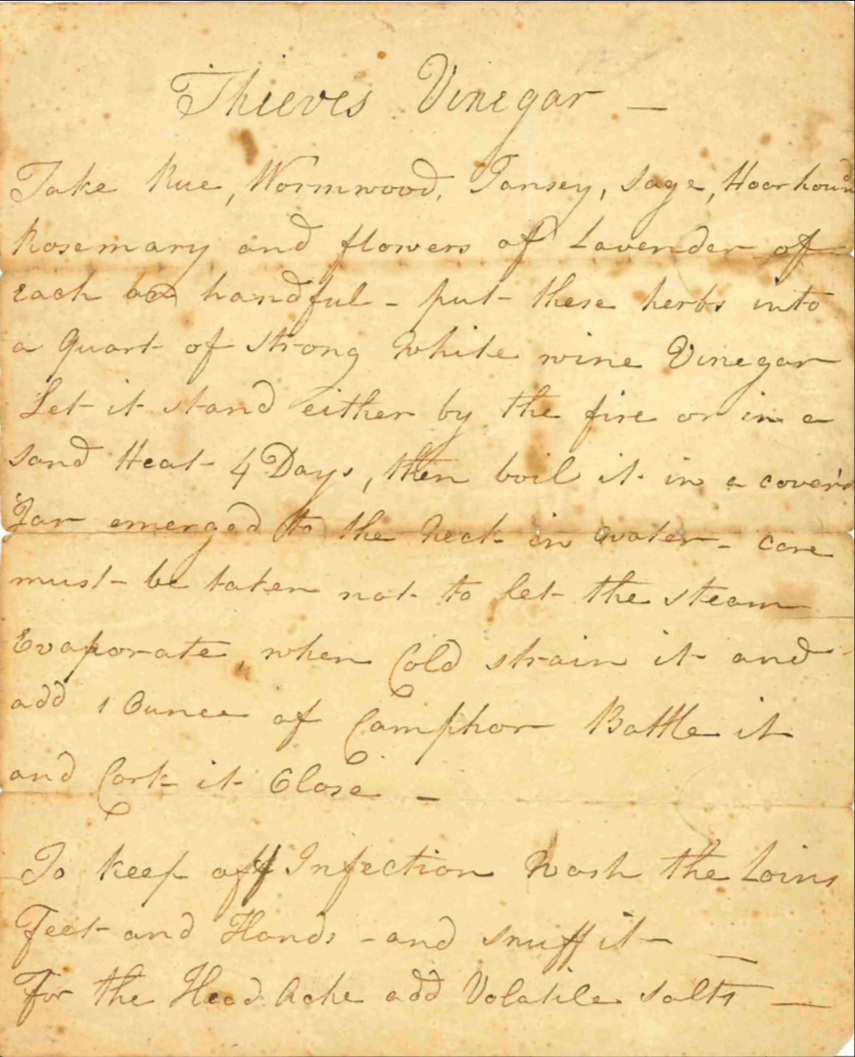
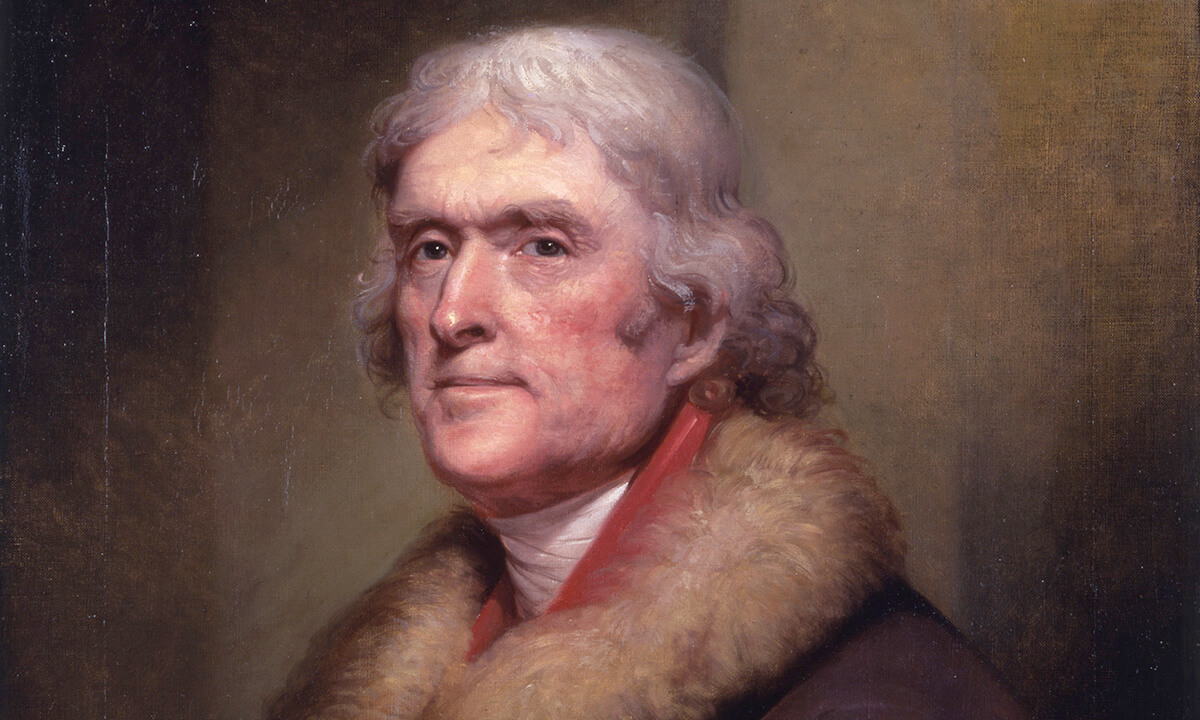
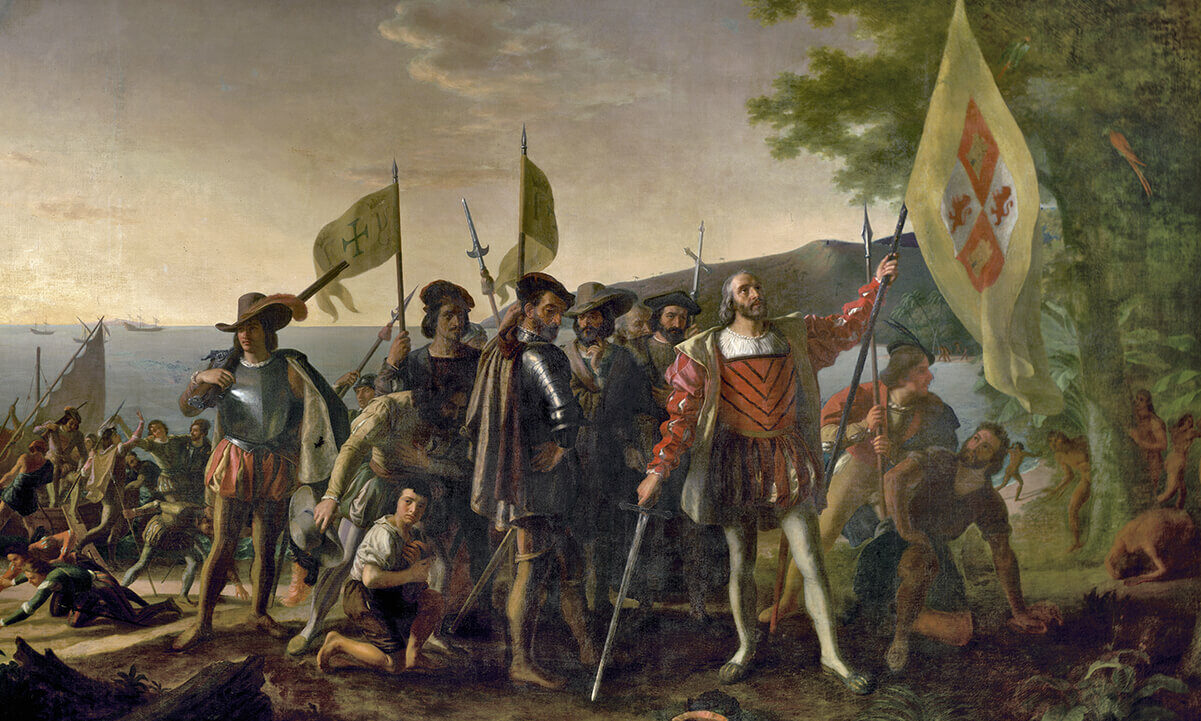
 However, this statement from Columbus’ ship mate, and the myths of the anti-Columbus critics, directly contradicts everything Columbus wrote about his motivations.