Discovering Columbus

Columbus on Trial

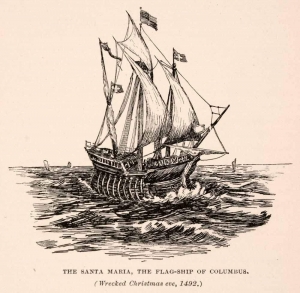
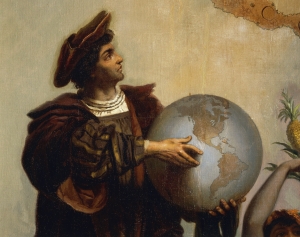
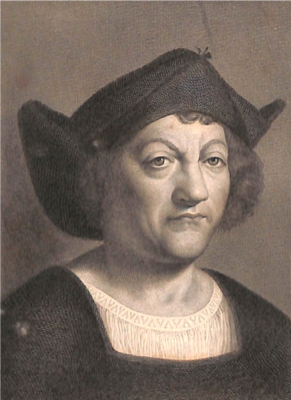
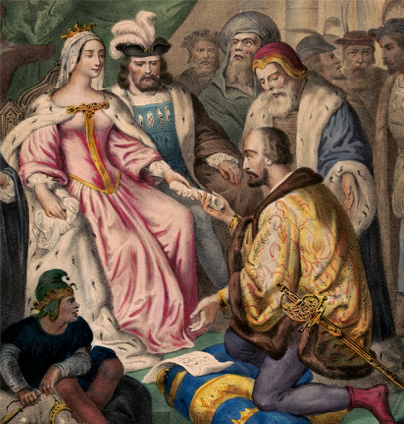
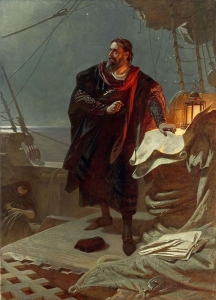
For over 500 year Christopher Columbus enjoyed a seat in the pantheon of American history. Being the discoverer of the New World came with well earned advantages. During the early days of our nation books, poems, and statues were made celebrating the man and his mission. Cities were named in his honor, even the seat of the American Government was christened the District of Columbia. There were some that even thought of making it the United States of Columbia.  The Admiral of the Ocean Sea (Columbus’s official title) was so important to the American ethos, that one of the first vessels in the Navy was the USS Columbus.

For years, the first thing children learned in school about America was the old rhyme ” In fourteen hundred ninety-two;
Columbus sailed the ocean blue.” In many respects, the story of the United States begins with Christopher Columbus. With so much legacy spanning over several centuries, it comes as a shock to discover that the Discoverer has suddenly become public enemy number one. Every Columbus Day more and more communities destroy their monuments and re-baptize the day as Indigenous People’s Day.  Each year, anti-Columbus elements bring out more and wilder accusations in attempts to re-write the history books.

In order to present the facts, the history, and the truth, we have spent years gathering resources and combing through the records to uncover what really happened when the Old World encountered the New. This page will serve as the port of departure for people who want to explore past and find the truth about Columbus.

Is he a man we should remember? Was he a hero? What can we learn from his experiences? The answers to these questions and many more like them are available below. Go through the modern lies and the historical facts surrounding Columbus, and clink on the pictures below to read the in depth articles!

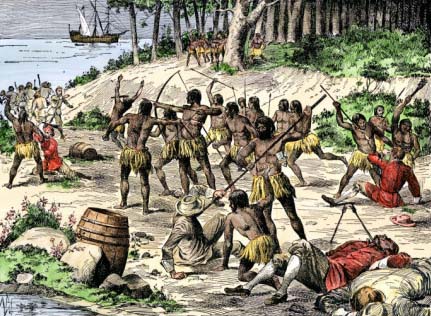
Columbus’s primarily sought gold in order to provide for the needs of the Church, both for evangelism and to fund a crusade to retake Jerusalem from Muslim invaders. Learn how Columbus put God over gold: https://wallbuilders.com/resource/columbus-god-over-gold/

Columbus fought against both the native practice of sexual exploitation and the trafficking which Spanish rebels started. In fact, he actually liberated several villages of women who had been forced into sexual servitude. To learn more read here: https://wallbuilders.com/resource/columbus-and-sex-slavery/

Although Columbus was sent back in chains, it was for false allegations from which he was entirely exonerated. After the trial all of his rights and privileges were restored with the exception of his governorship.

In addition to being largely self-taught, Columbus was one of the best navigators the world has ever seen. For nearly 400 years scientists and seamen both acknowledged this fact. Read here to learn more about how Columbus wasn’t an idiot: https://wallbuilders.com/resource/columbus-wasnt-an-idiot/

Records show that the only time Columbus warred against the natives was in defense or when called upon by his native allies. The leading cause of death among the Indians was not war, but diseases. Watch PragerU’s video for more information: https://www.youtube.com/watch?v=HxYVbC283uM

The cultures which Columbus encountered were barbaric, with tribes conquering, enslaving, and cannibalizing each other to the point of complete extermination. For an in depth explanation read here: https://wallbuilders.com/resource/before-the-west-was-won-pre-columbian-morality/; for a brief overview to share read this: https://wallbuilders.com/resource/no-noble-savage-the-world-columbus-found/

No Noble Savage: The World Columbus Found

All arguments making Christopher Columbus a villain comparable with Adolf Hitler1 or Saddam Hussain 2 start with the premise that the world he discovered was populated by peaceful inhabitants who lived in a golden age. It was only with the introduction of the white man, critics claim, that this paradise was destroyed by the tyrannical oppression perpetuated by the European Christians.

The current romanticized presentation of the native cultures is the underlying assumption which permits the narrative that Columbus was a villain. Academics push this to justify tearing down statues of the explorer and removing his name from the calendar.  Proponents of the alternative to Columbus Day—which they call Indigenous People’s Day—are also proponents of alternative history.

Howard Zinn, in his massively influential yet famously inaccurate work A People’s History of the United States, propagated this myth of the noble savage:

So, Columbus and his successors were not coming into an empty wilderness, but into a world which in some places was as densely populated as Europe itself, where the culture was complex, where human relations were more egalitarian than in Europe, and where the relations among men, women, children, and nature were more beautifully worked out than perhaps any place in the world.3

According to Zinn (and most if not all of the modern outcry against Columbus can be traced to his book), the indigenous people were far more advanced in their social morality than the Europeans. This, of course, leads to the conclusion that the white man was (and still is) a racist tyrant oppressing whomever he might. This leads to the conclusion that America was (and still is) one of the worst nations in all of history.

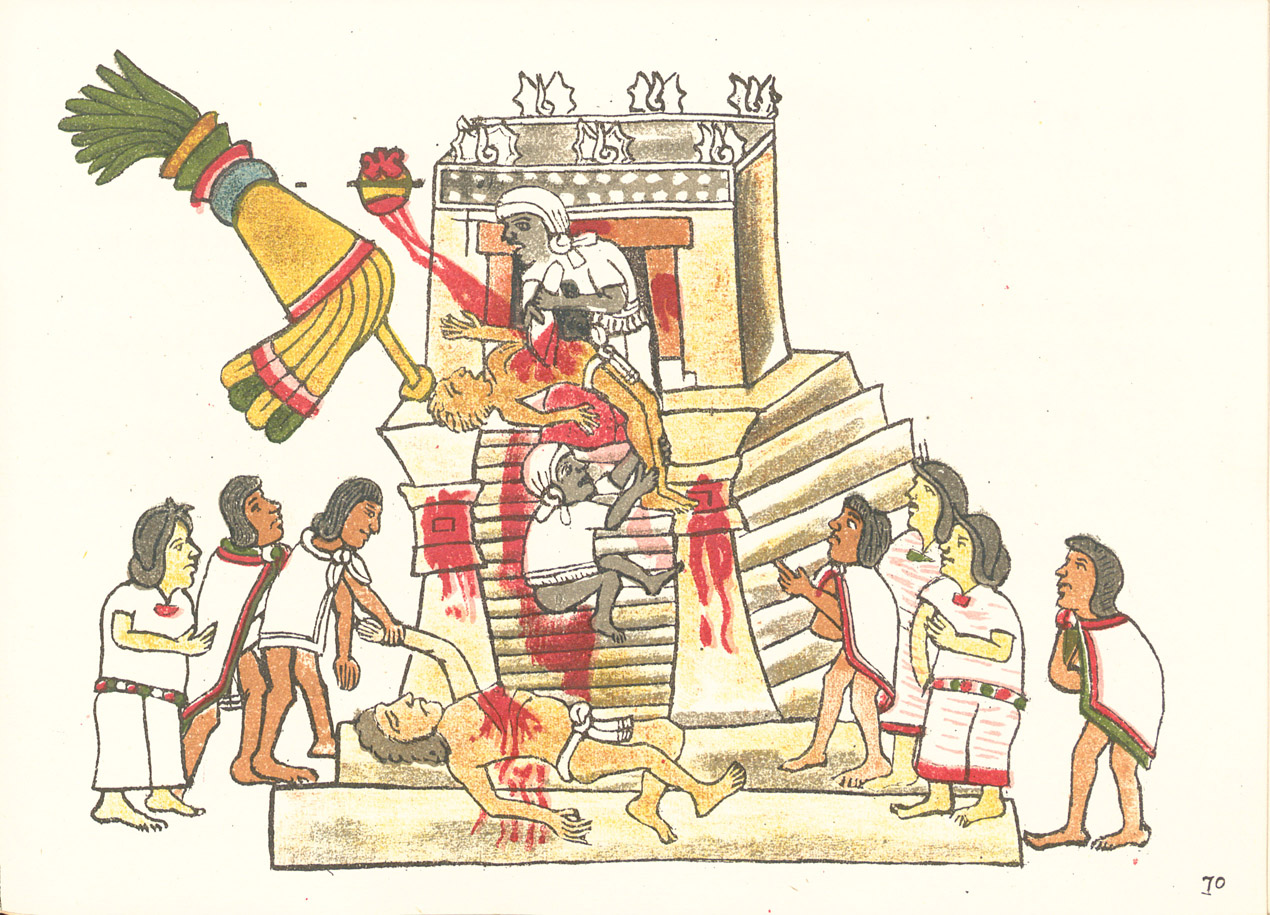
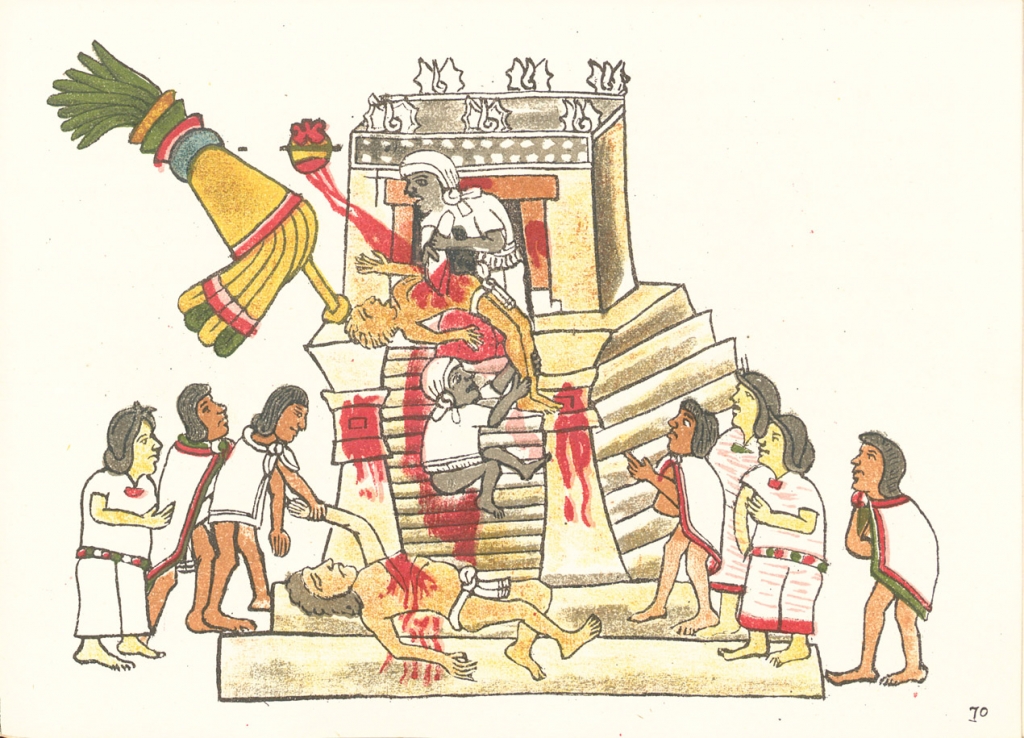
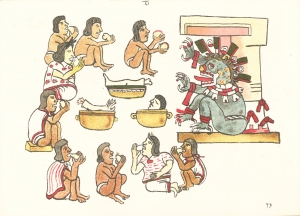
“A Certain Innocence” – Codex Magliabecchiano

What Zinn and his followers fail to account for are the facts. The world Columbus discovered was full of slavery, murder, genocide, sodomy, sexual exploitation, and general barbarity. Zinn only mentions the famous atrocities of the Aztec culture in passing to say that, “the cruelty of the Aztecs, however, did not erase a certain innocence.”4 Let’s take a look at the “certain innocence” prevalent in the cultures encountered by Columbus and the other pre-Columbian natives.

Although the first tribe (led by the chieftain Guacanagari) was extremely friendly to Columbus—so much so that the Columbus even declared that, “a better race there cannot be, and both the people and the lands are in such quantity that I know not how to write it”5—they were not the pacifistic society often portrayed. This first tribe was part of the Taino community which occupied many of the islands in the West Indies. They held those islands, however, because they themselves had conquered, driven out, and replaced the earlier Siboney culture. The Taino domination was so complete that Columbus only ever encountered one such Siboney native.6

The Taino’s warrior culture was noticeably lacking when compared to the truly savage culture of the Carib (or Canib) tribes. These indigenous peoples (from whose name we derive both the words “Caribbean” and “cannibal”) were feared by the Taino because of the constant raids and attacks. During his first voyage, the Taino told Columbus about “extremely ferocious…eaters of human flesh” who “visit all the Indian islands, and rob and plunder whatever they can.”7

Columbus and his shipmates had extensive encounters with the Caribs during the subsequent voyages. The things they saw corresponded exactly with the description giving by their Taino friends, and many other atrocities which they had failed to mention.

For instance, the Caribs would spend up to a decade plundering any particular island until they completely depopulated it through slavery and cannibalism.8 Specifically, on these campaigns they would cannibalize the men and enslave the women and young boys. One of Columbus’s crew member left us with a description of what the Caribs would do to their captives, saying that he found:

twelve very beautiful and very fat women from 15 to 16 years old, together with two boys of the same age. These had the genital organ cut to the belly; and this we thought had been done in order to prevent them from meddling with their wives or maybe to fatten them up and later eat them. These boys and girls had been taken by the above mentioned Caribs;9

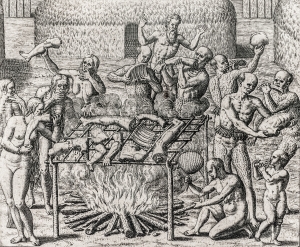
The testimony by the Taino of cannibalism was confirmed by the amount of human bones and even cooking limbs found in the villages.10  Another shipmate on the voyage, the lead doctor, also related in depth the terrible acts of the Caribs. He explained:

In their wars upon the inhabitants of the neighboring islands, these people capture as many of the women as they can, especially those who are young and handsome, and keep them as body servants and concubines; and so great a number do they carry off, that in fifty houses we entered no man was found, but all were women. Of that large number of captive females more than twenty handsome women came away voluntarily with us.

When the Caribbees take any boys as prisoners of war, they remove their organs, fatten the boys until they grow to manhood and then, when they wish to make a great feast, they kill and eat them, for they say the flesh of boys and women is not good to eat. Three boys thus mutilated came fleeing to us when we visited the houses.11

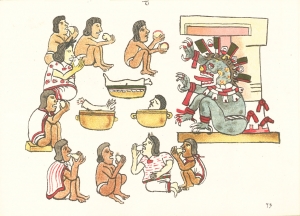
Cannibalism – Codex Magliabechiano

The same doctor describes another instance where they came to a Carib slave camp and:

As soon as these women learned that we abhor such kind of people because of their evil practice of eating human flesh, they felt delighted…. These captive women told us that the Carribbee men use them with such cruelty as would scarcely be believed; and that they eat the children which they bear to them, only bringing up those which they have by their native wives. Such of their male enemies as they can take away alive, they bring here to their homes to make a feast of them, and those who are killed in battle they eat up after the fighting is over. They claim that the flesh of man is so good to eat that nothing like it can be compared to it in the world; and this is pretty evident, for of the human bones we found in their houses everything that could be gnawed had already been gnawed, so that nothing else remained of them but what was too hard to be eaten. In one of the houses we found the neck of a man undergoing the process of cooking in a pot, preparatory for eating it.

This authentic eyewitness picture of the indigenous people is radically different that the one presented by Zinn. If this is what he means by “certain innocence” what does guilt looks like? Remember, these are the people of whom he proclaimed that their “relations among men, women, children, and nature were more beautifully worked out than perhaps any place in the world.” It may comes as a shock to Zinn, but no one ought to consider slavery, sexual exploitation, and infant cannibalism as “beautifully worked out.”

This is the New World which Columbus discovered. It wasn’t filled with friendly, peaceful, tribes, but people numerous and warlike. It is against this backdrop that we must evaluate the actions of Columbus and not the fabricated history created by fake historians like Howard Zinn and his followers.


Endnotes

1 Russel Means, quoted by Dinesh D’Souza in “The Crimes of Christopher Columbus,” First Things, November 1995.
2 Eric Kasum, “Columbus Day? True Legacy: Cruelty and Slavery,” Huffington Post, October 10, 2010.
3 Howard Zinn, A People’s History of the United States (New York: Harper Collins, 2015), 21.
4 Howard Zinn, A People’s History of the United States (New York: Harper Collins, 2015), 11.
5 Christopher Columbus, The Journal of Christopher Columbus, trans. Clements Markham (London: Hakluyt Society, 1893), 131.
6 Samuel Morrison, Admiral of the Ocean Sea (New York: MJF Books, 1970), 464.
7 Christopher Columbus, “Letter sent by Columbus to Chancellor of the Exchequer, respecting the Islands found in the Indies,” Select Letters of Christopher Columbus, trans. R. H. Major (London: Hakluyt Society, 1870), 14.
8 “Michele de Cuneo’s Letter on the Second Voyage, 28 October 1495,” Journals and Other Documents on the Life and Voyages of Christopher Columbus, trans. Samuel Morrison (New York: Heritage Press, 1963), 219.
9 “Michele de Cuneo’s Letter on the Second Voyage, 28 October 1495,” Journals and Other Documents, trans. Morrison (1963), 211-212.
10 “Letter of Dr. Diego Alvarez Chanca,” Smithsonian Miscellaneous Collections (Washington: Smithsonian Institution, 1907), 48:438, 440.
11 “Letter of Dr. Diego Alvarez Chanca,” Smithsonian Miscellaneous Collections (Washington: Smithsonian Institution, 1907), 48:442.

No, Revisionists, Thanksgiving is not a Day of Mourning

No, Revisionists, Thanksgiving is not

a Day of Mourning

by David Barton

Just before Thanksgiving [2017], I discussed the origins of the holiday on Glenn Beck’s show The Vault.[1] I understand the program has been used profitably by teachers throughout America. After a college professor showed the episode to a class, a student sent him eleven “articles” posted on the internet purporting to show that the Pilgrims killed and oppressed Indians. He asked me how I would respond to the posts, and what resources I would recommend for readers interested in an accurate account of the Pilgrims and the first Thanksgiving. I’m happy to be of assistance.

The internet posts did indeed claim that the Pilgrims killed and oppressed Indians.[2] However, they were all opinion pieces that contained no footnotes and mentioned only a few sources—none of which were published before 1990.

If one is seeking to establish facts – such as those related to the Pilgrims’ longstanding peace with the Indians from 1621–1675 – it is necessary to consult primary sources from that era, which include journals, diaries, letters, recorded speeches, and other first-hand evidence about those events. Sources should always be properly cited so that interested, or skeptical, readers can examine them.

The opinion pieces cited by the student made broad, sweeping claims and lacked specificity or details about where or when Pilgrims killed and oppressed Indians. Some articles referenced the Indian war of 1637, but some of the claims could have also referred to an encounter in 1623, or King Philip’s War of 1675, the three early conflicts between Indians and the Pilgrims.

To confirm the truth about any such claims and incidents, three excellent primary sources about the Pilgrims should be consulted. First, Of Plymouth Plantation by William Bradford. (Bradford regularly served as governor of the colony from 1622–1656, and his journals cover the years 1620–1647). Second, A Relation or Journal of the Beginning and Proceedings of the English Plantation Settled at Plimoth in New England (also known as Mourt’s Relation, written by Pilgrims William Bradford and Edward Winslow, covering 1620–1621, including the Pilgrims’ relations with the Indians). And third, Chronicles of the Pilgrim Fathers of the Colony of Plymouth, from 1602 to 1625 (1841; Alexander Young, editor, it includes records of the Pilgrims compiled from 1602–1625).

And there are some excellent contemporary works based on these earlier sources, including Robert Bartlett’s The Pilgrim Way (1971), George Willison’s Saints and Strangers (1965), and anything written about the Pilgrims by Dr. Jeremy Bangs, former Chief Curator of Plimoth Plantation, in Plymouth, Massachusetts (the original home of the Pilgrims) and director of the Leiden-American Pilgrim Museum Foundation. Bangs is considered by other colonial historians to be one the best modern experts on the Pilgrims. He has authored multiple books and articles about the Pilgrims and Puritans, including the easily accessible piece “The Truth About Thanksgiving Is that the Debunkers are Wrong” (available at: https://historynewsnetwork.org/article/15002).

Older works also provide an historically accurate view of the Pilgrims and their many contributions. Particularly useful are American history books written by nineteenth-century historians George Bancroft, Benson Lossing, and Charles Coffin. (These books are available online at www.books.google.com.)

Also of benefit is the long series of Forefathers’ Day orations. Since 1769, Forefathers’ Day has been celebrated annually in Plymouth, Massachusetts, to commemorate the landing of the Pilgrims. The celebration includes annual orations about the Pilgrims that, collectively, provide much history and perspective. Among those delivering these orations were many famous individuals (links to their particular oration appear in each footnote):

·         An Oration Delivered at Plymouth, December 22, 1802, At the Anniversary Commemoration of the First Landing of Our Ancestors At That Place, by John Quincy Adams[3]

·         A Discourse Delivered at Plymouth, December 22, 1820, In Commemoration of the First Settlement of New-England, by Daniel Webster[4]

·         Others orators addressing the subject of the Pilgrims in these annual commemorations include Edward Everett (President of Harvard, Governor of Massachusetts, US Senator);[5] Robert C. Winthrop (President of the Massachusetts Historical Society, Speaker of the US House of Representatives);[6] Rufus Choate (US Senator);[7] Oliver Wendell Holmes (Professor at Harvard, physician, writer);[8] Lyman Beecher (abolitionist; President of Lane Seminary);[9] a second speech by Daniel Webster (US Senator, Secretary of State to three presidents);[10] and others.

(The following link contains a listing of these addresses delivered from 1770 to 1865: www.americanantiquarian.org/proceedings/44539521.pdf.)

Of the three major conflicts between the Pilgrims and the Indians, King Philip’s War was by far the biggest. Concerning this, there are many reputable academic or historical society websites that present a neutral, factual view, including:

·         https://www.globalsecurity.org/military/ops/king_philip.htm

·         https://militaryhistory.about.com/od/battleswars16011800/p/King-Philips-War-1675-1676.htm

·         https://colonialwarsct.org/1675.htm

While these websites are good for brief and general overviews, we always encourage readers to consult primary sources, and particularly important for the 1675 King Philip’s War are:

·         A Relation of the Indian War, by Mr. Easton, of Rhode Island, by John Easton, 1675[11]

·         A Narrative of the Indian Wars in New-England, From the First Planting Thereof, in the Year 1607, to the Year 1677, by the Rev. William Hubbard, 1677[12]

·         The Narrative of the Captivity and Restoration of Mrs. Mary Rowlandson, 1682[13]

·         Cotton Mather, Magnalia Christi Americana, or The Ecclesiastical History of New-England, 1702 (2 vols.)[14]

The following three books are secondary sources about that war, but they rely heavily on relevant primary sources. We therefore highly recommend them:

·         The History of King Philip’s War, by Samuel G. Drake, 1825[15] (an expansion of A Brief History of the Warr with the Indians in New-England, by Increase Mather, 1676[16])

·         The History of King Philip’s War, by Benjamin Church, 1865 (based on the writings of those who participated in the war)[17]

·         King Philip’s War, Based on the Records and Archives of Massachusetts, Plymouth, and Rhode Island and Connecticut, and Contemporary Letters and Accounts, by George Ellis and John Morris of the Connecticut Historical Society, 1906[18]

— — — ⧫ ⧫ ⧫ — — —

After receiving the inquiry from the professor and looking over the articles provided by the student, we began examining the primary source works mentioned above. We also contacted historians in Massachusetts, including those who help run the Pilgrim museum. The outcome was the same. State historians affirm that the official peace between the Pilgrims and the Indians was the longest on record—they have found no record of any treaty that lasted longer than the 54 years of the Pilgrim treaty (1621–1675). Furthermore, when the treaty was eventually broken in 1675 during King Philip’s War, it was the Indians and not the Pilgrims who violated it.

Here is a brief overview (based on primary sources, referenced in the footnotes) verifying what led up to that conflict and the breaking of the treaty.

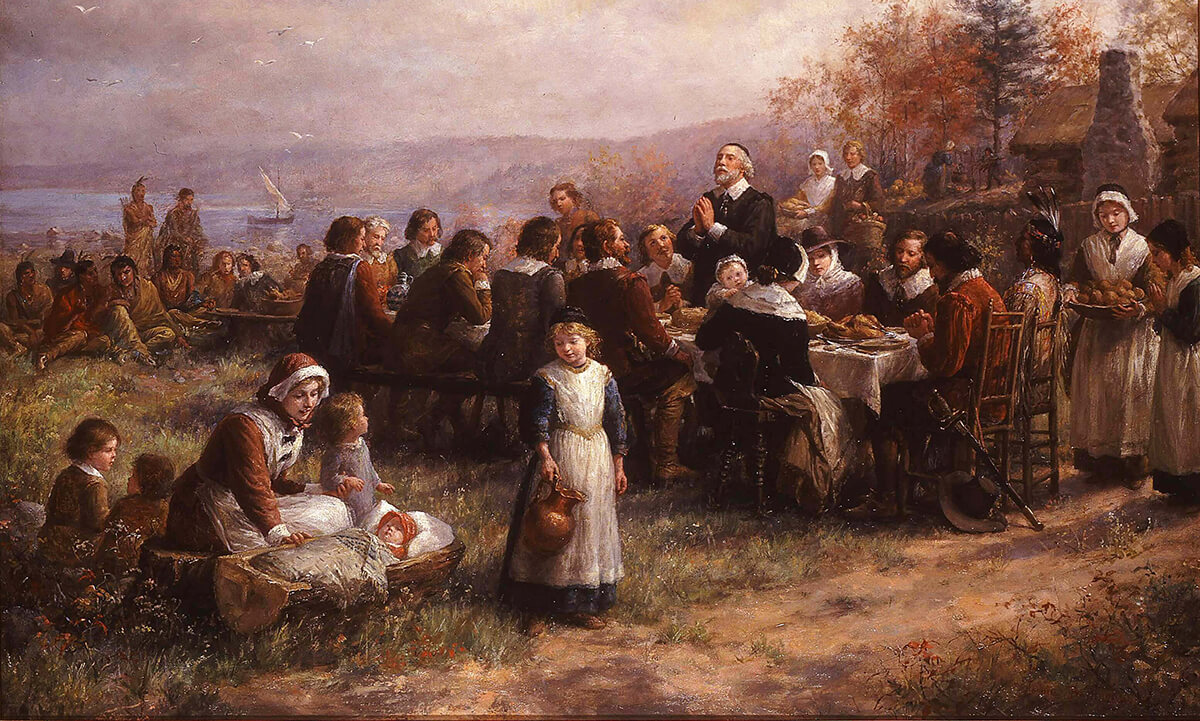
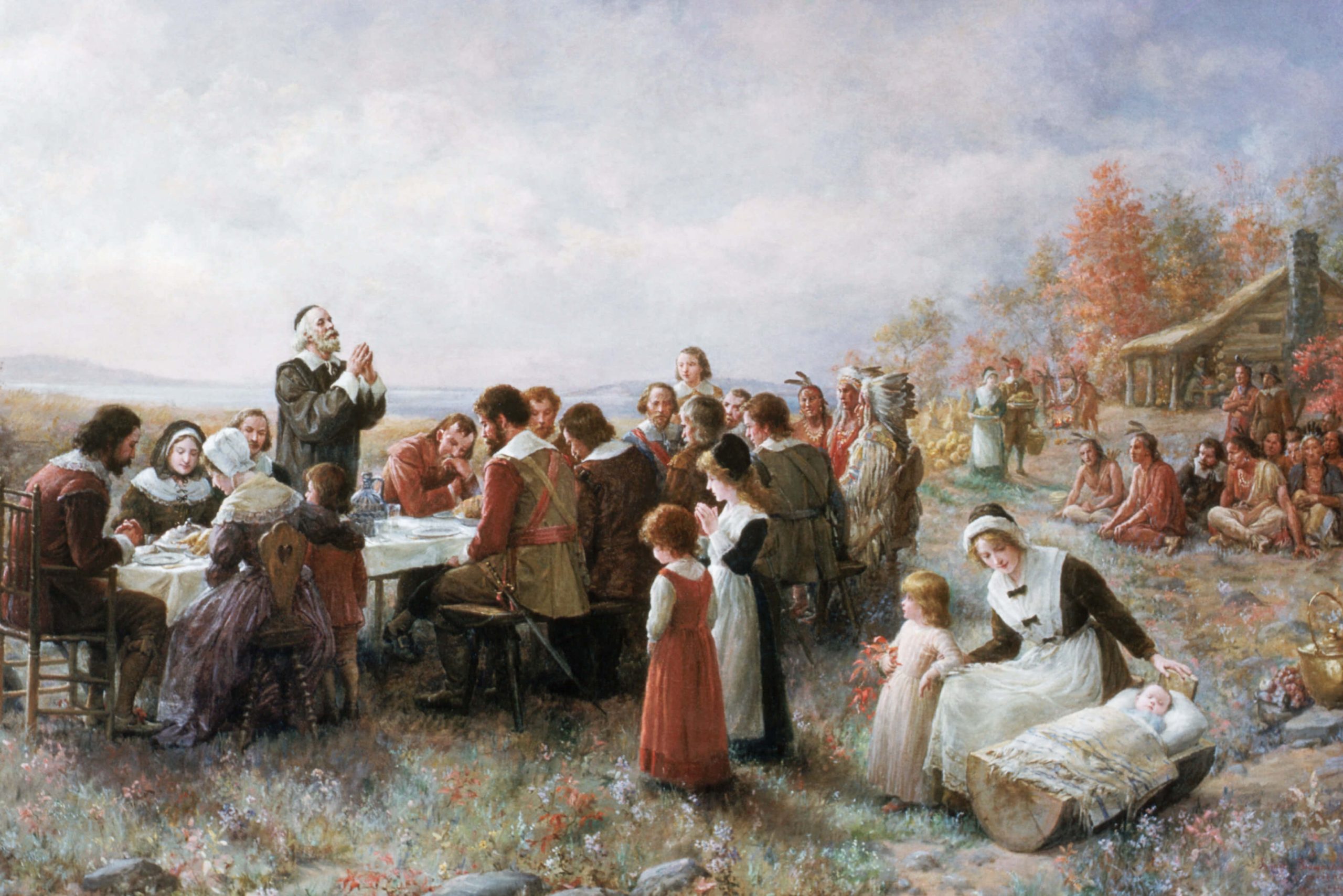
The Pilgrims, after arriving in December 1620, survived a difficult beginning with the help of several Indians who befriended them.[19] Intending to live in the area where they had landed, they approached the local tribe, seeking to purchase land. The price was set by the Indians, and written documentation of sale was received for those purchased lands.[20]

This policy of purchasing land from the Indians came to characterize the general practice of the New England and portions of the mid-Atlantic regions, being mirrored not only by the Puritans in the Massachusetts Bay Colony[21] but also by the Rev. Roger Williams with Rhode Island,[22] the Rev. Thomas Hooker with Connecticut,[23] and William Penn with Pennsylvania.[24] (On one occasion, Penn actually purchased some of the same tracts multiple times because at least three tribes claimed the same land, having taken and retaken it from each other in conquest; so Penn secured it from each.[25]) The practice of purchasing land from the Indians was also followed[*] in New Hampshire,[26] New Jersey,[27] and New York.[28]

The Pilgrims and their Indian neighbors the Wampanoag entered into a peace treaty in 1621. Experiencing good relations with the tribe and a strong friendship with their chief, Massasoit, in 1623 he informed the Pilgrims of a treacherous assault to be made against them by the Massachusetts tribe, which was gathering other chiefs for a surprise attack.[29] Facing potential extermination, Pilgrim Miles Standish led a preemptive strike, thus saving the colonists. Without this, the Pilgrim story could have been as short-lived as that of the colonists of Roanoke, Virginia or Popham, Maine. Good relations continued between the Pilgrims and Wampanoag, with the next period of tensions with other tribes occurring in the 1637 Pequot War.

The Pequot were warlike and aggressive, even against their Indian neighbors on every side, which included the Wampanoag (allies and friends of the Pilgrims), Narragansett, Algonquian, and Mohegan. The Pequot had established a trading monopoly with the Dutch, which the arrival of the English threatened, so they determined to rid the region of the English. After killing some English settlers, the colonists responded and organized strikes against the Pequot.[30] The war spread across much of Connecticut, and also threatened the Plymouth and Massachusetts Bay Colonies. The conflict ended when Sassacus, the chief of the Pequot, was pursued and killed by the Mohegan and Mohawks.[31]

One of the aforementioned articles provided by the student claimed that it was during this war that Pilgrims killed Indians,[32] but this claim is wrong. The Pilgrims’ participation in this conflict was limited to a skirmish at Manisses Villages, where no Indians were killed.[33] Some of the articles provided by the student claim that the Thanksgiving of 1637 was to give thanks that Indians were killed,[34] but this is also in error. It was called to give thanks for the end of the Pequot War.[35]

The Pilgrims lived in harmony with the Wampanoags from the time of their 1621 treaty, through the 1623 and 1637 conflicts, and until the long peace finally collapsed in 1675 with King Philip’s War. Today, revisionist scholars such as James D. Drake, Daniel R. Mandell, and Jill Lepore claim that this conflict was the result of Indians pushing back against greedy land-grabbing colonists, with the Indians simply trying to regain territory that was rightfully theirs.[36]

But such a portrayal is wrong. For example, Pilgrim Governor Josiah Winslow avowed that at the outbreak of the war:

I think I can clearly say that before these present troubles broke out, the English did not possess one foot of land in this colony but what was fairly obtained by honest purchase of the Indian proprietors.[37]

If King Philip’s War was not retaliation for the unjust seizing of Indian land by colonists, what was its cause? The answer is simple: Christian missionaries. Metacom—chief of the Wampanoag Indians and grandson of Massasoit, who took the English name King Philip —recognized that missionaries were converting Indians to Christianity, which was changing some behaviors. This threatened their traditional way of life.

Prior to becoming Christians, Indians often engaged in immoral practices such as the prolonged barbarous torture of captives.[38] Missionaries sought to end such practices by converting Indians and teaching them Christian morals.[39] Missionaries, including John Eliot, Thomas Mayhew, and Andrew White worked extensively with various tribes and had great success in converting Indians to Christianity. By 1674, Eliot’s Christian villages of “praying Indians” in Massachusetts numbered as many as 3,600 converts.[40] It was in the following year (1675) that Metacom, fearing that Christianity would change Indian culture,[41] launched ferocious surprise assaults against settlers in the region,[42] seeking to exterminate all English colonists in Rhode Island, Connecticut, and Massachusetts.

Numerous places in New England were suddenly and unexpectedly attacked. Colonists were murdered and their belongings burned or destroyed.[43] This included even the town of Providence, where Roger William’s own home was burned.[44] Significantly, Williams had always been on the best of terms with the Indians, not only having purchased his colony from them[45] but also having championed Indian rights and claims.[46] Yet, regardless of how well Christian settlers had previously treated Indians, Christians were all to be exterminated; their very existence was perceived as a threat to Indian practices.

King Philip’s War cannot be accurately characterized as Indians versus the English, however, for many of those attacked were themselves Indians—but they were Christian Indians. They, like the settlers, were targeted, hurt, or killed by their unconverted brethren.[47] To secure their own lives and safety, many of the converted Indians fought side-by-side with the colonists throughout the conflict,[48] and the war eventually ended when Metacom was killed by another Indian.[49]

Returning to the objections raised by the student, it is true that Pilgrims and Puritans killed Indians—but in the context of a just and defensive war. The war lasted about fifteen months, and early in the war more settlers died than did Indians—largely because of the surprise attacks. In fact, of the ninety towns in Massachusetts and Plymouth Colony, twelve were totally destroyed and forty more attacked and partially destroyed.[50] But eventually the colonists assembled local militias and fought back in an organized fashion, finally gaining the upper hand. By the conclusion of the war, 600 settlers and 3,000 Indians had been killed—the highest casualty rate by percentage of total population of any war in American history.[51]

This information about King Philip’s War is not to suggest that the amount of land owned by Indians was not decreasing; it was. But the diminishing land holdings in this region during this time was definitely not for the reason we are often told today. Indian land was fairly purchased by settlers, not stolen.[52] Early historian George Bancroft (1800-1891), known as “The Father of American History”[53] for his systematic approach to documenting the story of America, confirmed that Indian lands were indeed shrinking because the Indians’ own “repeated sales of land has narrowed their domains” to the point where “they found themselves deprived of their broad acres, and by their own legal contracts driven, as it were, into the sea”[54] (emphasis added).

This is not to say that land was never stolen from Indians. Some definitely was. For instance, during the heyday of westward expansion that began in the early nineteenth century, the Indian removal policies of Andrew Jackson certainly violated private property rights,[55] and such policies became the rule rather than the exception, forcibly driving Indians from their lands in Georgia, Mississippi, Louisiana, and elsewhere across the Southeast.[†] By 1845, the term “Manifest Destiny” was coined to describe the growing notion that it was America’s “destiny” to spread westward, and that nothing—including Indians—should be allowed to stand in the way. As a result, the Biblical view of purchasing private property from its owner was replaced with the anti-Biblical notion that “possession was nine-tenths of the law” and therefore whoever could take and hold the land was its “rightful” owner.[56]

The 19th century deterioration in relations between Americans and Indians over unjust land seizures occurred most commonly two centuries after the Pilgrims. The original treaty the Pilgrims negotiated with the Indians lasted for 54 years until the Indians broke it; and in general, the Pilgrim and Puritan killings of Indians occurred in their own self-defense primarily against the perfidious unprovoked attacks from Metacom’s Indians, and then in ending the war he had started. We find no historical basis to support the general claim made in the articles provided by the student, and certainly no evidence to support the overall tone of the claims in those internet posts.


[*] The author owns one of the nation’s largest private libraries of Founding Era materials, containing over 100,000 originals, or copies of original documents that predate 1812. Among these holdings are multiple original signed deeds in which Indians willingly and voluntarily sell their land to settlers. One example is an Indian deed dated February 9, 1769, and signed by four Indian leaders from the Aughquageys tribe, selling 300,000 acres—or nearly 470 square miles of land—to settlers in New York. The land-area sold by the Indians in just this one transaction was the equivalent of modern Los Angeles or San Antonio, was larger than modern New York City, and seven times larger than modern Washington DC. There are hundreds of such deeds, legitimately transferring land by mutual agreement and purchase from various Indian tribes to colonists/settlers.

[†] Among the other original documents in our library, we also possess land deeds from the state of Georgia selling parcels in Cherokee-held lands directly to settlers, seeking to drive the Cherokee from their homelands.


Endnotes

[1] “Vault: S1:E10 – Thanksgiving,” GlennBeck (at: https://www.glennbeck.com/content/gb_videos/s1e10-thanksgiving/) (accessed on December 27, 2016).

[2] The websites the student included were:

1.       Thanksgiving, a day of mourning for Native Americans: https://www.salon.com/2016/11/23/thanksgiving-a-day-of-mourning-for-native-americans/

2.       American Indian Perspective on Thanksgiving: https://nmai.si.edu/sites/1/files/pdf/education/thanksgiving_poster.pdf

3.       Do American Indians Celebrate Thanksgiving?: https://www.huffingtonpost.com/dennis-w-zotigh/do-american-indians-celebrate-thanksgiving_b_2160786.html

4.       For Me, Thanksgiving Is A “Day Of Mourning”: https://www.refinery29.com/2016/11/130572/day-of-mourning-thanksgiving-protest-native-americans

5.       First Thanksgiving: https://kids.nationalgeographic.com/explore/history/first-thanksgiving/

6.       The REAL Story of Thanksgiving Introduction for Teachers The Plymouth Thanksgiving Story: https://www.manataka.org/page269.html

7.       For National Day of Mourning, Native Americans highlight their struggles: https://www.metro.us/boston/for-national-day-of-mourning-american-indians-highlight-their-struggles/zsJpkv—Q2Rg789wZSCBU/

8.       National Day of Mourning Reflects on Thanksgiving’s Horrific, Bloody History: https://www.boston.com/news/local-news/2014/11/26/national-day-of-mourning-reflects-on-thanksgivings-horrific-bloody-history

9.       Why these Native Americans are spending Thanksgiving marching and mourning, not celebrating: https://fusion.net/story/371773/native-americans-thanksgiving-plymouth-mourning/

10.    National Day of Mourning: https://www.uaine.org/

11.    Local Native Americans consider the history of Thanksgiving: https://pilotonline.com/life/holidays/local-native-americans-consider-the-history-of-thanksgiving/article_982d6590-fe10-57c8-b0b3-170e4d743490.html

[5] An Oration Delivered at Plymouth December 12, 1824, by Edward Everett (at: https://books.google.com/books?id=wiVob3vXftAC&printsec=frontcover#v=onepage&q&f=false).

[6] An Address, Delivered Before the New England Society, in the City of New York, December 25, 1839, by Robert C. Winthrop (at: https://books.google.com/books?id=KjvgALUiLqoC&pg=PA2#v=onepage&q&f=false).

[7] The Age of the Pilgrims: The Heroic Period of Our History: An Address Delivered in New York Before the New-England Association, December, 1843, by Rufus Choate, beginning on page 371 (at: https://books.google.com/books?id=8ssnAQAAMAAJ&pg=PA371#v=onepage&q&f=false).

[8] Oration Delivered Before the New England Society, In the City of New York, At Their Semi-Centennial Anniversary, by Oliver Wendell Holmes, 1855 (at: https://books.google.com/books?id=VVNIAAAAYAAJ&pg=PA3#v=onepage&q&f=false).

[9] The Memory of our Fathers. A Sermon Delivered at Plymouth, on the Twenty-Second of December, 1827, by Lyman Beecher (at: https://books.google.com/books?id=f3GLfji3qPMC&pg=PA1#v=onepage&q&f=false).

[10] Speech of Mr. Webster, at the Celebration of the New York New England Society, December 25, 1850, by Daniel Webster; beginning on page 496 (at: https://books.google.com/books?id=vRs7AQAAMAAJ&pg=PA496#v=onepage&q&f=false).

[19] For example, Samaset and Squanto are both mentioned in William Bradford, History of Plymouth Plantation (Boston: 1856), pp. 93-95; Squanto is called Tisquantum in Mourt’s Relation or Journal of the Planation at Plymouth (Boston: John Kimball Wiggin, 1865), pp. 102, 106. Mourt’s Relation also mentions Hobamak (also known as Hobbamock), p. 123.

[20] James Thacher, History of the Town of Plymouth, from its First Settlement in 1620 to the Present Time (Boston: Marsh, Capen & Lyon, 1835), p. 138.

[21] George Bancroft, History of the United States, from the Discovery of the American Continent (Boston: Charles C. Little and James Brown, 1848), Vol. I, pp. 350-351.

[22] William Gammell, Makers of American History: Roger Williams (New York: The University Society, 1904), pp. 61-62.

[23] G. H. Hollister, The History of Connecticut, From the First Settlement of the Colony to the Adoption of the Present Constitution (New Haven: Durrie & Peck, 1855), pp. 18-19, 96.

[24] Samuel M. Janney, The Life of William Penn: With Selections from His Correspondence and Autobiography (Philadelphia: Friends Book Association, 1882), pp. 121-122, 442; George Bancroft, History of the United States of America (Boston: Charles C. Little and James Brown, 1848), Vol. II, pp. 381-382.

[25] Samuel M. Janney, The Life of William Penn: With Selections from His Correspondence and Autobiography (Philadelphia: Friends Book Association, 1882), p. 442: “It appears that Penn, before his return to England in 1684, had taken measures to purchase the lands on the Susquehanna from the Five Nations (Iroquois) who claimed a right to them by conquest…Governor Dongan, having made the purchase, conveyed the same to William Penn, by deed dated January 13, 1696, in consideration of 100 [pounds] sterling. The Susquehanna Indians did not recognize the right of the Five Nations to make this sale; and, in order to satisfy their demands, Penn entered into a treaty with two of their chiefs, named Widnpah and Andaggy Innekquagh, whose deed, dated September 13th, 1700, conveys the same lands and confirms the bargain and sale made to Governor Dongan. But it appears there was still another chief claiming an interest in those lands, viz. Connoodaghoh, king of the Conostoga or Minquary Indians. This sachem, on company with the king of the Shawnese, the chief of the Ganawese, inhabiting at the heads of the Potomac, the brother of the emperor of great king of the Onondagoes, Indian Harvey, their interpreter, with others of the their tribes to the number of forty, met Penn and his council in Philadelphia on the 23d of 2d month, (April) 1701, and entered into a treaty of amity, in which they also confirmed the sale of the lands on the Susquehanna.”

[26] Jeremy Belknap, The History of New Hampshire (Dover, NH: J. Mann & JK Remick, 1812), pp. 16-17.

[27] John Warner Barber, The History and Antiquities of New England, New York and New Jersey (Worcester: Dorr & Howland & Co, 1841), p. 66.

[28] W. H. Carpenter and T. S. Arthur, History of New Jersey (Philadelphia: Lippincott, Grambo & Co., 1853), pp. 25, 27-28.

[29] William Bradford, History of Plymouth Plantation (Boston: 1856), p. 131.

[30] William Bradford, History of Plymouth Plantation (Boston: 1856), pp. 351-342, 356-357. 131.

[31] William Bradford, History of Plymouth Plantation (Boston: 1856), pp. 349-361; The History of New England from 1630 to 1649 by John Winthrop, James Savage, editor (Boston: Phelps and Farnham, 1825), Vol. I, pp. 222-226.

[33] For an account of the non-involvement of the Pilgrims in the 1837 Pequot War, see: William Bradford, History of Plymouth Plantation (Boston: 1856), pp. 355-356, “The Court here agreed forthwith to send 50 men at their own charge; and with as much speed as possible they could, got them armed, and had made them ready under sufficient leaders, and provide a bark to carry them provisions & tend upon them for all occasions; but when they were ready to march (with a supply from the Bay) they had word to stay, for the enemy was as good as vanquished, and there would be no need”; The History of New England from 1630 to 1649 by John Winthrop, James Savage, editor (Boston: Phelps and Farnham, 1825), Vol. I, p. 226: “Upon our governor’s letter to Plymouth, our friends there agreed to send a pinnace, with forty men, to assist in the war against the Pequods; but they could not be ready to meet us at the first.”

[34] See, for example, Thanksgiving, a day of mourning for Native Americans: https://www.salon.com/2016/11/23/thanksgiving-a-day-of-mourning-for-native-americans/; The REAL Story of Thanksgiving Introduction for Teachers The Plymouth Thanksgiving Story: https://www.manataka.org/page269.html; National Day of Mourning Reflects on Thanksgiving’s Horrific, Bloody History: https://www.boston.com/news/local-news/2014/11/26/national-day-of-mourning-reflects-on-thanksgivings-horrific-bloody-history.

[35] The History of New England from 1630 to 1649 by John Winthrop, James Savage, editor (Boston: Phelps and Farnham, 1825), Vol. I, p. 226, entry for March 15, 1637: “There was a day of thanksgiving kept in all the churches for the victory obtained against the Pequods, and for other mercies.”

[36] James D. Drake, King Philip’s War: Civil War in New England 1675-1676 (MA: University of Massachusetts Press, 1999), pp. 1, 30-31; Daniel R. Mandell, King Philip’s War: Colonial Expansion, Native Resistance, and the End of Indian Sovereignty (MD: Johns Hopkins University Press, 2010), pp. 27, 30; Jill Lepore, The Name of War: King Philip’s War and the Origins of American Identity (Random House, 2009), “What’s in a Name?”  More reputable writers have made similar claims.  See, for example, Francis Jennings, The Invasion of America; Indians, Colonialism, and the Cant of Conquest (Chapel Hill: University of North Carolina Press, 1975), pp. 128, 144-145; New England Encounters: Indians and Euroamericans ca. 1600-1850. Essays Drawn from The New England Quarterly, Alden T. Vaughan, editor (Boston: Northeastern University Press, 1999), pp. 61-64, David Bushnell, “The Treatment of the Indians in Plymouth Colony”; Karen Ordahal Kupperman, Indians and English: Facing Off in Early America (Ithaca and London: Cornell University Press, 2000), p. 239.

[37] James Thacher, History of the Town of Plymouth, from its First Settlement in 1620 to the Present Time (Boston: Marsh, Capen & Lyon, 1835), p. 138; Abiel Holmes, The Annals of America from the Discovery by Columbus in the Year 1492, to the Year 1826 (Cambridge: Hilliard & Brown, 1829), p. 383.

[38] See, for example, accounts such as:

·         Franklin B. Hough, A Narrative of the Causes which Led to Philip’s Indian War, of 1675 and 1676, by John Easton of Rhode Island (Albany, NY: J. Munsell, 1863), pp. 143-144, an eyewitness account dated February 25, 1675: “Thomas Warner one of the two that came down from Albany and had been prisoner with the Indians who arrived here this morn, being examined, faith, that he was one of the persons that begin sent out from Hatfield where the English Army lay, to discover the enemy, but a party of Indians waylaid them, and shot down 5 of their company, and took 3 of which he and his comrade are two, the 3rd they put to death, the 9th was an Indian that came with them and escaped away. That the Indians lay still two days after they were taken, and then a party of about 30 with whom he was marched to a river to the north-east from thence about 80 miles called Oasuck, where about a fortnight after the rest of the army came to them, having in the mean time burnt two towns: they killed one of the prisoners presently after they had taken him, cutting a hole below his breast out of which they pulled his guts, and then cut off his head. That they put him so to death in the presence of him and his comrade, and threated them also with the like. That they burnt his nails, and put his feet to scald them against the fire, and drove a stake through one of his feet to pin him to the ground. The stake about the bigness of his finger, this was about 2 days after he was taken.”

·         John S. C. Abbott, The History of King Philip (Harper & Brothers, New York, 1857), pp. 317-318, where Abbott, using the words of Cotton Mather, describes Indian tortures: “They stripped these unhappy prisoners, and caused them to run the gauntlet, and whipped them after a cruel and bloody manner. They then threw hot ashes upon them, and, cutting off collops of their flesh, they put fire into their wounds, and so, with exquisite, leisurely, horrible torments, roasted them out of the world.”

·         Richard Markham, A Narrative History of King Philip’s War and the Indian Troubles in New England (New York: Dodd, Mean & Company, 1883), pp. 241-242, describing an event at the beginning of King Philip’s War: “A little after the middle of April [1676] Sudbury was attacked…Captain Wadsworth with fifty men had been dispatched from Boston that day to strengthen the garrison at Marlborough. After his company reached Marlborough, more than a score of miles from Boston, they learned that the savages were on their way against Sudbury…A small party of Indians encountered them when about a mile from their destination, and withstood them for a short time, but yielding to their superior numbers retreated into the forest. Wadsworth and his men followed, but when they were well into the woods suddenly found themselves the centre of five hundred yelling demons, who attacked them on all sides. They made their way to the top of a hill close at hand, and for four hours fought resolutely, losing but five men, for the savages had suffered severely in the first hand-to-hand attack, and feared to come to close quarters. As night came on the enemy set fire to the woods to the windward of their position. The leaves were dry as tinder, and a strong wind was blowing. The flames and smoke rolled up upon the devoted band, threatening their instant destruction. Stifled and scorched, they were forced to leave the hill in disorder. The Indians came upon them so like so many tigers, and outnumbering them ten to one in the confusion slew nearly all. Wadsworth himself was slain. Some few were taken prisoners, and that night were made to run the gauntlet, and after that were put to death by torture.”

[39] See, for example, J. W. Barber, United States Book; Or, Interesting Events in the History of the United States (New Haven: L. H. Young, 1834), p. 53; and Methodist Quarterly Review: 1858, D. D. Whedon, editor (New York: Carlton & Porter, 1858), Vol. XL, pp. 244-245: “In a short time, under the labors of Eliot, hundreds of Indians renounced their heathenism and embraced Christianity. As early as 1660 he had gathered ten settlements of Indians, who were comparatively civilized, and under religious influence…In 1675 King Philip’s War broke out. The missionary settlements of Eliot were in the center of the theater of this war. Many of the Christian Indians would have remained neutral; but Philip attacked them, and drove them into hostility; the commotions that followed not only prevented the progress of the Gospel, but destroyed much that had been done. War blasted all these opening religious prospects of the poor Indians; and war provoked, too, by the aggressions of the white man.”

[40] Gustav Warneck, Outline of a History of Protestant Mission from the Reformation to the Present Time (New York: Fleming H. Revell Company, 1903), p. 165.

[41] J. W. Barber, United States Book; Or, Interesting Events in the History of the United States (New Haven: L. H. Young, 1834), p. 53n; John S. C. Abbott, The History of King Philip (Harper & Brothers, New York, 1857), pp. 171-172.

[42] J. W. Barber, United States Book; Or, Interesting Events in the History of the United States (New Haven: L. H. Young, 1834), pp. 53-54; Richard Markham, A Narrative History of King Philip’s War and the Indian Troubles in New England (New York: Dodd, Mean & Company, 1883), pp. 109-110.

[43] Franklin B. Hough, A Narrative of the Causes which Led to Philip’s Indian War, of 1675 and 1676, by John Easton of Rhode Island (Albany, NY: J. Munsell, 1863), p. 42, a letter dated June 29, 1675, pp. 176-177, “Record of a Court Martial, Held at Newport, R.I. in August, 1676, for the Trial of Indians charged with begin engaged in Philip’s Designs”; William Hubbard, A Narrative of the Indian Wars in New-England from the First Planting Thereof, in the Year 1607, to the Year 1677 (Danbury: Stiles Nichols, 1803), p. 64, notes from a meeting of the commissioners of the united colonies held at Boston, Sept. 9, 1675, pp. 77-78.

[44] National Park Service, “Frequently Asked Questions,” Roger Williams National Memorial Rhode Island (at: https://www.nps.gov/rowi/faqs.htm) (accessed on January 9, 2017). See also Welcome Arnold Greene, The Providence Plantations for Two Hundred and Fifty Years. An Historical Review of the Foundation, Rise, and Progress of the City of Providence (Providence, RI: J.A & R.A. Reid, 1886), p. 42.

[45] William Gammell, Makers of American History: Roger Williams (New York: The University Society, 1904), pp. 61-62.

[46] Romeo Elton, Life of Roger Williams (New York: G. P. Putnam, 1852), pp. 21, 33-34, 39-41, 44-45.

[47] Methodist Quarterly Review: 1858, D. D. Whedon, editor (New York: Carlton & Porter, 1858), Vol. XL, pp. 244-245; John S. C. Abbott, The History of King Philip (Harper & Brothers, New York, 1857), pp. 187-190, 216.

See, for example, Rev. John Holmes, Historical Sketches of the Missions of the United Brethren, p. 210, “With a view to execute their horrid purpose, the young Indians got together, chose the most ferocious to be their leaders, deposed all the old Chiefs, and guarded the whole Indian assembly, as if they were prisoners of war, especially the aged of both sexes. The venerable old Chief Tettepachsit was the first whom, they accused of possession poison, and having destroyed many Indians by his art. When the poor old man would not confess, they fastened with cords to two posts, and began to roast him at a slow fire.”; pp. 210-211, “During this torture, he [Chief Tettepachsit] said, that he kept poison in the house of our Indian brother Joshua. Nothing was more welcome to the savages than this accusation, for they wished to deprive us of the assistance of this man, who was the only Christian Indian residing with us at that time….We knew nothing of these horrible events, until the evening of the 16th, when a message was brought, that the savages had burned an old woman to death, who had been baptized by the Brethren in former times, and also that our poor Joshua was kept close prisoner.”; p. 139, “Their external troubles, however, did not yet terminate. They had not only a kind of tax imposed upon them, to show their dependence on the Iroquois , but the following very singular message was sent them: “The great head, i.e. the Council in Onondago, speak the truth and lie not: they rejoice that some of the believing Indians have moved to Wayomik, but now they lift up the remaining Mahikans and Delawares, and set them down also in Wayomik; for there a fire is kindled for them, and there they may plant and think on God: but if they will not hear, the great head will come and clean their ears with a red-hot iron (meaning they would set their houses on fire) and shoot them through the head with musquet-balls.”

[48] Increase Mather, The History of King Philip’s War (Albany: J. Munsell, 1862), pp. 49-50, 127-128, 184; Henry William Elson, History of the United States of America (The MacMillan Company, New York, 1904), p. 122; George Madison Bodge, Soldiers in King Philip’s War (Boston: 1906), pp. 34, 37, 104.

[49] John S. C. Abbott, The History of King Philip (Harper & Brothers, New York, 1857), p. 361.

[50] John Fiske, The Beginnings of New England (Boston and New York: Houghton, Mifflin and Company,, 1890), p. 240.

[51] James David Drake, King Philip’s War: Civil War in New England, 1675-1676 (The University of Massachusetts Press, 1999), pp. 1–15.

[52] See, for example, George Bancroft, History of the United States From the Discovery of the American Continent (Boston: Charles C. Little and James Brown, 1848), Vol. II, p. 99.

[53] See, for example, “George Bancroft,” Encyclopedia Britannica (at: https://www.britannica.com/biography/George-Bancroft-American-historian) (accessed on December 30, 2016);

[54] George Bancroft, History of the United States From the Discovery of the American Continent (Boston: Charles C. Little and James Brown, 1848), Vol. II, p. 99.

[55] William Garrott Brown, Andrew Jackson (New York: Houghton, Mifflin and Company, 1900), pp. 130-131; William Graham Sumner, American Statesmen: Andrew Jackson (Boston: Houghton, Mifflin, and Company, 1899), pp. 224-229.

[56] See, for example, the Cherokee nation in Georgia. Georgia passed laws dividing Cherokee land up in various counties and put those lands in control of the state. Andrew Jackson, the president at that time, did not interfere with the Georgia laws and would not enforce or support the Supreme Court’s decision that declared this Georgia law unconstitutional. William Garrott Brown, Andrew Jackson (New York: Houghton, Mifflin and Company, 1900), pp. 130-131.

* Originally published: Feb. 23, 2017.

* This article concerns a historical issue and may not have updated information.

Celebrate Columbus Day!

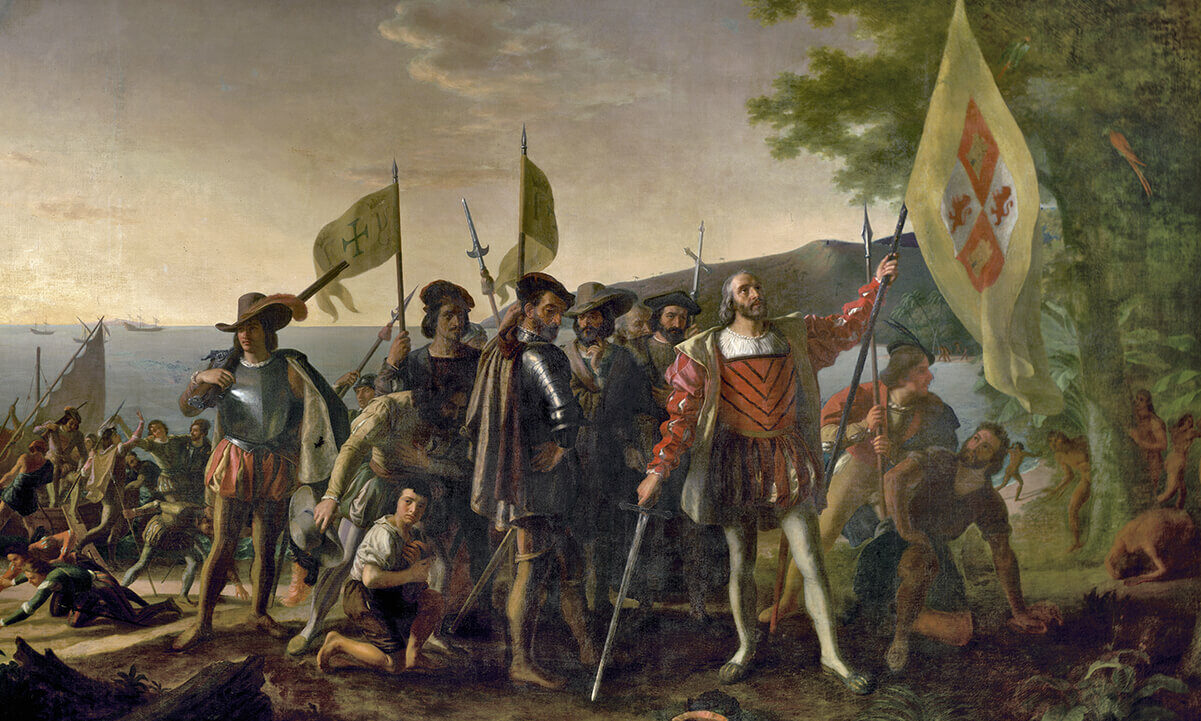
Traditionally observed on the second Monday in October, Columbus Day commemorates the landing of Columbus in the “New World” (on a small island off Florida) on October 12, 1492.

Although Christopher Columbus clearly was not the first European to visit the “New World” (Vikings had traveled here centuries earlier), he first widely publicized, and thus “discovered,” its existence to the Europeans. Columbus undertook his first voyage facing the prospect of great danger. The professional opinion of that day not only assured him of the impossibility of his proposed endeavor, but it also warned him that dragons and death awaited him beyond the charted waters. With such advice coming from the intellectual leaders of his day, his decision to embark on this unprecedented journey must have been difficult. So, then, why did he set out? Columbus himself answered that question in his own writings:

[O]ur Lord opened to my understanding (I could sense His hand upon me) so it became clear to me that it [the voyage] was feasible. . . . All those who heard about my enterprise rejected it with laughter, scoffing at me. . . . Who doubts that this illumination was from the Holy Spirit? I attest that He [the Holy Spirit], with marvelous rays of light, consoled me through the holy and sacred Scriptures . . . they inflame me with a sense of great urgency. . . . No one should be afraid to take on any enterprise in the name of our Savior if it is right and if the purpose is purely for His holy service. . . . And I say that the sign which convinces me that our Lord is hastening the end of the world is the preaching of the Gospel recently in so many lands.1

Interestingly, in the 1892 Supreme Court decision Church of the Holy Trinity v. U. S., the Court unanimously affirmed that America was indeed a Christian nation. In so doing, it cited dozens of precedents from American history, including that of Christopher Columbus, acknowledging:

From the discovery of this continent to the present hour, there is a single voice making this affirmation [that America is a Christian nation]. The commission to Christopher Columbus . . . [recited] that “it is hoped that by God’s assistance some of the continents and islands in the ocean will be discovered,” etc.2

It is especially because of Columbus’ religious motivations and convictions that today he has become a villain for most modern educators and writers, who regularly attack and condemn him. They have adopted the deplorable modern educational practice of deconstructionism – of attacking traditional Western heroes, values, and institutions.3

But if you want an historically accurate portrayal of Columbus and early other explorers, consult Dr. John Eidsmoe’s book, Columbus & Cortez, Conquerors for Christ.


Endnotes

1 Christopher Columbus, “Letter from the Admiral to the King and Queen,” Christopher Columbus’s Book of Prophecies, trans. Kay Brigham (Fort Lauderdale: CLIE Publishers, 1992), 178-179.
2 Church of the Holy Trinity v. United States, 143 U.S. 457, 465 (1892).
3 David Barton, “Deconstructionism and the Left,” WallBuilders.

Fall 1998

Thanksgiving in America

This month, America will continue a tradition begun centuries ago: the celebration of a Day of Thanksgiving. The origin of this tradition is commonly attributed to the Pilgrims in 1621, even though some Thanksgiving services did occur elsewhere in America as early as 1607. While Thanksgiving celebrations became common in New England, they did not begin to spread southward until the American Revolution, when Congress issued eight separate national Thanksgiving Proclamations.

Then in 1789, following a proclamation issued by President George Washington, America celebrated its first Day of Thanksgiving to God under its new Constitution. That same year, the Protestant Episcopal Church, of which President Washington was a member, announced that the first Thursday in November would become its regular day for giving thanks, “unless another day be appointed by the civil authorities.” Yet, despite these early national proclamations, official Thanksgiving observances usually occurred only at the State level.

Much of the credit for the adoption of an annual national Thanksgiving Day may be attributed to Mrs. Sarah Joseph Hale, the editor of Godey’s Lady’s Book. For thirty years, she promoted the idea of a national Thanksgiving Day, contacting President after President until President Abraham Lincoln responded in 1863 by setting aside the last Thursday of November as a national Day of Thanksgiving. Over the next seventy-five years, Presidents followed Lincoln’s precedent, annually declaring a national Thanksgiving Day. Then, in 1941, Congress permanently established the
fourth Thursday of each November as a national holiday.

Lincoln’s original 1863 Thanksgiving Proclamation came–spiritually speaking–at a pivotal point in his life. During the first week of July of that year, the Battle of Gettysburg occurred, resulting in the loss of some 60,000 American lives. Four months later in November, Lincoln delivered his famous “Gettysburg Address.” It was while Lincoln was walking among the thousands of graves there at Gettysburg that he committed his life to Christ. As he explained to a friend:

When I left Springfield [to assume the Presidency] I asked the people to pray for me. I was not a Christian. When I buried my son, the severest trial of my life, I was not a Christian. But when I went to Gettysburg and saw the graves of thousands of our soldiers, I then and there consecrated myself to Christ.

Following is the 1863 Lincoln Thanksgiving Proclamation–celebrated shortly after Lincoln committed his life to Christ and celebrated while America was still in the midst of its Civil War. It was this proclamation which eventually led to the establishment of our national Thanksgiving holiday.

Proclamation of Thanksgiving by the President of the United States of America

The year that is drawing toward its close has been filled with the blessings of fruitful years and healthful skies. To these bounties, which are so constantly enjoyed that we are prone to forget the Source from which they come, others have been added which are of so extraordinary a nature that they cannot fail to penetrate and soften even the heart which is habitually insensible to the ever-watchful providence of almighty God

In the midst of a civil war of unequaled magnitude and severity, which has sometimes seemed to foreign states to invite and to provoke their aggression, peace has been preserved with all nations, order has been maintained, the laws have been respected and obeyed, and harmony has prevailed everywhere, except in the theater of military conflict, while that theater has been greatly contracted by the advancing armies and navies of the Union.

Needful diversions of wealth and of strength from the fields of peaceful industry to the national defense have not arrested the plow, the shuttle, or the ship; the ax has enlarged the borders of our settlements, and the mines, as well of iron and coal as of the precious metals, have yielded even more abundantly than theretofore.

Population has steadily increased notwithstanding the waste that has been made in the camp, the siege, and the battlefield, and the country, rejoicing in the consciousness of augmented strength and vigor, is permitted to expect continuance of years with large increase of freedom.

No human counsel hath devised nor hath any mortal hand worked out these great things. They are the gracious gifts of the Most High God, who, while dealing with us in anger for our sins, hath nevertheless remembered mercy. It has seemed to me fit and proper that they should be solemnly, reverently, and gratefully acknowledged, as with one heart and one voice, by the whole American people. I do therefore invite my fellow-citizens in every part of the United States, and also those who are at sea and those who are sojourning in foreign lands, to set apart and observe the last Thursday of November next as a day of thanksgiving and praise to our beneficent Father who dwelleth in the heavens. And I recommend to them that while offering up the ascriptions justly due to Him for such singular deliverances and blessings they do also, with humble penitence for our national perverseness and disobedience, commend to His tender care all those who have become widows, orphans, mourners, or sufferers in the lamentable civil strife in which we are unavoidably engaged, and fervently implore the interposition of the Almighty Hand to heal the wounds of the nation and to restore it, as soon as may be consistent with the Divine purposes, to the full enjoyment of peace, harmony, tranquillity, and union.

In testimony whereof I have hereunto set my hand and caused the seal of the United States to be affixed.


Abraham Lincoln


A Biblical and Historical Perspective on the Clinton Scandal

The President, by his own admission, has violated several of the most basic laws undergirding both society and religion: the Ten Commandments. Specifically, the President willfully broke the 7th command (to maintain the sanctity of sex within marriage), the 10th command (forbidding coveting another person), and the 9th command (prohibiting perjury).

Such blatant violations of the Ten Commandments are no small matter. To reject the Ten Commandments is to disdain those laws which were described by John Quincy Adams as the “laws essential to the existence of men in society,” by John Adams as the “inviolable precepts in every society” that make it “civilized and free,” and by John Witherspoon as “the sum of the moral law.”

There can be nothing said in defense of the President. What he has done is wrong. Nevertheless, in an attempt to evade the consequences, the strategy pursued by the supporters and counselors of the President has been twofold: (1) to ask forgiveness and show public contrition, and (2) to degrade the culture by claiming that others also do what the President did–that it’s only sex–a private matter.

While seeking forgiveness is commendable, particularly if it is sincere, it never has, and never should, excuse someone from the consequences of his behavior. In fact, 1 Samuel 15:9-31 presents a striking parallel to the current situation. In that account, Saul, the national leader, committed a transgression. When Samuel uncovered and exposed the unrighteous act, Saul offered an apology, declaring, “I have sinned. . . . Now, I beg you, please forgive my sin.” Nevertheless, God had Samuel inform Saul that because of his behavior, “The Lord has rejected you as leader.” (See the account of a similar but separate incident in 1 Samuel 13:8-14.) Similar lessons may be learned through the stories of Esau, David, Hezekiah, Uzziah, Gehazi, and others. While each committed a wrong and later regretted his behavior, each still had to face the consequences of his own wrong behavior. In short, “I’m sorry” is insufficient to prevent the consequences of a leader’s willful, serious, and immoral misbehavior.

And the “everybody else is doing it” defense is wrong for at least two reasons. First, the Bible forcefully declares, on numerous occasions, that each person must face the consequences of and be responsible for his own actions—regardless of what “everybody” else does. (See, for example, Jeremiah 31:27-30). Second, to claim that such behavior is widespread and common undermines the mores of our society. In fact, the proper response should be to condemn the act rather than attempt excuse or justify the act. As explained by John Witherspoon, signer of the Declaration of Independence:

[H]e is the best friend to American liberty who . . . sets himself with the greatest firmness to bear down profanity and immorality of every kind.

Under this standard, if the President’s supporters truly cared about America, rather than excusing immoral behavior, even if done “privately,” they would be condemning it. Unfortunately, the President’s defenders have done just the opposite, conveying to the public a perception that those who practice marital fidelity are the minority. That Americans actually perceive this to be the moral condition of America is illustrated by a poll earlier released by Family Circle magazine. The results of that survey, questioning respondents on the Ten Commandments, confirmed an interesting image of misperceptions.

For example, while only fourteen percent of the respondents had actually engaged in extramarital relations, amazingly, forty-five percent reported their belief that extramarital relations were common. Why would respondents believe that extramarital relations among that group occurred at a rate nearly three times higher than it actually did? Because they have been consistently pummeled–as a defense by those who engage in extramarital affairs–with the charge that such affairs are commonplace.

Not only do the efforts of the President’s supporters weaken the moral standards, they actually perpetuate historical revisionism. That is, in an attempt to excuse the President’s immoral behavior, his defenders are asserting that President George Washington also engaged in immoral and illicit sexual relations–a charge that is historically false. (To see a full rebuttal of the accusation, refer to chapter 16 in my book, Original Intent.)

A further point of defense raised by the President’s supporters is that this was a private matter and would an average citizen want an investigator looking into his life as the President’s has been? The fact of the matter is that the President is not an average citizen, and both the Bible and American history set a more rigorous standard for a leader. For example, James 3:1 warns:

Not many of you should presume to be teachers, my brothers, because you know that we who teach will be judged more strictly.

Similarly high standards for leaders are set forth in passages like Titus 1:6-9, 1 Timothy 3:1-12, Exodus 18:21-22, etc. Those standards specifically address moral and private conduct and also direct that a leader’s life should be held forth as a positive example for others to follow (see, for example, 1 Cor. 11:1). It is understandable that a leader is held to a higher standard than others because he possesses more power and has more opportunity to influence–for good or for bad–many more millions of lives than does the average citizen.

Our Founding Fathers understood this need for a higher moral standard in our leaders, and they specifically advocated investigating the private moral life of a leader. The Biblical reason underlying their logic is found in Luke 6:43-44 and Matthew 7:16-20, in which Jesus reminds us:

Do people pick grapes from thorn bushes, or figs from thistles? Likewise, every good tree bears good fruit, but a bad tree bears bad fruit. A good tree cannot bear bad fruit, and a bad tree cannot bear good fruit. . . . Thus, by their fruit you will recognize them. Very simply, if a tree has bad roots, it will produce bad fruits. Consequently, the “roots” of a public officer are important, for one who produces bad fruit in private life cannot keep from eventually producing it in public life.

Understanding this, Founding Father Elias Boudinot, a President of the Continental Congress, reminded us to “be religiously careful in our choice of all public officers . . . and judge of the tree by its fruits.” Other American statesmen made equally succinct declarations. For example:

He who is void of attachments in private life is, or very soon will be, void of all regard of his country. There is seldom an instance of a man guilty of betraying his country who had not before lost the feeling of moral obligations in his private connections. . . . [P]rivate and public vices are in reality . . . connected. . . . Nothing is more essential to the establishment of manners in a State than that all persons employed in places of power and trust be men of unexceptionable characters. The public cannot be too curious concerning the characters of public men. Samuel Adams


Righteousness alone can exalt [America] as a nation. . . . [R]emember this! And in thy sphere practice virtue thyself, and encourage it in others. . . . [T]he great pillars of all government . . . [are] virtue, morality, and religion. This is the armor, my friend, and this alone, that renders us invincible. Patrick Henry


As governments are made and moved by men, so by them they are ruined too. . . . Let men be good and the governplainfs22 ment cannot be bad. . . . But if men be bad, the government be never good. William Penn


[I]f we . . . trifle with the injunctions of morality . . . no man can tell how sudden a catastrophe may overwhelm us. . . . [No] government [can] be secure which is not supported by moral habits. Daniel Webster


In selecting men for office . . . look to his character. . . . [I]f the citizens neglect their duty and place unprincipled men in office, the government will soon be corrupted; laws will be made not for the public good so much as for selfish or local purposes; corrupt or incompetent men will be appointed to execute the laws; the public revenues will be squandered on unworthy men; and the rights of the citizens will be violated or disregarded. . . . When a citizen gives his [vote] to a man of known immorality . . . he betrays the interest of his country. Noah Webster


Those who wish well to the State ought to choose to places of trust men of inward principle, justified by exemplary [lifestyle]. Is it reasonable to expect wisdom from the ignorant? fidelity from the profligate? assiduity and application to public business from men of a dissipated life? . . . Those, therefore, who pay no regard to religion and sobriety in the persons whom they [elect] are guilty of the greatest absurdity and will soon pay dear for their folly. John Witherspoon


While it is too late for us as voters to apply these lessons to our current President, it is not too late for us to apply these lessons to the present election. Remember to vote–and to vote for God-fearing and moral individuals. As the Bible reminds us in Proverbs 29:2: “When the righteous rule, the people rejoice; when the wicked rule, the people groan.”

High Crimes and Misdemeanors

In the midst of the debate surrounding a potential presidential impeachment, the phrase “high crimes and misdemeanors” has become a focal point. This phrase is found in Article II, Section 4, Par. 1, of the Constitution, and sets forth the reasons for the removal of a President:

The President, Vice-President, and all civil officers of the United States, shall be removed from office on impeachment for, and conviction of, treason, bribery, or other high crimes and misdemeanors.

Supporters of the President argue that what has been uncovered–thus far–does not amount to “high crimes and misdemeanors” like “treason [and] bribery.” While they admit the President’s actions to be disgusting and reprehensible, they claim that nevertheless they are not sufficiently serious felonies so as to constitute impeachable offenses.

Those who offer this argument are guilty of two errors: (1) they are ignorant of (or ignore) the clear declarations both of our Founding Fathers who authored this clause and of those who for a century-and-a-half afterwards enforced this clause, and (2) they group words together in the clause which should be kept separate that is, they talk of “high crimes and misdemeanors” as if they are they same thing; they are not.

The clause should be read “high crimes” and “misdemeanors”–two separate categories. No one can logically argue that a “high crime” is the same as a “misdemeanor.” What the Founding Fathers did in this clause was to offer a broad scope of impeachable offenses ranging from serious felonies (high crimes) to much lesser categories of misbehavior (misdemeanors).

This is further confirmed by the two specific examples the Founders included in the Constitution: treason and bribery. Treason was a serious capital offense, resulting in execution, while bribery–even though it was considered a moral wrong–was not yet a statutory crime when the Constitution was adopted! Clearly, then, what the Constitution specifies is a wide range of impeachable offenses, from high crimes (such as treason) to misdemeanors (such as bribery–not then illegal).

The definitions of “misdemeanor” confirmed this. For example, Alexander Hamilton and Justice Joseph Story (placed on the Supreme Court by President James Madison) defined a “misdemeanor” as political “malconduct,” and Noah Webster (responsible for the copyright and patent protection clause of Article I, Section 8 of the Constitution) defined “misdemeanor” as “ill behavior, evil conduct, fault, or mismanagement.” Professor John Randolph Tucker (a U.S. Congressman, constitutional law professor, and early president of the American Bar Association) explained in his 1891 Commentaries on the Constitution that “misdemeanor” was “a synonym for misbehavior” and that “[t]he words ‘high crimes and misdemeanors’ cannot be confined to crimes created and defined by a statute of the United States.”

Realizing, then, that the constitutional scope of impeachable offenses ranged from serious felonies down to misbehavior and evil conduct, Joseph Story, in his classic 1833 Commentaries on the Constitution, declared:

The offences to which the power of impeachment has been and is ordinarily applied as a remedy are. . . . what are aptly termed political offences, growing out of personal misconduct, or gross neglect, or usurpation, or habitual disregard of the public interest.

And Professor John Randolph Tucker, in the 1891 Commentaries mentioned earlier, declared:

The process of impeachment is a political proceeding, against the accused as an officer of the government, to protect the government from the present or future incumbency of a man whose conduct has proved him unworthy to fill it. . . . The impeachment power was intended to cleanse the government from the presence of worthless and faithless individuals.

That this had been the intent of the Founding Fathers was irrefutable. For example, James Iredell (an original Supreme Court Justice appointed by President George Washington) succinctly declared:

Every government requires [impeachment]. Every man ought to be amenable for his conduct. . . . It will be not only the means of punishing misconduct but it will prevent misconduct. A man in public office who knows that there is no tribunal to punish him may be ready to deviate from his duty; but if he knows there is a tribunal for that purpose, although he may be a man of no principle, the very terror of punishment will perhaps deter him.

Therefore, in the current raging debate over what constitutes an impeachable offense, do not be misled by those who would define “high crimes” and “misdemeanors” as being the same, and then who raise the bar for impeachment so high that it protects an individual from being accountable for his conduct.

Meet a Friend

Once again, it is a pleasure to highlight an organization that is having a profound impact on our society. The National Council on Bible Curriculum in Public Schools is getting the Bible back into public schools nationwide. Founded in 1994 by Elizabeth Ridenour, this organization helps public schools set up elective Bible courses by first educating them to the fact that the courses are completely constitutional and then by providing the curriculum for the courses, with the Bible itself being the primary textbook.

According to the NCBCPS, the ultimate goals of these courses, in part, are to “equip the student with
a fundamental understanding of the influence of the Bible on history, law, American community life, and culture; give insight into the world views of America’sfounding fathers and to understand the Biblical influences on their views on human rights; . . . [and] familiarize the student with the Bible so that he or she becomes skillful in its use, such as finding references easily.” Currently, fifty-seven districts in twenty-six States have started teaching the Bible as an elective in public schools.

Science and the Glory of God

The heavens declare the glory of God;
And the firmament shows His handiwork.
(Psalm 19:1)

science-and-the-glory-of-god-1Several WallBuilders speakers just returned from engagements in Alaska, where they witnessed the incomprehensible wonder of the Northern Lights, the breathtaking beauty of the majestic mountain ranges, and the creative uniqueness of its wildlife. Throughout American history, those who believed Psalms 19 and explored God’s marvelous creation have had great impact on our science.
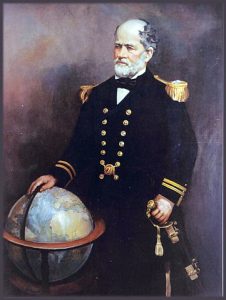
science-and-the-glory-of-god-2For example, U.S. Navy Commander Matthew Fontaine Maury1 became known as “Father of Oceanography”2 and  “Pathfinder of the Seas”3 because of what he discovered from reading Psalm 8 and Ecclesiastes 1. When criticized for his reliance on the Bible, Maury responded:
I have been blamed by men of science, both in this country and in England, for quoting the Bible in confirmation of the doctrines of physical geography. The Bible, they say, was not written for scientific purposes and is therefore of no authority in matters of science. I beg pardon! The Bible is authority for everything it touches. . . . The Bible is true, and science is true. . . . They are both true; and when your men of science, with vain and hasty conceit, announce the discovery of disagreement between them, rely upon it: the fault is not with the Witness or His records [that is, God], but with the “worm” [sinful human] who essays [attempts] to interpret evidence which he does not understand.4

science-and-the-glory-of-god-3

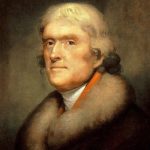
Thomas Jefferson, a diligent student of history, observed that:

The Christian religion…is a religion of all others most friendly to liberty, science, and the freest expansion of the human mind. 5

In fact, Jefferson said that  “Bacon, Newton and Locke . . . [are] my trinity of the three greatest men the world had ever produced.” 6 While Locke was a Christian philosopher, both Bacon and Newton were Christian scientists. Notice the philosophy of these two.

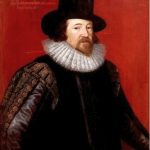
science-and-the-glory-of-god-4Francis Bacon, known as the “Father of Modern Science,” 7 developed the process of inductive thinking and created the scientific method. He also penned several books on religion, such as On the Unity in Religion (1612), On Atheism (1612), and Of Praise (1612), as well as a translation of Biblical psalms (1625).
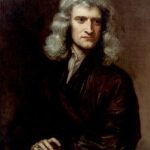
science-and-the-glory-of-god-5 Sir Isaac Newton as an English mathematician and scientist credited with birthing modern calculus and discovering the laws of universal gravitation. But he actually wrote more on theology than he did on science!
There are many other examples, making clear that science as we know it today would not exist had it not been for those who used the Bible to lay the foundations of modern science.

(For more information on the Bible and Science, see the commentary for Daniel 1 in The Founders’ Bible).


Endnotes

1 For information about Matthew Fontaine Maury, see: Captain Miles P. DuVal, Jr., “Matthew Fontaine Maury,” Naval History and Heritage Command, December 11, 2015; Diane Fontaine Maury Corbin, A Life of Matthew Fontaine Maury (London: Sampson Low, Marston, Searle, & Rivington, 1888).
2 Howard J. Cohen, “Tributes to M. F. Maury, Pathfinder of the Seas,” Matthew Fontaine Maury (National Imagery and Mapping Agency, 2003), 4.
3 Charles Lee Lewis, Matthew Fontaine Maury: The Pathfinder of the Seas (Annapolis: The United States Naval Institute, 1927).
4 Corbin, Life of Matthew Fontaine Maury (1888), 178, “Maury’s Address at the Laying of the Corner-stone of the University of the South, on the Sewanee Mountains in East Tennessee, was delivered at the request of Bishop Otey on Nov. 30th, 1860.” See also Stephen McDowell, Matthew Fontaine Maury, the Pathfinder of the Seas (Charlottesville, VA: Providence Biblical Worldview University, 2011).
5 Thomas Jefferson to Moses Robinson, March 23, 1801, Memoir, Correspondence, and Miscellanies, ed. Thomas Jefferson Randolph (Charlottesville: F. Carr and Co., 1829), III:463.
6 Thomas Jefferson to Benjamin Rush, January 16, 1811, The Works of Thomas Jefferson, ed. Paul Leicester Ford (New York: G. P. Putnam’s Sons, 1905), XI:168.
4 The Works of Francis Bacon, ed. James Spedding (London: Longmans & Co., 1870), III:509, “Preface to the De Interpretatione Naturae Prooemium”; John Timbs, Stories of Inventors and Discoverers in Science and the Useful Arts (London: Kent and Co., 1860), 91, “Lord Bacon’s ‘New Philosophy”; David C. Innes, “The Novelty and Genius of Francis Bacon,” Piety and Humanity, February 11, 2010.

Who Led the Plymouth Pilgrims?

And thus they found the Lord to be with them in all their
ways, and to bless their outgoings & incomings, for which
let his holy name have the praise for ever, to all posterity.
-William Bradford

The first officially-celebrated federal holiday was that of Thanksgiving, declared by President George Washington within a few months after his inauguration. 1 Thanksgiving, a long-cherished holiday celebration of rejoicing and giving thanks to God, has a long history in America from both before and after that 1789 proclamation.

Out of many historic celebrations of Thanksgiving, the most well known and closely emulated was the feast of the pilgrims as they celebrated the goodness of God in keeping them alive through a hard season, and providing them with food and shelter to face the coming winter. One of those attending what is known as the first thanksgiving was the Pilgrim’s newly chosen governor, William Bradford.

who-led-the-plymouth-pilgrims-1

As a young orphan, William Bradford sought revelation through the Bible. 2 Living near Scrooby, England, he became acquainted with the Puritans and the separatist movement.  Drawn by the simplicity of their services, and their commitment to both religious and political reforms, he joined the congregation, despite his family’s disapproval. 3

When the English threatened permanent imprisonment for those who criticized the corrupt practices of both the state and the church, the Scrooby church fled to Amsterdam to take refuge from the growing persecution. 4 Following a decade of relative peace in Holland, the religious climate became volatile due to a potential looming war with Spain and the secular behavior of the Dutch, 5 so the Pilgrims therefore decided to start a new English colony in America. 6
who-led-the-plymouth-pilgrims-2At 30 years of age, William Bradford and his wife Dorothy left  behind their 4 year-old son to make the perilous journey, along with 100 other congregation members. 7 While anchored off the coast of the New World, Dorothy fell overboard and drowned. 8

Over the following winter, one half of the 102 colonists died from hunger, exposure, or disease. 9  In 1621 following that brutal winter, William Bradford was chosen governor of the colony to replace John Carver, one of those who died.  With the exception of a few years, he continued to serve in that capacity for virtually the rest of his life. 10

The University of Kentucky highlights William Bradford and his account of the first years of the colony in their online course, American Literature from 1600-1865.  Throughout this course the reading assignments go back to the original documents, and you can read about the early years of America in the very words of those who lived then.


Endnotes

1 George Washington, Thanksgiving Proclamation, November 26, 1789; as published in The Providence Gazette and Country Journal on October 17, 1789.
2 Jeremy Belknap, American Biography (New York: Harper & Brothers, 1855), Vol. III, p. 7, “William Bradford.”  See also, Caleb Johnson, “William Bradford,” Mayflower History (at: https://mayflowerhistory.com/bradford-william/) (accessed on November 26, 2014).
3 Caleb Johnson, “William Bradford,” Mayflower History (at: https://mayflowerhistory.com/bradford-william/) (accessed on November 26, 2014).< 4 William Allen, The American Biographical Dictionary, (Boston: J.P. Jewett and Company, 1857), p. 117, “Bradford, William“; Dorothy Honiss Kelso, “Beyond the Pilgrim Story: William Bradford,” Pilgrim Hall Museum (at: https://www.pilgrimhallmuseum.org/william_bradford.htm) (accessed November 18, 2014); Jeremy Belknap, American Biography (New York: Harper & Brothers, 1855), Vol. III, pp. 17-52, “William Bradford.”
5 Emma Willard, History of the United States, Or, Republic of America (Philadelphia: A.S. Barnes & Company, 1843), p. 33. See also,  William Bradford and Valerian Paget, Bradford’s History of the Plymouth Settlement 1608-1650: Rendered into Modern English (New York: John McBride Company, 1909), pg. 21.
6 Dorothy Honiss Kelso, “Beyond the Pilgrim Story: William Bradford,” Pilgrim Hall Museum (at: https://www.pilgrimhallmuseum.org/william_bradford.htm) (accessed November 18, 2014). See also, Emma Willard, History of the United States, Or, Republic of America (Philadelphia: A.S. Barnes & Company, 1843), p. 33.
7 Dorothy Honiss Kelso, “Beyond the Pilgrim Story: William Bradford,” Pilgrim Hall Museum (at: https://www.pilgrimhallmuseum.org/william_bradford.htm) (accessed November 18, 2014).
8 Jacob Bailey Moore, Lives of the Governors of New Plymouth and Massachusetts Bay (Boston: C.D. Strong, 1851), p. 88.
9 William Bradford and Valerian Paget, Bradford’s History of the Plymouth Settlement 1608-1650: Rendered into Modern English (New York: John McBride Company, 1909), pp. 74-76.
10 William Allen, The American Biographical Dictionary,  (Boston : J.P. Jewett and Company, 1857), pp. 117-121, “Bradford, William.” See also, Dorothy Honiss Kelso, “Beyond the Pilgrim Story: William Bradford,” Pilgrim Hall Museum (at: https://www.pilgrimhallmuseum.org/william_bradford.htm) (accessed November 18, 2014); Caleb Johnson, “William Bradford,” Mayflower History (at: https://mayflowerhistory.com/bradford-william/) (accessed on November 26, 2014).

The Truth about Columbus

The Truth about Columbus

the-truth-about-columbus-1Columbus Day has become yet another occasion for tearing down our American heritage and heroes. Perhaps no other holiday in American history has so quickly gone from one honoring a venerated hero, to now portraying him as a genocidal exterminationist.

Academia, teachers, public schools, and others across the nation are now attacking Christopher Columbus in what appears to be a concerted effort to make children as repulsed by Columbus as they would be of the world’s most notorious criminal.

Columbus did have faults; but he also made indispensable positive contributions to America and American history. He deserves to be honored, not because he was perfect but because of his contributions.

Last week on Columbus Day, as both adults and children were told of the now-evil Columbus, many asked us questions about what was true concerning him. Following are some recommendations on how to find details about Columbus that are ignored today.


the-truth-about-columbus-2Have your children read Christopher Columbus: Across the Ocean Sea and watch “Drive Thru History America — Columbus, the Pilgrims, and Early Boston.” For adults and older readers, we highly recommend Dr. John Eidsmoe’s Columbus and Cortez.

And if you want to read an old classic about Columbus, check out Washington Irving’s (1783-1859) famous A History of the Life and Voyages of Christopher Columbus (1828), which was so popular that it went through an amazing 175 editions by the end of the century! (This book can be read or downloaded for free as a pdf from Google books.)

Proverbs 18:17 reminds us that one side always sounds good until you hear the other side. It is time for both students and adults to hear the other side — to hear the things that are no longer being taught today. Do all you can to vaccinate your family from the unrelenting attacks on those who contributed to make America a special and unique nation.

John Locke: Deist or Theologian?

Many law and history professors and uninformed historical writers commonly assert that John Locke was a secular political writer or a deist. Often, these claims are made without the logical effort of studying Locke or his writings directly. (Rather, the views of other writers who wrote about Locke are studied!) If you have such a professor, or hear such assertions, here are a few helpful questions that you can use:

Questions About John Locke that Demand An Answer

  1. In 1669, John Locke assisted in the drafting of the Carolina constitution under which no man could be a citizen unless he acknowledged God, was a member of a church, and used no “reproachful, reviling, or abusive language” against any religion.1 How can the constitutional requirement that no one can become a citizen (1) unless he acknowledges God; (2) be a member of a church; and (3) not attack religion, be considered a secular political philosophy?
  2. Many of Locke’s political ideas were specifically drawn from British theologian Richard Hooker (1554-1600), whom Locke quotes heavily in approbation throughout his own political writings.2 If Locke draws so heavily from (and frequently cites) a theologian throughout his own political works, how can it be true that his political philosophies were totally secular?
  3. In his most famous political work, his Two Treatises of Government, Locke set forth the belief that successful governments could be built only upon the transcendent, unchanging principles of natural law that were a subset of God’s law. For example, he declared:

    [T]he Law of Nature stands as an eternal rule to all men, legislators as well as others. The rules that they make for other men’s actions must . . . be conformable to the Law of Nature, i.e., to the will of God.3

    [L]aws human must be made according to the general laws of Nature, and without contradiction to any positive law of Scripture, otherwise they are ill made.4

    How can Locke’s declaration that the laws of legislators must be conformable “to the will of God” and that human laws cannot contradict “any positive law of Scripture” be considered part of a secular political philosophy?

  4. Locke’s Two Treatises of Government were heavily relied upon by the American Founding Fathers. In fact, signer of the Declaration Richard Henry Lee declared that the Declaration itself was “copied from Locke’s Treatise on Government.”5 Yet so heavily did Locke draw from the Bible in developing his political theories that in his first treatise on government, he invoked the Bible in one thousand three hundred and forty nine references; in his second treatise, he cited it one hundred and fifty seven times. How can so many references to the Bible in Locke’s most famous political work be reconciled with the charge that his political philosophies were totally secular?
  5. While many today classify John Locke as a deist, secular thinker, or a forerunner of deism,6 previous generations classified John Locke as a theologian. 7 How can the charge that Locke’s political philosophies were totally secular be squared with the fact that he was long considered a theologian?
  6. John Locke’s many writings included a verse-by-verse commentary on Paul’s Epistles. He also compiled a topical Bible, which he called a Common Place-Book to the Holy Bible, that listed the verses in the Bible, subject by subject. Then when anti-religious enlightenment thinkers attacked Christianity, Locke defended it in his book, The Reasonableness of Christianity as Delivered in the Scriptures. And then when he was attacked for defending Christianity in that first work, he responded with the work, A Vindication of the Reasonableness of Christianity. Still being attacked two years later, Locke wrote, A Second Vindication of the Reasonableness of Christianity.8 No wonder he was considered a theologian by his peers and by subsequent generations! How can a theologian who wrote so many books on the writings and doctrines of the Bible and Christianity (and who frequently cited the Scriptures in his political writings) also be a writer whose political philosophies were totally secular?
  7. Significantly, when during the Founding Era it was charged that Locke was a secular writer, it drew a sharp response from law professor James Wilson, a signer of the Constitution and an original Justice on the U. S. Supreme Court. Wilson declared:

    I am equally far from believing that Mr. Locke was a friend to infidelity [a disbelief in the Bible and in Christianity 9]. . . . The high reputation which he deservedly acquired for his enlightened attachment to the mild and tolerating doctrines of Christianity secured to him the esteem and confidence of those who were its friends. The same high and deserved reputation inspired others of very different views and characters . . . to diffuse a fascinating kind of lustre over their own tenets of a dark and sable hue. The consequence has been that the writings of Mr. Locke, one of the most able, most sincere, and most amiable assertors of Christianity and true philosophy, have been perverted to purposes which he would have deprecated and prevented [disapproved and opposed] had he discovered or foreseen them. 10

    How can the charge that political philosophies were totally secular be explained with the claim by such a prominent legal authorities that Locke was “one of the most able, most sincere, and most amiable assertors of Christianity”?


Endnotes

1 John Locke, A Collection of Several Pieces of Mr. John Locke Never Before Printed or Not Extant in His Works (London: J. Bettenham for R. Francklin, 1720), 3, 41, 45-46.
2 John Locke, Two Treatises on Government (London: J. Whiston, etc., 1772), passim.
3 Locke, Two Treatises (1772), II:285, Ch. XI, §135.
4 Locke, Two Treatises (1772), II:285, Ch. XI, §135, n., quoting Hooker’s Eccl. Pol. 1. iii, sect. 9.
5 Thomas Jefferson to James Madison, August 30, 1823, The Writings of Thomas Jefferson (Washington, D. C.: The Thomas Jefferson Memorial Association, 1904), XV:462.
6 See, for example, Concise Oxford Dictionary of World Religions, ed. John Bowker (Oxford: Oxford University Press, 2000), 151; Franklin L. Baumer, Religion and the Use of Skepticism (New York: Harcourt, Brace, & Company), 57-59; James A. Herrick, The Radical Rhetoric of the English Deists: The Discourse of Skepticism, 1680 – 1750 (Columbia, SC: University of South Carolina Press, 1997), 15; Kerry S. Walters Rational Infidels: The American Deists (Durango, CO: Longwood Academic, 1992), 24, 210; Kerry S. Walters, The American Deists: Voices of Reason and Dissent in the Early Republic (Lawrence, KS: University Press of Kansas, 1992), 6-7; John W. Yolton, John Locke and the Way of Ideas (Oxford: Oxford University Press, 1956), 25, 115.
7 See Richard Watson, Theological Institutes: Or a View of the Evidences, Doctrines, Morals, and Institutions of Christianity (New York: Carlton and Porter, 1857), I:5, where Watson includes John Locke as a theologian.
8 Encyclopedia Britannica, Eleventh Edition, 1911, s.v. “John Locke.”
9Noah Webster, An American Dictionary of the English Language (New York: S. Converse, 1828), s.v. “infidel.”
10 James Wilson, The Works of the Honourable James Wilson, Bird Wilson, editor (Philadelphia: Lorenzo Press, 1804), I:67-68, “Of the General Principles of Law and Obligation.”

John Locke – A Philosophical Founder of America

John Locke (1632-1704) is one of the most important, but largely unknown names in American history today. A celebrated English philosopher, educator, government official, and theologian, it is not an exaggeration to say that without his substantial influence on American thinking, there might well be no United States of America today – or at the very least, America certainly would not exist with the same level of rights, stability of government, and quality of life that we have enjoyed for well over two centuries.

Historians – especially of previous generations – were understandably effusive in their praise of Locke. For example:

  • In 1833, Justice Joseph Story, author of the famed Commentaries on the Constitution, described Locke as “a most strenuous asserter of liberty”1 who helped establish in this country the sovereignty of the people over the government,2 majority rule with minority protection,3 and the rights of conscience.4
  • In 1834, George Bancroft, called the “Father of American History,” described Locke as “the rival of ‘the ancient philosophers’ to whom the world had ‘erected statues’,”5 and noted that Locke esteemed “the pursuit of truth the first object of life and . . . never sacrificed a conviction to an interest.”6
  • In 1872, historian Richard Frothingham said that Locke’s principles – principles that he said were “inspired and imbued with the Christian idea of man” – produced the “leading principle [of] republicanism” that was “summed up in the Declaration of Independence and became the American theory of government.”7
  • In the 1890s, John Fiske, the celebrated nineteenth-century historian, affirmed that Locke brought to America “the idea of complete liberty of conscience in matters of religion” allowing persons with “any sort of notion about God” to be protected “against all interference or molestation,”8 and that Locke should “be ranked in the same order with Aristotle.”9

Such acknowledgments continued across the generations; and even over the past half century, U. S. presidents have also regularly acknowledged America’s debt to John Locke:

  • President Richard Nixon affirmed that “John Locke’s concept of ‘life, liberty and property’” was the basis of “the inalienable rights of man” in the Declaration of Independence.10
  • President Gerald Ford avowed that “Our revolutionary leaders heeded John Locke’s teaching ‘Where there is no law, there is no freedom’.”11
  • President Ronald Reagan confirmed that much in America “testif[ies] to the power and the vision of free men inspired by the ideals and dedication to liberty of John Locke . . .”12
  • President Bill Clinton reminded the British Prime Minister that “Throughout our history, our peoples have reinforced each other in the living classroom of democracy. It is difficult to imagine Jefferson, for example, without John Locke before him.”13
  • President George W. Bush confessed that “We’re sometimes faulted for a naive faith that liberty can change the world, [but i]f that’s an error, it began with reading too much John Locke . . .”14

The influence of Locke on America was truly profound; he was what we now consider to be a renaissance man – an individual skilled in numerous areas and diverse subjects. He had been well-educated and received multiple degrees from some of the best institutions of his day, but he also pursued extensive self-education in the fields of religion, philosophy, education, law, and government – subjects on which he authored numerous substantial works, most of which still remain in print today more than three centuries after he published them.

In 1689, Locke penned his famous Two Treatises of Government. The first treatise (i.e., a thorough examination) was a brilliant Biblical refutation of Sir Robert Filmer’s Patriarcha in which Filmer had attempted to produce Biblical support for the errant “Divine Right of Kings” doctrine. Locke’s second treatise set forth the fundamental principles defining the proper role, function, and operation of a sound government. Significantly, Locke had ample opportunity to assert such principles, for he spent time under some of England’s worst monarchs, including Charles I, Charles II, and James II.

In 1664, Locke penned “Questions Concerning the Law of Nature” in which he asserted that human reason and Divine revelation were fully compatible and were not enemies – that the Law of Nature actually came from God Himself. (This work was not published, but many of its concepts appeared in his subsequent writings.)

In 1667, he privately penned his “Essay Concerning Toleration,” first published in 1689 as A Letter Concerning Toleration. This work, like his Two Treatises, was published anonymously, for it had placed his very life in danger by directly criticizing and challenging the frequent brutal oppression of the government-established and government-run Church of England. (Under English law, the Anglican Church and its 39 Doctrinal Articles were the measure for all religious faith in England; every citizen was required to attend an Anglican Church. Dissenters who opposed those Anglican requirements were regularly persecuted or even killed. Locke objected to the government establishing specific church doctrines by law, argued for a separation of the state from the church, and urged religious toleration for those who did not adhere to Anglican doctrines.) When Locke’s position on religious toleration was attacked by defenders of the government-run church, he responded with A Second Letter Concerning Toleration (1690), and then A Third Letter for Toleration (1692) – both also published anonymously.

In 1690, Locke published his famous Essay Concerning Human Understanding. This work resulted in his being called the “Father of Empiricism,” which is the doctrine that knowledge is derived primarily from experience. Rationalism, on the other hand, places reason above experience; and while Locke definitely did not oppose reason, his approach to learning was more focused on the practical, whereas rationalism was more focused on the theoretical.

In 1693, Locke published Some Thoughts Concerning Education. Originally a series of letters written to his friend concerning the education of a son, in them Locke suggested the best ways to educate children. He proposed a three-pronged holistic approach to education that included (1) a regimen of bodily exercise and maintenance of physical health (that there should be “a sound mind in a sound body”15), (2) the development of a virtuous character (which he considered to be the most important element of education), and (3) the training of the mind through practical and useful academic curriculum (also encouraging students to learn a practical trade). Locke believed that education made the individual – that “of all the men we meet with, nine parts of ten are what they are, good or evil, useful or not, by their education.”16 This book became a run-away best-seller, being printed in nearly every European language and going through 53 editions over the next century.

Locke’s latter writings focused primarily on theological subjects, including The Reasonableness of Christianity as Delivered in the Scriptures (1695), A Vindication of the Reasonableness of Christianity (1695), A Second Vindication of the Reasonableness of Christianity (1697), A Common-Place-Book to the Holy Bible (1697), which was a re-publication of what he called Graphautarkeia, or, The Scriptures Sufficiency Practically Demonstrated (1676), and finally A Paraphrase and Notes on the Epistles of St. Paul to the Galatians, 1 and 2 Corinthians, Romans, Ephesians (published posthumously in 1707).

In his Reasonableness of Christianity, Locke urged the Church of England to reform itself so as to allow inclusion of members from other Christian denominations – i.e., the Dissenters. He recommended that the Church place its emphasis on the major things of Christianity (such as an individual’s relationship with Jesus Christ) rather than on lesser things (such as liturgy, church hierarchy and structure, and form of discipline). That work also defended Christianity against the attacks of skeptics and secularists, who had argued that Divine revelation must be rejected because truth could be established only through reason.

(While these are some of Locke’s better known works, he also wrote on many other subjects, including poetry and literature, medicine, commerce and economics, and even agriculture.)

The impact of Locke’s writings had a direct and substantial influence on American thinking and behavior in both the religious and the civil realms – an influence especially visible in the years leading up to America’s separation from Great Britain. In fact, the Founding Fathers openly acknowledged their debt to Locke:

  • John Adams praised Locke’s Essay on Human Understanding, openly acknowledging that “Mr. Locke . . . has steered his course into the unenlightened regions of the human mind, and like Columbus, has discovered a new world.”17
  • Declaration signer Benjamin Rush said that Locke was not only “an oracle as to the principles . . . of government”18 (an “oracle” is a wise authority whose opinions are not questioned) but that in philosophy, he was also a “justly celebrated oracle, who first unfolded to us a map of the intellectual world,”19 having “cleared this sublime science of its technical rubbish and rendered it both intelligible and useful.”20
  • Benjamin Franklin said that Locke was one of “the best English authors” for the study of “history, rhetoric, logic, moral and natural philosophy.”21
  • Noah Webster, a Founding Father called the “Schoolmaster to America,” directly acknowledged Locke’s influence in establishing sound principles of education.22
  • James Wilson (a signer of the Declaration and the Constitution, and an original Justice on the U. S. Supreme Court) declared that “The doctrine of toleration in matters of religion . . . has not been long known or acknowledged. For its reception and establishment (where it has been received and established), the world has been thought to owe much to the inestimable writings of the celebrated Locke…”23
  • James Monroe, a Founding Father who became the fifth President of the United States, attributed much of our constitutional philosophy to Locke, including our belief that “the division of the powers of a government . . . into three branches (the legislative, executive, and judiciary) is absolutely necessary for the preservation of liberty.”24
  • Thomas Jefferson said that Locke was among “my trinity of the three greatest men the world had ever produced.”25

And just as the Founding Fathers regularly praised and invoked John Locke, so, too, did numerous famous American ministers in their writings and sermons.26 Locke’s influence was substantial; and significantly, the closer came the American Revolution, the more frequently he was invoked.

For example, in 1775, Alexander Hamilton recommended that anyone wanting to understand the thinking in favor of American independence should “apply yourself without delay to the study of the law of nature. I would recommend to your perusal . . . Locke.”27

And James Otis – the mentor of both Samuel Adams and John Hancock – affirmed that:

The authority of Mr. Locke has . . . been preferred to all others.28

Locke’s specific writing that most influenced the American philosophy of government was his Two Treatises of Government. In fact, signer of the Declaration Richard Henry Lee saw the Declaration of Independence as being “copied from Locke’s Treatise on Government29– and modern researchers agree, having authoritatively documented that not only was John Locke one of three most-cited political philosophers during the Founding Era30 but that he was by far the single most frequently-cited source in the years from 1760-1776 (the period leading up to the Declaration of Independence).31

Among the many ideas articulated by Locke that subsequently appeared in the Declaration was the theory of social compact, which, according to Locke, was when:

Men. . . . join and unite into a community for their comfortable, safe, and peaceable living one amongst another in a secure enjoyment of their properties and a greater security against any that are not of it.32

Of that theory, William Findley, a Revolutionary soldier and a U. S. Congressman, explained:

Men must first associate together before they can form rules for their civil government. When those rules are formed and put in operation, they have become a civil society, or organized government. For this purpose, some rights of individuals must have been given up to the society but repaid many fold by the protection of life, liberty, and property afforded by the strong arm of civil government. This progress to human happiness being agreeable to the will of God, Who loves and commands order, is the ordinance of God mentioned by the Apostle Paul and . . . the Apostle Peter.33

Locke’s theory of social compact is seen in the Declaration’s phrase that governments “derive their just powers from the consent of the governed.”

Locke also taught that government must be built firmly upon the transcendent, unchanging principles of natural law that were merely a subset of God’s greater law:

[T]he Law of Nature stands as an eternal rule to all men, legislators as well as others. The rules that they make for other men’s actions must . . . be conformable to the Law of Nature, i.e., to the will of God.34

[L]aws human must be made according to the general laws of Nature, and without contradiction to any positive law of Scripture, otherwise they are ill made.35

For obedience is due in the first place to God, and afterwards to the laws.36

The Declaration therefore acknowledges “the laws of nature and of nature’s God,” thus not separating the two but rather affirming their interdependent relationship – the dual connection between reason and revelation which Locke so often asserted.

Locke also proclaimed that certain fundamental rights should be protected by society and government, including especially those of life, liberty, and property37– three rights specifically listed as God-given inalienable rights in the Declaration. As Samuel Adams (the “Father of the American Revolution” and a signer of the Declaration) affirmed, man’s inalienable rights included “first, a right to life; secondly, to liberty; thirdly, to property”38– a repeat of Locke’s list.

Locke had also asserted that:

[T]he first and fundamental positive law of all commonwealths is the establishing of the Legislative power. . . . [and no] edict of anybody else . . . [can] have the force and obligation of a law which has not its sanction [approval] from that Legislative which the public has chosen.39

The Founders thus placed a heavy emphasis on preserving legislative powers above all others. In fact, of the 27 grievances set forth in the Declaration of Independence, 11 dealt with the abuse of legislative powers – no other topic in the Declaration received nearly as much attention. The Founders’ conviction that the Legislative Branch was above both the Executive and Judicial branches was also readily evident in the U. S. Constitution, with the Federalist Papers affirming that “the legislative authority necessarily predominates”40 and “the judiciary is beyond comparison the weakest of the three departments of power.”41

Locke also advocated the removal of a leader who failed to fulfill the basic functions of government so eloquently set forth in his Two Treatises;42 the Declaration thus declares that “whenever any form of government becomes destructive of these ends, it is the right of the people to alter or to abolish it and to institute new government.”

In short, when one studies Locke’s writings and then reads the Declaration of Independence, they will agree with John Quincy Adams’ pronouncement that:

The Declaration of Independence [was] . . . founded upon one and the same theory of government . . . expounded in the writings of Locke.43

But despite Locke’s substantial influence on America, today he is largely unknown; and his Two Treatises are no longer intimately studied in America history and government classes. Perhaps the reason for the modern dismissal of this classic work is because it was so thoroughly religious: Locke invoked the Bible in at least 1,349 references in the first treatise, and 157 times in the second44– a fact not lost on the Founders. As John Adams openly acknowledged:

The general principles on which the Fathers achieved independence. . . . were the general principles of Christianity. . . . Now I will avow that I then believed (and now believe) that those general principles of Christianity are as eternal and immutable as the existence and attributes of God. . . . In favor of these general principles in philosophy, religion, and government, I [c]ould fill sheets of quotations from . . . [philosophers including] Locke – not to mention thousands of divines and philosophers of inferior fame.45

Given the fact that previous generations so quickly recognized the Christian principles that permeated all of Locke’s diverse writings, it is not surprising that they considered him a theologian.46 Ironically, however, many of today’s writers and so-called professors and scholars specifically call Locke a deist or a forerunner of Deism.47 But since Locke included repeated references to God and the Scriptures throughout his writings, and since he wrote many works specifically in defense of religious topics, then why is he currently portrayed as being anti-religious? It is because in the past fifty-years, American education has become thoroughly infused with the dual historical malpractices of Deconstructionism and Academic Collectivism.

Deconstructionism is a philosophy that “tends to deemphasize or even efface [i.e., malign and smear] the subject” by posing “a continuous critique” to “lay low what was once high”48 and “tear down the ancient certainties upon which Western Culture is founded.”49 In other words, it is a steady flow of belittling and negative portrayals about the heroes, institutions, and values of Western civilization, especially if they reflect religious beliefs. The two regular means by which Deconstructionists accomplish this goal are (1) to make a negative exception appear to be the rule, and (2) deliberate omission.

These harmful practices of Deconstructionists are exacerbated by the malpractice of Academic Collectivism, whereby scholars quote each other and those from their group rather than original sources. Too many writers today simply repeat what other modern writers say, and this “peer-review” becomes the standard for historical truth rather than an examination of actual original documents and sources.

Reflecting these dual negative influences of Deconstructionism and Academic Collectivism in their treatment of John Locke, many of today’s “scholars” simply lift a few short excerpts from his hundreds of thousands of written words and then present those carefully selected extracts in such a way as to misconstrue his faith and make it seem that he was irreligious. Or more frequently, Locke’s works are simply omitted from academic studies, being replaced only with a professor’s often inaccurate characterization of Locke’s beliefs and writings.

Significantly, the charge that Locke is a deist and a freethinker is not new; it has been raised against him for over three centuries. It first originated when Locke advocated major reforms in the Church of England (such as the separation of the state from the church and the extension of religious toleration to other Christian denominations); Anglican apologists who stung from his biting criticism sought to malign him and minimize his influence; they thus accused him of irreligion and deism. As affirmed by early English theologian Richard Price:

[W]hen . . . Mr. Locke’s Essay on the Human Understanding was first published in Britain, the persons readiest to attend to it and to receive it were those who have never been trained in colleges, and whose minds, therefore, had never been perverted by an instruction in the jargon of the schools. [But t]o the deep professors [i.e., clergy and scholars] of the times, it appeared (like the doctrine taught in his book, on the Reasonableness of Christianity) to be a dangerous novelty and heresy; and the University of Oxford in particular [which trained only Anglicans] condemned and reprobated the author.50

The Founding Fathers were fully aware of the bigoted motives behind the attacks on Locke’s Christian beliefs, and they vigorously defended him from those false charges. For example, James Wilson (signer of the Declaration and Constitution) asserted:

I am equally far from believing that Mr. Locke was a friend to infidelity [a disbelief in the Bible and in Christianity51]. . . . The high reputation which he deservedly acquired for his enlightened attachment to the mild and tolerating doctrines of Christianity secured to him the esteem and confidence of those who were its friends. The same high and deserved reputation inspired others of very different views and characters . . . to diffuse a fascinating kind of lustre over their own tenets of a dark and sable hue. The consequence has been that the writings of Mr. Locke, one of the most able, most sincere, and most amiable assertors of Christianity and true philosophy, have been perverted to purposes which he would have deprecated and prevented [disapproved and opposed] had he discovered or foreseen them.52

Thomas Jefferson agreed. He had personally studied not only Locke’s governmental and legal writings but also his theological ones; and his summary of Locke’s views of Christianity clearly affirmed that Locke was not a deist. According to Jefferson:

Locke’s system of Christianity is this: Adam was created happy and immortal…. By sin he lost this so that he became subject to total death (like that of brutes [animals]) – to the crosses and unhappiness of this life. At the intercession, however, of the Son of God, this sentence was in part remitted…. And moreover to them who believed, their faith was to be counted for righteousness [Romans 4:3,5]. Not that faith without works was to save them; St. James, chapter 2 says expressly the contrary [James 2:14-26]…. So that a reformation of life (included under repentance) was essential, and defects in this would be made up by their faith; i. e., their faith should be counted for righteousness [Romans 4:3,5]…. The Gentiles; St. Paul says, Romans 2:13: “the Gentiles have the law written in their hearts,” [A]dding a faith in God and His attributes that on their repentance, He would pardon them; (1 John 1:9) they also would be justified (Romans 3:24). This then explains the text “there is no other name under heaven by which a man may be saved” [Acts 4:12], i. e., the defects in good works shall not be supplied by a faith in Mahomet, Fo [Buddha], or any other except Christ.53

In short, Locke was not the deist thinker that today’s shallow and often lazy academics so frequently claim him to be; and although Locke is largely ignored today, his influence both on American religious and political thinking was substantial, directly shaping key beliefs upon which America was established and under which she continues to operate and prosper.

Americans need to revive a widespread awareness of John Locke and his specific ideas that helped produce American Exceptionalism so that we can better preserve and continue the blessings of prosperity, stability, and liberty that we have enjoyed for the past several centuries.


Endnotes

1 Joseph Story, Commentaries on the Constitution of the United States (Boston: Hilliard, Gray, and Company 1833), I:299, n2.

2 Story, Commentaries (1833), II:57, n2.

3 Story, Commentaries 1833), I:293, n2; I:299, n2; I:305-306.

4 Story, Commentaries (1833), III:727.

5 George Bancroft, History of the United States of America (Boston: Little, Brown, and Company, 1858; first edition Boston: Charles Bowen, 1834), II:150.

6 Bancroft, History of the United States (1858; first edition 1834),  II:144.

7 Richard Frothingham, The Rise of the Republic of the United States (Boston: Little, Brown, and Company, 1872), 165.

8 John Fiske, Old Virginia and Her Neighbors (New York: Houghton, Mifflin and Company, 1897), II:274.

9 John Fiske, Critical Period of American History: 1783-1789 (New York: Mifflin and Company, 1896), 225.

10 Richard Nixon, “Message to the Congress Transmitting the Report of the American Revolution Bicentennial Commission,” The American Presidency Project, September 11, 1970.

11 Gerald Ford, “Address at the Yale University Law School Sesquicentennial Convocation Dinner,” The American Presidency Project, April 25, 1975.

12 Ronald Reagan, “Toasts of the President and Queen Elizabeth II of the United Kingdom at a Dinner Honoring the Queen in San Francisco, California,” The American Presidency Project, March 3, 1983.

13 William Clinton, “Remarks at the State Dinner Honoring Prime Minister Tony Blair of the United Kingdom,” The American Presidency Project, February 5, 1998.

14 George W. Bush, “Remarks at Whitehall Palace in London, United Kingdom,” The American Presidency Project, November 19, 2003.

15 John Locke, The Works of John Locke (London: Arthur Bettesworth, John Pemberton, and Edward Simon, 1722), III:1, “Some Thoughts Concerning Education.”

16 Locke, Works (1722), III:1, “Some Thoughts Concerning Education.”

17 John Adams, The Works of John Adams, ed. Charles Francis Adams (Boston: Little, Brown and Company, 1856), I:53, to Jonathan Sewall on February 1760.

18 Benjamin Rush, The Selected Writings of Benjamin Rush, ed. Dagobert D. Runes (New York: The Philosophical Library, Inc., 1947), 78, “Observations on the Government of Pennsylvania.”

19 Benjamin Rush, Medical Inquiries and Observations (Philadelphia: T. Dobson, 1793), II:17, “An Inquiry into the Influence of Physical Causes upon the Moral Faculty.”

20 Rush, Medical Inquiries (1794), I:332, “Duties of a Physician.”

21 Benjamin Franklin, The Works of Benjamin Franklin, ed. Jared Sparks (Boston: Tappan & Whittemore, 1836), II:131, “Sketch of an English School.”

22 Noah Webster, A Collection of Papers on Political, Literary and Moral Subjects (New York: Webster & Clark, 1843), 308, “Modes of Teaching the English Language.”

23 James Wilson, The Works of the Honourable James Wilson, ed. Bird Wilson (Philadelphia: Lorenzo Press, 1804), 1:6-7, “Of the Study of the Law in the United States.”

24 James Monroe, The Writings of James Monroe, ed. Stanislaus Murray Hamilton (New York: G. P. Putnam’s Sons, 1898), I:325, “Some Observations on the Constitution, &c.”

25 Thomas Jefferson, The Writings of Thomas Jefferson, ed. Henry Augustine Washington (Washington, D. C.: Taylor & Maury, 1853), V:559, to Dr. Benjamin Rush on January 16, 1811.

26 See, for example, REV. JARED ELIOT IN 1738 Jared Eliot, Give Caesar His Due. Or, Obligation that Subjects are Under to Their Civil Rulers (London: T. Green, 1738), 27, Evans # 4241. REV. ELISHA WILLIAMS IN 1744 Elisha Williams, The Essential Rights and Liberties of Protestants. A Seasonable Plea for the Liberty of Conscience, and the Right of Private Judgment, in Matters of Religion (Boston: S. Kneeland and T. Gaben, 1744), 4, Evans # 5520. Rev. JONATHAN EDWARDS IN 1754 Jonathan Edwards, A Careful and Strict Inquiry into the Modern Prevailing Notions of That Freedom of Will, which is Supposed to be Essential to Moral Agency, Virtue and Vice, Reward and Punishment, Praise and Blame (Boston: S. Kneeland, 1754), 138-140, 143, 164, 171-172, 353-354. REV. WILLIAM PATTEN, 1766 William Patten, A Discourse Delivered at Hallifax in the County of Plymouth, July 24th, 1766 (Boston: D. Kneeland, 1766), 17-18n, Evans # 10440. REV. STEPHEN JOHNSON, 1766 Stephen Johnson, Some Important Observations, Occasioned by, and Adapted to, the Publick Fast, Ordered by Authority, December 18th, A. D. 1765. On Account of the Peculiar Circumstances of the Present Day (Newport: Samuel Hall, 1766), 22n-23n, Evans # 10364. REV. JOHN TUCKER, 1771 John Tucker, A Sermon Preached at Cambridge Before His Excellency Thomas Hutchinson, Esq., Governor; His Honor Andrew Oliver, Esq., Lieutenant-Governor; the Honorable His Majesty’s Council; and the Honorable House of Representatives of the Province of the Massachusetts-Bay in New England, May 29th, 1771 (Boston: Richard Draper, 1771), 19, Evans # 12256. REV. SAMUEL STILLMAN, 1779 Samuel Stillman, A Sermon Preached before the Honourable Council and the Honourable House of Representatives of the State of Massachusetts-Bay, in New-England at Boston, May 26, 1779. Being the Anniversary for the Election of the Honorable Council (Boston: T. and J. Fleet, 1779), 22-25, and many others.

27 Alexander Hamilton, The Papers of Alexander Hamilton, ed. Harold C. Syrett (New York: Columbia University Press, 1961), I:86, from “The Farmer Refuted,” February 23, 1775.

28 James Otis, A Vindication of the Conduct of the House of Representatives of the Province on the Massachusetts-Bay: Most Particularly in the Last Session of the General Assembly (Boston: Edes & Gill, 1762), 20n.

29 Thomas Jefferson, The Writings of Thomas Jefferson, ed. Andrew A. Lipscomb (Washington, D.C.: The Thomas Jefferson Memorial Association, 1904), XV:462, to James Madison on August 30, 1823.

30 Donald S. Lutz, The Origins of American Constitutionalism (Baton Rouge: Louisiana State University Press, 1988), 143.

31 Lutz, Origins 1988), 143.

32 John Locke, Two Treatises of Government (London: A. Bettesworth, 1728), II:206-207, Ch. VIII, §95.

33 William Findley, Observations on “The Two Sons of Oil” (Pittsburgh: Patterson and Hopkins 1812), 35.

34 Locke, Two Treatises (1728), II:233, Ch. XI, §135.

35 Locke, Two Treatises (1728), II:234, Ch. XI, §135 n., quoting Hooker’s Eccl. Pol. 1. iii, sect. 9.

36 John Locke, The Works of John Locke (London: T. Davison, 1824), V:22, “A Letter Concerning Toleration.”

37 See, for example, Locke, Works (1824), V:10, “A Letter Concerning Toleration”; Locke, Two Treatises (1728), II:146, 188, 199, 232-233, passim; etc.

38 Samuel Adams, The Writings of Samuel Adams, ed. Harry Alonzo Cushing (New York: G. P. Putnam’s Sons, 1906), I:351, from “The Rights Of The Colonists, A List of Violations Of Rights and A Letter Of Correspondence, Adopted by the Town of Boston, November 20, 1772,” originally published in the Boston Record Commissioners’ Report, XVIII:94-108.

39 Locke, Two Treatises (1728), II:231,Ch. XI, §134.

40 Alexander Hamilton, John Jay, and James Madison, The Federalist, or the New Constitution Written in 1788 (Philadelphia: Benjamin Warner, 1818), 281, Federalist #51 by Alexander Hamilton.

41 Hamilton, Jay, and Madison, The Federalist (1818), 420, Federalist #78 by Alexander Hamilton.

42 Locke, Two Treatises (1728), II:271, Ch. XVI, § 192.

43 John Quincy Adams, The Jubilee of the Constitution. A Discourse Delivered at the Request of the New York Historical Society, in the City of New York, on Tuesday, the 30th of April, 1839; Being the Fiftieth Anniversary of the Inauguration of George Washington as President of the United States, on Thursday, the 30th of April, 1789 (New York: Samuel Colman, 1839), 40.

44 Locke, Two Treatises (1728), passim.

45 John Adams, The Works of John Adams, ed. Charles Francis Adams (Boston: Little, Brown and Company, 1856), X:45-46, to Thomas Jefferson on June 28, 1813.

46 See, for example, Richard Watson, Theological Institutes: Or a View of the Evidences, Doctrines, Morals, and Institutions of Christianity (New York: Carlton and Porter, 1857), I:5, where Watson includes John Locke as a theologian.

47 See, for example, Concise Oxford Dictionary of World Religions, ed. John Bowker (Oxford: Oxford University Press, 2000), 151; Franklin L. Baumer, Religion and the Use of Skepticism (New York: Harcourt, Brace, & Company), 57-59; James A. Herrick, The Radical Rhetoric of the English Deists: The Discourse of Skepticism, 1680-1750 (Columbia, SC: University of South Carolina Press, 1997), 15; Kerry S. Walters, Rational Infidels: The American Deists (Durango, CO: Longwood Academic, 1992), 24, 210; Kerry S. Walters, The American Deists: Voices of Reason and Dissent in the Early Republic (Lawrence: University Press of Kansas, 1992), 6-7; John W. Yolton, John Locke and the Way of Ideas (Oxford: Oxford University Press, 1956), 25, 115.

48 Jack M. Balkin, “Tradition, Betrayal, and the Politics of Deconstruction – Part II,” Yale University, 1998.

49 Kyle-Anne Shiver, “Deconstructing Obama,” AmericanThinker.com, July 28, 2008.

50 Richard Price, Observations on the Importance of the American Revolution and the Means of Making it a Benefit to the World (Boston: True and Weston, 1818), 24.

51 Noah Webster, An American Dictionary of the English Language (New York: S. Converse, 1828), s.v. “infidel.”

52 James Wilson, The Works of the Honourable James Wilson, ed. Bird Wilson (Philadelphia: Lorenzo Press, 1804), I:67-68, “Of the General Principles of Law and Obligation.”

53 Thomas Jefferson, The Works of Thomas Jefferson, ed. Paul Leicester Ford (New York: G. P. Putnam’s Sons, 1904), II:253-254, “Notes on Religion,” October, 1776.