Sermon – The Voice of Warning to Christians


John Mitchell Mason (1770-1829) was a minister from New York. He received a doctor of divinity degree from Princeton University in 1794 and was a pastor of two churches in New York City during his lifetime. Mason founded the first seminary of the Associate Reformed Church, in New York City (1804), was president of Dickinson College (1821-1824), and was a trustee (1795-1811) and provost of Columbia College (1811-1816).

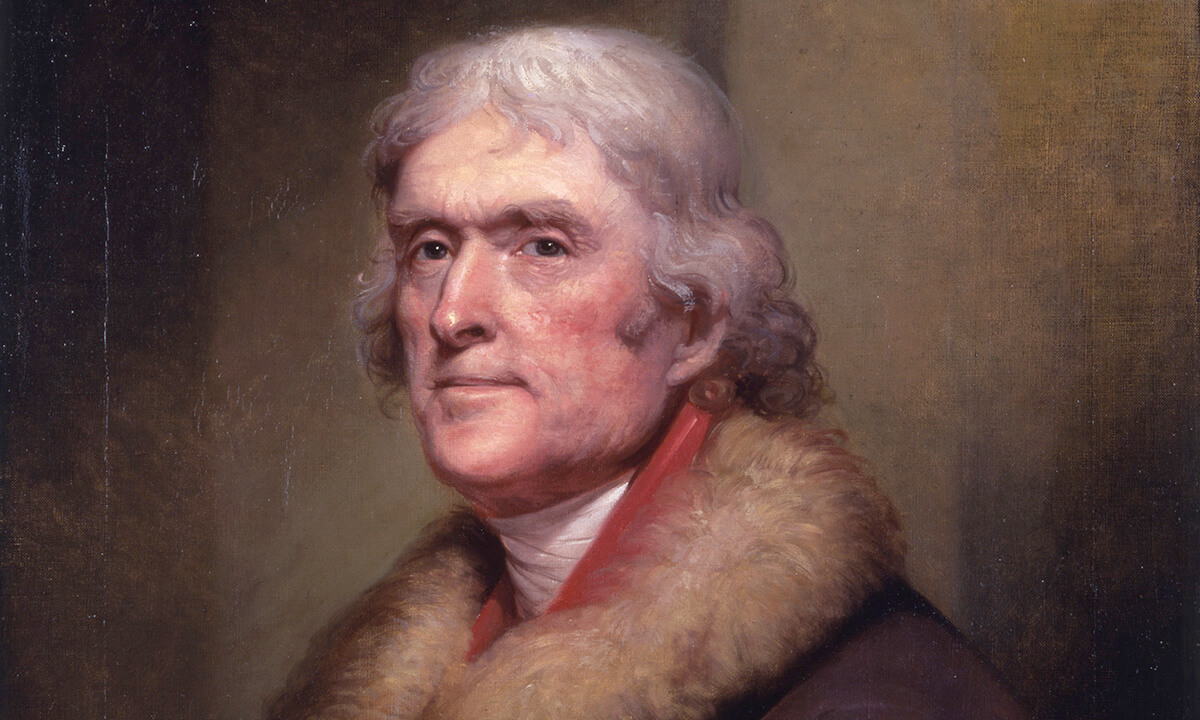
Rev. Mason, a close friend of Alexander Hamilton who attended Hamilton at his death, preached the following sermon in 1800 in opposition of the idea of Thomas Jefferson being elected President. (Read more about clergy opposition to Thomas Jefferson, along with other issues, in The Jefferson Lies.)
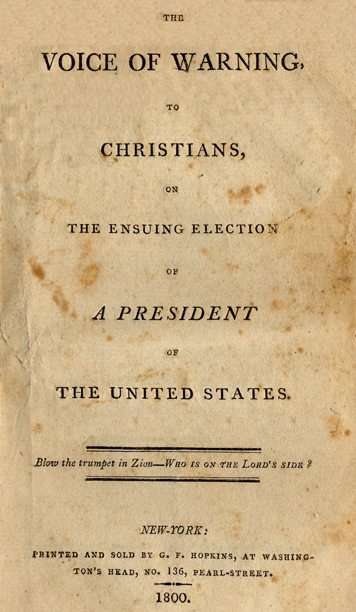

sermon-the-voice-of-warning-to-christians-1800

THE

VOICE OF WARNING

TO

CHRISTIANS,

ON

THE ENSUING ELECTION

OF

A PRESIDENT

OF

THE UNITED STATES.

Blow the trumpet in Zion – Who is on the Lord’s side?

TO CHRISTIANS,
Who price a good conscience, a consistent character, and the honor of their Redeemer, above all personal and political attachments;
THE FOLLOWING PAMPHLET
IS DEDICATED:
With the single request, that, laying aside passion, they will give it such a calm, serious, and considerate perusal, as they owe to an argument relative to the best interests of themselves, their families, their country, and the Church of God.

-N. York, September 30, 1800.

THE
VOICE OF WARNING, &c.

If a manly attempt to avert national ruin, by exposing a favorite error, should excite no resentment, nor draw any obloquy upon its author, there would certainly be a new thing under the sun. Men can seldom bear contradiction. They bear it least when they are most demonstrably wrong; because, having surrendered their judgment to prejudice, or their conscience to design, they must take refuge in obstinacy from the attacks of reason. The bad, dreading nothing so much as the prevalence of pure principle and virtuous habit, will ever be industrious in counteracting it; and the more candid, rational and convincing the means employed in its behalf, the louder will be their clamor, and the fiercer their opposition. On the other hand, good men are often led insensibly astray, and their very honesty becomes the guarantee of their delusion. Unaware, at first, of their inconsistency, they afterwards shrink from the test of their own profession. Startled by remonstrance, but unprepared to recede; checked by the misgivings of their own minds, yet urged on by their previous purpose and connection, the conflict renders them irritable, and they mark as their enemy whoever tells them the truth. From the coincidence of such a bias with the views of the profligate and daring, results incalculable mischief. The sympathy of a common cause unites the persons engaged in it; the shades of exterior character gradually disappear; Virtue sinks from her glory; Vice emerges from her infamy; the best and the basest appear nearly on a level; while the most atrocious principles either lose their horror, or have a veil thrown over them: and the man who endeavors to arrest their course, is singled out as a victim to revenge and madness. Such, from the beginning, has been the course of the world. None of its benefactors have escaped its calumnies and persecutions: not prophets, not apostles, not the Son of God himself. To this treatment, therefore, must everyone be reconciled, who labors to promote the best interests of his country. He must stake his popularity against his integrity; he must encounter a policy which will be contented with nothing short of his ruin; and if it may not spill his blood, will strive to overwhelm him with public execration. That this is the spirit which has pursued a writer, the purity of whose views is equaled only by their importance – I mean the author of “Serious Considerations on the Election of a President,” I need not inform any who inspect the gazettes. To lay before the people of the United States, proofs that a candidate for the office of their first magistrate, is an unbeliever in the scriptures; and that to confer such a distinction upon an open enemy to their religion, their Redeemer, and their hope, would be mischief to themselves and sin against God, is a crime never to be forgiven by a class of men too numerous for our peace or prosperity. The infidels have risen en masse, and it is not through their moderation that he retains any portion of his respectability or his usefulness. But in their wrath there is nothing to deprecate; nor does he deserve the name of a Christian, who, in order to avoid it, would deviate a hair’s breadth from his duty. For them I write not. Impenetrable by serious principle, they are not objects of expostulation, but of compassion; nor shall I stoop to any solicitude about their censure or applause.

But do I represent as infidels all who befriend Mr. Jefferson’s election? God forbid that I should so “lie against the truth.” If I thought so, I should mourn in silence: my pen should slumber forever. That a majority of them profess, and that multitudes of them really love, the religion of Jesus, while it is my terror, is also my hope. Terror, because I believe them to be under a fatal mistake; hope, because they, if any, are within the reach of conviction. I address myself to them. The latter, especially, are my brothers, by dearer ties and higher interests than can be created or destroyed by any political connection. And if it be asked, why mingle religion with questions of policy? Why irritate by opposition? Why risk the excitement of passions which may disserve, but cannot aid, the common Christianity? Why not maintain a prudent reserve, and permit matters of State to take their own course? I answer, because Christians are deeply engaged already: because the principles of the gospel are to regulate their political, as well as their other, conduct: because their Christian character, profession and prosperity are involved in the issue. This is no hour to temporize. I abhor that coward spirit which vaunts when gliding down the tide of opinion, but shrinks from the returning current, and calls the treason prudence. It is the voice of God’s providence not less than of his word, “Cry aloud, spare not; lift up thy voice “like a trumpet, and show my people their transgression, and the house of Jacob their sins.” With Christians, therefore, I must expostulate; and may not refrain. However they may be displeased, or threaten, I will say, with the Athenian chief, “Strike, but hear me.”

Fellow Christians,

A crisis of no common magnitude awaits our country. The approaching election of a President is to decide a quest5ion not merely of preference to an eminent individual, or particular views of policy, but, what is infinitely more, of national regard or disregard to the religion of Jesus Christ. Had the choice been between two infidels or two professed Christians, the point of politics would be untouched by me. Nor, though opposed to Mr. Jefferson, am I to be regarded as a partisan; since the principles which I am about to develop, will be equally unacceptable to many on both sides of the question. I dread the election of Mr. Jefferson, because I believe him to be a confirmed infidel: you desire it, because, while he is politically acceptable, you either doubt this fact, or do not consider it essential. Let us, like brethren, reason this matter.

The general opinion rarely, if ever, mistakes a character which private pursuits and public functions have placed in different attitudes; yet it is frequently formed upon circumstances which elude the grasp of argument even while they make a powerful and just impression. Notwithstanding, therefore, the belief of Mr. Jefferson’s infidelity, which has for years been uniform and strong, wherever his character has been a subject of speculation – although that infidelity has been boasted by some, lamented by many, and undisputed by all, yet as it is now denied by his friends, the charge, unsupported by other proof, could hardly be pursued to conviction. Happily for truth and for us, Mr. Jefferson has written; he has printed. While I shall not decline auxiliary testimony, I appeal to what he never retracted, and will not deny, his Notes on Virginia.1

In their war upon revelation, infidels have leveled their batteries against the miraculous facts of the scripture: well knowing that if its historical truth can be overturned, there is an end of its claim to inspiration. But God has protected his word. Particularly the universal deluge, the most stupendous miracle of the Old Testament, is fortified with impregnable evidence. The globe teems with demonstrations of it. Every mountain and hill and valley lifts up its voice to confirm the narrative of Moses. The very researches and discoveries of infidels themselves, contrary to their intentions, their wishes and their hopes, are here compelled to range behind the banner of the Bible. To attack, therefore, the scriptural account of the deluge, belongs only to the most desperate infidelity. Now, what will you think of Mr. Jefferson’s Christianity, if he has advanced positions which strike directly at the truth of God’s word concerning that wonderful event? Let him speak for himself: “It is said that shells are found in the Andes, in South America, fifteen thousand feet above the level of the ocean. This is considered by many, both of the learned and unlearned, as a proof of a universal deluge. But to the many considerations opposing this opinion, the following may be added: The atmosphere and all its contents, whether of water, air, or other matters, gravitate to the earth; that is to say, they have weight. Experience tells us, that the weight of all these columns together, never exceeds that of a column of mercury of 31 inches high. If the whole contents of the atmosphere then were water, instead of what they are, it would cover the globe but 35 feet deep: but, as these waters as they fell, would run into the seas, the superficial measure of which is to that of the dry parts of the globe, as two to one, the seas would be raised only 52 ½ feet above their present level, and of course would overflow the land to that height only. In Virginia this would be a very small proportion even of the champagne country, the banks of our tide-waters being frequently, if not generally, of a greater height. Deluges beyond this extent then, as for instance, to the North mountain or to Kentucky, seem out of the laws of Nature. But within it they may have taken place to a greater or less degree, in proportion to the combination of natural causes which may be supposed to have produced them. But such deluges as these, will not account for the shells found in the higher lands. A second opinion has been entertained, which is, that in times anterior to the records either of history or tradition, the bed of the ocean, the principal residence of the shelled tribe, has, by some great convulsion of nature, been heaved to the heights at which we now find shells and other remains of marine animals. The favorers of this opinion do well to suppose the great events on which it rests to have taken place beyond all the eras of history; for within these certainly none such can be found; and we may venture to say further, that no fact has taken place either in our own days, or in the thousands of years recorded in history, which proves the existence of any natural agents within or without the bowels of the earth, of force sufficient to heave to the height of 15,000 feet, such masses as the Andes.”2 After mentioning another opinion proposed y Voltaire, Mr. J. proceeds, “There is a wonder somewhere. Is it greatest on this branch of the dilemma; on that which supposes the existence of a power of which we have no evidence in any other case; or on the first which requires us to believe the creation of a body of water and its subsequent annihilation? Rejecting the whim of Voltaire, he concludes, that “three hypotheses are equally unsatisfactory, and we must be contented to acknowledge, that this great phenomenon is, as yet, unsolved.”3

On these extracts, I cannot suppress the following reflections.

1. Mr. Jefferson disbelieves the existence of a universal deluge. “There are many considerations, says he, “opposing this opinion.” The Bible says expressly, “The waters prevailed exceedingly upon the earth, and all the high hills that were under the whole heaven were covered.”4Mr. Jefferson enters into a philosophical argument to prove the fact impossible; that is, he argues in the very face of God’s word, and, as far as his reasoning goes, endeavors to convict it of falsehood.

2. Mr. Jefferson’s concession of the probability of deluges within certain limits, does not rank him with those great men who have supposed the deluge to be partial, because his argument concludes directly against the scriptural narrative, even upon that supposition. He will not admit his partial deluges to rise above 52 ½ feet above the level of the ocean. Whereas the scripture, circumscribe its deluge as you will, asserts that the waters were fifteen cubits (27 ½ feet nearly) above the mountains.5

3. Not satisfied with his argument, Mr. Jefferson sneers at the scripture itself, and at the credulity of those who, relying upon its testimony, believe “that the bed of the ocean has by some great convulsion of nature, been heaved to the heights at which we now find shells and other remains of marine animals.” “They do well,” says he, “to suppose the great events on which it rests to have taken place beyond all the eras of history; for within these none such are to be found.” Indeed! And so our faith in God’s word is to dwindle, at the touch of a profane philosopher, into an “opinion,” unsupported by either “history or tradition!” All the fountains of the great deep, says the scripture, were broken up.6 Was this no “great convulsion of nature?” Could not this “heave the bed of the ocean to the height at “which we now find shells?” But the favorers of this opinion suppose the great events on which it rests to have taken place beyond all the eras of history. And they do well, says Mr. Jefferson: the plain meaning which is, that their error would certainly be detected if they did not retreat into the darkness of fable. Malignant sarcasm! And who are “the favorers of “this opinion?” At least all who embrace the holy scriptures. These do declare most unequivocally, that there was such a “great convulsion of nature” as produced a deluge infinitely more formidable than Mr. Jefferson’s philosophy can digest. But he will not so much as allow them to be history: he degrades them even below tradition. We talk of times for our flood, he tells us, “anterior to the records either of history or tradition.” Nor will it mend the matter, to urge that he alludes only to a profane history. The fact could not be more dubious or less deserving a place in the systems of philosophy from the attestation of infallible truth. And is this truth to be spurned as no history; not even tradition? It is thus, Christians, that a man whom you are expected to elevate to the chief magistracy, insults yourselves and your Bible.7

4. Mr. Jefferson’s argument against the flood is, in substance, the very argument by which infidels have attacked the credibility of the Mosaic history. They have always objected the insufficiency of water to effect such a deluge as that describes. Mr. J. knew this. Yet he adopts and repeats it. He does not deign so much as to mention Moses: while through the sides of one of his hypotheses, he strikes at the scriptural history, he winds up with pronouncing all the three to be “equally unsatisfactory.” Thus reducing the holy volume to a level with the dreams of Voltaire! Let me now ask any Christian, would you dare to express yourself in a similar manner upon a subject which has received the decision of the living God? Would you patiently hear one of your neighbors speak so irreverently of his oracles? Could you venture to speculate on the deluge without resorting to them? Would you not shudder at the thought to them? Would you not shudder at the thought of using, in support of a philosophical opinion, the arguments which infidels bring against that WORD which is the source of all your consolation; much more to use them without a lisp of respect for it, or of caution against mistake? Can he believe the Bible who does all this? Can an infidel do more without directly assailing it? What then must you think of Mr. Jefferson?

But it was not enough for this gentleman to discredit the story of the deluge. He has advanced a step farther, and has indicated, too plainly, his disbelief in the common origin of mankind. The scriptures teach that all nations are the offspring of the first and single pair, Adam and Eve, whom God created and placed in paradise. This fact, interwoven with all the relations and all the doctrines of the Bible, is alike essential to its historical and religious truth. Now what says the candidate for the chair of your president? After an ingenious, lengthy, and elaborate argument to prove that the blacks are naturally and morally inferior both to white and red men; and that “their inferiority is not the effect merely of their condition of life,”8 he observes, “I advance it therefore as a suspicion only, that the blacks, whether originally a distinct race, or made distinct by time and circumstances, are inferior to the whites in the endowments both of body and mind.”9 He had therefore asserted, that “besides those of color, figure, and hair, there are other physical distinctions, proving a difference of race.10 He does, indeed, discover some compunction in reflecting on the consequences of his philosophy. For to several reasons why his opinion “must be hazarded with great diffidence,” he adds “as a circumstance of great tenderness,” that the “conclusion” to which his observations lead, “would degrade a whole race of men from the rank in the scale of beings which their Creator may perhaps have given them.”11 Much pains have been taken to persuade the public that Mr. Jefferson by “distinct race” and “difference of race,” means nothing more than that the negroes are only a branch of the great family of man, without impeaching the identity of their origin. This construction, though it may satisfy many, is unfounded, absurd, and contradicted by Mr. Jefferson himself. Unfounded: For when Philosophers treat of man as a “subject of natural history,” they use the term “race,” to express the stock from which the particular families spring, and not, as in the popular sense, the families themselves, without regard to their original. A single example, embracing the opinions of two philosophers, of whom the one, M. de Buffon, maintained, and the other, Lord Kames, denied the common origin of mankind, will prove my assertion.

“M. Buffon, from the rule, that animals which can procreate together, and whose progeny can also procreate, are of one species, concludes that all men are of one race or species.”12 Mr. Jefferson, writing on the same subject with these authors, and arguing on the same side with one of them, undoubtedly uses the term “race” in the same sense. And as the other construction is unfounded, it is also absurd. For it represents him as laboring through nearly a dozen pages to prove what no man ever thought of doubting, and what a glance of the eye sufficiently ascertains, viz. that the blacks and whites are different branches of a common family. Mr. Jefferson is not such a trifler; he fills his pages with more important matter, and with deeper sense. And by expressions which cut off evasion, contradicts the meaning which his friends have invented for him. He enumerates a variety of “distinctions which prove a difference of race.” These distinctions he alleges are not accidental, but “physical,” i.e. founded in nature. True, alarmed at the boldness of his own doctrine, he retreats a little. His proofs evaporate into a suspicion; but that suspicion is at a loss to suspect, whether the inferiority of the blacks (Mark it well, reader!) is owing to their being “originally Branches of the same stock originally distinct, is a contradiction. Mr. Jefferson therefore means, by different races, men descended from different stocks. His very “tenderness” is tinctured with an infidel hue. A conclusion corresponding with his speculations, affects him, because it “would degrade a whole race of men from the rank in the scale of beings which their Creator may perhaps have given them.” So then; the secret is out! What rank in the scale of beings have we, obeying the scripture, been accustomed to assign to the injured blacks? The very same with ourselves, viz. that of children of one common father. But if Mr. Jefferson’s notions be just, he says they will be degraded from that rank; i.e. will appear not to be children of the same father with us, but of another and inferior stock. But though he will not speak peremptorily, he strongly insinuates that he does not adopt, as an article of his philosophy, the descent of the blacks as well as the whites from that pair which came immediately from the hands of God. He is not sure. At best it is a doubt with him – “the rank which their Creator may perhaps have given them!” Now how will all this accord with revealed truth? God, says the Apostle Paul, “Hath made of one blood all nations of “men, for to dwell on all the face of the earth.”13 Perhaps it may be so, replies Mr. Jefferson; but there are, notwithstanding, physical distinctions proving a difference of race. I cannot repress my indignation! That a miserable, sinful worm, like myself, should proudly set up his “proofs” against the truth of my God and your God, and scout his veracity with a skeptical perhaps! I entreat Christians to consider the sweeping extent of this infidel doctrine of “different races.” If it be true, the history of the Bible, which knows of but one, is a string of falsehoods from the book of Genesis to that of the Revelation; and the whole system of redemption, predicated on the unity of the human race, is a cruel fiction. I ask Christians again, whether they would dare to speak and write on this subject in the style of Mr. Jefferson? Whether any believer in the word of the Lord Jesus, who is their hope, could entertain such doubts? Whether a writer, acute, cautious, and profound, like Mr. Jefferson, could as he had before done in the case of the deluge, pursue a train of argument, which he knew infidels before him had used to discredit revelation, and on which they still have great reliance – Whether, instead of vindicating the honor of the scripture, he could, in such circumstances, be as mute as death on this point; countenancing infidels by enforcing their sentiments; and yet be a Christian? The thing is impossible! And were any other than Mr. Jefferson to be guilty of the same disrespect to God’s word, you would not hesitate one moment in pronouncing him an infidel.

It is not only with his philosophical disquisitions hat Mr. Jefferson mingles opinions irreconcilable with the scriptures. He even goes out of his way for the sake of a fling at them. “Those,” says he, “who labor in the earth, are the chosen people of God, if ever he had a chosen people, whose breasts he has made his peculiar deposit for substantial and genuine virtue.”14

How does a Christian ear relish this “profane babbling?” In the first place, Mr. Jefferson doubts if ever God had a chosen people. In the second place, if he had, he insists they are no other than those who labor in the earth. At any rate, he denies his privilege to the seed of Abraham; and equally denies your being his people, unless you follow the scythe and the plow. Now, whether this be not the lie direct to the whole testimony of the Bible from the beginning to the end, judge ye.15

After these affronts to the oracles of God, you have no right to be surprised if Mr. Jefferson should preach the innocence of error, or even of Atheism. What do I say! He does preach it. “The legitimate powers of government,” they are his own words, “extend to such acts only as are injurious to others. But it does me no injury for my neighbors to say there are twenty Gods or no God. It neither picks my pocket nor breaks my leg.”16

Ponder well this paragraph. Ten thousand impieties and mischief’s lurk in its womb. Mr. Jefferson maintains not only the inviolability of opinion, but of opinion, propagated. And that no class or character of abomination might be excluded from the sanctuary of such laws as he wishes to see established, he pleads for the impunity of published error in its most dangerous and execrable form. Polytheism or atheism, “twenty gods or no god,” is perfectly indifferent in Mr. Jefferson’s good citizen. A wretch may trumpet atheism from New Hampshire to Georgia; may laugh at all the realities of futurity; may scoff and teach others to scoff at their accountability; it is no matter, says Mr. Jefferson, “it neither picks my pocket, nor breaks my leg.” This is nothing less than representing civil society as founded in atheism. For there can be no religion without God. And if it does me or my neighbor no injury, to subvert the very foundation of religion by denying the being of God, then religion is not one of the constituent principles of society, and consequently society is perfect without it; that is, is perfect in atheism. Christians! What think you of this doctrine? Have you so learned Christ or truth? Is Atheism indeed no injury to society? Is it no injury to untie all the cords which bind you to the God of Heaven, and your deeds to his throne of judgment; which form the strength of personal virtue, give energy to the duties, and infuse sweetness into the charities, of human life? Is it indeed no injury to you, or to those around you, that your neighbor buries his conscience and all his sense of moral obligation in the gulf of atheism? Is it no injury to you, that the oath ceases to be sacred? That the eye of the Omniscient no more pervades the abode of crime? That you have no hold on your dearest friend, farther than the law is able to reach his person? Have you yet to learn that the peace and happiness of society depend upon things which the laws of men can never embrace? And whence, I pray you, are righteous laws to emanate, if rulers, by adopting atheism, be freed from the coercion of future retribution? Would you not rather be scourged with sword and famine and pestilence, than see your country converted into a den of atheism? Yet, says Mr. Jefferson, it is a harmless thing. “It does me no injury; it neither picks my pocket, nor breaks my leg.” This is perfectly of a piece with his favorite wish to see a government administered without any religious principle among either rulers or ruled. Pardon me, Christian: this is the morality of devils, which would break in an instant every link in the chain of human friendship, and transform the globe into one equal scene of desolation and horror, where fiend would prowl with fiend for plunder and blood – yet atheism “neither picks my pocket, nor breaks my leg.” I will not abuse you by asking, whether the author of such an opinion can be a Christian? Or whether he has any regard for the scriptures which confines all wisdom and blessedness and glory, both personal and social, to the fear and the favor of God?

The reader will observe, that in his sentiments on these four points, the deluge; the origin of nations; the chosen people of God; and Atheism, Mr. Jefferson has comprised the radical principles of infidelity in its utmost latitude. Accede to his positions on these, and he will compel you to grant the rest. There is hardly a single truth of revelation which would not fall before one or other of them. If the deluge be abandoned, you can defend neither the miracles, nor inspiration of the scripture. If men are not descendants of one common stock, the doctrine of salvation is convicted of essential error. If God never had any chosen people but the cultivators of the soil, the fabric of the New Testament falls to the ground; for its foundation in the choice of Israel to be his peculiar people, is swept away. And if the Atheism of one man be not injurious to another, society could easily dispense not only with his word but with his worship.

Conformable with the infidelity of his book, is an expression of Mr. Jefferson contained in a paragraph which I transcribe from the pamphlet entitled “Serious Considerations,”&c.

“When the late Rev. Dr. John B. Smith resided in Virginia, the famous Mazzei happened one night to be his guest. Dr. Smith having, as usual, assembled his family for their evening devotions, the circumstance occasioned some discourse on religion, in which the Italian made no secret of his infidel principles. In the course of conversation, he remarked to Dr. Smith, “Why your great philosopher and statesman, Mr. Jefferson, is rather farther gone in infidelity than I am;” and related, in confirmation, the following anecdote: That as he was once riding with Mr. Jefferson, he expressed his “surprise that the people of this country take no better care of their public buildings.” “What buildings?” exclaimed Mr. Jefferson, “Is not that a church?” replied he, pointing to a decayed edifice. “Yes,” answered Mr. Jefferson. “I am astonished,” said the other, “that they permit it to be in so ruinous a condition.” “It is good enough,” rejoined Mr. Jefferson, for him that was born in a manger!!” “Such a contemptuous fling at the blessed Jesus, could issue from the lips of no other than a deadly foe to his name and his cause.”17

Some of Mr. Jefferson’s friends have been desperate enough to challenge this anecdote as a calumny fabricated for electioneering purposes. But whatever they pretend, it is incontestably true, that the story was told, as here repeated, by Dr. Smith. I, as well as the author of “Serious Considerations,” and several others, heard it from the lips of Dr. Smith years ago, and more than once. The calumny, if any, lies either with those who impeach the veracity of a number of respectable witnesses, or with Mazzei himself. And there are not wanting, among the followers of Mr. Jefferson, advocates for this latter opinion. He must have been a wretch indeed, to blacken his brother-philosopher, by trumping up a deliberate lie in order to excuse his own impiety in the presence of a minister of Christ! If such was Mazzei, the philosopher, it is our wisdom to think, and think again, before we heap our largest honors upon the head of his bosom-friend.

Christian reader, the facts and reasoning which I have laid before you, produce in my mind an irresistible conviction, that Mr. Jefferson is a confirmed infidel; and I cannot see how they should have a less effect on yours. But when to these you add his solicitude for wresting the Bible from the hands of your children – his notoriously unchristian character – his disregard to all the ordinances of divine worship – his utter and open contempt of the Lord’s day, insomuch as to receive on it a public entertainment;+ every trace of doubt must vanish. What is a man who writes against the truths of God’s word? Who makes no even a profession of Christianity? Who is without Sabbaths; without the sanctuary; without so much as a decent external respect for the faith and the worship of Christians? What is he, what can he be, but a decided, a hardened infidel?

Several feeble and fruitless attempts have been made to fritter down and dissipate this mass of evidence. In vain are we told that Mr. Jefferson’s conduct is modest, moral, exemplary. I ask no odious questions. A man must be an adept in the higher orders of profligacy, if neither literary occupation, nor the influence of the surrounding gospel, can form or control his habits. Though infidelity and licentiousness are twin sisters, they are not compelled to be always in company; that I am not a debauchee, will therefore be hardly admitted as proof that I am not an infidel. In vain are we reminded, that the “Notes on Virginia” contain familiar mention, and respectful acknowledgment, of the being and attributes of God. Though infidelity leads to Atheism, a man may be an infidel without being an Atheist. Some have even pretended, that anxiety for the honor of God, prompted them to fix the brand of imposture upon the scripture! But where has Mr. Jefferson, when stating his private opinions, betrayed the least regard for the gospel of our Lord Jesus Christ? In vain is it proclaimed, that he maintains a Christian minister at his own expense. I shall not enquire whether that maintenance does or does not arise from the product of glebe lands attached to many southern estates. Taking the fact to be simply as related, I will enquire whether prudent and political men never contribute to the support of Christianity from other motives than a belief of its truth? Mr. Jefferson may do all this and yet be an infidel. Voltaire, the vile, the blasphemous Voltaire, was building churches, and assisting at the mass, while he was writing to his philosophical confidants, concerning your divine Savior, Crush the wretch! In vain is the “Act for establishing religious freedom,” which flowed from the pen of Mr. Jefferson, and passed in the Assembly of Virginia, in 1786, paraded as the triumph of his Christian creed. I protest against the credibility of the witness! That act, I know, recognizes “the Holy Author of our religion,” as “Lord both of body and mind,” and possessing “Almighty power;” and by censuring “fallible and uninspired men,” tacitly acknowledges both the inspiration and infallibility of the sacred writers. But Mr. Jefferson is not here declaring his private opinions: for these we must look to his Notes, which were published a year after, and abound with ideas which contradict the authority of the scriptures. He speaks, in that act, as the organ of an Assembly professing Christianity; and it would not only have been a monstrous absurdity, but more than his credit and the Assembly’s too, was worth, to have been disrespectful, in an official deed, to that Redeemer whose name they owned, and who was precious to many of their constituents. Such Christianity is common with the bitterest enemies of Christ. Herbert, Hobbes, Blount, Toland, Tindal, Bolingbroke, Hume, Voltaire, Gibbon, at the very moment when they were laboring to argue or to laugh the gospel out of the world, affected great regard for our “holy religion” and its divine author. There is an edict of Frederic the II, of Prussia, on the subject of religious toleration, couched in terms of the utmost reverence for the Christian religion, and yet this same Frederic was one of the know of conspirators, who, with Voltaire at their head, plotted the extermination of Christianity: and whenever they spoke of its “Holy Author,” echoed to each other, Crush the wretch! This act, therefore proves nothing but that, at the time of its passing (we hope it is so still) there was religion enough in Virginia, to curb the proud spirit of infidelity.

Christians! Lay these things together: compare them; examine them separately, and collectively: ponder; pause; lay your hands upon your hearts; lift up your hearts to heaven, and pronounce on Mr. Jefferson’s Christianity. You cannot stifle your emotions; nor forbear uttering your indignant sentence – INFIDEL!!

This point being settled, one would think that you could have no difficulty about the rest, and would instantly and firmly conclude, “Such a man ought not, and as far as depends on me, shall not, be President of the United States! But I calculate too confidently. I have the humiliation to hear this inference controverted even by those whose “good confession” was a pledge that they are feelingly alive to the honor of their Redeemer. No, I am not deceived: they are Christian lips which plead that “Religion has nothing to do with politics” – that to refuse our suffrages on account of religious principles, would be an interference with the rights of conscience – that there is little hope of procuring a real believer, and we had better choose an infidel than a hypocrite.

That religion has, in fact, nothing to do with the politics of many who profess it, is a melancholy truth. But that it has, of right, no concern with political transactions, is quite a new discovery. If such opinions, however, prevail, there is no longer any mystery in the character of those whose who conduct, in political matters, violates every precept, and slanders every principle, of the religion of Christ. But what is politics? Is it not the science and the exercise of civil rights and civil duties? And what is religion? Is it not an obligation to the service of God, founded on his authority, and extending to all our relations personal and social? Yet religion has nothing to do with politics! Where did you learn this maxim? The Bible is full of directions for your behavior as citizens. It is plain, pointed, awful in its injunctions on rulers and ruled as such: yet religion has nothing to do with politics. You are commanded “in ALL your ways acknowledge him.”18 IN EVERYTHING, by prayer and supplication, with thanksgiving, to let your requests be made known unto God,”19And WHATSOEVER YE DO, IN WORD OR DEED, to do ALL IN THE NAME of the Lord Jesus.20 Yet, religion has nothing to do with politics! Most astonishing! And is there any part of your conduct in which you are, or wish to be, without law to God, and not under the law of Christ? Can you persuade yourselves that political men and measures are to undergo no review in the judgment to come? That all the passion and violence, the fraud and falsehood, and corruption which pervade the systems of party, and burst out like a flood at the public elections, are to be blotted from the catalogue of unchristian deeds, because they are politics? Or that a minister of the gospel may see his people, in their political career, bid defiance to their God in breaking through every moral restraint, and keep a guiltless silence because religion has nothing to do with politics? I forbear to press the argument farther; observing only, that many of our difficulties and sins may be traced to this pernicious notion. Yes, if our religion had had more to do with politics, if, in the pride of our citizenship, we had not forgotten our Christianity: if we had prayed more and wrangled less about the affairs of our country, it would have been infinitely better for us at this day.

But you are afraid that to refuse a man your suffrages because he is an infidel, would interfere with the rights of conscience. This is a most singular scruple, and proves how wild are the opinions of men on the subject of liberty. Conscience is God’s officer in the human breast, and its rights are defined by his law. The right of conscience to trample on his authority is the right of a rebel, which entitles him to nothing but condign punishment. You are afraid of being unkind to the conscience of an infidel. Dismiss your fears. It is the last grievance of which he will complaint. How far do you suppose Mr. Jefferson consulted his conscience when he was vilifying the divine word, and preaching insurrection against God, by preaching the harmlessness of Atheism? But supposing Mr. Jefferson to be conscientiously impious, this would only be a stronger reason for our opposition. For the more conscientious a man is, the more persevering will he be in his views, and the more anxious for their propagation. If he be fixed, then, in dangerous error, faithfulness to God and truth requires us to resist him and his conscience too; and to keep from him the means of doing mischief. If a man thought himself bound in conscience, whenever he should be able, to banish God’s Sabbath, burn his churches, and hang his worshippers, would you entrust him with power out of respect to conscience? I trust not. And why you should judge differently in the case of an infidel who spurns at what is dearer to you than life, I cannot conceive. But in your solicitude for the conscience of Mr. Jefferson, have you considered, in the mean time, what becomes of your own conscience? Has it no rights? No voice? No influence? Are you not to keep it void of offense towards God? Can you do this in elevating his open enemies to the highest dignity of your country? Beware, therefore, lest an ill-directed care for the conscience of another, bring your own under the lashes of remorse. Keep this clear, by the word of God, and there is little hazard of injuring your neighbor’s. But how can you interfere with any man’s conscience by refusing him a political office? You do not invade the sanctuary of his bosom: you impose on him no creed: you simply tell him you do not like him, or that you prefer another to him. Do you injure him by this? Do you not merely exercise the right of a citizen and a Christian? It belongs essentially to the freedom of election, to refuse my vote to any candidate for reasons of conscience, of state, of predilection, or for no reason at all but my own choice. The rights of conscience, on his part, are out of the question. He proposes himself for my approbation. If I approve, I give him my support. If not, I withhold it. His conscience has nothing to do with my motives; but to my own conscience they are serious things. If he be an infidel, I will not compel him to profess Christianity. Let him retain his infidelity, enjoy all its comforts, and meet all its consequences. But I have an unquestionable right to say, “I cannot trust a man of such principles: on what grounds he has adopted them is not my concern; nor will his personal sincerity alter their tendency. While he is an infidel, he shall never have my countenance. Let him stay where he is: and let his conscience be its own reward.” I could not blame another for such conduct to me; for he only makes an independent use of his privilege, which does me no injury: nor am I to be blamed for such conduct to another, for I only make the same use of my privilege, which is no injury to him. Mr. Jefferson’s conscience cannot, therefore, be wronged if you exclude him from the presidency because he is an infidel; and your own, by an act of such Christian magnanimity, may escape hereafter many a bitter pang. For if you elect Mr. Jefferson, though an infidel, from a regard to what you consider the rights of conscience, you must, in order to be consistent, carry your principle through. If infidelity is not a valid objection to a candidate for the presidency, it cannot be so to a candidate for any other office. You must never again say, “We will not vote for such a man because he is an infidel.” The evil brotherhood will turn upon you with your own doctrine of the “rights of conscience.,” You must then either retract, or be content to see every office filled with infidels. How horrible, in such an event, would be the situation of your country! How deep your agony under the torments of self-reproach!

But there is no prospect, you say, of obtaining a real Christian, and we had better choose an infidel than a hypocrite. By no means. Supposing that a man professes Christianity, and evinces in his general deportment a regard for its doctrines, its worship, and its laws; though he be rotten at heart, he is infinitely preferable to a known infidel. His hypocrisy is before God. It may ruin his own soul; but, while it is without detection, can do no hurt to men. We have a hold of him which it is impossible to get of an infidel. His reputation, his habits, his interests, depending upon the belief of his Christianity, are sureties for his behavior to which we vainly look for a counterbalance in an infidel; and they are, next to religion itself, the strongest sureties of man to man. His very hypocrisy is homage to the gospel. The whole weight of his example is on the side of Christianity, while that of an open infidel lies wholly against it. It is well known that the attendance of your Washington, and of President Adams upon public worship, gave the ordinances of the gospel a respectability in the eyes of many which otherwise they would not have had: brought a train of thoughtless people within the reach of the means of salvation: and thus strengthened the opposition of Christians to the progress of infidelity. You can never forget the honorable testimony which Mr. Adams bore, in one of his proclamations, to a number of the most precious truths of Revelation; nor how he was abused and ridiculed for it, by not a few of those very persons who now strive to persuade you that Mr. Jefferson is a Christian. In short, your President, if an open infidel, will be a center of contagion to the whole continent: If a professed Christian, he will honor the institutions of God; and though his hypocrisy, should he prove a hypocrite, may be a fire to consume his own vitals, it cannot become a wide-spreading conflagration.

Can you still hesitate? Perhaps you may. I therefore bespeak your attention to a few plain and cogent reasons, why you cannot, without violating your plighted faith, and trampling on your most sacred duties, place an infidel at the head of your government.

1. The civil magistrate is God’s officer. He is the minister of God, says Paul, to thee for good.21 Consequently his first and highest obligation, is to cherish in his mind, and express in his conduct, his sense of obedience to the Governor of the Universe. He that rules over men must be just, ruling in THE FEAR OF GOD.22 The scriptures have left you this and similar declarations, to direct you in the choice of your magistrates. And you are bound, upon your allegiance to the God of the scriptures, to look out for such men as answer he description; and if, unhappily, they are not to be had, for such as come nearest to it. The good man, he who shall “dwell in God’s holy hill,” is one “in whose eyes “a vile person is contemned; but he who honors “them that fear the Lord.”23 But can you pretend to regard this principle, when you desire to raise an infidel to the most important post in your country? Do you call this honoring them that fear God? Nay, it is honoring them who do not fear God: that is, according o the scriptural contrast, honoring a vile person, whom as Christians, you ought to contemn. And have you the smallest expectation that one who despises the word and worship of God; who has openly taught the harmlessness of rebellion against his government and being, by teaching that Atheism is no injury to society, will nevertheless, rule in his fear? Will it show any reverence or love to your Father in Heaven, to put a distinguishing mark of your confidence upon his sworn foe? Or will it be an affront to his majesty?

2. The civil magistrate is, by divine appointment, the guardian of the Sabbath. In it thou shall not do any work; thou, nor thy son, &c. nor THE STRANGER THAT IS WITHIN THY GATES.24 “Gates,” is a scriptural term for public authority; and that it is so to be understood in this commandment, is evident from its connection with “stranger.” God says that even the stranger shall not be allowed to profane his Sabbath. But the stranger can be controlled only by the civil magistrate who “sitteth in the gate.”25I therefore belong to his office, to enforce, by lawful means, the sanctification of the Sabbath, as the fundamental institute of religion and morals, and the social expression of homage to that God under whom he acts. The least which can be accepted from him, is to recommend it by personal observance. How do you suppose Mr. Jefferson will perform this part of his duty? Or how can you deposit in his hands a rust, which you cannot but think he will betray; and in betraying which, he will not only sacrifice some of your most invaluable interests, but as your organ and in your name, lift up his heel against the God of Heaven? In different states, you have made, not long since, spirited exertions to hinder the profanation of your Lord’s day. For this purpose many of you endeavored to procure religious magistrates for this City, and religious representatives in the councils of the State. You well remember how you were mocked, traduced, execrated, especially by the infidel tribe. But what is now become of your zeal and your consistency? I can read in the list of delegates to the Legislature, the names of men who have been an ornament to the gospel, and acquitted themselves like Christians in that noble struggle, and yet are expected to ballot for electors, whose votes shall be given to an infidel President. Who has bewitched you, Christians? Or, what do you mean by siding with the infidels to lift into the chair of State, a man more eminent for nothing than for his scorn of the day, the ordinances, and the worship of your Redeemer; and who did not blush to make it, in the face of the sun, a season of frolic and revel?26 Is this your kindness to your friend?

3. The church of God has ever accounted it a great mercy to have civil rulers professing his name. Rather than yield it, thousands of your fathers have poured out their blood. This privilege is now in your hands: and it is the chief circumstance which makes the freedom of election worth a Christian’s care. Will you, dare you, abuse it by prostituting it to the aggrandizement of an enemy to your Lord and to his Christ? If you do, will it not be a righteous thing with God to take the privilege from you altogether; and, in his wrath, to subject you, and your children, to such rulers as you have, by your own deed, preferred?

4. You are commanded to pray for your rulers: it is your custom to pray, that they may be men fearing God and hating covetousness. You entreat him to fulfill his promise, that kings shall be to his church nursing-fathers and queens her nursing mothers.27 With what conscience can you lift up your hands in such supplication, when you are exerting yourselves to procure a President, who you know does not fear God; i. e. one exactly the reverse of the man whom you ask him to bestow? And when, by this act, you do all in your power to defeat the promise of which you affect to wish the fulfillment? Do you think that the church of Christ is to be nurtured by the dragon’s milk of infidelity? Or that the contradiction between your prayers and your practice does not mock the holy God?

5. There are circumstances in the state of your country which impart to these reflections, applicable in their spirit to all Christians, a double emphasis in their application to you.

The Federal Constitution makes no acknowledgement of that God who gave us our national existence, and saved us from anarchy and internal war. This neglect has excited in many of its best friends, more alarm than all other difficulties. The only way to wipe off the reproach of irreligion, and to avert the descending vengeance, is to prove, by our national acts, that the Constitution has not, in this instance, done justice to the public sentiment. But if you appoint an infidel for your President, and such an infidel as Mr. Jefferson, you will sanction that neglect, you will declare, by a solemn national act, that there is no more religion in your collective character, than in your written constitution: you will put a national indignity upon the God of your mercies; and provoke him, it may be, to send over your land that deluge of judgments which his forbearance has hitherto suspended.

Add to this the consideration, that infidelity has awfully increased. The time was, and that within your own recollection, when the term infidelity was almost a stranger to our ears, and an open infidel an object of abhorrence. But now the term has become familiar, and infidels hardly disgust. Our youth, our hope and our pride, are poisoned with the accursed leaven. The vain title of “philosopher,” has turned their giddy heads, and, what is worse, corrupted their untutored hearts. It is now a mark of sense, the proof of an enlarged and liberal mind, to scoff at all the truths of inspiration, and to cover with ridicule the hope of a Christian; those truths and that hope which are the richest boon of divine benignity; which calm the perturbed conscience, and heal the wounded spirit; which sweeten every comfort, and soothe every sorrow; which give strong consolation in the arrest of death, and shed the light of immortality on the gloom of the grave. All, all are become the sneer of the buffoon, and the song of the drunkard. These things, Christians, you deplore. You feel indignant, as well as discouraged, at the inroads of infidel principle and profligate manners. You declaim against them. You caution your children against their infection. And yet, with such facts before your eyes, and such lessons in your mouths, you are on the point of undoing whatever you have done; and annihilating, at one blow, the effect of all your profession, instruction, and example. By giving your support to Mr. Jefferson, you are about to strip infidelity of its ignominy; array it in honors; and hold it up with éclat to the view of the rising generation. By this act, you will proclaim to the whole world that it is not so detestable a thing as you pretended; that you do not believe it subversive of moral obligation and social purity: that a man may revile your religion and blaspheme your Savior; and yet command your highest confidence. This amounts to nothing less than a deliberate surrender of the cause of Jesus Christ into the hands of his enemies. By this single act – my flesh trembles, my blood chills at the thought! By this single act you will do more to destroy a regard for the gospel of Jesus, than the whole fraternity of infidels with all their arts, their industry and their intrigues. You will stamp credit upon principles, the native tendency of which is to ruin your children in this world, and damn them in the world to come. O God! “The ox knows his owner, and the ass his master’s crib: but thy people do not know, and Israel does not consider.”28

With these serious reflections, let me connect a fact equally serious: The whole strength of open and active infidelity is on the side of Mr. Jefferson. You may well start! But the observation and experience of the Continent is one long and loud attestation to the truth of my assertion. I say open and active infidelity. You can scarcely find one exception among all who preach infidel tenets among the people. Did it never occur to you, that such men would not be so zealous for Mr. Jefferson if they were not well assured of his being one of themselves – that they would cordially hate him if they supposed him to be a Christian – or that they have the most sanguine hope that his election to the Presidency will promote their cause? I know, that to serve the purpose of the moment =, those very presses which teemed with abuse of your Redeemer, are now affecting to offer incense to his religion; and that Deists themselves are laboring to convince you that Mr. Jefferson is a Christian; and yet have the effrontery to talk of other men’s hypocrisy! Can you be the dupes of such an artifice? Do you not see in it a proof that there is no reliance to be placed on an infidel conscience? Do you need to be reminded that these infidels who now court you, are the very men who, four years ago, insulted your faith and your Lord with every expression of ridicule and contempt? That these very men circulated, with unremitting assiduity, that execrable book of Boulanger, entitled Christianity Unveiled; and that equally execrable abortion of Thomas Paine, The Age of Reason? That, in order to get them (especially the latter) into the hands of the common people, they sold them at a very low rate; gave them away where they could not sell them; and slipped them into the pockets of numbers who refused to accept them? Do you know that some of these infidels were at the trouble of translating from the French, and printing, for the benefit of Americans, a work of downright, undisguised Atheism, with the imposing title of Common Sense? That it was openly advertised, and extracts, or an extract, published to help the sale?29 Do you know that some of the same brotherhood are secretly handing about, I need not say where, a book, written by Charles Pigott, an Englishman, entitled A Political Dictionary? Take the following example of its impiety: (my hair stiffens while I transcribe it) “Religion – a superstition invented by the arch-bishop of hell, and propagated by his faithful diocesans the clergy, to keep the people in ignorance and darkness, that they may not see the work of iniquity that is going on,” &c.30

Such are the men with whom professors of the name of our Lord Jesus Christ are concerting the election of an infidel to the Presidency of the United States of America. Hear the word of the Lord. “What fellowship has righteousness with unrighteousness? And what communion has light with darkness? And what concord hath Christ with Belial? And what part has he that believes with an infidel?”31 Yet Christians are uniting with infidels in exalting an infidel to the chief magistracy! If he succeed, Christians must bear the blame. Numerous as the infidels are, they are not yet able, adored be God, to seize up on our “high places.” Christians must help them, or they set not their feet on the threshold of power. If, therefore, an infidel preside over our country, it will be YOUR fault, Christians; and YOUR act; and YOU shall answer it? And for aiding and abetting such a design, I charge upon your consciences the sin of striking hands in a covenant of friendship with the enemies of your master’s glory. Ah, what will be your compunction, when these same infidels, victorious through your assistance, will “tread you down as the mire in the streets,” and exult in their triumph over bigots and bigotry.

Sit down, now, and interrogate your own hearts, whether you can, with a “pure conscience,” befriend Mr. Jefferson’s election? Whether you can do it in the name of the Lord Jesus? Whether you can lift up your heads and tell him that the choice of this infidel is for his honor, and that you promote it in the faith of his approbation? Whether, in the event of success, you have a right to look for his blessing in the enjoyment of your President? Whether, having preferred the talents of a man before the religion of Jesus, you ought not to fear that God will blast these talents; abandon your President to infatuated counsels; and yourselves to the plague of your own folly? Whether it would not be just to remove the restraints of his good providence, and scourge you with that very infidelity which you did not scruple to countenance? Whether you can, without some guilty misgivings, pray for the spirit of Christ upon a President whom you choose in spite of every demonstration of his hatred to Christ? Those who, to keep their consciences clean, oppose Mr. Jefferson, may pray for him, in this manner, with a full and fervent heart. But to you, God may administer this dread rebuke: “You chose an infidel: keep him as ye chose him: walk in the sparks that ye have kindled.” Whether the threats of God are not pointed against such a magistrate and such a people? “Be wise, O ye kings,” is his commandment; be instructed ye judges of the earth: serve the Lord with fear and rejoice with trembling; KISS THE SON, lest he be angry, and ye perish from the way when his anger is kindled but a little.”32 What then is in store for a magistrate who is so far from kissing the son,” that he hates and opposes him? “The wicked shall be turned into hell, and all the nations that forget God.”33 And who forgets him, if not a nation which, though called by his name, nevertheless caresses, honors, rewards his enemies? The Lord hath sworn to strike through Kings in the day of his wrath.34 Woe then, to those governments which are wielded by infidels, when he arises to judgment; and woe to those who have contributed to establish them! To whatever influence they owe their determinations and their measures, it is not to the “Spirit of understanding and of the fear of the Lord.” Do I speak these things as a man; or says not the scripture the same also? “Woe to the rebellious children, says the Lord, that take counsel, but not of me, and that cover with a covering, but not of my Spirit, that they may add sin to sin. That walk to go down into Egypt (and have not asked at my mouth) to strengthen themselves in the strength of Pharaoh, and to trust in the shadow of Egypt. Therefore the strength of Egypt shall be your shame, and the trust in the shadow of Egypt your CONFUSION.”35 This is the light in which God considers your confidence in his enemies. And the issue for which you ought to be prepared.

I have done; and do not flatter myself that I shall escape the censure of many professed, and of some real, Christians. The style of this pamphlet is calculated to conciliate nothing but conscience. I desire to conciliate nothing else. “If I pleased men, I should not be the servant of Christ.” I do not expect, nor wish, to fare better than the apostle of the Gentiles, who became the enemy of not a few professors, because he told them the truth.36 But the Bible speaks of “children that will not hear the law of the Lord – which say to the seers, See not: and to the prophets, Prophesy not unto us right things: speak unto us smooth things: Prophesy deceits.” Here is the truth, “Whether you will hear, or whether you will forbear.” If you are resolved to persevere in elevating an infidel to the chair of your President, I pray God not to “choose your delusions” – but cannot dissemble that “my flesh trembles for fear of his judgments.” It is my consolation that my feeble voice has been lifted up for his name. I have addressed you as one who believes, and I beseech you to act as those who believe, “That we must all appear before the judgment seat of Christ.” Whatever be the result, you shall not plead that you were not warned. If, notwithstanding, you call to govern you an enemy to my Lord and your Lord; in the face of earth and heaven, and in the audience of your own consciences, I record my protest, and wash my hands of your guilt.37

ARISE, O LORD, AND LET NOT MAN PREVAIL!


Endnotes

1 The edition which I use is the second American edition, published at Philadelphia, by Matthew Carey, 1794.

2 Jefferson’s Notes on Virginia, p. 39-41.

3 Jefferson’s Notes on Virginia, p. 42.

4 Gen. vii. 19.

5 ib. v. 20.

6 Gen. vii. 11.

7 Nay, as it is only the scripture which authenticates the popular belief of an universal deluge, Mr. Jefferson’s insinuation can hardly have any meaning, if it be not an oblique stroke at the Bible itself. Nothing can be more silly than the pretext that he shows the insufficiency of natural causes to effect the deluge, with a view of supporting the credit of the miracle. His difficulty is not to account for the deluge: he denies that; but for the shells on the top of the Andes. If he believed in the deluge, natural or miraculous, the difficulty would cease: he would say at once, The flood threw them there. But as he tells us, “this great phenomenon is, as yet, unsolved,” it is clear that he does not believe in the deluge at all; for this “solves” his “phenomenon” most effectually. And for whom does Mr. J. write? For Christians? None of them ever dreamed that the deluge was caused by anthing else than a miracle. For infidels? Why then of this “great phenomenon?” The plain matter of fact is, that he writes like all other infidels, who admit nothing for which they cannot find adequate “natural agents;” and when these fail them, instead of resorting to the divine word, which would often satisfy a modest enquirer, by revealing the “arm of Jehovah,” they shrug up their shoulders, and cry, “Ignorance is preferable to error.”+
+Notes on Virginia, p. 42.

8 Notes on Virginia, p. 205.

9 ib. 209.

10 ib. 201.

11 ib. 203.

12 Kame’s Sketches, vol. i. p. 24.

13 Acts xvii. 26.

14 Notes on Virginia, p. 240.

15 Some have been vain enough to suppose that they destroy this proof of Mr. J’s infidelity, by representing his expression “the chosen people of God, if ever he had a chosen people,” as synonymous with the following: “A.B. is an honest man, if ever there was an honest man,” which so far from doubting the existence of honest men, that it founds, in the certainty of this fact, the assertion of A.B.’s honesty. On this wretched sophism, unworthy of good sense, and more unworthy of candor, I remark,
1. That the expressions are by no means similar. The whole world admits that there are honest men, which makes the proposition, “A.B. is an honest man, if ever there was an honest man,” a strong assertion of A.B.’s honesty. But the hundredth part of the world does not admit that God had a chosen people, and therefore the proposition that “those who labor in the earth are the chosen people of God, if ever he had a chosen people,” is, upon this construction, no assertion at all that the cultivators of the soil are his people, because there are millions who do not believe the fact on which it must be founded: viz. that he had a chosen people.
2. That if the expressions were parallel, Mr. J. would still be left in the lurch, because the first asserts A.B. to be as much an honest man as any man that ever lived; and so Mr. J. asserts “those who labor in the earth” to be as much the “chosen people of God,” as any people that ever lived. This is still the lie direct to the whole Bible, and the inventors of this lucky shift, must set their wits at work to invent another..

16 Notes on Virginia, p. 231.

17 Serious Considerations, p. 16, 17.

18 Prov. iii. 3.

19 Phil. iv. 6.

20 Col. iii. 17.

21 Rom. Xiii. 4.

22 Ps. Xv. 4.

23 2 Sam. Xxiii. 3.

24 Ex. Xx. 10.

25 Dan. ii. 49.

26 The Fredericks feast, given on the Sabbath, to MR. J. 1798.

27 Is. xlix. 23.

28 Is. i. 3.

29 The title is a trick, designed to entrap the unwary, by palming it on them through the popularity of Paine’s tracts under the same name. The title in the original, is Le on Sens, Good Sense. It was printed, I believe, in Philadelphia; but the Printer was ashamed or afraid to own it.

30 Pigott’s Political Dictionary, p. 132. This work was originally printed in England; but having been suppressed there, the whole or, nearly the whole, impression was sent over to America, and distributed among the people. But in what manner, and by what means, there are some who can tell better than the writer of this pamphlet. It was thought, however, to be so useful, as to merit the American press. For the copy which I possess, is one of an edition printed at New York, for Thomas Greenleaf, late editor of the Argus: 1796.

31 2. Cor. V. 14, 15.

32 Ps. ii. 10-12 .

33 Ps. ix. 17.

34 Ps. cx. 5.

35 Is. xxx. 1-3.

36 Gal. iv 16.

37 Is. xxx. 9, 10.

Sermon – Eulogy – 1799


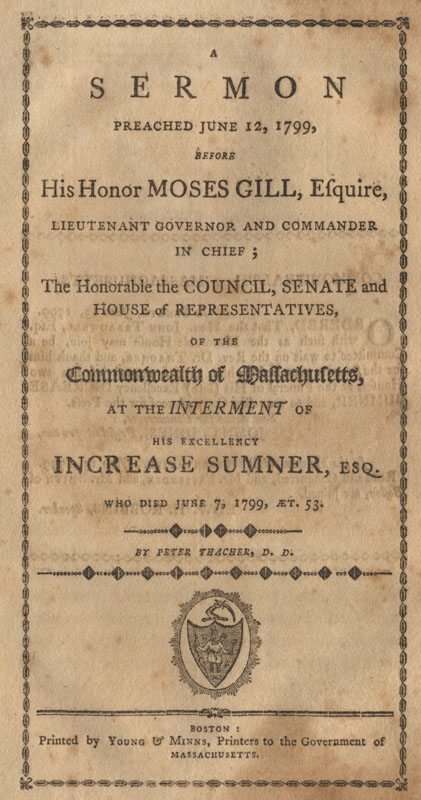
Peter Thacher (1752-1802) graduated from Harvard (1769), was ordained pastor in Malden, MA (1770), and also served as pastor to the Brattle Street church (1785-1802). He was a supporter of the Americans during the Revolution, preaching a sermon against standing armies and publishing a “Narrative of the Battle of Bunker Hill.” Thacher was also a delegate to the Massachusetts state constitution convention (1780) and served as chaplain to one or the other of the branches of the state legislature for 15 years. The following sermon was preached by him after the death of former Governor Increase Sumner.


sermon-eulogy-1799

A

S E R M O N

PREACHED JUNE 12, 1799,

BEFORE

His Honor MOSES GILL, Esquire,

LEIUTENANT GOVERNOR AND COMMANDER

IN CHIEF;

The Honorable the COUNCIL, SENATE and

HOUSE of REPRESENTATIVES,

OF THE

COMMONWEALTH OF MASSACHUSETTS,

AT THE INTERMENT OF

HIS EXCELLENCY

INCREASE SUMNER, ESQ.

WHO DIED JUNE 7, 1799, ET. 53.

BY PETER THACHER, D. D.

COMMONWEALTH OF MASSACHUSETTS.
In Senate, June 13, 1799.
ORDERED, That the Hon. John Treadwell, Esq. with such as the Honorable House may join, be a Committee to wait on the Rev. Dr. Thacher, and thank him for the Sermon preached by him, at the request of the two Houses, at the Funeral of His (late) Excellency INCREASE SUMNER, and to request a Copy thereof for the Press.
Sent down for Concurrence,
JOHN C. JONES, President pro tem.

In the House of Representatives, June 13, 1799.
Read and Concurred, and Mr. Fessenden, and Mr. Smith of Boston, are joined.
EDW. H. ROBBINS, Speaker.


S E R M O N.

I. SAMUEL, XXV. I.

AND SAMUEL DIED, AND ALL THE ISRAELITES WERE GATHERED TOGETHER, AND LAMENTED HIM, AND BURIED HIM AT HIS HOUSE IN RAMAH.

The frailty of human life; the vanity of human greatness; and the uncertain nature of all human events, are now presented to us in a light the most striking. The fable urn before us contains all that was mortal of one of the most amiable and excellent of men; a man who was happy in his family, warmly beloved by his friends, and elevated by the free suffrages of his fellow citizens to the highest station which it was in their power to bestow! In the midst of his days; while the honors of the world crowded thickly upon him; and while we hoped that he might be useful and happy for many years to come; Death, with inexorable hand, has seized him; his sun has gone down at noon; and we are now assembled to pay our last respects to his remains, to consign them, with decent solemnity, to the tomb where they shall moulder into dust, and arise no more “till the trumpet shall sound, and the dead shall be raised!”

To assist us in improving this melancholy providence, is the design of the following discourse. And how could we more naturally introduce it than by the account of the death and funeral of Samuel, who was long the Chief magistrate of Israel, who travelled for many years through the nation to dispense judgment and justice, who maintained a fair and honorable reputation to the end of life; and who, when he died, was attended to the grave by the heads of the tribes of Israel with deep and sincere regret?

Such a testimony in favor of any man, and such universal sorrow when he is taken away from life, are stronger evidences of his real virtue than any which the poetic page, or the sculptured marble can produce. We do not lament the useless or the wicked. We do not mourn for those whom we did not esteem and love. A whole community is never involved in woe and sadness, unless it has lost a friend, a benefactor, and a useful servant. And thus, the tears of the public embalm the memory of a wise and virtuous Ruler. They will transmit his name with honor to posterity in the annals of his country.

Samuel does not appear to have possessed the fire of imagination and brilliancy of genius which too often astonish and delude the world. He was not a conqueror who extended by arms the dominions of his Country, or gave it a false glory by splendid victories. He had a strong and capacious mind, which could easily discern the just and the fit, and could steer calmly the vessel of State when a more impetuous pilot would have dashed her on the rocks. An understanding clear and informed, a will regulated by reason, and never warped or corrupted by passion; with affections warm but not violent, sincere but not ardent; a knowledge of the tempers and feelings of mankind; and an acquaintance with the events of past times and the history of the world, rendered Samuel more competent for the place which he filled, than would those shining talents which too often lead their possessors to distress their country and desolate the world, that they may procure to themselves the fame of victory and the glory of conquest.

Early and sincere piety formed a striking trait in the character of Samuel. Dedicated to God by a pious parent, he was stationed in the tabernacle from his youth. Through a long life he preserved the “fear of God which is the beginning of wisdom,” and the respect to duty which is the strongest incentive to public virtue, and the most powerful restraint from a breach of trust. We find him strictly attentive to the ordinances of religion and the institutions of divine worship. But we find him more careful of the weightier matters of the law, of the great duties of morality and obedience. For, he expressly declares to Saul, when he had neglected submission to the plain will of God, under pretence of reserving an offering to the Lord, “to obey is better than sacrifice, and to hearken than the fat of rams.”

In the present age of wonders, when the results of the wisdom and experience of many ages are viewed as the dreams of aged and feeble insanity; when nature is placed in the throne of nature’s God; and the religion of Christ, mild, gentle and benevolent, like its Divine Author, is represented as a cruel and ferocious superstition: In this age of theory and innovation, Religion has been considered by some men and some nations as an injury to society, and incompatible with the character of a good Ruler. But, when we consider the deep influence which Christianity felt in its power, has upon the very tempers and dispositions of men; how it leads them to fear doing wrong ever so privately, and desire to do right, though no praise should attend them; how it places us always under the ye of the Deity, and brings death and judgment near to our view. When we thus view Religion in its nature and effects, we shall perceive it to be one of the most powerful and energetic principles which can operate upon the human mind. This principle reaches where no human law nor earthly consideration can extend. It operates as powerfully when no eye beholds it as when surrounded by thousands. It penetrates the heart. It governs the temper. It guides the conduct. It fortifies us against affliction, and renders prosperity more valuable and sweet. The Ruler who embraces the spirit, and copies the example of Christ; who relies on the promises, and is animated by the hopes of the Gospel, will “serve his generation according to the will of God,” and will be “received into everlasting habitations.”

When a man is under the influence of Religion, it will make him strictly upright, and will lead him to pay a close attention to the great duties of justice and integrity. This effect had religion upon Samuel. For many years he was a Judge among the People, and distributed justice to the aggrieved and oppressed. “And Samuel,” says the sacred historian, “judged Israel all the days of his life, and he went from year to year, in circuit, to Bethel and Gilgal, and Mizpah, and judged Israel in all those places, and his reurn was to Rama, for there was his house, and there he judged Israel, and there he built an altar unto the Lord.” His patient attention to the parties who litigated, his enlightened endeavors to find out the truth, and his candid, impartial decisions according to the evidence produced, procured him the esteem and veneration of all, even of those whom justice obliged him to condemn. We find Samuel always honored and esteemed in the nation of Israel. He was received with he utmost respect wherever he went. His decisions were implicitly followed. “When the ear heard him, then it blessed him, and when the ye saw him, then it gave witness to him.”

When he acted as Chief Magistrate of Israel, he “approved himself to every man’s conscience in the fight of God.” Although his sons conducted improperly in their subordinate capacity, yet it does not appear that he counte4nanced or supported them, nor do we ever find a single charge of incapacity, of partiality or injustice brought against him. His administration was easy to himself and useful to the People, and would have continued to the end of his life, had not that love of change, which strongly marks the human character, but often defeats its own purposes, led the People to desire a King. Then how must his heart have triumphed, when, with the firm and manly voice of dignified integrity, he could appeal to the assembled tribes of Israel, in this energetic language! “Behold, here I am; witness against me before the Lord and before his Anointed. Whose ox have I taken? Or whose whose ass have I taken? Or whom have I defrauded? Whom have I oppressed? Or of whose hand have I received any bribe to blind mine eyes therewith? And I will restore it to you.” His satisfaction must have been perfect, when the People with one heart and one voice replied, saying, “Thou hast not defrauded us nor oppressed us, neither hast thou taken ought of any man’s hand.” Happy Magistrate! Who was not only “approved of God, but accepted of the multitude of his brethren!”

Samuel was a man of mild and gentle manners. When the most direct attacks were made upon his family, and when the People applied to him to resign his power, he possesses, perfectly, calmness of mind. We do not hear a reproachful word from him, nor a single reflection on the ingratitude of those whom he had so long and so faithfully served. Mildly he remonstrates with the People upon the impiety and folly of their conduct. He does not suffer himself to be affected with personal flight to him which their application implied. He does not assail them with the asperity which stings, or the bitterness which provokes. This mildness of manners, this patience of contradiction, is of great use to those who rule over men, because it gives dignity to the character. It disarms resentment, and conciliates esteem.

But with all this mildness of manners the Patriarch of Israel still possessed the firmness and decision which his religion dictated, and his station required. When the Hebrews required to have a King, like the nations about them, Samuel did not hesitate to reprove them severely for their ingratitude to God, who was then their Ruler, and to shew them that they were enslaving themselves and their posterity, in order to attain an empty pageant. Superior to the love of popularity, which induces a man to conceal his sentiments or flatter a multitude, he firmly and decidedly proves to them that they are injuring themselves and destroying their own security. So honest and independent was he, as to hazard the displeasure of the People and his own influence over them, rather than encourage them to that which was hurtful to their true interest. It was in obedience to God alone, that the Prophet fixed Saul on the throne; and God gave them a King in his anger, and took him away in his wrath.”

It was the earnest solicitude of the Prophet of Israel to establish such a constitution of government as should guard them from the dangers which they had precipitately brought on themselves. “Then Samuel told the people the manner of the kingdom, and wrote it in a book, and laid it up before the Lord.” He knew that such a precaution was necessary to prevent the Israelites from becoming subject to the capricious humors or tyrannical passions of their King. Where the powers of Government and the liberties of the People are accurately defined, and proper checks are established to prevent the encroachments of one upon the other, there true freedom is enjoyed, and there alone man exercises his rights. From this principle, the wise, the patriotic and the good have always exerted themselves to form and to support definite and free Constitutions of government.

The love of God, and his country, animated this good man, to exert himself in the cause of Religion and liberty. These noble principles warmed his bosom, governed his mind, and regulated his whole conduct. A respect to the approbation of God, “who hath pleasure only in uprightness,” a sincere wise to promote the spiritual and temporal happiness of the People, whom he loved, induced him to exert his utmost energies in serving the religious and civil interests of his fellow-citizens. The prosperity of his Country gave him the most sensible pleasure; and when the clouds of adversity enveloped it, when it suffered from its own folly and rashness, his joy was turned into sorrow.

The unsullied reputation and the faithful services of Samuel, during his life, made his death a subject of deep regret to the people of Israel. They loved him while his existence here was continued, and when the common lot of all men befell him, they deeply mourned the melancholy event. The tribes of Israel assembled; they bedewed his hearse with the tears of genuine affection and gratitude, and buried him honorably in the tomb of his ancestors. This is the duty which we are now called to perform.

The character, briefly drawn, of Samuel in the past discourse, so strongly resembles that of our deceased Friend and Governor, as that little need be said in addition to it. Your own minds must have made the application.

Endued with strong and vigorous faculties of mind; favoured with the advantages of a public and liberal education; impressed with a sense of that Religion which forms men to virtue, kindness and charity, he was early called by his fellow-citizens to fill places of public trust and honor. As a Magistrate, a Legislator, and a Judge, he discovered the wisdom, the firmness, and impartiality which are so justly celebrated in the character of the text. His honor and integrity were never impeached, and had he made the same appeal to the People as Samuel did, he would have received the same answer.

His wife and faithful conduct in office of less dignity; their confidence in his patriotism, integrity and abilities, led the People of this Commonwealth to call him to the office of their Chief Magistrate. This confidence was fully gratified. The warm and decided Friend of our Federal and State Constitutions; the warm and decided enemy of all foreign interference in the affairs of our government; the watchful Guardian of the Civil, the Judicial and the Military interests of the Commonwealth, he was daily more and more esteemed and respected. His appointments were judicious, and he meant to confine them to men of virtue and abilities. He supported the honor of the State with dignity. His own deportment, while it was easy and agreeable, while it discovered the mildness of manners, the unassuming kindness which formed so striking a part of his character, was never such as to diminish our respect and esteem for him.

Kind, charitable and good; wishing well to everyone, and desirous of promoting their interests, Governor Sumner was universally beloved and honored. He was among the few men who, though he had many friends, warm and affectionate friends, yet, so far as my knowledge has extended, never had a personal enemy. Even those who on political subjects differed from him, and the interests of whose party led them to oppose his election, expressed personal respect for him in life, and now profess deeply to lament his death.

This good man was a warm and decided friend to the Religion of Christ. He early professed this religion, and his life appeared to be formed by its divine and sacred precepts. Thus influenced by its temper, and governed by its commands in life, he was animated by its hopes, and supported by its consolations, when he came to die.

Shall I call upon you, my brethren, on this occasion to admire and imitate the tender husband, the wife and affectionate father, the dutiful son, and the faithful friend! The grief which rends the bosoms, and the tears which fill the eyes of those to whom he was thus related, prove the justice of this part of his character, and display its amiableness in the most striking manner.

And now, seeing “a Prince and a great Man has fallen in our Israel this day,” let us humble ourselves under the divine correction! Let us admire and adore those dispensations of Providence which we cannot comprehend! And let us learn the lessons of wisdom, which an event so solemn and affecting is calculated to teach us.

His Honor, the Commander in Chief, while he laments the Friend, whom, with so much harmony, he accompanied in the public walks of life, will hear the voice of Providence speaking loudly to him, and teaching him that the most elevated station, the most affluent circumstances, and the warmest esteem and affection of our friends and fellow-citizens, cannot secure us from the arrests of the King of Terrors. The duties, to which he is now called, are difficult and important. May God give him wisdom and grace to discharge them usefully and well! “As his day is, so let his strength be also!” And when the common lot of the great as well as the small, the rich as well as the poor, shall befall him, may he, like his excellent Predecessor, leave behind him the “good name which is better than precious ointment.”

Let me call upon our Civil Fathers of the Council, the Senate and the House of Representatives, to contemplate the solemn scene before us, and see the vanity of human greatness, he insufficiency of the highest honors to “retain the spirit in the day of death!” There you behold the end of all flesh! – There you see the goal at which every man, who runs the race of life, must, sooner or later, arrive! – Thence you may learn that the hour hastens when all those distinctions, after which many men eagerly pant, will soon be leveled, and become lighter in our view than the dust of the balance! – Although “ye be called Gods,” yet here you find that “ye shall die like men and fall like one of the princes!” Remember, when discharging your important public trust, that the eye of God is upon you; that “he has pleasure only in uprightness;” and that when your bodies shall lie under the cold hand of Death, like the beloved dust before you, it will be of more importance in your view to be conscious of one act of true Religion or of public virtue, than to have possessed the highest honors which man can bestow. Learn, from this affecting Providence, to be more diligent, active and faithful in all the relations of life; so that, when you shall be gathered to the dust of your fathers, those around you may “mark the perfect man and behold the upright, for the end of that man is peace!”

With the afflicted widow, the fatherless children, the bereaved sisters, and the numerous relatives and friends of this excellent man, we mingle our tears! We hold out to them, while we wish to feel ourselves, the consolations and supports of Religion. We do not “mourn as those who are without hope.” Our Friend is gone from us, but we rust that his unembodied spirit now inhabits the courts of glory, and has become “a pillar in the temple of our God!”

And now behold, my brethren and fellow-citizens, behold how the “fashion of this world passeth away!” See how insufficient are the best earthly enjoyments to satisfy the cravings of the immortal foul, or to protract for a moment our existence in this world! Learn that the faith of Christ and the discharge of our duty, is the “one thing needful;” that while life, and health, and reason are granted us, they should be improved for the purpose of preparing for another world by performing the duty which we owe to God and man in this! “Now is the accepted time”! Let us improve it to secure “an interest in the better part which can never be taken away from us,” and to prepare us for the “rest and the triumph which remain to the people of God!”

The Religion of Christ, our guide in life, and our support in death, which regulates us in prosperity and guilds our darkest moments with light and comfort – This Religion teaches us to look beyond the grave to an heaven of infinite glory! It teaches us to deposit the precious remains of our Christian friends in the dust, with “a sure and certain hope of their resurrection unto eternal life.” Yes, my brethren, Death shall not retain his dominion over them! They shall burst asunder his iron bands! They shall awaken to a new and eternal life! They shall ascend to “their Father and our Father, to their God and our God;” and “with the ransomed of the Lord shall return and come to Zion with songs and everlasting joy upon their heads!”

Amen.

Sermon – Protestant Episcopal Church Convention – 1799


This sermon was preached by Reverend William Harris in 1799 at the Convention of the Protestant Episcopal Church.


sermon-protestant-episcopal-church-convention-1799

A

S E R M O N

DELIVERED AT

TRINITY CHURCH

IN

B O S T O N,

BEFORE THE

ANNUAL CONVENTION

OF THE

PROTESTANT EPISCOPAL CHURCH

IN

M A S S A C H U S E T T S,

On Tuesday the 28th of May, 1799.

By WILLIAM HARRIS,
RECTOR OF ST. MICHAEL’S CHURCH, MARBLEHEAD.


A Prayer compiled from the Liturgy of the Church,
Used before the Sermon.

ALMIGHTY GOD, the Giver of all good Gifts, who by thy divine providence hast appointed divers Orders in thy Church; Give thy grace, we humbly beseech thee, to all who are called to any Office and administration in the same; and so replenish them with the truth of thy doctrine, and endue them with innocency of life, that they may faithfully serve before thee, to the glory of thy great name, and the benefit of thy Holy Church—And humbly we beseech thee, most Gracious God, to bless those who are in authority over us. Direct and prosper all their consultations to the advancement of thy Glory, the good of thy Church, the safety, honor, and welfare of thy People; that all things may be so ordered and settled by their endeavours, upon the best and surest foundations, that peace and happiness, truth and justice, religion and piety, may be established among us for all Generations—These and all other necessaries for them, for us, and thy whole Church, we humbly beg in the name and mediation of Jesus Christ our most Blessed LORD and SAVIOUR.

A M E N
 

A S E R M O N.

St. Matthew’s Gospel xxviii, 20th.
And lo, I am with you always even unto the end of the World.

THESE words were spoken by our Blessed Saviour, to comfort and encourage his Disciples just before He was taken from them into Heaven. He had previously assured them, that all power was committed to him, both in Heaven, and Earth, and he engaged to be with them even unto the end of the world. Amidst the many and great discouragements which the faithful Minister of Christ is sure to meet with, these words of his divine Master, cannot but afford him consolation and encouragement. It is not, I conceive, to be doubted, that the promise here made was to be extended, not only to the Apostles, but to their Successors and to every succeeding faithful Minister of Christ, “Lo I am with you always,” &c. That is, I am and will be with you and your Successors, I will strengthen you by my power and authority, I will encourage you by the blessing and assistance of my Holy Spirit, I will be with you to uphold my Ordinances, to protect, encourage and reward you, and all your Successors in the faithful discharge of your trust. This promise, my Brethren, has been most remarkably fulfilled. God has never at any period been wanting to this Church. He has often rescued it from impending ruin. He has raised up, successively, able defenders of it, and has carried them through the greatest troubles, distresses and persecutions. Even in the present degenerate age, he still upholds his faithful Ministers, and by his mighty power will continue so to do till the end of the world. He has engaged to defend them, not only against all the subtleties, the craft and cunning of evil and malicious Men, but even against the enmity and malice of Satan himself, so that the Gates of Hell shall never prevail against his Church.

This gracious promise of protection and support is, my Brethren, at the present day, a great encouragement to us in the faithful discharge of our duty. It is our lot to live in a degenerate age; an open and professed disregard to religion is become, through a variety of unhappy causes, the distinguishing character of the present times. And the evil, far from receiving any check or opposition, is fast increasing. When did Infidelity and the contempt of everything serious and sacred, when did strife and division, envy and malice, when did the profanation of God’s holy name and Sabbaths, and the utter contempt of all laws civil and sacred, so shamefully abound? Where is that sense of the divine presence, that regard to the divine Authority, that hope of the favour and approbation of Heaven, which once directed the views, and influenced the actions, of our pious Forefathers?

When did we ever stand in more need of the aid and support of religion; and when was there ever such wicked arts employed, secretly to undermine its foundation, to destroy its influence and weaken its hold on the publick mind?

How is our holy religion treated with every possible mark of ignominy and insult by the Scorner? How have they endeavoured to hold up its divine Author, his laws, his ordinances, his institutions, his Ministers and his Altars, to universal abhorrence and contempt?

How often do we hear them affirming that Christianity is only a cunningly devised fable, when it is in truth a Revelation from Heaven—a Revelation supported by such a body of evidence as is sufficient to convince every unprejudiced mind; by a long train of prophecies, most undeniably completed, “by the most astonishing and well attested “miracles, by the strongest internal marks of truth, by the purity of its precepts, the sublimity of its doctrines, the perfect and unspotted character of its divine Author, by an innumerable company of Confessors, Saints and Martyrs, who have sealed their testimony to it with their blood,” and lastly by its wonderful prevalence and success, against all the combined efforts, of the wit, malice and power, of men and Devils. If to these arguments of its truth, we add the visible good effects it has had in promoting the welfare, comfort and happiness of mankind, where shall we find a religion so worthy of our belief, so deserving of our veneration, gratitude and love.—A Religion so holy and so pure, we every day hear the Infidel proclaiming to be no other, than the contrivance of Statesmen and Priests to rule and deceive the people.

Would to God, the people could see the hearts of these their pretended friends—They would then no longer glory in that, which ought to be their shame, nor be ashamed of that, which ought to be their glory!

But Mankind, lest they should be thought over zealous, have not become indifferent to all religion. Hence the cause of the rapid progress of infidelity. Hence it is that a plan has been laid to subvert our holy religion. A Plan dark and subtle as the Agents who have been, and still are, employed in its execution. It has for its object, the renovation of Society—an entire alteration in the religious, moral and civil principles of Mankind.

As Religion is the basis of all order and virtue, it was necessary to accomplish their scheme, to make that, the first object of attack. They well knew that it would be in vain to attempt so thorough a change, while religion and the fear of God, had any hold upon the minds of men—but if they could only succeed in removing this principal obstacle; they conceived that their plan might be executed, not only without difficulty, but with the greatest ease and dispatch. Accordingly, they first begun by undermining the foundations of the Gospel. If some of them extolled one part of Christianity, it was in order to subvert the rest. If they approved of the moral precepts, they denied the miracles, and all the characteristic doctrines of the Gospel. It was their first object to reduce the Gospel simply to a moral system, and if we believe the Philosophers, or rather the Philosophists of the present age, we are under no more obligation to receive and practice the precepts of Christianity, than we are to receive and practice the rules contained in any other moral tract. Volney’s treatise of the Law of Nature, is with them of equal authority with the precepts of the Gospel. These were their first attempts, and it is greatly to be lamented, that they were so fortunate in their beginning—their success has encouraged them to proceed to greater lengths; and for many years they have been indefatigable in spreading their licentious and irreligious tenets. Societies have been established in almost every Christian Country, for the express purpose of disseminating their poisonous principles, and now it is evident, that the subversion of Christianity, is only a part, and the beginning of their diabolical plan. Their horrid designs, could not be accomplished, while any fear of God or dread of futurity existed in the minds of men. In order therefore, to extirpate every religious sentiment, and to introduce the true principles of modern infidelity, one of their Champions has entirely thrown off the mask, and without disguise speaks the sentiments, and discovers the principles of the whole sect. “We want (says he) no other sermon but the rights of man—no other doctrine but the constitutional precepts—no other Church than where the Section of the Club hold their meeting. Man when free wants no other Divinity than Himself. This God will not cost us a single farthing,–not a single tear—nor a drop of blood. Reason dethrones both the Kings of earth and the Kings of Heaven—no Monarchy above, if you wish to preserve a Republick below. Volumes have been written to determine whether a Republick of Atheists could exist. I maintain that every other Republick is a Chimera. If you admit the existence of a heavenly Sovereign, at that instant you introduce the wooden Horse within your walls, and your Republick is no more.”1

These my Brethren, are the principles which the Philosophists of the present age, are so industrious in propagating. If they are successful in their endeavours, it needs little foresight to predict the consequences. It is an indisputable fact, that nine tenths of Mankind have been governed more or less by religious principle; take off this restraint—persuade the multitude that there is no future state—no God, to whom they are accountable, and you open a door to every kind of wickedness. The most horrid crimes would then be committed without shame or remorse. In vain would the rich have recourse to Bolts and Bars to secure their property, neither would they find any better security in the Laws of the Land; the unjust Steward in the parable, characterizes the great body of Mankind, if they fear not God, neither will they regard Man. “Human Laws, says an elegant writer, will be of little avail without a sense of divine Legislation, and the sanctions of Men have little force, unless they are supported by the Authority of God. Thus without religious principle, there would be no security for the public peace—the mutual confidence between man and man would be destroyed. The bond which keeps Society together would be broken—Oaths would become mere words of course, and an appeal to the great God of Heaven no more regarded, than if he were an Image of Stone. Human life would be thrown into the utmost confusion—the safety of Mankind would be endangered, and the moral World totter to its ruin, if such a Pillar as Religion were to fall. We ought, says Bourdaloue, to consider the principle of Religion in Individuals and Societies, as we do the first moving power of the Universe—this first moving power hath an influence so great, that is not only maintains all the Heavenly Bodies in their order and motion, but extends itself also to the bosom of the Earth, and is the cause of all the beauty, harmony and usefulness, of this lower would; were this first moving power, to suspend its operations, all nature must be destroyed; all must be trouble, confusion and ruin; so if you take away the principle of Religion from Individuals, especially from the leading Members of Society, you destroy all principle of obligation, you are no longer to look for charity, regularity or order among Individuals, or in human Societies; so true it is, that the tie which binds us as Brethren to each other, is our common obligation to God.

It is against this religious principle, the foundation of all order and happiness in Society, that the Infidels of the present age are contending. In France they have obtained a temporary victory, but not satisfied with that, they strive with unwearied industry, to obtain a similar triumph over morals and religion in every Country upon Earth. Nor will they be diverted from their purpose, unless their own pernicious principles should prove their destruction, until they have effected an entire change in the face of Society—all religion, morals and Government, shall fall before them, and Mankind will be brought back once more, to a state of ignorance, darkness and barbarity.

How justly has St. Paul, in his description of the Romans, delineated the Character of these modern Heathen. They were, says he, filled with all unrighteousness, fornication, wickedness, covetousness, maliciousness full of envy, MURDER, debate, DECEIT, malignity, whisperers, backbiters, HATERS of GOD, DESPITEFUL, PROUD, BOASTERS, INVENTORS OF EVIL THINGS, disobedient to Parents, without understanding, COVENANT BREAKERS, WITHOUT NATURAL AFFECTION, IMPLACABLE, UNMERCIFUL. Such a race of MONSTERS, we could scarcely have believed that the Earth ever bore, were not the fact asserted by an Apostle; and did not the present day afford us an example of their equals, if not of their SUPERIORS, in every species of wickedness and vice.

In short the French have not only an Army of Veterans, but what is worse, and more dangerous to the World, a Satanic Host of Principles, and where the former cannot reach, they make their boast, that the latter will penetrate to accomplish their horrid work of Revolution, anarchy and ruin. To effect this, their Philosophers have been most wickedly industrious in printing and disseminating their licentious Pamphlets. In these publications they address the multitude, and in order the more effectually to dupe them, they bring down their reasoning to a level with their comprehensions. “The whole poison of Infidelity is compressed into the narrow compass of an essence, or an extract, to render irreligion easy to the meanest capacity. It was by such small tracts disseminated among the lower Orders in every part of France, that the People there were prepared for that most astonishing event, the public renunciation of the Christian Faith.” 2 From these artful snares of their Philosophers, we are more in their power, than they can accomplish by their Arms—here lies our greatest danger. It is their Army of Principles which we have to oppose—and he must be blind indeed, who does not see that the present contest, is a War of Principles—its baneful effects are not confined to the European Powers now at variance—but in every Country, it is a war of vice against virtue, of Infidelity against Religion—of the Savage and brutal part of Mankind, against the refined and civilized.

Against such Men, and such principles, it is the duty of every pious Pastor to guard and defend his Flock.—And, my Reverend Brethren, at this eventful period, how can we be silent, consistently, with the solemn engagements we have made? At the peril of our Souls we have undertaken the Office of the Ministry. As the Messengers, the Watchmen and Stewards of the Lord, it is our duty to teach and admonish, to use all faithful diligence to oppose every error, either in faith or practice, nor are we to cease our labour, our care or diligence, until we have done all that lieth in us, according to our bounden duty, to bring all that are committed to our charge, to a due faith and knowledge of God, to a ripeness and perfection in Christ, so that no place be left among us, either for error in Religion, or viciousness of life. 3

It is therefore our duty, and becomes an important part of our sacred trust, publickly to bear testimony against those impious and destructive principles; which have proved so ruinous in other Countries, and which, unless they are speedily and successfully opposed, will prove no less ruinous and destructive in our own.—And in order that we may oppose them with success, it should be our first and principal care, to revive a spirit of Religion and Virtue, both among Rulers and People.

It is truly an alarming symptom, when there prevails in any Country, a cold indifference towards Religion—A greater calamity cannot befall a Nation—The Pestilence, the Famine, and the Sword, are often commissioned by Heaven to waste and destroy a negligent and careless People.—After every other method has been tried to awaken them from their slumbers, here remains but one expedient: The divine Judgments will then be poured out, effectually to rouse them to a sense of their duty and danger. That this is true of us, that, as a Nation, we deeply partake of this Character, is too evident to require any proof, or admit of any doubt.—Indifference in matters of Religion, is become an epidemic, which few, if any, have escaped.

I know that the degeneracy of the times has been a common complaint in all ages; but nevertheless, some periods have been more sunk in dissoluteness and irreligion, than others,–never surely was there juster foundation for complaint than at the present day. The great prevalence of infidelity, the profligacy of multitudes—the utter neglect of their eternal interests—the shameful profanation of God’s holy Name and Sabbaths—the wonderful increase of false philosophy, together with an unbounded love of pleasure and dissipation—these, to say nothing of other things,–are truly characteristic of the present age, and exhibit a most distressing and discouraging prospect, to the sincere friends of Religion and Virtue.

At this alarming period, my Reverend Brethren, all our zeal, our utmost diligence, our most fervent prayers, together with the most exemplary patience, prudence, fortitude and compassion are required.—It concerns us to be more active and faithful, than ever we have been, in discharging the duties of our functions; and above all, to be careful, at all times and in all circumstances, to cause our light so to shine before men, that by our example, credit and honor may redound to the Holy Religion we profess, and to the sacred doctrines that we teach.

To revive a true spirit of piety and virtue among the People, much will undoubtedly depend on our exertions; for no class of Men, are capable of doing greater service, or greater prejudice, to the interests of Religion; but our endeavours however earnest, though we should redouble our care and diligence, will not be sufficient.—If we are left alone in the arduous task of reformation, to what purpose are our most zealous exertions? Would those who are in the higher stations of life, vouchsafe to add their countenance and example, it would be of the greatest efficacy, not only to revive our spirits, but also to enkindle a true spirit of piety and virtue, and to diffuse it through every class of men. Their example would soon bring the study and practice of Religion into repute. Acts of impiety and profaneness would then become matter of shame and reproach, in the eyes of men, as they always are in the sight of God.

And believe me, my hearers, at this alarming crisis, good men ought not to forsake their Ministers; it is a time when the united efforts of virtuous and religious Men of every description should be exerted, in order to oppose those pernicious principles which threaten, like a deluge, to overwhelm our Country, and to subvert the fair fabric of our Government, Laws, and Religion.—It is not now a question, whether this or that Church shall prevail; whether this or that mode of worship is best; but the question is, whether there shall be any Church—whether there shall be any such thing as Christianity? We have not now to contend with Christian Brethren who hold to the essentials of Religion, and differ from us only in points that are immaterial. But our contest is with the bold unbelieving Infidel, “who is against the Gospel, because the Gospel is against him.” We have those for our adversaries who will not be satisfied with correcting errors, and reforming abuses:–Nothing less than the total subversion, and utter extermination of Christianity can content them.

Let it not be said that these are idle conjectures, and vain apprehensions—that there is no danger—that we “fear where no fear is.” Other Nations have flattered themselves that they were equally secure, and never could be persuaded to suspect, that either their Religion or their liberties were in danger, till sudden desolation and destruction came upon them. Let their fate be a warning to us. We had better be despised for too anxious apprehensions, than ruined, as they have been, by too confident a security.

It therefore becomes Christians of every rank and description to stand forth in defence of their holy faith, and to use their most zealous endeavours to enkindle, if possible, the almost “expiring lamp of Piety.”

To this end, let all who are in authority have the fear of God before their eyes, and the good of their Country at heart.—Let them remember that their success will depend not only on their political, but on their moral, and religious conduct, for except the Lord keep the city the watchman waketh but in vain.—Let them no presume to leave the Supreme Governour of the World out of their Councils, neither form Plans independent of him and his Providence, lest he should blast all their councils, and defeat their most vigorous exertions.

Let the Ministers of Religion, by an exalted piety, and exemplary virtue, add dignity and efficacy to their religious instructions; carefully preserving themselves, not only from the guilt, but even from the suspicion, of impiety and wickedness.

Finally, Let all who are any ways distinguished either by their education, wealth, or wisdom, add the weight of their example, and manifest their regard for Religion, and their love of their Country, by a serious and constant attendance on Public Worship, and by becoming models of everything that is great and good.

If we are thus sincere in our exertions, the restitution of religious principle, and virtuous practice, will not be so difficult a task as is imagined. We may then confidently expect the aid of our divine Master, who has promised to be “with us even to the end of the world.”—While we value the Christian Religion according to its real worth—while we are prudently zealous for its honor, and strive to recommend it to the world by an exemplary piety and virtue, we have no reason to fear the loss of this best of blessings, but if we are careless and indifferent—if we can patiently hear its holy Author—its divine precepts and heavenly doctrines ridiculed, despised and trampled upon, then surely we are unworthy of so great a benefit, and shall have reason to fear that the kingdom of God will be taken from us, and given to those who will duly value and improve the inestimable gift.

But thanks be to God, we are not so degenerate a People, but that there may be found, even in this age of Infidelity and Indifference, some eminent examples of real piety and virtue.—We have still those among us “who are not ashamed of the Gospel of Christ, and whose praise is not of Men only, but of God.” Who knows how far the influence of their example may extend. That it may become universal, is most devoutly to be wished. Then our holy Religion and invaluable privileges would be safe and secure. While we are with him, the Lord hath promised to be with us, and if He be for us, who can be against us. What though “the Heathen rage, and the People imagine a vain thing, He that sitteth in the Heavens shall laugh them to scorn.” If we have either secret or open enemies, their hearts are in his hand, their designs are always under his eye, and he can change them as he pleases. He can humble their pride—assuage their malice and confound their devices—He can prevent the mischief they contrive, or cause what they design for our destruction, to prove the means of our happiness and salvation—“He who stilleth the raging of the sea and the noise of his waves, an also at his pleasure restrain the madness of the People.”—The righteous Lord loveth righteousness, and to favour a righteous and religious nation, he will, should there be occasion, bring light out of darkness, good out of evil, and order out of confusion.

Wherefore, dearly beloved, let us hold fast the profession of our faith without wavering, since we are assured that he is faithful who hath promised to be with us always, even unto the end of the World.

May this gracious promise of Christ’s spiritual and perpetual presence with his Ministers excite us, my Brethren, to greater diligence, zeal and fervor in the cause of piety and virtue,–may we account no labour too great, no services too painful, and no sufferings too severe, so that we may finish our course with joy, and fulfill the rust committed to our charge. And since we all profess to believe in Christ; and are well assured that our faith is not founded on the cunningly devised fables of Men—since as Christians, we cannot but be interested in the honor of his Gospel, and are bound by the most sacred and solemn engagements to advance its reputation and success—since as protestant Episcopalians, we still hold fast to the form of sound words, and continue steadfastly in the Apostles doctrine and fellowship; Let us, therefore labour, more and more, that the “word of Christ like a fountain of living water may dwell richly in us in all wisdom, and flow liberally from us, in all holy conversation and Godliness.”

Now to the Father, to the Son, and to the Holy Ghost, the One Eternal and ever blessed GOD, be ascribed by us and by all Men, all possible adoration and praise, might, majesty and dominion, world without end.

A M E N.


Endnotes

1 See the speech of Anacharsis Cloots, published by Order of the National Convention in France.

2 Vide Bishop Porteus’s last Charge to his Clergy.

3 See the form and manner of ordaining Priests.

The Sermon on the Mount Carl Bloch, 1890

Sermon – Election – 1799, Connecticut


Cyprian Strong (1743-1811) graduated from Yale in 1763. He served as a town clerk in Farmington, Connecticut (1766) before becoming pastor of a church at Chatham, CT (1767-1811). Strong preached this sermon in Connecticut on May 9, 1799.


sermon-election-1799-connecticut

THE KINGDOM IS THE LORD’S.

A

S E R M O N,

PREACHED AT

HARTFORD,

ON THE DAY OF THE

ANNIVERSARY ELECTION,

May 9, 1799.

By CYPRIAN STRONG, A. M.
PASTOR OF THE FIRST CHURCH IN CHATHAM.

At a General Assembly of the State of Connecticut, holden at Hartford, on the second Thursday, of May, A.D. 1799.

ORDERED, That the Hon. Thomas Seymour, and Mr. Hezekiah Goodrich present the thanks of this Assembly to the Reverend Cyprian Strong, for his Sermon delivered before them, at the General Election, on the 9th of Inst. May, and request a copy thereof for the press.

A true Copy of Record,
Examined by

Samuel Wyllys, Sec’ry.


An Election Sermon.
 

I CHRONICLES xxix. 11.

–Thine is the Kingdom, O Lord, and thou art exalted as Head above all.


In the passage which has now been read, we have the devout acknowledgment of king David, who was the first magistrate, in the most respectable kingdom, which, at that time, existed. He was as remarkable for piety and religion, as for eminence and distinction, in the Jewish nation.

It was not an inconsiderable evidence, of the fervor of his piety, that he maintained the most exalted and reverential conceptions of God, in the height of earthly magnificence, amid the splendor and pomp of a Court, which so commonly dazzle the eyes of mankind, and plunge them into scenes of voluptuousness.

Nebuchadnezzar, who was at the head of the Chaldean Empire, was so intoxicated, with the splendors of royalty, that “his heart was lifted up and his mind hardened in pride,” so that he did not know and consider, “That the Most High ruleth in the kingdom of men.” And, fact and experience afford the most convincing evidence, that worldly distinctions and honors, through the native corruption of the human heart, have a most powerful tendency to render men unmindful of Him, by whom “kings reign and princes decree justice.” But, this was very far from being exemplified in David. Although, from a shepherd, he was raised to a throne, and exalted as the head of a respectable and truly great nation, which always reverenced his authority; yet, he did not, through pride of heart, so rate his dignity and worldly consequence, as to think it beneath him, devoutly to acknowledge God, as the Supreme Ruler of the universe. He was sensible, that his elevated station and worldly magnificence, were the fruit and effect, of God’s sovereign disposal. In the text, he most devoutly ascribes everything to Him. “Thine is the kingdom, O Lord, and thou art exalted as head above all.” And, in the succeeding words, “Both riches and honors come of thee—in thine hand it is to make great, and to give strength unto all.”

It may be further observed, that king David was not only ready, most solemnly to acknowledge, the existence of God; but he viewed and reverenced him “as head above all.” Not as the prophet Elijah sarcastically described Baal, as an idle talker, or as pursuing a journey, or as sleeping; or, in a word, as being an idle and unconcerned spectator of the world; but as being particularly concerned in the government and control of the universe.—“Thine is the kingdom, O Lord, and thou art exalted as head above all.”

The text will naturally direct our attention, to the two following things.

I. The nature of that kingdom, which is said, in the text, to be the Lord’s.

II. In what sense the kingdom may be said to be the Lord’s, and that He is exalted as head above all.

It is hoped, that in the prosecution of what has now been proposed, such observations and remarks will be made, as will render the discourse both seasonable, and pertinent to this public anniversary.

I. It is proposed, to attend to the nature of that kingdom, which, in the text, is said to be the Lord’s.

The inhabitants of this world, are divided into many kingdoms and governments, which, in the sacred scriptures, are called “the kingdom of men.” But that kingdom which is said, in the text, to be the Lord’s, has not a respect to any one of those kingdoms, in exclusion of the rest.

The time has been, indeed, when God took upon himself the government of the Hebrews; and, in his dispensations, a very special respect was paid them. His administrations were particularly directed, to the establishment of that favorite people; yet God was, at the same time, as truly at the head of other nations, and did dispose of and superintend all their affairs, in the same manner that he did the affairs and concerns of the Jews. God had purposes to answer, relative to the Jewish nation, which he had not respecting other nations; for they were a chosen people. Although the allotments of God, to other nations, were subordinated to the advancement of the Hebrews, yet, events were allotted out to the former, in as immediate and efficient a manner as they were to the latter. The purposes of God, respecting different nations, have been different; yet God has not at the present time, nor ever had in time past, a more immediate disposal of the affairs of one nation than of another. The kingdom, which in the text is called the Lord’s, is not limited by or confined to any earthly kingdom.

But, the kingdom which is the Lord’s does, in a sense, embrace the universe; consisting of all ranks and grades of creatures, throughout all worlds. The government of God extends to all things, both animate and inanimate. All the worlds and creatures which God hath made, constitute one system. The various orders of existences, from the archangel to the most inconsiderable insect, constitute the links of a perfect chain, and are like wheels which are necessary to complete a perfect machine. They are all necessary to form a perfect system. And, as the Lord is “exalted as head above all,” so all things which exist, are comprehended in his kingdom. God manages every part of the universe, in such a manner, as shall best answer the purposes which he had in view, when he brought them into being.

The sacred scriptures teach us, thus to consider the extent of the kingdom which is the Lord’s. In them, God is said to rule among the nations—to build them up or pluck them down at what instant he pleases. Famine, pestilence and the sword are said to be under his control. It is God who balances the clouds, and gives the former and the latter rain in their season. And it is further asserted, that the superintending care and disposing hand of God are concerned, even in the falling of the sparrow to the ground. The kingdom which is the Lord’s, therefore, comprehends the universe. Hence, in the text, God is said to be “exalted as Head above all,”—above everything which exists.

Again; to our having proper apprehensions of the kingdom which is the Lord’s, it is necessary to bring into view not only its extent, but the object or end of it.

God does not exercise a control over the universe, and concern himself with the affairs of all ranks of creatures, as a mere amusement; he has an important object in view, in all his administrations; and, that is to raise up and establish a kingdom of holiness and righteousness.

The government of God does consist, summarily, in so conducting and arranging events, as shall, eventually, advance the spiritual and moral good of the universe, or establish a holy and spiritual kingdom. All the plans, institutions and operations of God are directed to that end. The end of the natural is the moral world. As all the ranks and orders of existencies are to be considered, as so many links of a perfect chain, so all the events which take place, and all God’s appointments and institutions are to be viewed, as so many means to advance the moral and spiritual good, or the holiness and happiness of intelligent beings; and so to establish and perfect a kingdom of holiness and righteousness. And, all being united, do form a perfect system of means and events, for the security of so important an object.—As the advancement and establishment of a kingdom of righteousness require, God builds up or pulls down earthly kingdoms. The great Monarchies of the world, which have been raised up and again tumbled into ruin, have been subordinated to this interesting design. The constitution and laws of the natural world, when they cease to contribute to the establishment of such a kingdom, will be abolished; yea, the whole natural world, when it shall have accomplished everything of that nature which it can answer, will be consigned over to destruction. Events will roll on until a holy and spiritual kingdom shall be established and become triumphant. Then, the rotation of events, like the present, shall cease. Earthly kingdoms and empires shall sink into ruin—the sun shall shine no more, the various parts of the natural world shall be unhinged—a universal conflagration will take place, and former things shall be remembered no more.

That this representation, of the object of God’s government, is real and not imaginary, appears from many considerations, which can be but very briefly mentioned, at this time.

It appears, very particularly, from the design of the incarnation and sacrifice of Jesus Christ; or the introduction of the mediatorial plan.

This great event is considered, in the sacred writings, as above all others calculated, to answer the purposes, which God had in view, in the whole work of creation and the government of the world. And, the end which God had in view in that astonishing event was, indubitably, the establishment of a kingdom of holiness. Hence it is said, that he “gave himself for us, that he might redeem us from all iniquity, and purify unto himself a peculiar people, zealous of good works.” 1 And the church is said to be redeemed by his blood, “to the intent, that now unto the principalities and powers, in heavenly places might be known, by the Church, the manifold wisdom of God; according to the eternal purpose which he purposed in Christ Jesus our Lord.” 2 And, Jesus Christ is now exalted at the head of all principalities and powers, and will reign until all enemies are brought at his footstool. And the issue of this great affair is summed up in this, that God shall “reconcile all things to himself, by him, whether they be things in earth or things in heaven.” From these passages of scripture, as well as from the declarations and prophecies concerning the increase, progress and issue of the kingdom of Christ, which is founded in his blood, it is extremely evident, that the end God had in view, in the incarnation, death and sufferings of Jesus Christ, and in the whole work of redemption, was the advancement and establishment of a kingdom of holiness and righteousness. And, from thence we may certainly infer, that this is the great object, which God has in view in his whole government.

The same conclusion becomes further evident, from the end, which God has in view, in the religious institutions he hath made. The end proposed in institutions of a religious nature, is, unquestionably, to render mankind holy and spiritual.

Again; that the end of God has in view, and that the object of his government is, the establishment of a kingdom of righteousness is evident, from the great and fundamental laws of his kingdom; or, from what he chiefly requires, of his intelligent creatures. God’s requirements are all summed up in holiness and righteousness—in universal love and good will. This clearly indicates what that is, at which God is aiming in his government; and, particularly, that it is the advancement of a kingdom of righteousness.

That the establishment of a kingdom of righteousness, is the great object of the government of God, appears, not only, from the end proposed in the work of redemption, in all religious institutions, and from the requirement of the laws he has established; but, it is also evident, from the design of civil government.

Civil government was not instituted, merely to amuse men; nor, to lift up some over the heads of others, without proposing an important object. And, although it is an institution, which is peculiar to this world, and may seem more immediately designed to protect men from injury and violence; yet, is it not certain, that like the other institutions of God, it is ultimately designed for and to be administered, with a view to the advancement and establishment of a spiritual and holy kingdom?

I am not insensible, that some are fond of making, a total separation between civil government and the protection or establishment of religion, or advancement of a spiritual kingdom; and do even consider the former as having nothing to do with the latter. But, I beg leave to inquire, whether the prosperity and advancement of a kingdom of holiness and righteousness among men, be not the great object of civil government? And, whether every civil constitution, which is not ultimately calculated to nourish and cherish true religion, and so to advance a spiritual and holy kingdom, be not, in the view of God, whatever it be in the view of man, not merely censurable, but absolutely abominable? Take a retrospect of the ancient dispensations of God, and you will see, how God views civil governments and administrations in this respect. Is it not evident, from the past dispensations of God, that he approved or censured civil governments, according to the respect or disrespect paid by them, to his church and the advancement of a kingdom of holiness? This was certainly the case, respecting the administrations of the kings of Israel. This was also the case, respecting the Chaldean monarchy. It is the very reason offered, why God brought ruin on that mighty empire. It was because it rejoiced in the ruin, and was instrumental in destroying the heritage of God. The vengeance of God was, also, denounced upon the Ammonites, upon Moab and Seir, upon Tyre and Egypt for their opposition to and derision of church of God. We are, also, assured, that it will always be thus, that God will pull down kingdoms and utterly destroy them, when they stand in the way to the prosperity and advancement of his church, or a kingdom of righteousness.

It may here be said, that there are none, who suppose, that civil government and administrations are to oppose, the advancement of a spiritual kingdom, or the progress of religion; all which is contended for is, that civil government should be neutral. But, in answer, it may be asked, whether it be possible that civil government should take such a position? Our Saviour asserts, “He that is not with me is against me: and he that gathereth not with me scattereth abroad.” 3 There is according to these words of Christ, no such thing s neutrality. And this is as true, respecting civil government, as respecting an individual. A mere neglect to countenance and support religion, or a kingdom of righteousness, in a civil administration, will operate against it. It was always supposed of old, that the conduct of rulers, or their administrations, had a very great influence on the religious state and character of the Jews. It is impossible, therefore, that civil government should take a neutral position, respecting religion or a kingdom of holiness. It must aid and countenance it, or it will discourage and bring it into contempt.

Without attempting, particularly, to point out what aid or support civil government may and ought to give, to religion or the Church of Christ, I would only further observe, that the sacred scriptures do teach, in a very direct manner, that civil government is designed by God, ultimately, as a mean and expedient to advance religion, or a kingdom of righteousness among men. It is not directly and positively asserted, by the prophet Isaiah, that in a future period, when civil government shall be rightly applied and faithfully administered, “Kings shall be nursing fathers and their Queens nursing mothers,” to the Church of God? And, does not the apostle Paul most expressly teach us, what the end of civil government and magistracy is?4Rulers are not a terror to good works, but to the evil. Do that which is good, and thou shalt have praise of the same, for he is the minister of God to thee for good. He beareth not the sword in vain; for he is the minister of God—a revenger to execute wrath upon him that doeth evil.” Does not this account of the design of civil government and magistracy, clearly teach, that they were designed to encourage and support a kingdom of righteousness among men? And, the same apostle direct, “that prayers, intercessions, and giving of thanks be made—for kings and for all that are in authority, that we may lead quiet and peaceable lives, in all godliness and honesty.”5 It must be clear, from what is said concerning the design of civil government, in the sacred scriptures, that it was instituted as a mean, to advance and support a kingdom of holiness and righteousness: And, therefore, it is one thing which serves to point us, to the great object which God has in view in his government; or the nature and design of his kingdom.

Again; the use and improvement, which God requires us to make of the various allotments of his providence, farther point out the end of his government, or the nature of his kingdom; and that it is a kingdom of righteousness.

The improvement God requires us to make of providence is this, that we grow in righteousness and holiness. The goodness of God is to lead us to repentance. Under adversities, we are to “learn righteousness.” Or, to adopt the language of an apostle, when speaking of trials and adversities, he says they are sent “that we may be partakers of his holiness.” Now if our holiness, be the end of divine allotments, it becomes evident, that the advancement of a kingdom of holiness, is the end of God’s administrations.

The same truth will appear with additional clearness, if we turn our attention, to the particular designs of God, and his providential dispensations, as they are stated in the sacred scriptures.

If we take a view of events under the former dispensation, we must see, that the establishment of a holy and spiritual kingdom was, uniformly, the object which God had in view in all his allotments. It is evident, that his Church was kept constantly in view, as the chief object of attention. God set up the Church as his great object. This appears, incontrovertibly true, not only relative to those administrations, which respected the Jews in particular; but the affairs of all other nations, were subordinated to the prosperity and advancement of the Church. Whole nations were exterminated and utterly destroyed, as the prosperity of the Church demanded. God conducted and disposed, not only, of the affairs of the Jews, but of all the nations around them, with a direct and immediate reference, to the enlargement and prosperity of his Church. Of this, no one can doubt, who has attended to the history of God’s proceedings, as they are stated in his word. Which point us directly to a kingdom of righteousness, as the object of God’s government.

Furthermore, the declarations and prophecies contained in the sacred scriptures, relative to the future dispensations of God, point us to the same object.—They are all aimed at the advancement of a kingdom of righteousness, as the great object which God has in view.

God has actually decreed that all other kingdoms shall come to an utter end—That his spiritual kingdom “shall break in pieces and consume all other kingdoms, and it shall stand forever.” And that, as the great Monarchies which have already existed, have, one after another, been utterly destroyed, to make way for the enlargement of his Church, and the advancement of his spiritual kingdom, so it shall be hereafter. Although God may suffer the powers of this world, to trample on his Church, for a season; yet He assures us, that “the gates of hell shall not prevail against it”—That he will suffer the wrath and madness of men to proceed no further, than shall be necessary, to prepare the way for its establishment. “The wrath of man shall praise thee, the remainder of wrath wilt thou restrain.” And, we are further assured, that such will be the allotments of providence, and that the affairs of all nations shall be so over-ruled, as that, eventually, “The earth shall be full of the knowledge of the Lord”—That the corrupt passions of men, which are naturally so violent and overbearing, shall be softened down, so that nothing shall hurt or destroy, in all God’s holy mountain—That all shall know him “from the least to the greatest.”

Hence it appears, that the great object, which God has kept in view, in former dispensations, and which he will keep constantly in view in his future, is the advancement and establishment of a spiritual and holy kingdom.

But one consideration more will be suggested, to show that the end of the kingdom, which is the Lord’s, is the establishment of a kingdom, of holiness and righteousness, and that is the result and final issue of his administrations.

In what the administrations of God, or the various dispensations of providence will end, we have full information in the sacred scriptures: and information can be derived from no other source. We are clearly informed, by the word of God, that one event after another shall roll on, ‘till all God’s designs are completed—that in the end of the world, the whole number of the righteous shall be gathered together, into one society—that the wicked shall be separated from them, with everyone that “loveth and maketh a lie.” So that the righteous will form, a perfectly holy and pure society.—We are further informed, from the oracles of God, that when all the righteous shall be gathered in, from out of every nation under heaven, the ends and the purposes of God, in all preceding dispensations, will be attained—that there will be no further employment for the kingdoms and nations of this world—that the wicked, although they have been improved as instruments to accomplish the purposes of God, will be improved no longer; but will be turned down into destruction, from which they will never be recovered—and, the material world, the earth with all its apparatus, which has served as a theatre on which the affairs of God’s kingdom, while in an infantile state, have been transacted, (when the righteous are all gathered in,) will be of no further use; and, therefore, will be subjected to absolute destruction.—“The heavens shall be rolled together as a scroll,” and “shall pass away with a great noise: and the elements shall melt with fervent heat.”—National distinctions shall be known no more—the scepters of kings and the swords of magistrates shall be laid aside—the sun shall withdraw its shining, and the moon will be turned into darkness—“the earth and the works that are therein shall be burnt up;” and there will be no more remembrance of former things. The grand drama will then be closed.—From a consideration of the final result of things we learn, with the utmost certainty, that the object which God ever had in view was, the establishment of a kingdom of holiness.

Thus the design of Christ’s incarnation of religious and civil institutions—the requirements made in the law of God, of moral and intelligent beings—the improvement to be made of providential dispensations;–together with the final result or conclusion of things, when a holy and pure society shall be formed and rendered triumphant; all these various considerations unite, in pointing out to us, that the great object of God’s government is, the formation and establishment of a spiritual and holy kingdom.

Although so much has already been said, concerning the kingdom which is the Lord’s, one observation more must be added, which is, that the important ends and purposes of that kingdom, are to be secured, through the medium of the mediatorial plan, and under the administration of Jesus Christ, as mediatorial king.

An illustration of this truth I shall only observe, that the sacred scriptures very expressly teach us, that in consequence of Christ’s faithfulness, in executing the work of redemption, God did invest him with kingly authority, and empowered him to call in and train up for glory, all those that were given him. And the affairs of angels as well as of men were committed into his hands. Accordingly we read, that when Christ was raised from the dead, God “set him at his own right hand, in the heavenly places, far above all principality, and power, and might and dominion, and every name that is named, not only in this world, but also in that which is to come: and hath put all things under his feet, and gave him to be head over all things to the church.” 6 And, in another place, concerning Christ it is said, “Who is gone into heaven, and is on the right hand of God, angels, authorities and powers being made subject to him.”7 We are further assured, that in the course of his government, he will “reconcile all things to himself, whether they be things in earth or things in heaven.” Which imports, that Christ will unite, in one society, the sinless angels and elect men. The apostle Paul expressly asserts, that his kingdom will not be delivered up, ‘till “he shall have put down all rule, and all authority and power: for he must reign till he hath put all enemies under his feet.—And, when all things shall be subdued unto him, then shall the son be also subject unto him, that put all things under him, that God may be all in all.”

Without any comment on these passages, thus much must be evidently taught in them, that the great purposes of God in his universal government, in erecting and establishing a kingdom of righteousness, will be accomplished, under the reign and by the administration of Jesus Christ, as mediatorial king; or through the medium of the Christian system.

From the foregoing observations it appears, that the kingdom which is the Lord’s, is one which is universal—extending to all things throughout all worlds. The end of it is, to raise up and establish a kingdom of perfect holiness and happiness—the great object is to be secured, under the reign and through the administration of Jesus Christ, as mediatorial king. I now proceed,

II. To consider, in what sense the kingdom may be said to be the Lord’s, and that He is exalted as head above all.

As great brevity will be observed, in attending to this inquiry, as its importance will admit.

1. It may be proper to observe, that such ascriptions and acknowledgments, as those contained in our text, very frequently occur in the sacred scriptures.

The pious psalmist says, “The Lord reigneth, let the earth rejoice, and the multitude of isles be glad.” Our Saviour, in that form of prayer which he gave his disciples, taught them always to pray, “Thy kingdom come:” and to conclude in this manner; “For thine is the kingdom, the power and the glory.” And he enjoined it on his disciples, to live in a firm belief of the agency of God, as being concerned in the most minute events—that a sparrow does not fall to the ground, without their heavenly Father.

2. The propriety of its being said in the text, that the kingdom is the Lord’s, and that He is exalted as head above all, appears from his being the maker, and so the original owner and proprietor of all things.

The universe, comprehending all worlds and creatures, owes its existence to God. The highest archangel is as dependent on God, for being, as the meanest insect. This being the case, the kingdom is the Lord’s. All the kingdoms of the earth are the Lord’s, as he raised them up. Kings and magistrates, and all who are in authority are the Lord’s, as he has invested them with all that power and authority which they possess.

3. It is with propriety, that the kingdom is said to be the Lord’s, and that He is exalted as head above all, as He is, most certainly the rightful ruler and governor of the universe.

The Lord, who made and upholds all things, has, certainly, an original right to dispose of them, according to his good pleasure. He must have a right to do what he will with his own. He must have an original and exclusive right, to turn every wheel in government, and to ascertain every event, so as to accomplish his own purposes.

4. I shall only observe further, That the kingdom is the Lord’s, and that He is exalted as head above all, not only as he is the maker and proprietor of all, and so has an original and independent right to reign; but as he does, in fact, exercise a government over the whole universe, comprehending all creatures and all events.

Indeed, if God did not constantly exercise his Almighty power and superintending care over the universe, it would immediately cease to exist. That same power which created can, alone, uphold the things which are made. The absolute and constant dependence of all things on God, renders it certain, that he must be “exalted as head above all”—that he must rule over the whole universe.

Some have, indeed, represented it as too trifling a business, for the Supreme Being, to concern himself with the affairs of creatures; and, had rather consider God, only as an unconcerned and uninterested spectator of the affairs of the world.

But such may be asked, Why God did not consider the creation of the universe as too trifling a business for him to undertake! If it be now beneath his notice and care, it was beneath him to exercise his wisdom in contriving, and his power in giving it existence.

We can hardly conceive it to be possible, that God should bring such a universe into being—that he should construct such a complicated machine as the natural world; and introduce into existence, intelligent and moral beings, with capacities for immortal happiness, without proposing some important end in it. If God had an important end originally in view, we may be assured, that he will concern himself, so far, in the affairs of the universe, as to order and arrange events, in such a manner, as to secure it. Either God had or he had not an important end, in creating the universe. If he had not some important object in view, Why did he make the worlds which now exist? Was it for mere diversion and amusement! But, if he had a sufficient end for creating there certainly must be a sufficient reason, for his exercising a constant government over the created universe.

That there is so much apparent evil—so much seeming confusion—so many jarring and mysterious events extant in the world, has sometimes been considered, as a forcible objection to the supposition, that God is at the head of all things, and exercises a universal government.—But it ought to be considered, that short-sighted men, who are full of sinful biases and prepossessions, are very miserable judges, as to the events which are necessary to take place; so as to secure the welfare of a kingdom, which is as extensive as the universe, and as durable as eternity itself. The little concerns and exigencies of an earthly kingdom, or a petty state, yea of a family or an individual, often confound the wisdom of men. The most dark and mysterious events are often found to be pregnant with the highest good. The little occurrence of Joseph’s brethren selling him into Egypt, was a dark and gloomy event, and foreboded great evil, in the view of Jacob; yet, eventually, it proved to be of the utmost importance.

But, whatever the ignorance, pride or vanity of man may suggest, the sacred scriptures do assure us, that God does reign, and is particularly concerned in the production of all events—that cold and heat—summer and winter, rain and drought, seed-time and harvest—health and sickness—war and peace—good and evil; yea, all the affairs of the natural and moral world, are under the government and control of God—that he raises up empires and pulls them down—creates king and magistrates and deposes them, according to his sovereign pleasure.

We are taught very particularly, in the sacred scriptures, as appears from what has been said, that God disposes of nations and arranges all events, with a view to one object; and that is, The establishment of a kingdom of righteousness; and that he will continue to do so, till that kingdom shall be established and rendered triumphant. Then his purposes will be answered—the drama will be finished, and God will be all in all.

It now only remains, to point out the use and improvement that may be made of the subject, which we have considered, in a few particular inferences and remarks.

1. As the kingdom is the Lord’s, and He is exalted as head above all, obligations to obedience and subjection to God, must be universal.

It must be the incumbent duty, not only of those, who are ranked in the lowest class of men, and are busied in the most humble employments, to yield a universal obedience to the will of God; but obligations of the same nature, are incumbent on those, who are exalted to places of the highest dignity and honor among men. They are equally under the government of God, and their obligations to reverence and obey him, are, in kind, the same. Yea, the obligations on those, who are in the higher walks of life are, in some respects, peculiarly enhanced. Their example will have a peculiar influence, on the conduct and morals of those, who are in more humble stations. Hence that demand of the prophet, “O heads ,i>of Jacob, and ye princes of the house of Israel; Is it not for you to know Judgment.” Hence, also, that direction of the psalmist, “Be wise now, therefore, O ye kings, be instructed, O ye judges of the earth; serve the Lord with fear and rejoice with trembling. Kiss the son lest he be angry and ye perish from the way.”

2. Is this kingdom the Lord’s, and is He “exalted as Head above all, We see, that we have a stable and unfailing source of comfort, in the most dark and gloomy times, and amidst the changes and revolutions which take place, in the rotation of events, respecting the present world.

If clouds and darkness surround our nation—if foreign powers threaten us from without—if convulsions and civil dissentions do exist within—if vice, immorality and the most outrageous wickedness do prevail, far and wide in the earth; yet the consideration, that the kingdom is the Lord’s, and that He is exalted as head above all, affords the most ample support, and lays a foundation for the most substantial peace. God is both able and fully determined, to establish his kingdom.

We live in a day of mighty revolutions. Great events are rolling on in quick succession, and presage some great and interesting changes in the state of this world. The prophet Jeremiah demands, in the language of surprise, “Hath a nation changed their Gods, which are yet no Gods!” as if it were an unheard of affair, that a nation had laid aside its false Gods. But we live in a day, when a powerful nation, which had ranked itself among those, who acknowledge the true and living God, has absolutely rejected and disowned Him, and even proceeded to abolish the ordinances of heaven! “The mystery of iniquity,” as the apostle expresses it, “doth already work.” A deep concerted plan to spread infidelity far and wide—to subvert religion and undermine government—to give to the lusts and passions of men full scope, has been propagated among the nations of Europe, with surprising success. Its bitter consequences and baneful influence have already produced, “distress of nations, with perplexity,” and even in America, the leaven has begun to ferment, and is, most probably, the source of the opposition which has been, to the administration of our national government—but we have a substantial and unfailing source of consolation, under all those gloomy appearances—the kingdom is the Lord’s.

Indeed, were we to have our views directed by the prophetic declarations, contained in the sacred scriptures, we should be led to expect, instead of being surprised to see such events. Amidst the confusion, and infidelity of the present day, we see, that the man of sin is in a measure destroyed; and that the papal hierarchy is crumbling into pieces. Nor are we to expect that the scenes of distress, which are now experienced in Europe, will terminate, till something still more important is produced. The clouds appear to be gathering and preparations are making, for scenes far more extensively distressing, than those which have been, as yet, realized.—But God reigns—the kingdom is his. He will take are of it. Neither earth nor hell can prevail against Him—the wrath of man shall praise him, the remainder of wrath will he restrain.

3. From the observations which have been made, we are led to see the important nature of the institution of civil government.

The kingdom is the Lord’s; and all the institutions which God has made, as well as all the events which take place, have a reference to the establishment of a kingdom of righteousness—are designed, by God, as means of accomplishing and perfecting so important a purpose. I do not say, that this is the object which mankind have had in view, in forming civil constitutions and qualifying governments. Nothing, perhaps, has been further out of view. They have, probably, for the most part been dictated by worldly views and motives. But God has instituted it, as one mean and expedient, to advance the progress of a spiritual kingdom. This gives the institution of civil government, an aspect of great consequence. It teaches us, that it was not contrived, merely to exalt some men over the heads of others; or to secure to the members of society an equal enjoyment of privileges of a worldly nature; or, merely, to protect life and property; but it has a further reach and more important design. It is nothing less, than one of the expedients which the Supreme Governor of the world has adopted, to forward the great and important purposes of establishing a spiritual kingdom. Viewed in any other point of light, it dwindles into nothing, in point of consequence and importance.

I am not insensible, that writers on civil government, have generally considered it, as a mean to secure the peace and welfare of society in this world; and as having no concern with or reference to a spiritual kingdom. But can it be so, that in the institution of civil government, which has such prodigious influence on the state of this world, the Supreme Being has forgotten the great object he has in view in his government! Must civil government be considered, as a solitary exception, as to its design, from all the works and other institutions of God! Can we suppose, that God would build up and pull down kingdoms, on account of their influence and tendency, to build up or obstruct the progress of religion, and the establishment of a kingdom of righteousness, if civil government were not designed as a mean to advance and promote them?

Were it not for the treaty of peace which God is now carrying on, through Jesus Christ, civil government and earthly kingdoms would be utterly abolished: and the whole material world would be destroyed. The advancement and progress of that treaty, is the end of all God’s administrations. Hence we find, that when civil government is rightly applied and administered, kings will be nursing fathers and their queens will be nursing mothers to the Church of God. In this view of the design of civil government, it appears to be an institution of great consequence.

4. We are naturally to conclude, from what has been said, that such men as have fixed moral and religious principles, are the only characters which can, with any propriety, be elected into offices of trust, to direct the affairs and concerns of civil government.

This inference is fairly deducible, from the design of civil government. If civil government be designed, as an hand-maid to religion—as a mean to advance and forward a kingdom of righteousness, it must be important, that those, who are elected into civil office, and especially into the principal offices of government, should be friends to the cause; and so, men of fixed and established moral and religious principles. Yea, may we not proceed so far as to say, that they should be firm believers in Christianity? For the kingdom which God is raising up among men, is founded on the Christian system; and is to be advanced, under the reign of Jesus Christ, as mediatorial king. That such characters alone are to be fought and elected into places of trust, in a civil government, is not only dictated by the design of the institution; but is enjoined by God. “Thou shalt provide out of all the people, able men, such as fear God, men of truth, hating covetousness,” &c. men of no other description are friendly, to the real end of civil government.

The liberalizing spirit of the present day (which looks with indifferency and patience, on everything, excepting strict religion and fervent piety,) I am aware, inculcates a different doctrine. Such as are under its influence will tell us, that moral and religious principles are of no importance; yea, it is a discovery made by the modern Illuminati, that both religion and government are enemies to the happiness of mankind. Hence it is, that extensive combinations have been formed, and unwearied efforts made, to overturn religious and moral systems, as well as to unhinge and subvert civil constitutions and governments. But, it happens fortunately, that what may be expected, from a government administered by men, who are void of moral principles, and are plunged deep into infidelity, has been so openly exemplified. When moral feelings and religious restraints are eradicated, and God is not acknowledged and reverenced, the barriers against the most atrocious wickedness are removed, and the lusts of the human heart will be unrestrained. With men of such a character at the head of government, we could hardly expect anything else, than that the rights of men should be trampled on—the laws of humanity be sported with, and an ambition prevail, which knows no bounds.—All this we see exemplified in Europe, at the present time. No more striking picture can be given, of the baleful influence and effects of infidelity, when dictating the measures of government, than are exhibited in the rise and progress of the revolution in France. When we review the various measures which have been adopted—what rivers of blood have been spilt—with what coolness and deliberation the lives of the old, the young and the innocent babe have been despoiled—the property of subjects seized—the boundless ambition and insatiable thirst for domination which has prevailed—the piracies which have been committed on the seas—and the insidious and wicked policy which has been practiced, respecting other nations; or to sum up the whole in a word, when we behold a nation, once famous for its civility and polished manners, changed into a nation of barbarians; I say, when we see these things actually existing, and can be accounted for in no way, unless from the influence of infidelity, Can we need anything further, to teach us the importance of placing men of fixed moral and religious sentiments, at the head of government? The Supreme Governor of the world, has designedly given the nations of the earth, a striking picture and example of the baneful influence and ruining tendency of infidelity. And, no nation which, after this solemn warning and admonition, shall act the same part, by committing the management of the concerns of society, into the hands of infidels, or of men whose feelings are loose and unhinged, respecting religion and morality, can expect less, than to share, in a higher or lower degree, in the same plagues.

There can hardly be a greater inconsistency, than for a Christian people, to appoint such men, as the guardians of their rights, and as nurses to the Church of God, who have not fixed moral and religious principles; and, who are nearly afloat respecting Christianity in every view of it.

5. The subject, which we have been considering and illustrating, is of use, and may be particularly improved, by civil rulers and legislators.

Although they are placed at the head of government, and have authority to enact laws, to regulate the community over which they are placed; yet, they are to consider, that there is a higher power, which presides over and controls the affairs of men. The kingdom is the Lord’s and He is exalted as Head above all. Civil rulers and legislators are but servants or ministers of God. Their work is assigned them by Him. They are servants, raised up by God, to forward the great object of his government, in forming and establishing a kingdom of righteousness. At the same time therefore, they are framing laws, for the security of the lives and properties of their constituents, and for the equal administration of justice, they are not only to be cautious, that they do no harm to religion and the Church of God, but to be careful to do everything, in their power, to countenance and support them.

It is not pretended, that civil rulers and legislators have a right, absolutely and authoritatively to impose creeds and confessions of faith; yet, most certainly, it must be incumbent on them, in all the measures they adopt, to manifest a governing regard for God and the interests of his kingdom. It must be their indispensible duty, to adopt such measures, as will, most directly, encourage and promote, the progress of that treaty of peace and reconciliation, which God is carrying on with men.

It is in the power of civil rulers, in many respects, to prepare the way, for an advantageous tender of salvation to mankind. They may set up their banners against vice—encourage men of religion and virtue, and support the institutions of Christianity.—Many of the subordinate officers of government are appointed, by the legislature. If men of virtue, who are professed friends to the Christian system, as well as of good government, were distinguished as objects of particular favor; and if, on the contrary, the profane—the despisers of religion and fervent piety, and those who neglect religious institutions were rejected, it would, certainly, be a worthy testimony of regard to the kingdom of God; and an encouragement to men to do well.

Dissoluteness of manners, if not a contempt of Christianity has been, within a few years, greatly increasing. It would be very unhappy, indeed, if those, who are distinguished as rulers and legislators, should be wanting, in their exertions, to stem their progress; but above all so, if they, by their example, should countenance them.—The influence of rulers is great and extensive; although they are often the objects, at which the shafts of envy and malice are leveled. Their station respecting religion and virtue cannot be neutral. Their transactions and examples will, necessarily, have an extensive influence.

The people, in this state, have reason to be very thankful that the Supreme Ruler of the world has given them such a succession of rulers, as have, not only been firm friends to their civil rights, but have been disposed to encourage the cause of religion and virtue.—And it is no small occasion of joy to the friends of Zion, that the late legislature of this state, while the zealous advocates for religion, in England and Scotland, have provided missionaries, to found the glad tidings of salvation in Africa, in the East-Indies and in the islands of the Pacific ocean, have adopted measures, to make provision, for the preaching of the gospel among the new settlements, in this country; and, if possible, to Christianize the heathen nations.

As the kingdom is the Lord’s, we may assure ourselves, that he will take care of it; whether earthly powers nourish and cherish, or neglect and abandon it. It will certainly flourish and finally triumph. Yet, let it be remembered, that those who are raised to places of trust and influence, as well as those in private life, must, finally, give up a most solemn account to Him, who is exalted as head above all.

6. The subject which we have had under consideration, may be improved, to animate and encourage the ministers of the gospel.

The ministers of Christ are officers in the kingdom of the Lord; and their direct business is, to be “workers together with him.” They are sent out, purposely, to explain the nature of God’s kingdom—to plead its cause among men, and to persuade them to enlist as subjects in it. The kingdoms of this world are to be managed by other hands. Ministers are, by office, to exert themselves, in endeavouring to build up and establish a spiritual kingdom. And, since God is at the head of it, what encouragements have ministers to be zealous and active? Did success depend, merely on their strength and efforts; and had they not reason to expect the interposition of no higher power, they might well be discouraged. But the kingdom is the Lord’s. He will succeed and prosper its advancement. He is, at this time, most evidently disposing of the affairs of earthly kingdoms, so as to prepare the way for the establishment of his own kingdom. He has given the most absolute assurance in his word, that all the evils which are extant—the distress and revolution of nations, shall conspire to advance a kingdom of righteousness; however gloomy it may appear to short-sighted men—that one event shall roll on after another, till all God’s designs are accomplished. However weak and depressed this kingdom may now appear, the time is coming, and probably is not far distant, when “it shall break in pieces and consume all” other “kingdoms and it shall stand forever.”

There is, therefore, from the nature and importance of the kingdom; and, especially from the determinations and power of Him, whose is the kingdom, the most abundant encouragement, for the ministers of Christ to be active and zealous. Besides, their only encouragement of sharing in the triumphs and glory, which await the kingdom of God, does arise from their being “faithful unto death.” 8

CONCLUSION.
My Brethren and Fellow-Citizens.

LET us rejoice in the goodness of Him, who is exalted as Head above all, that we, according to the invariable practice of our ancestors, are permitted to celebrate the religious solemnities of this anniversary, with so few things to interrupt our religious joy. Although disease and death have, the year past, spread desolation in some of our capitals, yet the heads of our tribes have been preserved, and we are permitted to meet them, this day, in the house of God. 9—Although we have been threatened with war, by a nation, which is neither bound by the ties of honor or justice, yet, He, who ruleth among the nations, has, as yet, preserved us so deplorable a calamity.

Our nation, which has been considered as divided, has been led to unite in adopting spirited measures for our national defence.

We enjoy privileges and blessings, which are not realized by any other nation on earth. Let us unite, in a firm and manly support of our national government and constitution. Be careful to guard against the intrigues of designing men. Let infidelity and modern liberality find no countenance, nor have any hand in the administration of government. Avoid them, as you would avoid that plague, which has already interrupted the peace—unhinged the government—destroyed the order—and bathed the plains of almost all Europe with human blood.

Be careful, to enroll your names among the subjects and citizens of the kingdom of God. Be assured, that this kingdom will prosper, for it is the Lord’s; and He is the head of it. The time for securing a part in its triumphs is short and uncertain. But a short delay may be fatal.

May the Supreme King and Lord of the universe, engage all our hearts and feelings in his cause and kingdom; and dispose us to spend and be spent in his service. That, at the time, when earthly kingdoms and empires shall be destroyed, and the whole material world shall be dissolved, we may be safe in the kingdom of God, and unite in his praise forever and ever. Amen.


Endnotes

1. Titus ii. 14.

2. Ephes. Iii. 10, 11.

3. Matth. xii. 30.

4. Romans xiii. 3-5.

5. I Tim. ii. 1, 2.

6. Ephes. i. 20-22.

7. I Peter iii. 22.

8. Since the last anniversary election, there has been but two instances of mortality, among the pastors of the Churches in Connecticut; viz. The Re. Nathan Fenn of Worthington. The former was advanced in age; the latter was in the prime of life and usefulness.

9. Although God has been pleased to preserve the lives of those, who were acting in the first offices in this state, through the last year; yet he has removed by death, His Excellency Matthew Griswold, Esquire, formerly a Governor of the State; whose faithful services and persevering integrity, through life, entitle him to the most grateful remembrance of all its citizens.

Sermon – Fasting – 1799


Manasseh Cutler (1742-1823) graduated from Yale (1765), and worked as a schoolteacher, store clerk, and an attorney. He was minister to the Congregational Church in Ispwich, Massachusetts (1771-1823). Cutler served as military chaplain for multiple American units during the Revolutionary War. This sermon was preached by Cutler on the day of national Fasting proclaimed by John Adams in 1799.


sermon-fasting-1799

A

S E R M O N,

DELIVERED AT

H A M I L T O N,

ON THE DAY

OF THE

NATIONAL FAST,

APRIL 25, 1799;

APPOINTED BY THE

President of the United States of America.

By MANASSEH CUTLER, LL. D.
Minister of the Church in Hamilton.

A

FAST SERMON.

JEREMIAH ix. 9.

Shall I not visit them for these things? Saith the LORD:

Shall not my soul be avenged on such a nation as this?

SOLEMN were the warnings given to the Jews before they were visited with distressing judgments. But solemn as they were, they had, generally, very little effect. Some instances of reformation, however, encourage the hope, that seasonable warnings may not be in vain. In a preceding chapter the Prophet had twice addressed the Jews in the words I have now read. The repetition of the same question the third time, shews an earnest solicitude to awaken their attention. It is an appeal to their own consciences—to that faculty of the mind which is least debased. If they had any plea to make in their own behalf, if they had any reasons to offer for longer forbearance and the continuance of mercies, opportunity was given them. But so degraded was their moral character, so notorious were their ingratitude and obstinacy, they could not be insensible of it themselves. Being judges in their own cause, they must acknowledge the threatening, however severe, to be perfectly just.

Although the question is proposed to the Jews, the form of it does not permit us to confine the application to that nation. It is not said on this nation, but on such a nation as this. The alarming question must equally apply to any other nation, whose moral character resembles that of the Jews. In the preceding part of the prophecy their character is given. They are represented as a stupid, senseless, needless people. Many highly aggravated national sins are specified. Kind instructions and faithful warnings were disregarded. Neither prosperity nor adversity produced any desirable change in their obstinate temper.

At this time they seem to have been in a particular situation. The Prophet complains of a factious spirit. Treachery, discord and falsehood were prevailing vices. Principles were disseminated, and practices indulged, subversive of every religious, moral or social obligation. In their solemn meetings for religious exercises, or the administration of justice, the Prophet calls them an assembly of treacherous men. Ingenuity was employed, and the art of deception was cultivated, to overcome the natural reluctance of conscience. They bend their tongues like their bows—they teach their tongues to tell lies. Take heed, says he, every one of his neighbor, and trust ye not in any brother—they will deceive every one his neighbor—through deceit they refuse to know me, saith the Lord.

Such is the character given of Israel at the time when the Prophet addressed them in the words of the text. In the history of this nation lessons of instruction and warning are given to every nation under the sun. In the oracles of God we are furnished with a rich fund of light and truth, happily accommodated to all the variety of circumstances in which any people can be placed. There we find an admirable uniformity in the great plan of Providence, carried on by means infinitely various, and sometimes the most improbable and contradictory. To deny God’s particular providence, and the occasional exertions of his power, in an extraordinary manner, to answer extraordinary purposes, in his moral dealings with man, would be to exclude him from the immediate government of the world which he has made. Exceedingly contracted must our views be, not to perceive his superior direction—not to discern his hand in all those means which have derived their existence and their agency from him.

The occasion of our present assembling is interesting. Our Illustrious President, alarmed at the critical situation of our country, and ever watchful over its best interests, has requested the American nation to devote this day to humiliation, fasting and prayer. The sacred passage we have now before us, in its connection with the state of Israel and Judah, suggests to us subjects suited to this day’s solemnities. The question proposed in the text naturally leads to another—Is this a nation whose moral character resembles that of the Jews? It is a question that deserves serious reflection. It will direct our contemplations—to the moral state of our country—to attend to the warnings given us—and the duty of a people under our present circumstances.

In the first place we shall take a concise view of the present moral state of our country.

Like the Israelites, we are a people that have been highly favoured of the Lord. It may well be asked, What could God have done more for his vineyard? Indulgent Heaven has bestowed upon us a rich assemblage of religious, political, social and domestic blessings. The institutions of the Gospel—the means of religious instructions—the rights of conscience—the equality of all denominations of Christians—are privileges nowhere more amply enjoyed. By a wise, powerful and merciful Providence, we have been guided through perils—we have been delivered by the most unexpected means, and raised from small beginnings to national respectability and importance. Our social and domestic enjoyments, as well as national safety, are secured by a government which originated in the power of the people, and is, as near as possible, the work of each individual hand:—a government well guarded with checks, and, while the whole train of patriotic virtues are prevalent, sufficiently energetic to guaranty to every citizen the unmolested security of life and all he possesses. What returns might not be expected from such a nation as this? It is the abuse of the rich, distinguishing blessings of Heaven, which gives the proper colouring and aggravation of our national offences.

Those practices, customs and habits which are generally prevalent, are national; and such of them as are opposed to, or are inconsistent with, the will of the Deity, however made known to us, are, in the strictest propriety, the sins of a nation. Like Israel, with all our forms of piety and religion, we have been thoughtless, ungrateful and disobedient. The honour of God, and the interests of religion—objects of infinite importance to the well-being of man—have either been wholly neglected, or too generally treated with the coldest indifference. Can it be said, the true spirit of that religion to profess has been a prominent feature in our national character? Has the gospel, by its benign influence, led us to that purity of heart—to those amiable and elevated virtues—to that dignity of conduct, which raises our fallen nature to a resemblance of its Divine Author? Have we not, like the Jews, been slaves to our own corrupt affections, neglectful of our own best interests, and destroyers of our own happiness?

We have it to lament, that immoralities, of various kinds, have abounded in our land. Particular vices are always more prevalent in some parts of a country, than they are in others. Some are more fashionable at one time than at another. Vices are to be found among us of foreign importation, which, we hope, are not yet naturalized to the American soil. But in every part of our country immoralities are practiced, which, when contrasted with our distinguished advantages and blessings, sadly darken the shades of our national character, and justly provoke the divine displeasure.

The Christian Sabbath is an inestimable privilege to the church of Christ, and highly beneficial to civil society. It is the pledge of God’s distinguishing goodness to man. It was appointed for purposes the most useful and important—for keeping alive piety and devotion—for religious and virtuous instructions—and for grateful acknowledgments of the divine beneficence. But is not the design of this day shamefully perverted? Is not public worship notoriously neglected? Is not the Sabbath, to many, the most useless and burthensome day of the week? God has expressly commanded us to remember the Sabbath-day to keep it holy; and has solemnly threatened, If ye will not hearken unto me, to hallow the Sabbath-day, then will I kindle a fire in your gates, and it shall devour the palaces of Jerusalem, and it shall not be quenched.

Reverence of the Supreme Being is at the foundation of all religion. The name of God is great, admirable and holy. It ought to be used with the deepest veneration, and magnified above all things. But is it not boldly blasphemed, and impiously dishonoured?—dishonoured by customary and wanton profanity? Habits of profanity are highly injurious to society. By divesting the mind of all reverential fear of God, they lessen the solemnity and obligation of an oath. In a country where oaths are multiplied, interwoven with commercial as well as civil concerns, such habits become the more dangerous. Will the common swearer regard an oath, when administered under the most solemn forms? Is it not to be feared that perjury is among our national sins? We may, at least, adopt the language of the Prophet, and say, Because of swearing our land mourneth.

It is our happiness that the laws of our country, more, perhaps, than any other, are founded on the purest principles of religion and morality. Some of them are made for the express purpose of supporting a decent observance of the Sabbath, an attendance on public worship, and the suppression of profanity and other immoralities. Are our magistrates and civil officers sufficiently mindful of their solemn oaths, in causing a due observance of those laws?

Another evil, that may well excite serious apprehensions, is, the artful dissemination of atheistical, deistical and other loose and pernicious principles. If it can be doubted whether atheism, in its strictest sense, can become general in civilized society, it cannot be denied, that a belief in a Supreme Being may become so weakened as to lose its practical influence—that skeptical principles and sentiments subvert all religious and moral obligation, and lead to the most hardened impiety. Infidelity may be diffused under the pretext of liberality of sentiment: it may be gilded over with the specious, but perverted name of philosophy. But it requires a very small share of philosophy to know, that man is more under the influence of his feelings and passions, than his reason. Let him fully believe he is not accountable to his Maker—not destined to immortality—and what sense of moral obligation, what tie to virtue, what check upon his corrupt propensities, will there remain? What crime, when he can elude the laws of his country, will he not perpetrate? It is not possible, in the nature of things, that human laws, or principles of honour, can be adequate substitutes for religion. They are continually varying, and they will be in conformity to reigning opinions and sentiments. They may even sanction that most dangerous of all maxims, that “the end sanctifies the means.” Infidelity is a formidable enemy to the true principles of liberty. It erases from their foundation the main pillars that can support a free government. Freedom deigns not to dwell with general immorality: it cannot be enjoyed without virtue, nor an virtue be maintained without religion. Infidelity raises the floodgates of corruption—deluges society with crimes—and awfully accumulates the mass of human misery. Its prevalence is sufficient to account for the neglect of religious institutions—the violation of every sacred, civil and social duty—the practice of fraud, injustice, intemperance, debauchery, profanity, and every evil work.

In the train of vices which have stained our moral character, detraction, falsehood and discord have been too notorious to be silently passed over. The united voice of reason and divine revelation condemns them; and we find them particularly noticed by the Prophet among the national sins for which God threatened to visit the Jews. This evil spirit is not merely the disturber of domestic peace, but hostile to all the ends for which men unite in society. When discord is engendered, it makes its progress to faction, insurrection and treason, by casting reproach on rulers, and deceiving and misguiding the people. Foreign intrigue, it is well known, is the parent and the nurse of the demon of discord which troubles our nation. It has been operating by every secret art and insidious effort to weaken the powers of government. It has filled our ears with calumnies against our rulers, misrepresented public measures, excited discontent, and conjured up phantoms of despotism in the minds of the people. A people enjoying a constitution of their own forming—rulers of their own choice—and laws, as near as possible, of their own creation—who have sensibly felt the advantages of order and good government, it might reasonably be expected, would vigorously oppose attempts to disturb their political felicity. But many, it is to be feared, have, indirectly, lent their aid in lessening public confidence, in exciting opposition to government, and in bringing public measures into disrepute, without being sensible of the consequences. The maxim, which seems to have been generally adopted, that “a free people should always be jealous of their rulers,” has been carried to a dangerous extreme.

No community can enjoy the blessings of freedom unless government be respected, and the laws obeyed. In this land of liberty, public characters and public measures may, at all times, be examined with the utmost freedom. But it is only a candid, fair and upright examination that is consistent with order, moral obligation, and the true spirit of liberty. We have happily seen men placed in the highest and most responsible offices of government, who have given unequivocal proofs of their wisdom, penetration and unshaken patriotism;—men who have been instruments in procuring our numerous public blessings, and have justly merited our confidence. But with what offensive intemperance and indecency have their characters and their measures been canvassed! What numberless libels have issued from the presses against those who would guard—who would vindicate—and who would defend our country, against the intrigues, injustice and power of a despotic nation! What measures have government adopted, for our safety or defense, which have not been condemned? Who can be insensible that our freedom is in the most imminent danger, when the minority will not yield to the voice of the majority, and when party assumes the prerogative of dictating and controlling public measures. Happy would it be if the people duly appreciated the blessings of order and good government, and were disposed to pursue the means of preserving them. Let it be impressed upon our minds, that every disorganizing, demoralizing principle, and every vicious habit and practice, is hostile to freedom.

We shall only add, that deficiency in public virtue is a reproach to our nation, and endangers our safety. Nothing within the compass of human ability is so strong a safeguard to rational independence as that love to our country which is commonly styled public spirit or public virtue. Love to our country attaches us to its best interests, and elevates the mind above private advantages or selfish views. In ancient Rome this principle was the life and soul of the state. It was always awake to public danger, and active in public defense. That man is not a patriot, who prefers his own private ease and interest to the public good when his country calls for the sacrifice. Never were a people, perhaps, more devoted to the pursuits of interest, and the accumulation of wealth, than this nation. There is a laudable spirit of industry and enterprise, consistent with every public, industry and enterprise, consistent with every public, social and religious duty. But this spirit may be extended beyond the limits which bound the public safety. The public good, now, if ever, calls for the general attention, and vigilant exertion, of all its friends. Our present danger is much concealed from the public view, and on this account our state is the more hazardous. Where is the security of our possessions, when our country is infatuated by foreign intrigues, and distracted with the spirit of discord and insurrection? What value can we fix upon our wealth, when we are subjugated to the vilest, and tributary to the most tyrannic, government on earth? Our liberties are a sacred deposit, which a kind Providence has consigned to our care; and can we be so degenerate, so base, as to desert or give it up? If we are deaf to the calls of public safety, liberty and virtue, we are traitors to our country, we are criminal in the sight of Heaven, and deserve its chastisements.

In this concise view, we have only a faint sketch of our moral state. It ought to be recollected that the sin of a nation is the aggregate of the sins of all who reside in it. No individual can exculpate himself from the charge of having contributed a part in swelling the measure of our national iniquities; and all must expect to be sharers in public calamity. Whatever we may vainly think of our own state, however we may be lulled by a fatal security, it must be acknowledged, that great and manifold are our errors, and heavy and numerous are our transgressions. Were we able to bring into view the whole mass of wickedness that has been accumulated in our land, exceeding all the rules and powers of arithmetical computation, can we wonder if God should avenge himself of such a nation as this? But his ways are not as our ways, nor are his thoughts like ours. His threatenings are intended to awaken our attention. His merciful admonitions are accompanied with sufficient opportunity for repentance and amendment.

We therefore proceed, as was proposed, in the second place, to attend to the warnings which are given us.

We learn from the sacred scriptures, and from general history, the usual methods of Providence, in the government of the world. There seems to have been no period of time, when general and distressing calamities came upon a people without previous warning. The deluge came not upon the earth, until Noah, a preacher of righteousness, had, for a course of years, warned that corrupt generation of approaching ruin. Sodom and Gomorrah were not reduced to ashes, before they had been faithfully admonished by Lot, whose soul was vexed by their corrupt deeds. Pharaoh and the Egyptians were visited with a series of milder judgments, as so many kind admonitions, before their final overthrow. Jonah was sent, as the messenger of Heaven, to denounce against Nineveh its total destruction. Happily for this city, its inhabitants, from the king on the throne to the beggar in the streets, were awakened to a sense of their danger and their duty. Although an heathen people, they humbled themselves before the most high God, and were graciously spared. The history of Israel furnishes us with numerous instances of faithful admonitions given to them, and of the most persuasive entreaties to escape from impending judgments by turning unto the Lord. Our Saviour himself was the benevolent monitor to Jerusalem, before its final destruction. While he foretold that awful catastrophe, which would be more distressing than had been known from the creation, he entreated them, in the most tender and pathetic strains, to have mercy upon themselves. The sacred scriptures are a standing memento to us, under all the aspects of Divine Providence. The apostle, after mentioning what had been the conduct of the Jews, and the divine dispensations towards them, in a number of instances, adds, Now all these things happened unto them for ensamples: and they are written for our instruction, upon whom the ends of the world are come.

Other nations, besides the Jews, exhibit to us the most solemn admonitions. We have interesting lessons for our instruction in the revolutions which have desolated so many independent states in Europe. We have seen their errors and their fate, and we should avoid the rock on which they have been broken and ruined. In many interesting particulars, we read our own history in theirs.

Holland was the first that fell a prey to the intriguing arts of French revolutionists. The people, allured by the salacious hope of mending their government—seduced by solemn treaties—and flattered with the promise of assistance and protection—admitted the armies of their pretended ally into their cities. Their government was new modeled by the French Directory, and subjected to its absolute control. Heavy contributions were exacted, which have since been frequently repeated, and the immediate collection ensured by an armed force. The treasures, the magazines, the naval and military forces, of Holland, fell within the grasp, and became subject to the requisitions, of the French government of their own, the rich, frugal, industrious people of Holland now groan under the most tyrannic oppression. They are obliged to support, in their own bosom, an army of Frenchmen, to keep themselves is awe.

Geneva, a little happy republic, which had long viewed France as her friend, has suffered a more deplorable fate. The people were pleased with their government, were flourishing in manufactures and commerce, and were distinguished for their religion and good morals. The government of Geneva made every exertion to maintain a scrupulous neutrality, through a strong party, by “diplomatic skill,” was gained over to the French interest. Emissaries were sent to excite a spirit of faction, and to corrupt the morals of the people. These harbingers of ruin too well succeeded. Divisions, tumults and massacres were the fruit of their exertions. At length, when the favourable moment arrived, an army approached, and, by insidious arts, found means to enter the city. The eyes of the people were now opened, but I was too late. The united, fought, bled, and were conquered. Geneva surrendered at discretion—was pillaged by a merciless soldiery, and degraded to a humble department of France.

Another victim to the secret arts and duplicity of France, is the ancient republic of Venice. Under a government of wise laws, the republic abounded in commerce and wealth. The French resorted to their usual intrigues, which had never failed of success; but they were greatly counteracted by a wise and discreet Senate. Impatient to seize upon the wealth of Venice, they wished to find some pretext for open hostilities. This they found in a stratagem, which, one would think, none but a Frenchman could have devised. 1 Venice was attacked, conquered, partitioned, bartered and sold. It is with the fate of this devoted republic that France has threatened the American States.

The time will not permit us to notice all the governments which have felt the scourge of the French revolutionary pestilence. It would fill volumes to detail the general wreck of order, the scenes of slaughter, plunder, conflagration, distress, and ruin, which the French, by their intrigues, arms and usurpation, have spread over the fairest parts of Europe. In Suabia, from well attested accounts, the progress of their armies was marked by crimes at which humanity shudders—crimes, which savages were never known to commit. The common people were ready to receive them with open arms, and to embrace them as their friends and deliverers; but they found them the most detestable monsters. 2

We must not pass over the fate of unhappy Switzerland. This country in many respects resembled our own. It gives us warning, so solemn, so well adapted, that Americans must be inexcusable not to improve it to their own advantage. The Republic of Switzerland consisted of twenty smaller republics in federal union. Common interest and long experience had strengthened the ties of a formal league, and closely cemented them together. It was a nation of warriors and statesmen—of frugal, hardy, industrious citizens;—a nation jealous of its rights, and watchful over its liberties. While the torch of revolutionary fanaticism was flaming around them, the government, aware of its dangers, made every exertion, and every sacrifice, to preserve an unblamable neutrality. The emissaries of France had not been able to do so much in deluding the people, as they had done in many other places; but with the government they had better success. Their councils were divided and indecisive. Every measure for the public safety was opposed and embarrassed. Little was done in making arrangements for defense, until a French army was upon their borders. The people, more alarmed, and better united, than their rulers, flew to arms, and determined to defend a government that had not the spirit to defend itself. A few veteran officers placed themselves at their head; but orders and counter orders defeated their best plans of operation. Obstinate battles were repeatedly fought, with great slaughter and various success. Such was the general enthusiasm, that the women repaired to the field of battle, and fought and bled by the sides of their husbands and sons. 3 At this moment, the French, with an address peculiar to themselves, renewed a mock negotiation, made and violated solemn agreements, and found means to make the people believe their own civil and military officers had betrayed and sold them. This last artifice, more than any other, proved fatal to Switzerland. The cry of treachery, in their camps and among the people, excited a general ferment of distrust and dissension. Some of the bravest of the Swiss officers fell victims to the rage of their own men. Unable to repel an enemy, more formidable in artifices than in arms, the greater part of that once happy country was ravaged. Murder, rapine, pillage and desolation marked the footsteps of its conquerors. The ancient government of Switzerland was dissolved, and a new constitution, fabricated by the French Directory, imposed on the people. In eight days was overturned the work of five centuries. What scenes of misery have the French revolution, perfidy and arms exhibited! What stately edifices of political society have been laid in ruins! Vice has been armed against virtue. The warmest professions of friendship have been accompanied with the practice of the most savage cruelty. France has demonstrated to the world, that its sole object is plunder and tribute, and that it regards not the means by which it can be attained.

Such are the beacons erected in Europe, to caution and warn Americans. Can we stop our ears against the cries of these desolated republics? Can we be deaf to a voice, like peals of thunder, charging us to beware of the perfidy of France?

We shall, then, in the last place, turn our attention to our own duty, at a crisis so important as the present.

It is our duty, attentively to consider the dangers that threaten us. I wish not to excite groundless apprehensions; but to me it appears, that the situation of our country was never more hazardous, and that the great body of the people are too insensible of it. Dangers, concealed from the public view, will not impress the public mind. They resemble a disease upon the vital parts, which excites no alarm, till it is too late for a cure. Were armies marching to invade our country, or ships of war approaching our shores, the people would be alarmed—-the true American spirit would be roused—and the united efforts of our citizens, under the favour of Heaven, might bid defiance to the powers of Europe. But the enemy, with whom we have to contend, is carrying on a different mode of warfare. She is pursuing her hostile designs, not by a manly, open declaration of war, but by salacious pretensions of friendship—not by attacking us with fleets and armies, but by her “diplomatic skill,” by every species of deception, and by making our own citizens the instruments of their country’s ruin.

To meet the dangers that threaten us, it is our duty to be firm, united, and faithful to our country. France has told us the humiliating truth, that we are “a divided people;” and she is determined to profit by the spirit of discord she has found means to diffuse among us. Every artifice is employed, every engine is at work, probably with more system than ever, to strengthen the party her influence has created. The increase of public expenses, the burthen of taxes, the establishment of a navy, and raising an army, are topics well adapted to excite uneasiness among the people. It is true, our national expenses are great, and must probably be still increased. But, what!—is not our independence and property worth defending? Can we hesitate a moment at the burthen of expenses, when they may be the price of the ransom of our liberties? Why have we been at the expense of so much treasure and blood to obtain our freedom, if we intend not to maintain it? Can Americans be so debased, as to be dupes to any foreign government? Can they suffer themselves to be crushed, and ruined, without making every exertion in their own defense? Can they admit the thought, even for a moment, of submission to an ignominious tribute, which can be limited by nothing but the rapacity of their masters, and their own utmost ability to pay? Let those who complain of the increase of taxes and expenses, consider from what cause they have arisen. Had Americans unitedly and firmly attached themselves to their own government—had France been unable to gain over a party, would she, as she has done, have preyed upon our commerce, and risked the loss of supplies from our country? It is not to our own government, but to the party opposed to it, that we are to charge our burdens, depredations and dangers.

Another artifice is, the cry that our own government is for war, while France wishes for peace. Although the falsity of this cry has been proved by a glare of evidence, it is still continued. The measures of our own government, and the conduct of the French, have given the fullest proof, that an honourable or a safe peace has not been attainable. Peace we most ardently desire; but not upon terms more dangerous to our liberties, more destructive to ourselves, than war. Besides, were the most flattering terms to be offered, what dependence could we place on a government of atheists, constantly acting in conformity to their principles? What solemn contract have the Directory respected, any further than they found it convenient for themselves? What man in his senses would depend upon a contract with a burglar or highway robber not to injure him? When a government sports with natural justice, national laws and usages, which a savage would hold sacred, it forfeits every claim to confidence. It is ardently to be hoped that America will never form an alliance with the present government of France.

It is now evident, if the measures which the French party would have dictated to our government had been adopted, that, long before this time, the yoke which France has been preparing would have been fastened upon our necks. To the wisdom, firmness and patriotism of our government, under Providence, we owe the freedom we this day enjoy. Every man that feels as every American ought to feel, will confess that measures for national defense were indispensable. The protection already given to our commerce we have seen to be highly beneficial. What immense property has been heretofore lost for the want of it; and what would the state of our trade now have been, if no protection had been afforded! The laborious farmer, the industrious mechanic, as well as the adventurous merchant, are sharers in the benefits of a prosperous commerce.

Leaving the administration of government to the wisdom of those in whose hands the people have placed it, every true friend to his country will cheerfully contribute his part to defend and support it. To withhold that portion of our property which the public safety requires, is cheating ourselves. The first establishment of a direct national tax must be attended with great expense, difficulty and inequality. Can it be imagined that Congress, who had the best means of information, and must pay their proportion, did not adopt the best mode their wisdom could devise? The spirit of faction and insurrection has already cost us millions;—and is it still to be cherished? It is a happiness to know, that I am addressing an assembly so entirely united in their general ideas of public men, and public measures, and steadily opposed to a spirit of faction. But you have need to be upon your guard, left this evil spirit should make you a visit. Let one common cause, one common interest, and one common danger, keep us united. Following the guidance of Heaven, and attentive to all the means in our power, let it appear that we have not lost that noble, determined spirit, which gained our independence.

Further, it is especially our duty to attend to our moral character. When we seriously reflect on the moral and political state of our country, we must be sensible that our offences are great and manifold, and that God, in his righteous displeasure, is visiting us for our national sins. Penitent confession, humble prayer, and sincere and effectual purposes of amendment, are indispensable duties on this day. And it is only in the right discharge of these duties that we have ground to hope, that God, in the rain of his providence, will remove the evils we feel, and avert those we fear. Happy would it be, if a general spirit of repentance and reformation were to spread throughout our land. We have individually added to the mass of national iniquity: it therefore concerns us, individually, to be humble, and to reform what is amiss in ourselves. As in the day of battle, every man should behave as if on his single arm depended the victory, so let every one feel as if on his piety and virtue depended the salvation of his country.

It should be our concern to arrest the progress of infidelity and irreligion, by living like Christians ourselves. The most effectual method, perhaps, to prevent the spreading of loose, pernicious, demoralizing sentiments, is to put them out of countenance by our own conformity to the spirit of sincere, practical religion. If we truly embrace he doctrines, and conform to the precepts, of the gospel of Christ, the benign influence of this Heaven-born religion over all the affairs of human society, and all the concerns of man, will be apparent. Example may do more to confute gainsayers, than a thousand opposing arguments. Let the fool say in his heart, There is no God. Let the infidel glory in mere hypothesis, and depend upon artificial conjecture: it is all he can produce in support of his principles. The believer finds himself upon a foundation that cannot be moved. God is the rock of ages. The dictates of common sense teach him, that God is to be seen in everything around him, heard in the voice of every creature, felt in every motion, and read in every page of the book of nature. The good man finds infinitely more satisfaction, in believing in the perfections of the Deity, the wisdom and equity of Providence, and the great plan of redeeming mercy, than all the systems of philosophic infidelity are capable of yielding. The infidel lays the axe to the root of the tree, and cuts down with one stroke the hope and confidence of man. But the believer has a fortress in every danger; a refuge in every storm; an abiding friend in all the vicissitudes of human life; and a safe conductor to eternal rest.

It cannot be too deeply impressed upon our minds, that without public and private virtue, a free government cannot be supported. The Creator and Governor of the Universe is, and was, and ever will be, the supporter of order and virtue. The Christian religion is, in the highest degree, friendly to rational liberty. It teaches a proper conduct in all the relations we sustain in society. The origin of all society is in our families. They are the nurseries from which every citizen in the state is transplanted. In them the foundation of order and good government should be laid. By daily attention to the scriptures and family devotion, by training up our families in a religious observance of the Christian Sabbath, and in attending on public worship, we take the most direct methods to qualify them for good citizens, and to give an early check to all those vices which are ruinous to society.

When religion and virtue are urged as the main pillars of national freedom and prosperity, will it be said that France is an exception?—that with all her atheism, corruption and crimes, she is prosperous?—that her government is supported?—that victory attends her arms?—and that her wealth is accumulating by piracy and plunder? If so, it may be answered, that freedom is not to be found in the present government of France. A military government requires neither religion, nor virtue. By renouncing all religion she is making an experiment, which is not yet come to a result. It is such an experiment as the world has never before seen, and may, in the event, throw more light upon the real state of man, in his social relations, than all the disquisitions that have ever been written. Vice has often been permitted to prosper for a time; but the end has been ruin. The ways of Providence are intricate. The vilest of men have been, and may be, employed as instruments in the accomplishment of the wisest and most benevolent purposes. The Almighty said to Sennacherib, O Assyrian, the rod of mine anger, and the staff in their hand, is mine indignation. I will send him against an hypocritical nation; and against the people of my wrath will I give him a charge to take the spoil, and to take the prey, and to tread them down like the mire of the streets. It is added, Howbeit he meaneth not so, neither doth his heart think so. But it is in his heart to destroy and cut off nations not a few. 4

We shall only add, that, at a time like this, it concerns us to be deeply sensible of our dependence upon Heaven. It is our duty to look through all means and instruments—all the relations of causes and effects, to Him who is the Supreme Ruler and Judge among the nations; and to place our dependence on that Being, who is able to save, or destroy. In vain shall we confide in political expedients without his concurrence and blessing. If infidelity, irreligion, discord and faction should increase and abound, must we not expect that God will visit, and will avenge himself on such a nation as this? But if the professed designs of this day’s solemnityies should meet his benediction and acceptance; if a sense of our national offences, and the warnings given us by his word and providences, should lead us to a proper temper and conduct; if the numerous blessings we enjoy should excite in our minds sincere gratitude; if, by piety and prayer—by a continual concern to practice that righteousness, and those patriotic virtues, which exalt a nation; and if by a studious care to put away that sin which is a reproach to a people, we place our dependence upon Heaven, then may we hope to enjoy all those natural, civil and religious privileges and advantages, for which our country has been distinguished. Then, indeed, may we be assured that God will visit us, not in judgment, but with the desirable blessings of national protection, peace and prosperity. May God, of his infinite mercy, through the Mediator, make this the happy state of our country; and to him be glory forever.

AMEN.


Endnotes

1. “The destruction of Venice was determined on. This republic had a wise government, good laws, and great wealth. But Venice had observed so scrupulous a neutrality, with respect to this dangerous neighbor; its senate had conducted itself so uprightly and irreproachably, that the Directory had not the least grounds for a declaration of war. It was therefore obliged to have recourse to trick, and to form this stratagem:
“A dozen officers, clothed as citizens, were ordered to repair to Venice, and to assassinate some of the French soldiers whom the Venetian government had kindly admitted into the city hospitals. The officers obeyed their orders precisely. About disk they poignarded four or five of their countrymen, and immediately returned to camp, with the alarming intelligence that the Venetians were massacring the French republicans, and on the following day Venice was no more. In the course of a few hours it was converted into a theatre of carnage and proscriptions, and delivered up to be pillaged by the soldiery. This was the real cause of, or rather pretext for, the destruction of a republic, flourishing in laws, in commerce and wealth.”
Extract of a letter written by a gentleman in Paris.

2. “The village of Bremen, on the 6th of October, was beset by a band of robbers, under the denomination of republican soldiers, who, mad with wine, rushed into the houses with the most hideous war-whoops, and had immediate recourse to their well known system of plunder. All the coffers and closets were broken open and rifled—all the household furniture was destroyed—the peasants were required, with loaded pistols at their breasts, to deliver up their money—the beds and bedding were unripped and examined—and, under pretence of searching for concealed treasure, not only the floors of the rooms were torn up, but even infants were vehemently dragged from their cradles, and many families were deprived of nearly all their property. But still more terrible to these peaceable and innocent country people was the infernal manner in which the female sex was treated by these villains. In the whole village there was neither maiden, wife, nor widow, who was not forcibly and repeatedly dishonoured; and such was the depravity of these miscreants, that eight, ten, and frequently more than that number, successively insulted the same unfortunate victim, with the accomplishment of their brutal purposes. Neither early youth, nor hoary-headed age, nor deformity, nor yet the most offensive disorders, could abate the fury of their passions; and not only husbands, but fathers and children, were made to be witnesses of these abominable outrages”
Cannibal’s Progress, by Anthony Ausrer, Esquire.
The above is only a specimen of the general conduct of the French army in passing through the whole circle of Suabia. It was nearly the same in every place. This and a copious number of similar facts were taken by the magistrates, and are published under the sanction of their authority. All their outrages were in violation of a solemn contract. The circle of Suabia entered into an agreement with the French General, Moreau, to pay the enormous tribute of about 8 millions of dollars, which they punctually performed, on condition “that the persons and property of the inhabitants should be strictly respected.”

3. The environs of Berne, eight hundred women took up arms, and joined the last battle. At Frauenbrun, two hundred and sixty women and girls received the enemy with scythes, pitchforks and axies; an hundred and eighty were killed; among them was one named Glar, who had at her side two daughters and three grand-daughters, the youngest scarcely 10 years old: these six heroines were slain.”
J. Mallet Du Pan’s Hist. of the destruction of the Helvetic Union and Liberty. This Book ought to be read by every American.

4. Isaiah x. 5, 6, 7.

Sermon – Fasting – 1799


This is a fast sermon preached by Eliphalet Gillet (1768-1848) in Hallowell, Maine on April 25, 1799. This national fast day was proclaimed by President John Adams. The text of the sermon has been updated to reflect modern spelling and grammar.


sermon-fasting-1799-2


A

Discourse,

Delivered at

Hallowell, April 25th, 1799.

Being

The Day Appointed

By The

Chief Magistrate

Of The

United States,

For A

NATIONAL FAST

By Eliphalet Gillet, A. M.
Pastor of the Church in Hallowell.

NUMBERS, xvi. 14.
”Wilt thou put out the eyes of these men? We will not come up.”

To administer government, whether civil or ecclesiastical, in such a manner as not to give offence, is peculiarly difficult. The meekness of Moses was proverbial; and yet it did not shield him from the tongue of slander. His designs were presumed to be unfavorable to the people, and his measures criminated as the height of usurpation. The opposition began by secret murmurs against his administrations, and afterwards broke out into open rebellion. At the head of these malcontents were Korah, Dathan, and Abiram. The opposition was formidable—the mutinous spirit pervaded all ranks; and it must necessarily have issued in the subversion of their government, and the prostration of civil and religious order, had not the Lord miraculously interposed. For there were embarked in this iniquitous cause “two hundred and fifty princes of the assembly, famous in the congregation, men of renown.” [Numbers 16:2]

They had, it seems, by some Paine or Godwin who was among them, been infatuated with the visionary idea of an “Age of Reason,” and of unrestrained “Liberty and equality.” This so possessed their minds that they could not yield submission to the constituted authorities, even though they were of divine appointment. In their wild career they had lost sight of the excellence and necessity of subordination in society. And they were far from rendering honor to whom honor was due. “They gathered themselves together against Moses and against Aaron, and said unto them, Ye take too much upon you, seeing all the congregation are holy every one of them, and the Lord is among them: wherefore then lift you up yourselves above the congregation of the Lord?” [Numbers 16:3] Moses went out and expostulated with them. He entreated them to canvass the matter coolly, and see whether they were not actually gathered together against the Lord. “For what is Aaron, says he, that ye should murmur against him?” [Numbers 16:11] But their passions were too violent to be reasoned with, and they were too impatient of restraint to suffer either God or man to rule over them. They reply with a zeal that borders upon desperation—“Is it a small thing that thou hast brought us up out of a land that floweth with milk and honey, to kill us in the wilderness, except thou make thyself altogether a prince over us.” [Numbers 16:13] Their ULTIMATUM is then subjoined, “Wilt thou put out the eyes of these men? We will not come up.” From this passage of scripture, in its connection, we are naturally led to speak of

THE DANGER OF A SPIRIT OF INSUBORDINATION, AND THE MEANS BY WHICH IT IS EXCITED.
That God designed the state of man as a state of subordination is very evident from their different endowments of mind, and the diverse gifts of providence. The same might with truth be remarked of the angels, and all superior intelligences. There are thrones, dominions, principalities, and powers; as also Cherubim and Seraphim. And much of the beauty and harmony of any system depend upon a regular disposition of its component parts. But the lust, pride and selfishness of mankind, the fatal effects of the apostasy, render other distinctions necessary among them, arising from civil offices, either immediately bestowed by God, or granted by the suffrages of their fellow men. There must be “ministers of God, for good, to be a terror to evil doers, and a praise to them that do well.” [Romans 13:3-4]

A spirit of insubordination may be considered in two respects

1. In reference to God, and
2. In reference to civil government.

In reference to God, there can be no longer danger of there ultimately overthrowing His government, because He has all power in His hand. This sinning angel found by fatal experience, when thrust out of heaven, and “reserved in everlasting chains, under darkness, unto the judgment of the great day.” [Jude 1:6] This our first parents found, when banished from the Garden of Eden, and condemned to till a soil which “brought forth thorns and thistles.” [Genesis 3:18] This the Israelites found, when slain in the wilderness for their murmurings, or sold to their enemies for their idolatry. And indeed this all mankind have found, in the troubles and calamities of life, which come in consequence of sin, and rebellion against God. “Sin entered into the world, and death by sin; and so death, with its numerous trains of evils, hath passed upon all men, for that all have sinned.” [Romans 5:12] It is a melancholy truth that there is by nature, universally, in man a total submission to the law of God. “They are not subject to His law, nor indeed can be. [Romans 8:7] The law is holy, just and good,” [Romans 7:12] but they are under the dominion of sin, and cannot serve two masters. This spirit is not only universal; but it is a dangerous spirit. It exposes men to condemnation. It subjects them, if persisted in, to eternal death.—For almost six thousand years, God has proclaimed His few, comparatively, in every age, have yielded to His solicitations. He has given up His own Son as a propitiation for their sins: so that God is in Christ reconciling the world unto himself, not imputing their trespasses unto them. —-And he committed the word of reconciliation to the apostles, and their successors in the gospel ministry, who are ambassadors for Christ, and who are praying the world, in Christ’s stead, to be reconciled to God. Still the “world lieth in wickedness.” [1 John 5:19] Well might God say, as in Isaiah 15:2,3, “I have spread out my hands all the day to a rebellious people, which walketh in a way that was not good, after their own thoughts: a people that provoketh me to anger continually to my face.” And Proverbs 1:26,27, “I also will laugh at their calamity, and mock when their fear cometh; when their fear cometh as desolation and their destruction as a whirlwind.”

But our subject leads us more particularly to consider the danger of a spirit of insubordination to civil government.

I wish here to be understood, as meaning a good government—calculated for the benefit of those who contribute to its support. There have been tyrannies and usurpations, both in church and state, which ought to be resisted and which every good man would feel in duty bound to resist, even unto blood. He must have an obdurate heart who can shut his ears against the cries of the oppressed; and a want of resolution who can forbear to redress their grievances even though at the peril of life. The ancient exploded doctrine of non-resistance in every situation is as inconsistent with the well-being of society as the equalizing principles of infidel philosophy so current at the present day.

But when a good government is opposed and resisted, the consequences are serious. There is danger both in reference to the government itself and those who endeavor to counteract its operations. When Moses heard the rebellious language of Korah and his company, “he fell upon his face.” [Numbers 6:4] He viewed it as portending evil to the Commonwealth of Israel. And so indeed it terminated. For the anger of the Lord went out against those who had mutinied, “and the earth opened up her mouth, and swallowed them up, and their houses, and all the men that appertained unto Korah, and all their goods. And all Israel that were round about them fled at the cry of them: for they said, Lest the earth swallow us up also.” [Numbers 16: 32-34]

One of these two consequences generally follows an opposition to government; either an entire suspension of law and justice, or a more rigid administration. The reason why the Israelites felt neither of these consequences was the immediate interposition of God in cutting off the adversaries. Now the suspension of law, or the subversion of government is in itself a very great evil, and warrantable only in cases, of imperious necessity. Anarchy is worse than almost any kind of government. Even the arbitrary measures of Charles I and the oppressions of that day were exceeded by the anarchy and confusion, or perhaps more properly speaking, by the despotism, which accompanied the temporary subversion of the monarchy. So that, in certain circumstances, where there is a real evil, a remedy injudiciously applied may be worse than the disease. But however a body politic, that is disordered in its functions, may justify a hazardous regimen; the suspension of the operation of a good and equal government must be matter of regret to all who wish for “liberty with order.” Government is the good man’s security. It guarantees his property and his peace. It is like a city which hath “gates and bars.” And he might as well think of hating his own flesh, as to hate that which nourisheth and cherisheth it. The penal consequences of a good government do not affect righteous men, but the lawless and disobedient. The ends which it has in view are a restraint upon wickedness, and the advancement of the general good.

But, suppose the government maintain its ground against all encroachments and a check is put to every aspiring faction; the evil does not end here. An additional burden is laid upon society; the public expenditures are necessarily increased; and the peaceable share with the restless the bitter fruits of their ill-judged labors. Every tumult, which calls forth the arm of authority for its suppression, is a draught upon the public treasure. And not only so but it has a tendency to cause the cords of government to be drawn tighter to prevent, in the future, similar events. This seems to be a necessary consequence. Government must have energy enough to secure the ends and designs of it. People must give up so great a portion of their natural liberties and privileges as to enjoy the remainder in tranquility and peace. And it must be obvious to everyone, that the more a spirit of insubordination prevails, the more our liberties must be curtailed, in order to give efficacy to the administration. If therefore a nation would live free—if they would relinquish the smallest portion possible of their natural rights and privileges, they must put on the “ornament of a meek and quiet spirit.” [1 Peter 3:4] They must not, like Korah and his company, fly into a passion because they despair of the first offices of state or because they are called upon to support that government which is the guardian of their dearest treasures.

I now proceed to mention the means by which a spirit of insubordination is excited.

First, The spread of irreligious principles.—Irreligion made war in heaven. And it is the source of war and contention on earth. If the Holy Scriptures can be brought into disrepute and no longer considered as the law of our actions, much is done towards the subversion of a government founded in justice and administered by wisdom. Because our religion inculcates obedience, “not only for wrath but conscience sake.” [Romans 13:5] Our religion inculcates a quiet, pacific disposition. And a good government cannot be resisted without a very different temper of mind. Where the principles of irreligion are deeply rooted in the soul, you will find a uniform opposition to every kind of punishment under the divine government. They declaim warmly against the idea of God’s vindicating the honor of his law by chastising the rebellious. And hence they renounce the Governor of the universe in His true character and paint to themselves a Being who is reconciled to them in their courses of iniquity. Such principles necessarily operate against restraints and punishments under human authority. The idea of a day of judgment and a state of retribution is very efficacious in promoting not only piety towards God but order, peace, and harmony in the world. Irreligious principles may be necessary to the support of tyranny or oppression. It cannot well be carried on unless the leaders have drunk deep in this spirit. But they are the bane of good government. They unhinge every connection in society. The tenderest ties in families are dissolved, and this influence extends to the great family of the nation.

It is a common observation, and erroneous as it is common, that principles have no influence upon practice: and therefore it is of very little importance what persons believe. Paul judged very differently. “Shun profane and vain babblings; for they will increase unto more ungodliness: and their word will eat as doth a canker.” [2 Timothy 2:16-17] An irreligious principle is like gangrene in the soul. It taints the whole system. The man, like Ahab, sells himself to work wickedness. He becomes a fit instrument for the service of those who wish to sacrifice their country in hopes of rising upon its ruins. And until such instruments are multiplied, the prostration of those establishments, which promote order and peace and secure the public good, can never be accomplished. It is the bulk of mankind that bring about great events. It is not a few visionary philosophers, immured [imprisoned] in their closets, that can do it. I mean, not by their own strength. But fatal experience proves they may by the dissemination of irreligious principles. If they can debauch the public mind and bring people to think they ought to be under no restraints, either human or divine, the work is almost fitted to their hands. They can then, by an imperceptible exertion, guide the multitude in their own way and accomplish their most atrocious purposes. “Behold the ships which though they be so great, and are driven of fierce winds, yet are they turned about by a very small helm, whithersoever the governor lifteth.” [James 3:4] After the principles of infidelity are sown, and the roots of bitterness begin to spring up, they systematic votaries of faction and discord look upon the victory as obtained. They have little else to do than to bear away the spoil.

The false prophet, Balaam, was “wiser in his generation than the children of light.” [Luke 16:8] He saw that it was in vain to curse Israel so long as they remained true to the principles of their religion. But if he could call them off to idolatry and cause them to bow the knee to the gods of the Moabites, he looked upon his atrocious designs as accomplished. He justly viewed it as no difficult task to curse a people that had brought down a curse upon themselves. The Scribes and Pharisees pursued the same measures in procuring the crucifixion of Christ. They would persuade the multitude not to adhere to his doctrines of religion. “Have any of the rulers, or of the Pharisees believed on him.” [John 7:48] And after they had proscribed his religion, and by their hypocrisy made it appear that his principles were hostile to the public good, they had the voice of the multitude at their command, whenever they wished to cry, “Crucify him, crucify him!” [Matthew 27:22; Mark 15: 13-14; Luke 23:21; John 19:6]

I have dwelt the longer upon this head from the consideration that our eternal as well as temporal interest is involved in it. The principles of irreligion unfit the mind for the service of God here or for His glory hereafter. They unfit us for usefulness in our day and generation and deprive us of that continual feast, which is served up by a “conscience void of offence towards God, and towards man.” [Acts 24:16] They lie at the bottom off all those crimes, which have blackened the pages of history; and their pernicious influence is too frequently visible in seas of blood. They cause different nations to encroach upon each other’s rights and privileges. They cause brothers to fall out by the way. And they cause a man to fall out with himself. Nothing but infidelity could inspire a man with rashness enough to precipitate his own death or, I might say, with more propriety perhaps, with too much cowardice to live. “The ravages of Alexander, were probably less injurious to the human race, and less guilty before God, than the ravages of the moral world by Hume or Voltaire.” 1

Secondly, Another mean of exciting on opposition to government is the perversion of that most salutary principle that “Men are born free and equal, and 2 have certain natural, essential and inalienable rights.” 3 Because one man has no natural to tyrannize over another, it does not follow that persons may not surrender a portion of their original and natural privileges for the sake of security and peace. Suppose men naturally possess an equal right to exercise authority or, which is the same thing, that there is no inherent right in any—a truth essential to all free governments, and suppose further, that which never takes place, that property, strength, and wisdom, were in equal measure bestowed, it would not disprove the necessity of inequality and subordination, when they enter into civil society, and cast in their influence and energy into one common stock, for their better security against unjust encroachments. “Everybody politic is formed, in the first place, by a voluntary association of individuals, who have entered into a mutual engagement; and, in the next place, by a social compact, in which the whole people covenants with each citizen, and each citizen with the whole people, that all shall be governed by certain laws, in one uniform manner, 4 for the common good; 5 that THE RIGHT IN THE PEOPLE TO PARTICIPATE IN THE LEGISLATURE IS THE BEST SECURITY OF LIBERTY, AND THE FOUNDATION OF ALL FREE GOVERNMENT.” 6 Were power equally vested in every individual of a nation, they would be in no posture of defense. In order for the accomplishment of any beneficial purposes there must be a head, and he must have authority and power enough, under constitutional limitations, to guide the whole body. Much of the strength of a nation depends on concentrating its energies. The scattered rays of the sun afford but a feeble heat, but collected by burning glass, their operation is visible. An equality, therefore, is absolutely impossible. It is a thing entirely visionary under any kind of government. Whoever is vested with authority, as the minister of justice, whether for a longer or shorter space of time, whether by hereditary right or by the suffrages of his fellow citizens, is, for the time being, from the nature of his office, above the people, and they are necessarily in a state of subordination—of subordination to laws, and to men, only as they are the appointed guardians of those laws.

And this to many a “sore evil under the sun.” [Ecclesiastes 5:13] The language of Korah and his company was, “Ye take too much upon you.” And why? Was there any oppression? Was there any extortion? Had Moses and Aaron iniquitously invaded the property of the people, and ground the faces of the poor? Moses appeals to God. “I have not taken one ass from them, neither have I hurt one of them.” [Numbers 16:15] Nay, they do not so much as accuse them of any such thing. They were rather deemed guilty of the unpardonable presumption of fulfilling the duties of their station—a station above those who were private members of the Commonwealth. “Seeing all the congregation are holy, say they, every one of them, and the Lord is among them; wherefore then lift you up yourselves above the congregation of the lord?” Why should one man be lifted above another, in order to exercise authority? Why not administer government in such a manner that there should be a perfect equality? Or, in other words, why not govern us without any government at all? And this is a state which desperate characters would rejoice in, who have everything to gain and nothing to lose by inverting the order of things, and who long to riot in the spoils of their fellow-men, without fear of those punishments which their crimes deserve, and to which god and wholesome laws subject them.

Thirdly, Another mean of exciting an insubordination to government is suggesting that the restrictions under which we are placed, and the burdens which are laid upon us are unnecessary and, at the same time, entirely arbitrary. This was the method Satan took to excite our first parents to revolt from God. He did not openly attack the divine government. This might have shocked them and frustrated his diabolical purpose. But he slyly insinuated that some things were wrong. They were under certain restrictions, which were of no benefit, and which prevented them from the enjoyment of a great portion of happiness. “Yea, hath God said, ye shall not eat of every tree of the garden?” [Genesis 3:1] It is hardly credible. And of this tree, more especially. He might as well have forbidden you every other tree in the garden. This tree, you see, is good for food, pleasant to the eyes, and a tree to be desired to make one wise. And God doth know that in the day ye eat thereof, instead of dying as ye suppose, your eyes shall be opened, and ye shall be as gods, knowing good and evil. They yielded to his solicitations, and a strange kind of gods they found themselves transformed into. They knew good and evil, it was true: they knew the worth of good by its loss, and the misery of evil by suffering it.

This mode, however disingenuous, is calculated to ensure success. For we are apt to think we could bear any kind of burden better than that which is laid upon us. Though we would not exclaim against every kind of restraint and think every burden unjust, yet we may be easily made to feel that those we have to struggle with are, in their nature, the most insupportable, and must certainly have arisen from the negligence or, what is worse, the caprice of those who enjoined them. Resistance against such measures, therefore, may be thought a duty instead of a crime because it has a tendency to cause those in authority to bethink themselves and amend their ways. Which leads me to observe,

Fourthly, That another mean of exciting insubordination is weakening the confidence of people in their rulers. Certain among the children of Israel, when they saw that Moses delayed to come down from the mount, gathered themselves together unto Aaron, and said unto him, “Up, make us gods which shall go before us; for as for this Moses, we wot not what has become of him.” [Exodus 32:23] After persons can be induced to think and speak lightly of the ruler of the people, they have but a step further to go to contemn his authority. They will soon call upon Aaron to make them a “golden calf.” Anything but their present rulers will be acceptable. In their frenzy they will pass by wisdom, experience and integrity, as well as forget a long list of past services, and marshal themselves under some leader who has courage enough to embark in the storm or too little discernment to see the danger. Those therefore possess great power in causing opposition to constituted authorities, who can weaken our confidence in reference to their characters or public measures. This is a poison which, though gradual, is effectual. Nothing more certainly answers its end. It deprives the ruler of weight and prepares the public mind to withstand his operations.

Fifthly, Ascribing all calamities to the bad management of those in authority is another mean of exciting opposition to government. It is very wrong for people, when their sins have brought down the judgments of God upon them, to lay them to their rulers account and say, as Ahab did to Elijah, in the time of the famine, “Art thou he that troubleth Israel?” [1 Kings 18:17] “Thou hast not brought us,” say the discontented Israelites to Moses, “into a land that floweth with milk and honey, or given us inheritance of fields and vineyards.” [Numbers 16:14] And what was the reason? Was it not their persevering obstinacy and unbelief? Yet they could complain of Moses being about “to kill them in the wilderness.” [Numbers 16:13] This is a dangerous fire when once kindled because there is enough fuel to keep it burning. There are calamities and evils enough under the best of governments to bring those who are in authority into disrepute if they must all be laid to their charge. When the rain of heaven is withheld or the public treasury exhausted by the depredation of lawless men, it is very easy and very popular for persons to rise up and exclaim against the management of the rulers. It is very easy for them to report concerning the best of rulers and, in such circumstances, not difficult to give it currency, that they are aspiring after their own aggrandizement and are very prodigal of the public wealth. And that if the present characters were displaced, and they allowed to succeed them, there would immediately be a retrenchment of the expenditures, and the public would be served for one half of the present revenue. But those public services, my hearers, which through a love of pre-eminence are to be given away, are always to be suspected. Men who zealously seek offices are not always those who fill them with most honor to themselves or with most profit to the nation.

Lastly, Professing an unusual degree of respect for the liberty and the happiness of the people has ever proved a most powerful and successful mean of exciting opposition to the administration of government. If a person is considerably exalted by office, by property, or by influence; and has the address to make us believe, when he attacks the administration, that he has much more regard to our happiness than he has to his own, he becomes a fit engine for the destruction of government. His efforts shake the pillars of the edifice and, unless timely checked, will end in its ruin.

Those who rose up against Moses and Aaron did it not so much on their own account, if we may credit their assertions, as they did on the account of those who were below them. For these, they sighed in the most pathetic manner. A fight of their calamities pierced them to the heart. “Wilt thou put out the eyes of these men?” It is not our own cause we are pleading. Being princes in the assembly, men famous in the congregation, we do not so sensibly feel your oppressions. But so long as the yoke of tyranny is upon the necks of these people, “we will not come up” nor submit to your authority. And many were credulous enough to believe them. Hence they rallied round their standard in the true spirit of anarchy: and never left them till a sense of their own danger awakened them. When the earth clave asunder and swallowed them up, then they fled, and cried, “Lest the earth swallow us up also.”

Absalom, in his endeavors to usurp the kingdom of his Father David, made use of the same hypocritical pretensions. As he was the king’s son and most tenderly beloved, he had no grievances of his own to complain of; but he was very much affected for the grievances of the people. “He rose up early and stood beside the way of the gate; and it was so that when any man that had a controversy came to the king for judgment, he called unto him, and said, see thy matters are good and right, but there is no man deputed of the king to hear thee. Absalom said moreover, oh that I were made judge in the land, that every man which hath any suit or cause might come unto me, and I would do him justice. And it was so, that when any man came nigh to him to do him obeisance, he put forth his hand and took him and kissed him.” [2 Samuel 15:2-5] These soothing arts did not fail of success. The greater part of the whole nation cried, “God save king Absalom.”

The histories of Greece and Rome furnish numberless instances of the same nature; where addresses to the passions of people have issued in a victory over their reason and a sacrifice of their happiness. Cromwell, in England, had a most passionate regard for the liberties of the people. This stimulated him with much violence against the reigning monarch. It was this that led him to the determination not to leave him so long as his head remained on his shoulders. And as soon as this important object was accomplished, he took the reins of government into his own hand, and under the gentle title of protector, exercised the most arbitrary sway they had ever felt since the Norman Conquest. And we have still more recent instances in the regicides of France. Out of a pure, disinterested love for the people, they have filled the streets of their cities with rivers of blood, If such characters think they have the good of mankind in view, they “know not what spirit they are of:” [Luke 9:55] and those who put confidence in them will find them, as Egypt was to Israel, a “reed that will pierce through their hand.” [Isaiah 36:6]

IMPROVEMENT
If the spread of infidelity, the inculcation of a visionary system of equality, complaint of arbitrary restrictions, speaking evil of our rulers, and laying the calamities of the nation to their charge, and hiding the designs of ambition under the cover of a pure, disinterested respect to the liberty and happiness of the people, are means of exciting a spirit of insubordination, dangerous to civil government, and fatal to our future peace, we have reason to fear for the state of our country, and look to the God of our fathers for our protection. These means have been used in America. “Principles subversive of the foundation of all religious, moral, and social obligations, that have produced incalculable mischief and misery in other countries, have been disseminated among us:” 7 and they will be fatally successful, unless resisted by the piety, good sense and wisdom of the people. Nothing proves so effectual a barrier to dangerous innovations or is so happily calculated to secure peace and perpetuate the dignity of a nation as vital and practical godliness. A friend to God cannot be a foe to civil order. Whatever reasons persons in other countries may have to justify their conduct in rising up against government on account of tyranny and oppression, we can have none. We have a government of our own choice and we have a mild government. Our public men have no authority only what we invest them with at very short intervals. And if their conduct displease us, we remove them at our pleasure. We have as much liberty as we can possibly enjoy and have our lives, property and privileges secure.—And there is reason to fear that the restless, disorganizing spirit that prevails in the land, will render it impossible for us to continue so great a share as we now possess. When I say our government is good, I speak the language of the whole nation. There are none who avow the contrary, however zealous they may be for its subversion. This would be affronting the good sense of the people. They have all felt its beneficial effects. If our government is not good, we have spent a great portion of blood and treasure to very little purpose. It is much more sure way of exciting a seditious spirit to attack those who administer it, and to resist all its particular operations. They are friends to government but enemies to its administration. To this subtle policy, as its source may be traced the late insurrection 8 which, though matter of deep regret as it is “discord among brethren,” affords a timely discovery of the genuine fruits of those principles against which we ought to be on our guard. When those in authority inveigh against the law of the land, it is no more than a reasonable calculation to expect an open resistance. I know we do not deserve peace or any other blessing from God. And if He should always continue us in broils and contentions and dash us one against another, it would not be the one half of what our sins deserve. To all, therefore, who are stirred up to rebellion which is as the sin of witchcraft, we may say in the words of David to Saul, “If the Lord have stirred thee up against us, let him accept an offering; but if they be the children of men, cursed be they before the Lord.” [1 Samuel 26:19] – That person should differ in their views, respecting the good of their country, from their diversity of circumstances and local situations or from want of extensive information, is neither strange nor uncommon: but that they should adopt measures to resist the operations of government, to throw the nation into confusion, can be accounted for in no other way, only that they are “foolish Galatians” and somebody hath “bewitched them.” [Galatians 3:1]

In addition to all the evils we have to encounter at home we are exposed to danger from the Punic faith of the Republic of France.

Or, as the President has well expressed it in the Proclamation, “The most precious interests of the people of the United States are held in jeopardy, by the hostile designs and insidious arts of a foreign nation.” Our danger arises from the consideration of our being “too slow of heart to believe” [Luke 24:25] they are inimical [unfavorable] to us, and inimical to all those institutions which are calculated to promote the glory of God and the good of mankind. They may be the most humane, the most benevolent, and the most religious nation in the world: but if so, the tree is not known by its fruit. The grapes are certainly the grapes of Sodom and the clusters are the clusters of Gomorrah. If they gain an ascendency over us, farewell to that subordination which is necessary to our peace, liberty, and happiness; and farewell to that reverence which is due to God and to the religion of Jesus.

In the beginning of their struggles, their object was in some measure concealed; but we no longer “see through a glass darkly.” [1 Corinthians 13:12] Nothing less than the subjugation of all nations can satisfy their rapacity. The ambition of these modern Caesars and Alexanders has no line of demarcation but the horizon. It is a gigantic, colossal monster that is bestriding the universe. Fraternizing the Hollanders, subjugating the Geneveans, and massacring the Swiss 9 was considered by them only as a Prologue to the tragedy they designed to act upon the great theatre of the world. And hitherto it has been a very moving tragedy. Each Act has presented no imaginary Scenes of the sacking of kingdoms and slaughtered nations weltering in blood. “Instruments of cruelty are in their habitations. O my soul, come not thou into their secret; unto their assembly, mine honor, be not thou united: for in their anger they have slain men, and in their self-will they have dug down walls. Cursed be their anger for it was fierce; and their wrath, for it was cruel.” 10 If the destruction of America does not swell the catalogue of their enormities, it will be prevented, under God, by our union, by our submission to the laws, by our support of the constituted authorities, and by our adherence to the blessed religion of the Gospel.

It may be said, however, Though the nation by whom our interests are considered as held in jeopardy has, in time past, treated us roughly and though, as one of her own poets 11 hath said, she meant to “fleece” us, yet her language now towards us assumes a different tone. To which I would reply in the words of the Mantuan bard,

“Timeo Gallicos et dona ferentes.” 12 [“I fear the __ even when they bear gifts.”]

Their words are softer than oil, yet they are drawn swords. 13

Charity hopeth all things, but it will be early enough to give full credence after their works manifest it. “By their fruits ye shall know them.” [Matthew 7:16, 20] Should they ever become “clothed and in their right mind,” [Mark 5:15; Luke 8:35] a door is open on the part of America for a friendly negotiation.

Happy for the cause of Zion, that amidst the concussion of nations and shaking of empires, One rules over all, who is able to bring light out of darkness, and order out of confusion, and to make even the wrath of man praise him. To this Almighty Being may we look for divine grace, to prevent s from going in the way of Cain, or running greedily after the error of Balaam for reward, or from perishing in the gainsaying of Korah. AMEN.


Endnotes

1. Dr. Dwight.

2. Massachusetts Constitution, Part 1, Art. 1.

3. Pennsylvania’s Const. Chap. 1, Art. 1.

4. Virg. Const. Art. XVI.

5. Preamble to Mass. And Penns. Const.

6. Maryland Decla. Of Rights, Art. V.

7. Proclamation.

8. In the counties of Northampton, Bucks and Montgomery (Pen.).

9. Vide J. M. DuPan on the destruction of the Helvetic Union.

10. Gen. lxix. 5, 6, 7.

11. Mr. Barlow of Connecticut.

12. Aeneid B. II.

13. Ps. 55. 21.

* Originally posted: Dec. 26, 2016.

Duel Hamilton and Burr 1894 Book

Sermon – Dueling – 1805


Timothy Dwight (1752-1817) graduated from Yale in 1769. He was principal of the New Haven grammar school (1769-1771) and a tutor at Yale (1771-1777). A lack of chaplains during the Revolutionary War led him to become a preacher and he served as a chaplain in a Connecticut brigade. Dwight served as preacher in neighboring churches in Northampton, MA (1778-1782) and in Fairfield, CT (1783). He also served as president of Yale College (1795-1817). Dwight preached this sermon in 1804 and again in 1805 on dueling.


sermon-dueling-1805

A

SERMON

ON

D U E L L I N G,

PREACHED

IN THE CHAPEL OF YALE COLLEGE,

NEW-HAVEN,

September 9th, 1804,

AND

IN THE OLD PRESBYTERIAN CHURCH,

NEW-YORK,

January 21st, 1805.

BY TIMOTHY DWIGHT, D. D.
President of Yale College.

ADVERTISEMENT.

The Gentlemen to whom the publication of the following Discourse was entrusted, think proper to mention, that a cop of it was requested for the Press, by a number of the Citizens both of New-Haven, and of New-York, who heard it preached, and who considered it as calculated to be extensively useful.

New-York, May 20, 1805.

When this Sermon was delivered, it was prefaced with a declaration, of the following import.

The following discourse will not intentionally apply to any facts or persons; it being the Preacher’s design to examine principles, and not to give characters.


A
SERMON
ON
D U E L L I N G.
Proverbs 28th Chap. 17th Verse.

A man that doeth violence to the blood of any person, shall flee to the pit; let no man stay him.

This passage of scripture is a republication of that general law concerning homicide, which is recorded in Genesis 9. 5, 6. But surely your blood of your lives will I require: at the hand of every beast will I require it, and at the hand of man; at the hand of every man’s brother will I require the life of man. Whoso sheddeth men’s blood, by man shall his blood be shed: for in the image of God made he man. This law was published at the time when the killing of beasts for food was permitted. No time could have been equally proper. As the shedding of animal blood would naturally remove the inherent horror at destroying life, and prepare men to shed the blood of each other; the law became indispensable for the prevention of this crime, from the beginning. It ought to be observed, that the detestation with which God regards this sin, is marked with a pen of iron in that singular declaration: “At the hand of every beast will I require it.” If homicide is so odious in the sight of God, as to expose the unconscious brute, which effected it, to the loss of his own life, as an expiation; with what views must He regard a man, a rational agent, formed in his own image, when accomplishing the death of his brother with design, from the indulgence of malice, and in the execution of revenge?

As this original law was given to Noah, the progenitor of all post-diluvian men, it is evidently binding on the whole human race. Every nation has accordingly felt its force, and executed it upon the transgressor.

In the text, the same law is promulged with one additional injunction—“He shall flee to the pit, let no man stay him.” However strongly the past services of the criminal, or the tender affections of his friends, may plead for his exemption from the sentence; no man, from any motive, or with any view, shall prevent, or even retard, his progress towards the punishment required. To this punishment God has consigned him, absolutely, and with his own voice. No consideration, therefore, can prevent, or hinder, the execution.

A sober man would naturally conclude, after reading these precepts, that, in every country, where their authority is acknowledged to be divine, homicide would in all cases, beside those excepted expressly by God, be invariably punished with death. At least, he would expect to find all men in such countries agreeing, with a single voice, that such ought to be the fact; and uniting, with a single effort, to bring it to pass. Above all, he would certainly conclude, that, whatever might be the decision of the vulgar, and the ignorant, there could be but one opinion, in such countries, among those who filled the superior ranks of society.

How greatly then, must such a person be astonished, when he is informed, that in Christian countries only, and in such countries among those only, who are enrolled on the list of superiority and distinction, homicide, of a kind nowhere excepted by God from this general destiny, but marked with all the guilt of which homicide is susceptible, is not only not thus punished, but is vindicated, honoured, and rewarded, by common consent, and undisguised suffrage!

The views which I entertain of dueling, may be sufficiently expressed under the following heads:

The Folly,

The Guilt, and

The Mischiefs, of this crime.

Duelling is vindicated, so far as my knowledge extends, on the following considerations only: That it is

A punishment,

A reparation, and

A prevention of injuries; and

A source of reputation to the parties.

If it can be shewn to be neither of these, in any such sense as reason can approve, or argument sustain; if it can be proved to be wholly unnecessary to all these purposes, and a preposterous method of accomplishing them; it must evidently fail of all vindication; and be condemned as foolish, irrational, and deserving only of contempt.

As a punishment of an offence, which for the present shall be supposed to be a real one, dueling is fraught with absurdity only. If a duel be fought on equal terms, the only terms allowed by duelists, the person injured exposes himself, equally with the injurer, to a new suffering; always greater in truth, and commonly in his own opinion, than that which he proposes to punish. The injurer only ought to suffer, or be exposed to suffering. No possible reason can be alleged, why the innocent man should be at all put in hazard. Were tribunals of justice to place the injured party, appealing to them for redress, in the same hazard of being obliged to pay a debt, with the fraudulent debtor; in the same danger of suffering a new fraud, with the swindler; or in an equal chance of suffering a second mayhem, with the assaulter of his life; or were they to turn him out on the road, to try his fortune in another robbery, with the highwayman; what would common sense say of their distributions? It would doubtless pronounce them to have just escaped from bedlam; and order them to be strait-waistcoated, until they should recover their reason. Here the injured person constitutes himself his own judge; and resolves on a mode of punishment, which, if ordered by any other umpire, he would reject with indignation! “What!” he would exclaim; “am I, because I have been injured once, to be injured a second time? And is my enemy, because he has robbed me of my character, to be permitted also to rob me of my life?” Let it be remembered, that the decision is not the less mad, because it is voluntarily formed by himself. He who wantonly wastes his own well-being, is of all fools the greatest.

As a reparation, duelling has still less claim to the character of rational. What is the reparation proposed? If it be anything it must consist either in the act of fighting, or in the death of the wrong-doer. If the injury be a fraud, neither of these will restore the lost property; if a personal suffering, neither can restore health; nor renew a limb, or a faculty. Or if the wrong be an injury to the character, it cannot need to be asserted, that neither fighting as a duelist, nor killing the wrong-doer, can alter at all the reputation which has been attacked. The challenger has, perhaps, been charged with lying. If the charge is just, he is a liar still. If it be known to be just, neither fighting, nor killing his antagonist, will wipe off the stain. The public knew him to be a liar before the combat; with the same certainty they know him to be such after the combat. What reparation has he gained? No one man will believe the story the less, because he has fought a duel, or killed his man. If, on the other hand, the charge is false; fighting will not, in the least degree, prove it to be so. Truth and falsehood must, if evinced at all, be evinced by evidence; not by fighting. In the days of knight-errantry this method of deciding controversies had, in the reigning superstition, one rational plea, which now it cannot claim. God was then believed to give success, invariably, to the party which had justice on its side. Modern duellists neither believe, nor wish, God to interfere in their concerns.

The reparation enjoyed in the mere gratification of revenge, will not here be pleaded, because duellists disclaim with indignation, the indulgence of that contemptible passion. In the progress of the discourse, however, this subject will be further examined.

As a prevention of crimes generally, it is equally absurd. I acknowledge readily, that the fear of and suffering will, in a greater or less degree, prevent crimes; and that men may, in some instances, be discouraged from committing private injuries by the dread of being called to an account in this manner. But these instances will be few; and this mode of preventing injuries, therefore, almost wholly ineffectual. Duelling is always honourable among duellists; and, to be generally practiced, must be generally esteemed honourable. That which is honourable will always be courted. The danger to life will, therefore, recommend dueling, to most men, instead of deterring from it. None, who call themselves men of honour, ever shew any serious reluctance to give, or accept, a challenge. All are brave enough to hazard life, whenever the hazard becomes a source of glory. Every savage, that is, every man in a state of nature, will fight, because it is glorious. Civilized men have exactly the same natural character. Persuade them that it is glorious to give and accept challenges, and to fight duels, and few or none of them will hesitate. The dread of danger, appealed to, and relied on, in this case, is therefore chiefly imaginary. Few persons will, ultimately, be prevented from doing injuries by the practice of dueling. Affronts, on the contrary, will be given, merely to create opportunities of fighting. Fighting, in the case supposed, is glory; and to acquire glory men will make their way to fighting through affronts, injuries, and every other course of conduct, necessary, or believed to be necessary, to the end. This fact in the case of humbler and more vulgar battles has long been realized. Many a bully spends a great part of his life in fighting; and will at any time abuse those, with whom he is conversant, not from malice or revenge, but merely to provoke them to battle, that he may obtain the honour of fighting. The nature of all classes of men is the same; and polished persons will do the same things, which are done by clowns, without any other difference than that which exists in the mode. The clown will fight vulgarly; the polished man genteelly: the provocations of the clown will be coarse; those of the gentleman will be more refined. With this dissimilarity excepted, the conduct of both will be the same; but as the gentleman, will feel the sense of glory more exquisitely, so he will seek it with more ardour, and will do wanton injuries with more frequency, and less regret. Thus the ultimate effect will be to increase, and not to prevent, injuries; and the extent of the increase cannot be measured. Besides, injuries so slight as to be ordinarily disregarded; nay imaginary and unintended injuries, will, amidst the domination of such pride and passion as regulate this custom, be construed into serious abuses; and satisfaction will be demanded with such imperiousness, as to preclude all attempts at reparation, on the part of the offender; lest, in the very offer of them, he should be thought to forfeit the character of an honourable man. Wherever fighting becomes the direct and chief avenue to glory, no occasion on which it may be acquired will be neglected. The loss of any opportunity will be regarded of course as a serious loss; and the neglect of the least, as a serious disgrace. The mind will therefore be alive, vigilant, and jealous, lest such a loss, or such a disgrace, should be incurred. Almost everything, which is either done, or omitted, will by such a mind be challenged as an affront, and resented as an injury. Thus the injuries, which will be felt, will be incalculably multiplied. To what a condition will this reduce society!

But dwelling is considered as a source of reputation. In what does the reputation, conferred by it, consist?

The duelist is a brave man.” So is the highwayman; the burglar; the pirate; and the bravo, who derives his name from gallant assassination. Nay the bull-dog is as bold as either. Bravery is honourable to man, only when exerted in a just, useful, rational cause; where some real good is intended, and may hopefully be accomplished. In every other case it is the courage of a brute. Can a man wish to become a competitor with an animal?

But this claim to bravery is questioned. If from the list of duellists were to be subtracted all those, who either give, or receive, challenges from the fear of being disgraced by the omission, or refusal; how small would be the remainder! But is acting from the fear of disgrace, merely, to be regarded as bravery in the honourable sense; or as courage in any sense? Is it not, on the contrary, simply choosing, of two evils, that, which is felt to be the least? Is there any creature which is not bold enough to do this?

Genuine bravery, when employed at all, is always employed in combating some real evil; something which ought to be opposed. When public opinion is false and mischievous, it will of course meet, resolutely, public opinion; and dare nobly to stem the torrent, which is wasting with its violence the public good. Genuine bravery would nobly disdain to give, or receive, a challenge; because both are pernicious to the safety and peace of mankind. No man is truly great, who has not resolution to withstand, and will not invariably and undauntedly withstand, very false and ruinous public opinion.

But suppose it were really reputable in the view of the public; the question would still recur with all its force—Is it right? Is it agreeable to the will of God? Is it useful to mankind? No advance is made towards the defence of dueling, until these questions can be answered in the affirmative. The opinion of the public cannot alter the nature either of moral principles, or of moral conduct. In the days of Jeroboam, the public opinion of Israel decreed, and supported, the worship of two calves; and, both before and afterward, sanctioned the sacrifice of children to Moloch. The public opinion at Carthage destined the brightest and best youths of the State as victims to Saturn. In a similar manner public opinion has erred, endlessly, in every age and country. An honest and brave man would, in every such case, have withstood the public opinion; and would always firmly resolve, with Abdiel, to stand alone, rather than fall with multitudes. He who will not do this, when either the worship of a stock, the immolation of a human victim, or the murder of his fellow men, is justified by public opinion, is not only devoid of sound principles, but the subject of miserable cowardice. It is a mockery of language, and an affront to common sense, to call him, who, trembling for fear of losing popular applause, sacrifices his faith and his integrity to the opinion of his fellow men, by any other name than a coward.

But duellists claim the character of delicate and peculiar honour. On what is this claim founded? Are they more sincere, just, kind, peaceable, generous, and reasonable, than other men? These are the ingredients of an honourable character. They themselves cannot deny it. That some men, who have fought duels have exhibited greater or less degrees of this spirit, I shall not hesitate to acknowledge. Men of real worth have undoubtedly been guilty of this folly and sin, as well as of other follies and other sins. But these men derived all their worth from other sources; and gained all that was honourable in their minds, and lives, by the character which they sustained as men, and not as duellists. As duelists, they fell from the height, to which they had risen. He, who will explain in what the honour or the delicacy of the spirit of duelling consists, will confer an obligation on his fellow men; and may undoubtedly claim the wreath due to superior intellect.

On the contrary, how generally are duellists haughty, overbearing, passionate, quarrelsome, and abusive; troublesome neighbours, uncomfortable friends, and disturbers of the common happiness? Their pretensions to honour and delicacy are usually mere pretensions; a deplorable egotism of character, which precludes them from all enjoyment, and prevents those around them from possessing quiet, and comfort, unless everything is conformed to their vain and capricious demands.

There is neither delicacy nor honour, in giving or taking affronts easily and suddenly; nor in justifying them on the one hand, nor in revenging them on the other. Very little children do all these things daily, without either honour or delicacy, from the mere impulse of infantine passion. Those who imitate them in this conduct, resemble them in character; and are only bigger children.

But duelling is reputable in the public opinion.” I have already answered this declaration; but I will answer it again.

Who are the persons of whom this public is constituted? Are they wise and good men? Can one wise and good man, unquestionably wise and good, be named, who has publicly appeared to indicate duelling? If there were even one, his name would, ere this, have been announced to the world. This public is not then formed of such men, and does not include them in its number. Is it formed of the mass of mankind; either in this, or any other, civilized country? I boldly deny, that the generality of men, in any such country, ever justified duelling, or respected duellists. Let the appeal be made to facts. In this country, certainly, the public voice is wholly against the practice. Some persons, who have fought duels, have unquestionably, been here respected for their talents, and their conduct; but not one for duelling. The proof of this is complete. This part of their conduct is never the theme of public, and hardly ever of private, commendation. On the contrary, it is always mentioned with regret, and generally with detestation. Who then is this public? It is the little collection of duellists; magnified by its own voice, as every other little party is, into the splendid character of the public. That duellists should pronounce duelling to be reputable, cannot be thought a wonder, nor alleged as an argument.

“But it is dishonourable not to give a challenge when affronted; and to refuse one, when challenged. Who can endure the sense of shame, or consent to live in infamy? What is life worth without reputation; and how can reputation be preserved, as the world now is, without obeying the dictates of this custom?”

This, I presume, is the chief argument, on which duelling rests; and by which its votaries are, at least a great part of them, chiefly governed. Take away the shame of neglecting to give, or refusing to accept, a challenge; and few men would probably enter the field of single combat, except from motives of revenge.

On this argument I observe, that he, who alleges it, gives up the former arguments, of course. If a man fights, to avoid the shame of not fighting, he does not fight, to punish, repair, or prevent, an injury. If the disgrace of not fighting is his vindication for fighting, then he is not vindicated by any of these considerations; nor by that of delicate honour, nor by anything else.

The real reason, and that on which alone he ultimately relies for his justification, is, that if he does not fight he shall be disgraced; and that this disgrace is attended with such misery, as to necessitate, and justify his fighting.

In alleging this reason as his justification, the duel list gives up, also, the inherent rectitude of duelling; and acknowledges it to be in itself wrong. Otherwise he plainly could not need, nor appeal to, this reason, as his vindication. The misery of this disgrace, is therefore, according to his declaration, such, as to render that right, which is inherently, and which but for this misery would still be, wrong, or sinful.

This is indeed a strange opinion. God has, and it will not often be denied that he has, prohibited certain kinds of conduct to men. These he has absolutely prohibited. According to this opinion, however, he places men by his providence in such circumstances of distress, that they may lawfully disobey his prohibitions; because, otherwise, they would be obliged to endure intolerable misery. Has God, then, published a law, and afterwards placed men in such situations, as to make their disobedience to it lawful? How unreasonably, according to this doctrine, have the scriptures charged Satan with sin? His misery, as exhibited by them, is certainly more intolerable than that, which is here professed, and of course will warrant him to pursue the several courses, in which he expects to lessen it. This is the present plea of the duelist; Satan might make it with double force.

Had the Apostles bethought themselves of this argument, they might, it would seem, have spared themselves the scorn, the reproach, the hunger, the nakedness, the persecution, and the violent death which they firmly encountered, rather than disobedience to God. Foolishly indeed must they have gone to the stake, and the cross, when they might have found a quiet refuge from both in the mere recollection, that the loss of reputation was such extreme distress, as to justify him who was exposed to this evil, in any measures of disobedience, necessary in his view to secure his escape.

What an exhibition is here given of the character of God? He has published a law, which forbids homicide; a law universally acknowledged to be just; and particularly acknowledged to be just in the very adoption of this argument. At the same time, it is in this argument averred, that he often places his creatures in such circumstances, that they may lawfully disobey it. Of these circumstances every man is considered as being his own judge. If then any man judge, that his circumstances will justify his disobedience, he may, according to this argument, lawfully disobey. If the argument were universally admitted, how evident is it, that every man would disobey every law of God, and yet be justified. Obedience would therefore vanish from men; the law become a nullity; and God cease to govern, and be unable to govern, his creatures. This certainly would be a most ingenious method of annihilating that law, every jot and tittle of which he has declared shall stand, though to fulfill it heaven and earth shall pass away.

On the same ground might every man, in equal distress, seek the life of him who occasioned it, however innocently, and hazard his own. But poverty, disappointed ambition, and a thousand other misfortunes, involve men in equal sufferings; as we continually see by the suicide, which follows them. Of these misfortunes, generally, men, either intentionally, or unintentionally, are the causes. He, therefore, who causes them, may, on this ground, be lawfully put to death by the sufferer. What boundless havoc would this doctrine make of human life; and how totally would it subvert every moral principle!

How different was the conduct of St. Paul, in sufferings inestimably greater than those here alleged! Being reviled, says he, we bless; being defamed, we entreat. Thus he acted, when, as he declares in the same passage, he was hungry and thirsty, and naked, and buffeted, and had no certain dwelling place.

But what is this suffering? It is nothing but the anguish of wounded pride. Ought, then, this imperious, deceitful, debasing passion to be gratified at the expense of murder, and suicide? Ought it to be gratified at all? Is not most of the turpitude, shame, and misery, of man the effect of this passion only? Angels by the indulgence of this passion lost heaven; and the parents of mankind ruined a world.

But a good name is by the Scriptures themselves asserted to be an invaluable possession.” It is. But what is a good Name, in the view of the Scriptures? It is the Name, which grows out of good principles, and good conduct. It is the result of wisdom and virtue; not of folly and sin; a plant brought down from the heavens, which will flourish, and blossom, and bear fruit forever.

But is not the esteem of our fellow-men an inestimable enjoyment? And have not wise men, in every age of the world, given this as their opinion?” The esteem, let me ask, of what men? The esteem of banditti is certainly of no value. The character of the men is, therefore, that which determines the worth of their esteem. The esteem of wise and good men is undoubtedly a possession, of the value alleged; particularly, because it is given only to wise and good conduct. If you covet esteem then, merit it by wisdom and virtue; and you will of course gain the blessing. By folly and guilt you can gain no applause, but that of fools and sinners; while you assure yourself of the contempt and abhorrence of all others.

I shall conclude this part of the discussion with the following summary remarks.

Duelling is eminently absurd, because the reasons, which create the contest, are generally trivial. These are almost always trifling affronts, which a magnanimous man would disdain to regard. A brave and meritorious Officer in the British army was lately killed in a duel, which arose of the fighting of two dogs.

As an adjustment of disputes, it is supremely absurd. If the parties possess equal skill, innocence and crime are placed on the same level; and their interests are decided by a game of hazard. A die would better terminate the controversy; because the chances would be the same, and the danger and death would be avoided. If the parties possess unequal skill, the concerns of both are committed to the decision of one; deeply interested; perfectly selfish; enraged; and precluded by the very plan of adjustment from doing that which is right, unless in doing it he will consent to suffer an incomprehensible evil. To avoid this evil he is by the laws of the controversy justified in doing to his antagonist all the future injustice in his power. Never was there a more improper judge, nor a more improper situation for judging. To add to the folly, the very mode of decision involves new evils; so that the injustice already done can never be redressed, but by doing other and greater injustice. 1

Finally, it is infinite folly, as in every duel, each party puts his soul, and his eternity, into extreme hazard, voluntarily; and rushes before the bar of God, stained with the guilt of suicide and with the design of shedding violently the blood of his fellow-man.

The guilt of dueling involves a train of the most solemn considerations. An understanding, benumbed by the torpor of the lethargy, only, would fail to discern them; a heart of flint to feel them; and a conscience vanquished, bound, and trodden under foot, to regard them with horror.

Duelling is a violation of the laws of Man. “Submit to every ordinance of man for the Lord’s sake,” is equally a precept of reason and revelation. The Government of every country is the indispensable source of protection, peace, safety, and happiness, to its inhabitants; and the only means of transmitting these blessings, together with education, knowledge, and religion, to their children. It is therefore a good, which cannot be estimated. But without obedience to its laws no government can continue a moment. He, therefore, who violates them, contributes voluntarily to the destruction of the government itself, and of all the blessings which it secures.

The laws of every civilized country forbid duelling, and forbid it, in its various stages, by denouncing against it severe and dreadful penalties; thus proving, that the wise and good men of every such country have, with one view, regarded it as an injury of no common magnitude. The duelist, therefore, openly, and of system, attacks the laws, the peace, and the happiness, of his country; loosens the bonds of society; and makes an open war on his fellow-citizens, and their posterity.

At the same time he takes the decision of his own controversies out of the hands of the public, and constitutes himself his own judge and avenger. His arm he makes the umpire of all his concerns; and insolently requires his countrymen to submit their interests, when connected with his own, to the adjudication of his passions. Claiming and sharing all the blessings of civilized society, he arrogates, also, the savage independence of wild and brutal nature; wrests the sword of justice from the hand of the magistrate, and wields it, as the weapon of an assassin. To him government is annihilated. Laws and trials, judges and juries, vanish before him. Arms are his laws, and a party his judge; his only trial is a battle, and his hall a field of blood.

All his countrymen have the same rights which he has. Should they claim and exercise what he claims, what would be the consequence? Every controversy, every concern of man would be terminated by the sword and pistol. Civil war, war waged by friends and neighbours, by fathers, sons, and brothers; a war of that dreadful kind which the Romans denominated a tumult, would spread through every country: a war, in which all the fierce passions of man would be let loose; and wrath and malice, revenge and phrenzy would change the world into a dungeon filled with maniacs, who had broken their chains, and glutted their rage with each other’s misery. Thus duelling, universally adopted, would ruin every country, destroy all their peace and safety, and blast every hope of mankind. Who but a fiend could willingly contribute to this devastation?

The guilt begun in the violation of the laws of man, is finished in the violation of the laws of God. This awful Being, who gave us existence, and preserves it; who is everywhere, and sees everything; who made, and rules, the universe; who will judge, and reward, both angels and men; and before whom every work, with every secret thing, shall be brought into judgment; with his own voice proclaimed to this bloody world, from Mount Sinai, Thou shalt not kill. The command, as I explained it in this place, the last season, forbids killing absolutely. No exception, as I then observed, can be lawfully made to the precept, except those which the lawgiver has himself made. These, I farther observed, are limited to killing beasts, when necessary for food, or plainly noxious; and putting man to death by the sword of public justice; or in self-defence; whether private or public: this being the only ground of justifiable war. As these are the sole exceptions, it is clear that duelling is an open violation of this law of God.

The guilt of duelling in this view is manifold; and in all its varieties is sufficiently dreadful to alarm any man, whose conscience is susceptible of alarm, and whose mind is not too stupid to discern, that it is a fearful thing to fall into the hands of the living God.

If the duelist is a mere creature of solitude, in whose life or death, happiness or misery, no human being is particularly interested; if no bosom will glow with his prosperity, or bleed with his sufferings; if no mourner will follow his hearse, and no eye drop a tear over his grave; still he is a man. As a man, he owes ten thousand duties to his fellow-men; and these are all commanded by his God. His labours, his example, his prayers, are daily due to the neighbour, the stranger, the poor, and the public. He cannot withdraw them without sin. The eternal Being, whose wisdom and justice have sanctioned all these claims, will exact the forfeiture at his hands; and enquire of the wicked and slothful servant, why, in open defiance of his known pleasure, he has thus shrunk from his duty, and buried his talent in the grave.

Is he a son? Who licensed him, in rebellion against the fifth command of the Decalogue, to pierce his parents’ hearts with agony, and to bring down their grey hairs with sorrow to the grave? Why did he not live, to honour his father and his mother; to obey, to comfort, to delight, and to support them in their declining years; and to give them a rich reward for all their toil, expense, and suffering, in his birth and education, by a dutiful, discreet, and amiable life, the only reward which they asked? Why did he shroud the morning of their happiness in midnight, and cause their rising hopes to set in blood? Why did he raise up before their anguished eyes the spectre of a son, slain in the enormous perpetration of sin; escaping from a troubled grave; or coming from the regions of departed spirits to haunt their course through declining life; to alarm their sleep, and chill their waking moments, with the despairing, agonizing cry,

“Death, ‘tis a melancholy day
To those that have no God.”

Is he a husband? He has broken the marriage vow; the oath of God. He has forsaken his wife of his youth. He has refused to furnish her sustenance; to share her joys; to sooth her sorrows; to watch her sick bed; and to provide for his children and hers, the means of living here, and the means of living for ever. He has denied the faith, and is worse than an infidel. Where, in that fatal, guilty moment, when he resolved to cast away his life, were his tenderness to the partner of his bosom; the yearnings of his bowels towards the offspring of his loins; his sense of duty; his remembrance of God? In every character, as a dependent creature, as a sinful man, his eternal life and death were suspended on his forgiveness of his enemies. He, who alone can forgive sins, and save sinners, has said, If ye forgive not men their trespasses, neither will your heavenly Father forgive you. He has gone farther. He has forbidden man even to ask pardon of God, unless with a forgiving spirit to his fellow-men. In vain can the duelist pretend to a forgiving temper. If he felt the spirit of the cross, could he possibly for an affront, an offence lighter than air, shed the blood of his neighbour? Could he plunge the friends of the sufferer into an abyss of anguish; sink his parents in irrecoverable despair; break on the wheel the hearts of his wife and children; and label on the door-posts of his house, Mourning, Lamentation, and Woe?

Satisfaction for a professed injury is the very demand which he makes; the only basis of his contest. Is this the language of forgiveness? It is an insult to common sense, it is an outrage on common decency, to hold this language, and yet profess this temper. The language is the language of revenge. The spirit is the spirit of revenge. The varnish, notwithstanding it is so laboriously spread, is too thin to conceal the gross materials, or to deceive the most careless eye. Revenge for a supposed affront, revenge for wounded pride, for disappointed ambition, for frustrated schemes of power, dictates the challenge, seizes the weapon of death, and goads the champion to the field. Revenge turns the heart to stone, directs the fatal aim, and gloomily smiles over the expiring victim. Remove this palliation, miserable as it is, and you make man a fiend. A fiend would murder without emotion; while man is hurried to the dreadful work by passion only.

But what an image is presented to the eye by a man, thus dreadfully executing revenge! A worm of the dust; a sinful worm, an apostate, who lives on mercy only; who would not thus have lived, had not his Saviour died for him; who is crimsoned with ten thousand crimes, committed against his God; who is soon to be tried, judged and rewarded for them all; this worm raises its crest, and talks loftily of the affront which it has received, of injured honour, of wounded character, of expiation by the blood of its fellow worm. All this is done under the all-searching eye, and in the tremendous presence, of Jehovah; who has hung the pardon of this miserable being on his forgiveness of his fellow. Be astonished, O Heavens, at this! And thou earth, be horribly afraid!

Nor is this crime merely an execution of revenge; it is a cold, deliberate revenge. The deliberate killing of a man is Murder, by the decision of common sense, by the decision of human laws, by the decision of God. How few murderers have an equal opportunity, or equal advantages, to deliberate! By a mind informed with knowledge, softened with the humanity of polished life, enlightened by revelation, conscious of a God, and acquainted with the Saviour of mankind, a cool, deliberate purpose is formed, cherished, and executed, of murdering a fellow-creature. The servant, who forgave not his fellow-servant his debt of an hundred pence but thrust him into prison, was delivered over to the tormenters by his Lord, until he should pay the ten thousand talents, which he owed, when he had nothing to pay? What will be the destiny of that servant, who, in the same circumstances, for a debt, an injury, of the tenth part of the value of an hundred pence, robs his fellow-servant of his life?

Had an Apostle, had Paul, amidst all the unexampled injuries which he suffered, sent a challenge, or fought a duel, what would have become of his character as an Apostle, or even as a good man? This single act would have destroyed his character, and ruined his mission. Infidels would have triumphantly objected this act, as unquestioned proof of his immorality, of his consequent unfitness to be an Apostle from God to mankind, and of his destitution, therefore, of inspiration. Nor could Christians have answered the objection. But can that conduct, which would have proved Paul to be a sinner, consist with a virtuous character in another man?

Had the Saviour of the world 2 (I make the unnatural supposition with shuddering, but I hope with becoming reverence for that great and glorious Person) sent a challenge, or fought a duel, would not this single spot have eclipsed the Sun of Righteousness forever? Can that spot, which would have sullied the divinity of the Redeemer, and obscured his mediation, fail to be an indelible stain, a hateful deformity, on those whom he came to save? If any man have not the spirit of Christ, he is none of his.

All these things reason, and humanity, and religion plead; yet how often, even in this infant country, this country boasting of its knowledge and virtue, they plead in vain! Duels in great numbers are fought; revenge is glutted; and the miserable victims of wrath and madness are hurried to an untimely end. Come then, thou surviving, and in thine own view, fortunate and glorious champion; accompany me to the scenes of calamity, which thou hast created, and survey the mischiefs of duelling.

Go with me to yonder church-yard. Whose is that newly opened grave? Approach, and read the letters on the yet uncovered coffin. If thou canst retain a steady eye, thou wilt perceive, that they denote a man, who yesterday beheld, and enjoyed, the light of the living. Then he shared in all the blessings and hopes of life. He possessed health, and competence, and comfort, and usefulness, and reputation. He was surrounded by neighbours who respected, and by friends who loved him. The wife of his youth found in him every joy, and the balm of every sorrow. The children of his bosom hung on his knees, to receive his embrace, and his blessing. In a thousand designs was he embarked, to provide for their support and education, and to settle them usefully and comfortably in the world. He inspired all their enjoyments; he lighted up all their hopes.

Yesterday he was himself a creature of hope, a probationer for immortality. The voice of mercy invited him to faith and repentance in the Lord Jesus Christ, to holiness, and to heaven. The day of grace shone, the smiles of forgiveness beamed upon his head. While this happy day lasted, God was reconcilable, his Redeemer might be found, and his soul might be saved. The night had not then come upon him, in which no man can work.

Where is he now? His body lies mouldering in that coffin. His soul has ascended to God, with all its sins upon its head, to be judged, and condemned to wretchedness, which knows no end. Thy hand has hurried him to the grave, to the judgment, and to damnation. He affronted thee; and this is the expiation which thy revenge exacted.

Turn now to the melancholy mansion, where, yesterday, his presence diffused tenderness, hope, and joy. Enter the door, reluctantly opening to receive even the most beloved guest. Here mark the affecting group assembled by this catastrophe. That venerable man, fixed in motionless sorrow, whose hoary head trembles with emotions unutterable, and whose eye refuses a tear to lessen his anguish, is the father who begat him. That matron wrung with agony, is the mother who bore him. Yesterday he was their delight, their consolation, the staff of their declining years. To him they looked, under God, to lighten the evils of their old age; to close their eyes on the bed of death; and to increase their transports throughout eternity.

But their comforts and their hopes have all vanished together. He is now a corpse, a tenant of the grave; cut off in the bloom of life, and sent unprepared to the judgment. To these immeasurable evils thou hast added the hopeless agony of remembering, while they live, that he was cut off in a gross and dreadful act of sin, and without even a momentary space of repentance: a remembrance, which will envenom life, and double the pangs of death.

Turn thine eyes, next, on that miserable form surrounded by a cluster of helpless and wretched children. See her eyes rolling with frenzy, and her frame quivering with terror. Thy hand has made her a widow, and her children orphans. At thee, though unseen, is directed that bewildered stare of agony. At thee she trembles; for thee she listens; lest the murderer of her husband should be now approaching to murder her children also.

She and they have lost their all. Thou hast robbed them of their support, their protector, their guide, their solace, their hope. In the rave all these blessings have been buried by thy hand. If his affront to thee demanded this terrible expiation, what, according to thine own decision, must be the sufferings, destined, to retribute the immeasurable injuries, which thou hast done to them?

The day of this retribution is approaching. The voice of thy brother’s blood crieth from the ground, and thou art now cursed from the earth, which hath opened her mouth to receive thy brother’s blood. A mark is set upon thee by thy God; not for safety, but for destruction. Disease, his avenging Angel, is preparing to hurry thee to the bed of death. With what agonies wilt thou there recall thy malice, thy revenge, and the murder of thy friend! With what ecstacy will thy soul cling to this world, and with what horror will it quake at the approach of eternity! Alone, naked, drenched in guilt, thou wilt ascend to God. From him what reception wilt thou meet From his voice what language wilt thou hear? “Depart, thou cursed into everlasting fire.” And lo! The melancholy world of sin and suffering unfolds to receive thee. Mark, in the entrance, the man, whom thou hast plundered of life, and happiness, and heaven, already waiting to pour on thy devoted head, for the infinite wrongs which thou hast done to him, the wrath and vengeance of eternity.

At the close of this awful survey, cast thine eyes once more around thee, and see thyself, and thy brother duellists, the examples, the patrons, and the sole causes, of all succeeding duelling. Were the existing advocates of this practice to cease from upholding it; were they to join their efforts to the common efforts of man, and hunt it out of the world; it would never return. On thee, therefore, and thy companions, the innumerable and immense evils of future duelling are justly charged. To you, a band of enemies to the peace and safety of man, a host of Jeroboams, who not only sin, but make Israel to sin through a thousand generations, will succeeding ages impute their guilt, and their sufferings. You efficacious and baleful example, will make thousands of childless parents, distracted widows, and desolate orphans after you are laid in the grave. You invite posterity to wrest the right of deciding private controversies out of the hands of public justice; and to make force and skill the only umpires between man and man. You entail perpetual contempt on the laws of man, and on the laws of God; kindle the flames of civil discord; and summon from his native abyss anarchy, the worst of fiends, to lay waste all the happiness, and all the hopes of mankind.

At the great and final day, your country will rise up in judgment against you, to accuse you as the destroyers of her peace, and the murderers of her children. Against you will rise up in judgment all the victims of your revenge, and all the wretched families, whom you have plunged in hopeless misery. The prowling Arab and the remorseless Savage, will there draw nigh, and whiten their crimes by a comparison with yours. They indeed were murderers, but they were never dignified with the name, nor blessed with the privileges of Christians. They were born in blood, and educated to slaughter. They were taught from their infancy, that to fight, and to kill, was lawful, honourable, and virtuous. You were born in the mansion of knowledge, humanity, and religion. At the moment of your birth, you were offered up to God, and baptized in the name of the Father, of the Son, and of the Holy Ghost. You were dandled on the knee, and educated in the school of piety. From the house of God you have gone to the field of blood, and from the foot of the cross, to the murder of your friends. You have cut off life in the blossom, and shortened, to the wretched objects of your wrath, the day of repentance and salvation. The beams of the Sun of righteousness, shining with life-giving influence on them, you have intercepted; the smile of mercy, the gleam of hope, the dawn of immortality, you have overcast forever. You have glutted the grave with untimely slaughter, and helped to people the world of perdition. Crimsoned with guilt, and drunk with blood, Nineveh will ascend from the tomb, triumph over your ruin, and smile to see her own eternal destiny more tolerable than yours.


Endnotes

1. This, however, is beyond a doubt the real state of the subject. Duellists profess to fight on equal terms, and make much parade of adjusting the combat so as to accord with these terms. But all this is mere profession. Most of those who design to become duellists, apply themselves with great assiduity to shooting with pistols at a mark placed at the utmost usual fighting distance. In this manner they prove that they intend to avail themselves of their superior skill, thus laboriously acquired, to decide the combat against their antagonists. It makes not the least difference, whether the advantage consists in better arms, a better position, an earlier fire, or a more skillful hand. In each case the advantage lies in the greater probability which it furnishes one of the combatants of success in the duel. Superior skill ensures this probability, and is, therefore, according to the professions of duellists, an unfair and iniquitous advantage.

2. It is, I believe, universally admitted by Christians, that the conduct, which would have been sinful in Christ, considered merely as placed under the law of God, and required to obey it, is sinful in every man acquainted with the Gospel; and that the conduct of Christ as a moral being, is in every instance applicable to our circumstances, a rule of duty to us. I have put this strong case, because I believe few of those, who may evade with various pretences the preceding arguments will be at a loss to determine here. In the same manner divines customarily make, on certain occasions, the supposition of injustice, falsehood, or other turpitude, and apply it to the divine character; to shew, forcibly, what deplorable consequences would follow, were the supposition true.

The Sermon on the Mount Carl Bloch, 1890

Sermon – Living Faith – 1801


John Mitchell Mason (1770-1829) was a minister from New York. He received a doctor of divinity degree from Princeton University in 1794 and was a pastor of two churches in New York City during his lifetime. Mason founded the first seminary of the Associate Reformed Church, in New York City (1804), was president of Dickinson College (1821-1824), and was a trustee (1795-1811) and provost of Columbia College (1811-1816). This sermon was preached by him in 1801.


sermon-living-faith-1801

LIVING FAITH:

A

SERMON;

Preached Before The Society

For The Relief Of

THE DESTITUTE SICK,

On the Evening of Sabbath, the 1st of November, 1801.

IN BRISTO-STREET MEETING HOUSE, EDINBURGH.

By JOHN M. MASON, A.M.
Pastor of the Associate-Reformed Church in the City of New-York.

LIVING FAITH, &C.

ACTS XV. 9 compared with GAL. V. 6.
PURIFYING THEIR HEARTS BY FAITH, — FAITH WHICH WORKETH BY LOVE.

The church of Christ, chosen out of the world to bear his cross and to partake of his holiness, has, from the very nature of her vocation, many obstacles to surmount, and many foes to vanquish. A warfare, on the issue of which are staked her privileges, her consolations, her everlasting hope, opens an ample field for exertion, and ought to concentrate her strength and wisdom. Unhappily, however, controversies about things which do not involve her substantial interests, have, at all times, interrupted her peace and married her beauty. Weakness, prejudice, and passion found their way into the little family of the Master himself; and, even after the descent of the Spirit of truth, invaded and violated his sanctuary. Disputes concerning the Mosaic ritual had arisen among Christians to so great a height, and were conducted with so much ardour and so little love, that the power of godliness was in danger of being stifled in a contest about the form, and the Head of the church deemed it necessary to interpose his rebuke. “Whether ye are called Jews or Gentiles; whether ye observe or neglect some formulas of the typical law, are not questions which should kindle your animosities and exhaust your vigours. A more awful subject claims your enquiries. While you are occupied in vain jangling, the winged moments are hurrying your should to their eternal state. Are you ready to depart? Is your title to the kingdom clear? Pause, listen, examine. In Christ Jesus neither circumcision availeth any thing, nor uncircumcision; but a new creature; but a faith of the operation of God; but a faith which purifies the heart and the works by love.”

To us, my brethren, not less than to those early professors of the cross, is the heavenly oracle addressed. We, too, have our weakness, our prejudices, our passions, which often embark us in foolish and frivolous litigation. We, too, have immortal souls of which the whole world cannot repay the loss, and which are hastening to the bar of God’s righteousness. Come then, let us endeavour to collect our wandering thoughts; to shut out the illusions of external habit; to put a negative on the importunities of sense, and try whether our religion will endure the ordeal of God’s word. If our faith is genuine, it purifies the heart, and works by love. Precious faith, therefore, in its effects upon spiritual character; that faith which draws the line of immutable distinction between a believer and an unbeliever, and without which no man has a right to call himself a Christian, is the subject of our present considerations. And while the treasure is in an earthen vessel, may the excellency of the power be of God!

Before we attempt to analyse the operations of faith, we must obtain correct views of his nature.

Some imagine it to be a general procession of Christianity, and a decent compliance with his ceremonial. They accordingly compliment each other’s religion and are astonished and displeased if we demur at conceding that all are good Christians who have not ranged themselves under the banners of open infidelity.

Others advancing a step farther, suppose that faith is an assent to the truth of the gospel found on the investigation of its rational evidence. — without asking what proportion of the multitudes who profess Christianity have either leisure, or means, or talents for such an investigation, let us test this dogma by plain fact. Among those legions of accursed spirits whom God has delivered into chains of darkness to be reserved unto judgment, and their miserable associates of the human race, who have already perished from his presence, there is not one who doubts the truth of revelation. Men may be skeptics in this world, but they carry no skepticism with them into the bottomless pit. They have their rational evidence which is impossible to resist; evidence shining in the blaze of everlasting burnings, that every word of God is pure. That faith, then, by which we are saved, must be altogether different from a conviction however rational, which is yet compatible with a state of perdition. If any incline to set light by this representation, as taking the advantage of our ignorance, and retreating into obscurity which we cannot explore, let him open his eyes on the common occurrences of life. He may see, for there is not even the shadow of concealment, he may see both these good Christians of fashion, and these good Christians of argument, without God in the world — He may see them betraying those very tempers and pursuing those very courses by which the bible describes the workers of iniquity— He may see them despising, reproaching, persecuting that profession and practice, which, if the Scriptures are true, must belong to such as live godly in Christ Jesus. Of both these classes of pretended Christians the faith is found to be spurious, and at an infinite remove from the faith of God’s elect; for in neither of them does it purify the heart, or work by love. The Scriptures teach us better.

As faith, in general, is reliance upon testimony, and respects solely the veracity of the testifier; so that faith which constitutes a man a believer before God, is a simple and absolute reliance upon his testimony, exhibited in his word, on this solid and SINGLE ground, that he is the God who cannot lie. It was not a process of reasoning, which riveted in Abraham’s mind the persuasion that in his seed all the nations of the earth should be blessed, and procured him the appellation of the father of the faithful. It was an act of NAKED TRUST in the Veracity of his covenant-God, not only without but above, and against the consultations of the flesh and blood. Abraham BELIEVED GOD, believed him in hope, against hope; and it was counted to him for righteousness. It is the same at this hour. The mouth of the Lord hath spoken it — must silence every objection, and cut short every debate. And they who do not thus receive the Scriptures, cannot give another proof that they believe in God, as a promising God, at all.

The testimony of God which faith respects, comprising the whole revelation of his will, centers, particularly, in the free grant which he has made of his Son, the Lord Jesus Christ, to sinners of the human race; assuring them, that whosoever believeth on him shall not perish, but shall have everlasting life; that he will be a father unto them and they shall be his sons and his daughters; that he will dwell in them, and walk in them, and be their God, blessing them, and walk in them, and be their God, blessing them, in their precious Redeemer, with all spiritual and heavenly blessings. Now that faith after which we are inquiring, consists precisely in “receiving and resting upon Christ Jesus for salvation, as he is offered to us in the gospel,” that is, in the testimony of his Father.

This faith is not the creature of human power. It is a contradiction to suppose that men can argue themselves, or be argued by others, into a reliance upon the testimony of God. Because this implies a spiritual perception of his eternal veracity ¨whereas the reason of man is corrupted by sin, and the natural tendency of corrupted reason is to change the truth of God into a lie. Nothing can rise above its own level, nor pass the limits of its being. It were more rational to expect that men should be born of beasts, or angels of men, than that a principle of life and purity should be engendered by death in a mass of corruption: and carnal men are DEAD in trespasses and sins. Cast it, therefore, into the fairest mould; polish, and adorn it with your most exquisite skill, that which is born of the flesh will still be flesh; weak, corrupt, abominable: enmity against the law of God, and, if possible, more rank enmity against the gospel of Jesus Christ. From this source it is vain to look for faith in his blood. We must seek it higher.

It is of divine original. A gift which cometh down from the Father of lights: By grace are ye saved, through faith, and that not of yourselves; it is the gift of God.

It is of grace — For it is one of those covenant mercies which were purchased by the Saviour’s merit, and are freely bestowed for his sake. It is given us, on the behalf of Christ, to believe on his name.

Of grace — Because it is a fruit of the gracious Spirit. As Jehovah the Sanctifier, he creates and preserves in the soul. For this reason he is called the Spirit of faith, which is, therefore of the operation of God.

I. It purifies the heart.

Human depravity is a first principle in the oracles of God. From within, out of the heart, proceed those evil thoughts, and evil word and evil deeds, which defile, disgrace, and destroy the man. And he who refuses to admit the severe application of this doctrine to himself has not yet arrived at the point from which he must set out in a course of real and consistent piety. He may, indeed, flatter himself in his own eyes until his iniquity be found to be hateful, but who shall ascend into the hill of God? or who shall stand in his holy place? He and he only, who has clean hands, and a pure heart. Now, as it is the grace of faith by which a sinner obtains that purity which qualifies him for the fellowship and kingdom of God, we are to inquire, In what the purity of the heart consists? and what is the influence of faith in producing it?

The heart is a term by which the Scriptures frequently express the faculties and affections of man. As the pollutions of sin have pervaded them all, they all need the purification of grace.

At the head of the perverted tribe stands a guilty confidence. Stern, gloomy, suspicious it cannot abide the presence of a righteous God; and yet lashes the offender with a whip of scorpions. To render the conscience pure, pardon must intervene and shelter it from that curse which rouses both its resentments and its terrors. This is effected by the blood of the covenant, which, speaking better things than the blood of Abel, sprinkles the heart from an evil conscience.

The will is purified, when it is delivered from its rebellion against the authority of God, and cordially submits to his good pleasure. This, too, is from above: For his people are made willing in the day of his power.

The understanding is purified, when its errors are corrected, and the mists of delusion dissipated. When its estimate of sin and holiness; of things carnal and things spiritual; of time and of eternity, corresponds with the sentence of the divine word. This also is from above. The eyes of our understanding are enlightened, that we may know what is the hope of his calling, and what is the riches of the glory of his inheritance in the saints; and what is the exceeding greatness of his power to us-ward who believe.

In fine, the affections are purified when they are diverted from objects trifling and base, to objects great and dignified. When they cease to be at the command of every hellish suggestion, and every vagrant lust — When they add to the crucifixion of those profligate appetites in the gratification of which the ungodly man places his honour, his profit, and his paradise, their delight in a reconciled god, as the infinite good — When they aspire to things above, where Jesus Christ sitteth at God’s right hand; breathe after his communion; and are disciplined and chastened as becometh the affections of a breast which the Holy Ghost condescends to make his temple. —Such affections are surely from heavenly inspiration: for thus faith God, I will sprinkle clean water upon you, and you shall be clean; from all your filthiness and from all your idols will I cleanse you. A new heart also will I give you, and a new spirit will I put within you; I will take away the stony heart out of your flesh, and I will give you a heart of flesh.

While the purification of the heart, thus explained from the Scriptures, is the work of the divine Spirit, it is accomplished by the instrumentality of faith. For he purifies the heart by faith. Under his blessed direction, the grace of faith possesses a double influence.

1. As a principle of moral suasion, 1 it presents to the mind considerations the most forcible and tender for breaking the power of sin, and promoting the reign of holiness. The presence, the majesty, the holiness of god — the sanctity of his law — his everlasting love in the Lord Jesus — the affecting expression of the love in setting him forth to be propitiation for sin — The wonders of his pardoning mercy — The grace of Christ Jesus himself in becoming sin for them, that they might be made the righteous of God in him— The condescension of the Holy Ghost, who designs to well in them as their Sanctifier — The genius of their own peace , their brethren’s comfort, and their Masters glory — These, and similar motives which arise from the exercise of precious faith, operate mightily in causing believers to walk humbly with their God. The love of Christ constraineth us, even as a rational inducement, to live henceforth not unto ourselves, but unto him that died for us and rose again. And while a graceless man is deterred from the commission of crime, not by a regard to God’s authority, or by gratitude for his loving-kindness, but by calculations of prudence, or fear of penalty, a Christian acting like himself, repels temptation with a more generous and filial remonstrance, How can I do this great wickedness and sin against God!

But, brethren, I should wrong the Redeemer’s truth and enfeeble the consolations of his people, were I to confine the efficacy of faith in purifying the heart to the influence of motive. I have not mentioned its chief prerogative; for,

2. Faith is that invaluable grace by which we have both union and communion with our Lord Jesus Christ. In the moment of believing, I become, though naturally an accursed branch, a tree of righteousness, the planting of Jehovah that he may be glorified: I am no longer a root in a dry ground, but am planted by the rivers of water, even the water of life, which proceedeth out of the throne of God, and of the Lamb. — I am engrafted into the true vine, and bring forth fruit in participating of its sap and fatness. — I am made a member of the body of Christ, of his flesh, and of his bones; so that the Spirit which animates his body pervades every fibre of my frame as one of its living members. His vital influence warms my heart. Because he lives, I live: Because he is holy, I am holy: Because he hath died unto sin, I reckon myself dead unto sin. This is the fruit of union.

Communion with him is properly speaking, a common interest with him in his covenant-perfection. The benefits of his communion flow into the would in the exercise of faith. Whatever Jesus has done for his people, (and their sanctification is the best part of his work,) he conveys to them in the promise of the gospel, and that promise is enjoyed in believing. It is by faith that I live upon the Great God my Saviour, and make use of him as Jehovah my strength. By faith I am privileged to go with boldness into the holiest of all, and, be it reverently spoken, to press my Father in heaven with reasons as strong why he should sanctify me, as he can address to me why I should endeavour to sanctify myself. Lord, am I not thine? the called of thy grace? redeemed by the blood of thy dear Son? Hast thou not pledged thy being, that none who come to thee in his name shall be rejected? Is it not for thy praise that my heart be purified, and I made meet for walking in the light of thy countenance among the nations of the saved. Wilt thou leave me to conflict alone unaided, unfriended, with my furious corruptions, and my implacable foes? Wilt thou, though entreated for thy servant David’s sake, refuse to work in me all the good pleasure of thy goodness and the work of faith with power? I cannot, will not let thee go except thou bless me. Such faith is strong; it is omnipotent; it lays hold on the very attributes of the Godhead, and brings prompt and effectual succor into the laboring spirit. This is the reason why it purifies the heart. I know, that to such as have never been brought under the bond of God’s covenant, I am speaking unintelligible things. Blessed be his name, that continuing carnal, ye cannot understand them. If ye could, our hope would be no better than your own. But I speak to some whose burning souls say Amen to the doctrine, and rejoice in the consolation; who, in the struggle with corruption and temptation, have cried unto God with their voice, even unto god with their voice, and he heard their cry; and bowed his heavens and came down; gave them deliverance and victory; and shed abroad in their bosoms the serenity of his grace. — these are precious demonstrations of his purifying their hearts by faith.

It is obvious, that the fruits of faith, which have been now enumerated, cannot be exposed to the eye of the worldling. Deposited in the hidden man of the heart, they are privileges and joys with which no stranger intermeddles. Shall we thence conclude, that the faith from which they spring is unsusceptible of external proof, and never extends its benign influence beyond the happy individual who possesses it? By no means. This would be and Error too gross for any but the theoretical religionist. The text ascribes it to a social effect: For,

II. It does not more certainly purify the heart, than it worketh by love.

Love is the master-principle of al good society. It is the holy bond which connects man, the angel with angel, and angels with men, and all with God. It is itself an emanation from his own purity. For God is love : and he that dwelleth in love, dwelleth in God, and God in him. Consequently the new man, whom regenerating grace creates in elected sinners, and whose activities are maintained by faith, must be governed by love. Its first and most natural exercise is toward that God who hath loved them with an everlasting love, and therefore with loving –kindness hath drawn them. It is the apprehensinon by faith of Jehovah’s love to them in Christ, anticipating them with mercy, forgiving them all trespasses, loading them with covenant-favour, which softens their obduracy, melts them into tenderness, and excites the gracious re-action of love toward their reconciled Father. We love him, says an apostle who had drunk deeply into the spirit of his Master, we love him, because he first loved us.

As an enemy to God is, by the very nature of his temper, an enemy to himself and to all other creatures, so one in whose heart the love of God is shed abroad by the Holy Ghost, not only consults his own true happiness, but is led to consult the happiness of others. Charity, faith the apostle Paul, suffereth long and is kind; charity envieth not; charity vauneth not itself; is not puffed up; doth not behave itself unseemly; seeketh not her own; is not easily provoked; thinketh no evil; rejoiceth not in iniquity, but rejoiceth in the truth; beareth all things; believeth all things; hopeth all things; endureth all things. The Scriptures, indeed mark love to the brethren as the great practical proof of our Christianity. Nothing can be more peremptory than the language of the beloved disciple — If a man say, “I love God,” and hateth his brother, he is a LIAR: for he that loveth not his brother whom he hath seen, how can he love God whom he hath not seen? On this point however, there will be little dispute. Men are instinctively led, to measure, by their social effects, all pretensions of love to God. The question before us, and of which the scriptural decision will be far from uniting the mass of suffrage, is how faith works by love?

The apostle asserts, that the faith of a Christian, instead of being a merely speculative assent to the abstract truth of the gospel, is an active moral principle, which cannot have its just course without embodying itself in deeds of goodness. The reasons are many and manifest — By faith in Christ Jesus, we are justified before God, our natural enmity against him is slain, and his love finds access to our hearts. By faith we embrace the exceeding great and precious promises, and, in embracing them, are made partakers of the divine nature; so that we are filled with all of the fullness of God; and out of the abundance of the heart, not only does the mouth speak but the man act : By faith we converse with our Lord Jesus Christ; and are conformed to him; follow him in the regeneration; and learn to imitate that great example which he left us when he went about doing good. By faith we obtain the promised Spirit who sanctifies our powers both of mind and body, so that we yield our members instruments of righteousness unto God. By faith in Christ’s blood, which redeems us from the curse of the law, we are also liberated from the vassalage of sin: for the strength of sin is the law; and receiving the law is fulfilled and satisfied by his righteousness, come under its obligation in his covenant, and are enabled to keep it by his grace. Now the fulfilling of the law, is love; love and kindness to God and our neighbor, in all our social relations : It is, therefore, impossible that faith should not work by love.

All the directions of the book of God, for the practice of the moral virtues, consider them as the evolution of the principle of love residing in a heart which has been purified by faith. Our Lord’s sermon on the mount, by the perversion of which many have seduced themselves and others into a lying confidence in their own fancied merits, was preached not to the promiscuous multitude, but to his disciples, who professed faith in his name. And the scriptures of the apostles, especially the apostle of the Gentiles, follow the same order. They address their instructions to the church of God — to the saints — to such as have obtained like precious faith with themselves. Not a moral precept escapes from their pen, till they have displayed the riches of redeeming love. But when, like wise master-builders, they have laid a broad and stable foundation in the doctrines f faith, they rear, without delay, the fair fabric of practical holiness. — It is after they have conducted their pupils to the holiest of all, through the new and living way which Jesus hath opened, that you hear their exhorting voice, Mortify, therefore, your members which are upon the earth; fornication, uncleanness, inordinate affection, evil concupiscence, and covetousness which is idolatry. — Put off also all these, anger, wrath, malice, blasphemy, filthy communication out of your mouth. Lie not one to another, seeing ye have put of the old man with his deeds, and have put on the new man which is renewed in knowledge after the image of him that created him; where there is neither Greek nor Jew, circumcision nor uncircumcision; barbarian, Scythian, bond nor free; but Christ is all and in all, put on therefore, as the elect of God, (for this very reason ye are his elect,) holy and beloved put on the bowels of mercies, kindness, humbleness of mind, meekness, long-suffering, forbearing one another, and forgiving one another if any man have a quarrel against any, even as Christ forgave you, so also do ye. And above all these things, above bowels of mercies, above kindness, above humbleness of mind, above meekness, above long-suffering, above forbearance, above forgiveness, above all these things, put on CHARITY which is the bond of perfectness. If the apostles, then understood their own doctrine; or rather, if the spirit, by whom they spake knows what is in man, we are not to look for real love, i.e. for true morality, from any who are not the children of God by faith in Christ Jesus. And, on the contrary, this faith is the most prolific source of good actions; because it purges the fountain of all action, and sends forth its vigorous and healthful streams, purifying the heart and working by love.

I should be unfaithful, my brethren, to truth you, were I to dismiss this subject without employing its aid for repelling an attack which is often made upon the Christian religion — for refuting the calumny which pretended friends have thrown upon its peculiar glory, the doctrine of faith — for correcting the error of those who, separating faith from holiness, have a name to live, and are dead—and for stimulating believers to evidence, by their example, both the truth of their profession, and power of their faith.

The enemies of the gospel have invented various excuses for their infidelity. At one time there is a defect of historical document: at another, they cannot surrender their reason to inexplicable mystery. Now, they are stumbled at a mission sanctioned by miracle: then, the proofs of revelation are too abstracted and metaphysical: and presently they discover, that no proof whatever can verify a revelation to a third person. But when they are driven from all these subterfuges: when the Christian apologist has demonstrated that it is not the want of evidence, but of honesty; that it is not an enlightened understanding, but a corrupted heart, which impels them to reject the religion of Jesus, they turn hardily round and impeach its moral influence!! They will make it responsible for all the mischiefs and crimes; for all the sorrows, and convulsions, and ruins which have scourged the world since its first propagation.

Before such a charge can be substantiated, the structure of the human mind must be altered; the nature of things reversed; the doctrine of principle and motive abandoned forever. It is only for the forlorn hope of impiety to engage in an enterprise so mad and desperate. Say, Can a religion which commands me to love my neighbor as myself, generate or foster malignant and murderous passions? Can a religion which assures me, that all liars shall have their part in the lake which burneth with fire and brimstone, encourage a spirit of dissimulation and fraud? Can a religion which requires me to possess my vessel in sanctification and honour, indulge me in violating the laws of sexual purity? in breaking up the sanctuary of my neighbours peace? in throwing upon the mercy of Scandal’s clarion the fair fame of female virtue? Can a religion which forbids me to be conformed to this world, cherish that infuriate ambition which hurls desolation over the earth, and fertilizes her fields with the blood of men? Can a religion —— But I For bear —— From whence come wars and fightings among you? Come they not hence, even from your lusts? Those very lusts from which it is the province of faith to purify the heart. The infidel pleads for his unholy propensions on the pretext that they are innocent, because they are natural: And when a thousand curses to himself and to society follow their indulgence, he charges the consequence upon a religion which enjoins their crucifixion, and which to give them their career, he trampled under foot. But stop, vain man! Was it the religion of Jesus Christ, which, on its first promulgation, breathed out threatenings and slaughter? Shut up the saints in prison? Punished them oft in every synagogue? Compelled them to blaspheme? And, being exceedingly mad against them, persecuted them even unto strange cities? Was it the religion of Jesus Christ which in its subsequent progress, illuminated the city of Rome with the conflagration of a thousand stakes, consuming by the most excruciating of deaths, a thousand guiltless victims? 2 Was it the religion of Jesus Christ which, at a later period, when the Tiber overflowed, or the Nile did not overflow; when the earth quaked, or the heavens withheld their rain; when famine or pestilence smote the nations ordered its opposers to the lions? 3 Was it in obedience to the religion of Jesus Christ, after the expulsion of pagan idolatry, at the mother of harlots and abominations of the earth became drunk with the blood of the saints and with the blood of the martyrs? Was it the religion of Jesus Christ which, after being rejected with marks of unexampled insult, suggested to the knights-errant of blasphemy, the project of regenerating the world by the power of atheistical philosophy? Was it this religion which taught them to blot out the great moral institute of society, the Sabbath of the Lord? To extinguish the best affections of the human heart, to break asunder the strongest ties of human life, and to subvert the basis of human relations, by exploding the marriage-covenant. This, which instigated them to offer up hecatombs of human sacrifices to every rising and every setting sun? to hew down, with equal indifference, the venerable matron and her hoardy lord; the vigorous youth the blooming maid, the sportive boy, and the prattling babe? And while they were thus writing the history of their philosophical experiments in the blood of the dead and the tears of the living, to boast the victories of their virtue? But my soul sickens —Ah no! the wisdom which cometh from above, that wisdom which the gospel teaches, is first pure, the peaceable, gentle, and easy to be entreated; full of compassion and of good fruits; without partiality, and without hypocrisy. Such was its imposing aspect in the primitive ages. “Give me a man,” said a celebrated father of the church, the eloquent Lactantius, “give me a man passionate, slanderous, ungovernable: with very few words of God I will render him as placid as a lamb. Give me a man greedy, avaricious, penurious: I will give him back to you liberal, and lavishing his gold with a munificent hand. Give me a man who shrinks fro pain and death; and he shall presently contemn the sake, the gibbet, the wild beast. Give me one who is libidinous, an adulterer, a debauchee; and you shall see him sober, chaste, temperate. Give me one cruel and blood-thirsty; and that fury of his shall be converted into clemency itself. Give me on addicted to injustice, to folly, to crime; and he shall, without delay become just, and prudent, and harmless.” 4

Similar, in proportion to its reception by faith, are still the effects of this blessed gospel. What has exploded those vices which though once practiced even by philosophers, cannot now be so much as named? What has softened the manners, and refined the intercourse of men? What is it which turns any of them from sin to God, and makes them conscientious, humble, pure, though at the expence of ridicule and scorn from the licentious and the gay? What has espoused the cause of suffering humanity? Who explores the hospital, the dungeon, the darksome retreat of unknown, unpitied anguish? The infidel philosopher? Alas, he amuses himself with dreams of universal benevolence, while the wretch perishes unheeded at his feet : and scruples not to murder the species in detail, that he may promote its happiness in the gross! On his proud lift of general benefactors, you will look in fain for the name of a Howard; and in their system of conduct your search will be equally fruitless for the traces of his spirit. Christianity claims, as her own, both the man and his principles. She formed his character, sketched his plans, and inspired his zeal. And might the modesty of goodness be overcome; might the sympathies of the heart assume visible form; might secret and silent philanthropy be called into view, ten thousand Howards would issue, at this moment from her temples; from the habitations of her sons; from the dreary abodes of sickness and of death. Tell me not of those foul deeds which have been perpetrated in her name. Tell me not that her annals are filled with the exploits of imposture and fanaticism : that her priests and her princes have been ambitious, profligate, and cruel : that they have bared the arm of persecution, and shed innocent blood upon the rack and the scaffold; at the stake and in the field : that they have converted whole nations into hordes of banditti, and led them, under the auspices of the cross, to pillage and massacre their brethren who boasted only the “simple virtues” of pagans and infidels. The question is not what actions her name has been abused to sanctify, but what have accorded with her principles, and are prompted by her spirit? It is no discovery of yesterday, that Satan is transformed into an angel of light; and therefore no great thing if his ministers also be transformed into ministers of righteousness. Ignorance and dishonesty have borrowed a Christian guise for the more successful practice of knavery and rapine. But when they have violated all the maxims of the Christian religion; when they have contemned her remonstrances, and stifled her cries; shall they be permitted to plead her authority? Or shall the scoffer insult her with the charge of being their accomplice and adviser? No! In so far as men do not study whatsoever things are true, honest, just, pure, lovely, and of good report, they evince not the power of faith, but the power of unbelief; in other words, not the spirit of the gospel, but a spirit directly opposed to it; i. e. the spirit of infidelity. If, then, you think to justify you incredulity by shewing a man, who to a profession of Christianity adds a life of crime, the indignant gospel tears the mask from his face, and exposes to your view the features of a brother. Whatever be his profession, we disown his kindred; he acts wickedly, not because he is a Christian, but because he is not a Christian. His crimes conspire with his hypocrisy to prove him and infidel.

Here we must part with some who have cheerfully accompanied us in the detection and reproof of avowed unbelievers. For I am to employ the doctrine of the text for refuting the calumny which pretended friends have thrown upon the peculiar glory of Christianity, the doctrine of faith.

Multitudes, and would to God that none of them were found among the teachers of religion, multitudes who profess warm zeal for revelation, are yet hostile to all those cardinal truths which alone render it worthy of a struggle. Omitting the mockery of such as call Christ Lord, Lord, while they rob him of every perfection which qualifies him to be the Saviour of sinners, let me call your attention to those whose enmity is particularly directed against the doctrine that has been preached to you this evening. Nothing, to use their own stile, can exceed their veneration for religion in general; but if you venture to speak of the righteousness of the Son of God “imputed to us, and received by faith alone;” if you insist on the desperate wickedness of the heart, and the necessity of Almighty Power to regenerate and cleanse it; if you rejoice in the blessedness of that union with the Lord Jesus which places you beyond the reach of condemnation; so that neither death nor life, nor angels, nor principalities, nor powers, nor things present, nor things to come, nor height, nor depth, nor any other creature shalt be able to separate you from his love, or shut you out of his kingdom, you must expect to pass, with rational Christians, for a weak though perhaps well-meaning enthusiast; nay, you must expect to hear those blessed truths which are the life of your soul, stigmatized as relaxing the obligations of the moral law; as withdrawing the most cogent motives to obey its precepts : as ministering incentives to all ungodliness. Impossible! Nothing but ignorance of the grace of God in its saving energy, could give birth or aliment to such a slander. It proceeds on the supposition that a sinner may be pardoned, and not sanctified; that he may be delivered from his penalty, and yet retain an unabated affection for his lusts. Were this the fact; did faith in Christ’s blood set him free from the condemning authority of God’s law, and yet leave him under the tyranny of sinful habits, there is no doubt, that it would encourage him to work all uncleanness with greediness. But the reverse is true. The blood of Jesus Christ, applied by faith, does not more certainly abolish guilt, than it paralyzes lust. He is made of God unto us, in a connection which nothing can dissolve, wisdom, and righteousness, and SANCTIFICATION. Our old man is crucified with him, that the body of sin might be destroyed, that henceforth we should not serve sin. The grace of faith is the leading faculty of that new man, which after God is created in righteousness and true holiness. Holiness is the proper element of a believer, as sin is the proper element of an unbeliever. And, therefore, although the notion of grace may be abused to licentiousness, the principle never can; for it is that principle from which we learn to deny ungodliness, and worldly lusts, and live soberly, righteously, and godly, in this present world. To insinuate, then, that the doctrine of free and plenary justification by faith in Christ Jesus, tends to licentiousness, is to give the lie direct to the testimony of the Holy Ghost, and to the uniform experience of his people. Whoever cherishes such an opinion however highly esteemed by himself or by others is not a Christian : he is in the gall of bitterness and in the bond of iniquity. But there is no cause of wonder. The natural man receiveth not the things of the Spirit of God, for they are foolishness unto him. It has been so from the beginning; and will continue so to the end. The objection which he makes, at this hour to the doctrine of grace, is as stale as it is unfounded. It is the very objection which was combated by the apostle Paul. What shall we say then? exclaimed his adversaries, when he preached justification by faith through the imputed righteousness of the Lord Jesus, and the absolute certainty of being saved from wrath through him in virtue of believing, what shall we say then? shall we continue in sin that grace may abound? Or, in modern language, Does not this doctrine of your tempt men to throw the rein upon the neck of their passions, by removing the fear of condemnation and especially by furnishing them with the pretext, that the more they sin, the more is grace exalted in their pardon, seeing that where sin hath abounded, grace doth much more abound? The apostle admits, that the depraved heart is prone to draw such a conclusion, and that it was actually drawn by his enemies : who took occasion from it to represent him as making void the law. But he repels it with the most indignant reprobation. God forbid! the inference is absurd. How shall we that are DEAD to sin, LIVE any longer therein? That doctrine, therefore, which wicked men never accused of leading to licentiousness, is NOT the doctrine of God’s word. That doctrine, on the contrary, against which, by misrepresenting it, they bring this accusation, is the very doctrine of the apostle. But is true and only effect, which we maintain, which the Scriptures teach, and which all believers experience and exemplify, is, that sin shall not reign in their mortal body, that they should fulfill it in the lusts thereof.

Of the same nature and from the same source with the calumny which I have endeavoured to refute, is the practical error4 of many who, separating faith from holiness, have a name to live, and are dead. The error must be rectified, for it is fatal. Some console themselves with their doctrinal accuracy, while their hearts and conduct are estranged from moral rectitude. They hope that their faith, however inactive shall save them at last. Others, in the opposite extreme, disregarding faith in our Lord Jesus Christ, trust in their upright intentions and actions. They know little of what Christians call believing, but they are good moral men. Their Gospel is the trite and delusive aphorism,

“He can’t be wrong, whose life is in the right;”

not considering that

He can’t be right, whose faith is in the wrong.

They talk, indeed, on both sides, with much familiarity, of “our holy religion,” as if its best influences had descended upon themselves. Holy religion it is: But what made it yours? One of you does not pretend to have RECEIVED Christ Jesus the Lord; the other, notwithstanding his profession, has no solicitude to WALK in him: and both are equally far from the salvation of God. Jesus Christ is the way, the truth, and the life; no man cometh unto the Father but by him: No man entertains good thoughts, or performs good works, without being a partaker of his holiness. Every plant which his heavenly Father hath not planted, shall be rooted up. At the great day of his appearance to judge the world in righteousness, no virtue will be approved which did not grow upon his cross, was not consecrated by his blood, and nourished by his Spirit. Such virtues, however they may be applauded here, are only brilliant acts of rebellion against him, and will not, for one moment reprieve the rebels from the damnation of hell. Nor let those whose belief does not purify the heart, nor work by love flatter themselves that their condition is better, or that their doom shall be more tolerable. Whatever judgment shall be measured to others, they who know their Lord’s will, and do it not shall be beaten with many stripes. Be not deceived. The threatening bears directly upon you. You possess to know God, but in works you deny him. Your inconsistency reproaches his truth, and causes his enemies to blaspheme. You lay stumbling-blocks in the way of the unwary. You multiply the victims of that very infidelity against which you declaim: and in as far as they have been seduced by your example, their blood shall be required at your hands. For yourselves, if you die without being renewed in the spirit of your minds, your faith will not save you. The farce of a mock profession will terminate in the tragedy of real and everlasting woe. Oh, then while it is called TO-DAY harden not your hearts! To sinners of every class and character, the forgiveness of God is preached. From his throne in heaven the Saviour speaks this evening. Unto you, O men, do I call and my voice is to the sons of men! Hearken unto me, ye stouthearted, that are far from righteousness: behold I bring near my righteousness. In him is grace, and peace, and life. Now therefore, choose life that ye may live. And may his blessed Spirit visit you with his salvation, creating in you that faith which purifies the heart, and works by love!

Finally, Let Christians be admonished by the doctrine of my text to evince, in their behavior both the truth of their profession and the power of their faith.

They cannot too often nor too solemnly repeat the question of their Lord, What do ye MORE than others? It is not enough for them to equal, they must excel, their neighbours. They have mercies, motives, means, peculiar to themselves. They have a living principle of righteousness in their own hearts; and, in their great Redeemer, they have, as the fountain of their supply, all the fullness of the Godhead. It is but reasonable that much should be required of them to whom much is given. Let your whole persons, O believers, be temples of God. Set your affections on things above, where Jesus Christ sitteth at his right hand. Remember, that every one who hath the hope of seeing Jesus as he is, purifieth himself even as he is pure. Walk in love as he hath loved you. Let this amiable grace shed her radiance over your character, and breathe her sweetness into your actions. Compel, by her charms, the homage of the profane. Cleave not to earth, because your treasure is in heaven. Make use of it to exercise the benevolence of the Gospel, to glorify your Father who is in heaven, to diffuse comfort and joy among the suffering and disconsolate. To do good and to communicate forget not : for with such sacrifices God is well pleased. This evening presents you with an opportunity of shewing that faith worketh by love. The society, on whose account I address you, carry, in their very name, a resistless appeal to the sentiments of men and of Christians. Devoting their labours to “the relief of the DESTITUTE SICK,” they have sought out and succoured, not here and there a solitary individual; but scores and hundreds, and thousands of them that were ready to perish. Sickness, thought softened by the aids of the healing art, by the sympathy of friends, and by every external accommodation, is no small trial of patience and religion. But to be both SICK and DESTITUTE is one of the bitterest draughts in the cup of human misery. Far from me be the attempt to harrow your feelings with images of fictitious woe. Recital must draw a vail over a large portion of the truth itself. I barely mention that the mass of sorrow which you are called to alleviate, appears in as many forms as there are affinities among men.

Is there in this assembly a father, the sons of whose youth are stay of his age, and the hope of his family? In yonder cell lies a man of gray hairs, crushed by poverty, and tortured by disease. His children scattered abroad, or have long since descended into the tomb. The sound of “Father,” never salutes his ears : He is a stranger in his own country : His only companions are want and anguish.

Is there a wife of youth encircled with domestic joys? or is there one whose heart, though solaced with a thousand outward blessings, calls back the aching remembrance of the loved relation? Behold that daughter of grief. The fever rankles in her veins. She has no partner, darer than her own soul, on whose bosom she may recline her throbbing head. Her name is Widow. Desolate, forsaken, helpless, she is stretched on the ground. The wintry blast howls through her habitation and famine keeps the door.

Is there a mother here whose eyes fill in the tenderness of bliss, while health paints the cheeks of her little offspring, and they play around her in all the gaiety of infantine simplicity? I plead for a mother, the toil whose hands was the bread of her children. The bed of languishing destroys her strength and their sustenance. “The son of her “womb” turns pale in her feeble arms; her heart is wrung with double anguish while, unconscious of the source of his pain, he cries for bread and there is none to give it.

Is there here a man of public spirit who exults in the return of Plenty and of Peace? Let him think of those who suffer under the stern arrest of hunger and disease. Ah! Let him think that this wretchedness belongs to the wife and family of the soldier who has fought the battles of his country. The messenger of peace arrives: The murmur of the crowd swells into ecstasy: Their shout echoes through the hills. She raises her drooping head and hears, not that her friend and helper is at hand, but that herself is a widow, and her children fatherless. The blood of her husband and of their father has flowed for the common safety — He shall never return.

Is there a Christian here, who knows how to do good unto all, but especially to them that are of the household of faith? Among these afflicted who are sinking under their infirmities, and have not where to lay their heads, are some whom the celestials minister, and who are fellow-heirs with Christ in glory. I state these facts: I use no arguments: I leave the result with your consciences, your hearts, and your God.

APPENDIX.
The persons whose request the foregoing Sermon is published being some of them members of the SOCIETY FOR THE RELIEF OF THE DESTITUTE SICK, and all of them friendly to its object, deem it their duty to lay before the reader a short account of its origin and progress.

This institution was formed in the year 1785, for the special purpose of relieving those who are disabled by sickness from following the occupations by which they provide for themselves and their families — who are without friends to support them— and who have no acknowledged claim on any public charity.

The business of the Society is conducted by a Committee of twelve, who are annually chosen, and who meet once a week. It is an established rule that previously to granting any supply, a sub-committee of two, on which all the members of the general committee, are placed in weekly rotation, visit the applicants personally, to inquire into their situation, assist them in the mean time if proper objects, and give in their report at the next meeting of the Committee, when it is determined who shall be put on the list for weekly supply, and what shall be their allowance. To prevent abuse or confusion each of the twelve members of the Committee has particular bounds assigned to him, within which he must personally visit the Society’s pensioners at least once a week; give them their pittance; and make such inquiry into their condition, as shall enable the Committee to judge at the subsequent meeting whether the charity should be continued or withdrawn.

The funds arise from small quarterly payments by the members — from private Donations by the affluent and generous — from occasional Legacies; — and from public Collections.

Contributors wishing to be satisfied as to the application of their money, may have full information by calling at the Society-Hall, Warriston’s Close — where regular accounts of all transactions are kept; and where the books are always open for inspection.

From the commencement of the Society to November 1800, being a period of fifteen years and about three months, they have distributed £3460 : 1 : 5 ½ among 7234 families, consisting of 16, 679 persons. And during the last twelve months, they have distributed £319 : 19 : 6 among 719 families consisting of 1789 persons, many of whom, it is to be presumed have been prevented from experiencing all the wretchedness inseparable from united penury and sickness.

FINIS.


Endnotes

1 By moral suasion is here meant not that king of reasoning which one graceless man may address to the understanding of another : but those persuasive to holiness which the Spirit of God in his word addresses to his grace in the heart. These faith applies and improves.

2 Tacit. Annal. Lib. xv. cap. 44.

3 Tertull. Apolg. cap. 40.

4 Lact. De falsa Sapientia, lib. iii. cap. 25.

Sermon – The Infirmities and Comforts of Old Age – 1805

Joseph Lathrop (1731-1820) Biography:

Lathrop was born in Norwich, Connecticut. After graduating from Yale, he took a teaching position at a grammar school in Springfield, Massachusetts, where he also began studying theology. Two years after leaving Yale, he was ordained as the pastor of the Congregational Church in West Springfield, Massachusetts. He remained there until his death in 1820, in the 65th year of his ministry. During his career, he was awarded a Doctor of Divinity from both Yale and Harvard. He was even offered the Professorship of Divinity at Yale, but he declined the offer. Many of his sermons were published in a seven-volume set over the course of twenty-five years.
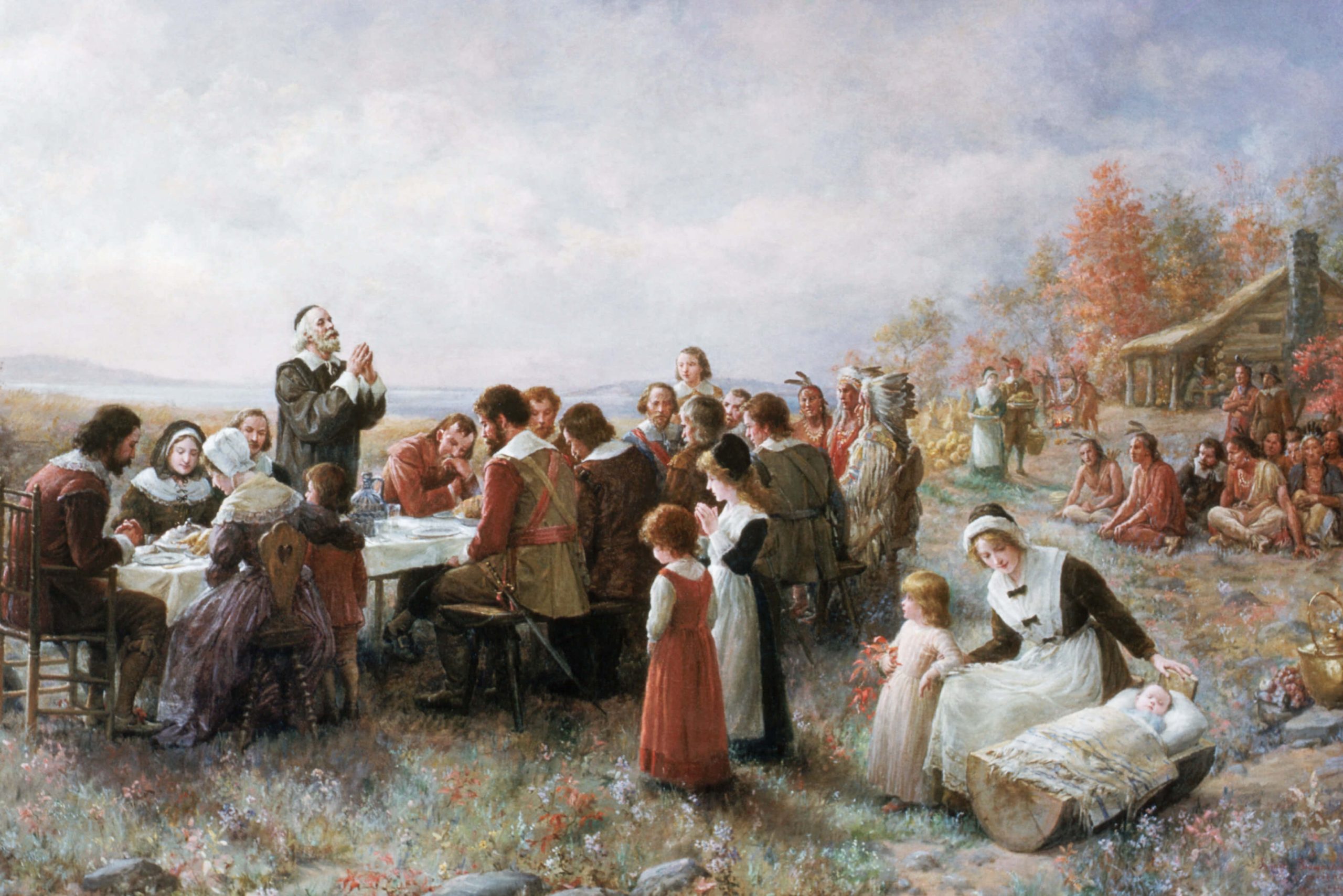
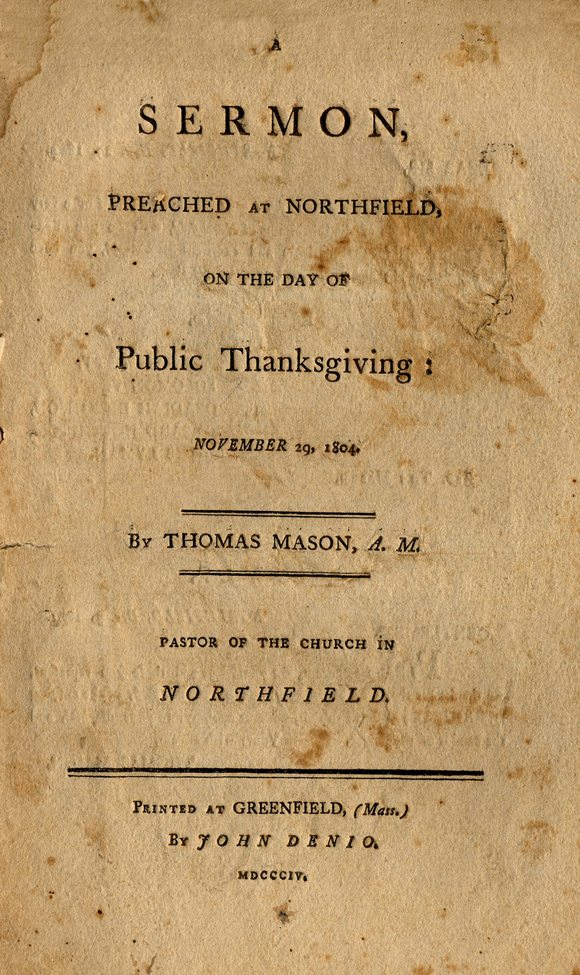
In this 1805 sermon, preached when he was 74 years old, Rev. Lathrop encourages his listeners to adopt a Biblical perspective on aging: to recognize that its effects are inevitable; to lean more heavily on God for grace to deal with the weakening of the body; and to maintain a positive testimony of faith before others. (Rev. Lathrop would preach another sermon on aging, Old Age Improved, in 1811, when he had reached his 80th year. Read it here.)


The Infirmities and Comforts of Old Age

A Sermon To Aged People

By Joseph Lathrop, D. D. Pastor of the first Church in West-Spring field

My aged Brethren and Friends, You will permit an aged man, like yourselves, to speak, this afternoon, a few words to you…Or, if you please, he will speak to himself in your hearing…Pertinent to our case, and worthy of our adoption, is the Petition of the Psalmist in:

Psalm 71:9

Cast me not off in the time of old age…Forsake me not when my strength faileth.

There is little doubt, that David was the author of this Psalm. And from several expressions in it we learn, that he wrote it in his old age. He prays in our text, “cast me not off in the time of old age.” And, in verse 18, “Now, when I am old and gray headed, forsake me not.” But David, when he died, was but about seventy years old, and he probably wrote the Psalm some years before his death; perhaps in the time of Absalom’s rebellion; for he speaks of “enemies, who then took counsel together, and laid wait for this life.” And we find not, that he was ever in this perilous and critical situation after that rebellion.

David, then, realized old age earlier than some seem to do. He noticed its first appearance; he brought it near, in his meditations, before it had actually invaded him; or, at least, when he began to perceive its approach in the decline of his strength, and the increase of his gray hairs. But many choose to view it as distant. “Grey hairs are here and there upon them, and they perceive it not.” They enjoy, in a comfortable degree, the pleasures of life; and that evil day, in which there is no pleasure, they put far from them.

It would be wise for us to imitate David’s example; to think of, and prepare for the evil day before it comes; to secure God’s gracious presence now; and in our daily prayers to ask, that “he would not cast us off in the time of old age, nor forsake us when our strength faileth.”

The Psalmist here reminds us, that old age is a time when strength faileth: And that at such a time God’s presence is of peculiar importance.

I. Old age is a time when strength faileth. There is then a sensible decay of bodily strength.

As we come into the world, so we depart, impotent, feeble and helpless. From our infancy we gradually acquire strength, until we arrive to our full maturity. We then for a few years continue stationary, without sensible change. After a little while we begin to feel, and are constrained to confess an alteration in our state. Our limbs lose their former activity; our customary labor becomes wearisome; pains invade our frame; our sleep, often interrupted, refreshes us less than heretofore; our food is less gustful; our sight is bedimmed, and our
ears are dull of hearing; “they that look out at the windows are darkened, and the daughters of music are low;” the pleasures of reading and conversation abate; our ancient companions have generally withdrawn to another world, and the few who are left are, like us, shut up, that they cannot go forth…Hence social visits are more unfrequent and less entertaining; and our condition grows more and more solitary and disconsolate.

With our bodily, our mental strength usually declines. The faculty which first appears to fail is the memory. And its failure we first observe in the difficulty of recollecting little things, such as names and numbers. We then perceive it in our inability to retain things which are recent…What we early heard or read, abides with us; but later information is soon forgotten. Hence, in conversation, aged people often repeat the same questions, and relate the same stories; for they soon lose the recollection of what has passed And hence perhaps, in part,
is the impertinent garrulity, of which old age is accused… You see, then my young friends, the importance of laying up a good store of useful knowledge in early life. What you acquire now, you may retain: Later acquisitions will be small and uncertain. Like riches, they will make them wings and fly away. In the decline of life you must chiefly depend on the old stock; and happy, if you shall have then a rich store to feed upon.

When memory fails, other faculties soon follow. The attention is with more difficulty fixed, and more easily diverted: the intellect is less acute in its discernment, and the judgment more fallible in its decisions.

The judgment is the last faculty which the pride of age is willing to give up…Our forgetfulness we cannot but feel, and others cannot but observe. But we choose to think our judgment remains solid and clear. We are never apt to distrust our own opinions; for it is the nature of opinion to be satisfied with itself. It is certain, however, that judgment must fail in some proportion to the failure of attention and recollection. We form a just judgment by viewing and comparing the evidences and circumstances, which relate to the case in question. If then any material evidence, or circumstance escapes our notice, or slips from our memory, the judgment formed is uncertain, because we have but a partial view of the case. In all matters, where a right judgment depends on comparing several things, the failure of memory endangers the rectitude of the decision.

When we perceive a decline of bodily and mental strength, fear and anxiety usually increase. Difficulties once trifling now swell to a terrifying magnitude, because we have not power to encounter them. Want stares upon us with frightful aspect, because we have not capacity to provide against it…The kind and patient attention of our friends we distrust, because we know not how long we may be a burden to them, and we have nothing in our hands to remunerate them, except that property, which they already anticipate as their own. “The grasshopper now becomes a burden’ we rise up at the voice of the bird; we are afraid of that which is high, and fear is in the way.”

This state of infirmity and anxiety, painful in itself, is rendered more so by the recollection of what we once were, and by the anticipation of what we soon shall be.

We contrast our present with our former condition…Once we were men; now we feel ourselves to be but babes. Once we possessed active powers; now we are become impotent. Once we sustained our children and ministered to them with pleasure; now we are sustained by them; and we are sure, our once experienced pleasure is not reciprocated. Once we were of some importance in society; now we are sunk into insignificance. Once our advice was sought and regarded; now we are passed by with neglect, and younger men take our place: even the management of our own substance has fallen into the hands of others, and they perhaps scarcely think us worthy of being consulted. And if we are, now and then, consulted, perhaps our jealousy whispers, that it is done merely to flatter our aged vanity and keep us in good humor.

Such a contrast Job experienced, and he found it no small aggravation of his adversity. Looking back to former days, he says, “When I went out of the gates through the city, the young men saw me, and hid themselves; the aged arose and stood up. When the ear heard me, then it blessed me; and when the eye saw me, it gave witness to me, because I delivered the poor and fatherless, and the blessing of those, who were ready to perish, came upon me. -But now they who are younger than I have me in derision. They abhor me and flee from me. They mar my path, and set forward my calamity.”

And not only the remembrance of what is past, but the forethought of what is to come, aggravates the calamity of the aged man.

In earlier life hope stood by him to comfort him in all his troubles. If he was disappointed in his business, he hoped to succeed better in a future essay. If he met with misfortune, he hoped by and by to retrieve it. If he lost his health, he hoped by time and medicine to regain it. If he suffered pain, he hoped it would be short. Whatever calamity he felt, he looked forward to better days…But now hope has quitted its station and retired from his company. “His days are spent without hope.” The joys of life are fled, never to return. He anticipates the increase of infirmities and pains from month to month, and the probable even of total decrepitude and confinement, and the entire loss of his feeble remains of sensibility and intellect.

Well might Solomon call this an evil day.

In the probable expectation of such a day, there is no solid comfort, but in the hope of enjoying the presence of God. Therefore, as we observed,

II. We ought to adopt the prayer of David, “Cast me not off in the time of old age: Forsake me not when my strength faileth.”

In the first place, the Psalmist may here be supposed to request, that God would not cast him off from the care of his providence.

When we have reached old age, or find ourselves near it, we may reasonably and properly pray, that God would excuse us from those pains of body and infirmities of mind, with which some have been afflicted; that he would place us in easy and unembarrassed circumstances, and allow us liberty for those devout exercises, which are suited to prepare us for our momentous change. David had seen the gross misbehavior of some of his children, and was now probably suffering under the cruel persecution of an ungracious son, who wished the father’s death, that he might possess the father’s throne. In this situation the old man prays, “Deliver me out of the hand of the wicked, out of the hand of the unrighteous and cruel man. O God, be not far from me; make haste to my help.” Under this severe affliction he doubtless requested, that God would incline the hearts of his children to treat him with filial duty and affection, and to study the peace and comfort of his declining age.

The happiness of the parent, in the latter stages of his life, depends much on the good behavior of his children; and particularly on their kind attention to him…I pity the aged man, who, when his strength fails, looks anxiously around, and sees not a son on whom he can lean: No; not a child, who will reach out a hand to sustain his sinking frame, and guide his tottering steps… But I congratulate the happy old man, who sees his children about him, all attentive to his wants, listening to his complaints, compassionate to his pains, and emulous each to
excel the other in acts of filial duty…I honor the children, when instead of seeing the old father tossed from place to place, unwelcome wherever he is sent, they adopt the language of Joseph, “come to me, my father; thou shalt be near to me, and I will nourish thee.” Such filial kindness soothes the pains, and cheers the spirits of the parent. It makes him forget his affliction, or remember it as waters which pass away.

But, secondly, what David principally requested was, that God would grant him the presence of his grace. Thus he prays, in another Psalm, “Cast me not away out of thy presence; take not thy holy spirit from me; restore to me the joy of thy salvation, and uphold me with thy free spirit.”

His outward man was decaying; but he solicited such supplies of grace, as should renew the inward man day by day. In his increasing infirmities he could take pleasure, when the power of God rested upon him; for however weak in himself, he was strong in the Lord.

1. In this prayer he asks grace, that he may maintain a temper and behavior suited to his age and condition.

It becomes the aged to be grave and sober, for they stand on the brink of the eternal world. And who would not be sober there? If we should ever happen to see such men light and vain, addicted to frothy discourse, fond of dissolute company, and seeking guilty amusements, we should be shocked at the spectacle. We should naturally conclude, that their hearts were totally alienated from God and religion, and completely stupefied by the habits of sin.

It becomes them to be temperate and vigilant, and to avoid every indulgence, which might tend to increase the peevishness and irritability naturally incident to a period of pain and infirmity.

It becomes them to be patient and resigned. As they are subject to peculiar trials, and the strength of nature fails, they should implore the presence of that good spirit, whose fruits are gentleness, meekness and long-suffering. They should call to mind former mercies, and meditate on God’s works of old. They should consider that their time is short, and their trials will soon be over. “Now for a season, if need be, they are in heaviness through manifold temptations; but if patience has its perfect work, the trial of their faith, which is more precious, than that of gold which perishes, will be found to praise and honor at the coming of Christ. And these light afflictions, which are but for a moment, will work for them a far more exceeding and eternal weight of glory.”

2. They should pray for grace, that by a pattern of piety and heavenly mindedness, they may recommend religion to others. They are required to be sound in charity, as well as patience-not only to bear their troubles with fortitude and dignity, but to exhibit in all things a behavior, which becometh holiness, that they may teach the young to be sober minded. This is the best exercise of their charity.

David, in his old age, felt a benevolent concern for rising posterity. Hence he prays, “O God, forsake me not, when I am old, until I have showed thy strength to this generation, and thy power to every one that is to come.”

The aged man, taken off by his infirmities from the active business of life, can in no way do more service for God and for mankind, than by exhibiting a visible example of contentment and humility, piety and spirituality, faith and hope, in the near views of another world. He thus demonstrates the excellence and power of religion, and calls on all around him to embrace and cherish it, that, like him, they may pear affliction with serenity, and meet death with fortitude.

3. David here solicits communion with God. “Cast me not off.” Deny me not free access to thee. “Turn not away my prayer, nor thy mercy from me.”

The good man, in all circumstances, would maintain a heavenly intercourse. But he desires and values this privilege most in a time of affliction, and in the near expectation of death. Our Savior, who was, at all times, filled with a devout spirit, exercised this spirit most fervently and frequently toward the close of his life. And so ought the aged saint. As he is discharged from the labors and occupation of the world, let him dismiss his worldly affections and thoughts, and give himself, more than formerly, to self examination, meditation and prayer, viewing the time as at had, when, taking leave of all earthly things, he must enter into a new world, mingle in new connexions, and appear in the presence of God, let him employ himself in the contemplation of heaven and in the exercises of devotion more constantly than he could ordinarily do in former years, when the world had greater demands upon him. Looking forward to the last stage of life, and realizing the condition in which he may then be placed, let him often ask beforehand, that God would give him at that time, the spirit of prayer in a superior degree, would grant him, under nature’s weakness, ability to collect and arrange his thoughts, and a fervor of pious affection in making known his requests. This, in a similar case, was the employment and the comfort of the Psalmist. “My soul,” says he, “is full of troubles, and my life draweth near to the grave; mine acquaintance are put far from me; and I am shut up, that I cannot go forth.” And what could he do in this condition? One thing he could do; and this he did. He applied himself to prayer, which is the best relief of an afflicted soul. “I have called daily upon thee, and to thee have I stretched out my hands Unto thee have I cried, O Lord, and in the morning shall my prayer prevent thee. Let my prayer come before thee; incline thine ear to my cry.”

4. David, in this petition, “Cast me not off in the time of old age,” requests that, by the power of Divine Grace working in him, his faith and hope might hold out to the last; and that, by the sensible displays of Divine Light, and by increasing evidence of his title to salvation, he might be freed from the distressing apprehension of being finally cast off and forsaken of his God. Thus he prays, on another occasion, “Cast me not away out of thy presence. Restore unto me the joy of they salvation.”

In all seasons and conditions of life, the hope of glory is much to be desired, and earnestly to be sought. This will lighten our afflictions and sweeten our mercies; defend us against temptations and smooth the path of duty; dispel the gloom which hovers round the grave, and brighten the prospect of eternity… But this hope is never more important, or more delightful than in old age. Now the joys of life have fled, and earthly prospects are cut off; now the day of probation is expiring, and the solemn hour of retribution is at hand…How unhappy the case of those, who are going down to the grave without hope, and going to judgment with a consciousness of unpardoned guilt; who, in the review of life, see nothing
but vain amusements, sensual pleasures, earthly affections, and avaricious or ambitious pursuits; and in the contemplation of futurity see nothing before them, but death, judgment and fiery indignation… But how happy the aged Christian, who can look back on a life employed in works of piety to God, and beneficence to men, and who now feels the spirit of devotion and charity warmed within him and acting with fresh vigor to confirm his hopes of heaven, dispel the fears of death, and light up fresh joys in his soul? He can take pleasure in his infirmities, regarding them as kind intimations, that “now is his salvation nearer, than when he believed.”

Such was Paul’s felicity, when he was ready to be offered, and the time of his departure was at hand. “I have fought a good fight, I have finished my course, I have kept the faith, henceforth there is laid up for me a crown of righteousness, which the Lord, the righteous judge, will give me in that day.” How did Paul obtain this felicity?-“He counted not his own life dear to himself, that he might finish his work with faithfulness, and his course with joy.” “He kept under his body to bring it into subjection, lest by any means, when he had preached to others, he himself should be a castaway.” That we may obtain the full assurance of hope, we must be followers of them, who by faith and patience inherit the promises; and in this course we must give diligence to the end.

Our subject powerfully applies itself to us, who are advanced in age. We begin to feel the decays of strength, and to perceive the indications of our approaching dissolution. In a few a days, we must go the way, whence we shall not return. Soon we shall see man no more with the inhabitants of the earth; but shall be placed in new relations and in a new condition. While we tarry here, our infirmities will probably increase; our days and nights will become more wearisome; the pleasure of senses will lose their relish; the burden of worldly business will be too heavy for our bending shoulders; the implements of our labor will drop out of our palsied hands, and we shall have no more a portion in any thing that is done under the sun. And it is not improbable, that some of our last months may be spent in helpless confinement of body; ah, and perhaps too in derangement or stupor of mind.

Looking forward to such a season, let us daily pray, “O God, cast us not off in the time of old age; forsake us not when our strength faileth. Give us kind and patient friends, who will cheerfully minister to our necessities and bear our infirmities. Vouchsafe to us rich supplies of thy Grace, that we may sustain our own infirmities; may enjoy communion with thee; may maintain our heavenly hope, and by a pattern of Christian piety, charity and spirituality, may commend to those who stand around us that Divine Religion, which is our support, our comfort, and our joy…And if, in thy sovereign Wisdom, thou shouldst see fit to deny us the privilege of reason, let the prayers which we now offer be graciously remembered; and grant us pious and prayerful friends, who will send up petitions to thee in our behalf…And whether we shall then be capable of making a petition to thee, or not, we now humbly ask, That thou wouldst not cast us out of thy presence, nor take they holy spirit from us, but by thine own wonderful and secret operation make us more and more meet for heaven; and when our flesh andour heart shall fail us, be thou the strength of our heart, and our portion forever.”

My brethren, if we wish to enjoy the comforts of religion at last, we must cultivate the temper, and keep up the exercise of religion now. It will be no easy matter to take up the business then, unless we have been accustomed to it before.

You, my friends, who are in the midst of life, and you who are young, are not uninterested in this subject. You all think, that we, who are aged, need the comforts of religion. God grant, that we may have them. Do you not sometimes think of us in your prayers? We hope you do. But know, if you live to be aged, (and you all desire many days) these comforts will then be as necessary for you, as they are now for us. But how can you be sure of them then, unless you obtain an interest in them now? To have the comforts of religion, you must have religion itself. Embrace it, therefore, in your hearts; cultivate the holy tempers which it requires; maintain the good works which it enjoins, and ascertain your title to the eternal blessings which it proposes…Thus lay up for yourselves a good foundation against the time, which is to come, that you may lay hold on eternal life.

Sermon – Thanksgiving – 1804


This sermon was preached by Thomas Mason on November 19, 1804.


sermon-thanksgiving-1804

A

SERMON,

PREACHED AT NORTHFIELD

ON THE DAY OF

PUBLIC THANKSGIVING:

NOVEMBER 29, 1804.

By THOMAS MASON, A. M.

PASTOR OF THE CHURCH IN

NORTHFIELD.


NORTHFIELD, Nov. 29, 1804.

DEAR SIR,

The underwritten, for themselves, and in behalf of a very considerable portion of the inhabitants of Northfield, wait on you to express their thanks for the patriotic and excellent SERMON, you have this day delivered; and to request a copy for the Press.

We are dear Sir, with great
Respect and esteem,
Your servants,
JOHN BARRETT,
SOLOMON VOSE,
OBADIAH DICKINSON,
EDWARD HOUGHTON,
CALEB LYMAN.

Rev. Th: Mason.


ANSWER.
NORTHFIELD, Dec. 3, 1804.

GENTLEMEN,

Please to accept, for yourselves and those you represent, my thanks for the favorable opinion, you have manifested, of the ensuing DISCOURSE; which I submit, without apology, to your disposal, and the candor of the public.

Yours with esteem,
THOMAS MASON.


A
SERMON.
 

The energies of the human mind are waked into action, by an almost infinite variety of motives. Of the abstract intelligent spirit, very little either is, or can be known by men. Yet, of its certain existence, we can entertain no reasonable doubts or suspicions. In its exercises we observe something, which we venture to call its attributes. But, strictly speaking, I conceive that, neither love, hatred, hope, fear, joy, grief, benevolence, gratitude, nor any of the intellectual or moral passions are found to be constituent parts of the human mind. The soul of man is a separate existence, independent of all the affections and passions, to which it is occasionally incident. Without motives to excite it—without objects to call its powers into action, the mind of man would be forever at rest, and remain in a state of perpetual infancy.

That infinite variety of objects, by which the rational mind is capable of being affected, has been appointed in infinite wisdom and goodness, as the means of its progression in the attainment of that perfection, for which it was originally designed. And all the passions, when properly regulated and controlled, are capable of contributing to this desirable end—of aiding man in the acquisition of his ultimate perfection.

The external ordinances of religion are all designed for awakening the powers of the human mind, and bringing into exercise its better, and more noble passions, and affections. To impress the soul with a principle of love to God, as a being perfect in all his attributes; and benevolence to man, under all his imperfections and necessities, is the final object of all religion—the end of all human perfection. And such measures, as are best fitted to the promotion of this end, are those, which ought to be cordially embraced, and steadily and uniformly pursued.

In all valuable improvements, external forms have always been found indispensably necessary. To attain the eminence at which it aspires, the human mind, as well as the body, must proceed by regular steps and gradations. Men may as well attempt to ascend the highest mountain, by a single effort of the body, as to rise to intellectual or moral eminence, without the intervention of external aids and assistances.

In all our pursuits, we ought always to make a clear distinction between the means, and the end; the external forms, and the thing to be acquired. As labor is not bread, and as books are not science; so neither are the external ordinances of religion to be accounted religion itself. There may be labor without bread, books without knowledge, and the forms of religion, without its genuine influences upon the soul. But, notwithstanding this, as we are not to expect bread without labor, nor knowledge without reading and meditation, so neither can we look for true religion, where its external forms and ordinances are not duly respected and regarded.

The separation of this day, to the business of religious worship, is designed as a mean of awakening the soul to sentiments of piety and devotion. And the method employed is justified, not only by the usage of our ancestors, but by the probable tendency of the thing itself.

In the very nature of the thing, it seems highly proper, at this season of the year, when the bounties of divine providence are collected for our participation, to come together, acknowledge the source of our enjoyments—adore that Being, whose benefaction they are—and by every exertion in our power, endeavor to render ourselves the subjects of his continued beneficence.

Gratitude to God is the particular religious affection, which the institution of this anniversary is designed to promote. We ought, therefore, as far as possible, minutely to understand what is embraced in this virtue of the Christian character.

It is no uncommon thing for men to confound this affection of the soul with that temper of mind, which they experience under circumstances, and in scenes of prosperity. Joy and gratitude are, therefore, often considered as terms of nearly the same import and signification. But though there is no incompatibility between the exercise of these affections; yet so diverse are they in their natures, that the one may, and ought to exist, where the other is wholly excluded. Gratitude to God is a principle, the reasons of which ought always to influence the human mind; but joy is an affection confined wholly to scenes of pleasure, and circumstances of prosperity. Their difference, therefore, cannot fail of being readily perceived, and clearly understood. For gratitude is an unchangeable principle, which ought perpetually to influence the human mind; while joy is simply a passion, the exercise of which is merely incidental, depending upon the particular external circumstances, in which we happen to be placed.

True gratitude to God does not, like mere joy, result from the particular pleasures, or present enjoyments we feel; but from a rational conviction that, we are under the government of an all perfect Being, the measures of whose providence are all wisely adapted to the promotion of our best, and truest interest. Though we may be under the pressure of extreme grief, disappointment and trouble; yet this ought, by no means, to interrupt, or abate the constant exercise of the most ardent gratitude to God. Even under experience of the keenest distresses, it is great impiety either to forget the most high, or to distrust the goodness of his providence. For we may be sure, if scenes of disappointment and adversity do not ultimately contribute to our happiness, it must be owing to the misimprovement, which we make of those providences. Besides the authority of his word, the perfections themselves of God are a certain pledge that, all things shall work together for the good of those, who love, regard, and obey his law.

The prime object of this day of thanksgiving is, not to inflate us with mere transports of joy; but to awaken in our breasts a sincere, and operative principle of gratitude to almighty God. And whether, in the course of the past season, we have experienced a series of prosperities, or felt the accumulated weight of heavy and severe adversities, we are bound to the like exercise of pious and devout gratitude.

I would not, however, be understood as giving credit to the absurd notion that, we are to reverse the constitution and laws of nature, by rejoicing while we are surrounded by the proper circumstances, and invested by the appropriate motives of grief. This would be a temper of mind, both unfit in its own nature, unfriendly in its consequences, and impossible to be reduced to practice. But the distinction already made between, both the principle, and the exercise of joy and gratitude is a sufficient defense against every imputation of this nature. All that I would insist upon is that, gratitude is a steady and immutable principle, which, when duly regulated, can receive neither force nor abatement in its exercise, by the accidental influence of either prosperity or adversity.

To awaken into action this steady and divine principle, which, without exciting motives, is liable to become formant in the human breast, is the design of this day’s religious devotions. We ought to be sensible, and seemingly to realize that, all the good, which we have enjoyed, is from the hand of God; and the evils, which we have suffered, are of our own procuring. But yet, such is the goodness of the divine nature, and the beneficence of God’s providence that, even these evils themselves capable of being converted into the ministers of human blessedness. Without the smallest prejudice to his other attributes, in all of which he is absolutely perfect, we may say that, God is all benevolence. Such, indeed, is the character, under which he is revealed to men; and as he is displayed in the order and administration of his providence.

But as all duties, whether social or religious, are designed for the benefit of man—to procure for him the best enjoyments of earth, and prepare him for the dignified glories of heaven, it becomes suitable that, our present religious devotions should be made subservient to the due regulation of human life. And, as the state of man here below is changeable and fluctuating–as prosperity and adversity are often found in so close contact, as almost to contend for the same place; it becomes us to be prepared for every possible alternation that may await us.

As health, peace, and prosperity are the proper seasons to shield ourselves against the evils, or support ourselves under the calamities of sickness, war, and adversity; so it cannot be judged a thing improvident, on an occasion of thanksgiving, to impress our minds with a deep sense of the uncontrollable vicissitudes of human life, that even the most unfriendly transition may not suddenly transport, or greatly confound us. For this reason I have chosen, as the subject of our religious meditations this day, those words of David in his Song of thanksgiving, recorded in the xviiith Psalm, at the 4th verse:

“The floods of ungodly men made me afraid.”

The occasion of the Psalmist’s tear, as expressed in the words just read, is a subject of the most serious alarm to every intelligent reflecting man—to every one, who cherishes a suitable concern for the present happiness, and future well being of the human family. Whoever does not coincide with the sentiment of our text—whoever is not seriously alarmed at the rising influence of the characters there described, must discover, at once, either a mind pinioned in the hard slavery of ignorance, or a heart overcharged with corruption and vice. The former, being freed from all terror by the sovereign power of ignorance, are easily persuaded to become the instruments of promoting the ungodly; while the latter, being interested in the growing authority of unrighteousness, can have no terrors, either to trouble or alarm them.

Whether or not we are menaced by the like terrors, it is not my design, at present, to enquire; but only to make room for a due improvement, from the experience and calamities of others. Admitting, however, that this is not our present, yet it may be our future case. And no precautions can be too great, to enable us, with firmness and composure, to meet the calamities we may be called to sustain.

To enable us to make a proper use of this sentiment of the royal Psalmist, I shall attend to the three following particulars:

First—I shall give a description of the character of those men, who are the occasion of this terror.

Secondly—I shall particularize some of the calamities which are likely to result from the undue influence of ungodly men.

And, thirdly, point out the behavior proper for a good man, in view of such dangers and distresses.

First, then; I am to give a description of the character of those men, who are the occasion of this terror.

The peculiar characteristic, which the Psalmist has given us of these men, is that they are ungodly. The thing implied in this epithet will present us with a correct idea of that character, which was the occasion of this solicitude.

By consulting the purport of the word ungodly, as applied by the Psalmist, we shall find it, perhaps, universally employed, as synonymous with the word irreligious. It was, therefore, the abounding, and influence of men of irreligion and impiety, which occasioned those painful and distressing apprehensions; which are suggested in our text.

Men of this character—those, who neither fear God, nor regard his law, are, under all circumstances, a detriment to society. And the danger of their influence is always in proportion to their ability, and the motives and means presented them, for doing injury to their fellow-men. Irreligious men may have the ability, without either the motives or the means for the exercise of injustice and oppression.—Added to this, they may have both ability and motives, while the means of annoyance are not placed within their power. In both these cases, though they are, in fact, harmless and inoffensive; yet, in nature, they are extremely poisonous and detestable creatures. But when to the ability is added both the motives and the means of fraud and violence—when the lust of a wicked domination is encouraged by prevailing ignorance, and a growing corruption of manners, then we are to look for those fearful times and awful calamities, which occasioned the extreme solicitude and terror of the Psalmist. Indeed, that ambition, which discovers itself by an excessive craving after power, is one of the most striking characteristics by which the men described in our text are to be distinguished.

In all ages and nations the great body of the people have been far removed from the allurements of ambition and personal promotion; and it cannot reasonably be supported that, they have ever knowingly volunteered, in aiding the measures of their own destruction. Where they have been misled, and have thus been made the instruments of their own ruin, they have always been indebted, for their delusion, to the artifices and fraud of the characters described in our text. The subtle machinations of ungodly and irreligious men have always been the occasion of those public and awful calamities, in which nations have been too often and fatally involved.

The author of our text had the most painful experience of the evils, resulting from the influence of men of this description. To what particular scene of distress he alludes, in the words under view, is not material for us to enquire. Several incidents of his reign are sufficient to justify the terrors, expressed in the words of our text. But, of all those that happened, there is no one so remarkable and conspicuous, as the rebellion of his son Absalom.

In the reign of David, the people of Israel were, perhaps, in the enjoyment of as many, and as great privileges, as their national character and circumstances could possibly admit. But this was no security against the artifices and intrigues of unprincipled and irreligious men; restless and aspiring after distinctions, to which neither their merits, nor services had ever given them the most distant pretensions.

The measure, employed by this aspiring demagogue to accomplish the wicked purpose of his heart, was such as has been copied, in all succeeding generations, by the turbulent minions of a most corrupt, and depraved ambition. To alarm the people with false terrors, and encourage them by deceitful and empty promises was the first measure of this arch factionist, to cheat them into wretchedness and ruin.—To wrest the scepter from him, who had been the instrument of his existence, and by whose partial favor he had been exalted to high eminence and honor, he descended to all the mean, and groveling artifices of indiscriminate flattery and adulation. With the most studied and malicious falsehood, he inveighs against the prudent measures, and wise maxims of his reverend father; and invites their confidence in himself, as a person combining that rare assemblage of virtues, whose private interest and ambition consisted solely in his anxious solicitude, for the prosperity and happiness of the people. As it is related by the sacred historian, “he rose up early, and stood beside the way of the gate—lamenting that no one was deputed of the king to sit in judgment, to hear, and avenge the cause of the oppressed. O, says he, that I were made judge in the land; that every man, who had a suit or a cause, might come unto me, and I would do them justice. And it was so that, when any man came nigh to him, to do him obeisance, he put forth his hand, and took him and kissed him. And on this manner did Absalom to all Israel, that came to the king for judgment. So Absalom stole the hearts of the men of Israel.”

These measures he pursued, with the most unremitting assiduity, for the full space of forty years, before his base and nefarious purposes were fully ripened for execution. Thus, by promises hollow as the dreary echoes of darkness, and salacious as the falling tears of the crocodile, he became the idol of the people.

The sequel of Absalom’s patriotism is too well known to need any particular rehearsal. It is, however, worthy of observation that, when he had assumed the royal vestments, his tender and extreme concern for the happiness of the people, yielded to the more excessive solicitude to stabilitate and confirm his usurped dominion. Like all his followers, in the annals of popular faction, he most decidedly testified that, like the lion, he crouched only to leap, and destroy. His dove-like tenderness suddenly disappeared, and the tiger, with all his rapacity, was at once discovered. His traitorous soul was, at first well pleased with the counsel of Ahithophel, to smite the king only; and reserve all the faithful of Israel, as his dependent and degraded vassals. But, upon more mature deliberation, his thirst of butchery and blood was better satisfied with the counsel of Hushai, to fall upon them, till, of all the men, there should not be so much as one left. In every step of his conspiracy, we see, in Absalom, clearly delineated the character described in our text. And, in the delusions into which the people of Israel were infatuated by him, we may discover that state of society, which occasioned the fears and terrors of the Psalmist.

Distinct from all other considerations, this pretended, exclusive concern for the public interest and welfare is a characteristic extremely unaccountable and suspicious. But when to this is added an evident defection of moral principle, and disregard of the divine authority, to every intelligent and considerate mind the inference is irresistibly conclusive. It is to the last degree distressing to remark the facility with which the great body of the people have been so often deluded by unprincipled and treacherous men. Honest and unsuspecting themselves, they have been led to imagine that zeal, to flaming, cannot be false; and that promises, so solemn, cannot be insincere. Thus deluded, they have called for more delusion—chanted, encore, to the siren long of their betrayers; till, as in the case of Absalom, the revolutionary yell has waked them from their lethargy, and brought their wretchedness in full prospect before them. With accidental variations, answering to the occasional distinctions in society, these are the measures, employed by the panders of a degenerate and corrupt ambition, to hurry mankind into scenes of wretchedness, and fatten on the spoils of their destruction.

Secondly—I shall particularize some of the calamities, which are likely to result from the undue influence of ungodly men.

The first evil, which society generally feels from the rising influence of irreligious men, is a dereliction of moral principle, and a consequent degeneracy of public character. Impious and unprincipled men are, generally, too well acquainted with the springs of human action to venture, at once, upon such daring innovations, as would flagrantly contradict those false promises, on which the popular favor has been erected. As all power is derived from the people, they must be preserved under the influence of delusion, till, by their own corruption, they are duly prepared for slavery, or the shackles of tyranny are fast riveted to their hands. While the moral principles have their due influence, men will be conscientiously restrained from affording support and patronage to men of this character, in the open avowal of their final purposes. And, as these cannot be ultimately secreted, the public mind must be gradually prepared to relish, and approve them. In order, therefore, to loosen them from all those religious restraints, by which the execution of their wicked purposes might be any way embarrassed, they are always industrious, in disseminating loose and demoralizing sentiments. The people are often taught to believe that, religion is a political scare-crow—that, its ministers are the mercenary tools of a pretended nobility—and that, the several institutions of society are all calculated to abridge them of their invaluable rights, and sink them into the lowest state of degradation and wretchedness. The success of these measures undermines the pillars—saps the foundation of society—and introduces an alarming degeneracy of public character.

In proportion as unprincipled men gain authority, irreligion and impiety will prevail. And ignorance, indecorum, and barbarity naturally follow, in the train of irreligion. By neglecting the institutions of the gospel, and consequently disregarding the authority of its doctrines, men naturally acquire a kind of rough, unfeeling, jealous, and savage spirit. This observation is strongly corroborated, both by the state of those nations, where Christianity is not patronized; and, in Christian lands, by the private characters of those particular individuals, who disavow the authority of the gospel. When, therefore, by the influence and intrigues of ungodly men, the public mind has become insensibly detached from the institutions and authority of the gospel, no firm foundation, either for the support of public faith, private friendship, or social enjoyment, can be anywhere discovered.

Christian nations, who have neglected their allegiance to their Saviour, are not in the state of others, who have never known the gospel. The superstition, with which their minds are shackled, may serve to render their barbarism less intolerable. But a national rejection of the gospel has always proved a rejection of all religion. No substitute has ever supplied its place. And, under these circumstances, the condition of society is a state of barbarism, without any of those alleviations, which heathen superstition affords.

A further, but natural consequence of the influence and authority of ungodly men, is the destruction of those gradations in society, by which wisdom and virtue are distinguished from folly and vice. This state of society, and the calamities attending it, the prophet Isaiah has well described.—“The mighty man,” says he, “and the man of war, the judge and the prophet, the prudent and the ancient, the honorable man and the counselor, shall be taken away—children shall be their princes, and babes shall rule over them. The people shall be oppressed every one by another, and every one by his neighbor; the child shall behave himself proudly against the ancient, and the base against the honorable.” In spite of all the clamors for equality, in every nation, whether barbarous or civilized, a nobility will exist. And where “nature’s nobility,” which conflicts in talents, learning, and integrity, is destroyed; and the public confidence is reposed in men restless, intriguing and treacherous, the rights of the people will soon be jeopardized, and folly and madness become the currency of the times.

The experience of nations will assure us that, the influence of irreligious and ungodly men has most prevailed under those governments, where there has been the most free and equal participation of all the privileges and rights of man. Under these circumstances, the characters, above described, enjoy the means of exercising, with impunity, those wicked and destructive artifices, by which their detestable purposes may be finally accomplished. But, under a government severe and inexorable, jealous of its own prerogatives, and vigilant in detecting those, who would encumber its motions, all schemes of innovation are rendered frustrate and abortive. Enjoying, therefore, as we do, a constitution of government equally propitious to humanity, and favorable to the pernicious artifices of irreligious and ungodly men, we are doubly interested in guarding, with a watchful eye, against the smallest innovation of those measures, which have secured to us such unexampled prosperity and happiness.

Another reason, why the most lenient and equitable governments are most exposed to the ravages of corrupt ambition, is because the full enjoyment of individual rights creates the most sudden disparity in the circumstances and conditions of men. This seldom fails of exciting the envy and resentment of the intemperate of all classes—men of confused fortunes, and desperate characters; and, eventually, of forming a junction with men of more happy auspices, and daring ambition—who are ready to become the leaders of the indolent, and intemperate, and the deluders of the ignorant and unsuspecting. And thus, it has generally happened that, the most lenient and equitable governments have been crushed by the wild, and ungoverned lusts of irreligious and ungodly men.

Again—What must be the state of a nation, when the influence of irreligious and ungodly men has risen to such an eminence, as to destroy the authority and obligation of an oath? When the divine authority is effaced from the human mind, the energies of human government must be feeble and ineffectual. And the spectacle of a people, where the wild lusts and passions of corrupt nature are let loose to their several pursuits, unrestrained by all laws human and divine, must be truly alarming and terrible.

Distinct from the judgments of heaven, which every serious and thoughtful man must contemplate, as the certain consequence of such corruption and degeneracy, we have every reason to believe that, such a state of society must nourish the feeds of its own destruction. The uniform experience of ages, as well as the reasonableness of the thing itself, confirms this persuasion, beyond the power of contradiction or doubt.

These are some of the evils, which are likely to befall a nation, deluded into the measures of its own destruction, by the influence and authority of irreligious and ungodly men. And surely, they are such as fully to justify all the apprehensions and terrors, expressed by the Psalmist, in the words of our text.

I now pass, thirdly, to point out the behavior proper for a good man, in view of such dangers and distresses.

Perhaps the flourishing, united, and happy state of our country may be urged by some, as a sufficient reason for omitting all enquiries and discussions of this nature. But it may well be insisted upon, that these very considerations are an ample apology for enquiring into the causes, in order to guard against the measures of public degeneracy and corruption. When the impositions, artifices, and intrigues of irreligious and ungodly men are known, only as related in the histories of ancient times, and far distant nations—when no competitions exist, but to emulate each other in virtue and goodness—when unprincipled and licentious demagogues are known, only by their obscurity, and the public contempt with which they are regarded—when, as a nation, we are entirely exempted from the evils of any political intolerance—when, among all classes of the people, but especially among the highest officers of the nation, there is discovered an ardent zeal, for the promotion of pure and undefiled religion—when the Sabbath itself, and all the ordinances of piety are regarded with a conscientious and scrupulous punctuality—when the rising generation is taught, by the laudable example of their parents, to respect, and constantly to attend the institutions and instructions of the gospel—when the prime qualifications, for the appointment to high and important offices, are honesty and ability—when, in the highest, and most conspicuous departments of government, the manners, sentiments, and morals of the people are thus guarded, by the example, the influence, and the authority of men of preeminent godliness—under these peculiarly happy and auspicious circumstances, I say, we are apt to fall into a dangerous security, and to feel such an immovable stability as no adverse occurrences can endanger. Admitting this to be our present condition, it is a proper season to awaken our minds to a due sense of the evils, which must attend the reversion of our circumstances. As those, who consider this to be a true statement of our affairs, will not be likely to make any personal application of the measures and characteristics of corruption and degeneracy; and, as every intelligent and tho’tful man, who imagines any present terrors from the domination of the irreligious and ungodly, will justify a persevering solicitude, for the restoration of the sober maxims of truth and righteousness; so, being divested of prejudice, all will be duly prepared for a right improvement of those reflections, which have now been made, from the suggestion of the Psalmist in our text.

The duty of a good man, under those troublesome and dangerous times suggested in our text, is plain and certain. And no doubts can exist, with respect to the leading characteristics of his behavior, unless he is under the influence of a cringing policy, by which he hopes to secure the favor of the impious and ungodly. But, in regard to the particulars of his demeanor, he will find room for the exercise of much prudence, discretion, and wisdom. Sometimes we must treat a fool according, and sometimes not according to his folly. To the harmlessness of the dove must be added the wisdom of the serpent. But, in all cases, there must be a strict and conscientious adherence to principle; and a firm reliance upon the final consequences of the policy of truth and righteousness. Though the enemies of virtue may flourish, and prosper for a season; yet the triumph of the wicked shall be short. Though an infuriated people may boast the messages of their chief, as being the voice of a God; yet the veil of delusion shall soon be rent; and the worm that corrodes his vitals shall suddenly be discovered. “The Lord of hosts will send among their fat ones leanness; and under their glory will he kindle a burning, like the burning of a fire.”

With regard to the ministers of the gospel, from the station in which they are placed, and the special command of God, they are under peculiar obligation to a manly, firm, and independent decision, both of character and conduct. They are set as the censors of the people; and, if they are not above the reproaches and menaces of unprincipled and corrupt men, they are unworthy the character which they are called to sustain. Against unfaithfulness in his ministers, God has appointed penalties paramount to all the evils, which irreligious and ungodly men can devise. And, though the floods of ungodly men may make them afraid, yet the fear of him, who has reserved the full vials of his indignation to another state of existence, should induce them to forego every evil, which the malice both of men and devils can inflict.

This is the duty, not only of the ministers of the gospel, but of all good men, in the several ranks and gradations of life. And those, who shrink from the contest, in dangerous and distressing times, will find much work for penitence, when a right sense of duty has regained its full dominion over their souls.

If, which God forbid! the times described in our text should ever be witnessed in this, our beloved, and hitherto happy country, every really good man would sustain with fortitude, and even glory in the buffetings of Satan, and all his impious satellites.

Let us, therefore, enjoy the good things which Providence presents, not with the vain presumption that, the thing which is, or has been, shall always necessarily be; but with the firm persuasion that, God has rested our happiness as a nation, upon our national virtue and patriotism. Under this conviction may we live; and, to the latest posterity, may the blessing of heaven be our portion, and our joy.