William Williams Letter

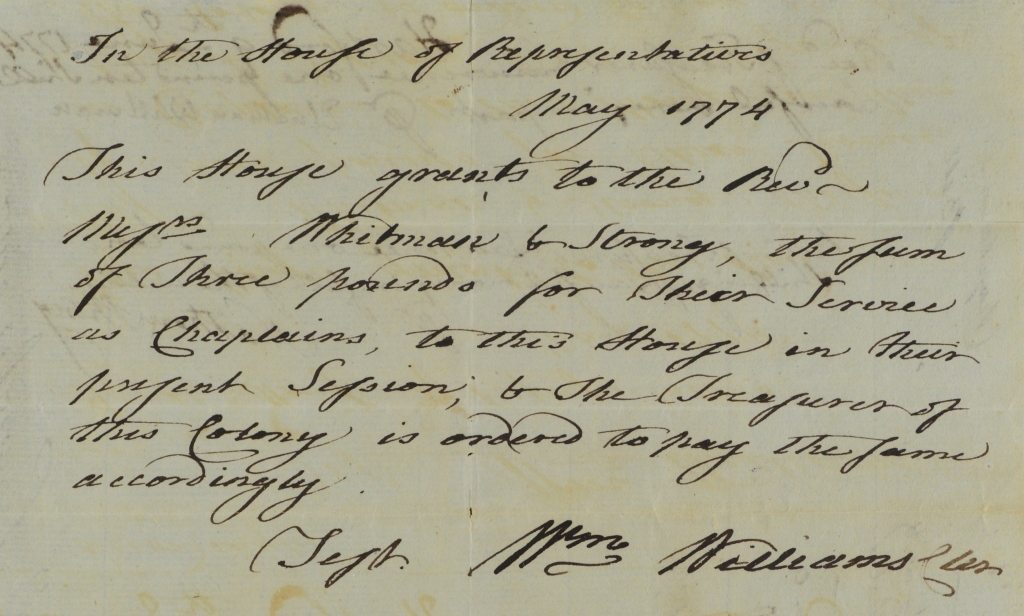
William Williams was a signer of the Declaration of Independence from Connecticut. This letter from 1774 deals with the Colony of Connecticut hiring and paying chaplains.


american-revolution-william-williams-letter-1

In the House of Representatives

May 1774

This House grants to the Rev. Meyrs Whitman & Strong, the sum of three pounds for their service as chaplains, to this House in this present session, & the taxpayers of this Colony is order to pay the sums accordingly.

Signed Wm Williams

William Williams and Oliver Wolcott Treasury Note

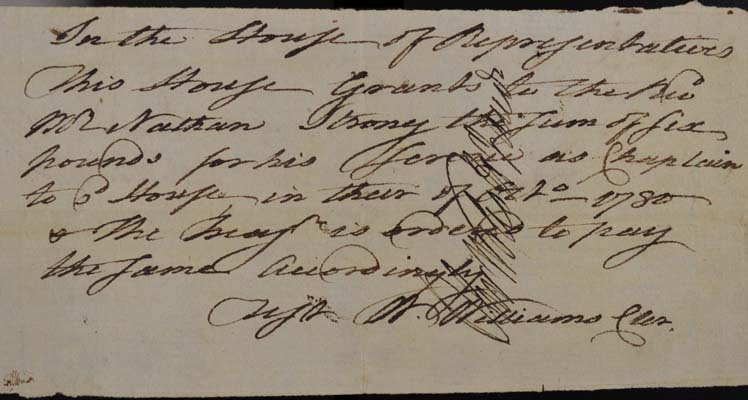
Both William Williams and Oliver Wolcott were signers of the Declaration of Independence from Connecticut. This treasury note from 1780 deals with the House of Representatives of Connecticut hiring and paying a chaplain.


william-williams-and-oliver-wolcott-treasury-note-1

In the House of Representatives

This House grants to the Rev. Mr. Nathan Strong the sum of six pounds for his services as Chaplain to s’d (said) House in their of Oct 1780. The treasurer is ordered to pay the same accordingly.

Signed Wm Williams
(Superimposed) Oliver Wolcott

4th of July Article

It’s been over two centuries since our Founding Fathers gave us our National Birth Certificate. We continue to be the longest on-going Constitutional Republic in the history of the world. Blessings such as these are not by chance or accidental. They are blessings of God.

On July 2, 1776, Congress voted to approve a complete separation from Great Britain. Two days afterwards – July 4th – the early draft of the Declaration of Independence was signed, albeit by only two individuals at that time: John Hancock, President of Congress, and Charles Thompson, Secretary of Congress. Four days later, on July 8, members of Congress took that document and read it aloud from the steps of Independence Hall, proclaiming it to the city of Philadelphia, after which the Liberty Bell was rung. The inscription around the top of that bell, Leviticus 25:10, was most appropriate for the occasion:

“Proclaim liberty throughout the land and to all the inhabitants thereof.”

To see the turmoil in other nations, their struggles and multiple revolutions, and yet to see the stability and blessings that we have here in America, we may ask how has this been achieved?

What was the basis of American Independence? John Adams said “The general principles on which the Fathers achieved independence were the general principles of Christianity.” Perhaps the clearest identification of the spirit of the American Revolution was given by John Adams in a letter to Abigail the day after Congress approved the Declaration. He wrote her two letters on that day; the first was short and concise, jubilant that the Declaration had been approved. The second was much longer and more pensive, giving serious consideration to what had been done that day. Adams cautiously noted:

“This day will be the most memorable epic in the history of America. I am apt to believe that it will be celebrated by succeeding generations as the great anniversary festival.”

It is amazing that on the very day they approved the Declaration, Adams was already foreseeing that their actions would be celebrated by future generations. Adams contemplated whether it would be proper to hold such celebrations, but then concluded that the day should be commemorated – but in a particular manner and with a specific spirit. As he told Abigail:

“It ought to be commemorated as the day of deliverance by solemn acts of devotion to God Almighty.”

John Adams believed that the Fourth of July should become a religious holiday – a day when we remembered God’s hand in deliverance and a day of religious activities when we committed ourselves to Him in “solemn acts of devotion to God Almighty.” Such was the spirit of the American Revolution as seen through the eyes of those who led it, evidenced even further in the words of John Quincy Adams, one who was deeply involved in the activities of the Revolution.

In 1837, when he was 69 years old, he delivered a Fourth of July speech at Newburyport, Massachusetts. He began that address with a question:

“Why is it, friends and fellow citizens, that you are here assembled? Why is it that entering on the 62nd year of our national existence you have honored [me] with an invitation to address you. . . ?”

The answer was easy: they had asked him to address them because he was old enough to remember what went on; they wanted an eye-witness to tell them of it! He next asked them:

“Why is it that, next to the birthday of the Savior of the world, your most joyous and most venerated festival returns on this day [the Fourth of July]?”

An interesting question: why is it that in America the Fourth of July and Christmas were our two top holidays? Note his answer:

“Is it not that, in the chain of human events, the birthday of the nation is indissolubly linked with the birthday of the Savior? That it forms a leading event in the progress of the Gospel dispensation? Is it not that the Declaration of Independence first organized the social compact on the foundation of the Redeemer’s mission upon earth? That it laid the cornerstone of human government upon the first precepts of Christianity?”

According to John Quincy Adams, Christmas and the Fourth of July were intrinsically connected. On the Fourth of July, the Founders simply took the precepts of Christ which came into the world through His birth (Christmas) and incorporated those principles into civil government.

Have you ever considered what it meant for those 56 men – an eclectic group of ministers, business men, teachers, university professors, sailors, captains, farmers – to sign the Declaration of Independence? This was a contract that began with the reasons for the separation from Great Britain and closed in the final paragraph stating “And for the support of this Declaration, with a firm reliance on the protection of Divine Providence, we mutually pledge to each other our lives, our fortunes, and our sacred honor.”

Dr. Benjamin Rush, the father of American Medicine and a signer, recorded that day in his diary. In 1781, he wrote to John Adams:

“Do you recollect the pensive and awful silence which pervaded the House when we were called up, one after another, to the table of the President of Congress to subscribe to what was believed by many at that time to be our death warrants? The silence and gloom of the morning was interrupted, I well recollect, only for a moment by Colonel Harrison of Virginia (a big guy) who said to Mr. Gerry (small in stature) at the table: ‘I shall have a great advantage over you, Mr. Gerry, when we are all hung for what we are now doing… From the size and weight of my body I shall die in a few minutes, but from the lightness of your body you will dance in the air an hour or two before you are dead.’ This speech procured a transient smile, but it was soon succeeded by the solemnity with which the whole business was conducted.”

These men took this pledge seriously. Robert Morris of Pennsylvania is an example of the highest level of integrity. He was chosen as the financier of the American Revolution. What an honor, except that there was no bank willing to give any loans to help fund the revolution. It was three years and the Battle of Saratoga before America got any kind of funding at all. After winning that battle, foreign nations like France, Holland, and others decided maybe we weren’t such a bad risk and began loaning us money. So where did we get money for the first three years? Congress, at that time, could not have obtained a loan of one thousand dollars, yet Robert Morris effected loans upon his own credit, of tens of thousands. In 1781, George Washington conceived the expedition against Cornwallis, at Yorktown. He asked Judge Peters of Pennsylvania, “What can you do for me?” “With money, everything, without it, nothing,” he replied, at the same time turning with anxious look toward Mr. Morris. “Let me know the sum you desire,” said Mr. Morris; and before noon Washington’s plan and estimates were complete. Robert Morris promised him the amount, and he raised it upon his own responsibility. It has been justly remarked, that:

“If it were not demonstrable by official records, posterity would hardly be made to believe that the campaign of 1781, which resulted in the capture of Cornwallis, and virtually closed the Revolutionary War, was sustained wholly on the credit of an individual merchant.”

America couldn’t repay him because there was no money and yet Robert Morris never complained because he had given his word.

You see the same thing in the life of John Hart. He was a strong Christian gentleman and Speaker of the House of Representatives in New Jersey. He promised to help provide them with guidance and leadership. There were three things that were important in his life; his Savior, his family and his farm. Because of his signature on the Declaration, the British were seeking him (and the rest of the signers) to execute as traitors. John Hart fled his home after which his farm was ravaged, his timber destroyed, his cattle and stock butchered for the use of the British army. He did not dare to remain two nights in the same location. After Washington’s success at the battle of Trenton, he finally returned home to find that his wife had died and his children scattered. He lost almost everything that was important to him but kept his word.

John Hancock, a very wealthy individual lived in a mansion reflecting his princely fortune – one of the largest in the Province of Massachusetts. During the time the American army besieged Boston to rid it of the British, the American officers proposed the entire destruction of the city. “By the execution of such a plan, the whole fortune of Mr. Hancock would have been sacrificed. Yet he readily acceded to the measure, declaring his willingness to surrender his all, whenever the liberties of his country should require it.” A man of his word, he demonstrated his integrity.

The 16 Congressional proclamations for prayer and fasting throughout the Revolution were not bland (i.e., the acknowledgment of Jesus Christ, the quoting of Romans 14:17, etc.); however, this is not unusual considering the prominent role that many ministers played in the Revolution.

One such example is John Peter Muhlenburg. In a sermon delivered to his Virginia congregation on January 21, 1776, he preached verse by verse from Ecclesiastes 3 – the passage which speaks of a season and a time to every purpose under heaven. Arriving at verse 8, which declares that there is a time of war and a time of peace, Muhlenburg noted that this surely was not the time of peace; this was the time of war. Concluding with a prayer, and while standing in full view of the congregation, he removed his clerical robes to reveal that beneath them he was wearing the uniform of an officer in the Continental army! He marched to the back of the church; ordered the drum to beat for recruits and nearly three hundred men joined him, becoming the Eighth Virginia Brigade. John Peter Muhlenburg finished the Revolution as a Major-General, having been at Valley Forge and having participated in the battles of Brandywine, Germantown, Monmouth, Stonypoint, and Yorktown.

Another minister-leader in the Revolution was the Reverend James Caldwell. His actions during one battle inspired a painting showing him standing with a stack of hymn books in his arms while engaged in the midst of a fierce battle against the British outside a battered Presbyterian church. During the battle, the Americans had developed a serious problem: they had run out of wadding for their guns, which was just as serious as having no ammunition. Reverend Caldwell recognized the perfect solution; he ran inside the church and returned with a stack of Watts Hymnals – one of the strongest doctrinal hymnals of the Christian faith (Isaac Watts authored “O God Our Help In Ages Past,” “Joy to the World,” “Jesus Shall Reign,” and several other classic hymns). Distributing the Watts Hymnals among the soldiers served two purposes: first, its pages would provide the needed wadding; second, the use of the hymnal carried a symbolic message. Reverend Caldwell took that hymn book – the source of great doctrine and spiritual truth – raised it up in the air and shouted to the Americans, “Give ’em Watts, boys!”

The spiritual emphasis manifested so often by the Americans during the Revolution caused one Crown-appointed British governor to write to Great Britain complaining that:

If you ask an American who is his master, he’ll tell you he has none. And he has no governor but Jesus Christ.

Letters like this, and sermons like those preached by the Reverend Peter Powers titled “Jesus Christ the King,” gave rise to a sentiment that has been described as a motto of the American Revolution. Most Americans are unaware that the Revolution might have had mottoes, but many wars do (e.g., in the Texas’ war for independence, it was “Remember the Alamo”; in the Union side in the Civil War, it was “In God We Trust”; in World War I, it was “Remember the Lusitania”; in World War II, it was “Remember Pearl Harbor”; etc.). One of the mottos of the American War for Independence directed against the tyrant King George III and the theologically discredited doctrine of the Divine Right of Kings (which asserted that when the king spoke, it was the voice of God speaking directly to the people) is based on a quote from Reverend Power’s sermon: “We own no other prince or sovereign but the Prince of Heaven, the great Sovereign of the Universe.” Another motto (first suggested by Benjamin Franklin and often repeated during the Revolution) was similar in tone: “Rebellion to Tyrants is Obedience to God.”

Preserving American liberty depends first upon our understanding the foundations on which this great country was built and then preserving the principles on which it was founded. Let’s not let the purpose for which we were established be forgotten. The Founding Fathers have passed us a torch; let’s not let it go out.

To learn more about the quest for our freedom, read WallBuilder resources such as the Lives of the Signers and Wives of the Signers reprints, and the booklet, The Spirit of the American Revolution. These, and many more, are available from our online store.

* This article concerns a historical issue and may not have updated information.

Benjamin Rush Personal Bible Study

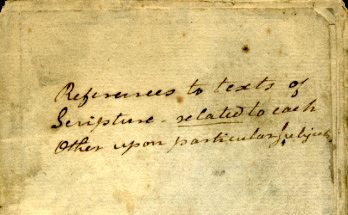
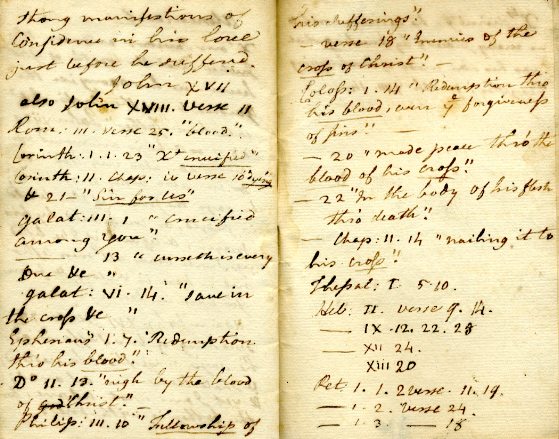
Founding Father Benjamin Rush’s handwritten personal Bible study booklet entitled “References to Texts of Scriptures Related to Each Other Upon Particular Subjects.” In it he listed scriptures under various topics and wrote his own notes on those scriptures. We have included excerpts of the booklet below.


benjamin-rush-personal-bible-study-1
Booklet Cover


benjamin-rush-personal-bible-study-2benjamin-rush-personal-bible-study-3

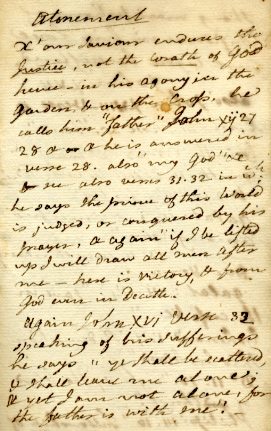
Rush recorded three pages of scriptures and notes regarding
“Atonement”


benjamin-rush-personal-bible-study-4
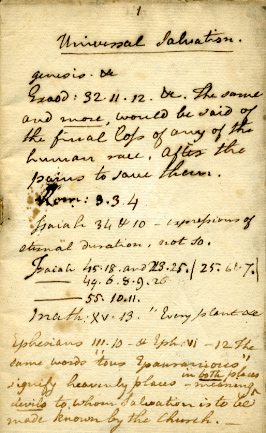
“Universal Salvation”

Rush cataloged scriptures such as Exodus 32:11-12; Romans
5:3-4; Isaiah 49:6,8-9; Matthew 15:13; etc. under the title “Universal Salvation”


benjamin-rush-personal-bible-study-5
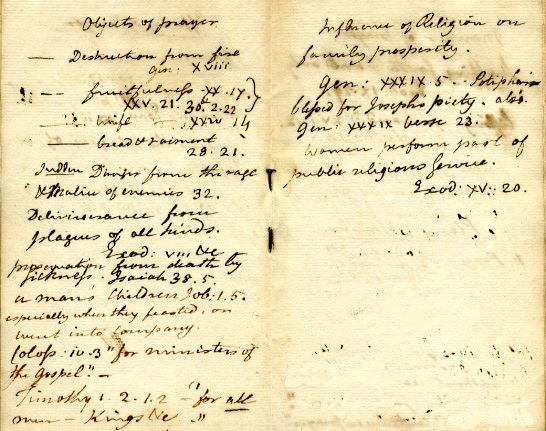
“Objects of Prayer” & “Influences
of Religion on Family Prosperity”

Rush’s notes on scripture passages related to prayer and
God’s blessings
(Note: nail used in book seam)


benjamin-rush-personal-bible-study-6
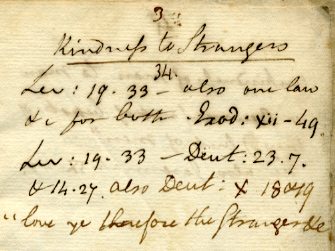
“Kindness to Strangers”

Rush lists Leviticus 19:33, Exodus 12:49, Deuteronomy 23:7
and other verses under the heading “Kindness to Strangers”


benjamin-rush-personal-bible-study-7
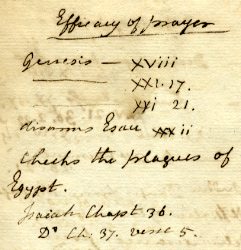
“Efficacy of Prayer”

Rush’s scriptures on the effectiveness of prayer include
Genesis chapter 18 and 21:17 & 21.


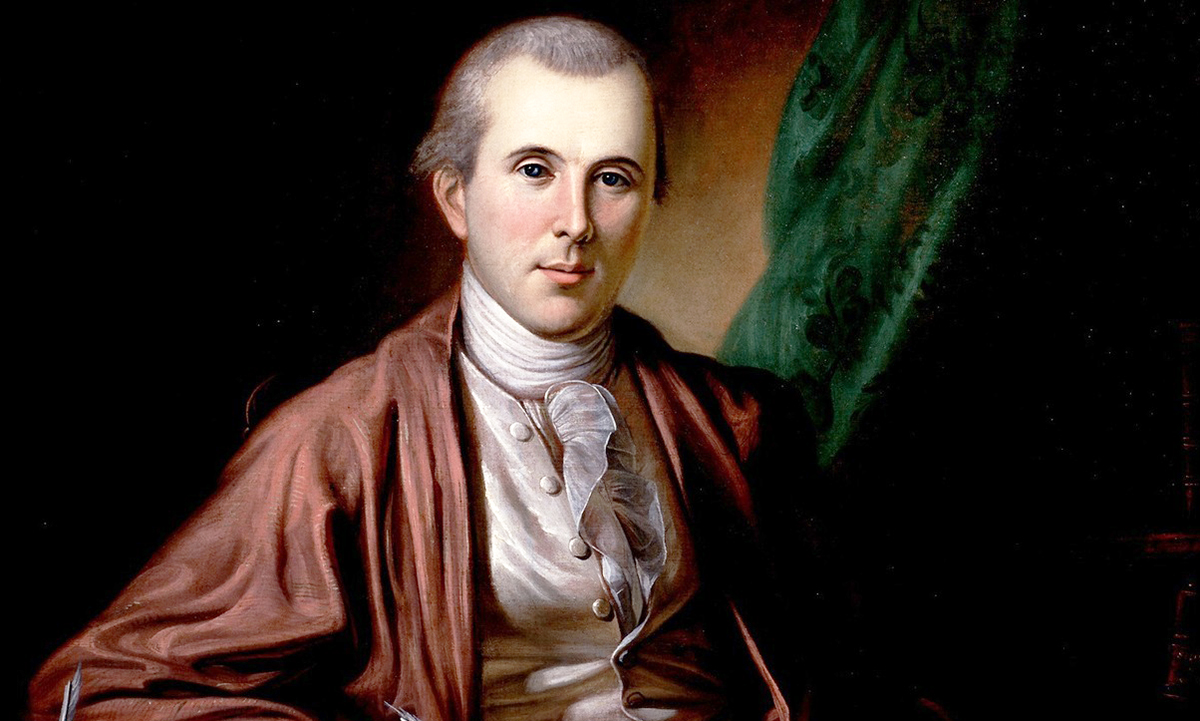
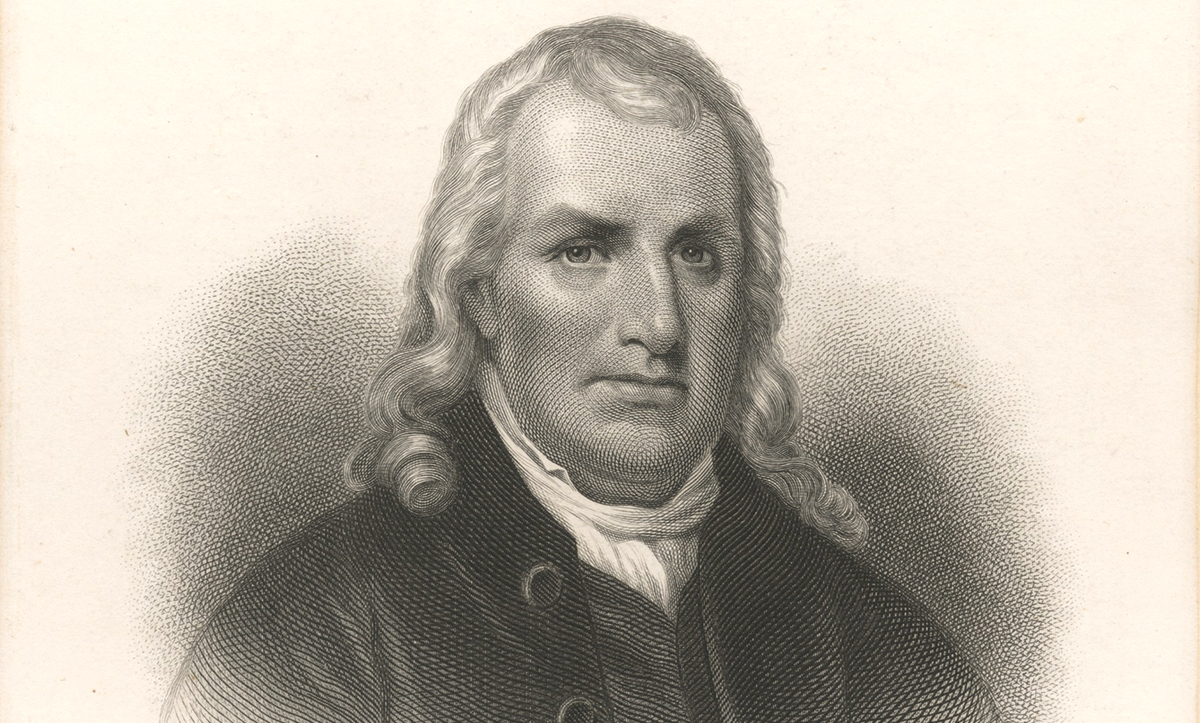
Benjamin Rush

(1745-1813) Rush was a physician, educator, philanthropist, and statesman. He graduated from Princeton (1760) and then studied medicine in Philadelphia, Edinburgh, London, and Paris. He served in the Continental Congress (1776-77) and signed the Declaration of Independence (1776). Rush also: suggested to Thomas Paine that he write Common Sense (1776) and supplied the title for it as well as helped publish it; was Surgeon-General of the Continental Army (1777-78); and was one of the founders of Dickinson College (1783). He was an influential delegate to the State ratification convention for the federal Constitution (1787), and along with James Wilson, one of the principal coauthors of the Pennsylvania constitution (1789-90). Rush served as Treasurer of the U. S. Mint under Presidents John Adams, Thomas Jefferson, and James Madison (1797-1813). He mediated a reconciliation between long time political rivals John Adams and Thomas Jefferson; was a founder of the Pennsylvania Society for Promoting the Abolition of Slavery (1774) and its president; founder and Vice-president of the Philadelphia Bible Society (1808-13); member of the First Day Society of Philadelphia (1790); and a member of the Abolition Society (1794-97). Benjamin Rush is called the “Father of American Medicine” for his numerous medical discoveries.

John Adams Letter to Benjamin Rush

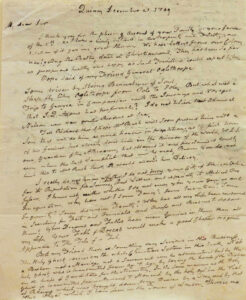
The following is the original December 21, 1809 letter by John Adams to Benjamin Rush, followed by the transcription. The transcript has been modified from the original to include modern grammar and spelling.


Quincy December 21, 1809

My dear Sir

I thank you for the pleasing account of your family in your favor of the 5th as I have a lively interest in their prosperity and felicity, your relation of it gave me great pleasure. We have letters from our colony navigating the Baltic, dated at Christiansand. They had been so far as prosperous and healthy and happy as such travelers could expect to be.

Pope said of my friend General Oglethorpe.
Some driven by strong benevolence of soul shall fly like Oglethorpe from pole to pole. But what was a trip to Georgia in comparison with the journeys and voyages that J.Q. Adams has performed? I do not believe that Admiral Nelson ever ran greater risks at Sea.

Tell Richard that I hope Mrs. Rush will soon present him with a son that will do him as much honor in proportion as the first born of his genius has already done him in the opinion of the world. W.S.S. our guardian of the Athenaum has obtained it and proclaims it loudly everywhere the best pamphlet that will be read. Be sure you do not hint this to Mrs. Rush Junr. It would alarm her delivery.

I really do not know whether I do not envy your city of Philadelphia for its reputation for science, arts, and letters and especially its medical professor. I know not, neither whether I do not envy you your genius and inspiration. Why have I not some fancy? Some invention? Some ingenuity? Some discursive faculty? Why has all my life been consumed in searching for facts and principles and proofs and reasons to support them? Your dreams and fables have more genius in them than all my life. Your Fable of Dorcas would make a good chapter or a good appendix to the Tale of a Tub.

But my friend there is something very serious in this business. The Holy Ghost carries on the whole Christian system in this Earth. Not a baptism, not a marriage, not a Sacrament can be administered but by the Holy Ghost, who is transmitted from age to age by laying the hands of the Bishop on the heads of candidates for the Ministry. In the same manner as the Holy Ghost is transmitted from monarch to monarch by the holy oil in the vial at Rheims which was brought down from Heaven by a dove and by that other phial [vial] which I have seen in the Tower of London. There is no authority civil or religious: There can be no legitimate government but that which is administered by this Holy Ghost. There can be no salvation without it. All without it is rebellion and perdition, or in more orthodox words damnation. Although this is all artifice and cunning in the sacred original in the heart, yet they all believe it so sincerely that they would lay down their lives under the ax or the fiery fagot [bundle of wood used for burning individuals at the stake] for it. Alas, the poor weak ignorant dupe human nature. There is so much king craft, priest craft, gentlemen’s craft, people’s craft, doctors craft, lawyers craft, merchants craft, tradesmen’s craft, laborers craft and Devil’s craft in the world that it seems a desperate [hopeless] and impractical project to undeceive it.

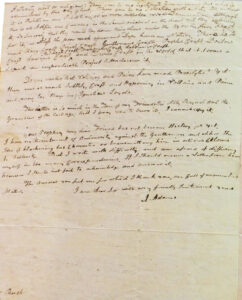
Do you wonder that Voltaire and Paine have made proselytes [converts]? Yet there [is] near as much subtlety, craft and hypocrisy in Voltaire and Paine and more too than in Ignatious Loyola [a Spanish knight who was a founder of the Jesuits].

This letter is so much in the tone of my friend the Abbe Raynal [a French writer] and the grumblers of the last age, that I pray you to burn it. I cannot copy it.

Your prophecy, my dear friend, has not become history as yet. I have no resentment of animosity against the gentleman and abhor the idea of blackening his character or transmitting him in odious colors to posterity. But I write with difficulty and am afraid of diffusing myself in too many correspondences. If I should receive a letter from him however I should not fail to acknowledge and answer it.

The Auroras you lent me for which I thank you are full of momentous matter.

I am dear sir with every friendly sentiment yours, J. Adams.

Dr. Rush

*WallBuilders has an article about the dream of Benjamin Rush (which this Adams letter is in response to) and the reconciliation of Adams and Jefferson in 1812. To read this article click here.

Benjamin Rush Letter to Elisha Boudinot

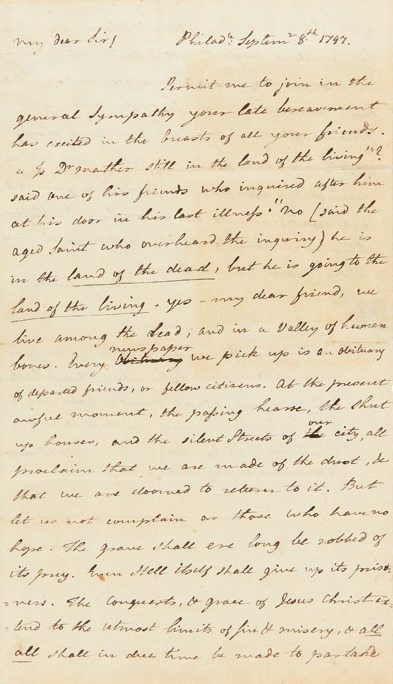
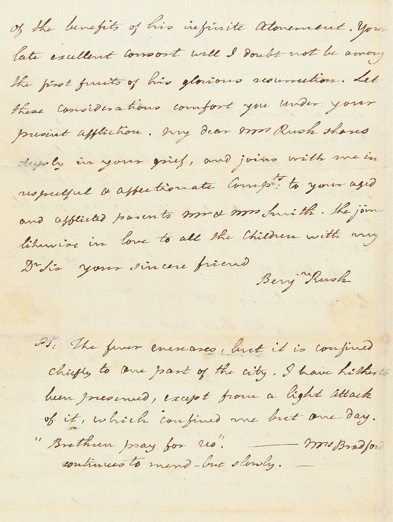
Below is a letter that WallBuilders came across from Benjamin Rush (Declaration signer) to Elisha Boudinot, brother of Founding Father Elias Boudinot. Rush wrote this letter on September 8, 1797 in condolence for the loss of Elisha’s wife. Notice the specifically religious content in this letter.


benjamin-rush-letter-to-elisha-boudinot-1


benjamin-rush-letter-to-elisha-boudinot-2

Philad. September 8th. 1797.

My dear Sir:


Permit me to join in the general sympathy your late bereavement has excited in the breasts of all your friends. “Is Dr. Mather still in the land of the living” said one of his friends who inquired after him at his door in his last illness. “No (said the aged saint who overheard the inquiry) he is in the land of the dead, but he is going to the land of the living.” Yes – my dear friend, we live among the dead; and in a valley of human bones. Every newspaper we pick up is an obituary of departed friends, or fellow citizens. At the present awful moment, the passing hearse, the shut up houses, and the silent streets of our city, all proclaim that we are made of the dust, & that we are doomed to return to it. But let us not complain as those who have no hope. The grave shall ere long be robbed of its prey. Even Hell itself shall give up its prisoners. The Conquests & Grace of Jesus Christ extend to the utmost limits of fire & misery, & all all shall in due time be made to partake of the benefits of this infinite Atonement. Your late excellent consort will I doubt not be among the first fruits of his glorious resurrection. Let those considerations comfort you under your present affliction. My dear Mrs. Rush shares deeply in your grief, and joins with me in respectful & affectionate [comforts] to your aged and afflicted parents Mr. & Mrs. Smith. She joins likewise in love to all the children with my Dr Sir your sincere friend.

Benjm Rush


PS: The fever increases, but it is confined chiefly to one part of the city. I have hitherto been preserved, except from a light attack of it, which confined me but one day. “Brethren pray for us.” – Mrs. Bradford continues to mend but slowly.

Samuel Chase

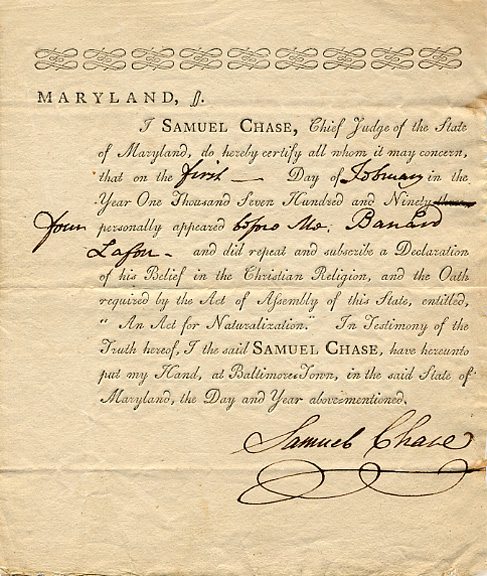
Samuel Chase Document

This is a document we have in our possession, signed by Samuel Chase on February 1, 1794. This document is Chase certifying Barnard Lafon’s “Declaration of his belief in the Christian religion and the Oath required by the Act of Assembly of this State entitled ‘An Act for Naturalization’.”

Samuel Chase was born in April, 1741 in Maryland. He served in Congress from 1774-1778 and was a signer of the Declaration of Independence. He served as the Chief Justice of the criminal court of Baltimore starting in 1788 and later became the Chief Justice of the state of Maryland. He was appointed an Associate Justice in the United States Supreme Court where he served from 1796 until his death in June, 1811.


samuel-chase-document-1

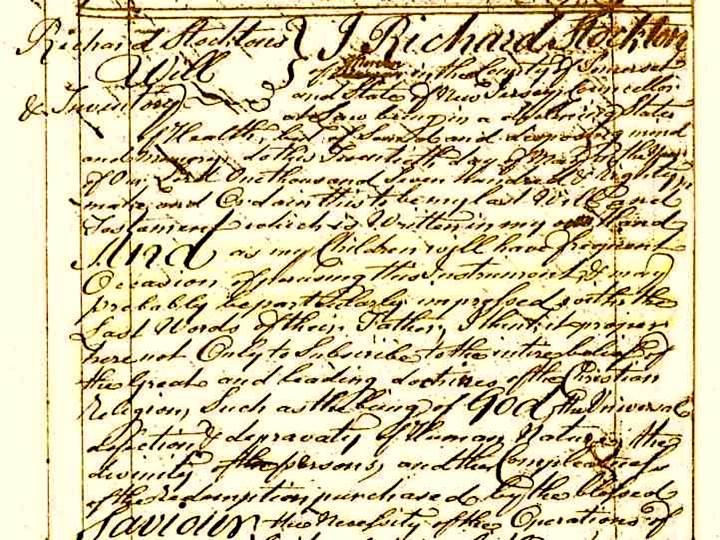
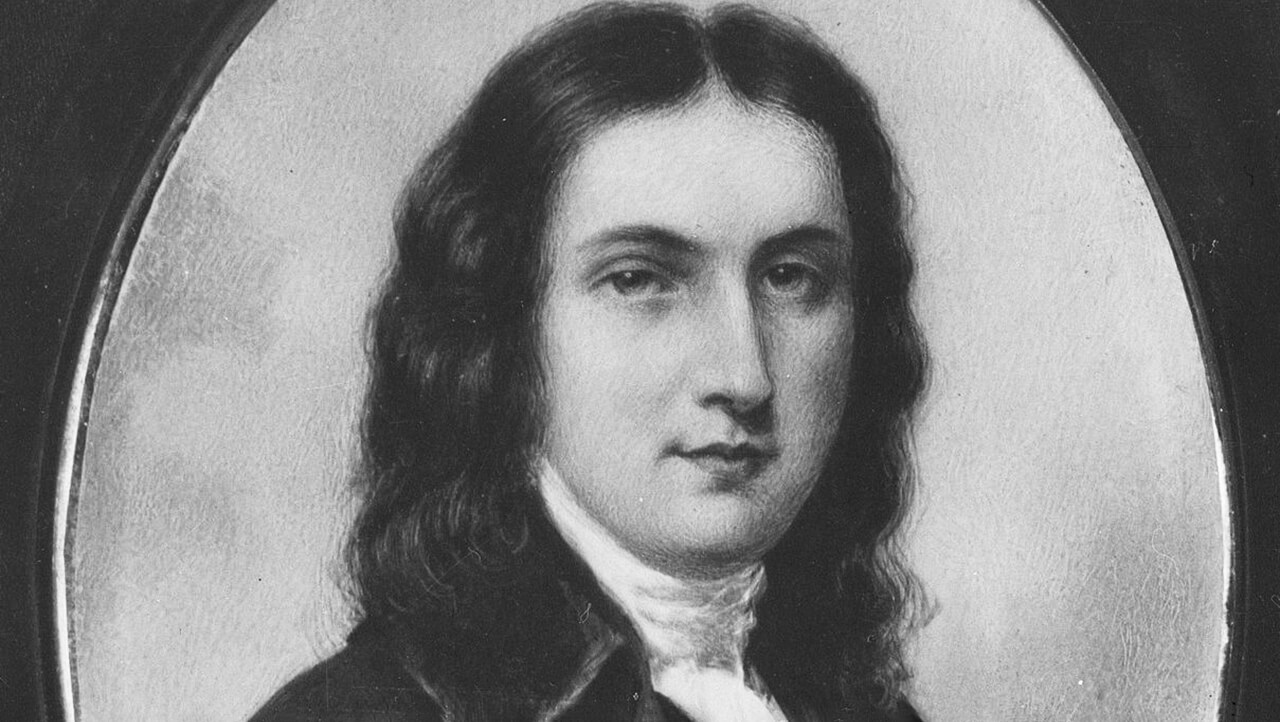
Will of Richard Stockton

Richard Stockton was a signer of the Declaration of Independence from New Jersey. Stockton was a lawyer and during the Revolution he was a member of the Continental Congress. Richard was taken prisoner by loyalists and during this time, his possessions were burned and his wealth reduced. He never recovered from his time as a prisoner and died in February, 1781.

The text and image below are from Richard Stockton’s May 20, 1780 will. The complete 1780 will is held by the New Jersey State Archives.


will-of-richard-stockton-1

“…And as my children will have frequent occasion of perusing this instrument, and may probably be particularly impressed with the last words of their father, I think it proper here not only to subscribe to the entire belief of the great and leading doctrines of the Christian Religion, such as the Being of God, the universal defection and depravity of human nature, the divinity of the person and the completeness of the redemption purchased by the blessed Saviour, the necessity of the operations of the divine Spirit; of divine Faith, accompanied with an habitual virtuous life, and the universality of the divine Providence: but also, in the bowels of a father’s affection, to exhort and charge them, that the fear of God is the beginning of wisdom, that the way of life held up in the Christian system, is calculated for the most complete happiness that can be enjoyed in this mortal state; that all occasions of vice and immorality is injurious either immediately or consequentially; even in this life; that as Almighty God hath not been pleased in the holy Scriptures to prescribe any precise mode in which he is to be publickly worshipped, all contention about it generally arises from want of knowledge or want of virtue. I have therefore no particular advice to leave with my children upon this subject, saving that they deliberately and conscienciously, in the beginning of life, determine for themselves, with which denomination of Christians they can, the most devoutly and profitably worship God; that after such determination they statedly adhere to such denomination without being given to change; and without contending with or judging others who may think or act differently upon a matter so immaterial to substantial virtue and piety. That distinguished abilities, stations and authority are only desireable as occasions of doing greater private and public good, but that their footsteps being invariably masked with envy and opposition, make them enemies to private peace, and therefore unless public life is evidently pointed out by divine providence it should rather be avoided than coveted. Of the temporal estate with which it hath pleased Almighty God in his bountiful providence to bless me, I hereby make the disposition following…”

The Declaration of Independence

When in the course of human events, it becomes necessary for one people to dissolve the political bands which have connected them with another, and to assume among the powers of the earth the separate and equal station to which the laws of nature and of nature’s God entitles them, a decent respect to the opinions of mankind requires that they should declare the causes which impel them to the separation.

We hold these truths to be self-evident, that all men are created equal, that they are endowed by their Creator with certain unalienable rights, that among these are life, liberty and the pursuit of happiness. That to secure these rights, governments are instituted among men, deriving their just powers from the consent of the governed. That whenever any form of government becomes destructive of these ends, it is the right of the people to alter or to abolish it and to institute new government, laying its foundation on such principles and organizing its powers in such form as to them shall seem most likely to effect their safety and happiness. Prudence, indeed, will dictate that governments long established should not be changed for light and transient causes; and accordingly, all experience hath shown that mankind are more disposed to suffer while evils are sufferable than to right themselves by abolishing the forms to which they are accustomed. But when a long train of abuses and usurpations, pursuing invariably the same object, evinces a design to reduce them under absolute despotism, it is their right, it is their duty, to throw off such government and to provide new guards for their future security. Such has been the patient sufferance of these Colonies; and such is now the necessity which constrains them to alter their former systems of governments. The history of the present King of Great Britain is a history of repeated injuries and usurpations, all having in direct object the establishment of an absolute tyranny over these States. To prove this, let facts be submitted to a candid world.

He has refused his assent to laws, the most wholesome and necessary for the public good.

He has forbidden his Governors to pass laws of immediate and pressing importance, unless suspended in their operation till his assent should be obtained; and when so suspended, he has utterly neglected to attend to them.

He has refused to pass other laws for the accommodation of large districts of people unless those people would relinquish the right of representation in the legislature, a right inestimable to them and formidable to tyrants only.

He has called together legislative bodies at places unusual, uncomfortable, and distant from the depository of their public records, for the sole purpose of fatiguing them into compliance with his measures.

He has dissolved representative Houses repeatedly for opposing with manly firmness his invasion on the rights of the people.

He has refused for a long time, after such dissolutions, to cause others to be elected; whereby the legislative powers, incapable of annihilation, have returned to the people at large for their exercise; the State remaining in the meantime exposed to all the dangers of invasion from without and convulsions within.

He has endeavored to prevent the population of these States; for that purpose obstructing the laws for naturalization of foreigners; refusing to pass others to encourage their migrations hither, and raising the conditions of new appropriations of lands.

He has obstructed the administration of justice by refusing his assent to laws for establishing judiciary powers.

He has made judges dependent on his will alone for the tenure of their offices and the amount and payment of their salaries.

He has erected a multitude of new offices and sent hither swarms of officers to harass our people and eat out their substance.

He has kept among us, in times of peace, standing armies without the consent of our legislature.

He has affected to render the military independent of and superior to the civil power.

He has combined with others to subject us to a jurisdiction foreign to our constitution and unacknowledged by our laws; giving his assent to their acts of pretended legislation:

For quartering large bodies of armed troops among us:

For protecting them, by a mock trial, from punishment for any murders which they should commit on the inhabitants of these States:

For cutting off our trade with all parts of the world:

For imposing taxes on us without our consent:

For depriving us in many cases of the benefits of trial by jury:

For transporting us beyond seas to be tried for pretended offenses:

For abolishing the free system of English laws in a neighboring province, establishing therein an arbitrary government, and enlarging its boundaries so as to ren-der it at once an example and fit instrument for introducing the same absolute rule into these Colonies:

For taking away our charters, abolishing our most valuable laws, and altering fundamentally the forms of our governments:

For suspending our own legislatures, and declaring themselves invested with power to legislate for us in all cases whatsoever.

He has abdicated government here, by declaring us out of his protection and waging war against us.

He has plundered our seas, ravaged our coasts, burnt our towns, and destroyed the lives of our people.

He is at this time transporting large armies of foreign mercenaries to compleat the works of death, desolation and tyranny, already begun with circumstances of cruelty and perfidy scarcely paralleled in the most barbarous ages, and totally unworthy the head of a civilized nation.

He has constrained our fellow citizens taken captive on the high Seas to bear Arms against their country, to become the executioners of their friends and brethren, or to fall themselves by their hands.

He has excited domestic insurrections amongst us, and has endeavoured to bring on the inhabitants of our frontiers, the merciless Indian savages, whose known rule of warfare, is an undistinguished destruction of all ages, sexes and conditions.

In every stage of these oppressions we have petitioned for redress in the most humble terms: Our repeated petitions have been answered only by repeated injury. A Prince whose character is thus marked by every act which may define a tyrant, is unfit to be the ruler of a free people.

Nor have we been wanting in attentions to our Brittish brethren. We have warned them from time to time of attempts by their legislature to extend an unwarrantable jurisdiction over us. We have reminded them of the circumstances of our emigration and settlement here. We have appealed to their native justice and magnanimity and we have conjured them by the ties of our common kindred to disavow these usurpations which would inevitably interrupt our connections and correspondence. They, too, have been deaf to the voice of justice and of consanguinity. We must, therefore, acquiesce in the necessity which denounces our separation and hold them, as we hold the rest of mankind, enemies in war, in peace friends.

We, therefore, the Representatives of the United States of America, in general Congress assembled, appealing to the Supreme Judge of the world for the rectitude of our intentions, do, in the name and by the authority of the good people of these Colonies, solemnly publish and declare that these United Colonies are, and of right ought to be, free and independent States; that they are absolved from all allegiance to the British Crown and that all political connection between them and the State of Great Britain is and ought to be totally dissolved; and that as free and independent States, they have full power to levy war, conclude peace, contract alliance, establish commerce, and do all other acts and things which independent States may of right do. And for the support of this Declaration, with a firm reliance on the protection of Divine Providence, we mutually pledge to each other our lives, our fortunes, and our sacred honor.

Signers of the Declaration of Independence

NEW HAMPSHIRE: Josiah Bartlett, William Whipple, Matthew Thornton

MASSACHUSETTS: John Hancock, John Adams, Samuel Adams, Robert Treat Paine

RHODE ISLAND: Elbridge Gerry, Stephen Hopkins, William Ellery

CONNECTICUT: Roger Sherman, Samuel Huntington, William Williams, Oliver Wolcott

NEW YORK: William Floyd, Philip Livingston, Francis Lewis, Lewis Morris

NEW JERSEY: Richard Stockton, John Witherspoon, Francis Hopkinson, John Hart, Abraham Clark

PENNSYLVANIA: Robert Morris, Benjamin Rush, Benjamin Franklin, John Morton, George Clymer, James Smith, George Taylor, James Wilson, George Ross

DELAWARE: Ceasar Rodney, George Read, Thomas McKean

MARYLAND: Samuel Chase, Thomas Stone, William Paca, Charles Carroll of Carrollton

VIRGINIA: George Wythe, Richard Henry Lee, Thomas Jefferson, Benjamin Harrison, Thomas Nelson, Jr., Francis Lightfoot Lee, Carter Braxton

NORTH CAROLINA: William Hooper, Joseph Hewes, John Penn

SOUTH CAROLINA: Edward Rutledge, Thomas Heyward, Jr., Thomas Lynch, Jr., Authur Middleton

GEORGIA: Button Gwinnett, Lyman Hall, George Walton
John Hart Documents

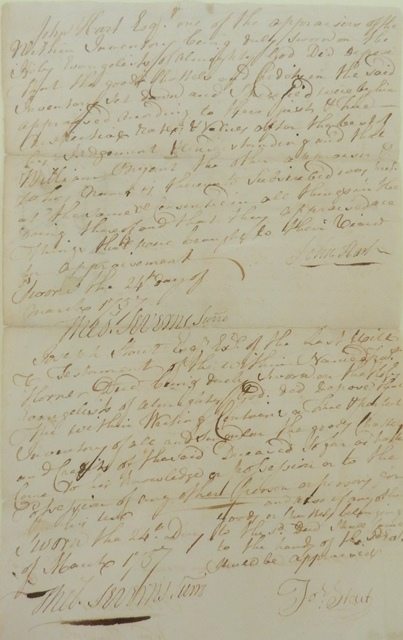
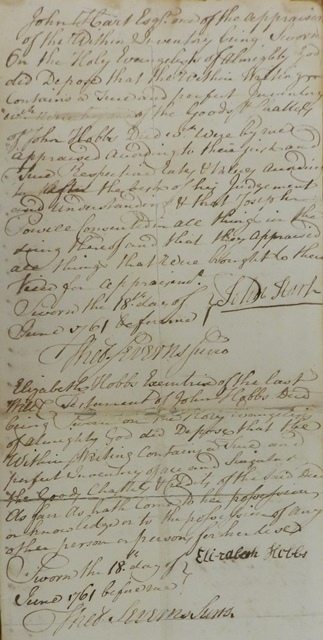
John Hart was a signer of the Declaration of Independence. He lived most of his life as a farmer and public official in New Jersey. This man’s Christian faith and character were as strong and evident as his patriotism. He donated a large parcel of ground on which to build the Baptist church in which he was an active member. Known as “honest John Hart” among his friends and neighbors, he was repeatedly elected to serve in both local and state offices. In his capacity as a local official, he regularly signed legal documents like these two below. These are two testimonies in the collection at WallBuilders are given by John Hart upon the administration of the estates of John Hobbs and [L. Horner]. As was customary in that day, he recognizes he was “sworn in on the Holy Evangelists of Almighty God.”


john-hart-document-1

John Hart Esq. one of the appraisers of the within inventory being duly sworn on the Holy Evangelists of Almighty God did depose that the goods and chattels and credits in the said inventory set down and specified were by him appraised according to those just and true respective [Goofert] and [Yaxely] after the best of his judgment and understanding and that William Bryant the other appraiser and whose name is hereunto subscribed every prof. of the same and consented in all things in the doing thereof and that they appraised all things that were brought to their view for appraisement.

Sworn the 24th day of March 1757

John Hart

Theo. Severns Jun.


john-hart-document-2

John Hart Esq. one of the appraisers of the within inventory being sworn on the Holy Evangelists of Almighty God did depose that the within writings contains a true and perfect inventory of the goods and chattels of John Hobbs which were by him appraised according to their just and true respective [Earley] and [Valicey] according to the best of his judgment and understanding and that Joseph Powell consented in all things in the doing thereof and that they apprised all things that were brought to their view for appraisement.

Sworn the 24th day of March 1757

John Hart

Theo. Severns Jun.