Sermon – House of Representatives – 1860

Thomas .H. Stockton was born in Mount Holly, New Jersey, June 4th, 1808. In 1833, while stationed at Georgetown, D.C., and when but twenty-five years of age, he was elected Chaplain by the United States House of Representatives. On November 19, 1863 Thomas Stockton delivered a prayer after Edward Everett’s sermon and before President Abraham Lincoln gave his famous Gettysburg Address.


sermon-house-of-representatives-1860-1


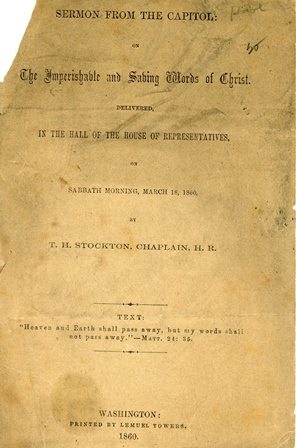
SERMON FROM THE CAPITOL:
ON
THE IMPERISHABLE AND SAVING WORDS OF CHRIST.
DELIVERED,
IN THE HALL OF THE HOUSE OF REPRESENTATIVES,
ON
SABBATH MORNING, MARCH 18, 1860,
BY
T. H. STOCKTON, CHAPLAIN, H. R.
TEXT:
“Heaven and Earth shall pass away, but my words shall not pass away.” Matt. 24:35.
CORRESPONDENCE.
“House of Representatives,
“Washington, March 19, 1860.

“Rev. T. H. Stockton,

“Dear Sir: The undersigned Members of the House would respectfully request a copy of your salutatory Sermon, delivered yesterday in the Hall of the House. We wish it for publication, that its influence may be widely extended by the circulation we shall give to it. If it comport with your inclinations and convenience, a compliance with this request will greatly oblige
“Your friends,
“S.S. COX, G.W. SCRANTON,
JNO. HICKMAN, W. HOWARD,
E. JOY MORRIS, THOMAS B. FLORENCE,
THOS. A. R. NELSON, JNO. G. DAVIS,
A. A. BURNHAM JAS. C. ROBINSON,
JOHN McLEAN, J. W. STEVENSON,
JNO. A. BINGHAM, ROGER A. PRYOR,
ROBERT McKNIGHT, C. L. VALLANDINGHAM,
JAS. B. McKEAN, J. K. MOORHEAD,
E. B. FRENCH, C. B. SEDGWICK,
JOHN HUTCHINS, WM. PENNINGTON.”

Washington, March 22, 1860.

Gentlemen:

Your request was as much a surprise as my election. Humbly trusting, however, that there is a vindicating and progressive Providence in these incidents; and wishing, most devoutly, to be enabled to answer its purposes, I respectfully commit my discourse to your disposal.

As you appropriately intimate, it is a simple salutation: prepared hastily, but not without prayer or care; designed to announce certain main principles, and connect them with suitable reminiscences and exhortations. If, in looking at the manuscript, (containing a few verbal corrections and additions of personal names,) you still deem it likely to do good, I shall be grateful for the use you may make of it.

With all respect, I remain,
Your servant, for Christ’s sake,
T. H. STOCKTON.

Hon. Wm. Pennington, Speaker of the House of Representatives.
Hon. John McLean, Judge of the Supreme Court.
Hon. S. S. Cox; Hon. Jno. Hickman;
Hon. E. Joy Morris; and other Members of the House.

SERMON.
“Heaven and Earth shall pass away, but my words shall not pass away.” Matthew, 24:35.
We need elevation. As men, Americans and Christians, we need elevation. In our persons and families, states and churches, we all need elevation. Properly speaking, it is impossible to desire too great elevation. The woe of the world is the want of a true ambition.

To prevent us from taking unjust advantage of this truth, it is enough to remember the Gospel maxim: “For whosoever exalteth himself shall be abased; and he that humbleth himself shall be exalted.” This maxim both commends the object and directs the pursuit.

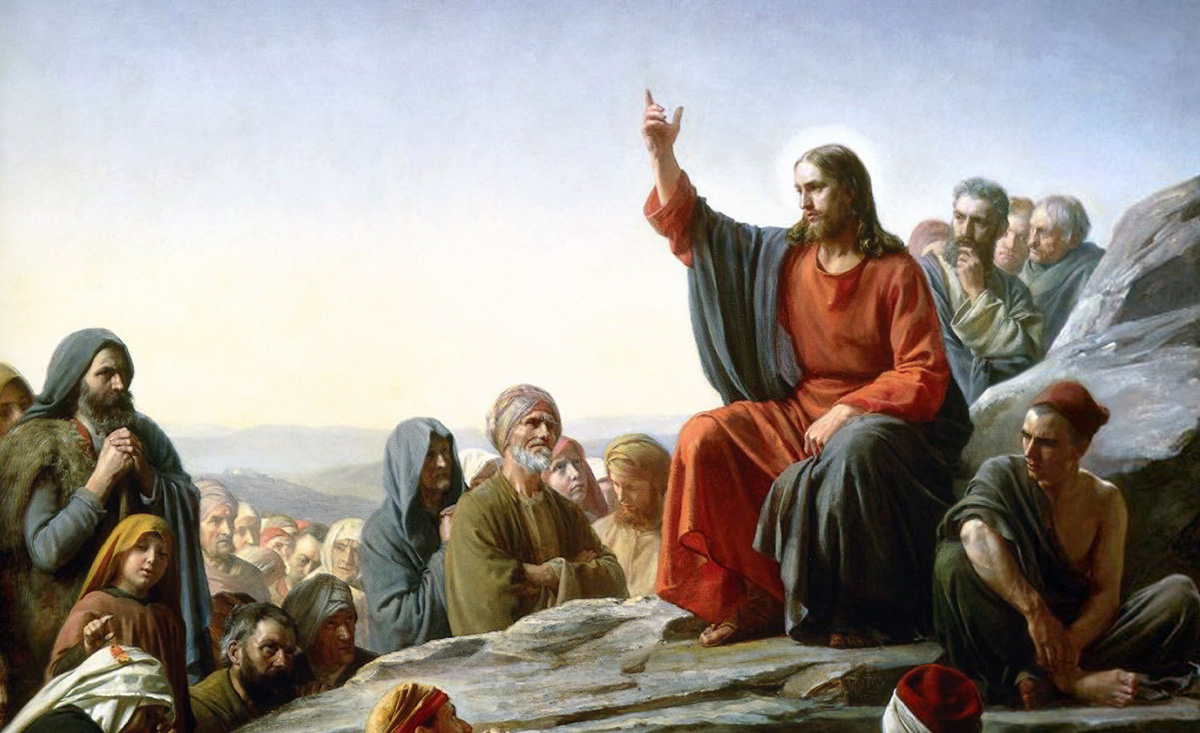
And now – see! One day, a young Galilean carpenter, followed by a few lake-shore fishermen, entered the Temple at Jerusalem, as a company of our countrymen, from any rural district, on any day, enters this Capitol. Soon after, as they left the Temple, some of the young man’s friends invited his attention to certain fine ornaments and massive stones, characteristic of the general and incomparable richness and strength of the buildings. But he replied to them: “See ye not all these things! Verily I say unto you, there shall not be left here one stone upon another, that shall not be thrown down.”

What did they think of that? What would we think of a rustic visitor, who should leave this Capitol, saying to his companions – and in a manner implying imminency of the event – not one stone of it shall be left upon another!

Strange as it may seem, that Galilean group had no little confidence in their leader; and, therefore, when they had come with him, out from the city, down the hill, over Kedron, and up Olivet, until they reached a suitable position for a wide resurvey of the scene, no sooner was he seated than they drew near to him with the question: “Tell us when shall these things be?” What then? did he withdraw what he had said, or make light of it, or intimate any possibility of mistake? Not at all. Rather, he gave them a prolonged and specific answer; in the course of which, ascending, with infinite ease, to an infinitely sublime assumption, he did not hesitate to declare: “Heaven and Earth shall pass away, but my words shall not pass away!” It is, as though he had said – There reposes the Holy City; girt about with all the defenses of art and nature; and glittering all over with the concentrate wealth and power and pride of a great nation, during a long succession of royal and priestly ages. There expands, pre-eminently and most impressively, the peerless magnificence of the venerated and impregnable Temple. To you, it seems marvelous that I should predict the destruction of all. But, to me, that olden glory is only as the fading pageant of a summer sunset. Look away from the city, beyond and above it. Behold the mountains round about it! Behold the firmament bending over it! Nay, let your thought exceed your vision. Think of the fullness of heaven and earth: of continents, islands and seas; of sun, moon and stars; of the divine origin, grandeur, perpetuity, and government of all. Think well of these things, and then remember – that my words are mightier and more enduring than all. Not only shall Jerusalem pass away, but heaven and earth shall pass away; and, yet, my feeblest word, the faintest sound of my voice, the gentlest breath from my lips, shall never pass away.

Did they believe him? Yes; and with good reason. They witnessed, to a great extent, the power of his words. Attracted by those words, cities were emptied and deserts filled. At his word, the “common people,” who “heard him gladly,” grew wiser than the wisest of their teachers. At his word, the hierarchs of genius and learning, of law and religion, blushed and trembled, darkening with rage or paling with affright. At his word, his humble disciples were qualified and commissioned to supercede “the wisdom of the world,” and become themselves the apostles of nations and instructors of mankind. At his word, every scene of his presence became a circle of divine enchantment: where deaf men listened, and dumb men spoke, and blind men looked, and lame men leaped, and the paralytic stood still, and the leper was clean, and the maimed made whole, and the withered restored, and the sick revived, and the lunatic calmed, and the demoniac dispossessed, and the dead, just risen from their tombs, exchanged new greetings with the pressing multitudes of the living. True, their faith was sorely tried: chiefly, when their youthful leader expired on the cross. But, he soon rose from the dead, ascended into heaven, and thence “gave gifts unto men.” Thus, their faith was renewed and confirmed, forever. Then they repeated and recorded his words; committing them, in trust, to all nations and ages. In fulfillment of the prediction specially referred to, before that generation passed away the Temple was destroyed and Jerusalem with it; and the people were scattered and their institutions overthrown. The carcass of Judaism lay stretched along the hillside, and from the whole cope of heaven the eagles of Rome hurried to the festival. Since then, the words of that young man have become the law of the world; and miracles, corresponding with those of his transient ministry, have been multiplied on a larger scale and in more enduring relations. At his word, deaf nations have listened; and dumb nations, spoke; and blind nations, looked; and lame nations, leaped; and paralytic nations have been strengthened; and leprous nations, cleansed; and maimed nations, made whole; and withered nations, restored; and sick nations, revived; and lunatic nations, calmed; and demoniac nations, dispossessed; and dead nations brought forth, exultant, from their graves. Even these miracles are “as nothing – less than nothing, and vanity,” in comparison with others which are yet to come: miracles in behalf of all nations, and of our whole race, and of the world itself. And still, with the same easy, natural, infinite sublimity as at first, he assures us all: “Heaven and Earth shall pass away, but my words shall not pass away.”

Now, therefore, rises the all-important question: Do we believe him? We live more than eighteen hundred years after his advent. We live in a new world; unknown to the old, in which he lived, until within less than four hundred years ago. A new soil is under our feet, and a new sky over our heads. We show, on a vast area, free and unembarrassed, the best results of a thousand social revolutions. To us, the most of the old things of the old world have passed away: old governments, old mythologies, old philosophies, old sciences, old arts, and old manners, customs and usages. To us, nearly all things have become new. But, have the old words of that young Nazarene passed away from us? Or, has any new master superseded his authority over us? Not in the slightest degree! His authority is still supreme, and every syllable of his utterance as sure as ever. As it has been, and is, so it always shall be. With gratitude for our history, in vindication of our honor, and in acknowledgment of the true and only source of our power; in due remembrance of our fathers, with due respect for ourselves, and due regard for our children, I here arise, on this highest height of the nation, as a representative, however humble, of our people at large, of every State in the Union, and of the United States in whole, and thus, with lifted hand, repeat our solemn, national affirmation – our official and perpetual proclamation to all mankind – that: HEAVEN AND EARTH SHALL PASS AWAY, BUT THE WORDS OF OUR LORD AND SAVIOR JESUS CHRIST SHALL NOT PASS AWAY!

I contemplate the heaven and earth of the old world: the over-rulings of Providence and changes of society there. I think of the passing away of the whole circle of ancient Mediterranean civilization. I think of the dark ages of Europe. I think of the morning of the Reformation, and the fore-gleamings of “the latter-day glory.” I think of Art, and her printing-press; of Commerce, and her compass; of Science, and her globe; of Religion, and her Bible. I contemplate the opening of the heaven and earth of the new world: the over-rulings of Providence and changes of society here. I think of the passing away of savage simplicities, and of the rude semblances of civilization in Mexico and Peru, and of earlier and later declensions. I think of the gracious reservation of our own inheritance for present and nobler occupancy. I think of our Revolution, and its result of Independence. I think of our first Union, first Congress, first prayer in Congress, and first Congressional order for the Bible: and of our wonderful enlargement, development and enrichment since. And, in view of all – of the whole heaven and whole earth of the whole world; and of all changes, social and natural, past, present and future; profoundly and unalterably assured, as I trust we all are, that the truth as it is “in Jesus” is the only stability in the universe – I feel justified in invoking, this day, your renewal of our common and constant confession – that: Heaven and earth shall pass away, but the words of Christ shall never pass away. And, standing where we do, on the central summit of this great Confederacy, unequalled in all history for all manner of blessings, if we did not so confess Christ; if we did not cherish the simple confidence of his primitive disciples, and hail the coming of our Lord with hosannas; if we could ignobly hold our peace; the very statues of the Capitol “would immediately cry out:” the marble lips of Columbus, Penn, and Washington; of War and Peace; of the Pioneer and of Freedom, would part to praise His name: and the stones of the foundation and walls, of the arcades and corridors, of the rotunda and halls, would respond to their glad and grand acclaim.

But, we do confess Him! From Maine to Florida, from Florida to Texas, from Texas to California, from California to Oregon, and from Oregon back to Maine; our lake States, gulf States, and ocean States, our river States, prairie States, and mountain States, all unite in confessing and blessing His name: beholding his glory, surrounding His throne, high and lifted up, and ever crying, like the six-winged seraphim, one to another, far and near, from the North and the South, from the East and the West: “Holy, holy, holy is the Lord of hosts, the whole earth is full of his glory!”

But where are the words of Christ? And what are they? He did not write them; but merely spoke them, and that during a brief ministry. Nevertheless, they were recorded: and not only such as were uttered in the flesh, but others with which the writers were inspired by His spirit, both before and after His advent – the revelations of the prophets and apostles. All alike are His words: and, here they are – in the Bible! The Bible from beginning to end, is the book of Christ. And, therefore, affirming of the whole what is true of every part, I hold up the Bible, and, in the name of Christ, proclaim to the country and the world: HEAVEN AND EARTH SHALL PASS AWAY, BUT – THE BIBLE, THE HOLY AND BLESSED BIBLE, SHALL NOT PASS AWAY!

What, then, are the words of Christ? Or, as the Bible, the whole Bible, and nothing but the Bible, is the inspired and authoritative record of them – what is the Bible?

We hear much of the higher Law; and the application of the phrase to civil affairs has excited great prejudice and given great offense. But, what is the higher Law? It is said to be something higher than the Constitution of the United States. Can there be a law, within these United States, higher than the Constitution of the United States? If there can be and is such a law – what is it? I need not and will not recite inferior, questionable, and inappropriate answers here. But, is there not one unquestionable answer? Suppose it be said, that, in relation to all subjects to which it was designed to apply, and properly does apply, the Bible is a higher Law than the Constitution of the United States? Will any man, unless an utter infidel, deny this? Surely not. Waiving its practical operations, certainly, as an abstract proposition, this must be admitted as true. It may be extended, so as to include all our State constitutions, and all our Church constitutions, and all our more Social constitutions. Put them all together, magnify and boast of them as we may, not only is the Bible a higher law, but it is an infinitely higher law. For thus says the Lord: “As the heavens are higher than the earth, so are my ways higher than your ways, and my thoughts than your thoughts.” Therefore, also, the universal and perpetual prophetic challenge: “O earth, earth, earth, hear the word of the Lord!”

If this be not true, my mission, at least, is an entire mistake, and my commission ends. But, it is true: and, if there were no other argument to prove it true this one were all-sufficient. All human constitutions, social, ecclesiastical and civil, are changeable, and contain provisions for change: but – the Bible is unchangeable. Instead of any provision for change, it is guarded, at all points, against change. The writer of its first five books declares in the last of the five: “Ye shall not ADD unto the word which I command you, neither shall ye DIMINISH from it, that ye may keep the commandments of the Lord your God, which I command you.” And, in like manner, the author of its last five books, declares in the last of the give: “If any man shall ADD unto these things, God shall add unto him the plagues that are written in this book: and if any man shall TAKE AWAY from the words of the book of this prophecy, God shall take away his part out of the book of life, and out of the holy city, and from the things which are written in this book.” And so Isaiah, standing midway between Moses and John, exclaims: “Lift up your eyes to the heavens, and look upon the earth beneath; for the heavens shall vanish away like smoke, and the earth shall wax old like a garment, and they that dwell therein shall die in like manner: but my salvation shall be forever, and my righteousness shall not be abolished.” Therefore, it is only in accordance with the testimony of all His witnesses, that Christ himself avers: “Think not that I am come to destroy the law, or the prophets: I am not come to destroy, but to fulfill. For verily I say unto you, Till heaven and earth pass, one jot or one tittle shall in no wise pass from the law, till all be fulfilled.” And so again, in the text itself: Heaven and earth shall pass away, but my words shall not pass away.”

Thank God, for one book above amendment! “Forever, O Lord, thy word is settled in heaven.” And here, in our place and day, we respond to the psalmist on Zion – Forever, O Lord, thy word is settled on earth. No man or set of men; no king, priest or scribe; no popular convention, ecclesiastical council, or national congress; would dare to erase one letter from the record. Let our own countrymen, in particular, treat other books as they think they have a right to do, or feel it their duty, or make it their interest or pleasure to do; by amendment, abridgement, or enlargement, by interpolation or expurgation; not one among them, North, South, East or West, would presume to touch, with any such purpose, the sacred ark containing the higher Law of God. Here is our shrine of worship, the oracle of our wisdom, and the glory of our power.

But, a higher Law implies a higher Judge, and a higher Administrator. And who is the higher Judge? The Holy Spirit! The Spirit of truth, promised unto us to guide us into all truth; making us spiritual and giving us spiritual apprehensions; aiding us in the comparison of spiritual things with spiritual; searching the deep things of God, as contained in the Bible, and revealing them unto us. And who is the higher Administrator? Christ himself! Into whose hands the Father has committed all power “in heaven and in earth,” to qualify Him fully for the duties of this sovereign office. Does anyone object to the higher Administrator? Does anyone object to the higher Judge? Then, why object to the higher Law? They go together, are all divine, and all supreme forever. So that we may say with the prophet: “The Lord is our judge, the Lord is our law-giver, the Lord is our king: he will save us.”

“He will save us!” Blessed conclusion: without which all else were in vain, and worse than in vain. He deigns to become our judge, law-giver and king only that He may save us; and, if we do not thwart Him by our iniquities, because He is our judge , law-giver and king He will save us.

Tell me, Oh tell me, what is it we need? Do we need health, or genius, or learning, or eloquence, or pleasure, or fame, or power? Do we need wealth, or rank, or office? Does anyone of us need to be chaplain, or clerk, or representative, or senator, or speaker, or vice-president? An officer of the army or navy? A member or head of any department? A foreign minister? A cabinet officer? Or even a successor in the line of presidents of the United States? Is such our need? Oh, no! we need salvation.

What did I say in the beginning? Did I not say? We need elevation: as men, Americans and Christians, we need elevation: in our persons and families, states and churches, we need elevation. Certainly I did thus speak, and meant all I said.

Oh, my Friends! All the distinctions alluded to, such as we know them here, are comparatively little things. Greater things are in prospect; but these things, though they seem great, are really little. Pause, think, recall what life has taught you – what observation and experience have combined to impress most deeply upon your consciousness – and begin your review with the sad words, after all! After all, health is a little thing, and genius is a little thing, and learning, and eloquence, and pleasure, and fame, and power, and wealth, and rank, and office, all earthly things are little things. How little satisfaction they yield while they last, and how soon they pass away!

Ask the most successful around you, in these relations, if they have yet supplied their highest need? As the general rule, the more successful they have been the older you will find them. They have not attained their coveted posts of honor by a single leap. They have risen gradually, through years of earnest toil. And the soberness of reflection is now about them. And the anticipation of a hastening end is with them. Ask them, and they will answer: After all, we have spent our lives in little things. We yet need true elevation.

I would tell you more particularly, of whom to inquire – were it not that you would prove it in vain to seek them. Twenty-six years ago, at the age of twenty-five, I was first called to this office. Two years afterward, I served again. I now compare, though briefly and imperfectly, the present with the past. I find a new Hall and a new Senate-Chamber: but the old Hall and old Senate-Chamber are still here. I find also a new House and a new Senate: but where are the old House and old Senate? How many reminiscences crowd upon me! Forms, and faces, and voices, and gestures, and elaborate speeches, and casual debates, and social remarks, and current incidents: all impressed on youthful sensibilities, and not yet effaced. But, I cannot describe them. Where are Jarvis, of Maine; and Cushman and Hubbard, of New Hampshire? Where are Adams, Calhoun, and Choate: Davis, Jackson and Lawrence; Lincoln, Phillips, and Reed, of Massachusetts? Where are Ellsworth, Huntington, and Judson, of Connecticut? Where Burges and Pearce, of Rhode Island? Where, Allen, Everett, and Slade, of Vermont? Where, Bokee, Childs, and Cramer; Granger and Lansing; Lee, Moore, and Wardwell, of New York? Where is Parker, of New Jersey? Where are Beaumont, Chambers, and Denny; Hubley, McKennan, and Mann; Miller, Muhlenberg, and Watmough, of Pennsylvania? Where is Milligan, of Delaware? Where are Dennis, Heath, and Jenifer; McKim and Steele; Stoddert and Washington, of Maryland? Where, Bouldin, Coles, and Dromgoole; Jones, Mason, and Mercer; Patton, Stevenson, and Taliaferro, of Virginia? Where, Conner, Deberry, and McKay; Sheppard, Speight, and Williams, of North Carolina? Where are Blair, Campbell, and Davis; Griffin, McDuffie, and Pinckney, of South Carolina? Where, Glascock, Grantland and Haynes; Holsey and Wilde, of Georgia? Where are White, of Florida? And Lewis and Murphy, of Alabama? Where are Bullard, Garland, and Ripley, of Louisiana? Where is Sevier, of Arkansas? Where are Carter, Crockett, and Dunlap; Forrester and Huntsman; Polk, Pope, and Standefer, of Tennessee? Where, Allen, Boyd, and French; Graves, Hardin, and Hawes; Johnson, Lyon, and Williams, of Kentucky? Where is Ashley, of Missouri? Where are Duncan and May, of Illinois? Where, Boon, Davis, and Hannegan; Kinnard, Lane, and McCarthy, of Indiana? And where are Hamer, Lytle, and Sloane; Spangler, Thompson, and Vance, of Ohio? All these, if my quest has been rightly answered, have passed away, not only from this House, but, from the world: and, doubtless, many of their colleagues, if not already gone, are just about to follow. At least, they are not here. Scarcely a relic is left! And so, of the Senate. Where are Clayton and Cuthbert; Goldsborough, Hill, and Hendricks; Kent, King, and Knight; Moore and Porter; Southard and Sprague; Tipton, Tomlinson, and Wall? Where, the venerable White, and the good-natured Grundy, and the sharp Poindexter, and the learned Robbins, and the Handsome Linn, and the graceful Forsyth, and the sagacious Wright, and the indomitable Benton, and the gentle-tongued Leigh? Where is the easy, all-elate, sonorous, and majestic eloquence of Clay? Where, the calm, cool, clear, and massive magnificence of Webster? Where, the affable dignity, the intellectual and moral loftiness of Calhoun? Passed away – all passed away! Or, will you leave the Halls of Congress? Do you think of the Army? Where, then, are Macomb and Gaines? – of the Navy? Where, then, are Rodgers and Barron? Will you enter the Supreme Court? Where is Marshall – Chief of the Judges? And where is Wirt – Chief of the Attorneys? Or, will you at last repair to the Presidential mansion? Where, then is Jackson? Chief of the Heroes. Passed away – all passed away! How many of their companions, how many of their successors, have also passed away, I have neither time nor knowledge to declare. It is but a little while and a limited area of which I speak, and yet – what a scene of honored dust, in sacred silence, alone remains!

Oh, if I could direct you to them, and you could find them, and should ask them – after all, what is human need? Would they not say, it is elevation, it is salvation – salvation by humiliation, in accordance with the life, and death, and triumph of the meek and lowly Nazarene?

Hearken to me, this day, men, brethren, and fathers! Christianity is the most practical thing, the most immediately and substantially important thing in the universe. Visionary! Fanciful! Impractical! The occupation of dreamers, enthusiasts, and fanatics! Aha! Did I not tell you that we need elevation? How can any, how dare any prate thus of our faith?

Hearken to the truth! If we need health, it is perfect health, and that forever! If we need genius, it is perfect genius, and that forever! If we need learning, it is perfect learning, and that forever! If we need eloquence, or pleasure, or fame, or power, or wealth, or rank, or office – whatever we need, it implies constitutional and conditional perfection, and that forever!

Let me speak for you, one voice for humanity. I need a perfect soul. I need a perfect body, to contain, identify, and obey my soul. I need a perfect home. I need a perfect society. I need perfect employments. I need a perfect government. I need the fullness of eternal life, with God, in heaven. I need the attainment of my true destiny, to stand, as a perfect man, before the perfect God, acknowledged as His child, His image, and His heir.

The Son of God knew this need, and, therefore, became the Son of Man, that he might supply it. Therefore, he appeared as the young Galilean carpenter, despised and rejected of men, but loved and accepted of the Father, making peace by the blood of the cross. Therefore, already overlooking the place of His crucifixion, He uttered the memorable prediction: “Heaven and Earth shall pass away, but my words shall not pass away.” His words are words of pardon, words of purity, words of triumph over death, words pertaining to the resurrection of the dead and the inheritance of life everlasting. Did the stones of the Temple understand Him? Did the palaces of Jerusalem catch His meaning? Did the mountains around the city, and the sky above it, startle at the sound? Did heaven and earth, anywhere or in any way, show the slightest consciousness of His utterance? Senseless, all senseless, utterly senseless, these are the things that pass away. But, something was there, nobler than all these – something destined to outlast all these, to flourish only the more, and still more forever, when heaven and earth shall vanish like the dream of a night. I mean the immortal soul! Jesus of Nazareth, the Son of God, the Savior and Sovereign of the world, committed His words of redeeming and sanctifying truth to the immortal soul of man, and, therefore, in form, as well as in essence and authority, they remain imperishable.

And so, my friends, in conclusion, I this day commit these words to your immortal souls, that, by God’s blessing, they may abide with you in saving virtue forever. Only four months ago, by these same fingers, the eyes of my dear little Jessie were closed in death. That was a more important event to me than the rise, progress, and fall of a thousand empires. Pity me, Oh pity me; I speak not for myself alone, but for all humanity, one voice for humanity. Think of your own homes, of those you love, and have loved, and loved only the more in death. We are all alike in these relations. And where is our hope of reunion with the lost? Ah, never would the Lord Jesus have uttered the words of the text had He contemplated merely a series of social changes. But He knew and sought our true interest. He fulfilled His humble ministry, and suffered and died that He might secure for us entire and eternal personal redemption – an elevation above all earthly things, and the enjoyment of the fullness of His grace and glory in heaven. Let us cherish his spirit and imitate His example. Let us take due advantage of His mediation, and humble ourselves before God in all penitence and faith, that, in due time, we, with Him, may be truly and forever exalted.

END.

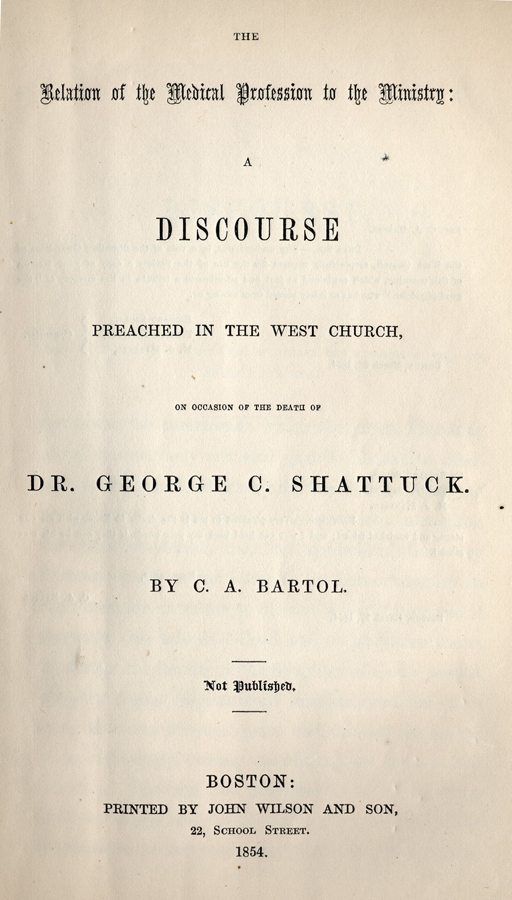
Sermon – Eulogy – 1854


Cyrus Augustus Bartol (1813-1900) graduated from Harvard divinity school in 1835. He was a co-pastor with Charles Lowell at the West Church in Boston in 1837 and became the sole pastor of that church in 1861.


sermon-eulogy-1854

THE

Relation of the Medical Profession to the Ministry:

A

DISCOURSE

PREACHED IN THE WEST CHURCH,

ON OCCASION OF THE DEATH OF

DR. GEORGE C. SHATTUCK.

BY C. A. BARTOL.


DISCOURSE.

Luke IX. 2: “AND HE SENT THEM TO PREACH THE KINGDOM OF GOD, AND TO HEAL THE SICK.”

Such was the commission which the great Physician of the human body and soul gave to his twelve disciples, when he clothed them with their office of carrying on his work in the world. In prophetic metaphor, the older revelation, too, had symbolized this very likeness of the mortal frame to the immortal spirit in their common exposure to disease, when it inquired if there were no balm in Gilead, and no physician there, to recover the health of the daughter of God’s people. Nay, the pagan religion itself foreshadowed the same thing from the remotest point and faintest beginning of its mythology, owning the healing art for a sacred function. The first that practiced it, to the heathen mind was a god and the child of a god; his immediate descendants, at the same time physicians and priests, lived in the temple, and allowed none to be initiated into the secrets of their knowledge without a solemn oath; while the most famous of the Greek physicians, who founded a school and was the earliest to raise medicine to the dignity of a science, was reputed to stand in the line of the same divine descent. You know, moreover, how intimately medicine and religion have been connected by the rudest savage tribes of our own day, as well as by the most civilized races of antiquity. But, to indicate for the pulpit my theme to-day of the medical profession in its relation to the ministry,—which you will allow me to treat in the plainest and most familiar manner,—it is enough to know, that a being before whom all the deities of classic story grow pale and fade away, in his own life and in his charge to his apostles, associated the ills of the flesh with those of the mind for the merciful remedies of his gospel.

There is something very touching in his selecting, for the particular proof of his own heavenly authority, this gracious work of relief and cure to the suffering human frame; restoring from fever and palsy and epilepsy and insanity, from blindness, deafness, dumbness, death. Ah! A cordial truth did his beneficent deeds express, that he came to be for ever the friend of the human body as well as soul, redeeming them both from anguish and corruption, from the sin that runs over into the dying part, and the sickness that penetrates to the undying: for he saw, as a superficial philosophy does not, the companionship between these two natures, so intimate no thought can divide and bound their territories, and so he took the whole man for his love and tenderness; and when the age of outward miracles ceased, and the Christian believer, as such, could no longer wondrously bring back lost health to the sick man, they who religiously devoted themselves to the study and exercise of the art of healing, in worship of the Divinity that made them, and in love of their fellow-creatures, in a business essentially partaking as much as any other of piety and humanity, in some sense in this respect succeeded to the apostles and to the great Lord and Master of us all.

One of the most interesting aspects of this general statement is the friendly relation that should subsist between the professors of medicine and the ministry. Surely they should be friends. Jesus Christ has formed the bond of their amity. He is in his life their common parent. They meet in his spirit. They trace back all that is benign and holy in their several offices and highest purposes to his temper and his acts. Jealousy between them is nothing less than an affront to him who, through all Galilee, taught in the synagogues, and healed the diseases of the people; and any mutual discord, from whatever cause arising, is a quarrel in the very body of the Son of God, and as though those messengers of his, when they went out through all Judea, bearing in one hand soundness for the flesh, and in the other comfort and salvation for the heart of man, had fallen out by the way. Distrust, alienation, divorce, between these professions, so long wedded, and ever in the daily round following in each other’s track, would indeed be not according to history, or according to Christianity, or according to the best hopes and auguries of the future welfare, private or public, of mankind. Therefore let us rejoice in the wide and substantial harmony that has ever prevailed in these two classes. The minister who refers to this topic, truly should not only rejoice, but give thanks, because of a peculiar generosity of the physician’s gratuitous service to his calling, a matter of less pecuniary than moral meaning. The minister, on his part, however, should at least pay with his gratitude his respect to the skill and science of the physician, honoring his vocation, and not lightly giving, as I see it said he sometimes does, the most precious, though commonly accounted the cheapest, thing a man can give, his name and recommendation to every presumption of ignorance and charlatan’s elixir, by whose author or vender he may be entreated. It is not the less but the more necessary to say this, because, in these times of the broader diffusion of light and a growing individual independence, the once marked enclosures and high fences of all the professions are somewhat invaded; men without title or preparation choosing to argue their own case, to hold forth their own revelations, and be their own doctors. With the awakening of thought and the spread of knowledge has come the ascertainment of our ignorance; no claims, private or professional, pass as they once did; and no occupation can stand any more on the ground of mere caste, of a strange tongue or a black letter, but only on the actual benefit it can yield to human beings, in mind, body, or estate.

Yet, in this shock to confidence and loss of reverence, accruing on the universal assertion of intellectual freedom, on the reign, too, of empiric observation, and the custom here in all things of our proverbial and characteristic American haste, there is danger that men will desert the truly wise, who have patiently and expensively qualified themselves for their instruction, defence, or restoration, and foolishly rely on their own imprudence, or the shallow boasts of those who have more at heart their own gain and interest, than any benefit to their kind. To this particular disadvantage, probably no one of the professions is so grossly exposed as the medical. For, while the severe preparation required for the law may reduce the number there of mere pretenders, and while the facts and themes of religion are for the most part matters of sober, scholarly investigation,—vulgar criticism, popular and rudely practical doubt, roused in part very possibly by many contrariant doctrines, seems to have fixed on the medical profession for its especial prey or chosen quarry to pursue; so that we ought not to be surprised were its members sometimes worried and vexed in this chase of hungry questioning and skepticism, sharpened by the lively concern everybody has in an affair so near to him as his own health, especially if this running after them be shared in or cheered on by any whose social position, reputation for learning, or personal hold on the affections of others, invests them with power to hinder or further any sentiment or cause.

It should, however, be some antidote to any irritation hence, that every one of the professions, in this curious and prying age, in some way, coarser or more refined, partakes in this trial of secret insinuations or open assaults. In the wisdom of God, no less than in the folly of man, it may be best for them that they should; for the miserable jeers that charge the lawyer with cunning and selfish appropriations of the sum in dispute, the minister as a dumb dog or covert infidel, and the doctor as at work to physic his patient into the grave, may but combine with candid or subtle investigations of the basis of each several vocation to impart a more finished quality, a nobler and disinterested stamp, to every worthy member of them all. Nay, the doubtful and deliberative tone thus infused into the habit of their minds, leading them to consider well before they act or speak, to indulge or enlighten all honest unbelief in others, and to lay aside whatever might be arrogant or overweening in themselves, will, in their simple modesty, and frank confession of how little as well as how much they know, assuming no oracular airs, but, for the ancient look of mysterious consequence or magical power, putting the benign aspect of depending on true science and a higher strength to secure a humane end, make them, with more accomplished control of their art, greater benefactors to their kind. Accordingly, I believe that justice was never more sure, or health safer, or morality and religion better cared for, than in their modern hands. You will not hint a worldly motive for this declaration. The man who basely attacks his own profession, and rends the cloth he wears, is as likely to have a worldly or ambitious aim, as he that respects his guild or calling; for well said old Samuel Johnson, that he who rails at established authority in any thing shall never want an audience; and an audience is what some seem most of all to crave! But, at whatever former period any of the professions may have been exalted in a more awful or formal respect, it may be doubted whether there was ever more earnestness or vitality, than may not seldom now be seen, in their exercise of every one of them.

The provinces of the minister and the physician, which I am now particularly considering, lie so near to each other, that there doubtless is in their relations a peculiar delicacy. They must be in fellowship, or else in some degree of envy, if not collision; for wholly separate they cannot be, nor should be. Indeed, both the human mind and body are, in their disordered states, so brought under the inspection alike of the messengers of health and of salvation, or spiritual health; the affections of the inner and outer part of human nature so run into, and are often well-nigh confounded with, one another; temperament is so close to temper, habit of body so linked with habit of mind, phlegm is such a name for sloth, and a sanguine or nervous frame such a neighbor to heat and irritability; there is so much gloom or brightness in the digestion; so much kindness in the circulations of the heart, or wrath in the flow of the bile; the vapors that rise or the beams that shine in one region of our marvelous soul or structure so soon overspread the other; a permanently morbid mood of mind, as one has said, so invariably indicates physical disorder; in fine, the soul owes so much to the body, as its organ, dwelling, school, and means of discipline, and the body so much to the soul in every good disposition and holier person; and virtue or vice, soundness or disease, wherever existing, seems so to take them both for a common abode; religion itself is sometimes such a medicine, and medicine such a succor and aid to the conscience; the roots and springs of health or sickness are so much in the moral condition, and make us think so often of—-

“the fruit
Of that forbidden tree, whose mortal taste
Brought death into the world, and all our woe,”—

that they who have attempted to divine in its morbid conditions this wondrous double-empire into their distinct rules may occasionally find themselves unwittingly assuming each other’s prerogatives, and trespassing or treading a little on each other’s grounds. Then, as the minister may know very little of medicine, and the physician as little of the springs of the moral life; as one may, in his meditations, have neglected the order of physical facts, and the other, in the ken scent of his observations, been drawn away from contemplating spiritual and invisible realities or principles,—they may interfere with each other, and do each some harm to the incarnate yet spiritual creature let down from Almighty Power into their associated charge. Therefore, it no doubt is best each should in general, as far as many be, occupy his own, avoiding the debatable land.

Yet, what singular opportunities are at times offered to the physician of giving spiritual counsel, peradventure all the more all the more potently because it is not precisely his technical place! How not unfrequently he has availed himself, as in duty bound, of openings for moral influence! Indeed, shall I say, it curiously illustrates the state of the case, that I have known the same worthy physician, who had complained of ministers looking after the bodies of his patients, to feel under the obligation of himself looking after and ministering to their souls! It were, in fact, but ungrateful for me to lose the memory, or omit here the mention, of my own sympathetic meetings, from time to time, with physicians on either side the bed, over the same suffering and the same death. Truly, for one, I am free to confess a sincere and unaffected pleasure, looking not with an evil eye, but with unalloyed admiration, whenever a word has been so fitly spoken, the kingdom of God preached, and the sick healed, as of old, by the same person! On the other hand, if a clergyman, not dealing in panaceas, or endorsing nostrums, or presuming to stand umpire between rival systems of medicine, should state or illustrate any of those great laws of nature that are over us, and in us, and through us all, on which human sanity hangs, and the transgression of a single one of which is sin, the generous and sensible physician, who is really laboring for the sake of God and man, will welcome the good service of his brother, as much as the farmer would the friendly hand, that, from its own concluded avocation, should come over to mow in his field or thresh on his floor. Let there be on either side no selfishness, no officiousness, no needless volunteering; but an inclination each one to do his own stint, lending help beyond only at the divine command in case of necessity; and, though they be borderers, they will, without strife or foray, live in peace.

But my purpose is not so much to adjust the terms of intercourse or mode of personal bearing between the two professions, as, being moved by the decease of an ornament of one and a friend of the other, to pay a warm and honest tribute of my regard to that to which I do not belong. The desk, whose incumbents everywhere are so indebted to that profession, may well offer, more frequently than it has done, such a tribute. At least, I shall not fail of it now according to the poor measure of my ability, partly as a token of regard for one who loved his own profession and mine both so well, and who would value honor done to his vocation, so long and nobly by him discharged and adorned, more than were it done to himself. The physician has in stewardship under God this mortal body in all the ills it incurs, or to which it is heir. It is a great and holy and most responsible trust. It seems to me so grand and tender, that I will not seek any-wise to lessen, but let it, for the moment, fill the whole field of view, that we may learn to do it and its holders more justice. I will not speak now of theology, the princely science, or alone of religion, the paramount concern, though I shall be enjoining a duty truly religious, or of the soul, the only endearing essence,—but of the body, the body which every one of us brought in hither this morning, and must lay down yonder at life’s evening,—our companion for a short stage, a poor, feeble, weary, ailing thing, but all we have to work with in this world, and which therefore, by every pain, dislocation, or infirmity it is rescued from, by every fever it burns, or chill it shakes with, by every fit which convulses it, or consumption in which it pines, pathetically appeals to us to render due credit to them who keep this many[jointed, myriad-chorded instrument, harp of thousand strings, of so universal play and turn, the true history of whose derangements would be almost as various and tragic as that of the passions of the human mind of which it is the earthly organ, in tune and repair.

Yes, honor to those who have probed he hiding-places of its power, laid open its minute cells; traced the course of its flowing streams; caught every one of the trembling nerves by which it acts or feels, communicates or receives; discovered the causes of its throbbings and its tears; snatched it so often from its most fearful jeopardizes; warned it of its many foes; hovered over it in its most critical emergencies; searched out every one of its disturbed conditions, and labored untiringly to redeem it from them all; actually converted many of its troubles, once fatal, into tolerable and curable maladies; in their devoted friendship passed night after night, as well as the lie-long day, with it, and encountered the fiercest storms that ever blew, and travelled over the most broken ways ever traversed in its behalf, never deserting it while breath remained; and, while spending themselves in outward toils, have brooded over all the elements and phenomena of nature, its grosser brother, in their relation to its symptoms, with the profoundest and most persevering study, to detect and gather every kind of material and invent every tool that advancing human knowledge could fit to alleviate its anguish, free it from the occasions of its distress, check the tendencies to disease, remove the obstructions from the way of its living nature, and lengthen out its days for the increase of human happiness and the manifestation of all the faculties and attributes of the immortal mind. They deserve well of their kind. Let them have their meed of praise and renown! Let those who have experienced their favors, if paid yet priceless, bring it! Let the pulpit yield it,—and even my weak words, for their sincerity, pass for the present hour and spot, as one of its humble signs and expressions!

Physicians, so honorably placed as we have seen in the Christian faith, one of them being styled “Luke the beloved,” have, as we well know, a corresponding rank and sphere in society. And here gain we touch on their inevitable union with the ministry. Their function, like the pastoral, is one of the threads that pass through the entire system of human life. It is one of the great bonds of union among men. Appointed to re-unite the sundered or confirm the debilitated bonds of corporeal well-being, to rejoin the dissevered ligaments, close gaping wounds, and set in motion the suspended workings of the animal frame, they are, by the unlimited reach of their benevolent and indispensable offices, also a solder and cement in the edifice of the common-weal. They do much to cure the body politic, as well as the individual constitution. The rich and the poor, the citizen and the stranger, the high and the low, the virtuous and the vile, the physician must take care of them all; and he follows the example of his Great Master in so doing. Like the central iron rod, or the main supporting beam, or the stout traversing keel, with which all is connected and on which all is more or less suspended or built, is the operation of his so strong and busy hand. None has more disagreeable, and it may be thankless, tasks than he. Yet this must be his consolation, that none comes nearer to the human heart, as well as to that which covers that heart, than the good physician who is also a good man. His chaise passing round is the very emblem of a benignant errand; or waiting at the door, an earnest to the passer-by, that good is going on within. “Who, is your physician?” is a question asked perhaps as often as any other, and always asked by friends with lively interest; and “my physician” are words rarely pronounced without a glow of emotion, if not a gush of thanksgiving, accorded to but few earthly benefactors. For all endeavor, patience, and watching, so spoken they are beyond silver and gold a remuneration to that human heart of ours which craves indeed many things beneath the sun, but above all other things hungers and thirsts for a just respect and a holy love. They that visit and heal the sick, that bring the color back into the pallid cheek, that enliven again the heavy lack-luster eye, enable hand and foot and head to resume their wonted avocations in all effort and delight of body or mind, and thus put a new song into the mouth for restoring mercy, certainly do not miss large and perhaps unequalled measures of that consideration which, second to the favor and blessing of Almighty God, is rightfully dearest to the soul. Heaven grant to them both benedictions, the human and the divine, with the grace to fulfill both the commandments,—the first of supreme love with all the heart and strength to God, and the second, which is like to it, of loving one’s neighbor as one’s self. Such the wish and prayer which the voice of this place would breathe towards them, and breathe for them up into the sky! And might I say one word further, from my theme, it would be,—May the prophecy of their friendship with the ministry of religion reach as far forward as its tradition reaches back!

But the physician, who heals and under Providence lengthens out the lies of others, must himself sicken and die. While many, through his instrumentality, remain in the land of the living, he himself may have gone. Those he raised from prostration may visit his couch, and those he rescued from the grave weep grateful at his sepulcher. A vacancy here noticeable by you all makes needless any explanation of the motive of my present subject. A form, familiar for many years, and ever growing more venerable in our eyes, has disappeared. It was the form of one who might well suggest to me the text of this discourse; for no man ever respected more either his own profession or that of the ministry, or more closely associated them together in his mind; so that once, being examined under oath as to some record he might have made, he exclaimed that “by the grace of God the name of a minister was never entered with a charge on his books”! Yet he began his career, as perhaps it is best every young man should, having nothing in particular to trust to but his own talent and fidelity, with what I have heard him in his own phrase style “the healthy stimulus of prospective want;” and, waiting quietly for his first patients, attending slowly to case after case, he laid silently, stone by stone, the foundation of his fame. Every truly noble building rests on just such a basis of deep and secret diligence; and as a great merchant once said that the making of his first thousand dollars cost him more perplexity than all the rest of his immense fortune, so is it with the first achievement, by manifest, undeniable, and unmistakable power, of all professional success. The towering reputation far seen over the land, the wide-spread practice opening through a thousand portals, reposed simply and solidly on the genuine qualities which both assured skilful handling to the sick, and bore off prize after prize in the early competitions of the literary medical essay.

But our friend did more than eminently exemplify the essential traits of a wise and able practitioner. Though he has said to me he was a physician, and nothing but a physician,—while it is utterly superfluous for me to bring the fact of his professional superiority to your notice,—he was consulted on other matters beside the hazards and extremities of mortal life. Extraordinarily distinguished for insight into the soul as well as body, joining, in fact, the physical and the spiritual, that are brought into such juxtaposition in our text; reading character as he did health or disease; leaping through obstructions to his point, with an electric spark of genius that was in him; clothing his conclusions sometimes with a poetic color, and sometimes with the garb of a quaint phraseology; employing now a pithy proverb, and now a cautious and tender circumlocution, to utter what could scarce have been otherwise conveyed, in a method of conversation, which, in its straight lines or through all its windings, I never found otherwise than very instructive,—an intuitive sagacity and perfect originality marked all his sayings and doings. He could never be confounded with any other man. Borrowing neither ideas nor expressions, he was always himself. Yet there was nothing cynical or recluse or egotistical about him. I never heard him boast himself or despise another. He had a large and warm heart, with room in it for many persons and all humanity. Though he was so peculiar, much of his heart was the common heart, as the most marked and lofty mountains have in them most of the common earth. While not a few are absorbed in some single relation, he observed and acted well in the multitude of his relations to his fellow-men. He was remarkable for this broad look and observance of all the interests, material or moral, mechanical or spiritual, of the world, and was equally at home in a question of finance or an enterprise for religion; actually, in his early life and growing thrift, giving a large part of his property for the building of a church. He had, moreover, this precious singularity, that he never seemed to belong to any one class or little social circle, but to stand well and beneficently related to all. Often have I had occasion to perceive, not only his large and cordial, but very various and wide, hospitality. He fulfilled, as nearly as I remember to have seen it, that remarkable, difficult, and apparently almost uncomprehended precept of our Saviour, in which he tells, when we make a feast, not to call to it our friends and rich neighbors, but the poor, the maimed, the lame, the blind; and probably no man in this city could die, who would be remembered by a greater number of those in their necessity touched by his timely beneficence; for he seemed ever to discern the season, as well as to feel the inclination, to do good; his relief of another was less a tax or duty than a self-gratification; while he never forgot a favor he had received, he never allowed any one to feel a load from the favor he conferred. He did not wait to be asked. He did not yield to all solicitations. He preferred generally to give in his own way and of his own motion; and to no one did good deeds offer and suggest themselves more abundantly or opportunely. Before my personal acquaintance began, the first thing I knew of him was his attendance upon a sick fellow-student in Cambridge, coming often, yet refusing to receive any fee. And the next thing I knew of him was his receiving into his house, and then, like the good Samaritan with his message to the host of the inn, commending to a distant professional brother, another friend and fellow-student. It might not please him or those nearest to him, if I should attempt even partially to enumerate his bounties, so ample, to various institutions of learning, for their libraries or chairs of instruction, which in some instances may have come to your hearing; but I have reason to think that his kindness much more frequently flowed in private channels, beheld only by the recipients and the All-seeing.

Being such a hearty and unostentatious philanthropist, it is perhaps unnecessary to say, in addition, that he was a real Christian. But he belonged to no one sect or denomination of Christians. Referring all to God, taking the highest view of the divine dignity of Jesus Christ, hoping to be accepted, saved, reconciled to the Father through the mediation of the Son, he extended his sympathy and hand of fellowship to all the faithful preachers of the gospel. He was truly catholic. You will excuse me, but there must be put into any conscientious report of him, what will indeed appear as but one practical exposition of the general truth of this discourse, his repeated mention of his especial regard for ministers,—“ministers,” he added with emphasis, “not of one name, but of all;” and his deference to the ministerial office is a quality in him, certainly in these days, standing out with some prominence. Indeed, the inclination of his respect might have been embarrassing but for he fraternal and authentic good-will from which it came. His respect ever somewhat veiled his heart, protecting an exquisite sensibility, which all might not notice, and hindered him from professing the entire warmth of personal affection he felt. But a reverence for the Most High was in him wholly distinct from all other principles. His will towards men was strong. But he seemed to have no will towards God. His will vanished before the Supreme; and he would have none beside. As a physician, he looked not to his medicines alone, but to God, for success, and prayed before he prescribed.

So it was with him, with ever-increasing interest, to the last. “Pray with me” was commonly his first salutation as I entered his sick chamber. “I want your prayers: they are a great comfort and consolation.” “Pray not for my recovery.” “I am going to God.” “I wish in your prayer to go as a sinner.” “I humbly thank you” was in the pressure of his hand, as much as in the articulate motion of his lips, when the express act of devotion was over. “Next to my God, I want to be near to my minister,” referring, of course, not to the individual, but, as was his wont, the office. And, at the last, having spoken his love to those most closely related to him, just before he went, “Time, Eternity, Eternity, Eternity,” were his expiring words; knowing, as he retained possession of his mind, that he was just stepping over that mysterious causeway, hid from mortal eyes, the sight of which no fleshly vision could bear, which separates one from the other.

I need not say, for the information of any in this society, that, being thus devout, he was a willing and open-handed supporter of religious institutions. To the utmost extent of his strength and opportunity, he was a constant, as he was a happy, worshipper in this house. He was an humble, penitent, affectionate confessor of his Lord at this communion-table, from which he had been long restrained by diffidence; but, in the last year of his life, was ready joyfully to bear witness, through the emblems of the broken body and flowing blood of the Saviour, that the confidence which, whether coming or staying away, we cannot feel in ourselves, we may feel in him and in God. The square and fountain in front of this church; the marble baptismal font before this altar, much of whose expense it was one of his dying bequests should be paid by his kindred survivors, at the same time declaring his delight in its beauty, thus associating it for ever with his departure; the repair and enlargement of the room for the Sunday-school, to which he chiefly contributed, affirming to me more than once how important he considered the religious instruction of the youth among us; the libraries for the school and the parish, which he increased with special donations,—are but examples selected from the numerous fruits and demonstrations of his Christian and reverential charity. Ah! But for faith and encouragement to emulation of such good deeds, it were a sorry day for any religious body when such a benefactor dies!

In thus reporting, as truly and exactly as I am able, the positive excellencies of our friend, I intend not, as is the custom in some eulogies, to imply that they were all; when the value of any praise of mortals lies in the definite truth that leaves room for fair exceptions, while the fulsome commendation that does not discriminate is merely worthless, signifying nothing. It would be a poor compliment to one, who perhaps was never guilty of an insincerity in his life, to intimate that he had no failings, or to present any panegyric of perfection for his character; to declare that this good man and true-hearted Christian had but one immaculate side, or moral features only of absolute beauty, which would so contradict his own word and consciousness. And were I to say that his fine natural ardor went not to the least excess; that his energetic purpose in no instance was imperious; that, bent upon action, and on speedily executing his good plans, he never became impatient of debate, or did any injustice to others’ thoughts, or exercised mastery over others’ designs; or that, prospered greatly as he was in his fortunes, it was never requisite for him to struggle against the world’s getting undue possession of his mind; that he was such a paragon, he never spoke harshly or acted hastily; in short, that no defects qualified and mingled with the rare and unsurpassed nobilities of his soul; and that even unawares he favored nothing wrong, nor opposed and put down any thing right,—I should insult his honesty, and belie my own conscience, and might do despite to that spirit of grace and truth, which, above the highest human attainments, still holds the unreached standard of moral goodness and infinite glory. But, if he could set his face as flint, oh! He could pour out his heart like water; the rock of rugged strength welling with currents copious and pure, for he was a pure-hearted man; and never was a gentler or more pathetic soul, a breast quicker to throb, or an eye more moist, at any grand or affecting spectacle or tale; if he was not caressing, neither was he self-indulgent; and if his passion ever overstepped the bounds of equity, he was prompt to feel remorse, humility, and grief, as more than once I have myself had occasion to note; while his character was continually softening, improving, ripening, as he went on,—ripe, fully ripe, indeed, at last!

But the question, in regard to any among mortals, is not whether he is faultless, none that breathe or ever did breathe being such; but, after the faults are subtracted, the question is, what mass, what weight, what height of worth, is left behind. Some seem to have neither grievous faults nor shining virtues; and a man may be apparently well-nigh blameless, without being very good, as a pure ore of iron or copper is not so precious as the mineral gold, though with earth and stone intermixed. My friend always seemed to me to be the mineral gold. Nor do I know where, in any individual, to look for a larger amount of the sterling treasure. Ah, while I speak of him, I can hardly imagine him away! A vision, he rises in my path, invites my gaze, greets me at the door, sits there in the sanctuary! The intensity of this abiding presence that will not down, of this reality that will not go, is the measure of force that has been in a man. And he surely was one of the powers among us that cannot cease even here below.

It is not the habit of this place to celebrate the merits of any human being. Nor might I have done it now, save to unfold with livelier interest, through a solemn dispensation of Providence, a subject of universal concern. The characters of all human beings sink before that Holy Majesty which fills this place, and which we here assemble to adore. But God is glorified not only by direct praise and ascending prayer. He is glorified, too, in his faithful servants, imperfect men though they be. All the beauty and splendor of the earth and heavens cannot compass so fair or sublime a pitch of his glory as is displayed in the loyal and loving souls of his children. We do not honor him by hiding out of sight, or passing over in silence, aught just or worthy in his intelligent creatures; but every light of virtue, taken from under the bushel of privacy to shine out of the candlestick of a true confession before men, illuminates also, to their view, the spotless attributes of the Creator. To the Creator, as its source, we ascribe all that is worthy and good. We thank him for the fruit of the earth. We thank him for the brightness of the sun. We thank him for the better beams of knowledge, and the nobler springing from every germ and disclosure of his sacred truth. We thank him, above all, for that manifestation of his wisdom and love which we discern in his obedient offspring, and which was incarnate in his beloved Son.

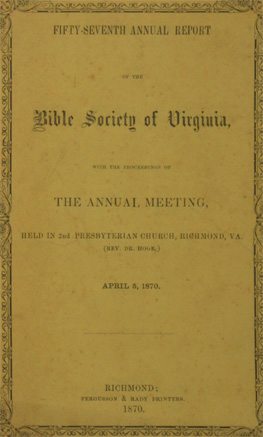
Bible Society Reports

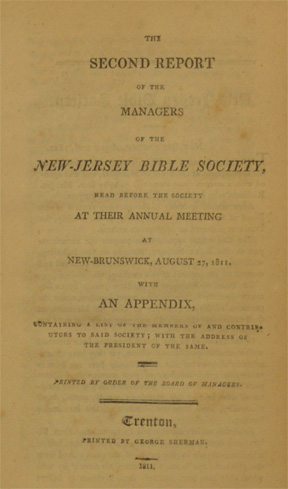
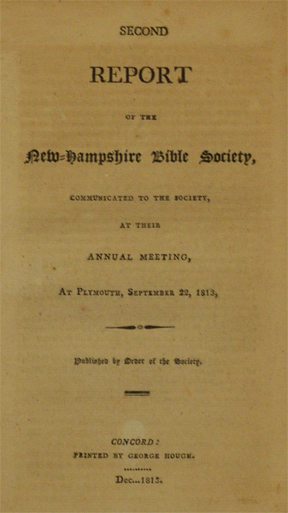
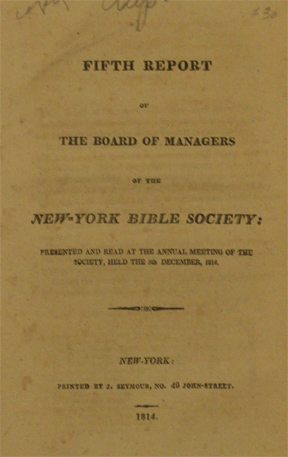
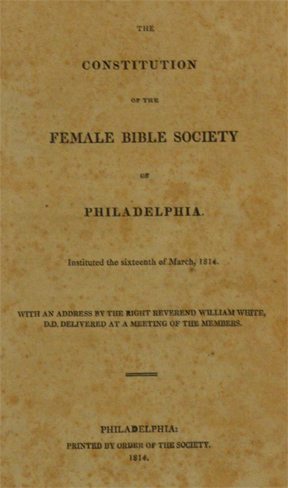
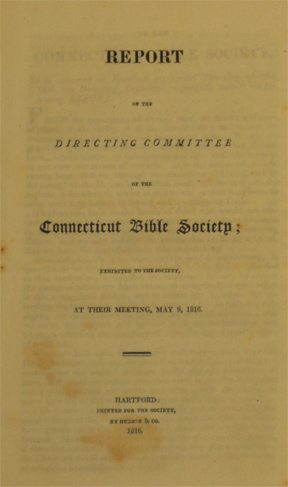
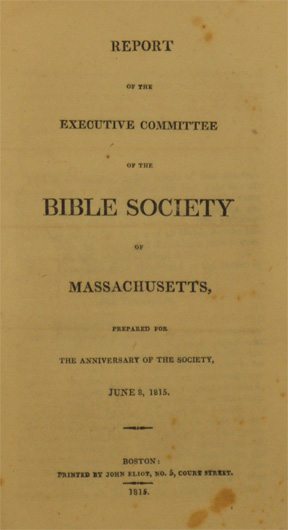
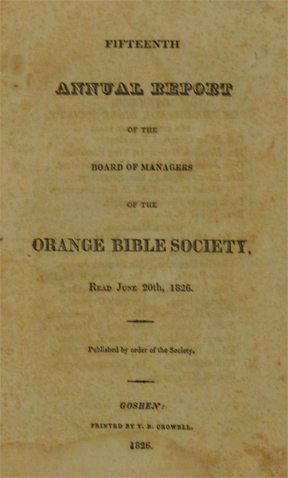
The Philadelphia Bible Society, America’s first Bible society, was officially organized on December 12, 1808. By 1816, 121 more Bible societies had been started across the nation. Below, from the WallBuilders library, is a group of reports from various 19th century Bible societies. At WallBuilders, we also have an original Bible published by the Philadelphia Bible Society.


bible-society-reports-1 bible-society-reports-2 bible-society-reports-3 bible-society-reports-4 bible-society-reports-5 bible-society-reports-6 bible-society-reports-7 bible-society-reports-8

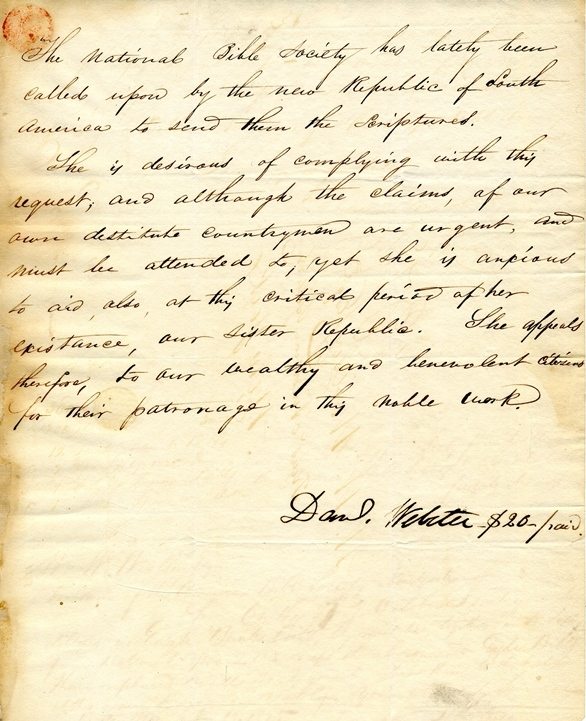
Daniel Webster’s Letter to the American Bible Society

Daniel Webster, a second generation Founding Father, was extremely expressive about his faith. The Daniel Webster letter below is written about the “national” (American) Bible Society and a request it received to send Bibles to South America.


daniel-websters-letter-to-the-american-bible-society-1


The national Bible Society has lately been called upon by the new Republic of South America to send them the Scriptures.

She is desirous of complying with this request, and although the claims, of our own destitute countrymen are urgent, and must be attended to, yet she is anxious to aid, also, at this critical period of her existence, our sister Republic. She appeals therefore, to our wealthy and benevolent citizens for their patronage in this noble work.

Danl. Webster

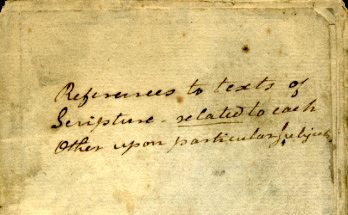
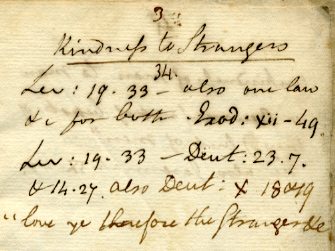
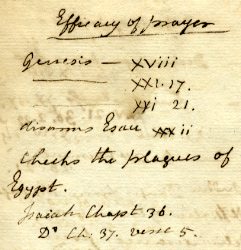
Benjamin Rush Personal Bible Study

Founding Father Benjamin Rush’s handwritten personal Bible study booklet entitled “References to Texts of Scriptures Related to Each Other Upon Particular Subjects.” In it he listed scriptures under various topics and wrote his own notes on those scriptures. We have included excerpts of the booklet below.


benjamin-rush-personal-bible-study-1
Booklet Cover


benjamin-rush-personal-bible-study-2benjamin-rush-personal-bible-study-3

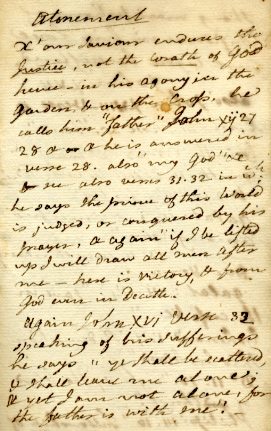
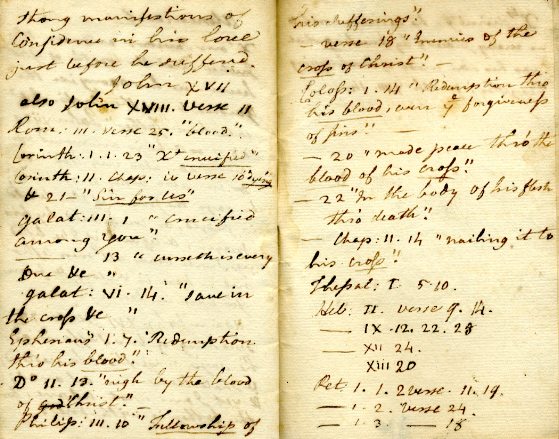
Rush recorded three pages of scriptures and notes regarding
“Atonement”


benjamin-rush-personal-bible-study-4
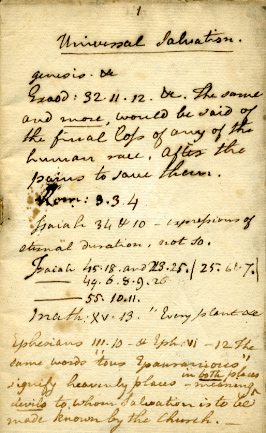
“Universal Salvation”

Rush cataloged scriptures such as Exodus 32:11-12; Romans
5:3-4; Isaiah 49:6,8-9; Matthew 15:13; etc. under the title “Universal Salvation”


benjamin-rush-personal-bible-study-5
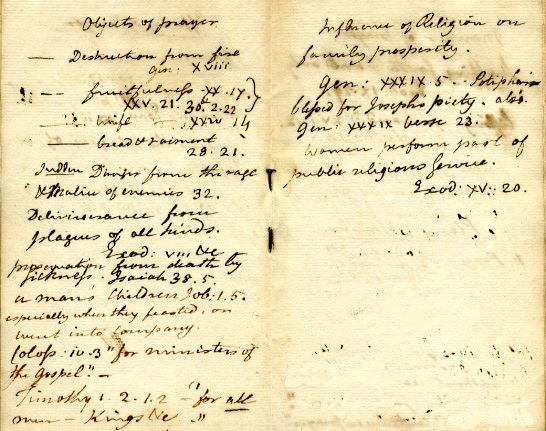
“Objects of Prayer” & “Influences
of Religion on Family Prosperity”

Rush’s notes on scripture passages related to prayer and
God’s blessings
(Note: nail used in book seam)


benjamin-rush-personal-bible-study-6
“Kindness to Strangers”

Rush lists Leviticus 19:33, Exodus 12:49, Deuteronomy 23:7
and other verses under the heading “Kindness to Strangers”


benjamin-rush-personal-bible-study-7
“Efficacy of Prayer”

Rush’s scriptures on the effectiveness of prayer include
Genesis chapter 18 and 21:17 & 21.


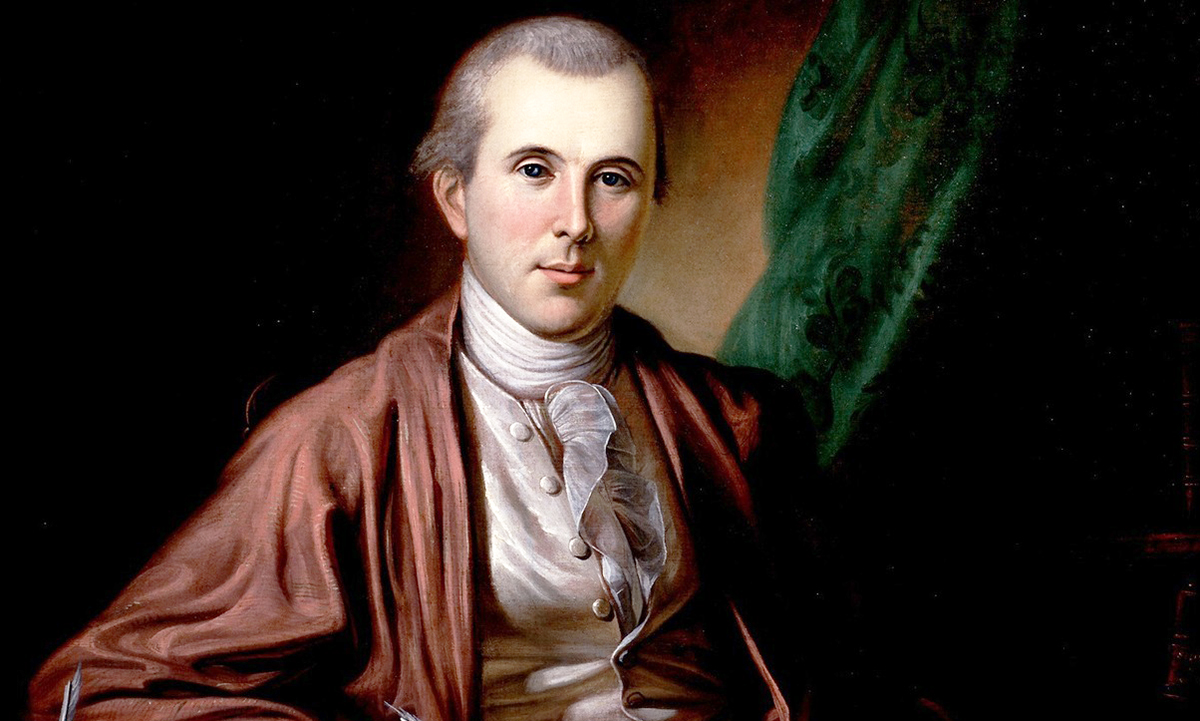
Benjamin Rush

(1745-1813) Rush was a physician, educator, philanthropist, and statesman. He graduated from Princeton (1760) and then studied medicine in Philadelphia, Edinburgh, London, and Paris. He served in the Continental Congress (1776-77) and signed the Declaration of Independence (1776). Rush also: suggested to Thomas Paine that he write Common Sense (1776) and supplied the title for it as well as helped publish it; was Surgeon-General of the Continental Army (1777-78); and was one of the founders of Dickinson College (1783). He was an influential delegate to the State ratification convention for the federal Constitution (1787), and along with James Wilson, one of the principal coauthors of the Pennsylvania constitution (1789-90). Rush served as Treasurer of the U. S. Mint under Presidents John Adams, Thomas Jefferson, and James Madison (1797-1813). He mediated a reconciliation between long time political rivals John Adams and Thomas Jefferson; was a founder of the Pennsylvania Society for Promoting the Abolition of Slavery (1774) and its president; founder and Vice-president of the Philadelphia Bible Society (1808-13); member of the First Day Society of Philadelphia (1790); and a member of the Abolition Society (1794-97). Benjamin Rush is called the “Father of American Medicine” for his numerous medical discoveries.

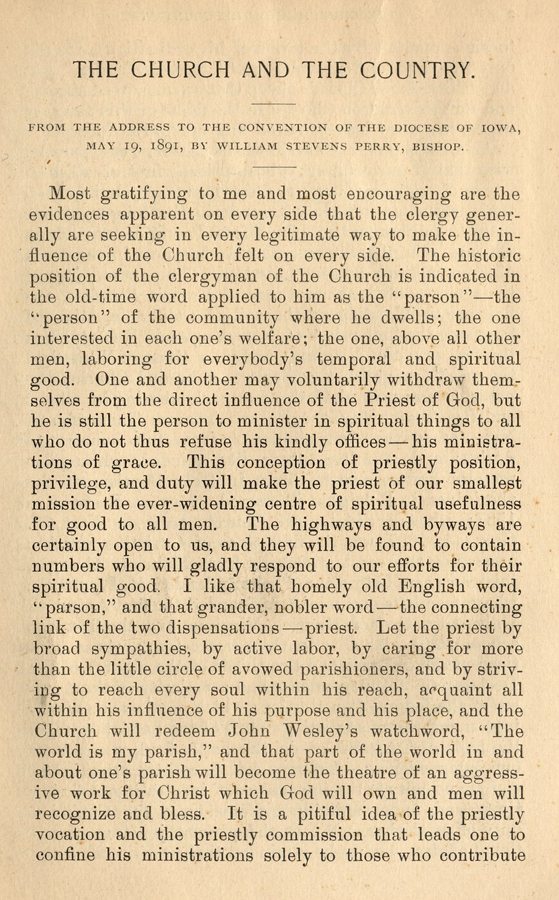
Sermon – Church and Country – 1891


This address was given by a Bishop of the Protestant Episcopal Church, William Stevens Perry (1832-1898), on May 19, 1891.


sermon-church-and-country-1891-1

THE CHURCH AND THE COUNTRY.

FROM THE ADDRESS TO THE CONVENTION OF THE DIOCESE OF IOWA,
MAY 19, 1891, BY WILLIAM STEVENS PERRY, BISHOP.

Most gratifying to me and most encouraging are the evidences apparent on every side that the clergy generally are seeking in every legitimate way to make the influence of the Church felt on every side. The historic position of the clergyman of the Church is indicated in the old-time word applied to him as the “parson”—the “person” of the community where he dwells; the one interested in each one’s welfare; the one, above all other men, laboring for everybody’s temporal and spiritual good. One and another may voluntarily withdraw themselves from the direct influence of the Priest of God, but he is still the person to minister in spiritual things to all who do not thus refuse his kindly offices—his ministrations of grace. This conception of priestly position, privilege, and duty will make the priest of our smallest mission the ever-widening centre of spiritual usefulness for good to all men. The highways and byways are certainly open to us, and they will be found to contain numbers who will gladly respond to our efforts for their spiritual good. I like that homely old English word, “parson,” and that grander, nobler word—the connecting link of the two dispensations—priest. Let the priest by broad sympathies, by active labor, by caring for more than the little circle of avowed parishioners, and by striving to reach every soul within his reach, acquaint all within his influence of his purpose and his place, and the Church will redeem John Wesley’s watchword. “The world is my parish,” and that part of the world in and about one’s parish will become the theatre of an aggressive work for Christ which God will own and men will recognize and bless. It is a pitiful idea of the priestly vocation and the priestly commission that leads one to confine his ministrations solely to those who contribute to his support. By the terms of his ordination he is not only “to feed and provide for the Lord’s family,” but also “to seek for Christ’s sheep that are dispersed abroad, and for His children who are in the midst of this naughty world, that they may be saved through Christ forever.”

As a Bishop of a Church whose history runs parallel with that of our country; whose priests, first of all ministers of religion, held the services and administered the sacraments of Holy Church in the tongue of our English fathers on the Atlantic and Pacific coasts; whose Bishops, clergy and members were foremost in the work of colonization; whose “missioners” numbered among their most noted names those of Francis Fletcher, the first priest officiating on the soil of California, Richard Seymour the first priest of New England, Robert Hunt the first priest of Virginia; and later those of Whitefield the great evangelist, the Wesley’s, John and Charles, the preacher and poet of Methodism, each laboring for Christ and His Church in Georgia; and Thomas Thompson of New Jersey the first missionary from this country to Africa; and countless others like minded; whose also was the first convert to Christ in Holy Baptism of the aborigines in Raleigh’s ill-starred colony at Roanoke in 1587; whose cross-topped Church built at Fort St. George in 1607, was the first place of Christian worship erected on the coast stretching from Maine to Georgia, thirteen years before the Puritans landed at Plymouth; whose member and ministers founded the first American University, that of Henrico, Virginia, and the first free school, at Charles City in the same colony; whose baptized members furnished two-thirds of the signers of the Declaration of Independence and a majority of the framers of the federal Constitution; which gave us our Washington and the most distinguished of the patriots who, in the halls of Congress or on the battle-field, won for us our independence;–I cannot fail to call the attention of clergy and laity to the importance of inculcating at fitting times and under suitable circumstances the Christian duty of patriotism. We at the present juncture of national affairs, need to be reminded that, as citizens of the United States of America, we owe our country’s first discovery and settlement—our very nationality—not to Columbus and Spain and Rome, but to Cabot and England and to England’s Church. The close connection of the Church of England with our colonization and development is now established as an historic fact. The strife for the possession of the empire of the Western World was waged from the start between the Anglican and the Roman communions. Through the papal bull meted out the New World to Spain to hold as a fief of the Roman See, the Church, the Crown, the Commonwealth of England recognized no peace with Spain beyond the line—the line of demarcation beyond which Spain was to have absolute and undisputed rule. The rival communions, Anglican and Roman, were each successful in securing a moiety of the New World, but the territory we as a nation occupy was claimed and planted by England, and not by Spain or France. We may thank God that our nationality was thus based on Magna Charta, on the English Constitution, on the English common law, on the English Bible, and on the English Book of Common Prayer. Mexico and the Latin republics of the South American states may date their origin and their faith from Spain and Rome. We are the sons of Anglo-Saxon sires. Our fathers at the Revolution fought for their rights as free-born Englishmen—rights which would not have been ours by inheritance or possession had not the mother land of England successfully resisted the Spanish attempts to monopolize the Western World, and the mother Church of England sent the priest with her people and supplied the word of God and the Church’s prayers wherever her baptized children went. True as it is that in a land such as ours no state establishment of religion is either practicable or desirable, but still the fact that our communion alone is spoken of as the American Church; and that we alone, by reason of our occupancy of all sections of our beloved country; by our historic connection with the Nation’s past; by the close similarity of our general ecclesiastical constitution with that which our fathers—Churchmen as well as patriots—established for the land; and by our recognition, in prayers and offices from the very first, of “the powers that be” as “ordained of God,” shows that we are each day growing more and more worthy of our claim to be called the American Church, and to be in truth the American Catholic Church. In view of the duty so specially ours of recognizing the authority under which we live, I would urge upon my reverend brethren of the clergy, and upon the laity as well, the duty of seeking to be in touch with everything national and patriotic. Gladly would I see over every Church in Iowa, under the cross, the flag of the republic floating from spire or tower, telling of our love for country as the cross uplifted tells of our grateful recognition of the emblem of our salvation. We should not as Churchmen be a whit behind any in our patriotism; teaching its lessons in our Sunday Schools, from our pulpits, in our every-day speech. The American idea should dispossess all other ideas so far as true politics, the common weal of the commonwealth, are concerned. The love of country will, if awakened, encouraged, and developed, dominate partisanship and make us better citizens and men. We need and we should countenance in this land no organizations of Englishmen, of Scotchmen, Welshman, Irishmen, Scandinavians, Germans, French, or Italians associated for the furtherance of un-American purposes or ideas. Much less should we consent to the growth amongst us of secret tribunals with their crimes and assassinations, or the organization of men of foreign birth and sympathies trained to the use of arms. We must recognize no flag but the Stars and Stripes. Our liberties are endangered, even before we are aware, by this banding together of foreigners, who seek an asylum and a support in our free land that they may the better carry on their schemes of interference with other nations. For God and native land may well be our motto! If we are true to our country’s needs, if true to our Christian faith, we may make this land of ours “God’s noblest offspring,” even though it be the last.

Speech – House of Representatives – 1881

George B. Loring a Representative from Massachusetts; born in North Andover, Essex County, Mass., November 8, 1817; was graduated from Harvard University in 1838 and from the medical department in 1842; appointed commissioner to revise the United States marine hospital system in 1849;elected as a Republican to the Forty-fifth and Forty-sixth Congresses (March 4, 1877-March 3, 1881);


speech-house-of-representatives-1881-1


MASSACHUSETTS.

SPEECH

OF

HON. GEORGE B. LORING,

OF MASSACHUSETTS,

DELIVERED IN THE
HOUSE OF REPRESENTATIVES,

JANUARY 20,1881.

Washington.
1881.

SPEECH
OF
HON. GEORGE B. LORING.

The House having under consideration the contested-election case of Loring vs. Boynton.

Mr. LORING said:

Mr. Speaker:  I ask the indulgence of the House at this time, not for the purpose of defending myself, but for the purpose of defending the Commonwealth which I in part represent on this floor.

I have noticed, sir, that Massachusetts is quite liable to be sharply criticized here and elsewhere.  In this matter now before the House she is charged by the gentleman from Iowa, [Mr. Weaver] the minority of the Committee on Elections, with resorting to an act of dishonesty, to a petty trick, in order to retain her representation in Congress and her electoral vote in spite of the deliberate disfranchisement of her citizens.  I think, moreover, her civil policy and the record she has won by her relations to the Federal Government and to her sister States have been somewhat misunderstood on a former occasion.  And notwithstanding the prompt and vigorous vindication she then received from abler and worthier sons than I am, I must beg the House to bear with me while I set forth what I conceive to be her true record as an independent State and as a part of the American Republic, her character and the course she has pursued, to do which I must go beyond the simple question before the House.

The right to hold the seat I now occupy having been confirmed by an almost unanimous vote of the Committee on Elections, I am entirely satisfied to leave the final decision of the question to the House, before whom the arguments on both sides have been liberally spread, without debate so far as I am concerned; and were there no unusual circumstances attending these arguments, I should not now step out of the course commonly pursued by contesters in the election cases, and ask to be heard.  During the two years in which I have been bound and burdened by this contest, and in which a Congress of unparalleled interest and importance has nearly passed away, every effort has been made by recount and investigation, involving a single vote in this town and that in my district, and the application of critical rules to the form of the ballot, and by fancy sketches of personal oppression and wrong, to deprive me of my legally declared election.  I think, and in this the committee seem almost unanimously to agree with me, that the questions, of this description involved in the case have been satisfactorily settled by the testimony in my behalf and by the argument of my counsel.

SUFFRAGE.

The case, however, has been carried further than this, beyond the mere details of personal controversy and of casting and challenging and counting the ballot, into an unwarrantable attack on the Commonwealth of Massachusetts, on her constitutional provisions relating to suffrage, the principles on which her laws are founded and administered, the suffrage qualifications she has imposed upon her citizens.  It is charged upon her not only that her citizens have been exposed to what is called “civilized bulldozing” but that they have been largely disfranchised by legal enactment and constitutional provision.  It is alleged in the minority report presented by the gentleman from Iowa, [Mr. Weaver,] in which is published an elaborate statement of the wholesale disfranchisement of citizens taken from the brief of the counsel of the contestant in this case, that of the 490,158 ratable polls in 1878, 113,657 are disfranchised on account of being aliens, illiterates, paupers, non-taxpayers, convicts, idiotic, and insane; and that inasmuch as only 256,332 actually voted, it follows that one-third of the voting population of the State was disfranchised.

“All those citizens of the United States,” says the report, “i.e., whose who cannot read and write, who had not paid their taxes, or are so unfortunate as at sometime in their lives to have required aid from the public, are by the laws in force in Massachusetts deprived of their vote.”

“Leaving out the idiots, insane, aliens, and convicts, it appears demonstrable that 134,256 citizens of the United States have their immunities and privileges abridged and are deprived of their right to vote in that State,” adds the report in chorus with the brief.

We are reminded, moreover, that under article 14 of the amendments to the Constitution, and under section 6, chapter 11 of the acts of 1872, “the number of Representatives apportioned in this act to such State shall be reduced in the proportion which such male citizens shall bear to the whole number of male citizens twenty-one years of age in such State,” should such State “deny or abridge these rights,” “after the passage of this act;” and it is charged upon Massachusetts that in violation of this act and the amendment on which it is founded, and for political purposes, by an act of 1874, two years after the passage of the act of Congress, she so disfranchised her citizens as to substantially diminish her delegation in Congress from eleven to eight Representatives, and her electoral vote from thirteen to ten.

In other words, the State took advantage of the apportionment according to the whole number of people granted by Congress in 1872, in order to get the representation, and then deliberately disfranchised, in the face of the law, quite two-fifths of her voters, so that a few – scarcely half – of her citizens might control it.

Now, the answer to all this is easy.  The disqualification in Massachusetts on account of illiteracy was created by the article 20 of the amendments to the constitution, adopted in May, 1857, and enforced by statute in 1860, twelve years before the apportionment of 1872 was made.  For twenty years this statute has been known and recognized of all men.  Various attempts to repeal it have failed.  The learned counsel for the contestant, Hon. B. F. Butler, whose steps the gentleman from Iowa, the minority of the committee, has endeavored to follow, knew this when on December 21, 1869, three years before the act of Congress of 1872 was passed, he declared in this House –

Everybody in Massachusetts can vote, irrespective of color, who can read and write.  The qualification is equal in its justice.  It is well that Massachusetts requires her citizens should read and write before being permitted to vote.  And there are hundreds and thousands in this country who would thank God on bended knees if it could be provided that the voters in the city of New York should be required to read and write.  They would then believe republican government in form and fact more safe than now.

Nor does this measure of disqualification, together with all those which are by the laws of Massachusetts added to it, produce the starling effect presented by the figures of the gentleman from Iowa [Mr. Weaver] or convict Massachusetts of bad faith in the matter of apportionment for Representatives in Congress and presidential electors.  Taking his figures, namely, 134,256, and of that number, according to his tables, 86,258 are aliens and therefore not citizens.  Now, add to this last the number of paupers, idiots, criminals, and insane, namely 9.271, and we have 95,529 disqualified for the above reasons, leaving 38,727 to be otherwise accounted for.  Of these 14,691 naturalized citizens and 3,437 natives, or only 18,128, are disqualified for illiteracy.

It is upon these figures that the charge of wholesale disfranchisement is based, and the demand for the reduction of the representative and electoral vote of Massachusetts is made by the minority of the committee and by one of her former representatives in this House, one who accepted the apportionment as a candidate for Congress in 1874, and witnessed as a member elect the counting of her thirteen electoral votes in the great contest of 1876-’77.

There is no ground for this charge, no foundation for this demand. Massachusetts in recognizing the propriety of qualified suffrage has done no more than has been done by all her sister States in this Union.  The right of a State to disqualify is not demanded and recognized by her alone.  With the exception of natural disqualifications, such as minority, insanity, and idiocy, the obstacles interposed by law between the citizen and the ballot-box are easily surmounted; but still they exist and enter into the system of suffrage everywhere.  In every State the citizen attains the right to vote not until he has reached his majority.  Most of the States disqualify paupers and inmates of asylums; several provide in their constitutions that they shall not be disqualified or their residence lost.  Many States require a residence of two years; some of one year, some of three months.  Persons under guardianship are, in several States deprived of the right to vote; in one, “persons excused from paying taxes at their own request;” in two, Indians not taxed.

The constitution of one of the youngest States provides that the Legislature “may at its discretion make the payment of a poll-tax a condition to the right of voting.”  Another of the youngest States, Texas, has provided that “in all elections to determine expenditures of money or assumption of debt only those shall be qualified to vote who pay taxes on property” in the city or town where the expenditure is to be made or an existing debt assumed.  In Massachusetts the constitution has provided from the beginning that every male citizen twenty-one years of age, except paupers and persons under guardianship, who shall have resided in the Commonwealth one year, and shall have paid any State or county tax within two years, may vote.  In 1857 the reading and writing clause was added.

By one of her immediate neighbors, the State of Vermont, it is provided that a citizen who is twenty-one years of age, “and is of a quiet and peaceable behavior,” may exercise the right of suffrage as his prerogative, and the political career of this well-ordered Commonwealth bears abundant testimony to the principal on which her suffrage is based.  The constitution of Connecticut requires the voter to be able to read any article of the Constitution or any section of a statute.

The variety of disqualification found in the State constitutions is interesting and important.  So far as residence is concerned some of the requirements are as follows, namely: Michigan, two and a half years; Kentucky, two years; Alabama, Delaware, Florida, Illinois, Maryland, Missouri, New Jersey, New York, North Carolina, Pennsylvania, Ohio, Rhode Island, Texas, West Virginia, Virginia, one year; Maine, three months; California, Colorado, Indiana, Iowa, Kansas, Mississippi, Nebraska, Nevada, six months.  The payment of State, county and capitation taxes is required in Delaware, Pennsylvania, Massachusetts, Tennessee, Virginia, and some other states.  Educational qualifications exist in Massachusetts and Connecticut, the Legislature of California being empowered by the constitution to impose this qualification after 1890.  Now it will be noticed that all disqualifications arising from provisions like those to which I have referred partake in no sense of the nature of disfranchisement under the fourteenth amendment of the Constitution.  None of them are insurmountable.  None of them are analogous to disqualification on account of race or color, which is insurmountable.  And on this account they cannot be brought under any provision of the Constitution which reduces State representation or the  electoral college for the reason of disfranchisement.

In the collected constitutions, therefore, of all her sister States may be found in various forms and combinations the disqualifications which Massachusetts originally engrafted on her own.  In her more recent history, however, she has added one more, a disqualification which is easily accounted for when we consider her long and eventful career in the work of founding popular government.  To the founders of her civil institutions suffrage was the highest privilege which the State could bestow upon its most worthy citizens.  In the Plymouth colony this privilege was enjoyed only by those who were connected with the church, a hard provision for these days I fear, sir; and it was accordingly ordered “to the end the body of commons may be preserved of honest and good men, that, for the time to come, no man shall be admitted to the freedom of this body-politic but such as are members of the churches of the same;” and so “it debarred from the exercise of the elective franchise all, however honest, who were unwilling to conform to the standard of colonial orthodoxy.”

In the colony of Massachusetts Bay the people, “bent on exercising their absolute power,” were obliged to resist the influence of Cotton and Winthrop, who, with all their love of freedom, had not yet learned the true intent and meaning of popular government as we understand it.  And as late as 1778, Theophilus Parsons, afterward the great chief-justice of the Commonwealth, in his famous essay, known as the Essex Result, upon the proposed constitution of Massachusetts, suggested a senate as a body representing the property of the State, and recommended that “each freeman who is possessed of a certain quantity of property may be an elector of senators” – a proposition which was rejected by the people, who were in advance of their leaders, as their fathers were in colonial days, and who already insisted that a legislative body should represent he people and not the property of the Commonwealth.

EDUCATION.

Call this what you will, it indicated a desire and determination to lay the foundations of the State upon the best elements of society.  And it is not surprising that in later years, after a long trial of the free suffrage confirmed by the constitution, and at a time when illiteracy seemed to cast a shadow over the Commonwealth, a new qualification should have been added to those already in existence – a qualification which under the light of schools and colleges on every hand, seemed to be by no means insurmountable.  Whoever doubts the justice or wisdom or expediency of this measure cannot be unmindful that it is a crop easily grown on Puritan soil; for we cannot forget that it was the education of youth in “literature and sound doctrine” – intellectual, moral, and religious culture – which occupied the attention of those who founded the two immortal colonies which united to form the Commonwealth of Massachusetts.  They had learned the importance of this at home from the experience of their own firesides, from the dialectic necessities which attended non-conformism, from the obligation which every dissenter laid upon himself to defend his faith, from the natural impulse of a mind freed from civil and ecclesiastical bonds and left to its own independent search for truth, from the declaration of the great reformer that “Government, as the natural guardian of all the young, has the right to compel the people to support schools”.

More than two hundred years ago the feeble towns of Massachusetts, actuated by this principle even while holding a precarious existence in a savage wilderness, made grants of land for educational purposes.  Amidst the hardships and in the gloomy isolation of colonial life, the stern ascetic fathers knew and felt the first approach of sin.  Satan came among them, not clad in all the allurements and charms of cultivated and fashionable society, but appealing at once to their grosser passions, which the severe and rigorous restraints of their laws and a somewhat hard and discouraging philosophy irritated to a spirit of defiance and rebellion.  They believed in his personality, and in my own district they fought him accordingly.  They knew how prone to  barbarism is a life in the wilderness. They knew the value of that cheerful courage with which education and religion fill the heart amidst the refinements of civilized life.

And while the dark cloud hung over them, and the weight of the stern endeavor pressed upon them, and the tempter assailed the secret and hidden recesses of their hearts, and there was no relief to the gray and somber coloring of life, and there was no external beauty to cheer the soul, either of song, or picture, or church, or symbol, they frowned upon their gross and human weaknesses and turned to the school-house and the meeting-house for their support and inspiration.  They believed in an educated commonwealth and in the power of an enlightened mind to dispel the gloom of the wilderness and to diffuse a vital heat through the coldest and darkest caverns of the human heart – the heat given to more ardent souls by music and poetry and eloquence and art and the luxurious sublimity or architecture, expressive of human aspirations and desires.

The bestowal of gifts upon schools and colleges was the sacorifice which the Puritan made on the altar at which he worshipped.  An educated man he respected; an ignorant man he despised; believing that it was “one chief project of ye old deluder, Satan, to keep men from the knowledge of the Scriptures.”  And he even witnessed with composure the operation of the school-house in bringing men to the enjoyment of suffrage – that sacred right which he had reserved to the church alone.  His school-house, moreover, brought men to a level.  It revolutionized town after town, until the right to vote became as universal as the right to hold property.  The right to civil position became general, and the graduate of the district school passed on into the town meeting to take his part in that controversy and debate which developed the popular powers of the times into a capacity for the largest civil duty.

In many a Massachusetts town the problem of free government was worked out long before it became a national question.  The equality of all boys in the school-house, the equality of all men in the town meeting – this original colonial condition created a necessity for larger and higher declarations.  And so in one town they struck for suffrage in the beginning; in another they resolved that “all men are created equal, and have a right to life, liberty, and the pursuit of happiness,” and recorded the resolve on their “town-book” more than three years before the declaration of our national independence.  I am confident it was the school-house which did this raising the popular mind up to a general standard, of which the great men of our past history are but individual representatives, developing a people of whom Washington as a warrior and Jefferson as a civilian were the leaders, and verifying in its noblest sense that saying of Lord Bacon, that “in the management of practical affairs the wisdom of the wisest man is less reliable than the deliberate and concurrent judgment of common minds.”

It was in accordance with this idea that Massachusetts while yet in her infancy placed upon her statute-book an act to provide for the instruction of youth and for the promotion of good education.  In that act the popular estimate of the value of education is embodied.  With felicity of speech unusual, with a regard for religion and human elevation worthy of all praise, with an intellectual fervor which illumines the statutes and which stands out in delightful contrast with the usual chilling expressions of the law, her Legislature passed an act in May, 1647, which established the system of common schools.

To the end that learning may not be buried in the graves of our forefathers in church and Commonwealth, the Lord assisting our endeavors, it is therefore ordered by this court and authority thereof, that every township in this jurisdiction, after the Lord hath increased them to fifty householders, shall then forthwith appoint one within their towns to teach all such children as shall resort to him to write and read.

It is the spirit of this act which has directed the educational system of Massachusetts from its passage until now.  Starting forth as she did with this high resolve, her institutions of learning have increased in number and prosperity until she has become literally the nursery of education and educated men.  In the advance-guard of civilization, as it travels westward, may be found her young men, graduates of her schools, prepared to plant the school-house within the fortifications and palisades of the frontier.  Within her limits no branch of science, or thought, or speculation on education goes unexplored; and when from the schools of the Old World the energetic and enterprising scholar turns his eye toward this country as toward a new field for investigation, and looks for that spot where he may find a genial atmosphere it is often the Commonwealth of Massachusetts which presents the most alluring charms.  I cannot forget the encouraging and flattering fact that Massachusetts presented the most attractive home for Agassiz when he determined to bring his scholarship and his science to America.

And how faithful has Massachusetts been in this great enterprise of popular education.  In peace and in war she has never faltered.  Notwithstanding the heavy drafts made upon her treasury during the civil was her expenditures for education steadily increased; and when peace came, with its accumulated indebtedness, the schools received, if possible, still more earnest care.

In 1878, her population was about one million seven hundred thousand, and for this community there were provided 5,730 public schools with 310,181 pupils, taught by 8,508 different teachers.  Included in the number of public schools are 216 high schools, having 595 teachers and 19.574 pupils.  There were also in the Commonwealth 399 private and parochial schools, with 15,574 pupils, and 64 academies with 8,454 pupils, making the entire number of pupils in the public schools, private schools, and academies 334.175.

The amount raised by local taxation for the support of schools was $4,191,510.77, the amount appropriated by the towns was $60,833.58.

The whole amount expended for public schools, including wages of teachers, fuel, care of fires and school room, superintendence and printing, repairs and building, was $5,166.987.92.

In addition to this her colleges have been liberally supported; and it has been estimated that her sons have bestowed more than a million dollars, in private subscription and bequest, upon the fortunate recipients of their bounty.

I present these facts, Mr. Speaker, not for the purpose of glorifying any one State in this Union, nor for the purpose of drawing contrasts and comparisons between herself and her associates.  The influence of the Puritan fathers has spread too far and wide to make such comparisons possible.

In the business of education in our country there is no rivalry, but rather a universal desire to complete the original design of an educated republic and to lay the foundations of society and state everywhere on sound learning.  If this ambition leads to errors, they are errors and mistakes which can easily be remedied and removed.  To oppression and wrong it cannot lead.  If it establishes a disqualification, it at the same time provides a cure.  And if it is a natural impulse created by long and earnest devotion to the cause of education, it is an impulse which can easily be forgiven even by those who would place the right of suffrage beyond the reach of qualification or restraint.  The gentleman from Iowa, [Mr. Weaver], the minority of the committee calls upon this House to remedy the wrongs which are perpetrated in that Commonwealth by an oppressive system of suffrage qualification.  I doubt not the House now understands the full extent of the wrong, and appreciates the liberality and earnestness with which Massachusetts herself provides the remedy.  “

Wholesale disfranchisement of citizens in Massachusetts and other States calls for prompt action by Congress,” says the other gentleman from Iowa, [Mr. Gillette,] in his appeal to this House to lay aside the funding bill and attend to pleura-pneumonia and its apparently kindred disease, bulldozing.  But Massachusetts points to her record and congratulates herself and the country that Congress is even now manifesting a disposition to endow and encourage popular education, and to follow the example of the Puritan fathers and the founders of all the new and rising States of the Union, by dedicating the public lands to the cause of education.  As one of the Representatives of Massachusetts in this House, I would suggest to the gentlemen from Iowa that this is the lesson taught by Massachusetts in her honorable career of more than two hundred and fifty years.

THE PURITANS.

I have dwelt somewhat elaborately, Mr. Speaker, and perhaps somewhat tediously on the working of the puritan element in Massachusetts, in the direction of popular education especially, because it is now generally considered to be one of the vital forces of our country.  It is an element on which the historian never ceases to dwell.  It has inspired some of the most brilliant paragraphs of the most powerful English essayists.  It has inspired the poet with some of his his loftiest thought, the artist with some of his noblest conceptions.  It has arrested the attention of the most thoughtful and progressive statesmen of our own day, and has drawn forth the warmest tributes of gratitude and praise from the reformer and the philanthropist.  The great liberal leader of England, struggling with the difficult and trying problems of state and society which vex the mind of his own country today, and searching with eager eye for some firm and substantial foundation of human government, has declared that “the Puritan element has given the American Republic its permanency and power.”

Without large possessions they established the system of citizen-proprietorship and of a division and conveyance of lands which has been adopted and promised by political reformers everywhere.  Not socially powerful, they destroyed all fixed classification, caste, and legitimacy, and built up society with equality as its cornerstone.  Recognizing an ecclesiastical power in the State, they nevertheless insisted on the enjoyment of the highest civil opportunity by all men; and out of the stern necessities which rested upon them, they learned the real value of labor as the source of man’s true prosperity and happiness. Powerful as their influence was in the land from whence they came, it has been vastly more powerful in our own country where the strength of our Republic consists in the energy and strength and force of each of its component parts.  The defiant earnestness of those men whose faith neither the storms of ocean nor the gloom of the wilderness could quench is the American characteristic still engaged in peopling and developing this continent from latitude to latitude and from sea to sea. [Applause.]

Now, sir, how could a State animated by this force fail to make itself felt in all the great crises which have attended the formation and growth of that free republic of which it forms a part?  As a colony, Massachusetts was always heard when the great occasion called for great utterance – and always responded to the high and honorable appeal of others.  Torn and driven by internal contentions, tossed on a sea of ecclesiastical controversy, this colony of school-houses and meeting-houses, presented always a solid front for popular right and privilege.  The people of Plymouth and Massachusetts Bay were a valiant as well as a godly people.  They carried “the sword of the Lord and of Gideon,” as their comrades and brothers did at Marston Moor and Naseby, and they believed as much in the courage of Miles Standish as they did in the holiness of Elder Brewster. [Applause.]  During the two centuries and a half of their existence on this continent they have been ready at any time to gird on the sword.  In the early Indian wars they traversed the forests with the fatal persistency of the slow-hound from the waters of the bay to the slopes of the Green Mountains, and from the blazing towns of Bristol and Essex to the eastern lakes upon whose bosoms fall the shadows of Agamenticus and Mount Washington.

In the last great struggle of France to retain her foothold on this continent the soldiers of Massachusetts stormed the Heights of Abraham with Wolfe, and cherished his memory for generations in their households; the merchants of Massachusetts supplied the outfit for the siege of Louisburg, and left behind them as a proud memento for their sons the tokens of regard for their devotion bestowed upon them by the colonial legislature; and today the Senate of Massachusetts as it assembles in its chamber passes beneath the Puritan drum which beat the tattoo and the Puritan musket which blazed in the line when the power of the mother country was established along the waters of the Saint Lawrence and far on toward the frozen seas.

Is there an American in this House or out of it, whether a native or an adopted son, where-so-ever his home may be within the limits of the Republic, who is not proud to stand on the green at Lexington, in the early sunlight of that spring morning, or at the bridge at Concord, where“the embattled farmers stood and fired the shot heard round the world,” a Puritan soldiery, and a series of heroic events commenced which, ending at Yorktown, gave us a common country?  The history of mankind is radiant with its record of great deeds and inspiring endeavor, but not one can outshine that wonderful picture of devotion and valor where a little band of Puritan rustics defied the military authority of Great Britain and fired that first gun whose echoes roused the colonies and brought New England and New York, New Jersey and Delaware, Pennsylvania and Virginia, Maryland and the Carolinas and Georgia, into a sacred association whose memories are still fondly cherished and whose bond is not yet broken.

WAR OF 1812.

That there should have been differences of opinion among a people so filled with an earnest purpose is not surprising.  Their teachers and orators had stored their minds with the profoundest civil and religious problems drawn from the few somber and didactic volumes which filled their narrow libraries, and which were brought even into the early years of the Puritan’s education.  While they fought they discussed also; and from the time when Adams and Otis and Quincy and Warren inflamed their hearts with a love of freedom and moved them to respond to the words of Henry and Mason and Lee of Virginia, down to the hour when the constitutional powers were all adjusted, and the State and the Republic had entered upon their career, the intellectual activity of Massachusetts was felt throughout the land, and her schools and colleges were educating statesmen for the councils and soldiers for the armies of the country even while her political differences were positive and sometimes bitter – so that she has often been misunderstood.  So true is this that when the war of 1812 broke out it was for a time difficult to decide where the battle raged most hotly, whether between the two political parties which divided Massachusetts in those days or between the hostile armies on the battle-field and between the contending navies on the high seas.  The people were exasperated by the political proscription of the party in power.  Their commerce was swept from the high seas; their ports were closed by the embargo.

But in the midst of their distress they never forgot that the impressments of American seamen by the commanders of British ships of war; their doctrine and system of blockage; their adoption of the orders in council which destroyed American commerce, together with a long and unsatisfied demand for remuneration on account of depredations committed by the subjects of Great Britain on the lawful commerce of the United States, were causes of war which a high-toned and spirited people should not overlook.  It is rue the condemnation of the war was bitter and unreasonable, but the support it received was warm and patriotic.  Said John Adams from his dignified   retirement,  “I have thought it both just and necessary for five or six years.”  In the Legislature the house disapproved and the senate ably sustained the war measures, stating in an eloquent and powerful appeal to the people –

When engaged with this same enemy our fathers obeyed the calls of their country, expressed through the authority of their edicts.  In imitation of their example, let the laws everywhere be obeyed with the most prompt alacrity; let the constituted authorities be aided by the patriotic attempts of individuals; let the friends of the Government rally under committees of public safety in each town, district, and plantation; let a common center be formed by a committee in each county, that seasonable information may be given of the movements of the enemy; let our young men who compose the militia be ready to march at a moment’s warning to any part of our shores in defense of our coast.  And relying on the patriotism of the whole people, let us commit our cause to the God of battles and implore his aid and success in the preservation of our dearest rights and privileges.

Notwithstanding the views of Governor Strong and the party which he represented, the records of the Commonwealth are filled with the deeds of popular devotion to the cause of the country and with hearty responses to the valor of her defenders on land and sea.  The long coastline extending from Eastport to Cape Cod was carefully guarded by State and national authorities alike, and the governor, who had declared that there was no intention on his part to resist the laws of the Federal Government, ordered a portion of the militia to march to Passamaquoddy for the defense of the ports and harbors of the eastern borders of the State; measures were taken for the defense of the State by large appropriations, and the General Government was called on for arms and ammunition to be used in the defense; the Senators and Representatives in Congress were instructed to use their influence in the national legislature for an immediate augmentation of the naval force of the United States; and the Legislature was disposed also to view with favor the proposition previously made that the State should build a 74-gun ship to be presented to the United States.  That there was a response to the anti-war resolutions passed at a meeting in New York attended by the most distinguished men of the State, among whom were John Jay, Rufus King, and the Governor Morris, I am well aware; but there was also a strong feeling of loyalty and devotion which found expression in the pulpit, in the halls of legislation, at the town-meetings, among all ranks and orders of men.

Said the wise and thoughtful Dr. Channing, just then rising to his great distinction as the prophet of a new faith: All wanton opposition to the constituted authorities; all censures of rulers originating in a factious, aspiring or envious spirit; all unwillingness to submit to laws which are directed to the welfare of the community, should be rebuked and repressed by the power of public indignation.

While one party charged the war to a base spirit of devotion to France, and the other party charged the opponents of the war with being under British influence, the people defended their coasts, manned the decks of our Navy, rejoiced with Hull in his victory, and took the gallant old frigate to their hearts forever: brought the ashes of Lawrence tenderly home, and buried them in the soil of my own county of Essex, and sacredly laid the remains of the two contending commanders who fell in the sea fight of the coast of the province of Maine, side by side in the cemetery of Portland.  Clergymen who had denounced the war left their pulpits to lead their flocks to the contest with the invaders.

The State furnished more than five thousand soldiers, and more sailors, five regiments of infantry, being second only on the list, New York having furnished six, Pennsylvania with four, and Vermont with four standing next, all the other States furnishing from one to three.  Of the officers of the army at the opening of the warm Massachusetts had one major-general of the two commanding three brigadier-generals of the ten, the adjutant general, three quartermaster-generals of the six, one hospital surgeon of the six, one garrison surgeon of the two, and the colonel of engineers.  Of the number of men she sent into the Navy it is impossible to speak, the hardy men of her maritime owns, from Eastport to Capt Cod, thronging the decks of the Navy wherever an emergency required, and when the war ended it was found that the bold, defiant, and patriotic town of Marblehead alone, in my own congressional district, had five hundred men confined in the dungeons of Dartmoor prison.

I refer to this record, sir, because the loyalty and bravery of the Commonwealth have been called in question; and as an illustration of the value of actual service over that of partisan utterances in the great conflicts of both peace and war. Of her more recent deeds on the battlefield it is unnecessary for me to speak.  There are many on the floor of this House who have stood side by side with her sons, and many who have met them face to face in mortal combat; and they can bear witness whether the reputation of the fathers has been sustained or not.

INFLUENCE OF MASSACHUSETTS.

In conclusion, Mr. Speaker, I desire to call the attention of the House to the manifest influence which this Commonwealth of free schools and protesting churches has exerted upon the States which have grown up around her since the days of her colonial condition – an influence which I trust no American citizen desires to repudiate or deny.  The existence of Puritan modes of thought, Puritan habits, Puritan theories of government, the system of education, the constitutions and laws born of Puritan ambition and Puritan protests, in that great cluster of States occupying the northern and northwestern section of our Republic, indicates the fountain from which this great current of civilization sprang.  Among the noble deeds which have contributed to the power and commanding presence of this Republic I know of none which is more admirable on account of its princely bestowal, or more striking on account of its influence, than the gift of the Northwest Territory to the United States by the Commonwealth of Virginia.  And next to this comes the impressive fact that a son of Massachusetts dedicated this vast territory to the social and civil policy of his native State.

When Virginia gave the land and Massachusetts gave the law which, united, have fed and guided the intelligent and enterprising population of that great section, they performed an act second only to the work which they accomplished as they went hand in hand in the early days of the Revolution; and to that region thus bestowed and thus dedicated, the sons of Massachusetts have carried those institutions and habits and customs which neither time nor trial has destroyed in the spot from whence they sprang.  There may be found the civil systems of the pilgrim fathers, the school-house, the town-meeting, the division and conveyance of land, the individual independence, the frugality and thrift, the manners and customs, the freedom of thought, the abiding faith, which were planted early in New England.  And these characteristics still endure, in fact I sometimes think they have been strengthened by being transplanted, notwithstanding their association with many differing nationalities and the antagonistic influences which have beset them on every hand.

To the growth and power of one of these great States our attention has been recently called by some of the most stirring political events of our day.  The State of Ohio has risen somewhat suddenly into conspicuous importance.  As an organized civil community she is not surpassed in the world.  As a fortunate political community she has hardly been equaled since the days when Virginia furnished four and Massachusetts two Presidents of the United States.  The diligence and industry and intellectual ambition of her people have, in three quarters of a century, constructed an empire of industry and education whose wealth and influence can hardly be estimated.  I may be mistaken, but it seems to me she is the New England of the West.  The tides of New England life which have flowed into her fertile valleys have been made apparent by the founders of her colleges, her teachers, her scientists, her merchants, her statesmen, who are the immediate sons of New England or trace their blood back to the old fountain through a few generations.  This influence began early and has never ceased.

Nearly a hundred years ago Menasseh Cutler, who, as well as Nathan Dane, represented my own district in Congress, left his home in Hamilton, Massachusetts, to establish a colony in Ohio.  In his covered wagon, on the canvas top of which was inscribed “Ohio, for Marietta, on the Muskingum,” he carried the foundation of the great empire State of the West.  He was a Massachusetts scholar, scientist, theologian, politician, statesman.  In that wilderness he left the impression of his character and purposes, which has never been obliterated, and which has been strengthened  and cherished by the innumerable host of young men who have  left just such a home as he left behind and have sought new homes and a new opportunity in the valleys of the West.

MASSACHUSETTS AND MAINE.

But not in the West alone has the influence of Massachusetts been felt.  Among the most valuable of her colonial possessions was that vast territory extending to the northeast, clothed with the richest forests, intersected by the noblest rivers, with a sea-coast indented in every league with innumerable bays and harbors, with a strong and fertile soil and a climate capable of developing the strongest mental and physical qualities of man.  It was settled by the sons and brothers of the people of Massachusetts Bay.  The relations between Massachusetts and this eastern province were like the relations between members of the same family – bound by the same bond, divided by the same antagonisms.  In the early heroic period the radiance of the great deeds performed in Massachusetts was shared by her children in the province of Maine.  In her Legislature sat the statesmen and counselors of that eastern shore.  The instinctive sagacity and sturdy sense and manly wit of the province gave additional power in the halls of Congress to the commanding influence of the immediate representatives of the Bay State in both branches of the Federal Legislature.

The brilliant sons of Massachusetts found a home beneath the ray of that eastern star which, as they boasted, would never set.  From the shore of Plymouth, the province of Maine drew one of her profoundest jurists, with the blood of the Puritan running in his veins, her first truly great Senator, whose proud record she rejoices to call her own and whose example is worthy of all imitation by those who may follow in his illustrious footsteps.  There were, indeed, strong differences of opinion and interest between Massachusetts and the province; but in reply to earnest petitions for separation shortly after the Revolution, the Legislature passed many popular and necessary acts relating to the eastern country, and effectually quieted and lulled asleep the desire for independence.

It was, indeed, not without deep reluctance that the people of Massachusetts ultimately resigned their rich possession; and many of the people of Maine slowly assumed the responsibilities of an independent State.  Not grudgingly, however, did Massachusetts do her share of the work.  The legislative act of separation was promptly passed, and the farewell of the executive partook largely of the nature of sound advice and a warm benediction.  Said Governor Brooks, of Massachusetts, in his message of January 13, 1820;

The time of separation is at hand.  Conformably to the memorable act of January 19, 1819, the 15th of March next will terminate forever the political unity of Massachusetts proper and the district of Maine.  And that district, which is “bone of our bone and flesh of our flesh,” will assume her rank as an independent State in the American confederacy.  To review the transactions which have immediately preceded and effected the separation and to recollect the spirit of amity and mutual accommodation that has distinguished every step of its progress must be truly and lastingly satisfactory.  It is at the same time highly gratifying to every friend of republican government to observe the unanimity and disposition to mutual concession with which a constitution founded on the broadest principles of human rights has been formed and adopted.

That the district of Maine was destined to independence has long foreseen and acknowledged.  But it has been delayed until her internal resources and her capacity for self-government being fully developed public opinion, emanating from a competent and increasing  population, decidedly invoke a fulfillment of her destination.  Having  yielded by assent to the act of separation, it remains for me to obey the impulse of duty as well as of personal feeling and of acknowledging to the gentlemen of the district who have been particularly associated with me, either in civil or military departments of government, the able support which on all important occasions they have readily afforded, and to the citizens of the district generally the candor and liberality and respectful attention I have experienced in the discharge of my official duties.

And in the “able, intelligence message,” as it was called at the time, of Governor King to the first Legislature of Maine under its constitution, he alludes to “the equitable and just principles” and to “the correct and wise course of policy pursued by the executive and legislative departments” of Massachusetts proper in giving their assent to the formation of the State of Maine which, he adds, “have laid the foundation of a lasting harmony between the two States.”

When the governor of Massachusetts proclaimed the separation, the distinguished son of Maine who had led on the work enrolled himself among the conditores imperiorum, and guided the new State in a path of constitutional freedom and equality which developed free institutions within her own borders, in conformity with the policy of civil rights and religious freedom which he had engrafted on the laws of the State he left behind him.

William King learned his lesson in the Legislature of Massachusetts; he applied it as the chief magistrate of the new State of Maine.  And true to the spirit of that province in which the statutes of Massachusetts were always subjected to the severe scrutiny of a freedom loving people, in which the citizens were allowed to vote or to hold any office without qualification of property, and difference in religious opinions produced no difference in political rights, and in which religious toleration was the law, he framed a constitution which he Puritans recognized as the true intent and meaning of the principles which they proposed to incorporate into all human government, and he wrought into the fundamental law of the new and independent State the system of civil and religious freedom planted by the pilgrim fathers in the colony of Plymouth.  The civil doctrines laid down in Massachusetts were liberally interpreted in Maine for the mutual benefit of these two Commonwealths, as they learned of each other amidst trials and antagonisms the best constitution for a free and independent people.

It is no part of my purpose, Mr. Speaker, to discuss here the material condition of Massachusetts.  Her financial integrity and honor, her industry and prosperity, the comfort and contentment of her people, the activity of her capital, the constant employment of her labor, are well known to all men.  Her civil organization has been assailed, and I have endeavored to defend it.  Her relation to the Federal Government, and to that family of States of which she is an illustrious member, has evidently been misunderstood.  I have endeavored to explain it.  For her I have attempted to do no more than every man on this floor would do for the State he represents were she placed in a false attitude before the country and the world.  I rejoice now with he great brotherhood of American citizens in the supremacy of the Federal Constitution, the power of the flag, the commanding strength of our nationality, the massive structure of the Union.  But I rejoice also in that sensitive regard for the honor and renown of each State which finds ever a prompt and fervid expression from those who represent her in the national councils.

I have no fear now, sir, of a State ambition which may result in assuming new powers; no fear of those dissensions and antagonisms which will force themselves into every strong and powerful system – none of dissolution and disruption.  But disregard of the responsibilities of an educated Commonwealth, indifference to the duties which belong to a community forming a part of the American Republic, and to the lofty position which each State is bound to maintain in the confederacy – this indifference and disregard we cannot too carefully avoid.

The triumph of popular government will not be complete if its duties are neglected and its privileges are forgotten and denied by any member of this family of States.  In speaking for Massachusetts therefore, I have spoken for her sister States also, and for the honor of the Republic of which she forms a part.

I have recited a chapter in history which belongs now to the American people, and constitutes a portion of that wonderful story of popular progress in which every State in this Union has performed her part, from the trials and sufferings of colonial life to the last bold and defiant adventure which planted our institutions on the remotest western frontier.  It is not now the brilliant record of the Puritan of Massachusetts, or the Huguenot of Carolina, or the Cavalier of Virginia, or the Quaker of Pennsylvania – but of the American whose services and achievements are no longer bounded by State lines, but belong to a proud and powerful people.

And as I pass from my service in this House to duties elsewhere, I congratulate myself and my country that in political energy, in educational ambition, in material prosperity, the States of this union have entered upon a career of activity and strength which gives promise of great power and an unequaled opportunity to those into whose hands the destinies of this nation may be entrusted in the years that are to come.  And standing here, at the opening of the second century of our national existence, I thank God, as we all do, that I behold not a cluster of discordant States, prostrate and driven by a tumult of passion, but a Union of rival commonwealths engaged in an ambitious contest to attain the lofty eminence assigned to every civilized community which is warmed by religion and illumined by education and built on the imperishable foundations of human right and equality.

END.

A Defence of the Use of the Bible in Schools

The following is part of the transcript from a letter written in 1791, which was published by the American Tract Society in 1830. To purchase the whole text of Dr. Rush’s letter, see The Bible in Schools pamphlet that can be found in the WallBuilders store.


a-defence-of-the-use-of-the-bible-in-schools-1
Dear Sir:
It is now several months since I promised to give you my reasons for preferring the Bible as a schoolbook to all other compositions.  Before I state my arguments, I shall assume the five following propositions:

  1. That Christianity is the only true and perfect religion; and that in proportion as mankind adopt its principles and obey its precepts they will be wise and happy.
  2. That a better knowledge of this religion is to be acquired by reading the Bible than in any other way.
  3. That the Bible contains more knowledge necessary to man in his present state than any other book in the world.
  4. That knowledge is most durable, and religious instruction most useful, when imparted in early life.
  5. That the Bible, when not read in schools, is seldom read in any subsequent period of life.

My arguments in favor of the use of the Bible as a schoolbook are founded,
I. In the constitution of the human mind.

  1. The memory is the first faculty which opens in the minds of children.  Of how much consequence, then, must it be to impress it with the great truths of Christianity, before it is preoccupied with less interesting subjects.
  2. There is a peculiar aptitude in the minds of children for religious knowledge.  I have constantly found them, in the first six or seven years of their lives, more inquisitive upon religious subjects than upon any others. And an ingenious instructor of youth has informed me that he has found young children more capable of receiving just ideas upon the most difficult tenets of religion than upon the most simple branches of human knowledge.  It would be strange if it were otherwise, for God creates all His means to suit His ends.  There must, of course, be a fitness between the human mind and the truths which are essential to it happiness.
  3. The influence of early impressions is very great upon subsequent life; and in a world where false prejudices do so much mischief, it would discover great weakness not to oppose them by such as are true.  I grant that many men have rejected the impressions derived from the Bible; but how much soever these impressions may have been despised, I believe no man was ever early instructed in the truths of the Bible without having been made wiser or better by the early operation of these impressions upon his mind.  Every just principle that is to be found in the writings of Voltaire is borrowed from the Bible; and the morality of Deists, which has been so much admired and praised where it has existed, has been, I believe, in most cases, the effect of habits produced by early instruction in the principles of Christianity.
  4. We are subject, by a general law of our natures, to what is called habit.  Now, if the study of the Scriptures be necessary to our happiness at any time of our life, the sooner we begin to read them, the more we shall probably be attached to them; for it is peculiar to all the acts of habit, to become easy, strong, and agreeable by repetition.

For the whole text of Dr. Rush’s letter, see the WallBuilders store to purchase the The Bible in Schools pamphlet.

John Hancock – A Brief – 1788


This is a brief issued by Governor John Hancock on June 20, 1788. It includes his request for the people of Massachusetts “to contribute to their abilities, in money, public securities or other property” to the Society for Propagating the Gospel among the Indians and others in North-America who had originally requested a brief be issued. The transcript below has been changed to reflect modern spelling and grammar.


john-hancock-a-brief-1788-1

Commonwealth of Massachusetts.

By His EXCELLENCY

JOHN HANCOCK, Esquire,

Governour of the Commonwealth of Massachusetts.

A Brief.

The society for propagating the Gospel among the Indians and others in North-America, lately incorporated by an Act of this Commonwealth, having requested and petitioned that a Brief should be issued to make collections in the several Religious Societies for these important purposes, which request was complied with by the General Assembly:

I DO THEREFORE, in pursuance of the recommendation of the said General Assembly, and with the Advice of Council, hereby earnestly recommend to the good people of this Commonwealth, to contribute to their abilities, in money, public securities or other property, to this benevolent design, a design which early employed the attention of our venerable fore-fathers. I do request that all money or other property collected, may be paid into the hands of JONATHAN MASON, Esq. Treasurer of the said Society, as a fund to be employed the Society for the purpose of propagating the knowledge of the Gospel among the Indians and others in America, and furnishing the means of religious instruction to those places in this Commonwealth, which are now destitute of the same.
And I do further request the Ministers of the several religious Societies within this Commonwealth to read this Brief to their respective Congregations, upon the first Lord’s day after they shall receive the same, and to propose a collection on the Lord’s day next following.

GIVEN under my Hand and the Seal of the Commonwealth aforesaid, this Twentieth day of June, Anno Domini, 1788, and in the Twelfth Year of the Independence of the UNITED STATES of AMERICA.

JOHN HANCOCK.

By his Excellency’s Command,
With the Advice and Consent of the Council,
JOHN AVERY, jun. Secretary.


To the Honorable the Senate and the Honorable House of Representatives of the Commonwealth of Massachusetts.

The Society for propagating the Gospel among the Indians and others in North-
America, beg leave to show, That one design of our venerable Fathers in emigrating to this land, was professedly to extend the knowledge of our Glorious Redeemer among the Savage Natives; that this design was expressed and enjoined under both the charters, granted by the parent state to this Colony, and is, in the opinion of the Society, necessary and suitable at all times to be pursued, by a people who profess Christianity.

That the end for which this Society was instituted by the Legislature, was to attend to this important circumstance, and prove to the European World, who are at a great expense in pursing this object among us, that we were not inattentive to it. It is the desire, the design, and the ambition of the Society, to pursue the ends and purposes for which they were incorporated.

The want of Funds alone prevents them from exerting themselves in propagating the Gospel among the Indians, and extending the means of Christian knowledge among those of the inhabitants of this land, who are now destitute of them.

They humbly request your Honors, to recommend to his Excellency the Governor, to issue a Brief to be read in all the Churches of this Commonwealth, requesting the said of all piously disposed persons, in carrying on this truly benevolent design, and asking their contributions, in Specie, Public Securities, or any other property, to enable the said Society to send the knowledge of our Glorious Redeemer, among those who are now perishing for lack of vision, and to extend the means of instruction to our fellow citizens in the eastern and other parts of the State, who are now destitute of them.

The Society are not insensible of the difficulties and embarrassments of the present day, and they are sorry to ask the aid of their fellow citizens at a time so distressing, but they cannot be easy to remain any longer inactive from pursuing the great objects of their appointment. The collections upon this occasion will be free, and they do not wish them to be so large as to cause distress to any. A mite thrown into the Treasury of the Society by every individual in the State, would amount to a large sum, and would enable them to publish the glad tidings of great joy, among those who are now sitting in darkness and in the region of the shadow of Death.

Your Honors will pardon the Society for addressing you on this occasion, and requesting this favor at your hands; they can scarcely suppose, however, an apology to be necessary for applying to Christian Rulers, upon a subject which relates so immediately to the honor of the Author and Finisher of our Faith. Your Honors will be pleased to observe, that the Society are not asking a favor for themselves, but are supplicating for those, who now suffer in their best interest: They are beseeching your Honors to pursue a design of which our venerable Fathers never lost sight, and to do what may be highly acceptable to that Being, upon whom the welfare of States and Empires essentially depends.

They take the liberty to observe, that the peace and harmony which prevailed in general between the Indians bordering on the northern States of the Union, and the citizens thereof, during the late war, may in a good measure be attributed to the exertions of the Missionaries who were supported among them: And that perhaps it may not now be an object of less political consequence, to continue and encourage their exertions; as the British are practicing every art to induce the Indians to retire from among us, into the more interior parts of the continent, that they may secure to themselves exclusively the benefits of the fur trade, and their alliance in any further rupture.

The Society cannot doubt the attention of the Honorable Court to a subject so important; they hope for a compliance with their request, and as in duty bound shall ever pray.

FRANCIS DANA, ⎬ In the name and by order of the Society.
EDWARD WIGGLESWORTH, ⎬ [In the name and by order of the Society.]
PETER THACHER, ⎬ [In the name and by order of the Society.]

Richard Henry Lee Copy of John Adams Letter

While serving as President of the Continental Congress in 1785, Richard Henry Lee wrote to John Adams, who was serving as ambassador to England, urging him to assure the Archbishop of Canterbury that Episcopalian Americans were not resistant to bishops appointed from England. This letter was enclosed with a letter sent by John Jay on November 1, 1785. On January 4, 1786, John Adams replied to John Jay with the account of his meeting with the Archbishop.

WallBuilders has Richard Henry Lee’s handwritten copy of John Adams’ January 4, 1786 letter. The below transcript has paragraph breaks added in for easier readability.


richard-henry-lee-copy-of-john-adams-letter-1
richard-henry-lee-copy-of-john-adams-letter-2
richard-henry-lee-copy-of-john-adams-letter-3

Grosvenor Square Januy. 4 1786

Dear Sir,

A day or two after the receipt of your letter of Novb. 1, and that of Mr. Lee’s which came with it, I wrote to the Archbishop of Canterbury, by Col. Smith, for an hour; when I might have the honor to pay my respects to his Grace – and was answered very politely that he would be glad to have the honor of seeing me, next day, between eleven and twelve. Accordingly, I went yesterday, and was very agreeably received by a venerable and a candid Prelate with whom I had before only exchanged visits of ceremony.

I told his Grace that at the desire of two very respectable characters in America, the late President of Congress and the present secretary of State for the department of foreign affairs, I had the honor to be the bearer to his Grace of a letter from a convention of delegates from the Episcopal Churches in most of the southern States; which had been transmitted to me open that I might be acquainted with its contents. – That in this business however, I acted in no official character, having no instructions from Congress nor indeed from the convention; but I thought it most respectful to them, as well as to his Grace, to present the letter in person. The Archbishop answered that all that he could say at present was, that he was himself very well disposed to give the satisfaction desired – for that he was by no means one of those who wished that contention should be kept up between the two countries or between one party and another in America – but on the contrary was desirous of doing every thing in his power to promote harmony and good humour.

I then said, that if his Grace would take the trouble of reading two letters, from Mr. Lee, and Mr. Jay; he would perceive the motives of those gentlemen in sending the letter to my care. – I gave him the letters, which he read attentively and returned, and added that it was a great satisfaction to him, to see that gentlemen of character and reputation interested themselves in it – for that the Episcopalians in the United States could not have the full and complete enjoyment of their religious liberties without it – and he subjoined, that it was also a great satisfaction to him to have received this visit from me upon this occasion and he would take the liberty to ask me, if it were not an improper question, whether the interposition of the English Bishops, would not give uneasiness and dissatisfaction in America. – I replied that my answer could be only that of a private citizen and in that capacity I had no scruple to say, that the people of the United States, in general, were for a liberal and generous toleration. I might indeed employ a stronger word, and call it a right, and the first right of mankind, to worship God according to their consciences – and therefore that I could not see any reasonable ground for dissatisfaction, and that I hoped and believed that there would be none of any consequence. His Grace was then pleased to say, that religion in all countries, especially a young one, ought to be attended to, as it was the foundation of government. – He hoped the characters which should be recommended would be good ones. – I replied that there were in the churches in America, able men of characters altogether irreproachable, and that such and such only, I presumed would be recommended.

I then rose to take my leave, and his Grace then asked me, if he might be at liberty to mention that I had made him this visit upon this occasion. I answered, certainly, if his Grace should judge it proper.

Thus, sir, I have fulfilled my commission, and remain as usual – your sincere friend and most obed servt.

John Adams.

A true copy
Richard Henry Lee.