Sermon – Unlimited Submission 1750

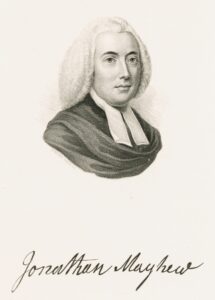
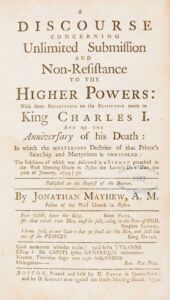
In 1750, Congregationalist minister Jonathan Mayhew (1720-1766) preached the sermon Concerning Unlimited Submission reminding his listeners, and then its readers once the sermon was published, that rebellion against tyrants could be both Biblical and just. His sermon helped form the basis of an early motto of the American Revolution: “Rebellion to Tyrants is Obedience to God,”1 which also became Thomas Jefferson’s personal motto.2

John Adams later recognized Mayhew as one of the individuals “most conspicuous, the most ardent, and influential” in the “awakening and revival of American principles and feelings” that led to our independence.3

Jonathan Mayhew, A Discourse Concerning Unlimited Submission and Non-Resistance to the Higher Powers. Boston: D. Fowle, 1750.

                                                            See the printed sermon

                                                                Read the transcript


Endnotes

1 John Adams, Letters of John Adams, Addressed to His Wife, ed. Charles Francis Adams  (Boston: Charles C. Little and James Brown, 1841), 1:152, to Abigail Adams on August 14, 1776.
2 Henry S. Randall, The Life of Thomas Jefferson (New York: Derby & Jackson, 1858), 3:393, 487.
3 John Adams, Novanglus and Massachusettensis: or Political Essays Published in the year 1774 and 1775 (Boston: Hews & Goss, 1819), 235 [Shaw #46923].

Join WallBuilders in Supporting America Prays

Dear Supporters,

We are excited to announce our partnership with the White House in the launch of America Prays. WallBuilders, led by Tim and David Barton, has been involved in this initiative from the beginning.

The response has been inspiring! We’re grateful for your partnership in mobilizing Americans to pray for our nation as we approach the 250th anniversary of our freedom. Let’s unite in lifting up our nation in prayer!

Our call to action is simple:

Gather groups of ten or more for one hour each week to pray for our country and its people.

Please visit and share The Official White House America Prays Landing Page.

Spread the word within your ministries and networks to help this movement grow!

Thank you for standing with us,

The WallBuilders Team

A Brief History of Courtroom Prayers

In 2014, Wayne Mack was elected a judge in Montgomery County, Texas. As part of his responsibilities in dealing with troubled, grieving, and distraught families, he established a program for ministers to serve as volunteer chaplains, who would make themselves available to those families. Some sixty clergy from thirty different denominations and faiths currently participate in the program. Mack has observed that the clergy represent “every mosque, temple and synagogue” in the area.1 Judge Mack also allows different clerics to open his court sessions with prayer.

The Freedom From Religion Foundation (FFRF) of Madison, Wisconsin, learned of the prayers, objected, and filed a complaint with the Texas State Commission on Judicial Conduct. This complaint was dismissed. In 2016, FFRF filed another challenge, and the Texas Attorney General issued an opinion upholding Mack’s practice as constitutional. The Wisconsin group has since found a local attorney and residents to serve as plaintiffs, and in 2019 they filed suit in federal court objecting to the prayers in Judge Mack’s courtroom. They allege a violation of the First Amendment’s declaration that “Congress shall make no law respecting an establishment of religion or prohibiting the free exercise thereof,” which they interpret as requiring a religion-free public square. FFRF claims that:

Judge Mack’s courtroom-prayer practice unambiguously and unnecessarily endorses religion in general and Christianity in particular, and places the State’s imprimatur on religion in general and Christianity in particular, in violation of the Establishment Clause of the First Amendment to the U.S. Constitution.2

Is Judge Mack’s practice of courtroom prayer a violation of the Constitution? To answer this question, we must first consider how the Constitution should be interpreted. More narrowly, we need to examine how the modern US Supreme Court has said the Establishment Clause should be interpreted.

How Should the Constitution Be Interpreted?

America’s Founders believed that the Constitution, and other laws, should be interpreted in light of their original meaning. For instance, President Thomas Jefferson recalled to Supreme Court Justice William Johnson the cardinal maxim of constitutional interpretation:

On every question of construction, carry ourselves back to the time when the Constitution was adopted, recollect the spirit manifested in the debates, and instead of trying what meaning may be squeezed out of the text or invented against it, conform to the probable one in which it was passed.3

James Madison, often called the “Father of the Constitution,” agreed:

[I] entirely concur in the propriety of resorting to the sense in which the Constitution was accepted and ratified by the nation. In that sense alone it is the legitimate Constitution.4

And James Wilson, an early Supreme Court Justice whose role in drafting the Constitution was on a par with that of Madison, likewise affirmed:

The first and governing maxim in the interpretation of a statute is to discover the meaning of those who made it.5

Justice Joseph Story concurred. The youngest Justice ever appointed to the Court, in his 34 years on the bench he authored 286 opinions, of which 94 percent were recorded as the official Court position.6 Called the “foremost of American legal writers,”7 he affirmed:

The first and fundamental rule in the interpretation of all instruments [documents] is to construe them according to the sense of the terms and the intention of the parties.8

The Supreme Court and the Establishment Clause

Numerous times throughout the modern era the US Supreme Court has stated that the First Amendment must be interpreted according to its original intent—that early historical precedent is seminal in establishing constitutional understandings. As Justice Hugo Black (writing for the majority) affirmed in Everson v. Board of Education (1947), the “meaning and scope of the First Amendment” must be understood in “light of its history and the evils it was designed forever to suppress.”9 Justice Wiley Rutledge and three others dissented from the majority’s holding in that opinion, but they, too, agreed that the First Amendment must be understood in light of the Founders’ views.10 (In subsequent Establishment Clause decisions over the past 75 years, the vast majority of justices have invoked historical arguments to support their conclusions.11)

For instance, in the Marsh v. Chambers decision upholding the constitutionality of legislative chaplains and prayer (1983), Chief Justice Burger (writing for the majority) drew from a wide range of historical documents and actions to show that legislative chaplains and prayer were widespread in the Founding Era.12 He pointed out that the Founders who drafted and approved the First Amendment had themselves approved legislative prayer and therefore hired legislative chaplains.13 He further acknowledged that the fact states also had a long tradition of engaging in these practices showed that they were “deeply embedded in the history and tradition of this country.”14

In Town of Greece v. Galloway, 572 U.S. 565 (2014), the justices considered the constitutionality of a city council’s practice of opening its meetings with prayer. In his majority opinion, Kennedy observed that the “Court’s inquiry, then, must be to determine whether the prayer practice in the town of Greece fits within the tradition long followed in Congress and the state legislatures.”15 Drawing heavily from Founding Era practices (and historical practices since then), he concluded that opening a city council meeting with prayer was constitutional. Both the concurring and dissenting16 opinions all made historical arguments to support their respective conclusions. All nine justices affirmed that that history plays a critical role in helping the Court resolve First Amendment Establishment Clause issues.

In the Supreme Court’s 2019 Establishment Clause case, American Legion v. American Humanist Association, 588 U.S. __ (2019), the justices considered the constitutionality of a military war memorial in the shape of a Latin cross.17 By a vote of 7-2, they held that it did not violate the First Amendment. Justice Alito, writing for the majority, noted that recent Establishment Clause cases “look[ed] to history for guidance,”18 specifically pointing to both the Marsh and Galloway cases. He concluded that whenever “categories of monuments, symbols, and practices with a longstanding history follow in that tradition, they are likewise constitutional.”19

A Brief History of Courtroom Prayers in America

There is no question that courtroom prayer is a practice “deeply embedded in the history and tradition of this country.”20 Significantly, America’s Founders were familiar with and supportive of courtroom prayer, and hosts of judges and courts at the state and federal levels continued their practice across subsequent generations.

Consider first the original Supreme Court. It was comprised of six justices—one Chief Justice and five Associate Justices. Three of the six had been drafters and signers of the US Constitution (James Wilson, John Rutledge, and James Blair), and five were members of state conventions that ratified the Constitution (James Iredell, William Cushing, John Jay, John Rutledge, and James Wilson). Additionally, Jay was one of the three authors of The Federalist Papers, which James Madison described as “the most authentic exposition of the heart of the federal Constitution as understood by the body which prepared and the authority which accepted it.”21 Arguably, no other Court in American history had superior constitutional scholars or was in a better position to understand the original meaning of the Constitution and Bill of Rights.

The Judiciary Act of 1789 assigned justices judicial responsibilities over a specific geographic region (circuits). They personally traveled to those areas to impanel grand juries and oversee the federal courts in each jurisdiction. In preparation for these visits, local officials would correspond with the justices to ensure that all necessary arrangements for their visit were made.

For example, on February 24, 1790, federal judge Richard Law of Connecticut inquired of Chief-Justice John Jay which judges would be coming to their region, whether there should be a parade, if special robes for the judges were desired, or “whether they would wish to have a clergyman attend” at the Court sessions.22 To the latter question, Jay responded “The custom in New England of a clergyman’s attending should in my opinion be observed and continued.”23

Prayers in the Federal Courts

Newspaper accounts of the Justices’ visits (occurring after the First Amendment and its religion clauses had been added to the Constitution) confirm that courtroom prayer was part of the official court proceedings:

After the customary proclamations were made and the Grand Jury sworn, a short (though pertinent) charge was given them by his Honor the Chief-Justice [John Jay], when the Throne of Grace was addressed by the Rev. Dr. Haven.24 PORTSMOUTH, NEW HAMPSHIRE, 1791

Court opened on Saturday, May 12, with Chief-Justice John Jay, Associate Justice William Cushing, and Judge John Lowell in attendance….The prayer was made by the Rev. Dr. Parker. His Excellency the Vice-President of the United States [John Adams] was in Court.25 BOSTON, MASSACHUSETTS, 1792

Last Wednesday, the Circuit Court of the United States opened in this town, when the Rev. Mr. Patten addressed the Throne of Grace in prayer, after which the Hon. Judge Wilson delivered to the Grand Jury a charge.26 NEWPORT, RHODE ISLAND, 1793

On Monday last, the Hon. Judge Cushing commenced the lesson of the Circuit Court in this town when he delivered to the Grand Jury an animated charge….Previous to the charge, the Throne of Mercy was addressed in prayer by the Rev. Mr. Eckley.27 BOSTON, MASSACHUSETTS, 1794

On Monday last, the Circuit Court of the United States was opened in this town. The Hon. Judge Paterson [a signer of the Constitution who joined the Court in 1793] presided….After the charge was delivered, the Rev. Mr. Alden addressed the Throne of Grace in an excellent, well adapted prayer.28 PORTSMOUTH, NEW HAMPSHIRE, 1800

Prayers in federal courts continued across the generations

After a solemn and appropriate prayer by the Rev. Mr. Baker, his honor Judge [Joseph] Story delivered to the Grand Jury a highly impressive, eloquent and learned charge.29 RICHMOND, VIRGINIA, 1819

[T]he courtroom was very much crowded at an early hour. About half past ten he [Judge Levi Woodbury] came in with Judge Sprague and took his seat on the right. The court was then opened, a prayer was offered up by the Rev. Mr. Kirk.30 BOSTON, MASSACHUSETTS, 1845

President Hayes nominated a very intelligent Christian gentleman as Judge of this district. At the opening of court at G—- R—–, he telegraphed for me to come and open the court with prayer.…Judge ——- waited for me and took me up to the court-house.… [I asked] God’s blessing upon the Judge, prosecuting attorney, jurors, their town, households, families, companions, children, and youth of the town.31 WESTERN UNITED STATES TERRITORIAL FEDERL COURT, 1877

Court convened; opened with prayer by John Reed.32 UNITED STATES COURT OF CLAIMS, 1896

Following a custom which is observed in many United States [federal] Courts, the New Jersey Circuit was opened yesterday with prayer.33 NEW JERSEY, 1908

Clearly, across the generations prayer in the courtroom was common and not viewed as a violation of any constitutional clause.

Before leaving the federal courts, it is worth noting United States Supreme Court sessions regularly begin with the prayer “God save the United States and this Honorable Court.” The first recorded instance of the Supreme Court opening with this prayer was in 1827 but, as we have seen, other federal courts were already opening with prayer well before that date.34

Prayers in State Courts

Like federal courts, state court sessions also were often opened with prayer. Here are a few representative examples from across the states and generations:

At the opening of the Supreme Court in this city on Tuesday last, the Rev. W. Taylor, pastor of the Roman Catholic Church, was requested to offer up the customary prayer.35 MASSACHUSETTS, 1823

Rev. Dr. Lamson…made the opening prayer in court.36 MASSACHUSETTS, 1846

Judge Howe of Wisconsin opens his courts with prayer.37 WINCONSIN, 1851

The first general term of the Supreme Court of Judicature of the State of Vermont…opened Tuesday morning….The six judges…stood this morning while the Rev. J. H. Worcester opened the Court with prayer.38 VERMONT, 1858

One of the learned justices of the Maine Supreme Court…was holding court at Ellsworth, and according to honored custom called in a local clergyman to open the session with a supplication to heaven.39 MAINE, 1894

[O]ne of our county courts.…employed a Methodist minister to open the court with prayer.40 VERMONT, 1897

Circuit court was opened with prayer at 10 a.m. yesterday.41 SOUTH DAKOTA, 1906

Rev. F. M. Brown, pastor of the First M. E. church will open court with prayer and Judge Howard J. Curtis of Stafford will preside.42 CONNECTICUT, 1912

Dr. R. F. Moore of Sacred Heart church has been invited by County Sheriff Simeon Pease to open with prayer the December court, which will convene at the county court house tomorrow afternoon. Judge Joel H. Reed will be on the bench.43 CONNECTICUT, 1919

Judge Pomeroy called upon the Rev. Charles C. Cole, pastor of the Methodist church, to open court with prayer. It is understood that this will be a regular practice.44 MONTANA, 1921

Dr. J. F. McClure, pastor of the Broadway Methodist church, was called upon by Judge W. F. Freeman to open court with prayer.45 OKLAHOMA, 1923

Judge Emory E. Smith.…always opens his terms of court with prayer.46 MISSOURI, 1934

[A]t Marietta, Georgia, a clergyman was asked to open court with prayer.47 GEORGIA, 1947

Ministers of the Middlesboro Ministerial Association are opening police court everyday with prayer.…Each morning a different minister is assigned.48 KENTUCKY, 1950

Judge Maupin Cummings presided, and asked the Rev. W. R. Whiddon of Huntsville to open court with a prayer.49 ARKANSAS, 1955

Judge Bundy asked clerk George C. Holland to have a minister present when court opened Monday, Feb. 4. The Judge said it was his custom to open court with a prayer.50 NORTH CAROLINA, 1963

Judge Cooper Opens Court With Prayer.…[T]he invocation was delivered by the Rev. V. E. Brown, pastor of Gethsemane Baptist Church.51 NORTH CAROLINA, 1972

Judge William O. Bivens Jr.…called on a courthouse employee, Woodrow Bailey of the Assessor’s Officer, to open court with prayer. Judge Bivens usually opens the session with prayer each day.52 WEST VIRGINIA, 1977

There are many other examples.53 In fact, the practice of courtroom prayer was so common that in 1835, a ministerial handbook provided model prayers for opening a court session,54 and a century later, a 1928 pastoral handbook listed it as one of the expected activities of a minister.55

Conclusion

The First Amendment does prohibit the creation of a national church, but contrary to the claims from Freedom From Religion Foundation, it does not require religion to be scrubbed from the public square. The Establishment Clause, as it was originally understood and subsequently applied across the generations and the centuries, did not prohibit, a judge from allowing clergy from different religions and denominations to open court sessions with prayer. Such practices are “deeply embedded in the history and tradition of this country,”56 and as Justice Alito recently observed, when this is the case, there is a “presumption of constitutionality for longstanding monuments, symbols, and practices.”57 Opening court sessions with prayer is clearly such a practice.

* This article concerns a historical topic and may not be up to date.


Endnotes

1 Debra Cassens, Weiss, “Refiled lawsuit challenges justice of the peace’s courtroom prayer program,” ABA Journal, March 30, 2019, here.

2 “Complaint for Declaratory Relief,” in Freedom from Religion Foundation, Inc. v. Judge Wayne Mack, Case No. 4:19-cv-1934 (Filed May 29, 2019), 17, here.

3 Thomas Jefferson, Memoir, Correspondence, and Miscellanies, From the Papers of Thomas Jefferson, Thomas Jefferson Randolph, editor (Boston: Gray and Bowen, 1830), IV:373, to Judge William Johnson on June 12, 1823.

4 James Madison, Letters and Other Writings of James Madison (Philadelphia: J. B. Lippincott & Co., 1865), III:443, to Henry Lee on June 25, 1824.

5 James Wilson, The Works of the Honourable James Wilson, ed. Bird Wilson (Philadelphia: Bronson and Chauncey, 1804), I:14, from “Lectures on Law Delivered in the College of Philadelphia; Introductory Lecture: Of the Study of the Law in the United States.”

6 Dictionary of American Biography (New York: Charles Scribner’s Sons, 1936), s.v. “Joseph Story.”

7 Dictionary of American Biography (New York: Charles Scribner’s Sons, 1936), s.v. “Joseph Story.”

8 Joseph Story, Commentaries on the Constitution of the United States (Boston: Hilliard, Gray, and Company, 1833), III:383, §400.

9 Everson v. Board of Education 330 U.S. 1, 14-15 (1947).

10 Everson v. Board of Education 330 U.S. 1, 33 (1947).

11 Mark David Hall, “Jeffersonian Walls and Madisonian Lines: The Supreme Court’s Use of History in Religion Clause Cases,” Oregon Law Review (2006) 85:563-613. A slightly revised version of the article was reprinted in the High Court Quarterly Review (2009), 5:109-153.

12 Marsh v. Chambers 463 U.S. 783 (1983), 786-95.

13 Marsh v. Chambers, 787-88.

14 Marsh v. Chambers, 786. To support this proposition, Burger quoted his majority opinion in Walz v. Tax Commissioner: “It is obviously correct that no one acquires a vested or protected right in violation of the Constitution by long use, even when that span of time covers our entire national existence, and indeed predates it. Yet an unbroken practice of according the exemption to churches, openly and by affirmative state action, not covertly or by state inaction, is not something to be lightly cast aside.” 397 U.S. 664, 678 (1970).

15 Town of Greece v. Galloway, 572 U.S. 565, 9 (2014) (Kennedy, J. majority opinion).

16 Town of Greece v. Galloway, 572 U.S. 565, 9 (2014) (Kagan, J. dissenting).

17 American Legion v. American Humanist Association, 88 U.S. __, 1 (2019), (Ginsburg, J., dissenting).

18 American Legion v. American Humanist Association, 588 U.S. __, 25 (2019), (Alito, J.).

19 American Legion v. American Humanist Association, 28.

20 Marsh v. Chambers, 463 U.S. 783, 786 (1983).

21 James Madison, The Writings of James Madison, ed. Gaillard Hunt (New York: G. P. Putnam’s Sons, 1910), IX:219, to Thomas Jefferson on February 8, 1825.

22 The Documentary History of the Supreme Court of the United States, 1789-1800, ed. Maeva Marcus (New York: Columbia University Press, 1988), II:11.

23 The Documentary History of the Supreme Court, II:13, from John Jay to Richard Law on March 10, 1790.

24 New Hampshire Gazette (Portsmouth), May 26, 1791; Documentary History of the Supreme Court, II:192.

25 Columbian Centinel (Boston), May 16, 1792, 74; Documentary History of the Supreme Court, II:276. For a similar report from 1790, see Boston Gazette (May 10, 1790), in Charles Warren, The Supreme Court in United States History (Boston: Little, Brown, and Company, 1924), 1:59, here.

26 The Documentary History of the Supreme Court, II:412, from the Newport Mercury (Rhode Island) of June 25, 1793.

27 Philadelphia Gazette Of The United States And Daily Evening Advertiser (June 16, 1794), 6, from Boston, June 11, 1794, here

28 United States Oracle (Portsmouth, NH), May 24, 1800; The Documentary History of the Supreme Court, III:436.

29 Richmond Enquirer (November 30, 1819), 4, here.

30 The New Era (October 22, 1845), 2, here.

31 The Presbyterian Monthly Record (Philadelphia: Presbyterian Board of Publication, January 1878), 2, here.

32 Turner v. U.S., United States Court of Claims, April 10, 1916, 51 Ct.Cl. 125, 1916 WL 1115.

33 Trenton Evening Times (April 15, 1908), 12, here.

34 Mark David Hall, Did America Have a Christian Founding: Separating Modern Myth from Historical Fact (Nashville: Nelson Books, 2019), 113.

35 American Watchman and Delaware Advertiser (November 25, 1823), 2, quoting from the Boston Galaxy of November 7, 1823, here.

36 Boston Post (September 26, 1846), 2, here.

37 The Plymouth Pilot (June 4, 1851), 2, here; see also The Southern Press (June 7, 1851), 2, here.

38 Burlington Free Press (July 30, 1858), 2, here.

39 The Barrister (Toronto: The Law Publishing Co., December 1894), 237, here. (For an example from 1882, see Tit-Bits From All The Most Interesting Books, Periodicals and Newspapers in the World No. 25, Vol. I (April 8, 1882), 12, here

40 Vermont Bar Association: Officers, Proceedings, Papers and Addresses (October 12, 1897), Vol. IV No. 3, 347-348, here.

41 Mitchel Capital (February 9, 1906), 1, here.

42 Bridgeport Evening Farmer (September 6, 1912), 2, here.

43 Bridgeport Times and Evening Farmer (December 1, 1919), 1, here.

44 Fort Benton River Press (February 2, 1921), 8, here.

45 Daily Ardmore (January 22, 1923), 1, here.

46 Cassville Republican (March 8, 1934), 1, here.

47 The Carthage Citizen (February 21, 1947), 1, here.

48 Middlesboro Daily News (February 10, 1950), 1, here.

49 Northwest Arkansas Times (March 7, 1955), 1, here. See also, Kansas City Word and Way (February 3, 1955), 2, here.

50 Gastonia Gazette (January 22, 1963), 3, here.

51 Burlington Daily Times (April 5, 1972), 4B, here.

52 Bluefield Daily Telegraph (March 3, 1977), 5, here.

53 See, for example, Philadelphia Gazette of the United States (August 3, 1791), reporting an event on June 30, here; Milwaukee Sentinel and Gazette (June 14, 1851), 2, here; The New Bloomfield Times (December 30, 1879), 4, here; The Green Bag (Boston: October 1903), Vol. XV, No. 10, 502, relating info from circa 1880, here; Quincy Daily Herald (January 26, 1881), 2, here; Indianapolis Journal (February 2, 1885), 2, here; Savannah Morning News (March 14, 1895), 6, here; Jeffersonville Evening Journal (October 29, 1896), 2, here; Columbus Daily Times (March 15, 1898), 4, here; Seymour Daily Republican (March 2, 1898), 2, here; Atlanta Constitution (November 12, 1901), 7, here; Washington Evening Journal (February 3, 1902), 1, here; The Quincy Journal (February 22, 1908), 5, here; Norwich Bulletin (June 11, 1909), 6, here; Gulfport Daily Herald (September 9, 1910), 4, here; The Jackson Herald (August 7, 1913), 1, here; Santa Anna Daily Evening Register (July 21, 1914), 1, here; Vienna News (September 16, 1915), 1, here; Bridgeport Evening Farmer (February 12, 1916), 1, here; Bridgeport Evening Farmer (October 23, 1916), 1, here; Missouri Valley Independent (January 4, 1923), 1, here; Bluefield Daily Telegraph (March 8, 1971), 11, here; Bluefield Daily Telegraph (March 20, 1988), 7-4, here; and others.

54 Alexander V. Griswold, Prayers Adapted to Various Occasions of Social Worship: For Which Provision is Not Made in the Book of Common Prayer (Philadelphia: William Marshall & Co., 1835), 149-151, here.

55 Nolan B. Harmon, Ministerial Ethics and Etiquette (Nashville: Abingdon Press, 1987, originally published 1928), 52, here.

56 Marsh v. Chambers, 463 U.S. 783, 786 (1983).

57 American Legion v. American Humanist Association, 588 U.S. __, 18 (2019), (Alito, J.).

Enumerated Powers

“The powers not delegated [i.e., enumerated] to the United States by the Constitution, nor prohibited by it to the states, are reserved to the states respectively, or to the people.” Tenth Amendment of the Constitution

Enumerated powers are the particular powers granted to Congress (those which are specifically listed) in the US Constitution. There are seventeen such enumerated powers.

Article I, Section 8 lists the first fifteen powers enumerated to, or permissible for the federal government. Articles II-VII add no additional powers but define how to apply the powers enumerated in Article I.

For example, Article II identifies the president as Commander-in-Chief over the military, but this is not a new power since the Preamble already authorized the federal government “to provide for the common defense.” Likewise, the president’s Article II authority to “make treaties” and “appoint ambassadors” is part of the Article I provision “to regulate commerce with foreign nations.”

The Thirteenth and the Fourteenth Amendments to the Constitution added two additional federal powers. (But the other twenty-five Amendments to the Constitution added no federal powers.) With these two additional federal powers, the total number of constitutionally-authorized federal jurisdictions, or enumerated powers, is seventeen.

The Enumerated Powers Listed in the Constitution

The enumerated powers permissible to the federal government are:

  1. To raise revenue to pay off debt, protect the nation, and fulfill the specific obligations established in the enumerated powers. (“To lay and collect taxes, duties, imposts and excises, to pay the debts and provide for the common defense and general welfare of the United States”)
  2. “Borrow money on the credit of the United States.”
  3. Protect the free-enterprise system and ensure free flow of commerce. (“To regulate commerce with foreign nations, and among the several states, and with the Indian tribes”)
  4. Establish immigration laws and processes. (“To establish an uniform rule of naturalization”)
  5. Establish the bankruptcy laws and processes. (“and uniform laws on the subject of bankruptcies throughout the United States”)
  6. Establish national currency, monitor its supply and value, and punish counterfeiters of that currency. (“To coin money, regulate the value thereof, and of foreign coin, and fix the standard of weights and measures” and “provide for the punishment of counterfeiting the securities and current coin of the United States”)
  7. “Establish post offices and post roads.”
  8. Protect the private property (including the ideas, and the product of those ideas) of inventors, authors, and artists. (“To promote the progress of science and useful arts by securing for limited times to authors and inventors the exclusive right to their respective writings and discoveries”)
  9. If Congress so wishes, create and regulate federal courts. (“To constitute tribunals inferior to the Supreme Court”)
  10. To enforce international laws and prosecute offenses against it: “Define and punish piracies and felonies committed on the high seas, and offences against the law of nations.”
  11. “Declare war, grant letters of marque and reprisal, and make rules concerning captures on land and water.”
  12. To provide funding for and establish the size and operation of a national military. (“To raise and support armies, but no appropriation of money to that use shall be for a longer term than two years; to provide and maintain a navy; to make rules for the government and regulation of the land and naval forces”)
  13. To call forth and train state militias for national needs. (“To provide for calling forth the militia to execute the laws of the union, suppress insurrections, and repel invasions; to provide for organizing, arming, and disciplining the militia, and for governing such part of them as may be employed in the service of the United States, reserving to the States respectively the appointment of the officers and the authority of training the militia according to the discipline prescribed by Congress”)
  14. Oversee and manage all federal property, including Washington, DC, as well as bases, federal buildings, and so forth. (“To exercise exclusive legislation in all cases whatsoever over such District (not exceeding ten miles square) as may by cession of particular States and the acceptance of Congress become the seat of the government of the United States, and to exercise like authority over all places purchased by the consent of the legislature of the State in which the same shall be, for the erection of forts, magazines, arsenals, dock-yards, and other needful buildings”)
  15. “To make all laws which shall be necessary and proper for carrying into execution the foregoing powers, and all other owners vested by this Constitution in the government of the United States, or in any department or officer thereof.”
  16. To prevent slavery. (a power added by the Thirteenth Amendment)
  17. To prevent states from violating individual constitutional freedoms and inalienable rights secured to every individual in the federal Constitution. (a power added by the Fourteenth Amendment)

Some Founding Fathers on Enumerated Powers

“The powers delegated [that is, enumerated] by the proposed Constitution to the federal government are few and defined. Those which are to remain in the state governments are numerous and indefinite. The former [i.e., federal powers] will be exercised principally on external objects, as war, peace, negotiation, and foreign commerce; with which last the power of taxation will, for the most part, be connected. The powers reserved to the several states will extend to all the objects which in the ordinary course of affairs concern the lives, liberties, and properties of the people, and the internal order, improvement, and prosperity of the state. The operations of the federal government will be most extensive and important in times of war and danger; those of the state governments in times of peace and security.” James Madison1

“The state governments may be regarded as constituent and essential parts of the federal government; whilst the latter [i.e., the federal] is no wise essential to the operation or organization of the former [i.e., the states].” James Madison2

(Warning what would eventually occur if Congress used the General Welfare Clause of the Constitution to become involved in more than its specifically enumerated powers):

“If Congress can apply money indefinitely to the ‘general welfare,’ and are the sole and supreme judges of the ‘general welfare,’ they may take the care of religion into their own hands; they may establish teachers in every state, county, and parish, and pay them out of the public treasury; they may take into their own hands the education of children, establishing in like manner schools throughout the Union; they may undertake the regulation of all roads other than post roads. In short, everything, from the highest object of state legislation down to the most minute object of police would be thrown under the power of Congress, for every object I have mentioned would admit the application of money, and might be called, if Congress pleased, provisions for the ‘general welfare’.” James Madison3

“I consider the foundation of the Constitution as laid on this ground that ‘all powers not delegated to the United States, by the Constitution, nor prohibited by it to the states, are reserved to the states or to the people’ [quoting the Tenth Amendment]. To take a single step beyond the boundaries thus specially drawn around the powers of Congress is to take possession of a boundless field of power, no longer susceptible of any definition.” Thomas Jefferson4

“I am not a friend to a very energetic [activist] government. It is always oppressive.” Thomas Jefferson5

“What an augmentation [growth] of the field for jobbing, speculating, plundering, office-building, and office-hunting would be produced by an assumption of all the state powers into the hands of the [federal] government. The true theory of our Constitution is surely the wisest and best: that the States are independent as to everything within themselves, and united as to everything respecting foreign nations. Let the [federal] government be reduced to foreign concerns only.” Thomas Jefferson6

(The Founders did not list all the powers the state possessed, but rather listed the few that the federal government was allowed to perform; all other powers belonged to the states.)

“In forming a federal constitution, which ex vi termine, supposes state governments existing, and which is only to manage a few great national concerns, we often find it easier to enumerate particularly the powers to be delegated to the federal head than to enumerate particularly the individual rights to be reserved.” Richard Henry Lee7

“[The Tenth A]mendment is a mere affirmation of what, upon any just reasoning, is a necessary rule of interpreting the Constitution. Being an instrument of limited and enumerated powers, it follows irresistibly that what is not conferred, is withheld, and belongs to the state authorities.” Supreme Court Justice Joseph Story8

“What is to become of constitutions of government if they are to rest not upon the plain [meaning] of their words but upon conjectural enlargements and restrictions to suit the temporary passions and interests of the day? Let us never forget that our constitutions of government are solemn instruments, addressed to the common sense of the people and designed to fix and perpetuate their rights and their liberties. They are not to be frittered away to please the demagogues of the day. They are not to be violated to gratify the ambition of political leaders. They are to speak in the same voice now and forever. They are of no man’s private interpretation. They are ordained by the will of the people and can be changed only by the sovereign command of the people.” Supreme Court Justice Joseph Story9


Endnotes

1 James Madison, No. XLV, The Federalist on the New Constitution Written in the Year 1788 (Washington, DC: Jacob Gideon, 1818), 292.

2 Madison, No. XLV, The Federalist (1818), 290.

3 Madison, February 6, 1792, The Debates and Proceedings in the Congress of the United States (Washington, DC: Gales and Seaton, 1849), 2nd Cong., 1st Sess., 388.

4 Thomas Jefferson, “Opinion against the constitutionality of a National Bank,” February 15, 1791, The Writings of Thomas Jefferson, ed. H. A. Washington (Washington, DC: Taylor & Maury, 1854), VII:556.

5 Jefferson to Madison, December 20, 1787, Memoir, Correspondence, and Miscellanies from the Papers of Thomas Jefferson, ed. Thomas Jefferson Randolph (Charlottesville: F. Carr & Co., 1829), II:276.

6 Jefferson to Gideon Granger, August 13, 1800, Memoir, Correspondence, and Miscellanies, ed. Randolph (1829) III:437.

7 [Richard Henry Lee], “Letter XVI,” January 20, 1788, An Additional Number of Letters from the Federal Farmer to the Republican (1788), 143.

8 Joseph Story, Commentaries on the Constitution of the United States (Boston: Hilliard, Gray, and Company, 1833), III:752.

9 Story, Commentaries on the Constitution (1833), III:754.

FAQ: Inalienable Rights

Claimed in the Declaration of Independence as “unalienable rights,” inalienable rights are those that are not under the purview of the government – those rights that are inherent to each person.1 They are also sometimes referred to as natural rights, because they could only be granted by God. America’s Founding Fathers emphasized inalienable rights throughout their writings since they were considered most valuable and to be closely guarded.

Liberties dearer to you than your lives, “which God gave to you and which no inferior power has a right to take away.” JOHN DICKINSON “Penman of the Revolution”2

The sacred rights of mankind are not to be rummaged for among old parchments or musty records. They are written, as with a sunbeam, in the whole volume of human nature by the hand of the Divinity itself; and can never be erased or obscured by mortal power. ALEXANDER HAMILTON3

That all men are by nature equally free and independent, and have certain inherent rights, of which, when they enter into a state of society, they cannot, by any compact, deprive or divest their posterity; namely, the enjoyment of life and liberty, with the means of acquiring and possessing property, and pursuing and obtaining happiness and safety. VIRGINIA DECLARATION OF RIGHTS (1776)4

Some of the inalienable rights the Founders specifically mentioned included:5

  • Life
  • Liberty
  • Private Property
  • Conscience (specifically relating to worshipping God)
  • Self-Preservation or “Personal Security”
  • Happiness
  • Private Judgment or “Self-Direction”
  • Association
  • Right to Necessary Things (air, water, earth)

Additional Resources

Biblical Christianity: The Origin of the Right of Conscience

A God-Given Inalienable Right

The Founders on the Second Amendment

The Founders Bible

The Second Amendment


Endnotes

1 Noah Webster, “inalienable,” An American Dictionary of the English Language (New York: S. Converse, 1828). Today there is a question of whether the correct term is “inalienable” (as now used in contemporary English) or “unalienable” (as it originally appeared in the Declaration). As seen in this definition by Noah Webster (a soldier in the American War for Independence, and a judge and legislator afterwards), “unalienable” is a synonym for “inalienable.”

2 John Dickinson, letter to the Society of Fort St. David’s, 1768, Letters from a Farmer in Pennsylvania, ed. R. T. H. Halsey (New York: The Outlook Company, 1903), xlii.

3Alexander Hamilton, “The Farmer Refuted,” February 5, 1775,” The Works of Alexander Hamilton, ed. John C. Hamilton (New York: John F. Trow, 1850), II:80.

4 The Virginia Declaration of Rights, adopted unanimously June 12, 1776, Virginia Convention of Delegates, drafted by George Mason, The Avalon Project, Yale Law School, accessed December 4, 2023, https://avalon.law.yale.edu/18th_century/virginia.asp.

5. See, for example: Samuel Adams, “The Rights of The Colonists, A List of Violations of Rights and a Letter of Correspondence, Adopted by the Town of Boston, November 20, 1772,” The Life and Public Service of Samuel Adams, ed. William V. Wells (Boston: Little, Brown and Company, 1865), I:502. Samuel Adams, An Oration Delivered at the State House, in Philadelphia, to a Very Numerous Audience; on Thursday the 1st of August, 1776 (London: J. Johnson, 1776), 4. The Massachusetts Constitution 1780, drafted by John Adams, “A Declaration of the Rights of the Inhabitants of the Commonwealth of Massachusetts.” James Madison, “Property,” from the National Gazette, March 29, 1792, The Writings of James Madison, ed. Gaillard Hunt (New York: G. P. Putnam’s Sons, 1906), VI:101-102. James Wilson, “Of Crimes Against the Right of Individuals to Personal Safety,” The Works of the Honourable James Wilson, ed. Bird Wilson (Philadelphia: Lorenzo Press, 1804), III:84-85. John Witherspoon, Lectures on Moral Philosophy; Lecture X, “Of Politics,” The Works of John Witherspoon (Edinburgh: Ogle & Aikman, 1805), VII:77-78.

Uniform Commercial Code

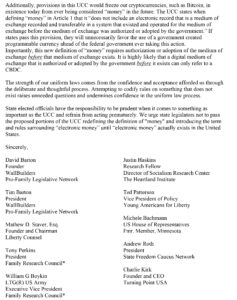
WallBuilders’ Pro-Family Legislative Network was recently alerted by legislators in multiple states to a very troubling section introduced into the newly proposed Uniform Commercial Code (UCC) now working its way through 22+ states this legislative session and likely to be introduced in all 50 states.

The UCC (first released in 1952) generally helps standardize existing commercial and business transactions across the nation. It traditionally smooths out what is already in practice, but in the new version of the UCC, the Commission has gone on the offensive in one particular area, introducing new untested practices for where the government apparently intends businesses should go in the future.

The troubling change relates to the definition of money and what constitutes electronic currency. Currently, electronic currency does not exist. The disturbing portion of the new Code anticipates a new digital currency, one can only assume it is referencing the Central Bank Digital Currency (CBDC) now under development by the Federal Reserve. The push for a CBDC comes from President Biden’s Executive Order 14067 issued in March of 2022. Members of Congress are concerned over the role and function of a CBDC, for there are far too many unknowns about how electronic money will look and act.

The Uniform Commercial Code has traditionally been viewed by most legislatures as something perfunctory, so it typically receives little scrutiny. As a result, the new version containing the troubling provisions on digital currency has been introduced in two dozen states and has already passed the legislature chamber in states such as North Dakota, Colorado, Hawaii and South Dakota. Gov. Kristi Noem took bold leadership to do what was in the best interest of the citizens of her state and she vetoed the bill in South Dakota due to many of the reasons outlined in the letter below. You can read her veto here.

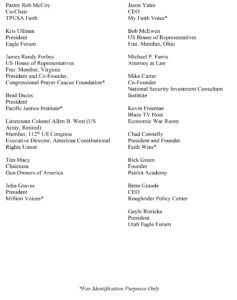
We encourage you to contact your state legislators and share this coalition letter with them. (You can also download the PDF version here.) Urge them not to pass your state’s Uniform Commercial Code and your governor not to sign this legislation into law if it makes it to his or her desk.

If you are an organization that would like to be included on this coalition letter, please contact us at the Pro-Family Legislative Network for consideration.


Sermon – Thanksgiving – 1815

John Lathrop (1740-1816) Biography:

John Lathrop, also spelled Lothrop, was born in Norwich, Connecticut. He graduated from Princeton in 1763 and began working as an assistant teacher with the Rev. Dr. Eleazar Wheelock of Lebanon, Connecticut, at Moor’s Indian Charity School. He studied theology under Dr. Wheelock (who later founded Dartmouth College) and became licensed to preach in 1767, ministering among the Indians. In 1768, he became the preacher of the Second Church of Boston, but as Boston was central in the rising tensions and violence with the British leading up to the American War for Independence, he relocated to Providence, Rhode Island. When the Founding Fathers declared independence from Britain in 1776, Lathrop returned to Boston. When Dr. Pemberton of New Brick Church was taken ill, Lathrop was asked to become the assistant to the pastor. When Pemberton passed away a year later, Lathrop became pastor of New Brick Church but also retained the pastorate of Second Church, merging it into New Brick in 1779. Lathrop remained pastor until his death from lung fever in 1816. He had served as President of the Massachusetts Bible Society and the Society of Propagating the Gospel in North America, and he was also a member of the American Academy of Arts and Sciences and the American Antiquarian Society. Numerous of his sermons were published.
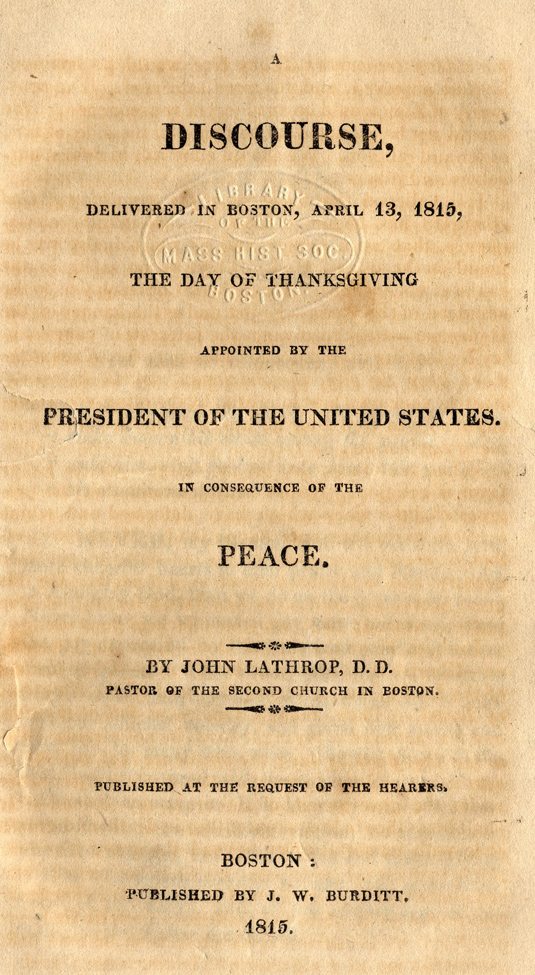

sermon-thanksgiving-1815

A

DISCOURSE,

DELIVERED IN BOSTON, APRIL 13, 1815,

THE DAY OF THANKSGIVING

APPOINTED BY THE

PRESIDENT OF THE UNITED STATES

IN CONSEQUENCE OF THE

PEACE.

BY JOHN LATHROP, D. D.
PASTOR OF THE SECOND CHURCH IN BOSTON.

SERMON.

1st BOOK OF CHRONICLES, XVI. 8,9.
“Give thanks unto the Lord, call upon his name make known his deeds among the people. Sing unto him, sing psalms unto him, talk you of all his wondrous works.”

NEVER, my friends, did we assemble with more cheerful hearts to offer praise and thanksgiving to Almighty God, than we do on the present occasion. Never have we witnessed joy more universal than the joy expressed by the American people at the return of peace. This event, like the sun breaking from a cloud, hath scattered the darkness which hung over our afflicted country, and given new spirits and new life to many who were “bowed down to the dust,” and “covered with the shadow of death.”

On such an occasion, it is highly proper, that people professing the Christian religion, do assemble in places of worship, and offer praise and thanksgiving to Him who ruleth over the nations, and turneth the hearts of the kings, and of the mighty men of the earth, as the waters are turned.

Not only the people of our country but the greatest part of the Christian world, have been in deep affliction. Modern history presents no period to our recollection, in which the miseries of war have been more generally felt, than during the last few years; and it is with great pleasure that we hear, peace was no sooner restored to the bleeding nations of Europe, than the temples of the Most High were filled with praises and thanksgivings.

As the American people were the last to take the cup of affliction, which the Sovereign of the world hath caused to pass from one nation to another, so are they the last, but we trust, not the least, in sincere and humble gratitude, to the giver of all mercies for granting salvation to many millions of people, by a general peace.

The text points out to us a course of exercises, proper on the present occasion. We are called upon by a sense of gratitude; by a recollection of the benefits which a merciful God hath bestowed upon us, – we are called upon to give thanks, – to worship Him, – to talk of all his wondrous works.

It would be pleasant, and it would be useful, to talk of those wondrous works which proclaim the Eternal Power and Godhead; and which have called forth the reverence and love of the wise and good, in all parts of the world. By the things which our eyes behold, we have convincing evidence, that a Being of infinite perfection, presides over the universe and guides all the movements of it, according to his pleasure. But on the present occasion, we feel disposed to talk more particularly of the loving kindness and of the mercy, which God was pleased to show to the Fathers of our Country; of the protection grated to them and their children, in seasons of weakness and danger, and when they were exposed to the savages of the wilderness, and to other powerful enemies; – of the wars in which our country has been engaged; – of the late war, and of the peace which God hath now given to us. From a review of the wondrous works of mercy and goodness, “which were done in the times of old,” and which have been done in later years, we will endeavour to excite those grateful and pious feelings, which alone can render our public expressions of thanksgiving acceptable to a gracious Benefactor.

When we speak of the Fathers of our Country, we have respect to those Europeans, who early adventured to this quarter of the world, and made settlements in various parts of the extensive region now called The United States of America : but when we speak of the Fathers of New England, we have respect to those protestant Christians, who, having been oppressed and persecuted by a race of despotic sovereigns, and by an intolerant hierarchy, left “the places of their fathers sepulchers,” and made the first permanent settlements, in the region which we inhabit, and which still bears the name of the country from whence they emigrated.

The views of the early adventurers to North America, even from Columbus in 1492, to the time when the pilgrims landed at Plymouth, in 1620, where extremely various. The object of some of them was, discovery. — Men best acquainted, in those times with the principles of geography, expected to find a passage to India, by the Western Ocean. Others were excited to the hazardous undertaking, and made voyages to this quarter of the world, with the expectation of wealth: reports were spread abroad, that on the islands and on the continent there was plenty of silver and gold. But it was for the express purpose of securing for themselves and for their children the rights of freemen, and more particularly the rights of conscience, that the Fathers of New England exchanged their dwelling places, in a country abounding with the means of subsistence, for a wilderness, where wants and sufferings were to be expected.

The first Christian pilgrims approached these northern shores at an inclement season of the year. At their landing they found no shelter from the cold and from the tempest. They were in want of those refreshments which would have been peculiarly grateful after the fatigues and dangers of a long voyage. By reason of the privations and the sufferings, which were unavoidable in their miserable habitations, they soon became sickly; and before the opening of the spring, forty-five of the one hundred and one, who landed on the last of the preceding December, were dead.

Although the first Christian pilgrims had been brought to this northern region, contrary to the contract which they had been careful to make before they left their native country, divine providence seems to have prepared a place for them, in which they might plant themselves without any immediate opposition. The Indians, who had before inhabited the ground on which they landed, and the wilderness bordering on them were nearly extinct. The had some time before been beaten in bloody wars with other savage nations; and, to complete their destruction, an awful pestilence had raged among them, sweeping away both the old and the young, until it might be said, “The land was left without inhabitants.” With great propriety we quote and apply a part of the XLIV. Psalm. — “We have heard with our ears, O God, our fathers have told us, what thou didst in their days, in the times of old. How thou didst drive out the heathen with thy hand, and plantedst them : how thou didst afflict the people and cast them out. For they got not the land in possession by their own sword, neither did their own arm save them; but thy right hand, and thine arm, and the light of thy countenance, because thou hadst a favour unto them.”

The feeble pilgrims, at the first, had indeed no enemy to oppose them. None of the original lords of the soil came to protest against their landing. The first visit made them by an Indian, was in the month of March. One of the chiefs of a tribe, living a considerable distance, appeared, unexpectedly; and in their own language which he had imperfectly learned from Europeans, who had visited the country, he addressed them saying, “Welcome, Englishmen; Welcome, Englishmen!”1

The fathers of New England were not, however, permitted to continue many years unmolested. The tribes of Indians, who inhabited the vast wilderness, observing the increase of English settlements, and hearing of the arrival of new adventurers, indulged suspicions, that the strangers, who were not only spreading along on the sea shore, but were extending into the country, would, ere long, compel them to relinquish the possessions which their fathers had enjoyed, from time immemorial.

Jealousies and apprehensions, such as we have no mentioned, were greatly strengthened by the intercourse which the natives of the wilderness had afterwards with the French, whose settlements were progressing in Nova Scotia and in Canada. The most dangerous wars in which the fathers of New England were engaged, are traced to the sources which we have now mentioned. Philip, son and successor of Massasciet, the historian observes, “could not bear to see the English of New Plymouth, extending their settlements over the dominions of his ancestors; and although his father had, at one time or another conveyed to them all that they were possessed of, yet he had sense enough, to distinguish a free voluntary covenant, from one he made under a sort of duress; and he could never rest until he brought on the war, which ended in his destruction.” The same historian adds; “The eastern wars have been caused by the attachment of those Indians to the French, who have taken all opportunities of exciting them to hostilities against the English.”2

During the wars with Philip, and with various tribes of Indians, after the death of Philip, assisted by the French from Canada and Nova Scotia, the New England Colonies, more especially Massachusetts and New Hampshire, were exposed to great sufferings. Such was the influence which Phillip had over his own tribe, and over many other tribes of the savages that he was able to send the calamities of war to almost every town in New England. Many innocent people were killed while laboring in their fields; many women and children were killed in their houses; many were taken and carried away into captivity. Between the month of June 1675, when this noted warrior began his work of murder and depredation, and the month of August, 1676, when he fell in battle, many of the towns in this then colony, which are now beautiful and opulent, were visited by the savage invaders, and either in whole, or in part were destroyed. I will mention some of them. — Brookfield was among the first, seven days after was laid in ashes. Springfield, partly destroyed. Groton, wholly destroyed. Lancaster, and Medfield, and Warwick, and Sudbury, and Marlborough, and Chelmsford, and Weymouth, and Bridgewater, and Scituate, and Middleborough, and Plymouth, and several other towns, were attacked, and in most cases some of the inhabitants were killed, and some carried into captivity; and many of the buildings left in flames.

Nor did the work of devastation and murder end with the death of Phillip.3 Expeditions were made from Canada and from Nova Scotia. Saco, and Wells, and York, and Dover, and Berwick, and other places, were invaded by French and Indians from the east. Many people were killed, and many houses were destroyed. Several towns, which were destroyed in the time of Philip’s war were again visited and destroyed by parties of French from Canada, and the Indians who united with them. So late as 1704, Deerfield was again invaded and burnt; many of the people were killed, and their minister, Rev. Mr. Williams was carried into captivity. And four years after, Haverhill was attacked, and in part burnt; Rev. Mr. Rolfe the minister of the town, and thirty or forty of the people were killed.

During the long reign of Lewis XIV king of France, great exertions were made by that monarch to gain an ascendency over the powerful kingdoms of Europe, and, in the end, make all of the nations of the world bow to his authority. He found the English were making settlements on the atlantick coasts, and rapidly extending their borders into a country capable of high cultivation, and promising a lucrative commerce. He, too, had colonies in North America; but he had an impression, that his colonies would be of but little advantage to him, unless he could prevent the growth of the English colonies, but eventually, would have extirpated them. We find a plan for the purpose now mentioned, adopted by the court of France, as early as 1687.4

The French project to obtain, and to hold the dominion of all North America, was simple, while it was deep. It was to secure the great rivers at the north east, and at the south west, viz. the St. Lawrence, and the Mississippi, as well as the inland seas, which complete the line of water communication, and which give facility to an immense commerce. They very well knew, that the power, which shall be able to command on those waters, will be able to command and to direct the numerous tribes of savages who inhabit the vast wilderness between the English colonies and the French settlements. To carry this plan in to effect, we find the French exploring the waters of the Mississippi, in the year 1687. Some years after, we hear of them making settlements on the borders of that river. We hear of them erecting forts, at the most commanding places, near the lakes, and other navigable waters at the west; and at the same time, making unreasonable demands of territory at the east.5

Having thus prepared, the French lost no time in attempting to carry their plan into execution. They availed themselves of the jealousies which already existed in the minds of many of the native Indians, that the English would take from them their hunting grounds, and destroy them. In this state of jealousy and irritation, they were excited to deeds of savage cruelty. They not only invaded the frontier settlements, and penetrated the country, laying waste and destroying, as has been already related; but formidable fleets were sent to attack the whole extent of sea coast. In 1697, the historian informs us, “an invasion was every day expected for several weeks together; and news was brought to Boston, that a formidable French fleet had been seen upon the coast.”

The reality of a plan to destroy English colonies, and particularly New England, is stated by Charlevoix, in the account given him, of the above mentioned expedition. A powerful army from Canada, was to meet a fleet from France early in the season at Penobscot; and, “as soon as the junction was made, and the troops embarked, the fleet, without loss of time, was to go to Boston, and that town being taken, it was to range the coast, — destroying settlements as far into the country as they could.”6 — This projected expedition, had it been executed, might have been fatal to our country; but, by reason of contrary winds, the fleet did not arrive in season, and the plan was frustrated.

Another projected invasion is within the recollection of some of us. The elderly people have not yet forgotten their fears and apprehensions, when the strong force under the Duke D’Anville, was expected in this harbour; nor have they lost a remembrance of the joy they felt, when that fleet was scattered and many ships were destroyed by the winds and the waves.

Such of us, as are advanced in life, remember our fears during a course of years, while the French surrounded us, except on the Atlantic; and on that side also, they were threatening to invade us : — when our armies were defeated, which were sent to protect the frontiers; when the young Washington found it necessary to capitulate.7 Washington, who about fourteen months after, by skill and bravery, saved the broken remains of an army, late commanded by General Braddock; and who, by the providence of God, was preserved to be the Saviour of his Country.

But I will weary you no longer with the sad detail of wars, in which the Fathers of New England suffered from the French and the savages of the wilderness. In short, they had but little rest from the time of Philip’s war, until Quebec was taken by the immortal Wolfe, and the whole country was ceded to Great Britain in 1763.

Having talked as long perhaps as may be proper, of the mercy which God was pleased to show to the Fathers of our Country; and of the protection granted to them and to their children in seasons of weakness and danger, and when exposed to the savages of the wilderness, and to other powerful enemies; we are prepared to talk of like protection and favours granted to the American people in later times : — of their dangers and sufferings during a severe conflict for the security of their most important interests; a conflict which terminated in the establishment of a new state of things in this quarter of the world, — a new empire, which, in process of time will probably be equal in extent, in power, and in wealth, to any nation in the world. But should we talk of the revolutionary war, — of the causes which produced it, — of its progress and important events; and of the honourable terms of peace, obtained by the plenipotentiaries of the United States at Paris in 1783, our discourse would not only be unreasonably long, but we should have no time left, to talk of the late war, in which our country has been engaged, — of the peace which is again restored to us; and to indulge in pleasing anticipation, the comforts and blessings which, not only the American people, but, we hope, the world may enjoy, in a state of tranquility.

As the events of that war which procured the independence and the sovereignty of the United States of America are within the recollection of such of you have passed a little over the middle of life; and the history of it is in almost every family, I shall omit any farther conversation with respect to it, and go on to talk of the late war, and of the peace, which we on this day celebrate.

It would certainly be attended with very little pleasure and probably with very little profit now that the war is ended, to talk much about the reason assigned for it when it was proclaimed, or of the important objects which were to be secured by it. We remember the many unpleasant feelings occasioned by the contentions of men of different opinions, concerning the origin, and the manner in which the late war was conducted. We hope such uncomfortable feelings may now wholly subside, and that no restless people among us, may hereafter, by rash speeches, or inflammatory publications, again revive them. Although we have not yet learned that the objects for which the late war was declared, have been obtained or secured, we rejoice that the conflict is at an end. We do sincerely rejoice at the return of peace. We will therefore talk of the wondrous goodness of God, both in conducting the American people through the war, and in giving the rulers of the late contending nations pacifick dispositions.

Should the peace continue, which is now established among the Christian nations of the earth, opportunities will offer for the execution of the most benevolent purposes of the human heart. A state of peace is favourable to the propagation of the gospel, — to the advancement of science and all the useful arts, — to commerce, — to every thing which gives true dignity to man, and tends to qualify him for the rank which he is designed to hold in creation.

Divine Providence seems to have been preparing the way for the spread of truth, and the farther establishment of the kingdom of Christ. That Being who superintends the changes and revolutions which take place among the nations of the world, will always bring good out of apparent evil; and therefore while we mourn over the late sufferings of a great portion of our fellow men on the continent of Europe, we find consolation in the belief, that good will result from those sufferings.

In the dark ages of ignorance and superstition, when the religion of Jesus was awfully corrupted, and civil liberty was poorly understood, combinations were formed by the rulers of the church, and by the princes of this world, to support each other in the most shameful acts of tyranny and oppression. Although much had been done at the time of the reformation, and at succeeding periods, to lessen the power, which kings and priests had usurped over the worldly estates, and over the spiritual concerns of the people, much remained to be done. Bigotry and superstition may still bluster and threaten, but they can no longer hold the minds of a great part of mankind in bondage; they can no longer prevent free inquiry such is the power of truth, that it will prevail. “Many shall run to and fro; and knowledge shall increase.”

At no period since the great opposition to popery by Luther, and the reformers who followed after him, have Christians of all denominations been so well united, as they are at the present time in laudable endeavours to extent the knowledge of salvation. Within a few years, societies have been formed in England and in various parts of Europe, consisting of members of great respectability having for their object “the distribution of the Bible.” Societies for the same purpose have been recently formed in the principal cities and towns in North America. The wonderful union of Christians of all denominations, and of all orders of people, from the highest to the lowest, in this noble work of charity, affords the highest encouragement to the friends of Zion, and is, we trust, a presage of that happy condition of the world, which we are taught to expect, when “All shall know the Lord.”

As the most benevolent purposes of God are brought to pass, by means adapted to the ends which are to be accomplished, wise observers may perceive a fitness in the means, and in working of providence, to accomplish such purposes. If there is to be a time, when “the earth shall be full of the knowledge of the Lord,” we shall have reason to think, God is preparing the way for a condition so desirable, when kings and mighty men, — when high and low, — when Christians of every creed, and of every mode of worship, unite their labours and good wishes to extend the only effectual means of religious knowledge to all countries, and to all regions.

There are other circumstances in the present state of the civilized nations of the earth, favourable to the propagation of truth, which have not heretofore existed to the extent in which they now exist. Civil liberty, and the rights of conscience, are better understood, and will no doubt, be more respected, than heretofore. Well informed Christians have more moderation, more candor, more charity for one another, although still differing in opinions, and in modes of worship, than have been exercised at any former period, since the church and the world were united, for the support of each other.

Under circumstances such as we have now mentioned, and on which we might enlarge with great pleasure would the time admit, under such circumstances, aided by peace, and by the intercourse now opened, and more widely opening among the different nations of the world, we indulge a pleasing hope, that the gospel shall be carried to every part of the globe; that the light of the sun; and “people of all kindreds and tongues, and nations, shall walk in the light.”

The peace which we this day celebrate has opened the American ports, not only to the nation with which we have been at war, but to a great part of the nations of the world. The commerce of our country, which had been languishing until there was scarcely an appearance of life, hath sprung up at the voice of peace, and is beginning to assume its wonted cheerful appearance. We again hear the noise of the axe and the hammer. “Zebulon is beginning to rejoice in his going out, and Issachar in his tents.”

Peace is highly favourable to science, to the useful arts, to agriculture, and to all the social connexions of life. In a time of war the mind is disturbed; the thoughts are divided; it is impossible to give that application to study, which is necessary to the acquirement of extensive knowledge.

In a time of war, multitudes are called from their usual occupations, and from domestic enjoyments, exposed to privations, to dangers, and to death. Ware is an evil; a judgment which God inflicts on the sinful nations of the earth. During the late war, our nation has suffered a variety of evils. Many lives have been lost. Vast property has been taken and carried away, or destroyed on the seas : vast sums have been expended, and vast debt hath been contracted. Towns have been invaded, — villages have been burnt, — the capitol has been laid in ashes. We are glad to set down in peace, under circumstances, no doubt, less eligible, than the friends and supporters of the war expected. We have reason to be thankful that our sufferings have not been greater : — that the conflict was no longer continued.

Truly we may say, “If it had not been that the Lord was on our side,” when a powerful enemy invaded our coasts, — “if it had not been that the Lord was on our side,” when men of renown, of uncommon strength and skilled in war, and men accustomed to conquer by sea and by land, — “if it had not been that the Lord was on our side,” when such men with powerful fleets and powerful armies came against us, — “then they had swallowed us up quick, when their wrath was kindled against us! Then the waters had overwhelmed us, the stream had gone over our soul. Then the proud waters had gone over our soul. Blessed be the Lord who hath not given us as a prey to their teeth. Our soul is escaped as a bird out of the snare of the fowlers: the snare is broke and we are escaped.”

In a review of the wondrous works of God, as they relate to the fathers of our country, and to their children, and their children’s children, to the fifth and the sixth generation, we see many things which call for our gratitude, and many things which call for sober reflection and humiliation. Towards the American people, while they were under the government of Great Britain, and since they have been free and independent states, the dispensations of Providence have been merciful, and they have been afflictive. As the children of Israel were marvelously protected when they went out of the land of Egypt, but were afterwards corrected for their faults, and grievously afflicted; so were our fathers protected; but the first generation had not passed away, before the heathen brake in upon them, and they were afflicted.

The history of our country, is a history of its prosperities, and of its adversities; fo its happiness in times of peace, and of its sufferings in seasons of war.

On this day, we are invited by the supreme Magistrate of the United States, to assemble in our place of worship, and to unite our hearts and our voices, “in a free will offering,” of thanksgiving and praise to our Heavenly Benefactor for his great goodness manifested in restoring to us “the blessings of peace.” “No people,” the president observes in his proclamation, “No people ought to feel greater obligations to celebrate the goodness of the Great Disposer of all events, and of the destiny of nations, than the people of the United States. His kind Providence originally conducted them to one of the best portions of the dwelling place allowed for the great family of the human race. He protected and cherished them, under all the difficulties and trials to which they were exposed in their early days. Under his fostering care, their habits, their sentiments, and their pursuits, prepared them for a transition, in due time, to a state of independence and self-government. In the arduous struggle by which it was attained they were distinguished by multiplied tokens of his benign interposition. And to the same Divine Author of every good and perfect gift, we are indebted for all the privileges and advantages, religious as well as civil, which are so richly enjoyed in this favoured land.”

While making our offering of thanksgiving and praise to Almighty God, for the peace which he hath been pleased to ordain for us, many circumstances occur to our minds, which render the event which we now celebrate, peculiarly grateful, and which call for the exercise of our best affections.

Had the war continued another season, it would have become more fierce and cruel. A disposition to plunder, and retaliate injuries, on both sides, had been for some time increasing, and we have reason to fear, that a continuance of the war would not only have afforded opportunities, but excitements to still more shocking deeds’ in which, not only men in arms, but un offending citizens in the peaceful walks of life, would have been subjected to inexpressible sufferings.

Had the war continued another season, the forces of the enemy in the Canada’s, on the lakes, and on our sea coasts, would have been greatly increased: much greater exertions therefore would have been required on the part of the United States. What ways and means should have been devised for the support of such armies as must have been called out to defend an extensive sea coast, and an equally extensive frontier, those public men may, perhaps be able to say, who had the management of the finances during the two last seasons.

Had the war continued, multitudes must have been called from the fields of husbandry, from manufacturing establishments, and other useful and necessary employments, and hurried away to exposed parts of the country, to suffer in camps and to die in battle.

Had the war continued, the spring would have opened upon us with gloomy forebodings. In the winter season, the ice and the snow were our best defense. With the returning sun, our fears would have increased our apprehensions. But with the peace, which God in mercy hath granted us, the whole scene of things is changed. We hail each lengthening day with the smile of cheerfulness. We behold the vernal skies, and we receive the vernal showers, with unmingled pleasure. “We will now give thanks unto the Lord; we will call upon his name; we will make known his deeds among the people; we will sing unto him; we will sing psalms unto him; we will talk of all his wondrous works.”

That our offering of thanksgiving and praise, may be acceptable to God, let it be accompanied with kind affection towards all our fellow citizens, and towards the people whom we lately considered as our enemies.

“Whatever differences of opinion may have existed,” with respect to the origin of the late war, or any of the measures in which it hath been conducted, all now rejoice, in that the conflict is at an end. “All good citizens will unite in providing still farther for our external security, as well as internal prosperity and happiness, by fidelity to the union, by reverence for the laws, by discountenancing all local and other prejudices, and by promoting everywhere the concord and brotherly affection becoming members of one great political family.”8

As we are again at peace with the government and people of Great Britain, let us suppress, as much as possible, the feelings of resentment which are apt to rise from a recollection of sufferings and injuries,. The brave are always generous: they are the first to forgive and forget. If we have suffered, our enemy too has suffered. Let the balm of peace now heal every wound. If the scar remain, lest us be careful, lest by fretting, the blood be made again to appear.

As the brave are always generous, the brave will never exult, when a powerful enemy has been beaten. We are to remember, the race is not always swift, nor is the battle always to the strong. While the American arms have, without question, secured immortal fame, it must be confessed that little else has been secured, for the United States, by a vast expense in blood and treasure.9

It is now devoutly to be wished, that all ill will, and all party spirit may be put away. Why should party spirit and party feelings continue, when, it is presumed, there can now be no foreign influence to support a party? Whatever there may have been in times past, at present there can be no particular attachments to foreign nations, to influence American citizens. If any internal contentions be kept alive, they must be such as are found to a certain degree, in all elective governments : a contention for power, for places, — for “the loaves and fishes.” A man surely can have very little modesty, who seeks for honours and preferments which the public is not willing to give him. In an uncorrupted state of society, men will not be seen making interest for places of honour and profit. Men well known to be qualified men of approved integrity and uprightness, will be sought for, and solicited, to accept offices of high responsibility. God grant that we may live to see a return of something like that golden age of purity and simplicity, which our country once enjoyed!

My beloved people, although I have now talked with you a long time, I feel unwilling to close my discourse, without offering my very particular and most affectionate congratulations on the present joyous occasion. On a like occasion I once addressed some of you. The peace of 1783, after a sever contest for independence and sovereignty, was a glorious peace. It is to the highest degree improbable, that I shall again, at any future time, address you on a similar occasion: or on any political subject. Four seasons of distressing warfare are within my recollection. The war of 1745, the war of 1755, the war of 1775, and the late war declared on the part of the United States June 18, 1812. I have seen important changes and revolutions in my own country, and among the nations of the world I have seen one generation pass away, and another generation come forward. I have seen a nation rise up in this quarter of the world, powerful in men and in arms, and taking rank among the other nations of the earth. Such changes I have seen; but my days of vision on earth are drawing to an end. My country, now at peace, I hope will continue in peace long. Very long, after it shall please God to take me to that “better country,” where wars are unknown.

My heart’s desire and prayer has been for the prosperity and peace of our Jerusalem. May those always prosper who seek her peace!

It was for the love which I had for my country; — the country in which I was born —in which my friends live — in which the people live with whom I am connected by ties which have made, and which still make my abode pleasant to me; for the love which I had, and which I still have for this country, I have discoursed to you several times on its rights and its liberties — on its dangers and its sufferings. I have rejoiced with my country when in prosperity; and mourned when in adversity. As the Comforts which we enjoy in the peace and prosperity of our country, are as truly the gifts of God, as the comforts which we hope to enjoy a future life, we should be unjust to ourselves, and ungrateful to our heavenly Benefactor, did we not endeavour to defend and secure them, when men of violence attempt to take them away from us: I therefore thought, and still think, it was my duty to give warning when the important interests of my country appeared to be in danger. When those important interests were actually invaded, I thought, and still think, it was my duty to say and to do what I was able, to support them. In this I thought, and still think, I had great and good examples, in the prophets and apostles. Jesus Christ also, with the perfect feelings of a perfect man, loved his country, and wept over its capital, when he knew its destruction was approaching. In my youth I was taught to regard civil and religious liberty, with a kind of reverential respect. That sort of devotion I strengthened afterwards, by reading and meditation; nor do I perceive that my attachment to those objects of my early affection, has in any measure abated now I am old.

For the full enjoyment of civil and religious liberty, together with the inestimable blessings connected with them, the fathers of New England exchanged the wealth and the accommodations of their native country, for the poverty and the sufferings of a wilderness. I pray God, the offspring of those excellent men, may never suffer their birth-rights to be taken from them.

I rejoice that my country is again at peace with the government and people of Great Britain; a people of high spirits and somewhat vindictive; but a people possessing many strong virtues. A people, who, with all their faults, have done more to encourage useful institution and to send the true knowledge of salvation to the dark parts of the earth than any other nation, and I may say, than all the other nations in the world. It would be unjust, and base, and wicked, to impute to the present inhabitants of Great Britain, the bigotry and the persecuting spirit of their great grandfathers.

I rejoice that the world is again at peace. The temple of Janus is again shut. The earth is at rest. God grant that henceforth the only contest may be, who shall do most to enlighten the ignorant; who shall do most to reform the guilty; and to use the words of the great Washington, the beloved father of our country, with whose words I conclude, — who shall do most “to make our neighbours and fellow men as happy, as their frail conditions and perishing natures will permit them to be.”10

NOTES

Note A. Some persons who heard the discourse expressed their surprise that this Indian warrior should be known by an English name. We have an explanation in Hutchinson’s History of Massachusetts. Vol. 1st. p276.After the Indians became acquainted with the Europeans who had settled among them, “they were fond of having names given to them.” In 1662 when Massasoiet’s two sons were at Plymouth the governor gave them their English names.” To Wamsutta the eldest son of Massasoiet, governor Prince gave the English name Alexander: to the second son, whose Indian name was Metacom, the governor gave the English name, Philip.

In Neal’s History of New England, Philip is said to be “grandson of old Massasoiet.” “He was a bold and daring prince, having all the pride, fierceness, and cruelty of a savage.” Neal’s Hist. Vol. II. p. 23. The wonderful destruction of the Indians by wars and sickness, before the arrival of the fathers of New England, is related by Mr. Gookin. See Historical Collections, Vol 1st, p. 148. Morton’s New England’s Memorial. P 37, 38. Prince’s Chronology, p.69.

Note B. The quotation to which this note has relation is made from the president’s excellent Answer to the “Tribute of Respect,” or “Congratulatory Address of the Republican member of both branches of the Legislature of Massachusetts, and other citizens.” Which “was voted to be communicated to the President, on the restoration of peace.” Feb. 23, 1815.

Note C. Hon. William Gaston, member of congress from North Carolina, in his circular letter dated at Washington, March 1, 1815, writes thus : “Some time must yet elapse before we ascertain with certainty the addition the war has made to our publick debt. Claims are even now brought before congress which had their origin in the war of the revolution; and this which has just past, short as was its continuance has given rise to many more than our revolutionary struggle.”
Hon. Cyrus King, member of congress from Massachusetts, in a speech delivered Feb. 27, 1815, states the loss of men, “brave Americans,” 30,000. And the amount of treasures sacrificed, “150,000,000.”

Note D. As the words of Washington are words of wisdom, the reader will be gratified by having a few more from the letter quoted at the end of the discourse.

—“I observe with singular satisfaction, the cases in which your benevolent institution,” (the Massachusetts Humane Society,) “has been instrumental in recalling some of our fellow creatures, as it were, from beyond the gates of eternity, and has given occasion for the hearts of parents and friends to leap for joy. The provisions made for shipwrecked mariners is also highly estimable in the view of every philanthropic mind, and greatly consolatory to that suffering part of the community. These things will draw upon you the blessings of those who were ready to perish. These works of charity and goodwill towards men, reflect, in my estimation, great lustre upon the authors, and presage an era of still farther improvements. How pitiful, in the eye of reason and religion, is that false ambition which desolates the world with fire and sword for the purposes of conquest and fame; when compared to the milder virtues of making our neighbours and our fellow men, as happy, as their frail conditions and perishable natures permit them to be!”

Now the writer of the above almost divine sentences is no more among the living, may we exclaim, “How pitiful in the eye of reason and religion” are the heroes of antiquity, — the Alexanders and the Caesars, the Pompies, the Charleses, the Edwards, the Henries, and all who have “desolated the world with fire and sword for the purposes of conquest and fame, when compared” with Washington, who fought only for the liberties and the safety of his country’ and having accomplished the great objects for which he drew his sword, returned to private life!


Endnotes

1 Holmes’s Annals, I:207.
Samoset, it may be supposed, obtained some knowledge of the English language from Capt. John Smith and others, who visited this country and began a commerce with the Indians in the years 1614 and 1615.
2 Hutchinson’s Hist. I:176 and 283.
3 See Note A.
4 Holmes’s Annals I:472.
5 As far as the river Kennebeck. Hutchinson’s History of Massachusetts, II:111.
6 Hutchinson’s Hist. V:ii:102.
7 Holmes’s Annuals, V:ii:199.
8 See Note B.
9 See Note C.
10 A letter, dated at Mount Vernon June 22, 1788. See Note D.
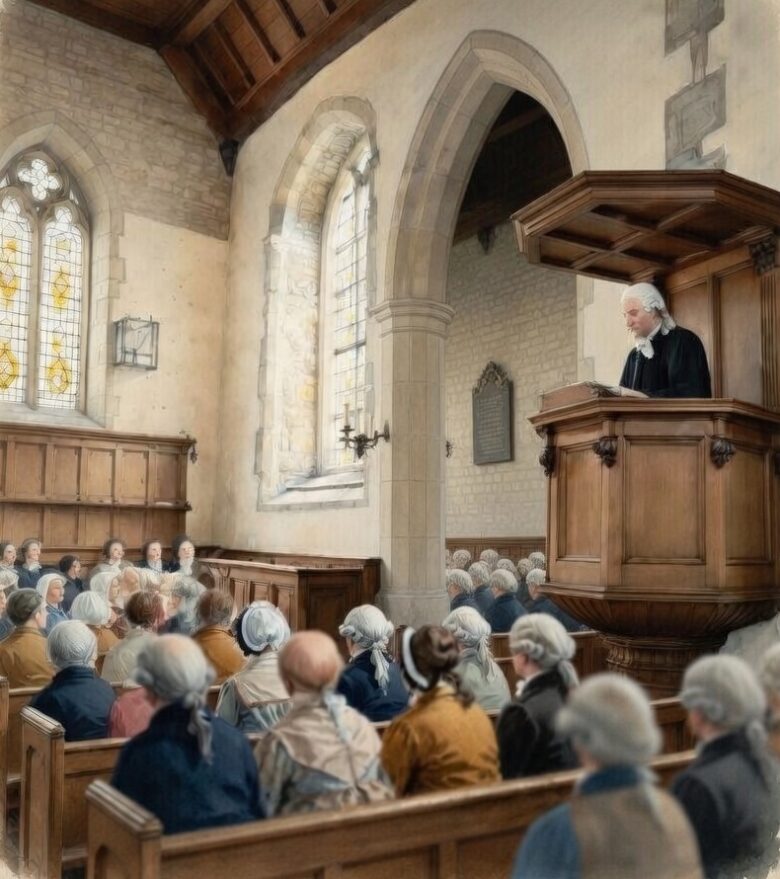
First US Congress Meets

On March 4, 1789, the first United States Congress under the Constitution met in New York City! It wasn’t until April 1st, when a quorum was reached that Congress began. (Pictured here is Federal Hall, their meeting place.) This Congress was very important in our nation’s history!

First, it passed the necessary legislation to implement the governing system established under the Constitution. This included: establishing federal courts; starting the Departments of State, War, Treasury; setting compensation for government officials (which was only about $6 a day); and more.

Original Bill of Rights

Second, this Congress passed what would become the Bill of Rights. James Madison, determined to address the shortcomings in the Constitution, presented 19 potential amendments drawn from mainly the various state constitutions. The House of Representatives passed 17 and the Senate 12; ten of these amendments would finally be ratified by the states to become the Bill of Rights.

Members of the first Congress were well-known individuals at the time. Many were signers of the Declaration and others had signed the Constitution. Some of the members who signed these founding documents include: Abraham Baldwin, Charles Carroll, William Floyd, Elbridge Gerry, William Samuel Johnson, Rufus King, John Langdon, James Madison, Robert Morris, George Read, and Roger Sherman.

One of the lesser known members of this Congress is Frederick Augustus Muhlenberg who was the first Speaker of the House. He was an ordained minister from New York City who had left the city when the British invaded it during the War for Independence. Muhlenberg began his political career in the Continental Congress, served in the Pennsylvania state house, and was president of the state’s ratification convention in 1787 (four dozen ministers were involved in their state’s Constitution ratification debates). His signature appears on the original Bill of Rights document as passed by Congress.

Take time to study some of the events and people involved with this historic first US Congress!

A Fraud-ian Slip: The Reality of Voter Fraud in the Election of 2020

As of the writing of this article, America is in the midst of perhaps the most contentious and contested presidential election in recent history. The 2020 election between Donald Trump and Joe Biden remains undecided as vote counts continue and legal battles begin. Quickly earning a position among the elections of 1800, 1825, 1876, and 2000 as one for the books, this election’s big question surrounds the novel insertion of wide spread mail-in-ballots and the increased potential for voter fraud. Last minute changes in election laws set the stage for lengthy litigation concerning whether or not such alterations were constitutional, and widespread reports of errors, irregularities, and criminal activity has rocked many people’s faith in the legitimacy of the vote.

1880s Cartoon Criticizing Democrats for Stuffing Ballot Boxes

The unfortunate reality is that from the beginning of elections there have been people who attempted, and in many cases succeeded, at buying, cheating, and stealing their way into political office. America, for all her virtues, has been no different than other places throughout history. Wherever there is a system there are those who will seek to game it through illegitimate practices. As the Scriptures explain, and the Founding Fathers repeatedly affirmed throughout their writings, “the heart is deceitful above all things, and desperately wicked: who can know it?” (Jeremiah 17:9).

Even back in in the colonial period of American history, election fraud was such a problem that some of the earliest laws on the books were anti-fraud legislation attempting to ensure free and fair elections. Massachusetts had passed laws as early as 1643, and by the mid-1700s at Rhode Island, New Jersey, Virginia, and other colonies had followed suit.[i] However, wherever there are rules there will be people to break them, and some early American elections were decided based on which candidate provided more “incentives,” whether it be financial or otherwise.[ii] During the Revolutionary War and shortly thereafter, the Founders attempted to secure elections by establishing many state level injunctions against illegal voting practices. The 1776 Pennsylvania constitution, for example, explicitly punished bribery while North Carolina passed anti-fraud laws in 1777.[iii] By 1784 New Hampshire barred anyone convicted of fraud ineligible for holding office.[iv]

After the ratification of the Constitution, voter fraud continued in both tried and true ways as well as new various methods. In 1816, a printed letter warns voters of “spurious and captive tickets and circulars” which struck the Federal Republican candidate for Senate off of the ticket and replacing him with the Democrat running for office.[v] The deception was discovered the day before the election and the Republican letter bemoans that “it is the object of a few who would sacrifice their party for their private interest.”[vi]

“How Copperheads Get Their Votes”

During the contentious years of the Civil War, when brother killed brother, the evils of voter fraud paled in comparison to the greater wickedness afflicting the nation. Those who were content to hold their fellow man in slavery could not be bothered by the lesser immorality of illegal voting. The 1864 election cycle witnessed fraud which parallels the modern-day issues in a surprisingly close manner. Pro-slavery Northern Democrats—nicknamed Copperheads after the venomous snake—went to great lengths attempting to unseat Abraham Lincoln. Harpers Weekly, one of the major newspapers of the day, highlighted how the Copperheads would use the names of recently deceased soldiers to vote illegally.[vii]

On top of that, the Copperheads also schemed to use the mail-in-ballots sent out to the troops as a way of illegally siphoning votes away from Lincoln. After a sting operation revealed that the pro-slavery Democrats had been forging the signatures of soldiers on blank ballots the plot was uncovered and the perpetrators thrown in prison. Despite the seriousness of the voter corruption, the Copperhead agents nevertheless joked saying, “dead or alive they would all had cast a good vote.”[viii]

After the Civil War and the enfranchisement of African Americans, Southern Democrats continued to engage in illegal voting activity such as ballot manipulation and intimidation. The end of Reconstruction as a political compromise following the contested 1876 presidential election opened the door for unchecked voter fraud and illegal election interference throughout southern states. Groups like the KKK (Ku Klux Klan) and the racist Democrats who started that group erected barriers and obstacles to prevent voting rights and transparency.[ix] Complicit in these schemes was an activist Supreme Court which in 1883 struck down all the civil rights passed by the Republican Congress during and in the years following the Civil War.[x]

“Of Course He Wants to Vote the Democrat Ticket”

With the pathway cleared for Jim Crow, poll taxes, voter intimidation, and ballot-box stuffing, the Southern political machines ensured that no one supporting racial equality would be elected under their watch. The influential Harpers Weekly once again stepped in to illustrate the coercive tactics with the political cartoon pictured which was titled “Of Course He Wants to Vote the Democrat Ticket.”[xi]

While such illegitimate elections continued apace in the South, by the early 1900s voter fraud was pervasive in rural counties with people selling their votes and politicians more than willing to buy them. For instance, in poverty-stricken Adams County, Ohio, in 1911 a judge convicted some 1,700 people for selling their votes to the highest political bidder—nearly 25% of total electorate.[xii] One of the citizens confessed to the judge, “I know it isn’t right, but this has been going on for so long that we no longer looked upon it as a crime.”[xiii] It was just the way things were.

A review of American elections in 1918 explained that during the late 19th and early 20th century, “the most common electoral fraud is bribery,” but said further that the “false counting of ballots has been an easy and common way to vitiate [invalidate] election results.”[xiv] After the rampant and unchecked fraud of the late 1800s there was a, “gradual awakening of the American people to corrupt conditions existing in their government,” and the widespread “defilement of the ballot-box.”[xv]

This certainly led to attempts to pass laws preventing politicians from stealing elections, but how can one expect the people who cheated their way into office to stop themselves from doing it again? Therefore, although certainly legislation was passed, by-in-large the political bosses continued to buy, sell, and trade elections. A notorious example happened in 1932 when long-time political boss, Senator Huey “Kingfish” Long of Louisiana, was exposed rigging votes which led to the indictment of 513 election officials in New Orleans.[xvi]

Lyndon B. Jonhson

More famously, in 1948 future president Lyndon Baines Johnson beat out his opponent in the Democrat Party primary for Senate by just 87 votes out of a total 988,295. Where did these votes come from? A specific voting location called “Ballot Box 13” which just so happened to show up and have just the number of votes he needed.[xvii] Although rumors and winks circulated for decades concerning Johnson’s unique method of “campaigning,” the suspicions were confirmed in 1977 when one of Johnson’s operatives confessed to stuffing the votes himself. “Johnson didn’t win that day. We stole it for him.”[xviii]

But certainly, this doesn’t happen today, does it? While technology has changed, regrettably human nature and fallibility hasn’t. Over the past few decades there have been many instances of clearly documented illegal activity surrounding elections—and often the technology has only made it easier than ever to rig an election.

For example, during the transition from paper ballot to electronic machines in the late 1990s and early 2000s, the number of last minute “glitches” which changed the course of an election are astonishing. The machines used by Election Systems and Software (ES&S)—one of the largest voting machine companies—stole governors’ races, flipped ballot initiatives, and caused thousands of votes to be left on the cutting room floor. Investigative journalists identified no less that fifty-six instances of these miraculous glitches occurring wherever these machines were.[xix]

Nebraska’s 1996 race for Senate witnessed the Republican candidate, Chuck Hagel, beat the Democrat governor who had led in the polls throughout the race by fifteen points.[xx] This was the first time in decades that Nebraska had sent a Republican senator to Congress. It was an upset for the ages. Who was this up-and-coming political star? Well, up until fourteen days before announcing his run for office Hagel had been the CEO of ES&S—the company whose machines would be the ones tallying the votes. And later, he managed to mask and hide his continued ownership of substantial investments in the company.[xxi] When rumors of a presidential run floated around Hagel, his old company was responsible for counting some 56% of the nation’s vote.[xxii] Unfortunately any opportunity to concretely verify fraud have long since passed as all investigations and complaints to the Senate Ethics Committee were squashed before getting off the ground.

Political Cartoon Showing the Glass Ballot Box Being the Best Way to Secure Freedom

Election Systems and Software has had to reshuffled the deck and sell off certain parts of the business, some of which were siphoned off into a new company called Dominion—but the danger remains the same. In fact, as of 2017, together ES&S and Dominion control some 81% of the national voting machines which were responsible for counting the ballots of 154,387,532 registered voters.[xxiii] Dominion has continued to expand its influence in American elections and replaced all of Georgia’s voting systems immediately prior to the 2020 presidential cycle.[xxiv]

On top of the red flags surrounding the machines themselves, comprehensive studies of the voter rolls in the 2016 and 2018 election cycles revealed troubling data which made the stage ripe for fraud.  Heading into the 2020 election cycle there were 349,773 dead people on voter rolls across the country, with over half of them being in New York, Texas, Michigan, Florida, and California.[xxv] In 2016 and 2018 there were over 14,000 proven cases of voting after death, with North Carolina leading the nation by a 4-to-1 ratio.[xxvi] Such practices still continue, and just weeks before Election Day 2020, a man was arrested in Pennsylvania for applying for a mail-in-ballot for his dead mother.[xxvii]

Audits of the previous two elections revealed at least 81,649 cases of people voting twice—something completely illegal.[xxviii] Many of these cases hinged upon the easy accessibility to unsolicited mail-in-ballots—as was the case when a Democrat mayoral candidate in Texas was arrested on 25 counts of illegally possessing ballots and 84 counts of falsifying voter applications.[xxix] Likewise, 35,000 registrant files list commercial addresses instead of residential ones—an action which led Congressman Steve Watkins (R-Kansas) to face three felony counts of potential fraud in 2020.[xxx]

Between the vulnerability of voting machines and the rancid condition of voter registration rolls, the stage is set for widespread, nearly untraceable, and possibly irreversible fraud. Whether paper or electronic, Americans are susceptible to having their elections stolen from under their noses. Even in the months prior to the presidential election in 2020, arrests and criminal convictions have happened for illegal voting activities such as the fraudulent use of absentee ballots, duplicate voting, false registrations, ballot petition fraud, and illegal “assistance” at the polls.[xxxi]

In fact, just days before the election the Democrat presidential nominee Joe Biden declared in a press conference, while seemingly reading off a script, “we have put together, I think the most extensive and inclusive voter fraud organization in the history of American politics.”[xxxii]

Many people simply laughed at such a statement. In recent years, Biden has become infamous for incoherent statements and botching speeches even while using a teleprompter. Compilations of his gaffes from just the campaign trail alone easily extend upwards of a half an hour. But now that the election has been rife with hundreds of clearly suspicious cases of “glitches” and “irregularities,” perhaps Biden was just being honest. Rather than being yet another gaffe, perhaps it was a kind of “fraud-ian” slip.

The Symbol of Liberty

Perhaps the most surprising facet of the 2020 election, however, has been the utter denial of even the possibility of voter fraud by legacy media conglomerates. These alleged investigative journalists turn a blind eye to both present evidence and historical fact when they collectively denounce “the myth of voter fraud.”[xxxiii] In fact, the same mass of media outlets which spent three years hopelessly searching for international election interference in the 2016 American election, scoff at even the mention of possible domestic election interference in 2020.

Historically, voter fraud has happened in America since its inception. That the mainstream media agencies refuse to acknowledge its existence does not alter the reality. Instead, such denial only makes them tacit accomplices in the death of the Republic. The same people who warn that democracy dies in darkness are the ones turning off the lights.

To entirely ignore or deny the existence of fraud is irresponsible, ignorant, or maliciously intentional. Everyone, no matter their political affiliation, should have an unquenchable desire for a transparent and airtight election process. Each fraudulent ballot discards someone’s legitimate vote. Every fake declaration silences someone’s real voice. Counterfeit elections devalue and debase the freedom and liberty of all Americans, ensuring nothing except the arbitrary control that the political elite may exert upon the people.

Glass Ballot Box

In the past, America turned began using glass ballot boxes (as pictured) which allowed people to see that no one was stealing the election.[xxxiv] It made the officials directly accountable to the people who were free to watch and observe their actions with full transparency. Over the years, the glass ballot box became a symbol of American freedom. A symbol now long forgotten—but one that needs to be resurrected. This is the true Cradle of Liberty—where the people are free to make their own decision, without coercion, fraud, or oppression, about who will represent them. Integrity is necessary for liberty, and the ballot boxes and voting processes of today ought to be just as transparent as the glass ones from yesteryear.


Endnotes

[i] The Encyclopedia Americana, s.v. “Electoral Fraud and Safeguards Against,” (New York: The Encyclopedia Americana Corporation, 1918), 10.70.

[ii] Tracy Campbell, Deliver the Vote: A History of Election Fraud, An American Political Tradition—1742-2004 (New York: Carroll & Graf Publishers, 2005), 5-7.

[iii] Tracy Campbell, Deliver the Vote: A History of Election Fraud, An American Political Tradition—1742-2004 (New York: Carroll & Graf Publishers, 2005), 9.

[iv] Tracy Campbell, Deliver the Vote: A History of Election Fraud, An American Political Tradition—1742-2004 (New York: Carroll & Graf Publishers, 2005), 9.

[v] “Election. Federal Republicans Beware!” 1816. Vote: The Machinery of Democracy (accessed November 8, 2020): https://americanhistory.si.edu/vote/paperballots.html.

[vi] “Election. Federal Republicans Beware!” 1816. Vote: The Machinery of Democracy (accessed November 8, 2020): https://americanhistory.si.edu/vote/paperballots.html.

[vii] “‘How the Copperheads Obtain their Votes,’ Thomas Nast, Harper’s Weekly, November 12, 1864, detail,” House Divided: The Civil War Research Engine at Dickinson College (accessed November 7, 2020): http://hd.housedivided.dickinson.edu/node/43183.

[viii] Josiah Benton, Voting in the Field: A Forgotten Chapter in the Civil War (Boston: Privately Printed, 1915), 164; see also, Donald Inbody, The Soldier Vote: War, Politics, and the Ballot in America (New York: Palgrave McMillian, 2016), 42.

[ix] See, for example, William Simmons, Men of Mark: Eminent, Progressive, and Rising (Cleveland: Geo. M. Rewell & Co., 1887), 348.

[x] Valeria Weaver, “The Failure of Civil Rights 1875-1883 and Its Repercussions,” The Journal of Negro History 54, no. 4 (1969): 369-370.

[xi] “‘Of Course He Wants to Vote the Democratic Ticket.’ A. B. Frost. From Harper’s Weekly, October 21, 1876,” The Newberry Digital Collections for the Classroom (accessed November 7, 2020): https://dcc.newberry.org/items/of-course-he-wants-to-vote-the-democratic-ticket.

[xii] Genevieve Gist, “Progressive Reform in a Rural Community: The Adams County Vote-Fraud Case,” The Mississippi Valley Historical Review 48, no. 1 (1961): 65.

[xiii] Genevieve Gist, “Progressive Reform in a Rural Community: The Adams County Vote-Fraud Case,” The Mississippi Valley Historical Review 48, no. 1 (1961): 71.

[xiv] The Encyclopedia Americana, s.v. “Electoral Fraud and Safeguards Against,” (New York: The Encyclopedia Americana Corporation, 1918), 10.70.

[xv] Robert Brooks, Corruption in American Politics and Life (New York: Dodd, Mead and Company, 1910), 206.

[xvi] Victoria Collier, “How to Rig an Election,” Harper’s Magazine (November 2012), accessed November 8, 2020: https://harpers.org/archive/2012/11/how-to-rig-an-election/.

[xvii] See, John Fund, Stealing Elections: How Voter Fraud Threatens Our Democracy (New York: Encounter Books, 2008), 12, 176-177; Robert Caro, The Years of Lyndon Johnson: Master of the Senate (New York: Random House Inc., 2009), 115-116.

[xviii] John Fund, Stealing Elections: How Voter Fraud Threatens Our Democracy (New York: Encounter Books, 2008), 177.

[xix] Bev Harris, Black Box Voting: Ballot Tampering in the 21st Century (Renton, WA: Talion Publishing, 2004), 4. Here.

[xx] Victoria Collier, “How to Rig an Election,” Harper’s Magazine (November 2012), accessed November 8, 2020: https://harpers.org/archive/2012/11/how-to-rig-an-election/.

[xxi] Bev Harris, Black Box Voting: Ballot Tampering in the 21st Century (Renton, WA: Talion Publishing, 2004), 27, 31. Here.

[xxii] Bev Harris, Black Box Voting: Ballot Tampering in the 21st Century (Renton, WA: Talion Publishing, 2004), 32. Here.

[xxiii] Lorin Hitt, The Business of Voting: Market Structure and Innovation in the Election Technology Industry (Philadelphia: Wharton School of the University of Pennsylvania, 2017), 14, 54. Here.

[xxiv] Dave Williams, “Georgia Chooses Denver Company to Install New Statewide Voting System,” Atlanta Business Chronicle (July 29, 2019), accessed November 8, 2020: https://www.bizjournals.com/atlanta/news/2019/07/29/georgia-chooses-denver-company-to-install-new.html.

[xxv] Critical Condition: American Voter Rolls Filled With Errors, Dead Voters, and Duplicate Registrations (Public Interest Legal Foundation, September 2020), 8.

[xxvi] Critical Condition: American Voter Rolls Filled With Errors, Dead Voters, and Duplicate Registrations (Public Interest Legal Foundation, September 2020), 8.

[xxvii] Carolyn Blackburn, “Man Arrested for Voter Fraud in Luzerne County,” WNEP News Station (October 21, 2020), accessed November 8, 2020: https://www.wnep.com/article/news/local/luzerne-county/man-arrested-for-voter-fraud-in-luzerne-county/523-7fc4fd2f-9105-47e7-a510-2b5ff176ab2c.

[xxviii] Critical Condition: American Voter Rolls Filled With Errors, Dead Voters, and Duplicate Registrations (Public Interest Legal Foundation, September 2020), 8.

[xxix] Matthew Impelli, “Texas Dem Mayoral Candidate Charged With Voter Fraud After Allegedly Applying for 84 Mail-in-Ballots,” Newsweek (October 13, 2020), accessed November 10, 2020: https://www.newsweek.com/texas-dem-mayoral-candidate-charged-voter-fraud-after-allegedly-applying-84-mail-ballots-1538644; Alex Samuels, “Carrollton Mayoral Candidate Arrested on Suspicion of Fraudulently Obtaining Mail-in-Ballots,” The Texas Tribune (October 8, 2020), accessed November 8, 2020: https://www.texastribune.org/2020/10/08/voting-fraud-arrest-carrollton/.

[xxx] Critical Condition: American Voter Rolls Filled With Errors, Dead Voters, and Duplicate Registrations (Public Interest Legal Foundation, September 2020), 30; Brian Lowry, “‘I Wasn’t Hiding the Ball.’ Watkins Admits Voting at Wrong Address, but Denies Intent,” The Kansas City Star (July 28, 2020), accessed November 8, 2020: https://www.kansascity.com/news/politics-government/article244541302.html.

[xxxi] See database, “Election Fraud Cases,” The Heritage Foundation (accessed November 7, 2020), https://www.heritage.org/voterfraud/search?combine=&state=All&year=2020&case_type=All&fraud_type=All; see also, Erin Anderson, “Texas Social Worker Charged With 134 Election Fraud Felonies,” Texas Scorecard (November 6, 2020), accessed November 8, 2020: https://texasscorecard.com/state/texas-social-worker-charged-with-134-election-fraud-felonies/.

[xxxii] Joseph Curl, “Biden Stumbles Through Final Days of Presidential Campaign,” The Daily Wire (November 2, 2020), accessed November 10, 2020: https://www.dailywire.com/news/biden-stumbles-way-through-final-days-of-presidential-campaign.

[xxxiii] E.g., Vera Bergengruen, “How Republicans are Selling the Myth of Rampant Voter Fraud,” Time (October 22, 2020), accessed November 7, 2020: https://time.com/5902728/voter-fraud-2020-2/; William T. Adler, “Why Widespread Voter Fraud is a Myth,” Center for Democracy & Technology (October 28, 2020), accessed November 7, 2020, https://cdt.org/insights/why-widespread-mail-in-voter-fraud-is-a-myth/; Amber McReynolds, “Let’s put the vote-by-mail “fraud” myth to rest,” The Hill (April 28, 2020), accessed November 7, 2020: https://thehill.com/opinion/campaign/494189-lets-put-the-vote-by-mail-fraud-myth-to-rest.

[xxxiv] Jennifer Nalewicki, “A Glass Ballot Box Was the Answer to Voter Fraud in the 19th Century,” Smithsonian Magazine (November 2, 2020), accessed November 10, 2020: https://www.smithsonianmag.com/smithsonian-institution/glass-ballot-box-was-answer-voter-fraud-19th-century-180976171/.

Early Black Political Leaders

The first black US Senator was Hiram Rhodes Revels. Revels (1827-1901) attended a seminary in Indiana before becoming a preacher in 1845. He was jailed in 1854 for preaching to slaves in St. Louis, even though he “sedulously refrained from doing anything that would incite slaves to run away from their masters.” During the Civil War, he helped in recruiting two black regiments and also served as a chaplain. Revels was in the Senate for a partial term, from February 1870 to March 1871, and spent the remainder of his life serving various religious and educational offices.

Blanche Kelso Bruce was the first black US Senator to serve a full term in office. Bruce (1841-1898) was born into slavery but fled to Kansas during the Civil War where he attempted to enlist. His enlistment was refused and he taught school for a time before moving to Mississippi where he was elected to various local political offices in the early 1870s. Bruce took his seat in the US Senate in 1875 and served until 1881, in this role he championed the rights of black war veterans and Native Americans. He was also the first black person to preside over a Senate session on February 14, 1879. Bruce spent the remainder of his life after the Senate in various other political offices.

Joseph Hayne Rainey was the first black person to serve in the US House of Representatives. Rainey (1832-1887) was born into slavery but his father was able to purchase freedom for his family. Rainey worked as a barber before being pressed into service by the Confederacy during the Civil War; in 1862 he escaped to Bermuda where he remained until the end of the war. He was a delegate to the 1868 South Carolina state constitutional convention. Rainey was elected to the US House of Representatives where he served from 1870-1879. He also has the distinction of being the first black person to preside over the House of Representatives in 1874.

We encourage you to take some time to learn more about these men and other black history heroes!