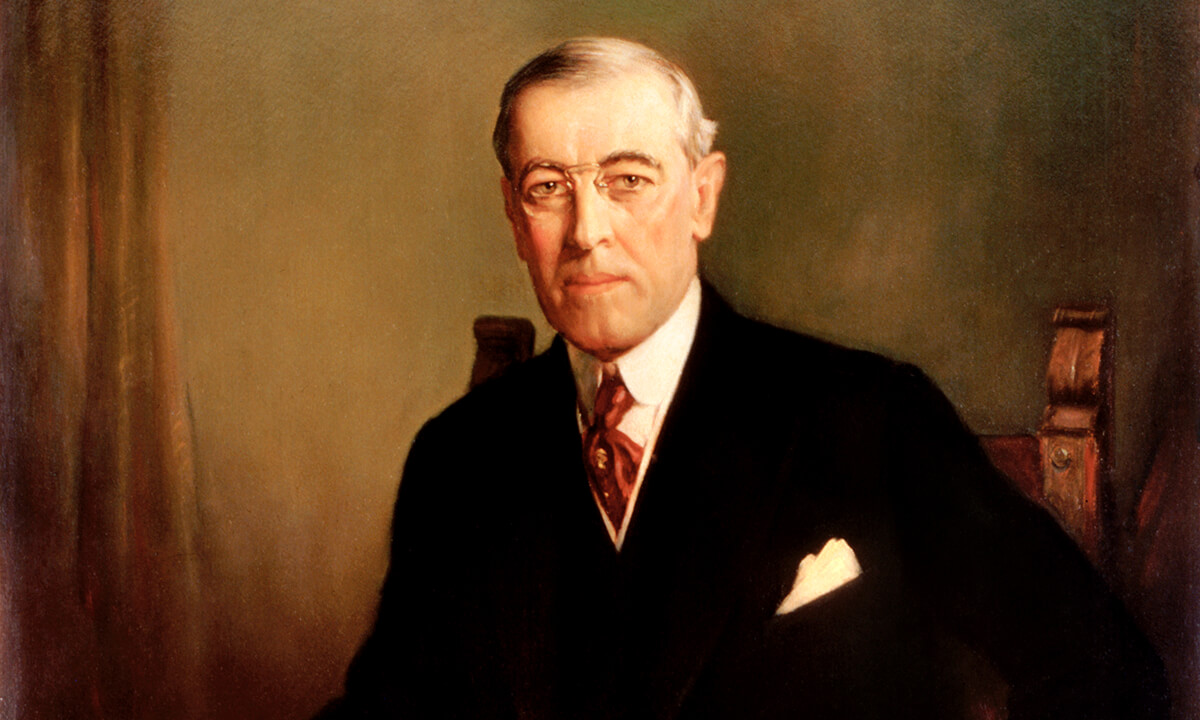
Woodrow Wilson on the Christian Men’s Association
This is the text of a speech Woodrow Wilson gave on October 24, 1914 at Pittsburg. The title of the speech is “The Power of Christian Young Men.” The speech can be found in Selected Addresses and Papers of Woodrow Wilson (New York: Boni and Liverlight, Inc, 1918) pp. 49-55.
Mr. President, Mr. Porter, Ladies and Gentlemen:
I feel almost as if I were a truant, being away from Washington to-day, but I thought that perhaps if I were absent the Congress would have the more leisure to adjourn. I do not ordinarily open my office at Washington on Saturday. Being a schoolmaster, I am accustomed to a Saturday holiday, and I thought I could not better spend a holiday than by showing at least something of the true direction of my affections; for by long association with the men who have worked for this organization I can say that it has enlisted my deep affection.
I am interested in [this organization] for various reasons. First of all, because it is an association of young men. I have had a good deal to do with young men in my time, and I have formed an impression of them which I believe to be contrary to the general impression. They are generally thought to be arch radicals. As a matter of fact, they are the most conservative people I have ever dealt with. Go to a college community and try to change the least custom of that little world and find how the conservatives will rush at you. Moreover, young men are embarrassed by having inherited their father’s opinions. I have often said that the use of a university is to make young gentlemen as unlike their fathers as possible. I do not say that with the least disrespect for the fathers; but every man who is old enough to have a son in college is old enough to have become very seriously immersed in some particular business and is almost certain to have caught the point of view of that particular business. And it is very useful to his son to be taken out of that narrow circle, conducted to some high place where he may see the general map of the world and of the interests of mankind, and there shown how big the world is and how much of it his father may happen to have forgotten. It would be worth while for men, middle-aged and old, to detach them selves more frequently from the things that command their daily attention and to think of the sweeping tides of humanity.
Therefore I am interested in this association, because it is intended to bring young men together before any crust has formed over them, before they have been hardened to any particular occupation, before they have caught an inveterate point of view; while they still have a searchlight that they can swing and see what it reveals of all the circumstances of the hidden world.
I am the more interested in it because it is an association of young men who are Christians. I wonder if we attach sufficient importance to Christianity as a mere instrumentality in the life of mankind. For one, I am not fond of thinking of Christianity as the means of saving individual souls. I have always been very impatient of processes and institutions which said that their purpose was to put every man in the way of developing his character. My advice is: Do not think about your character. If you will think about what you ought to do for other people, your character will take care of itself. Character is a by-product, and any man who devotes himself to its cultivation in his own case will become a selfish prig. The only way your powers can become great is by exerting them outside the circle of your own narrow, special, selfish interests. And that is the reason of Christianity. Christ came into the world to save others, not to save himself; and no man is a true Christian who does not think constantly of how he can lift his brother, how he can assist his friend, how he can enlighten mankind, how he can make virtue the rule of conduct in the circle in which he lives. An association merely of young men might be an association that had its energies put forth in every direction, but an association of Christian young men is an association meant to put its shoulders under the world and lift it, so that other men may feel that they have companions in bearing the weight and heat of the day; that other men may know that there are those who care for them, who would go into places of difficulty and danger to rescue them, who regard them selves as their brother’s keeper.
And, then, I am glad that it is an association. Every word of its title means an element of strength. Young men are strong. Christian young men are the strongest kind of young men, and when they associate themselves together they have the incomparable strength of organization. The Young Men’s Christian Association once excited, perhaps it is not too much to say, the hostility of the organized churches of the Christian world, because the movement looked as if it were so nonsectarian, as if it were so outside the ecclesiastical field, that perhaps it was an effort to draw young men away from the churches and to substitute this organization for the great bodies of Christian people who joined themselves in the Christian denominations. But after a while it appeared that it [the YMCA] was a great instrumentality that belonged to all the churches; that it was a common instrument for sending the light of Christianity out into the world in its most practical form, drawing young men who were strangers into places where they could have companionship that stimulated them and suggestions that kept them straight and occupations that amused them without vicious practice; and then, by surrounding themselves with an atmosphere of purity and of simplicity of life, catch something of a glimpse of the great ideal which Christ lifted when He was elevated upon the cross.
I remember hearing a very wise man say once, a man grown old in the service of a great church, that he had never taught his son religion dogmatically at any time; that he and the boy’s mother had agreed that if the atmosphere of that home did not make a Christian of the boy, nothing that they could say would make a Christian of him. They knew that Christianity was catching, and if they did not have it, it would not be communicated. If they did have it, it would penetrate while the boy slept, almost; while he was unconscious of the sweet influences that were about him, while he reckoned nothing of instruction, but merely breathed into his lungs the wholesome air of a Christian home. That is the principle of the Young Men’s Christian Association to make a place where the atmosphere makes great ideals contagious. That is the reason that I said, though I had forgotten that I said it, what is quoted on the outer page of the program that you can test a modern community by the degree of its interest in its Young Men’s Christian Association. You can test whether it knows what road it wants to travel or not. You can test whether it is deeply interested in the spiritual and essential prosperity of its rising generation. I know of no test that can be more conclusively put to a community than that.
I want to suggest to the young men of this association that it is the duty of young men not only to combine for the things that are good, but to combine in a militant spirit. There is a fine passage in one of Milton’s prose writings which I am sorry to say I can not quote, but the meaning of which I can give you, and it is worth hearing. He says that he has no patience with a cloistered virtue that does not go out and seek its adversary. Ah, how tired I am of the men who are merely on the defensive, who hedge themselves in, who perhaps enlarge the hedge enough to include their little family circle and ward off all the evil influences of the world from that loved and hallowed group. How tired I am of the men whose virtue is selfish because it is merely self-protective! How much I wish that men by the hundred might volunteer to go out and seek an adversary and subdue him!
I have had the fortune to take part in affairs of a considerable variety of s us, and I have tried to hate, as few persons as possible but there is an exquisite combination of contempt and hate that I have for a particular kind of person, and that is the moral coward. I wish we could give all our cowards a perpetual vacation. Let them go off and sit on the side lines and see us play the game; and put them oft the field if they interfere with the game They do nothing but harm, and they do it by that most subtle and fatal thing of all, that of taking the momentum and the spirit and the forward dash out of things. A man who is virtuous and a coward has no marketable virtue about him. The virtue, I repeat, which is merely self-defensive is not serviceable even, I suspect, to himself For how a man can swallow and not taste bad when he is a coward and thinking only of himself I can not imagine.
Be militant! Be an organization that is going to do things! If you can find older men who will give you countenance and acceptable leadership, follow them: but if you can not, organize separately and dispense with them. There are only two sorts of men worth associating with when something is to be done. Those are young men and men who never grow old. Now, if you find men who have grown old, about whom the crust has hardened, whose hinges are stiff, whose minds always have their eye over the shoulder thinking of things as they were done, do not have anything to do with them. It would not be Christian to exclude them from your organization, but merely used them to pad the roll. If you can find older men who will lead you acceptably and keep you in countenance, I am bound as an older man to advise you to follow them. But suit yourselves. Do not follow people that stand still. Just remind them that this is not a statical proposition; it is a movement, and if they can not get a move on them they are not serviceable.
Life, gentlemen – the life of society, the life of the world – has constantly to be fed from the bottom. It has to be fed by those great sources of strength which are constantly rising in new generations. Red blood has to be pumped into it. New fiber has to be supplied. That is the reason I have always said that I believed in popular institution. If you can guess beforehand whom your rulers are going to be, you can guess with a very great certainty that most of them will not be fit to rule. The beauty of popular institutions is that you do not know where the man is going to come from, and you do not care so he is the right man. You do not know whether he will come from the avenue or from the alley. You do not know whether he will come from the city or the farm. / You do not know whether you will ever have heard that name before or not. Therefore you do not limit at any point your supply of new strength. You do not say it has got to come through the blood of a particular family or through the processes of a particular training, or by anything except the native impulses and genius of the man himself. /The humblest hovel, therefore, may produce you your greatest man. A very humble hovel did produce you one of your greatest men. That is the process of life, this constant surging up of the new strength of unnamed, unrecognized, uncatalogued men who are just getting into the running, who are just coming up from the masses of the unrecognized multitude. You do not know when you will see above the level masses of the crowd some great stature lifted head and shoulders above the rest, shouldering its way, not violently but gently, to the front and saying, “Here am I; follow me.” And his voice will be your voice, his thought will be your thought, and you will follow him as if you were following the best things in yourselves.
When I think of an association of Christian young men I wonder that it has not already turned the world upside down. I wonder, not that it has done so much, for it has done a great deal, but that it has done so little; and I can only conjecture that it does not realize its own strength. I can only imagine that it has not yet got its pace. I wish I could believe, and I do believe, that at 70 it is just reaching its majority, and that from this time on a dream greater even than George Williams ever dreamed will be realized in the great accumulating momentum of Christian men throughout the world. For, gentlemen, this is an age in which the principles of men who utter public opinion dominate the world. It makes no difference what is done for the time being. After the struggle is over the jury will sit, and nobody can corrupt that jury.
At one time I tried to write history. I did not know enough to write it, but I knew from experience how hard it was to find an historian out, and I trusted I would not be found out. I used to have this comfortable thought as I saw men struggling in the public arena. I used to think to myself, “This is all very well and very interesting. You probably assess yourself in such and such a way. Those who are your partisans assess you thus and so. Those who are your opponents urge a different verdict. But it does not make very much difference, because after you are dead and gone some quiet historian will sit in a secluded room and tell mankind for the rest of time just what to think about you, and his verdict, not the verdict of your partisans and not the verdict of your opponents, will be the verdict of posterity.” I say that I used to say that to myself. It very largely was not so. And yet it was true in this sense: If the historian really speaks the judgment of the succeeding generation, then he really speaks the judgment also of the generations that succeed it, and his assessment, made without the passion of the time, made without partisan feeling in the matter—in other circumstances, when the air is cool—is the judgment of mankind upon your actions.
Now, is it not very important that we who shall constitute a portion of the jury should get our best judgments to work and base them upon Christian forbearance and Christian principles, upon the idea that it is impossible by sophistication to establish that a thing that is wrong is right? And yet, while we are going to judge with the absolute standard of righteousness, we are going to judge with Christian feeling, being men of a like sort ourselves, suffering the same temptations, having the same weaknesses, knowing the same passions; and while we do not condemn, we are going to seek to say and to live the truth. What I am hoping for is that these seventy years have just been a running start, and that now there will be a great rush of Christian principle upon the strongholds of evil and of wrong in the world. Those strongholds are not as strong as they look. Almost every vicious man is afraid of society, and if you once open the door where he is, he will run. All you have to do is to fight, not with cannon but with light.
May I illustrate it in this way? The Government of the United States has just succeeded in concluding a large number of treaties with the leading nations of the world, the sum and substance of which is this, that whenever any trouble arises the light shall shine on it for a year before anything is done; and my prediction is that after the light has shone on it for a year it will not be necessary to do anything; that after we know what happened, then we will know who was right and who was wrong. I believe that light is the greatest sanitary influence in the world. That, I suppose, is scientific commonplace, because if you want to make a place wholesome the best instrument you can use is the sun; to let his rays in, let him search out all the miasma that may lurk there. So with moral light: It is the most wholesome and rectifying, as well as the most revealing, thing in the world, provided it be genuine moral light; not the light of inquisitiveness, not the light of the man who likes to turn up ugly things, not the light of the man who disturbs what is corrupt for the mere sake of the sensation that he creates by disturbing it, but the moral light, the light of the man who discloses it in order that all the sweet influences of the world may go in and make it better.
That, in my judgment, is what the Young Men’s Christian Association can do. It can point out to its members the things that are wrong. It can guide the feet of those who are going astray; and when its members have realized the power of the Christian principle, then they will not be men if they do not unite to see that the rest of the world experiences the same emancipation and reaches the same happiness of release.
I believe in the Young Men’s Christian Association because I believe in the progress of moral ideas in the world; and I do not know that I am sure of anything else. When you are after something and have formulated it and have done the very best thing you know how to do you have got to be sure for the time being that that is the thing to do. But you are a fool if in the back of your head you do not know it is possible that you are mistaken. All that you can claim is that that is the thing as you see it now and that you cannot stand still; that you must push forward the things that are right. It may turn out that you made mistakes, but what you do know is your direction, and you are sure you are moving in that way. I was once a college reformer, until discouraged, and I remember a classmate of mine saying, “Why, man, can’t you let anything alone?” I said, “I let everything alone that you can show me is not itself moving in the wrong direction, but I am not going to let those things alone that I see are going downhill”; and I borrowed this illustration from an ingenious writer. He says, “If you have a post that is painted white and want to keep it white, you cannot let it alone; and if anybody says to you, ‘Why don’t you let that post alone,’ you will say, ‘Because I want it to stay white, and therefore I have got to paint it at least every second year.'” There isn’t anything in this world that will not change if you absolutely let it alone, and therefore you have constantly to be attending to it to see that it is being taken care of in the right way and that, if it is part of the motive force of the world, it is moving in the right direction.
That means that eternal vigilance is the price, not only of liberty, but of a great many other things. It is the price of everything that is good. It is the price of one’s own soul. It is the price of the souls of the people you love; and when it comes down to the final reckoning you have a standard that is immutable. What shall a man give in exchange for his own soul? Will he sell that? Will he consent to see another man sell his soul? Will he consent to see the conditions of his community such that men’s souls are debauched and trodden under foot in the mire? What shall he give in exchange for his own soul, or any other man’s soul? And since the world, the world of affairs, the world of society, is nothing less and nothing more than all of us put together, it is a great enterprise for the salvation of the soul in this world as well as in the next. There is a text in Scripture that has always interested me profoundly. It says godliness is profitable in this life as well as in the life that is to come; and if you do not start it in this life, it will not reach the life that is to come. Your measurements, your directions, your whole momentum, have to be established before you reach the next world. This world is intended as the place in which we shall show that we know how to grow in the stature of manliness and of righteousness.
I have come here to bid Godspeed to the great work of the Young Men’s Christian Association. I love to think of the gathering force of such things as this in the generations to come. If a man had to measure the accomplishments of society, the progress of reform, the speed of the world’s betterment, by the few little things that happened in his own life, by the trifling things that he can contribute to accomplish, he would indeed feel that the cost was much greater than the result. But no man can look at the past of the history of this world without seeing a vision of the future of the history of this world; and when you think of the accumulated moral forces that have made one age better than another age in the progress of mankind, then you can open your eyes to the vision. You can see that age by age, though with a blind struggle in the dust of the road, though often mistaking the path and losing its way in the mire, mankind is yet sometimes with bloody hands and battered knees nevertheless struggling step after step up the slow stages to the day when he shall live in the full light which shines upon the uplands, where all the light that illumines mankind shines direct from the face of God.



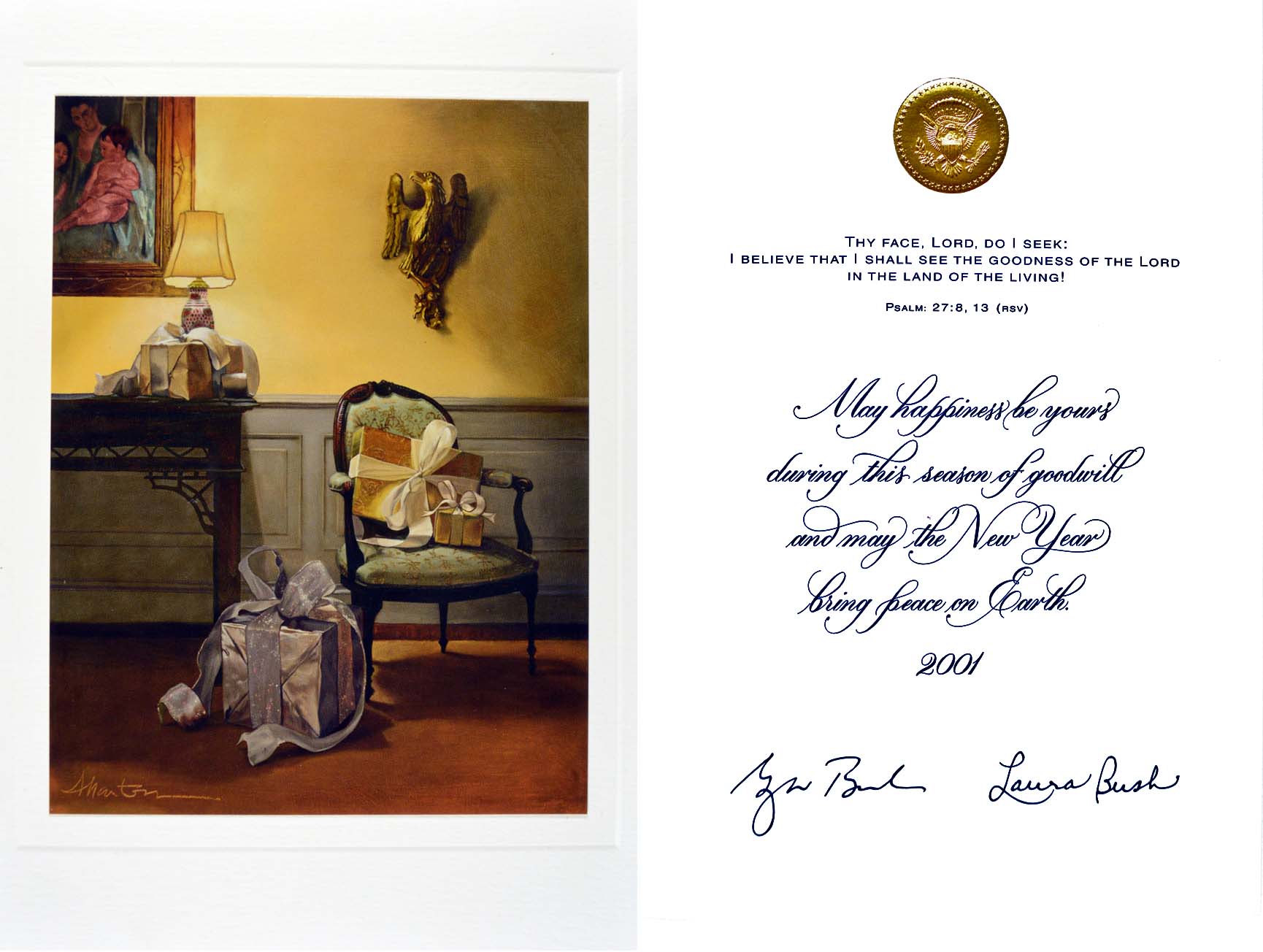
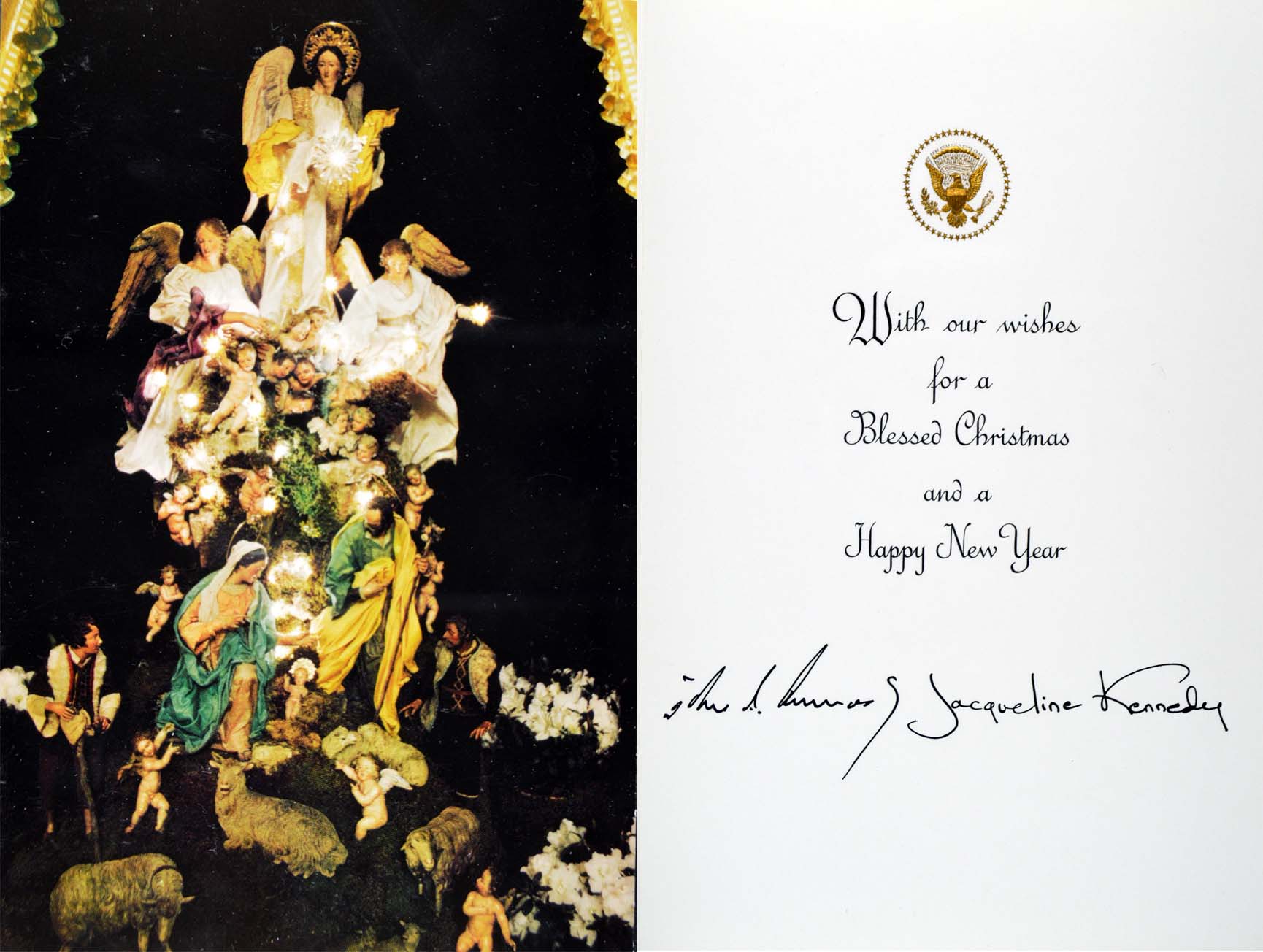



 1988 – Reads: The Children of President Jackson’s family request you to join them on Christmas Day at four o’clock P.M., in a frolic in the East Room.*
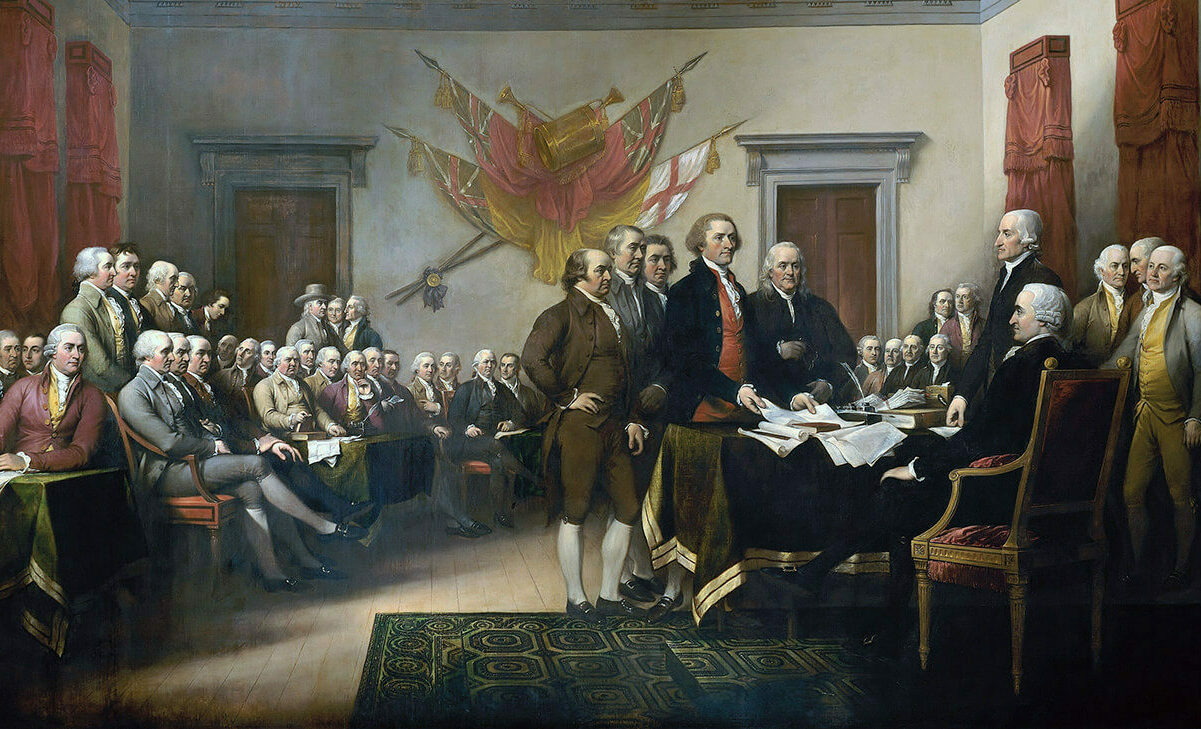
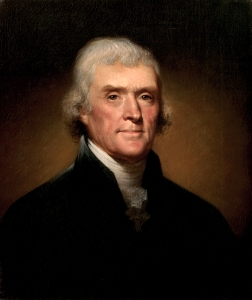 As the Founding Fathers retired and grew old in the nation they had worked so hard to create, many people wrote to them from all over the world for a wide variety of reasons. In fact, it is estimated that Thomas Jefferson wrote at least 19,000 letters throughout the course of his life. And that’s a conservative estimate, in all likelihood he wrote a vast number more that have not survived.