The Declaration Racist? Ha!

Louisiana Representative says The American Founding Is Bad

Study after study has demonstrated that rudimentary civic knowledge has plummeted in recent years. Many states have therefore taken specific steps to help ensure that students have a familiarity with our most basic governing documents. In Louisiana, Rep. Valerie Hodges introduced such a bill. Following the lead of states like Texas, Oklahoma, Kansas, Arkansas, Florida, Michigan, and others, her bill stipulated that Louisiana students recite the famous fifty-six words that form the heart of the Declaration of Independence:

“We hold these truths to be self-evident, that all men are created equal, that they are endowed by their Creator with certain unalienable rights, that among these are life, liberty and the pursuit of happiness. That to secure these rights, governments are instituted among men, deriving their just powers from the consent of the governed.”

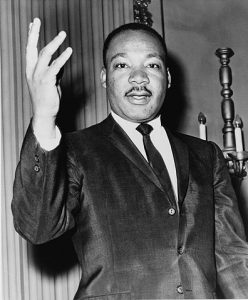
State Rep. Barbara Norton vehemently objected to this bill. She avowed that those words from the Declaration were not true, and relied heavily on Dr. Martin Luther King as the basis of her argument. She believed that equality did not exist until Dr. King, and that words from the Declaration should not be part of student studies.

Rep. Norton’s response is disappointing on many levels, and it certainly demonstrates that Rep. Norton knows little of American history and even less about black history as it relates to the Declaration of Independence.
the-declaration-racist-ha-3For example, she stressed the importance of Dr. King but apparently did not realize that in his famous “I Have A Dream” speech, as well as many of his sermons, he quoted extensively and favorably from the Declaration of Independence:

“When the architects of our republic wrote the magnificent words of the Constitution and the Declaration of Independence, they were signing a promissory note to which every American was to fall heir. This note was a promise that all men, yes, black men as well as white men, would be guaranteed the unalienable rights of life, liberty, and the pursuit of happiness.” – “I Have A Dream” speech, Washington, 1963

“It wouldn’t take us long to discover the substance of that dream. It is found in those majestic words of the Declaration of Independence – words lifted to cosmic proportions: ‘We hold these truths to be self-evident, that all men are created equal, that they are endowed by God, Creator, with certain inalienable Rights, that among these are Life, Liberty, and the pursuit of Happiness.’ This is a dream. It’s a great dream. The first saying we notice in this dream is an amazing universalism. It doesn’t say “some men,” it says “all men.” It doesn’t say “all white men,” it says “all men,” which includes black men. It does not say “all Gentiles,” it says “all men,” which includes Jews. It doesn’t say “all Protestants,” it says “all men,” which includes Catholics. It doesn’t even say “all theists and believers,” it says “all men,” which includes humanists and agnostics. . . I still have a dream this morning that truth will reign supreme and all of God’s children will respect the dignity and worth of human personality. And when this day comes, the morning stars will sing together and the sons of God will shout for joy. “We hold these truths to be self-evident that all men are created equal, that they are endowed by their Creator with certain inalienable rights, that among these are life, liberty, and the pursuit of happiness.” – July 4th, 1965, at Ebenezer Baptist Church, Atlanta, Georgia

By Rep. Norton denouncing the famous words from the Declaration, she might as well denounce Dr. King’s “I Have a Dream” speech, for it emphasized the same content she opposed.
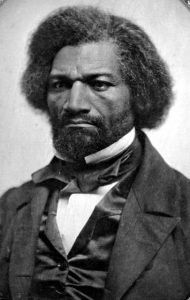
the-declaration-racist-ha-5But Dr. King wasn’t the first black civil rights activist to praise the Declaration of Independence. Frederick Douglass, who had himself been a slave, stated:

The principles contained in that instrument [the Declaration of Independence] are saving principles. Stand by those principles, be true to them on all occasions, in all places, against all foes, and at whatever cost.

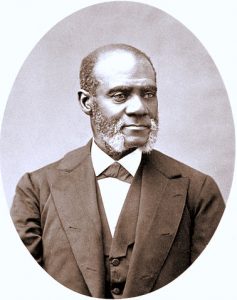
the-declaration-racist-ha-6And Henry Highland Garnet, who like Douglass was born in slavery and also escaped, became the first black man to officially speak at the U. S. Capitol. Following the passage of the Thirteenth Amendment to abolish slavery in February 1865, the House asked Garnet to preach a sermon celebrating that momentous event. In his two-hour discourse, Garnet told listeners:

The Declaration [of Independence] was a glorious document. Sages admired it, and the patriotic of every nation reverenced the God-like sentiments which it contained.

Clearly, black civil rights advocates praised the sentiments contained in the Declaration of Independence. (Significantly, the Declaration was heavily relied upon by abolitionists to aid their cause, and the women’s rights movement based their documents directly on the Declaration of Independence.) It’s too bad that Rep. Norton wants to withhold from students a knowledge of the document that black leaders praised for almost two centuries.

Memorial Day

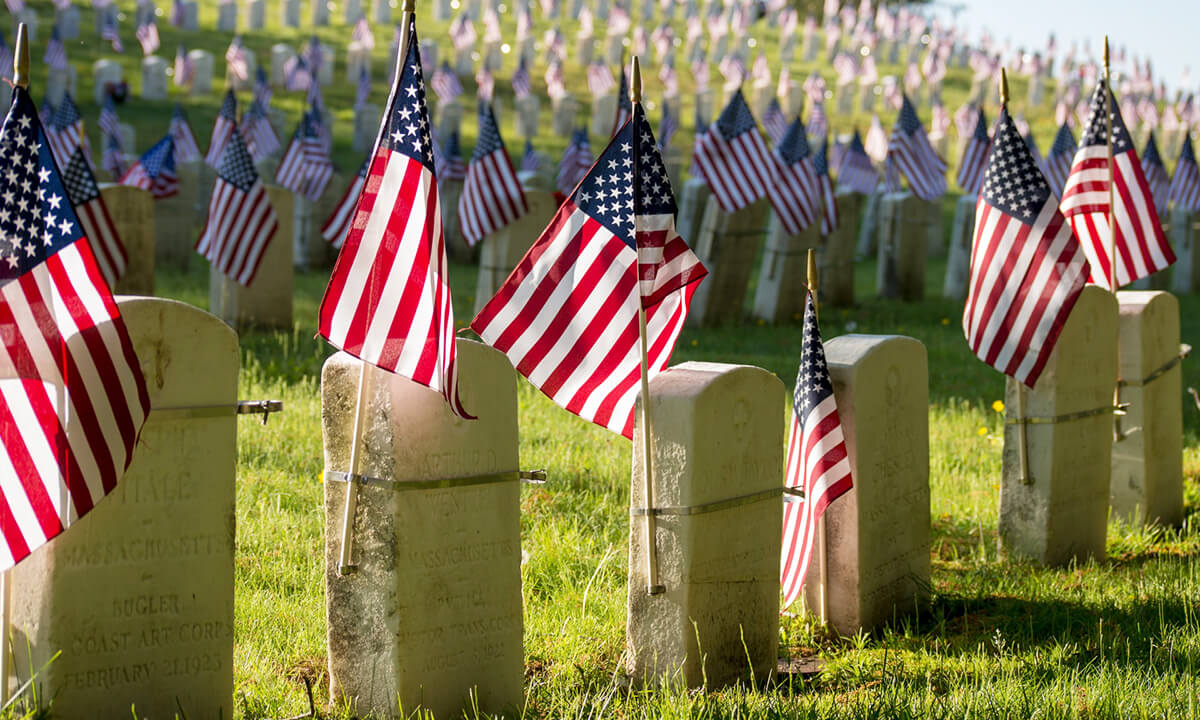
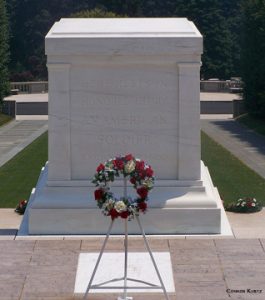
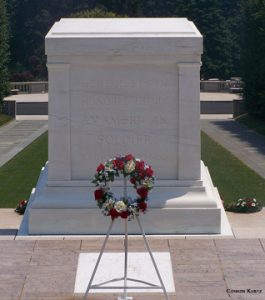
memorial-day-1America has a long history of military members who have shown extraordinary courage, with many willingly giving their lives to secure the freedoms our nation enjoys, freedoms we often take for granted. On Memorial Day (originally known as Decoration Day1) we honor the sacrifice of these brave men and women.

World War II (1941-1945) was an especially deadly war, with over 400,000 Americans being killed2 in famous military engagements such as the Battle of the Bulge and D-Day as well as in many other lesser known battles.3 Each life lost, whether in a major or an obscure battle, helped win peace and end tyranny. There were many heroes in that war, sung and unsung.

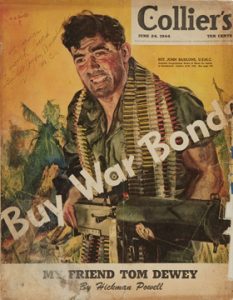
memorial-day-2One amazing example of heroism occurred during the Campaign of Guadalcanal (August 1942-February 1943).4 Sergeant John Basilone and his handful of men were responsible for holding back a Japanese assault of thousands on October 24-25, 1942. Basilone, throughout this engagement, personally repaired and manned multiple machine guns. At times, he was unable to shoot his guns over the piles of dead Japanese who fell at the brink of his hill. When his small detachment ran low, Basilone fought his way through the Japanese lines to resupply critically-needed ammunition. The Americans eventually won this long campaign. As a result of his actions, Basilone was awarded the Congressional Medal of Honor.5 (The picture on the left is of a magazine personally signed by Basilone, one of the many World War II treasures we have in WallBuilders’ Collection.)

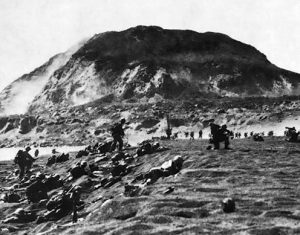
memorial-day-3Later in the war at the Battle of Iwo Jima (February 19-March 26, 1945),6 Basilone came ashore with the first wave of Marines. Shortly after landing, his unit was trapped by machine guns from Japanese blockhouses. Basilone worked his way around one of these blockhouses and single-handedly destroyed it. Later, as he was making his way towards an airfield, he came across an American tank trapped in a minefield. While under fire, he guided the tank out of the minefield and to safety. He was later killed by flying shrapnel. Basilone was awarded the Navy Cross for his courageous actions during the battle.7

There are many additional stories of heroic and noble acts by American soldiers throughout our history. Each Memorial Day as we remember the military members who lost their lives in battle, let us honor the courage they showed.


Endnotes

1 “Memorial Day History,” US Department of Veterans Affairs, accessed May 20, 2025.
2 “Research Starters: US Military by the Numbers,” The National WWII Museum, accessed May 20, 2025; “Explore WWII History,” The National WWII Museum, accessed May 20, 2025.
3 “The Battle of the Bulge,” US Army, accessed May 20, 2025; “Why D-Day Matters,” dday.org, accessed May 20, 2025; Kennedy Hickman, “World War II Battles,” April 25, 2019, ThoughtCo..
4 “FIRST OFFENSIVE: The Marine Campaign for Guadalcanal by Henry I. Shaw, Jr.,” National Park Service, accessed May 20, 2025.
5 “John “Manila John” Basilone,” Congressional Medal of Honor Society, accessed May 20, 2025.
6 Lt. Col. Whitman S. Bartley, USMC, Iwo Jima: Amphibious Epic (Historical Section, Division of Public Information Headquarters, U.S. Marine Corps: 1954).
7 “John A. “Maila John” Basilone,” The United States Navy Memorial, accessed May 20, 2025.

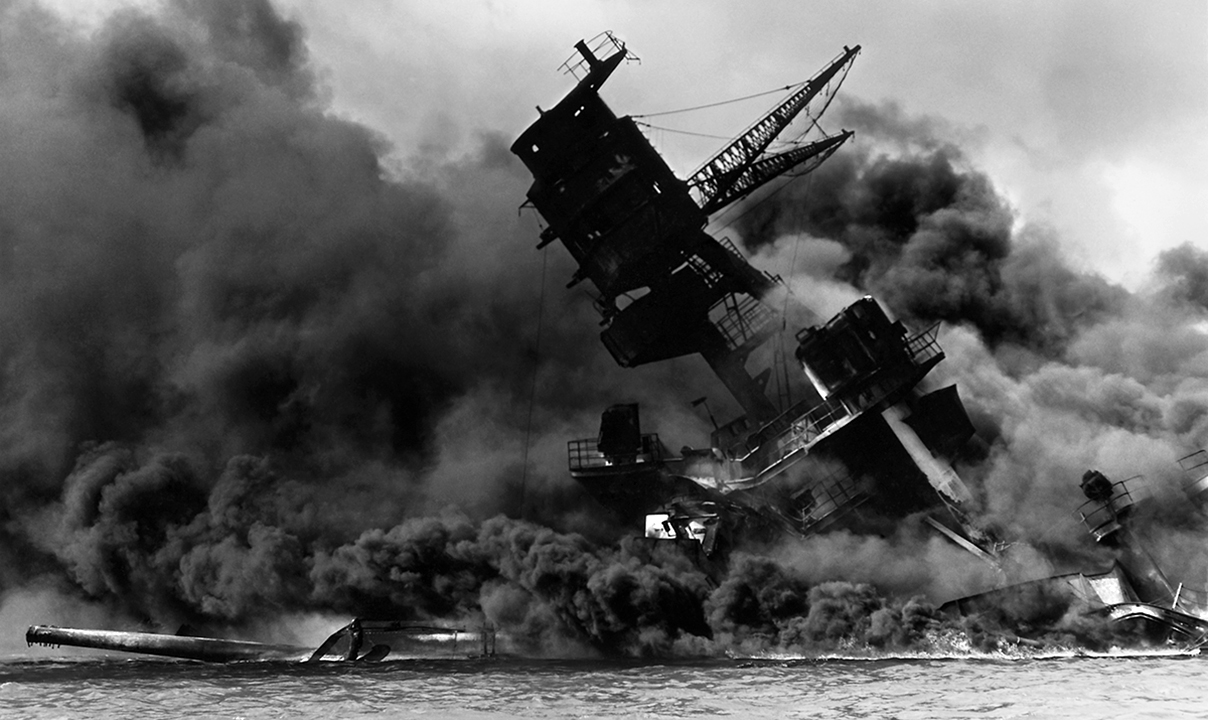
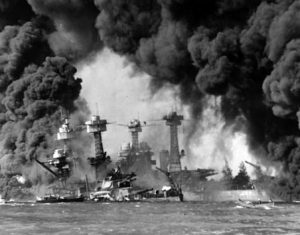
The USS Arizona sinks after it's bombed during the Pearl Harbor attacks in 1941.

Remembering Pearl Harbor

Pearl Harbor Day

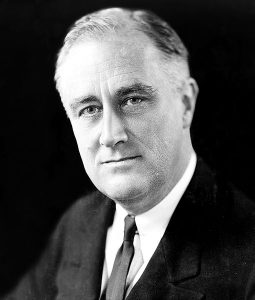
remembering-pearl-harbor-1December 7, 1941 — the day Pearl Harbor was treacherously attacked by the Japanese — was described by President Franklin Delano Roosevelt as “a date which will live in infamy.” It was the worst naval disaster in American history, and brought declarations of war by Japan, Germany, and Italy against the United States, and by America against them. For four long years, American men and women served and died on the battlefields of Europe and the Pacific, fighting tyranny and eventually bringing liberty across the world.

Shortly after the initial attack on Pearl Harbor, President Roosevelt called America to a time of prayer, explaining:

The year 1941 has brought upon our Nation a war of aggression… Our strength – as the strength of all men everywhere – is of greater avail as God upholds us. Therefore, I…do hereby appoint the first day of the year 1942 as a day of prayer, of asking forgiveness for our shortcomings of the past, of consecration to the tasks of the present, of asking God’s help in days to come. We need His guidance that this people may be humble in spirit but strong in the conviction of the right – steadfast to endure sacrifice and brave to achieve a victory of liberty and peace.

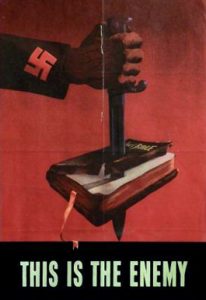
remembering-pearl-harbor-2Three weeks later on January 6, 1942, he delivered his State of the Union Address, reminding America:

The world is too small to provide adequate living room for both Hitler and God. In proof of that, the Nazis have now announced their plan for enforcing their new German, pagan religion all over the world — a plan by which the Holy Bible and the Cross of Mercy would be displaced by Mein Kampf and the swastika and the naked sword.

(Pictured on the right is a WWII fund-raising poster from the WallBuilders library that was produced by the US government, depicting President Roosevelt’s words.) He understood that what began at Pearl Harbor was a spiritual conflict — an attack on the religion of the Bible — and that prayer would be a necessary spiritual weapon in that battle.

Today as we commemorate Pearl Harbor Day, we are still engaged in a spiritual struggle for the soul of the nation. And just as America did 75 years ago, we, too, should likewise seek God in prayer – seek His wisdom, ask forgiveness for our sins, and lift up before Him our honored military and their precious families. Remember to turn to God on this special day.

Read the Bible!

Importance of the Bible
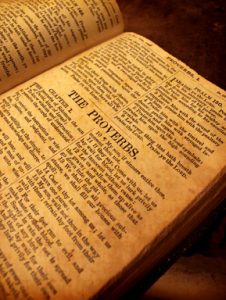
With Thanksgiving behind us, we now enter the time of the year in which President Franklin Roosevelt had urged Americans to spend time reading the Bible. Indisputably, the Bible is the book upon which our American republic rests – a fact attested to by many presidents:

read-the-bible-1“[The Bible] is the rock on which our Republic rests.” President Andrew Jackson

“The Bible. . . . is indispensable to the safety and permanence of our institutions.” President Zachary Taylor

“[T]he teachings of the Bible are so interwoven and entwined with our whole civic and social life that it would be . . . impossible for us to figure to ourselves what that life would be if these teachings were removed.” President Teddy Roosevelt

“Of the many influences that have shaped the United States of America into a distinctive Nation and people, none may be said to be more fundamental and enduring than the Bible.” President Ronald Reagan

Today, only 14% of Christians read the Bible daily, so most Americans have no knowledge of the most basic teachings of the Bible; and as Biblical knowledge declines, so does the strength and effectiveness of American institutions. Biblical knowledge is key to American longevity and prosperity.

Understanding this, in 1941, President Franklin Delano Roosevelt urged:

read-the-bible-2I suggest a nationwide reading of the Holy Scriptures during the period from Thanksgiving Day to Christmas…[G]o to…the Scriptures for a renewed and strengthening contact with those eternal truths and majestic principles which have inspired such such measure of true greatness as this nation has achieved.

This is an excellent recommendation! So commit yourself to reading and studying the Scriptures over the coming weeks. There are many good plans to help you, and even Bible apps that read the Bible to you. In fact, you can read through the entire Bible in only about 15 minutes each day over the course of a year. Psalm 11:3 asks: “If the foundations are destroyed, what can the righteous do?” Our foundations – the most important part of any structure – can be preserved by a knowledge of the Bible. So let’s follow President Roosevelt’s request to particularly spend the time between now and Christmas in reading and studying God’s Word.

Honor America’s Veterans

honor-americas-veterans-1The Korean War Memorial in Washington D.C. reminds us: “Freedom is not free!” Americans have long understood this, and across the generations 42 million men and women — serving as soldiers, sailors, and airmen — have been willing to give their time, talents, and even their lives to protect America and her cherished freedoms. To honor these courageous citizens, November 11, is set aside as Veteran’s Day.

By way of background, following the horrors of World War I, President Woodrow Wilson declared November 11 of 1919 to be “Armistice Day” to celebrate the peace brought about as a result of ending the war. Twenty years later, the federal government made “Armistice Day” a federal holiday, and in 1954, it was renamed to “Veteran’s Day” to honor all who served in the military. Over subsequent years, the day on which it was celebrated varied, but its purpose remained the same: to remember and express appreciation for our veterans.
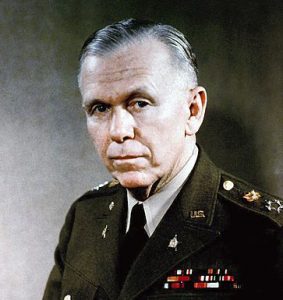
honor-americas-veterans-2General George C. Marshall, a famous military leader during World War II, summarized the mission of these warriors when he declared:

“We are determined that before the sun sets on this terrible struggle, our flag will be recognized throughout the world as a symbol of freedom on the one hand and of overwhelming force on the other.”

On Veteran’s Day, be sure to thank a veteran for their service. Perhaps even take time out of your day to visit some veterans at a local nursing home, where sometimes many have been tragically abandoned or have no family members remaining. And let’s also remember those who sacrificed so much for us across the centuries, from the American Revolution to World War II to the War on Terror. May we never cease to be thankful — and to express that gratitude — for those who are willing to give so much for the rest of us.

Sample Letters to the Editor

We receive numerous requests from across the country to answer various editorials and letters-to-the-editor. The subject usually involves the religious persuasions of the Founding Fathers, the “separation of church and state,” the “Religious Right” & theocracy, etc. The following are but a few of many possible replies to such editorials. (Note: Unfortunately, we do not have the resources to respond to individual editorials or articles from newspapers all across the U.S., and we have found it is typically much more effective if local people respond to editorials in their own community. David Barton’s book, Original Intent, and the Resources section of our website contain information that is very useful in successfully refuting the vast majority of negative editorials encountered.)


“The Founding Fathers & Deism”

I notice that your newspaper has an ongoing debate concerning the religious nature of the Founding Fathers. A recent letter claimed that most of the Founding Fathers were deists, and pointed to Washington, Jefferson, Franklin, Paine, Hamilton, and Madison as proof. After making this charge, the writer acknowledged the “voluminous writings” of the Founders, but it appears that they not read those writings herself. However, this is no surprise since the U. S. Department of Education claims that only 5 percent of high schools graduates know how to examine primary source documentation.

Interestingly, the claims in this recent letter to the editor are characteristic of similar claims appearing in hundreds of letters to the editor across the nation. The standard assertion is that the Founders were deists. Deists? What is a deist? In dictionaries like Websters, Funk & Wagnalls, Century, and others, the terms “deist,” “agnostic,” and “atheist” appear as synonyms. Therefore, the range of a deist spans from those who believe there is no God, to those who believe in a distant, impersonal creator of the universe, to those who believe there is no way to know if God exists. Do the Founders fit any of these definitions?

None of the notable Founders fit this description. Thomas Paine, in his discourse on “The Study of God,” forcefully asserts that it is “the error of schools” to teach sciences without “reference to the Being who is author of them: for all the principles of science are of Divine origin.” He laments that “the evil that has resulted from the error of the schools in teaching [science without God] has been that of generating in the pupils a species of atheism.” Paine not only believed in God, he believed in a reality beyond the visible world.

In Benjamin Franklin’s 1749 plan of education for public schools in Pennsylvania, he insisted that schools teach “the necessity of a public religion . . . and the excellency of the Christian religion above all others, ancient or modern.” Consider also the fact that Franklin proposed a Biblical inscription for the Seal of the United States; that he chose a New Testament verse for the motto of the Philadelphia Hospital; that he was one of the chief voices behind the establishment of a paid chaplain in Congress; and that when in 1787 when Franklin helped found the college which bore his name, it was dedicated as “a nursery of religion and learning” built “on Christ, the Corner-Stone.” Franklin certainly doesn’t fit the definition of a deist.

Nor does George Washington. He was an open promoter of Christianity. For example, in his speech on May 12, 1779, he claimed that what children needed to learn “above all” was the “religion of Jesus Christ,” and that to learn this would make them “greater and happier than they already are”; on May 2, 1778, he charged his soldiers at Valley Forge that “To the distinguished character of patriot, it should be our highest glory to add the more distinguished character of Christian”; and when he resigned his commission as commander in-chief of the military on June 8, 1783, he reminded the nation that “without a humble imitation” of “the Divine Author of our blessed religion” we “can never hope to be a happy nation.” Washington’s own adopted daughter declared of Washington that you might as well question his patriotism as to question his Christianity.

Alexander Hamilton was certainly no deist. For example, Hamilton began work with the Rev. James Bayard to form the Christian Constitutional Society to help spread over the world the two things which Hamilton said made America great: (1) Christianity, and (2) a Constitution formed under Christianity. Only Hamilton’s death two months later thwarted his plan of starting a missionary society to promote Christian government. And at the time he did face his death in his duel with Aaron Burr, Hamilton met and prayed with the Rev. Mason and Bishop Moore, wherein he reaffirmed to him his readiness to face God should he die, having declared to them “a lively faith in God’s mercy through Christ, with a thankful remembrance of the death of Christ.” At that time, he also partook of Holy Communion with Bishop Moore.

The reader, as do many others, claimed that Jefferson omitted all miraculous events of Jesus from his “Bible.” Rarely do those who make this claim let Jefferson speak for himself. Jefferson’s own words explain that his intent for that book was not for it to be a “Bible,” but rather for it to be a primer for the Indians on the teachings of Christ (which is why Jefferson titled that work, “The Life and Morals of Jesus of Nazareth”). What Jefferson did was to take the “red letter” portions of the New Testament and publish these teachings in order to introduce the Indians to Christian morality. And as President of the United States, Jefferson signed a treaty with the Kaskaskia tribe wherein he provided—at the government’s expense—Christian missionaries to the Indians. In fact, Jefferson himself declared, “I am a real Christian, that is to say, a disciple of the doctrines of Jesus.” While many might question this claim, the fact remains that Jefferson called himself a Christian, not a deist.

James Madison trained for ministry with the Rev. Dr. John Witherspoon, and Madison’s writings are replete with declarations of his faith in God and in Christ. In fact, for proof of this, one only need read his letter to Attorney General Bradford wherein Madison laments that public officials are not bold enough about their Christian faith in public and that public officials should be “fervent advocates in the cause of Christ.” And while Madison did allude to a “wall of separation,” contemporary writers frequently refuse to allow Madison to provide his own definition of that “wall.” According to Madison, the purpose of that “wall” was only to prevent Congress from passing a national law to establish a national religion.

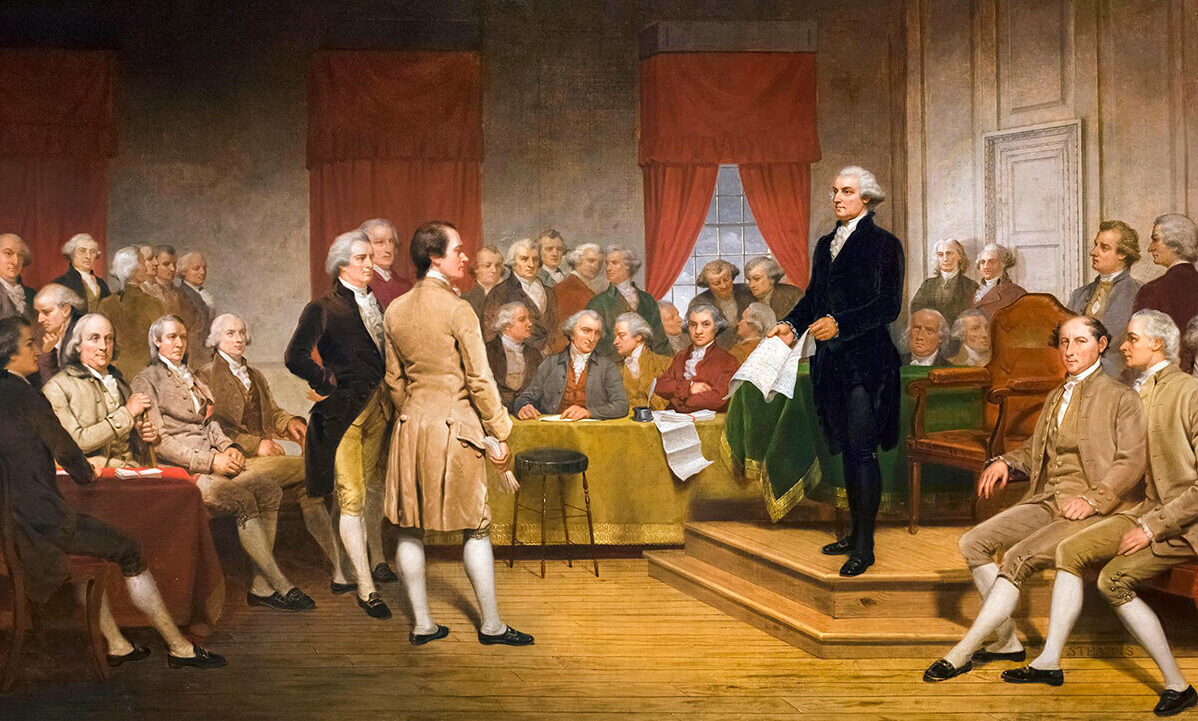
None of the Founders mentioned fit the definition of a deist. And as is typical with those who make this claim, they name only a handful of Founders and then generalize the rest. This in itself is a mistake, for there are over two hundred Founders (fifty-five at the Constitutional Convention, ninety who framed the First Amendment and the Bill of Rights, and fifty-six who signed the Declaration) and any generalization of the Founders as deists is completely inaccurate.

The reason that such critics never mention any other Founders is evident. For example, consider what must be explained away if the following signers of the Constitution were to be mentioned: Charles Pinckney and John Langdon—founders of the American Bible Society; James McHenry—founder of the Baltimore Bible Society; Rufus King—helped found a Bible society for Anglicans; Abraham Baldwin—a chaplain in the Revolution and considered the youngest theologian in America; Roger Sherman, William Samuel Johnson, John Dickinson, and Jacob Broom—also theological writers; James Wilson and William Patterson—placed on the Supreme Court by President George Washington, they had prayer over juries in the U. S. Supreme Court room; and the list could go on. And this does not even include the huge number of thoroughly evangelical Christians who signed the Declaration or who helped frame the Bill of Rights.

Any portrayal of any handful of Founders as deists is inaccurate. (If this group had really wanted some irreligious Founders, they should have chosen Henry Dearborne, Charles Lee, or Ethan Allen). Perhaps critics should spend more time reading the writings of the Founders to discover their religious beliefs for themselves rather than making such sweeping accusations which are so easily disproven.

(For more on this topic see: Thomas Paine Criticizes the Current Public School Science Curriculum, Franklin’s Appeal for Prayer at the Constitutional Convention, Was George Washington a Christian?, The Founders and Public Religious Expression, & James Madison and Religion in Public)


“Thomas Jefferson & the ‘wall of separation between
church and state.’”

In a recent letter on religion, the writer put supporters of public religious expression on one side and Thomas Jefferson on the other. This is logical given what most know about Jefferson’s “wall of separation between church and state.”

Jefferson penned that phrase to reassure the Danbury (CT) Baptist Association that because of separation of church and state, the government would never interfere with their public religious expressions. For the next 150 years, federal courts followed Jefferson’s intent and attached his separation metaphor to the Free Expression Clause of the First Amendment, thus consistently upholding public religious expressions. However, in 1947, the Supreme Court reversed itself and began applying the phrase to the Establishment Clause instead, thus causing federal courts to remove rather than preserve public religious expressions.

The proof is abundant that this was not Jefferson’s intent. For example, two days after Jefferson wrote his separation letter, he attended worship services in the U. S. Capitol where he heard the Rev. John Leland preach a sermon. (As President of the Senate, Jefferson had personally approved the use of the Capitol Building for Sunday worship services.) The many diaries of Members of Congress during that time confirm that during Jefferson’s eight years, he faithfully attended church services in the Capitol. In fact, he even ordered the Marine Band to play the worship services there. Jefferson also authorized weekly worship services at the War Department and the Treasury Building.

And on December 23, 1803, Jefferson’s administration negotiated – and the Senate ratified – a treaty with the Kaskaskia Indians that stated “the United States will give annually for seven years one hundred dollars for the support of a priest” to minister to the Indians (i.e., federal funds for Christian evangelism!) Jefferson also signed presidential documents, closing them with the appellation, “In the Year of our Lord Christ.” There are many similar surprising facts about Jefferson that are fully documented historically, but that have been ignored for the past 50 years.

So would religious conservatives and Thomas Jefferson really be on opposite sides of the church/state issue? Probably, for I doubt that conservatives would agree with using federal dollars for evangelization.

(For more on this topic see: The Separation of Church and State & Letters Between the Danbury Baptists and Thomas Jefferson)


“Theocracy”

In a recent letter, the writer took the same position as Americans United for Separation of Church and State (AU) and parroted AU’s offensive mantra, associating a theocracy or theocratic state with the “Religious Right.” Such claims are patently false.

First, to have a theocracy in America, the Constitution must be replaced with a totalitarian dictator who speaks on God’s behalf (i.e., a revival of “the Divine Right of Kings” doctrine). I challenge AU, or anyone else to identify which part of the “Religious Right” is calling for such a government.

Second, the “Religious Right” leaders are calling for an increased respect for the Constitution and its actual wording, urging citizens to exercise their constitutional right to vote. The real “crime” of these leaders is not that they want a theocracy (which they don’t) but that they rightfully want legislators to make national policy instead of judges. Should that occur, AU or groups like them could not win another battle, for Americans overwhelmingly reject their policies (e.g., “under God” in the Pledge – a phrase opposed by AU but supported by 87% of Americans).

The rabid opposition to public religious expressions is often irrational, In fact, a New Jersey bill proposing that students begin each day by reciting the first 56 words from the Declaration of Independence was loudly denounced as “a thinly-veiled attempt to put prayer in schools” – the first step on the road to a – you guessed it – “theocracy!” Reading the actual wording of the Declaration of Independence leads to a theocracy??? It is time for that term to become anathema in public discourse.

During the Civil Rights Era, we gradually learned that if certain pejoratives were invoked, the individual doing so was a racist. Similarly, today we need to learn that when the emotive and pejorative term “theocracy!” is invoked, it is usually by an intolerant secularist who wants all public religious expressions expunged from society.

(For more on this topic see: A Tale of Two Constitutions & Impeachment of Federal Judges)


* This article concerns a historical issue and may not have updated information.

Republic v. Democracy

Founders & Democracy

We have grown accustomed to hearing that we are a democracy; such was never the intent. The form of government entrusted to us by our Founders was a republic, not a democracy. 1 Our Founders had an opportunity to establish a democracy in America and chose not to. In fact, the Founders made clear that we were not, and were never to become, a democracy:

[D]emocracies have ever been spectacles of turbulence and contention; have ever been found incompatible with personal security, or the rights of property; and have, in general, been as short in their lives as they have been violent in their deaths. 2 James Madison

Remember, democracy never lasts long. It soon wastes, exhausts, and murders itself. There never was a democracy yet that did not commit suicide. 3 John Adams

A democracy is a volcano which conceals the fiery materials of its own destruction. These will produce an eruption and carry desolation in their way. 4 The known propensity of a democracy is to licentiousness [excessive license] which the ambitious call, and ignorant believe to be liberty. 5 Fisher Ames, Author of the House Language for the First Amendment

We have seen the tumult of democracy terminate . . . as [it has] everywhere terminated, in despotism. . . . Democracy! savage and wild. Thou who wouldst bring down the virtuous and wise to thy level of folly and guilt. 6 Gouverneur Morris, Signer and Penman of the Constitution

[T]he experience of all former ages had shown that of all human governments, democracy was the most unstable, fluctuating and short-lived. 7 John Quincy Adams

A simple democracy . . . is one of the greatest of evils. 8 Benjamin Rush, Signer of the Declaration

In democracy . . . there are commonly tumults and disorders. . . . Therefore a pure democracy is generally a very bad government. It is often the most tyrannical government on earth. 9 Noah Webster

Pure democracy cannot subsist long nor be carried far into the departments of state, it is very subject to caprice and the madness of popular rage. 10 John Witherspoon, Signer of the Declaration

It may generally be remarked that the more a government resembles a pure democracy the more they abound with disorder and confusion. 11 Zephaniah Swift, Author of America’s First Legal Text

Many Americans today seem to be unable to define the difference between the two, but there is a difference, a big difference. That difference rests in the source of authority.

Democracy & Republic Definitions

A pure democracy operates by direct majority vote of the people. When an issue is to be decided, the entire population votes on it; the majority wins and rules.

A republic differs in that the general population elects representatives who then pass laws to govern the nation.

A democracy is the rule by majority feeling (what the Founders described as a “mobocracy” 12). A republic is rule by law.

If the source of law for a democracy is the popular feeling of the people, then what is the source of law for the American republic? According to Founder Noah Webster:

[O]ur citizens should early understand that the genuine source of correct republican principles is the Bible, particularly the New Testament, or the Christian religion. 13

The American Republic

The transcendent values of Biblical natural law were the foundation of the American republic. Consider the stability this provides: in our republic, murder will always be a crime, for it is always a crime according to the Word of God. however, in a democracy, if majority of the people decide that murder is no longer a crime, murder will no longer be a crime.

America’s immutable principles of right and wrong were not based on the rapidly fluctuating feelings and emotions of the people but rather on what Montesquieu identified as the “principles that do not change.” 14

Benjamin Rush similarly observed:

[W]here there is no law, there is no liberty; and nothing deserves the name of law but that which is certain and universal in its operation upon all the members of the community. 15

In the American republic, the “principles which did not change” and which were “certain and universal in their operation upon all the members of the community” were the principles of Biblical natural law. In fact, so firmly were these principles ensconced in the American republic that early law books taught that government was free to set its own policy only if God had not ruled in an area. For example, Blackstone’s Commentaries explained:

To instance in the case of murder: this is expressly forbidden by the Divine. . . . If any human law should allow or enjoin us to commit it we are bound to transgress that human law. . . . But, with regard to matters that are . . . not commanded or forbidden by those superior laws such, for instance, as exporting of wool into foreign countries; here the . . . legislature has scope and opportunity to interpose. 16

The Founders echoed that theme:

All [laws], however, may be arranged in two different classes. 1) Divine. 2) Human. . . . But it should always be remembered that this law, natural or revealed, made for men or for nations, flows from the same Divine source: it is the law of God. . . . Human law must rest its authority ultimately upon the authority of that law which is Divine. 17 James Wilson, Signer of the Constitution; U. S. Supreme Court Justice

[T]he law . . . dictated by God Himself is, of course, superior in obligation to any other. It is binding over all the globe, in all countries, and at all times. No human laws are of any validity if contrary to this. 18Alexander Hamilton, Signer of the Constitution

[T]he . . . law established by the Creator . . . extends over the whole globe, is everywhere and at all times binding upon mankind. . . . [This] is the law of God by which he makes his way known to man and is paramount to all human control. 19 Rufus King, Signer of the Constitution

Conclusion

The Founders understood that Biblical values formed the basis of the republic and that the republic would be destroyed if the people’s knowledge of those values should ever be lost.

A republic is the highest form of government devised by man, but it also requires the greatest amount of human care and maintenance. If neglected, it can deteriorate into a variety of lesser forms, including a democracy (a government conducted by popular feeling); anarchy (a system in which each person determines his own rules and standards); oligarchy (a government run by a small council or a group of elite individuals): or dictatorship (a government run by a single individual). As John Adams explained:

[D]emocracy will soon degenerate into an anarchy; such an anarchy that every man will do what is right in his own eyes and no man’s life or property or reputation or liberty will be secure, and every one of these will soon mould itself into a system of subordination of all the moral virtues and intellectual abilities, all the powers of wealth, beauty, wit, and science, to the wanton pleasures, the capricious will, and the execrable [abominable] cruelty of one or a very few. 20

Understanding the foundation of the American republic is a vital key toward protecting it.


Endnotes

1 An example of this is demonstrated in the anecdote where, having concluded their work on the Constitution, Benjamin Franklin walked outside and seated himself on a public bench. A woman approached him and inquired, “Well, Dr. Franklin, what have you done for us?” Franklin quickly responded, “My dear lady, we have given to you a republic–if you can keep it.” Taken from “America’s Bill of Rights at 200 Years,” by former Chief Justice Warren E. Burger, printed in Presidential
Studies Quarterly
(Summer 1991), XXI:3:457. This anecdote appears in numerous other works as well.

2 Alexander Hamilton, John Jay, James Madison, The Federalist on the New Constitution (Philadelphia: Benjamin Warner, 1818), 53, #10, James Madison.

3 John Adams to John Taylor, April 15, 1814, The Works of John Adams, ed. Charles Francis Adams (Boston: Charles C. Little and James Brown, 1850), VI:484.

4 Fisher Ames, Speech on Biennial Elections, delivered January, 1788, Works of Fisher Ames (Boston: T. B. Wait & Co., 1809), 24.

5 Ames, “The Dangers of American Liberty,” February 1805, Works (1809), 384.

6 Gouverneur Morris, An Oration Delivered on Wednesday, June 29, 1814, at the Request of a Number of Citizens of New-York, in Celebration of the Recent Deliverance of Europe from the Yoke of Military Despotism (New York: Van Winkle and Wiley, 1814), 10, 22.

7 John Quincy Adams, The Jubilee of the Constitution. A Discourse Delivered at the Request of the New York Historical Society, in the City of New York on Tuesday, the 30th of April 1839; Being the Fiftieth Anniversary of the Inauguration of George Washington as President of the United States, on Thursday, the 30th of April, 1789 (New York: Samuel Colman, 1839), 53.

8 Benjamin Rush to John Adams, July 21, 1789, The Letters of Benjamin Rush, ed. L. H. Butterfield (Princeton: Princeton University Press for the American Philosophical Society, 1951), I:523.

9 Noah Webster, The American Spelling Book: Containing an Easy Standard of Pronunciation: Being the First Part of a Grammatical Institute of the English Language, To Which is Added, an Appendix, Containing a Moral Catechism and a Federal Catechism (Boston: Isaiah Thomas and Ebenezer T. Andrews, 1801), 103-104.

10 John Witherspoon, Lecture 12 on Civil Society, The Works of John Witherspoon (Edinburgh: J. Ogle, 1815), VII:101.

11 Zephaniah Swift, A System of the Laws of the State of Connecticut (Windham: John Byrne, 1795), I:19.

12 See, for example, Benjamin Rush to John Adams, January 22, 1789, Letters, ed. Butterfield (1951), I:498.

13 Noah Webster, History of the United States (New Haven: Durrie & Peck, 1832), 6.

14 George Bancroft, History of the United States from the Discovery of the American Continent (Boston: Little, Brown & Co., 1859), V:24; Baron Charles Secondat de Montesquieu, Spirit of the Laws (Philadelphia: Isaiah Thomas, 1802), I:17-23, and ad passim.

15 Rush to David Ramsay, March or April 1788, Letters, ed. Butterfield (1951), I:454.

16 William Blackstone, Commentaries on the Laws of England (Philadelphia: Robert Bell, 1771), I:42-43.

17 James Wilson, “Of the General Principles of Law and Obligation,” The Works of the Honorable James Wilson, ed. Bird Wilson (Philadelphia: Lorenzo Press, 1804), I:103-105.

18 Alexander Hamilton, The Papers of Alexander Hamilton, ed. Harold C. Syrett (New York: Columbia University Press, 1961), I:87, February 23, 1775, quoting Blackstone, Commentaries (1771), I:41.

19 Rufus King to C. Gore, February 17, 1820, The Life and Correspondence of Rufus King, ed. Charles R. King (New York: G. P. Putnam’s Sons, 1900), VI:276.

20 John Adams, The Papers of John Adams, ed. Robert J. Taylor (Cambridge: Belknap Press, 1977), I:83, from “An Essay on Man’s Lust for Power, with the Author’s Comment in 1807,” written on August 29, 1763, but first published by John Adams in 1807.

Homosexuals in the Military

Preface: There was a series of events that led to the need for this historical analysis. Below is a general chronology providing context. There were, no doubt, numerous other events that occurred– newspaper articles, magazine articles, government reports, meetings, etc.

However, these key events will preface the analysis:

January 20, 1993–William Jefferson Clinton assumes the Presidency, promising to end the historic ban on homosexuals serving in America’s Armed Forces.

January 29, 1993–President Clinton issues the following memorandum to the Secretary of Defense, Les Aspin:

I hereby direct you to submit to me prior to July 15, 1993, a draft of an Executive Order ending discrimination on the basis of sexual orientation in determining who may serve in the Armed Forces of the United States.

June 2-21, 1993–survey entitled, “Congressional Survey of All Active-Duty Admirals and Generals Shows Overwhelming Opposition to Lifting Military Gay Ban.” Ninety-seven and a half percent do not wish to have homosexuals serve in the military. Over ninety percent of the military’s senior officers question “national security” if homosexuals are allowd to serve.

July 19, 1993–“Don’t ask; don’t tell” plan announced by the President. Under this plan, new recruits are not to be asked if they are homosexual. Homosexual “orientation” is allowed; homosexual conduct remains a reason for separation.

July 23, 1993–Senate Armed Services Committee votes to pass law supporting President Clinton’s policies.

July 27, 1993–House Armed Services Committee offers similar legislation.

Court challenges started by the ACLU and others, and debate rages in the media.

Elected officials and others begin requesting an historical perspective on homosexuals in the military. David Barton prepares the following essay, supporting the contention that immoral conduct never has been allowed in America’s Armed Forces.

In recent years, widespread discussions and hearings have been held concerning the issue of homosexuals serving in the United States military forces. This monograph will explore the issue via three questions:

  1. Has homosexuality always been incompatible with military service?
  2. Why should the military be concerned with a person’s morality?
  3. Why should homosexuality concern us as a society?

Has Homosexuality Always Been Incompatible With Military Service?

While the issue of homosexuals in the military has only recently become a point of great public controversy, it is not a new issue; it derives its roots from the time of the military’s inception. George Washington, the nation’s first Commander-in-Chief, held a strong opinion on this subject and gave a clear statement of his views on it in his general orders for March 14, 1778:

At a General Court Martial whereof Colo. Tupper was President (10th March 1778), Lieutt. Enslin of Colo. Malcom’s Regiment [was] tried for attempting to commit sodomy, with John Monhort a soldier; Secondly, For Perjury in swearing to false accounts, [he was] found guilty of the charges exhibited against him, being breaches of 5th. Article 18th. Section of the Articles of War and [we] do sentence him to be dismiss’d [from] the service with infamy. His Excellency the Commander in Chief approves the sentence and with abhorrence and detestation of such infamous crimes orders Lieutt. Enslin to be drummed out of camp tomorrow morning by all the drummers and fifers in the Army never to return; The drummers and fifers [are] to attend on the Grand Parade at Guard mounting for that Purpose. 1

General Washington held a clear understanding of the rules for order and discipline, and as the original Commander-in-Chief, he was the first not only to forbid, but even to punish, homosexuals in the military.

An edict issued by the Continental Congress communicates the moral tone which lay at the base of Washington’s actions:

The Commanders of . . . the thirteen United Colonies are strictly required to show in themselves a good example of honor and virtue to their officers and men and to be very vigilant in inspecting the behavior of all such as are under them, and to discountenance and suppress all dissolute, immoral, and disorderly practices, and also such as are contrary to the rules of discipline and obedience, and to correct those who are guilty of the same. 2

Noah Webster–a soldier during the Revolution and the author of the first American dictionary –defined the terms “dissolute” and “immoral” used by Congress:

Dissolute:
Loose in behavior and morals; given to vice and dissipation; wanton; lewd; debauched; not under the restraints of law; as a dissolute man: dissolute company.
Immoral:
Inconsistent with moral rectitude; contrary to the moral or Divine law. . . . Every action is immoral which contravenes any Divine precept or which is contrary to the duties which men owe to each other. 3

This meaning of the word “moral” versus “immoral” was understood throughout American society; the practice of sodomy was clearly adverse to and “contravene[d] Divine precept.” The order to “suppress all dissolute, immoral, and disorderly practices . . . contrary to the rules of discipline and obedience” was extended throughout all branches of the American military, both the Army and the Navy. 4

It can be safely said that the attitude of the Founders on the subject of homosexuality was precisely that given by William Blackstone in his Commentaries on the Laws–the basis of legal jurisprudence in America and heartily endorsed by numbers of significant Founders. 5

In addressing sodomy (homosexuality), he found the subject so reprehensible that he was ashamed even to discuss it. Nonetheless, he noted:

What has been here observed . . . [the fact that the punishment fit the crime] ought to be the more clear in proportion as the crime is the more detestable, may be applied to another offence of a still deeper malignity; the infamous crime against nature committed either with man or beast. A crime which ought to be strictly and impartially proved and then as strictly and impartially punished. . . .

I will not act so disagreeable part to my readers as well as myself as to dwell any longer upon a subject the very mention of which is a disgrace to human nature [sodomy]. It will be more eligible to imitate in this respect the delicacy of our English law which treats it in its very indictments as a crime not fit to be named; “peccatum illud horribile, inter christianos non nominandum” (that horrible crime not to be named among Christians). A taciturnity observed likewise by the edict of Constantius and Constans: “ubi scelus est id, quod non proficit scire, jubemus insurgere leges, armari jura gladio ultore, ut exquisitis poenis subdantur infames, qui sunt, vel qui futuri sunt, rei” (where that crime is found, which is unfit even to know, we command the law to arise armed with an avenging sword that the infamous men who are, or shall in future be guilty of it, may undergo the most severe punishments). 6

Because of the nature of the crime, the penalties for the act of sodomy were often severe. For example, Thomas Jefferson indicated that in his home state of Virginia, “dismemberment” of the offensive organ was the penalty for sodomy. 7

In fact, Jefferson himself authored a bill penalizing sodomy by castration. 8The laws of the other states showed similar or even more severe penalties:

That the detestable and abominable vice of buggery [sodomy] . . . shall be from henceforth adjudged felony . . . and that every person being thereof convicted by verdict, confession, or outlawry [unlawful flight to avoid prosecution], shall be hanged by the neck until he or she shall be dead.9 NEW YORK

That if any man shall lie with mankind as he lieth with womankind, both of them have committed abomination; they both shall be put to death.10 CONNECTICUT

Sodomy . . . shall be punished by imprisonment at hard labour in the penitentiary during the natural life or lives of the person or persons convicted of th[is] detestable crime. 11 GEORGIA

That if any man shall commit the crime against nature with a man or male child . . . every such offender, being duly convicted thereof in the Supreme Judicial Court, shall be punished by solitary imprisonment for such term not exceeding one year and by confinement afterwards to hard labor for such term not exceeding ten years. 12 MAINE

That if any person or persons shall commit sodomy . . . he or they so offending or committing any of the said crimes within this province, their counsellors, aiders, comforters, and abettors, being convicted thereof as above said, shall suffer as felons. 13

[And] shall forfeit to the Commonwealth all and singular the lands and tenements, goods and chattels, whereof he or she was seized or possessed at the time . . . at the discretion of the court passing the sentence, not exceeding ten years, in the public gaol or house of correction of the county or city in which the offence shall have been committed and be kept at such labor. 14 PENNSYLVANIA

[T]he detestable and abominable vice of buggery [sodomy] . . . be from henceforth adjudged felony . . . and that the offenders being hereof convicted by verdict, confession, or outlawry [unlawful flight to avoid prosecution], shall suffer such pains of death and losses and penalties of their goods.15 SOUTH CAROLINA

That if any man lieth with mankind as he lieth with a woman, they both shall suffer death. 16

Based on the statutes, legal commentaries, and the writings of prominent military leaders, it is clear that any idea of homosexuals serving in the military was considered with repugnance; this is incontrovertible, with no room for differing interpretations. 17

The thought of lifting this proscription is a modern phenomenon, and would have brought disbelief, disdain, and condemnation from those who established our Armed Forces.

Why Should the Military Be Concerned With a Person’s Morality?

Concern for the character and morality of military personnel has a strong historical basis. Our Founding Fathers recognized the importance of pure morals in our free society, and that philosophy extended to our military.

Before considering the importance of morality to the military, first consider some general statements on the importance of morality by those responsible for originally creating the rules that have stirred so much controversy of late in the debate over homosexuals in the military. John Adams (the founder of the Navy), on October 13, 1798, while serving as President of the United States and Commander-in-Chief, told the military:

We have no government armed with power capable of contending with human passions unbridled by morality and religion. . . . Our Constitution was made only for a moral and religious people. It is wholly inadequate to the government of any other. 18

Adams similarly explained:

Statesmen, my dear sir, may plan and speculate for liberty, but it is religion and morality alone which can establish the principles upon which freedom can securely stand. The only foundation of a free constitution is pure virtue. 19

George Washington, the nation’s first Commander-in-Chief, summarized the same truth in his “Farewell Address.” Significantly, this address was also partially authored by John Jay (the author of America’s first military discipline manual) and Alexander Hamilton (a General during the Revolution). These three military leaders emphasized the necessity of moral behavior, declaring:

Of all the dispositions and habits which leads to political prosperity, religion and morality are indispensable supports. In vain would that man claim the tribute of patriotism who should labor to subvert these great pillars of human happiness, these firmest props of the duties of men and citizens. The mere politician, equally with the pious man, ought to respect and to cherish them. A volume could not trace all their connections with private and public felicity [happiness]. Let it simply be asked, “Where is the security for property, for reputation for life, if the sense of religious obligations desert . . . ?” And let us with caution indulge the supposition that morality can be maintained without religion. Whatever may be conceded to the influence of refined education on minds of peculiar structure, reason and experience both forbid us to expect that national morality can prevail in exclusion of religious principle. ‘Tis substantially true that virtue or morality is a necessary spring of popular government. The rule, indeed, extends with more or less force to every species of free government. Who that is a sincere friend to it [free government] can look with indifference upon attempts to shake the foundation of the fabric? 20

Since moral behavior was necessary for society in general, it was even more necessary for military personnel in whose hands rested the security, and thus the future, of the nation. The importance of good morals in the military can be seen in the following three selections from Washington’s general orders:

It is required and expected that exact discipline be observed and due subordination prevail thro’ the whole Army, as a failure in these most essential points must necessarily produce extreme hazard, disorder, and confusions; and end in shameful disappointment and disgrace. The General most earnestly requires and expects a due observance of those articles of war established for the government of the Army which forbid profane cursing, swearing, and drunkenness; And in like manner requires and expects of all officers and soldiers not engaged on actual duty a punctual attendance on Divine service to implore the blessings of Heaven upon the means used for our safety and defence.21

His Excellency [George Washington] wishes [it] to be considered that an Army without order, regularity, and discipline is no better than a commissioned mob; Let us therefore . . . endeavor by all the skill and discipline in our power, to acquire that knowledge and conduct which is necessary in war–our men are brave and good; men who with pleasure it is observed are addicted to fewer vices than are commonly found in Armies; but it is subordination and discipline (the life and soul of an Army) which next under Providence, is to make us formidable to our enemies, honorable in ourselves, and respected in the world.22

Purity of morals being the only sure foundation of public happiness in any country and highly conducive to order, subordination, and success in an Army, it will be well worthy the emulation of officers of every rank and class to encourage it both by the influence of example and the penalties of authority. It is painful to see many shameful instances of riot and licentiousness. . . . A regard to decency should conspire with a sense of morality to banish a vice productive of neither advantage or pleasure.23

Consequently, moral improprieties were met with severe punishment in the American military– as illustrated by the opening example in this paper.

Why Should Homosexuality Concern a Society?

Public discussions concerning homosexuality are a purely recent phenomenon; it was long considered too morally abhorrent and reprehensible to openly discuss. Consider, for example, the legal works of James Wilson, a signer both of the Declaration and the Constitution and appointed by President Washington as an original Justice on the US Supreme Court. Wilson was responsible for laying much of the foundation of American Jurisprudence and was co-author of America’s first legal commentaries on the Constitution. Even though state law books of the day addressed sodomy, when Wilson came to it in his legal writings, he was too disgusted with it even to mention it. He thus declared:

The crime not to be named [sodomy], I pass in a total silence.24

America’s first law book, authored by founding jurist Zephaniah Swift, communicated the popular view concerning sodomy:

This crime, tho repugnant to every sentiment of decency and delicacy, is very prevalent in corrupt and debauched countries where the low pleasures of sensuality and luxury have depraved the mind and degraded the appetite below the brutal creation. Our modest ancestors, it seems by the diction of the law, had no idea that a man would commit this crime [anal intercourse with either sex]. . . . [H]ere, by force of common law, [it is] punished with death. . . . [because of] the disgust and horror with which we treat of this abominable crime. 25

John David Michaelis, author of an 1814 four-volume legal work, outlined why homosexuality must be more strenuously addressed and much less tolerated than virtually any other moral vice in society:

If we reflect on the dreadful consequences of sodomy to a state, and on the extent to which this abominable vice may be secretly carried on and spread, we cannot, on the principles of sound policy, consider the punishment as too severe. For if it once begins to prevail, not only will boys be easily corrupted by adults, but also by other boys; nor will it ever cease; more especially as it must thus soon lose all its shamefulness and infamy and become fashionable and the national taste; and then . . . national weakness, for which all remedies are ineffectual, most inevitably follow; not perhaps in the very first generation, but certainly in the course of the third or fourth. . . . To these evils may be added yet another, viz. that the constitutions of those men who submit to this degradation are, if not always, yet very often, totally destroyed, though in a different way from what is the result of whoredom.

Whoever, therefore, wishes to ruin a nation, has only to get this vice introduced; for it is extremely difficult to extirpate it where it has once taken root because it can be propagated with much more secrecy . . . and when we perceive that it has once got a footing in any country, however powerful and flourishing, we may venture as politicians to predict that the foundation of its future decline is laid and that after some hundred years it will no longer be the same . . . powerful country it is at present.26

In view of the arguments listed by historical and legal sources, there is substantial
merit for maintaining the ban on homosexuals in the military. 27

The Founders instituted this ban with a clear understanding of the damaging effects of this behavior on the military. This ban has remained official policy for over 200 years and one would be hard-pressed to perceive the need for altering a policy which has contributed to making America the world’s foremost military power.


Endnotes

1 George Washington, The Writings of George Washington, John C. Fitzpatrick, editor (Washington: U. S. Government Printing Office, 1934), Vol. XI, pp. 83-84, from General Orders at Valley Forge on March 14, 1778.
2 Journals of the American Congress (Washington: Way and Gideon, 1823), Vol. I, p. 185, on November 28, 1775.
3 Noah Webster, An American Dictionary of the English Language (Springfield, MA: George and Charles Merriam, 1849).
4 Acts Passed at the First Session of the Fifth Congress of the United States of America (Philadelphia: Richard Folwell, 1797), pp. 456-457.
5 See, for example, James Madison, Letters and Other Writings of James Madison (NY: R. Worthington, 1884), Vol. III, p. 233, in his letter dated October 18, 1821. See also the writings of Founders James Kent, James Wilson, Fisher Ames, Joseph Story, John Adams, Henry Laurens, Thomas Jefferson, John Marshall, James Otis, et. al.

6 Sir William Blackstone, Commentaries on the Laws of England (Oxford: Clarendon Press, 1769), Vol. IV, pp. 215-216.
7 Thomas Jefferson, Notes on the State of Virginia (Philadelphia: Matthew Carey, 1794), p. 211.
8 Thomas Jefferson, The Writings of Thomas Jefferson, Andrew A. Lipscomb, editor (Washington, D. C.: Thomas Jefferson Memorial Association, 1904), Vol. I, pp. 226-227, from Jefferson’s “For Proportioning Crimes and Punishments.”
9 Laws of the State of New-York . . . Since the Revolution (New York: Thomas Greenleaf, 1798), Vol. I, p. 336.
10 The Public Statute Laws of the State of Connecticut (Hartford: Hudson and Goodwin, 1808), Book I, p. 295.
11 A Digest of the Laws of the State of Georgia (Milledgeville: Grantland & Orme, 1822), p. 350.
12 Laws of the State of Maine (Hallowell: Goodale, Glazier & Co., 1822), p. 58.
13 Laws of the Commonwealth of Pennsylvania (Philadelphia: John Bioren, 1810), Vol. I, p. 113.
14 Collinson Read, An Abridgment of the Laws of Pennsylvania (Philadelphia, 1801), p. 279.
15 Alphabetical Digest of the Public Statute Laws of South-Carolina (Charleston: John Hoff, 1814), Vol. I, p. 99.
16 Statutes of the State of Vermont (Bennington, 1791), p. 74.
17 Randy Shilts’ revisionist work, Conduct Unbecoming, attempts to provide historical precedent for homosexuals in the military by claiming that the General Baron von Steuben, a Prussian fighting for the American cause, was gay (see also Newsweek, Feb. 1, 1993, “What’s Fair in Love and War,” pp. 58-59). Shilts’ accusations against von Steuben are unacceptable to the very source he cites–a biography authored by John Palmer (see John McAuley Palmer, General Von Steuben, New Haven: Yale University Press, 1937). Palmer, although acknowledging an anonymous 1777 letter accusing the Baron of sexual improprieties, concluded that it was “probably a malicious slander that originated among Steuben’s enemies,” further stating that “the charge is inconsistent with the conception of Steuben’s personality that has grown up in my mind after eight years’ study.” Additionally, Shilts claims that the Baron’s 17 year old interpreter, Pierre Etienne Du Ponceau, was his lover, citing his youth and lack of linguistic skills as proof. However, Thomas McKean, signer of the Declaration of Independence, says that Du Ponceau had offered “satisfactory proof of his knowledge in the languages.” Furthermore, the Dictionary of American Biography says of the married Frenchman that “his contributions to historical and linguistic literature were numerous, particularly on philological subjects.” Shilts’ claims lack credible historical documentation, and are a hindrance to any substantive debate on this extremely important issue.
18 John Adams, The Works of John Adams, Second President of the United States, Charles Francis Adams, editor (Boston: Little, Brown, 1854), Vol. IX, p. 229, dated October 11, 1798.
19 Ibid, Vol. IX, p. 401, dated June 21, 1776.
20 Address of George Washington . . . Preparatory to His Declination (Baltimore: Christopher Jackson, 1796), pp. 22-24.
21 Washington, Writings, Vol. III, p. 309, from General Orders from Cambridge on July 4, 1775.
22 Ibid, at Vol. IV, pp. 202-203, from General Orders from Cambridge on January 1, 1776.
23 Ibid, Vol. XIII, pp. 118-119, from General Orders from Fredericksburgh on October 21, 1778.
24 James Wilson, The Works of James Wilson (Cambridge: Belknap Press of Harvard University Press, 1967), Vol. II, p. 656, from lectures given in 1790 and 1791.
25 Zephaniah Swift, A System of Laws of the State of Connecticut (Windham: John Byrne, 1796), Vol. II, pp. 310-311.
26 Sir John David Michaelis, Commentaries on the Laws of Moses, Alexander Smith, translator (London: F. C. and J. Rivington, 1814), Vol. IV, pp. 115-117.
27 For a summary of the current medical and military arguments supporting the ban on homosexuals, see Gays: In or Out? The U. S. Military & Homosexuals–A Sourcebook, by Col. Ronald D. Ray, USMCR (NY: A Maxwell Macmillan Company, 1993). Col. Ray’s Bibliography lists many of the numerous books and studies detailing homosexuality’s inherent physiological, sociological, and psychological problems.

* This article concerns a historical issue and may not have updated information.
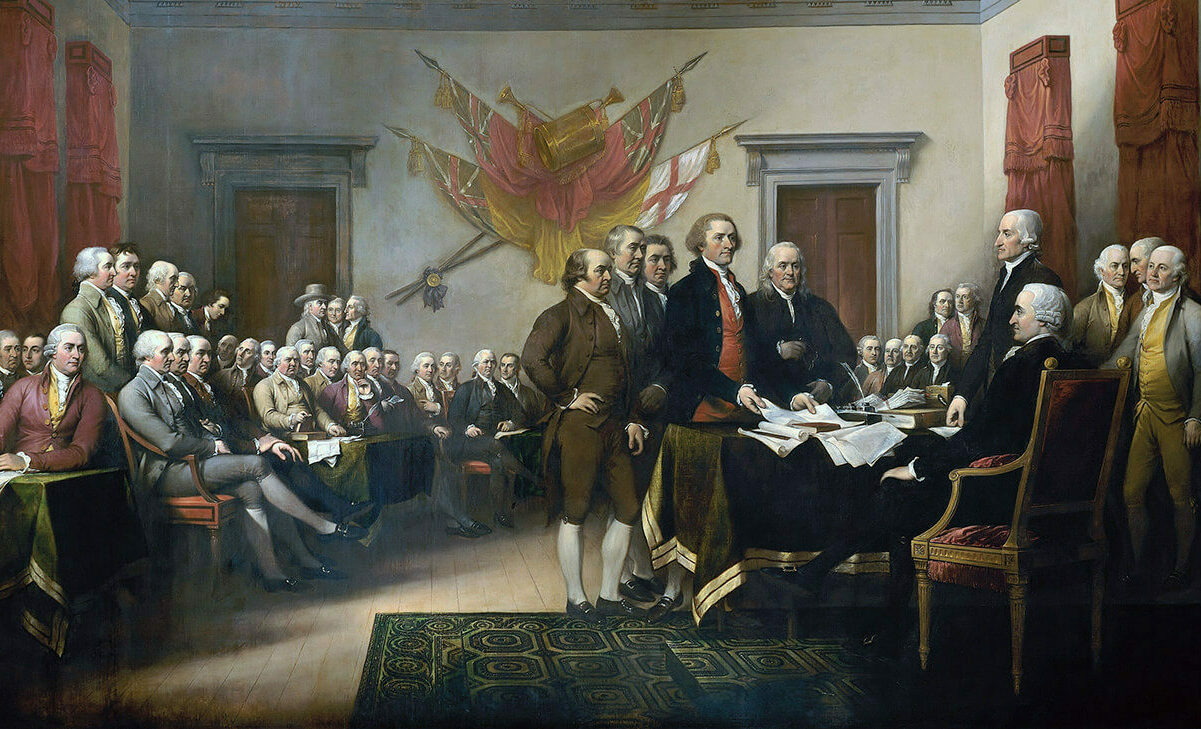
Was George Washington a Christian?

This is a question often asked today, and it arises from the efforts of those who seek to impeach Washington’s character by portraying him as irreligious. Interestingly, Washington’s own contemporaries did not question his Christianity but were thoroughly convinced of his devout faith–a fact made evident in the first-ever compilation of the The Writings of George Washington, published in the 1830s.

That compilation of Washington’s writings was prepared and published by Jared Sparks (1789-1866), a noted writer and historian. Sparks’ herculean historical productions included not only the writings of George Washington (12 volumes) but also Benjamin Franklin (10 volumes) and Constitution signer Gouverneur Morris (3 volumes). Additionally, Sparks compiled the Library of American Biography (25 volumes), The Diplomatic Correspondence of the American Revolution (12 volumes), and the Correspondence of the American Revolution (4 volumes). In all, Sparks was responsible for some 100 historical volumes. Additionally, Sparks was America’s first professor of history–other than ecclesiastical history–to teach at the college level in the United States, and he was later chosen president of Harvard.

Jared Sparks’ decision to compile George Washington’s works is described by The Dictionary of American Biography. It details that Sparks began . . .

. . . what was destined to be his greatest life work, the publication of the writings of George Washington. [Supreme Court] Justice Bushrod Washington, [the nephew of George Washington, the executor of the Washington estate, and] the owner of the Washington manuscripts, was won over by an offer to share the profits, through the friendly mediation of Chief Justice [of the Supreme Court, John] Marshall [who from 1804-1807 had written a popular five volume biography of George Washington], who also consented to take an equal share, twenty-five per cent, with the owner. In January 1827, Sparks found himself alone at Mount Vernon with the manuscripts. An examination of them extending over three months showed that years would be required for the undertaking; and with the owner’s consent, Sparks carried off the entire collection, eight large boxes, picking up on the way to Boston a box of diplomatic correspondence from the Department of State, and the [General Horatio] Gates manuscripts from the New York Historical Society. Not content with these, he searched or caused to be searched public and private archives for material, questioned survivors of the Revolution, visited and mapped historic sites. In 1830, for instance, he followed [Benedict] Arnold’s [1775] route to Quebec. The first of the twelve volumes of The Writings of George Washington to be published (vol. II) appeared in 1834 and the last (vol. I, containing the biography) in 1837.

In Volume XII of these writings, Jared Sparks delved into the religious character of George Washington, and included numerous letters written by the friends, associates, and family of Washington which testified of his religious character. Based on that extensive evidence, Sparks concluded:

To say that he [George Washington] was not a Christian would be to impeach his sincerity and honesty. Of all men in the world, Washington was certainly the last whom any one would charge with dissimulation or indirectness [hypocrisies and evasiveness]; and if he was so scrupulous in avoiding even a shadow of these faults in every known act of his life, [regardless of] however unimportant, is it likely, is it credible, that in a matter of the highest and most serious importance [his religious faith, that] he should practice through a long series of years a deliberate deception upon his friends and the public? It is neither credible nor possible.

One of the letters Sparks used to arrive at his conclusion was from Nelly Custis-Lewis. While Nelly technically was the granddaughter of the Washingtons, in reality she was much more.

When Martha [Custis] married George, she was a widow and brought two young children (John and Martha–also called Patsy) from her first marriage into her marriage with George. The two were carefully raised by George and Martha, later married, and each had children of their own. Unfortunately, tragedy struck, and both John and Patsy died early (by 1781). John left behind his widow and four young children ranging in age from infancy to six years old.

At the time, Washington was still deeply involved in guiding the American Revolution and tried unsuccessfully to convince Martha’s brother to raise the children. The young widow of John was unable to raise all four, so George and Martha adopted the two younger children: Nelly Parke Custis and George Washington Parke Custis, both of whom already were living at Mount Vernon.

Nelly lived with the Washingtons for twenty years, from the time of her birth in 1779 until 1799, the year of her marriage and of George Washington’s untimely death. She called George and Martha her “beloved parents whom I loved with so much devotion, to whose unceasing tenderness I was indebted for every good I possessed.”

Nelly was ten years old when Washington was called to the Presidency, and she grew to maturity during his two terms. During that time, she traveled with Washington and walked amidst the great foreign and domestic names of the day. On Washington’s retirement, she returned with the family to Mount Vernon. Nelly was energetic, spry, and lively, and was the joy of George Washington’s life. She served as a gracious hostess and entertained the frequent guests to Mount Vernon who visited the former President.

On Washington’s birthday in 1799, Nelly married Washington’s private secretary, Lawrence Lewis. They spent several months on an extended honeymoon, visiting friends and family across the country. On their return to Mount Vernon, she was pregnant and late that year gave birth to a daughter. A short few weeks later, on December 14, General Washington was taken seriously ill and died.

Clearly, Nelly was someone who knew the private and public life of her “father” very well. Therefore, Jared Sparks, in searching for information on Washington’s religious habits, dispatched a letter to Nelly, asking if she knew for sure whether George Washington indeed was a Christian. Within a week, she had replied to Sparks, and Sparks included her letter in Volume XII of Washington’s writings in the lengthy section on Washington’s religious habits. Of that specific letter, Jared Sparks explained:

I shall here insert a letter on this subject, written to me by a lady who lived twenty years in Washington’s family and who was his adopted daughter, and the granddaughter of Mrs. Washington. The testimony it affords, and the hints it contains respecting the domestic habits of Washington, are interesting and valuable.”

Woodlawn, 26 February, 1833.

Sir,

I received your favor of the 20th instant last evening, and hasten to give you the information, which you desire.

Truro [Episcopal] Parish is the one in which Mount Vernon, Pohick Church [the church where George Washington served as a vestryman], and Woodlawn [the home of Nelly and Lawrence Lewis] are situated. Fairfax Parish is now Alexandria. Before the Federal District was ceded to Congress, Alexandria was in Fairfax County. General Washington had a pew in Pohick Church, and one in Christ Church at Alexandria. He was very instrumental in establishing Pohick Church, and I believe subscribed [supported and contributed to] largely. His pew was near the pulpit. I have a perfect recollection of being there, before his election to the presidency, with him and my grandmother. It was a beautiful church, and had a large, respectable, and wealthy congregation, who were regular attendants.

He attended the church at Alexandria when the weather and roads permitted a ride of ten miles [a one-way journey of 2-3 hours by horse or carriage]. In New York and Philadelphia he never omitted attendance at church in the morning, unless detained by indisposition [sickness]. The afternoon was spent in his own room at home; the evening with his family, and without company. Sometimes an old and intimate friend called to see us for an hour or two; but visiting and visitors were prohibited for that day [Sunday]. No one in church attended to the services with more reverential respect. My grandmother, who was eminently pious, never deviated from her early habits. She always knelt. The General, as was then the custom, stood during the devotional parts of the service. On communion Sundays, he left the church with me, after the blessing, and returned home, and we sent the carriage back for my grandmother.

It was his custom to retire to his library at nine or ten o’clock where he remained an hour before he went to his chamber. He always rose before the sun and remained in his library until called to breakfast. I never witnessed his private devotions. I never inquired about them. I should have thought it the greatest heresy to doubt his firm belief in Christianity. His life, his writings, prove that he was a Christian. He was not one of those who act or pray, “that they may be seen of men” [Matthew 6:5]. He communed with his God in secret [Matthew 6:6].

My mother [Eleanor Calvert-Lewis] resided two years at Mount Vernon after her marriage [in 1774] with John Parke Custis, the only son of Mrs. Washington. I have heard her say that General Washington always received the sacrament with my grandmother before the revolution. When my aunt, Miss Custis [Martha’s daughter] died suddenly at Mount Vernon, before they could realize the event [before they understood she was dead], he [General Washington] knelt by her and prayed most fervently, most affectingly, for her recovery. Of this I was assured by Judge [Bushrod] Washington’s mother and other witnesses.

He was a silent, thoughtful man. He spoke little generally; never of himself. I never heard him relate a single act of his life during the war. I have often seen him perfectly abstracted, his lips moving, but no sound was perceptible. I have sometimes made him laugh most heartily from sympathy with my joyous and extravagant spirits. I was, probably, one of the last persons on earth to whom he would have addressed serious conversation, particularly when he knew that I had the most perfect model of female excellence [Martha Washington] ever with me as my monitress, who acted the part of a tender and devoted parent, loving me as only a mother can love, and never extenuating [tolerating] or approving in me what she disapproved of others. She never omitted her private devotions, or her public duties; and she and her husband were so perfectly united and happy that he must have been a Christian. She had no doubts, no fears for him. After forty years of devoted affection and uninterrupted happiness, she resigned him without a murmur into the arms of his Savior and his God, with the assured hope of his eternal felicity [happiness in Heaven]. Is it necessary that any one should certify, “General Washington avowed himself to me a believer in Christianity?” As well may we question his patriotism, his heroic, disinterested devotion to his country. His mottos were, “Deeds, not Words”; and, “For God and my Country.”

With sentiments of esteem,

I am, Nelly Custis-Lewis

George Washington’s adopted daughter, having spent twenty years of her life in his presence, declared that one might as well question Washington’s patriotism as question his Christianity. Certainly, no one questions his patriotism; so is it not rather ridiculous to question his Christianity? George Washington was a devout Episcopalian; and although as an Episcopalian he would not be classified as an outspoken and extrovert “evangelical” Founder as were Founding Fathers like Benjamin Rush, Roger Sherman, and Thomas McKean, nevertheless, being an Episcopalian makes George Washington no less of a Christian. Yet for the current revisionists who have made it their goal to assert that America was founded as a secular nation by secular individuals and that the only hope for America’s longevity rests in her continued secularism, George Washington’s faith must be sacrificed on the altar of their secularist agenda.

For much more on George Washington and the evidences of his strong faith, examine the following sources:

  • George Washington, The Writings of George Washington, Jared Sparks, editor (Boston: Ferdinand Andrews, Publisher, 1838), Vol. XII, pp. 399-411.
  • George Washington, The Religious Opinions of Washington, E. C. M’Guire, editor (New York: Harper & Brothers, 1836).
  • William Johnson, George Washington The Christian (1917).
  • William Jackson Johnstone, How Washington Prayed (New York: The Abingdon Press, 1932).
  • The Messages and Papers of the Presidents, James D. Richardson, editor (Published by the Authority of Congress, 1899), Vol. I, pp. 51-57 (1789), 64 (1789), 213-224 (1796), etc.
  • George Washington, Address of George Washington, President of the United States, Late Commander in Chief of the American Army, to the People of the United States, Preparatory to his Declination (Baltimore: George & Henry S. Keatinge, 1796), pp. 22-23.
  • George Washington, The Maxims of Washington (New York: D. Appleton and Co., 1855).

* Originally Posted: Dec. 31, 2016.

The Founders And Public Religious Expressions

Recently, there have been objections to public religious expressions by legislative chaplains supported through State budgets. These objections to legislative chaplains are very similar to one lodged with the U. S. Congress in 1852. In that challenge, the Committees on the Judiciary in both the House and the Senate each delivered a report pertinent to this discussion.

For example, in the House Report on March 27, 1854, it noted:

There certainly can be no doubt as to the practice of employing chaplains in deliberative bodies previous to the adoption of the Constitution. We are, then, prepared to see if any change was made in that respect in the new order of affairs. . . . On the 1st day of May [1789], Washington’s first speech was read to the House, and the first business after that speech was the appointment of Dr. Linn as chaplain. By whom was this plan made? Three out of six of that joint committee were members of the Convention that framed the Constitution. Madison, Ellsworth, and Sherman passed directly from the hall of the [Constitutional] Convention to the hall of Congress. Did they not know what was constitutional?. . . It seems to us that the men who would raise the cry of danger in this state of things would cry fire on the 39th day of a general deluge. . . . But we beg leave to rescue ourselves from the imputation of asserting that religion is not needed to the safety of civil society. It must be considered as the foundation on which the whole structure rests. Laws will not have permanence or power without the sanction of religious sentiment—without a firm belief that there is a Power above us that will reward our virtues and punish our vices. 1

The House Judiciary Committee therefore concluded:

Whereas, the people of these United States, from their earliest history to the present time, have been led by the hand of a kind Providence and are indebted for the countless blessings of the past and present, and dependent for continued prosperity in the future upon Almighty God; and whereas the great vital and conservative element in our system is the belief of our people in the pure doctrines and divine truths of the gospel of Jesus Christ, it eminently becomes the representatives of a people so highly favored to acknowledge in the most public manner their reverence for God: therefore, Resolved, That the daily sessions of this body be opened with prayer and that the ministers of the Gospel in this city are hereby requested to attend and alternately perform this solemn duty. 2

On January 19, 1853, the Senate Judiciary Committee delivered its report:

The whole view of the petitioners seems founded upon mistaken conceptions of the meaning of the Constitution. . . . If [the use of chaplains] had been a violation of the Constitution, why was not its character seen by the great and good men who were coeval with the government, who were in Congress and in the Presidency when this constitutional amendment was adopted? They, if any one did, understood the true purport of the amendment, and were bound, by their duty and their oath, to resist the introduction or continuance of chaplains, if the views of the petitioners were correct. But they did no such thing; and therefore we have the strongest reason to suppose the notion of the petitioner to be unfounded. . . . They had no fear or jealousy of religion itself, nor did they wish to see us an irreligious people; they did not intend to prohibit a just expression of religious devotion by the legislators of the nation, even in their public character as legislators; they did not intend to spread over all the public authorities and the whole public action of the nation the dead and revolting spectacle of atheistical apathy. 3

Interestingly, a century later, the U. S. Supreme Court reached a similar conclusion, declaring:

We are a religious people whose institutions presuppose a Supreme Being. . . . When the State encourages religious instruction or cooperates with religious authorities by adjusting the schedule of public events to sectarian needs, it follows the best of our traditions. For it then respects the religious nature of our people and accommodates the public service to their spiritual needs. To hold that it may not would be to find in the Constitution a requirement that the government show a callous indifference to religious groups. That would be preferring those who believe in no religion over those who do believe. 4

Clearly, previous generations did not find difficulty with paid chaplains. In fact, even Thomas Jefferson would disagree in several areas with those who often invoke him as an authority for a secular public arena, for Jefferson himself regularly violated the bland “civil religion” standards which many secularists promote. Consider:

    • Jefferson urged local governments to make land available specifically for Christian purposes;5
    • In an 1803 federal Indian treaty, Jefferson willingly agreed to provide $300 to “assist the said Kaskaskia tribe in the erection of a church” and to provide “annually for seven years $100 towards the support of a Catholic priest.” He also signed three separate acts setting aside government lands
      for the sole use of religious groups and setting aside government lands so that Moravian missionaries might be assisted in “promoting Christianity.” 6
    • When Washington D. C. became the national capital in 1800, Congress voted that the Capitol building would also serve as a church building. 7 President Jefferson chose to attend church each Sunday at the Capitol 8 and even provided the service with paid government musicians to assist in its worship.9 Jefferson also began similar Christian services in his own Executive Branch, both at the Treasury Building and at the War Office. 10
    • Jefferson praised the use of a local courthouse as a meeting place for Christian services;11
    • Jefferson assured a Christian religious school that it would receive “the patronage of the government”;12
    • Jefferson proposed that the Great Seal of the United States depict a story from the Bible and include the word “God” in its motto; 13
    • While President, Jefferson closed his presidential documents with the phrase, “In the year of our Lord Christ; by the President; Thomas Jefferson.” 14

Furthermore, Jefferson would especially disagree with those who believe that public prayers should be non-sectarian and omit specific references to Jesus. Jefferson believed that every individual should pray according to his own beliefs. As Jefferson explained:

[The] liberty to worship our Creator in the way we think most agreeable to His will [is] a liberty deemed in other countries incompatible with good government and yet proved by our experience to be its best support. 15 (emphasis added)

Critics, therefore, would be particularly troubled by President Jefferson’s words that:

No nation has ever existed or been governed without religion. Nor can be. The Christian religion is the best religion that has been given to man and I, as Chief Magistrate of this nation, am bound to give it the sanction of my example. 16

James Madison also encouraged public officials to declare openly and publicly their Christian beliefs and testimony — as when he wrote to William Bradford (who became Attorney General under President George Washington):

I have sometimes thought there could not be a stronger testimony in favor of religion or against temporal enjoyments, even the most rational and manly, than for men who occupy the most honorable and gainful departments and [who] are rising in reputation and wealth, publicly to declare their unsatisfactoriness by becoming fervent advocates in the cause of Christ; and I wish you may give in your evidence in this way. 17

Additionally, throughout his Presidency, Madison issued several proclamations for public days of prayer, fasting, and thanksgiving, 18 and like Jefferson, President Madison also attended church at the Capitol, thus publicly endorsing religion in official arenas. 19

So, not only did Jefferson and Madison endorse religion in the public arena, they were even willing publicly to endorse Christian prayers in the public arena rather than the bland politically-correct civic prayers desired by critics of public prayers.

There are many additional framers of our government who are also qualified to speak to the issue of religious expressions in official and political arenas. For example:

· [W]e can only depend on the all powerful influence of the Spirit of God, whose Divine aid and assistance it becomes us as a Christian people most devoutly to implore. Therefore I move that some minister of the Gospel be requested to attend this Congress every morning during the sessions in order to open the meeting with prayer. 20Elias Boudinot, President of Congress, A Framer of the Bill of Rights in the First Congress

· We have been assured, Sir, in the Sacred Writings that except the Lord build the house, they labor in vain that build it. I firmly believe this; and I also believe that without His concurring aid, we shall succeed in this political building no better than the builders of Babel. . . . I therefore beg leave to move that henceforth, prayers imploring the assistance of Heaven and its blessings on our deliberations be held in this assembly every morning before we proceed to business, and that one or more clergy of the city be requested to officiate in that service.21 Benjamin Franklin, Signer of the Constitution, Signer of the Declaration, Governor of Pennsylvania

· Sensible of the importance of Christian piety and virtue to the order and happiness of a state, I cannot but earnestly commend to you every measure for their support and encouragement. . . . [T]he very existence of the republics . . . depend much upon the public institutions of religion. 22 John Hancock, Signer of Declaration of Independence, Governor of Massachusetts

· [It is] the duty of all wise, free, and virtuous governments to countenance and encourage virtue and religion.23 I therefore recommend a general and public return of praise and thanksgiving to Him from whose goodness these blessings descend. The most effectual means of securing the continuance of our civil and religious liberties is always to remember with reverence and gratitude the source from which they flow. 24John Jay, Original Chief-Justice U. S. Supreme Court, An Author of the Federalist Papers, Governor of New York

· I had the honor of being one among many who framed that Constitution. . . . In order effectually to accomplish these great ends, it is incumbent upon us to begin wisely and to proceed in the fear of God; . . . and it is especially the duty of those who bear rule to promote and encourage piety [respect for God]. 25 Henry Laurens, President of Congress, Selected as Delegate to the Constitutional Convention

· [A] free government. . . . can only be happy when the public principle and opinions are properly directed. . . . by religion and education. It should therefore be among the first objects of those who wish well to the national prosperity to encourage and support the principles of religion and morality. 26 Abraham Baldwin, Signer of the Constitution, A Framer of the Bill of Rights in the First Congress

· Of all the dispositions and habits which lead to political prosperity, religion and morality are indispensable supports. In vain would that man claim the tribute of patriotism who should labor to subvert these great pillars of human happiness. 27 (emphasis added) George Washington, Signer of the Constitution, First U. S. President

·[W]hatsoever State among us shall continue to make piety [respect for God] and virtue the standard of public honor will enjoy the greatest inward peace, the greatest national happiness, and in every outward conflict will discover the greatest constitutional strength. 28 John Witherspoon, Signer of the Declaration of Independence

There are many additional framers of our documents with similarly pertinent declarations—some more strongly worded, some less strongly worded, and some the equivalent of those above.

However, just because so many framers specifically endorsed Christianity did not mean that they excluded other religious faiths, for such was not the case. In fact, evangelical Christian Benjamin Rush (a signer of the Declaration and a member of the presidential administrations of Adams, Jefferson, and Madison), in discussing educational policies in public schools, declared:

Such is my veneration for every religion that reveals the attributes of the Deity, or a future state of rewards and punishments, that I had rather see the opinions of Confucius or Mohamed inculcated upon our youth than see them grow up wholly devoid of a system of religious principles. But the religion I mean to recommend in this place is that of the New Testament. . . . [A]ll its doctrines and precepts are calculated to promote the happiness of society and the safety and well-being of civil government.29

However, while Dr. Rush was outspoken about his personal Christian preferences, he was also gratified with the religious tolerance exercised in America. In fact, in his description of the federal parade in Philadelphia following the adoption of the Constitution, Rush happily declared:

The rabbi of the Jews locked in the arms of two ministers of the Gospel was a most delightful sight. There could not have been a more happy emblem! 30

And as Constitution signer Richard Dobbs Spaight similarly explained:

As to the subject of religion. . . . no power is given to the general government to interfere with it at all. . . . No sect is preferred to another. Every man has a right to worship the Supreme Being in the manner he thinks proper. 31

The “every man” protections mentioned not only by Jefferson and Spaight but by so many other framers would include protections for those chaplains who wish to offer prayers in whatever manner they may choose.

The historical evidence is clear: those who oppose legislative chaplaincies (paid or unpaid), or who decry sectarian public prayers, lack any broad historical basis for their arguments. Such opposition certainly cannot be justified in the name the Founding Fathers.


NOTES

1 Reports of Committees of the House of Representatives Made During the First Session of the Thirty-Third Congress (Washington: A. O. P. Nicholson, 1854).
2 Id.
3 The Reports of the Committees of the Senate of the United States for the Second Session of the Thirty-Second Congress, 1852-53 (Washington: Robert Armstrong, 1853).
4 Zorach v. Clauson, 343 U. S. 306, 312-314 (1952).
5 Letter of Thomas Jefferson to Bishop Carroll on September 3, 1801 (in the Library of Congress, #19966).
6American State Papers, Walter Lowrie and Matthew St. Claire Clarke, editors (Washington, D. C.: Gales and Seaton, 1832), Vol. IV, p. 687; see also Wallace v. Jaffree, 472 U. S. 38, at 103 (1985), Rehnquist, J. (dissenting); see also, The Public Statutes at Large of the United States of America, Richard Peters, editor (Boston: Charles C. Little and James Brown, 1846), Vol. VII, p. 79, Article III, “A Treaty Between the United States and the Kaskaskia Tribe of Indians,” December 23, 1803; Vol. VII, p. 88, Article IV, “Treaty with the Wyandots, etc.,” 1805; Vol. VII, p. 102, Article II, “Treaty with the Cherokees,” 1806.
7 Debates and Proceedings of the Congress of the United States (Washington: Gales and Seaton, 1853), Sixth Congress, p. 797, December 4, 1800.
8 See the records recently reprinted by James Hutson, Chief of the Manuscript Division of the Library of Congress. Religion and the Founding of the American Republic (Washington, D. C.: Library of Congress, 1998), p. 84.
9 Id. at 89.
10 Id. at 89; see also John Quincy Adams, Memoirs of John Quincy Adams, Charles Francis Adams, editor (Philadelphia: J. B. Lippincott & Co., 1874), Vol. I, p. 265, October 23, 1803.
11 Thomas Jefferson, The Writings of Thomas Jefferson, Albert Bergh, editor (Washington, D. C: Thomas Jefferson Memorial Association, 1904), Vol. XV, p. 404, to Dr. Thomas Cooper on November 2, 1822.
12 Letter of Thomas Jefferson to the Nuns of the Order of St. Ursula at New Orleans on May 15, 1804, original in possession of the New Orleans Parish.
13 Thomas Jefferson, The Papers of Thomas Jefferson, Julian P. Boyd, editor (Princeton: Princeton University Press, 1950), Vol. I, pp. 494-497, from “Report on a Seal for the United States, with Related Papers,” August 20, 1776.

14For example, his presidential act of October 18, 1804, from an original document in our possession.

15 Jefferson, Writings (1904), Vol. XVI, p. 291, to Captain John Thomas on November 18, 1801.
16 Hutson (see n. 8) at p. 96, quoting from a handwritten history in possession of the Library of Congress, “Washington Parish, Washington City,” by Rev. Ethan Allen.
17 James Madison, The Papers of James Madison, William T. Hutchinson, editor (Illinois: University of Chicago Press, 1962), Vol. I, p. 66, to William Bradford on September 25, 1773.

18A Compilation of the Messages and Papers of the Presidents, James D. Richardson, compiler (Published by the Authority of Congress, 1899), Vol. I, p. 513 on July 9, 1812, pp. 532-533 on July 23, 1813, p. 558 on November 16, 1814, and pp. 560-561 on March 4, 1815.

19 Hutson (see n. 8) at p. 96. These were the actions of Madison while he was a public official; yet, late in his life (The William & Mary Quarterly, Third Series, October 1946, Vol. III, No. 4, Madison’s “Detached Memoranda,” edited by Elizabeth Fleet, pp. 534-568), he apparently retreated from many of these positions he long held. It may be that Mr. Pramenko only knows this latter part of Mr. Madison’s life.

20 Elias Boudinot, The Life, Public Service, Addresses, and Letters of Elias Boudinot, LL.D., President of the Continental Congress, J. J. Boudinot, editor (Boston: Houghton, Mifflin & Co., 1896), Vol. I, p. 21, to the First Provincial Congress of New Jersey.

21 James Madison, The Papers of James Madison, Henry D. Gilpin, editor (Washington: Langtree & O’Sullivan, 1840), Vol. II, p. 985, June 28, 1787.

22 Independent Chronicle (Boston), November 2, 1780, last page; see also Abram English Brown, John Hancock, His Book (Boston: Lee and Shepard, 1898), p. 269.

23 The Speeches of the Different Governors to the Legislature of the State of New York, Commencing with those of George Clinton and Continued Down to the Present Time (Albany: J. B. Van Steenbergh, 1825), p. 66, Governor John Jay on November 4, 1800.

24 William Jay, The Life of John Jay: With Selections From His Correspondence and Miscellaneous Papers (New York: J. & J. Harper, 1833), Vol. I, pp. 457-458, to the Committee of the Corporation of the City of New York on June 29, 1826.

25Henry Laurens, The Papers of Henry Laurens, George C. Rogers Jr. and David R. Chestnutt, editors (Columbia: University of South Carolina Press, 1988), Vol. XI, p. 200, in a letter to Oliver Hart and Elharon Winchester on March 30, 1776.

26 Charles C. Jones, Biographical Sketches of the Delegates from Georgia to the Continental Congress (Boston: Houghton, Mifflin, and Company, 1891), pp. 6-7.

27 George Washington, Address of George Washington, President of the United States . . . Preparatory to his Declination (Baltimore: George and Henry S. Keatinge, 1796), pp. 22-23.

28 John Witherspoon, The Works of John Witherspoon (Edinburgh: J. Ogle, 1815), Vol. IV, p. 270, from his “Sermon Delivered at Public Thanksgiving After Peace.”

29 Benjamin Rush, Essays, Literary, Moral and Philosophical (Philadelphia: Thomas and Samuel F. Bradford, 1798), p. 8, “Of the Mode of Education Proper in a Republic.”

30 Benjamin Rush, Letters of Benjamin Rush, L. H. Butterfield, editor (Princeton: American Philosophical Society, 1951), Vol. I, p. 474, to Elias Boudinot on July 9, 1788.

31 The Debates in the Several State Conventions on the Adoption of the Federal Constitution, Jonathan Elliot, editor (Washington, D. C.: Jonathan Elliot, 1836), Vol. IV, p. 208, Richard Dobbs Spaight, July 30, 1788.