Stepping Stones

Thoughts on 1 Chronicles 17:11-12

King David was an accomplished statesman, musician, poet, soldier, and visionary. He sought God with his whole heart, passionately seeking to honor and serve Him throughout his long life, notwithstanding occasional and even serious slips along the way.

As a reflection of his deep love for God, David wanted to give Him a permanent and visible place of prominence with a majestic temple to replace the tent used in the wilderness. By David’s own words, “the house to be built for the Lord must be exceedingly magnificent, famous, and glorious throughout all countries” (1 Chronicles 22:5).

David’s intentions were honorable and his heart pure. God was pleased with his desire but made clear that he was not to build the temple. His son Solomon would build it instead (1 Chronicles 17:11-12, 22:9-10, 28:6). When David realized that his heart’s desire would not be accomplished in his lifetime, he was not discouraged. But began working to prepare things for the next generation. He cut stones and collected iron, bronze, and cedar trees in abundance. He “made abundant preparations before his death” (1 Chronicles 22:2-5). David was also diligent to pass on the vision to his son (1 Chronicles 22:6, 11-13) and even relayed the specific plans that God had given for the temple (1 Chronicles 28:11-12, 19-20).

The transmission of a vision from one generation to the next in order to secure its fulfillment is common throughout the Bible. For example, Moses led the people out of Egypt and set them firmly on the path to the Promised Land, but then he handed them off to the much younger Joshua to finish the task. Similarly, God told the older prophet Elijah to find and train the younger Elisha. Elisha then performed twice as many miracles as Elijah. Likewise, Jesus passed on His vision for the world to His disciples to continue.

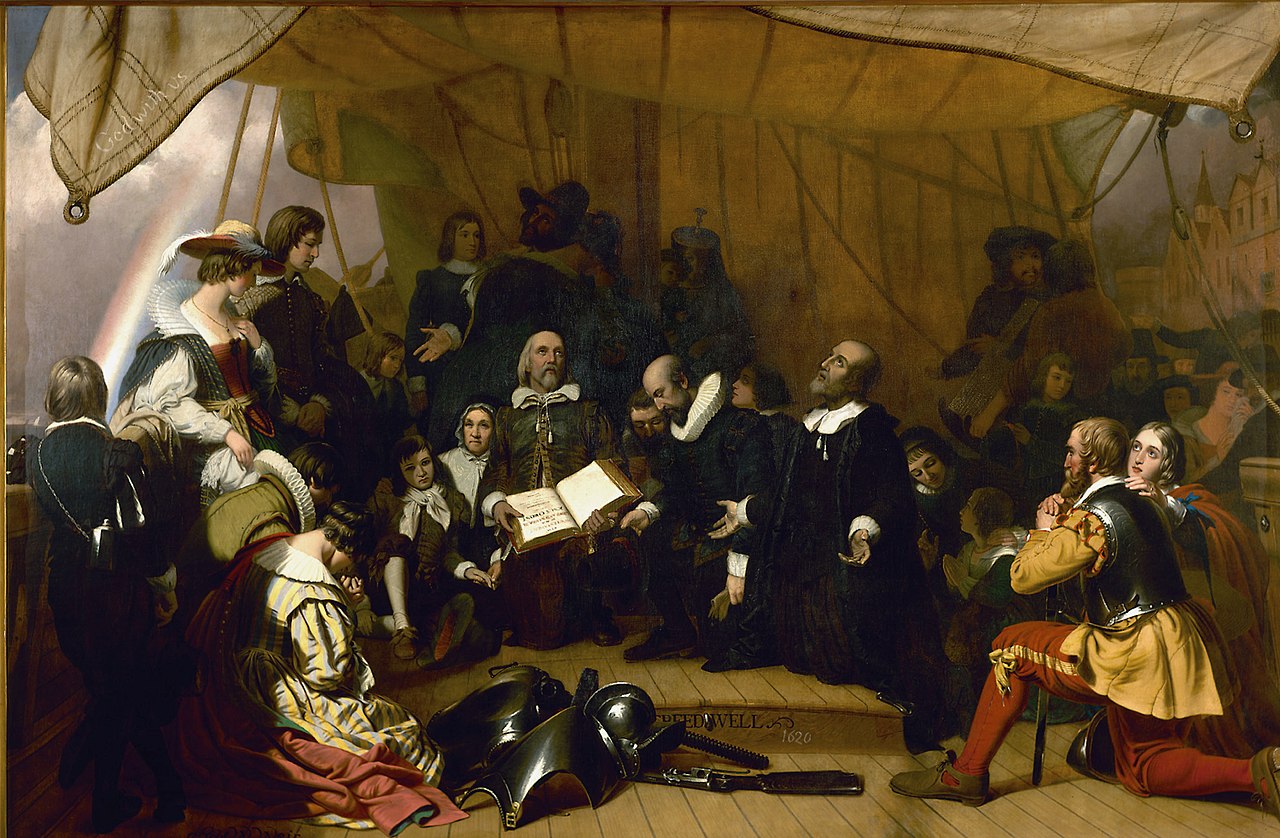
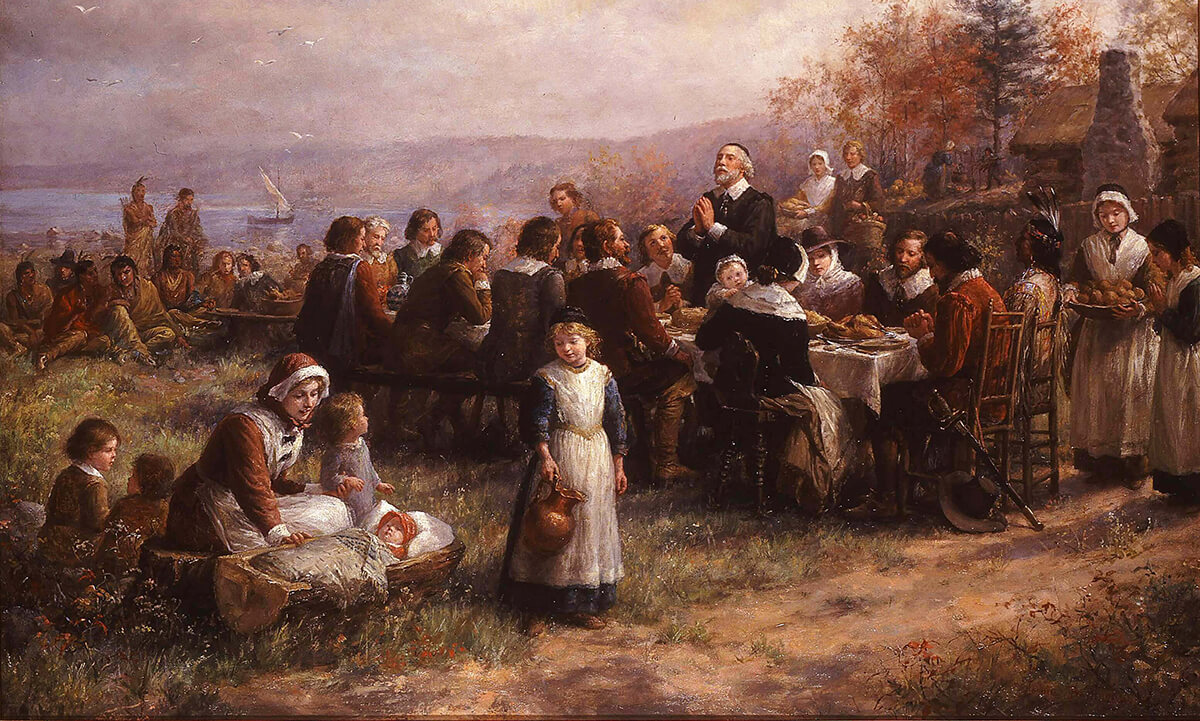
The Pilgrims also followed this pattern. Upon arriving in America in 1620, they announced in the Mayflower Compact (the first government document written in America) that their mission was undertaken “for the glory of God and the advancement of the Christian faith.”1 They had come with the laudable goal of evangelizing the new country.

Their first year in America proved to be extremely difficult. By the end of that winter, over half had died, thereby doubling the workload on the rest. And by the end of the second year, half of the remaining survivors had also died, leaving only one-fourth from the original group. Struggling to survive in that harsh wilderness was grueling work and a round-the-clock occupation. It became apparent that their ardent desire to establish a fully functioning Christian colony and to bring all of those around them to Christian faith would not occur in their lifetime.

So, like David, they worked hard to prepare everything they could for the coming generation: training, equipping, and then transmitting to them the vision and responsibility. As explained by the Pilgrims’ governor, William Bradford:

Lastly (and which was not least), a great hope and inward zeal they [the Pilgrims] had of laying some good foundations (or at least to make some way thereunto) for the propagating and advancing of the Gospel of the kingdom of Christ in those remote parts of the world, yea, though they should be but even as stepping stones unto others for the performing of so great a work.2

Stepping-stones. Significantly, one generation was willing to become a stepping-stone for the next. Figuratively speaking, they worked to move the ball as far down field as possible before handing it off to their descendants to score. What a fantastic lesson to learn and practice today: if you see that you will not accomplish the lofty goals you have set for yourself or that you believe God has given you, it doesn’t mean that you are a failure. Don’t quit and drop out in discouragement. Instead, find those who are younger and equip, train, and pass the vision on to them.

Many of the national challenges before us will require trans-generational solutions, which is fully Biblical. We can and must do everything we can right now. But we must also train the rising generation with an understanding of the stewardship that will be placed in their hands. Each of us must work diligently to make ourselves stepping stones for future generations.


Endnotes

1Agreement Between the Settlers of New-Plymouth, November 11th, 1620,” Ebenezer Hazard, Historical Collections: Consisting of State Papers, and Other Authentic Documents; Intended as Materials for an History of the United States of America (Philadelphia: T. Dobson, 1792), 1:119.
2 William Bradford, History of Plymouth Plantation (Boston: Little, Brown, and Company, 1856), 24.
The Heart of a Grateful Nation

Thoughts on 2 Chronicles 5-7

King David, blessed by God throughout his long life, envisioned building a majestic temple to honor the Lord. But God told David that it would instead be his son, Solomon, who would construct the building. So David prepared everything his son would need. When later King Solomon successfully completed the temple, he gathered the nation together and dedicated the new structure with a time of prayer and praise (2 Chronicles 5-7). The spirit of God filled the temple and fell on those present. God promising Solomon that He would hear and answer prayers prayed from that location. Significantly, our Founding Fathers invoked this incident and this passage at a significant moment early in the political life of a young America.

On September 25, 1789, the very first federal Congress had just finished framing the Bill of Rights—the Capstone of the Constitution. On that notable day, the official records of Congress report:

Mr. [Elias] Boudinot said he could not think of letting the session pass over without offering an opportunity to all the citizens of the United States of joining with one voice in returning to Almighty God their sincere thanks for the many blessings He had poured down upon them. With this view, therefore, he would move the following resolution:

Resolved, That a joint committee of both Houses be directed to wait upon the President of the United States to request that he would recommend to the people of the United States a day of public thanksgiving and prayer, to be observed by acknowledging with grateful hearts the many signal favors of Almighty God. . . .

Mr. [Roger] Sherman justified the practice of thanksgiving on any signal [remarkable] event not only as a laudable one in itself but as warranted by a number of precedents in Holy Writ – for instance, the solemn thanksgivings and rejoicings which took place in the time of Solomon after the building of the temple was a case in point [2 Chronicles 5-7, 1 Kings 7-8]. This example he thought worthy of Christian imitation on the present occasion, and he would agree with the gentleman who moved the resolution. Mr. Boudinot quoted further precedents from the practice of the late Congress and hoped the motion would meet a ready acquiescence [approval]. The question was now put on the resolution and it was carried in the affirmative.1

Congress delivered it recommendation to President George Washington, who happily concurred. He issued America’s first federal proclamation for a Day of Prayer and Thanksgiving. That proclamation declared:

Whereas it is the duty of all nations to acknowledge the providence of Almighty God, to obey His will, to be grateful for His benefits, and humbly to implore His protection and favor. . . . Now, therefore, I do recommend . . . that we may then all unite in rendering unto Him our sincere and humble thanks for His kind care and protection of the people of this country. . . . And also that we may then unite in most humbly offering our prayers and supplications to the great Lord and Ruler of Nations, and beseech Him to pardon our national and other transgressions . . . to promote the knowledge and practice of true religion and virtue.2

Notice that George Washington said that nations—not just individuals, but nations—have four duties: (1) to acknowledge the providence of Almighty God, (2) to obey His will, (3) to be grateful for His benefits, and (4) humbly to implore His protection and favor. This proclamation, along with the several other calls to prayer issued during his administration, was written by Washington himself. Whereas other presidents had chaplains of Congress write their proclamations.3

America observed its first federal day of thanksgiving because Founding Fathers in Congress were thoroughly familiar with the Bible and found precedent for such a day from 2 Chronicles 5-7—one of many American practices with a Biblical basis.


Endnotes

1 September 25, 1789, The Debates and Proceedings in the Congress of the United States, Joseph Gales, editor (Washington: Gales and Seaton, 1834) I:949-950.

2 The Providence Gazette and Country Journal (Providence: October 17, 1789), 1. George Washington, “A Proclamation,” issued on October 3, 1789, observance date November 26, 1789.

3 Joseph H. Jones, The Life of Ashbel Green (New York: Robert Carter and Brothers, 1849), 270-271.

The Rock Upon Which Our Republic Rests

Thoughts on 2 Kings 23

There are numerous Biblical occasions when civil leaders urged a national reading of God’s Word. For example, under righteous King Josiah of Israel:

The king went up to the house of the Lord with all the men of Judah, and with him all the inhabitants of Jerusalem—the priests and the prophets and all the people, both small and great. And he read in their hearing all the words of the Book of the Covenant which had been found in the house of the Lord (2 Kings 23:2).

Ezra also assembled the nation to read the Word of God (Nehemiah 8:1-3), and Moses likewise instructed the people to gather together and read God’s Word so that they might know it, obey it, and teach it to the rising generation, for by so doing, they would remain blessed as a nation (Deuteronomy 31:11-13).

America’s national leaders continued to follow this pattern. President Franklin Roosevelt proposed:

I suggest a nationwide reading of the Holy Scriptures during the period from Thanksgiving Day to Christmas. . . . Go to . . . the Scriptures for a renewed and strengthening contact with those eternal truths and majestic principles which have inspired such measure of true greatness as this nation has achieved.1

(Today, National Bible Week is still officially commemorated one week of the period between Thanksgiving and Christmas. But sadly few citizens know of its existence, and sadder still even fewer observe it.)

Why would President Roosevelt publicly call the nation to a time of Scripture reading? Because of its proven beneficial influence:

In the formative days of the Republic, the directing influence the Bible exercised upon the fathers of the Nation is conspicuously evident. . . . We cannot read the history of our rise and development as a Nation without reckoning with the place the Bible has occupied in shaping the advances of the Republic.2

On the same basis, President Ronald Reagan declared a national “Year of the Bible,” explaining:

Of the many influences that have shaped the United States of America into a distinctive Nation and people, none may be said to be more fundamental and enduring than the Bible. . . . The Bible and its teachings helped form the basis for the Founding Fathers’ abiding belief in the inalienable rights of the individual – rights which they found implicit in the Bible’s teachings of the inherent worth and dignity of each individual. This same sense of man patterned . . . the ideals set forth in the Declaration of Independence and the Constitution. . . . There could be no more fitting moment than now to reflect . . . upon the wisdom revealed to us in the [Bible].3

President Teddy Roosevelt similarly affirmed:

[T]he teachings of the Bible are so interwoven and entwined with our whole civic and social life that it would be literally—I do not mean figuratively, I mean literally—impossible for us to figure to ourselves what that life would be if these teachings were removed. We would lose almost all the standards by which we now judge both public and private morals—all the standards toward which we, with more or less resolution, strive to raise ourselves. Almost every man who has by his life-work added to the sum of human achievement of which the race is proud—of which our people are proud – almost every such man has based his lifework largely upon the teachings of the Bible. . . . Among the very greatest men, a disproportionately large number have been diligent and close students of the Bible at first hand. . . . So I plead not merely for training of the mind but for . . . the moral and spiritual training that have always been found in and that have ever accompanied the study of this Book—this Book, which in almost every civilized tongue can be described as “The Book.”4

Teddy wanted everyone to know the Bible, and a reason that he had been so thoroughly impressed by President Abraham Lincoln was his personal mastery of the Bible. As he explained:

Lincoln—sad, patient, kindly Lincoln, who after bearing upon his weary shoulders for four years a greater burden than that borne by any other man of the nineteenth century laid down his life for the people whom living he had served as well—built up his entire reading upon his early study of the Bible. He had mastered it absolutely – mastered it as later he mastered only one or two other books (notably Shakespeare) —mastered it so that he became almost “a man of one Book,” who knew that Book and who instinctively put into practice what he had been taught therein.5

Indeed, it is extremely difficult to find any of Lincoln’s major speeches not laced throughout with Scriptures, so it is therefore not surprising that in speaking of the Bible, Lincoln declared:

It is the best gift God has given to men. All the good the Savior gave to the world was communicated through this Book. But for it, we could not know right from wrong. 6

President Zachary Taylor also stressed how important it was that every citizen, especially young citizens, know the Bible:

The Bible is the best of books and I wish it were in the hands of everyone. It is indispensable to the safety and permanence of our institutions; a free government cannot exist without religion and morals, and there cannot be morals without religion, nor religion without the Bible. Especially should the Bible be placed in the hands of the young. It is the best schoolbook in the world. . . . I would that all of our people were brought up under the influence of that Holy Book.7

President Harry Truman, speaking at a conference of law enforcement officials assembled from across the nation, reminded them:

The fundamental basis of this Nation’s law was given to Moses on the Mount. The fundamental basis of our Bill of Rights comes from the teachings which we get from Exodus and St. Matthew, from Isaiah and St. Paul. I don’t think we emphasize that enough these days.8

President Andrew Jackson likewise declared of the Bible that “it is the rock on which our Republic rests.”9

And President Grant, on the 100th anniversary of American Independence exhorted, “Hold fast to the Bible as the sheet-anchor of your liberties; write its precepts in your heats, and practice them in your lives. To the influence of this Book we are indebted for all the progress made in true civilization, and to this we must look for our guide in the future.”10

There are many other examples demonstrating that America’s leaders understood the importance of God’s Word to the nation and publicly urged the reading and knowledge of it, just as ancient leaders such as Moses, Ezra, and Josiah had done. It is important that every citizen personally study, learn, and live by God’s Word, teaching it to their children and also electing at the local, county, state, and federal level leaders who know and honor the principles of “The Book.”


Endnotes

1 Franklin D. Roosevelt, “Proclamation 2629—Thanksgiving Day, 1944,” November 1, 1944, American Presidency Project, https://www.presidency.ucsb.edu/node/210843.

2 Franklin D. Roosevelt, “Statement on the Four Hundredth Anniversary of the Printing of the English Bible,” October 6, 1935, American Presidency Project, https://www.presidency.ucsb.edu/node/209257.

3 Ronald Reagan, “Proclamation 5018—Year of the Bible, 1983,” February 3rd, 1983, American Presidency Project, https://www.presidency.ucsb.edu/node/262128.

4 Theodore Roosevelt, “On Reading the Bible: Delivered before the Members of the Bible Society,” 1901, Modern Eloquence, ed. Thomas B. Reed (Philadelphia: John D. Morris and Company, 1903), XV:1770-1776.

5 Roosevelt, “On Reading the Bible: Delivered before the Members of the Bible Society,” 1901, Modern Eloquence, ed. Reed (1903), XV:1770-1776.

6 Abraham Lincoln, “Reply to Committee of Colored People of Baltimore Who Presented Him with a Bible,” Complete Works Comprising his Speeches, Letters, State Papers, and Miscellaneous Writings, John Nicolay and John Hay, editors (New York: The Century Co., 1894), 2:574.

7The President and the Bible,” New York Semi-Weekly Tribune (Wednesday, May 9, 1849), IV:100:1.

8 Harry S. Truman, “Address Before the Attorney General’s Conference on Law Enforcement Problems,” February 15, 1950, American Presidency Project, https://www.presidency.ucsb.edu/node/230655.

9 Ronald Reagan, “Proclamation 5018—Year of the Bible, 1983,” February 3rd, 1983, American Presidency Project, https://www.presidency.ucsb.edu/node/262128; see the same quote in a proclamation from President George H. W. Bush, “International Year of Bible Reading,” February 22, 1990, Code of Federal Regulations (Washington, D. C.: U. S. Government Printing Office, 1991), 21.

10 Ulysses Grant, “Message of President Grant to the Children and Youth of the U.S.” card in WallBuilders Museum collection.

FAQ: Inalienable Rights

Claimed in the Declaration of Independence as “unalienable rights,” inalienable rights are those that are not under the purview of the government – those rights that are inherent to each person.1 They are also sometimes referred to as natural rights, because they could only be granted by God. America’s Founding Fathers emphasized inalienable rights throughout their writings since they were considered most valuable and to be closely guarded.

Liberties dearer to you than your lives, “which God gave to you and which no inferior power has a right to take away.” JOHN DICKINSON “Penman of the Revolution”2

The sacred rights of mankind are not to be rummaged for among old parchments or musty records. They are written, as with a sunbeam, in the whole volume of human nature by the hand of the Divinity itself; and can never be erased or obscured by mortal power. ALEXANDER HAMILTON3

That all men are by nature equally free and independent, and have certain inherent rights, of which, when they enter into a state of society, they cannot, by any compact, deprive or divest their posterity; namely, the enjoyment of life and liberty, with the means of acquiring and possessing property, and pursuing and obtaining happiness and safety. VIRGINIA DECLARATION OF RIGHTS (1776)4

Some of the inalienable rights the Founders specifically mentioned included:5

  • Life
  • Liberty
  • Private Property
  • Conscience (specifically relating to worshipping God)
  • Self-Preservation or “Personal Security”
  • Happiness
  • Private Judgment or “Self-Direction”
  • Association
  • Right to Necessary Things (air, water, earth)

Additional Resources

Biblical Christianity: The Origin of the Right of Conscience

A God-Given Inalienable Right

The Founders on the Second Amendment

The Founders Bible

The Second Amendment


Endnotes

1 Noah Webster, “inalienable,” An American Dictionary of the English Language (New York: S. Converse, 1828). Today there is a question of whether the correct term is “inalienable” (as now used in contemporary English) or “unalienable” (as it originally appeared in the Declaration). As seen in this definition by Noah Webster (a soldier in the American War for Independence, and a judge and legislator afterwards), “unalienable” is a synonym for “inalienable.”

2 John Dickinson, letter to the Society of Fort St. David’s, 1768, Letters from a Farmer in Pennsylvania, ed. R. T. H. Halsey (New York: The Outlook Company, 1903), xlii.

3Alexander Hamilton, “The Farmer Refuted,” February 5, 1775,” The Works of Alexander Hamilton, ed. John C. Hamilton (New York: John F. Trow, 1850), II:80.

4 The Virginia Declaration of Rights, adopted unanimously June 12, 1776, Virginia Convention of Delegates, drafted by George Mason, The Avalon Project, Yale Law School, accessed December 4, 2023, https://avalon.law.yale.edu/18th_century/virginia.asp.

5. See, for example: Samuel Adams, “The Rights of The Colonists, A List of Violations of Rights and a Letter of Correspondence, Adopted by the Town of Boston, November 20, 1772,” The Life and Public Service of Samuel Adams, ed. William V. Wells (Boston: Little, Brown and Company, 1865), I:502. Samuel Adams, An Oration Delivered at the State House, in Philadelphia, to a Very Numerous Audience; on Thursday the 1st of August, 1776 (London: J. Johnson, 1776), 4. The Massachusetts Constitution 1780, drafted by John Adams, “A Declaration of the Rights of the Inhabitants of the Commonwealth of Massachusetts.” James Madison, “Property,” from the National Gazette, March 29, 1792, The Writings of James Madison, ed. Gaillard Hunt (New York: G. P. Putnam’s Sons, 1906), VI:101-102. James Wilson, “Of Crimes Against the Right of Individuals to Personal Safety,” The Works of the Honourable James Wilson, ed. Bird Wilson (Philadelphia: Lorenzo Press, 1804), III:84-85. John Witherspoon, Lectures on Moral Philosophy; Lecture X, “Of Politics,” The Works of John Witherspoon (Edinburgh: Ogle & Aikman, 1805), VII:77-78.

FAQ: Difficulties and Sacrifices of the Declaration Signers

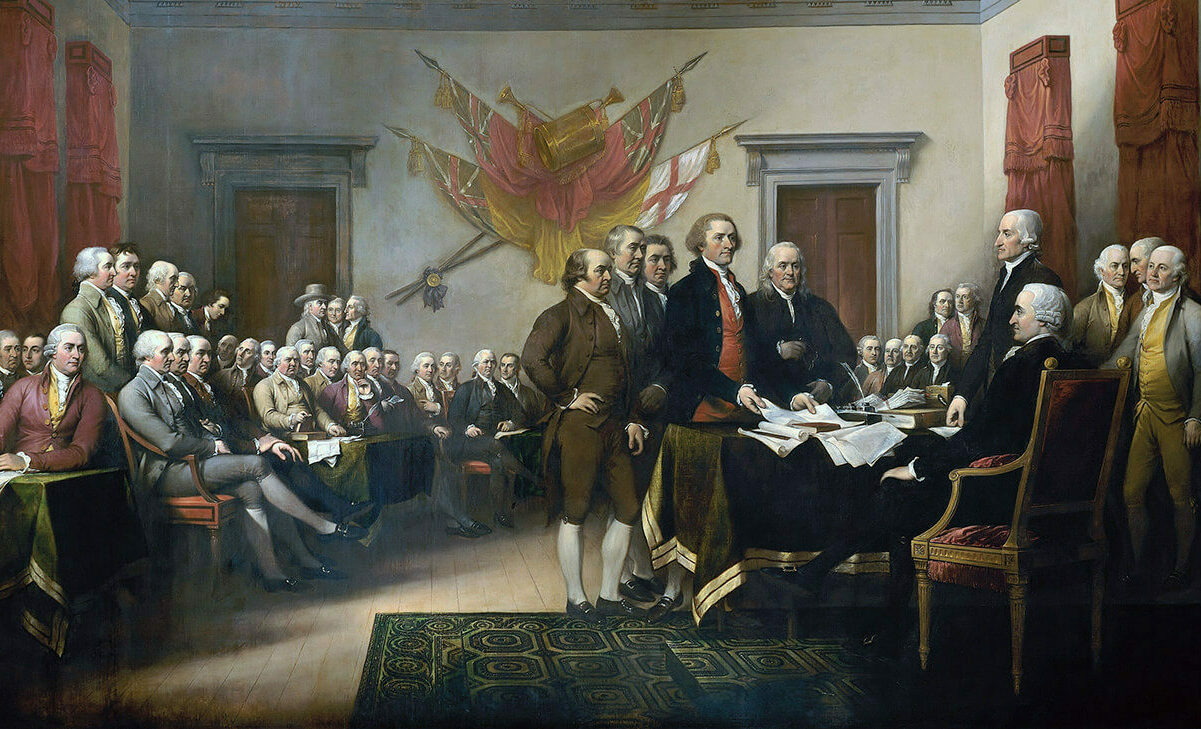
There were a total of 56 men who signed the Declaration of Independence in 1776. They knew their signatures could cost them their lives but willingly signed anyway. Many, in fact, did make sacrifices and had to endure hard times as a result of their courageous action. Several would not live to witness the independence they had devoted their “lives, fortune, and sacred honor” to achieve. Below are just a few of the numerous examples.

Two signers suffered battle wounds: George Walton and Thomas Heyward, both of whom were also held as prisoners of war. Similarly, Arthur Middleton and Richard Stockton experienced imprisonment. Many signers were forced to flee their homes to evade capture. This group included Francis Hopkinson, John Hart, George Clymer, Thomas Jefferson, Arthur Middleton, Lyman Hall, Francis Lewis, and William Floyd.

Moreover, 17 signers lost their homes or property. For instance, Josiah Bartlett and William Ellery’s residences were set ablaze. Lewis Morris faced property destruction and severe damage to his home. George Clymer endured the loss of his belongings and Lyman Hall had his property confiscated. John Hart’s house was looted while his mill and crops were destroyed. Richard Stockton, Francis Lewis, and Reverend John Witherspoon endured looted property and burnt libraries.

Additionally, several signers suffered family hardship. For example, two of Abraham Clark’s sons were taken as prisoners; Francis Lewis’ wife was held captive for months, resulting in broken health and leading to her untimely death; and John Witherspoon’s eldest son lost his life during the Battle of Germantown.

Discover more about the courageous Signers of the Declaration in the historical reprint Lives of the Signers. Read also, the hardships their wives shared in the companion book Wives of the Signers. Additional articles include:

FAQ: Declaration Signers as Ministers

While a number of Declaration signers received training as ministers, only a few were actively engaged in ministry at the time of signing. Notable among them was John Witherspoon, who was fulfilling a ministerial role. Robert Treat Paine was a military chaplain, and Lyman Hall had been a minister prior to the War for Independence. However, many other signers should be noted for their ministry work.

Francis Hopkinson, for instance, was a church music director and choir leader, and also compiled a famous American hymnbook. Roger Sherman wrote the doctrinal creed for his denomination in Connecticut. Benjamin Rush started Sunday School in America and helped to found the country’s first Bible Society. James Wilson trained as a clergyman in Scotland but became an attorney, teaching students the Biblical basis of civil law. And there are many others.

In fact, at least 29 of the signers had been trained in schools whose primary purpose was the preparation of ministers (listed below). They attended universities and seminaries of learning such as Harvard, Yale, William and Mary, Princeton, Cambridge, and Westminster. You can read about each of these Declaration signers in WallBuilders’ book Lives of the Signers.

  1. John Adams
  2. Samuel Adams
  3. Carter Braxton
  4. Charles Carroll
  5. William Ellery
  6. Elbridge Gerry
  7. Lyman Hall
  8. John Hancock
  9. Benjamin Harrison
  10. Joseph Hewes
  11. William Hooper
  12. Francis Hopkinson
  13. Thomas Jefferson
  14. Francis Lewis
  15. Philip Livingston
  16. Thomas Lynch
  17. Arthur Middleton
  18. Lewis Morris
  19. Thomas Nelson Jr.
  20. William Paca
  21. Robert Treat Paine
  22. Benjamin Rush
  23. James Smith
  24. Richard Stockton
  25. William Williams
  26. James Wilson
  27. John Witherspoon
  28. Oliver Wolcott
  29. George Wythe

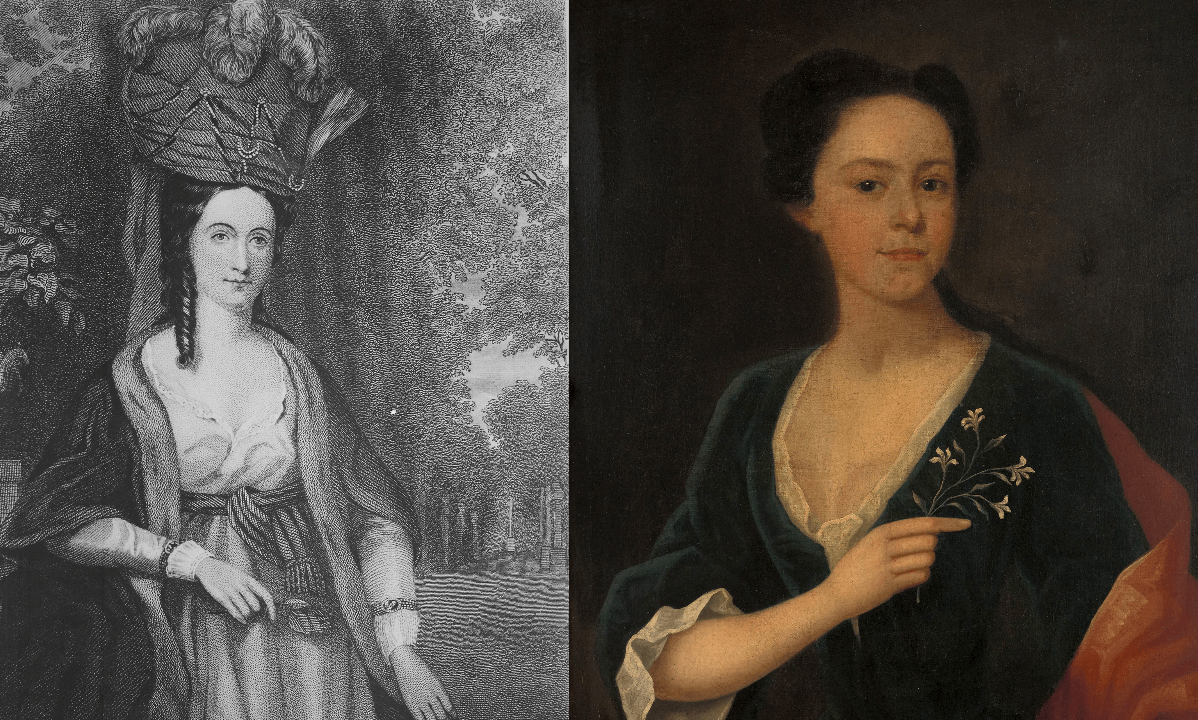
Sacrifices of Wives of the Declaration Signers

Here are some inspiring stories1 of women in American history. We hope they are an encouragement!

Mary Morris (wife of Robert Morris2) fled her home with her four young children (the oldest being only 7) as the British approached Philadelphia. Getting to safety, she wrote to her husband recounting her flight: “I long to give you an account of the many difficulties and uneasiness we have experienced in this journey. Indeed my spirits were very unable to the task after that greatest conflict, flying from home.”3

Gertrude Read (wife of Declaration signer George Read4) and her four young children were frequently left alone under continual threat5 as the British marched through and occupied parts of the state. Yet, despite the long separations from her husband and the many times she had to move her family to safety, a biographer of George Read notes, “she never was dejected…she animated his fortitude by her firmness.”6

As the British made their way to Princeton in the early years of the war, Annis Stockton7 (wife of Declaration signer Richard Stockton), personally secured numerous state papers to keep them safe from the British. When Richard heard8 of the British approach, he quickly acted to get his family (including six children) to safety. He, himself, was arrested the very evening his family got to safety, and remained in horrible prison conditions until Congress was able to arrange better accommodations. He never fully recovered and died in 1781.

Mary Bartlett (wife of Declaration signer Josiah Bartlett) also faced many hardships. In 1774, arsonists9 (assumed to be Loyalists opposed to Josiah’s support of the Americans) burned down the Bartlett’s home. Mary did not despair but simply moved her 12 children to the family’s farm. A biographer noted that she managed the farm herself and “in all her letters to her husband and her children, there is not one word of regret at his course or pity for herself, left alone to bear the double duties incumbent upon her.”10


Endnotes

1 “Women Heroes,” WallBuilders.
2 John Sanderson, Biography of the Signers of the Declaration of Independence (Philadelphia: R. W. Pomeroy, 1824), V:189-375.
3 Henry Clinton Greene & Mary Wolcott Greene, The Pioneer Mothers of America (NY: G. P. Putnam’s Sons, 1922), 3:159.
4 “Read, George,” ed. Dumas Malone, Dictionary of American Biography (NY: Charles Scribner’s Sons, 1935), 15:422-424.
5 Greene & Greene, Pioneer Mothers (1922), 3:211.
6 John Sanderson, Biography of the Signers of the Declaration of Independence (Philadelphia: R. W. Pomeroy, 1824), IV:27.
7 Greene & Greene, Pioneer Mothers (1922), 3:133.
8 “Stockton, Richard,” ed. Malone, DAB (1936), 18:45-46.
9 “Josiah Bartlett,” National Park Service, July 4, 2004.
10 Greene & Greene, Pioneer Mothers (1922), 3:12-13.

Is the Declaration Racist?

On July 4, 1776 a group of Americans approved a document declaring the United States of America free from English rule. This document was the Declaration of Independence, the nation’s birth certificate. The Declaration is currently being attacked as a racist document. Is this true?

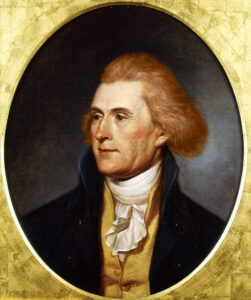
Thomas Jefferson, the author of this document, laid out the reasons the American colonies were declaring themselves independent. One of the grievances he included in his original draft of the Declaration said:

He [King George III] has waged cruel war against human nature itself, violating its most sacred rights of life and liberty in the persons of a distant people who never offended him, captivating and carrying them into slavery in another hemisphere….Determined to keep open a market where MEN should be bought and sold, he has prostituted his negative for suppressing every legislative attempt to prohibit or to restrain this execrable commerce.
This grievance was not included the final copy of the Declaration because of the objection of two states, but its inclusion by Thomas Jefferson shows how serious the issue of slavery was taken by our Founding Fathers.

For many generations the Declaration of Independence was recognized as being a document that brought “freedom to the slave [and] liberty to the captives” (John Quincy Adams). For example, Abraham Lincoln spoke about the importance of the Declaration as an equality document:

In their [the Founders] enlightened belief, nothing stamped with the Divine image and likeness was sent into the world to be trodden on, and degraded and imbruted by its fellows. They grasped not the whole race of man then living, but they reached forward and seized upon the farthest posterity…[I]f you have been taught doctrines conflicting with the great landmarks of the Declaration of Independence…if you have been inclined to believe that all men are not created equal in those inalienable rights enumerated by our chart of liberty, let me entreat you to…come back to the truths that are in the Declaration of Independence.
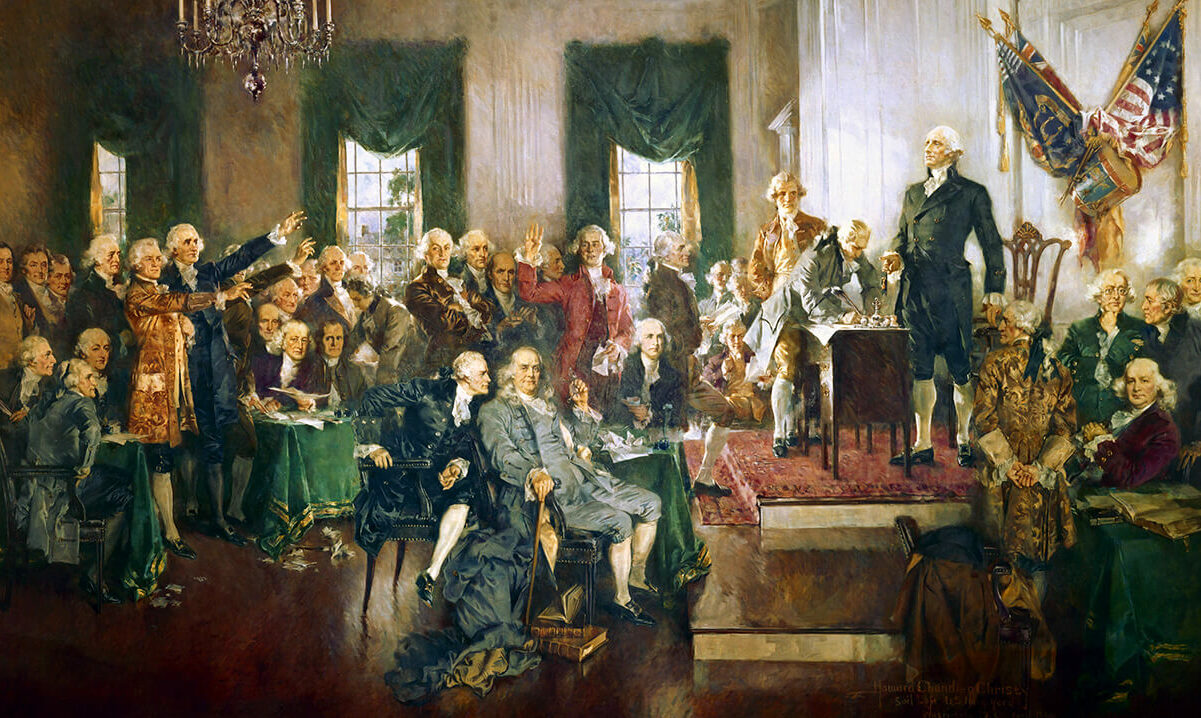
In honor of the lasting truths set forth in the Declaration of Independence, let’s celebrate Independence Day in a way that was recommended by John Adams:

It ought to be commemorated, as the day of deliverance, by solemn acts of devotion to God Almighty.

Signers of the Declaration Resource Page

So many today know very little about the fifty-six men who signed the Declaration of Independence. They pledged their “lives, fortunes, and sacred honor” to preserve the important freedoms enshrined in that document. Their legacy, in the form of the Declaration, has lasted throughout the centuries as America has grown and prospered and that legacy deserves to be remembered! Below we’ve collected some resources so that you can become better acquainted with these brave men.

Biographical Websites

US History.org, Signers of the Declaration of Independence: http://www.ushistory.org/DECLARATION/signers/index.html

National Park Service, Signers of the Declaration Biographical Sketches: https://www.nps.gov/parkhistory/online_books/declaration/bioa.htm

Descendants of the Signers of the Declaration of Independence: https://www.dsdi1776.com/signer/

Biographical Books

John Sanderson, Biography of the Signers: https://catalog.hathitrust.org/Record/007911419

Lives of the Signershttps://shop.wallbuilders.com/index.php/lives-of-the-signers-of-the-declaration.html

Wives of the Signershttps://shop.wallbuilders.com/index.php/wives-of-the-signers-book.html

WallBuilders’ Articles

America’s Birthday Over the Centuries: https://wallbuilders.com/resource/happy-fourth-of-july/

Happy Independence Day!: https://wallbuilders.com/resource/happy-independence-day/

4th of July: https://wallbuilders.com/resource/4th-july-article

Dr. Benjamin Rush: https://wallbuilders.com/resource/dr-benjamin-rush

James Wilson: https://wallbuilders.com/resource/james-wilson

Secretary of the Continental Congress Charles Thomson: https://wallbuilders.com/resource/secretary-of-the-continental-congress-charles-thomson/

FAQ: Difficulties and Sacrifices of the Declaration Signers: https://wallbuilders.com/resource/faq-difficulties-and-sacrifices-of-the-declaration-signers

Their Lives, Fortunes and Sacred Honor: Richard Stockton: https://wallbuilders.com/resource/lives-fortunes-sacred-honor-richard-stockton

Who Was Charles Carroll?: https://wallbuilders.com/resource/who-was-charles-carroll

John Hart – Quiet Farmer. Selfless Patriot: https://wallbuilders.com/resource/the-cost-of-signing-the-declaration-of-independence/

Courageous Women During the American Revolution: https://wallbuilders.com/resource/women-heroes

Sacrifices of Wives of the Declaration Signers: https://wallbuilders.com/resource/sacrifices-of-wives-of-the-declaration-signers/

Other Articles & Websites

National Archives, The Signers’ Gallery: https://www.archives.gov/founding-docs/signers-gallery

National Archives, Signers of the Declaration of Independence: https://www.archives.gov/founding-docs/signers-factsheet

Library of Congress, Thomas Jefferson, June 1776, Rough Draft of the Declaration of Independence: https://www.loc.gov/resource/mtj1.001_0545_0548/?st=gallery

Architect of the Capitol, Declaration of Independence Painting: https://www.aoc.gov/explore-capitol-campus/art/declaration-independence

Architect of the Capitol, Key to the Declaration of Independence Painting: https://www.aoc.gov/sites/default/files/painting_key_declaration-of-independence_aoc.png

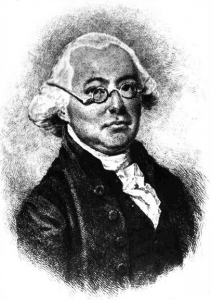
James Wilson

Quiz


1. What was James Wilson’s country of birth?

2. True or False: James Wilson signed the Constitution but not the Declaration of Independence.

3. True or False: At the Constitutional Convention, Wilson was one of the relatively inactive members.

4. Who appointed Wilson to the Supreme Court?

5. True or False: During the War for Independence, Wilson was sent to negotiate with the Indians.

6. What teaching position did Wilson hold concurrent to his time in the Supreme Court?


A Lost Founder

One Founding Father we should definitely remember was James Wilson, born on September 14, 1742. Take the above quiz and see what you know about him!

In the modern rewriting of our American history, some of our nation’s Founding Fathers have been wrongly misportrayed as people not worthy of study, but most have simply been ignored. As a consequence, many worthy heroes are now forgotten. Fortunately, the Scriptures encourage us to study the past: “For whatever things were written before were written for our learning” (Romans 15:4).

James Wilson can teach us much that is relevant today, including about the important role that religion plays in civil law:

Far from being rivals or enemies, religion and law are twin sisters, friends, and mutual assistants. Indeed these two sciences run into each other. The Divine law, as discovered by reason and the moral sense, forms an essential part of both.1

Take some time to learn about James Wilson, and then share what you learn with others. Wilson is one of the heroes who helped make America a great nation!


How did you do? Check your answers!

1. Wilson was born in Scotland in 1742, he immigrated to America in 1766.2

2. False. James Wilson signed both the Declaration of Independence3 and the Constitution.4

3. False. James Wilson was the second most-active delegate at the Constitutional Convention, speaking 168 times on the floor of the Convention.5

4. George Washington. James Wilson was one of the original Supreme Court justices, serving from 1789 to 1798.6

5. True.7

6. Professor of Law at the University of Pennsylvania. Wilson organized the first systematic legal training in America, teaching classes to law students while simultaneously sitting as a Justice on the US Supreme Court.8 Prior to Wilson’s law classes, law students were largely individually trained and apprenticed in the law.


Endnotes

1 James Wilson, The Works of the Honourable James Wilson, ed. Bird Wilson (Philadelphia: Lorenzo Press, 1804), III:106.
2 “James Wilson,” B. J. Lossing, Biographical Sketches of the Signers of the Declaration of American Independence (New York: George F. Cooledge, 1848), 126.
3 “Signers of the Declaration: Biographical Sketches,” National Park Service, accessed December 15, 2023.
4 “Signers of the Constitution: Biographical Sketches,” National Park Service, accessed December 15, 2023.
5 See, for example, Mark David Hall, “Justice, Law, and the Creation of the American Republic: The Forgotten Legacy of James Wilson,” June 1, 2009, The Heritage Foundation; “Forgotten Founders: Gouverneur Morris,” June 8, 2020, National Constitution Center.
6 “Wilson, James,” Biographical Directory of the United States Congress, accessed December 15, 2023.
7 “James Wilson,” Lossing, Biographical Sketches of the Signers (1848), 128.
8 “A Biography of James Wilson,” University of Groningen, accessed December 15, 2023.