The Miraculous Life of Briton Hammon

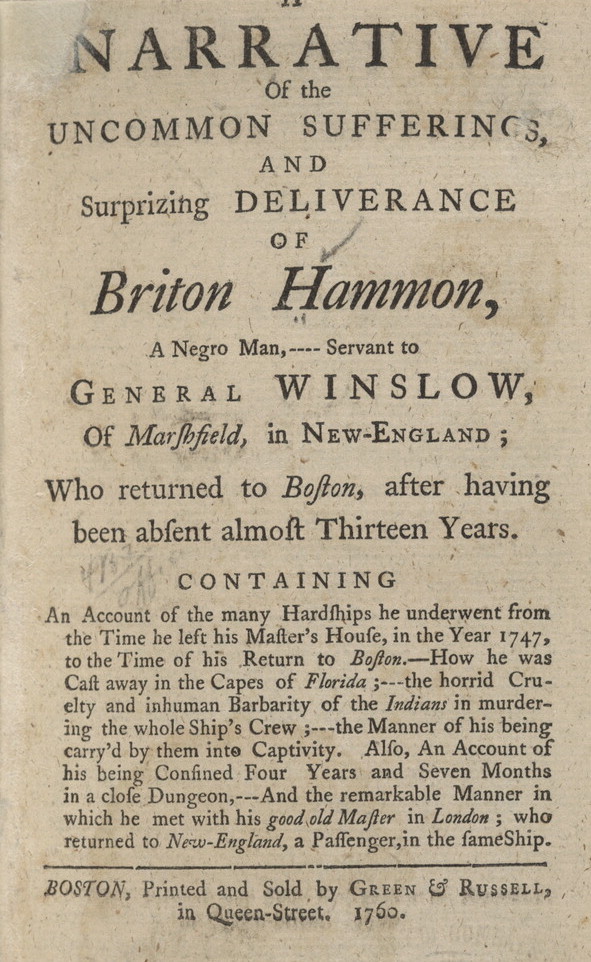
In 1760 America became the first nation to publish a work of prose by a writer of African descent.1 In fourteen pages, the slave and author Briton Hammon recounts nearly 13 years of trial, hardship, and adventure—ending in a way that would surprise most people today. Only two copies of his original work remain in existence, meaning Hammon’s remarkable story of hardship and God’s deliverance is rarely told today, but he deserves credit for beginning a literary tradition which would grow to include people like Frederick Douglass, Solomon Northup, and many others.

Hammon starts his narrative in 1747 when his master, General John Winslow (the great-grandson of the Mayflower Pilgrim Edward Winslow), granted him leave to sail by himself to Jamaica for Christmas.2 However, after a successful cruise to the Caribbean, the vessel accidentally ran onto a reef off the coast of Florida during its return voyage. For two days the ship and crew were stranded, unable to move and with little hope of rescue.

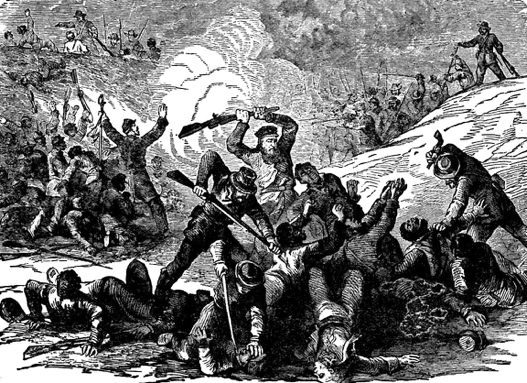
Before they were able to make it to shore, twenty Indian canoes approached them under the guise of an English flag. Upon getting closer, they attacked and killed all of the sailors except for Hammon who, “jumped overboard, choosing rather to be drowned, than to be killed by those barbarous and inhuman Savages.”3 The marauders soon captured him, however, and Hammons describes how the they:

“Beat me most terribly with a cutlass [sword], after that they tied me down… telling me, while coming from the sloop [the ship] to the shore, that they intended to roast me alive.”4

Upon reaching the Indian camp, Hammon was relieved that, “the Providence of God ordered it other ways, for He appeared for my help,” preserving his life till the chance for escape presented itself.5 Soon a Spanish ship, whose captain was a personal friend of Hammon’s, miraculously found him and helped him escape to Havana. The Indians nevertheless persisted, tracking him down and suing the Spanish Governor for his return. Instead of simply giving the shipwrecked slave back to his captors, the Governor purchased Hammon from the Indians for $10 to be one of his slaves.6

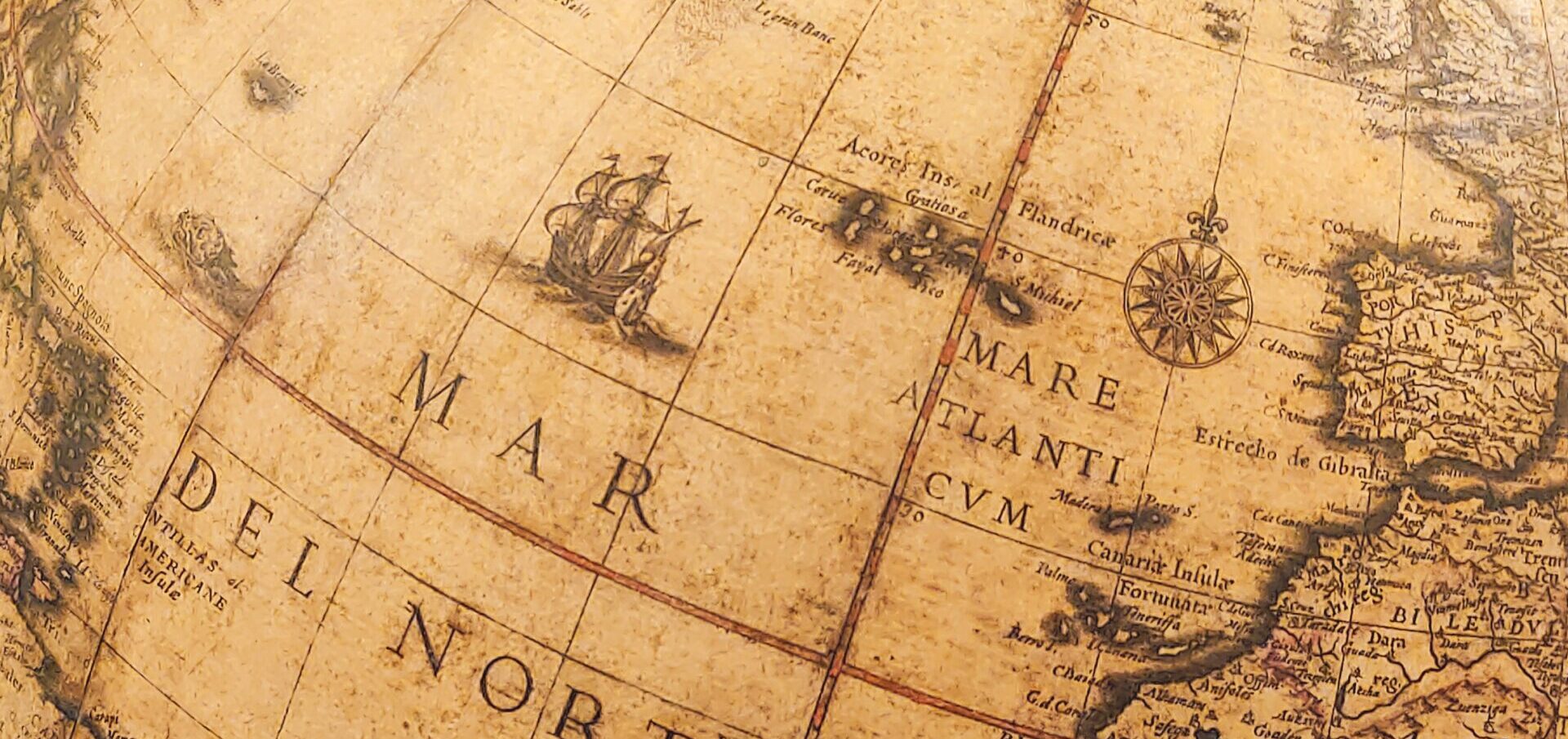
Havana in 1760

One year into his Havanan servitude while walking down the street, an impressment gang (groups of men who would physically coerce people to fight in the Spanish navy) suddenly captured Hammon and imprisoned him for nearly five years because he refused to serve in the fleet—all unbeknownst to the governor. Through years of appealing random visitors, Hammon successfully got word to the governor who freed him from the dungeon only to become a slave once more.

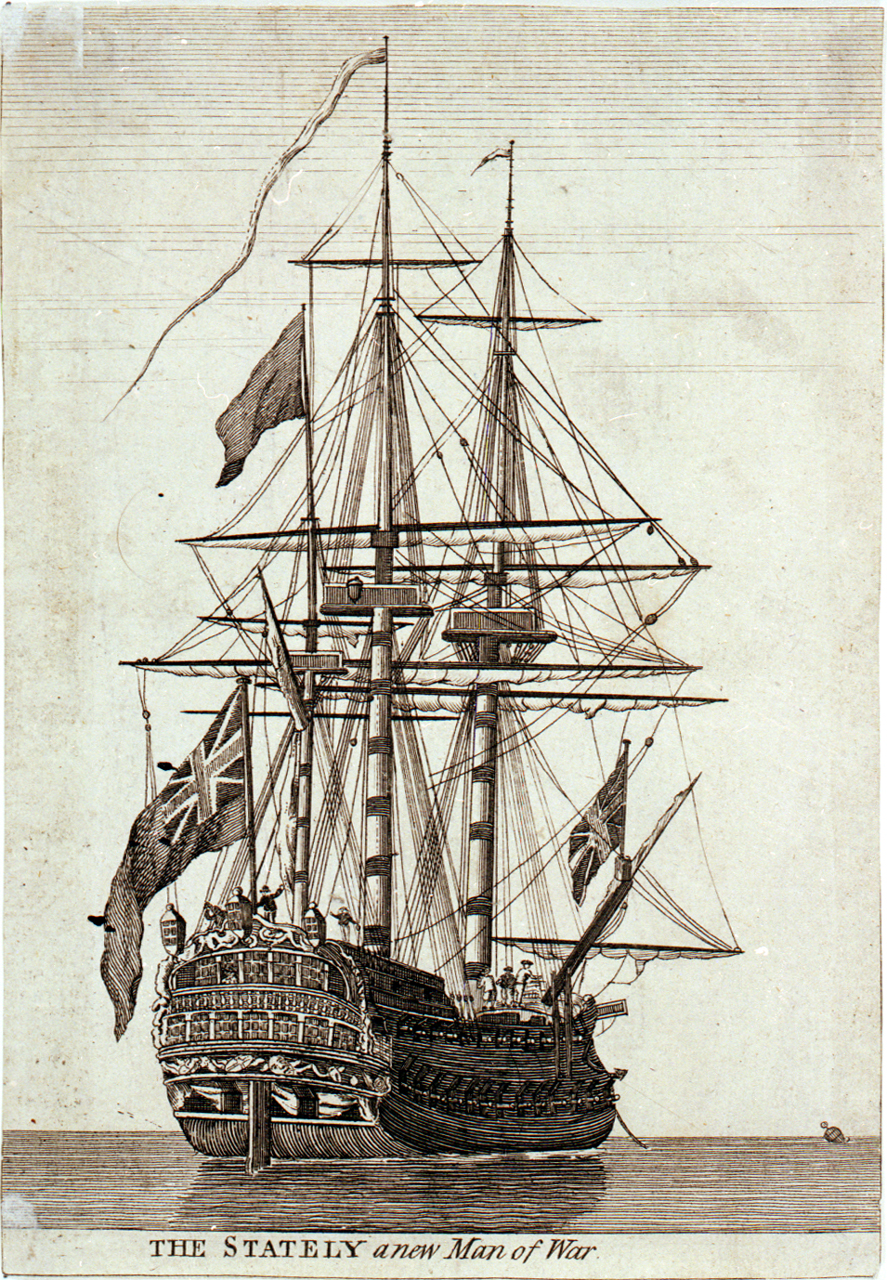
After two failed attempts to escape from the Havana, Hammon successfully worked himself on board a British Man-of-War vessel about to depart for England. The governor was not one to let him go without a fight though and demanded the captain turn him over immediately. This British captain, however, was a man of courage and, “a true Englishman, [who] refused… to deliver up any Englishmen under English Colors.”7

Having now been liberated from Spanish slavery, Briton arrived in England and signed up for the British navy, fighting in several naval battles before being wounded. After an honorable discharge from the service, he continued to hire himself out on numerous voyages eventually signing up for a voyage to Guinea.8 However, before shipping out to Africa, Hammon heard of a boat set to sail to Boston. Instantly, he abandoned plans for Africa and instead joined the crew heading back to the colonies.

To his great astonishment and apparent joy, Hammon heard that his old master, Gen. John Winslow on the same exact vessel. He explains that:

“the Truth was joyfully verified by a happy sight of his person, which so overcame me, that I could not speak to him for some time—my good master was exceeding glad to see me, telling me that I was like one arose from the dead, for he thought I had been dead a great many years, having heard nothing of me for almost thirteen years.”9

In short, Briton Hammon lived nothing short of a miraculous life, something which he was the first to admit, exclaiming:

“How Great Things the Lord hath done for me; I would call upon all men, and say, O magnify the Lord with me, and let us exalt his name together! O that Men would Praise the Lord for His Goodness, and for his Wonderful Works to the Children of Men!”10

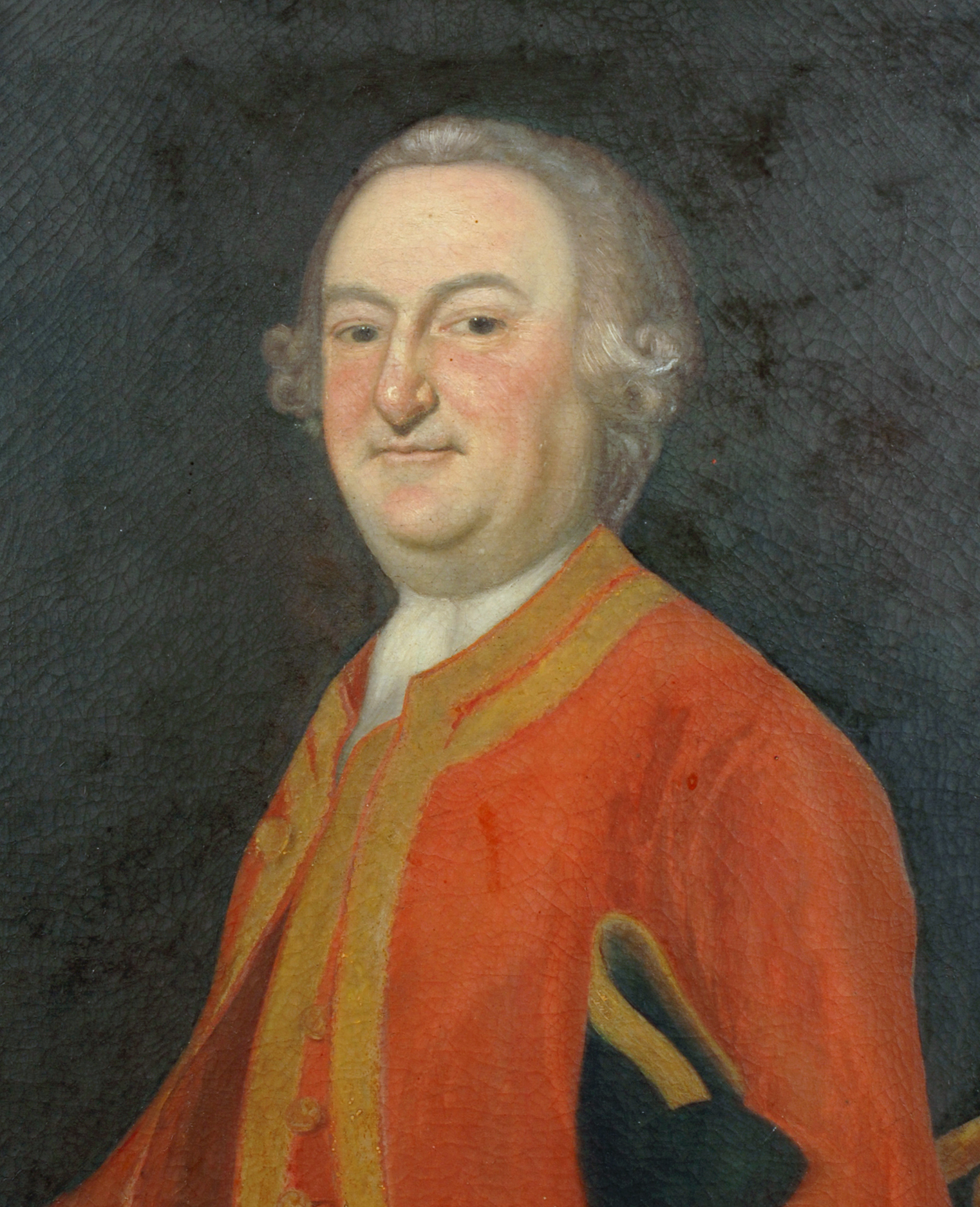
Perhaps the most striking aspect of Briton’s narrative is the apparent fondness he had for his master. In order to begin understand this, some context must be given. As mentioned, General John Winslow (1703-1774) was the great-grandson of the Governor Edward Winslow who came on the Mayflower in 1620. Although seemingly good-natured, over three generations the piety of the Winslow family was merged with a martial spirit and led John into the military, participating in operations from Cuba to Nova Scotia as a part of the British army.11 As a Major General and a descendant of an early governor, he commanded respect even during a period of increasing unrest as the War for American Independence was quickly approaching.

General John Winslow

Naturally then, it is no small factor in Briton Hammon’s story that his master is none other than the noted General. However, on Christmas day 1747 when Briton departed, his master had yet to climb the ranks as most of Winslow’s military leadership would occur over the thirteen years while Briton was gone. Thus, upon his miraculous reunification with the now General Winslow, he remarks that, “I asked them what General Winslow? For I never knew my good Master, by that Title before; but after enquiring more particularly I found it must be Master.”12

That a slave would seek out his master or return to them after being away for many years almost recalls the Biblical story of Onesimus and Philemon. Interestingly, prior to the reunion Briton lamented that while he was extremely sick and poor it was, “unhappy for me I knew nothing of my good Master’s being in London at this my very difficult Time,” indicating that had General Winslow known of his condition his master would have undoubtedly come to his assistance.13

The fact that General Winslow is universally referred to in affectionate terms strikes the modern reader as especially remarkable considering the fact that at the end of his journey Briton had not arrived at what we would consider freedom, only a return to slavery. Combined with the decision to return to Boston instead of pursuing his career in the merchant marine on the voyage to Guinea, we are left to question why a slave would intentionally seek out his old master.

As mentioned above, Hammon’s slave narrative seems strangely different than the stories of Douglass, Northup, and the rest. Instead of fleeing from slavery, Hammon voluntarily returns to his master in America—choosing to board a ship to Boston instead of one to Africa. Why would Hammon choose America, the land of his slavery, over Africa, the land of his heritage? Why would he choose slavery abroad, over freedom at his ancestral home?

The answer to this is the realization that Hammon, far from identifying his home as Africa, has become a colonial American in thought and deed. Through his life in the colonies, an emerging nationalism has taken root and supplanted any previous attachments.

Briton’s narrative is not one of slavery to manumission, but rather one of coming to the place he considered his home. In fact, after having suffered at the hands of un-Christian Indians and barbarous Spaniards, Briton sees the reunification with Winslow as a kind of freedom and a return to his true home. He explains:

“And now, that in the Providence of that GOD, who delivered his servant David out of the paw of the lion and out of the paw of the bear, I am freed from a long and dreadful captivity, among worse savages than they; And am returned to my own Native Land” (emphasis added).14

The fact that he considers New England as his native land explains why he chose to abandon his plans to sail for Africa. For Briton Hammon, Massachusetts is his homeland and where he desires to return. In this sense, his story actually does relate closely to the later slave narratives—they all were seeking a home. Hammon saw himself as an Englishman, and was seen by others (such as the helpful ship captain) as an Englishman. A new identity had sprouted within him, and he now claimed a new homeland.

In the years following Hammon’s return, his proclaimed homeland changed dramatically. As the colonists felt the increasingly heavy hand of the English monarchy, more and more Massachusetts men began to realize the hypocrisy inherent in slavery. Leaders like John and Samuel Adams who were coming of age during that time rejected the institution entirely, by the time of the War for Independence the state was leading the world in progress towards emancipation, earning the honor of being the only state to have totally abolished slavery by the time the first census was completed in 1790—achieving legal emancipation 43 years before England followed suit.15

In fact, Massachusetts’ push towards liberty signaled a major shift in the Northern states concerning slavery. All of the New England states, as well as New York and New Jersey, had passed laws for either the immediate or gradual abolition of slavery by 1804. This directly translated into a rapid increase of manumissions, and from 1790 to 1810 the number of free blacks in America increased from 59,466 to 108,395, displaying a growth rate of 82%. The next decade saw that number expand another 72% to 186,446.16

The 1810 census documented that the total population of those states—Massachusetts (Maine included), New Hampshire, Rhode Island, Connecticut, Vermont, Pennsylvania, New York, and New Jersey—stood at 3,486,675.17  This was approximately 48% of the total population, slave and free, of the United States at that time. Although not entirely free of slavery due to the gradual emancipation laws in states such as New York and New Jersey, the total percentage of the population waiting for emancipation was only 0.9% in those states.
In fact, by 1804 nearly half of America had succeeded in passing laws for the abolition of slavery, and only six years later they had been 99% effective in accomplishing that goal. Nowhere else in the world was anywhere close to what those Northern States had succeeded in doing.

So, what happened to Briton Hammon upon returning home? Unfortunately, the historical record is extremely sparse. It seems likely that General Winslow assisted in the production of Hammon’s Narrative, as the publishers, John Green and Joseph Russell, worked for the English government as the, “appointed printers to the English commissioners.”18 Suggesting that Winslow, with his extensive government connections, might have recommended the book to them or offered it to them first, instead of going to other prominent Bostonian or New England printers.

Two years after his book was published, records suggest that Briton married a long-standing member of the inter-racial First Church of Plymouth.19 After Gen. Winslow passed away in 1774, Briton seemingly was passed to Winslow’s sister and brother-in-law, the Nichols family. A certain “Briton Nichols” appears at this time indicating that Hammons took the name of his new masters. When the War for Independence broke out, however, Briton served four different times from 1777 to 1780 in Washington army, eventually winning his freedom and heading a family of three by the time of the first census.20

While there are many questions remaining to be answered about the remarkable life of Briton Hammon (and even more concerning his likely second round of adventures as Briton Nichols), his place as the first printed black prose author in America (and likely the world) deserves to be remembered. From slave to soldier, imprisonment to independence—Briton’s life is a valuable part of the American story. We ought to heed his words and, “Magnify the Lord…and let us exalt his Name together!”21


Endnotes

1 Frances S. Foster, “Briton Hammon’s ‘Narrative’: Some Insights Into Beginnings,” CLA Journal 21, no. 2 (1977): 179; “Briton Hammon,” Rayford Logan and Michael Winston, eds., Dictionary of American Negro Biography (New York: Norton, 1982), xxx.

2 Briton Hammon, A Narrative of the Uncommon Sufferings and Surprizing Deliverance of Briton Hammon, A Negro Man, Servant to General Winslow, Of Marshfield in New England (Boston: Green & Russell, 1760), 3, here.

3 Briton Hammon, A Narrative of the Uncommon Sufferings and Surprizing Deliverance of Briton Hammon, A Negro Man, Servant to General Winslow, Of Marshfield in New England (Boston: Green & Russell, 1760), 6, here.

4 Briton Hammon, A Narrative of the Uncommon Sufferings and Surprizing Deliverance of Briton Hammon, A Negro Man, Servant to General Winslow, Of Marshfield in New England (Boston: Green & Russell, 1760), 6-7, here.

5 Briton Hammon, A Narrative of the Uncommon Sufferings and Surprizing Deliverance of Briton Hammon, A Negro Man, Servant to General Winslow, Of Marshfield in New England (Boston: Green & Russell, 1760), 7, here.

6 Briton Hammon, A Narrative of the Uncommon Sufferings and Surprizing Deliverance of Briton Hammon, A Negro Man, Servant to General Winslow, Of Marshfield in New England (Boston: Green & Russell, 1760), 7, here.

7 Briton Hammon, A Narrative of the Uncommon Sufferings and Surprizing Deliverance of Briton Hammon, A Negro Man, Servant to General Winslow, Of Marshfield in New England (Boston: Green & Russell, 1760), 11, here.

8 Briton Hammon, A Narrative of the Uncommon Sufferings and Surprizing Deliverance of Briton Hammon, A Negro Man, Servant to General Winslow, Of Marshfield in New England (Boston: Green & Russell, 1760), 12, here.

9 Briton Hammon, A Narrative of the Uncommon Sufferings and Surprizing Deliverance of Briton Hammon, A Negro Man, Servant to General Winslow, Of Marshfield in New England (Boston: Green & Russell, 1760), 13, here.

10 Briton Hammon, A Narrative of the Uncommon Sufferings and Surprizing Deliverance of Briton Hammon, A Negro Man, Servant to General Winslow, Of Marshfield in New England (Boston: Green & Russell, 1760), 14, here.

11 Maria Bryant, Genealogy of Edward Winslow of the Mayflower and His Descendants, From 1620 to 1865 (New Bedford: E. Anthony & Sons, 1915), 37.

12 Briton Hammon, A Narrative of the Uncommon Sufferings and Surprizing Deliverance of Briton Hammon, A Negro Man, Servant to General Winslow, Of Marshfield in New England (Boston: Green & Russell, 1760), 13, , here.

13 Briton Hammon, A Narrative of the Uncommon Sufferings and Surprizing Deliverance of Briton Hammon, A Negro Man, Servant to General Winslow, Of Marshfield in New England (Boston: Green & Russell, 1760), 12, here.

14 Briton Hammon, A Narrative of the Uncommon Sufferings and Surprizing Deliverance of Briton Hammon, A Negro Man, Servant to General Winslow, Of Marshfield in New England (Boston: Green & Russell, 1760), 14, here.

15 The American Almanac and Repository of Useful Knowledge for the Year 1858 (Boston: Crosby, Nicholas, and Company, 1858), 214.

16 Joseph Kennedy, Preliminary Reports on the Eighth Census, 1860 (Washington DC: Government Printing Office, 1862), 7.

17 Aggregate Amount of Each Description of Persons Within the United States of America, and the Territories Thereof (Washington: 1811), 1.

18 Isaiah Thomas, The History of Printing in America (Worchester: Isaiah Thomas, Jr., 1810), 245, here.

19 Robert Desrochers, “‘Surprizing Deliverance’?: Slavery and Freedom, Language, and Identity in the Narrative of Briton Hammon, ‘A Negro Man,’” Genius in Bondage: Literature of the Early Black Atlantic, edited by Carretta Vincent and Gould Philip (Lexington: University Press of Kentucky, 2001), 168.

20 Robert Desrochers, “‘Surprizing Deliverance’?: Slavery and Freedom, Language, and Identity in the Narrative of Briton Hammon, ‘A Negro Man,’” Genius in Bondage: Literature of the Early Black Atlantic, edited by Carretta Vincent and Gould Philip (Lexington: University Press of Kentucky, 2001), 168.

21 Briton Hammon, A Narrative of the Uncommon Sufferings and Surprizing Deliverance of Briton Hammon, A Negro Man, Servant to General Winslow, Of Marshfield in New England (Boston: Green & Russell, 1760), 14, here.

America’s Exceptional History of Anti-Slavery

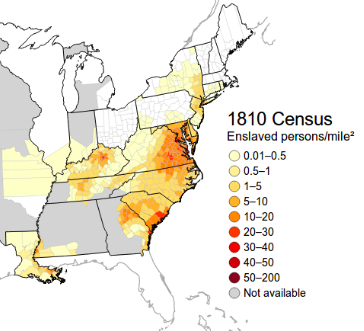
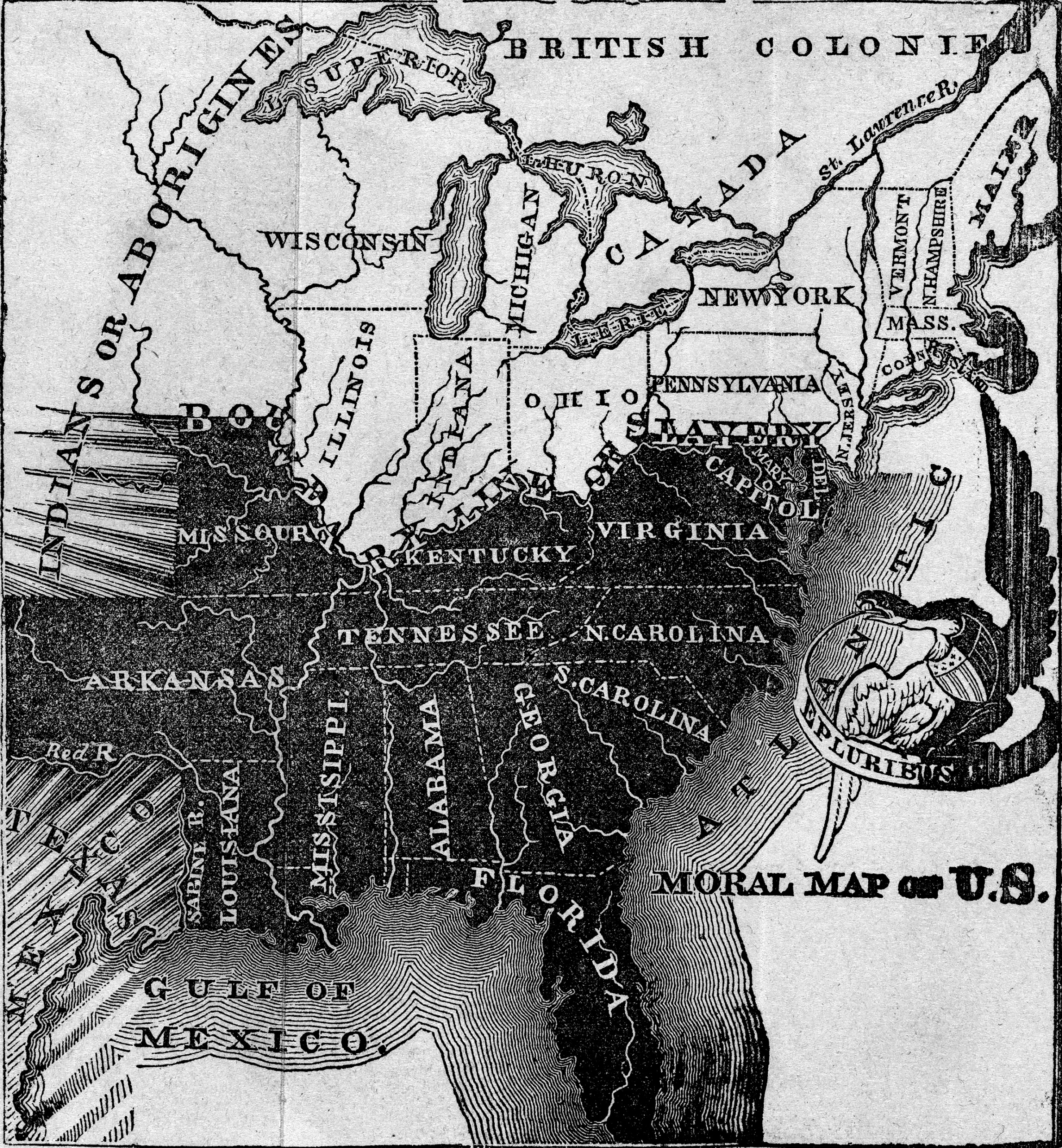
“Moral Map of the US”

Recently the idea of American Exceptionalism has been ridiculed in academic and political circles with entire books dedicated to the purpose of tearing down any thought of an ethical America.[i] Much of this recent shift centers around America’s record on slavery. For instance, organizations such as the New York Times have started initiatives declaring that the “true founding” was not until the introduction of slavery 1619[ii] and that the “founding ideals were false” due to the existence of slavery.[iii]

The shift to a negative perspective of America largely stems from the revisionist school of history beginning in the 1960’s and culminating with Howard Zinn’s monumental 1980 People’s History of the United States. This book popularized the historiographical approach of doing “history from the bottom up,” which means telling the story of America through the interpretive lens of oppression. A fellow activist historian of Zinn’s, Staughton Lynd explains the fundamental premises underlying this approach in his Doing History from the Bottom Up. In their interpretive model, “was founded on crimes against humanity directed at…enslaved African Americans,” and therefore must be evil.[iv]

Such anti-American revisionism forgets that America’s record of anti-slavery actually is exceptional compared to the rest of the world. Rarely do revisionists remember that over half of the American states had passed laws abolishing slavery by 1804, nearly thirty years before William Wilberforce effected the similar results in England. This wide-scale abolitionism was planted by the Biblical beliefs of several early colonies, was watered by the advocacy and action of the patriots during the American Revolution, and finally brought forth fruit through the establishment of a Constitutional Republic designed to advance liberty and defend the ideals of the Declaration.

A careful review of the colonial anti-slavery context, the development of abolitionist thought during the War for Independence, and the staunch leadership of the pro-freedom Founding Fathers reveals how America led the way in abolishing slavery. Instead of the modern academic narrative which attempts to debunk American exceptionalism, history shows that America was exceptional in their struggle for emancipation.

As mentioned earlier, by 1804 all of the New England states as well as Vermont, New York, and New Jersey had either completely abolished slavery or enacted positive laws for the gradual abolition of it. This is four years before the Federal Congress ends the slave trade, and almost three decades before England votes to follow suit and abolishes slavery. The American wave of emancipation constituted the largest group of people who had voluntarily freed their slaves up to that point in modern history.

The 1810 census documents that the total population of those states—Massachusetts (Maine included), New Hampshire, Rhode Island, Connecticut, Vermont, Pennsylvania, New York, and New Jersey—stood at 3,486,675.[v]  This was approximately 48% of the total population, slave and free, of the United States at that time. Although not entirely free of slavery due to the gradual emancipation laws in states such as New York and New Jersey, the total percentage of the population waiting for emancipation was only 0.9% in states originally a colony. So, by 1804 half of America had succeeded in passing laws for the abolition of slavery, and only six years later they had been 99% effective in accomplishing that goal. Nobody else in the world was anywhere close to what those Northern States had succeeded in doing—in this America was exceptional.

Massachusetts itself has the honor of being the only state to have totally abolished slavery by the time the first census was completed in 1790, and Vermont was not far behind with only seventeen slaves left to be liberated by their laws.[vi] Massachusetts also receives distinction for passing potentially the earliest anti-slavery law in the American colonies within the 1641 enactment of the Massachusetts Body of Liberties. The tenth capital crime in that legal code stated that, “if any man stealeth a man or mankind, he shall surely be put to death. Ex. xxi.16.”[vii] Taken from the Bible as evidenced by the scriptural citation, manstealing was interpreted by the New England colonists to include what they considered improper enslavement—later it was to expand to all vestiges of slavery.

Blackstone describes manstealing as, “the forcible abduction or stealing away of a man, woman, or child, from their own country, and sending them into another.”[viii] Going further to say, “this is unquestionably a very heinous crime, as it robs the king of his subjects, banishes a man from his country, and may in its consequences be productive of the most cruel and disagreeable hardships.”[ix]

This law was not simply an empty letter either, and when the first instance of manstealing occurred in 1646 the General Court of Massachusetts was vigorous in its prosecution. The record explains that:

The General Court, conceiving themselves bound by the first opportunity to bear witness against the heinous and crying sin of man stealing, as also to proscribe such timely redress for what is past, and such a law for the future as may sufficiently deter all others belonging to us to have to do in such vile and most odious courses, justly abhorred of all good and just men, do order that the negro interpreter, with others unlawfully taken, be, by the first opportunity, (at the charge of the country for present,) sent to his native country of Ginny, and a letter with him of the indignation of the Court thereabouts, and justice hereof, desiring of honored Governor would please put this order in execution.[x]

Interestingly, the Court chose to go farther than the law necessarily required, deciding to send back the slaves at the cost of the community. After making arrangements for the liberated slaves, the General Court then, “appointed a committee to examine witnesses and draw up the case about Captain Smith and Mr. Kezar killing stealing, and wronging of the negroes, etc.”[xi] This response to the arrival of a slave ship is markedly different than when the first one arrived on the shores of Jamestown, and it indicates an entirely different culture which from an extremely early period looked down upon the slave trade.

Religion Fueled Anti-Slavery

Their reliance upon the Bible to begin to understand their relationship to slavery led New Englanders down a dramatically different path than both the Southern colonies and the world. Instead of viewing enslavement as a natural product of race, they understood it arose out of either personal misfortunes (such as debt) or bad choices (such as crime). The New England slaves therefore attained levels of rights unheard of practically anywhere else.

The Puritans’ idea of a “Bible commonwealth” relied upon the Mosaic laws for much of their own statutes concerning servitude. Therefore, slaves had an increased level of social status with rights including the right to own property, testify in court against white men, wives could not be compelled to testify against their husbands, had legal standing to sue which included suing their masters for freedom.[xii] Additionally, enslaved people had the equal procedural rights within the courtroom which, together with the right to sue, led many slaves to advocate for freedom through the New England government.[xiii]

The wider context of slavery both domestically and globally makes North America’s record even more exceptional. First it must be noted that slavery has existed within every culture historically documented. In fact, the story of American slavery begins long before Christopher Columbus ever dreamed of sailing across the ocean sea. The native tribes he discovered all had slaves and on a whole it is estimated that 20 to 40 percent of native populations were slaves, making the native Americans on par with the slave empires of Greece and Rome.[xiv] This native American tradition of slavery continued uninterrupted by colonization, and by 1860, 12.5% of the population in the Indian Nations were black slaves, equaling one slave for every eight Indians.[xv]

Expanding the scope of inquiry even wider, throughout the nearly 400 years of the trans-Atlantic slave trade 12,521,337 Africans were taken to be slaves around the world. Only a small minority of that number ever embarked to the areas that would become the United States—305,326 to be exact, totaling 2.4%.[xvi] For comparison, Spain and her territories received 1,061,524 slaves during that same period representing nearly 8.5%, and France only barely received more with 11% (1,381,404). Next was Great Britain with 3,259,441 slaves taken from Africa, meaning that over one quarter (26%) of all slaves sourced from the African continent were intended for English lands. That, however, pales in comparison to Portugal and Brazil, where 5,848,266 enslaved humans were shipped—nearly 47% of the total number. Even the Netherland had more stake in the trans-Atlantic slave trade than America did, themselves accounting for 554,336 and 4.4%.[xvii]

What is more, slavery both globally and in America was never simply white on black. Just as every people group has owned slaves, every people group has correspondingly been enslaved. Prior to the 1700s there were more white slaves globally than there were black slaves.[xviii] In fact, early records from Massachusetts reveal that in December of 1738 several white men were sentenced to slavery for a variety of crimes. One had been an indentured servant who physically assaulted the man he was working for, and then “did conspire also against the life of his said whole common wealth,” and two others for theft alongside breaking and entering.[xix] The next year the Massachusetts court similarly sentenced another white criminal to slavery for attempted rape.[xx]
In addition to white slavery in America, Americans themselves were sold into slavery in the Barbary Coast of North Africa after being captured by Muslim slave traders. Charles Sumner, the famous abolitionist and founder or the Republican party, documented that fourteen men from Boston and Philadelphia would fetch $34,792 in the African slave market of 1785.[xxi] Beyond just the American sailors, the Muslim Barbary Pirates conducted extensive slave raids along the European coast, meaning that:

“Between 1530 and 1780 there were almost certainly a million and quite possibly as many as a million and a quarter white, European Christians enslaved by the Muslims of the Barbary Coast.”[xxii]

Just as there were white slaves both in America and the world, there also were black slave masters. Carter Woodson, often considered the “Father of Black History,” conducted a close study of the 1830 census data in order to investigate rates of free blacks who themselves owned slaves. His research revealed that, out of those free blacks who were eligible to own slaves (head of households living in states which would later join the Confederacy), 16% of them owned black slaves.[xxiii] Certain states, however, stand out in their relatively high frequency. South Carolina for instance saw 43% of eligible free black people own slaves, 40% in Louisiana, 26% in Mississippi, 25% in Alabama, and 20% in Georgia.[xxiv] Such statistical data simply shows just how varied the institution of slavery was throughout both history and the American story—far from the monolithic image presented by revisionists.

With so much of the world having been embroiled with slavery and the slave trade for hundreds of years, it makes the actions of America not only unique but remarkable. By the time the 18th century began, many of the northern colonies began passing laws which established duties on importing slaves. The intent was for such acts cut away the slaver’s profit margin and therefore making it economically undesirable to import slaves into those regions. In 1700 elements of the Massachusetts citizenry petitioned the legislature for restrictive duty on slaves “to discourage the bringing of them” of forty shillings.[xxv] The next year the colony sought to set a limit to the period of slavery that a person could serve, and in 1705 they were successful in obtaining a four-pound import duty.[xxvi] Rhode Island had passed a slightly smaller duty two years earlier of a still substantial three-pounds.[xxvii]

Other colonies such as New York and Pennsylvania attempt to pass even more restrictive bills regulating the slave trade into relative non-existence but many of their efforts were vetoed by the authority of the Crown.[xxviii] The Royal veto of anti-slavery measures, often because of the economic benefit which England derived from the global trade, became a common response to colonial attempts at restricting slavery.

Nearly seventy years later such practices nearly made it into the Declaration of Independence after appearing in Thomas Jefferson’s draft and being approved by Benjamin Franklin and John Adams. The grievance against the slave trade was the longest out of all of them, occupying the better part of a page in addition to having the most words underlined or capitalized outside of the title. The grievance in the draft reported to Congress read as follows:

He has waged cruel war against human nature itself, violating its most sacred rights of life and liberty in the persons of distant people, who never offended him, captivating and carrying them into slavery in another hemisphere, or to incur miserable death in their transportation tither. This piratical warfare, the opprobrium of infidel powers, is the warfare of the Christian king of Great Britain. Determined to keep open a market where Men should be bought and sold, he has prostituted his negative for suppressing every legislative attempt to prohibit or to restrain this execrable commerce.[xxix]

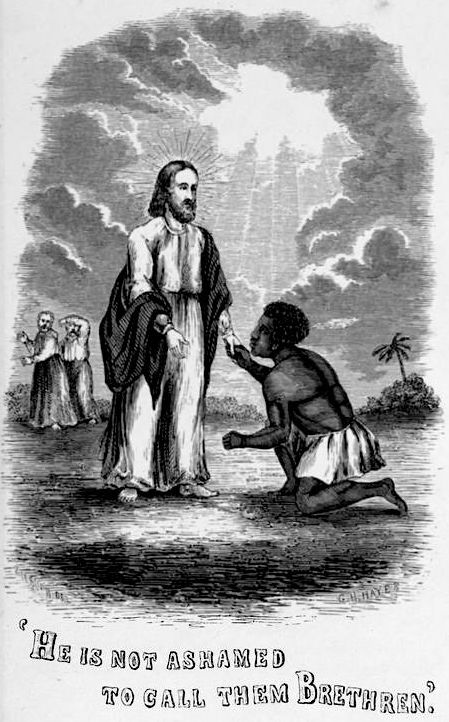
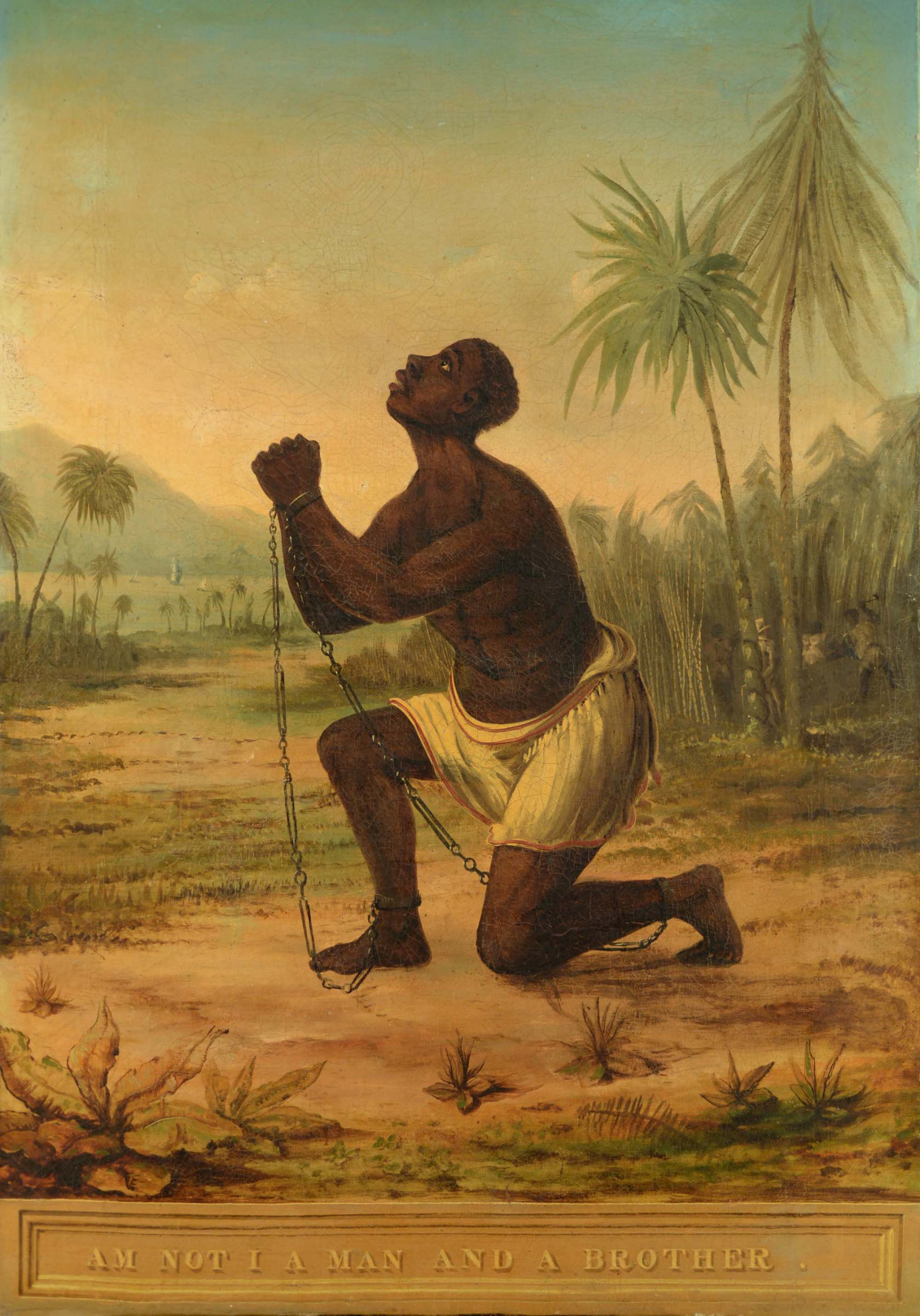
“Am I not a man and a brother.”

Many other Founding Fathers agreed with Jefferson—in fact, the majority of Founding Fathers agreed with him. Only two states voted against the grievance thus keeping it out of the final Declaration of Independence.

(It should also be noted that although many today claim that when the Declaration states that “all men are created equal” the Founding Fathers really meant to say “all white men are created equal,” Jefferson himself explicitly identifies slaves as men and thereby included in the American promise.)

With over a century of anti-slavery activity, it should come as no surprise to see a dramatic increase in manumissions and widespread emancipation during and immediately following the War for Independence. From 1790 to 1810 the number of free blacks in America increased from 59,466 to 108,395, displaying a growth rate of 82%. The next decade saw that number expand another 72% to 186,446.[xxx] While the number continued to grow albeit at a lower rate of growth in the years leading up to the Civil War, those first two decades of the American Republic saw the strongest rate of voluntary emancipation ever recorded up to that time. It is this period which Arthur Zilversmit calls the First Emancipation.[xxxi]

John Adams, an attorney prior to becoming a politician, recalled the environment of emancipation during those years saying:

“I was concerned in several Causes, in which Negroes sued for their Freedom before the Revolution.…I never knew a Jury, by a Verdict to determine a Negro to be a slave—They always found them free.”[xxxii]

During the Revolution itself many slaves who fought for freedom from England also achieved freedom from slavery, being manumitted on account of their service. William Whipple, signer of the Declaration and General under Washington, freed his slave, Prince Whipple during campaign after realizing the incongruity of his own actions.[xxxiii] Another veteran of the Revolutionary War, a slave named Prime, was actually re-enslaved after the war but, with the help of anti-slavery advocates, he successfully petitioned for his emancipation, winning his freedom not only on the battlefield but in the courtroom as well.

Upon examining this period, renown historian Benjamin Quarles remarked that the War for Independence and the environment leading up to it empowered the black population with the tools and personal agency to reach for their freedom as Americans. He writes that the slaves, “gave a personal interpretation to the theory of natural rights and the slogans of liberty and independence,” and many white leaders who were awakening to the injustice helped them in that greater revolution.[xxxiv]

This brief examination of the overarching facts and context concerning America’s early history with slavery shows that the story is infinitely more nuanced than the revisionist narratives propagated by Zinn, Lynd, and the New York Times. The real history, however, reveals that America’s record for anti-slavery is exceptional when placed in the context of the world at that time. Instead of presenting a view of history as if it Jamestown won the ideological battle for America, historians today must realize that the tree of slavery was choked out by the tree of liberty. That the ideas of Plymouth overcame those of Jamestown.

The story of the northern colonies, when properly told, shows that America was among the first places in the world to lead a successful fight against slavery in both word and deed. Furthermore, the anti-slavery Founding Fathers paved the path which many of the global abolitionist followed in the decades to come. America ought not to be remembered as a land of oppression but rather one of liberation. The New World has been the frontier of freedom from the beginning, being the first to struggle for emancipation and find large-scale success. Those small American Republics, carved out of the wilderness, showed a level of civilization unheard of at that early period, passing anti-slavery and abolition laws before virtually anywhere else in the world. America was indeed exceptional—a seedbed of liberty for themselves and the rest of the world.


[i] Andrew Bacevich, The Limits of Power: The End of American Exceptionalism (New York: Holt Paperbacks, 2009); Godfrey Hodgson, The Myth of American Exceptionalism (New Haven: Yale University Press, 2010).

[ii] “The 1619 Project,” The New York Times (accessed December 5, 2019), https://www.nytimes.com/interactive/2019/08/14/magazine/1619-america-slavery.html

[iii] Nikole Hannah-Jones, “Our Democracy’s Founding Ideals were False When They were Written,” The New York Times (December 5, 2019), https://www.nytimes.com/interactive/2019/08/14/magazine/black-history-american-democracy.html

[iv] Staughton Lynd, Doing History from the Bottom Up: On E. P. Thompson, Howard Zinn, and Rebuilding the Labor Movement from Below (Chicago: Haymarket Books, 2014), xii.

[v] Aggregate Amount of Each Description of Persons Within the United States of America, and the Territories Thereof (Washington: 1811), 1.

[vi] The American Almanac and Repository of Useful Knowledge for the Year 1858 (Boston: Crosby, Nicholas, and Company, 1858), 214.

[vii] Francis Bowen, editor, Documents of the Constitution of England and America, from Magna Charta to the Federal Constitution of 1789, (Cambridge: John Bartlett, 1854), 72.

[viii] William Blackstone, Commentaries on the Laws of England (London: A. Strahan and W. Woodfall, 1795), 4.218-219.

[ix] Ibid., 4.219.

[x] Nathaniel Shurtleff, Records of the Governor and Company of the Massachusetts Bay in New England (Boston: William Whites, 1853), 1.168.

[xi] Ibid., 1.176.

[xii] Arthur Zilversmit, The First Emancipation: The Abolition of Slavery in the North (Chicago: The University of Chicago Press, 1968), 19.

[xiii] Ibid.

[xiv] Fernando Santos-Granero, Vital Enemies: Slavery, Predation, and the Amerindian Political Economy of Life (Austin: University of Texas Press, 2009), 226-227.

[xv] Joseph Kennedy, Preliminary Reports on the Eighth Census, 1860 (Washington DC: Government Printing Office, 1862), 11.

[xvi] “Trans-Atlantic Slave Trade – Estimates,” Slave Voyages, https://www.slavevoyages.org/assessment/estimates (accessed December 6, 2019).

[xvii] Ibid.

[xviii] Philip Morgan, “Origins of American Slavery,” Organization of American History Magazine of History, Vol. 19, No. 4 (July 2005), p. 53

[xix] Nathaniel Shurtleff, Records of the Governor and Company of the Massachusetts Bay in New England (Boston: William Whites, 1853), 1.246.

[xx] Ibid., 1.269.

[xxi] Charles Sumner, White Slaves in the Barbary States (Boston: William D. Ticknor and Company, 1847), 32.

[xxii] Robert Davis, “Counting European on the Barbary Coast,” Past &Present, No. 172 (August 2001), 118.

[xxiii] Thomas J. Pressly, “‘The Known World’ of Free Black Slaveholders: A Research Note on the Scholarship of Carter G. Woodson,” The Journal of African American History 91, no. 1 (2006): 85.

[xxiv] Ibid.

[xxv] Zilversmit, The First Emancipation, 51.

[xxvi] Ibid.

[xxvii] Ibid.

[xxviii] Ibid., 47-49.

[xxix] Thomas Jefferson, The Works of Thomas Jefferson, edited by Paul Leicester Ford (New York: G. P. Putnam’s Sons, 1904), 210-211.

[xxx] Kennedy, Preliminary Reports, 7.

[xxxi] Zilversmit, The First Emancipation.

[xxxii] Collections of the Massachusetts Historical Society (Boston: Massachusetts Historical Society, 1877), 401-402.

[xxxiii] William Nell, Colored Patriots of the American Revolution (Boston: Robert Wallcut, 1855), 198.

[xxxiv] Benjamin Quarles, “The Revolutionary War as a Black Declaration of Independence,” Slavery and Freedom in the Age of the American Revolution, edited by Ira Berlin (Charlottesville: The University Press of Virginia, 1983), 285.

*Originally published: April 6, 2020

* This article concerns a historical issue and may not have updated information.

Early Black Political Leaders

The first black US Senator was Hiram Rhodes Revels. Revels (1827-1901) attended a seminary in Indiana before becoming a preacher in 1845. He was jailed in 1854 for preaching to slaves in St. Louis, even though he “sedulously refrained from doing anything that would incite slaves to run away from their masters.” During the Civil War, he helped in recruiting two black regiments and also served as a chaplain. Revels was in the Senate for a partial term, from February 1870 to March 1871, and spent the remainder of his life serving various religious and educational offices.

Blanche Kelso Bruce was the first black US Senator to serve a full term in office. Bruce (1841-1898) was born into slavery but fled to Kansas during the Civil War where he attempted to enlist. His enlistment was refused and he taught school for a time before moving to Mississippi where he was elected to various local political offices in the early 1870s. Bruce took his seat in the US Senate in 1875 and served until 1881, in this role he championed the rights of black war veterans and Native Americans. He was also the first black person to preside over a Senate session on February 14, 1879. Bruce spent the remainder of his life after the Senate in various other political offices.

Joseph Hayne Rainey was the first black person to serve in the US House of Representatives. Rainey (1832-1887) was born into slavery but his father was able to purchase freedom for his family. Rainey worked as a barber before being pressed into service by the Confederacy during the Civil War; in 1862 he escaped to Bermuda where he remained until the end of the war. He was a delegate to the 1868 South Carolina state constitutional convention. Rainey was elected to the US House of Representatives where he served from 1870-1879. He also has the distinction of being the first black person to preside over the House of Representatives in 1874.

We encourage you to take some time to learn more about these men and other black history heroes!

Lemuel Haynes

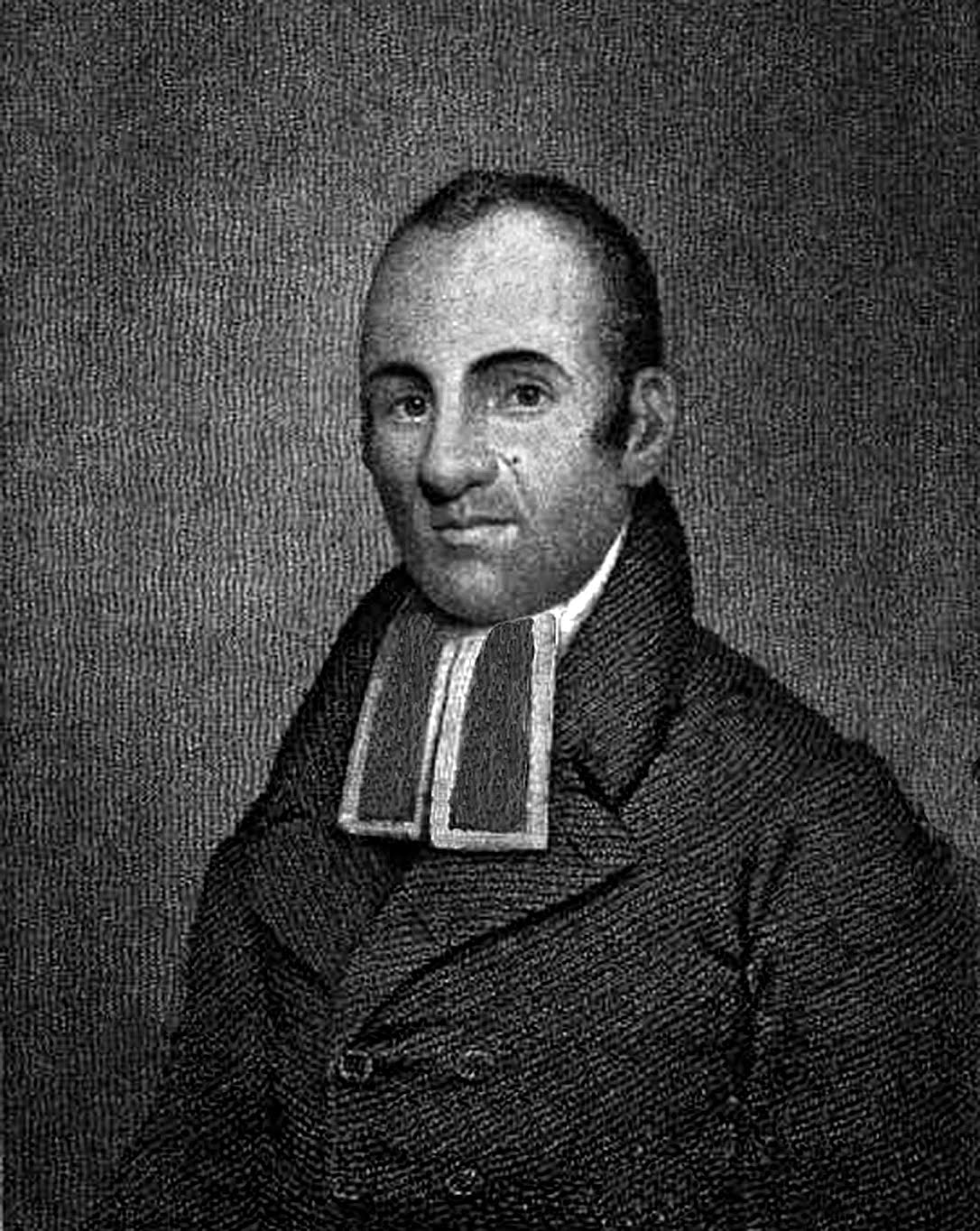
July 18th marks the anniversary of the birth of Lemuel Haynes in 1753. Most Americans probably don’t know who this man was, but his is a story definitely worth noting!

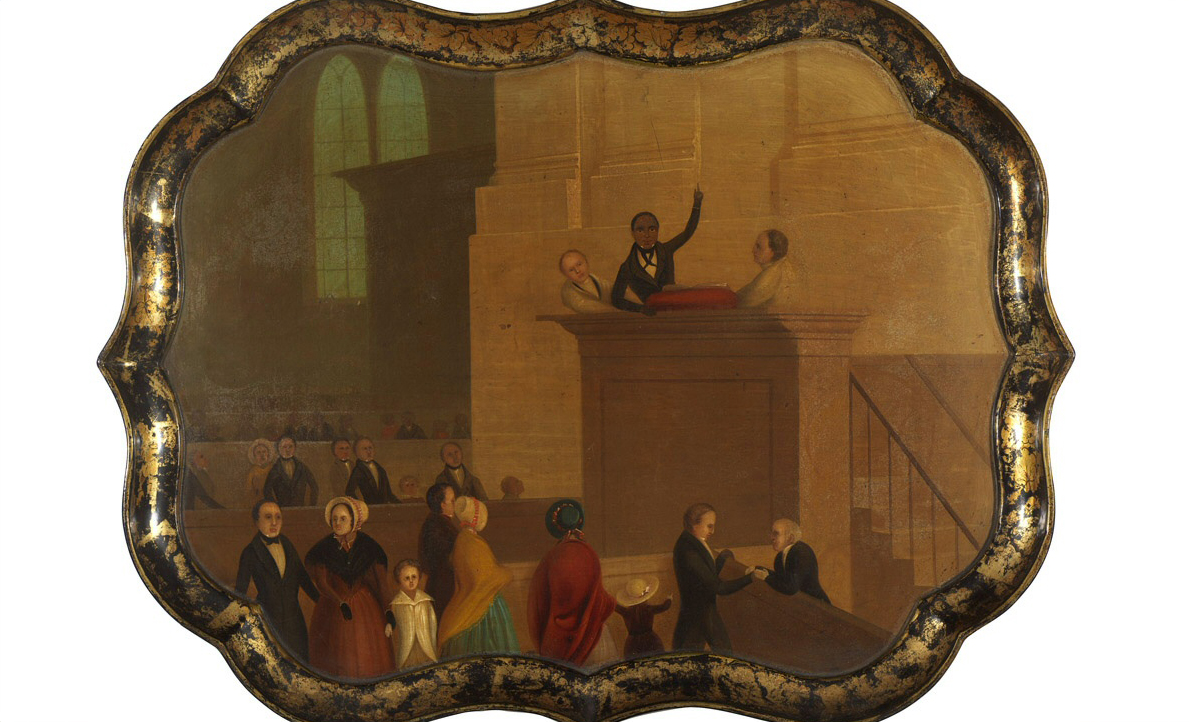
Lemuel Haynes was a black American, abandoned at five months old by his parents and hired as an indentured servant. During his years of service, he was treated well and given the opportunity to attend school — a rare experience for blacks in that day. Haynes showed a talent for preaching from a young age and was frequently called on to give sermons and to proofread the sermons of others.

When his term of indenture ended, he enlisted as a Minuteman in the American War for Independence and participated in the siege of Boston and the expedition against Fort Ticonderoga. Decades later, while giving a sermon in his church celebrating George Washington’s birthday, he recounted his own service:

Perhaps it is not ostentatious [bragging] in the speaker to observe that in early life he devoted all for the sake of freedom and independence, and endured frequent campaigns in their defense, and has never viewed the sacrifice too great.

It was in 1785 that he became an ordained minister. During his decades of service as a pastor, as a black American he led churches that were all-white and some that were mixed (whites and blacks worshiping together — a circumstance many are unaware existed in America). He was a remarkable pastor and leader, and his churches experienced revival and growth — evidenced by an 1803 letter he penned:

Not a day nor night in a week but people would crowd to meetings. The great inquiry among the youth and others was, “What shall we do to be saved?” Children of eleven and twelve years of age seemed to be more engaged about religion than they were before about their play. The minds of the people in general were attentive. My house has been often thronged with people who desired to discourse about religion…Thus it has pleased the Lord to do wonders among us, to the praise of His glorious grace.

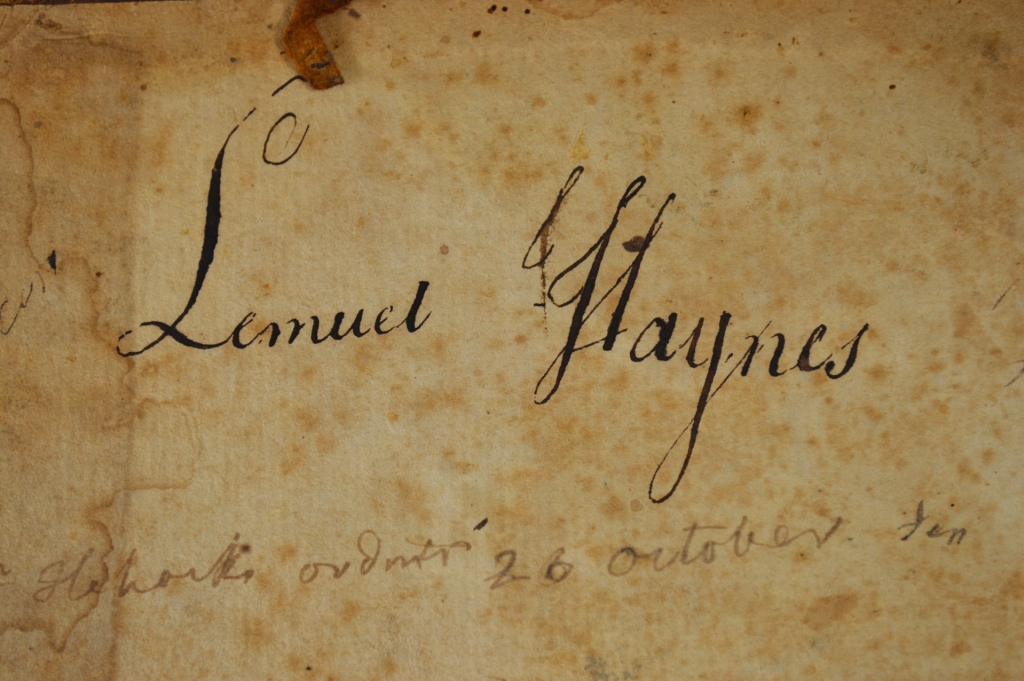
In 1804, Lemuel received an honorary Masters degree from Middlebury College — the first black man to receive a degree of higher education in America. (One of the amazing items in WallBuilders’ collection is a Bible handbook signed by Lemuel Haynes.)

Lemuel Haynes died in 1833, leaving behind a legacy of sacrificial service for both God and country. This American hero deserves to be remembered today!

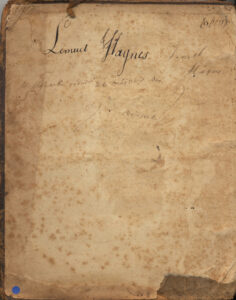
Lemuel Haynes Signed Common-Place Book

Lemuel Haynes

Lemuel Haynes, born on July 18, 1753, was a black American, abandoned at five months old by his parents and hired as an indentured servant. During his years of service, he was treated well and given the opportunity to attend school — a rare experience for blacks in that day. Haynes showed a talent for preaching from a young age and was frequently called on to give sermons and to proofread the sermons of others. When his term of indenture ended, he enlisted as a Minuteman in the American War for Independence and participated in the siege of Boston and the expedition against Fort Ticonderoga.

It was in 1785 that he became an ordained minister. During his decades of service as a pastor, as a black American he led churches that were all-white and some that were mixed (whites and blacks worshiping together — a circumstance many are unaware existed in America). In 1804, Lemuel received an honorary Masters degree from Middlebury College — the first black man to receive a degree of higher education in America. Lemuel Haynes died in 1833.1

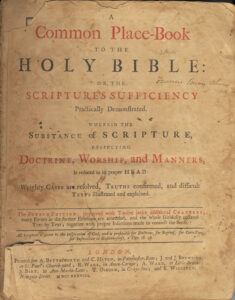
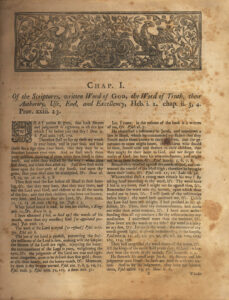
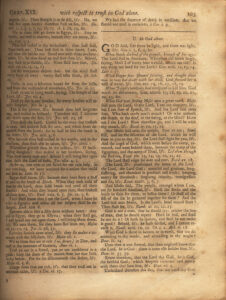
From WallBuilders’ collection, below is a few pages from A Common Place-Book to the Holy Bible, published in London in 1738 and signed by Lemuel Haynes. A common place-book is defined as “a book in which noteworthy quotations, comments, etc., are written2 so this particular book includes noteworthy quotations from the Bible on various subjects.


Endnotes

1 For a complete biography of Lemuel Haynes see Timothy Mather Cooley, Sketches of the Life and Character of the Rev. Lemuel Haynes (New York: Harper & Brothers, 1827). Some online biographies of Lemuel Haynes include those found at Black Past and PBS.
2 “Commonplace Book,” Dictionary.com, accessed December 18, 2023.

Black History Resources

Below is a compilation of various resources and biographies for several black history related people and events.


American War for Independence Soldiers

James Armistead
Biographical Resources:
WallBuilders
Biography
Black Past
US Army
The Black Phalanx; A History of the Negro Soldiers of the United States in the Wars of 1775-1812, 1861-’65 , pp. 50-51.

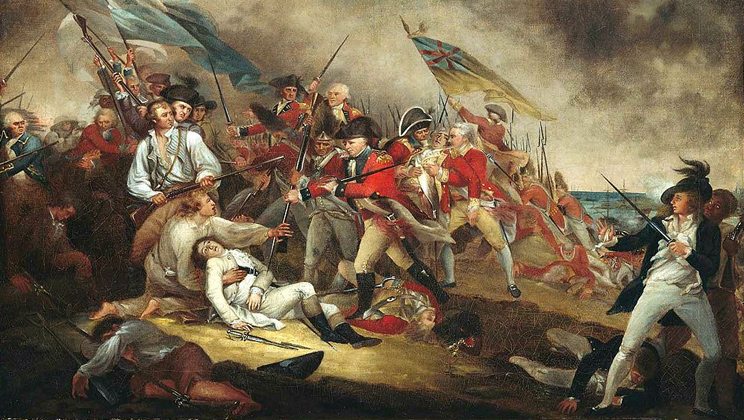
The Battle of Bunker Hill
Peter Salem Resources:
PBS
Black Past
National Museum of African American History & Culture
The Colored Patriots of the American Revolution, pp. 20-21.

Salem Poor Resources:
Black Past
AAREG

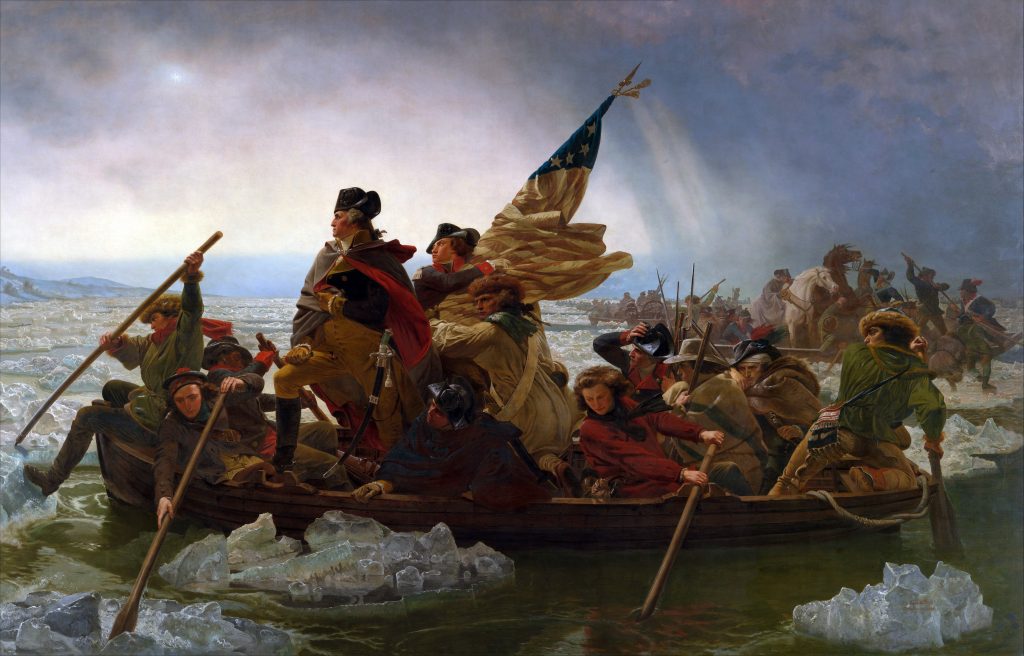
Washington Crossing the Delaware
Prince Whipple Resources:
Whipple Website
Black Past
The Colored Patriots of the American Revolution, pp. 198-199.

Oliver Cromwell Resources:
The Colored Patriots of the American Revolution, pp. 160-162.

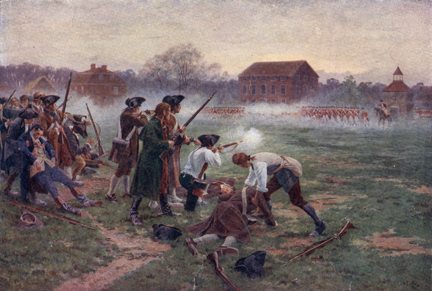
The Battle of Lexington
Prince Estabrook Resources:
WallBuilders
PBS
Historical Marker Database
The Essex Gazette (April 25, 1775), where he’s listed among the wounded.

“Prince” Sisson
Biographical Resources:
WallBuilders
Camp Fire of the Afro-American; or the Colored Man as a Patriot, p. 141.
The Colored Patriots of the American Revolution, p. 127.


17th & 18th Century People

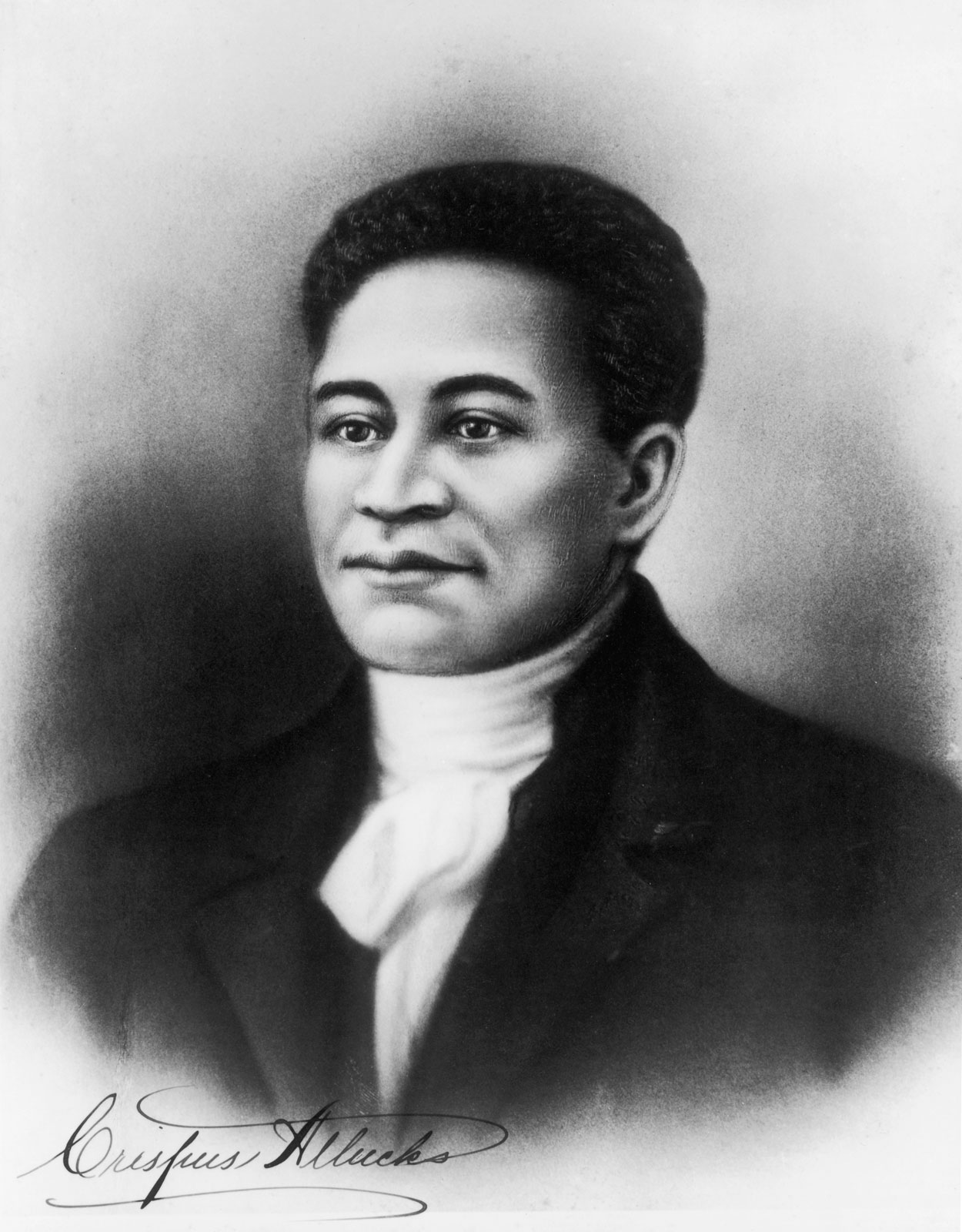
Crispus Attucks
Biographical Resources:
PBS
Dictionary of American Biography

Wentworth Cheswill
Biographical Resources:
PBS
WallBuilders

Documents:
WallBuilders’ Collection

Anthony Johnson
Biographical Resources:
PBS
Black Past
Encyclopedia Virginia
Journal of Negro History, pp. 233-237

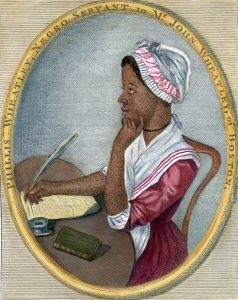
Phillis Wheatley
Biographical Resources:
PBS
Biography
Poetry Foundation
National Women’s History Museum

Poetry:
Phillis Wheatley, Poems on Various Subjects, Religious and Moral (1887 edition)


19th Century People & Events

William Nell
Biographical Resources:
Black Past
African American Registry

His Works:
The Colored Patriots of the American Revolution
Services of Colored Americans in the Wars of 1776 and 1812

Robert Smalls
Biographical Resources:
WallBuilders
National Park Service
Biographical Directory of the US Congress
US House of Representatives

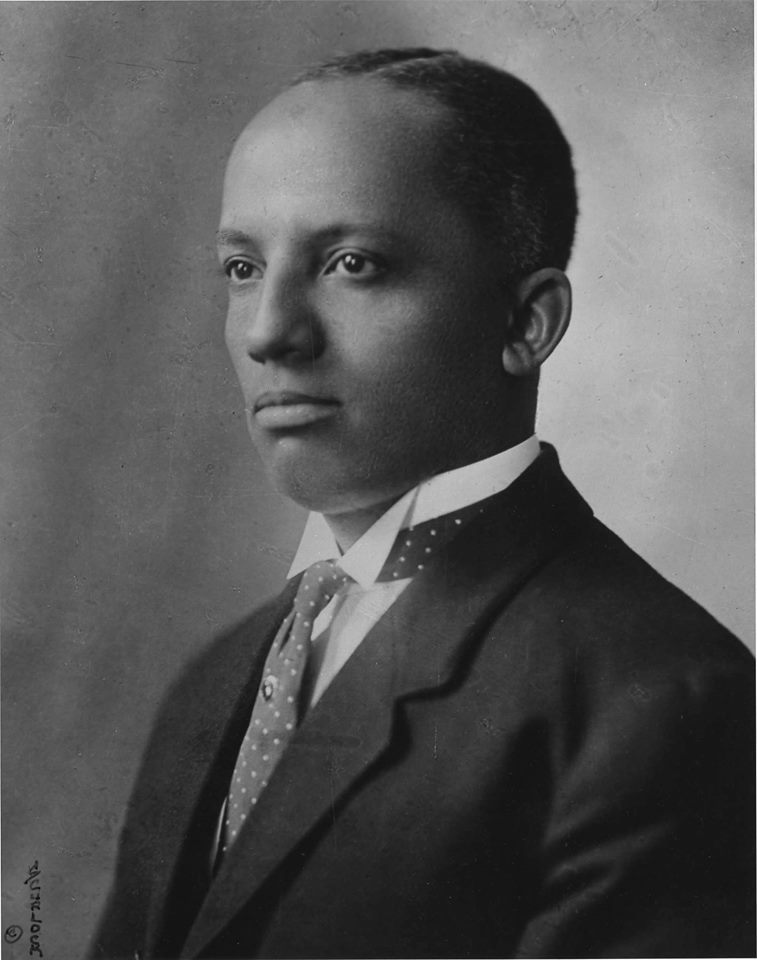
Carter Woodson
Biographical Resources:
National Park Service
Biography

His Works:
A Century of Negro Migration
The History of the Negro Church
The Negro in Our History
Free Negro Owners of Slaves in the United States in 1830
The Negro Wage Owner
African Heroes and Heroines
The Education of the Negro Prior to 1861
Negro Makers of History
The Rural Negro


20th Century Events & People

Lynching in America
Excerpt from WallBuilders’ 2003 Black History Issue Newsletter:

Of all forms of violent intimidation, lynchings were by far the most effective. Between 1882 and 1964, 4,743 persons were lynched — 3,446 blacks and 1,297 whites.

1964 Civil Rights Bill Resources
National Park Service
National Archives

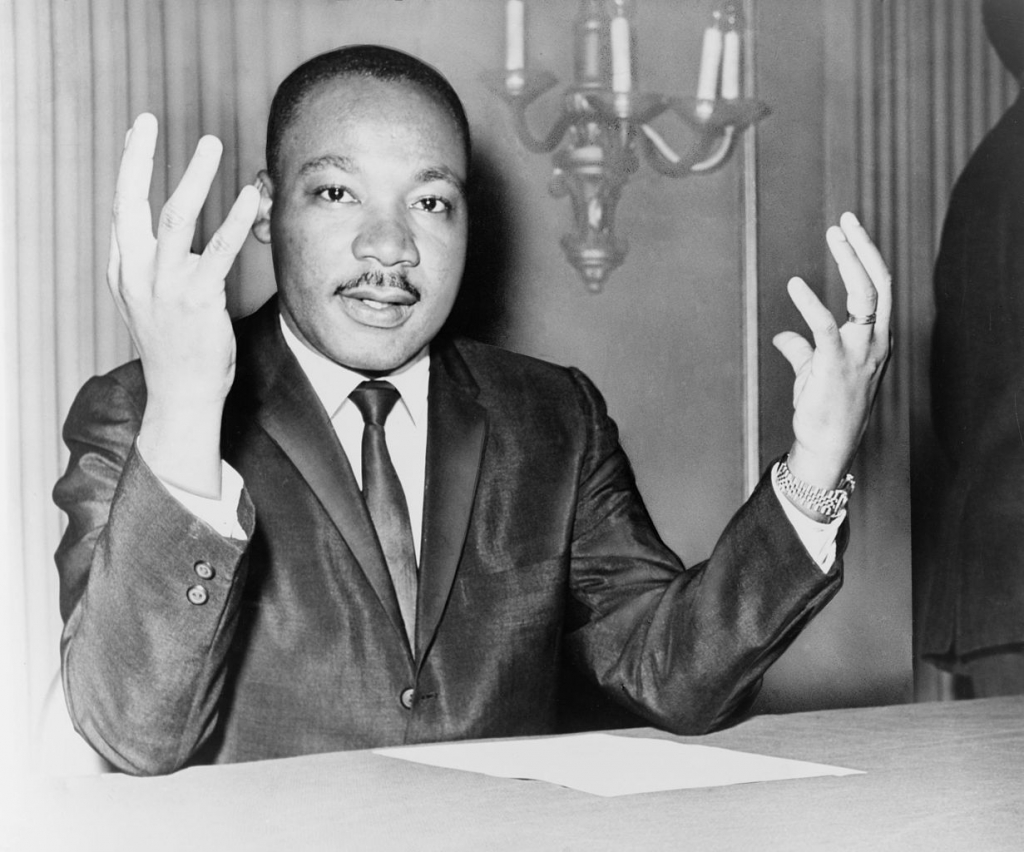
Rev. Dr. Martin Luther King, Jr
Biographical Resources:
Nobel Prize
Louisiana State University

On the Declaration of Independence:

If our nation had done nothing more in its whole history than to create just two documents, its contribution to civilization would be imperishable. The first of these documents is the Declaration of Independence and the other is that which we are here to honor tonight, the Emancipation Proclamation. All tyrants, past, present and future, are powerless to bury the truths in these declarations, no matter how extensive their legions, how vast their power and how malignant their evil. The Declaration of Independence proclaimed to a world, organized politically and spiritually around the concept of the inequality of man, that the dignity of human personality was inherent in man as a living being. The Emancipation Proclamation was the offspring of the Declaration of Independence. It was a constructive use of the force of law to uproot a social order which sought to separate liberty from a segment of humanity.

When the architects of our republic wrote the magnificent words of the Constitution and the Declaration of Independence, they were signing a promissory note to which every American was to fall heir. This note was a promise that all men, yes, black men as well as white men, would be guaranteed the “unalienable Rights” of “Life, Liberty and the pursuit of Happiness.”


Pastors

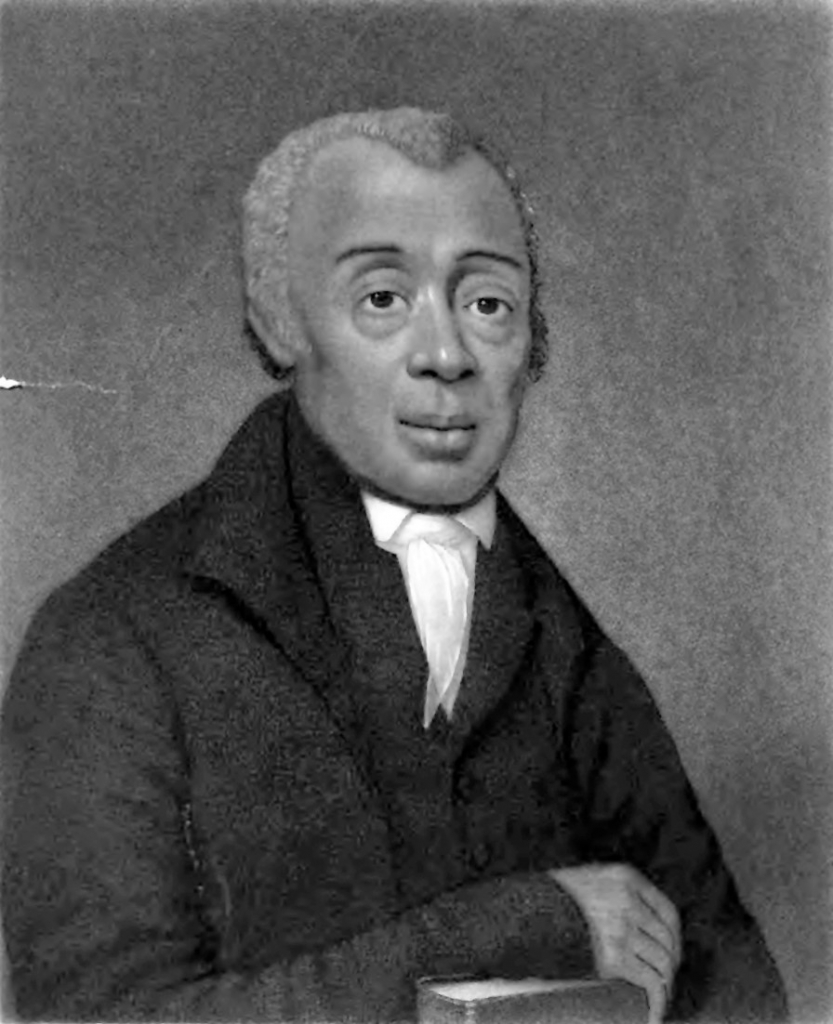
Rev. Richard Allen
Biographical Resources:
PBS
Black Past
Biography
The Life Experience and Gospel Labors of the Rt. Rev. Richard Allen…Written by Himself and Published by His Request (Philadelphia: 1880)

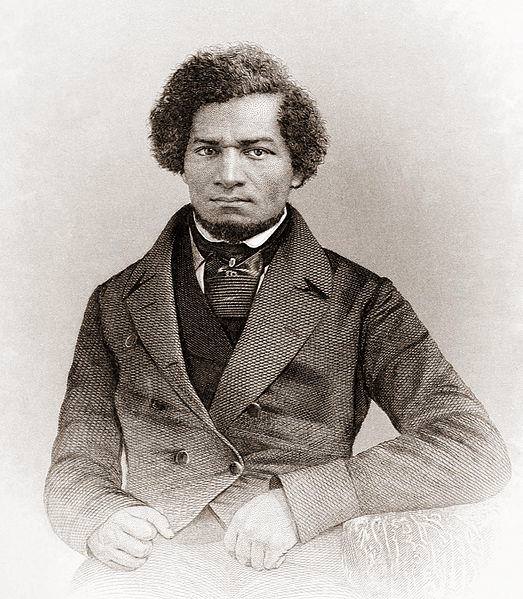
Rev. Frederick Douglass
Biographical Resources:
White House Historical Association
National Park Service
Narrative of the Life of Frederick Douglass, An American Slave. Written by Himself (Boston: 1847)

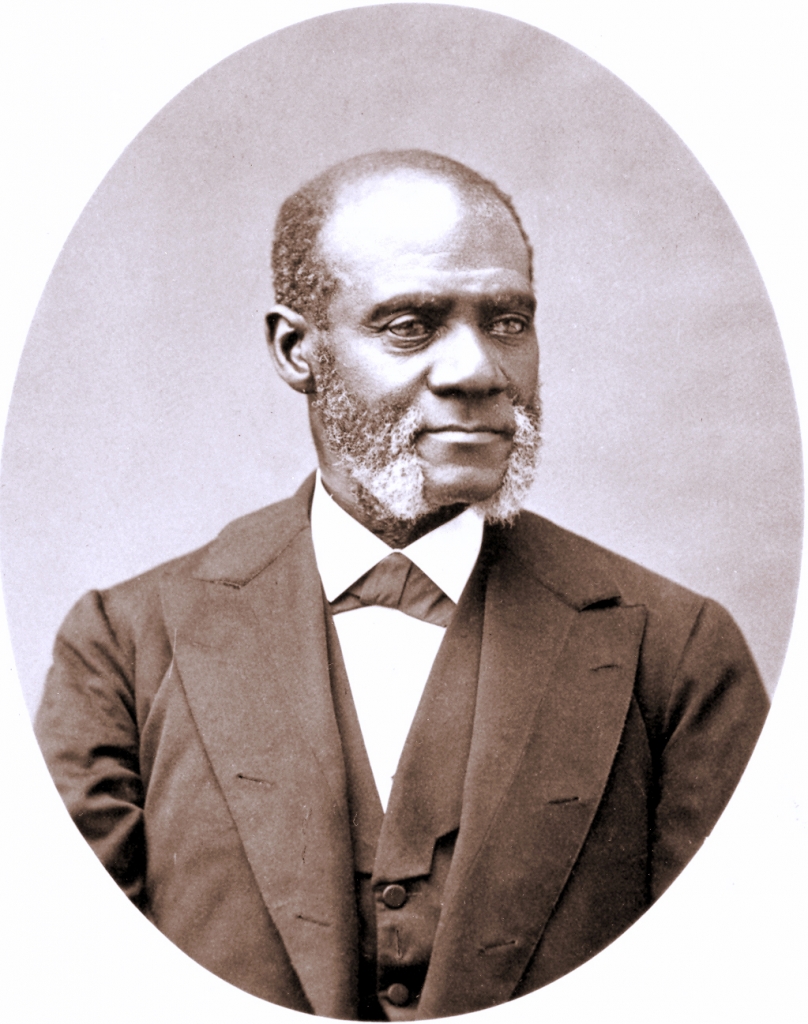
Rev. Henry Highland Garnet
Biographical Resources:
Black Past
PBS

Sermon at the Capitol:
Available in its entirety on Google Books.

Rev. Lemuel Haynes
Biographical Resources:
Black Past
PBS
Sketches of the Life and Character of the Rev. Lemuel Haynes (New York: 1837)
The Colored Patriots of the American Revolution, pp. 123-124.

Rev. Harry Hoosier
Biographical Resources:
WallBuilders
Indiana Public Radio

Rev. Absalom Jones
Biographical Resources:
Black Past
PBS


Books & Other Resources

African American Perspectives
Freedmen’s Bureau Online
Harper’s Weekly
Neglected Voices
Services of Colored Americans in the Wars of 1776 and 1812
The Black Phalanx; A History of the Negro Soldiers of the United States in the Wars of 1775-1812, 1861-’65
The Colored Patriots of the American Revolution


WallBuilders Black History Products

First Black Legislators Print
Setting the Record Straight: American History in Black & White
Other Products

The “Red Tails”

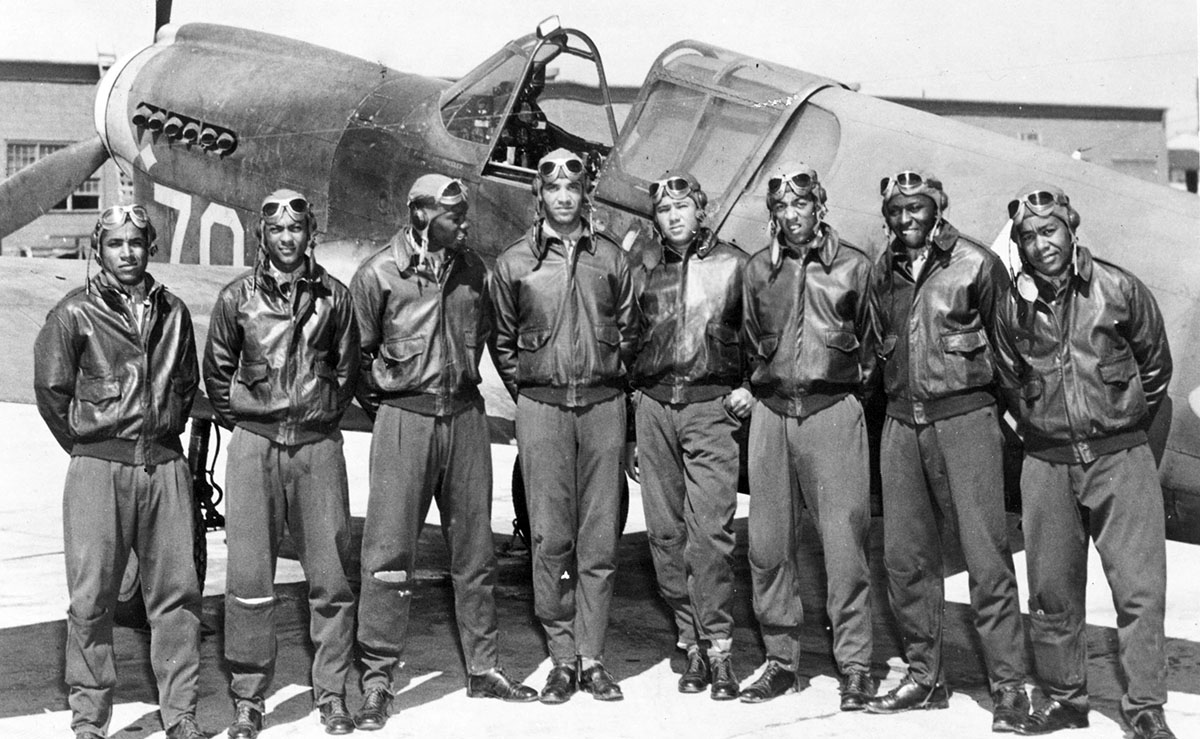
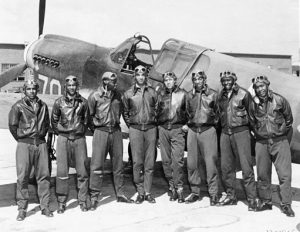
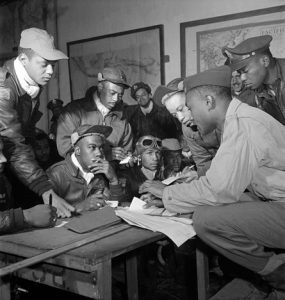
In 1938, a civilian pilot training program, open to black Americans, began under President Franklin Roosevelt who anticipated possible war in Europe. Also, under the 1940 Selective Training and Service Act black Americans could be drafted. The group of black pilots trained as part of the US Army Air Corps are known as the Tuskegee Airmen.

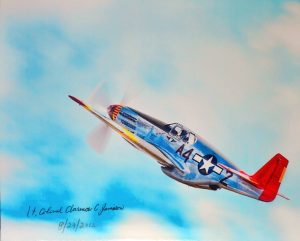
Between 1941-1946 nearly 1,000 pilots were trained at Tuskegee Institute (founded in 1881 by Booker T. Washington). These pilots formed the 99th Fighter Squadron and were sent overseas in 1942. Their first combat experience was on June 2, 1943 on Pantelleria, an Italian island. In July 1944, three additional all-black squadrons joined them to make up the 332nd Fighter Group. Known for the red paint on the tails of their planes, the 332nd were nicknamed “Red Tails.”

The “Red Tails” flew over 1,400 combat missions, where they destroyed nearly 300 enemy aircraft, over 600 railroad cars, and 40 boats. The 332nd flew many of its combat missions as protective escorts for vulnerable bomber groups. They were so successful that many bomber crews specifically requested them during the missions. Altogether, about 150 Tuskegee Airmen were killed and 32 were taken prisoner.

For their many acts of bravery, the Tuskegee Airmen received many awards. The 332nd was awarded a Presidential Unit Citation for the longest bomber escort mission. The 99th had received two Presidential Unit Citations before joining the 332nd. Members of this famous groups were also awarded 96 Distinguished Flying Crosses, 14 Bronze Stars, and 8 Purple Hearts. WallBuilders’ collection includes various signatures and pictures of the Tuskegee Airmen. Theirs is truly a story worth remembering today.

Let’s thank God for the over one million courageous Americans who paid the ultimate price for us all. Let’s pray for the surviving family members of those who have died in this generation to protect our freedoms, and let’s also pray for protection for all those who are currently deployed to various danger spots around the world.

Blessed be the Lord my Rock,
Who trains my hands for war,
and my fingers for battle
Psalm 144:1 (NKJV)

June 14th in History

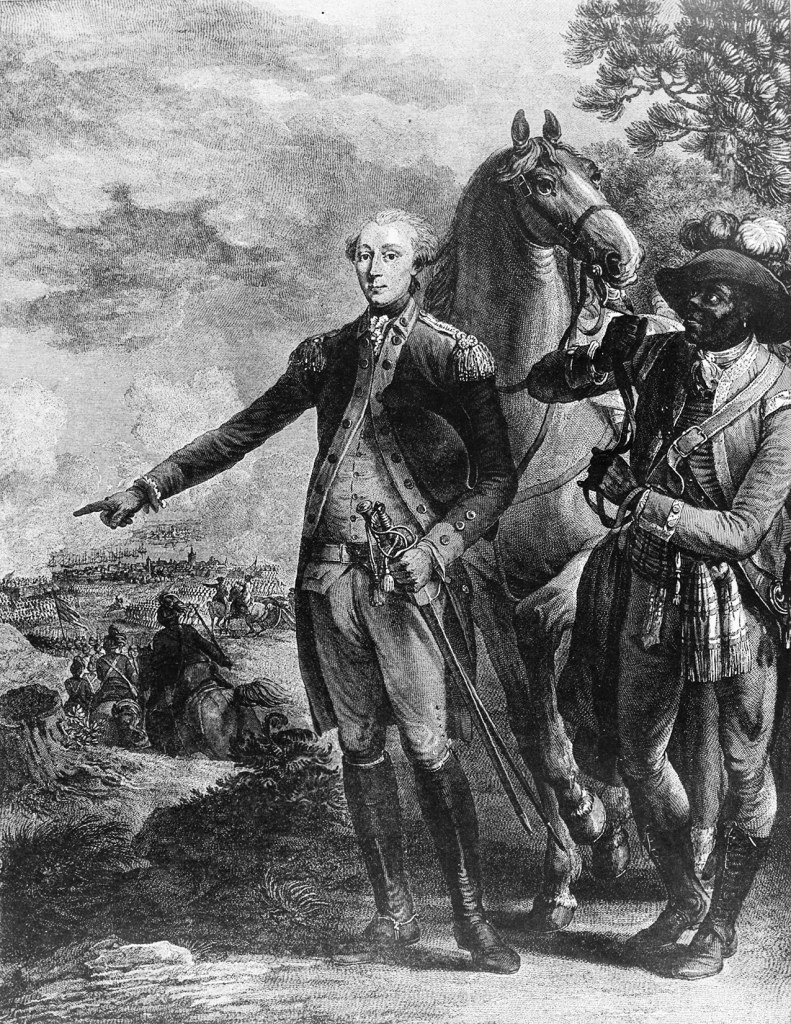
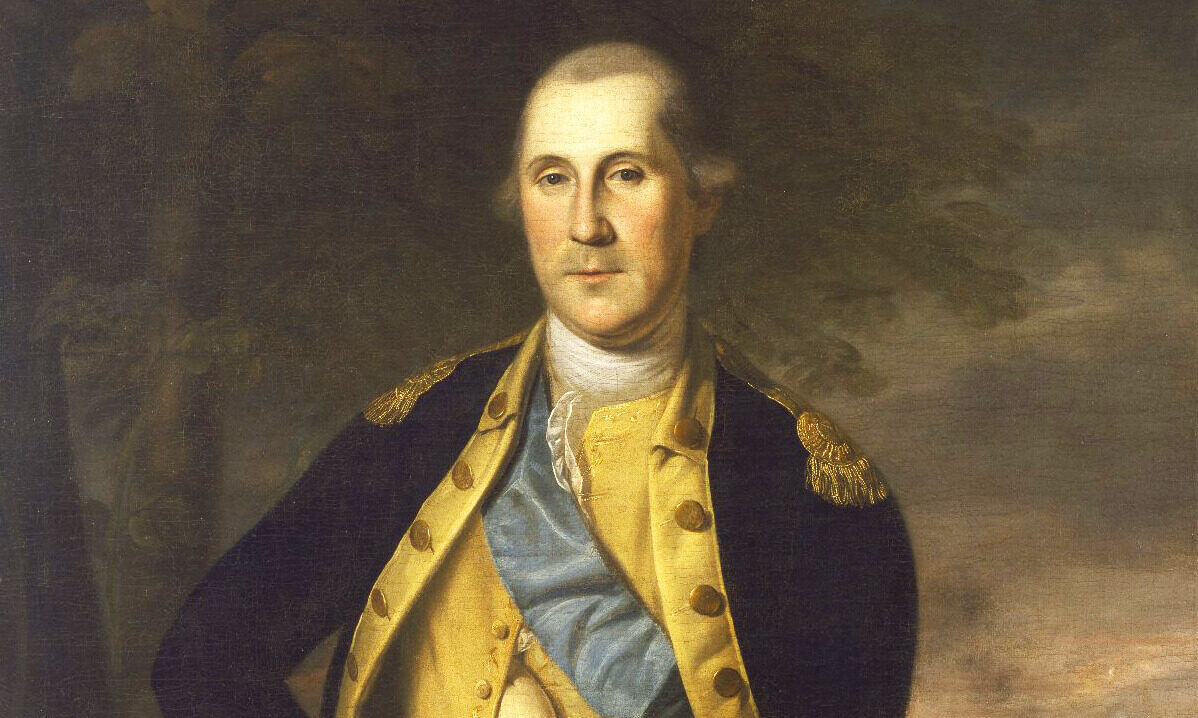
June 14th is the birthday of the Army, created by the Continental Congress on June 14, 1775.1 The next day, George Washington was elected Commander-in-Chief2 and soon issued orders that set the tone for the military, including one declaring:
The blessings and protection of Heaven are at all times necessary but especially so in times of public distress and danger. The General hopes and trusts that every officer and man will endeavor so to live and act as becomes a Christian Soldier defending the dearest rights and liberties of his country.3

Over the 242 years since its inception, the US Army–and indeed the entire American military–have repeatedly lived up to the high ideals set forth by its first Commander-in-Chief.

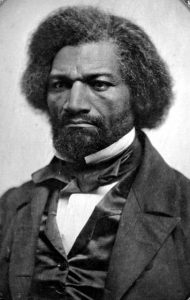
Speaking of the Army after the Civil War in 1871, Frederick Douglass reminded the nation:

We must never forget that the loyal soldiers who rest beneath this sod flung themselves between the nation and the nation destroyers. If today we have a country not boiling in an agony of blood (like France)–if now we have a united country, no longer cursed by the hell-black system of human bondage–if the American name is no longer a by-word and a hissing to a mocking earth–if the Star-Spangled Banner floats only over free American citizens in every quarter of the land, and our country has before it a long and glorious career of justice, liberty, and civilization–we are indebted to the unselfish devotion of the noble army who rest in these honored graves all around us.4
During WWI, General John Pershing reminded Americans:

Three thousand miles from home, an American army is fighting for you. Everything you hold worthwhile is at stake. Only the hardest blows can win against the enemy we are fighting. Invoking the spirit of our forefathers, the army asks your unflinching support, to the end that the high ideals for which America stands may endure upon the earth.5

And in WWII, General George Marshall spoke about the mission of the United States:
We are determined that before the sun sets on this terrible struggle, our flag will be recognized throughout the world as a symbol of freedom on the one hand and of overwhelming force on the other.6

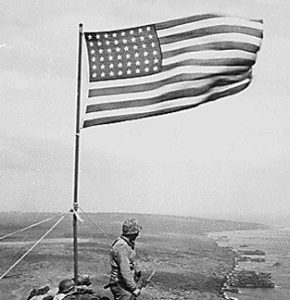
By the way, June 14th is also Flag Day, commemorating June 14, 1777, when the Continental Congress passed a resolution “that the flag of the thirteen United States be thirteen stripes, alternate red and white; that the union be thirteen stars, white in a blue field, representing a new constellation.”7

Let’s celebrate the flag as well as the Army and American military who so ably defend our God-given freedoms and God-blessed nation!


Endnotes

1 “Wednesday, June 14, 1775,” Journals of the Continental Congress (Washington: Government Printing Office, 1905), II:89-90; “U.S. Army’s 250th Birthday Festival,” U.S. Army, accessed June 9, 2025.
2 “Thursday, June 15, 1775,” Journals of the Continental Congress (1905), II:91.
3 General Orders, July 9, 1776, The Writings of George Washington, ed. John C. Fitzpatrick (Washington: United States Government Printing Office, 1922), 5:245.
4 Address on Decoration Day, 1861, The Life and Times of Frederick Douglass, From 1817 to 1882. Written by Himself (London: Christian Age Office, 1882), 365.
5 “General John J. Pershing,” Library of Congress, accessed June 9, 2025.
6 Inscriptions, World War II Memorial Registry, accessed June 9, 2025.
7 “Saturday, June 14, 1777,” Journals of the Continental Congress (Washington: Government Printing Office, 1907), VIII:464.

Tuskegee Airmen

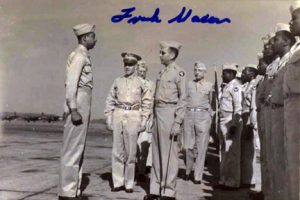
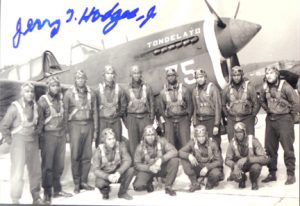
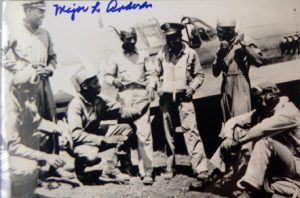
Between 1941-1946 nearly 1,000 pilots trained at Tuskegee Institute (founded in 1881 by Booker T. Washington). These pilots are known as Tuskegee Airmen. They formed the 99th Fighter Squadron and went overseas in 1942. Later the 99th joined three other all-black squadrons in the 332nd Fighter Group. Especially noteworthy, these pilots flew over 1,400 combat missions throughout WWII.

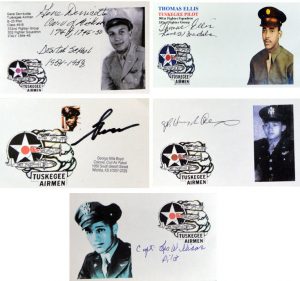
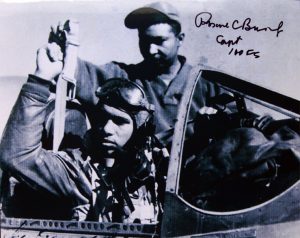
Below are signatures and signed photographs of various Tuskegee Airmen from the WallBuilders collection.


An Historic Debate

From the time before the American War for Independence, black Americans served as elected officials in local politics. Following the Civil War, hundreds more were elected to state and federal office.

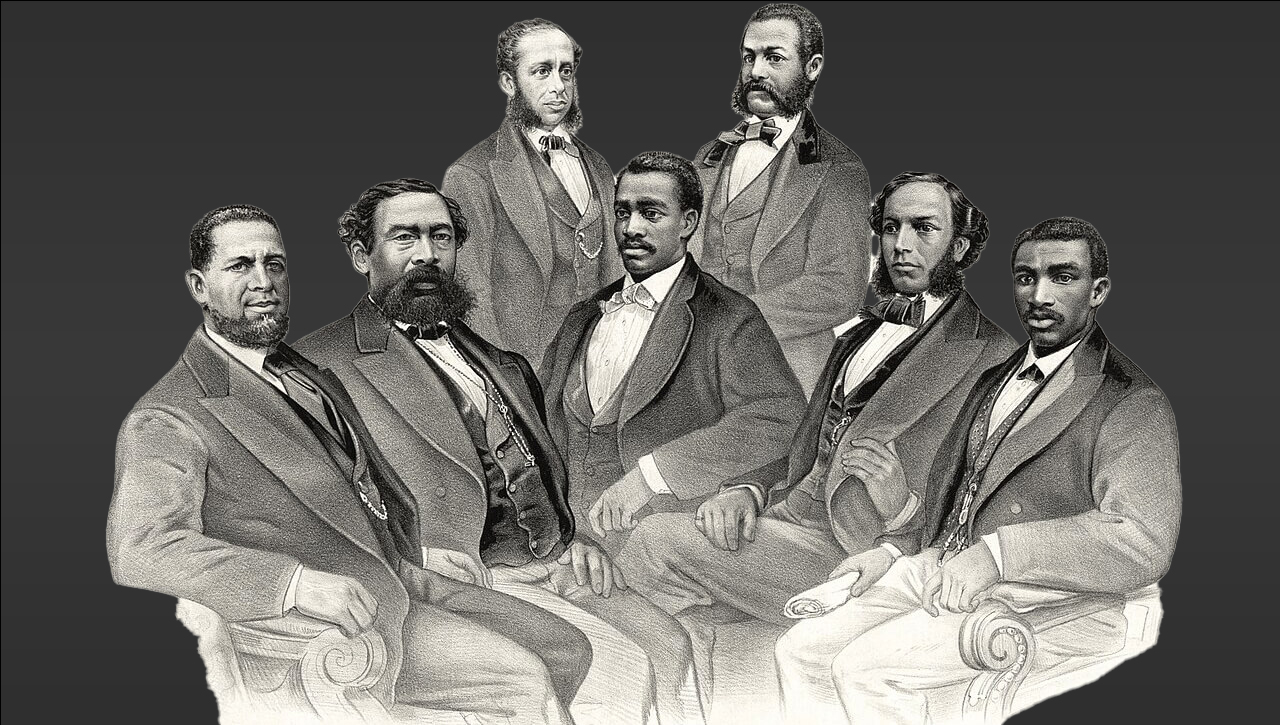
For example, at the national level, in 1871, Robert Brown Elliott was elected to the US House of Representatives — one of the first blacks elected to national office (the picture on the left shows the first seven blacks elected to Congress, including Elliott; all seven were Republicans). Originally from England, Elliott came to the U.S. in 1867 and quickly became influential in South Carolina, being one of 78 black delegates to the 1868 state constitutional convention, and placing second in the vote to be speaker of the state house.

Shortly after his election to the US House, Republican Elliott faced off in a debate over a civil rights bill against three pro-slavery Democrats: Alexander Hamilton Stephens of Georgia (the former Vice-President of the Confederate States of America, elected as a Democrat to Congress after the Civil War), James Beck of Kentucky (elected in 1867), and John Thomas Harris of Virginia (elected in 1871). After those three Democrats attacked the civil rights bill that protected the constitutional rights of black Americans, Elliott (pictured below) rose and responded:

[I]t is a matter of regret to me that it is necessary at this day that I should rise in the presence of an American Congress to advocate a bill which simply asserts rights and equal privileges for all classes of American citizens. I regret, sir, that the dark hue of my skin may lend a color to the imputation that I am controlled by motives personal to myself in my advocacy of this great measure of natural justice. Sir, the motive that impels me is restricted by no such narrow boundary but is as broad as the Constitution.

Elliott then went on to recount how African-Americans had fought for America during the War for Independence, the War of 1812, and the recent Civil War. He concluded with a stiff rebuke against the racist Democrat Stephens:

He [Stephens — pictured on the right] offers his government (which he has done his utmost to destroy) a very poor return for its magnanimous treatment, to come here to seek to continue, by the assertion of doctrines obnoxious to the true principles of our government, the burdens and oppressions which rest upon five millions of his countrymen [slaves] who never failed to lift their earnest prayers for the success of this government when the gentleman [Stephens] was asking to break up the Union of these States and to blot the American Republic from the galaxy of nations.

Elliott’s powerful and eloquent arguments embarrassed his opponents. The Democrats were incensed, but their replies were shallow at best. As the American Methodist Episcopal Church Review reported:

Mr. Beck of Kentucky, and other Democratic members of the House who had felt the force of Mr. Elliott’s rhetoric to their discomfiture, could not deny the merit of his speeches, so they denied his authorship of them. . . . The charge of non-authorship was made by Democrats upon the general principle that the Negro, of himself, could accomplish nothing of literary excellence.

In short, Democrats claimed that no black was smart enough to make such arguments as Elliott had, so he must have plagiarized them from someone else!

Elliott served in the House of Representatives until 1874 when he resigned and returned to South Carolina politics. Forced out of office with the resurgence of the Democratic Party in the south (1877), he became a customs inspector for the federal Treasury Department (1879-1882) and then ran a law practice before his death in 1884.

The courageous efforts for freedom and equality made by Elliott and other Americans throughout history should never be forgotten.