Behold, children are a heritage from the Lord. . . . Like arrows in the hand
of a warrior, so are the children of one’s youth. Happy is the man
who has his quiver full of them; they shall not be ashamed.
Psalm 127:3-5
As we honor our fathers, let’s take a look at some of our nation’s Founders, most of whom were also fathers. Many of the signers of the Declaration had children, and Carter Braxton had the largest family with 18 children. Some signers of the Constitution, such as William Livingston (13) and Roger Sherman (15), also had large families.
As good fathers, these men led in the spiritual care of their children. For example, the biographer of Roger Sherman reported,
The volume which he consulted more than any other was the Bible. It was his custom, at the commencement of every session of Congress, to purchase a copy of the Scriptures, to peruse it daily, and to present it to one of his children on his return.
John Adams (who spent a good portion of the War for Independence away from his family) outlined to his precious wife, Abigail, the education their children should receive:
The education of our children is never out of my mind. Train them to virtue. Habituate them to industry, activity and spirit. Make them consider every vice as shameful and unmanly. Fire them with ambition to be useful. Make them disdain to be destitute of any useful or ornamental knowledge or accomplishment. Fix their ambition upon great and solid objects, and their contempt upon little, frivolous and useless ones.
John Quincy Adams grew up under this instruction and became the father of four children. In his many years of public service, he would often spend extended periods away from his family. During this time John Quincy Adams wrote a series of letters giving his son advice on how to read and study the Bible, informing his son that he read through the Bible each year.
Easter is one of the most significant Christian holy days. What occurred on this day defines and distinguishes the Christian faith from all others. As Roman 1:4 affirms, “Through the Spirit of holiness Jesus was declared with power to be the Son of God by His resurrection from the dead: Jesus Christ our Lord!”
At Easter, we remember not only the great sacrifice of Jesus on the cross but especially that through His triumph over the power of sin and death we can have eternal life. Across the centuries of American history, our public leaders have reminded us of the importance of Easter.
The approaching festival of Easter, and the merits and mercies of our Redeemer…have inspired me with the hope of finding mercy before my Judge and of being happy in the life to come — a happiness I wish you to participate with me by infusing into your heart a similar hope.
And, many generations later, President George W. Bush reminded America:
Easter is the most important event of the Christian faith, when people around the world join together with family and friends to celebrate the Resurrection of Jesus Christ, the Son of God and the hope of life to come. For Christians, the life and death of Jesus are the ultimate expressions of love, and the supreme demonstrations of God’s mercy, faithfulness, and redemption.
Easter is a special day of joy and rejoicing–through what Jesus did on this day, eternal life is now available to all who believe on Him!
Recently in the mainstream media the words “Nazi” and “Hitler” are perhaps two of the most commonly used words employed by pundits and even politicians. Those on the Left go so far as to claim that the current President parallels to Hitler,[i] with some public schools even teaching it in classrooms.[ii] Members of the Right retort that the rapidly growing socialist elements within the leftist parties are more deserving of the association because “Nazi” is simply an abbreviation of its full name—Nationalsozialistische Deutsche Arbeiterpartei, or, National Socialist German Workers’ Party.[iii]
With the centrality of the debate and the frequency of its usage, it is no surprise then that the political arguments have led directly into historical debates about Nazism. Thus, the most recent development in this match of political badminton has materialized in a slew of articles from left-leaning authors denying any connection between the National Socialism of Germany during Hitler’s regime and the socialism on the rise today in the American Left.[iv]
The claim that National Socialists were not true Socialist is not entirely new, with Western Marxist and socialist economists and historians distancing themselves from Nazism by claiming that Hitler and his followers were actually capitalists.[v] The historical facts of the Nazi regime, however, leave little room for doubt, the National Socialist party truly was ideologically socialist in name and in deed.
In order to competently answer this question definitions for both socialism and capitalism must be adopted. The generally accepted fundamental distinction between a capitalistic and a socialistic economic system rests upon the ownership of the means of production. In free markets the private ownership of capital is safeguarded as an intrinsic right which the government is bound to protect. For example, in the American tradition considers protections for private property paramount, with Thomas Jefferson explaining that:
“A wise and frugal government, which shall restrain men from injuring one another, shall leave them otherwise free to regulate their own pursuits of industry and improvement, and shall not take from the mouth of labor the bread it has earned. This is the sum of good government.”[vi]
On the other hand, the general sentiments of socialist theorists suggest that the private ownership of the means of production leads only to the richer propertied classes oppressing the poorer non-propertied parts of the population. Thus, the hypothetical hallmark of a pure socialist society is one in which there is no real private ownership of the means of production, only public or state ownership.[vii] Simply put, socialism is the destruction of private property rights.
Although there are endless varieties when it comes to methods, ends, and styles of each capitalism and socialism, for the purposes of this investigation the basic understood definitions will provide a sufficient evaluative baseline. In short, the crux of whether or not the German National Socialists can be rightly considered as true socialists comes down to the status of private property during the Nazi regime. If the rights of private ownership were protected, then Nazism ought to be viewed as a form of capitalism. If, however, the Nazis dramatically infringed upon property rights to the extent that they failed to meaningfully exists, then their self-appointed moniker is rightly applied.
To discover how the Nazis approached the matter of private property Adolf Hitler’s Mein Kampf naturally reveals the early rational which would soon materialize once he gained power in 1933. The significance of Mein Kampf is seemingly often overlooked today with some writers drawing conclusions which even a quick perusal of the text directly refutes,[viii] but Hitler’s manifesto certainly captured much of what it meant to be a National Socialist. So much so, that the German Ministry of Culture later instructed that:
“Boys and girls in their teens must acquire a proper insight in order to understand this new Bible of the People. They must become acquainted and familiar with the lines of policy traced therein by the master’s hand. The grown-ups must, by reading this book, purify and strengthen their civic consciousness.”[ix]
Whatever the effect it had on German readers, one quickly learns two key facts concerning Hitler’s economic thought throughout Mein Kampf. First, that Hitler viewed Marxism as a Jewish scheme to destroy nations for their own capitalistic ends.[x] He explains that:
“I resumed the process of learning, and so came to realize for the first time what it was that the life work of the Jew Karl Marx was directed toward. Now I really began to comprehend his Capital, as well as the struggle of Social Democracy against the national economy.”[xi]
Hitler continued later in Mein Kampf to declare Marxism nothing more than “the pure essence of the Jew’s attempts” to achieve the “destructive purposes of the international world Jew.”[xii] For National Socialism to successfully come to power, Hitler believed that they must be extremely wary of being “eaten away by the poison of Marxism,” because the two ideologies, are on the face, so similar.[xiii] In fact, the future Führer
“What must fundamentally distinguish the populist world-concept [Nazi worldview] from the Marxist one is the fact that it recognizes not only the value of race, but the importance of the personality, and thus makes these the pillars of its whole structure…If the National Socialist movement were not to understand the fundamental significance of this basic realization, and instead were superficially to patch up the present State, or actually to regard the mass standpoint as its own [i.e. Democratic Socialism, which was a major party in Germany at the time], it would really be only a party competing with Marxism.”[xiv]
Thus, from Hitler’s perspective, Marxism differed from Nazism because the Nazis would not let the “international Jew” use them for capitalist ends, nor would they let any element of democracy remain. In fact, democratic elements were so repugnant to the National Socialist theory that the:
“State must release all leadership, but particularly the highest—that is the political—leadership, from its parliamentary principle of the majority (i.e. mass) rule.… Of course every man has counsellors to assist him, but one man makes the decision.”[xv]
This explains Nazism’s repression of Marxists throughout the regime—a fact sometimes offered as proof of National Socialism’s underlying capitalism. But Hitler and his followers rejected Marxism on the belief that it was a clandestine method for achieving capitalism, believing that the class warfare was merely a pretense, “meant solely to prepare the ground for the rule of truly international finance capital.”[xvi]
Thus, the problem with Marxism for the Nazis was its Jewish connections and Hitler’s belief in an undercover capitalism inherent in the methodology suggested for reaching socialism, not anything pertaining to economic socialism itself. Therefore, the professed goal of a Marxist revolution—that being socialism—was still a valid and desirable end, but the method for attainment would be that of German Nationalism.
In fact, Hitler routinely showed his frustration for those whose, “brains have not grasped the difference between Socialism and Marxism even yet.”[xvii] Significantly, the more astute and principled of German businessmen resisted Nazism on the grounds that it was a modification of Marxism sharing the same goal but substituting the class struggle with race.[xviii]
Gottfried Feder
The second revelation about Hitler’s economic development is that after his interaction with soon-to-be Nazi economist Gottfried Feder, Hitler’s whole view towards capitalism and wider economics changed.[xix] Feder became one of the earliest members of the National Socialist party and his economic policy had enormous influence early on.
Hitler explains that even though he was, “attentive as I had always been to economic problems,” his knowledge was relegated to social experience with little theoretical development.[xx] But upon listening to Feder’s lectures, “the idea instantly flashed through my head that I had now found my way to one of the prime essentials of the foundation of a new party.”[xxi] These ideas led directly to the formal creation of the Nazi Party.
The influence of Feder on Hitler extended well beyond the pages of Mein Kamp. It is notably present when Hitler announced the Twenty-Five Points on February 24, 1920, which constituted the political
The 25 Points
platform of the National Socialist party (at this point they were still the German Workers’ party, but changed the name later that year). Along with the typical and expected aspects of pre-war Nazism (such as abrogation of the Treaty of Versailles, the restoration of the colonies, and blatant anti-Semitism), there were many plainly socialist aspects reflecting Hitler’s growing commitment to the system.
Points 7 and 10 suggested increased government interference and control of the “industry and livelihood of citizens,” through ensuring everyone “work with his mind or with his body…for the general good.”[xxii] Point 11 demanded the “abolition of incomes unearned by work,” while point 13 called for the “nationalization of all businesses.”[xxiii] Many of the other articles within the platform—such as points 14, 15, 17, and 18—all advocated for distinct increases in government control of finances and close regulation of profits and property.
It was in the principles of the Twenty-Five Points that Hitler declared:
“The National-Socialist German Workers’ Party has a foundation which must be immovable. The task of our movement’s present and coming members must consist not in critically reworking these guiding principles, but in pledging themselves to them.”[xxiv]
But what happened once Hitler and his National Socialist party took power? His socialist intentions to regulate, direct, and nationalize the economic nature of Germany were plain, but upon taking the reins how did the Nazis manage their newfound Reich?
An invaluable source of information concerning the economy of the National Socialist Germany comes from those dissident voices who managed to escape the censors or flee before all contact to the outside world was cut off. One such voice was Emil Lederer, a Jewish professor of economics at the University of Berlin who fled to America after being deposed of his teaching position. In a 1937 article he explained a fundamental law of economic theory, writing that, “inasmuch as reality is never the crystallization of a pure principle, every historical system is more or less a compromise.”[xxv]
Thus, the Nazis were never able to perfect their Twenty-Five Points and create a pure socialist system—much like any other proclaimed socialist state, reality universally underperforms the ideal. In Hitler’s Germany, however, the central economic planners were able to get remarkably far in securing the government supremacy. Lederer concludes that, “this new economic system built up in Germany, taken in its structural character,” was designed so that the entire population was, “organized for purposes fixed by the government.”[xxvi]
Von Mises
Lederer is far from alone in his evaluation. Famous Austrian economist Ludwig von Mises, building off of his famous 1940 work on economics, declared shortly after the war that:
“The doctrines of Nazism are vicious, but they do not essentially disagree with the ideologies of socialism and nationalism as approved by other peoples’ public opinion. What characterized the Nazis was only the consistent application of these ideologies to the special conditions of Germany.”[xxvii]
Later in his writings Mises identifies Nazism as one of the “two patterns for the realization of socialism,” with the other being Russian Bolshevism.[xxviii] The key distinction between the German and Russian varieties, is that National Socialism, despite their intentions, “nominally and seemingly preserves private ownership of the means of production.”[xxix] At this point, some writers positively declare that Nazis were not real socialists and instead sought to preserve a capitalistic system, or at the least they failed to actively purge capitalism from their midst.[xxx]
However, although the term “private property” was preserved, it remained little more than an entry in the dictionaries. At any moment, if the Nazi leadership demanded it, anyone could be deprived of all their assets without warning or recourse. For example, we see the appropriation of the Junkers airplane factory in 1934 and the institution of Hermann Goring Works in 1937 designed specifically to, “encourage compliance with government production plans.”[xxxi]
Similarly, when even some of the most powerful manufacturers failed to meet government demands, “the state simply replaced his organization with one better suited to the National Socialist war effort.”[xxxii] In the end:
“the state therefore could direct the firms’ activities without acquiring direct ownership of enterprises.…They were opposed to capitalism and formal markets.”[xxxiii]
A different German businessman lamented to a confidant that the situation meant the destruction of private industry through a variety of means, saying that:
“You have no idea how far State control goes and how much power the Nazi representatives have over our work.…These Nazi radicals think of nothing except ‘distributing the wealth.’ Some businessmen have even started studying Marxist theories, so that they will have a better understanding of the present economic system.…You cannot imagine how taxation has increased. Yet everyone is afraid to complain about it. The new State loans are nothing but confiscation of private property.”[xxxiv]
In the end, Nazism left no room for private property. If the state has the power, ability, and inclination to confiscate the means of production whenever their wishes are not conformed to there is no real private ownership anymore. A common anecdote within the cowering business class remarked that:
“Under National Socialism you are allowed to keep the cows; but the State takes all the milk, and you have the expense and labor of feeding them.”[xxxv]
This nominalization was even outlined by Nazi economist Othmar Spann who desired a state where private ownership existed only in a, “formal sense, while in fact there will be only public ownership.”[xxxvi]
The effects of the National Socialist system of central planning, government control, and arbitrary powers destroyed whatever vestiges of private financial vivacity remained, with the purposes of making it all the easier for the State to consolidate its grip on every aspect of production. Quality of goods rapidly fell while prices remained steady, and out of what little raw materials which were available most was rapaciously consumed by the military. Thus, as early as, “1936 almost complete control over production could be exerted.”[xxxvii]
Even in military matters, the Nazi system was ill-equipped, and despite outspending England nearly two-to-one in 1940, Germany still produced 50% fewer planes and 100% fewer vehicles.[xxxviii] Additionally, factory laborers often were required to work up to 70 hours per week without a corresponding rise in wages.[xxxix]
Therefore, National Socialism rightfully earns its designation because it generally achieved, or significantly worked toward, the hallmarks of a socialist system. The objection on the grounds of private property has been proven to be merely a mirage, with the arbitrary State being the ultimate decision maker and real owner of the means of production.
To a large extent, perhaps unparalleled anywhere besides the Soviet Union, Hitler realized his vision of autocratic socialism. Thereby confirming his 1925 threat that, “the future lord of the highway is National Socialism,”[xl] which exists solely because, “it has the life of a people to destine and to regulate anew.”[xli] Nazism is clearly inseparable from socialism and ought to be recognized as such.
Endnotes
[i] Gavriel D. Rosenfeld, “An American Führer? Nazi Analogies and the Struggle to Explain Donald Trump,” Central European History Volume 52, Issue 4 (December 2019): 554-587.
[v] Cf. Maxine Sweezy, The Structure of the Nazi Economy (Cambridge: Harvard University Press, 1941); Richard Evans, The Coming of the Third Reich (New York: Penguin Group, 2003), 173; Ian Kershaw, Hitler: A Biography (New York: W. W. Norton & Company, 2010), 269-270.
[vi] Thomas Jefferson, “Inaugural Address, March 4, 1801,” The Works of Thomas Jefferson (New York: G. P. Putnam’s Sons, 1905), 9.197.
[vii] Cf., Ludwig von Mises, Human Action: A Treatise on Economics (Indianapolis: Liberty Fund, 1996), 4.998.
[viii] For a clear example of this see, Kershaw, Hitler, 269-270.
[ix] Quoted in the preface to, Adolf Hitler, Mein Kampf (New York: Stackpole Sons Publishers, 1939), 5.
[xxii] Anson Babinbach and Sander L. Gilman, “The Program of the German Workers’ Party: The Twenty-Five Points,” The Third Reich Sourcebook (Berkeley: University of California Press, 2013), 13.
[xxiii] Babinbach, “The Program of the German Workers’ Party,” 13.
[xxx] Cf. Kershaw, Hitler, 269-270; Granieri, “The Right Needs to Stop Falsely Claiming that the Nazis were Socialists”; Gunter Reimann, The Vampire Economy: Doing Business Under Fascism (New York: Vanguard Press, 1939), 314; John D. Heyl, “Hitler’s Economic Thought: A Reappraisal,” Central European History 6, no. 1 (1973): 92.
[xxxi] Peter Temin, “Soviet and Nazi Economic Planning in the 1930s,” The Economic History Review, New Series, 44, no. 4 (1991): 576-577.
[xxxvii] Arthur Van Riel and Arthur Schram, “Weimar Economic Decline, Nazi Economic Recovery, and the Stabilization of Political Dictatorship,” The Journal of Economic History 53, no. 1 (1993): 97-98.
[xxxviii] R. J. Overy, “Hitler’s War and the German Economy: A Reinterpretation,” The Economic History Review, 35, no. 2 (1982): 286.
[xxxix] C., “Will Hitler Save Democracy?” Foreign Affairs 17, no. 3 (1939): 461
This is a part of our Alumni Series of articles written by past participants of the WallBuilders/Mercury One Leadership Training Program (now called “AJE Summer Institute”). Click here to learn more about this program.
By Noah DeGarmo – Class of 2019
Manning Johnson, a black man born in 1908, joined the Communist Party USA in 1930, where he served as a national organizer for the Trade Unity League.[i] From 1931 to 1932, he served as the District Agitation Propaganda Director for Buffalo, NY, and was district organizer for Buffalo from 1932 to 1934. In 1935, Johnson ran as the Communist Party’s Candidate for New York’s 22nd Congressional District for the U.S. House of Representatives. From 1936 to 1939, he served on the Party’s National Committee, National Trade Union Commission, and Negro Commission. Despite his notable status, Johnson left the Communist Party in 1939.[ii]
Johnson explained that some of the biggest factors to his departure included his original religiosity, the Party’s promotion of “Soviet Negro Republic” in the “Black Belt” of the United States, the insincerity of the Party in saving the Scottsboro Boys, and finally, the Hitler-Stalin Pact of 1939.[iii] Additionally, Johnson saw that the Communists were using black Americans as pawns in their hope that a “bloody racial conflict would split America.”[iv]
After leaving the Party, Johnson became a government informant and witness, testifying in 18-20 cases by his own estimation.[v] In 1958, he published Color, Communism, and Common Sense detailing the Communist Party’s tactics for infiltrating the African-American community and inciting racial division in the United States, paving the way for a Communist takeover in America. Shortly after publishing the book, Johnson died in an automobile accident on June 26, 1959.[vi] The information he provides in this book is eerily similar to and has much to say about the state of America in 2020.
Johnson shares that the goal of Communist agents in the early 20th century was to cripple the black community in America and incite racial division. This division would consequently weaken the nation as a whole and provide the opportunity for Communists to gain power.
He writes that white Communists infiltrated black communities by presenting themselves as allies of the black cause. They preached that black Americans were oppressed and offered liberation as a guise for their Communist agenda:
White leftists descended on Negro communities like locusts, posing as “friends” come to help “liberate” their black brothers. Along with these white communist missionaries came the Negro political Uncle Toms to allay the Negro’s distrust and fears of these strangers. Everything was interracial, an inter-racialism artificially created, cleverly devised as a camouflage of the red plot to use the Negro.[vii]
Despite how they portrayed themselves, the Communists never did anything to advance the well-being of the black population. However, they gained power and money by parroting and hiding behind the cause of civil rights. The Communists placed all the responsibility for the condition of the African-American community on the white man. Johnson noted that this victimhood mindset strips black individuals of agency, discouraging initiative and responsibility.
The placing of the repository of everything, right and just, among the darker races is a dastardly Communist trick to use race as a means of grabbing and enslaving the whole of humanity.
Moscow’s Negro tools in the incitement of racial warfare place all the ills of the Negro at the door of the white leaders of America. Capitalism and imperialism are made symbols of oppressive white rule in keeping with instructions from the Kremlin.
To one familiar with red trickery, it is obvious that placing the blame for all the Negroes’ ills at the door of the white leaders in America is to remove all responsibility from the Negro. This tends to make the Negro:
feel sorry for himself;
blame others for his failures;
ignore the countless opportunities around him;
jealous of the progress of other racial and national groups;
expect the white man to do everything for him;
look for easy and quick solutions as a substitute for the harsh realities of competitive struggle to get ahead.
The result is a persecution complex — a warped belief that the white man’s prejudices, the white man’s system, the white man’s government is responsible for everything. Such a belief is the way the reds plan it, for the next logical step is hate that can be used by the reds to accomplish their ends.[viii]
Despite all the promises, plans, and “solutions,” Johnson understood that the Communists were only fanning the flames of racial tension in order to raise money which they poured into promoting more tension instead of using it to benefit black communities:
The fact that the reds have never contributed anything tangible to the progress of the Negro is overlooked though the reds have collected millions of dollars as a result of race incitement. Like the Communist Party, the N.A.A.C.P. has collected millions of dollars through exploitation of race issues. The bigger the race issue, the bigger the appeal and the bigger the contributions.[ix]
Yet one cannot find any report of any of this money being spent for factories and shops to provide jobs, land and home construction, specialized training for talented youth, hospitals, convalescent homes, classes in sanitation and personal hygiene, care and upkeep of property, combatting crime and juvenile delinquency, centers to aid Negro youth in preparing to meet stiff employment competition in science and industry.
It is then no accident that the N.A.A.C.P. is dubbed “The National Association for the Agitation of Colored People.” The record speaks for itself. Millions for agitation; not one cent for those things that win the respect and acclaim of other races and national groups.[x]
Johnson’s words from 1958 seemingly prophesy the events of 2020. Modern leftists of both races have artificially enflamed and exploited racial division for profit. Former NFL player Colin Kaepernick gained fame by kneeling during the national anthem in protest of police brutality, and has made millions off of this fame, securing an exclusive advertising deal with Nike and a recently-signed partnership with Disney. Additionally, organizations like Black Lives Matter collect millions in donations while doing nothing to practically advance black communities.
Johnson also writes that politicians would exploit racial division for votes, a practice continued by Democrats today.
Many white Northern politicians objectively aid the rapidly deteriorating racial situation through the exploitation of leftist propaganda to garner Negro votes. They care not a tinker’s dam about the Southern Negro and simply flatter the Northern Negro whom they consider a gullible fool. Getting elected and re-elected is their only concern.[xi]
The Democrat Party has maintained power in black communities for decades, while those communities continue to suffer from poor economies and high crime rates. Democrats claim to fight for black people, while doing nothing for their well-being.
Because the Communists were not truly on the side of the black community, they had to squash any voices who called them out on their hypocrisy. Any whites who opposed the communist agenda were accused of white supremacy, while black opponents were labeled Uncle Toms. Johnson, in a long but invaluable section of his book, reveals that this is not a new practice:
At the root of all the present racial trouble is interference in the internal affairs of Southern States by people not at all interested in an amicable settlement of any problems arising between Negro and white Americans.
This interference comes from organizations and individuals in the North seeking to use the Negro. Among them are found Communists, crypto-communists, fuzzy-headed liberals, eggheads, pacifists, idealists, civil disobedience advocates, socialists, do-gooders, conniving politicians, self-seekers, muddle-headed humanitarians, addle-brained intellectuals, crackpots and plain meddlers. Like “missionaries,” they descend on the South ostensibly to change or to benefit the Negro.
In fact and in implication, all of them seek to by-pass the responsible white and Negro leaders in the South to effect a solution. They employ a pattern of setting up provocative situations which inflame and agitate the white populace and then using it as propaganda here and abroad against the South in particular and all of America in general.
White Southerners who oppose these “missionaries” are pounced upon and labeled “race baiters”, “reactionaries”, “Ku Kluxers”, “white supremacists”, “persons outside the law” and so forth. Negro Southerners who oppose these “missionaries” are also attacked and labeled “Uncle Toms”, “traitors of the race”, “handkerchief heads”, “white folks niggers” and so forth.
Obviously such name calling is a deliberate attempt on the part of these “missionaries” to scuttle all the progress made by the Negro since slavery by creating an atmosphere of distrust, fear, and hate. Like a witch stirring her brew the “missionaries” stir up all the sectional and racial bitterness that arose in the wake of the Civil War and Reconstruction. They open old wounds. They thumb the pages of closed chapters. They rake over the dying embers of old grudges, old grievances, old fears and old hates, that time has been gradually consigning to history in the onward sweep of a young, lusty, healthy and growing nation.
Labeling opponents is a specialty of the reds. Smear is a cardinal technique. Any label found in the red stockpile, you may be sure, is carefully made and selected to draw the maximum hate to the person or persons, the group or the organization to which it is attached.
The use of such labels has a tendency to divide America. Nothing, in my opinion, would please the aforementioned weird assortment of “missionaries” more than a divided America unless it is a Soviet America. They are forever predicting it at the same time working tirelessly to bring it about.[xii]
Modern leftists still employ this tactic today. The Republican Party has been smeared as the party of racism, as the media constantly accuses conservatives, particularly President Trump, of white supremacy. Additionally, black conservatives are frequently labeled “coons” and “Uncle Toms.” In fact, conservative author and commentator Larry Elder, recently produced a documentary titled Uncle Tom exploring this exact phenomenon. Black conservatives in the public eye like Elder, Candace Owens, Jesse Lee Peterson, Ben Carson, and even Kanye West are often smeared as Uncle Toms by their leftist opposition.
Johnson goes on to share how the communists would highlight racial division and emphasize incidents of racist violence while downplaying racial progress to cultivate a victimhood mentality among blacks in America.
Moreover, while they talk about “racial strife” in America as providing grist for Moscow’s propaganda mill they are busy creating it. They are careful to hide the fact that they are responsible for the provocations of extremists as was the case in Little Rock.
In all red propaganda, here and abroad, such acts of extremists are made the symbol of the treatment of the Negro in America. It also is the red smear pot in which all opponents of a forthwith solution of the race problem are tossed. The fact is that the majority of white Southerners are opposed to extremists. All-white Southern juries have convicted some of them as troublemakers and white Southern judges have sentenced some of them to long prison terms. This is deliberately ignored or played down by the leftists.[xiii]
These facts, too, are ignored or played down by the leftist “missionaries” and irresponsible crusaders. In political warfare, it seems, a cardinal principle to credit your enemy with only that which will hasten the build-up for his destruction.
The media of public information is far from free of communists and fellow travelers who operate under the guise of liberalism. They are ready at all times to do an effective smear job. Among these red tools may be found editorial writers, columnists, news commentators and analysts, in the press, radio and television. They go overboard in giving top news coverage to racial incidents, fomented by the leftists, and also those incidents that are interpreted so as to show “biased” attitudes of whites against Negroes. This is a propaganda hoax aimed, not at helping the Negro, but at casting America in a bad light in order to destroy its prestige and influence abroad, thereby aiding Soviet Russia in the penetration and conquest of Asia and Africa.
Thus all racial progress based upon understanding, goodwill, friendship and mutual cooperation, built up painfully over the years, is wiped out. White Americans are set against Negro Americans and vice versa. The stage is thus set for the opening of a dark and bloody era in Negro and white relations. Many white Northern politicians objectively aid the rapidly deteriorating racial situation through the exploitation of leftist propaganda to garner Negro votes. They care not a tinker’s dam about the Southern Negro and simply flatter the Northern Negro whom they consider a gullible fool. Getting elected and re-elected is their only concern.[xiv]
Modern leftists likewise seek to define the African-American experience exclusively by horrible, yet rare, incidents of violence against blacks at the hands of whites, specifically white cops. Following the tragic murders of Ahmaud Arbery and George Flloyd, many prominent Democratic politicians and celebrities wasted no time in painting the picture that these murders reflect the treatment of blacks across America.
Additional statements include:
Watching his life be taken in the same manner, echoing nearly the same words as Eric Garner more than five years ago — ‘I can’t breathe’ — is a tragic reminder that this was not an isolated incident, but part of an ingrained systemic cycle that exists in this country.[xv]—Joe Biden
Being black in America should not be a death sentence. For five minutes, we watched a white officer press his knee into a black man’s neck. Five minutes. When you hear someone calling for help, you’re supposed to help. This officer failed in the most basic, human sense.—Minneapolis Mayor Jacob Frey
This does not necessarily mean that LeBron James is a communist. In fact, Manning Johnson reveals that Communists would manipulate progressives and liberals to spread their propaganda.
Significantly… there is only one highly organized, trained and disciplined force, and that is the Communists. So they are able to use, manipulate and combine this weird assortment of leftist “missionaries” in one way or another to bring about “a social upheaval which will plow up Southern institutions to their roots.”[xvi]
An essential tenet of the Communist strategy was the destruction of black businesses. Black communities could not have strong, independent, economies because that would undermine the communist argument that they were oppressed by the white man. According to Johnson, they schemed to ensure that black people were dependent on white businesses and on the U.S. government. If the black community was thriving, they wouldn’t be susceptible to the communist victimhood propaganda. As discussed earlier, the communists fostered “a persecution complex — a warped belief that the white man’s prejudices, the white man’s system, the white man’s government is responsible for everything.”[xvii] Independent, black-owned businesses were detrimental to this complex. Johnson writes:
The Negro business man has always been a chief target of the reds. They despise him because of his conservatism. They label him “a tool of the white imperialists” and an “enemy of the Negro masses.” Such labels are reserved for those the reds plan to liquidate and since the Negro business man is an inspiration and example to other Negroes to take advantage of the countless opportunities of the free enterprise system, he is therefore an object of derision by Communists. An enthusiastic response of the Negro to the appeal and opportunities for Negro business is a cardinal bulwark against Communism. Consequently, the reds seek to discredit, discourage and liquidate Negro business.
Only during the period of the Popular Front did the reds cease their attack on Negro business in order to link the Negro banker, broker, realtor, business man, merchant, lawyer, physician, preacher, worker and farmer with Bolshevism under the guise of a National Negro Congress.
Basically, the reds’ policy is now, and always has been, anti-Negro business. The fact that Negro business is sustained in the main by Negro patronage, that it exists almost entirely in the Negro community, makes it vulnerable to attack by the reds. They term it a product of “segregation,” “social isolation,” “the ghetto,” etc. And, too, the reds use the example of sharp competition between small and big business to discourage Negro entry into the general arena.[xviii]
While there were many peaceful protests following the murder of George Floyd, there were also violent riots in nearly every major city across America. Businesses were looted and communities were destroyed. The leftist message, parroted by the media, was that only large, insured corporations like Target were subject to looting. This is false. The brunt of the physical and financial destruction caused by these riots was borne by the Communists’ greatest enemy: black-owned small businesses.
Violent, racial conflict was the goal of the Communists — to divide America, weaken it, and make it ripe for Communist takeover.
Black rebellion was what Moscow wanted. Bloody racial conflict would split America. During the confusion, demoralization and panic would set in. Then finally, the reds say: “Workers stop work, many of them seize arms by attacking arsenals. Many had armed themselves before . . . Street fights become frequent. Under the leadership of the Communist Party the workers organize Revolutionary Committees to be in command of the uprising. Armed workers . . . seize the principal government offices, invade the residences of the President and his Cabinet members, arrest them, declare the old regime abolished, establish their own power. . .”[xix]
While it may seem conspiratorial, we should not underestimate the influence of Communists and Marxists in America today. Socialism is now viewed as favorable by millennials and Generation Z,[xx] with popular Democrat politicians like Alexandria Ocasio-Cortez and Bernie Sanders openly advocating for it. Marxism has spread through universities and left-wing activism, and one of the founders of Black Lives Matter has openly said, “We are trained Marxists.”
We should acknowledge the information shared by Manning Johnson and recognize that Communism is still a threat to American liberty, and it is a threat that we must take seriously and address accordingly.
Too few Americans in our day have the courage of their convictions. Too few will fly in the face of leftist opposition. Too few will stand up for truth in the face of the ominous and destructive storm of “me-tooism” or the communist ideological regimentation that hangs like a pall over our country. Many take the attitude that it is better to be safe than sorry or conclude, after a little difficulty or several reverses, that “if you can’t beat ’em, join ’em.” The words God, country and posterity have lost much of their substance and are becoming only a shadow in the hearts and minds of many Americans.[xxi]
Johnson’s entire book, which I encourage everyone to read, can be freely viewed at manningjohnson.org.
Disclaimer: The viewpoints expressed by the authors do not necessarily reflect the opinions of WallBuilders.
[iv] Manning Johnson, Color, Communism, and Common Sense (Belmont: American Opinion Reprints, 1963), 18.
[v] County Clerk’s Index. 1951. pp. 1180-1363 (all testimony), 1180 (birth), 1183-1184 (CPUSA service), 1294-1295 (witness against Gerhart Eisler), 1295 (18-20 cases).
[vi] National Cemetery Administration. U.S. Veterans’ Gravesites, ca.1775-2006 [database on-line]. Provo, UT, USA: Ancestry.com Operations Inc, 2006. Ancestry, Inc.
[vii] Manning Johnson, Color, Communism, and Common Sense (Belmont: American Opinion Reprints, 1963), 22.
[viii] Manning Johnson, Color, Communism, and Common Sense (Belmont: American Opinion Reprints, 1963), 43-44.
[ix] Manning Johnson, Color, Communism, and Common Sense (Belmont: American Opinion Reprints, 1963), 43-44.
[x] Manning Johnson, Color, Communism, and Common Sense (Belmont: American Opinion Reprints, 1963), 44-45.
[xi] Manning Johnson, Color, Communism, and Common Sense (Belmont: American Opinion Reprints, 1963), 54.
[xii] Manning Johnson, Color, Communism, and Common Sense (Belmont: American Opinion Reprints, 1963), 51-52.
[xiii] Manning Johnson, Color, Communism, and Common Sense (Belmont: American Opinion Reprints, 1963), 52-33.
[xiv] Manning Johnson, Color, Communism, and Common Sense (Belmont: American Opinion Reprints, 1963), 53-54.
[xv] Sullivan, Sean. Biden calls for federal civil rights investigation into death of George Floyd, April 27, 2020. https://www.msn.com/en-us/news/politics/biden-calls-for-federal-civil-rights-investigation-into-death-of-george-floyd/ar-BB14G39Q?sf17491758=1.
[xvi] Manning Johnson, Color, Communism, and Common Sense (Belmont: American Opinion Reprints, 1963), 55.
[xvii] Manning Johnson, Color, Communism, and Common Sense (Belmont: American Opinion Reprints, 1963), 43-44.
[xviii] Manning Johnson, Color, Communism, and Common Sense (Belmont: American Opinion Reprints, 1963), 58.
[xix] Manning Johnson, Color, Communism, and Common Sense (Belmont: American Opinion Reprints, 1963), 18.
During the early days of the War for Independence—while the gun smoke still covered the fields at Lexington and Concord, and the cannons still echoed at Bunker Hill—America faced innumerable difficulties and a host of hard decisions. Unsurprisingly, the choice of a national flag remained unanswered for many months due to more pressing issues such as arranging a defense and forming the government.
However, a flag was still needed by the military in order to differentiate the newly forged American forces from those of the oncoming British. Several temporary flags were swiftly employed in order to satisfy the want. One of the most famous and widespread standards rushed up flagpoles on both land and sea was the “Pinetree Flag,” or sometimes called “An Appeal to Heaven” flag.
As the name suggests, this flag was characterized by having both a tree (most commonly thought to be a pine or a cypress) and the motto reading “an appeal to Heaven.” Typically, these were displayed on a white field, and often were used by troops, especially in New England, as the liberty tree was a prominent northern symbol for the independence movement.1
In fact, prior to the Declaration of Independence but after the opening of hostilities, the Pinetree Flag was one of the most popular flags for American troops. Indeed, “there are recorded in the history of those days many instances of the use of the pine-tree flag between October, 1775, and July, 1776.”2
Some of America’s earliest battles and victories were fought under a banner declaring “an appeal to Heaven.” Some historians document that General Israel Putnam’s troops at Bunker Hill used a flag with the motto on it, and during the Battle of Boston the floating batteries (floating barges armed with artillery) proudly flew the famous white Pinetree Flag.3 In January of 1776, Commodore Samuel Tucker flew the flag while successfully capturing a British troop transport which was attempting to relieve the besieged British forces in Boston.4
The Pinetree Flag was commonly used by the Colonial Navy during this period of the War. When George Washington commissioned the first-ever officially sanctioned military ships for America in 1775, Colonel Joseph Reed wrote the captains asking them to:
Please to fix upon some particular color for a flag, and a signal by which our vessels may know one another. What do you think of a flag with a white ground, a tree in the middle, the motto ‘Appeal to Heaven’? This is the flag of our floating batteries.5
In the following months news spread even to England that the Americans were employing this flag on their naval vessels. A report of a captured ship revealed that, “the flag taken from a provincial [American] privateer is now deposited in the admiralty; the field is a white bunting, with a spreading green tree; the motto, ‘Appeal to Heaven.’”6
As the skirmishes unfolded into all out warfare between the colonists and England, the Pinetree Flag with its prayer to God became synonymous with the American struggle for liberty. An early map of Boston reflected this by showing a side image of a British redcoat trying to rip this flag out of the hands of a colonist (see image on right).7 The main motto, “An Appeal to Heaven,” inspired other similar flags with mottos such as “An Appeal to God,” which also often appeared on early American flags.
For many modern Americans it might be surprising to learn that one of the first national mottos and flags was “an appeal to Heaven.” Where did this phrase originate, and why did the Americans identify themselves with it?
To understand the meaning behind the Pinetree Flag we must go back to John Locke’s influential Second Treatise of Government (1690). In this book, the famed philosopher explains that when a government becomes so oppressive and tyrannical that there no longer remains any legal remedy for citizens, they can appeal to Heaven and then resist that tyrannical government through a revolution. Locke turned to the Bible to explain his argument:
To avoid this state of war (wherein there is no appeal but to Heaven, and wherein every the least difference is apt to end, where there is no authority to decide between the contenders) is one great reason of men’s putting themselves into society and quitting [leaving] the state of nature, for where there is an authority—a power on earth—from which relief can be had by appeal, there the continuance of the state of war is excluded and the controversy is decided by that power. Had there been any such court—any superior jurisdiction on earth—to determine the right between Jephthah and the Ammonites, they had never come to a state of war, but we see he was forced to appeal to Heaven. The Lord the Judge (says he) he judge this day between the children of Israel and the children of Ammon, Judg. xi. 27.8
Locke affirms that when societies are formed and systems and methods of mediation can be instituted, armed conflict to settle disputes is a last resort. When there no longer remains any higher earthly authority to which two contending parties (such as sovereign nations) can appeal, the only option remaining is to declare war in assertion of certain rights. This is what Locke calls an appeal to Heaven because, as in the case of Jephthah and the Ammonites, it is God in Heaven Who ultimately decides who the victors will be.
Locke goes on to explain that when the people of a country “have no appeal on earth, then they have a liberty to appeal to Heaven whenever they judge the cause of sufficient moment [importance].”9 However, Locke cautions that appeals to Heaven through open war must be seriously and somberly considered beforehand since God is perfectly just and will punish those who take up arms in an unjust cause. The English statesman writes that:
he that appeals to Heaven must be sure he has right on his side; and a right to that is worth the trouble and cost of the appeal as he will answer at a tribunal that cannot be deceived [God’s throne] and will be sure to retribute to everyone according to the mischiefs he hath created to his fellow subjects; that is, any part of mankind.10
The fact that Locke writes extensively concerning the right to a just revolution as an appeal to Heaven becomes massively important to the American colonists as England begins to strip away their rights. The influence of his Second Treatise of Government (which contains his explanation of an appeal to Heaven) on early America is well documented. During the 1760s and 1770s, the Founding Fathers quoted Locke more than any other political author, amounting to a total of 11% and 7% respectively of all total citations during those formative decades.11 Indeed, signer of the Declaration of Independence Richard Henry Lee once quipped that the Declaration had been largely “copied from Locke’s Treatise on Government.”12
Therefore, when the time came to separate from Great Britain and the regime of King George III, the leaders and citizens of America well understood what they were called upon to do. By entering into war with their mother country, which was one of the leading global powers at the time, the colonists understood that only by appealing to Heaven could they hope to succeed.
For example, Patrick Henry closes his infamous “give me liberty” speech by declaring that:
If we wish to be free—if we mean to preserve inviolate those inestimable privileges for which we have been so long contending—if we mean not basely to abandon the noble struggle in which we have been so long engaged, and which we have pledged ourselves never to abandon—we must fight!—I repeat it, sir, we must fight!! An appeal to arms and to the God of Hosts, is all that is left us!13
Furthermore, Jonathan Trumbull, who as governor of Connecticut was the only royal governor to retain his position after the Declaration, explained that the Revolution began only after repeated entreaties to the King and Parliament were rebuffed and ignored. In writing to a foreign leader, Trumbull clarified that:
On the 19th day of April, 1775, the scene of blood was opened by the British troops, by the unprovoked slaughter of the Provincial troops at Lexington and Concord. The adjacent Colonies took up arms in their own defense; and the Congress again met, again petitioned the Throne [the English king] for peace and settlement; and again their petitions were contemptuously disregarded. When every glimpse of hope failed not only of justice but of safety, we were compelled, by the last necessity, to appeal to Heaven and rest the defense of our liberties and privileges upon the favor and protection of Divine Providence; and the resistance we could make by opposing force to force.14
John Locke’s explanation of the right to just revolution permeated American political discourse and influenced the direction the young country took when finally being forced to appeal to Heaven in order to reclaim their unalienable rights. The church pulpits likewise thundered with further Biblical exegesis on the importance of appealing to God for an ultimate redress of grievances, and pastors for decades after the War continued to teach on the subject. For example, an 1808 sermon explained:
War has been called an appeal to Heaven. And when we can, with full confidence, make the appeal, like David, and ask to be prospered according to our righteousness, and the cleanness of our hands, what strength and animation it gives us! When the illustrious Washington, at an early stage of our revolutionary contest, committed the cause in that solemn manner. “May that God whom you have invoked, judge between us and you,” how our hearts glowed that we had such a cause to commit!15
Thus, when the early militiamen and naval officers flew the Pinetree Flag emblazoned with its motto “An Appeal for Heaven,” it was not some random act with little significance or meaning. Instead, they sought to march into battle with a recognition of God’s Providence and their reliance on the King of Kings to right the wrongs which they had suffered. The Pinetree Flag represents a vital part of America’s history and an important step on the journey to reaching a national flag during the early days of the War for Independence.
Furthermore, the Pinetree Flag was far from being the only national symbol recognizing America’s reliance on the protection and Providence of God. During the War for Independence other mottos and rallying cries included similar sentiments. For example, the flag pictured on the right bore the phrase “Resistance to Tyrants is Obedience to God,” which came from an earlier 1750 sermon by the influential Rev. Jonathan Mayhew.16 In 1776 Benjamin Franklin even suggested that this phrase be part of the nation’s Great Seal.17 The Americans’ thinking and philosophy was so grounded on a Biblical perspective that even a British parliamentary report in 1774 acknowledged that, “If you ask an American, ‘Who is his master?’ He will tell you he has none—nor any governor but Jesus Christ.”18
This God-centered focus continued throughout our history after the Revolutionary War. For example, in the War of 1812 against Britain, during the Defense of Fort McHenry, Francis Scott Key penned what would become our National Anthem, encapsulating this perspective by writing that:
Blest with vict’ry and peace may the heav’n rescued land
Praise the power that hath made and preserv’d us a nation!
Then conquer we must, when our cause it is just,
And this be our motto: “In God is our trust.”19
In the Civil War, Union Forces sang this song when marching into battle. In fact, Abraham Lincoln was inspired to put “In God we Trust” on coins, which was one of his last official acts before his untimely death.20 And after World War II, President Eisenhower led Congress in making “In God We Trust” the official National Motto,21 also adding “under God” to the pledge in 1954.22
Throughout the centuries America has continually and repeatedly acknowledged the need to look to God and appeal to Heaven. This was certainly evident in the earliest days of the War for Independence with the Pinetree Flag and its powerful inscription: “An Appeal to Heaven.”
With the worldwide Coronavirus outbreak in 2020 many people have been shocked at “the unprecedented steps government leaders have taken to contain the coronavirus.”[1] Groups of people are no longer allowed to assemble, Churches have been closed, theaters and “non-essential” businesses have been shuttered—all by order of the government, whether local, state, or federal. Rushes on items like toilet paper, milk, and hand sanitizer led to nationwide shortages, and companies with production based in foreign nations have had their factories nationalized or exports restricted, compounding the issues.[2]
The economic damages from the virus were incomprehensibly immense. Since the start of forcible shutdowns of “non-essential” businesses nearly 16.8 million Americans lost their jobs either temporarily or permanently.[3] At one-point economic forecasters worried that the US GDP could drop nearly 40% in the second quarter,[4] and international financial groups predicted anywhere from a Great Recession to a Great Depression level of crisis.[5] Across the globe, 81% of workers “have had their workplace fully or partly closed.”[6]
Civil Liberties
Such events led many to wonder about the effects which this pandemic will have upon the civil liberties in America. Some have cheered the expansion of government, exclaiming that “there are no libertarians in an epidemic,”[7] and that Americans “need efficient, talented, thriving bureaucracies.”[8] Others warn that “big government has hurt our ability to deal with this crisis.”[9] Lawmakers have seen the pandemic as an opportunity to push their policies and agendas, while media outlets hope that Americans “will not only come to rely on the policies, but begin to see them as a right.”[10]
These varying predictions, imaginations, and hopes all lead towards the underlying questions—what will America look like after this is all over? Will our political institutions even be recognizable? Can free markets survive? Will the Constitution lay shredded on the floor? Will there even be an America? What will become of this “last best hope of earth”?[11]
While only time will truly answer these questions, history provides us a way to anticipate what could happen and what Americans need to be on guard against. The Bible explains that, “there is nothing new under the sun” (Ecclesiastes 1:9). History hold answers to the problems of the present. So let us, “remember the days of old; consider the years of many generations; ask your father, and he will show you, your elders, and they will tell you” (Deuteronomy 32:7).
Spanish Flu
It might come as a surprise, but this is not the first time America has been through such a pandemic. For all the talk of quarantines, closures, and shutdowns being unprecedented there is a remarkable amount of precedent. Perhaps the situation which most parallels our current situation is the deadly Spanish Flu outbreak of 1918-1919. Quickly spreading, deadly, and confounding to the science of the time, it eventually claimed 675,000 lives in America alone. And upwards of 50 million globally.[12]
In response to the seriousness of this new strain of flu the local and state governments across the country enacted many different guidelines and regulations to slow the spread. For example, Wisconsin approached the situation with, “one of the most comprehensive anti-influenza programs in the nation.”[13] By October of 1918 the state ordered the closure of all public institutions such as schools in accordance with the suggestion of the U.S. Surgeon General. Going on to then command localities, “to immediately close all schools, theaters, moving picture houses, other places of amusement and public gatherings for an indefinite period of time.”[14] This included churches as well. When one city refused to immediately comply the state officials threatened to “quarantine the entire town.”[15] When the hospitals ran out of beds for patients, emergency facilities were opened and large numbers of charities and volunteers filled in as nurses and sources of financial aid.[16]
Shutdowns & the Spanish Flu
From a city perspective, San Diego instituted many similar restrictions. Once confirmed cases appeared, the local government “closed all public amusements and facilities indefinitely.”[17] San Diego then authorized the police to enforce the shutdown of, “theaters, motion picture houses, churches, dance halls, swimming pools, gymnasiums, schools, bath houses, auction sales, billiard and pool halls, libraries, women’s weekly club meetings, and outdoor meetings.”[18] Masks were to be worn and instructions were issued so that people could make them at home. When cases began to decline the regulations were loosened, but thereafter another wave arrived and the health board demanded more closures.
This time, however, businesses and citizens fought back, frustrated that after five weeks of being closed by the government they were once again to shut down. Eventually, the statewide California Board of Health forcibly ordered, “a quarantine of theaters, churches, schools, and other public places and gatherings.”[19] In this second wave of government-mandated closures the order “only exempted businesses providing essential services.”[20] Schools did not reopen until the following year.[21]
Elsewhere, other places followed suit. San Antonio closed “all public gathering places, including schools, churches, and theaters,” telling stores not to hold sales and even banning jury trials and public funerals.[22] Citizens were instructed to, “avoid contact with other people as far as possible.…keep your hands clean and keep them out of your mouth.”[23] In Las Vegas they bemoaned that, “nobody knows how long it will last, but until further notice the churches, schools, clubs, and other places of public gathering will be closed.”[24]
Likewise in Seattle they closed “places of amusement” in addition to “schools, churches, theaters, pool halls, and card rooms.”[25] Seattle is also noted for inventing and administering their own vaccine and commanding people to wear masks with police enforcement.[26] In total:
“The flu caused a six-week closure of churches, theaters, many places of business, and the University of Washington. It threatened to cripple wartime industry at a time of national emergency. It disrupted transportation and communication and taxed a medical community already depleted by conditions of war. It squelched campaign debate before the 1918 elections.…the second wave of flu further destabilized an already shaken society. The beginnings of the disillusionment that characterized the immediate postwar period might well be found in the flu epidemic and its aftermath.”[27]
Economic Ramifications
Economically, the ramifications of the closures were dramatic and damaging. In Little Rock, Arkansas, business reported that there was a 40% to 70% decrease in business, and on average those establishments suffered about $10,000 of actual loss per day during the pandemic (over $170,000 in 2020 dollars).[28] In Memphis and the across of Tennessee, mines and industrial plants struggled to maintain their workforce and even the telephone companies had to begin censoring “unnecessary” calls due to the loss of capacity.[29] Overall, “many businesses, especially those in the service and entertainment industries, suffered double-digit losses in revenue.”[30]
Clearly the Spanish flu had drastic effects upon the nation throughout its duration. From the churches, to the economy, to the election, nothing seemed to be left uninfected by the disease which had covered the country. Literally tucked in between death notices of people dying it was noted during the 1918 midterms that the, “election day passed off quietly here.”[31]
1920 Presidential Election
Harding and Coolidge
After all of this the Presidential Election of 1920 soon began to loom over the horizons. The political effects of the Spanish Flu continued to be felt all the way up to the presidential election of 1920. After a global war, deadly pandemic with strict government regulations, and an increasing level of commitment overseas, Americans seemed ready for a different direction.
On top of that, during the months leading up to the election a massive economic recession came on the back of the Armistice and the lingering worries for the Spanish Flu. The then Vice-Presidential candidate Calvin Coolidge recalled later that:
“The country was already feeling acutely the results of deflation. Business was depressed. For months following the Armistice we had persisted in a course of much extravagance and reckless buying. Wages had been paid that were not earned. The whole country, from the national government down, had been living on borrowed money. Pay day had come, and it was found our capital had been much impaired.”[32]
In response to war, globalism, pandemics, and an increasingly regulatory policy, the nation overwhelmingly elected Republicans Warren G. Harding and his Vice President Calvin Coolidge to the White House. The Harding/Coolidge ticket won by a margin of 277 electoral votes in addition to 26% of the popular vote. This clearly indicated a rejection of the progressivism championed by Woodrow Wilson and his party for so long.
In response to the recession Harding, “cut the government’s budget nearly in half between 1920 and 1922,” instituted tax cuts across the board, and saw the national debt, “reduced by one-third.”[33] When Harding died in office, Coolidge continued in that direction ensuring the booming economy of the 1920s.
A Different Outcome?
When the chains were removed from the nation the economy recovered to such a degree that the effects of the Spanish Flu were largely forgotten. But it could have been much different. In 1920 the democratic ticket consisted of James Cox for President and Franklin Delano Roosevelt for Vice President. Roosevelt’s predisposition towards widespread government involvement would become obvious during the 1930s and the New Deal legislation.
But James Cox’s views were not dissimilar to his more successful running mate. Even those in his own party recognized that Cox “thrives on campaigns” and offered no rebuttal to his acknowledged tendency of “being dictatorial.”[34] Indeed, even businessmen who supported Cox knew that his policies would be, “hostile to all our financial interests,” begrudgingly confessing that, “my financial interests must not and will not taint my political views.”[35] In short, Cox argued for the continuation of Wilson’s expansion of progressive government policies.[36]
Warren, on the other hand, ran on the platform of returning back to the basic foundations of Americanism. He explained that for all the government efforts and interventions:
“Normal thinking will help more. And normal living will have the effect of a magician’s want, paradoxical as the statement seems. The world does deeply need to get normal.…Certain fundamentals are unchangeable and everlasting.”[37]
Harding went on to observe that those who expanded the government during times of crisis, whether it be because of war or disease, are typically reluctant to return those powers back to the people:
“We have a right to assume the automatic resumption of the normal state, but power is seldom surrendered with the same willingness with which it is granted in the hour of emergency. But I think the conscience and conviction of the republic will demand the restored inheritances of the founding fathers.”[38]
In this Harding was soon proved to be correct. The American people did demand the return of their liberties and constitutional government. His election, followed by Coolidge’s leadership, steered America away from a growing government. However, such a direction did not last. The economic policies of Hoover allowed for the rise of Franklin Roosevelt who instituted the kind of sweeping action which Wilson and Cox only dreamed of.
Conclusion
As Americans today treads cautiously through a political landscape dominated by the threat of coronavirus, they would do well to remember the lessons of the Spanish Flu and the election of 1920. Similarly, in 1779, Thomas Jefferson, along with fellow signer of the Declaration George Wythe, explained that:
“Experience hath shown, that even under the best forms [of government] those entrusted with power have in time, and by slow operations, perverted it into tyranny; and it is believed the most effectual means of preventing this would be to illuminate, as far as practicable, the minds of the people at large, and more especially thereby of the experience of other ages and countries, they may be enabled to know ambition under all its shapes, and prompt to exert their natural powers to defeat its purposes.”[39]
The best way to defend America and the liberties we inherited is to learn from the past, and, “stand firm therefore, having girded their waist with the truth” (Ephesians 6:14). Otherwise, through measures sometimes imperceptible, conducted often during times of great duress, those freedoms which we ought to hold dear will be buried until a time when a new generation of patriots will rise up to retake them.
However, the American people on a whole have been vigilant throughout the centuries. If the election of 1920 is any indication, we have good reason to hope that this will continue. Let us all learn from the lessons of history, and fight the good fight, strongly finish the race, and keep always the faith.
Endnotes
[1] Kevin Daley, “California’s Stay-at-Home Order Raises Constitutional Questions,” The Washington Free Beacon (March 20, 2020), here.
[2] Gordan Chang, “Coronavirus Is Killing China’s Factories (And Creating Economic Chaos),” The National Interest (February 24, 2020), here; Keith Bradsher and Liz Alderman, “The World Needs Masks. China Makes Them, but Has Been Hoarding Them,” The New York Times (April 2, 2020), here.
[3] Jeffry Bartash, “Jobless Claims Soar 6.6. Million in Early April as Coronavirus Devastates U.S. Labor Market,” MarketWatch (April 9, 2020), here.
[4] U.S. Chamber Staff, “Quick Take: Coronavirus’ Economic Impact,” U.S. Chamber of Commerce (March 16, 2020), here.
[5] Eric Martin, “Coronavirus Economic Impact ‘Will be Severe,’ at Least as Bad as Great Recession, says IMF,” Fortune (March 23, 2020), here; “Coronavirus: Worst Economic Crisis Since 1930s Depression, IMF Says,” BBC News (April 9, 2020), here.
[6] “Coronavirus: Four Out of Five People’s Jobs Hit by Pandemic,” BBC News (April 7, 2020), here.
[7] Peter Ncholas, “There Are No Libertarians in an Epidemic,” The Atlantic (March 10, 2020), here.
[8] Nolan Smith, “Coronavirus Might Make Americans Miss Big Government,” Bloomberg Opinion (March 4, 2020), here.
[9] Michael Tanner, “Big Government Has Hurt Our Ability to Deal with This Crisis,” The National Review (March 18, 2020), here.
[10] Abdallah Fayyad, “The Pandemic Could Change How Americans View Government,” The Atlantic (March 19, 2020), here.
[11] Abraham Lincoln, Message of the President of the United States to the Two Houses of Congress at the Commencement of the Third Session of the Thirty-Seventh Congress (Washington: Government Printing Office, 1862), 23, here.
[12] “1918 Pandemic (H1N1 Virus),” Center for Disease Control and Prevention (March 20, 2019), here.
[13] Steven Burg. “Wisconsin and the Great Spanish Flu Epidemic of 1918.” The Wisconsin Magazine of History 84, no. 1 (2000): 44.
[14] Burg. “Wisconsin and the Great Spanish Flu Epidemic of 1918.” The Wisconsin Magazine of History 84, no. 1 (2000): 45.
[15] Steven Burg. “Wisconsin and the Great Spanish Flu Epidemic of 1918.” The Wisconsin Magazine of History 84, no. 1 (2000): 46.
[16] Burg. “Wisconsin and the Great Spanish Flu Epidemic of 1918.” The Wisconsin Magazine of History 84, no. 1 (2000): 48-49.
[17] Richard H. Peterson, “The Spanish Influenza Epidemic in San Diego, 1918-1919,” Southern California Quarterly 71, no. 1 (1989): 92.
[18] Peterson, “The Spanish Influenza Epidemic in San Diego, 1918-1919,” Southern California Quarterly 71, no. 1 (1989): 92.
[19] Peterson, “The Spanish Influenza Epidemic in San Diego, 1918-1919,” Southern California Quarterly 71, no. 1 (1989): 96.
[20] Richard H. Peterson, “The Spanish Influenza Epidemic in San Diego, 1918-1919,” Southern California Quarterly 71, no. 1 (1989): 96.
[21] Richard H. Peterson, “The Spanish Influenza Epidemic in San Diego, 1918-1919,” Southern California Quarterly 71, no. 1 (1989): 97.
[22] Ana Luisa Martinez-Catsam, “Desolate Streets: The Spanish Influenza in San Antonio,” The Southwestern Historical Quarterly 116, no. 3 (2013): 297.
[23] Martinez-Catsam, “Desolate Streets: The Spanish Influenza in San Antonio,” The Southwestern Historical Quarterly 116, no. 3 (2013): 297.
[25] Nancy Rockafellar, “‘In Gauze We Trust’ Public Health and Spanish Influenza on the Home Front, Seattle, 1918-1919,” The Pacific Northwest Quarterly 77, no. 3 (1986): 106.
[26] Rockafellar, “‘In Gauze We Trust’ Public Health and Spanish Influenza on the Home Front, Seattle, 1918-1919,” The Pacific Northwest Quarterly 77, no. 3 (1986): 109.
[27] Rockafellar, “‘In Gauze We Trust’ Public Health and Spanish Influenza on the Home Front, Seattle, 1918-1919,” The Pacific Northwest Quarterly 77, no. 3 (1986): 111.
[28] Thomas Garrett, Economic Effects of the 1918 Influenza Pandemic: Implications for a Modern-Day Pandemic (St. Louis: Federal Reserve Bank of St. Louis, 2007), 19, here.
[29] Garrett, Economic Effects of the 1918 Influenza Pandemic: Implications for a Modern-Day Pandemic (St. Louis: Federal Reserve Bank of St. Louis, 2007), 20, here.
[30] Garrett, Economic Effects of the 1918 Influenza Pandemic: Implications for a Modern-Day Pandemic (St. Louis: Federal Reserve Bank of St. Louis, 2007), 21, here.
[31] “Nisqually Valley,” The Washington Standard (November 8, 1918), 4, here.
[32] Calvin Coolidge, The Autobiography of Calvin Coolidge (New York: Cosmopolitan Book Corporation, 1929), 153, here.
[33] Thomas Woods Jr., “The Forgotten Depression of 1920,” Mises Institute (November 27, 2009), here.
[34] Charles Morris, The Progressive Democracy of James M. Cox (Indianapolis: The Bobbs-Merrill Company, 1920), 11, here.
[35] Roger Babson, Cox—The Man (New York: Brentano’s, 1920), 127, here.
[36] See, “1920 Democratic Party Platform,” The American Presidency Project (June 28, 1920), here.
[37] Warren Hardind, Rededicating America: Life ad Recent Speeches of Warren G. Harding (Indianapolis: The Bobbs-Merrill Company, 1920), 109, here.
[38] Warren Hardind, Rededicating America: Life ad Recent Speeches of Warren G. Harding (Indianapolis: The Bobbs-Merrill Company, 1920), 177, here.
[39] See, First Century of National Existence; The United States as There Were and Are (Hartford: L. Stebbins, 1875), 444, here
As of the writing of this article, America is in the midst of perhaps the most contentious and contested presidential election in recent history. The 2020 election between Donald Trump and Joe Biden remains undecided as vote counts continue and legal battles begin. Quickly earning a position among the elections of 1800, 1825, 1876, and 2000 as one for the books, this election’s big question surrounds the novel insertion of wide spread mail-in-ballots and the increased potential for voter fraud. Last minute changes in election laws set the stage for lengthy litigation concerning whether or not such alterations were constitutional, and widespread reports of errors, irregularities, and criminal activity has rocked many people’s faith in the legitimacy of the vote.
1880s Cartoon Criticizing Democrats for Stuffing Ballot Boxes
The unfortunate reality is that from the beginning of elections there have been people who attempted, and in many cases succeeded, at buying, cheating, and stealing their way into political office. America, for all her virtues, has been no different than other places throughout history. Wherever there is a system there are those who will seek to game it through illegitimate practices. As the Scriptures explain, and the Founding Fathers repeatedly affirmed throughout their writings, “the heart is deceitful above all things, and desperately wicked: who can know it?” (Jeremiah 17:9).
Even back in in the colonial period of American history, election fraud was such a problem that some of the earliest laws on the books were anti-fraud legislation attempting to ensure free and fair elections. Massachusetts had passed laws as early as 1643, and by the mid-1700s at Rhode Island, New Jersey, Virginia, and other colonies had followed suit.[i] However, wherever there are rules there will be people to break them, and some early American elections were decided based on which candidate provided more “incentives,” whether it be financial or otherwise.[ii] During the Revolutionary War and shortly thereafter, the Founders attempted to secure elections by establishing many state level injunctions against illegal voting practices. The 1776 Pennsylvania constitution, for example, explicitly punished bribery while North Carolina passed anti-fraud laws in 1777.[iii] By 1784 New Hampshire barred anyone convicted of fraud ineligible for holding office.[iv]
After the ratification of the Constitution, voter fraud continued in both tried and true ways as well as new various methods. In 1816, a printed letter warns voters of “spurious and captive tickets and circulars” which struck the Federal Republican candidate for Senate off of the ticket and replacing him with the Democrat running for office.[v] The deception was discovered the day before the election and the Republican letter bemoans that “it is the object of a few who would sacrifice their party for their private interest.”[vi]
“How Copperheads Get Their Votes”
During the contentious years of the Civil War, when brother killed brother, the evils of voter fraud paled in comparison to the greater wickedness afflicting the nation. Those who were content to hold their fellow man in slavery could not be bothered by the lesser immorality of illegal voting. The 1864 election cycle witnessed fraud which parallels the modern-day issues in a surprisingly close manner. Pro-slavery Northern Democrats—nicknamed Copperheads after the venomous snake—went to great lengths attempting to unseat Abraham Lincoln. Harpers Weekly, one of the major newspapers of the day, highlighted how the Copperheads would use the names of recently deceased soldiers to vote illegally.[vii]
On top of that, the Copperheads also schemed to use the mail-in-ballots sent out to the troops as a way of illegally siphoning votes away from Lincoln. After a sting operation revealed that the pro-slavery Democrats had been forging the signatures of soldiers on blank ballots the plot was uncovered and the perpetrators thrown in prison. Despite the seriousness of the voter corruption, the Copperhead agents nevertheless joked saying, “dead or alive they would all had cast a good vote.”[viii]
After the Civil War and the enfranchisement of African Americans, Southern Democrats continued to engage in illegal voting activity such as ballot manipulation and intimidation. The end of Reconstruction as a political compromise following the contested 1876 presidential election opened the door for unchecked voter fraud and illegal election interference throughout southern states. Groups like the KKK (Ku Klux Klan) and the racist Democrats who started that group erected barriers and obstacles to prevent voting rights and transparency.[ix] Complicit in these schemes was an activist Supreme Court which in 1883 struck down all the civil rights passed by the Republican Congress during and in the years following the Civil War.[x]
“Of Course He Wants to Vote the Democrat Ticket”
With the pathway cleared for Jim Crow, poll taxes, voter intimidation, and ballot-box stuffing, the Southern political machines ensured that no one supporting racial equality would be elected under their watch. The influential Harpers Weekly once again stepped in to illustrate the coercive tactics with the political cartoon pictured which was titled “Of Course He Wants to Vote the Democrat Ticket.”[xi]
While such illegitimate elections continued apace in the South, by the early 1900s voter fraud was pervasive in rural counties with people selling their votes and politicians more than willing to buy them. For instance, in poverty-stricken Adams County, Ohio, in 1911 a judge convicted some 1,700 people for selling their votes to the highest political bidder—nearly 25% of total electorate.[xii] One of the citizens confessed to the judge, “I know it isn’t right, but this has been going on for so long that we no longer looked upon it as a crime.”[xiii] It was just the way things were.
A review of American elections in 1918 explained that during the late 19th and early 20th century, “the most common electoral fraud is bribery,” but said further that the “false counting of ballots has been an easy and common way to vitiate [invalidate] election results.”[xiv] After the rampant and unchecked fraud of the late 1800s there was a, “gradual awakening of the American people to corrupt conditions existing in their government,” and the widespread “defilement of the ballot-box.”[xv]
This certainly led to attempts to pass laws preventing politicians from stealing elections, but how can one expect the people who cheated their way into office to stop themselves from doing it again? Therefore, although certainly legislation was passed, by-in-large the political bosses continued to buy, sell, and trade elections. A notorious example happened in 1932 when long-time political boss, Senator Huey “Kingfish” Long of Louisiana, was exposed rigging votes which led to the indictment of 513 election officials in New Orleans.[xvi]
Lyndon B. Jonhson
More famously, in 1948 future president Lyndon Baines Johnson beat out his opponent in the Democrat Party primary for Senate by just 87 votes out of a total 988,295. Where did these votes come from? A specific voting location called “Ballot Box 13” which just so happened to show up and have just the number of votes he needed.[xvii] Although rumors and winks circulated for decades concerning Johnson’s unique method of “campaigning,” the suspicions were confirmed in 1977 when one of Johnson’s operatives confessed to stuffing the votes himself. “Johnson didn’t win that day. We stole it for him.”[xviii]
But certainly, this doesn’t happen today, does it? While technology has changed, regrettably human nature and fallibility hasn’t. Over the past few decades there have been many instances of clearly documented illegal activity surrounding elections—and often the technology has only made it easier than ever to rig an election.
For example, during the transition from paper ballot to electronic machines in the late 1990s and early 2000s, the number of last minute “glitches” which changed the course of an election are astonishing. The machines used by Election Systems and Software (ES&S)—one of the largest voting machine companies—stole governors’ races, flipped ballot initiatives, and caused thousands of votes to be left on the cutting room floor. Investigative journalists identified no less that fifty-six instances of these miraculous glitches occurring wherever these machines were.[xix]
Nebraska’s 1996 race for Senate witnessed the Republican candidate, Chuck Hagel, beat the Democrat governor who had led in the polls throughout the race by fifteen points.[xx] This was the first time in decades that Nebraska had sent a Republican senator to Congress. It was an upset for the ages. Who was this up-and-coming political star? Well, up until fourteen days before announcing his run for office Hagel had been the CEO of ES&S—the company whose machines would be the ones tallying the votes. And later, he managed to mask and hide his continued ownership of substantial investments in the company.[xxi] When rumors of a presidential run floated around Hagel, his old company was responsible for counting some 56% of the nation’s vote.[xxii] Unfortunately any opportunity to concretely verify fraud have long since passed as all investigations and complaints to the Senate Ethics Committee were squashed before getting off the ground.
Political Cartoon Showing the Glass Ballot Box Being the Best Way to Secure Freedom
Election Systems and Software has had to reshuffled the deck and sell off certain parts of the business, some of which were siphoned off into a new company called Dominion—but the danger remains the same. In fact, as of 2017, together ES&S and Dominion control some 81% of the national voting machines which were responsible for counting the ballots of 154,387,532 registered voters.[xxiii] Dominion has continued to expand its influence in American elections and replaced all of Georgia’s voting systems immediately prior to the 2020 presidential cycle.[xxiv]
On top of the red flags surrounding the machines themselves, comprehensive studies of the voter rolls in the 2016 and 2018 election cycles revealed troubling data which made the stage ripe for fraud. Heading into the 2020 election cycle there were 349,773 dead people on voter rolls across the country, with over half of them being in New York, Texas, Michigan, Florida, and California.[xxv] In 2016 and 2018 there were over 14,000 proven cases of voting after death, with North Carolina leading the nation by a 4-to-1 ratio.[xxvi] Such practices still continue, and just weeks before Election Day 2020, a man was arrested in Pennsylvania for applying for a mail-in-ballot for his dead mother.[xxvii]
Audits of the previous two elections revealed at least 81,649 cases of people voting twice—something completely illegal.[xxviii] Many of these cases hinged upon the easy accessibility to unsolicited mail-in-ballots—as was the case when a Democrat mayoral candidate in Texas was arrested on 25 counts of illegally possessing ballots and 84 counts of falsifying voter applications.[xxix] Likewise, 35,000 registrant files list commercial addresses instead of residential ones—an action which led Congressman Steve Watkins (R-Kansas) to face three felony counts of potential fraud in 2020.[xxx]
Between the vulnerability of voting machines and the rancid condition of voter registration rolls, the stage is set for widespread, nearly untraceable, and possibly irreversible fraud. Whether paper or electronic, Americans are susceptible to having their elections stolen from under their noses. Even in the months prior to the presidential election in 2020, arrests and criminal convictions have happened for illegal voting activities such as the fraudulent use of absentee ballots, duplicate voting, false registrations, ballot petition fraud, and illegal “assistance” at the polls.[xxxi]
In fact, just days before the election the Democrat presidential nominee Joe Biden declared in a press conference, while seemingly reading off a script, “we have put together, I think the most extensive and inclusive voter fraud organization in the history of American politics.”[xxxii]
Many people simply laughed at such a statement. In recent years, Biden has become infamous for incoherent statements and botching speeches even while using a teleprompter. Compilations of his gaffes from just the campaign trail alone easily extend upwards of a half an hour. But now that the election has been rife with hundreds of clearly suspicious cases of “glitches” and “irregularities,” perhaps Biden was just being honest. Rather than being yet another gaffe, perhaps it was a kind of “fraud-ian” slip.
The Symbol of Liberty
Perhaps the most surprising facet of the 2020 election, however, has been the utter denial of even the possibility of voter fraud by legacy media conglomerates. These alleged investigative journalists turn a blind eye to both present evidence and historical fact when they collectively denounce “the myth of voter fraud.”[xxxiii] In fact, the same mass of media outlets which spent three years hopelessly searching for international election interference in the 2016 American election, scoff at even the mention of possible domestic election interference in 2020.
Historically, voter fraud has happened in America since its inception. That the mainstream media agencies refuse to acknowledge its existence does not alter the reality. Instead, such denial only makes them tacit accomplices in the death of the Republic. The same people who warn that democracy dies in darkness are the ones turning off the lights.
To entirely ignore or deny the existence of fraud is irresponsible, ignorant, or maliciously intentional. Everyone, no matter their political affiliation, should have an unquenchable desire for a transparent and airtight election process. Each fraudulent ballot discards someone’s legitimate vote. Every fake declaration silences someone’s real voice. Counterfeit elections devalue and debase the freedom and liberty of all Americans, ensuring nothing except the arbitrary control that the political elite may exert upon the people.
Glass Ballot Box
In the past, America turned began using glass ballot boxes (as pictured) which allowed people to see that no one was stealing the election.[xxxiv] It made the officials directly accountable to the people who were free to watch and observe their actions with full transparency. Over the years, the glass ballot box became a symbol of American freedom. A symbol now long forgotten—but one that needs to be resurrected. This is the true Cradle of Liberty—where the people are free to make their own decision, without coercion, fraud, or oppression, about who will represent them. Integrity is necessary for liberty, and the ballot boxes and voting processes of today ought to be just as transparent as the glass ones from yesteryear.
Endnotes
[i]The Encyclopedia Americana, s.v. “Electoral Fraud and Safeguards Against,” (New York: The Encyclopedia Americana Corporation, 1918), 10.70.
[ii] Tracy Campbell, Deliver the Vote: A History of Election Fraud, An American Political Tradition—1742-2004 (New York: Carroll & Graf Publishers, 2005), 5-7.
[iii] Tracy Campbell, Deliver the Vote: A History of Election Fraud, An American Political Tradition—1742-2004 (New York: Carroll & Graf Publishers, 2005), 9.
[iv] Tracy Campbell, Deliver the Vote: A History of Election Fraud, An American Political Tradition—1742-2004 (New York: Carroll & Graf Publishers, 2005), 9.
[vii] “‘How the Copperheads Obtain their Votes,’ Thomas Nast, Harper’s Weekly, November 12, 1864, detail,” House Divided: The Civil War Research Engine at Dickinson College (accessed November 7, 2020): http://hd.housedivided.dickinson.edu/node/43183.
[viii] Josiah Benton, Voting in the Field: A Forgotten Chapter in the Civil War (Boston: Privately Printed, 1915), 164; see also, Donald Inbody, The Soldier Vote: War, Politics, and the Ballot in America (New York: Palgrave McMillian, 2016), 42.
[ix] See, for example, William Simmons, Men of Mark: Eminent, Progressive, and Rising (Cleveland: Geo. M. Rewell & Co., 1887), 348.
[x] Valeria Weaver, “The Failure of Civil Rights 1875-1883 and Its Repercussions,” The Journal of Negro History 54, no. 4 (1969): 369-370.
[xii] Genevieve Gist, “Progressive Reform in a Rural Community: The Adams County Vote-Fraud Case,” The Mississippi Valley Historical Review 48, no. 1 (1961): 65.
[xiii] Genevieve Gist, “Progressive Reform in a Rural Community: The Adams County Vote-Fraud Case,” The Mississippi Valley Historical Review 48, no. 1 (1961): 71.
[xiv]The Encyclopedia Americana, s.v. “Electoral Fraud and Safeguards Against,” (New York: The Encyclopedia Americana Corporation, 1918), 10.70.
[xv] Robert Brooks, Corruption in American Politics and Life (New York: Dodd, Mead and Company, 1910), 206.
[xvii] See, John Fund, Stealing Elections: How Voter Fraud Threatens Our Democracy (New York: Encounter Books, 2008), 12, 176-177; Robert Caro, The Years of Lyndon Johnson: Master of the Senate (New York: Random House Inc., 2009), 115-116.
[xviii] John Fund, Stealing Elections: How Voter Fraud Threatens Our Democracy (New York: Encounter Books, 2008), 177.
[xix] Bev Harris, Black Box Voting: Ballot Tampering in the 21st Century (Renton, WA: Talion Publishing, 2004), 4. Here.
[xxi] Bev Harris, Black Box Voting: Ballot Tampering in the 21st Century (Renton, WA: Talion Publishing, 2004), 27, 31. Here.
[xxii] Bev Harris, Black Box Voting: Ballot Tampering in the 21st Century (Renton, WA: Talion Publishing, 2004), 32. Here.
[xxiii] Lorin Hitt, The Business of Voting: Market Structure and Innovation in the Election Technology Industry (Philadelphia: Wharton School of the University of Pennsylvania, 2017), 14, 54. Here.
[xxv]Critical Condition: American Voter Rolls Filled With Errors, Dead Voters, and Duplicate Registrations (Public Interest Legal Foundation, September 2020), 8.
[xxvi]Critical Condition: American Voter Rolls Filled With Errors, Dead Voters, and Duplicate Registrations (Public Interest Legal Foundation, September 2020), 8.
[xxviii]Critical Condition: American Voter Rolls Filled With Errors, Dead Voters, and Duplicate Registrations (Public Interest Legal Foundation, September 2020), 8.
[xxx]Critical Condition: American Voter Rolls Filled With Errors, Dead Voters, and Duplicate Registrations (Public Interest Legal Foundation, September 2020), 30; Brian Lowry, “‘I Wasn’t Hiding the Ball.’ Watkins Admits Voting at Wrong Address, but Denies Intent,” The Kansas City Star (July 28, 2020), accessed November 8, 2020: https://www.kansascity.com/news/politics-government/article244541302.html.
[xxxii] Joseph Curl, “Biden Stumbles Through Final Days of Presidential Campaign,” The Daily Wire (November 2, 2020), accessed November 10, 2020: https://www.dailywire.com/news/biden-stumbles-way-through-final-days-of-presidential-campaign.
[xxxiv] Jennifer Nalewicki, “A Glass Ballot Box Was the Answer to Voter Fraud in the 19th Century,” Smithsonian Magazine (November 2, 2020), accessed November 10, 2020: https://www.smithsonianmag.com/smithsonian-institution/glass-ballot-box-was-answer-voter-fraud-19th-century-180976171/.
September 17th might not be as recognized as July 4th but it is equally as important. On that day in 1787, thirty-nine men signed the final draft of newly framed Constitution and sent it to the states for it to be ratified. It took nearly an entire year of heated debate in the pages of newspapers and on the floor of the individual ratification conventions, but ultimately, on June 21, 1788, the Constitution was accepted as the governing document and the supreme law of the land. With the unanimous election of George Washington and his inauguration as president on April 30, 1789, America began a new chapter in her history and the history of the world.
To honor this day, Congress voted in 1952 to formally designate September 17th as Constitution Day, and in 2004 an amendment further instructed that:
“The civil and educational authorities of States, counties, cities, and towns are urged to make plans for the proper observance of Constitution Day and Citizenship Day and for the complete instruction of citizens in their responsibilities and opportunities as citizens of the United States” (emphasis added).1
Furthermore, the law stipulates that any educational institution which receives Federal funds must, “hold an educational program on the United States Constitution on September 17.”2
Some History
This law, however, is hardly a new idea. From the beginning of America’s history, the Founding Fathers realized that the citizens must study the Constitution and its principles. For instance, George Washington explained that it was necessary to ensure, “the education of our youth in the science of government,” reflecting that:
“In a republic what species of knowledge can be equally important and what duty more pressing on its legislature than to patronize a plan for communicating it to those who are to be the future guardians of the liberties of the country?”3
Furthermore, Samuel Adams wrote to John Adams laying out the absolute need for a nation educated in their rights and responsibilities:
“Let the divines and philosophers, statesmen and patriots, unite their endeavors to renovate the age, by impression the minds of men with the importance of educating their little boys and girls; of inculcating in the minds of youth the fear and love of the Deity and universal philanthropy, and, in subordination to these great principles, the love of their country; instructing them in the art of self-government, without which they never can act a wise part in the government of societies, great or small.”4
James Madison, a key delegate to the Convention in addition to authoring part of the Federalist Papers, likewise remarked that:
“It is universally admitted that a well-instructed people alone can be permanently a free people.”5
Even in the generation following the Founding Fathers, leaders continued to rise up and staunchly defend the Constitution. Daniel Webster became perhaps the most well-known of this second generation of Americans and a respected constitutional scholar himself. In a 4th of July speech he reminded the listeners that,
“The American Constitution is the purchase of American valor.…The Constitution is the great memorial of the deeds of our ancestors.”6
Going on, Webster famously admonished the people to continually stand watch that the rights protected in the Constitution were never infringed upon or lost:
“We live under the only government that ever existed which was framed by the unrestrained and deliberate consultations of the people. Miracles do not cluster. That which has happened but once in six thousand years cannot be expected to happen often. Such a government, once gone, might leave a void, to be filled, for ages, with revolution and tumult, riot and despotism.”7
Constitutional Ignorance
However, a brief survey of American students and citizens today reveal a stunning lack of constitutional literacy.
27% believe students should get punished by teachers or administrators for posting political opinions they don’t agree with on social media
46% of Americans think institutions should disinvite speakers who might offend listeners
12% of Americans think the Constitution specifically ensures the right to own a pet9
But perhaps the most shocking and revealing statistic is that some 57% of American have never read the Constitution!10
If Americans don’t know what the Constitution says then how can they defend it? Thomas Jefferson warned that, “If a nation expects to be ignorant and free, in a state of civilization, it expects what never was and never will be.”11
In past generations even visitors from Europe recognized that the American political system relied upon a well-educated, civics-oriented population. In Alexis de Tocqueville’s famous 1835 account of his travels in the early republic, Democracy in America, he spoke about how, when asking any American about politics:
You will see the cloud that envelops his intellect suddenly dissipate: his language becomes clear, clean, and precise, like his thought. He will teach you what his rights are and what means he will use to exercise them; he will know according to what usages the political world conducts itself. You will perceive that the rules of administration are known to him and that he has made himself familiar with the mechanisms of the laws.…In the United States, the sum of men’s education is directed toward politics.12
How things have changed! Now over half the nation has never read the Constitution. If Tocqueville were to ask the same question today there is no doubt his answer would be dramatically different.
As a closing thought, George Washington explained to his nephew and soon to Justice on the Supreme Court Bushrod Washington:
“The power under the Constitution will always be with the people.”13
But if the people are unaware of their power then the door remains open to despots and tyrants who would usurp that power for themselves.
Learn More
Every American citizen should understand the Constitution and how its durable framework provides national stability and protects our freedoms, impacting our lives behind the scenes every day. There are an abundance of solid resources available for free today, meaning there is no excuse for an ignorant citizenry.
“Knowledge will forever govern ignorance. And a people who mean to be their own governors,
must arm themselves with the power which knowledge gives.” James Madison
Equip yourself and teach the next generation with some of the following resources. There is something here for adults and kids alike; for classroom presentations and homeschool study around the dining room table; for those who are just becoming introduced to our national charter, and those who want a deeper dive. While September 17th is Constitution Day, knowing the Constitution is an everyday responsibility. Our prayer is that these resources will help you learn about the amazing foundation we’ve been given and how to protect and build on it for years to come.
July 18th marks the anniversary of the birth of Lemuel Haynes in 1753. Most Americans probably don’t know who this man was, but his is a story definitely worth noting!
Lemuel Haynes was a black American, abandoned at five months old by his parents and hired as an indentured servant. During his years of service, he was treated well and given the opportunity to attend school — a rare experience for blacks in that day. Haynes showed a talent for preaching from a young age and was frequently called on to give sermons and to proofread the sermons of others.
When his term of indenture ended, he enlisted as a Minuteman in the American War for Independence and participated in the siege of Boston and the expedition against Fort Ticonderoga. Decades later, while giving a sermon in his church celebrating George Washington’s birthday, he recounted his own service:
Perhaps it is not ostentatious [bragging] in the speaker to observe that in early life he devoted all for the sake of freedom and independence, and endured frequent campaigns in their defense, and has never viewed the sacrifice too great.
It was in 1785 that he became an ordained minister. During his decades of service as a pastor, as a black American he led churches that were all-white and some that were mixed (whites and blacks worshiping together — a circumstance many are unaware existed in America). He was a remarkable pastor and leader, and his churches experienced revival and growth — evidenced by an 1803 letter he penned:
Not a day nor night in a week but people would crowd to meetings. The great inquiry among the youth and others was, “What shall we do to be saved?” Children of eleven and twelve years of age seemed to be more engaged about religion than they were before about their play. The minds of the people in general were attentive. My house has been often thronged with people who desired to discourse about religion…Thus it has pleased the Lord to do wonders among us, to the praise of His glorious grace.
In 1804, Lemuel received an honorary Masters degree from Middlebury College — the first black man to receive a degree of higher education in America. (One of the amazing items in WallBuilders’ collection is a Bible handbook signed by Lemuel Haynes.)
Lemuel Haynes died in 1833, leaving behind a legacy of sacrificial service for both God and country. This American hero deserves to be remembered today!
The enduring love and affection between Founding Father John Hancock and his wife Dorothy is a story worthy of Valentine’s Day.
Dorothy Quincy Hancock was born about 10 years after her famous husband, John. In April 1775 during their engagement, the two were visiting the small town of Lexington, just outside of Boston. Dorothy stayed with Lydia Hancock (John’s aunt) and John stayed with Pastor Jonas Clark. They both witnessed the first battle of the American War for Independence: the Battle of Lexington Green. (The following account is related in the 1912 bookThe Pioneer Mothers of America, reprinted by WallBuilders as Wives of the Signers):
On April 18th….Dr. Joseph Warren hastily dispatched Paul Revere on the ride that has made his name immortal. About midnight, Revere galloped up to the Rev. Mr. Clark’s house….By daybreak, one hundred and fifty men had mustered for the defense. John Hancock, with gun and sword, prepared to go out and fight with the minute-men, but [Samuel] Adams checked him….Hancock…went with him back through the rear of the house and garden to a thickly wooded hill where they could watch the progress of events. Dorothy Quincy and Aunt Lydia remained in the house, as no danger was apprehended there, and so by chance were eye witnesses of the first battle of the Revolution. Dorothy watched the fray from her bedroom window and in her narration of it notes: “Two men are being brought into the house. One, whose head has been grazed by a ball, insisted that he was dead, but the other, who was shot through the arm, behaved better.”
Dorothy helped minister to the wounded men.
The Hancock’s were married four months later, but since John was president of the Continental Congress, the two were forced to spend much time apart. Many of John’s letters to her reveal his deep affection for her.
My Dear Dear Dolly….I shall make out as well as I can, but I assure you, my Dear Soul, I long to have you here….When I part from you again it must be a very extraordinary occasion….I was exceeding glad to hear from you & hope soon to receive another letter.
My Dearest Dolly: No Congress today, and I have been as busily employed as you can conceive–quite lonesome, and in a domestic situation that ought to be relieved as speedily as possible! This relief depends upon you, and the greater dispatch [haste] you make, and the sooner you arrive here, the more speedy will be my relief!
Valentine’s Day is a good time to learn more about the loving relationships so common among our Founders and their wives.
New Release
Discover the stories and sacrifices behind the 56 signers’ famous pledge.
American liberty is being eroded, and our Biblical foundation is under constant attack. Here at WallBuilders, we provide education, training, and resources to equip people to know and defend the truth to protect our freedom.
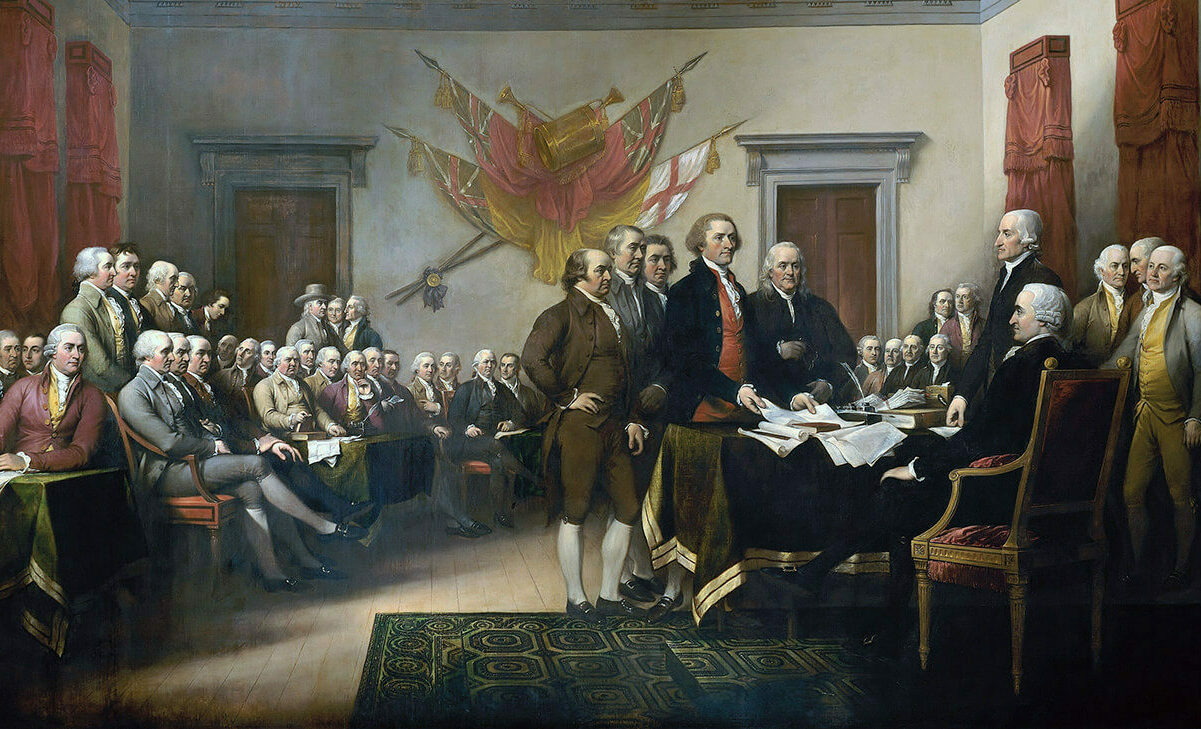
The volume which he consulted more than any other was the Bible. It was his custom, at the commencement of every session of Congress, to purchase a copy of the Scriptures, to peruse it daily, and to present it to one of his children on his return.
The education of our children is never out of my mind. Train them to virtue. Habituate them to industry, activity and spirit. Make them consider every vice as shameful and unmanly. Fire them with ambition to be useful. Make them disdain to be destitute of any useful or ornamental knowledge or accomplishment. Fix their ambition upon great and solid objects, and their contempt upon little, frivolous and useless ones.
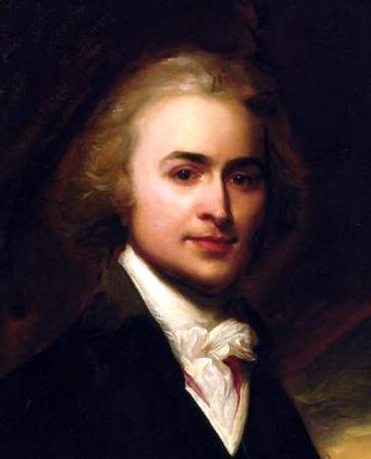 John Quincy Adams grew up under this instruction and became the father of four children. In his many years of public service, he would often spend extended periods away from his family. During this time John Quincy Adams wrote a series of letters giving his son advice on how to read and study the Bible, informing his son that he read through the Bible each year.
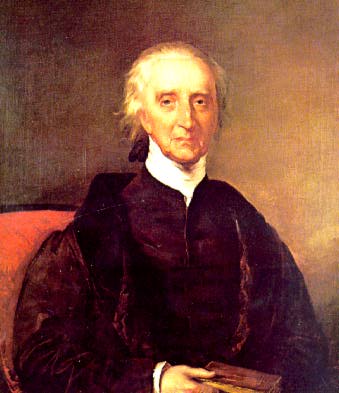 The approaching festival of Easter, and the merits and mercies of our Redeemer…have inspired me with the hope of finding mercy before my Judge and of being happy in the life to come — a happiness I wish you to participate with me by infusing into your heart a similar hope.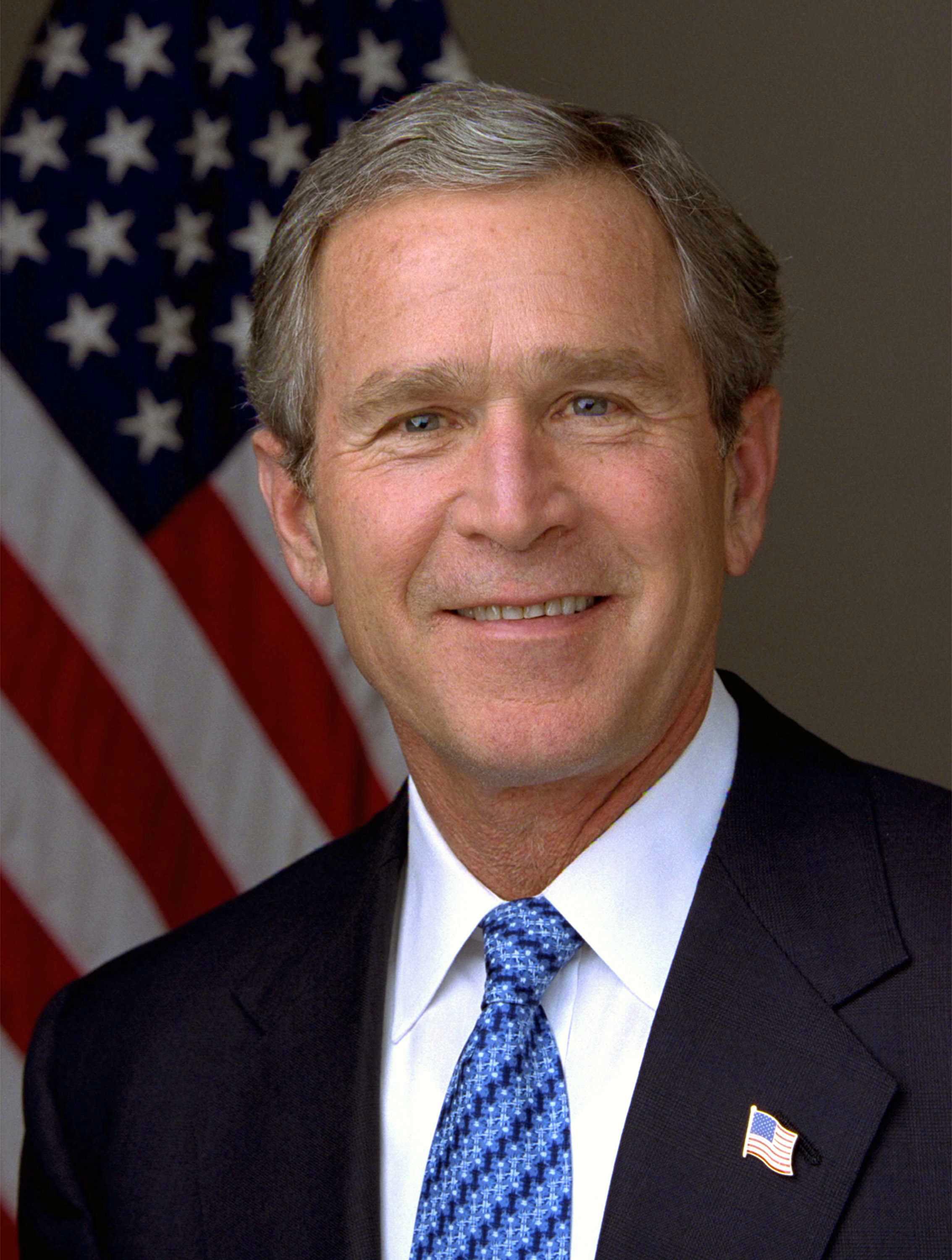
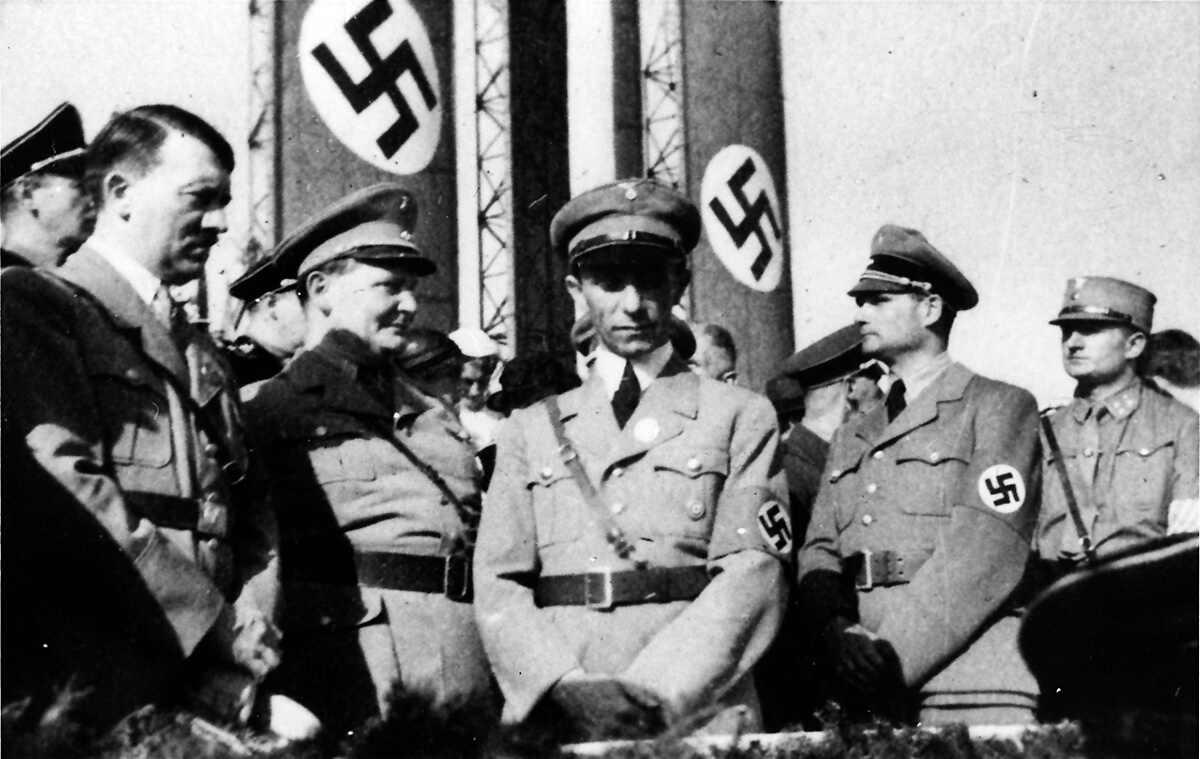
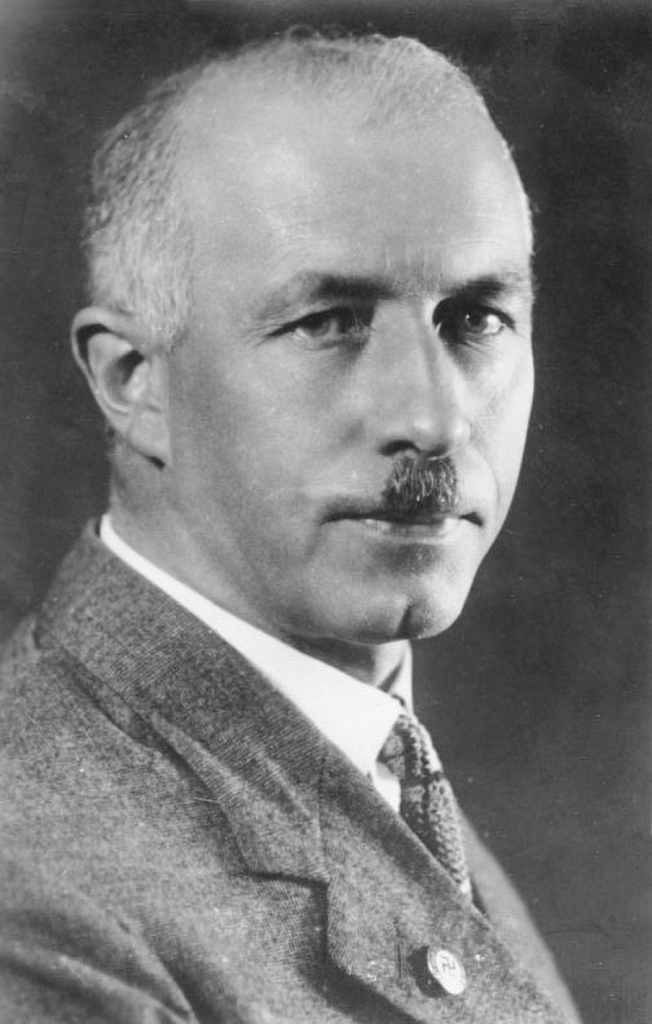
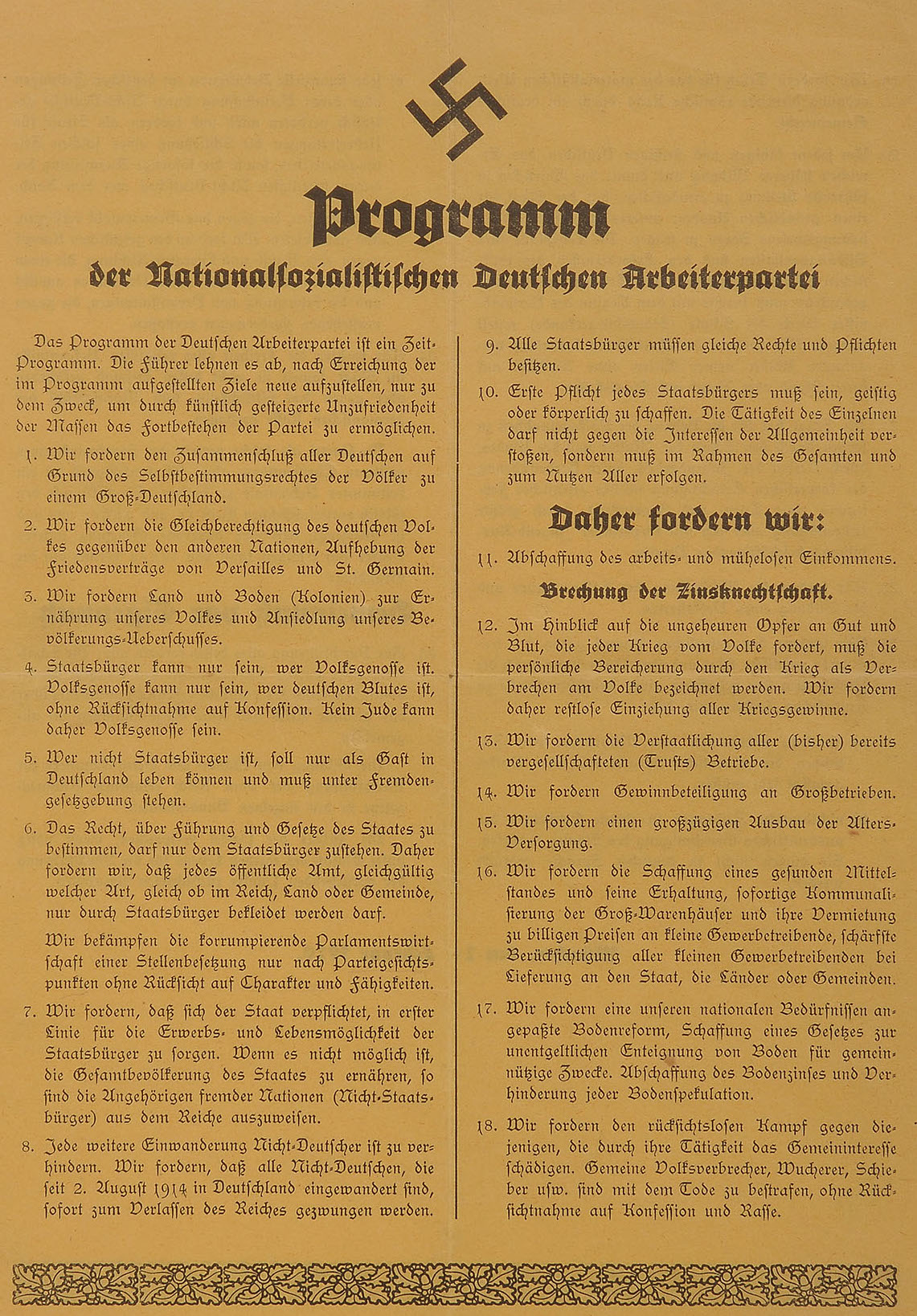
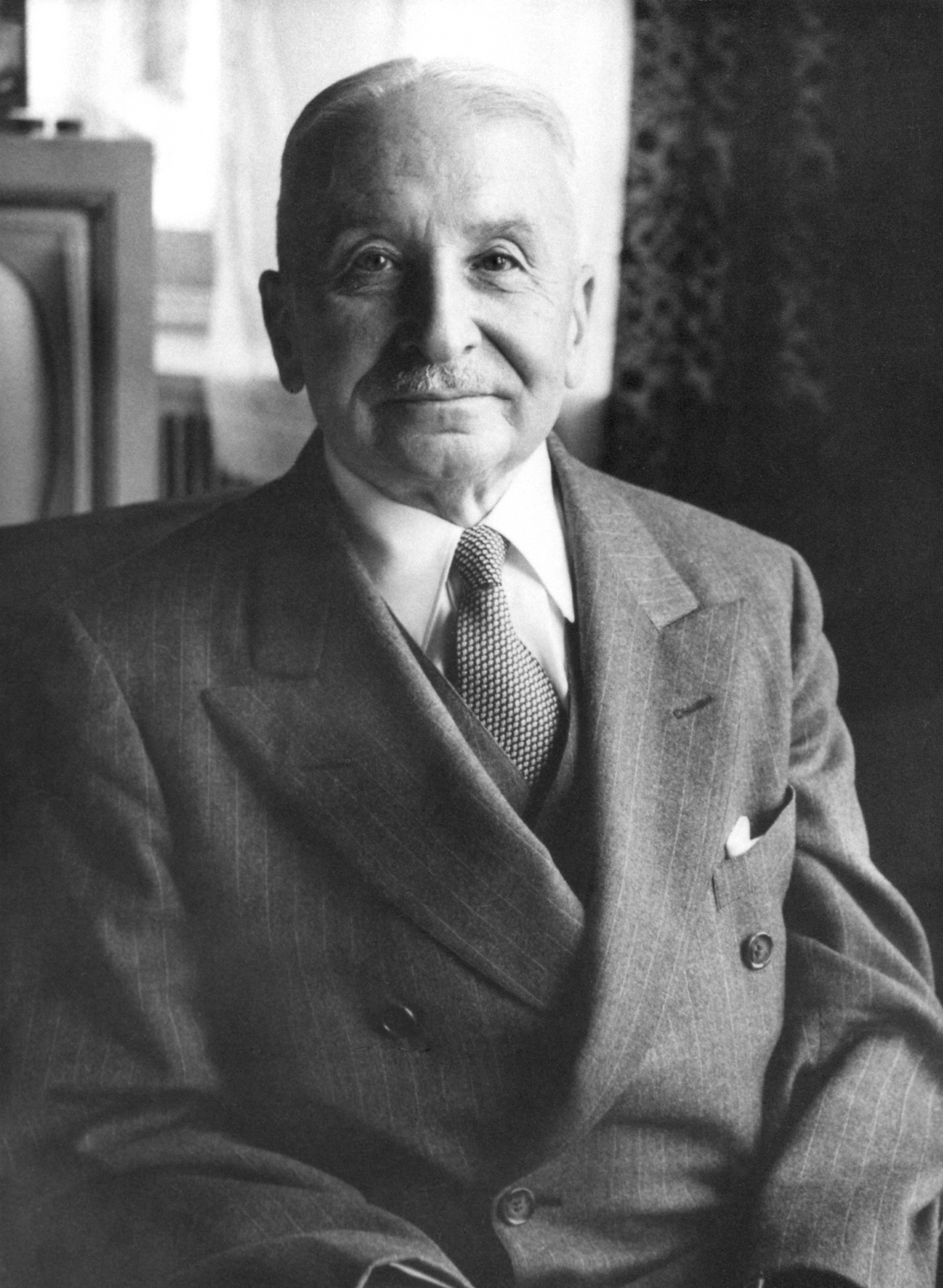
 The effects of the National Socialist system of central planning, government control, and arbitrary powers destroyed whatever vestiges of private financial vivacity remained, with the purposes of making it all the easier for the State to consolidate its grip on every aspect of production. Quality of goods rapidly fell while prices remained steady, and out of what little raw materials which were available most was rapaciously consumed by the military. Thus, as early as, “1936 almost complete control over production could be exerted.”
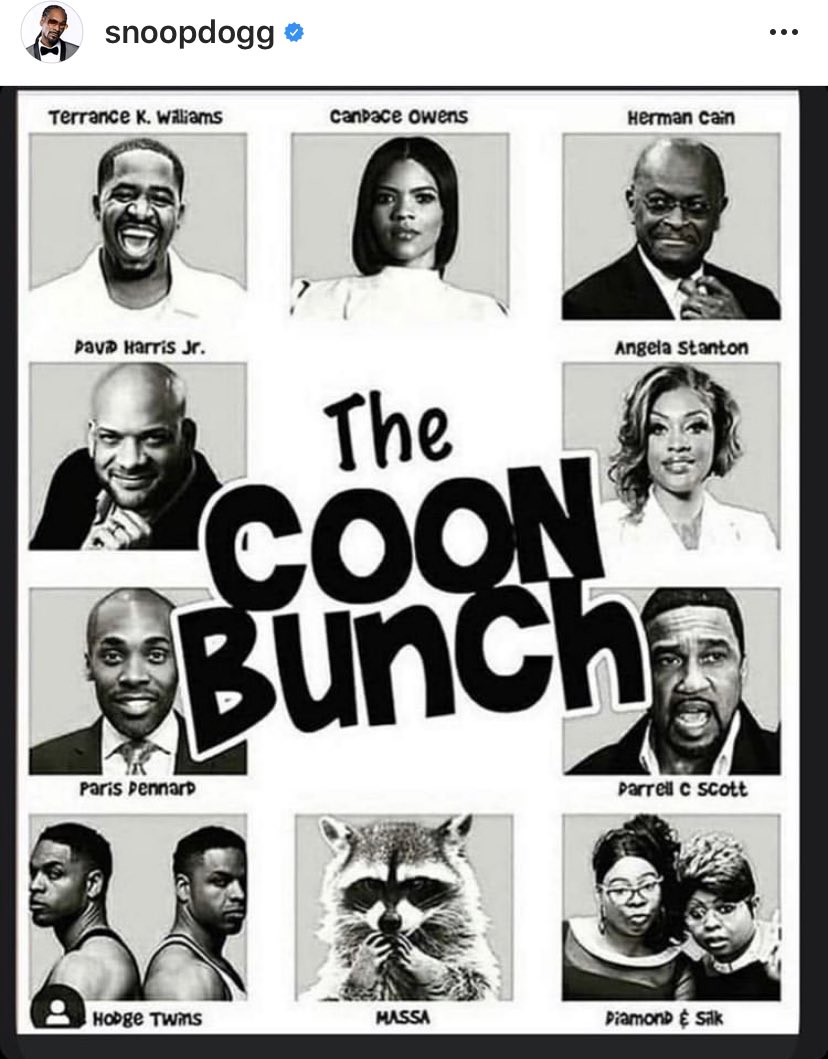
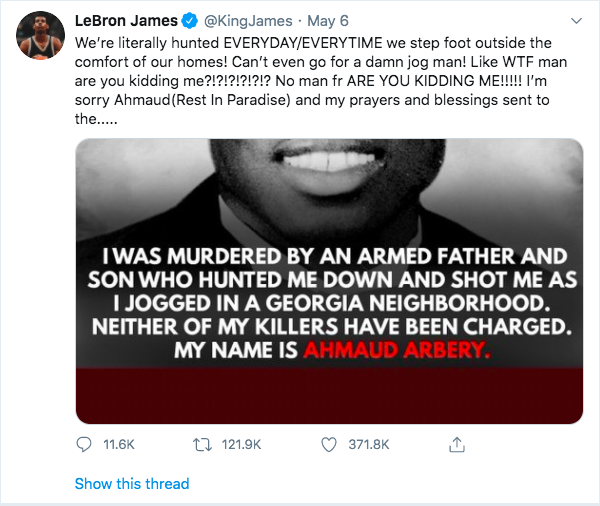
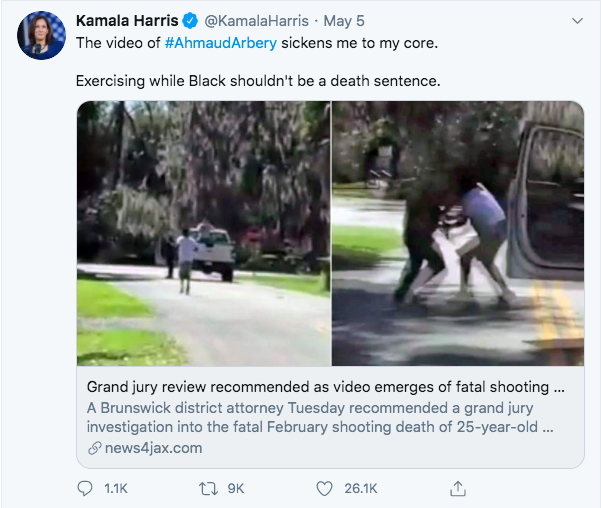
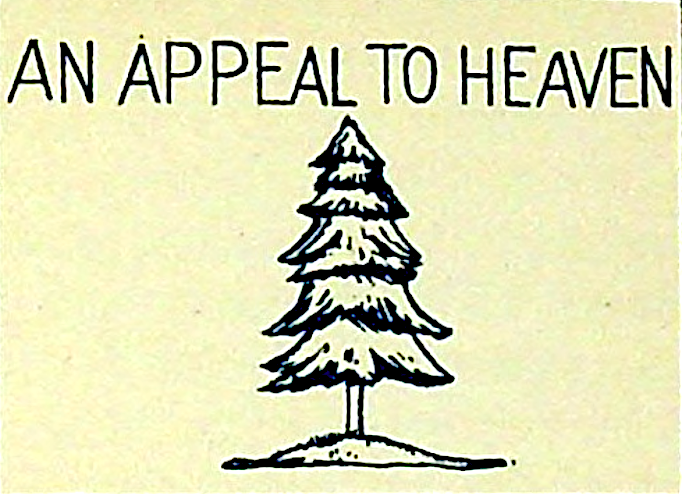 During the early days of the War for Independence—while the gun smoke still covered the fields at Lexington and Concord, and the cannons still echoed at Bunker Hill—America faced innumerable difficulties and a host of hard decisions. Unsurprisingly, the choice of a national flag remained unanswered for many months due to more pressing issues such as arranging a defense and forming the government.
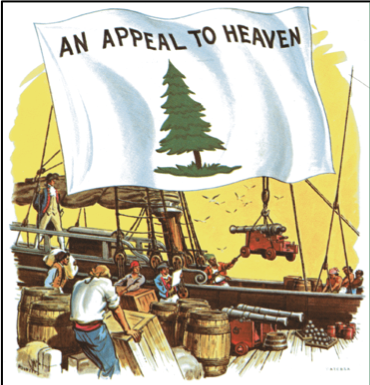 In fact, prior to the Declaration of Independence but after the opening of hostilities, the Pinetree Flag was one of the most popular flags for American troops. Indeed, “there are recorded in the history of those days many instances of the use of the pine-tree flag between October, 1775, and July, 1776.”
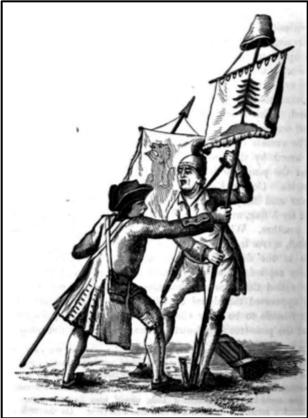 As the skirmishes unfolded into all out warfare between the colonists and England, the Pinetree Flag with its prayer to God became synonymous with the American struggle for liberty. An early map of Boston reflected this by showing a side image of a British redcoat trying to rip this flag out of the hands of a colonist (see image on right).
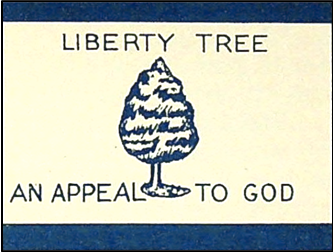 The fact that Locke writes extensively concerning the right to a just revolution as an appeal to Heaven becomes massively important to the American colonists as England begins to strip away their rights. The influence of his Second Treatise of Government (which contains his explanation of an appeal to Heaven) on early America is well documented. During the 1760s and 1770s, the Founding Fathers quoted Locke more than any other political author, amounting to a total of 11% and 7% respectively of all total citations during those formative decades.
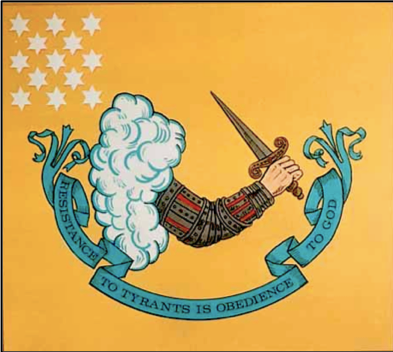 Furthermore, the Pinetree Flag was far from being the only national symbol recognizing America’s reliance on the protection and Providence of God. During the War for Independence other mottos and rallying cries included similar sentiments. For example, the flag pictured on the right bore the phrase “Resistance to Tyrants is Obedience to God,” which came from an earlier 1750 sermon by the influential Rev. Jonathan Mayhew.
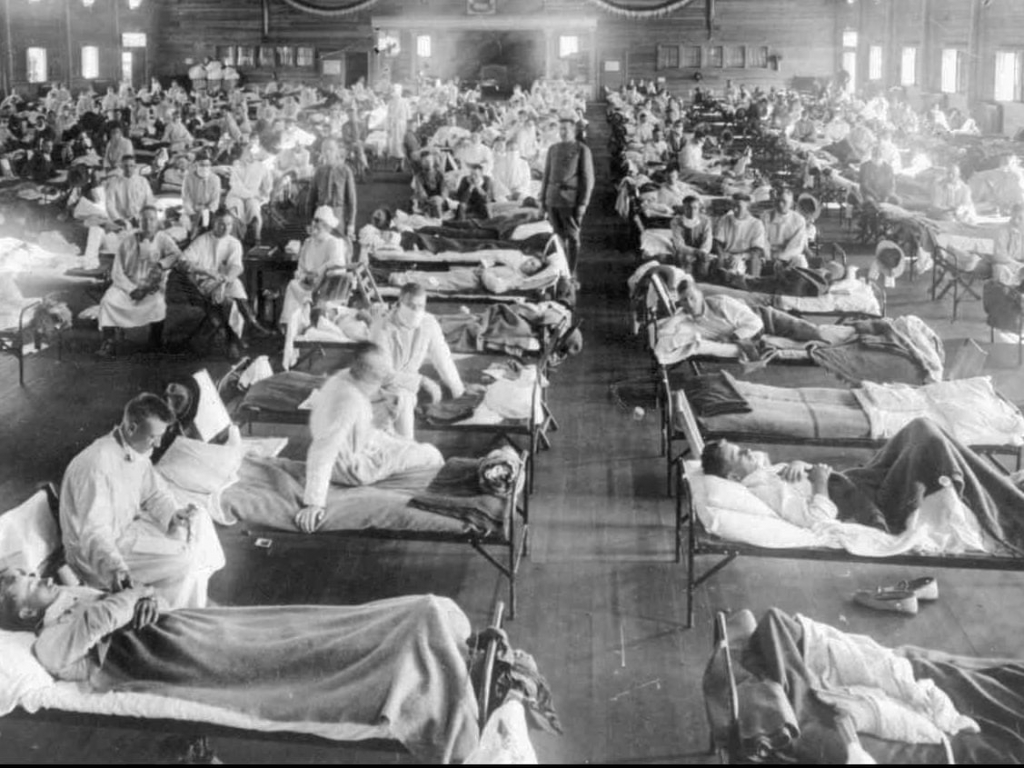 It might come as a surprise, but this is not the first time America has been through such a pandemic. For all the talk of quarantines, closures, and shutdowns being unprecedented there is a remarkable amount of precedent. Perhaps the situation which most parallels our current situation is the deadly Spanish Flu outbreak of 1918-1919. Quickly spreading, deadly, and confounding to the science of the time, it eventually claimed 675,000 lives in America alone. And upwards of 50 million globally.
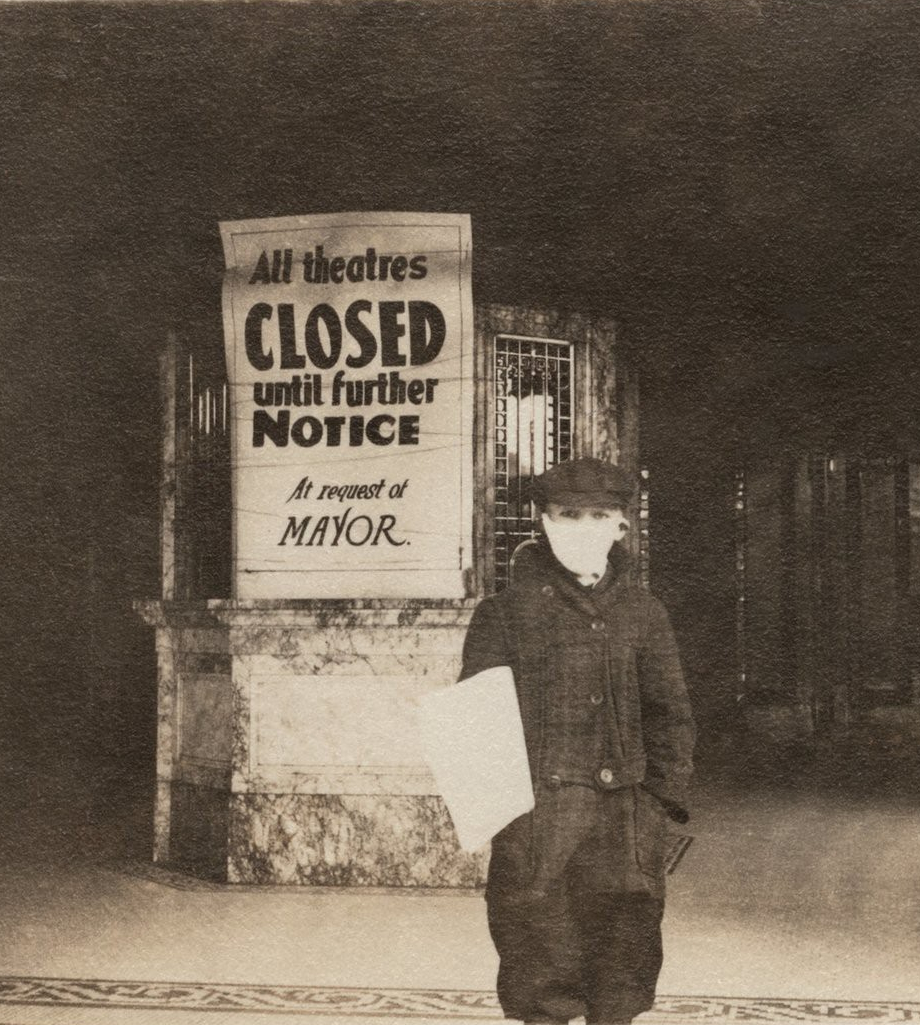 This time, however, businesses and citizens fought back, frustrated that after five weeks of being closed by the government they were once again to shut down. Eventually, the statewide California Board of Health forcibly ordered, “a quarantine of theaters, churches, schools, and other public places and gatherings.”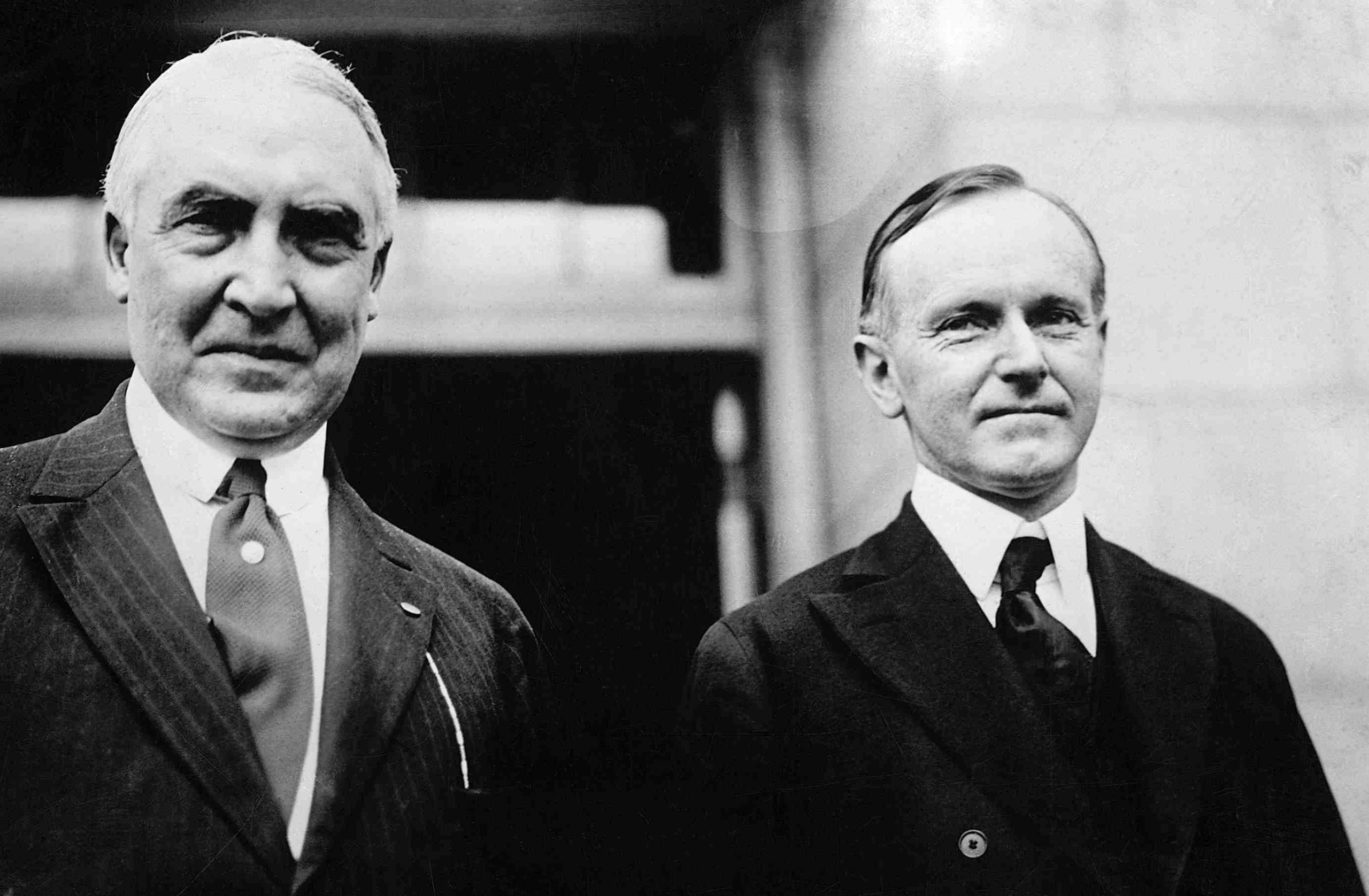
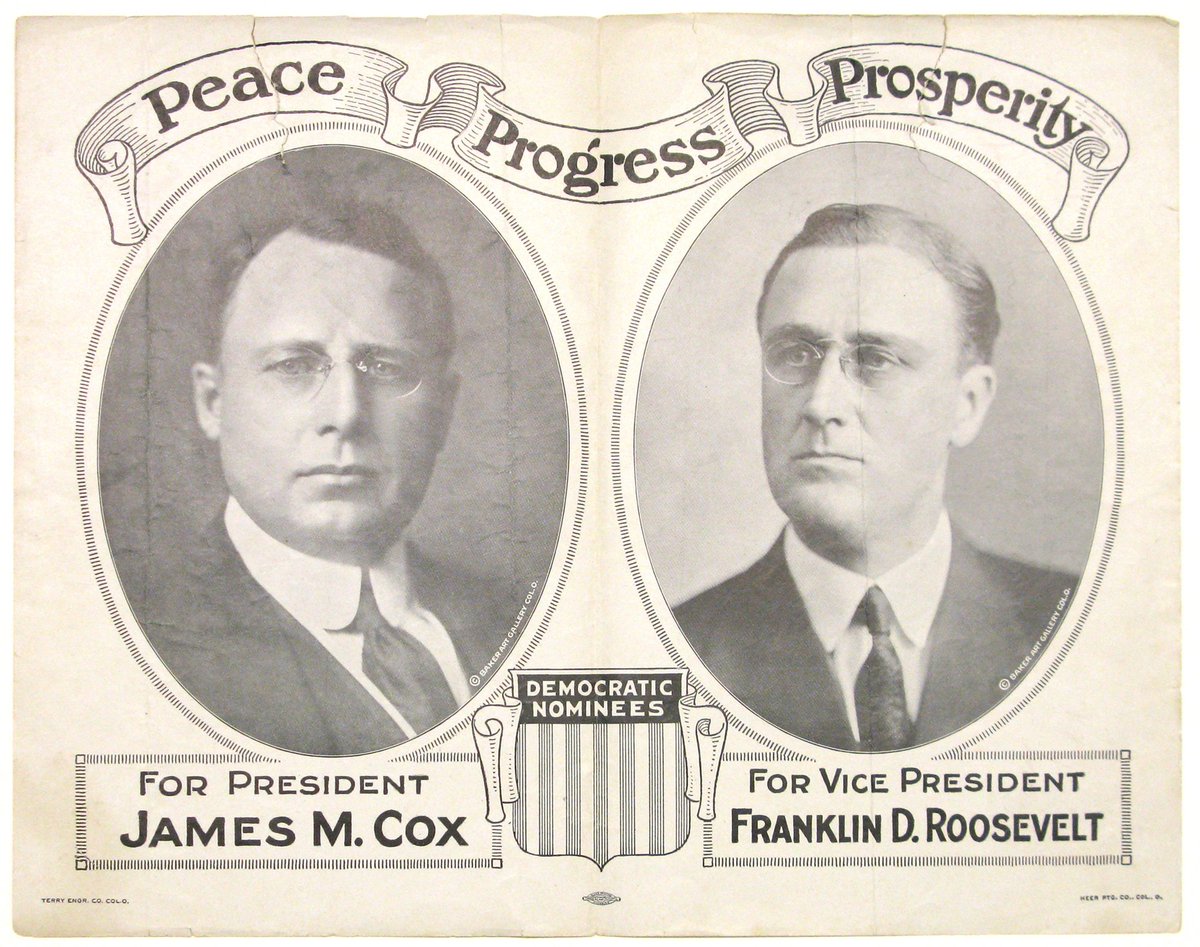 When the chains were removed from the nation the economy recovered to such a degree that the effects of the Spanish Flu were largely forgotten. But it could have been much different. In 1920 the democratic ticket consisted of James Cox for President and Franklin Delano Roosevelt for Vice President. Roosevelt’s predisposition towards widespread government involvement would become obvious during the 1930s and the New Deal legislation.
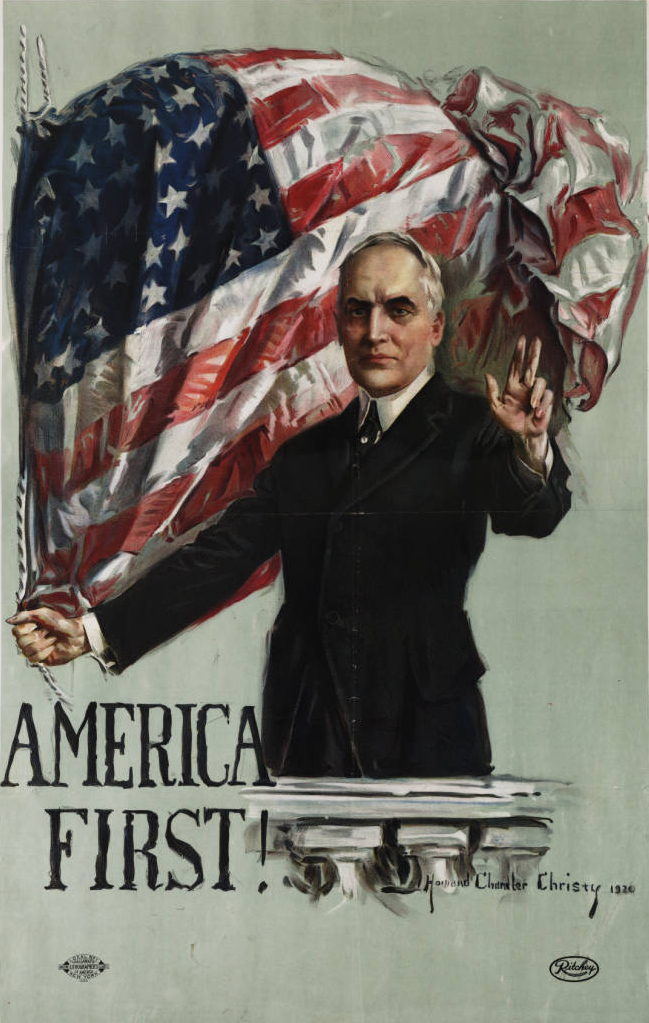 Warren, on the other hand, ran on the platform of returning back to the basic foundations of Americanism. He explained that for all the government efforts and interventions:
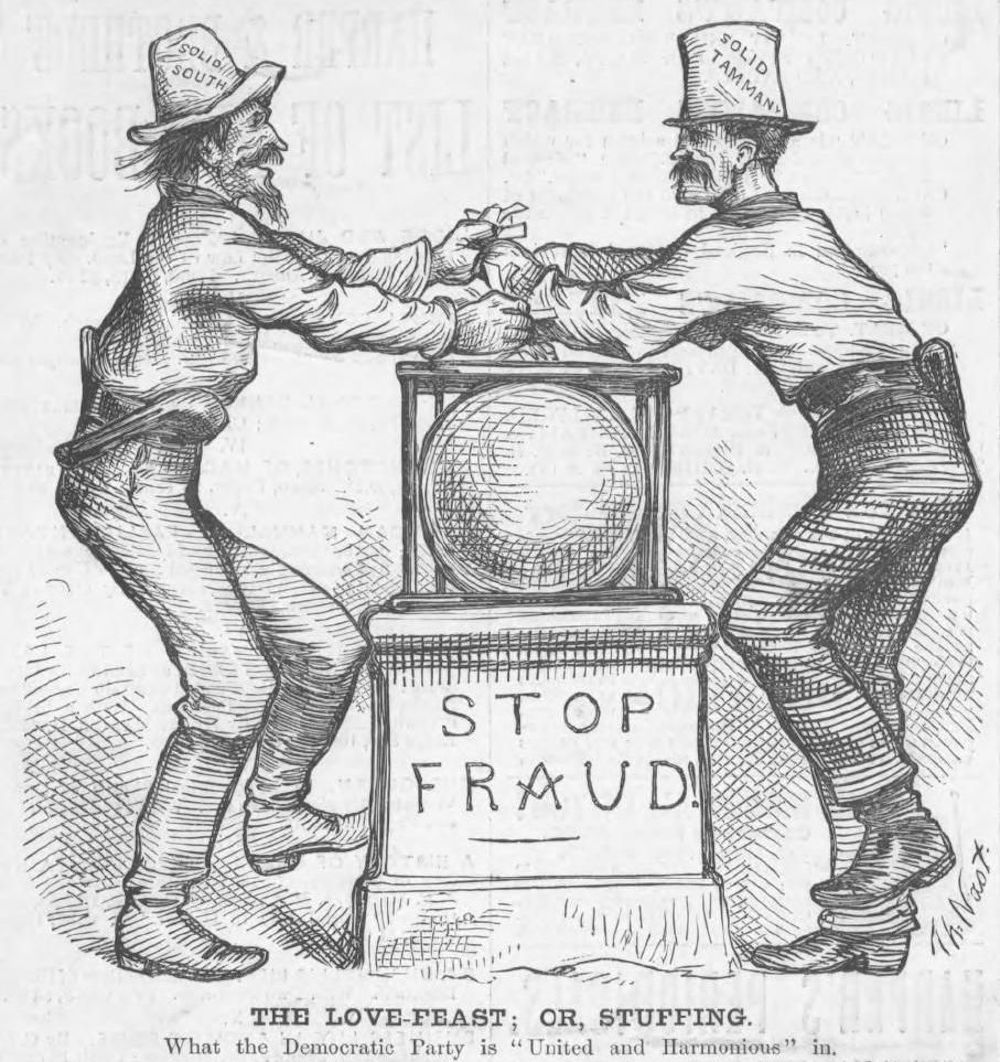
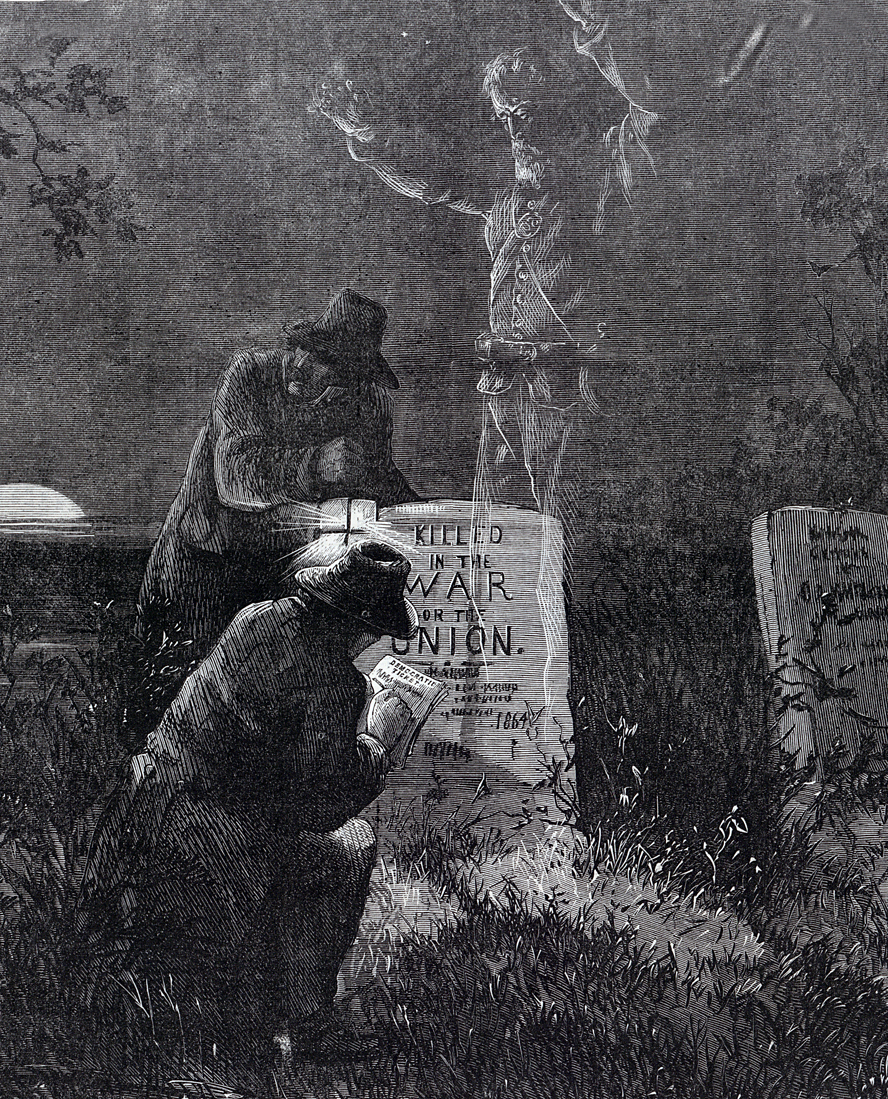
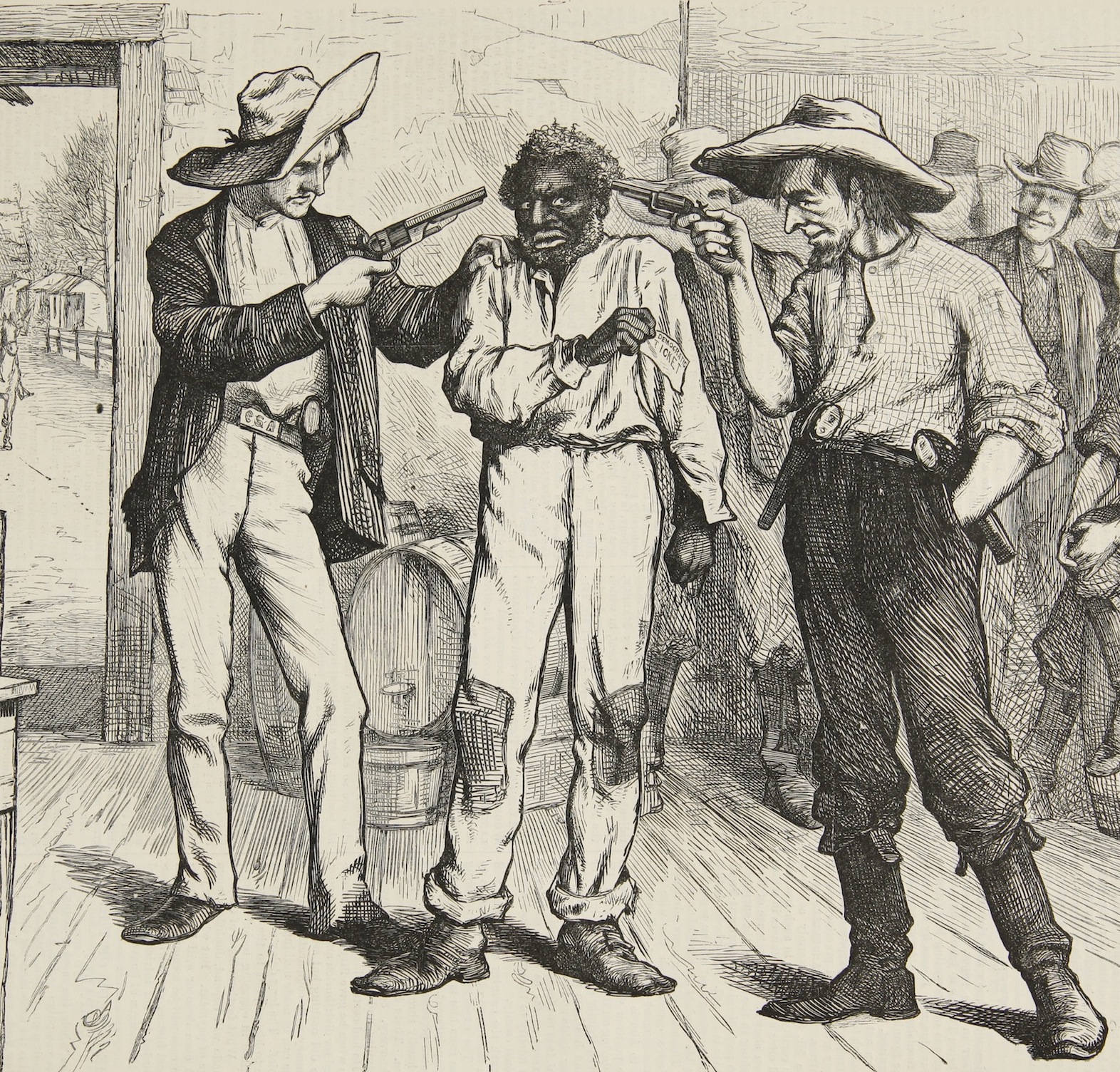
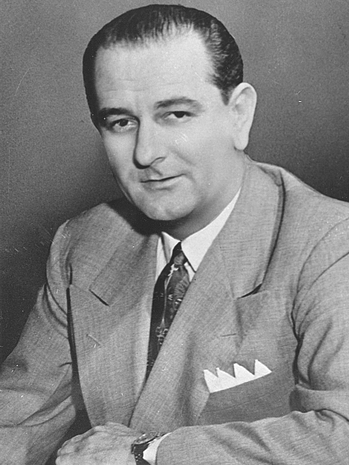
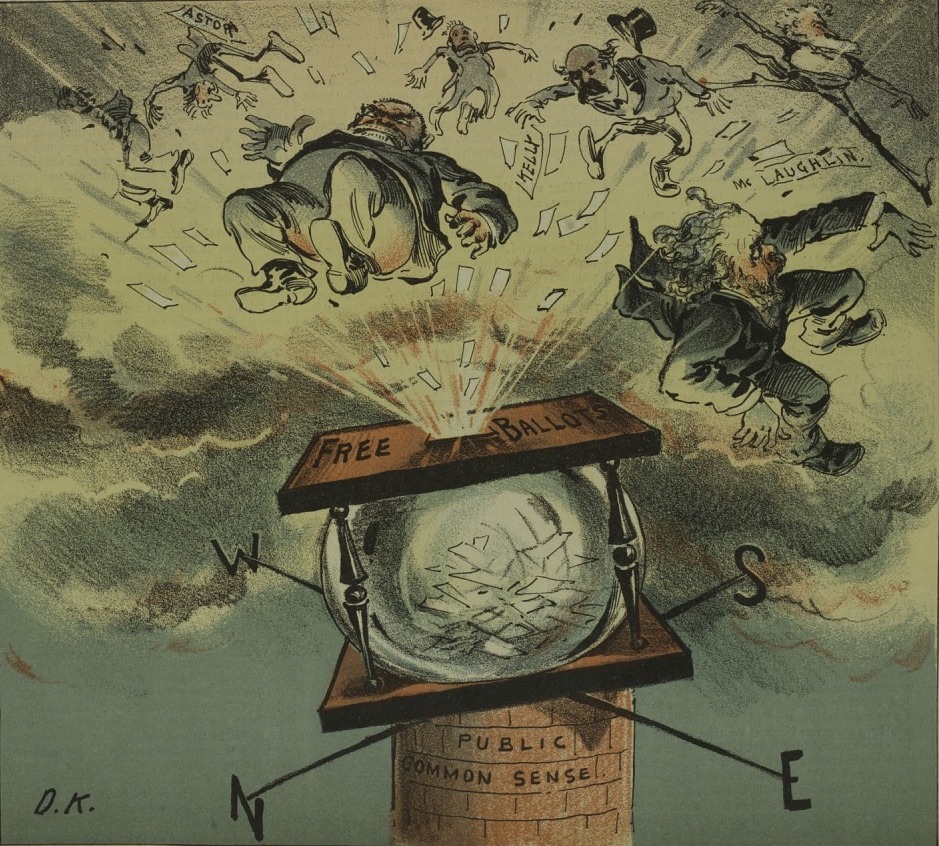
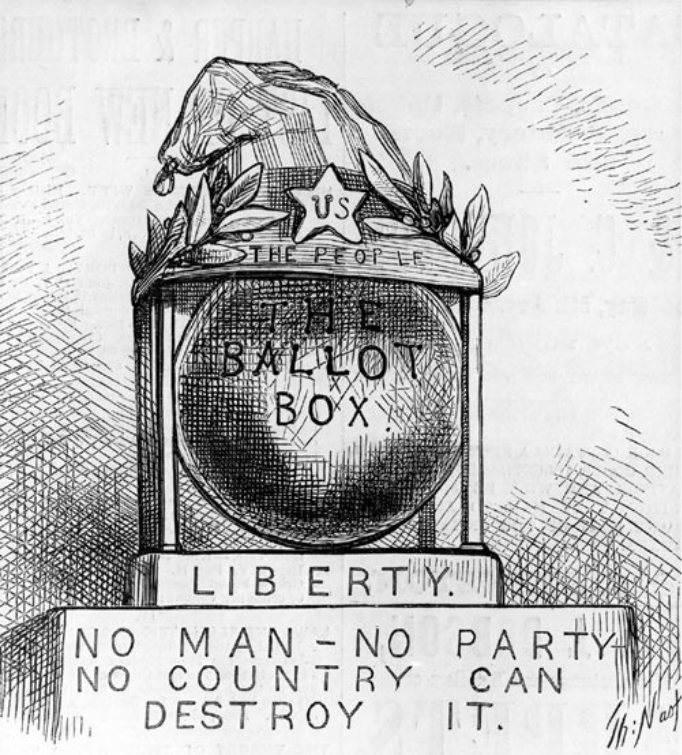

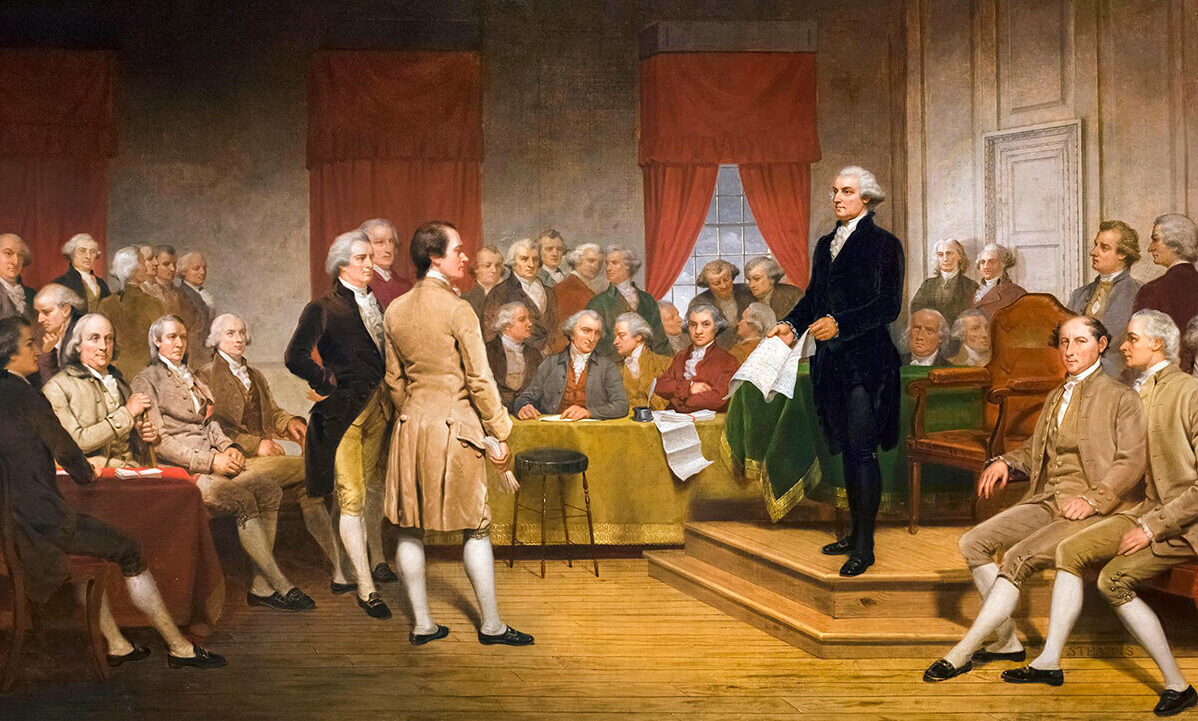
 Furthermore, Samuel Adams wrote to John Adams laying out the absolute need for a nation educated in their rights and responsibilities: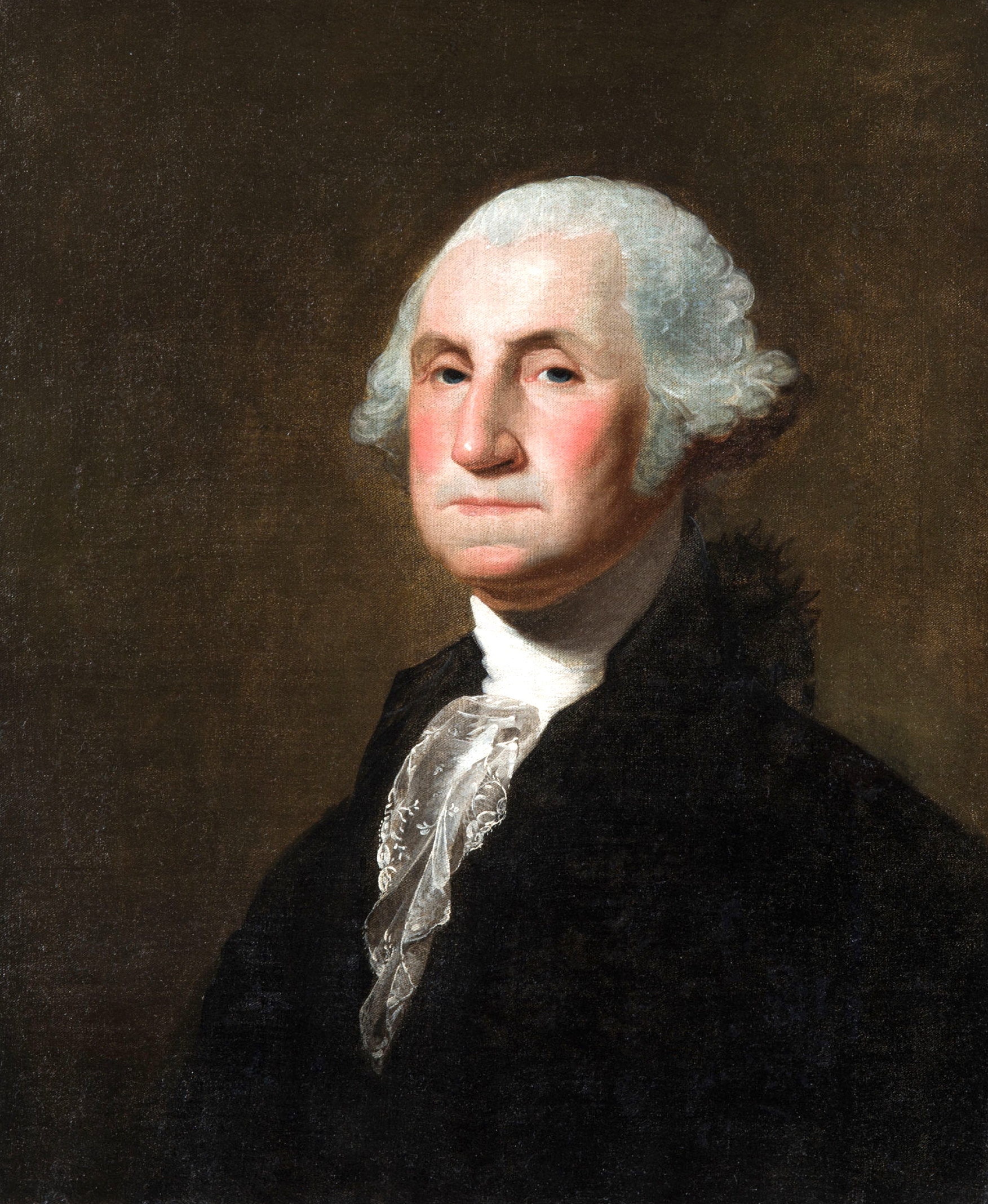
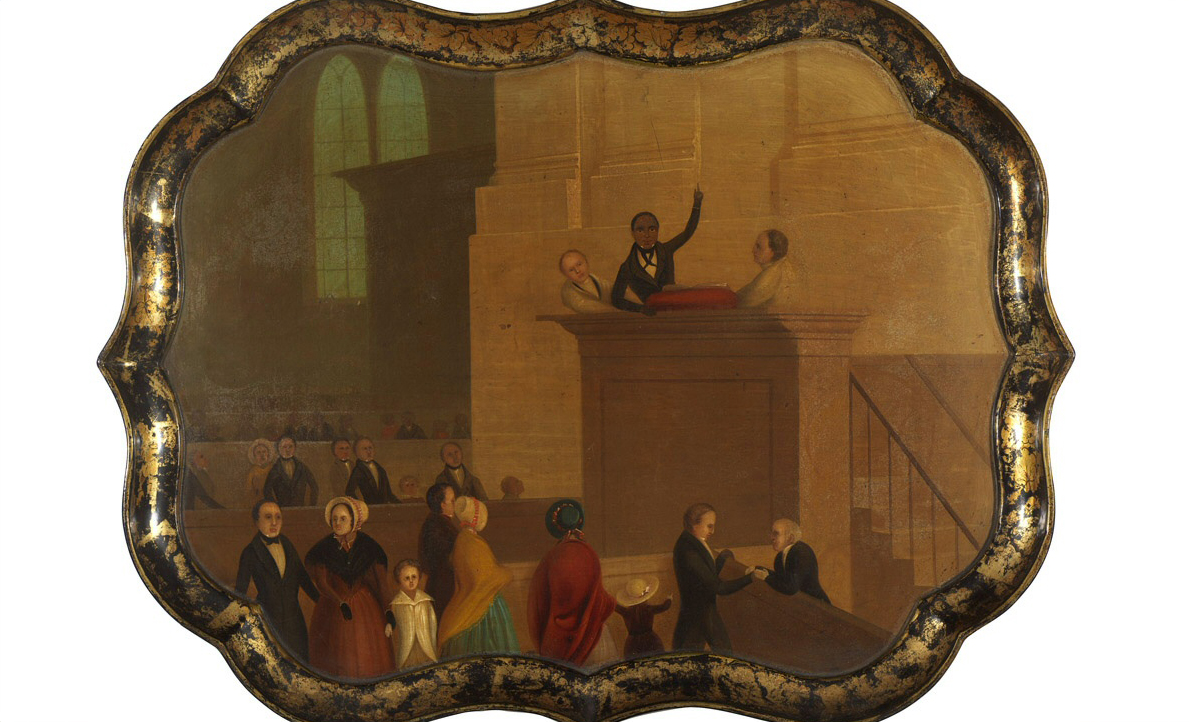
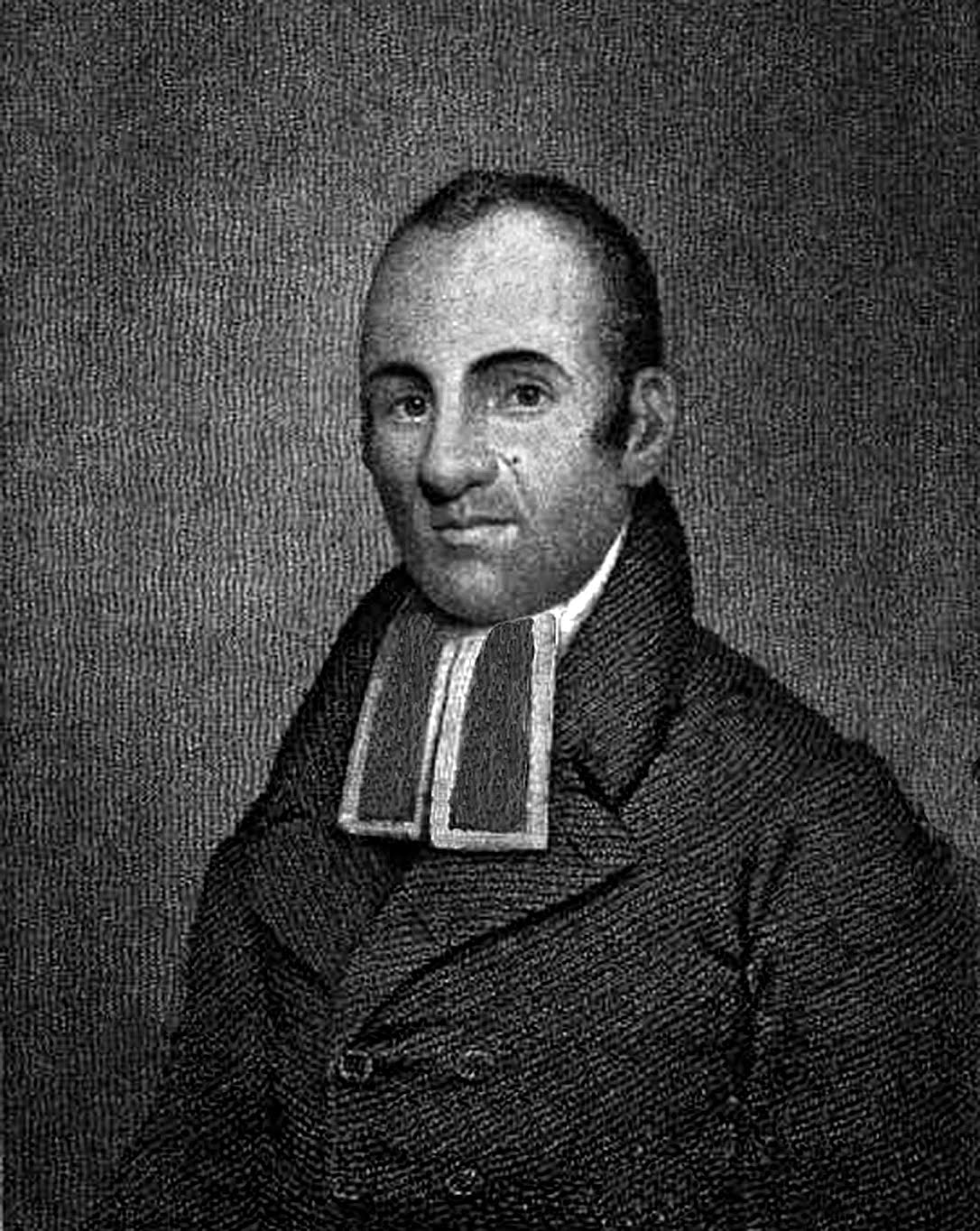
 On April 18th….Dr. Joseph Warren hastily dispatched Paul Revere on the ride that has made his name immortal. About midnight, Revere galloped up to the Rev. Mr. Clark’s house….By daybreak, one hundred and fifty men had mustered for the defense. John Hancock, with gun and sword, prepared to go out and fight with the minute-men, but [Samuel] Adams checked him….Hancock…went with him back through the rear of the house and garden to a thickly wooded hill where they could watch the progress of events. Dorothy Quincy and Aunt Lydia remained in the house, as no danger was apprehended there, and so by chance were eye witnesses of the first battle of the Revolution. Dorothy watched the fray from her bedroom window and in her narration of it notes: “Two men are being brought into the house. One, whose head has been grazed by a ball, insisted that he was dead, but the other, who was shot through the arm, behaved better.”